Latest Articles

Boom and Brag: From Krakatoa’s Fury to the World’s Greatest Feats

Elias Rowen

There are certain dates in history that refuse to be forgotten, not because they were chosen for celebration, but because something happened—so loud, so spectacular, so absurd, that the world had no choice but to listen. August 27 is one of those days. It is a date born of chaos and curiosity, destruction and delight. On one end of the spectrum, it marks the anniversary of one of the most catastrophic volcanic eruptions in recorded history—the 1883 explosion of Krakatoa, which quite literally tore an island apart and sent shockwaves around the planet. On the other end, it gave birth to something infinitely more playful yet profoundly human: the launch of the Guinness Book of World Records in 1955, a catalog of the incredible, the ridiculous, and the astonishing achievements that define human eccentricity. At first glance, these two events seem to sit at polar extremes—one a violent force of nature, the other a celebration of human oddities. But as we begin to peel back the layers, we find they share more than just a date. They both embody an insatiable force—one of natural power, the other of human ambition. Both reshaped the way we look at the world. And in their own ways, they remind us that records—whether geological or Guinness—are meant to shake the ground beneath us.

The morning of August 27, 1883, did not begin peacefully for the residents of the Sunda Strait between the islands of Java and Sumatra. In the days leading up to it, the Krakatoa volcano had been rumbling ominously, spewing ash clouds and small explosions into the sky. But nothing could have prepared the world for what came next. At precisely 10:02 a.m. local time, the earth beneath Krakatoa buckled and unleashed a sound so loud it ruptured eardrums forty miles away. The blast was heard over 3,000 miles from its source. People in Perth, Australia and on Rodrigues Island near Mauritius thought they were under attack. The sound, which reverberated around the globe multiple times, remains the loudest sound ever recorded in human history. And that was just the beginning. The explosion released the equivalent force of 200 megatons of TNT—four times the energy of the most powerful hydrogen bomb ever detonated. It obliterated more than two-thirds of the island, creating a caldera beneath the ocean surface and sending massive chunks of earth skyward. Pyroclastic flows and ash clouds annihilated everything in their path. Hot gas incinerated coastal villages. A series of tsunamis followed, the largest cresting at over 120 feet, wiping out over 165 coastal towns and villages in a matter of hours. The death toll reached an estimated 36,000 people—though many suspect it was far higher due to the number of unrecorded casualties among indigenous populations and seafaring crews.

But Krakatoa’s devastation wasn’t confined to its local geography. The ash it spewed into the atmosphere affected the entire planet. Global temperatures dropped by over 1.2 degrees Celsius for months. Sunsets turned blood red as far away as Europe and North America. People wrote poetry about the eerie, copper-colored skies. Edvard Munch later claimed the red skies in his painting “The Scream” were inspired by the post-Krakatoa light displays. The eruption didn’t just alter landscapes; it etched itself into the collective human psyche. It was, in many ways, our first modern encounter with a global environmental shock—our introduction to the idea that what happens on one island can reverberate through the entire atmosphere. And it was terrifying.

Yet, out of the ash, a strange form of awareness arose. Scientists, artists, and everyday people began to grasp the interconnectedness of our planet. News of the disaster spread via telegraph and early cable networks, making Krakatoa one of the first truly global news events. The blast wasn’t just heard—it was felt by a world that was only beginning to understand itself as a whole. In that sense, Krakatoa was a record-breaker. The loudest sound. One of the deadliest natural disasters. A defining moment of scientific realization. It was a high-water mark of natural ferocity—and one we never forgot.

Now fast forward 72 years to another August 27. The world is a different place—at peace after the horrors of World War II, fascinated by consumerism, and increasingly obsessed with facts and trivia. In Dublin, a man named Sir Hugh Beaver, then managing director of Guinness Breweries, found himself in a spirited debate about which game bird was the fastest in Europe. Unable to find the answer in any reference book, he realized something: there was no definitive guide for settling disputes like this. No central record of the best, the fastest, the strongest. Nothing to verify the kinds of barroom arguments that cropped up among friends or coworkers. That idea fermented, just like a good stout, until it bubbled into the creation of something entirely new—the Guinness Book of Records.

The first edition, published on August 27, 1955, was humble—just 198 pages, given away as a marketing promotion. But it caught fire. People were enthralled. Here was a book that didn’t just catalog the expected—tallest mountains or longest rivers—it dove headfirst into the bizarre and the brilliant. Longest fingernails. Most spoons balanced on a face. Largest collection of rubber ducks. Heaviest twins to ride a motorcycle. Fastest time to eat a bowl of pasta with no hands. These weren’t just statistics—they were proof of humanity’s insatiable desire to push limits, even ridiculous ones.

The Guinness Book tapped into something primal. The same need that drove people to climb Everest or walk on the moon also drove them to stuff marshmallows in their mouths or pogo stick up a flight of stairs. Why? Because they could. Because someone, somewhere, might be watching. Because it feels good to be the best at something, even if it’s something nobody else ever thought to try. It wasn’t about utility. It was about individuality. About visibility. About leaving a mark on a world spinning too fast to remember anyone for long. In an era before social media and viral fame, the Guinness Book was a gateway to immortality. You didn’t need to be rich, powerful, or even sane. You just needed to do something first, fastest, or freakiest—and prove it.

Over time, Guinness World Records became an institution. It morphed from a quirky publication into a global phenomenon, with TV shows, live events, and an army of adjudicators measuring everything from the largest pizza to the fastest marathon run by a person in a mascot costume. It grew beyond the book, but never lost its soul. It’s still about wonder. Still about pushing boundaries. Still about asking the question, “What else is possible?” And when you look at it that way, it begins to feel oddly similar to Krakatoa. Not in content, of course—but in impact. Because both moments—one born of destruction, the other of curiosity—captured the world’s attention in a way that few things do.

They disrupted normalcy. They made us look up. They made us talk. And maybe most importantly, they made us measure. Krakatoa made us measure sound, force, death, and planetary consequence. Guinness made us measure speed, strength, length, height, weirdness, and wit. Both events revealed that measurement is how we make sense of awe. One awed us with terror. The other with delight. And both taught us that records, whether made by lava or human labor, are how we track the edges of the possible.

It’s poetic, in a strange way, that both these milestones landed on the same calendar day. Because they tell the same story from two different mouths. One says, “Nature is bigger than you.” The other says, “But you are capable of more than you think.” Together, they form a full sentence. A truth. A warning and an inspiration. Krakatoa reminds us to be humble. Guinness reminds us to be bold. And August 27 stands as the balancing point between the two.

So next time you flip past this unassuming date, stop. Remember that this day saw the sky fall and the human spirit rise. That it bore witness to the power of nature and the absurdity of ambition. That it gave us a reason to fear—and a reason to cheer. It is a date carved in ash and printed in ink. A day of boom and brag. A day to be remembered.


Related Posts

Whispering Shores: Underrated Beaches in Europe You’ll Wish You’d Found Sooner

Dave

There’s a point in every coastal journey where the map fades and the sea begins to speak for itself. It sounds like pebbles rolling in a gentle tide. It smells like pine warmed by a noon sun. It looks like a tiny crescent of sand that never made a “top 10” list, a place where you can hear your own footsteps and the faint clink of a fisherman’s tackle somewhere around the headland. These are Europe’s underrated beaches—the quiet edges that don’t go viral, that don’t rent out entire summers to influencers, that don’t require an alarm clock battle to claim two meters of sand. They’re the bays you remember years later because you shared the water with five people and a curious cormorant. They’re the places where the coffee is strong, the bread is warm, and the salt dries on your skin before you make it back to the car. This is a love letter to those beaches—and a guide to finding them—written for travelers who prefer a whisper to a shout.

Start in Portugal, but step around the obvious. The Algarve’s cliffs are famous for good reason, yet just a little north of the postcard coves sits Alentejo’s wild littoral, where beaches stretch so long they become a mood. At Praia da Amália, a narrow path threads through eucalyptus and descends to a small amphitheater of sand framed by slate rock. A waterfall sometimes tumbles directly onto the beach, fresh water etching a cold ribbon through the warm Atlantic. Fishermen pick their way across the headland, their silhouettes crisp against the sky. It’s a place that doesn’t care whether you came for a selfie; it cares only that the tide keeps time. Drive a bit farther and you’ll reach Praia de Aberta Nova, a wide, golden sheet where the dunes move like sleeping animals. There’s nothing to do but walk, swim, and become the kind of person who unlearns urgency.

Hop east to Spain, but not to the Costa crowded. On Menorca, the least performative of the Balearics, the south coast hides miniature paradises reachable by pine-scented trails. Cala Trebalúger is one of the loveliest—milk-blue water, chalky sand, and a silent river mouth where you can rinse the salt from your hair with fresh water. The hike in keeps it modestly empty even in high summer; the reward is a cove that feels sketched by a minimalist architect. Menorca’s secret is proportion: cliffs high enough to hush the wind, sand wide enough to spread lunch, water shallow enough to invite even cautious swimmers. If you arrive at noon, the sea looks like it’s plugged into a light socket; if you stay until late afternoon, it downgrades to a perfect, expensive teal.

France’s Mediterranean is famous for a certain kind of glamour—yachts, rosé, and sun loungers priced like limited-edition sneakers. But the country also guards pockets of quiet that feel like revelations. On the Côte Vermeille, where the Pyrenees tumble into the sea near the Spanish border, you’ll find Plage de Paulilles, a pebbled arc with water clear as a bell. The headlands cradle it from the Mistral, and the surrounding Bay of Paulilles is a protected landscape. Swimmers cut slow lines along the buoys while families picnic under tamarisk trees. A small museum nods to the site’s history as a dynamite factory; the sea, eternally unbothered, just keeps being blue. Farther west in Brittany, Plage de l’Île Vierge (Crozon Peninsula) is a northern miracle: spruce and maritime pine, chalk cliffs, and water so translucent it looks like a trick of latitude. It’s proof that “Mediterranean color” can happen hundreds of miles from the Med, if the geology is right and the clouds are feeling kind.

Italy may be the motherland of la dolce vita by the sea, but its coasts still hold secrets. In Puglia, the Gargano Promontory hides Vignanotica, a long ribbon of white pebbles below chalk cliffs stippled with caves. The pebbles sing underfoot when the waves retreat—one of those small, perfect sounds you only notice when you’re not jostling a crowd. On Sardinia, everyone knows about La Pelosa’s electric shallows; far fewer make the dusty drive to Cala Domestica, a double-bay on the island’s southwest edge where an old watchtower guards a bowl of sand the color of toasted bread. A side path leads through a buttonhole in the rock to a secret secondary inlet; swim there alone and you feel like the first person to read a footnote and understand its importance.

Across the Adriatic, Croatia’s Dalmatian Coast has coastline so chopped and intricate that solitude is almost a guarantee if you’re willing to look. On Brač, walk past the tail-end of Zlatni Rat’s famous spit to Lovrečina Bay, where a shallow, sandy floor (rare in Croatia) invites barefoot ambling far from shore. Olive groves press close to the water, and a small church ruin keeps quiet watch. On Dugi Otok, Sakarun’s white-sugar sand is known, but the nearby coves—Pantera Bay, Veli Žal—often feel like their own private rehearsals: same glassy water, fewer witnesses. If you like your beaches with a side of lunar drama, sail to the Kornati archipelago, where beige domes rise from a cobalt sea and the line between land and water seems negotiated anew each morning.

Montenegro is smaller than some European provinces but punches well above its weight in coastline drama. Past Budva’s energy, past Sveti Stefan’s cinematic fame, you’ll reach Queen’s Beach (Kraljičina Plaža), a short, graceful curve tucked beneath red cliffs and Aleppo pines. In the morning, the sun sets the limestone glowing; by late day, the water turns a kind of bruised sapphire. A sense of hush holds here, partly because access is limited, partly because the mountains draw the sound upward rather than outward. Dip under and you can hear your heartbeat, steady as a metronome.

Greece, of course, could supply an entire atlas of “underrated.” On the Ionian island of Kefalonia, Antisamos is a stunner—pebbles so white they bleach the light, slopes of green that cascade into indigo water. But drive thirty minutes and hike another ten and you’ll find Koutsoupia, a long, crescent cove reachable only by a coastal path. The sea shifts through a painter’s swatch book—lapis, cyan, peacock—while goats graze the terraces above. On Crete’s south coast, Agiofarago lies at the mouth of a short gorge: tall walls, a narrow beach, and water that looks poured from a bottle. If you go in the morning, you might share it with climbers and a monk from the nearby cave-chapel; by afternoon the wind combs the surface into silky lines.

Venture north to Albania, where the Riviera south of Vlorë is still inventing its tourism story. Gjipe Beach might be the headline: a sandy throat at the mouth of a dramatic canyon, reached by a thirty-minute walk or a bouncy 4×4 track. The sea is Ionian-clear; the cliffs vault straight up like cathedral walls. There is just enough infrastructure to get a cold drink, not enough to make the landscape feel compromised. Keep driving to Borsh, where an almost endless strand of pebbles unrolls along olive groves and fig trees, the smell of grilling fish drifting on evening air. Albania’s gift is scale without saturation: big views, small crowds.

In Slovenia, two dozen kilometers of coastline punch above their length. Moonstone-colored Piran leans Venetian, but the quieter swimming platforms east of town let you slip into jade water with the church bell as your metronome. A short jog inland delivers you to salt pans where flamingos sometimes draw gossip-pink lines across the horizon. It’s not a “beach” in the sandy sense; it’s better—a daily life politely interrupted by the sea.

Sicily’s little cousin islands hold the key for anyone who hears “underrated” and thinks “ferry schedule.” On Favignana, Cala Rossa is rightly adored, but Cala Azzurra often feels roomier and just as vivid, with pale slabs stepping into glass. On Pantelleria, there’s almost no sand at all—just lava terraces, hot springs, and water so inky blue it seems unreal. Swim at Cala Gadir, then soak in the ancient thermal pools as locals discuss capers, wind, and gossip with equal expertise.

The Black Sea, often left out of glowing travel prose, deserves its own song. Bulgaria’s northern cap hides Bolata, a small horseshoe of sand at the mouth of a river, backed by rust-red cliffs. The water is usually as mild as a secret, and fishermen’s huts lend the cove a hand-built humility. In Romania’s Danube Delta, beach becomes delta becomes wetland; at Sfântu Gheorghe, you can lie on a strand that feels like an unrolled ribbon at the edge of a biosphere, pelicans drafting across an enormous sky.

Even the British Isles, which some imagine as a catalog of weather rather than beaches, keep aces up their sleeve. On the Isle of Harris in Scotland’s Outer Hebrides, Luskentyre wears Caribbean colors on a Gaelic face: dunes, machair wildflowers, pale sand, and a sea that would be fully tropical if someone nudged the thermostat. On a clear day, the island of Taransay floats in the distance like a memory. Cornwall’s north coast has Portheras—once off-limits due to leftover wartime debris, now carefully cleared and watched over by locals who prefer it to stay a little secret. Arrive at low tide and the slate outcrops sketch tidal pools you could stare into for hours.

What binds these beaches is not a single aesthetic but a shared temperament. They are modest. They make you work just enough—an extra bus, a last dirt track, a walk under pines—so that arrival feels earned. They ask for low volume, a small footprint, and a willingness to adjust your plans to the weather’s. In return, they give you silence measured in waves, stars unbothered by nightclub glare, and the luxury of time that doesn’t feel monetized. These are beaches that give you your curiosity back.

How to find your own? Ignore hashtags and stare at topographic maps. Look for where a road stops short of the coast, then for little footpaths that trust you to be polite. Ask a baker where they swim after work. Follow fishermen in the early morning, not too closely; they know the coves that hold clean water after a blow. Pick a national park over a town beach, a shoulder season over a headline month, a north-facing bay in a south wind. Learn the local word for “cove,” “inlet,” and “pebble”; languages often hide the landscape in plain sight.

There’s also etiquette, the unspoken constitution of hidden places. Pack out your lunch and your pride. Leave stones on cairns and shells where they belong. Keep music in your headphones and drones in their cases; some views aren’t improved by a soundtrack or a buzz. If a beach is reached by a path through private olive groves, walk quietly and wave at the farmer. If you find a turtle nest marked with sticks, keep your towel elsewhere and your evening strolls at a respectful distance. The point of an underrated beach is that it remains itself after you leave.

The truth, of course, is that no beach stays “underrated” forever. The world’s curiosity is inexhaustible; discovery is the internet’s favorite hobby. That’s not a reason to hoard names, only a reason to share them carefully and to travel like a guest. The goal isn’t to keep places secret—it’s to keep them whole. If you fall in love with a cove, ask not just “How do I tell people about this?” but “How do I help this endure?” Sometimes the answer is as simple as carrying a small trash bag. Sometimes it’s as human as buying lunch from the family tavern with the faded sign and the best tomatoes you’ve ever tasted.

By the time you fold your towel and walk back up the trail, the day will have rearranged you. Your shoulders will be salted and a little pink around the edges. Your phone will be politely forgotten at the bottom of your bag. You’ll taste anise from the biscuit the café owner insisted you try, and you’ll be thinking about the way the water changed color every time a cloud drifted past. You won’t remember a single queue or reservation system, because there weren’t any. You will, however, remember the feeling—the one that arrives when the world is quiet enough to hear the tide choose its stones. That’s the currency of underrated beaches, and it spends well in memory.

So go. Choose the map’s margins, the places that need no marketing department. Bring strong legs, soft shoes, and a promise to leave nothing behind but a flattened patch of grass where you picnicked. Wade out until the sea lifts you, then float and watch the clouds trade secrets with the hills. If you’re lucky, a local dog will adopt you for the afternoon, a seal will surface like a polite question mark, and you’ll understand what the old travelers meant when they said a good shoreline teaches patience. Europe is full of these quiet teachers. Find one before everyone else remembers how to listen.

Related Posts

Votes and Toilet Rolls: The Unexpected Twin Triumphs

Elias Rowen

It’s strange how the calendar rarely tells us what’s important. August 26 doesn’t come bearing fireworks or fireworks’ anticipation. It doesn’t mark a new season or host a universally celebrated holiday. It’s just a hot day on the edge of summer in the United States. But to history? To culture, and comfort, and the human pursuit of dignity and choice? August 26 is a double-helix of revolution. One strand belongs to a hard-won, century-spanning struggle: the ratification of the 19th Amendment to the U.S. Constitution in 1920, finally granting women the right to vote. The other, curiously humble and chronically overlooked, is the introduction of commercially sold toilet paper, a product that—although rarely poeticized—changed the hygiene, health, and privacy standards of the modern world. Together, these two unrelated events might seem an odd pairing, yet they both speak volumes about the human condition. About how we fight for power and how we reach for comfort. About the great and small revolutions that define civilization. They both carry the same quiet echo: “I matter.” One says, “I matter in society.” The other says, “I matter in private.” So let’s go backward before we go forward and ask ourselves: How did women win the right to vote? Why did it take so long? And why on earth should we even pause to appreciate something as pedestrian as toilet paper? The answers, as it turns out, tell us more about ourselves than we might expect.

Rewind to the early 19th century, an era draped in corsets and heavy silence. In a country building itself with bold ideals but brittle execution, women were mostly confined to roles of domesticity and obedience. They couldn’t vote. They couldn’t hold office. In many places, they couldn’t even own property or keep their wages. To be a woman was to be legally invisible. But the seeds of change had already been planted. Across oceans, industrialization was changing how people lived and worked. Injustice, exposed under the light of expanding literacy and transportation, grew harder to ignore. The abolitionist movement picked up steam, and as women joined the call to end slavery, many of them—ironically—were told to sit down and be quiet. That pushback lit a fuse. If they were good enough to fight for human freedom, why weren’t they good enough to have some themselves? In 1848, a band of women gathered in Seneca Falls, New York, and held what is now remembered as the first women’s rights convention in the United States. Elizabeth Cady Stanton, one of the movement’s leading minds, drafted the Declaration of Sentiments, a document that mimicked the structure of the Declaration of Independence but added the radical line that “all men and women are created equal.” The convention was a spark, but the fire would take decades to catch. The opposition was ferocious. Critics said women were too emotional, too delicate, too simple-minded to weigh in on politics. Others claimed voting would corrupt their purity, that the sacred domain of motherhood would be tarnished by the dirty business of elections. And yet, suffragists pressed on. They organized. They wrote. They marched. They were arrested. Some were force-fed in prison during hunger strikes. Others stood silently outside the White House with signs shaming President Woodrow Wilson for ignoring their plight. Slowly, they chipped away at the edifice. Some states began granting limited suffrage. Wyoming, famously, gave women full voting rights in 1869—decades ahead of the rest. But it wasn’t until the crucible of World War I that the movement gained irreversible traction. As men went to war, women filled their roles in factories, farms, and fields. They didn’t just prove their capability—they rubbed the world’s nose in it. To deny them the vote afterward seemed both cruel and absurd. On August 18, 1920, Tennessee became the final state needed to ratify the 19th Amendment, thanks to a single legislator—Harry Burn—who had planned to vote against it but changed his mind after receiving a note from his mother urging him to do the right thing. Eight days later, on August 26, the amendment was certified. It became law. Women had the right to vote—not just in Wyoming or California, but nationwide. For the first time, nearly half the adult population of the country had their voices legally acknowledged. But it wasn’t a perfect victory. Black women, Native American women, Asian American women, and Latinas continued to face racism and voter suppression in the form of poll taxes, literacy tests, and outright intimidation. It would take decades more civil rights battles for the idea of “universal suffrage” to inch closer to reality. Still, August 26 marked a tectonic shift. It wasn’t just about ballots. It was about belonging.

Now take a hard left turn. Let’s talk about bathrooms. We laugh, we wince, we blush. But behind closed doors, the way we relieve ourselves and clean up afterward is central to health, comfort, and dignity. For centuries, humans used whatever they had—stones, shells, leaves, animal fur, even hands. In ancient Rome, a communal sponge on a stick served entire public bathrooms, rinsed off in a bucket between uses. The concept of personal hygiene was largely shaped by geography, culture, and status. Water was common in parts of Asia. The bidet gained popularity in Europe. But paper? That was rare, precious, and reserved for writing. Enter Joseph Gayetty, an American inventor who, in 1857, introduced the first commercial toilet paper in the United States. He called it “medicated paper for the water closet” and claimed it could cure hemorrhoids. It came in flat sheets, not rolls, and was sold in packages bearing his name on every sheet—an early and awkward version of branding. Despite his efforts, the product didn’t catch on. People were used to using newspaper and catalog pages, which were free. It took another few decades, and a few industrial innovations, for toilet paper to go mainstream. In the 1890s, the Scott Paper Company launched rolled toilet paper—the version we now know and often take for granted. Still, there was stigma. Ads tiptoed around the product’s function, using euphemisms like “hygienic tissue” or “comfort paper.” Social taboos made it nearly impossible to market directly, especially to the Victorian middle class. Nevertheless, the product spread. Indoor plumbing and the rise of consumer culture in the early 20th century helped normalize it. By the 1920s, toilet paper was a fixture in American households, quietly revolutionizing the way people experienced one of life’s most basic routines. Its impact was enormous but invisible. Sanitation improved. Skin health improved. Privacy became sacred. It might not carry the emotional weight of the vote, but it shares a philosophical root: personal dignity.

And so we arrive again at August 26, a day that lives in contradiction and harmony. One milestone was public and political, the other private and practical. One required decades of protest, the other decades of production and consumer persuasion. But in their own ways, they each redefined what it means to live with agency. The right to vote lets you speak. The right to clean yourself with dignity lets you live. Both are statements. Both are declarations that say, “I deserve better than what I’ve been given.” It’s easy to idolize one and mock the other, to see the vote as heroic and toilet paper as trivial. But to do that is to miss the point. Revolution doesn’t always come with fanfare. Sometimes, it comes with a signature on a document. Sometimes, it comes with a soft roll on a shelf. And sometimes, they come on the same day.

We don’t live in a world anymore where we must pick between big ideas and small comforts. We’re allowed to want both. To have both. To vote and to wipe. To scream in the streets and to shut the door behind us. That’s what modernity has offered—not just freedoms, but the freedom to be whole. To be complex. To demand justice and demand two-ply. Women’s suffrage was a political earthquake. Toilet paper was a silent reformation. And August 26? It holds both legacies in its hands. It reminds us that dignity is layered. It tells us that the fight for human rights exists not only in law books and courtrooms, but in the quiet, daily rituals of being human. We commemorate it not because it changed everything at once, but because it made change possible—both in the voting booth and in the bathroom.

The legacy continues. Today, we still fight for voting rights. We still fight for bodily autonomy. We still fight to have our voices heard in both public forums and private lives. And whether that means casting a ballot or reaching for comfort, we honor the same principle: respect for self. So on August 26, take a moment. Reflect on the women who wouldn’t take no for an answer. Reflect on the inventors and innovators who turned daily routines into humane experiences. Celebrate the ballot and the bathroom. Celebrate the loud victories and the quiet ones. Because history, when told honestly, is full of both. And the future? That’s ours to shape—vote by vote, roll by roll.

Related Posts

Emerald Lights, Endless Trails

Elias Rowen

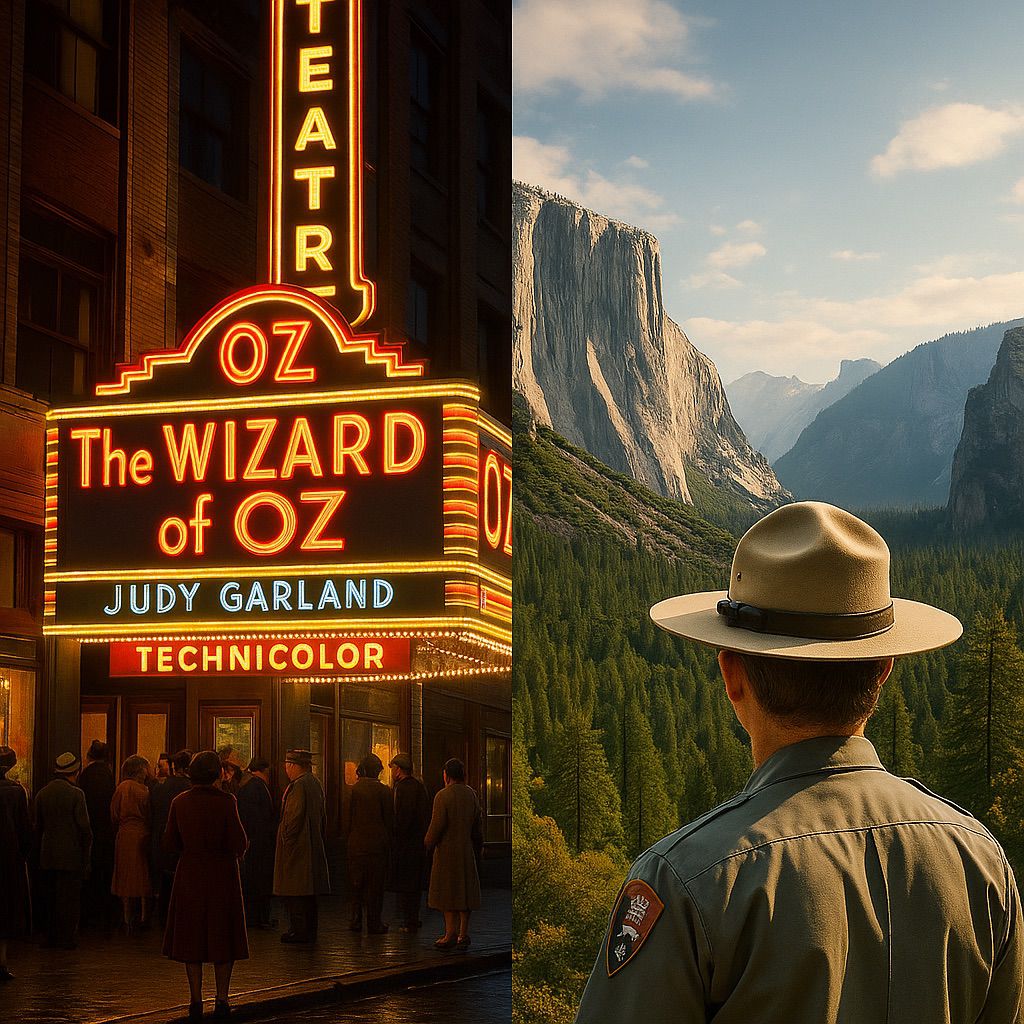
On August 25, America learned two different ways to believe. In 1916, Congress created the National Park Service, a quiet sentence that would teach an entire country to treat mountains, canyons, coral reefs, and battlefields like family heirlooms: not for hoarding, but for sharing. Twenty-three years later, in 1939, a movie slipped from sepia into Technicolor, and audiences gasped as Dorothy Gale stepped over a threshold and into a world that insisted dreams could come true in shoes you already owned. One founding promised that the real Emerald Cities—valleys and geysers and long, breathing prairies—would be kept for the generations yet to lace their boots. One film promised that the courage, heart, and brains needed to cross any wilderness were already within reach. The date is a hinge between stewardship and story, a reminder that wonder needs both a place to live and a reason to matter.

Think first of the Park Service, born into an America that was busy becoming modern. Railroads had braided the coasts together; automobiles were re-sculpting weekends; billboards and skylines competed to tell you where to look. Yet in the background—older than any headline—stood the unpurchased astonishments: geysers that threw time into the air, stone arches like doorways that forgot their doors, redwoods with the patience to forgive our hurry. Before the Service, parks existed as a scattered promise—Yellowstone here, Yosemite there, a handful of monuments and reservations stitched unevenly into a quilt of good intentions. The Organic Act of August 25, 1916 threaded them, gave them a single caretaker with a paradoxical job: keep the wild wild, and still invite the world to visit. Preserve unimpaired; provide for enjoyment. Two imperatives that jostle like siblings and, on good days, hold hands.

For a century that paradox has been the Service’s craft. Rangers translate geology into sentences and silence into safety briefings; they teach toddlers to listen for ravens and hikers to see lichens as cities. Trails are built with a grace that feels inevitable, switchbacks tucked into slopes so that knees believe the mountain has grown kinder. Signage shows where to look but not how to feel. In the best parks, roads stop just short of domination; lodges tuck their shoulders so the landscape can keep its posture. The uniform’s flat hat is the opposite of a crown: a servant’s badge that says, “Ask me how to belong here.” Because belonging is what the parks are for—not the possession of scenery, but the practice of citizenship in a place that does not owe you a view and gives you one anyway.

Yet the Park Service has been learning, and must keep learning, that “unimpaired” never meant “unpeopled.” Long before Congress named these lands, Native nations named and tended them, stewarding meadows with fire and rules, reading river moods with a literacy that predates any ranger manual. “Conservation” that ignores sovereignty mistakes erasure for care. The parks’ future—indeed their present—depends on co-management that honors treaty rights, restores names, and listens to Indigenous science as equal partner, not garnish. It also depends on expanding what counts as a park: not only geysers and granite, but also history too tender to leave to rumor—sites where rights were demanded, where families were confined, where labor organized, where communities built joy that resisted the dark. The national memory is as wild as any canyon; the Service’s task is to keep its walls from being dynamited by forgetfulness.

Now let the lights dim and the curtain rise on 1939. A dust-brown farm in Kansas tightens like a throat; the dog knows before anyone that weather and worry are kin. Then the door opens and color arrives like mercy. The floor tiles wink, the poppies conspire, the Munchkins harmonize, and a road appears as if the future had sent back a blueprint. The Wizard of Oz is the simplest myth told with the most radical tools: a child leaves home, gathers a fellowship, confronts illusions, returns changed. But inside that simplicity lies a new cinematic literacy. The transition from sepia to Technicolor didn’t just decorate the screen; it taught audiences how a frame could crack open the ordinary to reveal the saturated dignity beneath. It announced that movies weren’t only mirrors; they were windows, and sometimes doors.

The film did more than dazzle. It domesticated archetypes without declawing them. The Scarecrow made intelligence a matter of curious attention, not diplomas; the Tin Man made love a matter of practice, not sentiment; the Lion reframed courage as action despite fear, not bravado’s costume. Dorothy, pure center, invited viewers to locate home not as a place on a map but as the place where loyalty and gratitude converge. The Wizard—booming voice, easy smoke—turned institutional spectacle into a cautionary tale that still applies whenever leaders prefer curtains to candor. Wickedness arrived in green and broomstick, yes, but goodness arrived in glitter and a pointed reminder: you already have what you need. Cinema rarely gives better advice.

Put the Park Service and Oz in the same room and you begin to see the shared thesis. Both are about frames. A park boundary says: inside this line, extraction will kneel to awe. A movie frame says: inside this rectangle, we will pause the ordinary so you can learn to see it again. Both are about access. Trails and roads and campgrounds democratize the sublime, insisting that a kid in borrowed boots deserves Half Dome just as much as someone in bespoke gear. Tickets and matinees democratize imagination, insisting that a factory worker deserves lions and emerald towers as much as any patron. Both are about stewardship: the ranger with a Pulaski digging water bars after a storm; the projectionist splicing a reel; the curator cleaning a lens; the volunteer hauling trash out of a creek; the usher sweeping popcorn after credits. Wonder isn’t free; it’s subsidized by care.

Both legacies face modern tests. The parks are warming. Glaciers sulk back up their valleys; permafrost cheats; storms arrive like strangers who refuse to knock. Trails wash out and must be rebuilt farther uphill; seaside forts stare at tides that grew bold while we were arguing. The Service’s mission now includes hosting grief and training resilience: leading “fire ecology” walks that smell of charcoal and courage; writing plaques that admit a lagoon is a meadow because the ocean decided so; closing areas so that foxes can raise kits and reopen them with a conversation about patience. Loving a place in 2025 means voting for its snowpack and sea grass, not just photographing them.

Cinema faces tests, too: attention atomized by infinite scroll; industry footprints that scorch while stories preach cool; gatekeepers who still forget that magic multiplies in more hands. Yet the Oz blueprint holds. Find companions: producers, grips, musicians, writers from faces and towns that used to be seated in the balcony. Walk forward when the market tells you to play it safe: fund a story that treats a river or a neighborhood like the protagonist it is. Pull back the curtain: be transparent about budgets, labor, and climate impacts so that the illusion we buy is honest about the costs it refuses to externalize. Remember that songs are maps: the right refrain can get a frightened audience all the way through a hard idea.

There’s a child threaded through both halves of this date. One Saturday, they climb into the family car before dawn, sleep through a highway’s worth of billboards, and wake up at a pullout where granite refuses to fit into any camera they own. A ranger kneels to show them how a tiny flower lifts a whole slab with its root and rain’s patience. Weeks later, the same child sits in a theater that smells like soft seats and sugar, the lights drop, and a song teaches them that storm cellars are not the only way to survive wind. These lessons touch each other: walk softly, sing loudly; carry water and carry mercy; keep to the trail and keep to your friends; ask for help from experts in green uniforms and from little dogs who can smell a lie.

A confession: the country has not always kept these promises equally. Some families were told that certain parks were “for others.” Some children grew up near beautiful places paved for pipelines rather than protected for picnics. Some audiences saw their faces only as punchlines. Repair is not a subplot; it is the main quest. A Park Service that centers Indigenous stewardship and invites communities of color to write themselves into the interpretive script is not doing outreach; it is doing accuracy. A film industry that funds storytellers beyond the usual zip codes is not doing charity; it is doing its job: enlarging the national dream until it finally fits the nation.

So what do we do with August 25 when it arrives each year like a lantern on a trail? We remember that imagination and inheritance are twins. We donate a Saturday to a trail crew or a “friends of” group because gratitude should leave calluses. We take a first-timer to a park, shoulder half their pack, and let them set the pace. We rewatch a scene that once saved us and pay attention to the craft—how the cut breathes, how the color carries feeling, how the costume tells a truth words can’t. We nag our leaders about budgets with the same devotion we nag a failing battery. We learn the names of birds along with the names of cinematographers. We practice being the person in the group who says, “Let’s pick up that trash,” and the person who says, “Let’s wait for the slowest hiker,” and the person who says, “Let’s fund the weird script; it’s going to matter.”

“Somewhere over the rainbow” is not only a melody; it’s a management philosophy. The rainbow is the spectrum of people and places we are sworn to keep safe: prairie and pueblo, glacier and greenroom, coral head and chorus line. Over it lies the work we haven’t done yet, the risks we haven’t taken yet, the apologies we still owe and the amends we can still make. The Yellow Brick Road is any path that says, “Forward, with friends.” The Emerald City is any community that admits its wizards are human and that power, to be worth keeping, must be accountable to kindness.

There are two exits from the theater: one leads back to streets that will need your courage; the other leads to a trailhead that will need your care. Pick both. Step into the afternoon with songs stuck to your ribs and a map folded into your pocket. Keep an eye out for poppies that look like rest but are really delay. Tie your shoes—ruby or otherwise. Check the weather. Thank the folks at the desk. Promise the desk that you’ll be back, and that you’ll bring someone new. Then walk, and when the road bends, walk some more. If you do it right, you’ll get home and discover you never left; you just learned how to belong more deeply to what was yours all along.

Related Posts

Sun-Kissed Confidence: Summer Beauty Essentials in Your Beach Bag

Dave

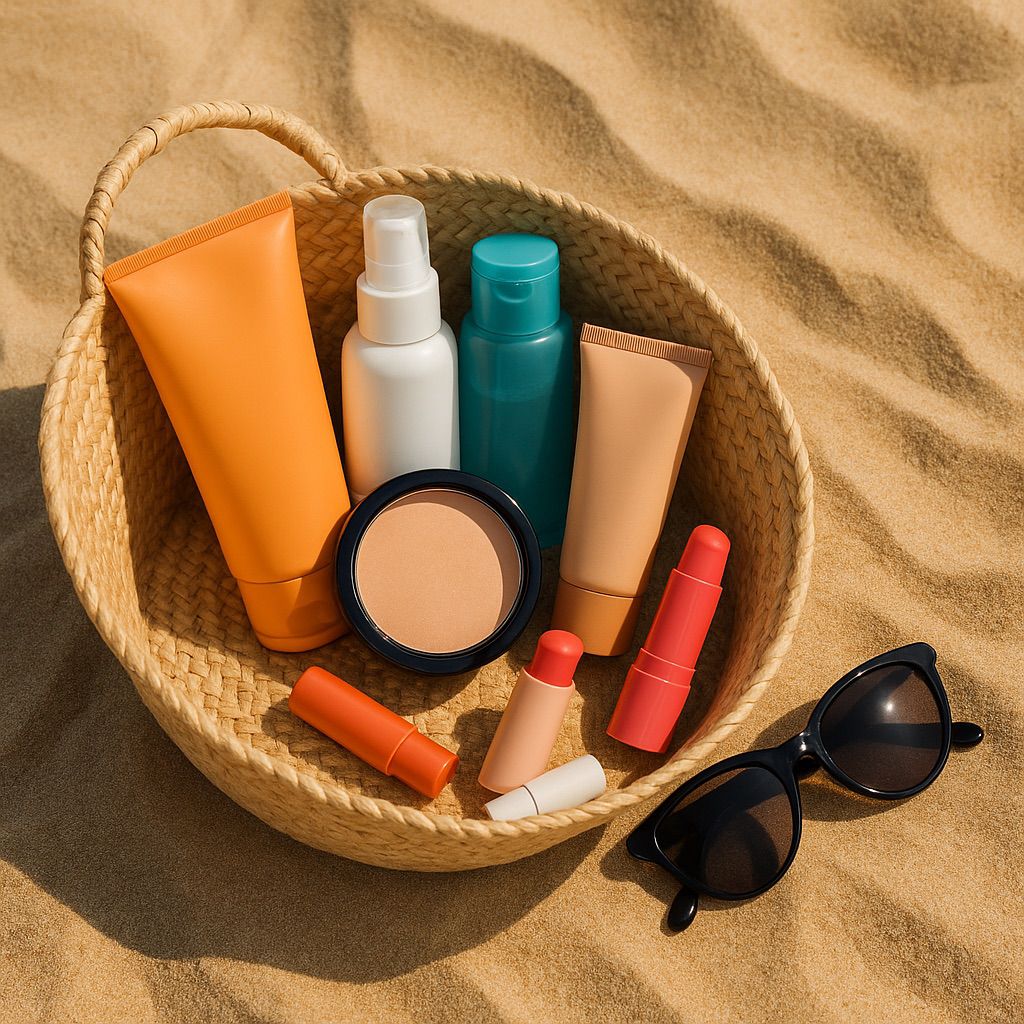
A beach day isn’t just about towels, flip-flops, and a bottle of water—it’s about curating a little sanctuary in a bag, a kit of essentials that keeps you glowing, confident, and carefree no matter how long the sun lingers. Summer is nature’s invitation to slow down, recharge, and enjoy life’s simplest pleasures, but it also tests us with heat, salt, sand, and humidity. That’s why the right beauty essentials aren’t about overpacking or vanity; they’re about balance. They help you stay comfortable, protected, and radiant while letting you fully embrace the moment. A thoughtfully packed beach bag is like a safety net woven with sunshine and self-care, ensuring that nothing stands between you and a perfect summer day.

The cornerstone of any beach beauty kit is sunscreen, the one product that transforms a fun afternoon into a safe and healthy one. Broad-spectrum SPF is non-negotiable, protecting you from UVA rays that age the skin and UVB rays that burn it. Go for lightweight, water-resistant formulas that last through swims and sweat, and don’t forget to reapply every two hours. Many beachgoers swear by mineral sunscreens with zinc oxide or titanium dioxide because they sit on top of the skin and deflect rays, offering reliable protection with fewer irritants. A tinted sunscreen can even double as your base makeup, evening out your complexion while saving space in your bag.

Lips often get overlooked, but they burn just as easily as skin. A lip balm with SPF is a beach essential, keeping your pout hydrated while shielding it from the harsh sun. Choose tinted balms for a touch of color that feels effortless but polished. Coral, berry, or soft nude shades complement the natural glow of a beach day, and they’re low-maintenance enough to swipe on between swims. Bonus: a balm infused with antioxidants like vitamin E will fight free radical damage caused by sun exposure.

Next comes hydration for your skin. Saltwater and sun have a drying effect, so a refreshing facial mist or hydrating spray is a lifesaver. Packed with ingredients like aloe vera, rosewater, or hyaluronic acid, these sprays instantly cool your skin, lock in moisture, and revive your makeup if you’re wearing any. A spritz every hour feels like a mini reset, keeping you looking fresh and awake. Pair it with a small bottle of lightweight, non-greasy body lotion or after-sun gel, and you’ll thank yourself later when your skin feels supple rather than tight.

Your eyes deserve protection too. Sunglasses with UV-blocking lenses aren’t just stylish—they shield the delicate skin around your eyes from premature aging and reduce strain from squinting. Oversized frames or wraparound styles also prevent wrinkles caused by constant frowning into the sun. Complement them with a wide-brimmed hat, which doubles as a chic accessory and a practical shield against direct rays. Together, they keep your face cooler, fresher, and more comfortable.

For makeup lovers, waterproof products are your secret weapon. A swipe of waterproof mascara opens up the eyes without fear of smudges, while a waterproof brow gel keeps your arches defined through wind, sweat, and surf. A cream blush in a waterproof formula adds a sun-kissed flush that stays put, even after a swim. And let’s not forget multi-use sticks—those clever little products that can act as blush, lipstick, and eyeshadow in one. They’re compact, versatile, and ideal for travel light beauty.

Hair also craves attention at the beach. Salt and sun can be both beautiful and brutal—giving you waves with volume but leaving strands parched and tangled. A leave-in conditioner or detangling spray with UV protection will keep your hair soft, manageable, and shielded from damage. A wide-tooth comb makes detangling painless, while a scrunchie or silk hair tie prevents breakage compared to tight elastics. Some even keep a stylish scarf in their bag, doubling as a head wrap for protection or a quick outfit upgrade.

Then there’s the matter of shine control. The beach is hot, humid, and unforgiving when it comes to excess oil. Blotting papers are a must—they absorb shine without disturbing your makeup or sunscreen. Compact translucent powders can also help, but blotting sheets are lighter and easier to use on the go. Combined with a refreshing mist, they keep you looking effortlessly matte and radiant rather than greasy.

Let’s not forget the small but mighty essentials. Hand sanitizer, especially one with aloe or moisturizing ingredients, is practical before grabbing snacks. A nail file or mini kit can be a lifesaver for unexpected chips or snags. And of course, deodorant wipes or travel-sized natural deodorants keep you feeling fresh after hours under the sun. These tiny additions elevate your comfort, turning a day at the beach from good to great.

Hydration from the inside out is equally crucial, so slip a reusable water bottle into your bag. Bonus points if it’s insulated to keep your drink cold for hours. Staying hydrated isn’t just about comfort—it’s about maintaining healthy, glowing skin and preventing fatigue under the sun. Pair it with light, hydrating snacks like fruit or veggies, and your body will thank you.

In truth, a beach beauty bag isn’t about chasing perfection. It’s about being prepared so you can relax. The essentials inside are less about looking flawless and more about feeling radiant, comfortable, and confident. They let you dive into the ocean without worry, lounge on your towel without discomfort, and stroll along the shore with effortless glow. Each item—from the sunscreen to the lip balm, from the leave-in conditioner to the facial mist—is a small gesture of self-care that transforms your experience.

The real beauty of a well-packed beach bag isn’t just in how you look; it’s in how it allows you to live the day fully. To chase waves, share laughter, read novels under an umbrella, or watch the horizon shift as the sun sets, knowing you’re cared for. It’s about taking control of your comfort so you can surrender completely to joy. In the end, summer beauty isn’t about heavy routines or elaborate steps—it’s about smart, lightweight essentials that let your natural radiance shine.

Related Posts