
Latest Articles

Salt in the Air, Sun on Your Skin: The Best U.S. Beach Towns for Summer Getaways

Dave

There’s something wildly healing about the first breath of ocean air after a long winter or a brutal spring. You step out of your car, feel the heat rising from the pavement, hear seagulls laughing in the distance, and taste salt on your lips before you’ve even reached the sand. Summer at the beach isn’t just a vacation—it’s a soul reset. And across the United States, a glorious variety of beach towns are waiting to give you exactly that. From quiet coastal escapes to lively boardwalk scenes, the best U.S. beach towns don’t just offer sun and surf—they offer a full-blown experience of relaxation, culture, food, and memory-making. Whether you’re a sun-seeker, a surf junkie, a seafood lover, or someone who simply wants to sink your toes into warm sand with a cold drink in hand, this essay is your love letter to the best coastal communities across America. And we’re not talking generic “best of” listicles. We’re talking real places. Real moments. Real beach town magic that seeps into your soul and never lets go.

Picture a slow morning on the coast of Maine, the fog still hugging the boats in the harbor as gulls dance overhead. Or imagine a wild California sunset painting the sky while surfers catch their final wave, their shadows stretching long on the beach. Or a bustling summer night in South Carolina, where the air smells of shrimp boil and sweetgrass baskets, and kids chase fireflies while live music pulses from a tiki bar by the dunes. These aren’t just vacations—they’re living postcards of American coastal life. And this essay is going to walk you through them one by one, weaving together history, charm, culture, and that intangible pull that only a true beach town can deliver.

Let’s start in New England, where beach towns carry the history of centuries and charm that feels straight out of a storybook. Kennebunkport, Maine, is a stunner. Cobblestone streets, white-steepled churches, old sea captain’s homes, and a harbor dotted with lobster boats. It’s the kind of place where you wander into a seafood shack and order a lobster roll so fresh it still tastes of the Atlantic. The air is brisk even in July, perfect for those who like a cool breeze with their sunshine. The beaches are raw and beautiful, framed by rocky outcrops and salty air that smells like nostalgia. You’ll find long morning walks and quiet evenings here, the kind where you watch sailboats drift while sipping wine on a porch swing.

Shift your compass slightly south, and you’ll land in Cape May, New Jersey—a Victorian fantasy dressed in candy-colored paint. This beach town is elegance by the sea, with gas-lit streets, horse-drawn carriages, and gingerbread-trimmed B&Bs lining the lanes. The beach is wide and clean, dotted with striped umbrellas and the smell of saltwater taffy floating on the breeze. Cape May feels like summer was never meant to end here. It’s where families return year after year to the same rental, the same boardwalk, the same ice cream shop that remembers your name. It’s charming, walkable, and endlessly photogenic. And yes, the sunsets over Sunset Beach will steal your breath every time.

On the other side of the Mid-Atlantic lies a place of pure East Coast summer glory: Rehoboth Beach, Delaware. Friendly, vibrant, and impossibly alive in the summer months, Rehoboth is a blend of traditional boardwalk fun and quirky modern cool. Picture saltwater taffy next to craft beer tastings, arcades alongside art galleries, and street performers sharing space with yoga on the sand. It’s inclusive and energetic—a town that doesn’t just welcome summer, it throws a block party in its honor. The waves are gentle enough for families, yet the food scene is sophisticated enough for serious foodies. And at night, the lights along the boardwalk glow like something out of a film.

For those who like their beach towns with a little more southern flavor, Tybee Island, Georgia, is a true gem. Just a stone’s throw from Savannah, Tybee blends southern charm with island ease. It’s the kind of place where you sip sweet tea on a porch, walk to the beach barefoot, and watch dolphins play in the surf. It has just enough kitsch to feel local—think quirky cafes and tie-dye shops—but the marshes and low-country beauty surrounding it make it something truly special. Rent a bike, explore the lighthouse, and settle into the slow rhythm of this island where time seems to stretch out with the tide.

Keep driving south and you’ll hit Folly Beach, South Carolina—Charleston’s rebellious little sister. Folly has soul. It’s gritty in the best way, a mix of surf culture, Southern hospitality, and bohemian spirit. The beach is wild and wonderful, often full of surfers carving lines into foamy waves, dogs chasing Frisbees, and kids digging castles with sunburned noses. The town itself is packed with music, dive bars, vintage shops, and seafood shacks where the shrimp is always local and the beer is always cold. It’s a place that knows how to live in the moment.

Now let’s fly across the country to Cannon Beach, Oregon, where the Pacific Ocean meets towering cliffs and iconic sea stacks. This isn’t your typical sunbathing beach town—it’s moody, majestic, and magnetic. The kind of place where you throw on a sweater in July and walk barefoot in the mist. Haystack Rock rises from the ocean like something out of a Tolkien novel. And when the fog rolls in, it feels like the entire world gets quiet. Cannon Beach is for the thinkers, the wanderers, the ones who crave beauty and depth in their coastal retreat. And the town’s boutiques, art galleries, and locally roasted coffee only add to the charm.

Further down the West Coast, Laguna Beach, California, is an artist’s dream in motion. Everything here feels painted—the cliffs, the coves, the sunsets that set the ocean on fire. It’s upscale without being pretentious, hip without trying too hard. You can spend your mornings hiking canyons, your afternoons snorkeling in emerald waters, and your evenings browsing art walks or sipping rosé at cliffside restaurants. The community here revolves around creativity and coastal living, and it’s hard not to feel inspired by the sheer beauty of your surroundings.

And then, of course, there’s Kailua, Hawaii—a beach town on Oahu’s windward side that redefines paradise. Unlike its bustling cousin Waikiki, Kailua is all about laid-back luxury. The beaches are powder-soft and postcard-perfect, the water so blue it feels unreal. But what makes Kailua sing is its community vibe. People here surf before work, paddleboard with their dogs, and shop at farmer’s markets that overflow with mangoes, pineapples, and handmade goods. The town blends Hawaiian tradition with modern soul, and once you’re there, the thought of leaving feels like sacrilege.

As you begin to wrap your mind around all these places, you realize that “best” isn’t about the most popular or most photographed. It’s about the feeling a place gives you when you arrive, the stories you take with you, and the longing it plants in your chest when you leave. It’s about the bookstore in a hidden alley, the crab shack on the dock, the old couple walking hand-in-hand down the boardwalk, the kid leaping through the tide with sand-covered legs and wide eyes. It’s about how your skin feels after a day in the sun, how your hair curls from the salt, how your heart softens from the stillness.

There is no one-size-fits-all beach town. Some will call you back every year. Others will become once-in-a-lifetime postcards that live in the back of your mind. But every beach town worth its salt shares one thing—they remind you to slow down, breathe deep, and let go. In these places, the calendar melts, and the only clock you follow is the rhythm of the tide. It’s where first kisses happen. Where families bond. Where old souls rest and wild ones roam.

So where should you go this summer? Should you chase the golden light of California, or the storm-kissed shores of Oregon? Should you eat hushpuppies in the Carolinas or crack lobster claws in Maine? Should you dance on the pier in Delaware or sip shave ice in Hawaii? The answer is yes. Yes to all of it. Yes to salt in your hair and sand in your shoes. Yes to getting a little lost and finding yourself again. Yes to beach towns, big and small, that welcome you like a long-lost friend.

Because the best U.S. beach towns aren’t just destinations. They’re states of mind. And this summer, you deserve to find yours.

Related Posts

Light, Lenses, and Lives: How August 19 Captures the World

Elias Rowen

On August 19, the world tilts its head toward two vastly different but equally profound achievements of the human spirit. One belongs to art and science—the creation of the daguerreotype, the first publicly announced photographic process, in 1839, which allowed humans to capture light itself and hold it in their hands. The other belongs to medicine and compassion—World Mosquito Day, marking the discovery in 1897 that these tiny, whining insects carry the parasite responsible for malaria, and inspiring global efforts to fight one of humanity’s deadliest diseases. Over time, August 19 has also come to embrace humanitarian causes, from raising awareness of health crises to celebrating the role of visual storytelling in connecting us across borders and cultures. If this date had a theme, it would be the power of seeing—the power of fixing something in our gaze and refusing to look away.

The daguerreotype did not emerge in a vacuum. Humans have been fascinated by the idea of capturing an image for millennia. From cave paintings to sketches on parchment, from camera obscuras to shadow tracings, each method was an imperfect attempt to freeze a fleeting moment. Then came Louis-Jacques-Mandé Daguerre, a French artist and inventor with a restless mind and an eye for the dramatic. Working with Nicéphore Niépce, who had managed to create the first permanent photograph years earlier using a process called heliography, Daguerre refined and transformed the concept. The method he unveiled to the world on August 19, 1839, used a silver-plated copper sheet, polished to a mirror finish, treated with light-sensitive iodine vapors, and developed over heated mercury. The results were astonishingly detailed, unlike anything the public had seen before.

Imagine being there that day in Paris, as word spread of a device that could snatch a likeness from the air and hold it still forever. Newspapers called it a miracle of modern science; artists feared it would replace their craft. Portrait studios soon sprouted in major cities, bringing this marvel within reach of the middle class. For the first time in human history, you could see your own face rendered with precision—lines, expressions, and imperfections included. You could send that image to distant relatives, preserve it for generations, or gaze at it yourself in quiet wonder.

Photography changed the relationship between time and memory. Before, if you wanted to remember someone’s face, you relied on paintings or mental images, both of which could blur or fade. Now, you could keep a perfect reflection of them even after they were gone. The daguerreotype also democratized legacy—no longer was a lasting image the privilege of the wealthy alone. Farmers, shopkeepers, immigrants, soldiers—people whose lives might otherwise vanish into history without a trace—could now be seen.

This ability to witness and preserve reality would eventually become a cornerstone of humanitarian work. Photographs could document injustice, poverty, and disaster, making it impossible for the comfortable and distant to deny what was happening in the world. That connection between the birth of photography and humanitarian causes is why August 19 is also celebrated as World Photography Day—a recognition that the act of taking a photograph can be both personal and political, intimate and global.

But August 19’s lens doesn’t stop at art—it focuses sharply on the fragility of life. World Mosquito Day, though often overshadowed by the romance of photography, marks a breakthrough in understanding one of humanity’s most persistent enemies. On August 20, 1897, British doctor Sir Ronald Ross discovered that the Anopheles mosquito was the carrier of the malaria parasite. While this is technically a day later, awareness campaigns often link August 19 and 20 together in public health contexts, using the overlap to emphasize prevention and education. Malaria, a disease that has haunted humankind for thousands of years, kills hundreds of thousands annually even today, mostly in vulnerable regions. The mosquito’s role in transmitting it was the missing piece in understanding how to combat the disease effectively.

Consider the symmetry here: one event gave us a way to hold light; the other gave us a way to hold back death. Both are about clarity—seeing the world as it is and using that knowledge to shape the future. Both remind us that technology alone is not enough; it is how we use it that matters. Daguerre’s invention could have remained a curiosity for wealthy collectors, but instead it grew into a tool for journalism, science, art, and activism. Ross’s discovery could have gathered dust in a lab, but instead it inspired decades of mosquito control programs, antimalarial drugs, and public health campaigns.

Humanizing these events means stepping into the shoes of the people who lived them. Picture a family in 1840s New York, dressed in their best, crowding into a small studio for their first daguerreotype. The children fidget, the parents try to keep them still, the photographer fusses with the equipment, and then—just like that—the moment is trapped forever in silver. The family might never know that, 180 years later, someone would study their image in a museum, noting the set of their shoulders, the cut of their clothes, the faint smile on the mother’s lips.

Now picture a mother in 1900 India, tucking a mosquito net carefully around her child’s bed. She has heard the new advice from the health workers in her village, warnings about stagnant water and the dangers of the mosquito bite. The knowledge gives her a weapon where before she had only fear. She will not know Sir Ronald Ross’s name, but she will know that the netting and the clean water and the medicine are the difference between life and death.

Today, on August 19, humanitarian organizations use the power of photography to show us the faces of those still at risk from diseases like malaria, and to rally support for campaigns that provide bed nets, vaccines, and treatment. The images are stark and unsparing—a child’s thin arm, a field clinic crowded with patients, a volunteer holding up a vial of medicine—but they are also full of resilience. The same medium that once captured aristocrats in Parisian salons now carries the stories of subsistence farmers in sub-Saharan Africa, of nurses in makeshift hospitals, of survivors rebuilding their communities after crises.

Photography and humanitarianism share a belief in witness. To see something is to be changed by it. The daguerreotype taught us that an image could make someone present even when they were far away or gone entirely. Public health taught us that seeing a problem clearly is the first step to solving it. When we put these together—when we use the lens to focus on human suffering and resilience—we create a bridge between art and action.

August 19, then, is more than a date; it’s a challenge. It asks us to notice, to record, and to act. It reminds us that every photograph we take, every disease we combat, every injustice we expose is part of a larger story of what it means to be human. The daguerreotype froze a moment; World Mosquito Day fights for the moments yet to come. The humanitarian spirit that binds them is the belief that the world is worth looking at—worth saving—and that our tools, whether they are cameras or microscopes, are only as powerful as the compassion behind them.

Related Posts

Through the Lens of the Tide: Mastering the Best Times to Shoot at the Beach

Dave

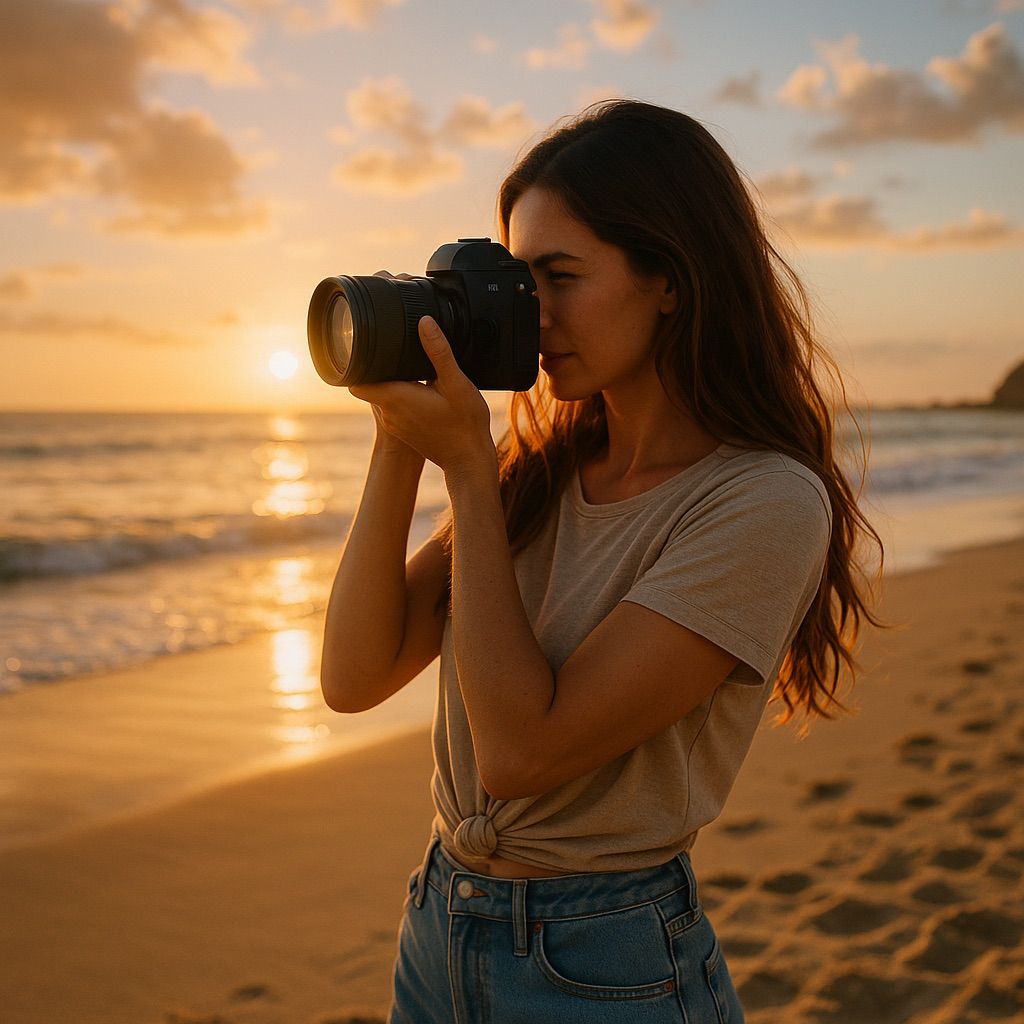
There’s something wildly magical about the beach—a place where nature puts on a show daily with a constantly shifting canvas of light, color, and motion. For photographers, the beach is both a dream and a challenge, wrapped in sea spray and golden sand. But the secret to capturing truly unforgettable beach images lies not just in the gear you carry or the technique you master—it lies in the timing. Knowing when to shoot can turn a simple seascape into a poetic masterpiece. In this deep dive into coastal photography, we’ll unravel the best times to shoot at the beach and why those fleeting windows of light can make or break a shot. But more than that, we’ll walk together along shoreline stories—real moments, weathered memories, and shutter-clicking truths from a photographer’s point of view.

If you’ve ever stood with your toes in the sand, camera in hand, watching waves roll in while the sun stretches across the horizon, then you already understand part of the magic. The beach is never the same twice. And every moment that passes is a photograph missed or made. This essay is your guide, your muse, and your gentle nudge to step onto the beach at the right moment and click the shutter with intention.

It was 5:12 a.m. when I parked my old, salt-crusted Subaru by the dunes of Cannon Beach, Oregon. The air was crisp, carrying a scent that was part pine, part ocean, and all nostalgia. My camera was already on the passenger seat, batteries full, SD cards cleared. The tide was just beginning its slow retreat, leaving reflective pools like nature’s mirrors across the sand. I walked out, barefoot, knowing that golden hour was just around the bend of time. And then it happened. That first kiss of orange and pink across the edge of the world. Light danced on the wet sand, and the clouds took on the brushstrokes of a master painter. I only took seven photos that morning. Just seven. But one of them still hangs in a gallery—and not because the composition was flawless or the lens pristine. It was because I understood when to be there. And that, above all, is the photographer’s real craft.

Golden hour, roughly an hour after sunrise and an hour before sunset, bathes everything in warm, diffused light that flatters every subject. Shadows grow long and soft. Textures come alive. The ocean reflects pinks, oranges, and golds that seem pulled from a palette of dreams. Golden hour is your best friend when you’re aiming for romantic, ethereal, or emotional beach photos. Whether it’s a couple walking hand-in-hand, a child building a sandcastle, or just the gentle lap of a wave against a seashell, this is the time when everything feels cinematic. But golden hour is also fleeting. You have to be ready. And that means knowing the sunrise and sunset times for your location and planning backward. Arrive early, scout your spot, frame your ideas. Once the light starts to shift, you’ll have maybe 20–30 minutes of perfect glow before the moment slips away. In Hawaii, I once photographed a local hula dancer during golden hour, her silhouette framed against the glowing ocean. She moved with grace, the light wrapping around her like liquid honey. That photo? It lives on the cover of a travel magazine now. And I owe it entirely to the golden hour.

Right before the sun rises and just after it sets, the blue hour cloaks the beach in cool, moody tones. Think of it as twilight’s artistic sibling—subtle, introspective, and dramatically beautiful. This is a time when beach scenes become minimalist and almost surreal. Long exposure shots during blue hour turn waves into soft blankets, clouds into whispers, and city lights into glowing reflections. I once stood alone on a dock in Maine, camera on tripod, waiting for that perfect indigo transition. The sky melted into the sea, and everything felt still. It’s the kind of moment where silence speaks louder than words. The resulting photo—fishermen’s boats floating ghostlike under a navy sky—is one of the most haunting images I’ve ever taken. If you’re willing to shoot at awkward hours and carry a tripod, blue hour will reward you with images that feel like dreams you’ve barely remembered.

Most photographers shy away from midday beach shooting. And rightly so. The sun is high, shadows are short and harsh, and your subjects can look blown out or squinty. But here’s the thing—midday isn’t impossible. It just requires strategy. Use shadows to your advantage. Seek shade under cliffs, palms, or beach umbrellas. Convert your images to black and white to emphasize contrast. Capture action shots—surfers, volleyball players, swimmers—when the sun’s strength brings out motion and energy. And if you’re shooting underwater or drone shots from above, midday sun can actually enhance clarity and color. I once flew my drone over the Maldives at noon, and the turquoise water shimmered like stained glass. It’s not about avoiding the light. It’s about learning to work with it.

Cloudy beach days might disappoint sun-seekers, but for photographers? They’re a goldmine. The clouds act like a natural softbox, scattering the light and eliminating harsh shadows. Skin tones look rich and even. Water reflects a more mysterious, subdued palette. Textures—like wet sand, driftwood, or seaweed—pop without being overexposed. On a gray morning in Cornwall, I once photographed a lone surfer paddling out. The sky was steel, the waves muted blue. That image, stark and honest, conveyed solitude and determination in a way a sunny photo never could. Don’t let clouds scare you off. They often create the most emotionally resonant images.

Too many photographers plan their shoots around sun position alone. But the ocean has its own clock—the tide. Low tide reveals tide pools, rocks, shells, and reflections. High tide can erase your foreground or crash waves against jetties for dramatic impact. Apps like Tides Near Me or Windy can help you predict when the beach will give you the best conditions. I once planned a sunrise shoot based not just on light, but on the tide being low enough to reveal a natural cave that only appears for 30 minutes every two weeks. That shot—sun streaming through the cave, lighting the tide pool beneath—became the most liked photo on my Instagram. Wind matters too. Light breezes lift hair, swirl sand, and ruffle clothing for those romantic, dynamic portraits. But strong gusts? They’re lens nightmares. Know your forecast. Respect the ocean.

Night photography on the beach is a game of patience and preparation. But when it works? It’s mesmerizing. A full moon can light up the waves with silver, while a new moon lets the stars dominate. Use long exposures to capture star trails or bioluminescence. I once spent four hours on a Puerto Rican beach photographing glowing plankton. Every time a wave hit, it sparked blue like fairy dust. It didn’t even feel real. Bring a sturdy tripod, a wide-angle lens, and extra batteries. Dress warm. And always respect local rules and safety when shooting at night. The beach can be as dangerous as it is beautiful.

Summer isn’t the only time the beach is photogenic. Autumn brings quieter shores, golden leaves along coastal trails, and moody skies. Winter gives you fog, stormy seas, and dramatic lighting. Spring offers new life—birds nesting, wildflowers blooming on cliffs, and crisp, clean air. Every season writes a different story in light. Follow them all.

The best beach photographs don’t just show the sea. They show life. They freeze the flutter of hair in sea wind, the joy of a child running from a wave, the quiet of someone staring at the horizon lost in thought. They tell a human story. I once took a photo of a grandfather teaching his grandson to cast a fishing line, both knee-deep in the surf. The moment wasn’t planned. The light wasn’t perfect. But the image captured something time couldn’t touch. That, to me, is the real treasure of beach photography. The best time to shoot at the beach? It’s whenever there’s a story to tell—and you’re willing to wait, feel, and frame it.

Beach photography teaches you humility. You cannot control the ocean, the weather, or the light. All you can do is observe, adapt, and appreciate. Each shoot becomes a meditation in patience, a dance with unpredictability. But that’s also what makes it thrilling. So pack your bag. Check your batteries. Study the light. But most of all, open your heart to the rhythm of the waves. The beach doesn’t just offer scenery—it offers stories. And your camera? That’s just your voice. Now go. The tide is turning. And somewhere out there, a perfect moment is waiting to be captured.

Related Posts

Two Revolutions in Choice: The Day Women Voted and Took Control of Their Futures

Elias Rowen

August 18 is a date that echoes like a struck bell across the corridors of modern history. It is a day bound to the voices of women, to the weight of ballots cast and the quiet authority of choices made in the privacy of one’s own body. On August 18, 1920, the United States ratified the Nineteenth Amendment, granting women the constitutional right to vote after decades of relentless activism, setbacks, and sacrifice. Forty years later to the day, in 1960, the first oral contraceptive pill entered the American market, giving women unprecedented control over their reproductive lives. These two events are not merely points on a timeline; they are twin revolutions—one political, one personal—both aimed at the same target: agency.

It’s difficult, perhaps, for someone born in the era of these rights to feel the raw weight of what life was like without them. In the years before suffrage, the idea that women might shape the laws under which they lived was met with ridicule, scorn, and outright hostility. A woman could own property in some states, could teach, could write books, could run farms and households, but when it came to voting, her voice was mute in the public square. It wasn’t because she was silent—it was because the law made her so. The fight to change that began decades earlier, at places like Seneca Falls in 1848, where the seeds of dissent were sown by women who dared to sign their names to the idea that they were equals. Over seventy years, those seeds were watered by countless voices—some speaking on grand stages, others in parlors and kitchens—until the chorus was too loud to ignore.

By 1920, the suffrage movement had gained both momentum and enemies. Anti-suffragists warned of the unraveling of the social order, painting visions of women abandoning their children, neglecting their homes, or losing their femininity entirely if they stepped into the voting booth. The irony was that many women opposed suffrage themselves, convinced by the very systems that kept them excluded that their place was elsewhere. Still, the suffragists marched on. They lobbied state legislatures, staged parades, organized hunger strikes, and endured arrests. Some were beaten in prison for their defiance. They held banners in front of the White House, declaring, “Mr. President, how long must women wait for liberty?”

When the Nineteenth Amendment finally reached the states for ratification, it came down to Tennessee—the thirty-sixth state needed to make it law. The vote was tied in the Tennessee House of Representatives until a young legislator named Harry Burn, previously expected to vote against it, changed his mind after receiving a letter from his mother urging him to “be a good boy” and vote yes. On August 18, 1920, Tennessee’s approval tipped the scales, and the amendment became part of the Constitution. It was a narrow, almost fragile victory, but it opened a door that has never closed. The following November, millions of women cast ballots in a presidential election for the first time, their inked signatures no longer confined to petitions but etched into the machinery of democracy.

Four decades later, the scene was very different, but the revolution was just as profound. In 1960, a small pill, no bigger than a vitamin, became available to American women for the first time. Its arrival marked a seismic shift in personal freedom—one as significant in the private realm as the ballot was in the public. For most of human history, the timing and number of children a woman bore were largely outside her control, dictated by biology and circumstance, and often defined by a lack of reliable contraception. The introduction of “the Pill” changed that almost overnight.

The story of its creation is as complex as the science behind it. Biologist Gregory Pincus, physician John Rock, and activist Margaret Sanger were at the center of its development, backed by funding from Katharine McCormick, a wealthy suffragist who understood that political equality meant little without bodily autonomy. Clinical trials in the late 1950s—many conducted unethically by today’s standards—led to the FDA’s approval in 1960. The Pill was marketed not as a tool of liberation but as a “cycle regulator,” a careful framing to appease moral and religious critics. Yet women understood immediately what it meant: for the first time, they could decide, with near certainty, if and when they would become mothers.

The cultural impact was explosive. For some women, the Pill was a quiet liberation, tucked away in a purse or medicine cabinet, a small, private rebellion. For others, it became a symbol of the sexual revolution, a statement that women’s pleasure and autonomy mattered as much as men’s. But the backlash was swift. Religious leaders decried it as immoral. Politicians debated whether unmarried women should even be allowed to access it. In some states, laws still made contraception illegal for anyone other than married couples. The fight for reproductive freedom was far from over, but the Pill had shifted the balance.

If you strip these two August 18 milestones down to their essence, you see the same thread: the fight for choice. The right to vote is the right to have a say in the laws and policies that govern your life. The right to control reproduction is the right to decide the course of your own body and future. Without one, the other is incomplete. A woman can cast a ballot, but if she has no control over whether she will bear children, her freedom is compromised. She can plan her family, but if she has no say in the laws that shape her life, her autonomy is still limited. These revolutions—forty years apart—were part of the same continuum.

To humanize this story is to remember the individual lives behind the milestones. Imagine a woman in 1920, putting on her best hat and gloves, walking to the polling place for the first time. Perhaps she had stood on a picket line years earlier, or perhaps she had never spoken publicly about politics. Maybe she kept her vote private, not even telling her husband. But when she dropped that ballot into the box, she knew she was part of something bigger than herself. Now picture a young woman in 1960, standing at a pharmacy counter, her heart pounding as she asked for a prescription. She might have been a college student who wanted to finish her degree without interruption, or a mother of three who decided her family was already complete. In both moments, the choice was hers—and that was the revolution.

Today, both rights are often taken for granted, even as they continue to be debated, challenged, and defended. Voter suppression efforts remind us that the ballot box is never entirely safe from erosion. Battles over reproductive rights make it clear that bodily autonomy is still a contested space. The history of August 18 is not just about what was won; it is about the ongoing vigilance required to keep it.

The women who fought for suffrage did so knowing they might never cast a vote themselves. The pioneers of the Pill risked careers, reputations, and in some cases their safety to develop it. They worked for a future they might not fully inhabit, believing that the generations after them would live freer lives. That belief was not naïve—it was necessary. And in both cases, it worked.

August 18 should be remembered not just as a day when laws changed, but as a reminder that freedom is cumulative. It builds on itself, brick by brick, until the foundation is strong enough to hold the weight of progress. These two revolutions—one in the voting booth, one in the medicine cabinet—are chapters in the same story. They tell us that choice is power, whether it’s exercised with a pen in a polling place or with a glass of water and a pill in the morning. And they challenge us to ask, in our own time: what choices will we defend, and what new freedoms will we dare to claim?

Related Posts

Sands of Splendor: Luxury Beach Resorts to Dream About

Dave

There’s a peculiar way the human heart responds to the meeting point between sea and land. It isn’t simply about beauty, though beauty is the most obvious of its charms—it’s about possibility. That infinite horizon holds a promise that our lives can be different here, freer, simpler, more sensuous. For most of us, that promise is fulfilled through a simple beach holiday: a few days of sunscreen, rented umbrellas, and sandy sandwiches. But there’s another world—one in which the shore is not just a backdrop for our rest but the stage for an entirely different lifestyle, a place where every detail is crafted to stir both wonder and comfort in equal measure. These are the luxury beach resorts of the world, sanctuaries where the salt air mingles with champagne bubbles, where even the smallest moments are designed to feel like they belong in a memory you will revisit for the rest of your life.

Imagine stepping off a small seaplane or a sleek private launch into a place where reality feels suspended. A barefoot attendant greets you by name as though you are an old friend returning home, pressing a cool towel into your hand while the scent of frangipani drifts through the air. You look around and realize that everything here has been designed to let the ocean remain the star—the villas are low and graceful, their lines following the contours of the shoreline, their roofs blending with the palms. Somewhere nearby, you hear the muffled pop of a champagne cork and the clink of crystal against crystal, and in that moment you know that you have arrived in a world where the ordinary rules no longer apply.

The Maldives, of course, is the first place many minds go when imagining luxury by the sea, and for good reason. It is impossible to overstate the dreamlike quality of its lagoons, the water shifting through impossible shades of turquoise and sapphire as the light changes. Resorts here tend to be entire islands, each one a small kingdom of pleasure, accessible only by boat or seaplane. The overwater villas—perched on stilts above the shallows—are as iconic as they are indulgent, offering private decks, plunge pools, and steps that lead directly into the warm Indian Ocean. In the morning, you might wake to the sound of tiny waves lapping at the supports beneath your bedroom, pull open the sliding glass doors, and watch a school of parrotfish drifting lazily by. Breakfast arrives by boat, served by a smiling butler who seems to anticipate your mood before you speak. And the day unfolds in a rhythm that belongs entirely to you—perhaps a guided snorkeling trip to see manta rays gliding like winged spirits through the deep, or an afternoon in the spa where your massage table is set so close to the water that the scent of salt and the sound of the waves becomes part of the therapy.

But while the Maldives has perfected the art of isolation and intimacy, other regions offer their own flavors of coastal indulgence. In the Seychelles, for example, the natural landscape plays an even greater role in the luxury experience. The granite boulders here rise from the beaches like the remnants of some ancient sculpture, and the sand is so pale and fine it seems to glow under the midday sun. Resorts in the Seychelles embrace this raw drama, building villas into the hillsides so that each room feels like part of the jungle canopy. You might have breakfast on a terrace that looks out over a secluded cove where the only footprints are yours, then wander down to the shore for a swim in water as clear as air. The feeling is not just one of luxury, but of discovery—like you have stumbled upon a secret that the rest of the world has yet to find.

In Bora Bora, the ocean is not simply a view—it is an environment in which you live. Here, the bungalows hover above a lagoon so vividly colored that photographs struggle to do it justice. Glass floor panels allow you to watch fish moving beneath your feet, and at sunset the entire lagoon becomes a mirror for the sky’s transformation, painting the water in streaks of gold, rose, and violet. You might dine on a private sandbar set for two, the table lit by torches, the gentle lap of water forming the rhythm of your evening. And as you eat, you might feel as though you’ve been lifted out of the ordinary world entirely, suspended in a moment that belongs only to you.

In the Caribbean, the rhythm changes. Here, luxury often comes with music in the air—steel drums carrying on the breeze, the occasional burst of laughter from a sailing crew just offshore, the scent of jerk spices curling up from a beachside grill. Places like St. Lucia combine dramatic scenery with indulgent amenities, the island’s twin Pitons rising like sentinels over turquoise bays. Resorts here are carved into the landscape so artfully that each room feels like it has been waiting just for you, with open-air designs that invite the trade winds to wander through your living space. You could spend your morning swimming in an infinity pool that seems to pour directly into the Caribbean Sea, then wander down to a crescent of white sand where your cabana is already prepared—fresh towels folded with impossible precision, a small table stocked with chilled coconut water and lime wedges. And when the sun begins to sink, painting the horizon in gold and tangerine, you might find yourself sitting on your balcony with a rum cocktail, wondering how it is that time feels both slower and fuller here.

In the Bahamas, the luxury resorts seem to understand the appeal of contrast—on one hand, there’s the allure of pure, untamed beaches where the sand squeaks beneath your feet and the only other footprints are those of a seabird. On the other, there’s the glittering energy of high-end marinas, where yachts from around the world bob gently in the evening light, their decks glowing like floating mansions. A day might begin with a dive into water so transparent that you can see the ripple of sunlight across the seafloor twenty feet down, and end with dinner at a table set directly on the sand, toes buried in its cool softness as the tide whispers nearby. The resorts here tend to fuse that raw island beauty with impeccable service—private chefs who’ll prepare a seafood feast tailored exactly to your taste, butlers who manage to appear exactly when you need them, and villas that somehow feel like both palaces and hideaways.

Across the world in the Mediterranean, the vibe shifts again. Luxury beach resorts in places like the Amalfi Coast, Santorini, and the Côte d’Azur have their own brand of seduction—one born from history as much as beauty. Here, your suite might be in a centuries-old villa, its stone walls cool even in the heat of summer, balconies spilling over with bougainvillea. The beaches themselves may be small coves of polished pebbles rather than sprawling stretches of sand, but what they lack in size they make up for in intimacy. The sea here glimmers in deep, royal blues, and the air is scented with a blend of salt, citrus, and the faint spice of wild herbs growing along the cliffs. You might spend the afternoon on a private yacht, weaving between coastal villages whose pastel facades seem to defy gravity, and return to the resort just in time for a dinner of freshly caught fish drizzled with olive oil pressed from groves you passed earlier that day. In these places, luxury is inseparable from culture—you don’t just visit the sea, you inherit its centuries of stories.

In Thailand, luxury beach resorts take full advantage of the country’s extraordinary sense of hospitality and its lush natural environment. On islands like Koh Samui and Phuket, you might find a villa so seamlessly integrated into the tropical greenery that it feels almost like part of the forest. Outdoor showers open onto views of the ocean, infinity pools reflect both palm fronds and passing clouds, and interiors are crafted from polished teak and silk so that even the smallest detail feels intentional. Days here often balance the indulgence of spa treatments and five-star dining with adventures—snorkeling through coral gardens alive with color, kayaking into hidden sea caves, or hiking to jungle waterfalls where the only sounds are the rush of water and the calls of distant birds. And always, there is the gentle rhythm of Thai life—gracious smiles, a sense that nothing is rushed unless you want it to be, and a deep connection between the land, the water, and the people who call it home.

Then there is Bali, where the concept of a luxury beach resort often transcends simple comfort and ventures into something more spiritual. Many of the island’s most exclusive coastal retreats are designed to honor Balinese traditions, incorporating temples and ceremonial spaces alongside guest villas. You might wake to the sound of a gamelan orchestra drifting over the waves, join a morning offering ceremony where flowers and incense are set afloat on the water, and then spend the day in a blend of modern indulgence and timeless ritual. The beaches themselves vary from stretches of soft white sand to dramatic black-sand shores where the ocean roars against volcanic rock. In the evenings, you might find yourself dining under a sky crowded with stars, the air perfumed with frangipani and clove, feeling that rare combination of absolute luxury and deep cultural immersion.

In Australia, luxury beach escapes often mean going somewhere far from the rest of the world—places like the Whitsundays, where the sand of Whitehaven Beach is so pure it squeaks underfoot and reflects the sun in dazzling brightness. Here, high-end resorts often occupy entire islands, blending contemporary architecture with the raw splendor of the Great Barrier Reef. You could start your day with a scenic helicopter ride over Heart Reef, watching the turquoise water swirl around the coral, then return to your villa for a leisurely breakfast on a deck that seems to float above the sea. The sense of scale here is staggering—long sweeps of beach where you might walk for an hour without meeting another soul, waters so rich with marine life that you could spend weeks exploring and still find something new each day. And yet, when you return to the resort, you’re met with all the touches of modern indulgence: champagne on ice, a drawn bath scented with eucalyptus, and a sunset view so mesmerizing it makes you forget the rest of the world exists.

Hawaii offers its own interpretation of coastal luxury, one that is deeply tied to the islands’ spirit of aloha. In places like Maui, Kauai, and the Big Island, resorts are designed to highlight the dramatic contrast between volcanic landscapes and the serene sweep of the Pacific. One moment you might be lying in a hammock strung between palms, listening to the rustle of leaves in the breeze, and the next you’re watching molten lava pour into the sea from a helicopter. The service here is warm and genuine, blending high-end attentiveness with a familial friendliness that makes you feel less like a guest and more like an honored friend. And as the sun sets behind the ocean, often in a blaze of fiery reds and golds, you might find yourself at a luau where the rhythms of hula and the pulse of drums seem to sync with the waves themselves.

In Dubai, luxury beach resorts often seem to defy the laws of nature entirely, creating coastal paradises where there were none before. On the shores of man-made islands shaped like palm trees or entire world maps, you’ll find resorts with private beaches imported from the whitest sands imaginable, cooled swimming pools overlooking the sea, and amenities so over-the-top they feel like something from a dream—think underwater suites with windows into aquariums, gold-leaf facials at the spa, or dining rooms where Michelin-star chefs prepare meals served by candlelight on floating platforms in the lagoon. The ocean here is warm and calm, a mirror for the towering architecture that lines the horizon, and the resorts seem locked in a friendly competition to see who can make their guests’ jaws drop the furthest.

Related Posts