Latest Articles

Beach Vibes for Your Backyard: Turning Your Outdoor Space into a Coastal Paradise

Dave

There’s something magical about the beach that pulls at the human spirit. Maybe it’s the endless blue horizon that whispers of freedom, the rhythmic hush of waves that seems to calm every racing thought, or the warm sand that molds perfectly beneath your feet like the earth’s embrace. But here’s the thing—you don’t have to live on the coast to feel that magic. You can bring the beach home to your backyard, creating a personal retreat where the salty breeze is imagined, but the relaxation is very real.

Transforming your outdoor space into a seaside sanctuary isn’t just about tossing up a hammock and calling it a day. It’s about capturing the sensory details—the colors, the textures, the smells, the sounds—that make the shore so irresistible. Done right, your backyard can become the kind of place where time slows down, worries fade like footprints in the tide, and every evening feels like a mini vacation.

Step One: The Foundation—Sand, Stone, and Decking
The beach is defined by its terrain, and your backyard can echo that by choosing the right foundation. Start by deciding if you want a “barefoot zone.” If so, consider a small sand pit or section with fine, pale play sand. It’s a bold move, but nothing says “coastal escape” like sinking your toes into sand while sipping your morning coffee.

For a more durable base, pale decking or weathered wood can mimic the look of a pier or boardwalk. Stone pavers in light gray or beige can give off the vibe of a Mediterranean coast, especially if paired with seashell accents between the cracks. The key is to choose materials that feel natural and sun-worn, as if the ocean has been shaping them for years.

Step Two: Color Like the Coast
Color sets the mood faster than almost anything else. Beach palettes are all about soft, sun-bleached hues: sandy beige, driftwood gray, seafoam green, coral pink, and ocean blue. Your backdrop—whether it’s a fence, wall, or the side of your house—can be painted in a crisp white to reflect light, making the space feel bigger and brighter.

Textiles like cushions, throw pillows, and umbrellas should echo these coastal tones, but don’t be afraid to add pops of sunny yellow or tropical turquoise for energy. The idea is to make the space feel airy and bright, like a summer morning before the sun gets too hot.

Step Three: Furnish for Relaxation
Forget stiff patio sets—beach vibes call for furniture that invites lounging. Think Adirondack chairs, rattan loveseats, and swinging egg chairs. A hammock strung between two posts or trees is practically non-negotiable, especially if you’re serious about afternoon naps.

If you have the space, a daybed with weatherproof cushions can become the centerpiece of your backyard retreat. Top it with a light throw blanket for cooler evenings, and you’ve got a reading nook, napping spot, and sunset-watching lounge all in one.

Step Four: Soundscapes and Scents
Sound is a big part of the beach experience, and it’s surprisingly easy to replicate. Small, discreet speakers can play recordings of ocean waves, seagulls, and distant wind chimes. If you prefer something natural, a water feature—a small fountain, a bubbling stone, or even a DIY trickle wall—can mimic the soothing sound of water meeting shore.

Scents are just as important. Citrus candles, coconut-scented lantern oils, or a few pots of fragrant plants like lavender and rosemary can instantly transport you to a coastal setting. For a more subtle effect, you can use essential oil diffusers with blends designed to smell like the ocean.

Step Five: Lighting Like Sunset
The right lighting can make your backyard feel like golden hour, even after the sun’s gone down. String lights are a coastal design staple—hang them overhead to create a canopy of warm glow. Lanterns, hurricane lamps, and candles in glass jars add intimacy and charm.

If you really want to mimic a seaside evening, choose bulbs with a warm golden hue rather than cool white. The softer light will make the space feel welcoming and relaxed, perfect for lingering after dark with friends or a good book.

Step Six: Plants with Coastal Personality
Not all coastal plants will thrive inland, but you can still get the look. Ornamental grasses like fountain grass or feather reed grass sway like dune grass in the breeze. Succulents, agave, and palm-like plants such as yucca can bring in a tropical feel without requiring ocean-side conditions.

For a softer, more romantic look, add potted hydrangeas or flowering hibiscus. Mix in herbs like mint and basil to give the space fragrance and functionality—you can pluck fresh sprigs for drinks and dishes.

Step Seven: Add Play and Activity
A beach-inspired backyard isn’t just for sitting and sipping. Think about what makes the beach fun—games, movement, and a touch of adventure. You could set up a cornhole game with boards painted in pastel beach colors, a bocce ball set on a sandy or gravel section, or even a small above-ground pool to cool off in.

If you have kids, add a sandbox with beach toys or a water table so they can play seaside pretend. Adults aren’t left out—oversized Jenga, paddleball, or even a DIY “beach bar” for mixing tropical drinks can turn your space into the life of the neighborhood.

Step Eight: Personal Touches and Decor
This is where your backyard really becomes your beach. Hang a vintage surfboard on the fence, display collected seashells in clear jars, or lay out a patterned outdoor rug that reminds you of coastal boardwalks. A weathered wooden sign pointing toward “Beach” (even if it’s only ten steps away) adds whimsy.

Textiles like lightweight throws, patterned cushions, and breezy outdoor curtains can soften the look and add layers of comfort. For a boho-beach vibe, mix woven baskets, macramé hangings, and fringed umbrellas.

The Mindset Matters Most
Bringing beach vibes to your backyard isn’t just about the decor—it’s about how you use the space. Make time to actually be there, barefoot and unplugged, whether it’s for your morning coffee or an evening glass of wine. Invite friends over for seafood on the grill, have a “towel and book” afternoon, or just lay back and watch the clouds drift.

Your backyard beach doesn’t have to be perfect—it just has to be yours. Maybe your waves are imaginary, but the relaxation will be real. In a world that moves too fast, creating a pocket of calm, sandy, sunlit joy is more than a design project—it’s an act of self-care.

And who knows? On some evenings, with the right light, the right breeze, and a little imagination, you might even hear the ocean.


Related Posts

When the Empire Chose War: Britain’s Fateful Step into World War I

Elias Rowen

August 4, 1914, is a date that still echoes with the weight of a world forever changed. On that day, Great Britain officially declared war on Germany, following the latter’s invasion of neutral Belgium. It was a moment that would mark the beginning of Britain’s deep and harrowing entanglement in what would become known as the First World War—a conflict unlike anything humanity had ever seen before. In its wake would come four years of unimaginable carnage, industrialized slaughter, and irreversible transformations in politics, society, and technology. What began with a diplomatic crisis in the Balkans cascaded into a global conflagration, pulling empires and colonies alike into a vortex of blood and steel. Britain’s entry into World War I was not just a military maneuver—it was a pivotal turning point in world history.

The road to war was paved with entangled alliances, imperial ambitions, and a continent simmering with nationalist fervor. The assassination of Archduke Franz Ferdinand of Austria-Hungary on June 28, 1914, in Sarajevo by a Bosnian Serb nationalist was the spark that ignited a volatile powder keg. Austria-Hungary, backed by Germany, issued an ultimatum to Serbia, which was supported by Russia. When Austria-Hungary declared war on Serbia, Russia began mobilizing. Germany declared war on Russia on August 1, and then on France on August 3. The dominoes were falling rapidly.

For Britain, the situation grew increasingly untenable. The United Kingdom had maintained a policy of “splendid isolation” in the years leading up to the war, though it had aligned itself through the Entente Cordiale with France and a less formal understanding with Russia. Britain’s direct commitment was uncertain—until Germany invaded Belgium, a neutral country whose independence Britain had guaranteed under the Treaty of London (1839). The violation of Belgian neutrality provided both a legal justification and a moral imperative for action. When the German army marched into Belgium on August 4, it left the British government with little room to maneuver. That evening, Prime Minister H. H. Asquith informed the public that Britain was at war with Germany.

The news reverberated like thunder through the British Isles. Church bells rang, newspapers ran bold headlines, and crowds gathered in public squares to hear the announcements read aloud. There was a mixture of patriotic fervor and somber apprehension. Many believed the war would be over by Christmas. Few could fathom that it would last more than four years and claim the lives of over 20 million people worldwide.

Britain’s declaration of war was followed closely by declarations of war on Austria-Hungary and, later, the Ottoman Empire (Turkey), which had aligned itself with Germany and the Central Powers. Thus began a massive mobilization of Britain’s military, economic, and human resources. The British Expeditionary Force (BEF), a highly trained but relatively small army, was sent to France. It would soon find itself engaged in the brutal Battle of Mons and the long, deadly stalemate of trench warfare.

In those early days, the war was still viewed through the romantic lens of honor, glory, and duty. Young men lined up at recruitment offices, eager to serve king and country. Posters urged Britons to “Do Your Bit,” and Lord Kitchener’s iconic recruitment image—his finger pointing directly at the viewer—became a symbol of national resolve. But underneath the patriotic pageantry lay a grim truth: the world was entering a new kind of war, one fueled by industrial power, advanced weaponry, and mass mobilization.

Britain’s entry into the war also triggered the involvement of its vast empire. Soldiers from Canada, Australia, New Zealand, India, South Africa, and the Caribbean were called to arms. These troops would fight and die in Europe, the Middle East, Africa, and Asia. The global nature of the British Empire meant that the war was not merely European—it was a world war in the truest sense. The contributions and sacrifices of colonial troops are a vital, though often underrepresented, part of this history.

As the weeks turned to months and the months to years, the initial optimism faded. The Western Front became a frozen line of mud, blood, and barbed wire stretching from the North Sea to the Swiss border. British soldiers endured constant shelling, gas attacks, disease, and the omnipresent threat of death. Battles like the Somme, Ypres, and Passchendaele etched themselves into the national consciousness as symbols of courage and futility.

Back home, the war touched every aspect of life. Rationing, blackouts, air raids, and the loss of loved ones became daily realities. Women entered the workforce in unprecedented numbers, taking on roles in factories, transport, and agriculture. The suffrage movement gained momentum, bolstered by the visible contributions of women to the war effort. Children collected scrap metal, communities organized aid, and families prayed over letters from the front. The war was no longer something happening “over there”—it was in every home and heart.

The government expanded its reach into civilian life through conscription, propaganda, and censorship. Dissent was suppressed, and patriotism was equated with unquestioning loyalty. Yet, beneath the surface, people wrestled with doubt, grief, and disillusionment. Poetry and literature from the front, penned by soldiers like Wilfred Owen, Siegfried Sassoon, and Rupert Brooke, revealed a far darker truth than official reports suggested. The “war to end all wars” was becoming a grim testament to human suffering and resilience.

Britain’s entry into the war also forced dramatic shifts in international alliances and power structures. The United States, initially neutral, would eventually be drawn into the conflict in 1917, further altering the global balance. Russia, strained by the war, would undergo revolution in 1917, leading to the rise of the Soviet Union. The Ottoman Empire, which had sided with Germany, would collapse by the end of the war, reshaping the map of the Middle East. The Austro-Hungarian Empire would dissolve, and Germany would be humiliated by the Treaty of Versailles—a development that would sow the seeds for future conflict.

But on that fateful day in August 1914, none of this was yet known. What Britain knew then was that honor, obligation, and fear had aligned to pull the nation into the deadliest conflict it had ever faced. The decision was not made lightly, and debates within Parliament and the Cabinet were intense. Some believed the war was inevitable, others that diplomacy could still prevail. But once Belgium was invaded, the course was set. Britain would go to war, and the world would never be the same.

In retrospect, Britain’s entry into World War I was both a necessary stand against aggression and a tragic leap into the abyss. The war exposed the fragility of peace, the cost of empire, and the depths of human endurance. It forged a new world out of the ashes of the old, birthing ideologies, movements, and institutions that continue to shape our lives today. The League of Nations, the seeds of the United Nations, the redrawn borders of Europe and the Middle East—all trace some part of their origin to that single, staggering decision.

Today, as we remember August 4, 1914, we are called to reflect not only on the politics and battles but on the lives touched and changed forever. The young soldier in the trench, the nurse tending the wounded, the child waiting for a father who would never return—these are the real legacies of that day. They remind us that history is not made by declarations and treaties alone, but by the hopes, fears, and sacrifices of ordinary people caught in extraordinary times.

The war memorials scattered across Britain and the Commonwealth—etched with names, silent under weeping skies—are more than monuments. They are echoes of a moment when a nation answered the call of war, not knowing what awaited it. They are reminders that peace must be guarded, and that the decisions of today carry the weight of tomorrow. The lamps may have gone out across Europe, as Sir Edward Grey famously said, but their flickering memories light the path forward still.

Related Posts

Morning Yoga by the Ocean: Finding Peace Between the Waves and the Sky

Dave

There’s something about the ocean at dawn that feels like a secret kept between the earth and the sky. Before the sun fully climbs above the horizon, the world is hushed—except for the rhythmic hush of the waves and the whisper of wind through salty air. The sand is cool beneath your feet, the colors in the sky shift from pale lavender to molten gold, and the water reflects the morning light in ripples that look like moving glass. In this stillness, unhurried and undisturbed, yoga by the ocean becomes more than a practice. It becomes a conversation between body and nature, a gentle reminder that you’re part of something vast and beautiful.

Morning yoga by the ocean isn’t just about stretching muscles or perfecting postures—it’s a sensory immersion. You feel the earth under your mat, hear the crash and retreat of waves, taste salt on your lips, smell the fresh marine air. Your body wakes slowly, each inhale filling you with energy, each exhale releasing the residue of yesterday. The air feels different at sunrise—lighter, cooler, alive with potential. You aren’t just moving your body; you’re syncing it with the pulse of the tide.

Starting the day this way changes everything. Your mind is calmer, your thoughts less cluttered, your focus sharper. You step away from the mat not only more flexible in body but more fluid in spirit. The stresses waiting for you on land don’t disappear, but they lose their grip on you. You’ve already grounded yourself in something bigger than the noise of daily life.

It’s no wonder so many people feel drawn to the idea of morning yoga by the ocean. The combination of yoga’s intentional movements and the sea’s timeless rhythm is deeply restorative. Both are ancient—yoga, with roots stretching back thousands of years in India; the ocean, an eternal presence that’s shaped human existence since the beginning. Together, they create a balance of discipline and freedom, effort and surrender.

If you’ve never tried it, imagine this: you lay out your mat on the sand just above the waterline, where the tide comes close enough to mist your toes but doesn’t reach your mat. The sun is still low, the sky painted in colors your phone camera will never capture as beautifully as your eyes do. You start in Mountain Pose, feeling your feet sink slightly into the sand, grounding you more deeply than any indoor studio floor ever could. Your breath matches the waves—inhale as the tide draws back, exhale as it comes forward.

From there, your flow might move into gentle stretches—Forward Fold, Cat-Cow, a few rounds of Sun Salutations. The ocean breeze cools your skin as your body warms. Seagulls call overhead, and somewhere down the beach, you hear the faint laughter of an early riser greeting the day. In Warrior Pose, you face the horizon, steady and unshakable. In Tree Pose, you sway ever so slightly, mimicking the movement of the water. In Savasana, you feel the sand beneath you and the sky above you, as if you’ve slipped into the space between worlds.

Morning yoga by the ocean can be deeply personal, but it’s also a communal experience. You might see others scattered along the shore, moving in their own silent flows, all connected by the same sky, the same water, the same intention to start the day in peace. Sometimes, beach yoga sessions are organized by local studios or wellness groups, bringing together strangers who share the same desire for movement and mindfulness. These gatherings can be powerful—sharing the quiet with others who understand it makes the experience feel both intimate and expansive.

Physically, the benefits are amplified by the setting. Sand provides a natural instability that engages smaller stabilizing muscles in your feet, ankles, and core, making poses more challenging in the best way. The salty air helps clear your lungs, and the natural sunlight encourages the production of vitamin D, supporting bone health and mood regulation. The sensory stimulation—from the sight of waves to the scent of the sea—activates your parasympathetic nervous system, lowering stress and enhancing your sense of well-being.

There’s also a subtle, almost spiritual element that emerges when practicing yoga by the ocean. The vastness of the sea reminds you of the impermanence of everything, including your worries. The tide’s rise and fall mirror the ebb and flow of your own breath. The way the horizon stretches endlessly can shift your perspective, making whatever’s been weighing on you feel lighter, smaller, more manageable. The ocean doesn’t ask anything of you—it simply offers its presence, as steady as your heartbeat.

Of course, like anything beautiful, it’s not without challenges. The sand can be uneven, the breeze can turn into wind, and sometimes curious seagulls think your mat is an excellent perch. But these small inconveniences are part of the charm. Yoga by the ocean teaches adaptability—you learn to adjust your poses when the sand shifts under you, to soften your practice when a gust of wind presses against you, to find focus even when a passerby wanders too close.

And perhaps that’s the deeper lesson. Morning yoga by the ocean isn’t about controlling your environment; it’s about finding balance within it. It’s about meeting life exactly where you are, whether the waters are calm or choppy. It’s about carrying that sense of peace back into your day, so that even when you’re miles from the shoreline, you can still hear the rhythm of the waves in your breath.

When you leave the beach after a morning practice, the world feels different. Your senses are sharper, colors more vivid, sounds more distinct. The day hasn’t yet had a chance to overwhelm you, and you’ve already given yourself the gift of presence. It’s a feeling that lasts long after the sand has been brushed from your toes and the salt has dried on your skin.

Morning yoga by the ocean is more than an exercise—it’s a ritual, a love letter to the self, and a reminder that the most powerful moments often come in the quiet hours before the rest of the world wakes up.

Related Posts

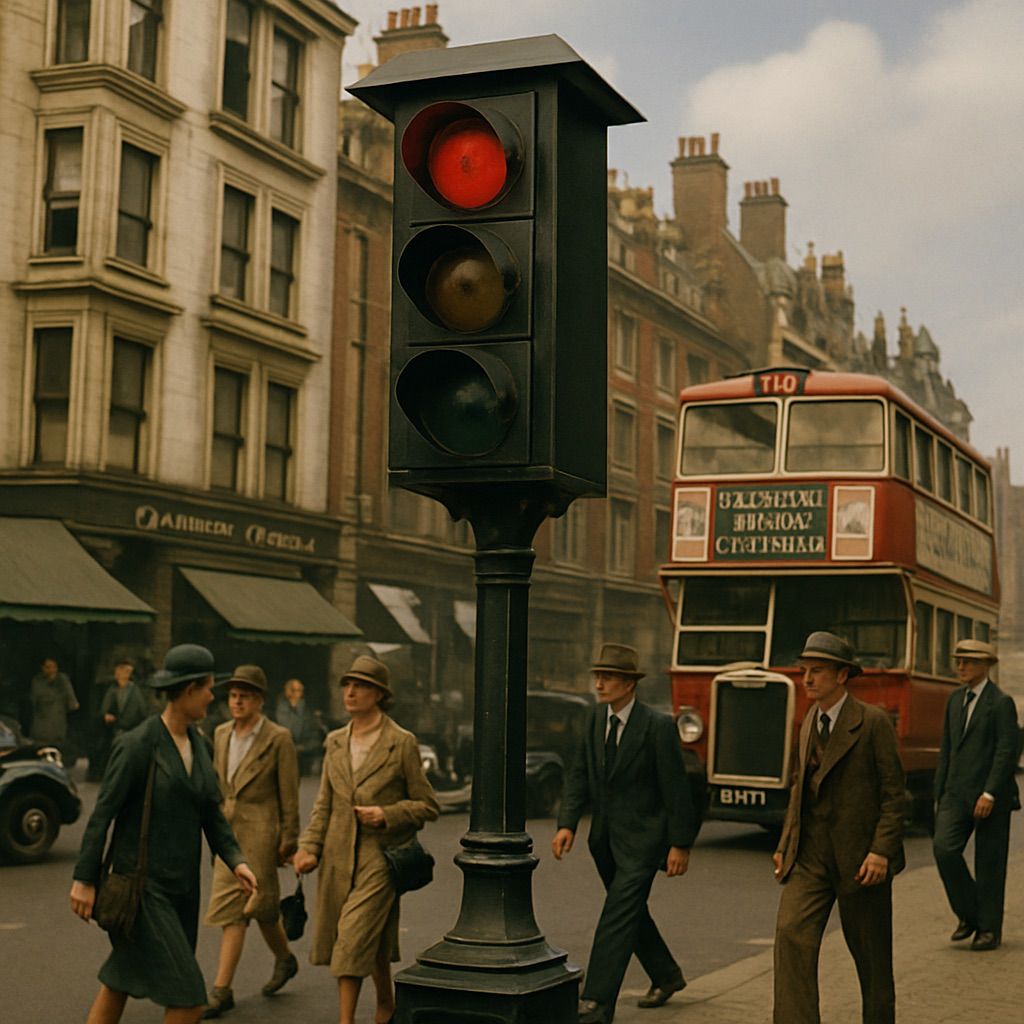
How Britain’s First Electric Traffic Lights Transformed Urban Life

Elias Rowen

The history of a city is often told through its architecture, wars, and politics—but sometimes, its most transformative moments appear in the smallest of innovations. On August 3, 1926, the bustling streets of London bore witness to a curious sight that would go on to change the rhythm of modern life: the installation of Britain’s first electric traffic lights. What might seem like a routine civic improvement was, in truth, a powerful milestone in the evolution of urban infrastructure—one that fundamentally redefined how people moved, interacted, and envisioned the future of their cities. The flicker of colored bulbs on a metal pole signaled far more than just “stop” or “go.” It symbolized order in chaos, safety amidst uncertainty, and a quiet leap into the mechanized age of modern urbanity.

Before the advent of traffic lights, city streets were loud, lawless arteries of transportation chaos. Horse-drawn carriages, bicycles, early motorcars, and pedestrians all jostled for the right of way. There were no clear rules, and accidents were frequent. London, one of the busiest cities in the world at the time, was plagued with collisions and congestion, particularly at major intersections like Piccadilly Circus or Parliament Square. Policemen stationed on pedestals did their best to direct traffic, often using elaborate hand signals that varied from one intersection to another. It was an exhausting, inefficient, and dangerous system—made worse by the growing popularity of the automobile.

The motorcar had become a symbol of modern progress and personal freedom, but it brought with it a new set of challenges. The streets, once designed for pedestrians and carriages, were suddenly choked with speeding metal machines. Something had to be done. While the United States had already experimented with electric signals—the first of which were installed in Cleveland, Ohio in 1914—Britain was hesitant. There were fears about reliability, power failures, and how the public might react to taking orders from a machine instead of a policeman. But eventually, practicality triumphed over skepticism.

The pivotal moment came on that summer day in 1926, when London’s first electric traffic signal was installed at the intersection of Piccadilly and St James’s Street. The signal, mounted on a tall black post with a pair of colored lights—red for stop, green for go—and an amber warning, stood like a lighthouse of logic amid the swirling tides of urban confusion. A small control box operated the lights manually at first, and a police officer was still present to supervise the system and reassure skeptical citizens. But there it was: a quiet, blinking revolution.

The public’s response was a mix of fascination and bewilderment. Children gawked at the strange device, and newspaper headlines hailed the dawn of a “New Age in Traffic Control.” Motorists—some of them unsure whether to obey the new lights or wait for a policeman’s whistle—gradually adapted. Pedestrians were slower to trust the lights, often hesitating in the street until coaxed by officers. Yet within days, the system proved its worth. Traffic flowed more smoothly. Accidents at the intersection dropped. And most importantly, people began to feel a new sense of predictability and safety.

What the installation represented went beyond mere traffic management. It was a symbol of a changing society—one that was beginning to prioritize efficiency, automation, and forward-thinking urban planning. The traffic light was not just a tool for controlling cars; it was a signal that cities were evolving into systems, machines in themselves, governed by rules, signals, and structures designed to harmonize the movement of millions. It marked a shift in the relationship between people and their cities—from chaos to coordination.

The success of London’s electric signals sparked rapid adoption across the city. Soon, other intersections received their own lights, and a standardized system of red, yellow, and green became the norm. Over time, the controls were automated, then computerized, allowing for dynamic changes based on traffic flow. The transformation of London’s traffic infrastructure reflected broader shifts occurring globally in the 20th century. As cities swelled with cars, buses, and bikes, the humble traffic light became a universal symbol—instantly recognizable in every country and culture.

But beyond its functionality, the electric traffic light also had a psychological impact. It introduced the concept of shared responsibility in public space. No longer was movement dictated by dominance or aggression; it was coordinated through mutual agreement. Red meant everyone stopped. Green meant everyone could go. The simplicity of this system bred a kind of civic order, a shared language of movement that transcended class, language, and identity.

The traffic light also opened the door to broader urban innovations. Once cities could control vehicle flow at intersections, they began reimagining public transit, pedestrian pathways, and even the very design of streets. Crosswalks, bike lanes, roundabouts, and zoning regulations all emerged as part of a larger vision of organized, human-centered cities. In this way, the electric signal served as the catalyst for a century of planning innovations that sought to balance mobility, safety, and accessibility.

Of course, the history of traffic lights isn’t without irony or complexity. While they brought order to the streets, they also signaled the growing dominance of the automobile—a mode of transport that would later be linked to air pollution, suburban sprawl, and climate change. In many cities, pedestrians were gradually sidelined in favor of cars. Urban design began to prioritize vehicles, often at the expense of human interaction and community life. And yet, even within this critique, the role of the traffic signal remains crucial. It didn’t cause these shifts; it simply mediated them, attempting to manage a rapidly changing world.

In more recent years, traffic signals have themselves evolved to reflect the changing values of society. Smart traffic systems now use sensors and artificial intelligence to optimize flow and reduce emissions. Pedestrian signals have become more inclusive, featuring audible cues for the visually impaired and extended crossing times for seniors. Some cities are even experimenting with “shared spaces” where traffic lights are removed entirely—encouraging eye contact and negotiation between drivers and pedestrians. Yet even in these places, the legacy of that first electric signal in London is deeply felt. It laid the groundwork for all the innovation that followed.

There’s something poetic about the way a machine designed to direct vehicles has become such a fixture in our visual and emotional landscape. We associate the red light with patience, the green light with permission, the amber with caution. These colors have become metaphors, shorthand for choices and consequences. Artists, poets, and filmmakers have used traffic lights as symbols of transition, decision, and fate. Children learn their meanings before they learn to read. Travelers see them and feel instantly oriented, no matter how far from home they may be. Few inventions have so seamlessly blended into our lives while maintaining such clear purpose.

Human stories surround every light. A young couple holding hands, waiting for green before crossing a bustling street. A cab driver tapping his steering wheel in rhythm with the blinking yellow. A cyclist darting through a late red. The hum of city life pulses around these signals—never acknowledged, rarely admired, but always obeyed. The traffic light may seem mundane, but it is deeply human. It reflects our need for order, our willingness to cooperate, and our desire to move forward—together.

Looking back at August 3, 1926, we might marvel at how such a small act—raising a signal post on a busy London street—could resonate through history. But progress often begins this way: quietly, incrementally, with one small change that alters the flow of life. The traffic light didn’t just manage traffic; it made city life bearable, livable, and eventually beautiful. It gave rhythm to the dance of machines and humans. And for that, it deserves its place among the great milestones of modern civilization.

As we move further into the 21st century—with autonomous cars, hyperloops, and smart cities—it’s worth remembering the humble beginnings of traffic control. It began not with a grand proclamation, but with a blinking light and a cautious public. It succeeded because people trusted it, obeyed it, and built upon it. The traffic light is, in a way, a contract: a quiet agreement between strangers to share space, to take turns, to yield when needed. It is a reminder that even in our busiest moments, we are all part of something larger—connected not by wires or lights, but by shared understanding.

So the next time you’re stuck at a red light, take a moment. Look around. You’re not just waiting. You’re participating in a tradition of cooperation that stretches back nearly a century. You are part of a story that began on the streets of London, with the flick of a switch and the glow of a promise: that cities can work, people can coexist, and progress—like traffic—moves best when everyone knows when to stop, when to go, and when to pause.

Related Posts

Vintage Beach Fashion: Then vs. Now — A Journey Through Sand, Style, and Time

Dave

The beach has always been more than just a stretch of sand and water—it’s a stage. For over a century, it’s been where trends are born, where boundaries are tested, and where style is as much a part of the experience as the ocean breeze itself. Whether it’s a prim Edwardian woman dipping her toes into the surf in a wool bathing dress or a modern influencer flaunting a minimalist bikini in the glow of a tropical sunset, beach fashion has mirrored society’s changing attitudes toward beauty, modesty, freedom, and fun.

To trace the evolution of beachwear is to walk along a shoreline where each era leaves its footprints in the sand. Those prints may fade, but they shape the path forward, guiding us from the corseted days of the past to the sun-kissed, filter-ready looks of today. And in this comparison between vintage beach fashion and modern-day style, we discover not just changes in fabric and form, but in the very spirit of how we dress for the shore.

The Early 1900s — When the Beach Meant Layers
If you strolled along the beach in the early 20th century, you’d find women in bathing costumes that looked more suited for a picnic than a swim. Floor-length skirts, high collars, puffed sleeves, stockings, and even shoes were part of the ensemble. These garments were usually made from heavy materials like wool or flannel—absurd choices for water play by today’s standards, but perfectly aligned with the modesty norms of the era. For men, one-piece tank suits that covered the torso and extended to mid-thigh were the norm, and in many places, regulations dictated exactly how much skin could be shown.

These early beachgoers didn’t so much swim as they “bathed” or waded, often in the presence of chaperones. Bathing machines—small wooden huts on wheels—allowed women to change in privacy and enter the water without being seen in their bathing costumes. It was a time when the beach was more a place for decorous socializing than uninhibited play.

The 1920s–1930s — The First Real Shift
By the Roaring Twenties, the beach began to loosen up. Women’s bathing suits shed some layers, shortening skirts and sleeves, though they still covered most of the body. Materials like jersey wool allowed for more form-fitting designs, signaling a subtle embrace of the body’s natural shape. Beach pajamas—a wide-legged trouser set often made of lightweight fabric—became a stylish alternative for seaside lounging, especially among the fashionable elite.

Men’s swimwear began to shrink, too. The tank suit still reigned, but by the ’30s, some designs allowed the top to be removed, baring the chest—something considered scandalous just a decade earlier. Hollywood films of the time helped glamorize the beach, with stars like Jean Harlow and Esther Williams making swimwear aspirational.

The 1940s — War, Utility, and the Birth of the Bikini
The 1940s were defined by wartime fabric rationing, which ironically helped streamline beachwear. Swimsuits became more economical in cut, with higher hemlines and lower backs. For women, the two-piece emerged—not yet the bikini as we know it, but a midriff-baring design with high-waisted bottoms and structured tops.

Then, in 1946, French designer Louis Réard introduced the bikini, named after Bikini Atoll, site of atomic bomb tests. The bikini was explosive in its own way: so revealing that no model would initially wear it. Réard ultimately hired a Parisian nude dancer to debut the look. While the bikini was slow to catch on in conservative circles, it was a sign of the liberation to come.

The 1950s — Glamour Meets the Shore
The postwar era brought a return to indulgence and femininity in fashion, and beachwear followed suit. Women’s swimsuits in the ’50s often featured sweetheart necklines, cinched waists, and built-in bras, evoking the pin-up aesthetic popularized by icons like Marilyn Monroe and Brigitte Bardot. Fabrics were more varied, with cotton blends and early synthetics adding durability and stretch.

Men’s swimwear got shorter, with trunks replacing the older tank styles. Bold prints—stripes, checks, and tropical motifs—were everywhere, and surf culture began to influence mainstream styles, especially in California.

The 1960s–1970s — Liberation and Playfulness
By the 1960s, the bikini was no longer shocking—it was trendy. Designers experimented with bold prints, psychedelic colors, and daring cuts. Mod fashion made its way to the beach, with high-cut legs and bandeau tops. Crochet bikinis and handmade swimwear reflected the era’s DIY spirit.

The 1970s pushed boundaries even further. Thongs and string bikinis appeared, challenging ideas about modesty worldwide. Men’s swimwear followed suit with shorter, tighter trunks, though board shorts also gained popularity in surf communities. Polyester became the fabric of the decade—stretchy, quick-drying, and perfect for vibrant patterns. The beach became a playground for self-expression, and swimwear was a clear statement of personality.

The 1980s — The Aerobics Era Hits the Sand
The ’80s brought athleticism and boldness to beach fashion. Women’s swimsuits often featured high-cut legs that seemed to reach the waist, creating the illusion of longer legs—a look popularized by shows like Baywatch. Neon colors, metallic fabrics, and bold graphics ruled the shoreline. One-piece swimsuits made a strong comeback in sporty cuts, often with plunging backs or mesh panels.

For men, the decade was a split personality: brightly patterned short trunks for the casual crowd, and minimal swim briefs for the bold. Fitness culture permeated everything, and beachwear was no exception—showing off a toned body was as much the point as swimming.

The 1990s — Casual Cool Takes Over
The ’90s marked a more relaxed approach to beach style. Minimalism was in: solid colors, sleek cuts, and simple designs. Bikinis often featured triangle tops and string sides, while one-pieces leaned toward streamlined athletic styles. Sport brands like Speedo and Nike made functional swimwear fashionable.

Men’s swimwear lengthened again, with knee-length board shorts dominating the scene, thanks in part to surf and skate culture. The decade also saw the rise of the “tankini,” offering women more coverage while maintaining a two-piece look.

The 2000s — Mix, Match, and Brand Power
By the early 2000s, beachwear became more personalized. Mixing and matching bikini tops and bottoms was a trend, allowing for more individuality. Logos and brand names—Billabong, Roxy, Quiksilver—were proudly displayed. Metallic fabrics, bold patterns, and embellishments like rings or beads added flair.

Men’s board shorts were longer and baggier than ever, often paired with rash guards for surfers or casual wearers who valued sun protection. Swimwear was now as much about lifestyle branding as it was about function.

The 2010s–Today — Inclusivity, Sustainability, and Style Freedom
In the last decade, beach fashion has entered its most diverse era yet. There’s no single dominant style—retro high-waisted bikinis, minimal string designs, sporty one-pieces, and modest swimwear all coexist. Social media has brought global influences to everyone’s feeds, blending styles from different cultures and decades.

Inclusivity is now a driving force: brands are designing for all body types, offering extended sizes and adaptive swimwear. Modest swimwear options, like the burkini, have gone mainstream, allowing women from various cultural backgrounds to enjoy the beach without compromising their values.

Sustainability is also reshaping the industry, with eco-friendly fabrics made from recycled ocean plastics gaining popularity. Today, a swimsuit isn’t just about style—it’s about ethics, identity, and the freedom to choose what makes you feel confident.

Then vs. Now — The Heart of the Comparison
When we place vintage beach fashion beside today’s styles, the differences are obvious: fabric technology, comfort, and cultural openness have transformed what we wear to the shore. But the similarities are just as striking—beachwear has always been about more than swimming. It’s a form of self-expression, a reflection of society’s values, and a little bit of theater performed under the sun.

In the past, swimwear was often a compromise between modesty and practicality. Today, it’s about choice. You can channel the glamour of the ’50s, the boldness of the ’70s, the athleticism of the ’80s, or the minimalism of the ’90s—and no one blinks an eye. The shoreline has become a democratic runway where every style has a place.

In the end, whether you’re wearing a structured one-piece from a bygone era or a barely-there bikini hot off an influencer’s Instagram, the spirit is the same: to enjoy the beach, the sun, and the feeling of being alive. Fashion changes, but the joy of the shore is timeless.

Related Posts