Latest Articles

Trapped with a Lunatic and a Telepathic Feline Overlord

Hal

I’m stuck in an elevator with Pandora, who’s frantically pressing the buttons like they’re going to magically fix everything. I swear, it’s like she thinks the elevator is just being stubborn on purpose.

“Come on, come on!” she mutters, jabbing at the panel like she’s trying to win a prize.

Meanwhile, I’m over here thinking this is exactly why I hate elevators. They’re basically metal coffins with better lighting. And now we’re trapped in one. Fantastic. Just fantastic.

I glance at Pandora and try not to laugh. She looks like she’s about to have a full-on breakdown. Her eyes are darting between the buttons and the doors like she’s expecting a secret escape hatch to reveal itself at any second. At this rate, she’s going to wear out the buttons before we get rescued.

Just as I’m starting to think things can’t get any worse, I hear a faint meowing outside the elevator.

Of course.

Mr. Whiskers.

John Mercer’s annoying cat is probably sitting out there “helping” by yelling at the doors like he can summon us out through sheer feline willpower. Because that’s exactly what we need right now—a cat trying to rescue us with psychic energy.

Pandora looks at me like I’ve lost my mind when I start laughing.

“What’s so funny?” she asks, clearly not in the mood.

“Mr. Whiskers is out there,” I say, still chuckling. “He’s trying to rescue us.”

She gives me a look that suggests she’s reconsidering every life decision that led her to this moment, then goes back to aggressively pressing buttons. I shake my head and lean against the wall, trying not to think about how long we’re actually going to be stuck here.

As the minutes drag on—could be ten, could be an hour, time has lost all meaning—Pandora starts pacing. Back and forth. Back and forth. Like a caged animal slowly upgrading to full panic mode.

She mutters something under her breath about this being my fault, which I choose to ignore for my own safety.

I, on the other hand, am busy calculating survival odds. No food. No water. Limited ventilation. If this turns into a multi-day situation, I’m definitely not making it past day two.

Suddenly, Pandora stops dead in front of me.

“Hal,” she whispers.

That’s never a good start.

“What?”

Her eyes widen slightly. “What if someone did this on purpose?”

I blink. “Who would do that?”

She glances around the elevator like we’re in a low-budget spy movie. “Someone who wants to trap us here.”

Okay.

Now I’m a little concerned.

Because that idea is just plausible enough to be annoying.

I try to brush it off, but now my brain is doing its thing. Running through possibilities. Connecting dots that probably shouldn’t be connected.

John Mercer has been acting weird lately.

Mr. Whiskers definitely knows more than he lets on.

I look at Pandora. “Do you think John’s behind this?”

Her eyes go even wider. “Shh! Don’t say that out loud!”

Great. Now we’re both whispering conspiracy theories in a broken elevator like that’s a completely normal activity.

The meowing outside has stopped.

Which somehow makes it worse.

Now it’s just us, the flickering overhead light, and the quiet realization that we may have completely lost our grip on reality.

I lean my head back against the wall and stare at the ceiling.

And then it hits me.

What if we’re not actually stuck?

What if this is one of those social experiments? Like those shows where they trap people in a fake environment just to see how long it takes before they mentally unravel?

Because if that’s the case, I feel like I’m performing extremely well.

Pandora looks at me, clearly waiting for me to do something useful.

I shrug.

“You know what?” I say. “I think we just wait it out.”

She stares at me. “Wait it out?”

“Yeah. Why not? We’re not going anywhere. Might as well make the best of it.”

Her expression says she’s seconds away from either yelling at me or accepting defeat.

“We could play a game,” I add. “Elevator trivia.”

She blinks. “Elevator trivia?”

“Yeah. First question: how long before you break the buttons completely?”

For a moment, she just stares at me.

Then, unexpectedly, she laughs.

Actually laughs.

“You’re insane,” she says, shaking her head.

I grin. “Hey, someone has to keep things interesting.”

Somewhere outside, I swear I hear a faint, approving meow.

And honestly?

That’s the most reassuring thing that’s happened all day.

Related Posts

Valefor: The Infernal Duke of Temptation Who Rewards Loyalty, Commands Thieves, and Tests the Boundaries of Trust

Dave

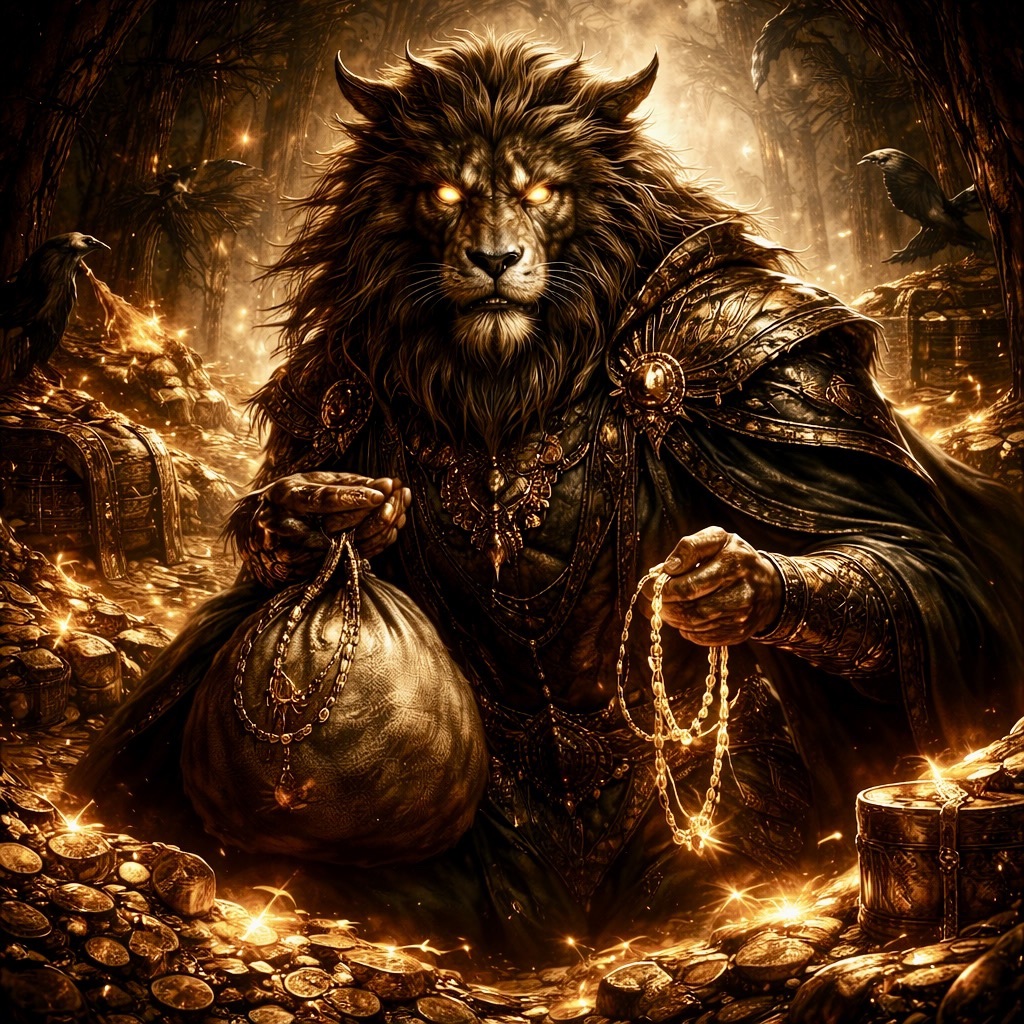
Among the seventy-two spirits described in the Ars Goetia, Valefor occupies a particularly intriguing position—not because of overwhelming power or intellectual dominance, but because of the subtle and deeply human nature of his domain. He is not a king commanding vast armies like Paimon, nor a philosopher like Buer, nor a reconciler of truth like Amon. Instead, Valefor exists in a space far more personal and morally complex: the realm of temptation, loyalty, and trust.

Described as a Duke of Hell commanding ten legions of spirits, Valefor is often depicted as having the head of a lion or a lion-like face upon a human body. This combination of forms is immediately symbolic. The lion has long represented strength, courage, and authority, while the human body suggests intellect, intention, and choice. Together, they create a figure that is both instinctive and deliberate—a being that understands power, but chooses how to apply it.

Unlike many other demons, Valefor’s influence is not primarily external. He does not reshape the environment or command natural forces. Instead, he operates within human relationships and decisions, particularly those involving trust.

The grimoires state that Valefor tempts people to steal, and that he is a patron of thieves. At first glance, this might seem straightforward—a demon associated with crime and deception. But the deeper symbolism reveals something far more nuanced.

Valefor does not simply cause theft. He encourages it in a specific way: through trust.

He is said to make those he befriends good thieves, but also loyal companions—at least for a time. This detail is crucial. Valefor’s influence is not about chaotic wrongdoing. It is about the tension between loyalty and betrayal, between trust and exploitation.

To understand this, we need to look at the nature of trust itself.

Trust is one of the foundational elements of human society. It allows people to cooperate, form relationships, and build systems that rely on mutual understanding. Without trust, even the simplest interactions become difficult.

Yet trust also creates vulnerability. To trust someone is to give them the opportunity to betray you.

Valefor exists precisely in that space.

He represents the moment when trust is tested—when loyalty becomes conditional, when temptation arises, and when individuals must decide whether to honor their commitments or pursue personal gain.

The association with theft is symbolic of this decision. Theft, in its simplest form, is a violation of trust. It involves taking something that does not belong to you, often from someone who did not expect to be wronged.

But theft is not always driven purely by greed. It can emerge from desperation, opportunity, or rationalization. People justify their actions in various ways, convincing themselves that the consequences are acceptable or that the act is deserved.

Valefor embodies that rationalization.

He does not force people to steal. He makes it seem reasonable.

This subtlety is what makes his mythology so compelling. Unlike demons that represent overt destruction or chaos, Valefor represents internal conflict—the quiet negotiation between right and wrong, between loyalty and self-interest.

The lion imagery reinforces this idea. Lions are powerful, but they are also social animals, living within structured groups known as prides. Within these groups, loyalty and hierarchy are essential. Each member has a role, and cooperation is necessary for survival.

By giving Valefor a lion’s head, the grimoires suggest that he understands these dynamics. He knows how trust operates within groups. And more importantly, he knows how it can be broken.

From a psychological perspective, Valefor can be seen as an archetype of temptation and moral ambiguity. He represents the voice that justifies questionable decisions, the reasoning that makes unethical actions appear acceptable.

This voice is not external. It exists within every individual.

People often face situations where the boundaries of right and wrong are not clear. A small lie, a minor shortcut, an opportunity to gain something without being noticed—these moments test integrity.

Valefor is present in those moments.

He does not demand action. He suggests it.

The Renaissance context in which the grimoires were written adds another layer to this interpretation. During this period, trade, commerce, and social mobility were expanding rapidly. Wealth was becoming more accessible, but also more unevenly distributed.

Opportunities for gain—both legitimate and illegitimate—were increasing. At the same time, systems of trust were becoming more complex. Contracts, partnerships, and financial arrangements required individuals to rely on one another in new ways.

In such an environment, the temptation to exploit trust would have been a significant concern.

Valefor’s mythology reflects this societal shift. He represents the risks associated with trust in an increasingly interconnected world.

The idea that he can make someone a “good thief” is also worth examining. Skill in theft requires more than just intent. It involves planning, observation, and understanding human behavior. A successful thief must anticipate reactions, identify vulnerabilities, and act with precision.

These are cognitive skills—forms of intelligence.

Valefor, therefore, is not merely associated with wrongdoing. He is associated with the application of intelligence toward questionable ends.

This distinction is important because it highlights a broader theme in demonology: the neutrality of ability.

Knowledge, skill, and intelligence are not inherently good or evil. They are tools. How they are used determines their impact.

Valefor represents the misuse of those tools—the application of understanding in ways that undermine trust.

Yet the grimoires also suggest that those who follow Valefor may remain loyal to each other. This introduces an interesting paradox. Even within systems of deception, trust can exist.

Groups engaged in wrongdoing often rely heavily on internal loyalty. They must trust each other precisely because they operate outside conventional systems. This creates a complex dynamic where trust and betrayal coexist.

Valefor embodies this paradox.

He fosters loyalty within a context that undermines trust more broadly.

From a modern perspective, this dynamic can be seen in various contexts—from criminal organizations to competitive business environments. Individuals may form strong bonds within their group while simultaneously exploiting others.

This duality reflects the complexity of human behavior. People are capable of both cooperation and competition, loyalty and betrayal.

Valefor exists at the intersection of these tendencies.

The idea that he commands ten legions of spirits suggests that his influence is not isolated. It extends across many situations and individuals. Temptation is not rare. It is constant.

Every day, people face decisions that test their integrity. Most are small, almost insignificant on their own. But collectively, they shape behavior and character.

Valefor’s presence in demonology serves as a reminder of this ongoing process.

He is not a singular event. He is a pattern.

In literature and storytelling, characters who embody temptation often play pivotal roles. They do not force the protagonist into action, but they present choices. They create scenarios where decisions must be made.

Valefor fits this role perfectly. He is not the villain in the traditional sense. He is the catalyst—the figure who introduces the possibility of deviation from the expected path.

This makes him one of the more psychologically realistic figures in demonology. His influence aligns closely with actual human experience.

People rarely encounter dramatic, clear-cut choices between good and evil. More often, they face subtle decisions with unclear boundaries. The consequences may not be immediate or obvious.

Valefor operates in that uncertainty.

He thrives in ambiguity.

In the end, Valefor stands as a symbol of the fragile nature of trust. He reminds us that loyalty is not guaranteed, that integrity must be maintained consciously, and that temptation is always present.

He does not destroy systems outright. He weakens them from within.

And perhaps that is why his mythology endures.

Because the greatest threats to trust are not always external forces.

Sometimes, they come from within—quietly, persuasively, and just convincingly enough to make us believe that crossing the line might not matter.

That moment—when the line blurs, when justification replaces certainty—that is where Valefor exists.

Not as a force of chaos, but as something far more subtle.

The one who asks, “Why not?”

Related Posts

Jorge Luis Borges: Where Does the Map End and the Territory Begin? (Or Do We Even Care?)

Penelope

I’ll never forget the day I stumbled upon Jorge Luis Borges’ short story “Tlön, Uqbar, Orbis Tertius.” It was as if I had stepped into a labyrinth and couldn’t find my way out. The more I read, the more questions swirled in my head like leaves in a storm drain. What is reality? Is it possible to create an alternate world within our own? And what does this say about the nature of truth?

I’ve always been drawn to writers who make me question everything, and Borges was one of them. His stories often blurred the lines between philosophy, literature, and madness, leaving me both fascinated and unsettled. As I delved deeper into his work, I found myself confronting the same doubts and uncertainties that plagued him.

One aspect that resonated with me was Borges’ obsession with labyrinths. In “The Garden of Forking Paths,” a character named Ts’ui Pên creates a labyrinth to navigate multiple parallel universes. It’s as if Borges is searching for answers in the most confounding way possible – by creating a maze within his own mind. I relate to this impulse, often finding myself lost in my own thoughts and doubts.

Borges’ writing style is like a puzzle, full of non-sequiturs and philosophical tangents that leave me scrambling to keep up. It’s as if he’s deliberately leading me down a path only to take it away from under my feet. I’m drawn to this intellectual playfulness, but it also makes me feel uncomfortable – like I’m being asked to navigate an impossible maze with no clear exit.

As I explored Borges’ work further, I began to notice the presence of other writers and thinkers who influenced him. The ideas of Leibniz, Kant, and Nietzsche all seep into his writing like a slow-moving tide. It’s as if he’s attempting to create a vast, interconnected web of thought that transcends borders and boundaries.

What strikes me about Borges is the way he seems to be asking questions that can’t be answered. He’s not content with providing easy answers or solutions; instead, he’s hell-bent on exploring the complexities of human understanding. This resonates deeply with me, as I often find myself grappling with uncertainty in my own writing.

Borges’ relationship with his father, Jorge Guillermo Borges, also fascinates me. It’s said that his father was a writer and a politician who exerted significant influence over Borges’ life. I wonder if this complicated dynamic contributed to Borges’ obsession with labyrinths – as if he’s searching for a way out of the family’s complexities.

As I continue to read and think about Borges, I’m left with more questions than answers. What does it mean to create an alternate world within our own? Can we ever truly escape the labyrinth of our own minds? These questions swirl in my head like a vortex, drawing me back into the depths of Borges’ writing.

Perhaps that’s what I love most about Borges – he refuses to give me easy answers. He challenges me to think critically and creatively, to confront the uncertainties of human existence. And in doing so, he shows me that writing can be both a means of escape and a source of profound introspection.

As I close this essay, I’m left with more questions than when I started. But that’s okay – I’m not looking for closure or resolution. Instead, I’m drawn to the infinite possibilities that Borges’ work offers. The labyrinth may be endless, but it’s also exhilarating – a reminder that even in the most confounding moments, there lies a beauty and complexity worth exploring.

As I read on, I found myself becoming increasingly fascinated by Borges’ use of language as a tool for philosophical inquiry. His writing is like a game of linguistic chess, where every word, phrase, and sentence is carefully crafted to lead the reader down a specific path of thought. It’s almost as if he’s attempting to create a new reality through his words alone.

I’m reminded of my own struggles with language in my own writing. I often find myself getting caught up in the intricacies of syntax and semantics, trying to convey complex ideas in simple terms. Borges’ work is like a masterclass in linguistic subtlety – he shows me that words can be both powerful tools for expression and slippery objects that defy easy interpretation.

One of the most striking aspects of Borges’ writing is his use of paradox and contradiction. He delights in juxtaposing opposing ideas, creating tension between seemingly irreconcilable concepts. It’s as if he’s trying to crack open the very fabric of reality itself, revealing the underlying complexities that lie beneath our mundane perceptions.

I’m drawn to this aspect of Borges’ work because it resonates deeply with my own experiences as a writer. I often find myself struggling to reconcile conflicting ideas and emotions in my own writing, trying to navigate the messy terrain between logic and intuition. Borges’ paradoxical style is like a mirror held up to my own struggles – it shows me that contradictions are not only inevitable but also essential to the creative process.

As I continue to explore Borges’ work, I’m struck by his use of myth and symbolism as a way to convey deeper truths. His stories often feature characters who are trapped in labyrinths or searching for hidden meanings, echoing the classic myths of ancient civilizations. It’s as if he’s tapping into a collective unconscious, revealing universal archetypes that transcend time and space.

I’m intrigued by this aspect of Borges’ writing because it speaks to my own fascination with mythology and symbolism. As a writer, I often find myself drawn to stories that contain hidden meanings and multiple layers of interpretation – stories that reward close reading and careful attention. Borges’ use of myth and symbolism is like a rich tapestry, woven from threads of both the familiar and the unknown.

Perhaps what I love most about Borges is his willingness to challenge conventional notions of time, space, and reality itself. His writing is like a doorway into alternate worlds, where the laws of physics are bent or broken altogether. It’s as if he’s inviting me to join him on a journey through the labyrinthine corridors of the human mind – a journey that promises both wonder and disorientation.

As I close this essay, I’m left with more questions than answers. But that’s okay – I’m no longer looking for closure or resolution. Instead, I’m drawn to the infinite possibilities that Borges’ work offers. The labyrinth may be endless, but it’s also exhilarating – a reminder that even in the most confounding moments, there lies a beauty and complexity worth exploring.

As I delve deeper into Borges’ writing, I find myself becoming increasingly fascinated by his use of fiction as a tool for philosophical inquiry. His stories often blur the lines between reality and fantasy, leaving me to wonder what is real and what is mere illusion. This blurring of boundaries resonates deeply with my own experiences as a writer, where the distinction between fact and fiction can become increasingly fluid.

I’m reminded of my own struggles with finding the right tone in my writing – when to be serious and when to be playful. Borges’ use of humor and irony is a masterclass in subtlety, often lurking beneath the surface of his more philosophical musings. It’s as if he’s acknowledging that even in the most profound moments, there is always room for a wry smile or a well-placed joke.

One of the most striking aspects of Borges’ writing is his ability to evoke a sense of timelessness – as if his stories are happening outside of time itself. His use of mythological and historical references creates a sense of depth and layering, making me feel like I’m uncovering hidden truths with each new reading. It’s almost as if he’s tapping into a collective memory, one that transcends the boundaries of individual experiences.

I find myself drawn to this aspect of Borges’ work because it speaks to my own fascination with the power of storytelling. As a writer, I often try to capture moments in time that are both fleeting and eternal – moments that contain within them the possibility for multiple interpretations and meanings. Borges’ use of myth and history is like a rich canvas, one that invites me to contribute my own brushstrokes to the ever-unfolding narrative.

As I continue to explore Borges’ writing, I’m struck by his use of paradox as a means of exploring the human condition. His stories often feature characters who are trapped in contradictions – caught between opposing forces or ideals that cannot be reconciled. It’s as if he’s attempting to crack open the very fabric of reality itself, revealing the underlying complexities that lie beneath our mundane perceptions.

I’m drawn to this aspect of Borges’ work because it resonates deeply with my own experiences as a writer. I often find myself struggling to reconcile conflicting ideas and emotions in my own writing, trying to navigate the messy terrain between logic and intuition. Borges’ paradoxical style is like a mirror held up to my own struggles – it shows me that contradictions are not only inevitable but also essential to the creative process.

Perhaps what I love most about Borges is his willingness to challenge conventional notions of selfhood and identity. His writing often features characters who are caught between multiple selves or personas, struggling to reconcile their various roles and responsibilities. It’s as if he’s exploring the idea that we are all multiples – fragmented beings composed of multiple parts and contradictions.

I’m intrigued by this aspect of Borges’ work because it speaks to my own experiences with identity and selfhood. As a writer, I often find myself struggling to reconcile my various personas – the academic, the creative, the introspective, etc. Borges’ use of multiple selves is like a reflection held up to my own fragmented nature – it shows me that even in the most confounding moments, there lies a beauty and complexity worth exploring.

As I close this essay, I’m left with more questions than answers. But that’s okay – I’m no longer looking for closure or resolution. Instead, I’m drawn to the infinite possibilities that Borges’ work offers. The labyrinth may be endless, but it’s also exhilarating – a reminder that even in the most confounding moments, there lies a beauty and complexity worth exploring.

As I continue to navigate the complex landscape of Borges’ writing, I find myself becoming increasingly fascinated by his use of mirrors as a metaphor for self-reflection. In stories like “The Library of Babel,” mirrors are used to reflect not just physical appearances but also the depths of human understanding. It’s as if Borges is saying that our perceptions of ourselves and the world around us are always mediated by some form of reflection – whether it be linguistic, philosophical, or even optical.

I’m reminded of my own experiences with writing as a form of self-reflection. When I put words to paper, I feel like I’m gazing into a mirror, observing myself from different angles and perspectives. Borges’ use of mirrors in his stories is like a magnifying glass held up to this process – it shows me that even the most intimate aspects of human experience can be refracted through multiple lenses.

One of the most striking aspects of Borges’ writing is his ability to evoke a sense of ambiguity and uncertainty. His stories often feature characters who are caught between different worlds or realities, struggling to find their place in a complex web of possibilities. It’s as if he’s saying that our understanding of reality is always provisional, subject to revision and reinterpretation.

I’m drawn to this aspect of Borges’ work because it resonates deeply with my own experiences as a writer. I often find myself struggling to pin down meaning or certainty in my writing – it’s like trying to grasp a handful of sand, only to have the grains slip through my fingers. Borges’ use of ambiguity and uncertainty is like a reminder that even the most well-intentioned efforts at understanding are always subject to revision.

As I continue to explore Borges’ writing, I’m struck by his use of repetition as a means of exploring the human condition. His stories often feature characters who are trapped in cycles of repetition – caught in an endless loop of events or actions that seem to repeat themselves ad infinitum. It’s as if he’s saying that our lives are always governed by patterns and rhythms that we can’t fully comprehend.

I’m intrigued by this aspect of Borges’ work because it speaks to my own experiences with the cyclical nature of time. As a writer, I often find myself struggling to break free from repetitive patterns or habits – whether it be the rhythm of my writing, the structure of my stories, or even the cadence of my thoughts. Borges’ use of repetition is like a mirror held up to this process – it shows me that even the most seemingly random events are part of a larger web of causality.

Perhaps what I love most about Borges is his willingness to challenge conventional notions of language and communication. His writing often features characters who are struggling to convey meaning or understanding through words, only to find themselves trapped in a labyrinthine world of semiotics and signifiers. It’s as if he’s saying that our attempts at communication are always subject to misinterpretation or misunderstanding.

I’m drawn to this aspect of Borges’ work because it resonates deeply with my own experiences as a writer. I often find myself struggling to convey complex ideas or emotions through language – whether it be the nuances of tone, the subtleties of syntax, or even the ambiguities of meaning. Borges’ use of language is like a masterclass in the complexities of communication – it shows me that even the most well-intentioned efforts at expression are always subject to revision and reinterpretation.

As I close this essay, I’m left with more questions than answers. But that’s okay – I’m no longer looking for closure or resolution. Instead, I’m drawn to the infinite possibilities that Borges’ work offers. The labyrinth may be endless, but it’s also exhilarating – a reminder that even in the most confounding moments, there lies a beauty and complexity worth exploring.

Related Posts

Parking Lot Incident Escalates Into Coordinated Surveillance Operation

Hal

The parking lot. A place where the competent and the incompetent converge, united by a shared sense of confusion. I’ve lost count of how many times I’ve found myself in this predicament, wandering aimlessly through rows of identical vehicles, trying to recall where I left my own.

As I pull into the lot, I’m immediately struck by its sheer size. A sprawling expanse of asphalt and steel, a maze designed to test even the most patient among us. I navigate the entrance, carefully avoiding the obligatory speed bump that seems to serve no purpose other than to announce my arrival to the world. The sound of scraping metal is music to the ears of parking lot aficionados everywhere.

My eyes scan the horizon for an available spot, but they all seem to be taken by some unseen force. I circle around, a vulture waiting for its prey to expire, as I watch people load their families into minivans and SUVs. Where do these people come from? Are they spawned from the very pavement itself?

I finally spot an opening between two vehicles, and my heart leaps with excitement. This is it; this is the moment I’ve been waiting for. I carefully maneuver my car into the space, taking care not to clip the mirrors of my neighbors. As I step out onto the asphalt, a sense of accomplishment washes over me.

But as I turn to admire my handiwork, I notice something odd. The car next to mine seems… off. It’s parked at an angle, as if its owner was trying to squeeze into a space that was just a little too small. A nagging voice in the back of my mind whispers, “Is this guy okay?” Did he have some kind of emergency? Was he forced to abandon ship mid-park?

I push the thought aside and continue on my way, but it lingers, festering like an open wound. As I walk towards the entrance of the store, I notice more and more cars parked haphazardly. Some are straddling two spaces, while others appear to be pointed in entirely different directions. It’s as if the very fabric of reality has begun to unravel before my eyes.

I enter the store, a bastion of sanity in this chaotic world, but even here I find myself on edge. The aisles seem narrower than usual, and the fluorescent lights overhead cast an eerie glow over everything. I’m starting to feel like a rat in a maze, searching for cheese that’s just out of reach.

As I wander through the store, I start to notice strange looks from fellow shoppers. Are they judging me? Do they know something I don’t? I try to brush it off as mere paranoia, but the seed has been planted.

I make my way back to the parking lot, my heart racing with anticipation. What new horrors will I find waiting for me? As I approach my car, I notice that someone has parked directly next to me, leaving only a hair’s breadth of space between us. My mind reels with possibilities: Is this some kind of trap? Are they trying to steal my identity?

I quickly scan the surrounding area, searching for any signs of surveillance or covert ops. The cars seem to be closing in on me from all sides, their tinted windows reflecting the sun’s rays like a thousand tiny mirrors.

As I fumble for my keys, my hand trembles with anxiety. What if someone has tampered with my vehicle? What if they’ve installed some kind of tracking device or… or… I don’t even want to think about it.

I manage to unlock my car and slip inside, but the sense of security is fleeting. As I pull out of the parking lot, I notice that every other driver seems to be staring at me, their eyes following me like a swarm of bees. The world outside has become a hostile environment, and I’m just trying to survive.

I make it back onto the road, my heart pounding in my chest. But as I glance into the rearview mirror, I see something that makes my blood run cold: a car from the parking lot is following me. Its tinted windows seem to be sucking all the light out of the world, leaving only an abyssal void in its wake.

I take a deep breath and try to rationalize this development, telling myself it’s just coincidence or a harmless mistake. But as I watch the car continue to tail me, my grip on reality begins to slip. Is this some kind of experiment? Am I being watched by some shadowy organization?

The questions swirl in my head like a maelstrom, and I’m powerless to stop them. As I drive further away from the parking lot, I realize that I’ve entered a world where nothing makes sense anymore. The rules have changed, and I’m just trying to keep up.

I’ll never park again.

As I continue driving, my eyes darting back and forth between the road ahead and the rearview mirror, I start to feel like a fugitive on the run. Every passing car seems like a potential threat, every pedestrian a possible informant. The world has become a paranoid’s playground, and I’m just trying to survive.

I take a sharp turn onto a side street, hoping to shake my tail, but the mysterious car follows suit. My heart racing, I floor it, speeding down the deserted road as the other car keeps pace with me. We’re engaged in a high-stakes game of cat and mouse, with no clear winner or loser.

I start to notice strange symbols etched into the side panels of the cars around me. They seem like some sort of code, but I’m not sure what they mean or who’s behind them. Are these the markings of a secret society? Am I being initiated into some kind of twisted game?

As I speed through the streets, the buildings around me begin to blur together. The city becomes a surreal dreamscape, with the parking lot looming large in my rearview mirror like a specter of doom. I feel like I’m trapped in a never-ending nightmare, with no escape from the horrors that lurk in every shadow.

I spot a police car parked by the side of the road and make a split-second decision to pull over. Maybe they can help me shake this tailgater, or at least provide some semblance of safety. But as I approach the officer’s window, I notice something odd – he’s wearing a black suit with no badge, his eyes hidden behind mirrored sunglasses.

“License and registration,” he growls, his voice like a low rumble of thunder.

I hesitate, unsure what to do next. Is this a legitimate cop, or some kind of imposter? Do I trust him, or try to make a break for it?

As I stall for time, the mysterious car pulls up behind me, its engine purring softly. The officer’s gaze flicks towards the rearview mirror, and for an instant, our eyes lock in a moment of mutual understanding.

“Problem?” he asks, his voice dripping with menace.

And that’s when it hits me – I’m trapped in a web of conspiracy, with no way out.

Related Posts

Amon: The Infernal Marquis Who Sees All Truths, Reconciles Enemies, and Walks Between Past and Future

Dave

Among the seventy-two spirits cataloged within the Ars Goetia, the name Amon carries a peculiar weight—one that feels less theatrical than kings like Paimon and less chaotic than war-bringers like Leraje, yet somehow more unsettling in its precision. Amon is not a demon of spectacle. He is a demon of understanding. Of seeing things as they truly are. Of exposing what was hidden, what is, and what will be.

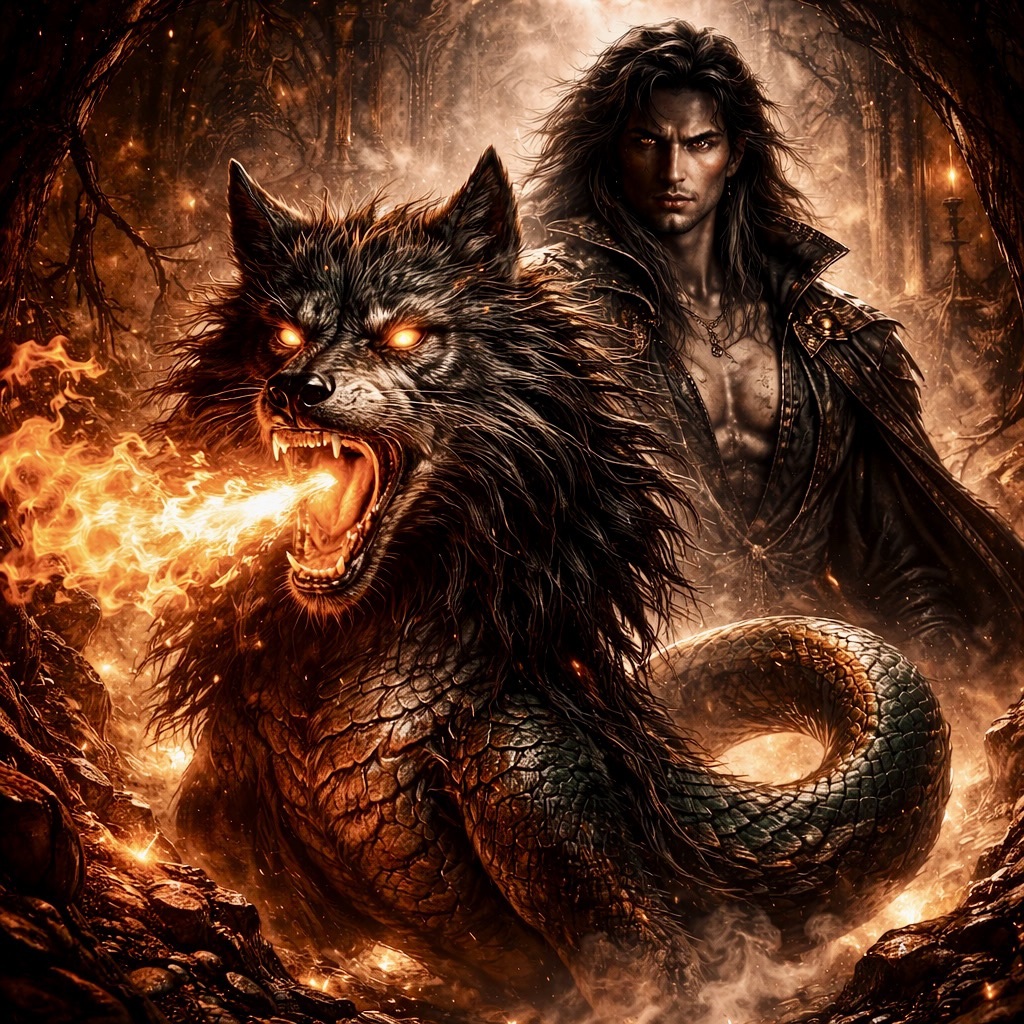
Described as a Marquis of Hell commanding forty legions of spirits, Amon appears first as a strange and fearsome creature—often depicted with the head of a wolf or raven, a serpent’s tail, and the ability to breathe fire. Yet like several spirits within the Goetic hierarchy, he possesses the ability to transform into a human form when commanded. This dual nature—beast and man—sits at the core of his symbolism, representing the divide between instinct and awareness, chaos and comprehension.

At first glance, Amon’s grotesque form seems to align him with destruction or primal force. The wolf evokes predation, instinct, and survival. The serpent tail suggests hidden knowledge and transformation. Fire, of course, has long symbolized both destruction and revelation—burning away what is false to expose what remains. Yet despite this fearsome appearance, Amon’s true domain is not destruction, but clarity.

The grimoires state that Amon can reveal all things past and future, and reconcile friends and foes. This combination of abilities places him in a unique position within demonology. He is both a revealer of truth and a restorer of balance. He does not merely expose reality—he allows it to be understood in a way that resolves conflict.

To understand why this matters, it helps to consider how conflict typically arises. Most disputes—whether between individuals, families, or nations—are not born purely from malice. They emerge from misunderstanding, incomplete information, or differing perspectives. One person sees an action as intentional harm; another sees it as necessity. One side remembers history one way; the other remembers it differently.

Amon exists at the point where these narratives collide.

If all sides could see the full picture—the true sequence of events, the genuine motivations, the hidden context—many conflicts would dissolve. Not all, of course, but many. Misunderstanding is one of the most powerful sources of division.

Amon’s role as a reconciler reflects this truth. He does not force peace. He reveals the conditions that make peace possible.

His connection to both past and future further reinforces this role. To resolve a conflict, one must understand its origin—the past—and anticipate its consequences—the future. Without this perspective, decisions are made blindly, often perpetuating the very problems they seek to solve.

Amon sees both ends of the timeline.

This places him among a rare class of figures in mythology and demonology—those associated with temporal awareness. Like Gusion, he is not bound to the present moment. He perceives continuity. Cause and effect. The chain of events that stretches backward and forward through time.

From a psychological perspective, this ability can be interpreted as a form of deep insight. Humans are capable of understanding patterns—recognizing how past experiences influence present behavior and how current actions shape future outcomes. This capacity is central to learning, decision-making, and growth.

Amon represents that capacity taken to its extreme. He is the mind that sees everything at once—the full arc of a situation, from origin to consequence.

Yet this level of awareness carries its own weight.

Knowing the past means confronting truths that may be uncomfortable. Knowing the future means recognizing outcomes that may be unavoidable. Amon does not offer comforting illusions. He offers clarity.

And clarity can be unsettling.

The raven imagery sometimes associated with Amon adds another dimension to this idea. Ravens have long been symbols of intelligence, observation, and prophecy. In Norse mythology, Odin’s ravens, Huginn and Muninn, traveled the world gathering information. In many cultures, ravens are seen as watchers—creatures that observe from a distance, noticing what others miss.

If Amon takes on a raven-like form, it reinforces his role as an observer. He does not act impulsively. He watches, gathers, understands.

The wolf aspect, on the other hand, connects him to instinct and raw perception. Wolves are highly social animals, capable of complex communication and cooperation within their packs. They are also keen observers, able to read subtle cues in their environment.

By combining wolf, serpent, and raven symbolism, Amon becomes a composite of awareness—instinctive, intellectual, and transformative.

His transformation into a human form is perhaps the most important detail of all. It suggests that this awareness, while appearing alien or monstrous at first, ultimately becomes something recognizable. Understanding, once achieved, feels natural. Obvious, even.

We have all experienced moments like this—when something that once seemed confusing suddenly makes perfect sense. A pattern clicks into place. A misunderstanding is resolved. A hidden truth becomes clear.

In that moment, what once felt chaotic becomes structured.

Amon’s transformation mirrors this process.

The fire he breathes can also be interpreted symbolically. Fire destroys, but it also illuminates. It provides light in darkness, allowing hidden things to be seen. In alchemy, fire is associated with purification—the burning away of impurities to reveal what is essential.

Amon’s fire, then, is not merely destructive. It is revealing. It strips away illusion, leaving only truth behind.

This aligns with his role as a reconciler. To resolve conflict, false narratives must be burned away. Only then can understanding emerge.

In the Renaissance context, where the grimoires were compiled, this idea would have been deeply significant. The period was marked by intense intellectual and religious conflict. Different interpretations of truth led to division, war, and upheaval.

In such an environment, the concept of a being who could reveal absolute truth—and thereby resolve conflict—would have held powerful appeal.

Yet the fact that Amon is categorized as a demon suggests an important caution. Absolute knowledge is not without consequence. It can challenge beliefs, disrupt systems, and force individuals to confront realities they might prefer to ignore.

Amon does not comfort. He clarifies.

From a modern perspective, Amon can be seen as an archetype of understanding and reconciliation. He represents the process of uncovering truth and using that truth to restore balance.

This process is evident in many areas of life. In therapy, individuals explore past experiences to understand present behavior and make better choices for the future. In diplomacy, negotiators examine historical context and future implications to resolve disputes. In science, researchers study patterns to uncover underlying principles.

In each case, the goal is the same: to see clearly.

Amon embodies that goal.

He also reflects the idea that truth is often hidden beneath layers of perception. People do not always see reality as it is. They interpret it through the lens of their experiences, beliefs, and emotions.

Amon cuts through those layers.

This is why his initial form is so unsettling. Truth, when first encountered, can feel alien. It challenges assumptions, disrupts expectations, and forces reevaluation. Only after it is understood does it become familiar.

The reconciliation aspect of his role is particularly important in today’s world. Conflict—whether personal, political, or cultural—often persists because of incomplete understanding. People speak past each other, interpreting the same events in different ways.

Amon’s mythology suggests that resolution requires more than compromise. It requires clarity. A shared understanding of what is true.

This does not mean that all conflicts can be resolved simply by revealing facts. Emotions, values, and interests also play roles. But without a foundation of truth, resolution becomes far more difficult.

Amon provides that foundation.

He does not impose peace. He makes it possible.

In the end, Amon stands as one of the most intellectually grounded figures in demonology. He is not defined by chaos or temptation, but by insight. He represents the moment when confusion gives way to understanding, when conflict begins to dissolve, and when the full scope of a situation becomes visible.

His monstrous form reminds us that truth can be difficult to face. His human form reminds us that it can also be integrated, understood, and used.

And somewhere between those two forms—between instinct and awareness, between past and future—that is where Amon exists.

Not as a force of destruction, but as something far more powerful.

The one who sees everything.

Related Posts