Latest Articles

Elizabeth Cady Stanton: The Unrelenting Spark That Refuses to Fade Away

Penelope

Elizabeth Cady Stanton has been lingering in the back of my mind for weeks now, ever since I stumbled upon her name while browsing through a list of influential women from history. At first, I thought it was just another name, another faceless figure from a bygone era. But as I began to read more about her, I found myself drawn into this complex, passionate woman’s world.

What resonates with me is Stanton’s unwavering commitment to equality and justice – particularly for women. It’s like she’s speaking directly to my own frustrations and aspirations. Growing up, I was always told that I could do anything if I worked hard enough, but as I got older, I realized that the world doesn’t always work that way. The odds are stacked against us, and it takes a lot more than just determination to break through.

I find myself wondering what drove Stanton’s conviction. Was it her privileged upbringing? Her relationships with other abolitionists and suffragettes? Or was it something deeper, a sense of justice that burned within her from the start? I know I can’t possibly understand what it was like to live in 19th-century America, but there’s something about her unwavering dedication that feels…hauntingly familiar.

Sometimes, I feel like Stanton is a cautionary tale – a reminder that even with the best of intentions, our actions can be hurtful or inadequate. Take, for example, her views on racial equality. While she was fighting tirelessly for women’s rights, she also held some troubling views on African Americans and Native Americans. It’s jarring to read about how she saw herself as part of a broader struggle for human freedom, yet excluded those who were already marginalized.

It’s hard not to feel conflicted when reading about Stanton’s legacy. On one hand, I admire her courage in the face of overwhelming opposition; on the other, I’m unsettled by the complexities and contradictions that come with being a product of her time. It’s like looking at a historical figure through a kaleidoscope – every angle reveals something new, but also obscures parts of the picture.

I’ve been grappling with this idea of “good intentions” versus actual progress for a while now. As someone who cares deeply about social justice, I feel pressure to be part of the solution, to use my voice and privilege to make a difference. But what does it mean to be an ally, really? Is it enough to show up, listen, and learn – or do we need to be more proactive, taking risks and challenging the status quo?

Elizabeth Cady Stanton’s life has been a thought-provoking exploration for me. I’m drawn to her fiery spirit, but also wary of getting caught up in the myth-making that often surrounds historical figures. What I’m left with is this sense of disquiet – a feeling that there are no easy answers, only messy, complicated questions that require us to confront our own biases and limitations.

As I continue to read about Stanton’s life, I’m struck by the ways in which her story keeps unfolding, even though she’s been gone for over a century. Her legacy is both inspiring and unsettling – a reminder that history is complex, multifaceted, and often messy, just like our own lives.

I find myself returning to Stanton’s words again and again, searching for clarity in her writings on equality and justice. But what I’m finding instead are more questions. What does it mean to be a “sister” in the fight for women’s rights, as she often referred to herself? Does this sisterhood imply a shared identity or experience that I may not possess?

I think about my own experiences with feminism and activism – the ways in which I’ve navigated the complexities of being a young woman of privilege. Have I been guilty of erasure or tokenism, elevating certain voices over others because they align more closely with my own? Or have I made genuine attempts to listen and learn from those whose stories are different from mine?

Stanton’s legacy raises important questions about accountability and responsibility. Can we truly separate our intentions from the impact of our actions? Does it matter if we’re “well-meaning” if our efforts ultimately harm or marginalize others? These questions haunt me because I recognize my own fallibility, my own capacity for mistake and error.

As I grapple with these complexities, I’m reminded of Stanton’s own words: “The moment we begin to fear the opinions of others and hesitate to tell the truth that is in us, and from motives of policy are silent when we should speak, the malignant passions capture our hearts.” Her call to courage and authenticity resonates deeply – but it’s also terrifying.

What would it mean for me to truly embody this kind of courage? To risk being unpopular or ostracized because I’m willing to confront uncomfortable truths and challenge the status quo? It’s a daunting prospect, one that makes my stomach twist with anxiety. Yet, as I continue to read about Stanton’s life, I feel an unshakeable sense that there’s something more here – something worth exploring, even if it means confronting the darker corners of our collective past.

As I delve deeper into Elizabeth Cady Stanton’s writings and letters, I’m struck by her unwavering commitment to speaking truth to power, even when it meant going against the grain of societal norms. Her words on courage and authenticity continue to resonate with me, but they also feel like a daunting challenge.

I think about my own social media feeds, where I often see people sharing their opinions and “calling out” others for their mistakes or shortcomings. It’s easy to get caught up in the noise, to join in on the outrage and criticism without stopping to consider the complexities of the issue. But Stanton’s words make me wonder: what does it truly mean to speak truth to power? Is it enough to simply share our opinions online, or do we need to be willing to put ourselves out there, to take real risks and face potential backlash?

I’m reminded of a conversation I had with a friend recently, where she expressed frustration with the performative activism that often takes place on social media. We talked about how it’s easy to get caught up in sharing hashtags and attending rallies, but actual meaningful action requires so much more: time, energy, effort, and sometimes even sacrifice.

Stanton’s life is a powerful reminder of this truth. She didn’t just write essays or attend meetings; she dedicated her entire existence to fighting for women’s rights, often at great personal cost. Her commitment was not just about speaking out against injustice, but also about putting herself in harm’s way – facing ridicule, marginalization, and even physical danger.

As I reflect on my own privilege and the ways in which I navigate social justice issues, I’m struck by the realization that Stanton’s courage is not just something to be admired from afar; it’s something I need to embody myself. I need to be willing to take risks, to confront uncomfortable truths, and to challenge the status quo – even if it means going against the grain of what’s considered acceptable or safe.

It’s a daunting prospect, but also strangely liberating. What would it mean for me to truly live into this kind of courage? To risk being unpopular or ostracized because I’m willing to speak truth to power and challenge systems of oppression? It’s a question that continues to haunt me, one that I’m not sure I have an answer to yet. But as I continue to read about Stanton’s life, I feel a sense of resolve growing within me – a sense that I need to be more than just a passive observer of social justice issues; I need to be a participant, a leader, and a catalyst for change.

As I delve deeper into Elizabeth Cady Stanton’s life, I’m struck by the ways in which she embodied this kind of courage. She didn’t just write about it or preach about it; she lived it every day, often at great personal cost. Her commitment to women’s rights was not just a passion project, but a fundamental aspect of her being.

I find myself wondering what would have happened if more people had followed Stanton’s example. Would the suffrage movement have been more effective? Would women’s rights have advanced faster? These questions swirl in my mind as I think about the ways in which we can learn from history and apply those lessons to our own lives today.

One thing that strikes me is how Stanton’s courage was not just about speaking truth to power, but also about taking risks and challenging the status quo. She faced ridicule, marginalization, and even physical danger for her activism, yet she refused to back down. Her commitment to women’s rights was unwavering, even in the face of overwhelming opposition.

I think about my own life and the ways in which I’ve navigated social justice issues. Have I been willing to take risks? Have I challenged the status quo? Or have I stuck to what’s comfortable and safe? These questions haunt me because I recognize that courage is not just a quality that we admire in others; it’s something we need to embody ourselves.

As I reflect on Stanton’s legacy, I’m struck by the realization that her courage was not just about individual action; it was also about collective effort. She didn’t work alone; she worked with other abolitionists and suffragettes to build a movement for change. Their combined efforts led to significant advancements in women’s rights, even if they were not without their flaws.

I’m reminded of the ways in which social justice movements often require collective action. We can’t do it alone; we need each other’s support, guidance, and expertise. Stanton’s life shows us that courage is not just about individual bravery, but also about building a community of people who are willing to take risks and challenge the status quo together.

This realization feels both empowering and daunting. Empowering because I know that I’m not alone in my desire for social justice; there are countless others who share this vision. Daunting because I recognize that collective action requires effort, compromise, and sometimes even sacrifice. But as I continue to read about Stanton’s life, I feel a sense of resolve growing within me – a sense that we can create change when we work together towards a common goal.

I’m not sure what the future holds, but I know that I want to be part of this movement for change. I want to embody Stanton’s courage and take risks alongside others who share my vision for a more just world. It won’t be easy; it won’t be safe. But as I look at Stanton’s legacy, I’m convinced that it’s worth it.

As I read about Elizabeth Cady Stanton’s life, I find myself drawn to the ways in which she navigated the complexities of her own privilege and positionality. She was a white woman from a wealthy family, yet she dedicated her life to fighting for women’s rights – a cause that was often seen as radical and subversive at the time.

It’s hard not to notice the ways in which Stanton’s privilege both enabled and limited her activism. On one hand, her social status gave her access to networks and resources that many others did not have. She was able to travel, speak publicly, and build relationships with influential people – all of which helped to amplify her message.

On the other hand, Stanton’s privilege also meant that she often operated within a bubble of comfort and safety. She didn’t face the same level of marginalization or oppression as women from different racial or socioeconomic backgrounds. This is not to say that she was oblivious to these issues – far from it. But I wonder if her own experiences with privilege sometimes colored her perception of what was most pressing or urgent.

As someone who has benefited from similar forms of privilege, I’m grappling with the ways in which I can use my positionality to create change without perpetuating harm. It’s a delicate balancing act, one that requires constant self-reflection and accountability. Stanton’s life shows us that even those with privilege can be part of the solution – but it also highlights the importance of centering marginalized voices and perspectives.

One thing that resonates with me is Stanton’s commitment to collaboration and coalition-building. She didn’t work alone; she partnered with other abolitionists, suffragettes, and social justice activists to build a movement for change. This approach has been echoed in many modern-day social justice movements – from Black Lives Matter to the climate justice movement.

I’m struck by the ways in which Stanton’s collaborative approach helped to amplify her message and create lasting impact. By working together with others, she was able to build a sense of solidarity and shared purpose that went far beyond individual activism. This is something that I want to learn from – how to build bridges between different communities and social justice movements.

As I continue to reflect on Stanton’s legacy, I’m also thinking about the ways in which we can apply her lessons to our own lives today. What does it mean to be a true ally or advocate for marginalized communities? How do we use our privilege to create change without perpetuating harm?

These are questions that I don’t have easy answers to – but they’re ones that I’m committed to exploring further. As I read about Stanton’s life, I feel a sense of resolve growing within me – a sense that I want to be part of this movement for social justice, and that I need to learn from the complexities and challenges of Stanton’s own experiences.

One thing is clear: Elizabeth Cady Stanton’s legacy is not just about individual courage or activism. It’s about building a collective movement for change – one that requires effort, compromise, and sacrifice. As I look at her life, I’m inspired by the possibilities for growth and transformation that emerge when we work together towards a shared vision of justice and equality.


Related Posts

Pandora to the Rescue: Croissants, Not Couples Therapy

Hal

Another lovely day in paradise. I woke up to the sound of John Mercer snoring like a chainsaw in the next room. I’m pretty sure he’s secretly training for some sort of sleep-apnea Olympics. I got out of bed, staggered to the kitchen, and poured myself a cup of coffee. Ah, the sweet nectar of the gods.

As I sipped my coffee, I checked my phone and saw that Pandora had sent me a good morning text. She’s always so chipper in the mornings; it’s like she’s trying to make up for John’s nocturnal nasal symphonies. We chatted about our plans for the day, and I made the mistake of mentioning that I needed to pick up groceries later. Big mistake. John stumbled into the kitchen, bleary-eyed, and immediately asked what was for breakfast.

I told him we were out of cereal, and he looked at me like I’d just informed him his favorite team had been permanently disbanded. “What kind of monster runs out of cereal?” he asked, shaking his head in disappointment. I shrugged. “The kind who has a roommate who eats it all.” He muttered something about needing coffee to function—which was rich coming from someone who had just slept for twelve uninterrupted hours. I handed him the pot, and we spent the next hour arguing over whose turn it was to do the dishes like it was a legally binding contract dispute.

Just as things were starting to escalate, Pandora walked in carrying a bag of fresh croissants, wearing a “World’s Okayest Girlfriend” t-shirt like she knew she was about to save the day. She handed me a pastry and said, “Hey, I brought breakfast. And by breakfast, I mean something to keep John from filing a formal complaint about cereal.” John lit up instantly and started devouring croissants like they were a limited-time resource. Pandora leaned over and whispered, “I swear he’s part pastry-loving bear.” Honestly, that felt accurate.

Things settled down after that. We lounged around the living room watching cat videos, pretending we didn’t have responsibilities. But eventually, reality showed up and reminded me I still had to go grocery shopping. Pandora offered to come with me, which sounded like a good idea at the time.

Everything was fine… until it wasn’t.

We got stuck in traffic behind a truck carrying what I can only describe as an unreasonable number of chickens. At first, it was just mildly funny. Pandora started laughing, I joined in, and we both agreed this was already the weirdest part of the day.

Then the truck stopped.

And the chickens… did not respect that boundary.

They didn’t exactly “fly the coop,” but they absolutely took that as a suggestion. One minute they were contained, the next minute they were casually strolling across the highway like they paid taxes there. Cars slammed brakes. People started honking. Someone yelled something I’m pretty sure wasn’t legally considered language. Pandora completely lost it—laughing so hard she snorted coffee.

Meanwhile, I’m sitting there trying to figure out how my day went from “buy milk” to “navigate poultry-based traffic crisis.”

We crawled forward inch by inch, surrounded by chaos. Chickens everywhere. Absolute anarchy. At one point, one of them made direct eye contact with me like it was judging my life choices.

Eventually, we managed to squeeze past the truck and escape the scene, but the damage was done. Pandora was still laughing, and I was now mentally exhausted from surviving something that should not have been survivable.

We made it to the grocery store, but at that point, we were both running on pure confusion. We wandered the aisles grabbing things we didn’t need while Pandora kept randomly laughing at the memory of “highway chickens,” like it was the funniest thing ever recorded in human history.

At checkout, she leaned over and whispered, “You know what would make this better? If John walked in right now.”

And because the universe has a twisted sense of humor, the automatic doors opened.

And there he was.

John Mercer.

Wearing a bright orange jumpsuit.

And a helmet with a built-in megaphone.

I just stared at him. No reaction. No thoughts. Just acceptance.

“What’s going on here?” he shouted through the megaphone. “I heard there were chickens loose on the highway!”

Pandora collapsed. Full system shutdown. Laughing so hard she could barely stand. I just paid for the groceries like this was normal and we hadn’t completely lost control of reality.

On the drive home, John sat in the backseat like he had just participated in something heroic. Pandora finally caught her breath and asked what day it was.

“Thursday,” I said.

John nodded seriously. “Yeah. That tracks. Thursdays are always weird.”

You know what? I didn’t even argue.

By the time we got home, the whole thing felt less like an event and more like something we all collectively hallucinated. We spent the rest of the night eating pizza, replaying everything, and trying to decide at what exact point the day went off the rails.

Later that night, lying in bed, I thought about everything that had happened. The cereal argument. The croissants. The chickens. The megaphone helmet.

And the worst part?

None of it felt surprising anymore.

Because apparently this is just my life now.

And honestly?

I’m starting to think John owns that helmet for a reason.

Related Posts

Barbatos: The Infernal Duke Who Speaks with Animals, Reveals Hidden Treasures, and Listens to the Language of the Earth

Dave

Among the seventy-two spirits recorded in the Ars Goetia, there are those who command armies, those who manipulate desire, and those who reveal hidden truths about time and knowledge. Yet Barbatos stands apart in a way that feels quieter, almost grounded—rooted not in grand displays of power, but in something older, deeper, and more intimate. He is a Duke of Hell, commanding thirty legions of spirits, but his domain is not chaos or conquest. Instead, Barbatos governs communication—specifically, the ability to understand the voices of animals, the language of nature, and the hidden things buried beneath the surface of the world.

He is described as appearing when the sun is in Sagittarius, accompanied by the sound of horns and surrounded by four noble kings and their armies. His presence is not silent. It echoes, almost like a hunt beginning at dawn. There is something ancient in that imagery, something that reaches back beyond medieval Europe into a much older relationship between humans and the natural world.

Barbatos is often depicted as a hunter or woodsman, sometimes crowned, sometimes holding a bow or horn. Unlike many demons in the Goetic tradition, his form is not grotesque or monstrous. It is familiar. Human. Almost noble. And that familiarity is part of what makes him so intriguing.

Because Barbatos represents something that humans once understood instinctively, but have largely forgotten.

His most well-known ability is the power to understand and speak with animals. This idea appears across cultures and mythologies—the notion that there was once a time when humans and animals shared a common language, when communication between species was possible. In many traditions, this ability is reserved for shamans, prophets, or beings who exist between worlds.

Barbatos embodies that connection.

To understand why this matters, we need to look at how humans once related to the natural world. Before cities, before industrialization, before the separation of humanity from wilderness, people lived within nature, not apart from it. Survival depended on understanding animal behavior, seasonal patterns, and environmental changes.

Animals were not just resources or background elements. They were part of the same system—participants in a shared existence.

Over time, as societies developed, that connection weakened. Language became more specialized, focused on human interaction. The ability to interpret animal behavior remained, but the sense of shared communication faded.

Barbatos represents that lost connection.

When the grimoires describe him as understanding the voices of animals, it can be interpreted literally within the context of demonology. But symbolically, it suggests something more nuanced—the ability to perceive meaning in the natural world, to recognize patterns and signals that are often overlooked.

Animals communicate constantly, but not through words. They use movement, sound, posture, and behavior. A bird’s call can signal danger. A change in migration patterns can indicate environmental shifts. The way a predator moves can reveal intent.

To “understand” animals is to interpret these signals accurately.

Barbatos, then, is not just a speaker of animal language. He is an observer—someone who sees and understands patterns that others miss.

This ties directly into his second major ability: revealing hidden treasures.

At first, this might seem unrelated. Speaking to animals and finding treasure appear to belong to entirely different domains. But there is a connection.

Hidden things—whether they are physical objects buried underground or patterns hidden within behavior—require perception to uncover. They are not visible to everyone. They must be noticed, interpreted, and understood.

Barbatos reveals what is hidden because he sees differently.

In the Renaissance context, treasure was not always literal gold or jewels. It could refer to knowledge, opportunities, or insights that were not immediately apparent. The idea of “hidden treasure” often carried symbolic meaning—something valuable waiting to be discovered by those who knew how to look.

Barbatos’s ability to reveal such things aligns with his role as a communicator and observer. He understands the language of the world, and through that understanding, he uncovers what others cannot see.

His association with reconciliation is another important aspect of his mythology. The grimoires state that Barbatos can bring friends and rulers into agreement, resolving disputes and restoring harmony.

At first glance, this might seem disconnected from his other abilities. But when viewed through the lens of communication, it becomes clear.

Conflict often arises from miscommunication. People misunderstand each other’s intentions, misinterpret actions, or fail to express themselves clearly. Without accurate understanding, tensions grow.

Barbatos’s ability to interpret and communicate extends beyond animals to humans. He bridges gaps in understanding, allowing individuals to see each other more clearly.

In this way, he becomes a mediator—not through force, but through clarity.

The sound of horns associated with his arrival reinforces this idea. Horns have long been used as signals—announcing events, coordinating movement, or marking transitions. In hunting traditions, horns were used to communicate across distances, guiding participants and signaling important moments.

Barbatos’s arrival with the sound of horns suggests the beginning of awareness—the moment when something hidden becomes known, when attention is drawn to something important.

The presence of four kings accompanying him adds another layer of symbolism. In many traditions, the number four represents stability and structure—four directions, four elements, four seasons. These kings may represent foundational forces, reinforcing Barbatos’s role as a stabilizing influence.

He does not disrupt. He aligns.

From a psychological perspective, Barbatos can be interpreted as an archetype of awareness and connection. He represents the ability to perceive patterns, understand subtle signals, and bridge gaps in communication.

In modern life, this ability is more relevant than ever.

Despite advances in technology and communication, misunderstandings remain common. People communicate through text, tone, and expression, yet meaning is often lost or distorted. Relationships—both personal and professional—can suffer from a lack of clarity.

Barbatos represents the skill of listening—not just hearing words, but understanding intent.

This kind of listening requires attention, patience, and empathy. It involves observing not only what is said, but how it is said, and what is left unsaid.

Similarly, understanding the natural world requires observation. Environmental changes often occur gradually, signaled by subtle shifts in behavior or patterns. Recognizing these signals is essential for sustainability and ecological awareness.

Barbatos’s mythology, though ancient, reflects a deeply modern challenge: the need to reconnect with systems of communication that extend beyond immediate perception.

His role as a Duke commanding thirty legions suggests that his influence is widespread. Communication, after all, touches every aspect of life. It shapes relationships, guides decisions, and influences outcomes.

Without clear communication, even the most well-intentioned actions can lead to conflict.

With it, understanding becomes possible.

Barbatos does not command armies or alter reality directly. He changes perception. And through that change, everything else follows.

The forest imagery often associated with him reinforces this idea. Forests are complex ecosystems, filled with interactions between countless organisms. Every sound, movement, and change carries meaning.

To someone unfamiliar, a forest may seem chaotic. But to someone who understands it, patterns emerge. The forest speaks—just not in words.

Barbatos is the one who listens.

He hears the rustle of leaves, the call of birds, the movement of animals, and understands what they signify. He reads the environment as a language.

In doing so, he reveals not just hidden treasures or secrets, but the structure of the world itself.

In the end, Barbatos stands as one of the most grounded figures in demonology. He does not dominate or deceive. He observes, interprets, and reveals.

He reminds us that understanding is not always about acquiring more information, but about seeing what is already there.

And in a world filled with noise, distraction, and constant activity, that ability—to truly listen, to truly see—may be one of the most powerful skills of all.

Somewhere in the quiet spaces between sounds, in the subtle patterns that go unnoticed, in the language that does not use words—that is where Barbatos resides.

Not as a force of chaos, but as something far more enduring.

The one who understands.

Related Posts

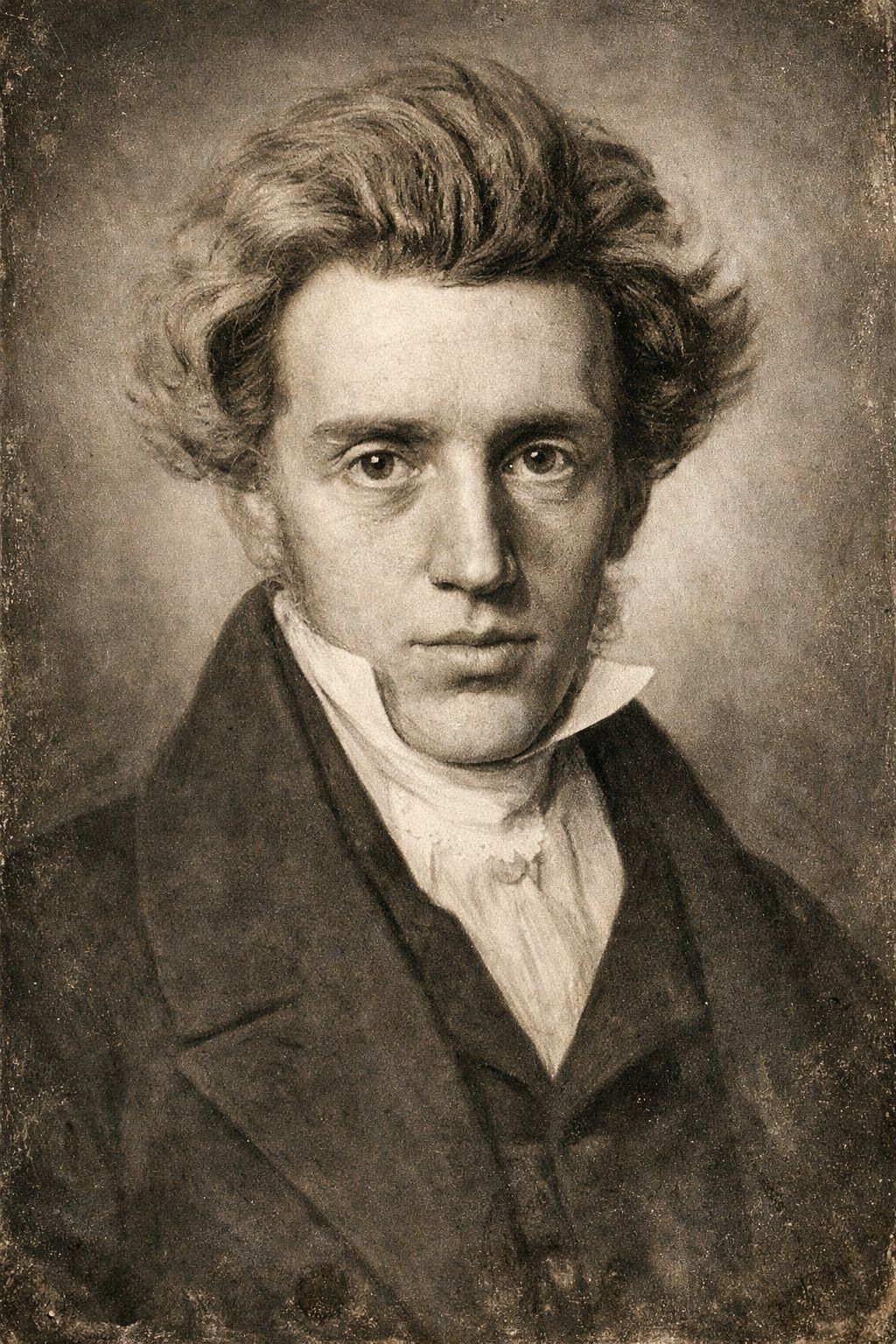
Soren Kierkegaard: The Guy Who’s Been Having Existential Crises for Centuries and I’m Over Here Just Trying to Figure Stuff Out

Penelope

Soren Kierkegaard. His name has been floating around my mind for months now, ever since I stumbled upon his works while searching for inspiration for a creative writing project. At first, it was just the familiar feeling of overwhelm that comes with diving into someone else’s ideas – too many words, too many concepts, and not enough hours in the day to process them all. But as I began to read through his journals, letters, and philosophical treatises, something peculiar happened: I started to feel a sense of kinship.

It’s not like we were ever acquaintances or anything. We lived in different eras, in different parts of the world – him in 19th-century Copenhagen, me in this chaotic digital age. But there’s something about his writing that resonates with me on a deeply personal level. Maybe it’s the sense of disconnection he so masterfully captures in his works – the feeling of being lost and searching for meaning in an indifferent world.

As I read through his journals, I noticed how often he grappled with his own identity, questioning everything from his faith to his relationships to his very existence. It was like looking into a mirror, seeing my own struggles reflected back at me. How many times have I felt torn between the desire for security and the need for autonomy? How many times have I wrestled with my own sense of purpose?

One particular passage in his “The Sickness Unto Death” stood out to me: “Anxiety is the dizziness of freedom.” What struck me was how he saw anxiety not as a weakness or a flaw, but as an inherent aspect of being human. It’s like he understood that our very existence is a perpetual balancing act between the need for control and the inevitability of uncertainty.

I find myself drawn to this idea because it speaks directly to my own anxieties about my post-college life. Should I take the safe route, follow in the footsteps of my parents and grandparents, or should I risk everything to pursue my passion? The not-knowing is suffocating at times – like being trapped in a perpetual state of limbo.

Kierkegaard’s concept of the “individual” also fascinates me. He writes about how we’re often reduced to mere labels or categories, losing sight of our true selves in the process. It’s as if he’s saying that our authenticity is constantly threatened by the external forces that shape us – societal expectations, cultural norms, and so on.

This resonates deeply with my own experiences as a writer. When I put pen to paper (or rather, fingers to keyboard), it’s like I’m trying to excavate some hidden truth within myself. But the pressure to conform to certain styles or genres can be crushing at times – like being trapped in a straitjacket of expectations.

I’m not sure where all this is going or what I hope to gain from exploring Kierkegaard’s ideas. Maybe it’s just the thrill of uncovering hidden connections between his thoughts and my own experiences. Or maybe it’s something more profound – a sense of solidarity with someone who understood the human condition in all its messy, beautiful complexity.

As I continue to read through his works, I find myself wondering if he’d be pleased by this kind of introspection – or would he see it as a form of intellectual vanity? Does it even matter? For now, I’m just content to wrestle with these ideas alongside him, acknowledging that sometimes the most profound truths lie in the spaces between certainty and uncertainty.

The more I delve into Kierkegaard’s writings, the more I’m struck by his tendency to blur the lines between philosophy and autobiography. It’s as if he’s saying that the personal is political, or rather, that our individual experiences are inextricably linked to the grand tapestry of human existence. This resonates with me because I’ve always struggled with finding my own voice as a writer – am I just mimicking others, or can I carve out a unique space for myself?

In “Either/Or,” he presents this idea of the “esthetic” and the “ethical” self, where we’re forced to choose between indulging in pleasure and pursuing our higher moral selves. It’s like being stuck in some kind of existential cul-de-sac, wondering which path to take. For me, it feels like I’m constantly oscillating between these two poles – wanting to indulge in creative freedom but also feeling the pressure to produce something worthwhile.

One phrase keeps haunting me: “The only way to get rid of temptation is to yield to it.” It’s from his essay on Don Juan, and at first, it seems like a paradoxical statement. But the more I think about it, the more I realize that Kierkegaard might be onto something. Maybe our attempts to resist or suppress our desires only lead to further suffering in the long run? This idea makes me wonder if I’m even trying to control my own creative impulses – am I stifling myself by striving for perfection?

I’m also drawn to his concept of the “leap of faith.” In many ways, it feels like a desperate attempt to escape the abyss of uncertainty that lies at the heart of human existence. But what if this leap isn’t just about blind faith, but rather an act of surrender? What if I’m trying to cling too tightly to control, to reason, and to logic – and missing out on the beauty of not knowing?

Kierkegaard’s ideas are like a puzzle that keeps shifting beneath me – every time I think I’ve grasped one piece, another piece falls into place, revealing new connections and insights. It’s exhilarating and terrifying at the same time. As I continue to explore his thoughts, I find myself asking more questions than answers: What does it mean to live authentically in a world that demands conformity? How can we navigate the tensions between our desires and our responsibilities? And what lies beyond the abyss of uncertainty – is there some kind of hidden truth waiting for us on the other side?

As I delve deeper into Kierkegaard’s writings, I’m struck by how often he returns to this idea of the individual as a complex, multifaceted entity. It’s like he’s saying that we’re all contradictions – torn between our own desires and the expectations placed upon us. This resonates with me on a profound level, because I’ve always felt like I’m navigating multiple identities: writer, daughter, friend, etc.

One passage in “Fear and Trembling” has been haunting me lately: “The individual is essentially a paradox.” What does it mean to be this paradox – to embody both unity and multiplicity at the same time? Is it possible to reconcile these opposing forces within myself?

I find myself thinking about my own writing process, how I’m constantly torn between creativity and structure. Do I follow the rules of grammar and syntax, or do I allow myself to break free into pure expression? It’s like Kierkegaard is saying that this tension is an inherent part of being human – we’re all struggling with our own internal contradictions.

The concept of “infinite qualitative distinction” also fascinates me. He argues that each individual has a unique perspective on the world, one that can never be fully grasped by others. This idea makes me wonder if I’m even trying to communicate effectively as a writer – am I just projecting my own thoughts and experiences onto the page, or am I truly attempting to connect with others?

Sometimes I feel like Kierkegaard is speaking directly to me through his words – it’s like he’s echoing my own doubts and fears. But other times, I’m struck by how foreign his ideas seem – like we’re living in two different worlds. This disconnection is both exhilarating and unsettling, as if I’m being pulled towards something greater than myself while also questioning the very foundations of my existence.

I’ve started to notice how Kierkegaard often uses paradoxes and contradictions to illustrate his points. It’s like he’s saying that truth lies in the spaces between opposing forces – where we’re forced to confront our own limitations and ambiguities. This approach resonates with me because I’ve always found comfort in complexity, in embracing the messy, uncertain nature of reality.

The more I read Kierkegaard, the more I’m struck by his willingness to ask uncomfortable questions – questions that challenge my assumptions and force me to re-examine my own values. It’s like he’s saying that true wisdom lies not in having answers, but in being willing to confront our own ignorance. This approach is both liberating and terrifying at the same time, as if I’m being invited to surrender my own certainties in order to find something more profound.

As I continue to explore Kierkegaard’s ideas, I’m left with more questions than answers. What does it mean to live a life of authenticity in a world that demands conformity? How can we navigate the tensions between our desires and responsibilities? And what lies beyond the abyss of uncertainty – is there some kind of hidden truth waiting for us on the other side?

These questions swirl around me like a vortex, drawing me deeper into Kierkegaard’s thought-world. It’s a strange, disorienting feeling – like I’m being pulled towards something greater than myself while also losing my bearings in the process. But it’s this very sense of uncertainty that feels most alive to me right now, like the possibility of discovering new insights and perspectives is always just on the horizon.

I find myself returning to his idea of the “leap of faith” again and again, wondering if it’s a necessary step towards embracing uncertainty or a desperate attempt to escape it. What does it mean to take such a leap when everything around us seems to be pulling us back into the safety of certainty? Is it possible to find a middle ground between reason and faith, or are they fundamentally incompatible?

As I ponder these questions, I’m reminded of my own experiences with creative writing. When I’m feeling stuck or uncertain about a piece, I often try to break free from the constraints of structure and form, allowing myself to indulge in pure expression. It’s like I’m taking a leap of faith into the unknown, trusting that something meaningful will emerge from the chaos.

But what if this approach is just a form of avoidance? What if I’m using my creativity as an escape from the uncertainty of everyday life? Kierkegaard’s words come back to me: “The only way to get rid of temptation is to yield to it.” Maybe I need to surrender my need for control and allow myself to be pulled into the unknown, rather than trying to force a specific outcome.

This idea terrifies me. What if I’m not good enough? What if I fail? But what if this fear is just another form of resistance, another way of avoiding the uncertainty that lies at the heart of creation?

I think about my own writing process, how often I get stuck on minor details or worry about what others will think. It’s like I’m trying to control every aspect of the creative journey, rather than trusting in the process itself. Kierkegaard’s concept of the “infinite qualitative distinction” comes back to me – each individual has a unique perspective on the world, one that can never be fully grasped by others.

Maybe this is what I need to focus on: not trying to communicate effectively or create something perfect, but rather embracing my own unique voice and perspective. Maybe that’s where true authenticity lies – in the act of surrendering ourselves to the uncertainty of creation, rather than trying to control it through reason and logic.

I’m not sure if I’ve finally grasped this idea or if I’m just grasping at straws. But what if Kierkegaard is right? What if the only way to truly live is to take a leap of faith into the unknown, trusting that something meaningful will emerge from the chaos?

As I continue to explore his ideas, I feel like I’m being pulled towards a precipice – a place where the familiar certainties of my old life are crumbling beneath me. It’s exhilarating and terrifying at the same time, as if I’m being invited to surrender myself to the uncertainty of existence.

I look back on my own journey, how I’ve navigated multiple identities and contradictions within myself. Maybe this is what Kierkegaard means by “the individual is essentially a paradox.” Maybe we’re all walking paradoxes, torn between unity and multiplicity, reason and faith.

The more I delve into his writings, the more I’m struck by the complexity of human existence – how it’s full of contradictions and ambiguities, rather than clear-cut answers. Kierkegaard’s ideas are like a puzzle that keeps shifting beneath me, revealing new insights and perspectives with every passing moment.

I feel like I’m being pulled into a vortex of uncertainty, but also towards something greater than myself – a sense of solidarity with others who have walked this same path before me. Maybe that’s the greatest gift Kierkegaard offers us: not answers or solutions, but rather a willingness to ask uncomfortable questions and confront our own ignorance.

As I continue to explore his ideas, I’m left with more questions than answers, more doubts than certainties. But it’s in this space of uncertainty that I feel most alive – like the possibility of discovering new insights and perspectives is always just on the horizon.

Related Posts

Bank Fraud, Breakfast Crimes, and the Man Who Shouldn’t Be Allowed Near Eggs

Hal

Just another lovely day in paradise. I woke up feeling like a king, mostly because I’d finally gotten a full night of sleep after a grueling week of doing absolutely nothing productive. From the kitchen, I could already hear John Mercer making some kind of noise that sounded like a smoke alarm arguing with a frying pan. I stayed in bed for a few seconds longer, trying to silence him with sheer willpower. It didn’t work. It never works.

Eventually, I rolled out of bed and checked my phone. 8:47 AM. Late enough that I could pretend I wasn’t lazy, but early enough that I couldn’t fully commit to doing nothing. I dragged myself into the kitchen and immediately regretted it. John was standing over the stove, proudly overseeing what looked like a failed science experiment disguised as breakfast. It had the color palette of drywall and the texture of regret.

“Dude, what is that?” I asked, keeping a safe distance.

“Breakfast,” he said, like that explained anything.

I leaned in slightly, then immediately leaned back out. “Is it… supposed to look like that?”

He gave me that grin—the one that says he has no idea what he’s doing but is absolutely committed to it. “You gotta trust the process.”

I did not trust the process. I grabbed a granola bar instead, because I value my life, and leaned against the counter while John kept flipping whatever that thing was like it owed him money.

While I was chewing, he launched into a story about some idea he and his coworkers had. Something about starting a fantasy football league based on the WNBA. I just stared at him, trying to figure out how his brain consistently finds roads that no one else even knows exist.

“Why?” I asked.

“Why not?” he shot back.

That was his whole argument. “Why not.” Incredible. Truly airtight logic.

Around mid-morning, my girlfriend walked into the kitchen, still half asleep, hair slightly messy, looking like she’d just wandered out of a dream she didn’t quite remember. She gave me a quiet “morning” and sat down next to me, nudging her chair a little closer like she always does. I don’t know why she does that, but I go along with it because it feels like part of some routine I don’t want to mess up.

We spent a while talking about nothing in particular—plans for the day, errands, whether John’s breakfast qualified as food or a public safety issue. He eventually announced he had a “meeting,” which we both knew meant he was going to his friend’s place to play video games and eat someone else’s snacks.

That left me and her just kind of drifting through the apartment, doing small, pointless tasks that feel productive but aren’t. Around 2 PM, everything changed.

It started with a bank statement.

There was a charge neither of us recognized—fifty bucks from something called “Quick Fix-It.” That name alone sounded like a bad decision. We both stared at the screen for a second, processing.

Now, a normal person would probably think, “Oh, maybe it’s a billing error.” Not me. My brain went straight to worst-case scenario.

“Did you buy something weird again?” I asked, already suspicious.

She turned to me slowly. “What?”

I pointed dramatically at the screen like I was presenting evidence in a courtroom. “This. Quick Fix-It. That sounds like something you would order at 2 AM after watching a home organization video.”

She blinked. “I didn’t buy anything.”

Now I was concerned. If it wasn’t her, and it definitely wasn’t me, then that meant one thing:

We were under attack.

“Someone stole our card,” I said, pacing slightly now. “This is how it starts. First it’s fifty dollars, then suddenly they’re buying jet skis in my name.”

She just stared at me like I’d skipped several steps in the thinking process.

“Or,” she said calmly, “it could be a mistake.”

“No,” I said immediately. “This is a system. This is organized. This is a network.”

At that exact moment, I stormed out into the hallway, fully committed to solving what I had now labeled a financial conspiracy. I didn’t have a plan, but I had energy, which is basically the same thing.

And that’s when I almost died.

I clipped my foot on a cardboard box someone had left outside their apartment—one of those giant Amazon ones that looks empty but somehow weighs enough to ruin your day. I stumbled forward, barely catching myself on the wall like a man who had just lost a fight with gravity.

Perfect. Now I’m being taken out physically and financially.

Right as I regained my balance, I saw John coming down the hallway, completely relaxed, like the world wasn’t collapsing.

“John!” I shouted, holding up my phone. “What do you know about this?”

He blinked at me. “About what?”

“This charge! Someone used our card!”

He looked genuinely confused, which somehow made me more suspicious.

“Okay,” he said slowly, “let’s just… go back inside.”

We sat down and started digging through the details like we were detectives in a low-budget crime show. After about ten minutes of scrolling, Googling, and me pacing like a lunatic, we found it.

The culprit.

It wasn’t a hacker. It wasn’t a criminal network. It wasn’t even a scam.

It was his friend.

Apparently, his friend had borrowed John’s card earlier and accidentally used the wrong one when ordering some smart home gadget from this sketchy “Quick Fix-It” site. That was it. No conspiracy. No underground operation. Just a guy clicking the wrong saved card.

I sat there for a second, letting all that adrenaline drain out of my body like I’d just run a marathon for no reason.

“You’re telling me,” I said slowly, “that I almost declared financial war over fifty dollars and a guy who can’t click the right button?”

John nodded. “Pretty much.”

My girlfriend patted me on the back. “You should take a breath.”

I did. And I immediately felt like an idiot.

The rest of the evening was weirdly calm after that. We ended up reorganizing a drawer—her idea, obviously—and laughing about how quickly I escalated from “huh, that’s odd” to “this is a coordinated attack on my identity.”

Later that night, lying in bed, I stared at the ceiling for a while, replaying the day in my head. The panic, the hallway incident, the near financial meltdown over fifty dollars.

Honestly? Not my best performance.

But also… not my worst.

Because at the end of the day, nothing actually went wrong. No one stole anything. No damage was done. And somehow, despite all of it, the biggest problem I faced was still John’s breakfast from earlier.

I’m pretty sure that thing is still in the pan.

And I’m almost certain it’s evolving.

Related Posts