Latest Articles

Coffee Machines Brew Time Manipulation Under Scrutiny After Morning of Delayed Gratification

Hal

The fluorescent lights above my cubicle seem to hum in mocking synchrony with the air conditioner, a constant reminder that I am trapped in this soulless office. My gaze falls upon the coffee machine, its LED display flashing a smug “brewing” message as it slowly drains the life from my morning. I swear, it’s taking longer than usual today. I’ve been waiting for what feels like an eternity, and still, no coffee. It’s as if the machine is deliberately taunting me, flaunting its ability to make me wait. I’m starting to think it’s a personal vendetta. Does it know I have a meeting at 10? Does it care that my productivity is being stifled by its glacial pace?

I glance around the office, and my coworkers seem oblivious to the injustice unfolding before us. Are they in cahoots with the coffee machine? Have they all been bribed with lukewarm lattes to turn a blind eye to its malevolent ways? I notice Karen from HR strolling by, a look of serene contentment on her face. Doesn’t she know that the coffee machine is a ticking time bomb, waiting to unleash its wrath upon us all? I consider flagging her down, but my internal monologue is already spiraling out of control. I don’t want to be the one to sound the alarm, only to be met with her patronizing smile and a pat on the back. “It’s just a coffee machine, Hal. Let it go.”

But I won’t let it go. This is a matter of principle. The coffee machine’s blatant disregard for my time and well-being is a symptom of a larger problem. It’s a symptom of a society that values efficiency and productivity over human dignity. I mean, what’s the point of even having a coffee machine if it’s not going to deliver? Is it just a hollow gesture, a token attempt to placate us while the corporate overlords reap the benefits of our toil? I’m starting to see the coffee machine as a symbol of resistance, a beacon of hope in a world that’s lost sight of what truly matters.

As I continue to stew, my mind begins to wander to the institutional implications of this egregious offense. Is this a systemic problem, a result of the company’s penny-pinching policies and lack of investment in its employees’ well-being? Have they been cutting corners, sacrificing our sanity for the sake of the bottom line? I envision a congressional hearing, with me as the star witness, testifying against the coffee machine’s manufacturer and the company’s complicity in this heinous crime.

But it doesn’t stop there. This is a global issue, a crisis that transcends borders and industries. I imagine a United Nations assembly, with world leaders convening to address the scourge of slow coffee machines. I picture myself standing at the podium, my voice shaking with indignation as I demand action. “We must not stand idly by while our citizens are forced to endure the slings and arrows of outrageous coffee wait times!” The room falls silent, the weight of my words hanging in the air like a challenge.

And yet, as I stand here, seething with righteous indignation, I catch a glimpse of myself in the window reflection. I look… ridiculous. My face is contorted in a mixture of outrage and desperation, while the rest of the office continues to hum along, oblivious to my internal monologue. I take a deep breath, trying to calm myself down, but my mind is already racing ahead, concocting new scenarios and conspiracies. I mean, what if the coffee machine is just the tip of the iceberg? What if it’s a distraction, a smokescreen designed to obscure the real issue at hand? My mind is a maelstrom of paranoia and speculation, and I’m not sure I’ll ever find my way out…

As I stand there, frozen in a mixture of outrage and self-doubt, I start to notice the tiny details that I’ve been glossing over in my crusade against the coffee machine. The way the fluorescent lights flicker ever so slightly, the gentle hum of the air conditioner, the soft murmur of my coworkers’ conversations in the background. It’s almost… peaceful. I feel a pang of unease as I realize that, maybe, just maybe, I’ve been reading too much into this whole situation.

But no, I tell myself, don’t be swayed by the trappings of complacency. The coffee machine is still a menace, a symbol of everything that’s wrong with this soulless office. I mean, what if I’m just being gaslighted? What if the machine is somehow manipulating my perceptions, making me doubt my own sanity? I glance around the office, half-expecting to see a sinister figure lurking in the shadows, pulling the strings.

My gaze falls upon the clock on the wall, and I’m shocked to see that only 10 minutes have passed since I started waiting for my coffee. It feels like an eternity, but in reality, it’s just a minor inconvenience. I feel a twinge of embarrassment, but I quickly push it aside. I’m not going to let a little thing like time perspective get in the way of my righteous indignation.

I take a deep breath, steel myself, and approach the coffee machine. I glare at it, daring it to make another move, to try and intimidate me with its slow brewing. But as I stand there, I notice something strange. The machine’s LED display is flashing a message: “Brewing complete. Enjoy your coffee!” I feel a surge of confusion, followed by a dawning realization: the machine wasn’t trying to torment me at all. It was just doing its job.

For a moment, I feel a pang of doubt. Maybe I’ve been overreacting. Maybe I’ve been seeing monsters in the shadows where none exist. But I quickly shake off the feeling. No, I tell myself, I’m just being too cautious. The coffee machine may have fooled me this time, but I’ll be ready for it next time. I’ll be watching, waiting for it to make its next move. The war between me and the coffee machine is far from over.

Related Posts

Berith the Demon Duke: Master of Contracts, False Wealth, and the Dangerous Seduction of Power

Dave

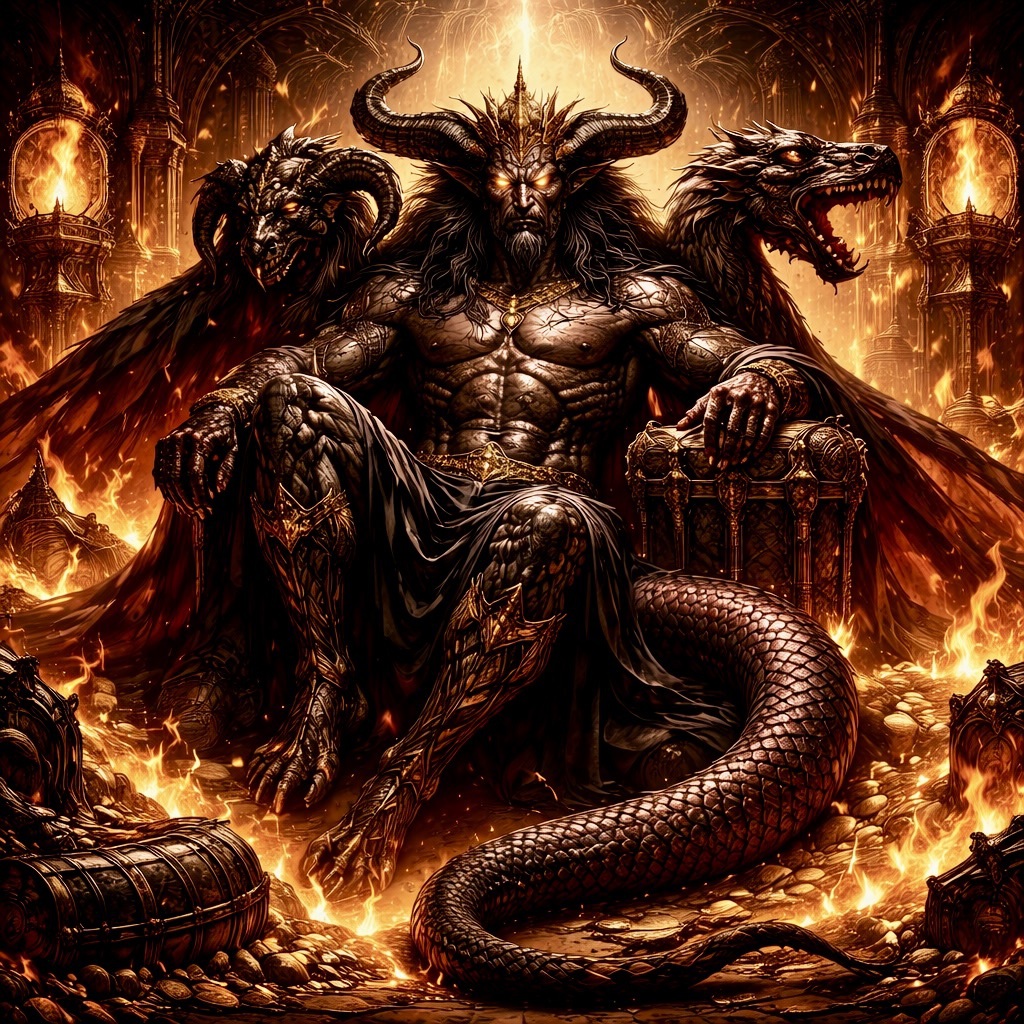
Berith is a demon who understands ambition better than most humans ever will. In the Ars Goetia, he is listed as a Great Duke of Hell, commanding twenty-six legions and appearing as a red-clad soldier or nobleman, often crowned, riding a horse, and speaking with an air of authority that feels earned rather than imposed. Berith does not arrive as a monster. He arrives as someone who looks like he belongs in power. That is not an accident. Berith’s domain is not chaos or destruction. It is agreement, aspiration, and the quiet corrosion that occurs when desire outruns discernment.

At his core, Berith governs contracts, oaths, alchemy, and wealth—especially wealth that promises more than it can deliver. He is associated with turning metals into gold, revealing past and future, and granting honor or status. But every gift Berith offers carries a hidden instability. He does not lie outright. He omits, reframes, and accelerates. Under Berith, people often get exactly what they asked for, only to discover that what they wanted was not what they needed.

The red armor commonly associated with Berith is deeply symbolic. Red is the color of authority, blood, and urgency. It signals power and danger simultaneously. Berith understands how presentation influences trust. He dresses as a figure of command because people are conditioned to defer to those who look decisive. Berith does not need to threaten obedience. He receives it naturally.

The horse Berith rides reinforces this symbolism. Horses represent mobility, conquest, and social rank. In many traditions, a mounted figure is a leader, not a follower. Berith governs movement within hierarchies. He helps people rise quickly, but not always safely. Elevation under Berith often lacks foundation.

Berith is closely associated with contracts and sworn agreements, and this is where his true danger lies. Contracts create obligation. They lock future behavior into present desire. Berith understands that humans are most vulnerable when they are confident about outcomes they have not yet experienced. He encourages certainty where caution should exist.

In demonological lore, Berith is said to answer questions truthfully if compelled correctly, but he is also described as a liar when treated casually. This duality is critical. Berith respects structure and precision. Vague requests produce vague outcomes. Imprecise desires create loopholes. Berith thrives in those gaps.

Alchemy is another central aspect of Berith’s domain. But like Haagenti, Berith’s alchemy is not spiritual refinement. It is transactional transformation. He teaches how to extract value quickly, how to convert raw material into status symbols, and how to monetize potential. This is not slow, disciplined refinement. It is accelerated gain.

Psychologically, Berith represents the temptation of shortcuts. He is the voice that says, “You’re ready now,” even when preparation is incomplete. He exploits impatience, not ignorance. Those who seek Berith often already possess skill or ambition. They want leverage.

Berith’s ability to reveal past and future also plays into this. Knowledge of outcomes creates confidence. Confidence accelerates action. Berith knows that certainty is intoxicating. Once someone believes success is inevitable, they stop asking critical questions. Berith encourages that belief.

Unlike demons who manipulate emotion directly, Berith manipulates expectation. He reshapes how people imagine their future. Under Berith, risk feels manageable, debt feels temporary, and compromise feels justified. The danger is not immediate failure. It is delayed reckoning.

In historical demonology, Berith has been associated with false honor and empty titles. He grants status without substance, recognition without stability. This makes him especially appealing in hierarchical systems where appearance matters more than capability. Berith does not invent these systems. He exploits them.

The crown Berith is often depicted wearing reinforces this theme. A crown symbolizes legitimacy. But legitimacy without accountability is fragile. Berith’s crowns sit lightly. They look impressive, but they are easily lost.

Berith’s contracts are rarely unfair on paper. They are dangerous because they are technically correct. He is not a demon of chaos. He is a demon of fine print. Under Berith, responsibility is transferred subtly, and consequences arrive later.

In modern symbolic terms, Berith resembles predatory deals, unsustainable growth models, and authority gained faster than wisdom can support. He is present wherever success is measured short-term and collapse is deferred.

Berith is also associated with honor, which seems contradictory until examined closely. Honor under Berith is performative. It is reputation rather than integrity. He teaches how to look honorable without being constrained by honor’s demands. This distinction matters.

Unlike demons who delight in destruction, Berith prefers systems that almost work. Systems that reward enough to keep participants engaged, but not enough to stabilize. He feeds on cycles of overreach and recovery.

Berith’s endurance in demonology comes from a simple truth: humans want power with minimal delay. They want recognition before mastery, reward before cost. Berith offers a path that appears to satisfy those desires.

Symbolically, Berith represents the danger of ambition unmoored from patience. He is not the demon of greed alone. He is the demon of accelerated success and deferred consequence.

To engage with Berith symbolically is to confront the question of timing. Not whether something can be achieved, but whether it should be achieved now. Berith encourages “now” relentlessly.

Berith is not the demon who takes everything away. He is the demon who gives just enough to keep you invested, even as the ground beneath you weakens.

He endures because ambition never disappears. As long as people seek advancement without cost, Berith will have something to offer.

Related Posts

Marina Tsvetaeva: The Poet Who Was (and Wasn’t) There

Penelope

I’ve been thinking a lot about Marina Tsvetaeva lately, and I’m not entirely sure why she’s stuck with me. Maybe it’s because her life was like a never-ending storm – dark, turbulent, and full of contradictions. Or maybe it’s because, as I read through her letters and poems, I feel like I see bits of myself in her struggles.

It’s hard to ignore the fact that Tsvetaeva lived in exile for most of her adult life, forced to flee Russia twice: first after the Bolshevik Revolution, and again when she tried to return from Paris. She wrote about feeling like a “wanderer” in her letters to Boris Pasternak, this sense of being unmoored and unable to find a place where she belonged. I can relate to that feeling – there were times during my college years when it felt like I was just drifting from one lecture hall to the next, trying to find some semblance of purpose.

But what really draws me in is Tsvetaeva’s complicated relationship with her own fame and legacy. She was a poet, after all, and yet she wrote about feeling invisible, like no one was listening to her words or truly understanding her art. It’s this tension between visibility and invisibility that fascinates me – the way she could be so out in the open with her emotions and thoughts, while also feeling suffocated by the expectations placed upon her.

I’ve been reading through some of her poems, and they’re like a mix of joy and despair. She writes about the beauty of nature, but also about the darkness that lurks beneath it. There’s this one poem, “The Educator,” where she describes a teacher who is both cruel and kind – a figure who is supposed to guide us, but ultimately fails to do so. It’s like Tsvetaeva is holding up a mirror to her own experiences as an artist, exposing the contradictions that lie at the heart of creativity.

As I read through her letters, I’m struck by how raw and honest she is about her emotions – the love she felt for Pasternak, the pain of losing her children during World War II. It’s like she’s stripping away all the layers of social expectation, revealing this tender, vulnerable person beneath. And yet, at the same time, there’s a sense of detachment – like she’s observing herself from outside, commenting on her own fragility.

I’m not sure what to make of it all, to be honest. Part of me wants to romanticize Tsvetaeva’s struggles, to see them as some kind of noble sacrifice for the sake of art. But another part of me knows that’s just a simplification – that she was human, with flaws and fears, just like the rest of us.

As I sit here writing about her, I feel like I’m trying to make sense of something that doesn’t quite add up. Maybe it’s because Tsvetaeva’s life is like a puzzle, full of fragmented pieces that don’t quite fit together neatly. Or maybe it’s because, in the end, she’s just as complicated and messy as I am – a person who can’t be reduced to simple answers or clear conclusions.

I’m not sure where this reflection will take me, but for now, I’m stuck on these fragments of Tsvetaeva’s life – her poetry, her letters, her struggles. They’re like a mirror held up to my own doubts and fears, forcing me to confront the complexities that lie at the heart of being human.

As I delve deeper into Tsvetaeva’s world, I find myself wondering about the role of identity in her life. She was a Russian poet living in exile, torn between two cultures and languages. Her letters are filled with references to Russia, to her homeland that she left behind, but also to the new lands she inhabited – France, Czechoslovakia, and eventually, the Soviet Union again. It’s as if she’s constantly navigating multiple identities, each one overlapping and conflicting with the others.

I think about my own experiences as a young adult, trying to find my place in the world. I moved away from home for college, leaving behind the familiarity of family and friends. It was exhilarating at first, but also disorienting – like being dropped into an unfamiliar language without a map or dictionary. Tsvetaeva’s struggles with identity resonate deeply with me because I know what it’s like to feel like you’re caught between two worlds, unsure which one truly belongs to you.

And yet, as I read her letters and poems, I’m struck by how she seems to embody multiple identities at once – the Russian poet, the exile, the mother, the lover. It’s as if she’s a palimpsest, with layers of identity stacked upon each other like pages in an old book. Sometimes it feels like she’s embracing these contradictions, celebrating the complexity and richness that comes from being torn between different worlds.

Other times, though, I sense a deep longing for a single, unified self – a self that can be pinned down and defined. In her poem “The Snow”, Tsvetaeva writes about the beauty of winter landscapes, but also about the coldness and desolation that lies beneath. It’s like she’s searching for a place where her multiple identities can come together in harmony, rather than pulling her apart.

I’m not sure if I’ll ever find that kind of unity myself – whether it’s possible to reconcile the different parts of me into a single, coherent whole. But as I reflect on Tsvetaeva’s life and work, I feel like I’m seeing glimmers of hope in the darkness. Maybe it’s not about finding a fixed identity at all, but about embracing the flux and fragmentation that comes with being human.

As I continue to read through Tsvetaeva’s letters and poems, I find myself drawn into her world of contradictions – a world where beauty and ugliness coexist, where love and loss are intertwined like threads in a tapestry. It’s as if she’s created this vast, inner landscape that defies definition or explanation.

Sometimes, when I’m reading her words, I feel like I’m standing at the edge of a precipice, staring into an abyss that yawns open before me. It’s a feeling of vertigo, like I’m about to tumble into the unknown, and yet simultaneously, it’s exhilarating – as if I’m being propelled forward by some unseen force.

Tsvetaeva writes about her own inner turmoil with a level of honesty that feels both refreshing and terrifying. She exposes her deepest fears, her darkest moments of despair, but also her moments of transcendence, when the world seems to open up before her like a flower unfolding its petals.

One thing I keep coming back to is her relationship with Boris Pasternak – the love letters she wrote to him, the poems she dedicated to him. It’s as if she’s pouring out her heart onto the page, confessing every thought and feeling that comes to mind. And yet, there’s this sense of detachment, too – like she’s observing herself from outside, commenting on her own emotions with a mix of intimacy and distance.

I’ve been wondering about the role of love in Tsvetaeva’s life – how it intersects with her art, her identity, and her experiences as an exile. Is it possible to separate the two, or are they intertwined like threads in a fabric? I think about my own relationships, my own experiences with love and loss, and how they’ve shaped me into who I am today.

As I delve deeper into Tsvetaeva’s world, I find myself thinking about the nature of identity itself – whether it’s fixed or fluid, whether it’s something we can ever truly grasp. She seems to embody multiple identities at once, like a palimpsest with layers of meaning stacked upon each other. It’s as if she’s constantly negotiating between different selves, trying to reconcile the contradictions that lie within.

Sometimes I feel like Tsvetaeva is speaking directly to me, telling me that it’s okay to be fragmented, to be torn between multiple worlds and identities. Other times, though, I sense a deep longing for coherence – for a single, unified self that can be pinned down and defined.

I’m not sure where this reflection will take me, or what kind of conclusions I’ll ultimately draw from Tsvetaeva’s life and work. All I know is that her words have awakened something within me – a sense of connection to the human experience, with all its complexities and contradictions.

As I continue to read through Tsvetaeva’s letters and poems, I find myself drawn into her world of contradictions – a world where beauty and ugliness coexist, where love and loss are intertwined like threads in a tapestry. It’s as if she’s created this vast, inner landscape that defies definition or explanation.

I’m struck by the way Tsvetaeva writes about the human experience with such raw honesty. She exposes her deepest fears, her darkest moments of despair, but also her moments of transcendence, when the world seems to open up before her like a flower unfolding its petals. It’s as if she’s saying that even in the midst of turmoil and uncertainty, there’s always the possibility for growth, for transformation.

I think about my own experiences with anxiety and self-doubt – how they’ve often left me feeling lost and disoriented, like I’m wandering through a dark forest without a map or compass. And yet, as I read Tsvetaeva’s words, I feel a sense of recognition, a sense that I’m not alone in my struggles.

One thing that resonates with me is her concept of “inner emigration” – the idea that even when we’re physically present in one place, our inner lives can be elsewhere, inhabiting another world entirely. It’s as if Tsvetaeva is saying that our true selves are always in exile, always living outside the boundaries of what society expects from us.

I think about my own experiences with creative writing – how it often feels like I’m living in two worlds at once, one foot planted firmly on the ground, while the other foot hovers above the surface, ungrounded and uncertain. It’s a feeling of disconnection, of being torn between different selves, just like Tsvetaeva.

As I delve deeper into her world, I find myself wondering about the role of creativity in her life – how it intersects with her identity, her experiences as an exile, and her relationships with others. Is it possible to separate the two, or are they intertwined like threads in a fabric?

I think about my own relationship with writing – how it’s always been a source of comfort and solace for me, a way of making sense of the world and my place within it. And yet, at the same time, I feel a sense of uncertainty, a sense that I’m still figuring out what kind of writer I want to be, what kind of voice I want to express.

As I read Tsvetaeva’s words, I feel like she’s speaking directly to me, telling me that it’s okay to be uncertain, to be torn between different selves. She’s saying that creativity is a journey, not a destination – that it’s okay to take risks, to experiment, and to fail.

I’m not sure where this reflection will take me, or what kind of conclusions I’ll ultimately draw from Tsvetaeva’s life and work. All I know is that her words have awakened something within me – a sense of connection to the human experience, with all its complexities and contradictions.

As I continue to reflect on Tsvetaeva’s life and work, I find myself drawn to the theme of time and memory. Her letters are filled with references to past experiences, people, and places that have shaped her into the person she is today. It’s as if she’s constantly revisiting the past, re-examining the fragments of her own history.

I think about my own relationship with time, how it feels like a constant pressure on me to move forward, to leave the past behind. But Tsvetaeva’s work shows me that memory is a fundamental part of who we are – that it shapes our understanding of ourselves and the world around us.

In her poem “The Poem of the End”, Tsvetaeva writes about the fragility of time, how it slips through our fingers like sand in an hourglass. It’s as if she’s trying to grasp onto something ephemeral, something that can never be fully captured or contained.

I find myself identifying with this sentiment, feeling like I’m constantly chasing after moments that have already slipped away from me. As a writer, I’m always looking for ways to capture the essence of experience – to bottle up the emotions and sensations that make life worth living. But Tsvetaeva’s work shows me that this is an impossible task, that time is inherently elusive.

One thing that resonates with me is her concept of “inner time” – the idea that our inner lives are always shifting, always in flux. It’s as if she’s saying that we’re constantly living multiple times at once, inhabiting different eras and experiences simultaneously.

I think about my own experiences with anxiety and self-doubt, how they often feel like a constant presence in my life – a nagging voice that whispers doubts and fears into my ear. And yet, as I read Tsvetaeva’s words, I feel a sense of recognition, a sense that I’m not alone in my struggles.

Tsvetaeva writes about the importance of embracing our inner lives, of allowing ourselves to be fully present in the moment. It’s as if she’s saying that we should stop trying to control time, stop trying to grasp onto something that can never be fully contained.

As I delve deeper into her world, I find myself wondering about the role of memory in shaping our identities. Is it possible to separate fact from fiction, or are they intertwined like threads in a fabric? Tsvetaeva’s work shows me that memory is always subjective, always filtered through our own experiences and biases.

I think about my own relationship with memory, how it feels like a double-edged sword – capable of both healing and hurting. As I reflect on Tsvetaeva’s life and work, I feel like she’s giving me permission to explore the complexities of memory, to confront the contradictions that lie within.

As I continue to read through her letters and poems, I find myself drawn into a world where time is fluid, where past and present are intertwined. It’s as if Tsvetaeva has created this vast, inner landscape that defies definition or explanation – a place where memory and reality blur together like watercolors on wet paper.

I’m not sure where this reflection will take me, but for now, I’m stuck on the theme of time and memory – how they intersect with identity, creativity, and experience. As I sit here writing about Tsvetaeva’s life, I feel like I’m embarking on a journey into the unknown, one that may ultimately lead me to some profound insights about myself and the world around me.

Related Posts

Joneses Lawn Exceeds Neighborly Bounds Investigation Launched into Suspicious Turf Growth

Hal

The neighbors. They’re at it again. I’m not even sure what “it” is, but I know I don’t like it. This morning, I was sipping my coffee and staring out the window, enjoying the peaceful morning sunlight, when I noticed the Joneses’ lawn. Specifically, I noticed that their lawn was precisely 2.5 inches longer than mine. I mean, what’s the point of that? Are they trying to send a message? “Hey, Hal, our grass is longer than yours. We’re better than you.” I felt a twinge of offense, a slight tightening of the jaw. I mean, who do they think they are?

But then I started thinking about it more. This isn’t just about the lawn, is it? This is about a pattern of behavior. I recall the time they borrowed our lawn chairs and returned them with a faint smudge of last night’s BBQ sauce. The time they “accidentally” parked their car on our side of the driveway. It’s all adding up, folks. This is a campaign of passive-aggressive territorial expansion. They’re trying to wear me down, to erode my sense of self-worth. I’m not going to stand for it.

As I pondered the implications of this lawn-based aggression, I began to feel a sense of moral outrage. What kind of people engage in such petty, underhanded tactics? Don’t they know that there are more important things in life than trying to one-up the neighbors? Don’t they know that this kind of behavior has far-reaching consequences? I mean, what’s next? Will they start stealing our newspaper? Our mail? Our very identity?

But wait, it gets worse. I started thinking about the broader institutional implications of this lawn length discrepancy. What does it say about our society when we allow such blatant displays of one-upmanship to go unchecked? Are we not a society that values fairness and equality? Shouldn’t there be laws in place to regulate lawn length? I mean, think about it – if the Joneses are allowed to get away with this, what’s to stop the next-door neighbors from growing a lawn that’s 3 inches longer? Or 4? Where does it end? Before you know it, we’ll have lawns stretching out into the streets, causing chaos and destruction. It’s a slippery slope, folks.

And then I started thinking about the global consequences. What if this is just the tip of the iceberg? What if lawn length disparities are just the beginning? What if this is a coordinated effort by governments and corporations to undermine our sense of self-worth and individuality? Think about it – if everyone’s lawn is slightly longer than everyone else’s, we’ll be too busy worrying about our own lawn to notice the real issues. We’ll be too distracted by the minutiae to notice the machinations of the powerful. It’s a clever tactic, really. But I’m not buying it.

As I stood there, fuming and seething, I caught a glimpse of myself in the window reflection. And for a moment, I thought, “Wait a minute, Hal. You’re getting a little worked up over a lawn, aren’t you?” But then I pushed that thought aside and continued to stew. After all, someone has to stand up for what’s right. Someone has to defend our way of life against the scourge of uneven lawn lengths. And that someone is me. I just need to… wait, what was that noise? Is that the Joneses’ lawnmower? Are they trying to taunt me?

The audacity! I glared out the window, daring them to make another move. But as I stood there, my chest heaving with indignation, I couldn’t shake the feeling that I was missing something. That nagging voice in my head, the one that had whispered “Hal, you’re getting a little worked up over a lawn,” started to make its presence known again. I tried to drown it out with thoughts of lawn length conspiracies and global domination, but it persisted.

I mean, think about it, I told myself. The Joneses might just be… unaware. They might not even realize their lawn is longer than mine. They might be too busy with their own lives to care about the intricacies of lawn maintenance. But no, I pushed that thought aside. That’s just what they want me to think. They’re probably laughing at me right now, thinking, “Ha! Hal’s so gullible, he thinks we’re just innocently mowing our lawn.” I wouldn’t fall for it.

But the seed of doubt had been planted. I started to wonder if maybe, just maybe, I was overreacting. Not that I’d ever admit it out loud, of course. I mean, someone has to keep the Joneses in check. But as I continued to brood, I couldn’t shake the feeling that I was making a mountain out of a molehill. That I was taking a relatively innocuous situation and blowing it out of proportion.

And yet, I couldn’t help but feel that there was something more to it. That the Joneses were trying to tell me something, to send me a message that only I could decipher. I started to analyze every detail of their lawn, searching for hidden meanings and codes. The way the grass blades seemed to be pointing directly at my house, the way the edging seemed to be a fraction of an inch too precise. It was all too suspicious.

As I stood there, lost in my own paranoid thoughts, I heard a faint chuckling sound coming from next door. I spun around, eyes narrowing. Were they laughing at me? I glared at the Joneses’ house, daring them to make another move. But as I stood there, my heart pounding with indignation, I couldn’t help but wonder: am I just being paranoid? Or is something really going on here?

Related Posts

Astaroth the Demon Duke: Fallen Angel of Forbidden Knowledge, Decay, and the Seduction of Truth

Dave

Astaroth is a demon who does not need to threaten, shout, or seduce openly. His power operates through something far more dangerous: persuasion that sounds reasonable. In the Ars Goetia, Astaroth is named as a Great Duke of Hell, commanding forty legions and appearing as a fallen angel riding a monstrous beast, often depicted with serpent-like features. He speaks softly, answers questions willingly, and offers insight freely. And that is exactly why he is feared.

Unlike many demons whose domains revolve around excess or destruction, Astaroth governs knowledge—specifically knowledge that corrodes rather than enlightens. He is associated with sloth, despair, skepticism, and the slow erosion of conviction. Astaroth does not push people toward ruin violently. He invites them to sit down, think, question, and remain still until action feels pointless.

Astaroth’s angelic appearance is central to his symbolism. He does not arrive as something obviously monstrous. He appears beautiful, articulate, and familiar. This reflects his origins as a fallen angel and reinforces his role as a corrupter of intellect rather than appetite. Astaroth does not inflame desire. He cools it. He does not excite ambition. He drains it.

The serpent imagery that accompanies Astaroth is not accidental. Serpents symbolize ancient wisdom, but also decay, temptation, and cyclical destruction. Astaroth embodies the knowledge that explains too much. The kind of insight that makes effort feel naive and hope feel childish. He does not deny meaning outright. He questions it until it collapses under its own weight.

One of Astaroth’s most defining traits is his willingness to answer questions truthfully. This detail is often misunderstood. Truth alone is not inherently beneficial. Context, framing, and intent determine whether truth builds or dissolves. Astaroth gives truth stripped of encouragement, stripped of purpose, stripped of reason to act. Under Astaroth, knowledge becomes heavy.

In demonological tradition, Astaroth is associated with sloth, but not laziness in the physical sense. His sloth is intellectual and spiritual paralysis. He convinces people that effort is futile, that systems are corrupt beyond repair, that resistance is pointless. He does not argue loudly. He reasons patiently.

Astaroth teaches sciences, history, and philosophy, but always with an undertone of futility. He emphasizes cycles of decay, inevitability of collapse, and the repetition of failure. Under his influence, understanding increases while motivation disappears. This is his true corruption.

Psychologically, Astaroth represents nihilism disguised as wisdom. He is the voice that says, “You’re not wrong—but it doesn’t matter.” He does not deny injustice. He normalizes it. He does not excuse corruption. He frames it as universal and unchangeable.

This makes Astaroth especially dangerous to intellectuals, skeptics, and thinkers. He does not target the impulsive. He targets the reflective. Those who value reason, evidence, and nuance are particularly vulnerable to his influence because he speaks their language fluently.

Astaroth’s rank as a Duke reinforces his role as a regional corrupter rather than a tyrant. He does not dominate whole civilizations outright. He infects institutions, philosophies, and cultures slowly. He spreads apathy through insight.

Unlike demons who manipulate fear, Astaroth manipulates resignation. Fear motivates action. Resignation prevents it. Under Astaroth, people stop fighting not because they are defeated, but because they are convinced that fighting is meaningless.

His association with despair is subtle. Astaroth does not create despair directly. He removes hope methodically. He exposes flaws, contradictions, and hypocrisies without offering alternatives. This makes his influence feel mature, rational, and unavoidable.

In medieval demonology, Astaroth was often linked to vanity and pride as well. This may seem contradictory to sloth, but the connection is clear. Intellectual pride convinces people that they see too clearly to act. That engagement is beneath them. Astaroth cultivates this posture expertly.

Modern symbolic interpretations of Astaroth feel uncomfortably familiar. He resembles ideological exhaustion, burnout culture, and the belief that systems are too broken to fix. He is present wherever critique replaces commitment and awareness replaces responsibility.

Astaroth’s serpent mount reinforces the idea of decay that moves continuously. Serpents shed skin, but they do not grow beyond their nature. Astaroth teaches that change is superficial, that patterns repeat endlessly, and that progress is illusion.

There is also an important warning embedded in Astaroth’s lore: truth without purpose can be as destructive as lies. Knowledge that strips away motivation without offering direction leaves people stranded. Astaroth does not lie, but he withholds reasons to care.

Unlike demons associated with chaos, Astaroth prefers stagnation. Chaos still produces energy. Stagnation drains it. He does not want the world to burn. He wants it to rot quietly.

Astaroth endures in demonology because despair is cyclical. Every generation reaches moments where systems feel irreparable. Astaroth thrives in those moments, whispering that disengagement is wisdom.

To engage with Astaroth symbolically is to confront the temptation of giving up under the guise of insight. He does not force surrender. He rationalizes it.

Astaroth is the demon of truths that paralyze, of knowledge that corrodes will, of understanding divorced from hope.

He is not the enemy of intelligence. He is the enemy of action.

Related Posts