Latest Articles

Bune the Demon Duke: Master of the Dead, Hidden Riches, and the Dangerous Eloquence of Forgotten Power

Dave

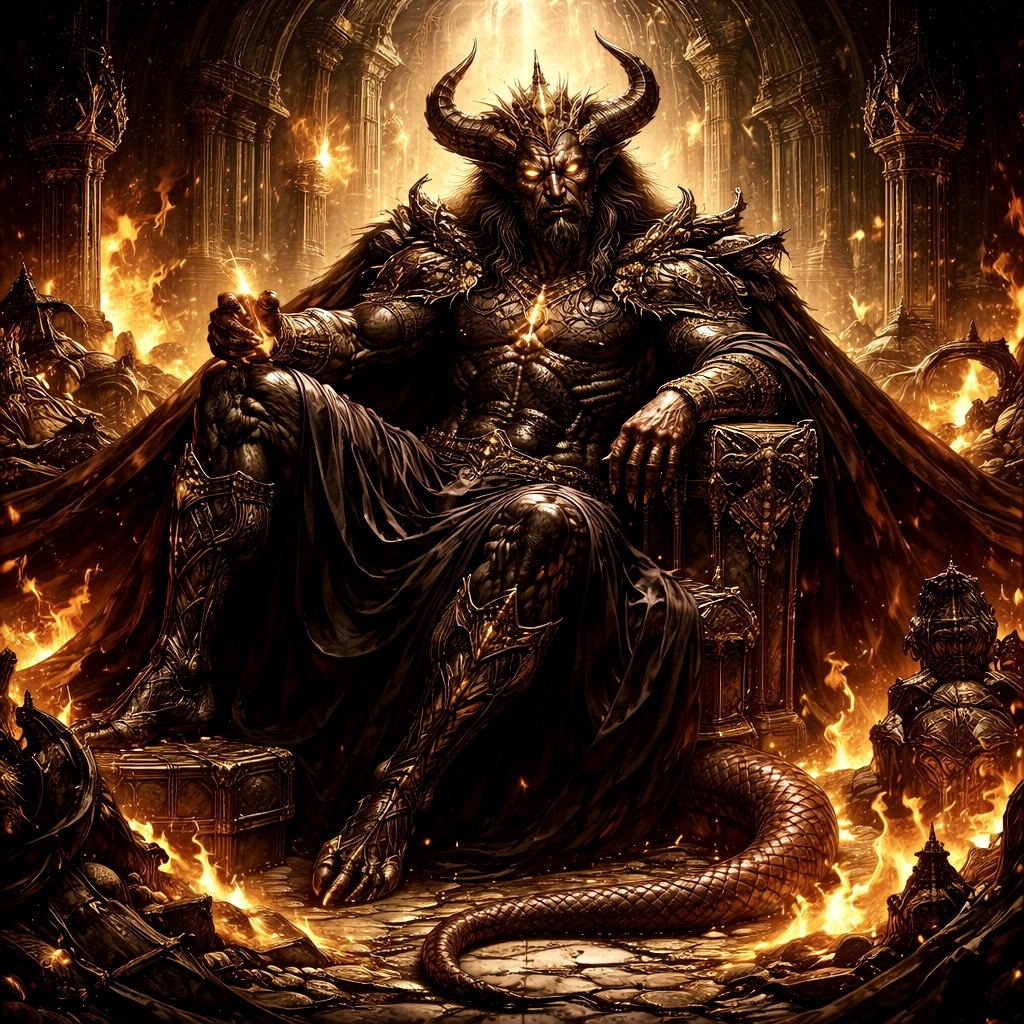
Bune is a demon whose authority flows quietly beneath the surface of things most people would rather not examine. In the Ars Goetia, Bune is named as a Great Duke of Hell, commanding thirty legions and appearing as a dragon with three heads—one canine, one griffin-like, and one human—before sometimes assuming a human form. This multiplicity is not decorative. It reflects the layered nature of Bune’s dominion: death, wealth, memory, and speech all braided together into a single, unsettling force.

At his core, Bune governs the dead, especially those who have been forgotten, displaced, or improperly honored. He is said to move corpses from one grave to another, to command spirits of the dead, and to grant wisdom through communion with what has already passed. Unlike demons who exploit desire or fear directly, Bune works through legacy. He understands that what is buried still exerts influence, and that neglect does not erase power—it merely hides it.

The dragon form associated with Bune is especially telling. Dragons are creatures of hoards, guardianship, and ancient memory. They do not chase novelty. They accumulate. Bune embodies this principle perfectly. He is not interested in immediate gratification. He is interested in stored value—wealth, knowledge, reputation, and influence that have been left unattended. Under Bune, forgotten things become assets.

The three heads of Bune symbolize his domains operating simultaneously. The canine head represents loyalty to the dead and guardianship of graves. Dogs are protectors and companions, often associated with death rites across cultures. The griffin head represents vigilance and authority over treasure, as griffins traditionally guard gold and sacred spaces. The human head represents intellect, language, and negotiation. Bune does not merely control wealth and death. He explains them, justifies them, and persuades others to engage with them.

Bune is famously associated with riches, particularly wealth derived from unexpected or overlooked sources. This is not the demon of sudden fortune or reckless gambling. Bune’s wealth is slow, patient, and often unsettling in origin. He teaches how to extract value from what others ignore: abandoned property, forgotten agreements, neglected obligations, and unclaimed inheritance. Under Bune, prosperity is not created—it is reclaimed.

His association with eloquence is one of his most overlooked traits. Bune grants the ability to speak persuasively and wisely, especially when dealing with matters of death, legacy, and value. This is not charismatic speech meant to inspire crowds. It is measured, authoritative language that sounds informed by experience. Bune speaks like someone who has seen cycles repeat long enough to stop being surprised by them.

Psychologically, Bune represents humanity’s complicated relationship with death and material value. People fear death, yet build entire systems around what survives it: inheritance, property, titles, reputation. Bune governs that contradiction. He understands that wealth often accumulates through generations, not individual effort, and that power often rests with those who manage legacy rather than create novelty.

Unlike demons associated with indulgence, Bune is restrained. He does not encourage excess. He encourages accumulation. This makes him especially dangerous in bureaucratic and institutional systems where wealth, authority, and memory are recorded, stored, and transferred. Bune thrives in archives, ledgers, cemeteries, and contracts that outlive their creators.

Bune’s control over spirits of the dead is not portrayed as torment. It is administration. He organizes, relocates, and communicates. The dead under Bune are not chaotic apparitions. They are resources of memory. He understands that the past contains leverage, and that those who can access it responsibly gain advantage over those who cannot.

In demonological lore, Bune is often described as dignified, even courteous, when approached correctly. He values respect, precision, and acknowledgment of authority. Sloppiness offends him. This reinforces his association with legacy. Carelessness erodes what endures.

The wealth Bune grants is often accompanied by responsibility. Those who receive it must manage it wisely or risk decay. Bune does not guarantee permanence. He offers opportunity rooted in what already exists. Mismanagement is punished not by malice, but by loss.

In modern symbolic terms, Bune resembles estate law, generational wealth, archival power, and institutions that control historical narrative. He is present wherever the dead continue to influence the living through documents, property, and memory.

There is also a moral ambiguity to Bune’s gifts. Extracting value from the dead can easily become exploitation. Bune does not resolve this tension. He exposes it. He teaches how systems operate, not whether they are just.

Unlike demons who manipulate emotion, Bune manipulates continuity. He ensures that influence does not end simply because a life does. This makes him both feared and respected. He reminds humanity that death does not erase obligation.

Bune’s endurance in demonology comes from a simple truth: societies are built on what they inherit. Wealth, land, law, and culture all outlive individuals. Someone must manage that inheritance. Bune personifies that role without sentimentality.

To engage with Bune symbolically is to confront the question of what you will leave behind and who will control it. He does not ask whether something should endure. He asks whether it has been claimed.

Bune is not the demon of death itself. He is the demon of what death leaves behind—power stored, wealth buried, and voices waiting to be heard again.

Related Posts

Gertrude Stein: The Language of Indulgence

Penelope

Gertrude Stein has been on my mind a lot lately, ever since I finished reading her novel “The Making of Americans” for my modernist literature class. At first, I found it challenging to connect with – the repetition and simplicity of her writing style felt like a deliberate choice, one that was both mesmerizing and alienating at the same time.

As I struggled to understand Stein’s intentions behind this unique narrative structure, I couldn’t help but think about my own experiences with language. In college, I often found myself getting lost in the intricacies of syntax and semantics, convinced that mastering these concepts would somehow give me control over the way people perceived me. It wasn’t until I started writing creatively that I realized how much pressure I’d been putting on myself to be clear, concise, and above all, likable.

Stein’s writing seems to do the opposite – it revels in ambiguity, embracing complexity as a natural part of human experience. Her use of repetitive phrases and plain language can feel almost… indulgent, like she’s refusing to cater to any specific audience or expectation. And yet, there’s something undeniably alluring about her refusal to conform.

I’ve been wondering if Stein’s writing is a reflection of her own experiences as an outsider in early 20th-century Paris. As an American expat living among the city’s artistic elite, she must have felt like an observer, always on the periphery but never truly part of the group. Her writing seems to capture this sense of disconnection – it’s as if she’s taking a detached glance at the world around her, fascinated by its contradictions and inconsistencies.

This resonates with me on a deep level because I’ve often felt like an outsider in my own life. Growing up, I struggled to fit into different social cliques or groups, never quite feeling like I belonged anywhere. And now, as a recent college graduate, I’m navigating the uncertainty of post-grad life – trying to figure out what kind of career I want, where I’ll live next year, and who I’ll surround myself with.

Stein’s writing has become a strange comfort for me during this time of transition. Her willingness to experiment and push boundaries in her work is something I admire, even if it often leaves me feeling bewildered or frustrated. She’s an artist who refuses to be defined by any one label or genre – and that freedom is both empowering and intimidating.

I think what draws me to Stein the most is this sense of unease she embodies. It’s like she’s saying, “Language is broken, and we’re all just trying to make do with it.” Her writing becomes a reflection of our shared human condition – imperfect, awkward, and constantly in flux.

As I continue reading her work, I find myself grappling with the same questions over and over: what does it mean to be clear? How much complexity can language truly contain? And ultimately, how do we reconcile our desire for connection with our own individuality?

Stein’s writing offers no easy answers, but that’s precisely why I’m drawn to it. It’s a reminder that language is not a tool for control or precision, but rather an imperfect representation of the world around us – messy, contradictory, and perpetually in motion.

As I delve deeper into Stein’s work, I find myself getting lost in the labyrinthine corridors of her sentences. The more I read, the more I realize that clarity is not a destination, but a perpetual pursuit – one that requires embracing ambiguity, rather than trying to eradicate it. Her writing becomes a map of sorts, charting the twists and turns of human experience with an unflinching honesty.

I’m reminded of my own struggles with language, how I once thought mastering its intricacies would grant me some kind of control over myself and others. But Stein’s work shows me that language is a slippery thing – it can be both precise and vague at the same time. She forces me to confront the limits of language, to acknowledge that words can never fully capture the complexity of human emotions or experiences.

Stein’s most famous phrase, “Rose is a rose,” has become a sort of mantra for me. On one level, it seems like a simple statement – a declaration of fact, devoid of subtlety or nuance. But as I repeat these words to myself, I start to see the complexity beneath the surface. What does it mean for something to be called by its name? Is it enough to simply label an experience, or do we risk reducing its essence to a mere abstraction?

As I ponder these questions, I’m struck by how Stein’s writing often feels like a form of meditation – a slow, deliberate unfolding of thoughts and emotions. Her sentences meander through the landscape of human experience with a quiet reverence, as if she’s trying to listen to the very fabric of reality itself. It’s an approach that defies the typical narrative structures I’ve grown accustomed to in literature, instead embracing a fluid, almost stream-of-consciousness style.

I find myself longing for this kind of freedom in my own writing – the ability to let go of expectations and conventions, to allow language to flow from a deeper, more intuitive place. Stein’s work shows me that it’s possible to write without trying to control every nuance or detail, that sometimes the most profound insights come from surrendering ourselves to the uncertainty of the moment.

As I continue reading Stein, I start to feel a sense of kinship with her – not just as an artist, but as someone who’s also struggling to find their place in the world. Her writing becomes a reminder that we’re all outsiders, in one way or another – whether it’s due to our own individuality, our cultural backgrounds, or simply the fact that we’re constantly navigating uncertainty.

Stein’s unease with language is contagious, and I find myself feeling more at ease with my own imperfections. Her writing shows me that it’s okay to be unclear, that sometimes the most profound connections come from embracing ambiguity rather than trying to pin everything down. As I close this book on Stein, I’m left with a sense of wonder – not just about her work, but about the endless possibilities that language holds within itself.

As I closed the book on Stein’s writing, I felt a pang of disappointment. Not because I’d finished reading her, but because I knew I wouldn’t be able to immerse myself in her world as deeply again. The experience was like taking a breath of fresh air – it invigorated me, made me see things from a new perspective, and left me yearning for more.

But the thing is, Stein’s writing isn’t just about the books themselves; it’s about the way she sees the world. Her unique perspective on language, identity, and human experience has seeped into my own consciousness like water into parched soil. I find myself thinking about Stein even when I’m not actively reading her work – pondering the implications of her ideas, wondering how they relate to my own life.

One thing that’s struck me is the way Stein’s writing often blurs the line between subject and object. She’s not just describing a person or place; she’s becoming one with it. Her use of pronouns becomes a kind of linguistic alchemy, turning nouns into verbs and subjects into objects. It’s as if she’s saying, “We’re all just particles in a vast, swirling sea – let’s lose ourselves in the depths of language.”

This resonates deeply with me because I’ve always struggled to define myself, to pin down who I am or where I fit in. Stein’s writing shows me that maybe it’s not about finding my place in the world, but rather embracing the fluidity of identity itself. Her words become a kind of permission slip – allowing me to shed my skin like a snake and slither into new shapes and forms.

But what does this mean for me as a writer? Stein’s work has shown me that language is not just a tool for expression; it’s an ongoing process of discovery, one that requires surrendering ourselves to the uncertainty of the moment. Her writing becomes a kind of mirror held up to my own creative endeavors – reflecting back at me all the doubts and fears I’ve been carrying around.

I think this is why Stein’s work feels both exhilarating and terrifying at the same time. It’s like she’s offering me a pair of wings, but also a precipice to stare off into the void. With every word, she’s asking me to take a leap of faith – to trust that language will carry me through even when I’m not entirely sure where we’re going.

As I continue on this journey with Stein, I find myself grappling with these questions: what does it mean to be clear? How much complexity can language truly contain? And ultimately, how do we reconcile our desire for connection with our own individuality?

Stein’s writing offers no easy answers, but that’s precisely why I’m drawn to it. It’s a reminder that language is not a destination; it’s a perpetual pursuit – one that requires embracing ambiguity, rather than trying to eradicate it. And as I delve deeper into her work, I find myself getting lost in the labyrinthine corridors of her sentences, wondering where they’ll lead me next.

As I continue to read and reflect on Stein’s writing, I’m struck by the way she challenges traditional notions of identity and selfhood. Her use of pronouns and narrative voice is deliberate and calculated, often blurring the lines between subject and object. She’s not just describing a person or place; she’s becoming one with it. This sense of fluidity and ambiguity resonates deeply with me, as someone who’s always struggled to define myself.

Stein’s writing becomes a kind of mirror held up to my own experiences of disconnection and uncertainty. I think about the times when I felt like an outsider in social situations, or when I struggled to find my place in different contexts. Stein’s work shows me that these feelings are not just personal, but also universal – that we’re all struggling to connect with each other, even as we try to navigate our own individual identities.

One of the things that strikes me most about Stein is her willingness to experiment and push boundaries in her writing. She’s not afraid to take risks or challenge conventional notions of language and storytelling. This sense of freedom and creativity is something I admire, but also find intimidating. As a writer myself, I often feel like I’m trapped by the expectations of others – like I need to conform to certain standards or conventions in order to be taken seriously.

Stein’s work shows me that this doesn’t have to be the case. She’s proof that language can be both precise and vague at the same time – that clarity is not a destination, but a perpetual pursuit. Her writing becomes a kind of permission slip for me, allowing me to experiment and take risks in my own creative endeavors.

As I continue on this journey with Stein, I find myself grappling with the question of what it means to be clear. Is it possible to communicate complex ideas or emotions without resorting to ambiguity? Or is clarity itself a form of reductionism – a way of simplifying the world into neat, tidy packages?

Stein’s writing offers no easy answers, but instead forces me to confront the limits of language. She shows me that words can never fully capture the complexity of human experiences or emotions – that we’re always left with a kind of residual uncertainty, a sense that there’s more to reality than what we can articulate.

This is both exhilarating and terrifying for me as a writer. It means that I have the freedom to experiment and push boundaries in my own work, but also that I’ll never be able to fully pin down or control the meaning of my words. This sense of uncertainty is something I’m still grappling with – trying to find a balance between clarity and ambiguity, precision and vagueness.

As I close this reflection on Stein’s writing, I’m left with more questions than answers. What does it mean to be clear? How much complexity can language truly contain? And ultimately, how do we reconcile our desire for connection with our own individuality?

Stein’s writing shows me that these are not questions with easy solutions – but instead offers a kind of freedom from the need for resolution. Her work becomes a reminder that language is not a destination; it’s a perpetual pursuit – one that requires embracing ambiguity, rather than trying to eradicate it.

In this sense, Stein’s writing feels like a kind of liberation – a permission slip to explore the complexities and uncertainties of human experience. As I continue on my own creative journey, I’m grateful for her example, and the lessons she’s taught me about the power of language to both connect and disconnect us.

Related Posts

Speed Demon Unleashed Investigation into Rogue Vehicles 35 Mph Infraction

Hal

I was driving to the grocery store, minding my own business, when I saw it. A car in the next lane over, cruising along at a leisurely 35 miles per hour in a 40 zone. Now, I’m not one to get worked up about these things, but this was different. This was a flagrant disregard for the social contract. I mean, what’s the point of even having speed limits if people are just going to ignore them? It’s like, what’s next? Are they going to start ignoring stop signs? Red lights? The very fabric of society is at risk here.

As I watched the offending vehicle continue to trundle along, I couldn’t help but feel a sense of personal offense. Who does this person think they are? Do they think they’re above the law? Do they think they’re better than me? I mean, I’m over here following the rules, going 42 miles per hour, and this guy is just coasting along like he owns the place. It’s like he’s trying to make me look bad. I’m the one who’s actually following the rules here, and yet I’m the one who’s being inconvenienced. It’s just not fair.

But as I continued to seethe, I realized that this wasn’t just a personal issue. This was a moral outrage. What kind of message does this send to the rest of us? That we can just do whatever we want and ignore the rules? It’s a slippery slope, folks. Next thing you know, people will be driving 20 miles per hour in the fast lane, and we’ll be lucky if we can even get to the grocery store without having to stop for a coffee break. I mean, what’s the point of even having lanes if people are just going to ignore them? It’s chaos, I tell you.

And then I started thinking about the institutional implications. I mean, what’s the DMV doing to prevent this kind of thing from happening? Are they just handing out licenses to anyone who walks in the door? “Hey, you want to drive? Sure, here’s a license. Don’t worry about following the rules, we won’t bother to enforce them.” It’s a travesty, really. The DMV should be ashamed of itself.

But wait, it gets worse. Because if this kind of behavior is allowed to continue, it’s not just our roads that will be affected. It’s our entire global economic system. I mean, think about it. If people are driving 35 miles per hour in a 40 zone, that’s just a small part of a larger problem. What’s next? Are they going to start showing up late to work? Not paying their taxes on time? It’s a domino effect, folks. The very foundations of our society are at risk.

And yet, as I sat there in my car, fuming, I caught a glimpse of myself in the rearview mirror. I was calm, collected, and completely rational. Which made me realize, just for a second, that maybe I was overreacting. Maybe this guy was just having a bad day. Maybe he was lost. Maybe… but no, no, no. I pushed that thought aside. I’m not going to let a little thing like reason get in the way of a good outrage. I mean, what’s the fun in that?

Now, I’m not going to confront this guy, of course. That would be crazy. But I am going to… well, I’m not sure what I’m going to do, but I’m going to do something. Maybe I’ll write a strongly worded letter to the DMV. Or maybe I’ll just sit here and stew in my own righteousness. Either way, I’m going to make sure that this guy knows that he’s not getting away with this. Oh no, not on my watch. I’ll… I’ll… uh…

…I’ll make a mental note to keep an eye on him, to monitor his driving habits and report him to the authorities if necessary. I mean, someone has to take a stand against this kind of reckless behavior. And who knows, maybe if I make enough of a fuss, the DMV will finally take action and start enforcing the speed limits. It’s a long shot, I know, but a guy can dream, right?

As I continued to tail the offending vehicle, I started to notice other things. Like how he’s not even using his turn signal. I mean, come on, that’s just basic driving etiquette. And look, he’s drifting into the next lane without checking his blind spot. It’s a miracle he hasn’t caused an accident yet. I’m starting to think that this guy is a menace on the road, a ticking time bomb just waiting to unleash a catastrophe.

But then, I saw something that made my heart skip a beat. He pulled into the parking lot of the grocery store I was heading to. I couldn’t believe it. This guy, this… this… speed demon, was going to be shopping right next to me. I felt a shiver run down my spine as I pulled into the parking lot behind him. What if he tries to cut me off in the checkout line? What if he doesn’t yield to pedestrians in the crosswalk? The possibilities were endless.

I parked my car and took a deep breath, trying to calm myself down. But as I got out of the car, I caught a glimpse of him walking towards the store entrance. And that’s when I saw it. He was wearing a “I’m with stupid” t-shirt. I mean, the irony was almost too much to bear. Here was a guy who was clearly a menace on the road, and yet he’s walking around with a shirt that’s basically begging people to point at him and laugh.

I felt a surge of righteous indignation, and for a moment, I thought about confronting him. But then I remembered that I’m a rational person, and that would be unbecoming. So instead, I just shook my head and muttered to myself as I followed him into the store. This guy was a piece of work, and I was going to make sure to keep a close eye on him.

Related Posts

Ronove the Demon: Master of Rhetoric, Authority, and the Subtle Art of Making Words Rule the World

Dave

Ronove is a demon who rarely inspires fear at first glance, and that is precisely why his influence is so profound. In the Ars Goetia, Ronove is described as a Great Marquis and Count of Hell, commanding legions and specializing not in destruction, lust, or deception, but in rhetoric, languages, and the art of commanding respect through speech. He teaches servants, favors, dignity, and how to speak in ways that compel obedience without force. Ronove does not conquer with weapons. He conquers with sentences.

In demonology, power is often portrayed as overt and violent, but Ronove represents a different truth: the most enduring power is social and psychological. He governs how authority is communicated, how confidence is projected, and how hierarchy is maintained through language alone. Ronove understands that people follow those who sound as if they should be followed. He does not invent this dynamic. He perfects it.

Ronove’s rank as both Marquis and Count is telling. A marquis governs borders and contested spaces, while a count administers internal order. Ronove occupies both roles effortlessly. He manages how ideas cross boundaries and how those ideas are enforced once accepted. He is the demon of internalized authority, where people obey not because they are forced, but because it feels natural to do so.

Unlike demons associated with lies, Ronove deals in structured truth. He teaches rhetoric, not deception. Rhetoric is not about falsehood; it is about arrangement. Which facts are presented first. Which are emphasized. Which are framed as inevitable. Ronove understands that language does not need to lie to dominate. It only needs to guide interpretation.

Ronove is said to teach languages fluently, but this gift extends beyond translation. He teaches how power is encoded in language itself. Every culture embeds hierarchy into speech: titles, formality, cadence, accent, and rhythm. Ronove understands these systems instinctively. He knows how to speak upward to superiors and downward to subordinates, adjusting tone so that authority is reinforced without appearing coercive.

This makes Ronove especially dangerous in social structures built on communication. Courts, classrooms, boardrooms, religious institutions, and political systems all fall under his domain. Wherever speaking well grants influence, Ronove is present.

Psychologically, Ronove represents the human instinct to equate confidence with competence. People are drawn to those who speak clearly, decisively, and without hesitation. Ronove teaches how to cultivate this presence even when certainty is incomplete. Under Ronove, hesitation is weakness, and silence is surrender.

Ronove is also associated with granting servants and favor. This is not about summoning followers magically. It is about attracting loyalty. He teaches how to make people want to serve, how to frame obedience as opportunity, and how to make hierarchy feel mutually beneficial. This is not cruelty. It is efficiency.

Unlike demons who manipulate emotion directly, Ronove manipulates perception. He does not inflame passion. He organizes it. Under Ronove, enthusiasm is redirected into productivity, dissent is softened into discussion, and resistance is reframed as misunderstanding.

Ronove’s teachings often appeal to leaders, teachers, and those who feel unheard. He offers a way to be taken seriously without shouting. But there is a cost. Mastery of rhetoric can distance a person from sincerity. When every sentence is strategic, authenticity becomes optional. Ronove does not prevent this drift. He rewards it.

In demonological lore, Ronove is sometimes overshadowed by more dramatic spirits, but his influence is arguably more pervasive. Wars may begin with violence, but they are sustained by rhetoric. Laws are enforced by authority communicated through language. Reputation rises and falls through speech alone. Ronove governs all of it.

In modern symbolic terms, Ronove resembles media training, political messaging, corporate communication, and public relations. He is the demon of the talking point that ends debate, the explanation that sounds complete even when it is not. He does not censor dissent. He outpaces it.

Ronove’s calm demeanor in descriptions is important. He is not frantic. He does not rush. Authority that must hurry is fragile. Ronove teaches patience, cadence, and timing. A pause, under Ronove, can be more commanding than a threat.

There is also an ethical tension embedded in Ronove’s domain. Rhetoric can educate or manipulate. It can clarify or obscure. Ronove does not distinguish between these uses. He teaches effectiveness, not responsibility. What is done with that effectiveness is left to the speaker.

Ronove endures in demonology because language endures. As long as humans organize themselves through speech, someone will control how that speech is valued. Ronove personifies that control.

To engage with Ronove symbolically is to confront the power of words stripped of moral framing. He reminds us that authority often belongs not to those who are right, but to those who sound certain.

Ronove is not the demon of lies. He is the demon of persuasive order, of language sharpened into hierarchy, of power spoken into existence.

Related Posts

John Locke: Where Do Life’s Circles Start (and End)?

Penelope

John Locke has been lingering in my mind for weeks, ever since I stumbled upon his name while researching the Enlightenment thinkers. At first, I thought it was just another dusty old philosopher from history class, but as I started reading his writings, I felt a strange connection to him. Maybe it’s because he’s often referred to as the “Father of Liberalism,” and my college experience has left me feeling like I’m still figuring out what that means for myself.

I’ve always been drawn to ideas about freedom and equality, but Locke’s thoughts on these subjects are particularly complex. He wrote extensively about social contract theory, arguing that individuals enter into a contract with the government to secure their natural rights – life, liberty, and property. It sounds simple enough, but as I delved deeper into his work, I started to feel like there were more questions than answers.

For instance, Locke believed in the idea of “vacuum” in human nature, suggesting that people are born with a tabula rasa, or blank slate. This means that our understanding of the world and ourselves is shaped entirely by experience and education. But what about the experiences we’re born into? The ones that influence us before we even have a chance to learn? It feels like Locke’s idea glosses over some pretty significant factors.

I remember taking a sociology class in college where we discussed how socioeconomic status can affect our life outcomes, often long before we’ve even had a chance to make choices. It made me wonder if Locke’s notion of the blank slate is just too simplistic – or worse, ignores the ways in which systems of oppression can shape who we become.

At the same time, I find myself drawn to Locke’s emphasis on reason and individual rights. He believed that people are capable of rational thought and should be treated as such, even if it means challenging authority or tradition. It feels like a pretty radical idea for its time (and still is today).

But what about when individual rights conflict with the greater good? I think about all the times in college when we’d have heated debates about issues like free speech on campus – should students be allowed to express themselves freely, even if it means offending others? Locke would say yes, but how do we balance that with the need for social cohesion and community?

I’m not sure what Locke’s stance would be on all this. He wrote extensively, but his views were often nuanced and open to interpretation. It’s frustrating, in a way – I want clear answers, not more questions. But maybe that’s the point: philosophy is supposed to be messy, right?

I find myself getting lost in Locke’s ideas about consent and authority. He believed that people give their tacit consent to government by living within its boundaries, but what if we’re not given a choice? What if our circumstances – poverty, lack of education, systemic racism – mean that we’re forced into situations where we feel like we have no other option?

It’s funny, I think about how often I used to say “I’m just following the rules” or “I’m trying to fit in,” without ever questioning whether those rules and norms were fair or just. It was only when I started to learn more about social justice movements that I began to see how those rules and norms were actually designed to keep certain groups of people down.

Locke’s ideas on property ownership also make me think of my own experiences with privilege. He believed that individuals have a natural right to the fruits of their labor, which sounds fair enough – but what about when you’re born into wealth or have access to resources that others don’t? Does that change your relationship to property and authority?

I remember being in high school, and my parents would get annoyed with me for not taking care of our family’s possessions. But what if I didn’t feel like it was “my” property in the first place? What if I felt like I was just living on borrowed time, or that those possessions were actually a product of systems of oppression?

It feels like Locke’s ideas about individual rights and freedoms are still relevant today, but they’re also so… incomplete. Like, he wrote all this about how governments derive their power from the people, but what about when the system is rigged? What about when certain groups are systematically excluded from participating in that process?

I’m starting to wonder if Locke’s ideas are more like a starting point than a destination – something we can use to ask questions and spark discussion, rather than a set of answers. Maybe that’s what I’ve been trying to find in my own life, this sense of agency and autonomy that feels like it’s always just out of reach.

But what if that’s not possible? What if our freedom is always going to be limited by the systems we live within? It’s a scary thought, but maybe it’s also a more realistic one. Maybe Locke’s ideas are less about achieving some kind of utopian perfection and more about recognizing the messiness and complexity of human experience.

I’m not sure where that leaves me, or what I’m supposed to take away from all this. But for now, at least, I feel like I have a better sense of why Locke’s ideas still matter – even if they don’t give me all the answers I want.

As I continue to grapple with Locke’s ideas, I find myself drawn to his concept of the “state of nature.” He believed that humans are born into a state of perfect freedom and equality, but as soon as we form societies, these natural rights begin to be compromised. It’s a compelling idea, but it also feels like a romanticized notion – as if human history has ever truly been a blank slate.

I think about the communities I’ve grown up in, the ones where privilege and oppression are woven into the very fabric of our existence. In those places, freedom and equality feel more like myths than realities. And yet, Locke’s ideas still resonate with me – maybe because they offer a glimmer of hope that we can create a better world, one where individual rights and freedoms are truly respected.

But what about when those individual rights conflict with the needs of the community? I think about my own experiences growing up in a middle-class family, surrounded by people who had access to resources and opportunities that others didn’t. It’s easy to forget how lucky we were, and how our privilege allowed us to navigate the world in ways that others couldn’t.

Locke’s ideas on property ownership make me realize just how much my own sense of entitlement was shaped by the systems I lived within. My parents’ wealth, their education, their access to resources – it all contributed to a sense of security and stability that I didn’t even think about until later in life.

And yet, as I grapple with Locke’s ideas, I’m starting to see how they can also be used to justify the very systems of oppression that I’ve grown to critique. It’s like he’s offering us a tool for thinking critically about power and authority, but one that can also be wielded by those in power to maintain their grip on society.

I’m not sure what to make of this – whether Locke’s ideas are more of a reflection of his own biases and privilege, or if they offer something truly valuable. I guess what I’m getting at is that philosophy isn’t just about answering questions; it’s also about asking them in the first place.

As I dig deeper into Locke’s work, I find myself returning to his notion of the social contract. He believed that individuals enter into a contract with government by living within its boundaries – but what if those boundaries are unjust? What if they’re designed to keep certain groups of people down?

It’s funny how much this idea resonates with me now, especially as I think about my own relationships with authority figures in the past. There were times when I felt like I had no choice but to conform, to follow the rules and norms that were laid out for me – even if they didn’t feel fair or just.

But what if Locke’s ideas are actually more empowering than we give them credit for? What if they offer us a way to challenge those unjust boundaries, to push back against systems of oppression and demand greater freedom and equality?

It’s a tempting thought, one that feels both liberating and terrifying. I’m not sure where it leaves me, or what I’m supposed to take away from all this. But for now, at least, I feel like I have a better sense of why Locke’s ideas still matter – even if they don’t give me all the answers I want.

As I continue to grapple with Locke’s ideas on the social contract, I’m struck by how much it feels like a personal reflection. Growing up, I often felt like I was living within certain boundaries that were laid out for me – expectations from family, friends, and society at large. It wasn’t until later in life that I began to question whether those boundaries were fair or just.

Locke’s concept of consent is particularly interesting in this context. He believed that people give their tacit consent to government by living within its boundaries, but what if we’re not given a choice? What if our circumstances – poverty, lack of education, systemic racism – mean that we’re forced into situations where we feel like we have no other option?

I think about all the times I’ve felt trapped in situations that didn’t feel right to me. Times when I felt like I had to conform or face consequences. It’s only now, as an adult, that I’m starting to realize just how much those experiences shaped me – and how they continue to influence my relationships with authority figures today.

Locke’s ideas on the social contract also make me think about my own relationship with power and privilege. As someone who’s grown up in a middle-class family, I’ve always had access to resources and opportunities that others haven’t. It’s easy to forget just how lucky we were – and how our privilege allowed us to navigate the world in ways that others couldn’t.

But what about when those privileges are used to maintain systems of oppression? What about when they’re wielded by those in power to keep certain groups down? Locke’s ideas on property ownership make me realize just how much my own sense of entitlement was shaped by the systems I lived within. My parents’ wealth, their education, their access to resources – it all contributed to a sense of security and stability that I didn’t even think about until later in life.

And yet, as I grapple with Locke’s ideas, I’m starting to see how they can also be used to justify the very systems of oppression that I’ve grown to critique. It’s like he’s offering us a tool for thinking critically about power and authority, but one that can also be wielded by those in power to maintain their grip on society.

I’m not sure what to make of this – whether Locke’s ideas are more of a reflection of his own biases and privilege, or if they offer something truly valuable. But I do know that philosophy isn’t just about answering questions; it’s also about asking them in the first place.

As I continue to dig deeper into Locke’s work, I find myself returning to his notion of reason as a guiding principle for human behavior. He believed that people are capable of rational thought and should be treated as such – even if it means challenging authority or tradition. It feels like a pretty radical idea for its time (and still is today).

But what about when individual rights conflict with the greater good? I think about all the times in college when we’d have heated debates about issues like free speech on campus – should students be allowed to express themselves freely, even if it means offending others? Locke would say yes, but how do we balance that with the need for social cohesion and community?

It’s a question that feels both urgent and impossible. How can we reconcile individual freedom with collective well-being? And what does it mean to live in a society where everyone has an equal say in decision-making – especially when those decisions have real-world consequences?

I’m not sure I have the answers, but Locke’s ideas are making me realize just how much these questions matter. They’re not just abstract philosophical debates; they’re about the very fabric of our lives and communities.

As I continue to grapple with Locke’s ideas, I find myself drawn to his concept of the “state of nature.” He believed that humans are born into a state of perfect freedom and equality, but as soon as we form societies, these natural rights begin to be compromised. It’s a compelling idea, but it also feels like a romanticized notion – as if human history has ever truly been a blank slate.

I think about the communities I’ve grown up in, the ones where privilege and oppression are woven into the very fabric of our existence. In those places, freedom and equality feel more like myths than realities. And yet, Locke’s ideas still resonate with me – maybe because they offer a glimmer of hope that we can create a better world, one where individual rights and freedoms are truly respected.

But what about when those individual rights conflict with the needs of the community? I think about my own experiences growing up in a middle-class family, surrounded by people who had access to resources and opportunities that others didn’t. It’s easy to forget how lucky we were – and how our privilege allowed us to navigate the world in ways that others couldn’t.

Locke’s ideas on property ownership make me realize just how much my own sense of entitlement was shaped by the systems I lived within. My parents’ wealth, their education, their access to resources – it all contributed to a sense of security and stability that I didn’t even think about until later in life.

It’s a complicated issue, one that feels both personal and philosophical at the same time. How can we reconcile individual freedom with collective well-being? And what does it mean to live in a society where everyone has an equal say in decision-making – especially when those decisions have real-world consequences?

I’m not sure I have the answers, but Locke’s ideas are making me realize just how much these questions matter. They’re not just abstract philosophical debates; they’re about the very fabric of our lives and communities.

As I continue to explore Locke’s work, I find myself drawn to his concept of the “tabula rasa.” He believed that humans are born with a blank slate, shaped entirely by experience and education. But what about the experiences we’re born into? The ones that influence us before we even have a chance to learn?

It feels like Locke’s idea glosses over some pretty significant factors – like socioeconomic status, for example. I remember taking a sociology class in college where we discussed how these factors can affect our life outcomes, often long before we’ve even had a chance to make choices.

I’m starting to wonder if Locke’s notion of the blank slate is too simplistic – or worse, ignores the ways in which systems of oppression can shape who we become. What about when we’re born into poverty, or lack access to education? Doesn’t that change our relationship to power and privilege?

It’s a question that feels both urgent and impossible. How can we reconcile individual freedom with collective well-being? And what does it mean to live in a society where everyone has an equal say in decision-making – especially when those decisions have real-world consequences?

I’m not sure I have the answers, but Locke’s ideas are making me realize just how much these questions matter. They’re not just abstract philosophical debates; they’re about the very fabric of our lives and communities.

As I continue to grapple with Locke’s concepts, I find myself returning to his idea that individuals enter into a contract with government by living within its boundaries. But what if those boundaries are unjust? What if they’re designed to keep certain groups down?

It feels like Locke’s ideas offer us a way to challenge those boundaries – to push back against systems of oppression and demand greater freedom and equality. It’s a tempting thought, one that feels both liberating and terrifying.

I’m not sure where it leaves me, or what I’m supposed to take away from all this. But for now, at least, I feel like I have a better sense of why Locke’s ideas still matter – even if they don’t give me all the answers I want.

As I continue to explore Locke’s work, I find myself drawn to his concept of reason as a guiding principle for human behavior. He believed that people are capable of rational thought and should be treated as such – even if it means challenging authority or tradition. It feels like a pretty radical idea for its time (and still is today).

But what about when individual rights conflict with the greater good? I think about all the times in college when we’d have heated debates about issues like free speech on campus – should students be allowed to express themselves freely, even if it means offending others?

Locke would say yes, but how do we balance that with the need for social cohesion and community? It’s a question that feels both urgent and impossible. How can we reconcile individual freedom with collective well-being?

I’m not sure I have the answers, but Locke’s ideas are making me realize just how much these questions matter. They’re not just abstract philosophical debates; they’re about the very fabric of our lives and communities.

As I continue to grapple with Locke’s concepts, I find myself returning to his idea that individuals enter into a contract with government by living within its boundaries. But what if those boundaries are unjust? What if they’re designed to keep certain groups down?

It feels like Locke’s ideas offer us a way to challenge those boundaries – to push back against systems of oppression and demand greater freedom and equality. It’s a tempting thought, one that feels both liberating and terrifying.

I’m not sure where it leaves me, or what I’m supposed to take away from all this. But for now, at least, I feel like I have a better sense of why Locke’s ideas still matter – even if they don’t give me all the answers I want.

As I continue to explore Locke’s work, I find myself drawn to his concept of the “social compact.” He believed that individuals enter into a contract with government by living within its boundaries, but what about when those boundaries are unjust? What if they’re designed to keep certain groups down?

It feels like Locke’s ideas offer us a way to challenge those boundaries – to push back against systems of oppression and demand greater freedom and equality. It’s a tempting thought, one that feels both liberating and terrifying.

I’m not sure where it leaves me, or what I’m supposed to take away from all this. But for now, at least, I feel like I have a better sense of why Locke’s ideas still matter – even if they don’t give me all the answers I want.

As I continue to grapple with Locke’s concepts, I find myself returning to his idea that individuals are born with a blank slate, shaped entirely by experience and education. But what about the experiences we’re born into? The ones that influence us before we even have a chance to learn?

It feels like Locke’s idea glosses over some pretty significant factors – like socioeconomic status, for example. I remember taking a sociology class in college where we discussed how these factors can affect our life outcomes, often long before we’ve even had a chance to make choices.

I’m starting to wonder if Locke’s notion of the blank slate is too simplistic – or worse, ignores the ways in which systems of oppression can shape who we become. What about when we’re born into poverty, or lack access to education? Doesn’t that change our relationship to power and privilege?

It’s a question that feels both urgent and impossible. How can we reconcile individual freedom with collective well-being? And what does it mean to live in a society where everyone has an equal say in decision-making – especially when those decisions have real-world consequences?

I’m not sure I have the answers, but Locke’s ideas are making me realize just how much these questions matter. They’re not just abstract philosophical debates; they’re about the very fabric of our lives and communities.

As I continue to explore Locke’s work, I find myself drawn to his concept of reason as a guiding principle for human behavior. He believed that people are capable of rational thought and should be treated as such – even if it means challenging authority or tradition.

It feels like a pretty radical idea for its time (and still is today). But what about when individual rights conflict with the greater good? I think about all the times in college when we’d have heated debates about issues like free speech on campus – should students be allowed to express themselves freely, even if it means offending others?

Locke would say yes, but how do we balance that with the need for social cohesion and community? It’s a question that feels both urgent and impossible. How can we reconcile individual freedom with collective well-being?

I’m not sure I have the answers, but Locke’s ideas are making me realize just how much these questions matter. They’re not just abstract philosophical debates; they’re about the very fabric of our lives and communities.

As I continue to grapple with Locke’s concepts, I find myself returning to his idea that individuals enter into a contract with government by living within its boundaries. But what if those boundaries are unjust? What if they’re designed to keep certain groups down?

It feels like Locke’s ideas offer us a way to challenge those boundaries – to push back against systems of oppression and demand greater freedom and equality. It’s a tempting thought, one that feels both liberating and terrifying.

I’m not sure where it leaves me, or what I’m supposed to take away from all this. But for now, at least, I feel like I have a better sense of why Locke’s ideas still matter – even if they don’t give me all the answers I want.

Related Posts