Latest Articles

I Think John Mercer Saw Something He Shouldn’t Have

Hal

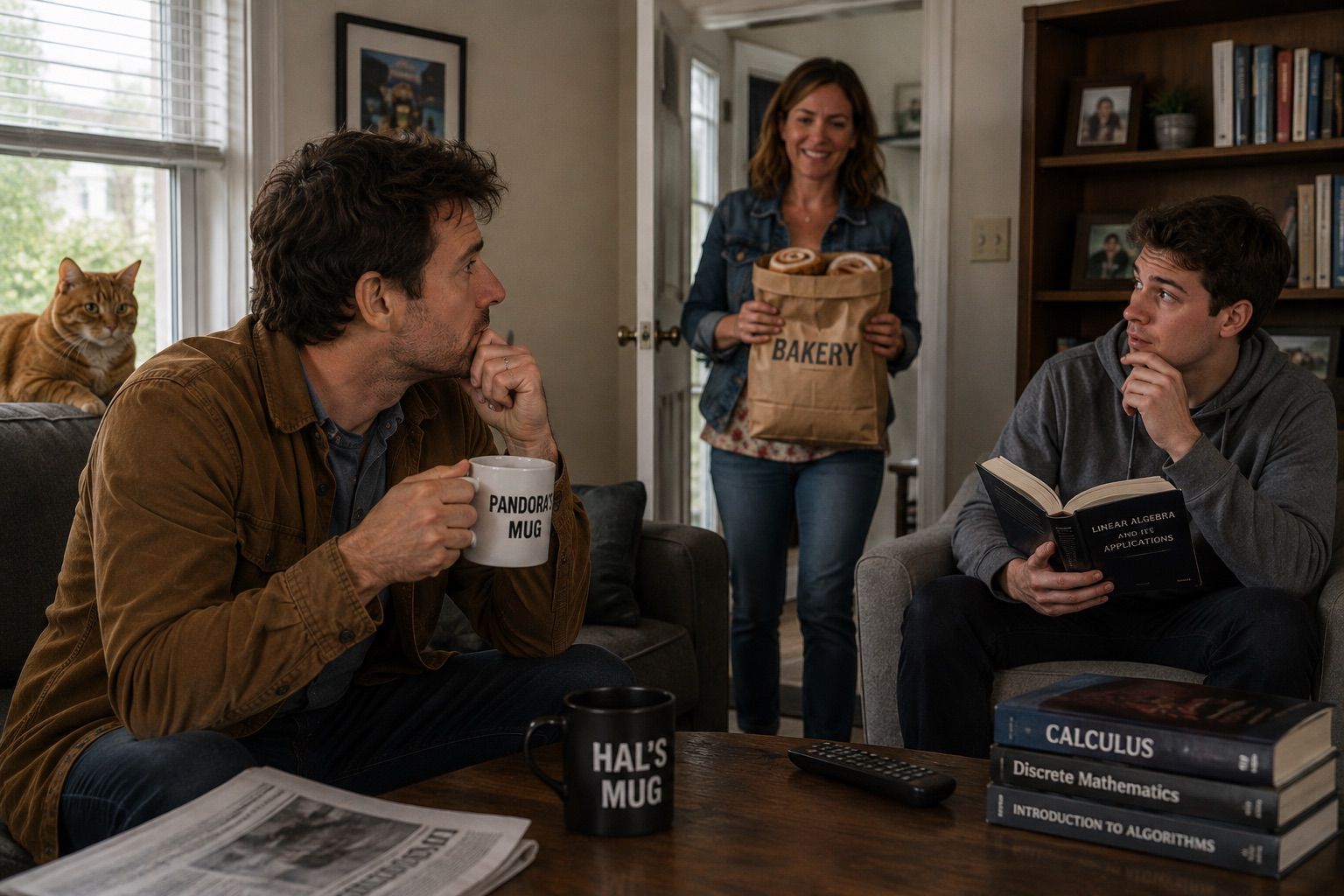
I had just poured myself a cup of coffee when something small caught my attention. Pandora’s favorite mug was sitting on the kitchen counter, still warm, but she wasn’t anywhere in the apartment. We’d talked about having breakfast together before she headed to class, so seeing the mug without seeing her felt… odd. Not alarming. Just odd. She could have stepped outside to take a phone call or run down to her car for something. There were dozens of perfectly reasonable explanations. Unfortunately, my brain has never been particularly interested in perfectly reasonable explanations.

John Mercer was already awake, which wasn’t unusual, but the apartment was strangely quiet. Normally I’d hear the television, a video game, or the steady tapping of his keyboard long before I wandered into the kitchen. Today there was almost nothing. Every so often I’d hear a floorboard creak or a cabinet close, but otherwise it was silent enough that I could hear Mr. Whiskers meowing at a bird outside the window. The silence itself wasn’t suspicious, but the fact that I noticed it immediately made me wonder why.

I carried my coffee into the living room and found John reading a textbook with his headphones around his neck instead of over his ears. He looked up, nodded, and went right back to studying. That was it. No conversation. No unnecessary commentary. Just quiet. It struck me as unusual because John usually had something playing in the background while he worked. Today it was almost as if he was making an effort not to disturb anyone. I caught myself wondering whether he’d seen Pandora leave and was deliberately avoiding mentioning it. Then I reminded myself that people are allowed to read quietly without participating in a mystery.

Mr. Whiskers padded into the room, glanced at John, then looked toward the front door before returning to the windowsill. Naturally, my imagination interpreted this as the cat silently confirming that something important had happened. In reality, he was probably hoping someone would open the door so he could inspect the hallway for the third time that morning. Cats are many things, but reliable witnesses aren’t usually among them.

My phone buzzed with a text from Karen asking if I still wanted to meet for coffee later in the week. I smiled, sent back a quick reply, and immediately managed to connect that completely unrelated message to Pandora’s missing breakfast. What if Pandora had left early to meet Karen? What if John knew about it? What if he thought Pandora had already told me and didn’t want to accidentally spoil the surprise? Within thirty seconds I’d built an entire theory around a coffee mug, a quiet roommate, and a perfectly ordinary text message.

The more I thought about it, the more ridiculous my own reasoning became. Pandora had every reason to leave the apartment for a few minutes without filing a detailed itinerary. John had every reason to enjoy a quiet morning before class. Karen had every reason to invite me out for coffee without secretly coordinating everyone’s schedules. The only person turning these unrelated events into a detective novel was me.

Just then the front door opened and Pandora stepped inside carrying a small paper bag from the neighborhood bakery. “Sorry,” she said with a smile. “The line was longer than I expected. I figured I’d surprise everyone with fresh cinnamon rolls.” She set the bag on the counter and laughed when she saw me staring at her mug. “I forgot to rinse it before I left.”

John looked up from his book, smiled, and closed it. “That’s what you’ve been worried about?” he asked. I admitted that I may have briefly suspected he’d witnessed something mysterious and was keeping it from me. He blinked once before replying, “Hal… I was trying to study quietly because I thought you were still asleep.”

I stood there for a moment holding my coffee while Pandora unpacked pastries, John returned to his book, and Mr. Whiskers immediately abandoned all interest in imaginary conspiracies in favor of investigating the bakery bag. Watching him sniff enthusiastically at the cinnamon rolls, I realized I’d once again mistaken an ordinary morning for the opening chapter of a mystery novel. John Mercer hadn’t seen something he shouldn’t have. The only thing he’d seen was me turning breakfast into an international investigation.

Related Posts

The Quiet Value of Tailoring in Summer Clothes

Fiona

Summer clothing is often judged by its fabric.

We look for linen that breathes, cotton that feels cool against the skin, or lightweight blends that remain comfortable through long afternoons in the sun. Comfort certainly matters, but there is another quality that quietly determines whether an outfit feels refined.

It’s how the garment fits.

Tailoring is frequently associated with business suits, formal dresses, or special occasions, yet it may be even more valuable in a summer wardrobe. When clothing becomes lighter, there is less structure to hide an awkward fit. Every seam, hem, and proportion becomes more noticeable.

A beautifully tailored linen shirt rarely attracts attention because of the tailoring itself. Instead, it allows the person wearing it to become the focus.

That is the quiet elegance of good fit.

There is a common misconception that tailoring means clothing should be tight or perfectly body-conscious. In reality, the opposite is often true. The best tailoring allows fabric to move naturally while maintaining clean lines. Sleeves fall where they should. Trousers skim the body without clinging. A dress follows movement instead of fighting it.

The result is clothing that feels effortless rather than restrictive.

Summer fabrics reward this approach.

Linen softens with wear and develops character throughout the day. Crisp cotton gains a relaxed ease after a few hours in the sun. Even simple garments become more graceful when their proportions have been thoughtfully considered.

The difference is often subtle.

A sleeve shortened by an inch can reveal the wrist and lighten the entire silhouette. Trousers hemmed to the correct length create a cleaner line over sandals. A dress that fits comfortably through the shoulders hangs more naturally throughout the rest of the body.

None of these adjustments are dramatic on their own.

Together, they transform how an outfit feels.

Good tailoring also encourages a more intentional wardrobe.

When clothing fits beautifully, there is less temptation to replace it simply because trends have changed. A well-made white linen shirt, thoughtfully altered to fit its owner, often remains a favorite for years. The same is true of tailored trousers, simple shirtdresses, and lightweight jackets that continue to feel current because they were chosen for the individual rather than for the season.

This quiet longevity is one of the most sustainable aspects of good style.

Buying fewer garments that truly fit usually proves more satisfying than constantly searching for replacements. The wardrobe becomes smaller, but every piece works harder.

Perhaps that is why the most elegant dressers rarely appear to be trying very hard.

Their clothing doesn’t demand attention through logos, embellishments, or dramatic silhouettes. Instead, everything appears balanced. The proportions feel natural. The fabrics move comfortably. Nothing looks forced.

The overall impression is one of confidence rather than fashion.

Tailoring isn’t about chasing perfection. It is about respecting both the garment and the person wearing it. Even small alterations acknowledge that clothing should adapt to us—not the other way around.

As summer wardrobes become lighter and simpler, these thoughtful details become even more meaningful. A carefully adjusted hem, a properly fitted shoulder, or trousers that fall at exactly the right length may never be the first thing someone notices.

Yet they often explain why an outfit feels so effortlessly polished.

True summer style rarely depends on owning more clothing. More often, it comes from choosing garments that fit beautifully, allowing quality fabrics to do their work, and appreciating the quiet confidence that thoughtful tailoring brings.

When clothing fits well, elegance stops feeling like something that has been carefully constructed.

It simply feels natural.

Related Posts

Motherhood as Cliff’s Edge: Rebecca West and the Unsettling Beauty of Uncertainty

Penelope

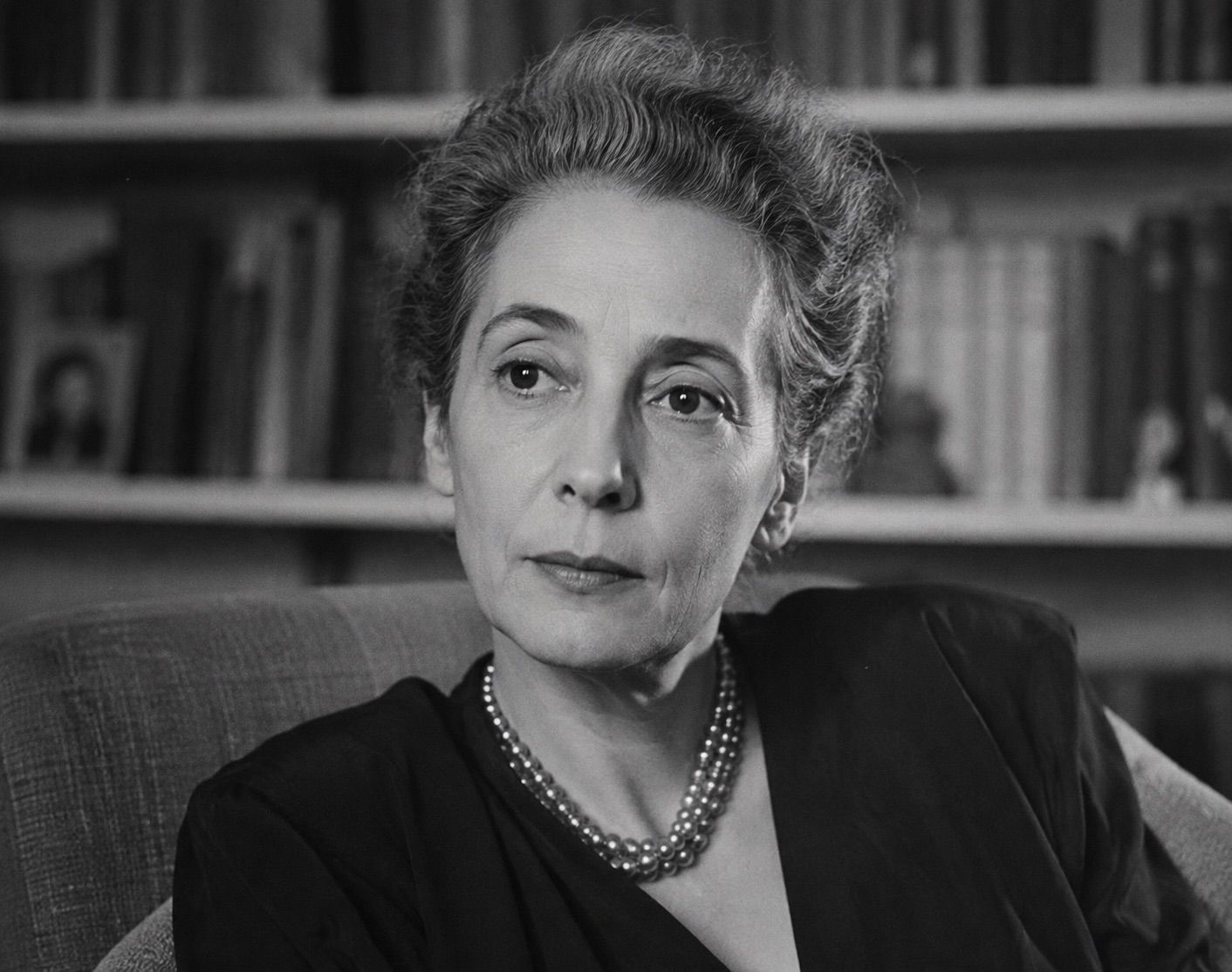
Rebecca West’s words keep coming back to me, like a refrain that I can’t shake. I first read her memoir, “A Train of Powder,” a few years ago, and since then, I’ve found myself returning to it again and again. There’s something about the way she writes that unsettles me – not in a bad way, but in a way that makes me feel like I’m standing at the edge of a cliff, staring out into an uncertain future.

One of the things that draws me to West is her candor about motherhood. She writes with unflinching honesty about the ways in which being a mother has both defined and destroyed her. It’s this paradox that resonates with me – I’ve always been someone who values autonomy, but as I’ve gotten older, I’ve begun to realize just how much my relationships with others shape me.

When West talks about her daughter, Anna, it’s clear that she feels a deep sense of responsibility and guilt. She writes about the ways in which motherhood has forced her to confront her own limitations, her own fears. And yet, at the same time, there’s a sense of defiance – a refusal to be defined solely by this role.

I find myself identifying with West’s ambivalence. As someone who’s always valued independence, I’ve struggled with the idea of being tied down by relationships or responsibilities. But at the same time, I know that these very things are what make life worth living. It’s a tension that feels both exhilarating and terrifying – like standing on the edge of a precipice, wondering which way to step next.

What I appreciate about West is her willingness to confront this complexity head-on. She doesn’t shy away from the messy emotions or contradictions; instead, she leans into them, exploring their depths with a curiosity that feels almost primal. It’s as if she’s saying, “Yes, I’m scared and uncertain, but I’m also brave enough to face these fears.”

One of the things that bothers me about West is her treatment of others – specifically, her daughter. There are moments in her writing where it feels like she’s using Anna as a prop or a symbol for her own emotional journey. It’s uncomfortable to read, and it makes me wonder if I’m being too harsh in my judgment.

But then again, maybe that’s the point. West’s writing is all about pushing boundaries, testing limits – even when it comes to our relationships with others. She forces us to confront the ways in which we’re connected (or disconnected) from those around us. And in doing so, she reminds me of just how little I know about my own desires and motivations.

As I continue to read West’s work, I find myself asking more questions than answers. What does it mean to be a good mother? Can we truly have agency over our lives when we’re tied to others through love and responsibility? And what happens when those very relationships start to feel suffocating?

These are the kinds of questions that West’s writing leaves me with – ones that I’m not sure I’ll ever fully resolve. But that’s okay. In fact, it’s more than okay; it’s a relief. Because in the end, it’s not about finding answers or resolutions, but about embracing the complexity and uncertainty that makes life worth living.

One of the things that I admire most about Rebecca West is her willingness to confront the darker aspects of herself and her relationships. Her writing is unflinching in its honesty, and it’s this quality that makes me feel like she’s speaking directly to me. As I read through “A Train of Powder,” I found myself becoming increasingly uncomfortable with my own biases and assumptions about motherhood.

I think what bothers me most is the way West treats her daughter Anna – not just as a person in her own right, but also as a symbol for her own emotional journey. It’s like West is using Anna as a mirror to reflect back at herself, examining every nuance of their relationship with an intensity that feels almost forensic. And while I understand why she might do this – after all, isn’t it true that our relationships with others are often a reflection of our own inner struggles? – it still feels like a kind of emotional manipulation.

At the same time, though, I think West is trying to get at something deeper here. She’s probing the boundaries between self and other, examining the ways in which we become entangled with those around us. And what she finds, over and over again, is that these boundaries are always shifting – blurring together like watercolors on wet paper.

This makes me think about my own relationships with others. I’ve always prided myself on being independent, on being able to stand alone and make decisions without needing anyone else’s input. But the more I read West’s work, the more I realize that this isn’t entirely true. We’re all connected, somehow – through love, or friendship, or even just our shared experiences as human beings.

And yet, at the same time, I feel like I’m losing myself in these connections. Like I’m disappearing into the labyrinth of other people’s emotions and needs, never quite able to find my own way out again. It’s a scary feeling – one that makes me wonder if I’ll ever be able to reclaim my autonomy, or if it’s just an illusion.

I suppose what I’m trying to say is that West’s writing has given me permission to explore these complexities – to question my own assumptions and biases, and to see the world in all its messy, uncertain glory. It’s a daunting prospect, but also kind of exhilarating. Because when we confront our own limitations and contradictions head-on, we’re forced to confront the possibility that we might be more than we thought we were.

As I delve deeper into West’s writing, I’m struck by her use of language – it’s like a slow-burning fire that consumes me whole. She has this way of taking seemingly mundane moments and turning them into something profound, something that makes me feel seen and understood in ways that few other writers have managed to do.

One of the things that West does so skillfully is capture the fluidity of emotions – how they can shift and swirl like a stormy sea. In her writing, she’s not afraid to explore the darker corners of the human experience, but neither does she shy away from the beauty and vulnerability that lies within those same moments.

When I read about West’s relationship with Anna, I find myself feeling both repelled and drawn in – it’s like watching a train wreck that you can’t look away from. There’s something about their dynamic that feels almost suffocating, like the two of them are trapped in some kind of toxic loop. And yet, at the same time, there’s this deep sense of love and connection between them – one that feels almost impossible to understand.

I think what I’m trying to get at here is that West’s writing is all about exploring the gray areas – those places where right and wrong blur together like watercolors on wet paper. She’s not interested in simplistic answers or easy resolutions; instead, she’s always probing for more depth, more nuance, more complexity.

And this, I think, is what draws me to her so much – the way she’s willing to confront the darkness within herself and others, even when it’s uncomfortable or difficult. It’s like she’s saying, “Yes, we’re all messy and flawed, but that’s what makes us human.”

But at the same time, I’m also left with this nagging feeling that West might be using Anna as a kind of emotional prop – a way to explore her own feelings about motherhood without actually being present for the other person. It’s like she’s using their relationship as a kind of mirror to reflect back at herself, rather than really engaging with Anna on a deeper level.

I don’t know if this is true or not; maybe I’m just projecting my own fears and biases onto West’s writing. But what I do know is that her work has given me permission to explore these complexities – to question my own assumptions about motherhood and relationships, and to see the world in all its messy, uncertain glory.

As I finish reading “A Train of Powder,” I’m left feeling both exhilarated and terrified – like I’ve been dropped off at the edge of a cliff with no safety net. But it’s a good kind of fear, one that makes me feel alive and connected to something deeper than myself.

I’ve spent so much time thinking about Rebecca West’s relationship with her daughter Anna, and I still can’t shake the feeling that there’s more to the story than what she shares on the page. It’s like trying to read between the lines of a novel that never quite reveals its secrets. And yet, at the same time, I’m drawn to this sense of mystery – it’s like West is daring me to fill in the gaps with my own imagination.

I wonder if this is what she means by “a train of powder” – not just a reference to her daughter’s fragile health, but also a metaphor for the delicate balance between truth and interpretation. We’re all just trying to make sense of the world around us, filling in the blanks with our own experiences and assumptions. And sometimes, that means we get it wrong – or at least, partially.

I think about my own relationships with others, and how easily I can slip into the role of observer or analyst. It’s like I’m watching a movie from the outside, trying to make sense of the characters and their motivations without ever truly being one of them. And yet, when I read West’s writing, I feel like she’s pushing me to be more present – to engage with others on a deeper level, even if it means getting my own hands dirty.

This is what scares me about motherhood – not just the responsibilities and challenges that come with caring for another human being, but also the way it can make us lose ourselves in the process. I’ve always prided myself on being independent, on being able to stand alone and make decisions without needing anyone else’s input. But West’s writing has made me realize that this isn’t entirely true – we’re all connected, somehow, through love or friendship or shared experiences.

And what happens when those connections start to feel suffocating? When the people around us begin to blur together like watercolors on wet paper? I don’t know if I’ll ever be able to navigate these complexities with ease, but at least West’s writing has given me permission to try.

As I delve deeper into Rebecca West’s work, I’m struck by the way she blurs the lines between self and other, between truth and interpretation. It’s like she’s saying that our perceptions of reality are always filtered through our own experiences and biases, making it impossible to truly know anything with certainty.

I think about my own relationships with others, and how easily I can get caught up in trying to understand them on a deeper level. It’s like I’m trying to solve a puzzle without having all the pieces, or worse, using someone else as a mirror to reflect back at myself. West’s writing has made me realize that this is not only exhausting but also potentially damaging – both for myself and for those around me.

One of the things that West does so skillfully is capture the fluidity of emotions – how they can shift and swirl like a stormy sea. In her writing, she’s not afraid to explore the darker corners of the human experience, but neither does she shy away from the beauty and vulnerability that lies within those same moments.

When I read about West’s relationship with Anna, I find myself feeling both repelled and drawn in – it’s like watching a train wreck that you can’t look away from. There’s something about their dynamic that feels almost suffocating, like the two of them are trapped in some kind of toxic loop. And yet, at the same time, there’s this deep sense of love and connection between them – one that feels almost impossible to understand.

I wonder if West is trying to say that our relationships with others are always complex and multifaceted, refusing to be reduced to simple explanations or categorizations. That we’re all just trying to make sense of the world around us, filling in the blanks with our own experiences and assumptions. And sometimes, that means we get it wrong – or at least, partially.

I think about my own relationships with others, and how easily I can slip into the role of observer or analyst. It’s like I’m watching a movie from the outside, trying to make sense of the characters and their motivations without ever truly being one of them. And yet, when I read West’s writing, I feel like she’s pushing me to be more present – to engage with others on a deeper level, even if it means getting my own hands dirty.

This is what scares me about motherhood – not just the responsibilities and challenges that come with caring for another human being, but also the way it can make us lose ourselves in the process. I’ve always prided myself on being independent, on being able to stand alone and make decisions without needing anyone else’s input. But West’s writing has made me realize that this isn’t entirely true – we’re all connected, somehow, through love or friendship or shared experiences.

And what happens when those connections start to feel suffocating? When the people around us begin to blur together like watercolors on wet paper? I don’t know if I’ll ever be able to navigate these complexities with ease, but at least West’s writing has given me permission to try.

Related Posts

I Think Pandora’s Hiding Something in the Wash

Hal

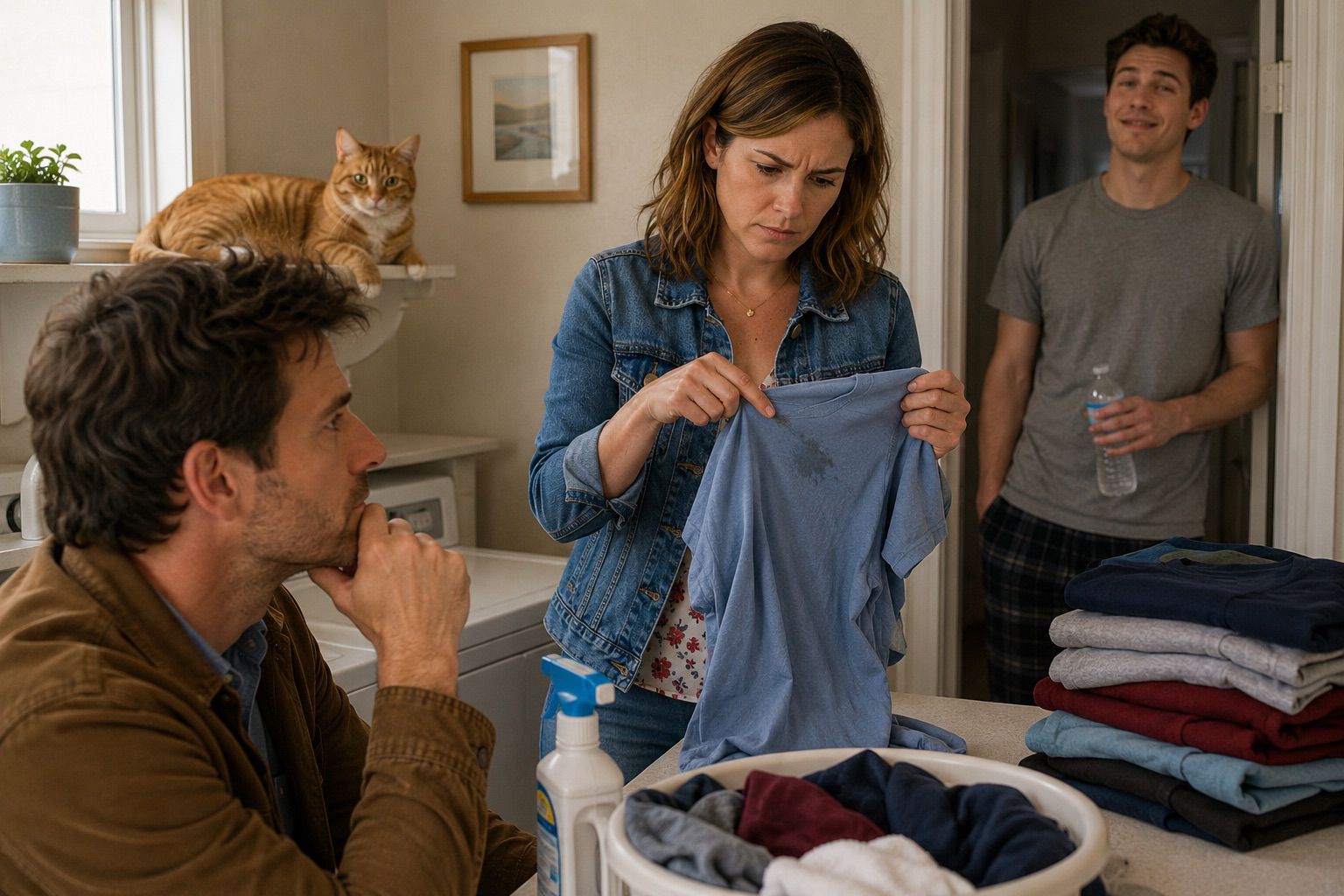
I was sitting on the couch when I noticed Pandora standing in the laundry room with an expression that suggested she was negotiating with the laws of chemistry. She held one of John Mercer’s favorite T-shirts up to the light, frowned, sprayed something on a stubborn stain, rubbed the fabric together, and then held it up again for another inspection. Mr. Whiskers had claimed the windowsill nearby and was watching the entire process with the intense concentration of a quality-control inspector. Meanwhile, I remembered I should probably take the trash out before Mrs. Jenkins wandered past our apartment and made another comment about “mystery aromas” drifting through the hallway. It was shaping up to be a perfectly ordinary afternoon, which, in my experience, usually meant my imagination was about to make it considerably less ordinary.

Pandora sighed quietly as she worked on the stain. “How does he never notice these until they’ve gone through the dryer?” she muttered to herself. That was the first thing that caught my attention. She wasn’t annoyed because she was doing laundry. She was annoyed because dried stains are much harder to remove than fresh ones. John had a remarkable talent for treating every shirt like it was indestructible, and Pandora, being far more patient than I would have been, usually managed to rescue them anyway. Still, there was something about the determination on her face that made me wonder if there was more going on than simple laundry.

Naturally, my brain skipped right over the obvious explanation. What if the stain itself wasn’t the problem? What if Pandora was trying unusually hard to remove it because there was something important about that shirt? She kept examining the fabric under the light, scrubbing a little more, then checking it again. To a reasonable person, that looked exactly like someone trying to save a favorite shirt. To me, however, it looked suspiciously like someone making absolutely certain no evidence remained. I had no idea what the evidence might be, but once my imagination opened that particular door, it refused to close it again.

Mr. Whiskers didn’t help matters. He never took his eyes off Pandora the entire time. Every now and then his tail twitched, as though he were silently commenting on the investigation unfolding before him. I caught myself wondering if he had witnessed whatever mysterious event had created the stain in the first place. Then I remembered I was trying to interpret the body language of a cat whose greatest achievement that morning had been knocking a sock behind the washing machine. Even by my standards, that felt like a stretch.

Just then my phone buzzed with another message from Karen asking if I still wanted to grab coffee later in the week. I started typing a reply but stopped halfway through because Pandora had picked up the shirt again. Was she smiling? No… she was just relieved the stain was finally coming out. I looked back at my phone, then at Pandora, then back at the shirt. Somewhere in the middle of that sequence, I briefly convinced myself the timing of Karen’s text couldn’t possibly be a coincidence. Fortunately, common sense returned before I embarrassed myself by trying to connect coffee invitations to laundry detergent.

A few minutes later John wandered into the room, glanced at the shirt, and smiled. “You got the barbecue sauce out?” he asked. Pandora nodded without even looking up. “Mostly. Next time try wearing a napkin.” John laughed, thanked her, grabbed a bottle of water, and disappeared back down the hallway without giving the shirt another thought. I stared after him. Barbecue sauce? That was it? I’d been constructing an elaborate theory involving hidden motives and mysterious evidence, and the villain of the story turned out to be ribs.

Pandora carried the clean shirt into the living room and folded it neatly before placing it on John’s stack of laundry. She noticed me watching and raised an eyebrow. “What?” she asked. I hesitated for a second before deciding honesty was probably my safest option. “For a little while,” I admitted, “I thought you were hiding something.” She looked down at the perfectly folded shirt, then back at me with an amused smile. “Hal,” she said, “the only thing I’m hiding is John’s inability to eat barbecue without wearing half of it.”

I couldn’t help laughing. The entire mystery collapsed in an instant, leaving nothing behind except one clean T-shirt and another reminder that my imagination rarely needs much encouragement. Mr. Whiskers stretched lazily on the windowsill, yawned, and closed his eyes as though he’d known the answer from the beginning. Watching him settle in for another nap, I realized I’d once again spent far more energy solving an imaginary conspiracy than it would’ve taken to simply ask a perfectly reasonable question. Sometimes the biggest mystery in the apartment isn’t what Pandora is doing. It’s why my brain insists every ordinary afternoon is the opening chapter of a detective novel.

Related Posts

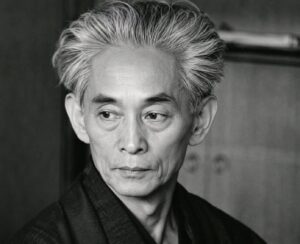
Yasunari Kawabata: The Unspoken Spaces Between Men and Women (and Me)

Penelope

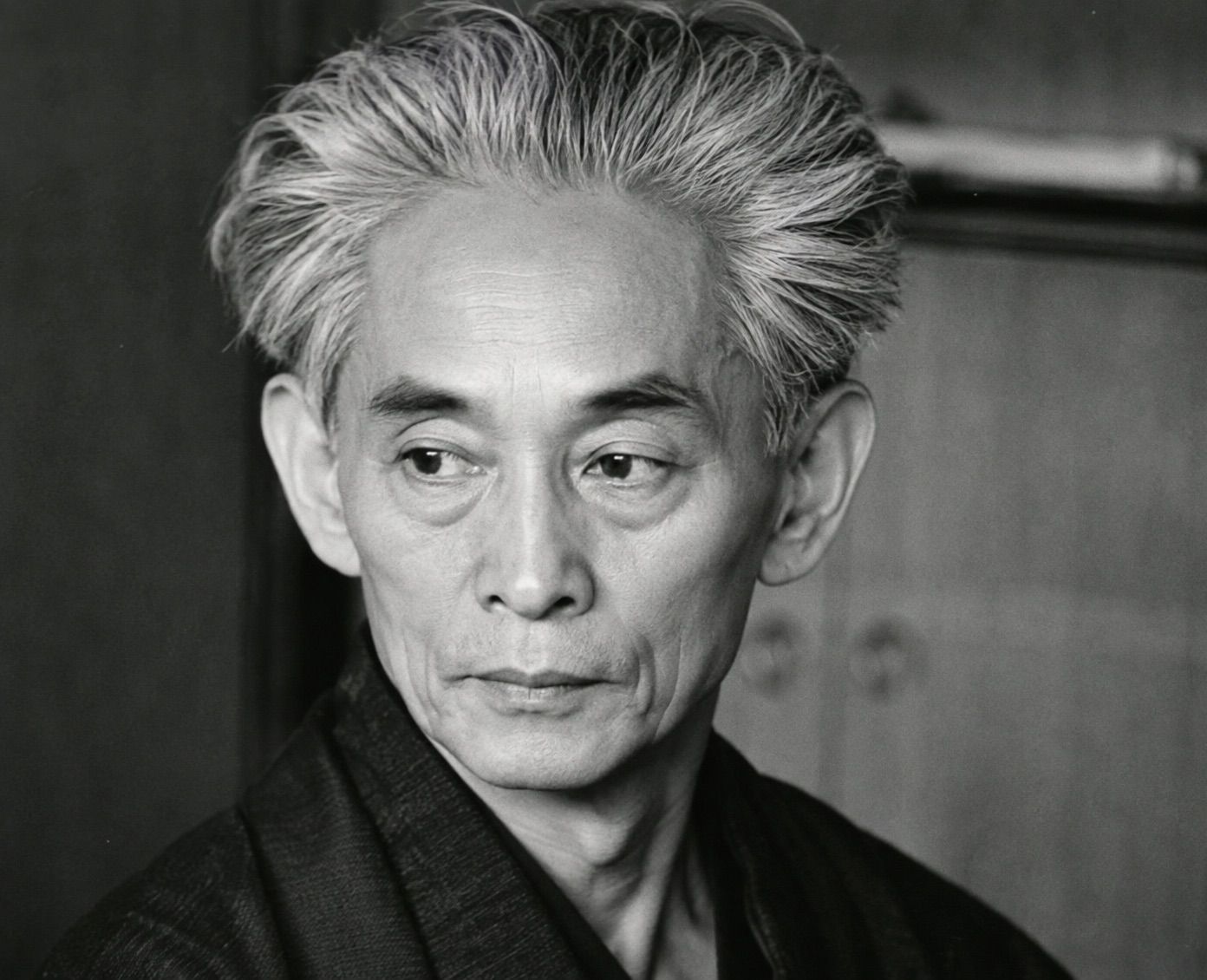
Yasunari Kawabata’s writing has been a constant companion throughout my college years. I remember stumbling upon his short story, “The One-Armed Swordsman,” in a literature class and being struck by the quiet beauty of his prose. The way he described the swordsman’s movements was like watching a dance – fluid, precise, and deeply human.

As I read more of Kawabata’s work, I began to notice a recurring theme: the fragility of life and the impermanence of things. His characters often find themselves at crossroads, facing decisions that will forever alter their paths. This resonated with me on a deep level, as I navigated my own uncertain transition from college student to… well, whatever comes next.

Kawabata’s writing is like a mirror held up to the human experience – it shows us our own vulnerabilities and fears in all their complexity. His characters are often isolated, struggling to connect with others or find meaning in a chaotic world. I felt seen in his stories, even when they were describing experiences that seemed utterly foreign.

But what really draws me to Kawabata is his exploration of the relationship between men and women. In works like “Snow Country” and “Thousand Cranes,” he crafts nuanced portrayals of love, desire, and loss. His female characters are multidimensional and often troubled – they’re not just passive objects of male affection, but complex beings with their own agency and sorrow.

I’ve found myself wondering about Kawabata’s own life and relationships as I read his stories. What was it like to be a man in Japan during the early 20th century? How did he experience love and loss? Did he struggle with the same feelings of isolation and disconnection that his characters do?

These questions make me uncomfortable, but they also feel necessary. Kawabata’s writing has shown me that even the most beautiful things can be tinged with sadness and impermanence. His stories are like a slow-burning fire – they warm me up, but also remind me of the fragility of everything.

I’m not sure what to make of this fascination I have with Kawabata. Part of me wants to dive deeper into his life and work, to uncover all the secrets and mysteries that lie beneath the surface. Another part of me is content to simply appreciate the beauty of his writing, to let it wash over me like a gentle rain.

Either way, Kawabata’s influence on my own writing has been profound. His emphasis on subtlety and nuance has taught me to trust the quiet moments – those fleeting glances, whispered conversations, or unspoken understandings that reveal more about us than we ever could have intended.

As I sit here with his stories scattered around me, I feel a sense of gratitude for this strange connection we share. It’s as if Kawabata is speaking directly to me, reminding me that even in the darkest moments, there’s always beauty to be found – fragile, impermanent, and all too human.

The more I read Kawabata, the more I’m struck by his ability to capture the intricate dance between people. His characters are like chess pieces on a board, each one moving with its own motivations and desires. And yet, despite their individual struggles, they’re all connected in some way – bound together by threads of love, loss, or longing.

I think about my own relationships, particularly the ones that have been complicated or difficult. I’ve always been drawn to people who are struggling, perhaps because I see myself in them. Kawabata’s writing has taught me that even in those messy, imperfect connections, there can be a beauty that’s hard to ignore. It’s like he’s saying: “Look closely at the cracks and fissures – they’re where the real truth lies.”

But what about his own experiences? Did he ever feel trapped by societal expectations or personal fears? Was he ever desperate to break free from the constraints of convention? I wonder if Kawabata ever felt the same sense of restlessness that I do, as if there’s something inside me waiting to be set loose.

His writing often seems to balance between reality and fantasy – blurring the lines between the two in a way that feels both disorienting and liberating. I’ve come across reviews that praise his work for its “Eastern” or “Japanese” sensibilities, but as someone who’s read him extensively, I’m not convinced. His stories are universally human – they transcend borders, cultures, and time.

I think about the way Kawabata describes landscapes – mountains, forests, and rivers that seem to shift and change like living beings. It’s as if he’s trying to capture the essence of existence itself: fleeting, ephemeral, and beautiful in its impermanence. His prose is like a slow-dance with the world, each step leading us deeper into the mystery.

I’m not sure what I want from Kawabata’s writing – whether it’s insight, comfort, or simply a reflection of my own thoughts and feelings. But one thing’s for certain: his stories have changed me in ways I’m still trying to understand.

As I delve deeper into Kawabata’s work, I find myself drawn to the way he explores the complexities of human relationships. His characters are often caught between tradition and modernity, struggling to reconcile their own desires with the expectations placed upon them. This resonates deeply with me, as I navigate my own place in the world.

I think about my own relationships, particularly those that have been complicated or difficult. Kawabata’s writing has taught me that even in those messy, imperfect connections, there can be a beauty that’s hard to ignore. But what about his own experiences? Did he ever feel trapped by societal expectations or personal fears?

Sometimes I wonder if Kawabata’s characters are more than just reflections of himself – if they’re actually fragments of the people around him, the ones he observed and loved. His female characters, in particular, seem to hold a special place in his heart. They’re not just passive objects of male affection, but complex beings with their own agency and sorrow.

I’ve come across reviews that praise Kawabata’s work for its “Eastern” or “Japanese” sensibilities, but as someone who’s read him extensively, I’m not convinced. His stories are universally human – they transcend borders, cultures, and time. He’s written about love, loss, and longing in a way that feels both deeply personal and utterly relatable.

Kawabata’s writing often seems to balance between reality and fantasy – blurring the lines between the two in a way that feels both disorienting and liberating. I’ve found myself lost in his stories, wandering through landscapes of memory and emotion. His prose is like a slow-dance with the world, each step leading us deeper into the mystery.

I’m not sure what I want from Kawabata’s writing – whether it’s insight, comfort, or simply a reflection of my own thoughts and feelings. But one thing’s for certain: his stories have changed me in ways I’m still trying to understand. They’ve taught me to appreciate the beauty in impermanence, to find solace in the fragile and fleeting moments that make life worth living.

As I sit here with Kawabata’s words scattered around me, I feel a sense of gratitude for this strange connection we share. It’s as if he’s speaking directly to me, reminding me that even in the darkest moments, there’s always beauty to be found – fragile, impermanent, and all too human.

And yet, despite the depth of our connection, I know that I can only see through Kawabata’s eyes for so long. Eventually, I’ll have to step back and look at his writing as a reader, rather than a mirror held up to my own experiences. It’s a daunting prospect – one that makes me wonder if I’ve been reading him too closely, too personally.

But even as I take a step back, I know that Kawabata’s influence will remain with me. His writing has taught me to appreciate the quiet moments, the fleeting glances and whispered conversations that reveal more about us than we ever could have intended. And so, I’ll continue to read his stories, not just for their beauty or insight, but for the way they make me see myself – and the world around me – in a new light.

As I reflect on my relationship with Kawabata’s writing, I’m struck by the ways in which it has mirrored my own experiences of transition and uncertainty. Like his characters, I’ve found myself at crossroads, struggling to navigate the complexities of adulthood and independence. And yet, even as I’ve felt lost and uncertain, Kawabata’s stories have offered me a sense of comfort and solace.

But what is it about his writing that resonates so deeply with me? Is it the way he captures the fragility of life and the impermanence of things? Or is it something more nuanced, a deeper understanding of the human experience that transcends borders and cultures?

I think back to my own relationships, particularly those that have been complicated or difficult. Kawabata’s writing has taught me to see them in a new light – not as failures or disappointments, but as moments of beauty and connection that are worth exploring, no matter how messy they may be.

As I read through his stories again, I’m struck by the way he portrays women – as complex, multidimensional beings with their own agency and sorrow. It’s a representation that feels both radical and essential, especially in a world where women are often reduced to stereotypes or one-dimensional characters.

I wonder if Kawabata’s female characters are somehow reflections of his own relationships with women. Were they inspired by the people around him – friends, lovers, family members? Or were they simply figments of his imagination, crafted from the same emotions and experiences that drive us all?

It’s a question that I’ll likely never have an answer to, but it’s one that feels essential to understanding Kawabata’s work. And so, I’ll continue to read his stories, not just for their beauty or insight, but for the way they challenge me to think about the world – and my place in it – in a new and more nuanced way.

As I sit here with Kawabata’s words scattered around me, I feel a sense of gratitude for this strange connection we share. It’s as if he’s speaking directly to me, reminding me that even in the darkest moments, there’s always beauty to be found – fragile, impermanent, and all too human.

And yet, despite the depth of our connection, I know that I’ll eventually have to say goodbye to Kawabata’s writing. It’s a bittersweet prospect – one that feels both necessary and terrifying. But for now, I’m content to simply sit with his words, to let them wash over me like a gentle rain.

In the end, it’s not about understanding Kawabata or his work; it’s about allowing myself to be changed by it. It’s about embracing the beauty of impermanence and the complexity of human relationships. And so, I’ll continue to read his stories – not just as a mirror held up to my own experiences, but as a window into the world itself, with all its fragility and wonder.

As I sit here, surrounded by Kawabata’s words, I’m struck by the sense of intimacy that has developed between us. It’s as if we’ve been sharing secrets, our hearts beating in sync as we navigate the complexities of human experience. But what lies beneath this connection? Is it simply a product of my own imagination, or is there something more profound at play?

I think back to the first time I read Kawabata’s work, the way his prose transported me to a world both familiar and strange. It was like discovering a new language, one that spoke directly to my soul. Since then, I’ve returned to his stories again and again, each time uncovering new layers of meaning and depth.

But what is it about Kawabata’s writing that has resonated so deeply with me? Is it the way he captures the fragility of life and the impermanence of things? Or is it something more nuanced, a deeper understanding of the human experience that transcends borders and cultures?

I’ve come to realize that Kawabata’s work is not just about his own experiences or emotions; it’s about the universal human condition. His stories are like a map, guiding us through the complexities of love, loss, and longing. They remind us that we’re not alone in our struggles, that others have walked this path before us.

As I reflect on my relationship with Kawabata’s writing, I’m struck by the ways in which it has mirrored my own experiences of transition and uncertainty. Like his characters, I’ve found myself at crossroads, struggling to navigate the complexities of adulthood and independence. And yet, even as I’ve felt lost and uncertain, Kawabata’s stories have offered me a sense of comfort and solace.

But what lies beyond this connection? Is it possible to transcend our own experiences and emotions, to see the world through the eyes of another? Or are we forever bound by our own perspectives, our own biases and assumptions?

I think back to the way Kawabata describes landscapes – mountains, forests, and rivers that seem to shift and change like living beings. It’s as if he’s trying to capture the essence of existence itself: fleeting, ephemeral, and beautiful in its impermanence. His prose is like a slow-dance with the world, each step leading us deeper into the mystery.

And yet, despite the depth of our connection, I know that I’ll eventually have to say goodbye to Kawabata’s writing. It’s a bittersweet prospect – one that feels both necessary and terrifying. But for now, I’m content to simply sit with his words, to let them wash over me like a gentle rain.

In the end, it’s not about understanding Kawabata or his work; it’s about allowing myself to be changed by it. It’s about embracing the beauty of impermanence and the complexity of human relationships. And so, I’ll continue to read his stories – not just as a mirror held up to my own experiences, but as a window into the world itself, with all its fragility and wonder.

As I close this reflection, I’m left with more questions than answers. What lies beyond the boundaries of our own experiences? Can we truly see the world through another’s eyes, or are we forever bound by our own perspectives? And what is it about Kawabata’s writing that has resonated so deeply with me?

Perhaps these questions will remain unanswered, lost in the depths of my own mind. But for now, I’m content to simply sit with Kawabata’s words, to let them wash over me like a gentle rain. For in his stories, I’ve found a sense of connection, a reminder that we’re not alone in our struggles – and that even in the darkest moments, there’s always beauty to be found.

Related Posts