Latest Articles

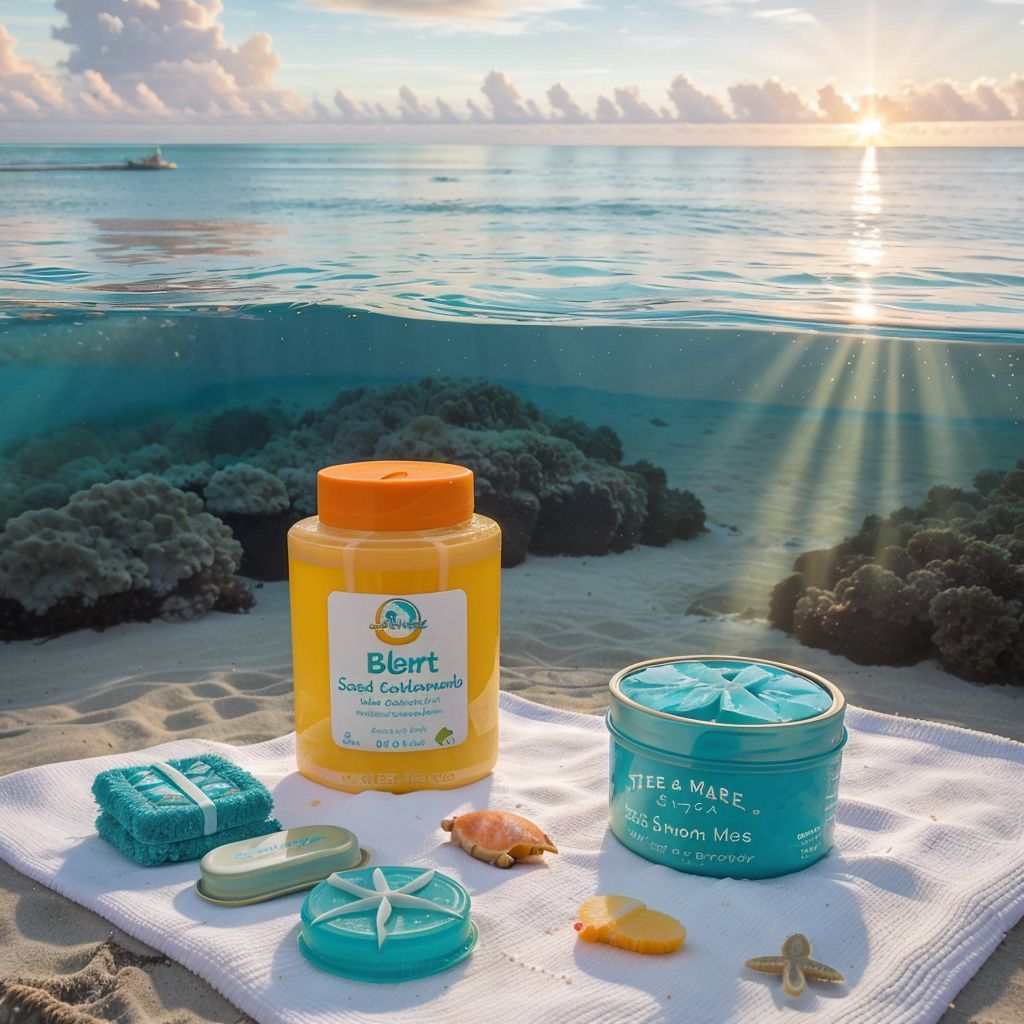
How Ocean-Friendly Beauty is Changing the World One Product at a Time

Dave

The quest for beauty has always been inseparable from the natural world. Ancient civilizations used clays from riverbanks, oils pressed from seeds, and pigments derived from crushed shells or flowers. But the modern beauty industry—shiny, colorful, and bursting with promises—has drifted far from its natural roots. Today, it stands at a crossroads, caught between innovation and ecological responsibility. Nowhere is this tension more apparent than in its relationship with the oceans. Beneath the glossy packaging and alluring marketing, the cosmetics industry leaves behind a trail of destruction that reaches all the way to coral reefs and marine food chains. But a new wave is rising—one that champions ocean-friendly beauty products. It’s a movement that seeks not just to protect the sea, but to redefine what beauty really means.

For decades, the ocean has been treated like an endless dumping ground. Beauty products—often made with synthetic chemicals, microplastics, and non-biodegradable packaging—enter our waterways through everyday use and improper disposal. Shampoo that swirls down the drain, sunscreen that rinses off in the waves, exfoliants that carry microbeads into sewage systems—each tiny action accumulates into a massive problem. What most people don’t realize is that these beauty routines contribute to environmental crises in ways both visible and invisible. Microplastics, for instance, are now found in the stomachs of fish, in sea salt, and even in human bloodstreams. Coral reefs, already threatened by climate change, face additional stress from common sunscreen ingredients like oxybenzone and octinoxate, which disrupt coral reproduction and lead to bleaching. These are not distant or abstract issues—they affect every one of us, from the seafood we eat to the health of the planet we share.

Ocean-friendly beauty products emerged as a response to this crisis, built on a philosophy of harm reduction, transparency, and sustainability. The movement champions ingredients that are biodegradable, ethically sourced, and non-toxic to marine ecosystems. It also advocates for packaging solutions that reduce plastic waste—recycled materials, refillable containers, and compostable alternatives. The shift toward ocean-friendly practices isn’t just about what’s left out (like parabens or sulfates), but what’s thoughtfully put in. Natural oils, algae-derived compounds, mineral sunscreens, and botanical extracts have become stars of this movement. But beyond ingredients, the movement is about mindfulness. It’s about recognizing that every choice we make—from the lipstick we wear to the lotion we apply—ripples outward into the wider world.

What makes ocean-friendly beauty compelling isn’t just its environmental impact—it’s the human stories behind it. Consumers are increasingly educated and empowered, demanding accountability from brands and making more conscious purchases. Social media has played a major role in this transformation, allowing activists, influencers, and scientists to raise awareness about marine degradation and sustainable alternatives. People are sharing their zero-waste beauty routines, posting before-and-after shots of their plastic-free bathrooms, and turning product reviews into mini-lectures on reef-safe sunscreens. This grassroots pressure has forced even the biggest beauty corporations to adapt. Brands like Lush, Ethique, and Aveda have long been pioneers in sustainable beauty, but now mainstream companies like Garnier, Neutrogena, and Unilever are rolling out more eco-friendly lines. While some of this may be greenwashing, the broader trend signals a cultural shift. Ocean-friendly beauty is no longer a niche; it’s becoming a norm.

But let’s not romanticize the path forward. True sustainability in the beauty industry requires more than token gestures or clever marketing. It demands systemic change—rethinking supply chains, reengineering product formulas, and reshaping consumer habits. One of the biggest challenges lies in regulation. In many countries, cosmetic ingredients are poorly regulated, and there’s no standard definition for what constitutes an “ocean-friendly” product. Terms like “natural,” “organic,” and “reef-safe” are often used interchangeably or inaccurately, creating confusion for consumers. Certifications can help, but they vary widely in credibility and scope. This lack of uniformity makes it difficult for even the most well-intentioned buyer to make informed decisions. Advocacy groups are working to address this, pushing for clearer labeling laws, stricter ingredient bans, and better testing protocols. Progress is slow, but every legislative win inches the industry closer to real accountability.

Another challenge is affordability. Ocean-friendly beauty products often come with a higher price tag, making them inaccessible for many. This creates a frustrating paradox: the people most affected by environmental degradation—often low-income communities—are the least likely to afford the products that help prevent it. For the movement to truly succeed, it must bridge this gap. That means scaling up production to bring down costs, creating accessible educational campaigns, and supporting local, sustainable beauty initiatives in underserved regions. Brands that prioritize inclusion—both in terms of pricing and representation—stand the best chance of driving lasting change. After all, the beauty of the ocean belongs to everyone. The responsibility to protect it must be shared too.

Still, the progress made so far is nothing short of remarkable. In recent years, Hawaii and Palau have banned certain sunscreen chemicals harmful to coral reefs. Brands have launched refill stations in retail stores. Entrepreneurs have invented solid shampoo bars, dissolvable packaging, and algae-based bioplastics. Scientists are developing biodegradable glitter and marine-safe preservatives. Consumers are asking harder questions: Where was this made? How will it break down? What impact does it have beyond my bathroom? These are not small shifts—they’re fundamental changes in the way we relate to beauty, the planet, and ourselves.

There’s also something profoundly emotional about the ocean. It’s a place of awe and imagination, of solace and play. Many people feel a deep, almost spiritual connection to the sea—whether through childhood memories, vacations, or the simple rhythm of waves on a shore. This connection can be a powerful motivator. When we realize that our daily choices can either harm or protect this sacred space, it becomes harder to ignore the consequences of convenience. Ocean-friendly beauty isn’t just about clean formulas; it’s about cultivating a sense of responsibility rooted in love, not guilt. It’s about saying, “I care,” in the small ways that add up to something immense.

As with all movements, there are moments of friction. Some critics argue that personal care choices are a distraction from larger environmental issues—that true change requires government action, not just consumer activism. And they’re not entirely wrong. Policy shifts, corporate regulation, and industrial reforms are essential. But to dismiss individual efforts as meaningless is to underestimate the power of collective action. Every time someone switches to a reef-safe sunscreen, skips a single-use bottle, or spreads the word about ocean-safe brands, they contribute to a cultural tide. These micro-actions, multiplied across millions of people, become a force strong enough to reshape industries. Change often begins at the margins, then moves to the mainstream. That’s exactly what’s happening with ocean-friendly beauty.

The role of technology cannot be overstated in this evolution. Innovations in green chemistry, biotechnology, and sustainable packaging are unlocking possibilities that didn’t exist even a decade ago. Plant-based alternatives are replacing petrochemicals. AI is helping brands create more efficient, waste-reducing supply chains. Blockchain is being explored to verify ethical sourcing. These tools not only make ocean-safe beauty more effective—they make it more transparent. Consumers no longer have to rely solely on marketing claims; they can research, review, and report in real time. Transparency is becoming a competitive advantage. The brands that thrive are the ones that don’t just tell a good story—they prove it.

Culturally, the movement is also dismantling outdated ideals of beauty. Traditional advertising often relied on exclusivity, perfection, and unattainable standards. Ocean-friendly beauty, by contrast, celebrates authenticity, diversity, and holistic well-being. It recognizes that looking good shouldn’t come at the expense of the planet—or of someone else’s labor or dignity. Campaigns are increasingly inclusive, featuring models of all backgrounds, ages, and abilities. Products are formulated for diverse skin tones and hair types. The narrative is shifting from “beauty as aspiration” to “beauty as empowerment.” It’s not just about what you put on your face, but how you live your values.

Looking ahead, the future of ocean-friendly beauty depends on education. Schools, media, and community organizations must play a role in fostering ecological literacy. Imagine a generation that grows up understanding the link between their body wash and the health of marine ecosystems. Imagine children learning about the impact of their choices and being excited to be part of the solution. This isn’t a fantasy—it’s a necessity. Climate change, pollution, and biodiversity loss are urgent realities. The beauty industry, like every sector, must evolve or become obsolete. Ocean-friendly practices offer a roadmap for this transformation—one rooted in science, ethics, and care.

We are already seeing signs of a broader awakening. Fashion is grappling with sustainability. Food industries are confronting supply chain ethics. Technology companies are pledging carbon neutrality. In this larger movement toward conscious living, ocean-friendly beauty is a vital chapter. It shows that even the most personal, intimate rituals can be acts of global citizenship. It reminds us that beauty is not a separate realm from the environment—it is a reflection of it. When we protect the ocean, we protect a part of ourselves.

Of course, the path isn’t perfect. There will be missteps, contradictions, and setbacks. Some products will fail. Some companies will betray the trust of their consumers. Progress will be uneven. But the direction is clear. Ocean-friendly beauty is more than a trend—it’s a transformation. And it’s one we can all be part of, regardless of where we live, how much we earn, or what products we use. Every purchase, every conversation, every intention counts.

To those just beginning this journey, start small. Switch one product. Do some research. Share what you learn. If you can, support brands that align with your values. If not, reduce waste in other ways—reuse containers, make your own skincare, or simply use less. Ocean-friendly beauty isn’t about perfection. It’s about progress. It’s about turning daily routines into rituals of respect for the world around us.

Because in the end, the ocean doesn’t need us to be perfect. It needs us to care. To listen. To change. And to remember that real beauty—like the sea itself—is wild, powerful, and deeply, achingly worth protecting.

Related Posts

How the Seneca Falls Convention Sparked a Revolution for Women’s Rights

Elias Rowen

On July 18, 1848, something remarkable began in a sleepy town in upstate New York. It wasn’t the booming echo of cannons or the blaring fanfare of politics that marked this moment, but rather the steady murmur of conversation turning into conviction. Inside the Wesleyan Chapel in Seneca Falls, a modest group of people—mostly women, a few brave men—gathered to question the foundations of an entire society. They had no illusions that their meeting would instantly change the world, but what they did know, perhaps more deeply than they dared say aloud, was that they were planting a seed. And as history would prove, that seed would take root, grow, and transform the landscape of human rights.

To appreciate the significance of the Seneca Falls Convention, it’s essential to understand the conditions leading up to it. In the mid-19th century, women in the United States had few legal rights. They couldn’t vote, they couldn’t own property if they were married, and their earnings—if they worked—legally belonged to their husbands. They were denied access to higher education and the professions. Even within reform movements like abolitionism, women often found themselves relegated to the sidelines. Yet it was precisely within that same abolitionist movement that many of the Seneca Falls organizers, including Elizabeth Cady Stanton and Lucretia Mott, found their political voices.

Elizabeth Cady Stanton was a force of nature—sharp, charismatic, and unyielding in her belief that women deserved equality in every sense. She met Lucretia Mott, a Quaker minister and experienced orator, at the 1840 World Anti-Slavery Convention in London. There, they were both refused participation because they were women. The sting of that experience lingered. They vowed to organize something of their own, something that would not just include women but place them at the center. Eight years later, that vow materialized into the Seneca Falls Convention.

The announcement was modest: a brief notice in the local newspaper, The Seneca County Courier, inviting “a Convention to discuss the social, civil, and religious condition and rights of woman.” The call may have seemed unassuming, but its implications were seismic. Over two hundred people attended the two-day event, which opened on July 19, but it was July 18—the day before the official start—when the organizers convened to shape what would become the soul of the movement: the Declaration of Sentiments.

Modeled on the Declaration of Independence, the Declaration of Sentiments boldly asserted that “all men and women are created equal.” Those seven words were not just a rhetorical flourish; they were a direct challenge to centuries of doctrine, both religious and secular. The document listed eighteen grievances, echoing the grievances the Founding Fathers had leveled against King George III. Only this time, the tyrant was not a distant monarch but an entrenched system of patriarchal oppression.

The grievances ranged from denial of the right to vote, to the lack of property rights, to restrictions on educational and professional opportunities. The most controversial demand—women’s suffrage—was hotly debated even among attendees. Elizabeth Cady Stanton insisted it remain, while others, including Lucretia Mott, feared it might be too radical and jeopardize the credibility of the entire movement. It was Frederick Douglass, the great abolitionist and former slave, who rose in defense of Stanton’s position. His speech, passionate and unflinching, helped tip the balance. In the end, the suffrage clause was included and passed, though not without hesitation.

The significance of Douglass’s support cannot be overstated. His presence at the convention was more than symbolic; it represented the intersectionality of struggles for justice. He understood that the fight for freedom was indivisible—that one group’s liberation could not come at the expense of another’s. This principle would echo through subsequent decades of civil rights activism, although not always without tension or contradiction.

Though the Seneca Falls Convention did not immediately spark legislative change, its impact was deep and enduring. The Declaration of Sentiments circulated widely. The very act of putting pen to paper, of stating clearly and unequivocally that women were entitled to equality, had a galvanizing effect. More conventions followed—Rochester in 1848, Worcester in 1850—spreading the message and building momentum. Women like Susan B. Anthony, who didn’t attend Seneca Falls but would later become a close ally of Stanton, entered the movement and brought with them new energy and organization.

In many ways, the Convention served as the launching pad for what became known as the first wave of feminism. It provided a blueprint not only for advocacy but for the framing of grievances and the articulation of rights. While the suffrage movement would stretch on for decades—culminating in the 19th Amendment in 1920—the foundation had been laid in that little chapel in Seneca Falls. The courage it took to make such radical claims in 1848 cannot be overstated. These were women who risked social ostracism, ridicule, and even danger to stand up for their beliefs.

And yet, they were also women of their time, not without limitations. The early women’s rights movement struggled with issues of race and class. While some leaders like Stanton and Anthony were fierce advocates for universal suffrage, they also occasionally made strategic compromises that marginalized Black voices. The movement’s early exclusivity would be a stain that future generations would work to address and repair. Still, none of that erases the importance of what began at Seneca Falls. Rather, it deepens our understanding of its complexity.

Human stories from the convention bring it all into sharper relief. Consider Charlotte Woodward, a 19-year-old glove maker who was the only signer of the Declaration of Sentiments to live long enough to see women gain the right to vote in 1920. Her story is both triumphant and bittersweet. Though she lived to see the 19th Amendment ratified, she was too frail to cast a vote herself. But what mattered was that the vision she dared to believe in as a teenager had finally materialized.

Then there’s the story of Thomas M’Clintock and his wife Mary Ann, Quakers who opened their home for the drafting of the Declaration. Their home, now preserved as a historical site, witnessed the birth of ideas that would one day reshape American democracy. It’s easy to romanticize such moments, but they were not gilded or grand. They were real—messy, impassioned, imperfect. And that’s what makes them so powerful.

Seneca Falls was not just a point on the map. It became a symbol—a rallying cry, a historical hinge. Movements need origin stories, and though the struggle for women’s rights did not begin or end there, the convention provided a sense of identity and purpose. It became something that women and men alike could look back on for inspiration and forward from for direction.

The resonance of that moment continues to this day. When modern activists march for gender equality, reproductive rights, or pay equity, they walk in the footsteps of those who gathered in that dusty New York chapel. The issues have evolved, the context has changed, but the underlying principle remains unchanged: the fight for full and equal rights for all genders is not over, and history demands we remember where that organized fight began.

We live in a world transformed by the courage of those who dared to declare their grievances in 1848. From boardrooms to voting booths, from classrooms to courtrooms, the ripple effect of that declaration continues to influence every space where gender justice is contested. What was once radical is now foundational, and what is foundational must be vigilantly protected and advanced.

The story of Seneca Falls reminds us that change begins not with consensus, but with conviction. It starts when someone stands up—or gathers others to sit down and write. It requires imagination, audacity, and relentless hope. Elizabeth Cady Stanton could not see the world we live in today, but she envisioned a better one. And that vision, shared aloud on July 18, 1848, is still echoing.

Related Posts

Endless Summer: A Life Built on Sunshine, Freedom, and Flow

Dave

The notion of an “endless summer” carries with it a kind of magic. It’s more than warm days and coastal breezes—it’s a dream of perpetual freedom, sun-kissed skin, and life lived in flow. It conjures visions of surfing at dawn, bonfires at twilight, road trips with no destination, and laughter echoing against crashing waves. But what if it could be more than just a season or a vacation mindset? What if the endless summer wasn’t a break from life—but a way of life?

To live an endless summer doesn’t mean chasing sun around the globe in an endless loop of travel and sunscreen—though for some, it might. It means making conscious choices to align your life with the energy of summer: spontaneity, vitality, warmth, and a deep connection to the present moment. It means building a lifestyle around joy, movement, and the kind of stillness that only the sound of waves can teach. It’s a state of mind as much as it is a style of living.

For most of us, summer as children was synonymous with freedom. School was out. Rules were lighter. Days stretched wide open and time felt elastic. There was swimming and biking and late nights filled with the flicker of fireflies or the salt of the ocean still clinging to your skin. We were explorers, creatives, daydreamers. Somewhere along the way, adult life brought structure and responsibility—but what if we didn’t have to trade joy for adulthood? What if we could design lives where those feelings weren’t a fleeting escape, but the foundation?

The first pillar of an endless summer is location. It doesn’t have to be Malibu or Bali—it just has to make your heart feel lighter. Maybe it’s a small town by the sea, a surf-friendly stretch of coast, or a cabin by a warm lake. It could even be a rooftop in the middle of a city that catches enough sun and wind to make you forget where you are. The idea is to build your physical environment around the elements that nurture you. Access to nature is key—because endless summers thrive on salty air, barefoot afternoons, and the soothing cadence of water.

People who chase summer aren’t just after beaches—they’re after moments that feel alive. That might mean working remotely from a hammock in Costa Rica, starting a surf school in Portugal, or opening a smoothie stand on a Caribbean island. For many, digital nomadism has made this lifestyle more accessible than ever. A laptop, a Wi-Fi connection, and the courage to detach from traditional career norms are often all it takes. Remote work, freelance writing, creative entrepreneurship—these avenues offer flexibility, but they also demand discipline. To live an endless summer, you have to be willing to do the inner work that allows you to live simply and intentionally.

Simplicity is the second pillar. You can’t live a summer state of mind if you’re drowning in clutter—physical or emotional. That’s why minimalism often goes hand-in-hand with the endless summer lifestyle. The people who seem to float effortlessly from beach to beach don’t have oversized closets or five-year plans packed to the brim. They carry what they need, wear what makes them feel good, and know that less often leads to more. When your mind isn’t preoccupied with managing stuff, it becomes freer to notice the light, the breeze, the color of the sky at 6:30 p.m. That’s where the magic happens.

But living an endless summer isn’t just external—it’s deeply internal. It requires flow, the psychological state where time melts and creativity thrives. Surfers call it “being in the pocket,” dancers call it rhythm, and writers call it the zone. Whatever your medium, endless summer living is about tuning into those rhythms and chasing the moments where you’re not just passing time—you’re expanding it. Find what brings you flow and do more of it, unapologetically. That could be making art, building something with your hands, cooking barefoot to loud music, or simply being still with a book in a hammock.

This lifestyle also demands a relationship with nature that goes beyond appreciation—it requires integration. Living an endless summer means scheduling your life around the sunrise, understanding the moon’s pull on tides, and planning your days based on the weather not because you have to—but because you want to. It means greeting the day with a swim, practicing gratitude during golden hour, and letting the stars remind you of your place in the universe. You don’t need to be a mystic or a minimalist to do this. You just have to start paying attention. The world will show you how to live more fully if you let it.

Food is another cornerstone. Endless summer eaters aren’t about rigid diets—they’re about freshness, color, and vibrancy. Think grilled fish, ripe mangoes, sun-warmed tomatoes, acai bowls, and coconut water sipped straight from the shell. Meals are often shared, leisurely, and taken outdoors. There’s joy in the preparation and presence in the eating. It’s about nourishment, not numbers. And when your body is nourished with clean, simple, joyful food, your mind follows.

Community, too, plays a vital role. The endless summer isn’t a solo journey—it’s something to be shared. This doesn’t necessarily mean large social circles or wild parties. It means deep connections. It means sunset yoga with a few friends. It means strangers becoming neighbors over shared surf spots or beach cleanups. It’s the kind of togetherness that feels easy and light, but rooted. Where you feel like you belong, not because of your status, but because of your presence.

Living this way also means embracing flexibility over rigidity. Summer doesn’t hold you to a planner—it invites you to dance with the unexpected. The people who live endless summers tend to keep loose schedules, room for spontaneity, and permission to change plans when inspiration strikes. They choose paths that let them follow the swell, catch the wind, or stay an extra week if the vibe is just too good to leave. It’s not irresponsibility—it’s responsiveness.

Of course, it’s easy to romanticize this lifestyle. It’s not always sunny. There are visas to manage, finances to track, rainy days, and language barriers. The Wi-Fi cuts out. Sand gets in your laptop. You miss weddings and birthdays back home. And not every tropical town is a utopia—there’s bureaucracy, inequality, and environmental issues. Endless summer living demands awareness and respect, not just escapism. You must show up for the places you land in. Support local businesses. Learn the customs. Be a traveler, not a tourist.

Financial freedom is often misunderstood in this equation. You don’t need to be wealthy to live an endless summer—you just need to be intentional. Budgeting becomes more about experience than accumulation. Instead of saving for a car, you save for a month in Indonesia. Instead of upgrading your wardrobe, you invest in a surfboard. Living frugally with purpose allows you to design a life that’s rich in moments rather than material.

Over time, living this way rewires your nervous system. Your stress baseline lowers. Your cortisol takes a backseat. You start making decisions based on desire instead of fear. You feel more alive, more in tune, more like yourself. You don’t dread Mondays or crave Fridays—you just live. The days stop blending together because they’re not all the same—they’re each vivid, unique, and full of sensory detail. A bird call. A salty breeze. A mango that tastes like sunshine.

And perhaps most importantly, the endless summer teaches you to slow down. To trade urgency for intention. To replace constant striving with gentle becoming. In a world addicted to hustle, this might feel radical. But it’s not laziness—it’s alignment. The people who live this way still work, dream, and build. But they do it from a place of calm, curiosity, and clarity. The summer isn’t a distraction—it’s a compass.

This kind of life doesn’t have to be forever. For some, it’s a season of healing. For others, it’s a permanent shift. But for anyone, it can be a reset. A reminder that life isn’t meant to be endured—it’s meant to be lived. That joy isn’t frivolous—it’s essential. That play isn’t childish—it’s sacred.

So how do you begin?

Start by creating micro-summers in your current life. Wake with the sun and take your coffee outside. Keep your phone off until you’ve moved your body or felt the air on your skin. Eat food that feels alive. Swim often. Let your weekends be unstructured. Say yes to the picnic, the road trip, the sunset. Wear what makes you feel free. Declutter your space until it breathes again. Trade screen time for stargazing. Build in margins. Create moments. Follow warmth.

Eventually, your life will begin to rearrange itself around the things that truly light you up. You’ll feel the gravity shift. Your priorities will re-order. And one day you’ll wake up—whether in your backyard or halfway across the world—and realize: this is the endless summer. Not a vacation. Not a fantasy. A choice. A rhythm. A way of living that turns every ordinary moment into something golden.

Related Posts

Giants Among Us: The Day Mankind Took Aim at the Moon

Elias Rowen

It was the summer of 1969. America was still reeling from the social tremors of the civil rights movement, the Vietnam War was raging across headlines and hearts, and Woodstock hadn’t yet welcomed its muddy masses. But on one blistering morning in Florida, something incredible happened—something that paused the noise of the world and replaced it with awe. On July 17, 1969, at precisely 9:32 a.m. Eastern Daylight Time, the roar of 7.5 million pounds of thrust lifted three men toward the heavens. The launch of Apollo 11’s Saturn V rocket from Kennedy Space Center wasn’t just a marvel of engineering. It was a thunderous symbol of humanity’s unshakable resolve to go beyond its known boundaries—to put boots on the Moon and claim a dream that had lived in hearts for centuries.

The Saturn V rocket was an astonishing spectacle. Towering over 363 feet tall—taller than the Statue of Liberty—it wasn’t just the largest rocket ever built; it was a declaration of purpose. Built by NASA under the guidance of Wernher von Braun and his team at Marshall Space Flight Center, it was the product of a nation’s willpower and genius. Every bolt, wire, and fuel tank was designed with one goal in mind: to send humans to the Moon and bring them back safely. Weighing over 6.5 million pounds when fully fueled, the Saturn V was essentially a skyscraper filled with controlled explosions. But on that day, it was poetry in motion.

The crowd that gathered on the Florida coast to witness the launch numbered in the hundreds of thousands. Families, scientists, news crews, and curious onlookers stood shoulder-to-shoulder in the sweltering heat, gazing upward. Many had traveled across the country to witness history, setting up folding chairs and telescopes days in advance. Their chatter turned to silence as the final countdown began. There was a collective inhale as the final seconds ticked away. Then—ignition. The Earth trembled. The sound was deafening. It was a deep, rolling thunder that you didn’t just hear—you felt it reverberating through your chest, your bones, your soul. The rocket, slow at first, pushed skyward, flames unfurling from its base, until it was just a shining needle piercing the blue.

Onboard were three men: Neil Armstrong, Buzz Aldrin, and Michael Collins. Each brought their own quiet heroism. Armstrong, a soft-spoken pilot from Ohio, would go on to become the first human to set foot on the Moon. Aldrin, a mechanical-minded astronaut with the heart of a philosopher, would follow close behind. Collins, often the unsung hero of Apollo 11, would remain alone in lunar orbit aboard the command module, holding vigil while his crewmates walked on alien soil. They were men with families, with fears, with dreams—and yet they strapped themselves atop a controlled inferno and aimed for the stars.

But the journey didn’t begin on July 17. It began years earlier, when President John F. Kennedy stood before Congress in 1961 and boldly declared that America would send a man to the Moon before the decade was out. It sounded impossible then. The United States had barely made it into orbit. But the Space Race with the Soviet Union was about more than Cold War posturing—it became a matter of national pride, of global leadership, of human ambition. NASA accelerated its efforts. Mercury. Gemini. Test after test, failure after failure, each one a hard-earned lesson that brought us closer to the Moon.

Apollo 11 was the culmination of thousands of engineers, scientists, and technicians working tirelessly behind the scenes. At its peak, the Apollo program employed over 400,000 people. From mathematicians like Katherine Johnson calculating trajectories by hand, to welders working on fuel tanks in dusty hangars, the Moon landing wasn’t achieved by astronauts alone—it was a monumental act of collaboration. These men and women weren’t just building rockets. They were laying stepping stones to the stars.

The Saturn V had three stages. The first, powered by five massive F-1 engines, lifted the rocket through the lower atmosphere. As it fell away, the second stage took over, continuing the climb. Finally, the third stage placed the spacecraft into Earth orbit, and later, after the “Trans-Lunar Injection” burn, sent Apollo 11 hurtling toward the Moon. By the time the third stage separated, the astronauts were alone in the vast silence of space—traveling 240,000 miles to a place no human had ever stood.

What followed in the days ahead—the lunar landing on July 20, Armstrong’s historic words, the triumphant return—are carved forever in our collective memory. But it all began on that fiery morning of July 17. That was the day the countdown reached zero. That was the day Earth let go.

Looking back, it’s easy to focus on the majesty and the triumph. But what makes the Apollo 11 launch so deeply human is everything that could have gone wrong—and didn’t. The risks were staggering. They had practiced every contingency, but there was no guarantee of success. The astronauts wrote letters to their families before launch, just in case. President Nixon had even prepared a speech titled “In Event of Moon Disaster,” which he hoped he’d never have to read. That launch was a gamble. A beautiful, daring, impossibly complex gamble—and the world held its breath.

And yet, Apollo 11 succeeded. It succeeded because humans believed they could achieve the unthinkable. Because science triumphed over fear. Because in a world full of division and conflict, for a few shining moments, we all looked in the same direction. We all looked up.

There was something else, too—something poetic about the name “Enterprise” from the previous shuttle era or “Columbia” for Apollo 11’s command module. These weren’t just machines. They were vessels of hope. They carried not only astronauts but our yearning for discovery. When Saturn V rose from Pad 39A, it carried a message: that no frontier is beyond our reach, no dream too distant. It reminded us of our place in the cosmos, yes—but also of our power to reach beyond it.

In the decades since, the world has changed. The Cold War ended. New nations have entered the space race. We’ve sent rovers to Mars, telescopes to the edge of the observable universe, and space stations circling Earth like silent sentinels. But Apollo 11 remains our greatest leap—not because it was the farthest we’ve gone, but because it was the first time we proved we could go.

Today, the Saturn V rocket stands silent in museums, a monument to an age of analog dreams and boundless optimism. Tourists walk past it, staring up in awe. Kids press their faces against glass cases holding moon rocks. Veterans remember where they were when they watched the launch, the landing, the return. And the rest of us, born long after, still feel something stir inside when we see that grainy footage of the rocket lifting off into the blinding light of history.

July 17, 1969, was a turning point—not just in space travel, but in the human story. It reminded us what we can achieve when we aim high and work together. It gave us heroes. It gave us Moon dust. And maybe most importantly, it gave us perspective. From the Moon, Earth is just a fragile blue marble—borderless, breathtaking, and infinitely precious.

In a time when we face new global challenges, from climate change to geopolitical tensions, the memory of Apollo 11 and its mighty Saturn V reminds us that we are capable of more than we know. That even our loftiest goals can become footprints on the Moon. That sometimes, the biggest transformations begin with the simple act of liftoff.

So when you see a photo of that launch—white rocket against a sapphire sky, flames curling beneath it—remember this: it wasn’t just about getting to the Moon. It was about proving we could. It was about showing the universe that we were ready to take our place among the stars.

Related Posts

Recreating the Most Iconic Bikini Moments in Movie History

Dave

There’s something unforgettable about a perfectly timed entrance. The moment when sunlight hits the water just right, when music swells and the camera pans to reveal not just a character—but a statement. In cinema, the bikini has long transcended its humble roots as a piece of swimwear. It’s become a symbol, a plot device, a cultural lightning rod. From the sultry slow motion of Phoebe Cates rising from the pool in Fast Times at Ridgemont High to Halle Berry stepping from the sea in Die Another Day, certain bikini moments have branded themselves into film history. These scenes didn’t just showcase bodies—they captured the essence of a moment, a mood, a generation. Now, decades later, fans and cosplayers are bringing these memories back to life with stunning photo recreations that pay homage to the originals while breathing new energy into them. Welcome to a joyful, nostalgic, and empowering celebration of Iconic Movie Bikini Moments Recreated.

To understand why these moments stick with us, it helps to revisit how bikinis made their mark in cinema. In the early years of Hollywood, modesty ruled supreme. Swimsuits were one-piece, conservative, and often regulated by moral codes that kept things strictly family-friendly. But as social norms shifted through the 1960s and ’70s, so did fashion—and film followed suit. Suddenly, a bikini on-screen wasn’t just acceptable; it was a shorthand for cool, sexy, daring, or even comedic. It became the costume that could stop time—making the audience forget the plot and just look.

Take Dr. No (1962), the film that started the James Bond franchise. When Ursula Andress emerged from the Caribbean surf wearing a white bikini, a knife on her hip, and seashells in her hand, the world changed. That moment was raw yet polished, fierce yet feminine. It redefined what it meant to be a “Bond girl” and became the prototype for countless beach scenes that followed. Andress herself didn’t think the outfit was particularly special at the time, but the image became legendary. Today, her beachwalk is reimagined in fan art, Halloween costumes, and modern homages in everything from music videos to swimsuit collections.

Fast forward 40 years and Halle Berry steps onto the same cinematic beach in Die Another Day (2002), wearing an orange bikini that mirrored Andress’s look—but with a distinctly modern twist. The homage was intentional, but Berry made the moment her own. With her sculpted silhouette, confident gait, and effortless charisma, she wasn’t just playing a role—she was entering the cinematic lineage. It was sexy, yes, but also powerful. For Black women especially, seeing a woman of color in a scene that was once monopolized by Eurocentric beauty ideals meant something deeper than a simple fashion moment.

Then there’s Phoebe Cates in Fast Times at Ridgemont High (1982), a movie about teenage awkwardness, rebellion, and hormonal chaos. Her character’s poolside scene—wearing a red bikini, walking in slow motion to The Cars’ “Moving in Stereo”—became one of the most quoted, parodied, and referenced moments in teen movie history. For better or worse, it showcased the intersection of fantasy, adolescence, and the male gaze. Yet Cates herself carried the role with a sense of self-possession that kept the scene iconic rather than exploitative. It was cheeky, surreal, and unforgettable.

These legendary film moments inspired a wave of imitators and innovators. Denise Richards in Wild Things, Angelina Jolie in Tomb Raider: Cradle of Life, Bo Derek in 10, and even animated entries like Jessica Rabbit in her sultry red number—all became part of the cinematic swimsuit canon. And now, years later, a new generation is doing something beautiful: they’re stepping into these moments themselves. Through cosplay, themed photoshoots, Instagram editorials, and even fan-made short films, women (and men) are reimagining these iconic bikini scenes—not just mimicking them, but adding their own twist.

It’s cosplay with a twist of nostalgia and a splash of empowerment. The recreations don’t aim for exact duplication—they celebrate reinterpretation. A plus-size model recreates Halle Berry’s sea scene and looks stunning. A group of friends redoes the Baywatch run across the sand, giggling all the way. A drag queen channels Ursula Andress with pearls and sass. These are more than costumes. They’re declarations: “I belong in this narrative, too.”

What makes this movement especially exciting is the sheer diversity of who participates. In contrast to the often homogeneous casting of original Hollywood scenes, today’s recreations are inclusive, global, and wonderfully unpredictable. Skin tones, body types, ages, and genders are fluid in this world. That orange bikini? Worn by a curvy Latina mom on vacation. The red poolside number? Reimagined by a Korean influencer with a love for retro fashion. Even Bo Derek’s braided beach look has been recreated (and updated thoughtfully) by African models who reclaim the styling with cultural pride rather than appropriation.

These modern recreations also benefit from contemporary technology. High-resolution photography, cinematic filters, and smart styling give everyday creators the tools to rival major studio productions. A well-planned iPhone shoot with golden hour lighting and some post-editing magic can look like a magazine spread. Fashion brands and swimwear lines are catching on, too—releasing capsule collections inspired by these scenes. The nostalgia market is booming, and the bikini is riding that wave.

But it’s not just about likes, followers, or fashion. There’s an emotional core to these recreations that’s hard to ignore. For many, it’s a kind of healing—a playful way to reclaim the confidence that might’ve been lost in adolescence. Women who grew up feeling like they never had the “bikini body” advertised in movies now post recreations proudly, often accompanied by heartfelt captions about self-love and growth. The very scenes that once made them feel excluded have become opportunities for empowerment. What once was unreachable is now theirs to recreate, own, and share.

And it’s not just women. Men have joined the fun with gender-bent recreations and drag interpretations that both honor and parody the originals. Think of a burly guy in a flowing orange bikini striking Halle Berry’s pose, complete with sea spray and smirk. Or a drag artist in a red bikini channeling Phoebe Cates with exaggerated flair. The result is often humorous, but always celebratory. It’s about joy, creativity, and the sheer absurdity of how seriously we sometimes take beauty standards. These recreations are often more honest than the originals—because they’re rooted in fun, not pressure.

Another fascinating aspect of this trend is the locations. Some recreators go all-in, visiting the original film sets or beaches to take their shots. Diehard Bond fans trek to the Bahamas or Thailand to walk the same sand. Others get creative with pools, bathtubs, or Photoshop. What matters isn’t precision—it’s passion. Whether you’re striking a pose in your backyard kiddie pool or on the shores of Positano, what you’re really doing is connecting with cinema history in a deeply personal way.

The online community surrounding these recreations has also become a kind of support group. Comments sections are filled with encouragement: “You nailed it!” “Even better than the original!” “This gave me chills!” There’s something magical about strangers hyping each other up for simply stepping into a bikini and saying, “This is mine now.” It’s a far cry from the judgmental, Photoshopped world of early-2000s fashion magazines.

Of course, not every recreation is perfect. Some walk a thin line between homage and parody, and critics will always have their opinions. But the very existence of this trend challenges the old gatekeepers of style and sex appeal. It suggests that we don’t need permission from movie studios or beauty editors to see ourselves as glamorous, powerful, or cinematic. We just need a little inspiration, some stretchy lycra, and a camera.

This movement also intersects with broader cultural shifts. As we reexamine the impact of the male gaze in media, these recreations offer a subtle subversion. The original scenes were often filmed through a lens that objectified or reduced female characters to set pieces. But when someone willingly recreates the scene with agency, intention, and personality, the power dynamic flips. It’s not about being looked at—it’s about being seen.

And let’s be honest—part of the appeal is just plain fun. Who doesn’t want to channel their inner Bond girl or teenage dream once in a while? The act of posing in the surf, flipping your hair back, or walking in slo-mo to a killer soundtrack is playful and performative in the best way. It reminds us that fashion isn’t always about trend forecasting or elite runways. Sometimes, it’s about standing in your kitchen in a red bikini with sunglasses and pretending you’re in a blockbuster.

As we look to the future of fashion and film, it’s clear that the bikini isn’t going anywhere. It will continue to evolve, reappear, and surprise us in new ways. But what’s even more thrilling is that the control over its legacy has shifted. It’s no longer just about what movie studios choose to immortalize—it’s about what fans choose to reclaim. With every re-creation, we add new voices to the narrative, new stories to the scene.

So whether you’re donning a white belt-bikini with seashells, a hot orange halter, or a red number that screams “’80s dream girl,” know this: you’re stepping into a tradition. Not just of swimwear, but of cinema, memory, and self-expression. You’re making waves in your own way.

Related Posts