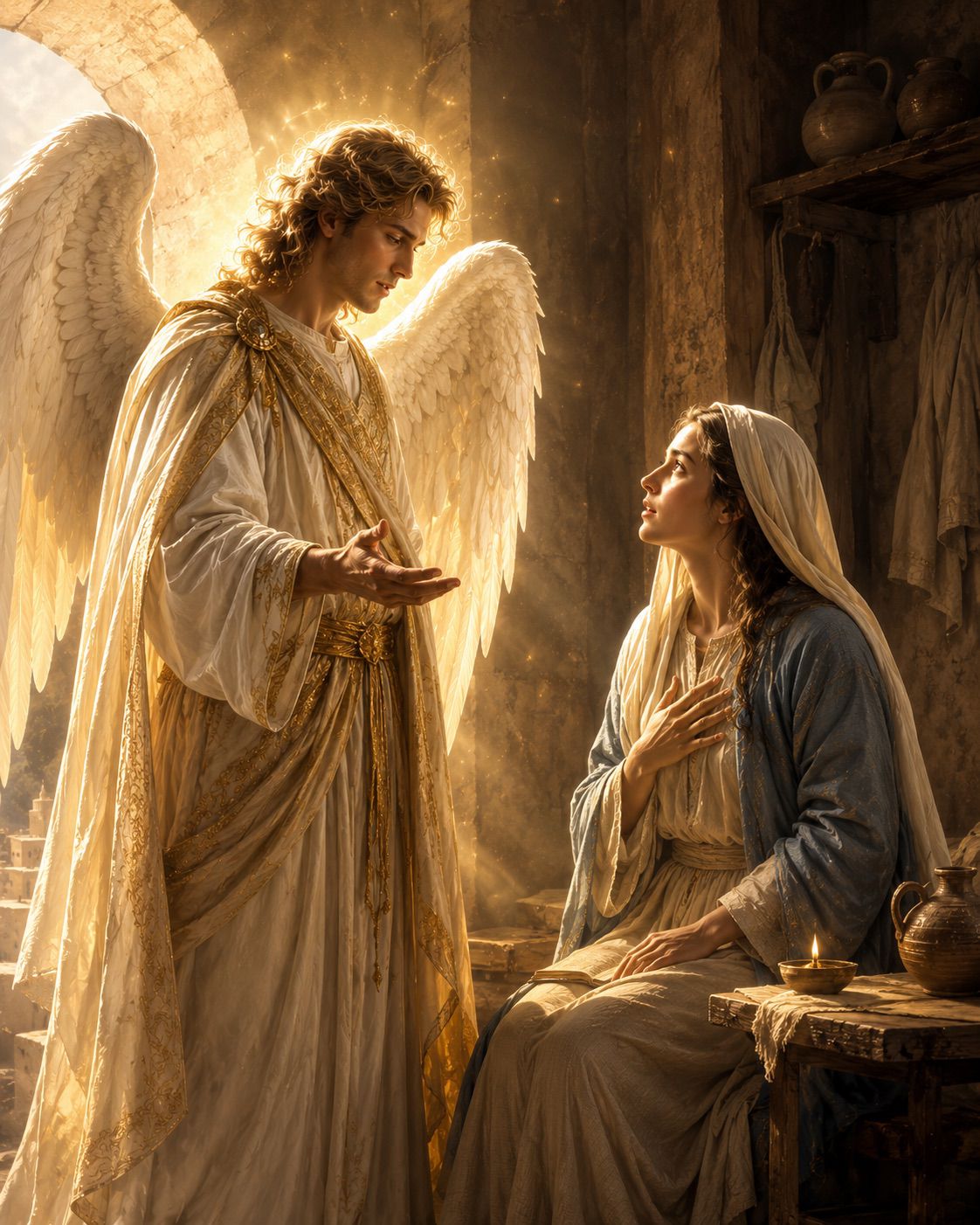
Archangel Gabriel stands among the most recognized and influential figures within religious and spiritual traditions throughout the world. Revered as the divine messenger, Gabriel serves as a bridge between heaven and humanity, delivering revelations, guidance, warnings, and messages of profound significance. Throughout centuries of religious history, Gabriel has occupied a unique position among the archangels, acting as the voice through which divine truth is communicated to mankind. Whether appearing in sacred texts, artistic masterpieces, theological writings, or spiritual traditions, Gabriel remains a powerful symbol of communication, revelation, wisdom, and divine purpose.
The name Gabriel originates from Hebrew and is commonly translated as “God is my strength” or “Strength of God.” This meaning reflects the essence of Gabriel’s mission. Unlike a warrior whose strength is demonstrated through battle, Gabriel’s strength lies in the power of truth, knowledge, and divine communication. His role reminds humanity that words have the power to transform lives, shape destinies, and alter the course of history. Through the messages he delivers, Gabriel serves as a conduit through which divine wisdom enters the human world.
Communication is one of the most important aspects of human existence. Every relationship, society, culture, and civilization depends upon the exchange of information and understanding. Miscommunication often leads to conflict, confusion, and misunderstanding, while clear communication fosters trust, cooperation, and growth. Gabriel’s role as the heavenly messenger highlights the sacred importance of communication itself. He represents not merely the delivery of information but the transmission of truth, purpose, and spiritual insight.
Throughout religious tradition, Gabriel frequently appears during moments of extraordinary significance. His messages are not casual conversations but pivotal revelations that often change the course of human history. One of the most famous examples occurs in the Gospel accounts of Christianity, where Gabriel appears to the Virgin Mary and announces that she will give birth to Jesus Christ. This event, known as the Annunciation, stands as one of the most important moments in Christian theology. Gabriel’s words initiated a chain of events that would profoundly influence billions of people across centuries.
The Annunciation illustrates several key aspects of Gabriel’s character. First, it demonstrates his role as a bearer of divine truth. Gabriel does not deliver his own opinions or desires; he serves as a faithful messenger conveying God’s will. Second, it highlights the courage often required to receive and accept transformative messages. Mary’s willingness to embrace Gabriel’s revelation despite uncertainty serves as a powerful example of faith and trust. Finally, the event reveals Gabriel’s compassionate nature. Although his message carried immense significance, he delivered it with reassurance and grace, helping Mary understand her role within a larger divine plan.
Gabriel’s importance extends far beyond Christianity. In Judaism, Gabriel is regarded as one of the principal archangels and frequently appears as a messenger and interpreter of divine visions. Jewish traditions often portray him as a guardian of truth and a defender of God’s purposes. His presence within Jewish theology predates Christianity and contributes significantly to his broader spiritual significance.
Within Islam, Gabriel, known as Jibril, occupies an especially prominent role. Islamic tradition teaches that Gabriel served as the angel responsible for delivering the revelations of the Quran to the Prophet Muhammad. Over a period of many years, Gabriel transmitted God’s words, which were ultimately compiled into Islam’s sacred scripture. This role places Gabriel at the very heart of Islamic faith and emphasizes his position as one of the most important angelic beings in religious history.
The presence of Gabriel across multiple major faith traditions is remarkable. Few spiritual figures enjoy such widespread recognition and reverence. His appearance within Judaism, Christianity, and Islam highlights universal themes that transcend individual religious boundaries. These themes include divine communication, guidance, truth, wisdom, and the transformative power of revelation. Gabriel’s enduring presence across cultures demonstrates humanity’s deep fascination with the possibility of receiving guidance from a higher source.
One of the most compelling aspects of Gabriel’s role involves revelation itself. Human beings have always sought answers to life’s deepest questions. Why are we here? What is our purpose? How should we live? What lies beyond the physical world? Throughout history, people have looked to prophets, spiritual leaders, philosophers, and sacred texts for insight into these mysteries. Gabriel represents the idea that divine wisdom can be communicated to humanity and that meaningful guidance is available to those who seek it.
Revelation often arrives during moments of uncertainty and transition. Individuals frequently encounter situations where the future appears unclear and important decisions must be made. During such times, guidance becomes especially valuable. Gabriel’s symbolism reminds people to remain open to insight, wisdom, and understanding. While not everyone expects a literal angelic visitation, many individuals seek moments of clarity that help illuminate the path ahead.
The concept of divine communication also carries symbolic significance. Even for those who view Gabriel as an archetype rather than a literal being, his role highlights the importance of listening. Modern life is filled with distractions, noise, and competing demands for attention. Genuine understanding often requires periods of stillness and reflection. Gabriel’s example encourages individuals to cultivate awareness, pay attention to intuition, and remain receptive to meaningful insights that may arise through prayer, meditation, contemplation, or life experience.
Many spiritual traditions associate Gabriel with creativity and inspiration. Communication is not limited to spoken words. Art, music, literature, and other forms of creative expression also serve as powerful vehicles for conveying truth and meaning. Gabriel’s influence is often invoked by writers, artists, musicians, teachers, and public speakers who seek inspiration and clarity in their work. His presence symbolizes the ability to communicate ideas effectively and to share messages that uplift, educate, and inspire others.
The symbolism commonly associated with Gabriel reflects his role as a messenger. He is frequently depicted holding a scroll, representing divine messages and sacred knowledge. Trumpets are another common symbol, particularly in Christian art and literature. The trumpet signifies the proclamation of important announcements and the awakening of awareness. These symbols reinforce Gabriel’s identity as a communicator of truth and revelation.
Light is another powerful symbol connected to Gabriel. Divine messages are often portrayed as bringing illumination to darkness, clarity to confusion, and understanding to uncertainty. Gabriel’s presence is frequently accompanied by radiant light, emphasizing the idea that truth has the power to illuminate the human mind and spirit. This symbolism resonates deeply because people naturally seek understanding when confronted with life’s mysteries and challenges.
Gabriel’s influence is not limited to grand historical events. Many believers view him as a source of personal guidance and encouragement. Individuals facing difficult decisions often pray for clarity and wisdom. Students preparing for important endeavors, professionals navigating significant challenges, and spiritual seekers pursuing deeper understanding may all feel drawn to Gabriel’s energy. His example reminds people that guidance is available and that wisdom can emerge through openness, reflection, and faith.
Compassion plays an important role in Gabriel’s character as well. Although he delivers messages of great importance, he is often portrayed as gentle, reassuring, and supportive. Receiving life-changing information can be overwhelming. Gabriel’s compassionate demeanor helps ease fear and uncertainty, allowing individuals to approach new circumstances with greater confidence and understanding. This aspect of his personality contributes to his widespread appeal as a source of comfort and encouragement.
The connection between Gabriel and purpose is particularly significant. Many of the messages attributed to Gabriel involve helping individuals understand their role within a larger plan. Whether speaking to prophets, saints, or ordinary people, Gabriel’s revelations frequently provide direction and meaning. This emphasis on purpose resonates because many individuals spend their lives searching for a sense of direction and fulfillment. Gabriel’s example encourages people to remain open to discovering their unique contributions and responsibilities.
Modern society continues to demonstrate the importance of communication. Advances in technology have created unprecedented opportunities for sharing information, yet they have also introduced new challenges. Misinformation, misunderstanding, and communication breakdowns remain common problems. Gabriel’s symbolism serves as a reminder that truth, integrity, and clarity remain essential. Effective communication requires not only the ability to speak but also the willingness to listen, understand, and convey information responsibly.
Psychologically, Gabriel can be viewed as representing the human capacity for insight and meaningful communication. People often experience moments of realization that transform their understanding of themselves or the world around them. These insights may arrive through reflection, conversation, education, or personal experience. Gabriel’s role as a messenger symbolizes the process by which new understanding enters consciousness and inspires growth.
Throughout history, artists have been captivated by Gabriel’s image. Paintings of the Annunciation rank among the most celebrated works in religious art. Sculptures, stained-glass windows, literature, and music have all drawn inspiration from his story. These artistic representations help preserve his legacy and communicate his message across generations. Through art, Gabriel continues to inspire wonder, reflection, and spiritual curiosity.
Gabriel’s influence can also be found in contemporary culture. Books, films, television programs, and various forms of media frequently reference him as a symbol of revelation and divine communication. While these portrayals often differ from traditional religious interpretations, they reflect the enduring fascination people have with the concept of receiving guidance from a higher source.
One of Gabriel’s most enduring lessons involves the transformative power of words. Throughout history, speeches, writings, and conversations have shaped societies, inspired movements, and changed lives. Words possess the ability to heal or harm, encourage or discourage, unite or divide. Gabriel’s role as a messenger reminds humanity of the responsibility that accompanies communication. Truthful, compassionate, and meaningful communication has the power to create positive change both individually and collectively.
The desire for guidance remains a universal aspect of human experience. People naturally seek direction when faced with uncertainty, confusion, or important decisions. Gabriel embodies the hope that wisdom is available and that meaningful answers can be found. Whether through prayer, contemplation, study, or personal reflection, individuals continue searching for insight into life’s challenges and opportunities.
Ultimately, Archangel Gabriel represents far more than a messenger. He embodies the principles of truth, communication, revelation, wisdom, and divine guidance. His presence reminds humanity that understanding is possible, that purpose can be discovered, and that meaningful communication has the power to transform lives. Through his example, people are encouraged to listen carefully, speak truthfully, and remain open to the insights that shape personal and spiritual growth.
Whether viewed as a literal heavenly messenger or as a powerful symbol of divine communication, Gabriel continues to inspire millions around the world. His story transcends religious boundaries because it speaks to universal human needs—the desire for understanding, guidance, purpose, and connection. Across centuries and cultures, his message remains remarkably consistent: truth has the power to illuminate, communication can bridge worlds, and wisdom is available to those willing to listen.
The enduring legacy of Archangel Gabriel lies in his role as a bearer of revelation and hope. In every generation, people face questions that require guidance and decisions that shape their futures. Gabriel’s example reminds them that they need not navigate these challenges alone. Through clarity, insight, and the faithful transmission of truth, he continues to serve as one of the most powerful symbols of divine communication and spiritual enlightenment in human history.