Latest Articles

The Birth of a National Symbol: Canada’s Maple Leaf Flag

Elias Rowen

On February 15, 1965, Canada officially raised its now-iconic red-and-white maple leaf flag for the first time, marking a historic moment in the nation’s identity. Before this, Canada had used variations of the British Red Ensign, which included the Union Jack, symbolizing its colonial ties to the United Kingdom. However, as Canada grew into a more independent and distinct nation, the need for a unique national flag became undeniable. The adoption of the maple leaf design was a bold step toward establishing a singular Canadian identity, one that would unite people from coast to coast under a common emblem.

The journey to a new flag was not without controversy. Prime Minister Lester B. Pearson, a strong advocate for change, faced significant opposition, especially from those who wanted to retain the Red Ensign. The debate raged in Parliament for months, with traditionalists fearing that removing the Union Jack would erase Canada’s British heritage. After extensive discussions, a design by George F. G. Stanley, featuring a simple red maple leaf flanked by two vertical red bars, was selected. Its clean, striking look resonated with Canadians and quickly became a beloved national icon.

The new flag’s symbolism was powerful. The maple leaf had long been associated with Canada, appearing on military insignia, coins, and patriotic imagery. Its adoption as the official flag solidified its status as the country’s defining emblem. The red and white colors, officially recognized as Canada’s national colors by King George V in 1921, further emphasized the country’s unity. When the flag was raised for the first time on Parliament Hill in Ottawa, it marked a new era—one in which Canada stood proudly as its own nation, distinct from its colonial past.

Today, the maple leaf flag is recognized worldwide as a symbol of Canada’s values: inclusivity, peace, and national pride. It flies over government buildings, schools, and homes, and it’s proudly displayed by Canadians traveling abroad. More than just a piece of fabric, it represents the country’s journey toward independence and unity. The adoption of the maple leaf flag was not just a change in design—it was a declaration of Canada’s identity on the world stage.

Related Posts

The Origins of Valentine’s Day: From Martyrs to Modern Romance

Dave

Valentine’s Day, celebrated every February 14, is widely recognized as a day of love, romance, and affection. However, its origins are deeply rooted in ancient history, blending mythology, religious traditions, and centuries-old customs. The holiday’s beginnings can be traced back to both Roman pagan festivals and early Christian martyrs, evolving over time into the modern celebration we know today.

One of the earliest influences on Valentine’s Day was the ancient Roman festival of Lupercalia, held in mid-February. This fertility festival was dedicated to Faunus, the Roman god of agriculture, and included rituals to ensure prosperity and purification. Young men would draw the names of women in a lottery, forming temporary romantic partnerships that sometimes led to marriage. As Christianity spread, the Church sought to replace pagan holidays with Christian ones, leading to the association of Lupercalia with the feast of St. Valentine.

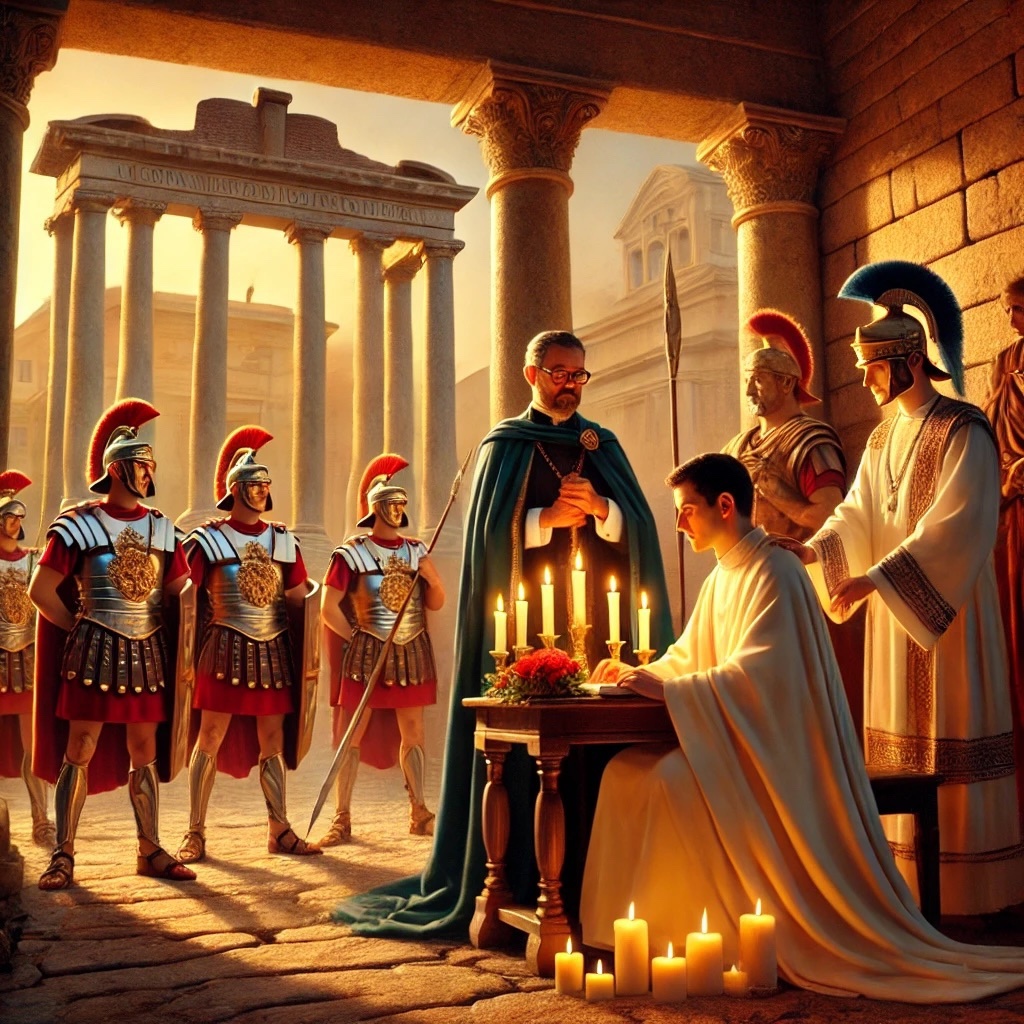
The name Valentine itself comes from multiple historical figures. The most well-known St. Valentine was a priest in 3rd-century Rome who defied Emperor Claudius II’s ban on marriages for young soldiers. Believing in love’s power, Valentine continued to perform secret marriages. When his actions were discovered, he was imprisoned and later executed on February 14 around the year 270 AD. According to legend, before his execution, he sent a letter to a young woman he had befriended, signing it “From your Valentine”, an expression still used today.

By the Middle Ages, St. Valentine had become the patron saint of lovers, and February 14 was associated with courtly love in Europe. The poet Geoffrey Chaucer played a significant role in romanticizing the day, writing about birds choosing their mates on “Valentine’s Day.” This idea caught on, and over time, people began exchanging love notes and tokens of affection.

By the 19th century, mass-produced Valentine’s cards became popular, thanks to advances in printing technology. In modern times, Valentine’s Day has evolved into a multi-billion-dollar industry, with chocolates, flowers, and heartfelt messages exchanged worldwide. Despite its commercialization, the holiday continues to celebrate love in all its forms, reminding us of the deep connections that bind us together.

Though the origins of Valentine’s Day are steeped in history, its true meaning endures: a celebration of love, devotion, and the timeless human desire to connect with one another.

Related Posts

How to Write the Cheesiest Love Poem Ever: A Guide to Sappy Romance

Dave

Writing the cheesiest love poem ever is an art form that combines humor, sweetness, and a little bit of cringe-worthy creativity. It’s not about being profound or poetic in the traditional sense, but rather embracing the over-the-top, syrupy sweetness that makes love poems unforgettable—for better or for worse. To craft the ultimate cheesy love poem, start by using exaggerated metaphors and similes. Compare your lover to the sun, the moon, and the stars—basically anything that shines brightly. You might say, “Your eyes are like the twinkling stars in a midnight sky,” or “Your smile is brighter than a thousand fireworks.” These grandiose comparisons set the tone for an out-of-this-world level of affection.

Next, sprinkle in some wordplay, but don’t be subtle about it. If you’re feeling especially cheesy, use puns like, “You’re the gouda to my macaroni” or “I’m nacho average lover.” Yes, it’s corny, but it’s also undeniably charming. Don’t forget to employ overly dramatic expressions of devotion, like “I would swim the deepest oceans” or “I would climb the highest mountains,” even if you’re only writing from your cozy couch.

And let’s not overlook the importance of rhyming. While a traditional poem may use sophisticated rhyme schemes, in the world of cheesy love poetry, the simpler, the better. Pair rhyming words like “heart” and “part,” or “forever” and “endeavor,” even if they don’t perfectly match. The charm comes from their predictability and simplicity. Add some overly romantic phrases like “My love for you will never end” and “You complete me” to really seal the deal.

Finally, consider ending your poem with a flourish. You can’t go wrong with an emotional, but clichéd conclusion like “I love you more than words can say,” or “You are my one and only forever and always.” It might make you roll your eyes, but that’s the beauty of it—the cheesier, the better.

When you write the cheesiest love poem ever, remember that it’s all about having fun and not taking yourself too seriously. The goal is to spread joy, laughter, and love with a hefty dose of silliness. So, go ahead, embrace the cheese, and write your heart out—your lover is bound to appreciate the effort and the giggles.

Related Posts

The Tragic Fall of Catherine Howard: A Queen’s Fatal Mistake

Elias Rowen

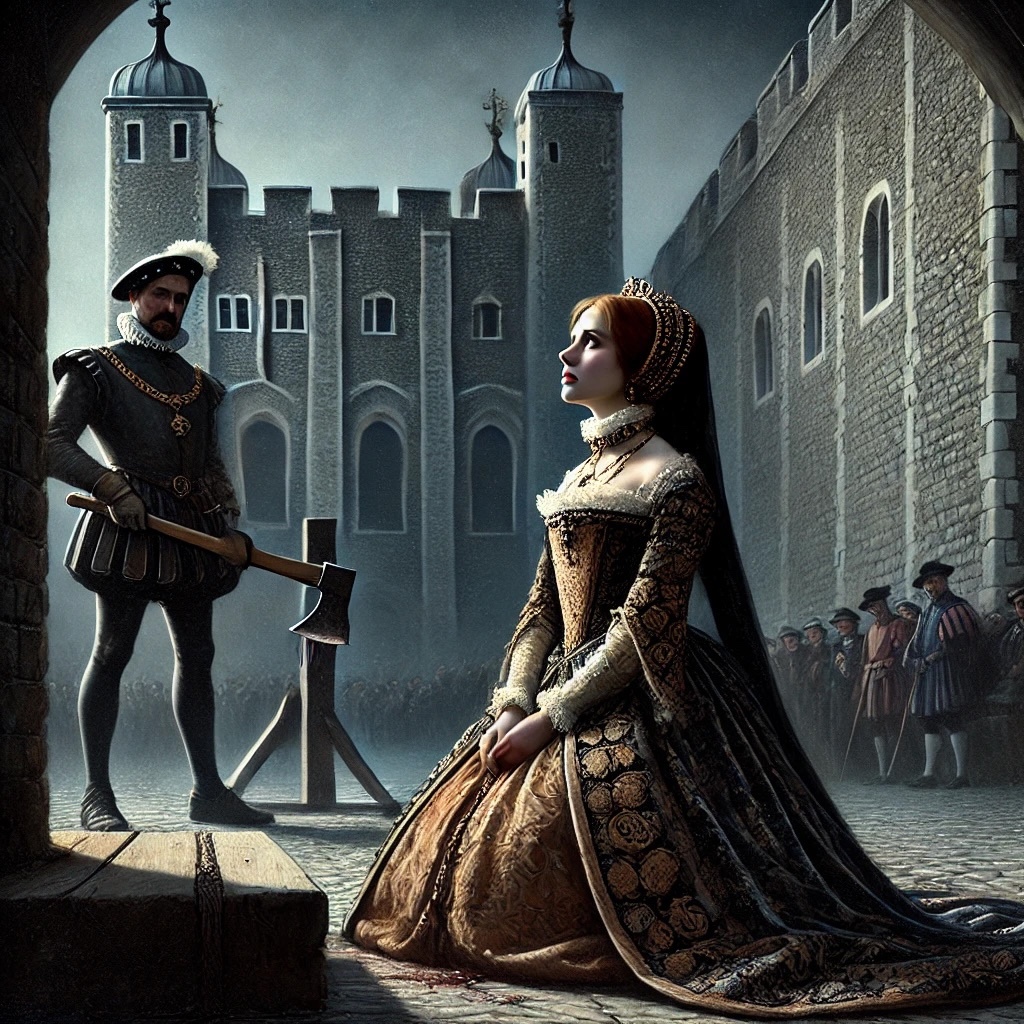
1542 marked the grim end of Catherine Howard, the fifth wife of King Henry VIII, whose fate mirrored the merciless nature of the Tudor court. At just around eighteen or nineteen years old, Catherine’s brief tenure as queen ended in tragedy when she was executed at the Tower of London for alleged adultery. Her downfall was swift, her legacy forever tied to the brutal consequences of royal scandal.

Catherine Howard’s rise to the throne was meteoric. A cousin of the ill-fated Anne Boleyn, she was young, charming, and spirited—qualities that captivated the aging and increasingly paranoid Henry VIII. Their marriage in 1540 initially reinvigorated the king, who viewed Catherine as a refreshing contrast to his previous wife, Anne of Cleves. However, whispers of her past relationships, particularly with her former music tutor Henry Mannox and courtier Francis Dereham, cast an ominous shadow over her position as queen. When she reportedly engaged in secret liaisons with Thomas Culpeper, a favored courtier of Henry, her fate was sealed.

The revelation of Catherine’s indiscretions sent shockwaves through the court. Henry VIII, already infamous for his merciless treatment of wives who failed to meet his expectations, reacted with characteristic fury. Catherine was arrested, stripped of her title, and imprisoned in the Tower of London. On February 13, 1542, she was led to the execution block, where she reportedly proclaimed, “I die a queen, but I would rather have died the wife of Culpeper.” With a single stroke of the executioner’s axe, her life ended, reinforcing Henry’s unrelenting grip on his court.

Catherine Howard’s tragic story serves as a cautionary tale of the perils of the Tudor court, where even queens were not immune to the king’s wrath. Her brief reign and dramatic downfall highlight the dangers of navigating royal power, where a single misstep could mean the difference between a crown and the cold touch of the executioner’s blade. Today, she is remembered as one of history’s most ill-fated queens, a symbol of youthful indiscretion met with ruthless punishment.

Related Posts

Galileo’s Trial: The Battle Between Science and Dogma

Elias Rowen

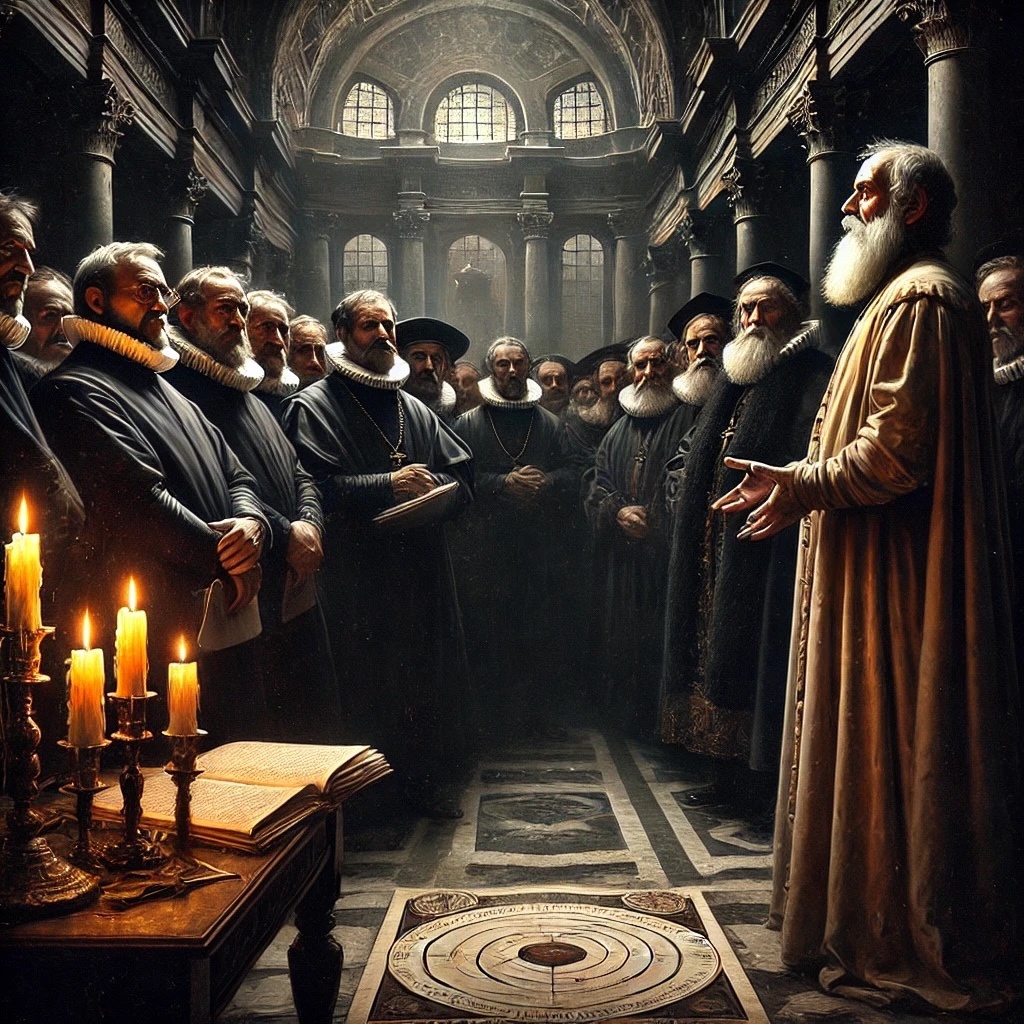
In February 1633, the brilliant astronomer Galileo Galilei arrived in Rome to face the Roman Catholic Inquisition. His crime? Supporting the radical idea that the Earth revolved around the Sun. At the time, this heliocentric theory, originally proposed by Copernicus, directly contradicted the Church’s long-held belief in a geocentric universe. What should have been a triumph of scientific discovery instead became one of the most infamous trials in history, highlighting the dangerous clash between faith and reason.

Galileo had spent years observing the heavens with his telescope, gathering evidence that supported the heliocentric model. His discoveries, including the moons of Jupiter and the phases of Venus, provided undeniable proof that Earth was not the center of the universe. However, the Church saw his work as a direct challenge to biblical scripture and its authority. In 1616, he had been warned to abandon his teachings, but his 1632 publication, Dialogue Concerning the Two Chief World Systems, reignited the controversy. The book’s arguments were too compelling—and too dangerous—for the Church to ignore.

Summoned to Rome, Galileo faced a grueling inquisition. Under the threat of torture, the 70-year-old scientist was forced to recant his findings. Legend has it that after his confession, he muttered, “E pur si muove”—”And yet it moves”—a defiant whisper affirming the truth of his discoveries. Though he was spared execution, Galileo spent the rest of his life under house arrest, his groundbreaking work stifled by religious authority.

Galileo’s trial was a defining moment in history, symbolizing the struggle between scientific progress and institutional dogma. Despite his persecution, his ideas endured, eventually leading to the widespread acceptance of the heliocentric model. Today, he is celebrated as a pioneer of modern science, a man who dared to challenge the status quo in pursuit of truth. His legacy reminds us of the importance of free thought and the relentless pursuit of knowledge.

Related Posts