Latest Articles

From Buckets to Masterpieces: Building the Ultimate Sandcastle

Dave

There is something timeless and universal about building a sandcastle. No matter where you grew up or how old you are, the urge to dig your hands into wet sand, scoop it into a bucket, and flip it upside down into a perfect little tower never quite leaves you. On beaches all over the world, castles rise with the tide, only to be washed away later, reminding us that some of the best creations in life are fleeting. But somewhere between those simple childhood piles and the jaw-dropping professional sand sculptures you see at festivals lies the dream of every beachgoer: building the ultimate sandcastle. Not just a lopsided tower or a moat that collapses, but something that feels like art, a fortress that stands proud against the breeze, a creation that makes people walking by stop in their tracks and say, “Wow, look at that.”

The beauty of building sandcastles is that the materials couldn’t be simpler. Sand, water, a few tools, and your imagination. Yet anyone who has ever tried to stack sand too dry or pile it too wet knows it’s not as easy as it looks. The secret is in the mixture: the perfect ratio of sand to water, something close to the consistency of cookie dough. Too dry and it crumbles; too wet and it slumps. Master sand builders know this instinctively, carrying buckets back and forth to the ocean, mixing until the grains hold together in a compact clump that you can carve without collapse. It’s a small act of alchemy, turning grains of crushed rock into something that feels as alive as clay.

But the ultimate sandcastle isn’t just about sturdy walls—it’s about imagination unleashed. Maybe your dream castle looks like a medieval fortress, with turrets and moats and drawbridges. Maybe it’s a fairy-tale palace, delicate spires rising like a dream out of the beach. Maybe it’s something modern, sculpted and abstract, an art installation disguised as play. Each design carries its own personality, and that’s part of the joy. Sand doesn’t cost a thing, and it doesn’t carry risk, so you are free to experiment, to try wild ideas you’d never attempt with brick or wood or stone. With sand, mistakes wash away, and every new tide brings a blank canvas.

Tools elevate the game. Buckets and shovels are classics, but straws, spatulas, spoons, and even old credit cards or butter knives become chisels for detail. With the right touch, you can carve windows, stairs, battlements, and tiny seashell decorations that transform a pile into a story. Some castle-builders bring spray bottles to keep the surface damp, others pack large forms to mold arches or towers. But even with nothing more than your hands, magic is possible. The human urge to build is primal, and in sandcastle-making, it collides with childlike joy.

Every great sandcastle has a story. Maybe it’s the castle a father built with his kids one summer, walls so high they almost reached their waists, complete with a moat that kept filling with ocean water as if defending it from an invisible army. Maybe it’s the castle two strangers collaborated on, wordlessly sharing tools and ideas until they built something together that neither could have done alone. Maybe it’s the castle that became a magnet for kids passing by, each adding a little tower or shell until it turned into a community project. These castles are more than structures—they are experiences woven into memory, lessons in teamwork, patience, creativity, and joy.

Professional sand sculptors take this to another level. At festivals from Texas to Portugal, artists carve dragons, pyramids, life-size faces, and towering cathedrals from nothing more than sand and water. These works can reach 15 feet high and last for days, defying the fragility we usually associate with sand. They remind us of the ultimate potential hidden in ordinary grains, the way imagination and technique can turn even the most temporary material into jaw-dropping beauty. But the ultimate sandcastle for the rest of us doesn’t have to rival these feats. It just has to feel like something we poured our hearts into, something that, for a few hours, stood as proof of joy and creativity on the shore.

What makes building sandcastles so viral, so memorable, is how it connects us across generations. Children, teens, adults, even grandparents all gather around the same pile of sand with equal wonder. It’s one of the few activities that doesn’t require skill to start but offers infinite levels to master. Everyone can play, everyone can contribute, everyone can marvel. The castle you build with your kids today might become the memory they tell their kids tomorrow. The castle you build alone might become the one thing that finally made you slow down and breathe deeply after months of stress. The act itself is grounding, almost meditative. Each scoop, each pat, each carved line brings you deeper into presence, tethered to the earth and the sea in the most playful way.

Of course, every sandcastle eventually falls. The tide creeps in, the waves lap at the moat, the walls weaken and slump, the turrets collapse into mush. And yet, rather than being depressing, it’s beautiful. It’s a reminder of impermanence, of the fleeting nature of joy, and of the value of creating not because something will last forever but because it mattered in the moment. Sandcastles teach us that beauty can be temporary and still worthwhile. That joy doesn’t have to be permanent to be real. That sometimes, the act of building is enough, regardless of what survives.

So what does the ultimate sandcastle look like? It’s less about the perfect spires or the straightest walls and more about the feeling it creates. It’s the castle that makes kids laugh when they jump in the moat. It’s the castle that strangers stop to admire, sparking conversations with people you’ve never met. It’s the castle that holds shells like treasure chests and leaves behind a story even when the waves carry it away. It’s the castle that lives in photos, in sunburned shoulders, in salty smiles.

In the end, building the ultimate sandcastle isn’t just a beach activity. It’s a metaphor. It’s about making time for play, about embracing imperfection, about collaborating, about enjoying the process as much as the result. It’s about knowing that some of the best things in life won’t last forever but will feel extraordinary while they do. And when you walk away at sunset, brushing sand off your hands and feet, you’ll know the truth: the real castle you built wasn’t in the sand—it was in your memory, your laughter, your heart.

Related Posts

A More Perfect Union: The Day the U.S. Constitution Was Signed

Elias Rowen

On September 17, 1787, in a stuffy room in Philadelphia’s State House, a group of weary delegates affixed their signatures to a document that would alter the trajectory of human history. That document was the United States Constitution. For four long months, the men gathered there — farmers and lawyers, merchants and generals, revolutionaries and statesmen — had debated, argued, compromised, and despaired. They had wrestled with questions of power and liberty, of unity and division, of ambition and restraint. And at last, after a summer of sweat and frustration, they put their quills to parchment and created what they called “a more perfect union.” At the time, few could have grasped the magnitude of what they had done. But the Constitution, fragile yet powerful, incomplete yet visionary, would go on to shape not only a nation but the modern idea of self-government itself. The day it was signed was not merely the end of a convention. It was the beginning of an experiment still unfolding.

The backdrop to that day was anything but orderly. The United States in 1787 was a fragile confederation, held together loosely under the Articles of Confederation. The Articles had been written in the midst of revolution, when the colonies were more concerned about defeating Britain than about governing themselves. They deliberately created a weak central government, leaving most power to the states. But in the years after independence, it became clear that such weakness was unsustainable. The nation was drowning in debt, its currency unstable, its trade fractured by competing state laws. Shays’ Rebellion, an uprising of indebted farmers in Massachusetts, had shaken the country’s elites, convincing them that something stronger was needed to preserve order and liberty alike. The Constitutional Convention was summoned in Philadelphia with the stated aim of revising the Articles. But once assembled, the delegates decided instead to scrap them and craft an entirely new framework.

The convention that followed was messy, contentious, and at times perilously close to collapse. Delegates argued over representation, with small states fearing domination by larger ones. They argued over slavery, with southern delegates insisting on protections for their “peculiar institution” while others squirmed at the hypocrisy of a republic founded on liberty that sanctioned bondage. They argued over the powers of the executive, wary of creating a new king even as they acknowledged the need for an energetic leader. They argued over the judiciary, the legislature, taxation, trade, and the very nature of sovereignty. Tempers flared, alliances shifted, and more than once it seemed the effort would dissolve into failure.

And yet, through compromise, they forged something enduring. The Great Compromise resolved the battle over representation by creating a bicameral legislature: a House of Representatives based on population, and a Senate with equal votes for each state. The Three-Fifths Compromise, grim and shameful in hindsight, counted enslaved people as three-fifths of a person for purposes of representation and taxation — a concession to slavery that would haunt the nation for generations. They created a presidency with limited but significant powers, constrained by checks and balances. They created a judiciary to interpret the law and ensure that neither Congress nor the President could become too powerful. They created a federal system, balancing power between the national government and the states. And they wrote into the Constitution the principle of amendment, recognizing that the document itself would need to grow and adapt with time. What emerged was not perfect — indeed, it was riddled with compromise and contradiction — but it was, in their words, more perfect than what had come before.

On September 17, the final draft was presented for signing. Some refused. George Mason, Edmund Randolph, and Elbridge Gerry withheld their signatures, unwilling to endorse a Constitution that lacked a bill of rights or that gave too much power to the central government. But thirty-nine men signed, led by the commanding presence of George Washington, whose support lent the entire project credibility. Benjamin Franklin, now in his eighties and so frail he had to be carried into the hall, urged unanimity. In one of the most famous anecdotes of the day, Franklin pointed to a carved sun on the back of Washington’s chair and remarked that throughout the summer he had wondered whether it was a rising sun or a setting one. “Now,” he said, “I have the happiness to know it is a rising and not a setting sun.” His words captured the fragile optimism of that moment: a belief that they had created not perfection, but possibility.

The Constitution left Philadelphia uncertain of its fate. It still had to be ratified by the states, and fierce debates lay ahead. Federalists and Anti-Federalists would battle over its meaning, over the absence of a bill of rights, over fears of centralized tyranny. But the signing was the first step, and in hindsight, it was momentous. For the first time in history, a large republic attempted to govern itself not by monarchy or by accident, but by deliberate design. The Constitution was not a charter of perfection, but a framework of balance — ambition checking ambition, power constrained by power, liberty preserved not by chance but by structure. It was, as James Madison put it, “the greatest of all reflections on human nature.”

The legacy of September 17, 1787, is profound because it was both particular and universal. It was the product of specific men, in a specific place, at a specific time. And yet it spoke to ideas that transcended them: that people could govern themselves, that power could be divided and limited, that government could be both strong and free. The Constitution was flawed — it sanctioned slavery, excluded women, ignored Native peoples, and reflected the biases of its age. But it also contained within it the seeds of its own improvement. The amendment process would add the Bill of Rights, abolish slavery, extend voting rights, and continue the project of creating a more inclusive union. The brilliance of the Constitution was not that it solved every problem, but that it created a structure in which problems could be confronted and progress could be made.

That is why we still remember September 17. Not because the men in Philadelphia were infallible, but because they dared to attempt something unprecedented. They chose to believe that humans, flawed as they are, could craft institutions to govern themselves without kings or tyrants. They chose to believe that compromise, though messy, was stronger than division. They chose to believe that the sun could rise on a new experiment in liberty. And they signed their names to that belief, knowing that the real test lay ahead.

The Constitution they signed has endured for over two centuries, through wars, crises, and transformations they could scarcely imagine. It has been amended, interpreted, contested, and stretched. It has been used to justify injustice and to advance justice. It has been a tool of exclusion and of inclusion. It is not a sacred relic, but a living framework — one that reflects both the best and the worst of the American story. Yet its endurance is itself remarkable. Few documents in history have shaped so many lives, across so many generations, for so long.

On September 17, 1787, the United States Constitution was signed into being. That act did not end conflict, did not guarantee peace, did not resolve the contradictions of liberty and slavery, equality and hierarchy, unity and division. But it created a structure in which those conflicts could be fought, debated, and, sometimes, resolved. It created a republic that could endure. And for all its flaws, it remains one of humanity’s boldest experiments in self-government. That is why the signing of the Constitution is remembered as the day America gave itself not a perfect union, but a chance to become one.

Related Posts

Sandy Toes, Salty Hair, Zero Worries: The Ultimate Girls’ Beach Weekend Checklist

Dave

There is something magical about planning a girls’ beach weekend, a kind of excitement that feels like being seventeen again, when the promise of salt air and laughter was enough to carry you through the week. A beach trip with your closest friends isn’t just a getaway—it’s an event, an escape from deadlines and drama, an excuse to pack the cutest outfits you own, and an opportunity to recharge together in the sunshine. Unlike a solo trip or a romantic vacation, a girls’ beach weekend is powered by collective energy, the anticipation of shared playlists, matching swimsuits, endless snacks, and conversations that drift from silly to soul-baring under umbrellas by the sea. But pulling it off seamlessly takes more than just tossing a bikini into a bag and calling it a day. The ultimate girls’ beach weekend checklist isn’t just about what to pack—it’s about how to create an atmosphere of joy, ease, and connection where every detail has been thought of and no one is left wishing they’d remembered something essential.

Let’s start with the obvious: swimwear. A girls’ beach weekend calls for options, because moods shift like tides. One day it’s the bold bikini moment for photos, the next it’s the comfortable one-piece for water volleyball, and maybe even a matching set you all agreed on just for fun. Add in cover-ups—flowy kaftans, sarongs, oversized shirts—and you’ve got instant versatility for beach-to-bar transitions. Sunglasses are non-negotiable, but the trick is having a pair that looks good in group selfies while actually protecting your eyes. And of course, wide-brimmed hats, bucket hats, or visors—whatever your vibe—because sun protection can absolutely be chic.

Now for the unsung heroes: skincare and sunscreen. Nothing kills the vibe faster than a sunburn, so this section of the checklist deserves reverence. Pack reef-safe sunscreen with SPF 30 or higher, but bring multiple kinds—spray for quick reapplication, lotion for thorough coverage, and tinted SPF moisturizers for the friend who refuses to go bare-faced. Aloe vera gel is a must for soothing, even if you’re careful, and hydrating face masks turn an evening wind-down into a mini spa night. Toss in lip balm with SPF, because chapped, sunburnt lips are an avoidable tragedy. The beauty of traveling with friends is that someone always has the product you forgot, but the checklist ensures that everything important makes it into at least one bag.

The snack and drink game is where true legends are made. Sure, you could rely on boardwalk food, but half the fun of a girls’ trip is the shared picnic spread. Think fruit that travels well—grapes, clementines, apple slices—plus crackers, cheese, hummus, and pretzels. Granola bars or protein bites keep energy steady between swims, while popcorn and trail mix satisfy those grazing cravings. Drinks should be equally thoughtful: plenty of water bottles (bonus points for cute reusable ones), sparkling water for the fizzy lovers, and pre-mixed cocktails or wine spritzers packed in a cooler for when the sun starts setting. Don’t forget a corkscrew—it sounds trivial until you’re trying to open a bottle with car keys.

Then there are the little luxuries that elevate a beach trip from fun to unforgettable. A waterproof Bluetooth speaker is practically a requirement, because no girls’ weekend is complete without a curated playlist blasting everything from nostalgic throwbacks to guilty-pleasure anthems. A big beach blanket or a set of matching towels not only looks great for group photos but also saves everyone from sand wars. Portable chargers keep phones alive for capturing every moment, and a disposable film camera or Polaroid instantly transforms memories into keepsakes. Games—cards, beach paddles, or even just a ball—bring laughter when the sun gets too hot and everyone needs a break from tanning.

Outfits for off-beach hours often get overlooked, but they matter. Nights out on a girls’ beach weekend are their own kind of magic—hair still salty from the ocean, skin glowing, laughter spilling out as you walk to dinner. Pack sundresses that slip on easily, sandals that work on sand and city streets, and one or two elevated pieces if the night calls for dancing. Lightweight sweaters or denim jackets are perfect for bonfire nights, when the air cools but no one wants to go inside.

Of course, a beach checklist wouldn’t be complete without practical items that seem boring until you need them: hair ties, bobby pins, and scrunchies for taming windblown hair. A mini first aid kit with band-aids for unexpected blisters or coral scrapes. Ziplock bags for wet swimsuits, and totes that double as both beach bags and shopping carriers. Even baby powder, a random but genius hack, makes brushing sand off legs effortless before heading back to the hotel. These little things are what make you feel smugly prepared while other groups are scrambling.

Perhaps the most important part of a girls’ beach weekend checklist isn’t even tangible—it’s the intention behind it. This trip isn’t about perfection; it’s about presence. It’s about showing up with your friends, letting the sun and sea dissolve the stress you’ve been carrying, and making space for laughter that feels like medicine. It’s about creating rituals—sunscreen circles where everyone helps each other, snack time that turns into storytelling, dance breaks that erupt out of nowhere. These are the details that make a beach weekend unforgettable.

The best part? The checklist is really a framework, not a rulebook. Each group customizes it—some lean into glam with coordinated outfits and styled beach hair, others lean into pure chaos with mismatched towels and snacks spilling out of grocery bags. Both are perfect, because the point is never about getting everything right. The point is making memories, ones that come back years later when you find sand in the pocket of a bag or scroll through photos of sunsets framed by your friends’ silhouettes.

The ultimate girls’ beach weekend checklist is not just about stuff—it’s about the moments those items unlock. The speaker blasting your anthem as you run into the waves. The snacks that fuel your endless conversations. The Polaroids that capture laughter in a way iPhones never quite do. The aloe vera that saves you from misery so you can laugh about the sunburn scare instead of crying through it. The tote bags overflowing with everything you thought you’d never use but ended up needing. Every item, every detail, every laugh—it all adds up to a trip that becomes part of your shared story.

At the end of the day, what makes a girls’ beach weekend magical isn’t the beach itself but the people on the towels beside you. The checklist is just your way of making sure nothing gets in the way of joy. Because when the sun sets, when the sky glows pink and the tide creeps closer, when you’re sitting in the sand with your best friends and the music still plays softly, what you’ll remember isn’t how perfect your packing list was. You’ll remember how free you felt, how close you were, how the ocean seemed to echo your laughter. That’s the magic of a girls’ beach weekend, and with the ultimate checklist, you make sure you have everything you need to let it unfold perfectly imperfect.

Related Posts

Setting Sail for a New World: The Mayflower’s Voyage That Changed History

Elias Rowen

On September 16, 1620, a small wooden ship slipped away from the port of Plymouth in southern England and set its bow toward the unknown. The vessel was called the Mayflower, a merchant ship never designed for the burden of history it would soon carry, and aboard were just over one hundred passengers — men, women, and children — bound for a land across the ocean that most of them had never seen. They were not adventurers in the romantic sense, nor conquerors with armies at their back. Many were Separatists seeking religious freedom, others were entrepreneurs and laborers chasing economic opportunity, and some were simply caught up in the momentum of the voyage. But together, they embarked on a journey that would become one of the foundational myths of America, shaping the story of a nation that would rise from the struggles, survival, and contradictions of that crossing. The day the Mayflower departed was not just the beginning of a voyage. It was the beginning of an idea.

The decision to leave England was not taken lightly. For the Separatists, who would later be remembered as Pilgrims, life in England had become intolerable under the religious conformity demanded by King James I. Some had fled earlier to the Netherlands, where greater religious tolerance existed, but economic hardship and fear of losing their cultural identity pushed them to seek a more permanent solution. The New World — vast, mysterious, and dangerous — offered both risk and possibility. Backed by financial investors in London who sought profit from colonial ventures, the group secured passage on two ships, the Speedwell and the Mayflower. But fate intervened early. The Speedwell proved unseaworthy, leaking badly, and was forced to turn back. In the end, only the Mayflower would carry them forward, overcrowded and laden with the dreams and fears of those aboard.

The Mayflower itself was not a grand ship. At about 100 feet in length, it was meant for cargo, not passengers. The voyage would be harsh and claustrophobic, with people crammed into tight quarters below deck, enduring seasickness, foul smells, and the constant roll of the Atlantic. Food supplies were limited, fresh water scarce, and storms frequent. For over two months, the passengers lived in damp, dark conditions, buffeted by winds and waves. The Atlantic in autumn was no gentle crossing. Gales tested the ship’s timbers, and at one point, the main beam cracked, threatening to end the voyage. Yet the passengers and crew pressed on, driven by faith, necessity, or sheer stubbornness.

What made the Mayflower voyage significant was not only the journey itself, but the moment it represented in history. These were not the first Europeans to cross the Atlantic, nor the first to attempt colonization. Spanish, Portuguese, Dutch, and French ventures had already spread across the Americas. Even the English had planted settlements in Virginia, most famously at Jamestown. But the Mayflower’s passengers were different in purpose and story. They were families, not soldiers. They sought permanence, not just profit. They envisioned a community, however fragile, where they could worship freely and live according to their own convictions. That dream, however imperfect, became enshrined in the mythology of the voyage.

One of the most enduring legacies of the Mayflower was the Mayflower Compact, signed aboard the ship before the passengers disembarked. This short agreement, crafted because the ship had landed north of its intended destination in Virginia and outside the authority of its charter, established a form of self-governance. The signers pledged to create “just and equal laws” for the good of the colony, and to abide by them collectively. Though simple, the compact planted seeds of democratic governance that would echo through American history. It was born not of lofty ideology, but of necessity — a recognition that survival in a harsh and foreign land required unity and cooperation. Yet in that practicality lay the roots of something profound: the idea that government derives its power from the consent of the governed.

The Mayflower finally reached the coast of Cape Cod in November 1620, after more than 60 grueling days at sea. The landfall was not greeted with triumph, but with exhaustion and uncertainty. Winter was approaching, supplies were dwindling, and the passengers were weakened by sickness. Their arrival was far from the promised paradise. It was a harsh, frozen wilderness. The months that followed would be brutal. Nearly half of the passengers and crew would die that first winter from disease, hunger, and exposure. Yet those who survived endured, thanks in part to the assistance of Indigenous peoples such as the Wampanoag, who shared knowledge of agriculture and survival. The relationship between the settlers and Native Americans would grow complicated and tragic in the decades that followed, marked by cooperation but also by mistrust, violence, and dispossession. The Mayflower story, in this sense, is not only a tale of courage and faith, but also a story of collision between worlds — one of resilience and hope, but also of loss and conflict.

Looking back, the departure of the Mayflower feels like the opening scene of a much larger drama. In the moment, it was a gamble, taken by ordinary people under extraordinary circumstances. They could not have imagined that their voyage would become enshrined in history books, celebrated in school plays, and mythologized in national identity. They could not have foreseen that the story of their small ship would be invoked centuries later as a symbol of freedom, perseverance, and the American dream. Yet they also could not have foreseen how their arrival would mark the beginning of profound disruptions for the Indigenous peoples who had lived on the continent for thousands of years. The Mayflower’s departure is remembered as a beginning, but every beginning is also an ending for someone else.

The mythology of the Mayflower endures because it speaks to universal themes. It is the story of leaving behind the familiar in search of something better. It is the story of faith and survival against overwhelming odds. It is the story of people daring to imagine a future not given to them, but carved by their own hands. And it is also a story that forces us to wrestle with complexity — the bravery of the Pilgrims alongside the suffering their arrival brought to others. To tell the Mayflower story honestly is to hold both truths together, to acknowledge both the hope it inspired and the consequences it carried.

On September 16, 1620, as the Mayflower departed Plymouth Harbor, its passengers could not have known the weight of their voyage. To them, it was simply a chance to begin again, to escape old constraints and test their fate on new shores. But history would turn their departure into legend. The small ship and its weary passengers would become a symbol of beginnings, a reminder that even the most ordinary of journeys can change the course of nations. When the Mayflower’s sails filled with wind that autumn morning, the world shifted — quietly at first, but profoundly, forever.

Related Posts

Keep It Cool: The Ultimate Guide to Portable Snacks That Won’t Melt

Dave

There’s an art to snacking, especially when life doesn’t give you the luxury of refrigeration. Anyone who has ever unwrapped what was supposed to be a delicious chocolate bar only to find a sticky puddle knows the heartbreak of snack failure. The truth is, not all foods are built for travel. Sunshine, backpacks, car rides, long walks, beach trips, and hikes test the endurance of whatever you pack, and some snacks simply crumble under the pressure—literally and figuratively. But there’s a world of options out there for those who want to keep hunger at bay without dealing with melted messes or soggy regrets. Portable snacks that won’t melt aren’t just a convenience; they’re a survival skill, a sanity saver, and in some cases, the difference between a joyful day out and a cranky crash caused by hunger pangs and sticky fingers.

The first rule of non-melting snacks is simple: think resilience. Fruits and veggies, nature’s most portable options, often get overlooked because they seem too simple, but the truth is, they’re champions when it comes to durability. Apples, for instance, can roll around in your bag all day without giving up. Carrot sticks never sweat under pressure, and grapes, when packed right, stay cool and crisp even in a warm setting. Dried fruit is even better, offering all the flavor without the risk of spoilage. Dried mango, chewy apricots, raisins, or even freeze-dried strawberries deliver sweetness with no melting, no sticky wrappers, and no mess. Nature got it right, and often, the simplest options are the best.

For those who crave something more indulgent, nuts and seeds step in as the heroes of snack time. Almonds, cashews, walnuts, sunflower seeds, and pumpkin seeds are not only melt-proof but also nutrient-dense, providing protein and healthy fats that keep energy levels steady. They’re the kind of snack that feels substantial, giving you that satisfying crunch while fitting neatly into a small container or resealable bag. Add in some dried cranberries or banana chips for a homemade trail mix, and suddenly you’ve got a snack that’s both practical and delicious. Best of all, trail mix doesn’t ask for refrigeration, doesn’t complain about heat, and never fails to deliver—unless, of course, you add chocolate chips that turn into tiny, smeared disasters on a hot day.

Granola bars and energy bites also belong in the no-melt hall of fame, though it’s worth choosing wisely. Bars with a heavy chocolate coating are likely to soften, but oat-based or nut-butter-based bars without chocolate drizzles hold strong in almost any climate. Better yet, DIY energy bites made with oats, nut butter, honey, and seeds not only keep their shape but also taste like little bursts of power you can pop anytime. Wrap them in parchment or tuck them into a container, and they’ll outlast the sunniest picnic. Some brands even specialize in melt-resistant bars, designed specifically for outdoor adventures, ensuring that what you pull out of your bag tastes as good as when you packed it.

Crackers and rice cakes are another underrated snack that laughs in the face of heat. They don’t melt, don’t wilt, and stay crispy when stored in a sealed bag. Add a small container of nut butter or hummus if you’re able to keep it cool, but even plain, they provide a satisfying crunch that pairs well with cheese sticks (if you’ve got a cooler) or dried fruit. Whole grain crackers also provide slow-release energy, making them a smarter option than chips for those long days outside. If you want to get creative, pack flavored rice cakes—apple cinnamon, caramel, or cheddar—for a touch of variety without sacrificing durability.

Then there’s the snack that has been around since childhood lunchboxes: jerky. Beef jerky, turkey jerky, even plant-based jerkies made from mushrooms or soy are all fantastic non-melting, protein-packed options. Jerky is built for endurance, designed to withstand travel and time. It’s savory, satisfying, and endlessly portable. A couple of strips can tide you over for hours, making it an ideal companion for road trips, hikes, or long days at the beach. Unlike snacks heavy with sugar, jerky sustains energy without causing a crash, and it doesn’t mind a little heat along the way.

If sweet snacks are your go-to, cookies might just surprise you. While gooey chocolate chip cookies are bound to cause trouble, shortbread, biscotti, or oatmeal cookies without chocolate add-ins handle heat gracefully. Biscotti, in particular, could sit in a bag for weeks and still taste delicious—if it lasts that long. Pair it with an iced coffee or tea you pick up on the way, and suddenly you’ve got a café-level snack moment wherever you are. It’s indulgence without the melt, sweetness without the mess.

Savory snack lovers can rejoice, too. Popcorn, whether plain, lightly salted, or seasoned with spices, travels well and stays stable no matter the weather. Pack it in zip-top bags, and you’ve got a lightweight, fun-to-eat snack that works just as well on a road trip as it does on a beach blanket. Pretzels are another strong contender, offering crunch and saltiness that won’t let you down. Add some single-serving packs of mustard or peanut butter if you want to elevate the experience, but even on their own, pretzels are sturdy snack MVPs.

For a little more creativity, roasted chickpeas and edamame are fantastic high-protein, heat-proof options. They come pre-flavored, from smoky barbecue to spicy chili lime, and provide a crunchy texture that feels both indulgent and healthy. They don’t melt, they don’t spoil easily, and they add a twist to the usual snack lineup. Think of them as the grown-up’s answer to chips—satisfying but smarter.

What makes portable, non-melting snacks so special is not just their practicality, but the way they shape experiences. Imagine a family at the beach, children racing in and out of the water, parents stretched out on blankets. When hunger strikes, instead of sticky candy bars and melted chocolate, there’s a spread of apples, crackers, jerky, and trail mix. Hands stay clean, kids stay happy, and nobody has to run off in search of a convenience store. Or picture a long hike, the sun high overhead, and the relief of pulling out a granola bar that hasn’t melted into a sad, crumpled mess. The right snack doesn’t just feed the body—it keeps the day flowing smoothly, turning potential frustration into satisfaction.

In the end, the best portable snacks that won’t melt are the ones that match your mood and your plans. Some days call for crunchy and salty, others for sweet and chewy. Sometimes you want simplicity, like an apple or a bag of popcorn, and other times you want creativity, like homemade trail mix or spiced roasted chickpeas. The beauty of this category is that it’s wide open, full of choices that travel well, taste great, and make life easier.

So the next time you pack for an adventure—whether it’s a beach trip, a hike, a road journey, or just a long day away from home—think about snacks that can take the heat. Choose foods that are resilient, fun, and flavorful, and you’ll never have to deal with sticky wrappers, melted messes, or disappointment again. A little preparation means a lot of joy, and when you’re sitting in the sunshine enjoying your snack while others are struggling with melted chocolate fingers, you’ll know you’ve cracked the secret.

Related Posts

The Day Wall Street Shook: How the Collapse of Lehman Brothers Changed the World

Elias Rowen

On September 15, 2008, the global economy was rocked by a single event that reverberated far beyond the trading floors of New York. Lehman Brothers, one of Wall Street’s oldest and most prestigious investment banks, filed for bankruptcy. With roots going back to 1850, Lehman had survived wars, depressions, and countless financial storms. But on that Monday morning, as its employees carried boxes of belongings out of its gleaming Manhattan headquarters, the unthinkable became real: a titan of finance had fallen. The collapse of Lehman Brothers was not just the largest bankruptcy in U.S. history at the time, but the moment the financial crisis of 2008 transformed from fear into full-blown panic. It was the day Wall Street shook, and the tremors reached every corner of the globe.

Lehman Brothers was not just another bank. It was an institution woven into the fabric of American capitalism. Founded by three German immigrant brothers in Montgomery, Alabama, the firm began as a cotton trading business before evolving into a powerhouse of finance. Over the decades, it grew into a symbol of Wall Street’s daring and ingenuity, underwriting bonds, guiding mergers, and helping corporations raise capital. By the 21st century, Lehman was a key player in the global financial system, employing over 25,000 people and managing hundreds of billions in assets. Its name carried weight, prestige, and the aura of invincibility. That aura vanished overnight.

The seeds of its downfall had been planted years earlier in the housing market. During the early 2000s, U.S. housing prices soared, fueled by easy credit and risky lending practices. Banks and financial institutions, hungry for profit, packaged these risky mortgages into complex financial instruments known as mortgage-backed securities and collateralized debt obligations. On paper, these products promised high returns with manageable risk. In reality, they were ticking time bombs. Lehman Brothers dove headfirst into this market, becoming one of its biggest players. For years, the strategy paid off, generating billions in profit. But when the housing bubble burst in 2007, the foundation crumbled. Mortgages defaulted, the value of mortgage-backed securities collapsed, and Lehman was left holding billions in toxic assets.

As the losses mounted, confidence evaporated. In the world of finance, confidence is everything. Once investors and partners no longer believe in your stability, the fall can be swift and brutal. By September 2008, Lehman was drowning in debt, its stock price in free fall, its credit rating downgraded to junk status. Efforts to find a buyer failed. Barclays and Bank of America, once seen as potential saviors, backed away. The U.S. government, which had bailed out Bear Stearns months earlier, decided not to rescue Lehman. Treasury Secretary Henry Paulson, Federal Reserve Chairman Ben Bernanke, and other officials faced an agonizing decision: draw the line at Lehman to avoid creating a culture of guaranteed bailouts, or step in to prevent chaos. They chose the former. The bankruptcy filing came on Monday morning, September 15. In a single stroke, Lehman’s 158-year history was over.

The shock was immediate and global. Stock markets plunged, credit markets froze, and panic spread. Lehman’s bankruptcy was more than a corporate failure; it was a rupture in the financial system itself. Banks stopped trusting one another, hoarding cash instead of lending. Investors scrambled for safety, pulling money out of risky assets. Ordinary people felt the aftershocks in ways that were devastating and personal. Retirement accounts shrank, home values plummeted, and millions lost jobs as the crisis rippled outward. Lehman Brothers’ collapse was not just a Wall Street story; it was a Main Street tragedy. It became the symbol of an era when greed, risk, and systemic fragility collided to nearly bring the global economy to its knees.

The images of Lehman employees leaving their offices with cardboard boxes became iconic — not just of the firm’s demise, but of the end of an era. For decades, Wall Street had seemed untouchable, a place where titans of finance operated above the fray. Suddenly, it was revealed to be fragile, human, and deeply flawed. Those images were seared into the public consciousness: young bankers and seasoned veterans alike, faces stunned and hollow, carrying away the remnants of their professional lives. It was a portrait of both personal loss and systemic failure.

The aftermath of Lehman’s collapse reshaped global finance in profound ways. Governments around the world scrambled to stabilize their economies. The U.S. Congress passed the Troubled Asset Relief Program (TARP), a $700 billion bailout to rescue the financial system. Central banks slashed interest rates to near zero and launched unprecedented stimulus measures. Regulators introduced new rules designed to prevent another Lehman, including higher capital requirements for banks, stress tests, and tighter oversight of derivatives. The term “too big to fail” entered the lexicon, reflecting the uneasy recognition that some institutions were so deeply entwined in the system that their failure could bring the entire economy down.

Yet the legacy of Lehman Brothers’ collapse is not just in policy and regulation. It is in the lessons it taught — and the questions it left unanswered. It showed how interconnected the world had become, how a single bankruptcy could trigger a global recession. It showed the danger of complexity, of financial products so intricate that even experts struggled to understand them. It showed the cost of hubris, of believing that markets could only rise and that risk could always be managed. Most of all, it showed the human toll of financial failure — not just on bankers, but on families, workers, and communities around the world.

Fifteen years later, the memory of Lehman still lingers. Economists debate whether letting it fail was the right decision. Some argue that rescuing Lehman would have prevented the worst of the crisis. Others contend that its failure was necessary to force reforms and accountability. What cannot be debated is the impact. The day Lehman Brothers collapsed was the day the illusion of stability shattered, the day the world was reminded that even the mightiest institutions can fall, and that the consequences of financial recklessness are borne not just by those at the top but by millions at the bottom.

On September 15, 2008, the world witnessed more than the end of a bank. It witnessed the end of an era — the era of unchecked financial exuberance, of blind faith in markets, of the belief that Wall Street was indestructible. The collapse of Lehman Brothers remains a defining moment of the 21st century, a reminder that trust, once lost, can unravel the strongest of institutions. It was, quite simply, the day Wall Street shook, and the echoes are still felt today.

Related Posts

Paradise Found and Lost: The Story of Maya Bay, Thailand’s Most Famous Beach

Dave

There are beaches that people visit to escape their daily lives, and then there is Maya Bay, a stretch of sand so impossibly beautiful that it almost seems fictional. Nestled among the dramatic limestone cliffs of Koh Phi Phi Leh in southern Thailand, this crescent-shaped bay has been worshiped, destroyed, mourned, and resurrected in the eyes of the world. For centuries, it was a secret shared only by fishermen, passing travelers, and locals who believed that spirits inhabited the caves along its cliffs. The powder-white sand and turquoise waters remained untouched for generations, a natural masterpiece created not by human hands but by the slow artistry of time, tide, and tropical sun. But as fate would have it, Maya Bay’s destiny was rewritten by a film camera, a Hollywood script, and a young Leonardo DiCaprio searching for paradise in the year 2000.

When Danny Boyle’s cult film The Beach was released, audiences were captivated by the story of an adventurous backpacker chasing the dream of a hidden Eden. Maya Bay was cast as that Eden, and from the moment its image lit up cinema screens, the bay ceased to be a secret. For many, the film was not just entertainment but an invitation, a promise that there really existed a place on Earth untouched by modern chaos. Tourists flocked from every corner of the globe, their imaginations fired by the dream of walking the same sands where DiCaprio once stood. What they found was real enough—limestone cliffs rising like guardians around a lagoon of jade water, soft sand slipping beneath their feet—but their presence began to unravel the very paradise they had come to adore.

In the early 2000s, what began as a trickle of curious travelers became a flood. At the height of its fame, Maya Bay welcomed as many as 6,000 tourists a day. Longtail boats and speedboats crowded into the lagoon, dropping anchors that tore through coral reefs which had taken centuries to grow. Sunscreen from thousands of bodies seeped into the waters, poisoning marine life. Plastic bottles and trash began appearing along the tide line. The once-crystalline bay became a swimming pool of humanity. Coral bleaching, pollution, and physical destruction devastated the underwater ecosystem, and blacktip reef sharks, once common in the shallows, disappeared. What had once been paradise had become a cautionary tale, and environmentalists who had warned of this fate during the filming of The Beach now watched as their predictions came true.

By 2018, Maya Bay was a shadow of itself. Scientists estimated that over 80 percent of its coral reefs were destroyed, and the marine biodiversity that once thrived in the bay was on the brink of collapse. The Thai government faced a difficult choice: continue profiting from mass tourism or take radical steps to save the bay. In a bold and unprecedented move, they chose the latter. Maya Bay was closed to visitors indefinitely, an extraordinary decision in a country where tourism is a lifeline for the economy. The announcement shocked the world. Could one of the most famous beaches on Earth really be sealed off? For more than three years, that is exactly what happened.

During its closure, Maya Bay became a laboratory of hope. Conservationists and marine biologists worked tirelessly to restore what had been lost. Tens of thousands of new corals were planted by hand, nurtured like fragile seedlings in a garden of the sea. Strict protections were introduced, and speedboats were permanently banned from entering the bay. Slowly, nature responded. Waters cleared, corals began to grow again, and in a moment of triumph, blacktip reef sharks returned to the shallows, a living symbol that the ecosystem was healing. What was once paradise lost was now, against the odds, becoming paradise reborn.

When Maya Bay finally reopened in 2022, it did so under a very different set of rules. Gone were the days of endless boatloads of tourists pouring directly onto its sands. Now, access was tightly controlled. Only 375 visitors were allowed at a time, each permitted just one hour on the beach. Boats were forced to dock on the far side of the island, and tourists had to walk along a wooden boardwalk to reach the bay. Swimming in the bay’s waters was prohibited to protect marine life, and park rangers enforced the new regulations with vigilance. Some travelers grumbled at the restrictions, but many more understood that this was the price of preservation. Maya Bay had not been saved just for Instagram photos—it had been saved for the future.

Today, visiting Maya Bay feels different than it once did. The beauty remains, but it is layered with meaning. To walk its sands is to step into a story of rise, fall, and redemption. You feel the echo of the past when the beach was untouched, the rush of excitement from the film that catapulted it into fame, the chaos of mass tourism, and finally the hope of a world learning to care for the fragile places it loves. Tourists now speak in hushed tones, aware that they are guests in a place that almost vanished. For many, it is a transformative experience, not just because of what they see, but because of what the beach represents.

Maya Bay has become more than a beach. It is a parable about the human desire for paradise and the consequences of our collective hunger for beauty. It is a mirror that reflects our choices as travelers, our responsibilities as global citizens, and our capacity for both destruction and healing. In an era when viral fame can be both a blessing and a curse, Maya Bay stands as a reminder that sometimes the world’s most viral stories come with lessons we cannot afford to ignore.

To write about Maya Bay is to share more than photographs of turquoise waters and white sand. It is to tell a story that resonates across cultures and generations, a story of longing, excess, collapse, and ultimately redemption. It is to remind readers that paradise is not simply found; it must be protected, nurtured, and respected. And perhaps that is why Maya Bay continues to capture imaginations, even now. Because it speaks not just of a place, but of who we are, and what we might still become if we learn from its journey.

Related Posts

Sandy Toes and Happy Hearts: The Magic of Family-Friendly Beach Vacations

Dave

There’s a certain electricity in the air when a family beach trip is approaching. It starts with the buzz of anticipation while packing bags, digging out swimsuits from the back of drawers, checking sunscreen supplies, and debating whether you really need to bring that extra set of sand toys. A family-friendly beach vacation isn’t just a trip—it’s a tradition, an anchor of memories that children and parents alike will carry long after the tan lines fade. These vacations have a way of compressing joy into small, unforgettable moments: a child’s first seashell discovery, a dad attempting to fly a kite that refuses to cooperate, a mom laughing so hard while being splashed that the sound of her laughter carries down the shoreline. It’s in these snapshots that family bonds are strengthened, and it’s no wonder why so many people say their happiest childhood memories are wrapped in the sound of crashing waves and the smell of salt air.

The beauty of a family-friendly beach destination lies in its ability to satisfy everyone. Kids crave endless play, and beaches deliver—sandcastle competitions that grow more elaborate by the hour, boogie boards riding waves until exhaustion sets in, or the simple delight of chasing gulls across the shore. Teens, often hard to please, find freedom in beach boardwalks, watersports, or the safe independence of exploring local shops and cafés. Parents rediscover the art of slowing down, stretching out under an umbrella with a book they’ve meant to read for months or joining in on a spontaneous beach volleyball game with their children. Grandparents, if they’re along, enjoy long walks at sunset, hand-in-hand storytelling, and seeing joy radiate across generations. Few vacation types allow such a natural blend of activities where every age group finds something they love, and where togetherness feels effortless rather than forced.

Some beaches around the world are legendary for catering to families. Destinations like Hilton Head in South Carolina, with its gentle waves and biking trails, or San Diego’s Coronado Beach, with its golden sand and calm surf, consistently rank high on the family-friendly list. Abroad, places like Algarve in Portugal or Playa del Carmen in Mexico offer warm waters, safe swimming zones, and activities that make kids feel just as catered to as adults. The key is not the size of the destination or even its fame—it’s the ability for a beach to become a playground, a dining room, a nap spot, and a stage for stories all in one day. Families don’t just visit beaches—they live entire days on them, sunrise to sunset, and the best spots are those that embrace that rhythm.

There’s also something inherently budget-friendly about family beach trips. Unlike theme parks or elaborate vacations, much of the fun comes free of charge. The ocean doesn’t ask for tickets. Sandcastles cost nothing more than imagination and a bucket. Shell collecting, frisbee tossing, evening walks along the tide line—all are priceless activities that weave themselves into the vacation tapestry without draining wallets. Of course, extras like ice cream runs, seafood dinners, or surf lessons add flavor, but the heart of a family-friendly beach trip is built on accessibility. The simplest joys often become the most meaningful, and no one feels left out because the beach belongs to everyone equally.

Packing for a family beach vacation becomes an art form of its own. Parents learn quickly that while the beach seems simple, it demands a certain toolkit: sunscreen that actually stays put, a sturdy umbrella or pop-up tent for shade, endless snacks that somehow vanish within minutes, and plenty of water. Towels multiply like rabbits, sand toys somehow double with each trip, and coolers become mobile buffets. The ritual of lugging it all across hot sand is part of the experience, and though parents may groan at the load, the payoff is watching their kids run ahead, barefoot and giddy, ready for another day of salty adventure. These efforts, though exhausting in the moment, often become the things laughed about later—the memory of that umbrella that flipped in the wind, or the cooler lid that refused to close over too many juice boxes.

Meals, too, transform on beach vacations. Even the pickiest eaters seem to find an appetite after hours in the surf. Sandwiches taste better when eaten on a towel, fruit feels sweeter when bitten into under the sun, and even a simple bag of chips somehow transforms into a feast when shared on the sand. For dinners, families gather at beachside restaurants where seafood platters and fruity drinks remind everyone that vacation is not just a place but a state of mind. There’s something deeply bonding about watching a sunset together while waiting for food, sticky fingers still covered in saltwater, cheeks pink with sun. These moments aren’t polished—they’re sandy, noisy, sometimes chaotic—but they’re real, and they’re the ones everyone remembers.

Perhaps the most powerful part of family-friendly beach vacations is the rhythm they establish. Days start earlier because children rise with the sun, eager to head back to the water. Mornings are filled with energy—digging moats, building sand kingdoms, diving into waves again and again. Afternoons slow down, the beach quieter as naps sneak in under umbrellas, books finally open, and parents watch their kids through half-closed eyes with a contentment that only comes when the entire family is at ease. Evenings sparkle with boardwalk strolls, arcade games, fireworks shows, and late-night swims in hotel pools. Every hour feels filled, not with obligation but with choice, and that’s what makes them special. Family-friendly beach vacations thrive on flexibility—the freedom to do nothing or everything, all under the same sun.

Technology seems to fade here, too. While phones still capture countless photos, they often end up forgotten in bags as families immerse themselves in the moment. Kids aren’t scrolling when the waves call, and parents aren’t glued to screens when the view is this good. Instead, conversations stretch, games emerge, and laughter feels louder without digital interruption. The beach becomes not only an escape from routine but also from distraction, offering a kind of presence rarely achieved in daily life. Families rediscover not just the joy of vacation but the joy of each other.

As children grow older, beach trips become markers of time. The sandcastle years give way to surfing lessons, the seashell hunts give way to teenage selfies at sunset, the family volleyball games give way to adult siblings returning with their own kids. The beach holds continuity—it’s the backdrop against which families change, a reminder that while time moves forward, the ocean remains steady, welcoming, unchanging in its call. Parents who once pushed strollers across boardwalks later walk arm-in-arm with grandchildren, and in those moments, the circle feels complete.

Family-friendly beach vacations are not about perfection. Sometimes the weather doesn’t cooperate, sometimes the hotel isn’t as nice as the brochure, sometimes kids squabble or sunscreen stings eyes. But those imperfections fade into the background when set against the larger picture of joy. Years later, nobody remembers the tantrum or the lost flip-flop. They remember the first time they jumped into a wave, the family photo taken with messy hair and crooked smiles, the way the beach made them feel limitless. The ocean has a way of sanding down the rough edges, leaving behind only the polished, glowing memories.

At their core, family beach vacations are about connection—to each other, to the ocean, to the idea that life is best lived in shared moments of joy. They remind us that family is not just about being together in the same space but about playing, laughing, eating, and exploring side by side. They teach kids resilience in the face of waves, curiosity in the search for shells, and appreciation for the simple beauty of sunsets. They teach parents the art of presence, the gift of slowing down, the importance of prioritizing joy. And when families return home, they bring the ocean with them—not in the sand stuck to their shoes, but in the way they remember what it felt like to belong to something bigger than themselves.

So the next time you’re wondering where to go, remember that the answer doesn’t have to be complicated. Sometimes the best trip is the one with the simplest ingredients: a stretch of sand, the sound of waves, a cooler of snacks, and the people you love most. A family-friendly beach vacation isn’t about extravagance. It’s about joy, connection, and memories that will outlast even the tides.

Related Posts

Touching the Moon: The Day Humanity First Reached Another World

Elias Rowen

On September 14, 1959, something extraordinary happened. For the first time in history, an object built by human hands escaped Earth’s gravity, traveled across the void of space, and crashed into the Moon. That object was Luna 2, a Soviet spacecraft, and though its mission ended in a violent impact, its legacy was monumental: humanity had, at last, touched another world. It was a moment that transformed the space race from a dream into a reality, proving that the Moon was no longer an unreachable light in the sky but a destination within our grasp. The thundering clash of politics and science that defined the Cold War gave birth to this astonishing leap, and on that September day, the eyes of the world turned upward to witness the impossible becoming real.

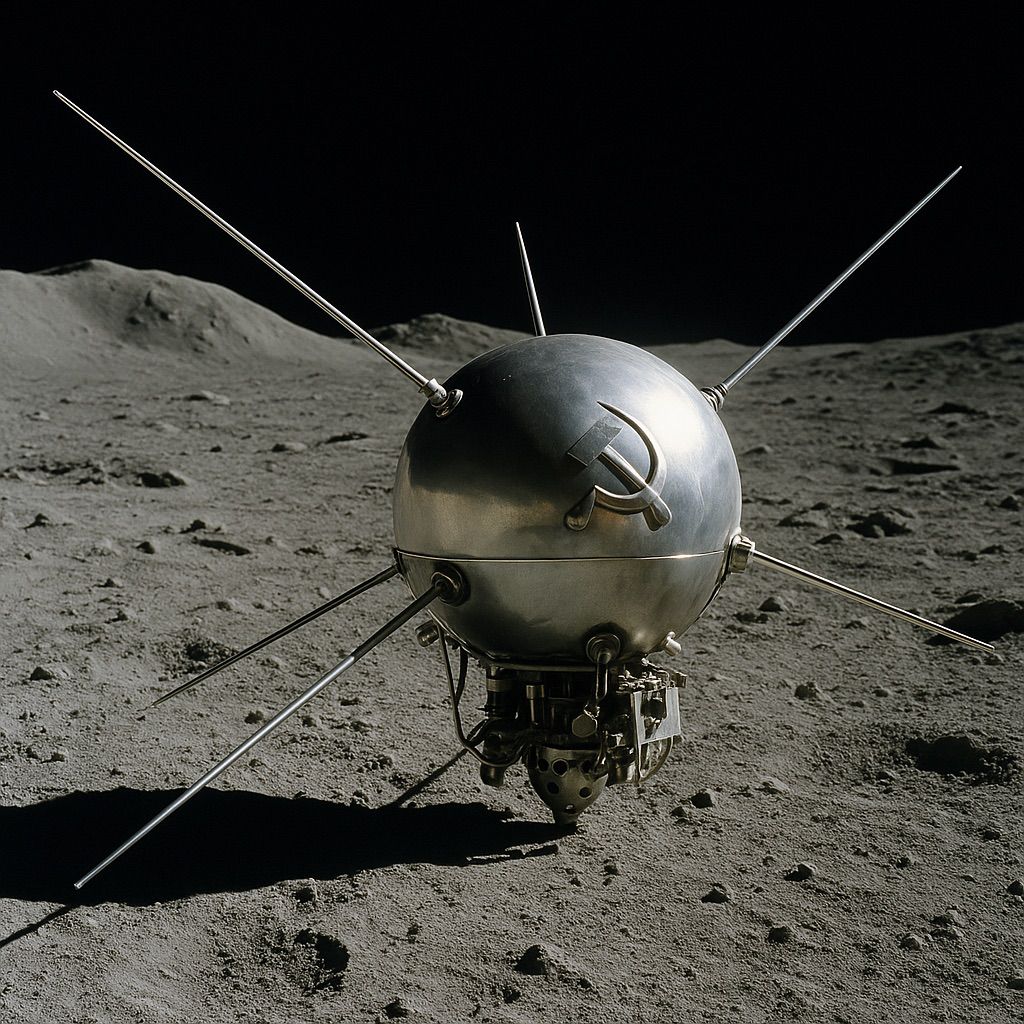
The Luna 2 mission did not look glamorous. It wasn’t sleek like the rockets we imagine in science fiction, nor did it carry astronauts with heroic grins and soaring speeches. Luna 2 was essentially a sphere bristling with antennae, weighing just under 400 kilograms, packed with scientific instruments. But appearances can be deceiving. That simple, almost awkward-looking probe carried with it the hopes of a nation, the anxieties of its rival, and the dreams of millions who had looked at the Moon since childhood and wondered if humans would ever reach it. The Soviet Union, still basking in the glow of launching Sputnik in 1957 and sending Laika the dog into orbit later that year, sought to prove once again that it was ahead in the great space race. And with Luna 2, it would deliver a triumph no one could ignore.

The mission began on September 12, 1959, when a three-stage rocket launched from the Baikonur Cosmodrome, roaring into the sky above the Kazakh steppe. Unlike earlier missions, which had only managed to orbit Earth, this one had a different purpose: to leave Earth’s gravity altogether. The trajectory was carefully calculated, the engines carefully timed. Soviet engineers, working under the guidance of Sergei Korolev, the mastermind of the Soviet space program, knew that success would prove not only technical superiority but also ideological strength. In the Cold War, every launch was not just a scientific experiment but a statement: a declaration of which system, communist or capitalist, could conquer the future.

As Luna 2 hurtled into space, it carried a payload of instruments designed to study cosmic rays, solar wind, magnetic fields, and radiation. But more than that, it carried small metal spheres, each engraved with the hammer and sickle, symbols of the Soviet Union, designed to scatter on impact across the lunar surface. To the Soviets, this was not only a scientific mission but a symbolic planting of their flag on the Moon. It was the 20th century’s new form of conquest: no longer about ships crossing oceans or armies seizing land, but machines crossing the gulf of space. And when Luna 2 finally struck the lunar surface near the Sea of Tranquility at 21:02 Moscow time on September 14, it did more than break apart on the Moon’s crust. It shattered the boundary between dream and reality. For the first time, humanity had touched another celestial body.

The world was stunned. Headlines declared that the Soviets had “hit the Moon.” Crowds around the globe reacted with awe and unease. In Moscow, the triumph was celebrated as proof of Soviet genius. In Washington, the news landed like a thunderclap, fueling fears that America was falling irreversibly behind. President Dwight Eisenhower, however, publicly congratulated the Soviet Union — a rare gesture in an age of deep rivalry — because even in competition, the magnitude of what had been achieved could not be denied. Humanity had, for the first time, reached beyond its home planet. Whether you were in New York or Moscow, Beijing or Paris, the Moon seemed just a little closer that night.

What makes Luna 2’s story remarkable is not only that it succeeded, but that it changed the way people thought about the future. For centuries, the Moon had been unreachable, a fixture in myth and poetry, a companion to human imagination but never to human science. People told stories of gods and goddesses, of rabbits and lovers, all etched into the face of the Moon. And now, a metal sphere made by humans had crashed there. The line between mythology and reality had blurred. The Moon was no longer a mystical otherworld. It was a place that could be reached, studied, and, one day, visited. Luna 2’s impact redefined what humanity thought possible.

The mission was also a turning point in the space race. The United States, caught off guard, accelerated its efforts to catch up. The Soviet Union, emboldened, pushed further, eventually sending the first human, Yuri Gagarin, into space in 1961. Each side raced not only for scientific advancement but for prestige, for global influence, for the symbolism of being the first to conquer the cosmos. And yet, in the larger arc of history, Luna 2’s success belonged not just to the Soviets but to humanity as a whole. For while the Cold War context gave it urgency, the deeper truth was that a human machine had touched the Moon. It was proof of what we, as a species, could do when imagination and technology came together.

Of course, the Moon would not be touched again until 1969, when Neil Armstrong stepped onto its surface. But Luna 2 laid the groundwork for everything that followed. Without Luna 2, there would be no Apollo program, no “giant leap for mankind.” Its crash landing showed that space could be crossed, that trajectories could be calculated, that missions could be aimed at other worlds. It turned science fiction into science fact. It ignited the imaginations of millions of children who grew up dreaming of becoming astronauts. It made the Moon not just a glowing light in the night sky, but a destination.

Looking back now, Luna 2 feels like both a relic of the Cold War and a timeless moment of human achievement. Yes, it was launched in an era defined by rivalry, propaganda, and fear. But its significance transcends politics. Luna 2 was the first messenger from Earth to reach another world. It was the first time we extended our touch beyond this planet. It was the beginning of humanity’s story as a spacefaring species. And in that sense, it belongs not only to the Soviet Union but to all of us.

On September 14, 1959, the Moon stopped being a dream and became a destination. Luna 2’s crash was violent, but its legacy was beautiful. It told us that the universe is not beyond our reach, that we are not bound forever to this Earth. It told us that imagination can become reality, that technology can make myths come true. Above all, it told us that the first step into the cosmos was not a step at all, but a crash — and from that crash, a journey was born.

Related Posts

Waves on Your Walls: Crafting Beach Memories into Art That Lasts Forever

Dave

There’s something about the beach that clings to you long after you’ve shaken the sand from your shoes and rinsed the salt from your hair. The ocean has a way of imprinting itself in the soul. It’s the sound of the waves, the golden warmth of sunlight, the colors that stretch endlessly from turquoise shallows to midnight blue depths, the shells scattered like tiny treasures, and the feeling that time has paused, just for you. For most of us, leaving the shore means leaving those sensations behind, storing them as memories, photos, and maybe a handful of shells stuffed into a pocket. But what if you could bring the beach home in a way that goes beyond souvenirs? What if you could bottle that feeling, that light, that texture, and hang it on your wall? That is where the idea of making your own beach wall art comes alive. It’s not just decoration; it’s memory turned into beauty, therapy turned into creation, an invitation for your walls to carry the calm and freedom of the sea with you every day.

The beauty of creating beach wall art is that it starts with things you’ve gathered in joy. Shells from a morning walk when the tide pulled back to reveal the treasures it left behind. Sand collected from that beach you never wanted to leave. Driftwood smoothed by years of waves. Pebbles, sea glass, dried grasses from dunes. Even photographs, ticket stubs, or pressed flowers from a seaside vacation can find their way into a piece. These aren’t just materials; they’re stories. Each object has traveled, each has been touched by time and tide, and when you arrange them into art, you’re not just crafting—you’re narrating your history with the sea.

Imagine a canvas painted in shades of ocean blue, overlaid with an arrangement of shells shaped into a heart. That’s not just art; it’s a love letter to the beach. Or picture a shadow box filled with sand at the bottom, a scattering of sea glass rising like stars, and a photograph of your family framed above it all. That’s more than a project. It’s a time capsule. Every glance at it brings you back—not just to the place, but to the people, the laughter, the way your skin felt warm from the sun and salty from the sea. Art, in this way, becomes memory’s guardian.

There’s also something deeply therapeutic about making beach wall art. The act of sorting through shells, arranging driftwood, layering colors—it’s slow, meditative work, much like the ocean itself. You’re not just creating for the sake of a final product; you’re entering a flow state, where every piece you glue, every brushstroke you paint, feels like a wave washing over your mind. It’s relaxation disguised as productivity, joy wrapped in creativity. And unlike buying décor from a store, making it yourself carries pride. When someone asks about the beautiful piece hanging in your home, you don’t just say where you bought it—you tell the story of how you made it, where the shells came from, what the day was like when you found that driftwood. Suddenly the art isn’t just a visual—it’s alive with meaning.

The styles of beach wall art are as varied as the shorelines themselves. Some people prefer rustic and natural—driftwood frames, raw textures, neutral tones. Others go bright and bold—splashes of turquoise paint, layered resin waves that shimmer like the real thing, glittering shells sealed in epoxy that catch the light. Resin art especially has become a beloved craft for capturing the illusion of the ocean itself. With resin, pigments, and a little patience, you can create canvases that look like waves crashing onto a shoreline, frozen in time. The way the resin spreads and shifts mimics water’s movement, so each piece feels alive. Others find joy in photography as their medium, taking that perfect beach sunset, enlarging it, and framing it as a centerpiece of a room. Some blend photography with natural elements, surrounding a photo with real shells or mounting it on reclaimed wood.

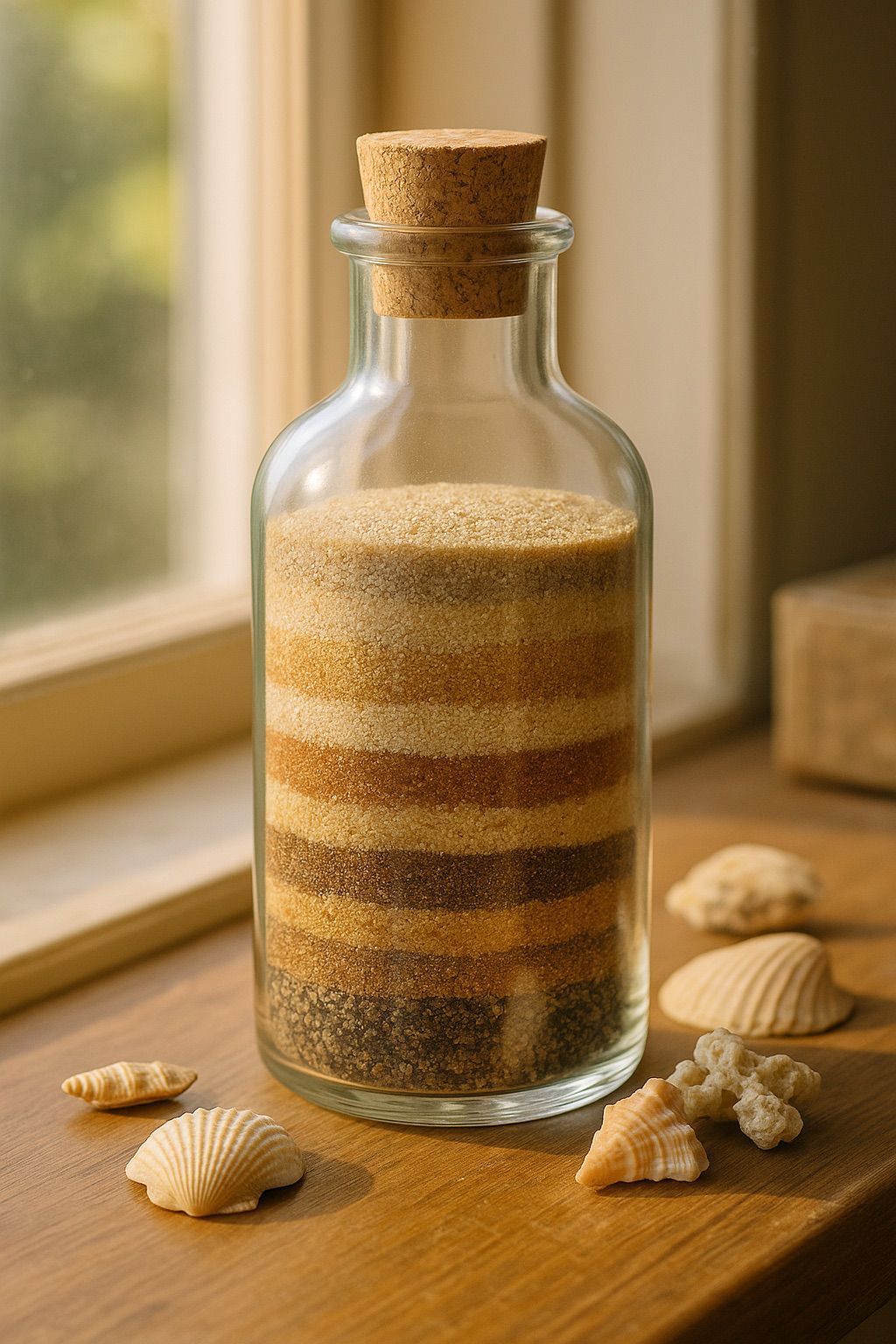
The magic, though, is in how personal it all is. There is no right or wrong way to make beach wall art. Maybe your version is a simple glass jar of layered sands from your travels, mounted in a wooden frame. Maybe it’s a watercolor painting you made one afternoon after remembering how the horizon looked on your favorite trip. Maybe it’s just the silhouette of a palm tree cut from paper and pressed against a painted blue background. The value doesn’t come from complexity or perfection; it comes from meaning. The most powerful art is not always the most polished but the most heartfelt.

What’s remarkable is how making beach wall art also changes your relationship with your travels. Suddenly, every walk along the sand becomes an artist’s treasure hunt. You don’t just see shells—you see color palettes. You don’t just see driftwood—you see frames waiting to happen. You don’t just see sea glass—you see mosaics shimmering with possibility. It adds a layer of mindfulness to the beach itself, making you notice details you might otherwise have missed. That striped shell, that perfectly smooth stone, that patch of sand glinting under the sun—they’re not just debris. They’re future strokes in your masterpiece.

For families, beach art can be a bonding ritual. Imagine a trip where each child collects a handful of shells or rocks, then returns home and helps to arrange them in a frame. That art then becomes more than a decoration; it becomes a marker of togetherness. Every time you look at it, you’re reminded not just of the beach, but of the joy of making something side by side. For couples, a shadow box filled with sand and shells from a honeymoon beach becomes a living memory, displayed where both can see it daily. For solo travelers, creating wall art can be a way of holding onto a moment that felt like freedom, independence, or peace, reminding yourself that you’ve been to the water’s edge and come back renewed.

And let’s not ignore the way beach wall art transforms a space. Homes crave warmth and personality, and nothing provides that like meaningful art. A living room with a driftwood sculpture instantly feels more grounded, more organic. A bedroom with soft blue resin wave art above the bed brings calm and serenity. A hallway decorated with framed sand and shell collections turns blank walls into a gallery of journeys. Beach art carries with it an aura of escape—it reminds everyone who sees it that life doesn’t have to be all deadlines and traffic. It can be waves and laughter, light and salt air, beauty and simplicity.

The most important part, though, is that making your own beach wall art gives you permission. Permission to be imperfect, to experiment, to enjoy. Permission to let creativity take the reins, even if you’ve never thought of yourself as an artist. Permission to value the things you’ve collected, not because they’re rare or expensive, but because they’re yours. Permission to keep the beach close, even when you’re far away.

So gather your shells, your driftwood, your sand, your paints. Spread them out on a table, let your mind wander, and start arranging. Let your fingers follow instinct, let your memories guide you. And remember: this is not just décor. This is your life, your joy, your escape, your love of the beach captured forever in a frame. Art, after all, is not about reproducing reality. It’s about holding onto feelings. And what better feeling to hold than the peace, the joy, the wild freedom of the ocean?

Related Posts

Handshake on the White House Lawn: The Day Hope Was Given a Stage

Elias Rowen

On September 13, 1993, the world stopped for a moment. Cameras from every major news network fixed their lenses on the White House lawn, where a stage had been carefully arranged, flags fluttering against the bright Washington sky. On that stage, U.S. President Bill Clinton stood between two men who had spent most of their adult lives as enemies. To his left was Yitzhak Rabin, the Prime Minister of Israel, a military man hardened by decades of war and conflict. To his right stood Yasser Arafat, the Chairman of the Palestine Liberation Organization, long branded as an adversary of Israel and reviled by many as a symbol of violence. Yet on that warm September day, the two men clasped hands — a simple gesture that carried the weight of centuries of struggle, bitterness, and bloodshed. The handshake, immortalized in photographs and broadcast worldwide, symbolized the signing of the Oslo Accords and briefly made peace between Israelis and Palestinians seem within reach. It was a moment so rare, so charged with history, that it seemed less like politics and more like theater, where hope itself was the protagonist.

The Oslo Accords were not born in grandeur. They began in secrecy, in quiet meetings in Norway where Israeli and Palestinian negotiators spoke privately, away from the glare of media and politics, in order to imagine something almost unthinkable: mutual recognition and a path to peace. For decades, relations between Israel and the Palestinians had been defined by hostility. Wars in 1948, 1967, and 1973 had left scars not only on land but on identity. Generations of Palestinians had lived in refugee camps, while generations of Israelis had grown up under the shadow of existential threats. The PLO, led by Arafat, had been seen in Israel as an irreconcilable enemy. Israel, in turn, was seen by many Palestinians as an occupying power denying them their homeland. Against this backdrop, the Oslo negotiations were astonishing not because of what they produced on paper, but because they happened at all. To talk, to sit across the table from one another, to draft letters of recognition — that itself was a revolution.

By the time the accords were brought to Washington for formal signing, anticipation had grown into something electric. The scene on the White House lawn looked like a diplomatic pageant, carefully choreographed to project optimism. Clinton, towering and beaming, placed his long arms around both Rabin and Arafat like a mediator bringing together estranged family members. Secretary of State Warren Christopher and Russian Foreign Minister Andrei Kozyrev stood by, reminding the world that peace was not only a regional matter but a global one. And then came the moment: after signing documents that recognized the PLO as Israel’s legitimate partner, and recognized Israel’s right to exist in peace, Rabin and Arafat turned toward each other. They paused, hesitated. Rabin, famously reserved and wary, seemed reluctant. But then his hand reached out, Arafat’s hand met it, and history was sealed in a photograph. For a world so accustomed to images of conflict in the Middle East, the picture of these two hands clasped together was nothing short of revolutionary.

Yet the power of that handshake lay not only in what it symbolized politically, but in what it meant emotionally. For Israelis and Palestinians alike, it represented a sliver of hope — the idea that decades of hostility might finally give way to compromise, that children might grow up without the constant echo of gunfire or the fear of bombs. For Americans, it was a rare foreign policy triumph, a chance to witness their leaders brokering peace rather than war. For the world, it was proof that even the most bitter conflicts could, at least for a moment, bend toward reconciliation. The White House lawn that day was more than a stage. It was a canvas upon which the idea of peace was painted for all humanity to see.

But peace, as history shows, is fragile. The Oslo Accords were both groundbreaking and incomplete. They outlined principles — the establishment of the Palestinian Authority, limited self-governance in parts of the West Bank and Gaza, mutual recognition — but they left many issues unresolved. Jerusalem, refugees, settlements, security arrangements — the thorniest questions were deferred. Even in that moment of celebration, critics warned that the agreements were vague, that they postponed the hardest problems, that they might collapse under the weight of reality. And indeed, as the years went by, violence, mistrust, and political shifts eroded much of the hope that had been ignited in 1993. Rabin himself, the man who shook Arafat’s hand, would be assassinated two years later by an Israeli extremist opposed to peace. Arafat would face accusations of failing to prevent violence, and the peace process would stall, then unravel. The handshake on the White House lawn remains frozen in time, not because it delivered peace, but because it symbolized how close — and how far — the world was from achieving it.

Even so, the Oslo moment remains iconic because it distilled something fundamental about human aspiration. For one afternoon, centuries of pain gave way to possibility. The handshake embodied the paradox of peace: that it is both impossibly hard and yet heartbreakingly simple. To clasp another’s hand is to acknowledge their humanity, to say, “I see you not as an enemy, but as a partner.” That simple act, performed in front of the world, was powerful enough to transcend cynicism. It reminded us that politics is not just about power and territory, but about courage — the courage to do what feels unnatural after generations of conflict, the courage to risk appearing vulnerable in front of the world.

Looking back today, three decades later, the Oslo handshake is often remembered with bittersweet emotions. It was a photograph that adorned magazine covers, textbooks, and history lessons, celebrated as a milestone of diplomacy. But it is also remembered as a moment of lost opportunity, a brief high point before disillusionment returned. Critics argue that the accords failed to address the core grievances, that they allowed both sides to claim victory without making the sacrifices necessary for real peace. Supporters counter that without Oslo, there would have been no framework for later negotiations, no precedent for recognition, no glimpse of what coexistence might look like. Either way, the image remains, lodged in the world’s memory: two hands meeting across a divide that had seemed unbridgeable.

There is a reason that people still talk about the “handshake on the White House lawn.” It was not just a diplomatic formality. It was theater, symbolism, and sincerity wrapped into one. It showed that history is not only made in battlefields and boardrooms but also in gestures that resonate across cultures. The photograph of Rabin and Arafat shaking hands became shorthand for hope itself, proof that even the deepest conflicts can, for a fleeting instant, bend toward peace. And that is why, even as the decades since Oslo have been filled with setbacks, the image continues to inspire. It is not a record of peace achieved. It is a reminder of peace imagined.

The Oslo Accords remind us that progress is rarely linear, that history is often marked by moments of possibility that are fragile and fleeting. Yet they also remind us that imagination matters. Without imagination, without the willingness to dream that enemies can one day shake hands, there is no progress at all. On September 13, 1993, the world was given a vision — incomplete, fragile, and fleeting, yes, but a vision nonetheless. And in a world too often defined by division, sometimes a vision is enough to keep hope alive.

Related Posts

Sun, Shade, and Shimmer: Makeup Looks That Bring Swimwear Colors to Life

Dave

There is an art to summer beauty, and nowhere is it more playful, more experimental, and more radiant than when it collides with swimwear. Swimwear has always carried its own power, a shorthand for mood and identity, but the way makeup can complement those colors elevates the entire look from simple beach-day styling to a personal fashion statement written in sunlight, shadow, and sparkle. Matching makeup to swimwear colors is not about following rigid rules but about creating a harmony between fabric and face, between the body clothed for water and the expression carried above it. The result is more than just flattering. It’s captivating, memorable, and sometimes even transformative, taking a simple dip in the ocean and turning it into a runway moment framed by waves and sky.

Think of a bold red bikini, fiery and commanding, alive with drama. On its own, red swimwear already radiates confidence. Paired with the right makeup, though, it becomes a complete story. A red lip to match is a classic choice, one that screams timeless glamor, echoing Marilyn Monroe’s playful photos on the beach, but with a modern twist, that red could be paired with glowing bronzed skin, feathered brows, and dewy highlighter. Instead of going heavy with eyes, a swipe of waterproof mascara and a golden shimmer on lids is enough to let the lip and the suit do the talking. In the sunlight, it’s less about perfection and more about energy — red in fabric, red on lips, sun on skin, and an entire world watching as confidence walks by.

Now imagine the opposite: a white bikini, minimalistic and clean, the fabric a blank canvas for endless possibility. White, though pure and simple, offers a powerful contrast to skin tones and natural colors, meaning makeup can swing in any direction. Some lean toward ethereal beauty — think pastel pink lips, soft peach blush, and luminous skin that feels almost angelic against the stark white of the suit. Others push the drama, pairing white with electric hues in makeup: cobalt blue eyeliner, neon coral lips, or shimmering metallic highlights that catch the sun like jewelry. White allows experimentation because it is both everything and nothing, the perfect balance against which any color pops.

Black swimwear, meanwhile, is the ultimate in sophistication. A sleek one-piece or bikini in black exudes chic timelessness, and makeup that complements it can either intensify that edge or soften it. A smoky eye with waterproof liner and bronzed cheekbones creates a smoldering, sultry look, echoing night even under bright sun. But pair black swimwear with bare skin, sheer gloss, and little more than brushed-up brows, and suddenly the vibe shifts to minimalist cool — effortless beauty that doesn’t need to announce itself loudly. The suit is the anchor, the makeup the mood swing. Black leaves room for both.

Tropical brights — aqua, lime, hot pink, and sunshine yellow — bring their own energy, demanding makeup that knows how to play. Aqua swimwear practically begs for turquoise shadow smudged across lids or eyeliner flicked in ocean blue, echoing the water you’re about to dive into. Lime green pairs beautifully with coral lips or a wash of bronzed orange shadow, creating a high-fashion tropical fruit palette across your face. Hot pink is electric, so pairing it with glowing fuchsia blush or a matching lip creates cohesion, while keeping eyes neutral balances the intensity. Sunshine yellow is playful and warm, and peachy tones on lips and cheeks or golden metallic touches on lids amplify its warmth without overpowering it. With brights, balance is the key — pick one feature to match the intensity, and let the rest of the face breathe in soft, natural tones.

Soft pastels, on the other hand, invite dreamlike makeup looks that lean into romance and femininity. A lavender bikini pairs magically with lilac shimmer swept across eyelids, or even a glossy pink lip that adds whimsy. Baby blue swimwear looks radiant with flushed cheeks and soft nude gloss, the kind of makeup that enhances without competing. Peach swimwear finds its soulmate in coral or apricot tones, blending fabric and face in a warm harmony that feels like sunset captured in cosmetics. With pastels, it’s less about contrast and more about cohesion — a watercolor wash of gentle shades that feel breezy, effortless, and endlessly photogenic.

Patterned swimsuits — florals, stripes, animal prints — offer the most creative playground of all. A leopard-print bikini pairs effortlessly with bronzed makeup, smoky eyes, and bold lips, leaning into its wild side. A floral print calls for soft, romantic shades pulled from the flowers themselves: pink lips, rosy cheeks, a touch of lavender on lids. Nautical stripes in navy and white might pair best with classic red lips and winged liner, echoing vintage pin-up glamour in a way that feels both nostalgic and modern. The secret is to look at the print, pick a color within it, and let your makeup echo it subtly — not by copying the pattern, but by weaving one shade into your look so it ties together without becoming overwhelming.

And let’s not forget metallics. Gold, silver, and bronze swimsuits are high drama, already sparkling under the sun. Makeup here must decide whether to compete or complement. A gold bikini begs for golden highlighter across cheekbones, bronze tones sweeping across eyelids, and warm, glossy nude lips that make the whole look sunlit and glowing. Silver swimwear pairs beautifully with cool-toned makeup: icy highlighters, taupe eyeshadow, plum lips. Bronze suits lean into earthy tones — terracotta blush, copper shadow, brick red lips. Metallics are unapologetic, and the makeup should be too.

The final layer in all of this is practicality. Beaches and pools demand waterproof, sweat-resistant formulas that hold up to sun, salt, and chlorine. Confidence in swimwear makeup is not just about colors and harmony but about knowing the look will last. Waterproof mascaras, gel liners, tinted balms with SPF, and lightweight foundations or skin tints that won’t melt are the true backbone of a swimwear-makeup marriage. The glow must look effortless, but effort goes into choosing formulas that hold up under heat and water.

When swimwear and makeup work together, the effect is alchemy. It is not about hiding, not about creating a mask, but about amplifying what’s already there, letting color tell a story that connects your suit, your face, and your mood. It’s about turning a beach day into an expression of identity, a pool party into a runway, a dip in the ocean into a photoshoot. Swimwear colors are never just colors — they are moods, attitudes, statements. And makeup, when done right, is the echo that makes them sing.

At the end of the day, makeup looks that complement swimwear colors are not about rules but resonance. It’s about red lips with red bikinis because you feel bold, or golden highlights with white suits because you want to glow like light itself. It’s about pastels with pastels, brights with brights, contrasts that surprise and harmonies that soothe. It’s about creating a whole moment that is uniquely yours, where fabric and face become one radiant expression of summer, confidence, and beauty.

Related Posts

We Choose the Moon: JFK’s Speech That Dared Humanity to Dream Beyond the Stars

Elias Rowen

On September 12, 1962, in the sweltering Texas heat, John F. Kennedy stood before a crowd of forty thousand people at Rice University and delivered a speech that would become one of the most defining orations of the twentieth century. The president’s words, carried on the air across the stadium, beyond Houston, and ultimately around the world, did not simply outline a national policy goal. They did not read like a checklist of scientific milestones or budgetary justifications. Instead, Kennedy spoke in a way that lifted hearts, stoked imaginations, and challenged an entire nation to embrace the extraordinary. In a time when America was not only trailing its rival in the Cold War space race but also wrestling with internal anxieties about progress and identity, Kennedy pointed to the heavens and declared that the United States would go to the Moon before the decade was out. It was a bold promise, delivered with unwavering confidence, not because it was safe or easy, but precisely because it was difficult, risky, and uncertain. In doing so, he transformed the space race from a technical competition into a metaphor for human courage, for the restless desire to push past limits, and for the kind of ambition that redefines what a society believes possible. His words would echo not just in the annals of American history, but in the shared consciousness of humanity, forever symbolizing what it means to choose challenge over comfort and vision over fear.

The early 1960s were a period of turbulence and tension. The Cold War was at its height, and the Soviet Union had already made shocking advances in space exploration. In 1957, the launch of Sputnik, the first artificial satellite, had jarred American confidence, creating the uneasy sense that the Soviets were leaping ahead in both science and global prestige. The anxiety only deepened in April of 1961, when Yuri Gagarin orbited the Earth and became the first human in space. The United States, still working to stabilize its early rocketry programs, seemed to be playing catch-up at every turn. For Kennedy, the youthful and energetic leader of a nation that prided itself on innovation and dominance, the optics were unacceptable. America could not afford to appear second best. But rather than retreat into caution, Kennedy seized upon the moment as an opportunity to articulate a broader vision. Space would not merely be a field of rivalry; it would become the proving ground for national ambition, for collective purpose, for the very soul of a people who prided themselves on rising to challenges. And so, on that September afternoon in Houston, his words carried not only the weight of policy but also the weight of destiny.

Kennedy understood the importance of language, and he crafted his Rice University address with the rhythm of a poet and the conviction of a leader who knew that rhetoric could move nations. He did not disguise the magnitude of the task. He described the Moon as a distant and hostile world, its environment unlike anything humanity had ever encountered. He acknowledged the cost — billions of dollars, countless hours, and lives devoted to scientific research and engineering. Yet rather than soften the challenge, he amplified it. He told his audience that the difficulty was precisely why the mission mattered. “We choose to go to the Moon in this decade and do the other things,” he declared, “not because they are easy, but because they are hard.” In that line lies the essence of Kennedy’s genius: the ability to frame hardship not as a deterrent, but as an invitation. Difficulty was not a reason to shrink back, but the very reason to step forward. By stating that difficulty gave purpose, Kennedy elevated the moonshot into something much larger than rockets and astronauts. He made it a metaphor for all human aspiration, for every leap into the unknown that has ever defined progress.

What makes the Rice University speech endure in memory is the way it connected the immediate with the eternal. Kennedy was speaking at a particular historical moment — the height of the Cold War, in the wake of Soviet triumphs, amid political pressure and technological uncertainty. Yet the language he used transcended those specifics. He spoke of exploration as part of the human spirit, of the drive that once led explorers across oceans, that once inspired inventors to transform industries, that once compelled societies to dream beyond the limits of their time. By placing space exploration within this grand lineage, Kennedy turned the space race into something universal, something that belonged not just to Americans, but to humanity itself. The moon became a symbol of the eternal human desire to go farther, to know more, to test ourselves against the boundaries of the possible.

The impact of the speech lay also in its inclusivity. Kennedy made it clear that this was not just NASA’s mission or the astronauts’ mission. It was everyone’s mission. He spoke directly to the American people, telling them that the journey to the Moon was not just a scientific challenge but a collective one, tied to jobs, to education, to innovation, to the belief that the future could and should be brighter than the present. He reminded them that progress was not the work of the few, but the effort of the many. This was crucial in rallying support for a program whose costs would be staggering, both financially and in terms of human labor. Yet Kennedy made those costs seem not like a burden, but like an investment in the very essence of what it meant to be American: daring, ambitious, unwilling to accept defeat.

The moon landing in July of 1969 was, of course, the fulfillment of Kennedy’s promise. When Neil Armstrong stepped off the ladder of the lunar module and uttered his famous words — “That’s one small step for man, one giant leap for mankind” — it was more than a technical triumph. It was the culmination of a vision that had been planted seven years earlier in the hot Texas air, when Kennedy had dared to tell his nation that it would reach for the stars. The Rice speech, then, was not simply a piece of oratory. It was the seed of one of humanity’s greatest achievements. And yet its power goes beyond Apollo. “We choose to go to the Moon” has since become shorthand for every audacious goal, for every time a society dares to attempt what seems impossible. From curing diseases to combating climate change, from technological revolutions to cultural shifts, Kennedy’s words continue to serve as a rallying cry: difficulty is not a reason to stop; it is the reason to begin.

Decades after the speech, its resonance endures because it speaks to something deeper than politics, deeper than technology, deeper than any specific historical moment. It speaks to the very nature of human ambition. Kennedy’s declaration was not only about going to the Moon. It was about the way we, as humans, define ourselves by the challenges we accept. It was about the idea that greatness does not come from choosing the path of least resistance, but from embracing the path of most resistance. In an age where cynicism often overshadows optimism, and where fear of failure can paralyze action, Kennedy’s words are a reminder that the pursuit of the hard, the dangerous, the uncertain is what gives life its meaning. They remind us that the arc of human progress has always been drawn by those willing to try what others deem impossible.

When one listens to the recording of Kennedy’s speech, what stands out is not only the content but the conviction. There is an urgency in his voice, a cadence that builds momentum, a rhythm that pulls the listener along. The speech was not a lecture; it was a call to action, a challenge to the spirit. That is why it remains so powerful even today. It is not simply history. It is a living reminder of what humanity can achieve when it refuses to accept limitations. It is a testament to the fact that courage, vision, and imagination can take us beyond not only our fears but our wildest expectations.

The story of Rice University on September 12, 1962, is not merely the story of a president rallying support for a space program. It is the story of words that became action, of vision that became reality, of a nation that chose to believe in something larger than itself. It is the story of how a speech became a turning point, not just in the Cold War, not just in the history of space exploration, but in the broader narrative of what it means to be human. For in choosing the Moon, Kennedy reminded us that we also choose who we are. We choose whether to accept the comfort of the easy or the challenge of the hard. We choose whether to stand still or to move forward. We choose whether to shrink in the face of the unknown or to rise above it. On that day in Houston, Kennedy’s answer was clear. And it is an answer that still challenges us today.

Related Posts

Runways and Rapture: How New York Fashion Week SS26 Turned the City Into a Stage

Dave

New York Fashion Week SS26 arrived not with a whisper but with a thunderclap, and if you were anywhere in Manhattan this week you could feel the ground vibrating under the weight of stilettos, camera shutters, and the collective heartbeat of an industry that thrives on reinvention. Fashion Week has always been a spectacle, but this season, it feels more like a cultural uprising. The clothes are only the start of the story. The real magic is in the mood — and New York is the ultimate co-conspirator, playing host to a festival that turned the city into one giant, glittering runway. From Chelsea’s converted shipping terminals to intimate designer studios, from dog-walked runways to Studio 54-inspired soirées, SS26 is proving that fashion isn’t just about what we wear — it’s about who we are, what we hope for, and what we dare to celebrate.

There’s something about New York Fashion Week that feels like a pilgrimage. People pour into the city as if the skyline itself were stitched in couture. Designers, models, editors, influencers, celebrities, the merely stylish, the wildly eccentric — they all converge in a blur of movement and intention. But SS26 brought a sharper edge, a feeling that after years of uncertainty, delays, and global turbulence, fashion was ready to not only play again but to strut with audacity. It’s not just a comeback; it’s a coronation. And New York, with its relentless energy, embraced its role as the epicenter of reinvention.

Michael Kors set the tone early, staging his collection in a historic Chelsea shipping terminal that felt more like a cathedral of industry than a fashion venue. Against the backdrop of worn brick and river views, Kors sent models gliding down the runway in earthy tones that whispered of natural landscapes while still roaring urban sophistication. Creams, browns, soft blacks, and the occasional shock of sunflower yellow or island pink hinted at destinations both exotic and familiar. The collection balanced utility with sensuality, as if to say: you can be practical without being predictable. You could imagine slipping one of his linen suits on for a boardroom in the morning and then catching a flight to Tahiti by nightfall without ever changing. Kors’ show was a reminder that American glamour isn’t always loud — sometimes it’s the kind that grows on you, like a sun-soaked memory you don’t realize you love until it’s gone.

Ralph Lauren, the old master, responded not with noise but with quiet authority. His show, hosted in his private Madison Avenue studio, unfolded like an intimate conversation with fashion history. Guests sipped champagne under the glow of chandeliers as Lauren sent out models in fluid silhouettes and perfectly tailored classics. Oprah and Gayle King, front-row royalty, nodded approvingly as if to say: here is a man who knows the art of timelessness. Lauren didn’t chase trends — he never does. Instead, he refined them, reminding us that heritage isn’t about nostalgia, it’s about resilience. In a week full of bold statements, Lauren’s was the most understated of all, and somehow, that made it louder than the rest.

But of course, New York thrives on the unexpected, and SS26 delivered. Collina Strada, forever the enfant terrible of American fashion, rolled out a collection that defied categorization. Models stormed the runway like characters out of a dream, wearing garments that seemed stitched together from the discarded imagination of a cosmic carnival. There were sequins clashing with florals, exaggerated silhouettes collapsing into soft drapery, and accessories that looked like they were plucked straight from a surrealist painting. Collina Strada doesn’t design for the faint of heart — and that’s precisely why the crowd couldn’t stop cheering. If Kors was the elegant whisper and Lauren the dignified nod, Collina Strada was the raucous laugh that makes you spill your martini. And at Fashion Week, all three belong in the same conversation.

LaQuan Smith, the enfant terrible’s opposite but equally adored, reminded us that New York nightlife and New York fashion are two sides of the same sequined coin. His SS26 show was all about unapologetic glamour, the kind of body-con silhouettes and cutouts that dare you to look away but know you won’t. Smith’s runway felt like a party you weren’t quite invited to, yet couldn’t help sneaking into. And that’s the essence of his magic: exclusivity mixed with aspiration. Everyone leaves wanting more, and more is exactly what he gives.

Off-White™, too, made waves with its return. The label, long synonymous with urban cool, leaned heavily into its sportswear-meets-luxury ethos, sending out looks that were as at home on the runway as they’d be in a late-night Brooklyn warehouse rave. Bold typography, reimagined street codes, and structural tailoring reminded us why Off-White™ is a cultural language unto itself. The show wasn’t just about clothes — it was about community, about being part of an in-group that extends beyond fashion into lifestyle, attitude, and identity.

Yet the real surprises of Fashion Week weren’t the big names but the rising voices. Rachel Scott of Diotima, recently tapped as creative director at Proenza Schouler, proved she’s more than ready for the spotlight. Her SS26 collection shimmered with Caribbean influence, weaving crochet textures into urban silhouettes in ways that felt both grounded and transcendent. L’Enchanteur, the sibling-run label, took mythology and turned it into wearable poetry, while Gabe Gordon’s debut blurred the lines between tailoring and performance art. These shows weren’t just collections; they were declarations. They told us the future of fashion isn’t locked in Paris or Milan — it’s alive and pulsing in New York’s veins.

But perhaps the most charming moment came not from gowns or glamour but from a dog show. Yes, you read that right. Susan Alexandra teamed up with Rachel Antonoff for a runway where rescue pups trotted alongside models, their tails wagging as loudly as the crowd’s applause. The clothes were whimsical and fun — jewel-tone accessories, playful dresses — but the dogs stole the show, proving that sometimes fashion works best when it doesn’t take itself too seriously. The fact that several of the dogs were available for adoption only underscored the point: fashion can save lives, too, and sometimes the best accessory is a furry friend.

As for the parties — oh, the parties. Valentino turned back the clock with a Studio 54-inspired bash that felt like a fever dream of glitter and disco. Cher, because of course Cher, appeared as if summoned by sheer fabulousness, sending the crowd into hysterics. DJs spun into the early morning, champagne flowed like water, and if you looked closely enough you could see editors and influencers, rivals by day, dancing shoulder to shoulder by night. Over in Brooklyn, Veuve Clicquot staged a Jacquemus-themed picnic that turned an industrial rooftop into a surreal meadow, while Ralph Lauren invited a select few to “Ralph’s Club,” his take on sophisticated nightlife complete with jazz, oysters, and enough velvet to upholster all of Manhattan. Fashion Week is always about the runway, but in SS26 the after-hours proved equally essential. It wasn’t just about seeing and being seen; it was about living the experience fully, as if every night was the closing chapter of a novel too good to put down.

And yet, beneath the glitter, SS26 carried a quiet undercurrent of purpose. Designers leaned into natural palettes — sands, browns, muted greens — and sustainable fabrics. The runway was peppered with recycled materials, organic cottons, and futuristic synthetics designed to last longer and waste less. This wasn’t sustainability as a marketing gimmick but as a design principle, woven into the DNA of the season. You could feel it in Kors’ linen, in Diotima’s crochet, even in the experimental textiles of Off-White™. Fashion Week, so often criticized for excess, seemed to whisper a new promise: beauty without recklessness, spectacle without guilt.

New York itself, of course, was the star. The city doesn’t just host Fashion Week; it becomes Fashion Week. Streets transformed into catwalks, subways filled with showgoers dressed like characters from another dimension, and even the gray September skies seemed to take on a cinematic filter. The city’s energy fed into the collections, and the collections fed back into the city, creating a feedback loop of creativity that’s impossible to replicate anywhere else. You could argue Paris has history, Milan has craftsmanship, and London has edge — but New York? New York has life. Raw, unfiltered, unapologetic life.

What does all this mean for fashion as a whole? SS26 seems to suggest that we’re in an age of synthesis. The old and new, the sustainable and the extravagant, the quiet and the loud — they’re no longer at odds. They coexist, sometimes uneasily, but always in dialogue. Kors’ earthy elegance converses with Collina Strada’s anarchic play. Ralph Lauren’s heritage nods to Diotima’s fresh voice. Even the dogs trot happily alongside the models. The industry, once fractured by trend wars and generational divides, feels like it’s learning to tell one story again — a story of multiplicity, where no single definition of beauty reigns supreme.

As the week rolled on, each show, each party, each whispered conversation in the front row added to the narrative. Trends emerged not just from the runway but from the way people moved through the city. Oversized sunglasses were everywhere, not as a style choice but as shields against paparazzi flash. Metallic accents glimmered on everything from handbags to nails. Sneakers, yes sneakers, continued their reign, often paired with couture gowns in a mash-up that once would have horrified traditionalists but now seems utterly modern. If there was a single theme to SS26, it was freedom — the freedom to mix, to play, to wear what you want, how you want, where you want.

By the time the last show closed and the final after-party bled into morning, SS26 had done what every great Fashion Week does: it created memories, set trends, and gave us a glimpse of the future. But it also reminded us of the simple joy of dressing up, of expressing ourselves, of being part of a community that, at its best, celebrates individuality while welcoming everyone into the fold. Fashion isn’t just about the runway; it’s about the sidewalks, the taxis, the loft parties, the whispered “I love your look” exchanged between strangers. In New York, those moments are everywhere, and during Fashion Week, they shine brighter than sequins under a disco ball.

So what will we remember from New York Fashion Week SS26? We’ll remember Kors’ earthy glamour, Lauren’s dignified timelessness, Collina Strada’s joyful chaos, LaQuan Smith’s unapologetic seduction, Off-White™’s urban cool, and the new voices who dared to join the chorus. We’ll remember the dogs, the parties, the rooftops, the velvet, and the champagne. We’ll remember that in a world often weighed down by seriousness, fashion still knows how to make us smile. Most of all, we’ll remember that for one week in September, New York wasn’t just a city. It was the center of the universe, and everyone, from models to dogs to celebrities to wide-eyed kids clutching their first show invites, had a role to play in the spectacle.

Fashion may move fast, but moments like these linger. SS26 wasn’t just a collection of shows; it was a story told across streets, stages, and skylines. A story of resilience, joy, and possibility. And like all the best stories, it leaves us eagerly waiting for the next chapter.

Related Posts

The Best Tinted Moisturizers with SPF

Dave

There are makeup days when you want full coverage—lashes, layers, contour, the works. And then there are those other days, the sunshine hours when you crave simplicity: a sheer veil of glow, something that whispers “I woke up like this” while saying loud and clear, “I am protected.” This is where the magic of a tinted moisturizer with SPF lives, the unsung hero of minimalist beauty. These hybrid formulas offer not just a subtle tint, but moisture and sun protection, all in one lightweight texture that melts effortlessly into your skin. Think of them as the Swiss Army knife of your beauty bag—hydration, color correction, and broad-spectrum defense wrapped up in one silky touch. No wonder beauty editors can’t stop raving about the convenience, dermatologists nod in approval, and shoppers can’t stop reaching for them in the morning. On those bright, breezy days when SPF feels like a chore, a tinted moisturizer with SPF makes it a ritual—a moment of self-care rather than an obligation.

The charm of these products lies in their versatility. Take Merit’s The Uniform Tinted Sunscreen, a newcomer already winning hearts with its SPF 45 coverage, nearly invisible tint, and a formula that calms redness while blurring pores and imparting a soft glow. It doesn’t feel like sunscreen—it feels like skincare in a bottle that understands the golden rule: protection should feel good. Over at Byrdie, testing across dozens of tints crowned Tarte’s Maracuja Tinted Hydrator as best overall for its blend of hydrating maracuja oil, hyaluronic acid, and that candlelit glow we all crave without the sheen. And if oily skin is giving you pause, Fenty’s Hydra Vizor Huez, also praised for its single-step SPF 30 buildable tint, provides a matte-finish miracle. There are options for every skin type: Tower 28’s SunnyDays with mineral SPF 30 is gentle on sensitive skin, while Danessa Myricks’ Yummy Skin Serum shows mature skin some real love.

Navigating all the choices can seem like wandering a beauty labyrinth, but it gets easier with a few trusted guides. Marie Claire’s round-up names EltaMD’s Tinted Daily Face Moisturizer SPF 40 best overall — a dermatologist-approved pick that balances zinc protection, niacinamide, hyaluronic acid, and vitamin E in a featherlight formula that feels like hydration, not hesitation. Prevention magazine highlights Supergoop’s Protec (tint) Daily Skin Tint SPF 50 for folks seeking serious sun defense in a barely-there skin tint, while Ilia’s cult-loved Super Serum Skin Tint SPF 40 scores for its shade inclusivity and clean, glowing finish. Glamour’s editors praise Tower 28’s SunnyDays SPF 30 as a smart everyday choice and Milk’s Hydro Grip Skin Tint for those needing extra wear time and steady hydration through heat, makeup, and hustle. These products do more than cover—they improve your skin’s story while safeguarding it.

What consumers say is equally telling. On Reddit’s beauty threads, users gush over the Well People Bio Tint SPF 30, appreciating its natural, “skin-like” finish that works seamlessly with concealer for higher-impact days. Tower 28 earns repeated nods for walk-in comfort and reliability—it’s one of those products that doesn’t force itself on your routine; it earns its place. On r/Makeup, users recommend Kosas BB Burst, and note Laura Mercier’s Tinted Moisturizer with SPF 25 as a glow-giving workhorse that handles rosacea with grace. These lived experiences are where theory meets reality—tints that pass the daily wear test in oil, sun, and social media scrutiny.

Meanwhile, beauty news outlets continue echoing the praise. SELF magazine reminds us of practical favorites: Neutrogena’s Hydro Boost SPF 50 for hydration, Saie’s Slip Tint SPF 35 for a radiant dewy finish, and Vanicream’s SPF 30 for super-sensitive skin. Prevention notes La Roche-Posay’s Anthelios Mineral Tinted Sunscreen as a go-to for sensitive complexions, while editorial picks from Dermatologists recommend formulas like Supergoop’s Protec (tint) and Ilia’s Serum Skin Tint for sound SPF coverage with skin benefits.

The best tinted moisturizers with SPF aren’t just makeup—they’re every-day armor that look like skin but protect like armor. They give you a moment each morning when beauty and mindfulness converge, when your bare face gets a little love, a little shield, and a light dusting of confidence. Whether you need oil-control, dewy hydration, mature-skin radiance, or shade range that doesn’t ignore you, there’s a perfect match out there. And the best part? They turn the simple, routine act of applying SPF into something joyful—like brushing your skin with sunlit touch rather than slathering on caution. Because summer lines may come and go, but skin protected with love endures.

Related Posts

A Nation Remembers: The Day the World Changed

Elias Rowen

On the morning of September 11, 2001, the world changed forever. The bright blue skies over New York City gave no hint of the terror about to unfold, no warning of the unimaginable tragedy that would carve itself into the memory of an entire generation. That day began like any other Tuesday. People rushed to work, grabbed coffee from street vendors, chatted about school schedules and office meetings. The towers of the World Trade Center stood tall, gleaming symbols of American ambition and resilience, their windows reflecting the morning sun. In Washington, D.C., the Pentagon stirred with routine, while flights crisscrossed the country carrying vacationers, businesspeople, and families. But within the span of a few hours, what seemed ordinary was transformed into history’s most chilling reminder of how fragile life, freedom, and peace truly are.

At 8:46 a.m., American Airlines Flight 11 crashed into the North Tower of the World Trade Center. The impact ripped through floors filled with office workers, secretaries, and executives, scattering glass, steel, and paper into the morning air. At first, many assumed it had been a tragic accident — a plane gone astray, a pilot’s nightmare, a disaster without intent. But as the smoke poured into the blue sky, and as cameras turned toward Manhattan, a second strike came. At 9:03 a.m., United Airlines Flight 175 slammed into the South Tower in a fireball of jet fuel and chaos. In that instant, no one doubted: America was under attack.

The world watched in horror. Televisions across the globe broadcast live images of the Twin Towers burning, their steel skeletons groaning under the strain. People trapped above the impact zones waved desperately for help, some forced to make choices no human should ever face. Firefighters, police officers, and paramedics raced into the buildings, climbing stairwells filled with smoke, carrying equipment on their backs, and knowing the danger they faced. The streets below filled with debris and ash, but also with courage, as New Yorkers reached out to strangers, offering water, shelter, and comfort in the chaos. That was the first sign of the resilience that would define the day — amid the horror, humanity shone through.

At 9:37 a.m., American Airlines Flight 77 struck the Pentagon, piercing the symbol of America’s military might. Flames tore through the building, and chaos erupted in the capital. Just minutes later, another plane, United Airlines Flight 93, was hijacked and redirected toward Washington. But this time, passengers knew. They had heard the news of the towers. They called their families. They prayed. And they fought back. In an act of extraordinary bravery, ordinary citizens stormed the cockpit, sacrificing their lives to prevent the plane from reaching its target. At 10:03 a.m., Flight 93 crashed into a field in Shanksville, Pennsylvania. Its passengers’ courage added another chapter to the story of that day: that even in the face of certain death, the human spirit refuses to surrender.

By 9:59 a.m., the South Tower collapsed. The unthinkable became real. The skyline of New York City, so long defined by the Twin Towers, was swallowed in clouds of dust and debris. At 10:28 a.m., the North Tower followed. The world seemed to stop. Silence hung in living rooms where millions watched on television. Silence stretched across cities, towns, and villages around the globe. Silence, except for the sobs of those who knew loved ones were gone, and the sirens of those still rushing to save lives.

Nearly 3,000 lives were lost that day: mothers and fathers, sons and daughters, firefighters and police officers, office workers and airline crew. They were Americans, but also citizens of more than 90 countries. They were people who had simply gone to work, boarded planes, or responded to a call for help. They were lives cut short, dreams left unfinished, families left broken. And yet, they became part of something larger — symbols of innocence lost, but also of a nation’s enduring resilience.

The days that followed were filled with grief, but also with unity. Americans lined up to give blood. Strangers embraced in candlelight vigils. Flags flew from windows and overpasses. The skyline of Manhattan was filled with smoke, but the streets were filled with compassion. Firefighters and volunteers worked tirelessly at Ground Zero, digging through rubble with bare hands, hoping to find survivors. Walls of photos and messages of the missing covered the city, turning New York into a living memorial. Across the country and the world, people asked the same haunting question: how could this happen? And what comes next?

The attacks of 9/11 reshaped not just America, but the entire world. Airports changed forever. Wars began in Afghanistan and Iraq. Terms like “homeland security,” “war on terror,” and “Patriot Act” entered the global lexicon. Every traveler felt the weight of new security checks, every nation reconsidered its vulnerability, and every person who lived through that day carried its memory. Yet beyond politics and policy, the true legacy of 9/11 lies in the resilience of the human spirit. It lies in the firefighters who ran toward danger when everyone else was running away. It lies in the passengers of Flight 93 who fought for the lives of strangers they would never meet. It lies in the ordinary people who became extraordinary in a moment of crisis.

September 11 is remembered not only as a day of loss, but as a day of remembrance, unity, and resolve. Every year, the names of the victims are read aloud in New York, Washington, and Pennsylvania. Bells toll. Flags lower. And the world remembers. Memorials now stand where the towers once rose, not as symbols of destruction, but as tributes to resilience, courage, and the enduring memory of those lost. The 9/11 Memorial pools in Lower Manhattan, etched with nearly 3,000 names, are silent reminders of a day that shook the earth and changed us all.

But 9/11 is not frozen in the past. It continues to live in the stories told by survivors, in the children who grew up without parents, in the soldiers who served in the wars that followed, and in the daily lives of people who carry the scars of that day. It lives in the quiet moments: in the firefighter who hears a siren and remembers, in the airline passenger who grips the armrest during turbulence, in the family who sets an empty chair at Thanksgiving. It lives in us all, a reminder of both our vulnerability and our strength.

And yet, perhaps the most important lesson of 9/11 is that love endures. In the face of unimaginable hatred, love did not collapse with the towers. Love poured into the streets, across oceans, through phone calls, prayers, and tears. Love held families together. Love gave courage to strangers. Love gave the world hope that even in the darkest hour, the light of humanity cannot be extinguished.

On September 11, 2001, the world witnessed both the worst and the best of humanity. We saw destruction, hatred, and death. But we also saw heroism, compassion, and unity. We saw that even when buildings fall, people rise. And that is why, decades later, we still remember — not only the horror of what was lost, but the strength of what remained.

Related Posts

Stories in the Sand: The Ultimate Guide to Beach Reads for Summer Escapes

Dave

There’s a particular kind of magic that happens when you sit down on the beach with a book in hand. The world slows, the tide rolls in and out, and you find yourself caught between two worlds — the real one filled with waves, sunscreen, and laughter, and the fictional one filled with characters, journeys, and emotions that pull you in deeper than the sea itself. A good beach read is not defined by genre or literary acclaim but by the way it carries you. It’s the novel you can slip into easily, the one you can pick up and put down between dips in the water, the one that makes you forget the sunburn you’ll discover later because you just needed to read one more chapter. Beach reads are the passport to summer adventures without leaving your towel, the companions that turn lazy afternoons into voyages across continents, romances, mysteries, and worlds beyond imagination.

The concept of a beach read has long fascinated both readers and publishers. Every summer, lists are compiled, stacks appear at bookstores, and the phrase itself becomes shorthand for something fun, accessible, and engrossing. But beach reads are more than marketing. They are cultural markers of our seasons, the books that define summers past and present, the stories that linger like the scent of salt air long after the covers have closed. When you think back to a vacation you once took, chances are you remember not only the sand and the sea but also the book that accompanied you. Maybe it was a romance that left you smiling, a thriller that kept you turning pages until midnight, or a memoir that made you see your own life differently as you gazed at the horizon. Books have a way of binding themselves to moments, and summer is their favorite stage.

When people imagine beach reads, many picture lighthearted romances, and indeed, few things pair better with a sun-drenched day than a love story that unfolds like a summer breeze. Romance novels thrive on the beach because they echo the season itself — fleeting, passionate, tinged with possibility. Whether it’s a chance encounter in a small coastal town, a forbidden love set against family drama, or a witty, banter-filled tale of two opposites finding common ground, romance novels deliver hope and warmth, mirroring the very atmosphere of summer. They remind us that joy is worth pursuing, that vulnerability is strength, and that sometimes the best kind of escape is into the arms of a fictional someone who makes us believe in love again.

But romance isn’t the only contender for beach reads. Thrillers and mysteries dominate the category too, offering a different kind of escape. There’s something deliciously fitting about sitting under an umbrella while reading a story that makes your pulse race faster than the crashing surf. Summer thrillers often feature fast plots, shocking twists, and high-stakes drama — crimes in small beach towns, secrets among vacationing families, or missing persons that turn holidays into nightmares. The juxtaposition of a sunny day with a dark story heightens the thrill, a reminder that shadows exist even under the brightest skies. A well-crafted thriller is like the ocean itself: calm on the surface but hiding depths, currents, and dangers that can pull you under when you least expect it.

Historical fiction has carved its space in summer reading too, especially for those who crave immersion in another time. To sit by the sea while reading about wartime Europe, Renaissance Italy, or ancient civilizations is to feel transported twice over — once by the location, once by the story. Historical novels often balance research with storytelling, giving you characters to root for while teaching you something new about the past. They remind us that human emotions, struggles, and triumphs are timeless, echoing across centuries, even as we recline in modern swimsuits with sand between our toes.

For others, memoirs and nonfiction books provide the perfect beach companion. There is something powerful about sitting in nature while reading someone else’s truth, their lived experiences laid bare like footprints in the sand. Whether it’s a celebrity memoir filled with behind-the-scenes stories, a travelogue that mirrors your own wanderlust, or a self-help book that nudges you toward growth, nonfiction belongs on the beach as much as fiction does. The rhythmic sound of the waves becomes the backdrop for reflection, making lessons and insights land even deeper. Summer often feels like a season of reinvention, and nonfiction can be the spark that lights the way.

Then there are the classics — the books that have lived across generations and continue to find their way into beach bags year after year. To read a classic on the beach is to join an unbroken chain of readers who have been moved by the same words for decades, even centuries. Whether it’s the dreamy prose of F. Scott Fitzgerald’s Tender Is the Night read against an actual sunset, or the windswept romance of Emily Brontë revisited with waves crashing nearby, classics gain new texture in the summer air. They remind us that great stories never age, and that the joy of reading is eternal.

The best part about beach reads, though, is that they belong to the reader, not to a list. Your perfect beach book might be an epic fantasy with dragons soaring across kingdoms, a contemporary drama about friendships tested by time, or even a cookbook filled with tropical recipes you plan to try when you head back to the kitchen. What matters is not what the world declares as the “top summer novel” but what captures your heart, what makes the hours slip by unnoticed while the tide creeps closer to your toes.

There is something sacred about the act of reading on a beach. The sea reminds you of vastness, of eternity, while the book pulls you deep into intimacy with its story. Together, they create a paradoxical harmony — infinite and personal, external and internal. You lose yourself twice over, once in the horizon and once in the pages. And when you close the book, when you look up and see the water glittering, you realize that both kinds of beauty — natural and narrative — are working together to remind you how good it is to simply be alive.

The novels that define a summer are not always the ones critics hail or publishers push, but the ones that find you at the right moment. Maybe it’s a paperback passed down by a friend, pages worn and creased by many hands. Maybe it’s a brand-new release you picked up at the airport, devoured before the return flight. Maybe it’s a guilty pleasure, maybe it’s high literature. What matters is that it made you feel, it made you escape, it made the beach even more beautiful because the story became a part of it.

When you think about it, beach reads are more than books. They are memories. They are tied to scents, to sounds, to feelings. Years from now, you may not remember every detail of a novel, but you will remember the way you laughed out loud while reading it under an umbrella, or the way your heart pounded as the plot twisted just as the sun dipped below the horizon. You’ll remember the salty breeze carrying your imagination farther than you thought possible. A good beach read lingers like a tan — fading slowly but leaving traces that prove it was there.

So as summer stretches ahead, pack your sunscreen, your towel, your snacks — and don’t forget your book. Pick the story that excites you, that comforts you, that makes you curious. Pick the one that makes you forget the time, that makes you sigh with satisfaction, that makes you fall in love with words all over again. Because summer isn’t just about beaches. It’s about stories. And sometimes the best journeys you’ll take this season won’t involve boarding a plane or driving for hours, but flipping a page while waves crash in the distance.

Related Posts

Switching On the Big Machine: The Day We Fired the First Beam at the LHC

Elias Rowen

On September 10, 2008, the world held its breath. Somewhere deep beneath the French-Swiss border, a machine unlike anything ever built was about to come alive. It wasn’t a weapon, or a monument, or a luxury for the elite. It was a ring of steel and magnets stretching for 27 kilometers underground, cooled to temperatures colder than deep space, waiting for its first real test. It was the Large Hadron Collider — the LHC — and when its first proton beam fired, it felt as if humanity itself had flipped a switch to peek into the dawn of the universe.

People forget just how tense that morning was. Newspapers screamed about “Earth-eating black holes,” talk shows mocked the scientists as reckless doomsday engineers, and some even filed lawsuits to stop the machine from turning on. But the physicists weren’t afraid. They had run the math, double-checked the risks, and knew the science was safe. They weren’t courting destruction; they were chasing knowledge. Still, that sense of drama gave the event an almost cinematic energy — like a countdown before a rocket launch, only this rocket was aimed not at the stars, but at the smallest building blocks of existence.

And then it happened. A pulse of protons, tiny particles that make up the atoms inside us, shot into the tunnel. Monitors lit up, signals flashed, and suddenly, the beam made its full lap. In the control room, cheers erupted, hugs were shared, and eyes filled with tears. For the thousands of scientists who had devoted their lives to this colossal project, it was like watching a child take their first breath. The collider worked. The dream was real.

That moment wasn’t just about physics. It was about what humanity can do when it decides to dream together. The LHC wasn’t built by one country, one culture, or one billionaire. It was the work of thousands of people from over 100 nations, people who spoke different languages and lived in different worlds, but shared one unshakable belief: that the universe has secrets worth uncovering. In an era of wars and division, the collider became a symbol of cooperation — proof that curiosity can unite where politics divide.

Of course, the first beam wasn’t the end. It was the start of an adventure. Over the next few years, the LHC would give us the Higgs boson, one of the most important discoveries in modern science, a missing piece in our understanding of why matter exists at all. It would push theories to their limits, challenge assumptions, and create more questions than answers. But that’s the beauty of science: every answer is a doorway to something bigger.

Looking back now, that September morning feels almost mythic. The machine didn’t end the world; it opened it. It reminded us that the unknown is not something to fear, but something to chase. It reminded us that humanity’s greatest strength lies not in what we destroy, but in what we dare to build. And maybe most of all, it reminded us that wonder is still alive — that in a noisy, divided world, we are still capable of awe.

When the first beam circled that underground ring, it wasn’t just protons in motion. It was us — our dreams, our questions, our need to understand who we are and where we came from. The LHC’s first beam wasn’t a final answer. It was a beginning. And beginnings, especially ones this big, are worth remembering.

Related Posts

Treasures in a Bottle: How to Capture Sand Memories from Your Trips

Dave

There are souvenirs you buy and souvenirs you create, and the ones you create always carry the deepest weight. Anyone can walk into an airport gift shop and pick up a magnet, a T-shirt, or a snow globe with the name of a city printed on it. But when you crouch down on the shore of a place you’ve loved, dig your hand into the sand, and save a little of it to take home, you aren’t just collecting grains of earth — you’re bottling a memory, a moment, a feeling. Sand holds more than shells and fragments of coral. It holds laughter, saltwater, sunsets, stories, and the echoes of footprints long gone. Learning how to bottle sand memories from your trips is less about the mechanics of filling a jar and more about the poetry of preserving something fleeting in a way that will always bring you back to the shore where you first felt it.

The magic of sand is its uniqueness. No two beaches are ever the same. Some sands are as white and soft as powdered sugar, while others glitter with black volcanic minerals or glow with pink coral fragments. There are golden beaches that shine like sunlight, red sands carved by ancient iron, and even green sands born of olivine crystals. When you scoop a handful of sand from one place, you are holding a geological fingerprint of that stretch of coastline, a piece of history shaped over thousands of years. When you line bottles of sand from different journeys side by side, you create a gallery of landscapes, each one distinct and personal, telling a story no store-bought souvenir could ever tell.

Bottling sand memories is also an act of intimacy. The moment of bending down, of feeling the grains slip through your fingers, is like a handshake with the earth. You’re not just looking at a place; you’re touching it, engaging with it, taking a piece of its essence home. Later, when you’re back in your daily routine, opening that little bottle, shaking it gently, and watching the grains shift is like flipping through a diary written not in words, but in minerals and textures. The sand doesn’t just remind you where you were. It reminds you who you were in that moment — carefree, laughing, perhaps sunburned and salty, or maybe calm, contemplative, and in awe of the horizon.

The process of bottling sand memories doesn’t have to be complicated. A small glass jar or bottle, something simple and clear, is all it takes. The transparency is key — you want to see the sand, to let the light hit it and reveal its details. Some travelers add labels with the name of the beach and the date of the trip, while others prefer to leave it anonymous, letting memory fill in the gaps. A simple handwritten note or even a tiny tag tied around the neck of the bottle can turn sand into a time capsule. Each time you glance at it on your shelf, you’ll be transported to that beach, hearing the waves crash and feeling the sun on your skin again.

But beyond mechanics, there’s an art to making sand collections meaningful. Some people layer sands from multiple beaches in one jar, creating stripes of color and texture like a geological rainbow. Others add small seashells, pebbles, or dried flowers from the beach itself. A bottle can become a microcosm of an entire day, each element a piece of a larger memory. If you’re artistic, you can use sand in craft projects — layering it in shadow boxes with photographs, sprinkling it into resin jewelry, or using it in candles and ornaments. Each creative choice is another way of making the memory live outside of your head, tangible and touchable.

The power of sand memory bottles is not just in their beauty but in their accessibility. Unlike expensive souvenirs, sand is free, humble, and universal. Almost anyone can bend down and take a handful of sand, and yet what they create with it is entirely personal. A bottle of sand from your honeymoon beach will carry a different weight than one from a family vacation, a solo backpacking trip, or a spontaneous weekend getaway. Together, they weave the story of your life’s adventures in a way no mass-produced trinket could.

Of course, as with all acts of collecting, respect matters. Some beaches and parks have strict rules against removing natural elements, and those rules are there for a reason. Before you bottle, check. Sometimes, the right choice is not to take, but to find creative ways of capturing the memory in other forms — a photograph of your footprints, a sketch, a journal entry. When collecting is allowed, take only a small amount, just enough to fill your bottle, leaving the beach as beautiful as you found it. After all, the essence of bottling sand memories is to honor the place, not diminish it.

The beauty of this tradition is that it grows over time. The first bottle may seem small, almost insignificant, sitting alone on a shelf. But as years pass and travels accumulate, your bottles become a library. Each one is a chapter, each one a story, each one waiting to be opened and remembered. Lined up, they become not just souvenirs but a map of your wanderings, a timeline of your life’s adventures. The grains of sand you hold will outlast photographs that fade or phones that lose storage. They are elemental, timeless, and enduring.

When guests visit your home and notice the collection, they don’t just see sand. They see curiosity, they see love for the world, they see a storyteller who captures moments in bottles instead of relying on postcards. The conversations that follow are their own kind of memory-making — you, recounting the day you first scooped that sand, reliving the laughter, the swims, the sunsets. In this way, the bottles continue to create joy long after the trip has ended.

Ultimately, bottling sand memories is about grounding yourself in something physical. In a world where so much of our memory lives in digital clouds and endless scrolls of photos, a bottle of sand feels refreshingly real. You can hold it in your hand, shake it, feel its weight, see the way the grains catch light. It is a reminder that travel is not just about destinations but about connections — with places, with people, with moments that shape who we are. Each bottle is a reminder that time is fleeting, but memory, when honored and preserved, can last forever.

So the next time you find yourself at the edge of the sea, toes sinking into the shore, waves brushing against you, and sun sinking low on the horizon, take a moment to scoop up a handful of that place. Let it run through your fingers, feel its texture, and then save just enough to bring home. Later, when life is hectic and routine feels endless, you can pick up that bottle, shake it gently, and be transported. The sound of laughter, the warmth of sun, the crash of waves — all bottled, all yours, forever.

Related Posts

Striking Gold: How California Crashed Into Statehood

Elias Rowen

When California joined the Union on September 9, 1850, it did so with the kind of drama, speed, and chaos that perfectly suited the place we now think of as the land of reinvention. In a country that was still wrestling with slavery, westward expansion, and fragile compromises, California didn’t wait politely in line like the other states before it. It came barreling in on a tidal wave of gold dust, fortune seekers, and wild ambition. The Gold Rush that began in 1848 didn’t just transform a quiet Mexican province into a bustling epicenter of global migration; it hurled California onto the national stage in record time. In just two short years, what had been a sparsely populated land of missions, ranchos, and Native tribes became the obsession of prospectors, entrepreneurs, and schemers from around the globe. The state’s sudden leap into the Union was not just about gold, though the glitter of it colored everything; it was also about power, politics, and the uneasy balance between free and slave states. To understand California’s admission is to understand the fever of possibility and peril that defined America in the mid-19th century, and to see why California’s identity as a place of extremes and contradictions was written into its DNA from the very beginning.

California’s path to statehood was not the gradual process most territories endured. Normally, the United States took its time: a territory would be organized, settlers would arrive, infrastructure would develop, and eventually, once the population reached a certain threshold, petitions for statehood would be considered. California blew past all of that. In January 1848, James Marshall spotted gold flakes in the water of the American River at Sutter’s Mill. By March 1848, word was trickling through San Francisco, and by that summer, the town had emptied of able-bodied men who all rushed to the hills with pans and dreams. By late 1848 and into 1849, word spread beyond California, across the United States, and around the world. The result was one of the most astonishing migrations in history: over 300,000 people descended upon California, arriving by ship around Cape Horn, trekking across the deadly deserts of the Southwest, or trudging through the treacherous Sierra Nevada. San Francisco’s population exploded from a sleepy 1,000 to over 25,000 in just a year. Tents and hastily built shacks replaced the mission quiet with saloons, gambling dens, and the kind of lawlessness that made California feel less like a future state and more like a fever dream.

The sheer speed of this population boom made California’s admission urgent. The land had only just been acquired by the United States under the Treaty of Guadalupe Hidalgo, which ended the Mexican-American War in 1848. Barely had the ink dried on that treaty when California transformed into the ultimate prize. Politicians in Washington saw not just gold but strategic power: a Pacific port, a connection to Asia, and a chance to demonstrate the manifest destiny ideology in glittering reality. Yet, there was a problem. The nation was already tearing itself apart over slavery. Would California enter as a free state or a slave state? The balance of power in Congress teetered on that question, and every new state threatened to tip the scales. Slaveholding southerners wanted California’s fertile valleys to join their system, while abolitionists insisted the land should be free. Meanwhile, Californians themselves—miners and merchants, farmers and fortune seekers—were far more concerned about striking it rich than building slave plantations, and the climate of their society, with its rapid growth and fierce independence, tilted toward free labor.

In 1849, California convened a constitutional convention in Monterey, and in true California fashion, they didn’t wait for Washington’s permission. Delegates, drawn from all over the territory and speaking a dizzying array of languages, drafted a constitution that outlawed slavery. They wanted admission immediately, skipping the territorial stage entirely. It was bold, audacious, and exactly in line with the character of the Gold Rush itself. They didn’t want to be governed by distant politicians or dragged into the slow bureaucratic grind of territorial status; they wanted recognition as equals, as a state, as fast as possible.

The debate in Washington was heated. Adding California as a free state would tip the balance of power in the Senate against the South. Southern senators raged that the Union could not withstand such imbalance, while northern politicians pushed back against the expansion of slavery. The crisis culminated in the Compromise of 1850, one of the most dramatic deals in American legislative history. Crafted by Henry Clay and supported by figures like Daniel Webster, the compromise admitted California as a free state but offered concessions to the South, including the notorious Fugitive Slave Act, which required that escaped enslaved people be returned to their owners even if they reached free states. The compromise held the Union together temporarily, but the fault lines remained, and just a decade later, the country would plunge into civil war. California’s admission was not just another star on the flag; it was a spark in the ongoing tinderbox of slavery and sectionalism.

Life in California during those early years was anything but orderly. The Gold Rush brought dreamers and desperados, men and women from every continent, and with them came both energy and chaos. Law was improvised, justice often carried out at the end of a rope, and fortunes could be made or lost in a single day. Chinese immigrants arrived in large numbers, facing discrimination but contributing significantly to mining, agriculture, and construction. Latin American miners brought techniques and expertise but were often pushed out violently by nativist mobs. Native American populations, already devastated by disease and mission systems, suffered terribly under the onslaught of newcomers, facing violence, dispossession, and systemic extermination campaigns. The promise of California was immense, but so too was the cost, and the rush for gold exposed the darker side of America’s hunger for expansion.

Yet even in that chaos, California’s myth took root: the idea that here was a place of opportunity, of reinvention, of fortune. If the East was about tradition and hierarchy, California was about starting fresh, about staking a claim, about daring to believe in possibility. That ethos shaped the state’s future far beyond gold. When California became the 31st state on September 9, 1850, it did so as a land already defined by extremes: astonishing wealth and crushing poverty, breathtaking beauty and ecological destruction, innovation and injustice. That paradox would echo through its history, from Hollywood’s dreams to Silicon Valley’s digital gold rush.

The speed with which California went from a sparsely settled province to a state was unprecedented. Most states crawled into existence; California sprinted. It was a state born not from patient growth but from frenzy. That frenzied birth is why California often feels different from the rest of the Union—less bound by tradition, more volatile, more visionary, more restless. It entered the United States not as a cautious supplicant but as a force demanding recognition. The Gold Rush was not just a story of nuggets in pans; it was the engine that propelled California onto the national stage, cementing its reputation as a place where anything could happen, for better or worse.

Looking back at September 9, 1850, it’s easy to see California’s statehood as inevitable. But at the time, it was anything but. The compromise that allowed its entry was fragile, the tensions surrounding it immense, and the gamble profound. Yet California’s admission showed the magnetic pull of opportunity. It revealed that America’s destiny was indeed westward, toward the Pacific, toward a future where the old rules didn’t apply. It also showed that the contradictions at the heart of America—freedom and slavery, opportunity and exploitation—were not easily resolved. California embodied both the dream and the nightmare, the promise and the peril, all at once.

And so, on that September day, when California joined as the 31st star on the flag, it was more than paperwork, more than ceremony. It was the moment when the United States reached the Pacific, when the Gold Rush turned from a regional frenzy into a national transformation, when the future of the Union tilted just a little more precariously toward its inevitable reckoning. California didn’t just join the Union. It crashed into it, demanded a seat at the table, and forever changed the conversation.

Related Posts