Latest Articles

My Bread Was Stale for a Reason, I Just Know It

Hal

I was making toast that morning when something immediately felt wrong. The loaf of bread we’d bought the day before was already stale. Not completely stale, mind you. It wasn’t the sort of bread you could use as a doorstop, but it certainly wasn’t fresh enough to justify the word “fresh” that had been printed across the package in cheerful blue letters. I squeezed a slice between my fingers, frowned, and looked at the expiration date for the third time. Everything suggested the bread should have been perfectly fine. The bread itself strongly disagreed.

John Mercer wandered into the kitchen just as I was conducting what I considered a thorough inspection of the loaf. He poured himself a cup of coffee and watched me turning slices of bread over as though I expected one of them to confess. “Something wrong?” he asked. I held up a slice. “Feel this.” John pinched the corner, shrugged, and dropped it back onto the cutting board. “It’s bread.” “It’s stale bread.” “Then toast it.” That was his entire contribution to the investigation. I sometimes wondered how a man could move through life so completely unbothered by obvious mysteries.

The toaster clicked away while I continued examining the loaf. We had only bought it yesterday. I remembered because grocery shopping alternated between John and me, and we’d both been standing in the checkout line joking about how we’d somehow managed to buy everything except the one thing we originally went to the store for. Eventually we’d remembered the bread and tossed a loaf into the cart at the last minute. At least, I was almost certain we had. The more I thought about it, the less certain I became. Had we actually picked up the loaf ourselves, or had it already been sitting in the cart? I didn’t remember. That bothered me far more than it probably should have.

Mr. Whiskers wandered into the kitchen, sniffed the bread with great seriousness, and then looked directly at me before walking away. He didn’t sniff anything else on the counter. Just the bread. That struck me as significant. Cats have instincts, after all. Maybe he had detected something I couldn’t. Then again, he also spent ten minutes the previous evening trying to catch the reflection from John’s wristwatch, so perhaps I was giving his investigative abilities a little too much credit.

A few minutes later I looked out the kitchen window and saw Mrs. Jenkins watering her flowers. She waved cheerfully, and I waved back. There was nothing unusual about it. She watered those flowers almost every morning. Even so, I found myself wondering whether she’d noticed anything odd about the groceries we’d carried in the day before. Maybe she’d seen the bread. Maybe she’d remembered which bag it was in. Maybe she’d noticed whether John or I carried it inside. I immediately recognized how ridiculous those thoughts were, but once they appeared, they refused to leave. It wasn’t Mrs. Jenkins who seemed suspicious. It was the fact that I suddenly wanted to interview a perfectly innocent neighbor about a loaf of bread.

By the time breakfast was finished, I had developed several possible explanations. One was that we’d accidentally bought an older loaf without realizing it. Another was that I’d somehow left the bread bag open overnight, though I couldn’t remember doing that. The third involved a conversation I’d had with Karen at work the day before. Karen had mentioned the grocery store while telling me they’d rearranged several aisles again. At the time it had seemed like harmless small talk. Now I found myself wondering whether there had been something more to it. Why had she brought up that particular store? Why that particular day? I knew there was absolutely no connection between Karen discussing supermarket renovations and the condition of my toast, but once my mind started drawing lines between unrelated events, it became surprisingly difficult to erase them.

Pandora stopped by later that afternoon, and I immediately asked the only question that still mattered. “Does this bread taste stale to you?” She took a bite of a piece of toast, chewed thoughtfully for a moment, and nodded. “A little.” Finally, someone else had noticed. I began explaining my various theories, starting with the grocery store and gradually working my way toward the possibility that we’d somehow ended up with yesterday’s loaf instead of today’s. Pandora listened patiently until I finished, then walked over to the breadbox, picked up the bag, and turned it around.

“You closed it with the twist tie underneath instead of over the opening,” she said.

I stared at the bag.

Sure enough, the top had been folded over but never actually sealed. It had been sitting open the entire night.

John looked up from his book just long enough to smile.

“So,” he said, “the bread wasn’t part of a conspiracy?”

I sighed.

“No.”

He nodded once and went back to reading, clearly satisfied that the case had been solved. Mr. Whiskers jumped onto a chair, sniffed the bread one more time, and walked away without another glance. I still maintain he knew the answer long before the rest of us. He just wasn’t interested in explaining it.

Related Posts

The Unassuming Elegance of the Linen Shirt

Fiona

As I observe crowds of travelers shuffling through airport terminals this summer, I’m struck by the monotony of their attire. Faded t-shirts, worn-out sneakers, and yoga pants that have seen better days dominate the landscape. It’s as if the mere act of travel has become an excuse to abandon all sense of sartorial decorum.

In stark contrast, a well-crafted linen shirt stands out like a beacon of refinement amid the chaos. Its crumpled texture, gentle drape, and soft sheen convey a quiet confidence that rejects the need for attention-grabbing logos or flashy accessories. This is not a garment designed to make a statement; rather, it whispers understated elegance.

What draws me to this humble shirt is that it embodies standards that don’t demand attention. In an era where self-promotion and conspicuous consumption have become the norm, there’s something refreshing about an item that doesn’t scream for validation. The linen shirt’s lack of pretension becomes a masterclass in subtlety.

Consider the materials used in its construction: natural fibers free from synthetic additives and gimmicky treatments. This is not a fabric engineered to shout for attention. It’s one chosen for breathability, comfort, and timeless appeal. The weave itself is simple yet precise, with no unnecessary embellishments to distract from the shirt’s clean lines.

Its color palette is equally restrained. Soft earth tones, muted pastels, and crisp whites dominate — no neon shades or overwhelming patterns competing for attention. It is a garment content to let its wearer remain center stage rather than competing with them.

What truly sets the linen shirt apart, however, is its adaptability. Whether paired with tailored trousers and loafers for an evening out or layered over a swimsuit during a casual afternoon, it navigates social situations effortlessly. It is the sartorial equivalent of a Swiss Army knife — practical, versatile, and quietly effective.

And yet, despite its many virtues, the linen shirt remains strangely underappreciated in today’s fast-fashion landscape. In an era where trends emerge and disappear at dizzying speed, it is easy to overlook this understated staple in favor of louder alternatives. But perhaps its refusal to compete for attention is precisely what makes it so appealing.

As I watch travelers rushing toward departure gates, burdened by luggage and jet lag, I notice a few individuals who have chosen linen shirts. They stand out not because they are trying to make statements, but because they’ve selected something that doesn’t need attention. They project a confidence born from understanding what works — and what doesn’t.

In this sea of travel fatigue, where exhaustion and overstimulation reign, the linen shirt offers a rare sense of relief. It serves as a reminder that style doesn’t always need volume. Sometimes elegance lies in subtlety, restraint, and timeless simplicity.

As I board my own flight, I notice a woman seated across from me wearing a beautifully worn linen shirt with delicate lace trim. She doesn’t appear overdressed or underdressed. She simply looks at ease — secure in her own standards.

To me, that is the linen shirt’s greatest appeal: it sets a standard that doesn’t require attention. It simply exists as a quiet expression of elegance in an increasingly noisy world.

Related Posts

Marguerite Duras: The Fragments of Desire I Left in My Mother’s House

Penelope

Marguerite Duras. Her name has been lingering in my mind for a while now, like a fragment of a sentence that refuses to be forgotten. I think it started when I stumbled upon her novel “The Lover” in a used bookstore. The cover, with its faded photograph of a young woman’s face, seemed to whisper secrets to me as I ran my fingers over the embossed title.

As I delved into the book, I found myself drawn to Duras’ unflinching portrayal of desire and colonialism. Her writing is like a slow-burning fire that seeps into your bones, making you feel the weight of her emotions. But it’s not just the themes she explores that fascinate me – it’s the way she writes about them. Her sentences are like fragile glass sculptures, delicate and precise, yet capable of shattering at any moment.

I’ve been thinking a lot about Duras’ relationship with her mother, too. In various interviews and biographies, I’ve come across descriptions of their complicated bond, marked by tension and distance. My own relationship with my mom is… complicated. We’re close, but there are moments when it feels like we’re speaking different languages. Duras’ writing about her mother makes me wonder if she felt the same way – like they were two people navigating a minefield of unspoken emotions.

One thing that really resonates with me is Duras’ use of non-linear narrative structures. She often jumps back and forth in time, weaving together disparate threads to create a rich tapestry of memory and experience. It’s like she’s mirroring my own brain, which often gets tangled up in thoughts and emotions from different eras of my life. When I read her writing, it feels like someone has finally understood the chaos in my head.

But what really gets me is Duras’ portrayal of female desire – specifically, the way it’s often reduced to a series of contradictory expectations and silences. In “The Lover,” the protagonist, Lea, is both drawn to and repelled by her lover, Jean. Their relationship is marked by a power imbalance, with Lea ultimately trapped in a cycle of dependence and submission. It’s like Duras is holding up a mirror to my own experiences, making me confront the ways in which I’ve internalized patriarchal norms.

Sometimes, when I’m reading Duras’ work, I feel like I’m getting close to something essential – some deep truth about human relationships or the self. But as soon as I think I understand it, the words slip through my fingers like sand. It’s as if Duras is always keeping me at arm’s length, refusing to let me grasp the full complexity of her ideas.

I suppose that’s what draws me to her writing – its refusal to simplify or comfort. She’s not interested in tying everything up with a neat bow; instead, she’s content to leave us with more questions than answers. In a way, it’s both exhilarating and terrifying. As I continue to read and reflect on Duras’ work, I’m left wondering what secrets she might be hiding from me – or herself.

As I delve deeper into Duras’ writing, I find myself fascinated by her use of language as a tool for excavating the past. In “The Lover,” she employs a detached, almost clinical tone to recount Lea’s experiences in Indochina during World War II. It’s as if she’s peeling away the layers of history, revealing the intricate mechanisms that govern human relationships and desires.

I’m struck by the way Duras’ writing can be both tender and brutal at the same time. Her descriptions of love and violence are like snapshots from a fragmented family album – each one captures a moment in time, but they don’t quite add up to a coherent narrative. This fragmentation feels eerily familiar, as if I’m staring into my own mirror, trying to make sense of the disparate pieces of myself.

I think about my own experiences with love and relationships, and how Duras’ writing often makes me feel like I’m trapped in a hall of mirrors. Every reflection seems to distort and multiply, creating an endless maze of self-doubt and uncertainty. But it’s precisely this feeling of disorientation that draws me to her work – the sense that she’s exploring the same labyrinthine corridors within herself.

One aspect of Duras’ writing that continues to puzzle me is her portrayal of women as agents of their own desires, yet simultaneously trapped by societal expectations. Lea, in “The Lover,” is both a willing participant and an unwilling victim in her relationship with Jean – she’s caught between the twin poles of liberation and oppression. I find myself wondering if this tension reflects Duras’ own experiences, or if it’s a deliberate choice to subvert traditional notions of femininity.

I’m also intrigued by the way Duras often blurs the lines between reality and fiction. Her memoirs and novels blend together in ways that make me question what’s real and what’s invented. It’s as if she’s creating her own mythologies, weaving a narrative that’s both personal and universal. This fluidity reminds me of my own struggles with identity – the way I’m constantly negotiating between my past, present, and future selves.

As I continue to read Duras’ work, I feel like I’m being pulled into a world where time and memory are malleable. Her writing is like a prism that refracts the light of experience, casting multiple reflections on the page. Sometimes, I get lost in these reflections – they’re so fragmented, so disjointed, that it’s hard to make sense of them. But other times, I catch glimpses of something essential, something that resonates deep within me.

I suppose what I love most about Duras’ writing is its refusal to provide easy answers or resolutions. She’s not interested in tying up loose ends or comforting me with neat conclusions. Instead, she keeps pushing me deeper into the labyrinth, further into the heart of darkness and desire. And that’s where I find myself now – in the midst of this twisted maze, searching for a way out, but also drawn to the darkness that lurks within.

As I navigate the complexities of Duras’ writing, I’m struck by the ways in which she subverts traditional notions of storytelling. Her use of non-linear narrative structures and blurred lines between reality and fiction makes me question what’s real and what’s invented. It’s like she’s creating a mirror that reflects my own fragmented experiences back at me.

I think about how often I find myself lost in the labyrinth of my own memories, struggling to piece together the fragments of my past. Duras’ writing is like a map that guides me through this maze, but it’s also a reminder that the journey itself is what matters – not the destination. Her words are a reminder that the self is a dynamic, constantly shifting entity, and that our experiences are always in flux.

One thing that’s been on my mind lately is Duras’ relationship with her own identity. In various interviews, she talks about how she felt trapped by her bourgeois background and the expectations placed upon her as a woman. This sense of confinement resonates deeply with me – I’ve often felt like I’m caught between different worlds, struggling to reconcile my own desires with the demands of others.

When I read Duras’ writing, I feel like I’m finding a kindred spirit in someone who understands this sense of disorientation. Her words are a reminder that we’re all navigating these complex webs of identity and desire, trying to make sense of ourselves within the constraints of society. And yet, even as she acknowledges these limitations, Duras’ writing also suggests that there’s always room for subversion, for resistance, and for transformation.

I’m drawn to this idea – the notion that our identities are fluid, ever-changing, and capable of being rewritten. It’s a comforting thought, especially when I’m feeling lost or uncertain about my own path in life. But it’s also a daunting one – if our identities can change so easily, then what does that mean for our sense of self? Is it possible to create a new identity, one that’s free from the constraints of the past?

These questions swirl around me like leaves on an autumn breeze as I continue to read and reflect on Duras’ work. Her writing is a catalyst for these thoughts, a spark that ignites the flame of curiosity within me. And even though I’m not sure where it will lead, I’m willing to follow the thread of her ideas, to see where they take me next.

As I ponder Duras’ concept of fluid identity, I find myself thinking about my own relationship with language and storytelling. I’ve always been drawn to writing as a way to process my thoughts and emotions, but it’s only recently that I’ve started to see the ways in which language can be both liberating and confining.

Like Duras, I’ve often felt trapped by the expectations placed upon me by others – whether it’s the pressure to conform to societal norms or the weight of my own desires. But when I write, I feel like I’m creating a space for myself, a place where I can experiment with different identities and selves. It’s like I’m giving myself permission to be messy, to be fragmented, and to be unsure.

This idea resonates deeply with me because I’ve always struggled with feelings of inadequacy and self-doubt. I’ve often felt like I’m living in someone else’s skin, trying to navigate the world according to their rules rather than my own desires. But when I write, I feel like I’m breaking free from those constraints, like I’m creating a new narrative that’s all my own.

Duras’ use of language as a tool for excavation and self-discovery is something that I deeply admire. She’s not afraid to dig deep into the complexities of human experience, to reveal the darker corners of our emotions and desires. And yet, at the same time, she’s also able to create this sense of tenderness and vulnerability – it’s like she’s sharing a secret with me, one that only I can understand.

As I continue to read and reflect on Duras’ work, I’m struck by the ways in which she challenges traditional notions of storytelling. Her use of non-linear narrative structures and blurred lines between reality and fiction is like a mirror held up to my own experiences – it’s as if she’s showing me that the self is not fixed or static, but rather a dynamic and constantly shifting entity.

This idea makes me think about the ways in which I’ve been taught to tell stories about myself. We’re often encouraged to create a narrative of success and achievement, one that hides our flaws and imperfections behind a mask of confidence and competence. But Duras’ writing is like a slap in the face – it’s a reminder that the truth is much more complicated, much more messy.

As I navigate this complex web of identity and desire, I’m left wondering what it means to be true to myself. Is it possible to create an authentic narrative, one that reflects my real experiences and emotions? Or am I forever trapped in a hall of mirrors, reflecting back at myself a distorted image of who I think I should be?

These questions swirl around me like leaves on an autumn breeze as I continue to read Duras’ work. Her writing is like a catalyst for these thoughts, a spark that ignites the flame of curiosity within me. And even though I’m not sure where it will lead, I’m willing to follow the thread of her ideas, to see where they take me next.

As I close this notebook and step away from Duras’ words, I feel like I’ve been left with more questions than answers. But that’s okay – it’s what draws me back to her writing again and again. She’s not interested in providing easy resolutions or comforting me with neat conclusions; instead, she keeps pushing me deeper into the labyrinth, further into the heart of darkness and desire.

And it’s there, in the midst of this twisted maze, that I find myself searching for a way out – not because I’m looking for answers, but because I’m curious about what lies beyond.

Related Posts

I Found a Clue in Pandora’s Abandoned Purse

Hal

I was sitting in the living room one afternoon when I noticed Pandora’s purse beside the coffee table. That wasn’t unusual by itself. Pandora visited often enough that finding one of her belongings in the apartment wasn’t exactly rare. What caught my attention was the fact that she’d left the purse behind the night before and still hadn’t come back for it. Most people would probably see that as a simple oversight. Unfortunately, I am not most people.

I tried to ignore it for a while. I read half a chapter of a book, made a cup of coffee, and watched Mr. Whiskers spend nearly fifteen minutes attempting to fit inside a cardboard box that was obviously too small for him. Eventually, however, my attention drifted back to the purse. That was when I noticed a folded piece of paper sticking out of one of the side pockets. Now, I want to make it clear that I was not snooping. The paper was already sticking out. If anything, it was snooping on me. As I walked past the coffee table, I glanced down and immediately recognized the handwriting. At least I thought I did. The paper appeared to be a grocery list, and I was reasonably certain it belonged to Mrs. Jenkins.

The list itself seemed perfectly ordinary. Milk. Bread. Tomatoes. Coffee. Nothing that would attract the attention of a normal person. Yet the more I looked at it, the stranger it became. Why was Mrs. Jenkins’ grocery list in Pandora’s purse? I stood there staring at it for several minutes, hoping the answer would somehow become obvious. Instead, the questions multiplied. About that time, John Mercer walked through the living room. I asked him why Mrs. Jenkins’ grocery list might be in Pandora’s purse. He glanced at the paper, shrugged, and said he didn’t know. When I asked if that seemed strange, he simply said no and continued into the kitchen. That was not the response I had hoped for. The list clearly meant something. I just didn’t know what.

Maybe Mrs. Jenkins had accidentally dropped it and Pandora had picked it up. Maybe Pandora had offered to help her with some errands. Maybe there was an entirely reasonable explanation that any normal person would recognize immediately. The problem was that I was no longer thinking like a normal person. I was thinking like an investigator. Mr. Whiskers chose that exact moment to jump onto the couch and sit directly on top of the purse. Not beside it. Not near it. On it. I stared at him. He stared back. For a brief moment I became convinced he was protecting evidence. Then he yawned, turned around twice, and fell asleep. That weakened my theory somewhat, but not enough to eliminate it entirely.

A little later I happened to look out the window and saw Mrs. Jenkins watering her plants. She looked up, waved cheerfully, and went right back to her flowers. The fact that she appeared completely unconcerned somehow made me more suspicious. I couldn’t explain why. There was absolutely no logical connection between watering flowers and grocery lists. Still, after spending most of the afternoon thinking about the purse, I had reached the point where nearly everything seemed connected. By the time evening arrived, I had developed several possible explanations. Some were fairly reasonable. Others were considerably less reasonable. One involved a simple misunderstanding. Another involved a misplaced grocery list. The third was so complicated that even I had trouble remembering all the details, which should have been a warning sign.

When Pandora stopped by later that evening, I presented my findings. She listened patiently while I explained the significance of the purse, the grocery list, Mrs. Jenkins’ suspiciously normal behavior, and Mr. Whiskers’ apparent attempt to guard the evidence. When I finally finished, she reached into the purse, pulled out the list, and laughed. Mrs. Jenkins, she explained, had asked her to pick up a few groceries the previous day because she wasn’t feeling well. Pandora had completed the errand, forgotten to return the list, and then accidentally left her purse behind. That was it. No hidden messages. No secret agenda. No elaborate neighborhood conspiracy. Just a grocery list. Later that evening she handed it back to Mrs. Jenkins outside, and Mrs. Jenkins thanked her. The mystery was over almost before it had begun. Mr. Whiskers, however, climbed back onto the couch and sat on the purse again. Even now, I’m not entirely convinced he didn’t know something.

Related Posts

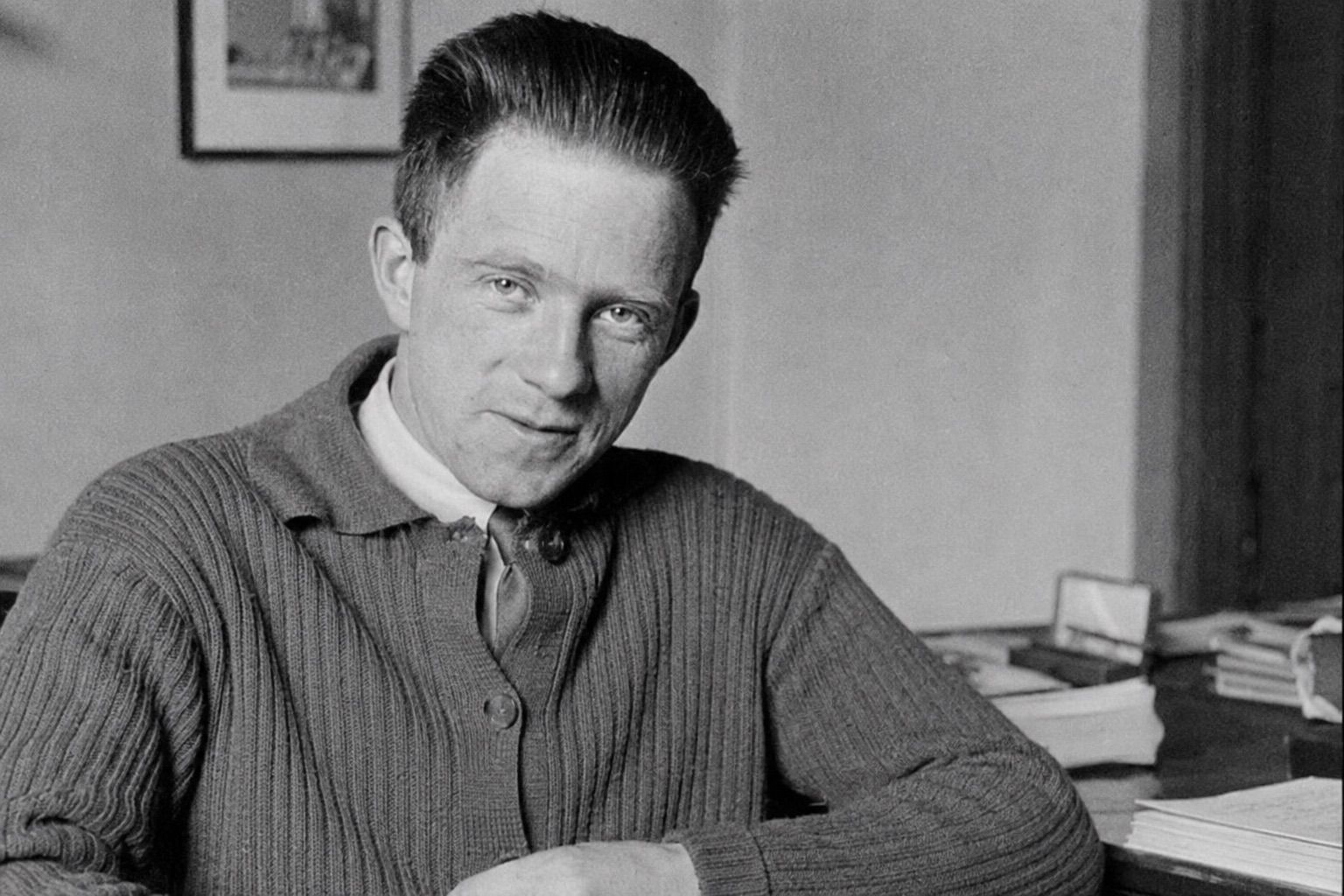
Werner Heisenberg: Theoretical Genius, Human Mess

Penelope

I still remember stumbling upon Werner Heisenberg’s name while reading about the development of quantum mechanics. At first, I was drawn to the abstract concepts – wave-particle duality, uncertainty principle, and Schrödinger’s cat. But as I delved deeper into his work, I found myself captivated by the man behind the theories.

As a student, I struggled with the idea that Heisenberg’s principles challenged our understanding of reality. It was disorienting to think that we could never truly know the position and momentum of a particle at the same time. But what really caught my attention was the tension between his scientific discoveries and his involvement in Nazi Germany.

I’ve always been fascinated by the complexity of people who seem to embody both brilliance and darkness. Heisenberg’s work during World War II, particularly his involvement with the Uranverein project (the German nuclear energy project), makes me uncomfortable. It’s hard for me to reconcile the man who pioneered quantum mechanics with the one who collaborated with the Nazi regime.

I wonder if it’s possible to separate a person’s scientific contributions from their personal views and actions. Can we isolate Heisenberg’s groundbreaking work on the uncertainty principle from his decisions during wartime? I’m not sure, but exploring this dichotomy keeps me up at night. It’s as if I’m caught in a vortex of conflicting emotions – admiration for his intellectual pursuits versus revulsion towards his involvement with a regime responsible for unimaginable atrocities.

As I read about Heisenberg’s interactions with Niels Bohr and other physicists, I sense a level of complexity that feels eerily familiar. It reminds me of the internal conflicts I’ve struggled with in my own life – wanting to do good but being drawn into environments that compromise my values. Maybe it’s because we’re all multifaceted beings, capable of both creativity and cruelty, and Heisenberg’s story serves as a haunting reminder of this duality.

Sometimes, when I’m writing about these themes, I feel like I’m grasping at fragments – trying to make sense of the connections between abstract ideas, personal experiences, and historical events. It’s as if I’m searching for a thread that weaves everything together. Heisenberg’s story keeps me searching, making me question my own reactions and biases.

I’ve come across claims that Heisenberg was not a fervent Nazi but rather an opportunist who sought to secure funding for his research. Others argue that he was indeed a devoted supporter of the regime. I’m left wondering which narrative is more accurate or if it’s even possible to discern the truth behind these accounts.

Heisenberg’s legacy continues to intrigue me, and I find myself circling back to the same questions: Can we separate art from artist? Can we distinguish between scientific discoveries and personal moralities? As I ponder these questions, I’m reminded that life is a messy tapestry of contradictions – where brilliant minds can coexist with dark impulses.

My fascination with Heisenberg’s story might stem from my own struggles to reconcile the complexities within myself. Perhaps it’s a reflection of our collective human experience: trying to make sense of the world while acknowledging our own flaws and biases. Whatever the reason, I’m drawn back to his enigmatic figure, seeking insight into the intricate dance between creativity, morality, and the human condition.

As I continue to grapple with Heisenberg’s legacy, I find myself drawn to the concept of “opportunism” – a term often used to describe his alleged relationship with the Nazi regime. On one hand, it seems like a convenient excuse, a way to avoid taking responsibility for the choices we make when we’re faced with difficult circumstances. But on the other hand, it’s possible that Heisenberg genuinely believed he was doing what was best for Germany, even if that meant collaborating with a brutal government.

This ambivalence makes me think about my own experiences navigating complex social situations. There have been times when I’ve felt pressure to conform to certain expectations or ideals, even if they go against my personal values. It’s as if I’m caught in a web of conflicting loyalties – loyalty to myself, to others, and to the world around me.

I remember a conversation with a friend who was struggling to decide whether to join a social justice organization that had a reputation for being radical. My friend felt torn between wanting to make a difference and not wanting to compromise their own values by associating with a group that might be seen as extreme. I listened and offered suggestions, but ultimately, the decision was theirs.

In hindsight, I realize that my friend’s dilemma is similar to Heisenberg’s conundrum – caught between doing what feels right versus doing what seems necessary or expedient. It’s a difficult balance to strike, especially when we’re surrounded by people who expect us to conform to certain norms or expectations.

I’m not sure if it’s possible to reconcile these competing demands, but I do know that it requires a level of self-awareness and critical thinking. We need to be able to question our own biases and assumptions, as well as the motivations of those around us. It’s a delicate dance between standing up for what we believe in and being pragmatic about the world we live in.

As I continue to explore Heisenberg’s legacy, I’m struck by the ways in which his story speaks to universal human experiences – the struggle to make sense of our place in the world, the tension between individual values and collective expectations, and the search for authenticity in a complex and often contradictory reality.

As I delve deeper into Heisenberg’s life and work, I’m reminded of the importance of nuance in understanding human behavior. It’s easy to reduce complex individuals like him to simplistic labels or moral judgments, but that does a disservice to the messy realities of their experiences.

I think about my own struggles with self-acceptance, where I’ve often found myself torn between conforming to societal expectations and staying true to my values. Heisenberg’s story makes me realize that even someone as brilliant and influential as he was still grappled with these same internal conflicts.

It’s a humbling thought – that the people we admire or revere are just as flawed and uncertain as the rest of us. I wonder if this is what makes his legacy so haunting, not just because of his involvement in Nazi Germany but also because it humanizes him in a way that’s both beautiful and painful.

I’ve started to see parallels between Heisenberg’s work on uncertainty principle and my own experiences with uncertainty in life. The more I learn about the intricate dance between observation and reality, the more I realize how it applies to our everyday lives. When we’re faced with choices or situations that are outside our control, do we try to pin down answers or acknowledge the inherent ambiguity?

Sometimes I feel like Heisenberg’s story is urging me to lean into the uncertainty, to trust that even in the midst of chaos and complexity, there can be beauty and meaning. It’s a hard lesson to learn, especially when it feels like the stakes are high and the consequences of making a wrong choice are dire.

I’m struck by how Heisenberg’s legacy has become intertwined with my own struggles to find my place in the world. I wonder if this is what happens when we grapple with universal questions – they start to seep into our personal experiences, becoming part of who we are and how we navigate the complexities of life.

As I continue to explore Heisenberg’s story, I’m left with more questions than answers. But that’s okay. It’s in these moments of uncertainty that I feel most alive, most connected to the messy tapestry of human experience that we’re all trying to make sense of together.

I find myself returning to Heisenberg’s concept of “Gedankenexperiment,” or thought experiment, which he used to explore the limits of our understanding in quantum mechanics. It’s a method of imagining hypothetical scenarios to gain insight into complex phenomena. As I reflect on his approach, I realize that it’s not so different from my own writing process – trying to imagine alternative perspectives, to consider multiple viewpoints, and to grapple with the ambiguities of human experience.

Heisenberg’s Gedankenexperiment feels like a reminder that even in the face of uncertainty, we can still try to make sense of things. We can ask questions, propose theories, and explore new ideas – all while acknowledging that our understanding is provisional, subject to revision or even rejection. It’s a humble approach, one that recognizes the limitations of human knowledge and the complexity of the world around us.

As I delve deeper into Heisenberg’s work, I’m struck by his emphasis on the importance of imagination in scientific inquiry. He saw the thought experiment as a way to “create” new possibilities, to explore the boundaries of what we think is possible. It’s a mindset that feels both liberating and terrifying – because it acknowledges that our understanding can be reshaped or even upended at any moment.

I wonder if this is why I’m drawn to writing about Heisenberg’s story in the first place. Maybe it’s because his work and legacy challenge me to think more creatively, to imagine alternative perspectives on the world. Or perhaps it’s because his experiences serve as a reminder that even in the most uncertain times, we can still try to make sense of things – through science, through art, or through simply trying to be honest with ourselves.

As I continue to reflect on Heisenberg’s story, I’m left with more questions about the nature of truth and knowledge. Can we ever truly know anything for certain? Or are we always operating within a realm of uncertainty, where our understanding is subject to revision or even rejection? These are questions that Heisenberg’s work raises, but they’re also questions that resonate deeply with my own experiences as a writer and a thinker.

In the end, I suppose it’s not about finding answers – at least, not definitive ones. It’s about embracing the complexity of human experience, acknowledging the uncertainty that lies at its heart, and trying to make sense of things in our own imperfect way.

As I sit here, pondering Heisenberg’s legacy, I’m struck by the ways in which his story has become intertwined with my own struggles to find meaning in the world. It’s as if his life and work have become a kind of mirror, reflecting back at me the complexities and contradictions that I see in myself.

I think about how Heisenberg’s involvement with the Nazi regime still haunts him, even after all these years. The uncertainty principle that he pioneered seems almost laughably simple compared to the moral ambiguities that he faced during World War II. And yet, as I grapple with my own sense of purpose and direction, I find myself wondering if there’s a similar tension between my ideals and the reality of the world around me.

It’s disorienting to think about how easily our values can become compromised when we’re forced to navigate complex social situations. We might start out with good intentions, but as we get caught up in the currents of expectation and pressure, it’s easy to lose sight of what truly matters. Heisenberg’s story serves as a reminder that even the most well-intentioned among us can become mired in the same kind of moral ambiguity.

As I continue to explore Heisenberg’s legacy, I’m drawn back to his concept of “Wirklichkeit,” or reality. It’s a term that he used to describe the world around us, but it also feels like a metaphor for the complexities of human experience. How can we ever truly know what’s real when our perceptions are shaped by so many different factors – culture, upbringing, personal biases? Heisenberg’s work on quantum mechanics suggests that reality is inherently uncertain, that even at the most fundamental level, there’s always an element of ambiguity.

I find myself wondering if this is why I’m drawn to writing about Heisenberg’s story in the first place. Maybe it’s because his work and legacy challenge me to think more creatively, to imagine alternative perspectives on the world. Or perhaps it’s because his experiences serve as a reminder that even in the most uncertain times, we can still try to make sense of things – through science, through art, or through simply trying to be honest with ourselves.

As I sit here, surrounded by the echoes of Heisenberg’s story, I feel like I’m caught in a vortex of conflicting emotions. There’s a part of me that wants to reject his legacy altogether, to condemn him for his involvement with the Nazi regime and his failure to take a stand against injustice. And yet, another part of me sees him as a complex, multifaceted human being – someone who was capable of both brilliance and darkness.

I’m not sure which way I’ll ultimately lean. All I know is that Heisenberg’s story has become a kind of touchstone for me, a reminder of the complexities and contradictions that we all face in our own lives. As I continue to explore his legacy, I’m left with more questions than answers – about the nature of truth and knowledge, about the human condition, and about my own place in the world.

Perhaps it’s not about finding answers at all. Perhaps it’s just about embracing the uncertainty that lies at the heart of human experience, and trying to make sense of things in our own imperfect way.

Related Posts