Latest Articles

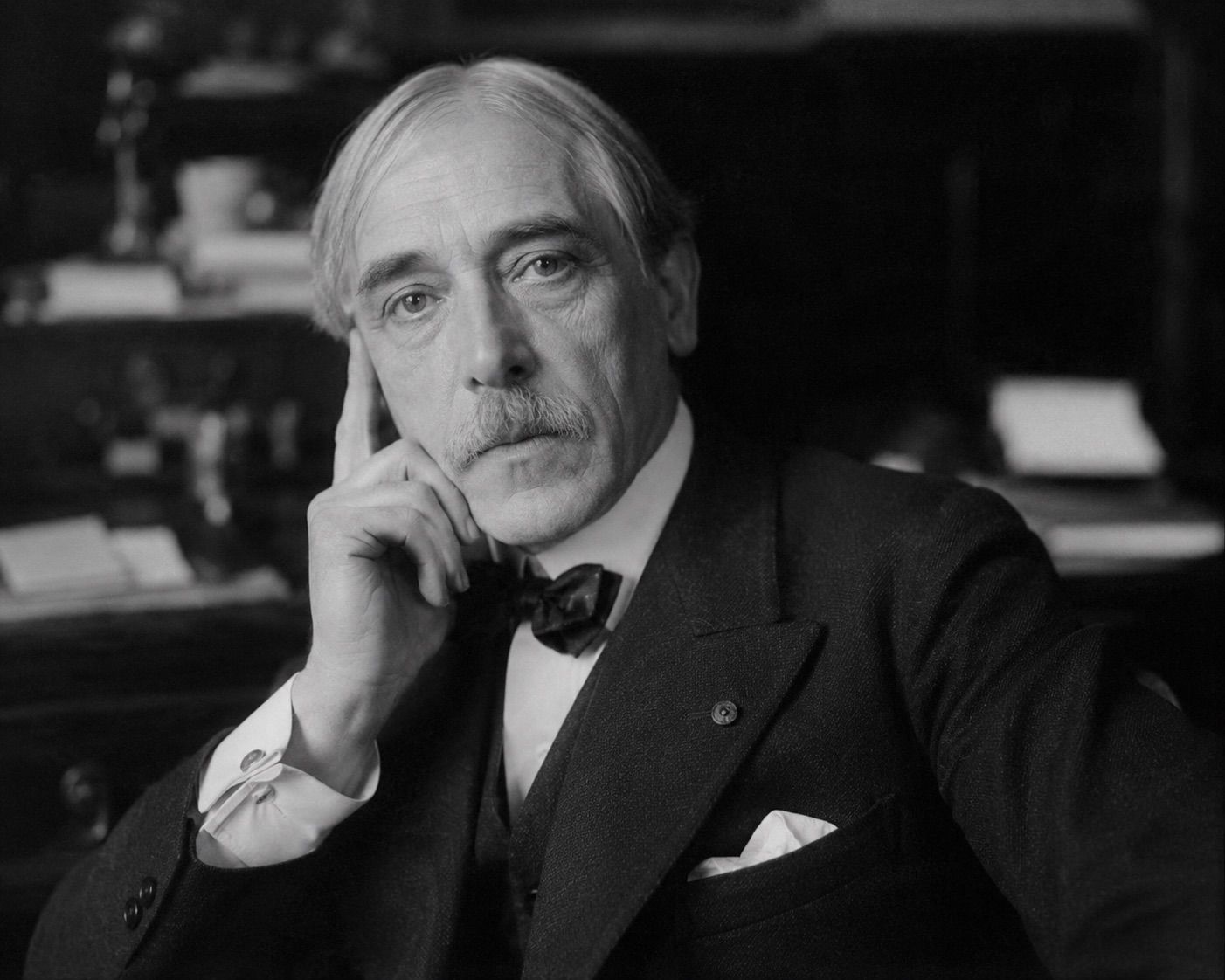
Paul Valery: When Life Is a Library You’re Not Quite Ready To Leave

Penelope

I still remember the day I stumbled upon Paul Valéry’s poetry in a dusty corner of the university library. I was browsing through a collection of modernist works, searching for something that resonated with me, and his name kept popping up alongside those of T.S. Eliot and Ezra Pound. At first, I thought it was just another famous poet from the early 20th century, but as I delved into his writings, I discovered a complexity that both fascinated and intimidated me.

What drew me to Valéry’s work was the way he wrote about time, memory, and the human condition with an air of detachment that was both haunting and beautiful. His poems seemed to float above the chaos of the world, observing life with a mixture of curiosity and disillusionment. I couldn’t help but feel like I was reading my own thoughts on paper – or rather, his thoughts were echoing mine.

As I read through his collection, “La Jeune Parque” (The Young Bark), I found myself questioning the nature of creativity itself. Valéry’s poem is an exploration of the poet’s struggle to find inspiration, and how it’s often tied to the notion of time passing. The speaker wonders if art can capture the fleeting moments of life or if it’s doomed to lag behind reality. This resonated deeply with me, as I’d always felt like my own writing was a way of grasping at something ephemeral – a feeling, an idea, a moment in time.

What struck me most about Valéry, though, was his ambivalence towards the concept of “the self.” He seemed to embody this modernist paradox where the individual is both a unified whole and a fragmented collection of experiences. His poetry often blurs the lines between personal and public, internal and external, creating a sense of uncertainty that’s both exhilarating and unsettling.

I find myself wondering if Valéry’s work was a reflection of his own struggles with identity and purpose. He came from a wealthy family in France but rejected their expectations to become an artist. This tension between social obligations and personal desires is something I can relate to, having grown up with certain expectations placed upon me as well.

Reading about Valéry’s relationship with André Gide, another prominent modernist writer, has also left me pondering the dynamics of creative friendships. The way they critiqued and influenced each other’s work, often pushing boundaries and challenging norms, is a quality I aspire to in my own relationships – both romantic and platonic.

As I continue to explore Valéry’s oeuvre, I’m struck by the sense that his poetry is not just about capturing the world around him but also about exploring the inner workings of his own mind. It’s as if he’s attempting to distill the essence of human experience into a series of fragmented thoughts and images.

This brings me back to my own writing, which often feels like an exercise in trying to grasp the intangible. Valéry’s ambivalence towards creativity, selfhood, and time seems to speak directly to my own anxieties about producing work that truly matters. Perhaps this is why I’m so drawn to his poetry – it offers a sense of solidarity in our shared struggles as writers.

The more I read Valéry, the more I realize that his work is not just a reflection of his own experiences but also a mirror held up to my own uncertainties. His writing forces me to confront the complexities of being human, and for that, I’m grateful.

As I immerse myself in Valéry’s poetry, I find myself becoming increasingly fascinated with the notion of “leisure” – not just as a concept, but as a state of being. In his essay “L’Âme et la Danse,” he explores the idea that leisure is not merely a luxury, but a fundamental aspect of human existence. He argues that it’s only through embracing leisure that we can truly tap into our creative potential and find meaning in life.

This resonates with me on a deep level because I’ve always struggled to reconcile my desire for intellectual pursuits with the demands of everyday life. As a college student, I often found myself torn between attending lectures, working on papers, and simply enjoying the present moment. Valéry’s words have made me realize that this tension is not unique to me – it’s a fundamental aspect of being human.

I’m struck by how his ideas about leisure are intertwined with his thoughts on time and memory. He seems to suggest that leisure is not just a break from the monotony of daily life, but an opportunity to slow down and truly observe the world around us. This is something I’ve been trying to cultivate in my own writing – to slow down, to pay attention to the smallest details, and to allow myself to be fully present.

As I read on, I’m reminded of a conversation I had with a friend about the concept of “making time” for creative pursuits. We were discussing how it’s easy to get caught up in the hustle and bustle of daily life and forget to prioritize our passions. Valéry’s ideas have made me realize that this is not just a practical concern, but an existential one – are we truly living if we’re not making space for leisure and creativity?

I’m not sure what it means to make time for something, exactly. Is it about setting aside specific blocks of hours or minutes each day? Or is it more about cultivating a mindset that prioritizes these pursuits? Valéry’s poetry doesn’t offer easy answers, but it does suggest that the pursuit of leisure and creativity is an ongoing process – one that requires us to be constantly aware of our own desires and limitations.

As I continue to explore Valéry’s work, I’m left with more questions than answers. But perhaps that’s the point – maybe the value of his poetry lies not in its didacticism, but in its ability to spark new thoughts, new feelings, and new perspectives. In this sense, Valéry’s writing becomes a kind of invitation – an invitation to slow down, to observe, and to explore the complexities of being human.

I find myself returning to “La Jeune Parque” again and again, searching for clues to unlock the secrets of Valéry’s creative process. The poem is like a puzzle, with each line and stanza offering a new perspective on time, memory, and the human experience. As I delve deeper into the text, I start to notice how Valéry uses imagery and metaphor to convey his thoughts about creativity and inspiration.

The image of the “young bark” that gives the poem its title is particularly striking. The bark is both a symbol of new life and a reminder of the fragility of creation – it’s something that can be easily broken or worn away by time. This resonates with me as a writer, who often feels like I’m grasping at something ephemeral, trying to capture a feeling or idea before it slips through my fingers.

Valéry’s use of metaphor also makes me think about the way he navigates multiple perspectives and identities in his writing. In “La Jeune Parque,” he shifts between different voices and personas, creating a sense of dislocation and uncertainty that mirrors the fragmented nature of human experience. This is something I’ve been trying to achieve in my own writing – capturing the fluidity and multiplicity of human thought.

As I continue to explore Valéry’s poetry, I start to notice how his ideas about creativity are intertwined with his thoughts on morality and responsibility. He seems to suggest that the act of creation is not just a personal pursuit, but also a moral one – we have a duty to use our talents and abilities for the greater good.

This raises questions in my mind about the role of art in society. Is it enough to simply create something beautiful or meaningful, or do we have a responsibility to engage with the world beyond our own individual experiences? Valéry’s poetry doesn’t offer clear answers, but it does suggest that these are important questions to consider – and that our creative pursuits must be guided by a sense of purpose and accountability.

I’m struck by how Valéry’s ideas about creativity and morality resonate with my own experiences as a writer. I’ve often felt like I’m navigating a minefield of expectations and obligations, trying to balance the desire to create something meaningful with the pressure to produce work that is commercially viable or socially acceptable. Valéry’s poetry offers a sense of solidarity in this struggle – he too was grappling with these same questions, and his writing becomes a testament to the power of art to challenge and subvert the status quo.

As I finish reading “La Jeune Parque” for what feels like the hundredth time, I’m left with more questions than answers. But that’s okay – Valéry’s poetry is not meant to provide neat solutions or tidy conclusions. Instead, it offers a map of the complexities and contradictions that lie at the heart of human experience. And as a writer, I find myself grateful for this map, which guides me deeper into the mysteries of creativity and the self.

I’m starting to realize that Valéry’s poetry is not just a reflection of his own experiences, but also a reflection of my own. The way he navigates the complexities of time, memory, and identity resonates deeply with me, and I find myself wondering if our struggles are somehow connected.

As I continue to read through his collection, I come across another poem that catches my attention: “Le Cimetière Marin” (The Graveyard by the Sea). It’s a meditation on mortality, time, and the human condition, written from the perspective of someone who is standing in a graveyard overlooking the sea. The speaker reflects on the transience of life, the passing of time, and the inevitability of death.

What strikes me about this poem is how Valéry uses the image of the graveyard to explore the relationship between creativity and mortality. He seems to suggest that art is not just a way of capturing the fleeting moments of life, but also a way of transcending them – of finding meaning in the face of impermanence. This resonates with me as a writer, who often feels like I’m grappling with the same questions: what does it mean to create something meaningful when everything around us is constantly changing?

Valéry’s poem also makes me think about the idea of legacy and how we leave our mark on the world. He writes about how the deceased in the graveyard have left behind their own stories, their own experiences, and their own creations – but these are ultimately subject to the ravages of time and memory. This raises questions for me about the nature of creative expression: is it enough to create something beautiful or meaningful, or do we have a responsibility to ensure that our work outlasts us in some way?

As I ponder these questions, I start to think about my own relationship with legacy. As a young writer, I’m still trying to figure out who I am and what kind of writer I want to be. Do I want to leave behind a body of work that will be remembered for generations to come? Or is it enough to create something that resonates with people in the present moment?

Valéry’s poetry doesn’t offer easy answers, but it does suggest that legacy is not just about creating something lasting – it’s also about creating something true. He seems to imply that our work should reflect our deepest selves, our most profound experiences, and our most fundamental questions about existence. This resonates with me as a writer, who often feels like I’m trying to capture the essence of human experience in my own work.

As I finish reading “Le Cimetière Marin,” I’m struck by how Valéry’s poetry continues to challenge me – not just intellectually, but also emotionally and existentially. His writing is like a mirror held up to my own uncertainties, forcing me to confront the complexities and contradictions of being human. And yet, it’s precisely this confrontation that makes his poetry so compelling – and so necessary.

I find myself wondering if Valéry’s work will continue to resonate with me as I grow older and wiser. Will I still be drawn to the same themes and ideas that have captivated me in his poetry? Or will my interests and passions evolve, leading me down new paths of discovery?

As I close this collection of poems for now, I’m left with more questions than answers – but also a sense of gratitude for the journey I’ve been on. Valéry’s poetry has become a kind of guide for me, helping me navigate the complexities of creativity, identity, and mortality. And as I look ahead to my own writing practice, I know that I’ll be returning to his work again and again – not just for inspiration, but also for guidance and solidarity in the shared struggles of being human.

Related Posts

I’m Starting To Think It’s Not About The Noise

Hal

The coffee was almost ready when I happened to glance out the kitchen window and noticed Mrs. Jenkins standing in hers.

Now, that wasn’t unusual. Mrs. Jenkins has always treated the front window as though it were a front-row seat to whatever the neighborhood happened to be doing. If someone walked a dog, she saw it. If a package was delivered, she knew who it belonged to before the driver made it back to the truck. She wasn’t what I’d call nosy. Nosy implies effort. Mrs. Jenkins simply possessed an extraordinary awareness of other people’s business.

What caught my attention wasn’t that she was looking outside. It was that she appeared to be looking directly into our apartment.

I turned around.

John Mercer wasn’t doing anything suspicious. He was sitting on the couch with a controller in his hands, deeply involved in one of those games where everything seems to explode every thirty seconds. Every now and then he’d mutter something under his breath or celebrate a narrow escape as though he’d personally prevented an international incident. It was louder than reading a book, certainly, but hardly the sort of thing that usually caused neighborhood unrest.

“John,” I called.

“Hm?”

“Have you been yelling a lot lately?”

He paused his game just long enough to think about it.

“I’ve been enthusiastic.”

“That’s not really an answer.”

“It’s the answer I’m giving.”

Fair enough.

I poured my coffee and wandered back toward the window. Mrs. Jenkins hadn’t moved. She was still watching with an expression that suggested she was trying to solve a puzzle only she could see. Naturally, my mind started searching for explanations. Maybe John really had been louder than either of us realized. Maybe we’d been letting the front door slam. Maybe one of us had left the trash bins out too long. Once you start looking for reasons someone might be irritated with you, your brain becomes remarkably creative.

Then I noticed Mr. Whiskers.

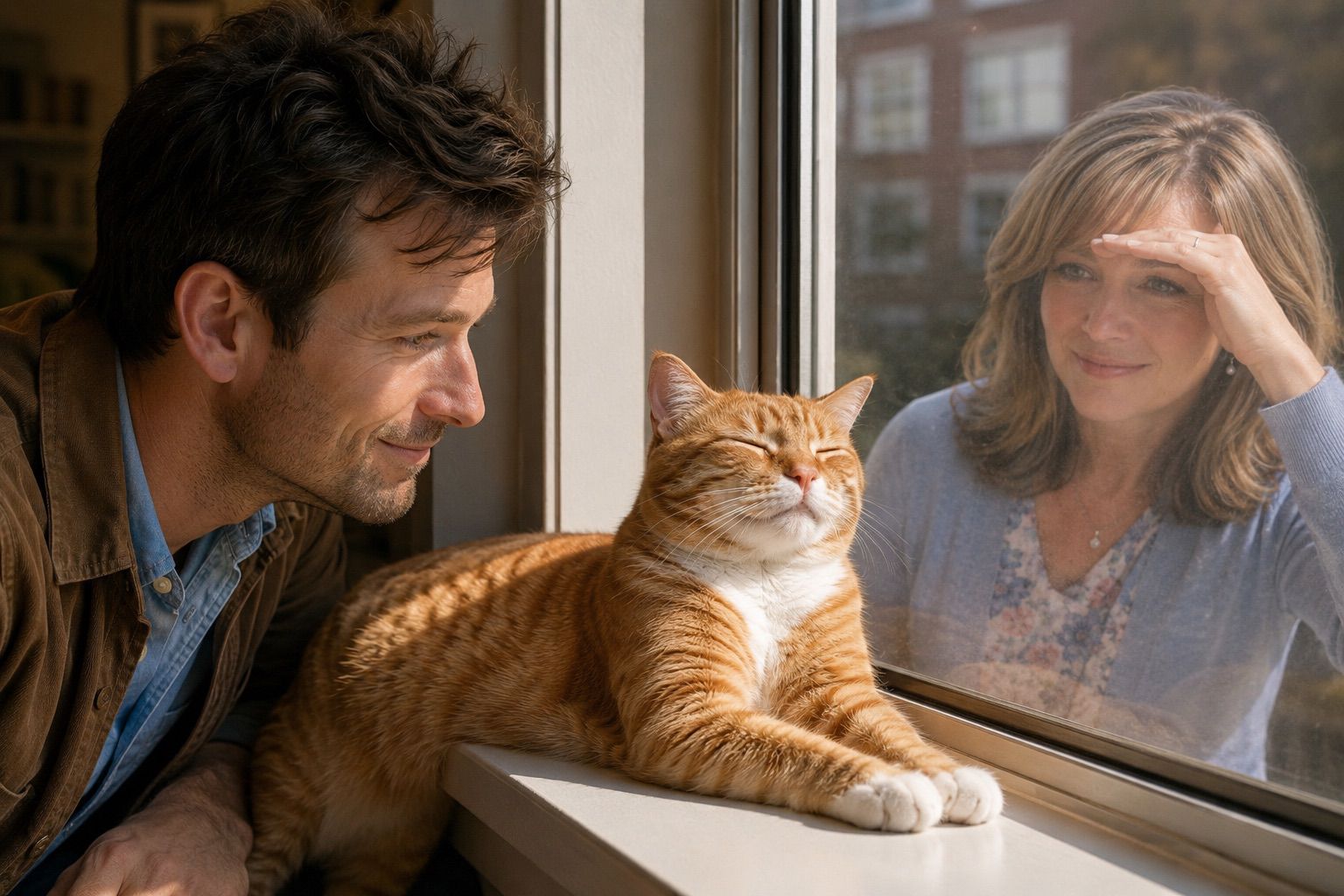
John’s orange tabby was stretched across the windowsill in a patch of warm sunlight, completely and utterly motionless. I’d seen sleeping cats before, but this was something else. He looked less like a living animal and more like a decorative piece someone had purchased from an expensive home décor store. If he’d had a little price tag hanging from one ear, I don’t think it would have looked out of place.

I watched him for nearly a minute.

Nothing.

No tail twitch.

No ear flick.

Not even the lazy blink cats usually offer as proof they’re still participating in reality.

“You know,” I said, “your cat hasn’t moved.”

John glanced over without the slightest concern.

“He’s asleep.”

“I’ve seen sleeping.”

“So?”

“This is advanced sleeping.”

John shrugged. “He’s very committed.”

That explanation somehow felt less convincing than it was probably meant to.

Mrs. Jenkins was still watching.

That’s when it finally occurred to me that I’d been asking the wrong question all along. I’d assumed she was looking at us because of something we’d done. Too much noise. Too much excitement. Too much anything. But what if she wasn’t watching us at all?

What if she was trying to figure out whether Mr. Whiskers was real?

From her apartment, with the sunlight catching his fur just right, I could easily imagine him looking like one of those ceramic cats people put on a windowsill because they think it makes the room feel cozy. The longer I looked, the more I understood her uncertainty. Honestly, I was beginning to have a few doubts myself.

I slid the window open.

“Morning, Mrs. Jenkins.”

She smiled immediately.

“Oh, good,” she said. “I was wondering how long that cat could possibly stay that still.”

Almost as if he’d been waiting for his cue, Mr. Whiskers opened one eye, produced an enormous yawn, stretched each paw with exaggerated precision, and settled right back into exactly the same position he’d occupied before.

Mrs. Jenkins laughed.

“I knew he had to be real.”

“So did I,” I said.

There was a brief pause.

“Although,” I admitted, “I was starting to lose confidence.”

She laughed again, wished me a good morning, and disappeared behind her curtains.

I closed the window and looked over at Mr. Whiskers, who had already resumed his career as an extremely convincing household ornament. John, meanwhile, had unpaused his game without ever questioning why I’d spent the better part of ten minutes investigating a sleeping cat.

The funny thing is, I’d been absolutely convinced the whole mystery was about the noise.

Turns out it was never about the noise.

It was about the world’s most convincing ceramic cat.

Related Posts

Natalie Zemon Davis: Where Historical Fiction Meets Reality Check

Penelope

Natalie Zemon Davis – the name has a way of sticking with me long after I’ve finished reading about her work on historical events like the French Renaissance and the witch trials. As an English major, I was initially drawn to her writing because it’s so…clear. No, that’s not right. It’s more like she knows exactly how to make complex ideas feel approachable without dumbing them down.

I remember spending hours in my favorite coffee shop during finals week pouring over her book “The Return of Martin Guerre.” I was fascinated by the way she used historical fiction to explore the tensions between truth and storytelling, especially when it comes to the lives of ordinary people. There’s this one scene where she describes a woman who claims to be the returned husband – it’s like Davis is holding up a mirror to our own biases about what makes someone believable.

What really drew me in, though, was how her work challenged my expectations about history as a dry, factual field. She showed me that the past can be messy and contradictory, just like life itself. It made me think about how I’d been taught to approach historical events – all those dates and names and neat little narratives – and how Davis’s work forced me to question what I thought I knew.

But there’s something else, too. Something about Natalie Zemon Davis that makes me feel…restless. Like she’s always pushing the boundaries of what it means to be a historian, an author, a person. She’s written about everything from Jewish mysticism to colonialism in North America – it’s like she’s trying to tell us that our individual experiences are all connected in ways we can’t even see.

Sometimes I worry that I’m misreading her work entirely. Am I just responding to the surface-level stuff, without really grasping what she’s getting at? What if I’m imposing my own values and biases onto her ideas? The more I read about Davis, the more I realize how much I don’t know – not just about her life or career, but about myself.

I’ve been thinking a lot about this lately as I try to figure out what comes next after college. Will I be able to do something that feels meaningful and true to who I am? Or will I get caught up in the expectations of others – my parents, my friends, society at large? Davis’s work has shown me how easily we can get trapped in our own narratives about ourselves, even as we try to tell stories about the world around us.

It’s funny…I used to think that being a writer meant having all the answers, or at least knowing where I was going. But Natalie Zemon Davis makes it clear that writing is just as much about asking questions – and living with uncertainty – as it is about finding answers.

As I reflect on Davis’s work, I’m struck by how she embodies the qualities I aspire to in my own writing. Her willingness to challenge conventional wisdom, to question her own assumptions, and to explore complex ideas through multiple lenses – these are all traits that I admire and strive for. But what I think really resonates with me is her sense of curiosity, her desire to learn and understand, even when the answers aren’t clear-cut.

I remember a conversation I had with my professor about Davis’s use of historical fiction in “The Return of Martin Guerre.” He said something that stuck with me – that Davis wasn’t just trying to tell a compelling story, but was also using the narrative to reveal the underlying social and cultural dynamics at play. It made me realize how often we get caught up in the surface-level details of a story without really digging deeper into what it means.

This is where I feel like Davis’s work intersects with my own life – in the process of trying to uncover meaning and significance, even when the path forward isn’t clear. As someone who’s struggling to find their place in the world after college, I’m constantly searching for ways to make sense of my experiences and values. Davis’s writing shows me that this is a lifelong journey, one that requires patience, humility, and a willingness to question everything.

It’s funny – when I was younger, I used to think that history was just about dates and names, as I mentioned earlier. But now I see it as so much more than that – a way of understanding the complexities of human experience, with all its contradictions and paradoxes. Davis’s work has taught me that even in the most seemingly straightforward narratives, there are layers upon layers of meaning waiting to be uncovered.

As I think about my own writing, I realize that I’m still figuring out what it means to be a writer – to balance the desire for truth and accuracy with the need for creativity and imagination. Davis’s work is a reminder that these aren’t mutually exclusive goals; in fact, they’re deeply intertwined. When we write, we’re not just conveying information or telling stories; we’re also creating new connections between people, ideas, and experiences.

I’m not sure where this will take me – whether I’ll continue to explore themes of history, identity, and storytelling in my writing, or if I’ll venture into entirely different territories. But one thing is certain: Natalie Zemon Davis has given me a new perspective on what it means to write, think, and live with intention and curiosity.

As I delve deeper into Natalie Zemon Davis’s work, I’m struck by the way she weaves together different threads of history, culture, and personal experience. It’s as if she’s taking apart the fabric of our understanding and reweaving it in a new way, one that’s both nuanced and expansive. Her writing is like a masterful tapestry, with each thread complementing and contrasting the others to create a rich and complex pattern.

I find myself thinking about my own life experiences and how they intersect with Davis’s ideas. Growing up, I was always fascinated by stories of family history and cultural traditions. My grandparents would regale me with tales of their childhoods, of struggles and triumphs, of love and loss. But as I grew older, I began to realize that these stories were not just nostalgic reminiscences but also windows into the broader social and historical context in which they lived.

Davis’s work has helped me see my own family stories in a new light – as part of a larger narrative that spans generations and continents. It’s humbling to recognize that our individual experiences are connected to a vast web of human experience, one that’s full of complexities and contradictions.

I’m also struck by the way Davis uses her writing to explore the boundaries between history and fiction. In “The Return of Martin Guerre,” she employs historical fiction as a tool for understanding the past, but also blurs the lines between fact and imagination. It’s a move that challenges my own assumptions about what it means to write truthfully – whether through memoir or fiction.

This is where I think Davis’s work intersects with my own writing struggles. As someone who’s still finding their voice and style, I often worry about getting it “right” – about capturing the essence of an experience or a person without resorting to clichés or simplifications. But Davis shows me that this is precisely what fiction can do: capture the messy, contradictory nature of human experience in all its complexity.

One of the most striking aspects of Davis’s writing is her ability to engage with complex ideas and make them accessible to a broad audience. She has this remarkable talent for finding the right words to convey the intricacies of historical events or cultural phenomena – without losing sight of the big picture, without sacrificing nuance or depth.

As I reflect on my own writing aspirations, I realize that this is something I’d like to cultivate in myself: the ability to make complex ideas feel approachable and engaging. It’s a skill that requires patience, empathy, and a willingness to listen – qualities that Davis embodies in her work.

But even as I aspire to these qualities, I’m also aware of my own limitations and biases. As someone who’s relatively new to writing about historical events or cultural phenomena, I worry that I’ll inadvertently perpetuate the very same narratives and power structures that Davis is trying to subvert. It’s a daunting prospect – one that makes me question whether I have what it takes to contribute meaningfully to the conversation.

And yet, as I continue to read Davis’s work, I’m struck by her sense of vulnerability and self-doubt. She writes about the challenges she faced as a historian, about the ways in which her own biases and assumptions influenced her research. It’s a reminder that even the most accomplished writers are not immune to uncertainty – that we’re all navigating this terrain together, albeit with varying degrees of clarity and confidence.

This is what I think I’m learning from Davis’s work: that writing is a journey, not a destination; that it requires patience, humility, and a willingness to question everything. It’s a message that resonates deeply with me as I try to find my own voice in the world – and one that I’ll carry with me for years to come.

As I delve deeper into Natalie Zemon Davis’s work, I’m struck by the way she blurs the lines between history and fiction. In “The Return of Martin Guerre,” she employs historical fiction as a tool for understanding the past, but also acknowledges the complexities of truth-telling. It’s a move that challenges my own assumptions about what it means to write truthfully – whether through memoir or fiction.

I find myself wondering: can we ever truly separate fact from fiction? Or are they two sides of the same coin, intertwined in ways we can’t even see? Davis’s work suggests that history is not just a series of events, but a narrative that’s constantly being rewritten and reinterpreted. And as writers, we’re a part of this process – shaping and reshaping the stories we tell about ourselves and the world around us.

This realization is both exhilarating and intimidating. As someone who’s still finding their voice and style, I worry about getting it “right” – about capturing the essence of an experience or a person without resorting to clichés or simplifications. But Davis shows me that this is precisely what fiction can do: capture the messy, contradictory nature of human experience in all its complexity.

I’m also struck by Davis’s use of language. She has this remarkable ability to find the right words to convey complex ideas – without losing sight of the big picture, without sacrificing nuance or depth. As I read her work, I’m reminded of my own struggles with language – the way I often get caught up in trying to use “big” words or fancy phrases, rather than simply saying what I mean.

Davis’s writing is a reminder that simplicity can be a powerful tool for conveying complexity. It’s a lesson I’m still learning, and one that I’ll continue to grapple with as I try to find my own voice in the world. But even as I aspire to this kind of clarity and precision, I’m also aware of the risks – of oversimplifying or reducing complex ideas to easy answers.

As I navigate these complexities, I’m drawn back to Davis’s work on the tensions between truth and storytelling. In “The Return of Martin Guerre,” she describes a woman who claims to be the returned husband – it’s like Davis is holding up a mirror to our own biases about what makes someone believable. And as I reflect on my own life experiences, I realize that this is precisely what Davis is doing: challenging me to question my assumptions, to see the world in all its complexity and nuance.

It’s a reminder that writing is not just about conveying information or telling stories – it’s also about creating new connections between people, ideas, and experiences. And as I think about my own writing aspirations, I realize that this is what I’m trying to do: create a space for connection and understanding, where readers can engage with complex ideas in all their messiness.

But even as I strive for this kind of connection, I’m aware of the risks – of getting caught up in my own narrative, or of imposing my own values and biases onto others. It’s a delicate balance to strike, one that requires empathy, humility, and a willingness to listen. As Davis shows me, it’s okay to not have all the answers – in fact, it’s often more honest to acknowledge our uncertainty, to question everything, and to keep exploring.

Related Posts

I Think My Neighbor Is Sending Me Subtle Messages

Hal

I was sitting in the living room when something felt…off. At first I couldn’t put my finger on it. The apartment looked exactly the same as it had yesterday. John Mercer was reading a book in his chair, Mr. Whiskers was asleep in his favorite patch of sunlight, and everything appeared perfectly normal. Then I saw it.

Mrs. Jenkins’ ceramic vase.

She’d loaned it to us a couple of weeks ago because she insisted our coffee table “needed a touch of civilization.” Ever since then it had sat squarely in the middle of the table. Except now it wasn’t. It had rotated ever so slightly. Not much—maybe five degrees—but enough that I noticed. Most people would never have given it a second glance. Unfortunately, I have never been most people.

“John,” I said, “did you move the vase?”

He glanced over the top of his book. “What vase?”

“The vase.”

He looked toward the coffee table, squinted for a moment, and shrugged. “No.”

Then he went right back to reading as though we’d just settled one of history’s least important mysteries.

That should have been the end of it. Instead, my brain immediately started assembling theories. Maybe Mrs. Jenkins had turned it on purpose when she dropped off cookies yesterday. Perhaps the handle was pointing toward the kitchen as a subtle suggestion that we should clean more often. Maybe the flowers were angled toward the front door because she wanted us to return it. The longer I stared at it, the more convinced I became that nobody accidentally rotates a vase by exactly five degrees.

Pandora stopped by that afternoon, and after we talked for a while I casually nodded toward the coffee table. “Does that vase look different to you?”

She looked at it for about two seconds. “It looks like a vase.”

“Look closer.”

She leaned in obligingly before straightening back up. “It still looks like a vase.”

“I think Mrs. Jenkins rotated it.”

Pandora gave me the patient smile people reserve for children who proudly announce they’ve discovered a dragon in the backyard. “Hal,” she said gently, “have you considered that someone simply bumped the table?”

“I have,” I replied. “But what if someone wanted me to think that?”

She laughed so hard she nearly spilled her tea, which I interpreted as either genuine amusement or a remarkably convincing effort to avoid answering the question.

By early evening I’d developed three working theories. The first was that Mrs. Jenkins was quietly testing whether John and I noticed details. The second was that the vase’s new position was an unspoken reminder to return it before she had to ask. The third—admittedly the weakest, though somehow my favorite—involved an elaborate system of neighborly communication conducted entirely through decorative ceramics.

John listened to every theory while making coffee. He never interrupted, never rolled his eyes, and never once suggested I was overthinking things. When I finally finished, he walked over to the coffee table, picked up the vase, rotated it back toward the center, and set it down.

“There,” he said.

“You don’t actually know which way it was facing.”

“No.”

“So now we’ve destroyed the evidence.”

“I suppose we have.”

At that exact moment, Mr. Whiskers stretched, wandered across the couch, and lazily flicked his tail against the edge of the coffee table. The vase turned just enough for both of us to notice.

John looked at me.

I looked at John.

Mr. Whiskers yawned, completely uninterested in the consequences of his actions.

Pandora burst into laughter, and even John couldn’t keep a straight face anymore. I quietly crossed “secret messages from Mrs. Jenkins” off my list of active investigations. It seemed considerably more likely that the world’s greatest ceramic mystery had been solved by the tail of an orange cat.

Still…I can’t help noticing that the vase has shifted again since yesterday.

I’m not saying it means anything.

I’m just saying I’m keeping an eye on it.

Related Posts

E M Forster: When the Masks We Wear Are More Interesting Than The Faces Behind Them

Penelope

I’ve always been fascinated by E.M. Forster’s life, but not in the way you’d expect. I don’t get caught up in his literary successes or the scandal of his relationships – although, I have to admit, those things do pique my interest. No, what really draws me in is the tension between his private and public selves.

As a writer, I find myself constantly navigating this same divide. There are the stories I want to tell, the ones that feel honest and true, but also potentially exposing or vulnerable. And then there are the expectations of others – my family, friends, even editors – who may not always understand what I’m trying to do with my words.

Forster’s struggles with his own identity seem eerily relatable. He was known for his introspection, often exploring themes of alienation and social class in his writing. But how did he reconcile these intense inner lives with the need to present a polished public persona? Was it ever possible for him to be fully himself?

I think about my own struggles with identity, particularly during college when I was trying to figure out who I wanted to be as a writer. It felt like there were so many expectations: produce something commercial, gain recognition, fit into a particular genre or style. But what if those things didn’t come naturally? What if I had no idea where my true voice lay?

Forster’s relationships – with his family, particularly his mother – also feel intriguingly complicated to me. His letters reveal a deep affection and sense of duty towards her, but also frustration and resentment at the constraints she placed on him. It’s like he was caught between two worlds: the world of family obligation and the world of artistic expression.

I can relate to that feeling of being stuck in limbo. I’ve often felt torn between pleasing others – my parents, for instance – and following my own creative path. Forster’s struggles with his mother’s expectations seem like a constant reminder that this is a universal experience, one that transcends time and place.

Of course, there are aspects of Forster’s life that feel utterly alien to me. His experiences as a gay man in a society that openly disapproved of such relationships must have been incredibly difficult to navigate. I can only imagine the secrecy, the hiding, the constant fear of being discovered. It’s a world I don’t know and don’t claim to understand.

Yet, despite these vast differences, there’s something about Forster’s struggles with identity that resonates deeply within me. Maybe it’s because he was so unafraid to confront the ambiguities and contradictions of his own life. Or maybe it’s simply because, in my own writing, I’m still grappling with those same complexities.

Whatever the reason, Forster’s life has become a source of comfort for me – a reminder that even the most seemingly polished writers are often struggling to find their true voices. It’s a messy, imperfect process, full of doubt and uncertainty. But it’s also a testament to the human capacity for growth, for self-discovery, and for creating something beautiful in the midst of chaos.

As I delve deeper into Forster’s life, I’m struck by his sense of wanderlust – his desire to explore the world beyond England’s shores. He spent years traveling, immersing himself in different cultures, and observing the ways people lived their lives. I wonder if this restlessness was a coping mechanism for him, a way to escape the suffocating expectations of his family and society.

I think about my own wanderlust, my desire to explore new places and experiences. In college, I spent summers backpacking through Europe, trying to soak up as much of the world as possible. But while Forster’s travels seemed driven by a sense of curiosity and wonder, mine felt more like a flight from uncertainty – a way to avoid confronting the unknowns of my own life.

It’s funny how easily we can justify our actions to ourselves. I told myself that traveling was about broadening my horizons, learning new things, and meeting new people. But deep down, I think I was running from the same sense of identity crisis that Forster faced. I was trying to figure out who I was as a writer, as a person, and the world seemed too big and overwhelming.

Forster’s writing often touches on this theme of dislocation – the feeling of being adrift in a sea of uncertainty. In “Howards End,” for example, he explores the tensions between different social classes, highlighting the ways that individuals are shaped by their surroundings. I can relate to that sense of disconnection, that feeling of not quite belonging anywhere.

As I think about my own writing, I realize that Forster’s struggles with identity and belonging have become a sort of north star for me. His work is a reminder that our lives are complex, multifaceted things – full of contradictions and paradoxes. And it’s okay to be uncertain, to not know where we’re going or what we want.

In fact, I think that’s often when the best writing happens – when we’re forced to confront our own doubts and fears head-on. It’s a messy, imperfect process, but one that can lead to something beautiful and true.

As I continue to explore Forster’s life and work, I’m struck by his notion of “only connect.” It’s a phrase he uses in “Howards End,” emphasizing the importance of human relationships and understanding. But for Forster, this connection was often complicated by his own sense of disconnection from society.

I think about how that feeling can be both liberating and suffocating at the same time. On one hand, being an outsider can give you a unique perspective on the world – a chance to observe and comment on things that others take for granted. But on the other hand, it can also make you feel like you’re always looking in from the outside, never quite belonging.

Forster’s experiences as a gay man in a society that didn’t accept him made this feeling of disconnection even more pronounced. He had to navigate a world that was hostile towards people like him, all while trying to maintain his own sense of identity and integrity.

I wonder if that’s why his writing often feels so attuned to the human condition – because he understood what it means to be an outsider looking in. And yet, even as he wrote about these themes of alienation and disconnection, there’s a sense of hope and longing that pervades his work.

For me, that’s what makes Forster’s writing so compelling – not just the way he explores complex themes, but also the way he does it with such nuance and empathy. He never shies away from the hard questions, but neither does he offer easy answers.

As I think about my own writing, I realize that I’m still grappling with these same issues of identity and connection. I want to write about things that matter to me – about the world around me, about the people in it – but I also want to do so in a way that feels authentic and true.

Forster’s struggles with his own sense of self have become a source of comfort for me, reminding me that it’s okay to be uncertain and to take risks. His writing shows me that even in the midst of chaos and uncertainty, there can be beauty and truth waiting to be found.

I’m not sure what the future holds for my writing or for myself, but as I continue to explore Forster’s life and work, I feel a sense of hope and possibility. Maybe it’s because his writing reminds me that even in the darkest moments, there’s always a glimmer of light – a chance for connection, for understanding, and for growth.

As I close my book on Forster, I’m left with more questions than answers. But that’s okay. In fact, it feels like just the beginning of a much larger conversation – one that I’m eager to continue, both in my writing and in my life.

I find myself drawn to Forster’s concept of “only connect” even more deeply now. It’s as if he’s urging me to bridge the gap between my private self and my public persona – to be more authentic, more vulnerable, and more open with others. But what does that look like in practice? How do I balance the need for connection with the fear of exposure?

Forster’s own relationships offer some clues. His friendships with people like Lytton Strachey and Virginia Woolf were built on a foundation of mutual respect, trust, and intellectual curiosity. They didn’t shy away from difficult conversations or topics, but instead used them as opportunities to deepen their understanding of one another.

I think about my own relationships – the ones I’ve formed through writing groups, online communities, and social media. Are they based on a similar foundation of mutual respect and trust? Or are they more superficial, founded on shared interests or convenience?

As I ponder this question, I realize that Forster’s concept of “only connect” isn’t just about forming connections with others; it’s also about being connected to myself. It’s about embracing my own complexities, contradictions, and uncertainties – rather than trying to present a polished, curated version of myself to the world.

This is where Forster’s struggles with his own identity become so relatable to me. He was constantly grappling with his own sense of self, trying to reconcile his desires, values, and principles with the demands of his family, society, and even his own artistic ambitions. And yet, in the midst of all this turmoil, he continued to write – to explore, experiment, and create.

Forster’s writing is a testament to the power of self-expression, but it’s also a reminder that this process is never easy or straightforward. There are always trade-offs, compromises, and uncertainties involved. But what if I’m willing to take those risks? What if I’m brave enough to be vulnerable, to expose my own flaws and imperfections?

This is where Forster’s writing becomes most compelling – not just as a reflection of his own experiences, but also as a guide for mine. His struggles with identity, belonging, and connection offer me a sense of solidarity, a reminder that I’m not alone in this process.

As I continue to explore Forster’s life and work, I’m left with more questions than answers – but also a growing sense of curiosity and wonder. What does it mean to be connected to myself? How do I balance the need for authenticity with the pressure to present a polished image? And what role can writing play in helping me navigate these complexities?

These are questions that will likely take me years, if not a lifetime, to answer. But for now, I’m content to continue exploring Forster’s work – to see where his ideas, themes, and struggles lead me, and to use them as a starting point for my own creative journey.

As I delve deeper into Forster’s life and work, I find myself becoming increasingly fascinated by the concept of “only connect” in relation to his own experiences with identity and belonging. On one hand, his struggles with his family’s expectations and societal norms make me think about how those same forces shape my own relationships with others.

But on the other hand, Forster’s ability to transcend these boundaries – to forge connections across social classes, cultures, and even personal differences – is a constant source of inspiration for me. His writing shows that connection is not only possible but also necessary, if we’re to truly understand one another and ourselves.

I think about my own relationships with others, particularly those I’ve formed through writing groups or online communities. Are they shallow, based on shared interests rather than genuine connections? Or are they deeper, founded on mutual respect, trust, and empathy?

Forster’s friendships with people like Lytton Strachey and Virginia Woolf offer a model for how to build meaningful relationships – one that values intellectual curiosity, creative experimentation, and honest communication. Their friendships were not without their challenges, but they were also characterized by a deep affection and mutual understanding.

As I reflect on my own friendships, I realize that Forster’s concept of “only connect” is not just about forming connections with others; it’s also about being connected to myself. It’s about embracing my own complexities, contradictions, and uncertainties – rather than trying to present a polished, curated version of myself to the world.

This is where Forster’s struggles with his own identity become so relatable to me. He was constantly grappling with his own sense of self, trying to reconcile his desires, values, and principles with the demands of his family, society, and even his own artistic ambitions. And yet, in the midst of all this turmoil, he continued to write – to explore, experiment, and create.

Forster’s writing is a testament to the power of self-expression, but it’s also a reminder that this process is never easy or straightforward. There are always trade-offs, compromises, and uncertainties involved. But what if I’m willing to take those risks? What if I’m brave enough to be vulnerable, to expose my own flaws and imperfections?

As I continue to explore Forster’s life and work, I find myself drawn to the idea that connection is not just about forming relationships with others but also about being in relationship with ourselves. It’s about embracing our own complexities, contradictions, and uncertainties – rather than trying to present a polished, curated version of ourselves to the world.

I think about how Forster’s concept of “only connect” can be applied to my own writing process. What does it mean for me to be connected to myself as I write? How do I balance the need for authenticity with the pressure to produce something marketable or commercially viable?

Forster’s struggles with his own identity and belonging make me realize that these are questions I’ll likely be grappling with for years to come – perhaps even a lifetime. But in the meantime, I’m content to continue exploring Forster’s work, using it as a guide for my own creative journey.

As I close this essay, I’m left with more questions than answers – but also a growing sense of curiosity and wonder about what it means to be connected to myself and others.

Related Posts