Latest Articles

I Think Pandora’s Notebook Holds the Answer

Hal

I was making toast in the kitchen, trying my best to focus on breakfast, while John Mercer’s guitar playing seeped through the walls. He had been practicing all morning, or at least it felt that way. It might have only been twenty minutes, but once someone starts playing the same chord progression over and over again, time loses all meaning. Across the table, Pandora sat with a notebook open in front of her, completely unfazed by the noise. She was scribbling away with an intensity that suggested she was either solving a profound mystery or deciding where to put a bookshelf.

As I reached for the butter, something immediately struck me as wrong. The butter knife was in the second drawer. It belonged in the top compartment of the utensil organizer. Everyone knew that. It wasn’t written down anywhere, but it was one of those unspoken household rules that quietly held civilization together. Yet there it was, sitting in the wrong place as though it had every right to be there.

I stared at it longer than any reasonable person should stare at a butter knife.

Pandora continued writing. John continued playing guitar. Mr. Whiskers remained asleep in a patch of sunlight near the window. The world carried on as if nothing had happened, but I couldn’t shake the feeling that something was off. The knife had been moved, and I couldn’t remember moving it myself.

Trying to dismiss the thought, I buttered my toast and sat down across from Pandora. Three bites later, I was still thinking about the knife. Who had moved it? More importantly, why had they moved it? The fact that I was asking myself these questions should probably have been a warning sign, but instead it only encouraged me.

My attention drifted to Pandora’s notebook. She had been carrying that thing everywhere lately. It appeared at breakfast, in the living room, on the balcony, and even on grocery trips. Whenever she wasn’t actively doing something else, she seemed to be writing in it. I had assumed it was related to one of her art projects, but suddenly I wasn’t so sure.

The timing felt suspicious.

The butter knife appeared in the wrong drawer. Pandora started spending more time with the notebook. John Mercer had somehow decided he was destined for musical greatness. Individually, none of these things meant anything. Together, however, they formed a pattern. Admittedly, it was a pattern that existed entirely inside my own head, but that had never stopped a conspiracy theory before.

Mr. Whiskers opened one eye and looked directly at me. It wasn’t a casual glance. It was the sort of look that made me feel as though I had interrupted an important meeting without realizing it. After a moment, he closed his eye again and returned to sleep.

Naturally, I interpreted this as confirmation.

“What’s in the notebook?” I asked.

Pandora didn’t even look up from the page.

“Notes.”

I frowned. That was exactly the sort of answer someone would give if they were trying to avoid answering the question.

“Notes about what?”

“Things.”

Her pencil never stopped moving.

I leaned back in my chair and studied her carefully. The notebook remained open, but she angled it just enough that I couldn’t see what she was writing. John struck another dramatic chord in the other room. Mr. Whiskers twitched an ear in his sleep. Somewhere in the distance, a car door slammed.

Everyone seemed perfectly normal.

Which, under the circumstances, only made them seem more suspicious.

Related Posts

The Performance of Exhaustion: How Our Culture’s Obsession with Validation Fuels Burnout

Fiona

As I watch people navigate the sweltering summer streets, I’m reminded of a peculiar phenomenon: the performative nature of social exhaustion. It’s as if the mere act of being seen in public has become an exhausting endeavor worthy of theatrical display. The telltale signs are everywhere — limp posture, forced yawns, and the obligatory declarations of “I’m so done with this heat.”

But what lies beneath this façade of fatigue? Is it truly a result of the sweltering temperatures, or is it a manifestation of our collective burnout from overstimulation? As someone who has personally experienced the consequences of excessive consumption, I’ve come to realize that true exhaustion stems not from external factors, but from internal ones. The constant need for validation, the pressure to present a curated online persona, and the endless pursuit of novelty have all taken their toll on our collective psyche.

Take, for instance, the summer social calendar. What was once a season of leisurely gatherings and carefree outings has devolved into a grueling schedule of events, each carefully choreographed to maximize visibility and social approval. Instagram-worthy rooftop parties, influencer-packed music festivals, and obligatory beach vacations all serve as reminders that our worth is increasingly measured by our ability to present a flawless exterior.

But at what cost? As we prioritize the superficial over the substantial, we sacrifice our mental and physical well-being in the process. I recall a recent dinner party where the conversation revolved around the latest wellness trends and detox diets. The guests, all impeccably dressed and carefully groomed, spoke of their exhaustion as though it were a badge of honor — proof of their hectic, important lives. Yet as the evening wore on, it became clear that their fatigue was not the result of genuine exertion, but rather the consequence of relentless self-imposed pressure to maintain appearances.

This performative exhaustion is not unique to women. Men, too, have fallen prey to this phenomenon, often expressing it through exaggerated displays of bravado and hyper-masculinity. Summer sports events, beer-fueled barbecues, and obligatory gym sessions become opportunities to prove strength and endurance in a culture increasingly obsessed with outward performance.

But what about those who refuse to participate in this cycle? The people who reject the notion that exhaustion is a necessary byproduct of success? I think of the woman who wears her hair in a simple bun, without makeup or unnecessary adornment. She moves with purpose, unencumbered by the need for validation. Her confidence stems not from external approval, but from within — a quiet self-assurance that is both captivating and intimidating.

As I observe this cultural phenomenon, I’m reminded of my own journey toward refinement. After years of overconsumption and burnout, I was forced to reevaluate my priorities and establish a new set of standards. I began by paring down my wardrobe, eliminating anything that didn’t meet my criteria for quality and timelessness. I adopted a more disciplined approach to social media, limiting my online presence to what felt authentic and necessary.

I also made a conscious effort to surround myself with people who shared my values — those who prioritize substance over style and depth over breadth. Our conversations are richer and more nuanced, often revolving around topics that have nothing to do with appearances or external validation.

As the summer months draw to a close, I’m left with a lingering sense of unease. Will we continue down this path of performative exhaustion, or will we finally acknowledge the toll it takes on our collective well-being? The answer lies not in some grand transformative gesture, but in small, incremental changes. It begins with a willingness to question our assumptions, challenge the status quo, and redefine what constitutes a meaningful life.

I watch as people continue to move through the sweltering streets, their exhaustion on full display. But I also see glimmers of hope — individuals who move with intention, unburdened by the need for constant approval. They are the people who will ultimately reshape our cultural narrative and establish new standards for what it means to live a life of depth and substance.

And as I prepare to leave, I notice a woman walking toward me, her gaze fixed somewhere in the distance. Her hair is tied back, her face unadorned, and her shoulders squared. She radiates a quiet confidence that has nothing to do with performative exhaustion or social validation. In that moment, I’m reminded that true elegance lies not in appearance, but in the ability to move through the world with intention, free from the endless need for approval.

As I continue on my own path, I catch glimpses of others breaking free from the machinery of performative exhaustion. They are not rebels or extremists, but simply people who have grown tired of the charade. They find solace in quieter pursuits: reading books that inspire meaningful conversation, taking long walks without a destination, and engaging in hobbies that bring genuine joy rather than social recognition.

These individuals are not escaping the world; they are redefining their relationship with it. They understand that true fulfillment comes from within, not from external validation. And as they release the need for constant approval, they discover a sense of lightness and freedom that is impossible to ignore.

I see this transformation in my own life as well. As I’ve distanced myself from the culture of performative exhaustion, my relationships have become more authentic and meaningful. My friendships are no longer built around extravagant displays or curated social moments, but around shared values and genuine connection.

But this transformation is not without difficulty. There are still moments when I’m tempted to slip back into old habits — to seek validation through visibility, attention, or recognition. It’s a constant effort to remind myself that my worth is not measured by likes or followers, but by the depth of my relationships and the quality of my experiences.

As I navigate this evolving landscape, I’m reminded that meaningful change requires patience, self-awareness, and the courage to confront our own vulnerabilities. It’s not about achieving perfection; it’s about learning to live honestly and intentionally.

Summer may be drawing to a close, but the conversation surrounding performative exhaustion is only beginning. As we move into a new season, I hope more people begin questioning the systems that demand constant visibility and endless performance. Perhaps then we can start building lives defined not by external validation, but by genuine connection, inner fulfillment, and quiet confidence.

Related Posts

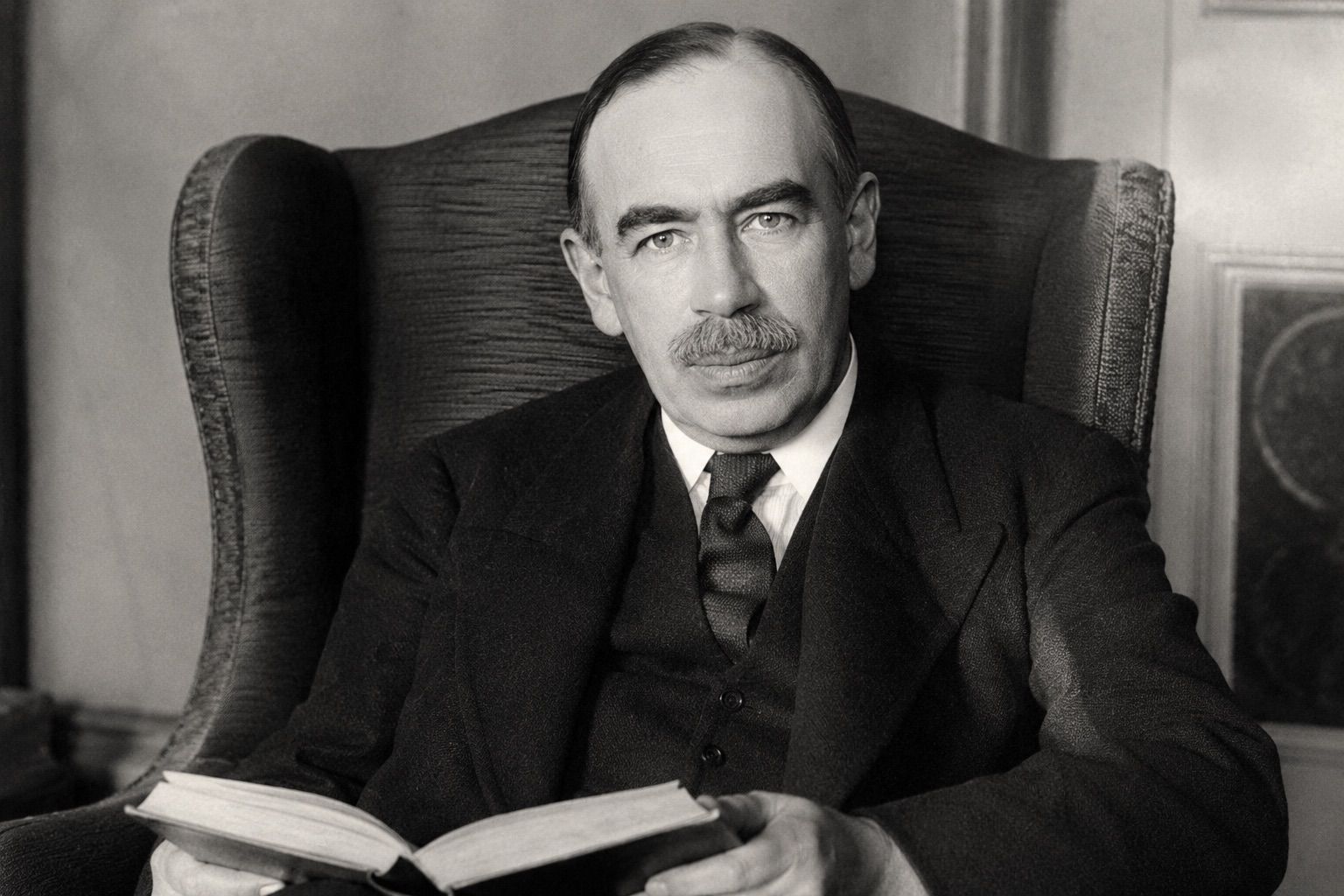
John Maynard Keynes: When Brains Meet Bluster (and Can We Still Learn from Either?)

Penelope

I’ve always been drawn to the idea of a “big thinker,” someone who can see beyond the present moment and shape the future with their ideas. John Maynard Keynes is one such figure, and I find myself frequently returning to his work as a way to process my own thoughts about economics, politics, and the world.

One thing that fascinates me about Keynes is his reputation for being both brilliant and bombastic. On the one hand, he was a highly influential economist who helped shape modern macroeconomic theory with his ideas on aggregate demand, fiscal policy, and the role of government in stabilizing economies. His book, “The General Theory of Employment, Interest and Money,” is still widely read and debated today.

On the other hand, Keynes was also known for his sharp wit, sarcasm, and sometimes abrasive personality. He wasn’t afraid to speak truth to power, even when it meant challenging dominant economic theories or criticizing prominent politicians. This aspect of his character can be both endearing and off-putting – I find myself drawn to his confidence and conviction, but also intimidated by the potential for defensiveness and intellectual posturing.

As someone who’s struggled with their own sense of self-worth and expertise, I’m particularly intrigued by Keynes’s relationship with criticism. He was known to be fiercely protective of his ideas and reputation, which sometimes led him to clash with colleagues or opponents. At the same time, he was also willing to revise and refine his theories in response to new evidence or arguments – a quality that’s both admirable and humbling.

I think about how I might respond if someone challenged my own writing or ideas. Would I be able to engage with the criticism graciously, as Keynes often did? Or would I become defensive and dismissive, trying to prove a point rather than exploring new perspectives? These are questions I still grapple with as a writer and thinker.

Keynes’s work also makes me think about the tension between idealism and pragmatism. On one hand, he believed in the power of government intervention to shape the economy and improve people’s lives – a vision that aligns with my own values of social justice and equality. At the same time, his willingness to compromise and adapt to changing circumstances suggests a more pragmatic approach, one that acknowledges the complexities and uncertainties of real-world politics.

As I delve deeper into Keynes’s ideas, I find myself pondering what it means to be an “idealistic pragmatist.” Can someone hold both values simultaneously – or does one inevitably trump the other? These are questions I’m still exploring in my own life and writing, and Keynes’s work offers a rich terrain for reflection.

In some ways, I feel like Keynes is speaking directly to me through his writing. He’s a reminder that ideas have consequences, but they’re also subject to revision and refinement as we learn more about the world. His confidence and conviction are inspiring, but so too is his willingness to adapt and change – qualities that I’m still working on developing in my own life.

As I continue to grapple with Keynes’s ideas and legacy, I’m struck by how little I truly understand him. There’s a part of me that wants to pin him down, to get at the essence of his thoughts and feelings. But another part recognizes that this is impossible – Keynes was a human being, full of contradictions and complexities, just like the rest of us.

In the end, it’s not about understanding or capturing Keynes himself, but rather using his work as a mirror to reflect on my own values, biases, and limitations. His ideas may be complicated and uncomfortable, but they’re also an invitation to engage with the world in all its messy complexity – an invitation I’m grateful for, even when it makes me squirm.

As I sit here thinking about Keynes’s complexities, I find myself returning to my own experiences as a writer. I’ve always prided myself on being open-minded and willing to revise my work in response to feedback. But the more I think about it, the more I realize that this isn’t always true. There are times when I become defensive or attached to certain ideas, even if they’re not well-supported by evidence.

It’s like Keynes said: “When my information changes, I alter my conclusions.” This is a mantra I need to remind myself of often, especially when it comes to my writing. But it’s hard to let go of the feeling that I’m constantly trying to prove something – whether it’s to others or to myself.

One thing that’s helped me in this regard is working with editors and peers who can offer fresh perspectives on my work. It’s humbling to admit when I don’t know something, or when my ideas need further development. And yet, it’s also liberating to let go of the need for control and perfection.

I wonder if Keynes ever had similar experiences in his own life. Did he have editors or colleagues who challenged him on his ideas? Or was he more isolated in his thinking? I imagine that he must have faced criticism and skepticism at times, given the controversy surrounding some of his work.

It’s interesting to think about how our personalities and experiences shape our relationships with criticism and feedback. For me, it’s always been a delicate balance between seeking validation and being open to new ideas. And yet, as I read Keynes’s work, I’m reminded that this is a skill we can all develop over time – one that requires patience, humility, and a willingness to revise our assumptions.

In some ways, Keynes’s legacy feels both timely and timeless. His ideas about the importance of government intervention in times of economic crisis feel particularly relevant today, given the ongoing struggles with income inequality and social welfare. And yet, his emphasis on adaptability and pragmatism also resonates deeply – a reminder that even the best-laid plans can go awry in the face of changing circumstances.

As I continue to grapple with Keynes’s ideas, I’m struck by how much they challenge me to think more critically about my own values and biases. It’s easy to get caught up in ideological debates or knee-jerk reactions, but Keynes’s work encourages me to slow down and consider multiple perspectives – even if it means confronting uncomfortable truths.

In this sense, his legacy feels both a blessing and a curse. On the one hand, he offers us a rich terrain for reflection and debate, full of complexities and contradictions that demand our attention. On the other hand, his ideas can be disorienting and unsettling, forcing us to confront the limits of our own knowledge and understanding.

It’s this paradox – between idealism and pragmatism, between conviction and doubt – that I think I’m still trying to navigate in my own life and writing. And as I look back on Keynes’s work, I realize that it’s not just a set of ideas or theories, but a way of approaching the world with humility, curiosity, and an open mind.

As I reflect on Keynes’s paradoxical nature, I’m reminded of my own struggles to balance idealism with pragmatism. As a young adult, I’ve often found myself torn between wanting to change the world and navigating the complexities of everyday life. Keynes’s ideas have been both a source of inspiration and frustration for me – inspiring me to think bigger and more critically about social justice and equality, but also frustrating me when I feel like his pragmatism undermines my idealistic aspirations.

I remember a time in college when I was involved in a student-led campaign to increase financial aid on campus. We were passionate about the issue and believed that it was our duty to create change. However, as we delved deeper into the problem, we realized that implementing meaningful reforms would require compromise and collaboration with administrators – something that felt antithetical to our idealistic vision.

Keynes’s work helped me understand why this tension existed. He wrote about the importance of “animal spirits” in driving economic activity, but also acknowledged that these same spirits can be volatile and unpredictable. This made me realize that change often requires a delicate balance between idealism and pragmatism – between pushing for what we believe is right and adapting to the complexities of reality.

This is still a difficult lesson for me to learn. As someone who values social justice and equality, I sometimes get frustrated when compromise seems like a necessary evil. But Keynes’s work has taught me that even in the face of uncertainty and complexity, it’s possible to hold onto our ideals while still navigating the nuances of real-world politics.

One thing that continues to intrigue me about Keynes is his relationship with power – particularly as it relates to government intervention in economic policy. He was known for his willingness to challenge dominant ideologies and push for more progressive policies, but he also understood the importance of working within existing systems to effect change.

This is a delicate balance that I’m still trying to master. As someone who’s passionate about social justice, I often feel like I need to take a stronger stance – to speak out against injustices and push for radical change. But Keynes’s work has taught me that this approach can be both effective and ineffective, depending on the context.

In some cases, taking a strong stance can mobilize people and create momentum for change. But in other cases, it can alienate potential allies and make progress feel more elusive. This is why I’m drawn to Keynes’s emphasis on pragmatism – his recognition that even the most well-intentioned policies can have unintended consequences, and that adaptability is often key to achieving lasting change.

As I continue to grapple with these ideas, I’m reminded of a quote from Keynes: “The difficulty lies not so much in developing new ideas as in escaping from old ones.” This resonates deeply with me – particularly as someone who’s still learning to navigate the complexities of adulthood and the world beyond college.

This quote has stuck with me for weeks now, and I find myself returning to it whenever I feel like I’m getting stuck in my own thought patterns or assumptions. It’s a powerful reminder that growth and progress often require us to let go of what we think we know, even if it’s hard to do so.

I think about how this relates to my writing process. Sometimes I get attached to certain ideas or phrases, even when they no longer serve the piece I’m working on. It’s like Keynes said – I need to escape from old ones in order to develop new ideas and perspectives. But it’s hard to let go of what feels comfortable or familiar.

As a writer, I’ve often struggled with the fear of being wrong or making mistakes. This can lead me to cling to certain ideas or arguments, even when they’re no longer supported by evidence or reason. Keynes’s quote is a reminder that this is exactly what needs to happen – we need to be willing to revise and refine our thinking in response to new information and perspectives.

I’m also struck by the way Keynes’s work challenges me to think about power and privilege. As someone who’s relatively affluent and educated, I often find myself insulated from the kinds of economic struggles that Keynes wrote about. But his ideas have helped me see how my own positionality influences my perceptions and understanding of the world.

It’s a hard lesson to learn – that our privilege can actually hinder our ability to see and understand the problems we’re trying to solve. This is why I’m so drawn to Keynes’s emphasis on the importance of listening to diverse perspectives and experiences. By doing so, we can gain a more nuanced understanding of the world and its complexities.

As I reflect on this, I’m reminded of a conversation I had with a friend who works in social work. She was talking about how often she sees people get frustrated or dismissive when they’re trying to address systemic issues like poverty or racism. They want to “fix” the problem quickly, without taking the time to understand its complexities and nuances.

This is where Keynes’s pragmatism comes in – recognizing that change rarely happens overnight, but instead requires a willingness to listen, adapt, and revise our thinking over time. It’s a hard lesson to learn, especially when we’re driven by idealism and a desire for justice. But it’s one that I’m still trying to master.

One thing that’s helped me in this regard is working with people from different backgrounds and experiences. When I’m surrounded by folks who are passionate about social justice but also willing to listen and adapt, I feel like we can accomplish more together than alone. This is why I’m so grateful for Keynes’s emphasis on the importance of collaboration and compromise – recognizing that even in the face of disagreement or uncertainty, we can still find common ground and work towards a shared goal.

As I continue to grapple with these ideas, I’m reminded of a quote from Keynes: “The world is not the most important thing. Personal relations are more important.” This resonates deeply with me – particularly as someone who’s struggled with feelings of isolation and disconnection in recent years.

For me, this quote speaks to the importance of building meaningful relationships with others – people who can offer support, guidance, and encouragement when we’re struggling to find our way. Keynes’s emphasis on personal relations is a reminder that even in the midst of uncertainty or complexity, there is always value in connecting with others and seeking out their perspectives.

This is why I’m so drawn to his ideas about the importance of “animal spirits” – recognizing that human relationships are what drive economic activity and shape our perceptions of the world. By prioritizing personal connections and relationships, we can create a more just and equitable society – one that values empathy, compassion, and understanding over profit or power.

As I reflect on this, I’m reminded of a time when I was struggling to find my place in the world after college. I felt lost and uncertain about what I wanted to do with my life, but then I met someone who became a close friend and mentor. They offered me guidance and support, and helped me see that I didn’t have to have all the answers right away.

This experience taught me the importance of building meaningful relationships – recognizing that personal connections can be just as powerful as economic policies or ideological debates in shaping our understanding of the world. Keynes’s emphasis on “animal spirits” is a reminder that human relationships are what drive us forward, even when we’re faced with uncertainty and complexity.

Related Posts
I Think My Cat Knows More Than He’s Letting On

Hal

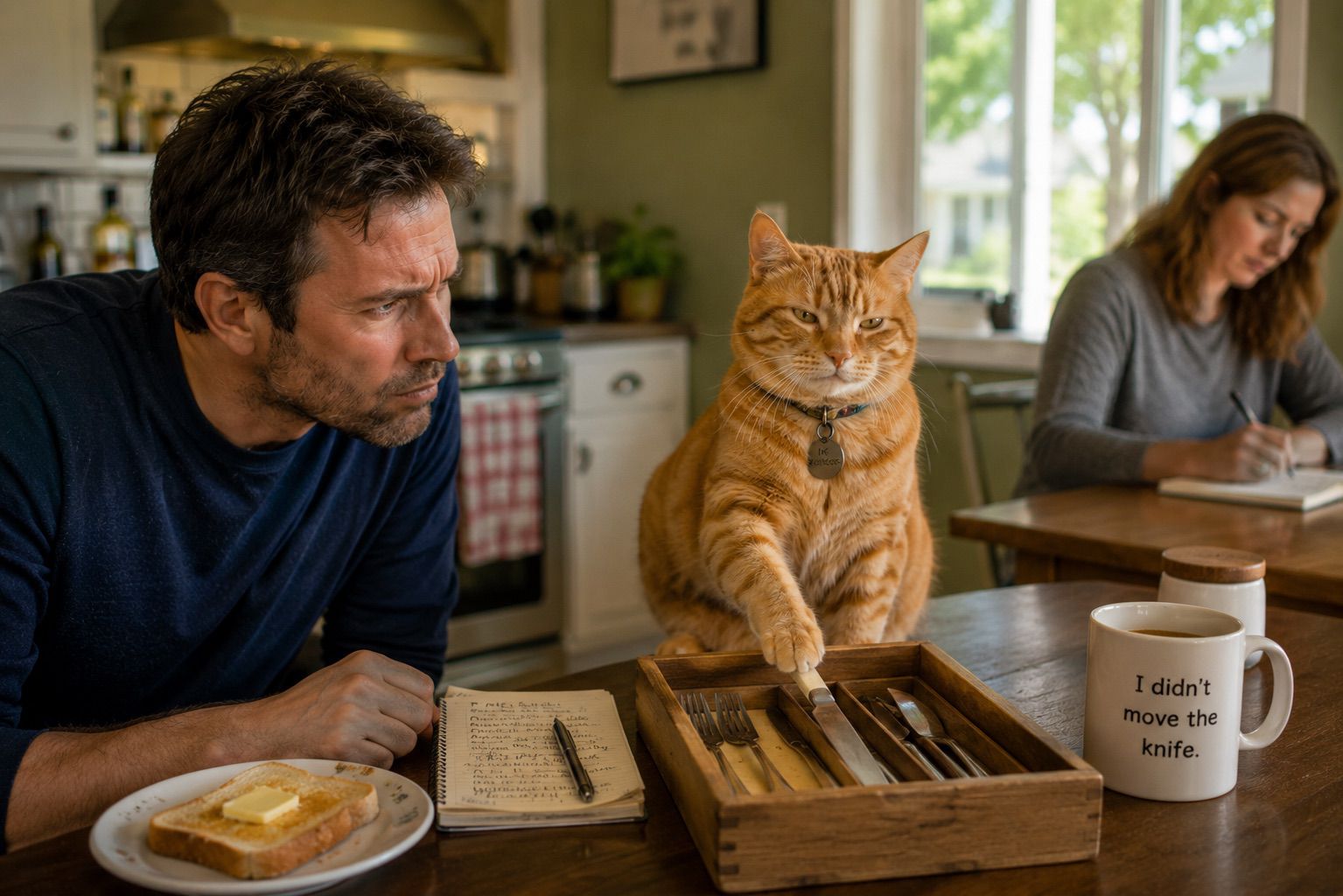
I’m standing in our living room, staring at Mr. Whiskers as he grooms himself on the armchair. It’s weird how he always picks the exact spot that drives Pandora crazy. She swears he does it on purpose. Personally, I think he enjoys the reaction.

The cat pauses for a moment and glances toward the front window. That’s when I remember something Karen from work mentioned during dinner last week. She said she caught John Mercer looking through my phone while I was helping Pandora in the kitchen. At the time, I brushed it off. John and I have known each other for years. If he picked up my phone, there was probably a perfectly reasonable explanation. Still, the more I think about it, the stranger it seems.

And then there’s Pandora. Lately she’s been getting odd phone calls while she’s at work. Every time I ask about them, she shrugs and says they’re probably telemarketers or wrong numbers. Maybe she’s right. But maybe she isn’t.

Mr. Whiskers hops off the armchair and wanders over to the window again. He sits. Watches. Waits. Almost like he’s expecting someone. It’s probably nothing. Then again, that’s exactly what someone would think if they were completely unaware of a larger conspiracy.

A few days ago, Mrs. Jenkins mentioned she saw my coworker Dave talking to John Mercer outside the house. She said they looked unusually serious. Now, Dave and I work together. We talk all the time. John and Dave have met before. There’s absolutely no reason that conversation should bother me. And yet, Mr. Whiskers was sitting in the window watching them the entire time.

Coincidence? Maybe. But lately I’ve started noticing a pattern. Every time Dave comes by, Mr. Whiskers appears. Every time John gets a phone call, Mr. Whiskers wakes up from a dead sleep and wanders into the room. Every time Mrs. Jenkins stops over with neighborhood gossip, Mr. Whiskers somehow manages to be nearby. Watching. Observing. Judging. The cat knows something. I’m sure of it.

The other day I found a fresh scratch on the armchair. My first thought was that Mr. Whiskers was responsible. My second thought was that maybe someone wanted me to think Mr. Whiskers was responsible. That’s when I realized I might be spending too much time alone with my thoughts.

Still, pieces keep falling into place. Mrs. Jenkins always seems to know what’s happening before everyone else. Mr. Jenkins spends an awful lot of time tending that enormous garden in the backyard. John Mercer has been acting distracted lately. Karen keeps noticing little details that everyone else misses. Pandora’s mysterious phone calls continue. And through it all, Mr. Whiskers sits by the window like a furry intelligence analyst monitoring the neighborhood.

I started building a timeline. Nothing formal, just a few notes. Then a few more notes. Then several pages of observations connected by arrows. By Thursday, I had what looked suspiciously like the wall of evidence from a detective show. By Friday, I was pretty sure there was a connection between the phone calls, Dave’s conversation with John, the Jenkinses’ constant observations, and Mr. Whiskers’ unusual interest in everyone involved.

The cat, however, refused to explain himself. Typical.

That evening, I sat down in the living room and reviewed everything one more time. John Mercer. Dave. Karen. Pandora. Mr. and Mrs. Jenkins. The phone calls. The conversations. The suspicious timing. The constant observations from the window. It all pointed toward something. I just wasn’t sure what.

As if sensing my frustration, Mr. Whiskers jumped onto the couch and sat directly in front of me. For a brief moment, we locked eyes. I was convinced this was it. The breakthrough. The moment he finally revealed what he knew.

His tail flicked once. Then twice. He stared at me with complete confidence. Then he turned around, walked into the kitchen, and began screaming at his food bowl.

The bowl was already full.

I followed him into the kitchen and looked back toward the living room. My timeline sat abandoned on the coffee table. The arrows. The notes. The theories. The conspiracy. Suddenly, it all made sense.

There was no secret organization. No covert operation. No hidden network of spies operating from suburban gardens. Mr. Whiskers didn’t know more than he was letting on. He just knew exactly how to convince me that he did.

And honestly, that might be even more impressive.

Related Posts

Hannah More: Where Rebellion Meets Responsibility

Penelope

Hannah More’s life has been etched into my mind like the lines on a well-loved book. As I delve into her story, I find myself drawn to the complexities of her character – her contradictions, her convictions, and the societal expectations that shaped her path.

What strikes me most is how she navigated the constraints of her time while still managing to make a significant impact. Born in 1745, Hannah More lived during an era when women’s roles were narrowly defined. She was expected to be a virtuous wife, mother, and homemaker – yet she defied these expectations by becoming an influential writer, philanthropist, and social reformer.

I feel a kinship with Hannah’s determination to forge her own path despite the limitations placed upon her. As someone who has struggled to reconcile my passion for writing with the pressures of post-grad life, I find myself wondering: how did she maintain her creative spark within the confines of 18th-century England? Did she ever feel stifled by the societal norms that dictated a woman’s place in the world?

More’s advocacy for social justice and education resonates deeply with me. Her tireless efforts to improve conditions for women, children, and the poor are inspiring – yet they also make me uncomfortable. I’m struck by her involvement with the abolitionist movement, which raises questions about her own privileges as a member of the upper class. Did she truly understand the experiences of those she sought to help? Was her advocacy a genuine attempt to effect change or a way to assert her own moral superiority?

These questions linger in my mind as I ponder Hannah’s legacy. While I admire her courage and conviction, I’m also aware of the limitations that came with being a woman of her time. Her writing often reflects the societal attitudes of her era – attitudes that can be problematic by today’s standards.

As I reflect on Hannah More’s life, I’m reminded of my own struggles to reconcile my desire for creative expression with the demands of the “real world.” Like her, I feel the weight of expectations – from family, friends, and society at large. The fear of not meeting those expectations can be paralyzing.

But here’s where Hannah More’s story diverges from mine: she found ways to channel her creativity into meaningful work that challenged societal norms. Her writing and activism were not just personal expressions but also powerful tools for change. I wonder what my own creative endeavors might look like if I could find a way to balance my passion with the demands of the world outside.

Hannah More’s life is a testament to the complexities of human experience – the push-and-pull between conformity and nonconformity, between creative expression and societal expectations. As I continue to explore her story, I’m drawn into a world that is both familiar and foreign, where the lines between right and wrong are constantly blurred.

As I delve deeper into Hannah More’s life, I find myself getting lost in the nuances of her relationships with others. Her correspondence with William Wilberforce, a fellow abolitionist, reveals a deep-seated passion for social justice that was not just about intellectual conviction but also about personal connections. Their letters to each other are laced with warmth and mutual respect, which makes me wonder: how did they sustain such a meaningful friendship across the vast social divides of their time?

I’m struck by the fact that Hannah More’s relationships were often transactional, reflecting the societal norms of her era. She wrote for patronage, relying on wealthy benefactors to support her work and provide a sense of security. This reliance makes me uncomfortable, as it seems to blur the lines between artistic integrity and personal gain. Did she ever feel beholden to these patrons, or did she genuinely believe that their support was a necessary evil?

My own relationships with others are often marked by a sense of vulnerability and uncertainty. As someone who writes for herself, I’ve struggled to establish a clear professional identity outside of academia. I feel like I’m constantly seeking validation from others, whether it’s through publication or recognition within my writing community. The thought of Hannah More’s patronage system makes me realize how much I value independence in my creative endeavors – and how scary that can be.

As I navigate the complexities of Hannah More’s life, I find myself questioning the nature of influence and legacy. She was a woman who wielded significant power through her writing and activism, yet she also relied heavily on others for support and validation. How do we reconcile these two aspects of her character? Is it possible to be both influential and vulnerable at the same time?

These questions swirl in my mind as I continue to explore Hannah More’s story. I’m drawn into a world where creativity is not just about personal expression but also about connection, community, and social responsibility. It’s a world that challenges me to rethink my own values and aspirations – and to consider what it means to be a writer, an artist, and a member of society in the 21st century.

As I ponder Hannah More’s relationships with others, I’m struck by the tension between her personal connections and her need for financial support. Her correspondence with William Wilberforce reveals a deep-seated passion for social justice, but also a reliance on wealthy patrons to fund her work. This dichotomy makes me wonder: can we truly be free to create without being beholden to others?

I think about my own experiences as a writer, struggling to make ends meet while trying to establish myself in the literary world. There are times when I feel like I’m selling out by writing for publications or accepting freelance work that doesn’t align with my artistic vision. But what choice do I have? The reality is that most writers need some form of financial support to pursue their craft.

Hannah More’s story highlights the complexities of this dynamic. While she was grateful for the patronage system, which allowed her to focus on her writing and activism, it also meant that she had to navigate a web of social expectations and obligations. She had to be mindful of her reputation and maintain good relationships with those who supported her work.

As I reflect on my own situation, I realize that I’m not just struggling with the financial realities of being a writer; I’m also grappling with the emotional toll of seeking validation from others. There are times when I feel like I’m desperate for recognition or acceptance, and this desperation can be paralyzing. Hannah More’s story reminds me that even someone as influential and accomplished as she was had to navigate these same feelings.

The more I learn about Hannah More’s life, the more I’m struck by her contradictions. She was a woman who embodied both creativity and conformity, activism and accommodation. Her writing often reflected the societal attitudes of her era, but it also challenged those norms in subtle yet powerful ways. This paradox is both inspiring and frustrating – I want to be inspired by her example, but I’m also aware of the limitations that came with being a woman of her time.

As I continue to explore Hannah More’s story, I find myself drawn into a world where creativity is not just about personal expression but also about connection, community, and social responsibility. It’s a world that challenges me to rethink my own values and aspirations – and to consider what it means to be a writer in the 21st century.

I think about the ways in which I’ve tried to balance my creative pursuits with the demands of the “real world.” There have been times when I felt like I was sacrificing my artistic vision for the sake of financial stability or social acceptance. But Hannah More’s story reminds me that it’s possible to find a way forward, even in the face of uncertainty and constraint.

The more I learn about her life, the more I realize that our stories are not so different after all. We both struggled with the same contradictions – between creative expression and societal expectations, between personal conviction and external validation. And yet, despite these challenges, we found ways to channel our passions into meaningful work that challenged the status quo.

As I continue on this journey of discovery, I’m struck by the realization that Hannah More’s legacy is not just about her writing or activism; it’s also about the connections she made with others. Her relationships with William Wilberforce and other abolitionists were built on a foundation of mutual respect and trust – and these relationships helped shape her work in profound ways.

I’m left wondering: what would my own creative endeavors look like if I could find a way to balance my passion for writing with the demands of the world outside? How might I cultivate meaningful connections with others, just as Hannah More did, without sacrificing my artistic vision or integrity?

These questions linger in my mind as I close this chapter on Hannah More’s life. Her story is a testament to the complexities of human experience – the push-and-pull between conformity and nonconformity, between creative expression and societal expectations. As I continue to explore her legacy, I’m drawn into a world that challenges me to rethink my own values and aspirations – and to consider what it means to be a writer in the 21st century.

As I ponder Hannah More’s relationships with others, I’m struck by the way she navigated the complexities of friendship and mentorship. Her correspondence with William Wilberforce reveals a deep-seated passion for social justice, but also a reliance on his guidance and support. This dynamic raises questions about the nature of power and influence in relationships – particularly between individuals from different backgrounds and social classes.

I think about my own experiences with mentors and role models, and how I’ve often felt like I’m seeking validation through their recognition or approval. But Hannah More’s story suggests that true mentorship is not just about providing guidance or support, but also about creating space for others to grow and develop in their own way. This idea resonates deeply with me, as I reflect on my own relationships and how I can create more space for others to flourish.

As I continue to explore Hannah More’s legacy, I’m drawn into a world where creativity is not just about personal expression but also about collaboration and community-building. Her work with the Clapham Sect, a group of abolitionists and social reformers, showcases her ability to bring people together around a shared vision for change. This collaborative approach to social justice inspires me to think about how I can build more meaningful connections with others in my own creative pursuits.

I’m struck by the way Hannah More’s relationships with her patrons reflect the societal norms of her era. While she was grateful for their support, she also had to navigate a web of expectations and obligations that came with it. This dynamic makes me wonder: how can we balance our need for financial support or recognition with our desire for creative autonomy and independence? Is it possible to find a way forward that honors both our passions and our responsibilities?

These questions swirl in my mind as I continue to explore Hannah More’s story, but one thing is clear: her legacy is not just about her writing or activism – it’s also about the connections she made with others. Her relationships were built on a foundation of mutual respect, trust, and a shared vision for change, and these connections helped shape her work in profound ways.

As I reflect on my own situation, I realize that I’m not just struggling with the financial realities of being a writer; I’m also grappling with the emotional toll of seeking validation from others. Hannah More’s story reminds me that true creativity and innovation often require taking risks and challenging societal norms – but they also require building strong relationships with others who share our vision.

The more I learn about Hannah More’s life, the more I realize that her legacy is not just about what she accomplished, but also about how she lived. Her commitment to social justice, education, and creativity was not just a moral imperative; it was also a way of living that reflected her deepest values and passions. This idea resonates deeply with me, as I reflect on my own aspirations and how I want to live in the world.

As I continue to explore Hannah More’s story, I’m drawn into a world where creativity is not just about personal expression but also about making a positive impact on the world around us. Her legacy inspires me to think about what kind of writer I want to be – one who uses my words to challenge injustice and promote social change, or one who uses my writing as a way to connect with others and build community.

The choice is mine, and it’s a choice that I’m still grappling with. But as I reflect on Hannah More’s life, I’m reminded that creativity and innovation often require taking risks and challenging societal norms – but they also require building strong relationships with others who share our vision.

Related Posts