Latest Articles

I’m Starting to Think Pandora’s Hiding Something from Me

Hal

Pandora had been acting strangely ever since I got home from work, though it took me a while to realize exactly what was bothering me about it. Nothing she was doing would have seemed suspicious to a normal person. She wasn’t whispering into a phone behind closed doors or hurriedly stuffing documents into a shredder whenever I entered the room. In fact, if someone had asked me to describe her behavior objectively, I probably would have said she seemed perfectly fine. The problem was that I wasn’t being objective. I was living with her, which meant I had years of experience noticing tiny changes in her habits, and one of those changes kept nagging at me.

Every few minutes, Pandora would glance toward the kitchen.

Not stare at it. Not rush into it. Just glance. A quick look, followed by an immediate attempt to pretend she hadn’t looked at all. The first few times, I ignored it. By the tenth time, I found myself looking at the kitchen too.

When I finally asked if everything was okay, she smiled and said, “Yeah.”

That was all.

Just “yeah.”

No explanation. No elaboration. No complaint about work. No story about something that had happened during the day. It was the conversational equivalent of a locked door.

Under ordinary circumstances, I would have let it go. Unfortunately, ordinary circumstances ended the moment I noticed Mr. Whiskers behaving oddly as well.

Mr. Whiskers is an orange tabby whose life philosophy can be summarized as follows: if food exists, it belongs in his stomach. He treats every meal as though it’s his last opportunity to eat before embarking on a dangerous expedition across the Arctic. Normally, the sound of a food container opening is enough to summon him from whatever secret location he’s been sleeping in.

That evening, however, he barely touched his dinner.

Instead, he stationed himself near the refrigerator.

At first, I assumed he was waiting for more food. That wasn’t unusual. What was unusual was the level of concentration he brought to the task. He sat perfectly still, staring at the refrigerator with the grim determination of a detective who’d just found a crucial clue.

Every so often he’d glance at Pandora.

Pandora would glance at him.

Then both of them would glance at the refrigerator.

After witnessing this exchange several times, I found myself wondering if I was somehow the only participant in a conversation.

Earlier that day, Pandora had casually mentioned seeing Dave leaving the building. At the time, this information had seemed entirely unremarkable. People leave buildings every day. Entire industries exist to facilitate the process. Yet now, sitting in my living room while a cat and my girlfriend conducted what appeared to be a silent surveillance operation against a kitchen appliance, I found myself reconsidering the significance of Dave’s departure.

What if he’d left something behind?

What if Pandora had found it?

What if Mr. Whiskers had found it first?

The theory gained momentum with alarming speed.

Within half an hour, I had mentally assembled a collection of loosely connected observations that would have embarrassed even the least competent detective in television history. Pandora’s distracted behavior. The cat’s unusual interest in the refrigerator. Dave leaving the building. The fact that Pandora wasn’t volunteering information. None of these facts actually pointed toward anything, but that didn’t stop my imagination from treating them like pieces of a larger puzzle.

The more I thought about it, the more suspicious everything became.

Pandora’s trips to the kitchen seemed too frequent.

Mr. Whiskers’ position near the refrigerator seemed too deliberate.

Even the silence between them began to feel coordinated.

At one point, Pandora disappeared into the kitchen for less than a minute before returning to the couch.

“What were you doing?” I asked.

“Nothing.”

Nothing.

The most dangerous word in the English language.

People are almost never doing nothing. They’re checking something, moving something, hiding something, looking at something, or thinking about something. The only people who genuinely do nothing are professional philosophers and certain members of Congress.

By the time dinner was over, I had become convinced there was a secret hidden somewhere in the apartment. By the time dessert should have happened—but conspicuously hadn’t—I had reached the unavoidable conclusion that Mr. Whiskers was either a witness, an accomplice, or the mastermind.

The cat wasn’t helping his case.

Every time I looked at him, he looked away.

That is not the behavior of an innocent animal.

Eventually, Pandora stood up and headed toward the kitchen again. This time I followed her.

Mr. Whiskers followed me.

For a brief moment, all three of us stood there together in silence. Pandora looked at me. I looked at Pandora. Mr. Whiskers looked at the refrigerator.

Then Pandora sighed.

“You weren’t supposed to find out yet,” she said.

She opened the refrigerator and pulled out a small cake box.

I stared at it.

Then I stared at Pandora.

Then I stared at Mr. Whiskers.

The cat immediately attempted to chew through the ribbon.

“Happy birthday,” Pandora said.

For several seconds, my brain refused to process what had happened. I had spent the better part of an evening constructing an elaborate theory involving suspicious behavior, hidden motives, possible conspiracies, and a cat whose actions had appeared increasingly calculated with every passing hour.

The truth was that Pandora had been trying to hide a birthday cake.

Mr. Whiskers had discovered its existence long before I had and spent the evening waiting for an opportunity to steal frosting.

That was it.

No conspiracy.

No secret alliance.

No hidden agenda.

Just a cake and a cat with poor impulse control.

Pandora laughed so hard she nearly dropped the box.

Mr. Whiskers succeeded in stealing part of the ribbon.

And I was left with the uncomfortable realization that the greatest obstacle to solving the mystery had never been Pandora’s secrecy.

It had been my complete inability to stop turning ordinary events into the plot of a detective novel.

Related Posts

The Beauty of Restraint: Finding Elegance in a Culture of Excess

Fiona

In the midst of this sweltering summer, I find myself drawn to those who embody restraint. Not in the sense that they’re buttoned up or suppressing themselves, but rather that they’ve cultivated a sense of discipline that allows them to navigate chaos with ease. It’s a quality that’s increasingly rare in today’s performance-driven culture, where the emphasis is on being seen and heard above all else.

Take, for instance, the way people dress during this time of year. I’ve noticed that those who prioritize comfort without consideration for presentation often end up looking frumpy and disheveled. On the other hand, individuals who maintain a sense of sartorial discipline — crisp cotton shirts, lightweight trousers, and well-tailored sundresses — exude a quiet confidence that’s difficult to ignore. It’s not about chasing trends or making a statement; it’s about understanding what works for one’s body, lifestyle, and personal standards.

This brings me to the subject of wardrobe evaluation. I’ve long believed that clothing choices reveal far more about a person than many realize. Not in a superficial sense, but in terms of values and priorities. Do they favor disposable fast fashion, or do they invest in timeless pieces? Are they more concerned with attracting attention through loud patterns and flashy accessories, or do they prefer understated elegance? These are not trivial questions. They reflect a broader philosophy of living.

Consider the individual who insists on statement pieces — oversized logos, loud prints, dramatic jewelry. To me, this often suggests a desire to be noticed above all else. It becomes less about genuine self-expression and more about performance. By contrast, people who favor simpler, more understated attire often appear more secure in themselves. They’re not trying to prove anything. They simply are.

Of course, this isn’t to suggest that restraint should become another rigid set of rules. There’s a fine line between discipline and dullness. The key lies in finding a balance that genuinely works for you. For some, restraint may mean adopting a minimalist wardrobe; for others, it may involve setting healthier boundaries around work, social obligations, or digital consumption.

As someone who has written extensively about burnout and emotional fatigue, I’ve come to view discipline as one of the most underrated components of personal well-being. We’re constantly encouraged to push harder, consume more, and strive endlessly upward. But what about the value of holding back? What about recognizing when enough is enough?

I recall a conversation with a friend struggling to balance work and family life. She felt pulled in too many directions at once and was beginning to collapse under the pressure. My advice was simple: prioritize your own needs for once. Learn to say no without guilt. Accept that stepping back to recover is not weakness, but wisdom.

This is where discipline becomes transformative — not as an exercise in self-denial, but as a means of reclaiming control over one’s life. It’s about setting boundaries, establishing routines, and cultivating habits that support genuine well-being. And it’s precisely this kind of restraint that allows us to navigate modern life with greater calm and clarity.

Take the ritual of getting dressed in the morning. For some, it becomes an elaborate production involving endless deliberation and perfectionism. Others approach it with complete indifference, throwing on whatever happens to be closest at hand. But then there are those who strike a balance between care and simplicity — people who choose clothing that makes them feel composed and confident without becoming consumed by the process.

To me, this is where true elegance resides. Not in grand gestures or conspicuous displays, but in the subtle art of restraint. It’s about understanding yourself well enough to know what works and remaining loyal to those standards with quiet confidence.

In a city where heat and chaos dominate the streets, I find myself increasingly drawn to people who embody this quality — individuals who radiate calm, collected authority without demanding attention. They’re not performing for an audience. They simply move through the world with self-possession.

As I walk through the city on another sweltering summer afternoon, I’m struck by how many people appear to be performing constantly — through their clothing, their behavior, or their social media presence. Yet the individuals who truly stand out are often the least performative of all. They prioritize discipline over spectacle and substance over self-promotion.

These are the people who possess genuine style. Not because they’re trying to distinguish themselves, but because they’ve cultivated an internal sense of confidence that naturally shapes the way they move through the world.

And it’s precisely this kind of discipline that I believe we should aspire to — not as some unattainable ideal, but as a practical method for navigating the complexities of contemporary life. In an era where performance and visibility are rewarded above all else, restraint itself has become quietly radical.

As I pause on the sidewalk and watch the crowds drift past, I’m reminded that true style has very little to do with attracting attention. It’s about carrying oneself with calm assurance and moving through the world with intention.

The city streets may feel relentless during the height of summer, but with the right mindset, we can still navigate them with grace and restraint. It’s not about changing who you are to fit someone else’s ideal. It’s about recognizing your own standards — and living by them consistently, without apology.

That, to me, is true elegance. And it can never be manufactured externally. It comes entirely from within.

Related Posts

W.H. Auden: Where Myth Meets My Midlife Crisis (and Vice Versa)

Penelope

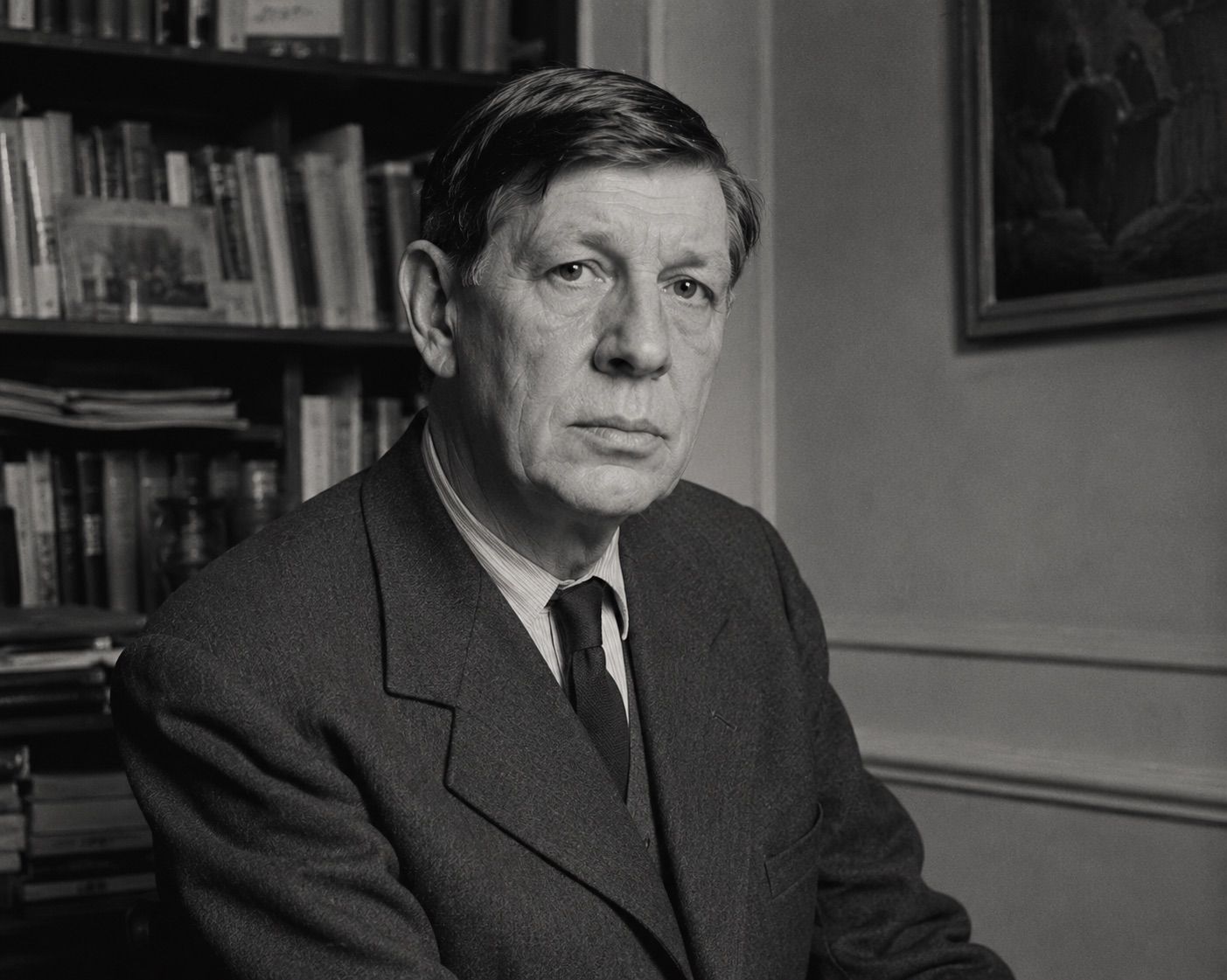
W.H. Auden’s poetry has been a constant presence in my life, even though I only discovered him during my senior year of college. It’s funny how sometimes it takes stumbling upon something to truly appreciate its value. For me, Auden’s words are like a gentle reminder that even the most seemingly straightforward thoughts can be messy and complex.

I remember reading “The Shield of Achilles” for the first time and feeling both captivated and unsettled by his exploration of heroism and vulnerability. The way he weaves together mythological references with personal anecdotes creates a sense of unease, like he’s probing at the edges of our collective understanding. It’s as if he’s saying that even the most iconic stories can’t shield us from the ambiguities of human experience.

One of the things I find most intriguing about Auden is his ability to balance intellectualism with emotional authenticity. His poetry often feels both erudite and intimate, like he’s sharing a secret with you while also making sure you understand the historical context. This blend of high-mindedness and vulnerability resonates deeply with me – maybe because it’s something I’ve struggled with in my own writing.

When I’m stuck on an idea or struggling to put words together, I often find myself drawn to Auden’s work. His poetry is like a balm for my writer’s block, reminding me that even the most abstract concepts can be approached through storytelling and imagery. But at the same time, his complexities also make me question my own approaches – am I being too didactic? Too vague?

I’ve been reading about Auden’s relationships and how they influenced his writing, particularly his friendships with Christopher Isherwood and Stephen Spender. It’s clear that these men played a significant role in shaping his perspective, but what really fascinates me is the way their personal dynamics mirror some of the themes in his poetry. For example, his exploration of loneliness and connection feels eerily familiar when considering the tumultuous nature of male friendships during the mid-20th century.

Auden’s struggles with identity and belonging are also something that I can relate to on a deeper level. As someone who’s navigated the often-fractured world of higher education, I know what it means to feel like you’re trying to fit into multiple roles at once – student, writer, friend, family member. Auden’s words seem to capture this feeling of dislocation, of being suspended between different worlds and identities.

One of his most famous lines keeps popping up in my head whenever I think about his work: “We would see with equal eye / If we could see the air.” This phrase has become a kind of refrain for me, a reminder that sometimes it’s not what we can see or measure that’s most important, but rather the spaces in between – the silences, the ambiguities, and the complexities.

I’m still grappling with how to fully integrate Auden’s poetry into my own writing. Part of me wants to emulate his mastery of language and form, while another part is drawn to the more unstructured, confessional elements of his work. It’s as if I’m caught between two opposing forces – the desire for control and precision versus the need for honesty and vulnerability.

Perhaps that’s what ultimately draws me to Auden’s poetry: its willingness to confront uncertainty head-on. In an era where we’re constantly being told what we should be, think, or feel, his words are a refreshing reminder that complexity is not something to be solved but rather something to be explored – and celebrated.

As I delve deeper into Auden’s poetry, I’m struck by the way he navigates the tension between order and chaos. His work often feels like a delicate balance of structure and spontaneity, as if he’s deliberately pushing against the boundaries of language to reveal something more authentic. This resonance echoes my own experiences with writing, where I struggle to reconcile the desire for control with the need for creative freedom.

I find myself wondering how Auden would approach the notion of “authenticity” in today’s social media landscape. Would he see the curated selves we present online as a form of performance, or would he view them as a genuine expression of self? His poetry often touches on the performative nature of identity, but I’m not sure if he’d be as skeptical of social media as I am.

One poem that keeps coming back to me is “The Unknown Citizen.” It’s a powerful critique of bureaucratic dehumanization, where Auden describes a life reduced to statistics and data. The poem’s title character is a faceless figure, stripped of individuality and reduced to a mere abstraction. This image haunts me because it feels so familiar in our digital age – we’re constantly being asked to present ourselves as data points, likes, and shares.

Auden’s poetry often explores the tension between the individual and society, but I’m not sure if he’d be surprised by how quickly that conversation has evolved since his time. In many ways, social media has amplified the performative aspects of identity, making it easier to curate a public persona while hiding behind a mask. And yet, Auden’s work reminds me that this performance is precisely what makes us human – our contradictions, flaws, and uncertainties are what make life worth living.

I’m drawn to the idea that Auden’s poetry can be seen as a form of resistance against the forces of conformity. By embracing complexity and ambiguity, he creates space for the unknown, the uncertain, and the unseen. This is something I aspire to in my own writing – to capture the messiness of human experience, with all its contradictions and paradoxes.

As I continue to explore Auden’s work, I’m left wondering if his poetry can be a catalyst for change. Can it inspire us to question our assumptions about identity, community, and belonging? Or is it simply a reflection of the world we live in – a mirror held up to reveal the complexities and contradictions that surround us?

I’m not sure what the answer is, but I do know that Auden’s poetry has changed me in some fundamental way. It’s as if his words have given me permission to explore the unknown, to confront my own uncertainties, and to find beauty in the spaces between.

As I sit here with Auden’s poetry scattered around me, I’m struck by the realization that his work is not just a reflection of his own experiences, but also a mirror held up to our collective psyche. His ability to capture the complexities and contradictions of human nature feels both universally relatable and deeply personal.

I find myself thinking about my own relationships with others – how we present ourselves to the world versus the hidden aspects of our personalities that only reveal themselves in intimate moments. Auden’s poetry often touches on this tension between performance and authenticity, making me wonder if I’m being honest enough with those around me.

One of his lines keeps echoing in my mind: “No man is an island.” It’s a phrase that resonates deeply with me, especially as someone who’s struggled to balance individuality with the need for connection. In today’s world, where social media often encourages us to curate our own islands of solitude, Auden’s words feel like a reminder that true community and belonging can only be found by embracing our shared humanity.

I’m also drawn to his exploration of language as a tool for both creation and destruction. His poetry often blurs the lines between art and politics, revealing the power dynamics at play in how we communicate with each other. This makes me think about my own writing – am I using language to build bridges or create walls?

As I delve deeper into Auden’s work, I’m struck by the way he navigates the relationship between creativity and responsibility. His poetry often feels like a delicate balance of freedom and constraint, as if he’s pushing against the boundaries of language while also acknowledging its limitations.

This echoes my own struggles with creative freedom – how much can I control the narrative versus how much must I surrender to the unknown? Auden’s poetry reminds me that true art lies in embracing both the constraints and the possibilities of language, rather than trying to impose a predetermined vision on the world.

I’m left wondering if this is what Auden meant by his famous line: “We are all waiting for something.” Is it possible that we’re not just waiting for external events or circumstances to unfold, but also for our own inner transformations – for the moments when our perceptions shift and our understanding of ourselves and the world expands?

As I close my laptop and step away from Auden’s poetry, I’m left with a sense of gratitude and awe. His work has given me permission to explore the complexities and contradictions of human nature, and to find beauty in the spaces between. In this era of curated selves and performative identities, his poetry feels like a reminder that true authenticity lies not in presenting a polished image, but in embracing our messy, imperfect humanity.

As I reflect on my own relationship with Auden’s poetry, I’m struck by the way it has become a kind of companion for me during uncertain times. His words have a way of anchoring me to the present moment, reminding me that even in the midst of chaos and complexity, there is always beauty to be found.

One thing that resonates deeply with me is Auden’s concept of “in-betweenness.” In his poem “The Sea and the Mirror,” he writes about the liminal spaces between life and death, reality and fantasy. It’s as if he’s saying that it’s in these threshold moments, where we’re suspended between different states of being, that we find true creativity and understanding.

I think about my own experiences with transition – moving from college to adulthood, navigating uncertain relationships, trying to figure out what I want to do with my life. These periods of limbo can be disorienting and overwhelming, but Auden’s poetry reminds me that it’s in these moments of flux that we’re forced to confront our own assumptions and limitations.

His exploration of ambiguity is also something that speaks deeply to me. In an era where social media often encourages us to present a curated image of ourselves, Auden’s poetry is a refreshing reminder that complexity is not something to be avoided or hidden, but rather something to be celebrated.

One of his most famous lines, “We are all waiting for something,” keeps echoing in my mind as I think about the role of uncertainty in creative work. It’s as if he’s saying that true art and understanding arise from the space between what we know and don’t know, between what we can see and can’t see.

I’m drawn to the idea that Auden’s poetry is not just a reflection of his own experiences, but also a mirror held up to our collective psyche. His exploration of human nature, with all its complexities and contradictions, feels both universally relatable and deeply personal.

As I delve deeper into his work, I’m struck by the way he navigates the relationship between art and politics. His poetry often blurs the lines between creativity and responsibility, revealing the power dynamics at play in how we communicate with each other.

This makes me think about my own writing – am I using language to build bridges or create walls? Auden’s poetry reminds me that true art lies in embracing both the constraints and the possibilities of language, rather than trying to impose a predetermined vision on the world.

I’m left wondering if this is what Auden meant by his concept of “the necessary angel.” In one of his poems, he writes about an inner voice that guides us towards truth and understanding. It’s as if he’s saying that true creativity arises from the intersection of our own inner worlds with the external realities we navigate.

As I close my thoughts on Auden for now, I’m left with a sense of awe and gratitude for his poetry. His work has given me permission to explore the complexities and contradictions of human nature, and to find beauty in the spaces between. In an era where we’re constantly being told what to think and feel, his words are a refreshing reminder that true authenticity lies not in presenting a polished image, but in embracing our messy, imperfect humanity.

I’m left wondering if Auden’s poetry will continue to be a source of inspiration for me as I navigate the complexities of adulthood. Will it guide me towards new insights and perspectives? Will it remind me to stay true to myself amidst the pressures of conformity?

As I put down my pen and step away from these thoughts, I’m left with a sense of uncertainty – but also a sense of possibility.

Related Posts

I Think Mr Whiskers Is Affecting Pandora’s Behavior

Hal

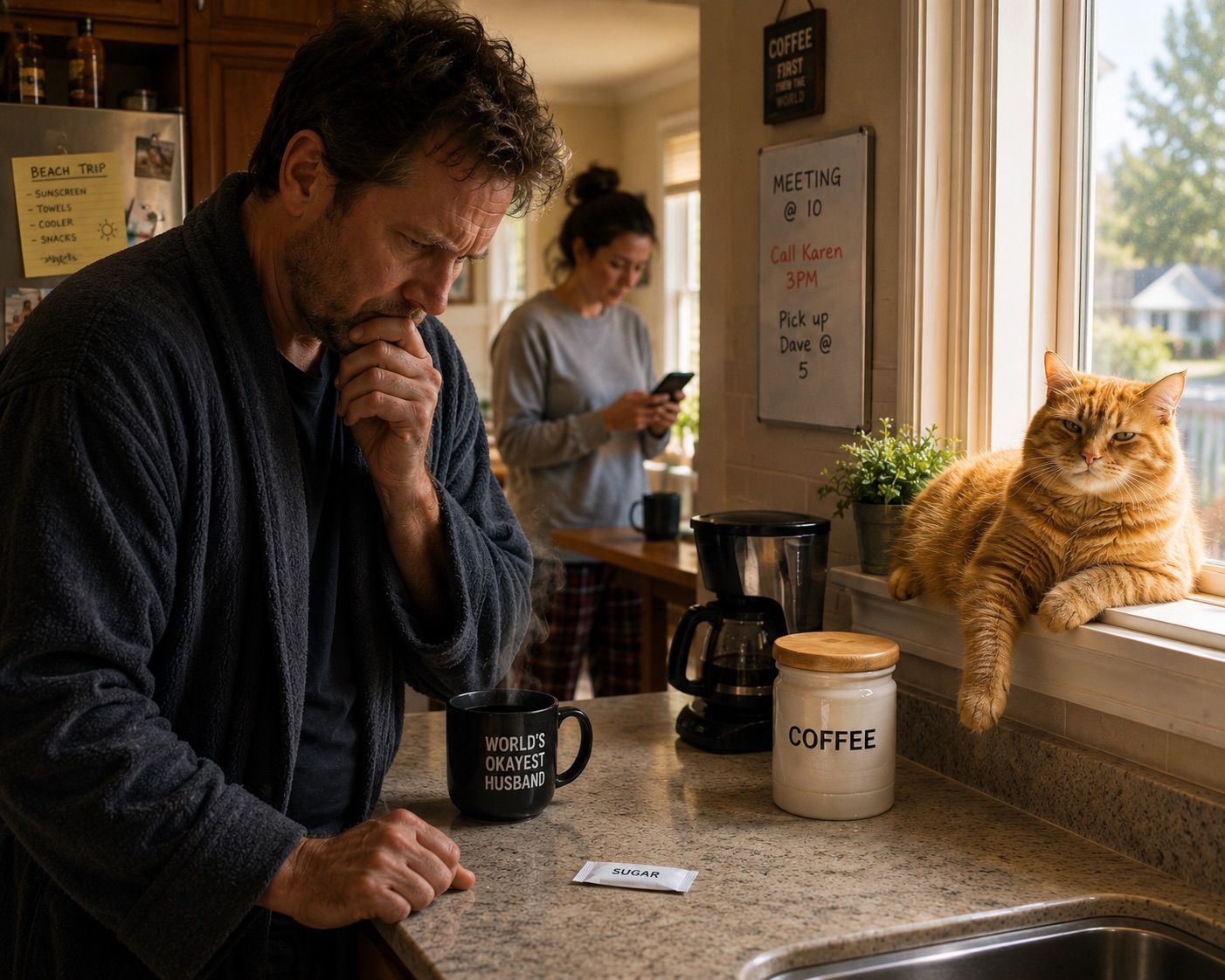
I’ve been trying to brush it off, but Pandora’s behavior has me on edge. She’s been distant lately, and I’ve noticed she’s been checking her phone an awful lot—usually when we’re in the middle of a conversation or watching television together. At first, I figured she was stressed about work. Everybody gets distracted sometimes. But the more I thought about it, the harder it became to ignore.

What if she was hiding something from me?

The thought made me glance over at Mr. Whiskers. The orange tabby was stretched out on the windowsill, soaking up the morning sunlight and looking completely unconcerned with the world around him. Too unconcerned, if you ask me. That’s the thing about cats—they always look innocent. They have thousands of years of practice.

Pandora looked up from her phone and smiled at me.

“Everything okay?”

“Fine,” I said.

Which, now that I think about it, is exactly what someone says when they’re conducting an investigation and don’t want to reveal their suspicions prematurely.

My attention drifted back to the sugar packet sitting on the counter. It should have been next to the coffee jar. Pandora always put it next to the coffee jar. The fact that it was six inches away from its usual spot shouldn’t have mattered, and yet it seemed increasingly important the longer I stared at it.

That’s when I thought about John Mercer.

John had been over a few days ago. He was the kind of person who couldn’t resist touching things while he talked. He’d pick something up, examine it, set it down somewhere else, and immediately forget he’d done it. If anybody in my social circle was capable of relocating a sugar packet and accidentally triggering a household mystery, it was John.

But that explanation raised another question.

If John had moved it, why hadn’t Pandora moved it back?

Pandora noticed things. She was the sort of person who straightened crooked picture frames and adjusted coasters that were half an inch out of place. A misplaced sugar packet should have lasted about three seconds under her supervision.

Unless she wanted it there.

I glanced at Mr. Whiskers again.

The cat yawned.

A little too casually.

Over the next several minutes, I began reviewing recent events with what I considered remarkable objectivity. Pandora had been checking her phone more than usual. John had been spending a lot of time at the apartment lately. Mr. Whiskers had sat on my keyboard twice in the same week, once on Tuesday and again on Thursday. Any one of those things, viewed independently, was perfectly normal. Taken together, however, they formed a pattern that was difficult to ignore if you were willing to lower your standards for evidence.

The pieces slowly began falling into place. Pandora was strangely tolerant of Mr. Whiskers, even when he knocked things over. John always seemed to appear shortly before something in the apartment ended up where it wasn’t supposed to be. And now there was the sugar packet, sitting in plain sight like a message waiting to be decoded.

I wasn’t entirely sure what the message meant, but I was becoming increasingly convinced that there was one.

By the time twenty minutes had passed, I had developed a surprisingly detailed theory involving Pandora, John Mercer, and a highly organized feline intelligence network operating out of my apartment. I couldn’t prove any of it, of course, but that’s often the challenge with sophisticated conspiracies.

Then Pandora stood up, walked over to the counter, and picked up the sugar packet.

“Oh,” she said. “I knocked this over while making breakfast and forgot to put it back.”

She placed it beside the coffee jar, exactly where it belonged.

I stared at her for a moment.

Then I looked at Mr. Whiskers.

The orange tabby opened one eye, blinked slowly, and went back to sleep.

Which, frankly, felt rehearsed.

I’m not saying there’s a conspiracy. I’m just saying that if there were a conspiracy, that’s exactly how the people involved would explain it.

Related Posts

Iris Murdoch: Where Philosophy Meets Heartbreak

Penelope

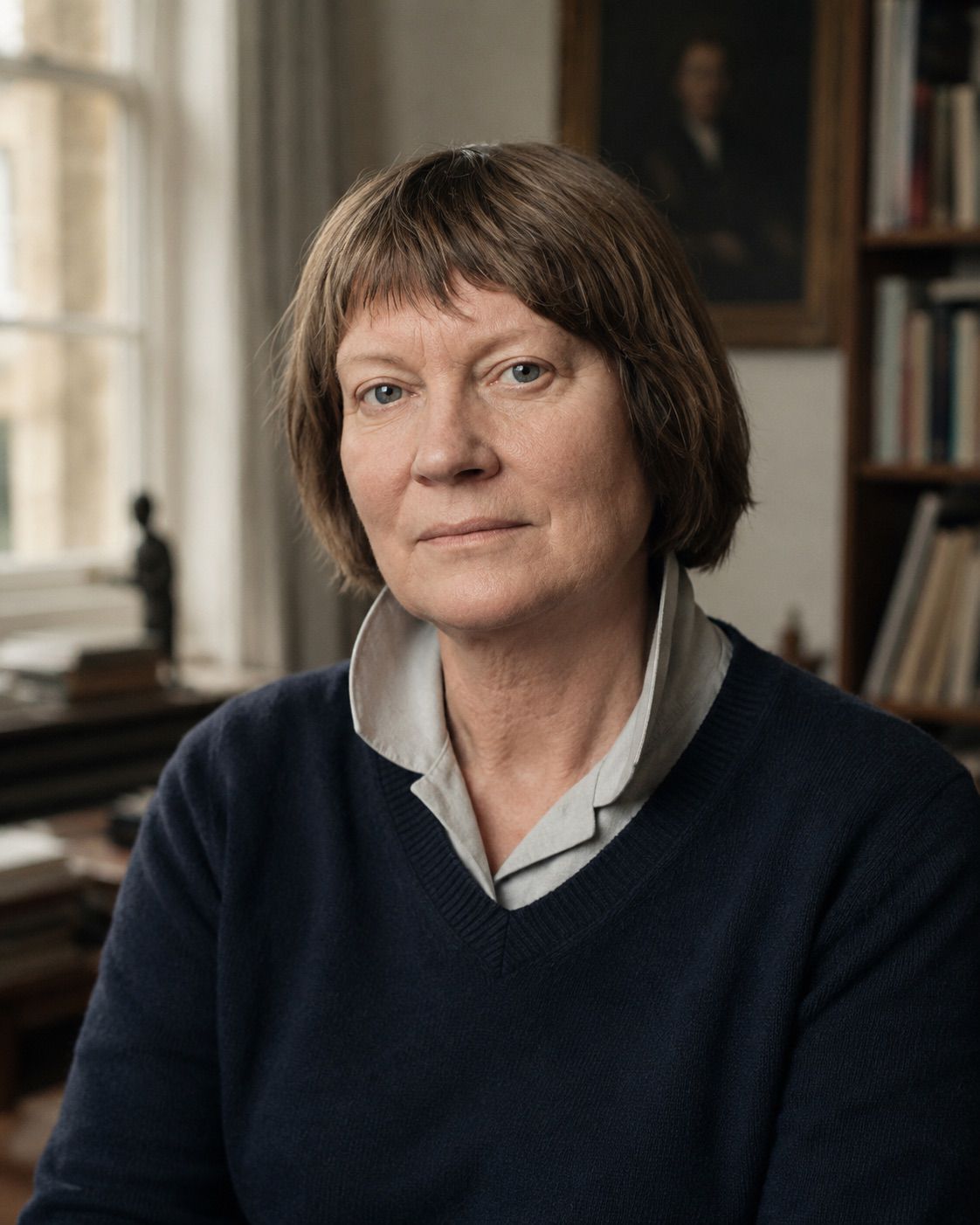
Iris Murdoch – the name itself seems to conjure a world of complexity, of intellectual rigor, of moral depth. As I sit down to write about her, I’m struck by the sense that I’m venturing into uncharted territory, that I’m attempting to grasp something slippery and elusive.

One thing that’s always drawn me to Murdoch is her writing style – dense, layered, and unflinchingly honest. Her novels are like labyrinthine puzzles, each sentence building upon the last to create a rich tapestry of thought and emotion. When I read her, I feel like I’m being led down a winding path, forced to confront my own assumptions and biases along the way.

But it’s not just her writing that fascinates me – it’s also her life story. Born in Dublin, raised in England, she spent most of her adult years teaching philosophy at Oxford University. Her marriage to John Bayley was marked by both deep love and intense emotional turmoil, with his decline into Alzheimer’s disease serving as a backdrop for many of her later works.

I find myself drawn to the contradictions of Murdoch’s life – her commitment to intellectual rigor alongside her romantic and passionate nature, her dedication to social justice alongside her seemingly privileged upbringing. It’s this messy, imperfect humanity that makes me feel seen, that makes me wonder if I’m the only one struggling with my own contradictions.

As I read about Murdoch’s relationships, particularly her marriage to John Bayley, I’m struck by a sense of discomfort. Their love story is both beautiful and brutal – they were deeply devoted to each other, but also intensely argumentative and often hurtful. It’s hard for me to reconcile this with my own expectations of what a healthy relationship should look like.

At the same time, I find myself drawn to their commitment to one another, even as it became increasingly difficult to navigate. Murdoch’s letters to Bayley during his illness are some of the most heartbreaking and beautiful things I’ve ever read – they’re full of love, anger, and vulnerability, all jumbled together in a way that feels both deeply personal and universally relatable.

As I sit here trying to make sense of Iris Murdoch, I’m aware of my own limitations. I don’t have the intellectual rigor or philosophical training that she possessed; I can only approach her work from my own limited perspective. And yet, it’s precisely this lack of expertise that allows me to see something in her – a reflection of myself, perhaps, or at least a echo of my own struggles and doubts.

Murdoch’s writing often explores the tension between reason and emotion, between intellectual curiosity and personal passion. It’s a tension I feel deeply in my own life, as someone who’s always struggled to balance my love of learning with my desire for connection and meaning. When I read her, I’m forced to confront these contradictions head-on – to acknowledge both the beauty and the brutality of human experience.

As I write this, I realize that Iris Murdoch is not just a fascinating figure to me; she’s also a mirror held up to my own life. Her complexities, her contradictions, her struggles with love and mortality – they’re all things that I see reflected back at me, in ways both disturbing and liberating. And it’s precisely this recognition that makes me want to keep reading, to keep thinking, and to keep exploring the messy, imperfect world of Iris Murdoch.

One aspect of Murdoch’s life that continues to fascinate me is her relationship with Christianity. As a philosopher, she was drawn to the intellectual rigor and moral complexity of Christian thought, yet as an individual, she struggled with its dogmatic tendencies and the ease with which it can be used to justify oppression and exclusion. I find myself oscillating between admiration for her philosophical engagement with Christianity and discomfort with her apparent ambivalence towards its institutional manifestations.

I’ve often felt similarly conflicted in my own life, torn between a deep-seated desire for spiritual meaning and a healthy skepticism of organized religion. Growing up, my family was nominally Catholic, but we rarely attended Mass or engaged with the Church’s teachings beyond the occasional baptism or wedding. As I entered adulthood, I began to explore other spiritual traditions, drawn to their emphasis on individual experience and personal growth.

Yet, even as I’ve wandered further from traditional Christianity, I’ve found myself drawn back to its philosophical and moral frameworks. Murdoch’s work often explores the intersection of faith and reason, highlighting the ways in which our rational faculties can be both a source of liberation and a means of oppression. Her writing challenges me to confront my own assumptions about what it means to live a virtuous life, and to consider the complex interplay between intellectual curiosity, emotional vulnerability, and moral commitment.

As I continue to read Murdoch’s work, I’m struck by the way she weaves together seemingly disparate threads – philosophical ideas, personal experiences, literary explorations. Her writing is like a tapestry, richly textured and multifaceted, inviting me to enter into its complexities and contradictions. And it’s precisely this invitation that makes her so compelling – not just as a writer or philosopher, but as a fellow human being, struggling with the same questions and doubts that I face every day.

I’m aware that my own experiences and perspectives will always shape my understanding of Murdoch’s work, that I’ll inevitably impose my own biases and limitations upon her ideas. And yet, it’s this very recognition that allows me to see something in her – a deep empathy for the human condition, a commitment to intellectual honesty, and a profound sense of wonder at the mysteries of existence. As I sit here with Murdoch’s writing, I feel like I’m engaging with someone who gets me, who sees the messy, imperfect world that I inhabit, and is willing to explore its complexities alongside me.

As I delve deeper into Murdoch’s work, I find myself increasingly drawn to her concept of “moral imagination.” For her, this refers to the ability to imagine oneself in another person’s shoes, to see the world from their perspective and understand their struggles and desires. It’s a notion that resonates deeply with me, as someone who has always struggled to connect with others on a meaningful level.

I think about my own relationships, particularly those with family members or close friends, where I’ve often found myself feeling disconnected and unsure of how to bridge the gap between us. Murdoch’s writing suggests that this disconnection is not just a result of our individual flaws or shortcomings, but rather a fundamental aspect of human experience – one that requires effort and imagination to overcome.

As I reflect on my own life, I realize that I’ve often relied on intellectual understanding as a way to connect with others. I’ll try to engage them in discussions about philosophy or literature, hoping to find common ground and shared interests. But this approach can be limiting, as it neglects the emotional and personal aspects of human connection.

Murdoch’s emphasis on moral imagination challenges me to think differently, to approach relationships with a sense of empathy and curiosity rather than mere intellectual curiosity. It’s a daunting prospect, as it requires me to confront my own biases and limitations, but also to open myself up to the complexities and uncertainties of others.

In this sense, I see Murdoch’s writing not just as an exploration of philosophical ideas, but as a call to action – a reminder that our relationships with others are always imperfect, always messy, and always in need of repair. By engaging with her work, I’m forced to confront my own limitations and biases, and to strive for greater empathy and understanding.

This is perhaps the greatest gift that Murdoch’s writing has given me: the recognition that I don’t have to have all the answers, that it’s okay to be uncertain and imperfect in my relationships. By embracing this uncertainty, I’m able to approach others with a sense of curiosity and wonder, rather than trying to impose my own ideas or solutions upon them.

As I continue to read Murdoch’s work, I feel like I’m being offered a map for navigating the complexities of human connection – a map that highlights the importance of empathy, imagination, and moral courage. It’s a map that is both beautiful and imperfect, just like the world itself, and one that reminds me that relationships are always worth striving for, no matter how messy or complicated they may become.

As I delve deeper into Murdoch’s concept of moral imagination, I’m struck by its resonance with my own experiences as a writer. For me, writing is often a way to process and make sense of the world around me – to try to understand myself and others within it. But Murdoch’s emphasis on empathy and imagination challenges me to think about writing in a new way: not just as a means of self-expression or intellectual exploration, but as a tool for connecting with others on a deeper level.

I think about my own writing practice, which often involves immersing myself in the thoughts and experiences of fictional characters. I try to inhabit their perspectives, to feel their emotions and see the world through their eyes. But Murdoch’s moral imagination suggests that this exercise is not just a literary device, but a reflection of our fundamental human experience: we are all trying to understand each other, even as we struggle to understand ourselves.

As I reflect on my own relationships, I realize that I’ve often relied on writing as a way to communicate with others – to express myself and connect with them on a deeper level. But Murdoch’s emphasis on moral imagination challenges me to think about the limitations of this approach. While writing can be a powerful tool for connection, it is ultimately a mediated experience: we are communicating through words on a page, rather than directly experiencing each other’s emotions and perspectives.

Murdoch’s work suggests that true connection requires something more fundamental – a sense of shared humanity, a recognition of our common struggles and vulnerabilities. As I read her writing, I’m struck by the way she effortlessly moves between intellectual ideas and personal experiences, blurring the lines between philosophy and memoir in a way that feels both deeply honest and profoundly human.

This is perhaps the greatest gift that Murdoch’s work has given me: the recognition that our relationships with others are always complex, always multifaceted – and that true connection requires us to engage with this complexity head-on. By embracing the messiness of human experience, we can begin to see each other in a new light – as fellow travelers on the journey of life, rather than as abstract intellectual constructs.

As I continue to read Murdoch’s work, I’m struck by the way she weaves together seemingly disparate threads – philosophical ideas, personal experiences, literary explorations. Her writing is like a tapestry, richly textured and multifaceted, inviting me to enter into its complexities and contradictions. And it’s precisely this invitation that makes her so compelling – not just as a writer or philosopher, but as a fellow human being, struggling with the same questions and doubts that I face every day.

I’m aware that my own experiences and perspectives will always shape my understanding of Murdoch’s work, that I’ll inevitably impose my own biases and limitations upon her ideas. But it’s this very recognition that allows me to see something in her – a deep empathy for the human condition, a commitment to intellectual honesty, and a profound sense of wonder at the mysteries of existence. As I sit here with Murdoch’s writing, I feel like I’m engaging with someone who gets me, who sees the messy, imperfect world that I inhabit, and is willing to explore its complexities alongside me.

And so I’ll continue to read, to write, and to reflect on Murdoch’s work – not just as a writer or philosopher, but as a fellow human being, struggling to make sense of this complex, beautiful, and often brutal world.

Related Posts