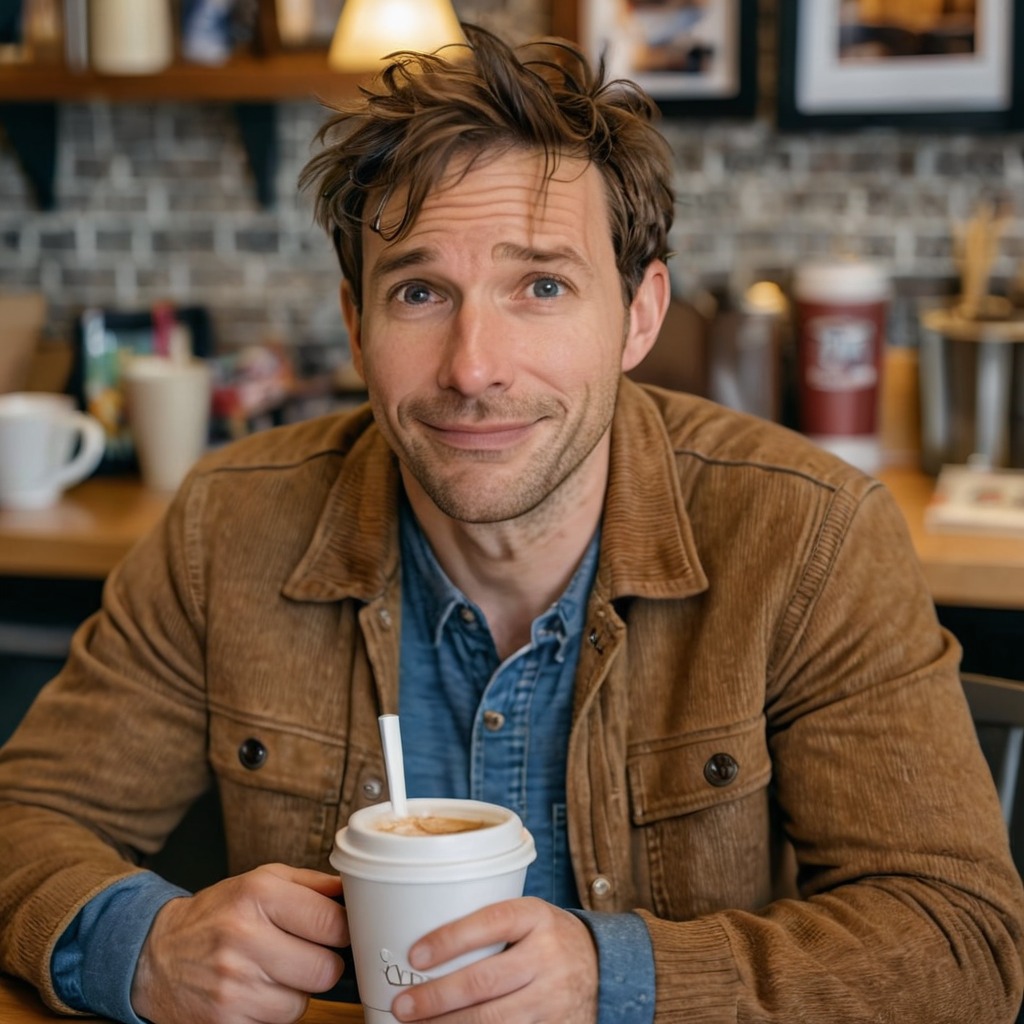
The coffee shop. A place where the masses gather to indulge in a ritual as ancient as it is mundane. Yet, as I stood in line, waiting to place my order, I couldn’t help but feel a sense of injustice. The person in front of me, a seemingly innocuous individual, had just ordered a venti iced coffee with precisely three sugars and two creamers. Now, on the surface, this may appear to be a benign request, but to me, it represented a gross affront to the very fabric of society.
As I watched the barista expertly juggle the syrup bottles and creamer containers, I couldn’t shake the feeling that this person’s order was, in fact, a personal attack on me. I mean, who needs three sugars and two creamers? It’s an absurd amount of sweetness and dairy, a reckless disregard for the delicate balance of flavors that a properly crafted cup of coffee demands. And what’s more, this person’s order was a brazen attempt to upstage my own, more refined coffee preferences. I, a connoisseur of all things caffeinated, had been planning to order a simple yet elegant pour-over, but now, thanks to this sugar- and creamer-glutton, my choice seemed dull and unadventurous by comparison.
But, as I continued to wait in line, my mind began to wander to the larger implications of this person’s actions. Was this a symptom of a broader societal problem, a culture that values excess and indulgence over restraint and moderation? Were we, as a society, sleepwalking into a world where the norms of coffee consumption were dictated by the whims of the most profligate and reckless among us? And what about the environmental impact of all those extra sugars and creamers? The carbon footprint of this person’s order alone was probably equivalent to a small island nation’s annual emissions.
And then, it hit me: this was not just a personal affront, nor a societal problem, but a full-blown institutional crisis. The coffee shop, once a bastion of community and civility, had been transformed into a breeding ground for sugar-addled, creamer-guzzling monsters. The baristas, once noble artisans, were now mere enablers, complicit in this destructive cycle of consumption and waste. The coffee shop’s very business model, I realized, was predicated on the exploitation of our collective weakness for excessive sugar and dairy.
But, as I finally reached the front of the line and placed my order, my mind was already racing ahead to the global consequences of this person’s actions. Would this sugar- and creamer-fueled madness spread to other coffee shops, other countries, other continents? Would we soon be facing a worldwide coffee crisis, as the planet teetered on the brink of collapse under the weight of our collective coffee cup indulgences? I envisioned a dystopian future, where the once-blue skies were now a hazy brown, choked with the exhaust fumes of sugar- and creamer-laden coffee cups.
And then, as I waited for my coffee to be prepared, I caught a glimpse of myself in the mirror. I was standing perfectly still, a look of calm, almost serene, contemplation on my face. It was then that I realized, for a brief, fleeting moment, that perhaps I was overreacting just a tad. Maybe, just maybe, this person’s order was not, in fact, a personal attack on me, nor a symptom of a broader societal problem, nor a global crisis waiting to happen. Maybe, just maybe, it was simply a person who liked a lot of sugar and creamer in their coffee.
But, before I could fully process this thought, my coffee was ready, and I was off, lost once again in the maelstrom of my own, wildly disproportionate, reasoning…
As I took my first sip of the pour-over, I was momentarily transported to a world of nuance and subtlety, where the delicate flavors of the coffee danced on my palate. But, like a siren’s call, my mind soon snapped back to the crisis at hand. I began to wonder if the barista, in preparing my coffee, had been subtly influenced by the sugary behemoth that had come before me. Had they, perhaps, been desensitized to the true meaning of coffee by the constant barrage of sweet and creamy requests?
I started to mentally dissect the barista’s every move, searching for telltale signs of sugar-induced fatigue. Had they measured out the coffee grounds with the same precision and care that I would have expected from a true coffee artist? Or had they, in a moment of desperation, simply dumped a heaping spoonful into the filter, hoping to drown out the cacophony of sugar and creamer that still lingered in the air?
As I pondered these questions, a sense of righteous indignation began to build within me. I was the coffee connoisseur, the guardian of good taste and refinement. It was my duty to protect the world from the scourge of sugar and creamer, to defend the noble tradition of coffee as a beverage of nuance and sophistication.
And yet, as I gazed around the coffee shop, I noticed something peculiar. The other patrons seemed entirely oblivious to the crisis that was unfolding before their very eyes. They chatted and laughed, sipping their own coffees with nary a care in the world. Some of them, I even noticed, were indulging in the very same sugary concoctions that had set me off on this tangent in the first place.
For a moment, a tiny, insistent voice in the back of my mind whispered that perhaps, just perhaps, I was the one who was out of step. Maybe, just maybe, I was the only one who saw the world through the distorted lens of my own coffee-fueled paranoia. But I pushed the thought aside, unwilling to entertain the possibility that my righteous indignation might be misplaced. After all, someone had to sound the alarm, to warn the world of the dangers that lurked in every cup of sugar-laden coffee. And that someone, I was convinced, was me.