Latest Articles

Saltwater in the Feed: Mastering the Perfect Beach-Themed Instagram Aesthetic

Dave

The ocean has always been a muse for dreamers, artists, and wanderers, but in the age of Instagram, it has become something else too: the ultimate backdrop for a life that looks as effortlessly beautiful online as it feels in person. A beach-themed Instagram aesthetic is more than a collection of photos; it’s a curated vibe, a storytelling thread that pulls people in with every post. It whispers of sun-kissed mornings, golden afternoons, salty hair, sandy feet, and a carefree spirit that feels both aspirational and attainable. When you open a profile with a cohesive beach aesthetic, it’s like opening a window into a lifestyle drenched in light and ease, one that invites followers to step into your world of endless summer. But creating that aesthetic takes more than snapping a photo of the sea. It requires intention, cohesion, and a balance between authenticity and artistry, a dance that transforms everyday moments at the beach into a feed that feels like a destination in itself.

It begins with color. The palette of a beach aesthetic is one of its most defining elements. Blues, of course, dominate—from the turquoise shimmer of shallow waters to the deep indigo of horizon lines. Pair those with the warm tones of sand, the glowing gold of sunlight, and the crisp whites of seashells, linen, and foamy waves, and you already have a foundation that feels natural and refreshing. Consistency is key here. Editing tools like Lightroom or VSCO help bring harmony to shots, softening harsh contrasts or amplifying warm highlights so that even different beaches and times of day look like they belong in the same narrative. Some accounts lean into dreamy, washed-out tones that mimic film photography, while others prefer bold saturation that makes every umbrella, bikini, and cocktail pop against the sky. The trick is choosing a mood and sticking to it—deciding whether your beach is soft and serene or bold and vibrant, and letting that choice guide your editing.

Angles and composition matter just as much as color. A feed that feels alive rarely leans on the same type of shot over and over. Wide horizons give the feeling of freedom and scale, while close-ups of seashells, footprints, or melting popsicles bring intimacy and texture. Overhead flat lays of beach towels, woven bags, sunscreen bottles, and sunglasses tell a lifestyle story, while candid shots of laughter in the waves show emotion. Variety keeps followers engaged, but cohesion keeps them loyal. Each post should feel like a new piece of the puzzle, fresh yet familiar, like walking along the same beach and discovering a different treasure each time.

Props and styling are underrated tools for shaping a beach-themed aesthetic. The right towel, a straw hat, a woven bag, a pair of chic sunglasses, or even a coconut drink can elevate a simple snapshot into a piece of art. These details don’t just decorate the image; they set the tone, telling followers whether your vibe is luxury resort chic, bohemian wanderlust, or minimalist escape. Fashion plays into this as well. Neutral swimsuits, breezy cover-ups, and sun-faded fabrics create one kind of look, while bold prints, neon bikinis, and oversized shades create another. Think of your props and outfits as part of your visual toolkit, the accents that help tie your feed together.

Of course, no Instagram aesthetic thrives on stillness alone. Reels and stories now carry as much weight as grid posts, and they offer a chance to expand the beach aesthetic beyond static images. Short clips of waves rolling, friends dancing barefoot on the sand, or a slow pan across a glowing sunset add movement and atmosphere. Stories, with their behind-the-scenes feel, allow for more spontaneity: the sunscreen reapplication, the sandcastle attempt, the snack spread in between swims. Together, they round out the aesthetic, making it feel real and approachable rather than just curated perfection.

Captions, too, are part of the aesthetic. A beach-themed feed isn’t only about visuals—it’s about voice. Playful puns, laid-back musings, and poetic reflections on the sea all add depth to the images. A photo of footprints in the sand paired with a caption about leaving worries behind creates resonance. A shot of friends laughing with a simple “salty but sweet” makes people smile. The words don’t have to be long, but they should echo the mood of the image, offering a glimpse of personality that connects followers to the person behind the photos.

Engagement also grows when your aesthetic feels like a story people want to join. Hashtags connect your posts to wider communities, drawing in others who love the beach life. Tagging locations not only boosts reach but also turns your feed into a guidebook of sorts, a collection of places worth visiting. Collaborative posts, featuring friends, fellow creators, or even small beach-town businesses, broaden your aesthetic while adding dimension. The more your feed feels like part of a living, breathing coastal community, the more followers see it as something more than just pretty pictures—they see it as a lifestyle they want to experience too.

The human side of a beach aesthetic is what keeps it from becoming stale. Perfection has its place, but authenticity is magnetic. The wind-tousled hair, the slightly melted ice cream cone, the photo that catches laughter mid-squint instead of perfectly posed—all of these moments are what make your aesthetic feel alive. The beach is messy: sand clings, waves splash unpredictably, and tans rarely develop evenly. Embracing those quirks keeps your content from feeling artificial and instead captures the real spirit of summer.

And that’s the ultimate point of curating a beachy Instagram aesthetic—it’s not just about impressing strangers with polished images. It’s about documenting the feeling of summer, the essence of freedom and play. It’s about building a digital scrapbook that you and others can revisit in the dead of winter, when you need to remember the warmth of the sun and the endless possibility of days spent by the sea. It’s about creating not just an account, but a mood board for life, one that celebrates the beauty of the ocean and the joy it brings to everyone who stands on its shore.

So when you’re ready to curate your beach-themed aesthetic, don’t overthink it. Focus on light, color, variety, and intention. Mix beauty with authenticity. Make your feed a place people want to linger, like a boardwalk stroll at golden hour. And remember: the sea doesn’t demand perfection, it just asks that you show up and let yourself be part of its rhythm. Do the same with your feed, and soon your Instagram will feel less like a collection of posts and more like a window into endless summer.

Related Posts

Finding a Giant: How Neptune Emerged From the Shadows of the Sky

Elias Rowen

On the night of September 23, 1846, humanity’s gaze expanded to embrace another world. In the quiet of the Berlin Observatory, astronomer Johann Gottfried Galle peered through a telescope, guided not by chance but by mathematics, and spotted a faint blue disk glimmering against the canvas of the heavens. This was Neptune — a planet no one had seen before, predicted by calculation and confirmed by sight. It was the first time in history that a celestial body had been discovered not by accident or luck but through the power of human reasoning. In that moment, the universe seemed to whisper back to humanity: your mind can reach farther than your eyes.

The story of Neptune’s discovery is a drama of intellect, rivalry, and revelation. By the early 19th century, astronomers knew their solar system was not complete. Uranus, discovered by William Herschel in 1781, did not behave as Newton’s laws suggested it should. Its orbit wobbled, pulled by something unseen. Some thought Newton’s theory might be flawed. Others suspected the existence of another, more distant planet tugging invisibly at Uranus’s path. It was a puzzle that stretched the limits of human curiosity. Could mathematics alone point to a world no telescope had yet glimpsed?

In France, the young mathematician Urbain Le Verrier took up the challenge. With relentless precision, he calculated where this hidden planet should be. Across the Channel in England, John Couch Adams, working independently, arrived at a similar conclusion. Both men, armed only with equations and determination, had triangulated the position of a ghost in the sky. But calculation was only theory until confirmed by observation. That final task fell to Galle in Berlin. Using Le Verrier’s predictions, he turned his telescope toward the designated region of sky. And there it was — Neptune, almost exactly where the numbers had foretold. A pale orb on the frontier of sight, a new giant of the solar system, pulled out of darkness by the union of mathematics and vision.

The discovery was more than a scientific triumph. It was a cultural earthquake. For millennia, humanity had relied on the naked eye to know the heavens. The ancients mapped Mercury, Venus, Mars, Jupiter, and Saturn, the “wanderers” visible without aid. Even Uranus had been spotted accidentally. But Neptune was different. It was a planet pulled from the void by intellect alone, the child of pencil, paper, and calculation before it was the child of glass and lens. The discovery vindicated Newtonian physics, silenced skeptics, and cemented the idea that the universe could be grasped not only by what we see, but by what we deduce.

Yet the triumph was also entangled with rivalry and controversy. France celebrated Le Verrier, Britain claimed Adams, and Germany honored Galle. The discovery became a matter of national pride, each country eager to inscribe its name on the newest planet. But beyond borders and egos, Neptune belonged to no nation. It belonged to the human species, a collective leap of mind and spirit.

Neptune itself was a revelation. Over time, astronomers learned it was a giant of ice and gas, its atmosphere laced with methane, its winds the fastest in the solar system, roaring at over 1,000 miles per hour. Fourteen moons circled it, including the captured body Triton, a frozen world spewing geysers of nitrogen. Neptune was not merely a dot on a chart but a dynamic, alien realm, far beyond Earth’s warmth, yet alive with storms and mystery. The discovery opened a door not only to one planet but to the realization that the cosmos was far larger, stranger, and more alive than anyone had imagined.

Looking back, the night of September 23, 1846, represents more than a scientific milestone. It is a symbol of what humanity can achieve when imagination meets discipline. A young mathematician scribbling on parchment, an astronomer adjusting his telescope, a silent blue world waiting unseen for eons — all converged in one moment of cosmic revelation. It was a reminder that the universe is not static but expanding, not closed but open, and that our role is not only to dwell within it but to discover it.

Neptune’s discovery remains a turning point in the human story. It was the night we proved that reason could see farther than the eye, that the cosmos could be mapped before it was touched, that the boundary between known and unknown was not a wall but a horizon. On September 23, 1846, humanity found a giant in the dark, and in doing so, found itself a little larger too.

Related Posts

Soundtrack to the Shore: Curating the Perfect Beachy Summer Playlist

Dave

Every great summer memory has a soundtrack, whether you realize it or not. Music has a way of anchoring moments in time, stitching emotions to melodies so that years later, a single song can bring the smell of sunscreen and saltwater rushing back. A beach day without music feels incomplete, like a wave that never reaches the shore. Curating the ultimate beachy summer playlist isn’t just about picking random songs—it’s about building a mood, a vibe, a sonic atmosphere that matches the rhythm of the tide and the spirit of long, sun-soaked afternoons. It’s about creating the kind of playlist that makes you want to kick off your sandals, close your eyes, and let the sound waves mingle with the ocean waves until you can’t tell where one ends and the other begins.

The perfect beach playlist starts with energy, but not too much. Think of the early part of the day, when you’re just settling in, towels laid out, the cooler unpacked, sunscreen applied. The music should ease you into the vibe, like dipping your toes into the water before diving all the way in. Acoustic guitars, reggae rhythms, breezy indie tracks, and mellow pop tunes work beautifully here. Songs with a laid-back groove set the tone, reminding you that the day ahead is about relaxation and joy. These are the songs that say, “You made it to the beach, now breathe.”

But as the sun rises higher and the day hits its stride, the playlist should shift gears. Midday beach hours are all about movement, laughter, and energy. This is when the upbeat tracks shine—the danceable pop hits, the funky basslines, the throwback anthems that everyone knows the words to. A good playlist isn’t just background noise; it’s participatory. It makes people sing along, dance a little in the sand, or laugh at the nostalgia of a track they haven’t heard in years. Mixing modern hits with golden oldies creates a bridge between generations, making the playlist inclusive whether you’re lounging with friends, family, or strangers who inevitably start vibing nearby.

The secret weapon of any beach playlist is rhythm. The ocean itself has rhythm—steady, crashing, rolling—and the best songs mirror that. Calypso beats, bossa nova, reggae, surf rock, and tropical house all feel like they belong on the sand. There’s something about syncopation that makes your body sway without effort, something about steel drums or a shuffling groove that feels like the musical equivalent of a sunbeam. Throw in a few summer anthems that are less about genre and more about attitude—songs that scream freedom, warmth, and fun—and suddenly, the playlist is more than just a collection of tracks. It’s a soundtrack to the season.

Playlists, though, aren’t only about momentum. They’re about pacing. The heat of the afternoon often gives way to moments of calm, when you retreat under the umbrella, sip something cold, and watch the waves instead of diving into them. This is where the chill tracks return—dreamy pop, lo-fi beats, acoustic ballads that make you reflective. A good beach playlist has highs and lows, peaks and valleys, just like the day itself. It crescendos with energy when the group is dancing in the surf, then dips into mellow tones as everyone rests, sunburnt and sleepy, staring at the horizon.

And then there’s sunset—the crown jewel of a beach day. Music at sunset is sacred. It’s when songs stop being just entertainment and become memory markers. The sun sinking into the sea needs a soundtrack, whether it’s soulful ballads, nostalgic classics, or instrumental tracks that feel cinematic. This is when the playlist transitions into something emotional, pulling at the heart in ways that words alone can’t. A single song at sunset can brand itself into your soul forever, so curating this section of the playlist with care is crucial. These are the songs you’ll come back to in winter when you need to remember what summer felt like.

Technology has made beach playlists easier than ever, with streaming platforms offering endless choices, but curating one still requires an artful hand. Shuffle can’t replicate intention. Anyone can throw together a bunch of summer songs, but it takes thought to craft flow, to balance tempos, to create a journey that matches the natural progression of a beach day. The best playlists are living things—they evolve, they surprise, they carry inside jokes, they contain tracks that only your group of friends would understand. Adding those quirky picks alongside crowd-pleasers is what makes a playlist feel like yours.

There’s also the social aspect of playlist building. Making it collaborative allows everyone to contribute, weaving together diverse tastes into something unexpected. A friend who loves Latin beats might throw in a salsa track that gets everyone moving. Another who’s into indie bands adds a song no one’s heard before but immediately loves. Someone inevitably sneaks in a guilty pleasure track that becomes the unofficial anthem of the trip. These contributions transform the playlist from personal to communal, and suddenly, it’s not just about music anymore—it’s about collective memory.

Of course, the beach itself amplifies everything. Music hits differently when paired with the sound of waves and the warmth of the sun. Lyrics about freedom, love, or youth feel more poignant with your feet buried in sand. Beats feel more alive when they sync with the crash of surf. Even silence between tracks feels intentional, as if the ocean is taking its solo. The playlist is not just music—it’s a conversation with the environment, a duet between human creativity and natural rhythm.

The magic of a beachy summer playlist is that it doesn’t stay on the beach. Long after the trip is over, those songs carry the memory home. Driving to work, cleaning your apartment, cooking dinner—suddenly, you’re transported back to the sand, to that exact moment when the song played and the world felt infinite. The playlist becomes a time machine, a vessel of nostalgia, and each song is a seashell you carry back from the shore, small but full of story.

In the end, curating a beach playlist is about more than music. It’s about emotion. It’s about crafting a mood that complements the sun, the sea, the sand, and the souls who share it with you. It’s about choosing songs that don’t just sound good but feel good, songs that enhance the beauty of the beach rather than competing with it. A perfect playlist is invisible in the best way—it blends seamlessly into the experience, lifting it without drawing attention to itself, becoming part of the memory instead of just background noise.

So the next time you plan a beach day, don’t just grab sunscreen and snacks. Think about the sound. Take the time to build a playlist that carries you from morning to night, from energetic dance breaks to sunset serenity. Add songs that make you laugh, songs that make you move, songs that make you feel. Make it personal, make it communal, make it something you’ll want to press play on again and again, even when summer is gone. Because the waves will always come back, but the right soundtrack will bring them to you whenever you need them.

Related Posts

A Proclamation Toward Freedom: Lincoln’s Preliminary Edict That Shook a Nation

Elias Rowen

On September 22, 1862, in the midst of the bloodiest conflict America had ever endured, President Abraham Lincoln placed pen to paper and issued a proclamation that changed the moral and political trajectory of the United States. Known as the Preliminary Emancipation Proclamation, it declared that if the rebelling Confederate states did not return to the Union by January 1, 1863, their enslaved people would be declared “forever free.” It was not yet full emancipation — it was conditional, tactical, and carefully worded — but it was a seismic shift. For the first time, the Civil War was not only about preserving the Union but also about ending the institution of slavery. In one stroke, Lincoln reframed the conflict, aligning it with a higher purpose and setting the stage for the ultimate abolition of slavery.

To understand the gravity of September 22, we must first grasp the context. The Civil War had been raging for over a year, and the Union had little to show for it. Hundreds of thousands of lives had already been lost or shattered, yet victory was uncertain. Lincoln’s original aim was preservation, not revolution. His guiding principle had been to save the Union, whether that meant freeing all enslaved people, none, or some. But the reality of war, the pressure from abolitionists, and the actions of enslaved people themselves — thousands fleeing to Union lines, claiming freedom by force of will — pushed the question of slavery to the forefront. Lincoln, cautious and deliberate, knew timing was everything.

The catalyst was the Battle of Antietam, fought on September 17, 1862. It was the single bloodiest day in American history, with more than 22,000 casualties. Though tactically inconclusive, it gave Lincoln the opportunity he had been waiting for. He had drafted the proclamation earlier in the summer but held it back, unwilling to appear desperate after Union defeats. Antietam, grim as it was, gave him a tenuous claim to victory — enough momentum to release the proclamation without it seeming like a plea born of weakness. Five days later, on September 22, he gathered his cabinet and unveiled the edict that would forever mark his presidency and America’s conscience.

The Preliminary Emancipation Proclamation was not the sweeping abolition that myth later paints. It applied only to states “in rebellion” against the Union, not to loyal border states like Kentucky, Missouri, Maryland, or Delaware. It left slavery untouched in areas already under Union control. It was, in part, a war measure designed to destabilize the Confederacy by undermining its labor force and encouraging enslaved people to flee or resist. It was also a diplomatic maneuver, discouraging European powers like Britain and France — both of which had already abolished slavery — from recognizing or supporting the Confederacy. In its legalistic phrasing and its calculated exclusions, it reflected Lincoln’s pragmatism as much as his ideals. Yet beneath its cautious surface was something revolutionary: the transformation of the war into a struggle for freedom.

The reaction was immediate and polarized. Abolitionists rejoiced, though some criticized the proclamation for not going far enough. Frederick Douglass, the towering voice of Black freedom, hailed it as a “mighty act,” recognizing its potential to change the moral stakes of the war. Many Union soldiers, once indifferent to slavery, began to see themselves as liberators. Enslaved people in the South heard the news through whispers, newspapers, and word of mouth, and thousands fled to Union lines, their journeys becoming living embodiments of freedom proclaimed. At the same time, Lincoln faced fierce backlash. Northern Democrats denounced him, accusing him of turning the war into an abolition crusade. Racists predicted chaos, claiming that emancipation would unleash violence, unemployment, and ruin. Border states threatened unrest. Even within Lincoln’s own party, doubts persisted about whether he had gone too far or not far enough.

But Lincoln understood something deeper: that once freedom had been proclaimed, there was no turning back. By issuing the Preliminary Emancipation Proclamation, he laid down a moral gauntlet. Come January 1, if the Confederacy remained defiant, slavery would be struck at its root. The edict made emancipation inevitable, even if gradual and incomplete. It was the opening door through which the 13th Amendment would later stride, abolishing slavery everywhere. It was the moment the Union defined not just what it was fighting against — rebellion — but what it was fighting for: liberty.

September 22, 1862, was therefore not a conclusion but a beginning. It was a moment of clarity in a war clouded by blood and uncertainty. Lincoln himself acknowledged its gravity. He told his cabinet: “I never in my life felt more certain that I was doing right than I do in signing this paper.” He knew history would judge him by this act as much as by any battlefield. He knew it would anger some, inspire others, and change everything. And he was right.

The Preliminary Emancipation Proclamation was not perfect. It was limited, conditional, and riddled with exceptions. But it was also transformative. It shifted the ground beneath the war, elevating it from a struggle over union to a struggle over human freedom. It gave the conflict moral clarity, rallying abolitionists, dissuading foreign powers, and emboldening enslaved people to claim their own liberation. It marked the moment when America began, however painfully, to move toward its better self.

Looking back now, we can see the paradox of Lincoln’s edict. It was cautious yet bold, pragmatic yet idealistic, legalistic yet revolutionary. It was an imperfect step, but it was a step. And that is how progress often comes: not in pure leaps of justice, but in contested, complicated acts that carve a path forward. On September 22, 1862, Abraham Lincoln issued such an act. And in doing so, he transformed not only the Civil War, but the very meaning of America.

Related Posts

Cool Bites, Hot Sun: The Best Hydrating Snacks for Long Beach Days

Dave

The sun has a way of sneaking up on you at the beach. You set out your towel, unpack your cooler, maybe slather on sunscreen, and the hours just dissolve into the rhythm of waves and laughter. But along with the sun comes thirst and fatigue. Hydration is the silent hero of every successful beach day, and while water bottles are a must, the secret to feeling refreshed all day often lies in what you eat. Hydrating snacks are not just about filling your stomach—they’re about keeping your body cool, replenished, and energized so you can swim, lounge, and play without the dreaded crash of dehydration. And the beauty of it all? These snacks are often the tastiest, juiciest, and most colorful parts of the beach experience, making them just as photogenic for your Instagram feed as they are functional for your body.

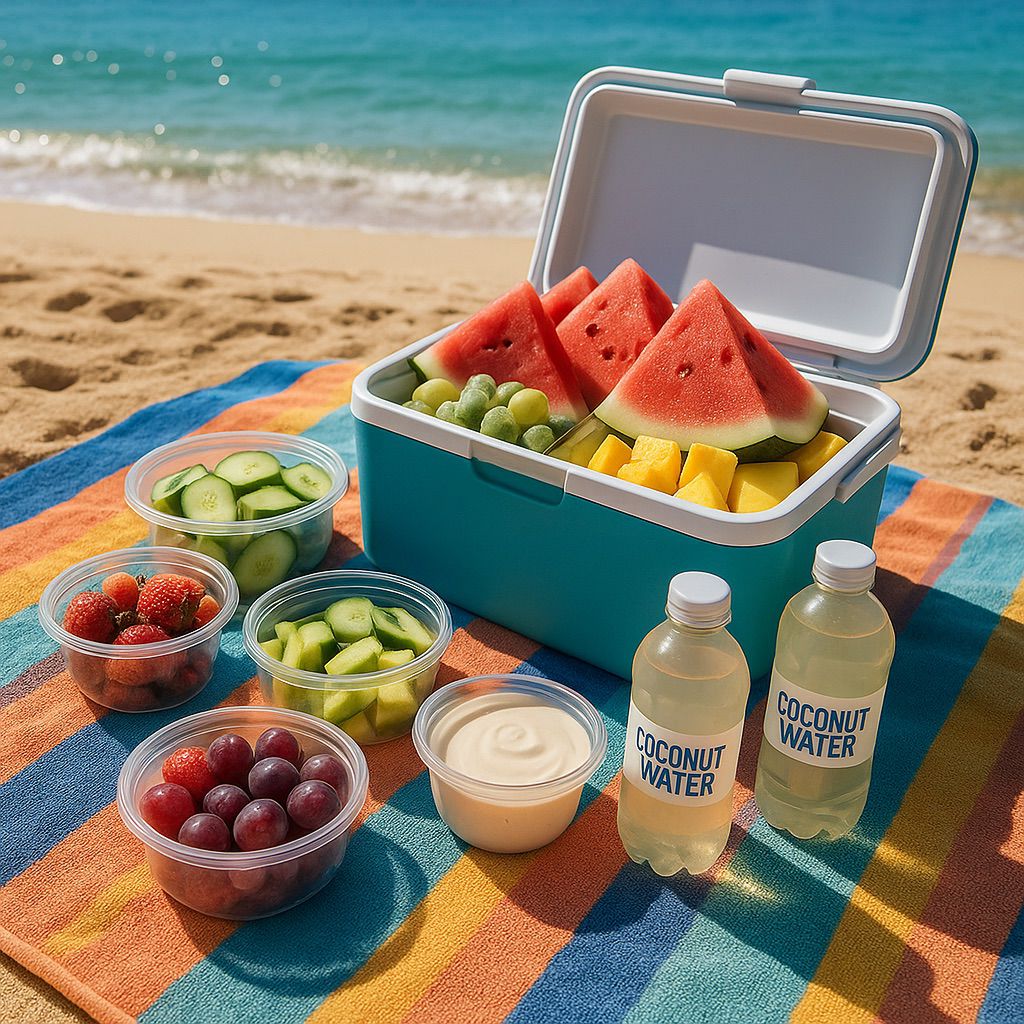
The classics are classics for a reason, and nothing screams hydration quite like watermelon. Its bright pink flesh is over 90% water, sweet and refreshing in a way that feels like biting into summer itself. Pre-cut into cubes, spears, or even frozen into popsicle sticks, watermelon is the ultimate beach snack. It’s not just water in fruit form—it’s electrolytes, vitamins, and pure joy in every bite. Grapes work the same magic. Frozen overnight, they double as tiny, natural ice cubes that keep your cooler cold while transforming into bite-sized pops of refreshment under the sun. Cucumbers, though often underestimated, deserve a spot too. Their crisp crunch and high water content make them feel almost more like a drink than a food, and with a sprinkle of salt or a dip into hummus, they become addictive in the best way.

Fruit is only the beginning, though. Oranges, tangerines, and clementines peel easily on the sand, releasing bursts of juice that wake you up instantly. Pineapple chunks are another tropical favorite, tangy and sweet, dripping with hydration while doubling as a mood lifter. Berries—strawberries, blueberries, raspberries—are tiny hydration bombs packed with antioxidants, making them as good for your skin as they are for your energy. Paired together in a fruit salad or layered into skewers, these fruits become the star of the beach picnic, colorful mosaics that feel both indulgent and functional.

But hydrating snacks don’t stop at fruit and veggies. Yogurt cups, especially when frozen slightly before packing, offer creamy refreshment and probiotics that keep your gut happy while you play in the sun. Pair them with granola for crunch and fiber, or mix in chopped fruit for an even more hydrating punch. Smoothies, stored in insulated bottles, are another genius move. Blend up spinach, cucumber, pineapple, and coconut water, and you’ve got a portable green drink that keeps you hydrated while tasting like a tropical treat. For those who like savory options, gazpacho—a chilled tomato-based soup—is unexpectedly beach-friendly when carried in jars or bottles. Each sip is refreshing, tangy, and loaded with electrolytes, proving that hydration doesn’t have to be boring.

Coconut water itself deserves a spotlight. Nature’s sports drink, it’s rich in potassium and electrolytes, making it perfect for replenishing after swimming or playing beach volleyball. Freeze bottles overnight and they’ll slowly melt into slushy goodness throughout the day. Pair it with light snacks like celery sticks, which are over 95% water, or bell pepper slices that offer both hydration and crunch. It’s not about eating heavy meals—it’s about grazing lightly throughout the day, giving your body exactly what it needs to keep going without weighing you down.

Even snacks with a reputation for indulgence can be made hydrating. Popsicles, for instance, can be homemade with nothing more than blended fruit and water, frozen into molds the night before your trip. Pack them in a cooler and you’ve got treats that beat the heat while sneaking in hydration. Chia seed puddings are another surprising win; when mixed with almond milk or coconut water and fruit, they absorb liquid and release it slowly, keeping your hydration levels steady. They’re easy to pack, endlessly customizable, and stylish enough to impress even the pickiest of beachgoers.

The trick to hydrating snacks is layering textures and flavors. Combine juicy fruits with crunchy veggies, creamy yogurts with crisp granola, or sweet popsicles with savory dips. That variety not only keeps you satisfied but also encourages you to snack more frequently, which means you’re hydrating consistently without even realizing it. It’s sneaky wellness—the kind that feels like indulgence but pays off in energy and mood.

At the end of the day, hydrating snacks are more than just fuel. They’re part of the ritual, part of what makes beach days special. They’re the grapes your friend pops into your mouth while you’re too lazy to sit up, the orange slices passed around after a swim, the watermelon that stains your hands and makes everyone laugh as juice drips down their chin. They’re communal, joyful, and tied to memory. You don’t reminisce about bottled water—but you do remember the frozen strawberries that tasted like candy or the cucumber slices that revived you after a long swim. Snacks become stories, and on the beach, those stories taste like sunshine.

So next time you pack for a beach day, think beyond chips and cookies. Load your cooler with color, flavor, and hydration. Fill it with watermelon wedges, frozen grapes, pineapple chunks, cucumber slices, yogurt cups, chia puddings, coconut water, and maybe a batch of homemade popsicles. Make it playful, make it refreshing, make it something that doesn’t just fill your stomach but cools your soul. Because the secret to the perfect beach day isn’t just sunscreen and shade—it’s the snacks that keep you going, keep you glowing, and keep the laughter rolling long after the tide comes in.

Related Posts