Latest Articles

Treason at West Point: The Day Benedict Arnold Betrayed the Revolution

Elias Rowen

On September 21, 1780, in a quiet grove along the Hudson River, two men met in secret to alter the course of the American Revolution. One was Major John André, a dashing young officer in the British army, admired for his charm and intelligence. The other was General Benedict Arnold, a hero of earlier battles in the war but now a man consumed by bitterness, ambition, and resentment. Together they plotted nothing less than the betrayal of West Point, the fortress that guarded the Hudson and was considered the key to the Revolution. Their meeting — clandestine, dangerous, and fateful — would end not with triumph but with disgrace, capture, and execution. It would forever brand one man’s name as synonymous with treason: Benedict Arnold.

The road to that treason began years earlier. Arnold was no ordinary figure. In the early years of the Revolution, he had distinguished himself as one of the most daring and effective generals in George Washington’s army. He played a critical role in the capture of Fort Ticonderoga, led men through the brutal wilderness of Maine in a daring march to Quebec, and was instrumental in the American victory at Saratoga, a turning point in the war. Yet for all his bravery, Arnold felt slighted. Promotions passed him by. Rivals whispered against him. Congress, wary of his temper and extravagance, questioned his expenses and delayed his recognition. His leg, shattered by musket fire at Saratoga, became a permanent reminder of sacrifice without reward. As others received praise and promotion, Arnold seethed with resentment, convinced that his contributions were being overlooked and his honor tarnished. The seeds of betrayal were planted not by lack of ability, but by wounded pride.

By 1780, Arnold’s bitterness had grown into treachery. Appointed by Washington as commander of West Point, Arnold now held one of the most critical posts in the war. West Point was the linchpin of American defense: perched on a rocky bluff above a sharp bend in the Hudson, it controlled the river that divided New England from the rest of the colonies. Whoever controlled West Point controlled the war. For Arnold, it was an opportunity — not to serve his country, but to sell it. Secretly, he began correspondence with the British, offering to deliver West Point into their hands in exchange for money and rank in the British army. For a man who felt America had betrayed him, it was a chance to strike back and secure his fortune.

The British welcomed his overtures. Sir Henry Clinton, commander of British forces in New York, saw in Arnold’s betrayal the opportunity to crush the Revolution. Clinton’s aide, Major John André, became the go-between. Handsome, urbane, and only twenty-nine, André was everything Arnold was not: admired, beloved, and full of promise. Where Arnold was haunted by slights, André seemed blessed by fortune. But in September 1780, their fates became entwined. On the night of September 21, the two men met near the village of Haverstraw, New York. André, disguised in civilian clothes, slipped ashore from the British sloop Vulture to meet Arnold. There in the shadows, they conspired to hand over West Point for the price of £20,000. Plans and maps were exchanged, promises made. The deal was sealed. But fate, as it often does, intervened.

The meeting went longer than expected, and André found himself unable to return to the Vulture. Forced to travel back toward British lines by land, he carried with him the incriminating documents of Arnold’s treachery — plans of West Point hidden in his boot. On September 23, near Tarrytown, André was stopped by three American militiamen. Nervous, he showed them a pass signed by Arnold. But when they searched him and found the secret papers, the truth was revealed. André was arrested and taken to the nearest American post. The plot began to unravel.

Arnold, alerted to André’s capture, fled West Point in haste, racing to the Vulture and escaping to British lines. Washington, who had trusted Arnold and considered him one of his finest officers, arrived at West Point only to discover the betrayal. The shock was profound. Washington, a man known for his composure, was visibly shaken. He had been minutes away from falling into Arnold’s trap. If the fortress had fallen, the Revolution itself might have collapsed. The discovery of Arnold’s treason struck like a thunderclap, shaking the fragile confidence of the American cause.

André’s fate was sealed. Though he conducted himself with dignity and charm during his captivity, even winning the admiration of his captors, the evidence was clear. He was tried as a spy and sentenced to death. On October 2, 1780, he was hanged, his youth and gallantry unable to save him from the gallows. His death was mourned even by Washington, who respected his courage but could not ignore his crime. Arnold, meanwhile, became a brigadier general in the British army, but never found the honor he craved. He led raids against his former countrymen, but he was mistrusted by the British and despised by the Americans. He had sold his soul and gained nothing but infamy. To this day, his name is shorthand for betrayal.

The meeting on September 21, 1780, was more than just a failed conspiracy. It was a moment that revealed the fragility of revolutions and the complexities of loyalty. Arnold was not a villain by nature, but a hero turned bitter by pride and ambition. André was not a scoundrel, but a soldier caught in the web of war. Yet together they embodied the darker truths of conflict: that ideals are fragile, that men are fallible, and that the line between hero and traitor is often razor thin.

Looking back, it is tempting to see Arnold only as a villain, his name blackened by treason. Yet his story is also a cautionary tale about recognition, pride, and the corrosive power of resentment. He was a man who could have been remembered as one of America’s greatest heroes, but who instead chose the path of betrayal. His name is a reminder that loyalty cannot be bought, and that honor once lost cannot be regained.

On that September day in 1780, as Arnold and André whispered in the shadows, the fate of the Revolution teetered. Their conspiracy failed, but its lesson endures: revolutions are not only fought on battlefields, but in the hearts of those who serve them. And sometimes, the greatest danger comes not from without, but from within.


Related Posts

Waves Without Worry: The Art of Budget-Friendly Beach Escapes

Dave

There is a myth that has lingered far too long, one that says a beach vacation has to be expensive to be memorable. That to feel sand under your feet and hear the rhythmic crash of waves, you need a five-star resort, pricey cocktails, or a plane ticket halfway around the world. The truth is much kinder, much simpler: the ocean doesn’t care how much money you have. The sea welcomes everyone, no questions asked, and some of the most magical beach escapes are also the ones that barely dent your wallet. Budget-friendly doesn’t mean boring; it means smart, creative, and often more authentic than trips weighed down by luxury price tags. When you chase the essence of a beach escape—the salt air, the endless horizon, the laughter of friends or family—it becomes clear that joy doesn’t need a receipt.

The heart of a budget-friendly beach escape lies in reimagining what a getaway truly is. It doesn’t need to involve flights, sprawling resorts, or expensive beachside dinners. Sometimes, the best trips happen just a car ride away. Exploring local or nearby coastlines is one of the simplest hacks for saving money while still scratching that itch for ocean air. Those overlooked beaches within a couple of hours of home often surprise travelers with their beauty, their quirks, and their quiet charm. Day trips turn into overnight stays with a tent, a sleeping bag, or a modest Airbnb, and suddenly, the cost of a getaway is a fraction of what a big vacation would demand. The point isn’t distance—it’s perspective. Even the closest stretch of sand can feel like paradise if you allow yourself to slow down, breathe it in, and let go of the idea that vacations only count when they require passports.

Lodging is often where budgets stretch and snap, but for those willing to think outside the box, affordable options abound. Camping on or near the beach delivers not just savings but experiences money can’t buy. Falling asleep to the sound of waves crashing just feet away from your tent is priceless. For those less enthusiastic about tents, budget-friendly guesthouses, hostels, or small vacation rentals offer comfortable, no-frills lodging that keeps the focus on the beach rather than the bedroom. Traveling with friends or family? Splitting costs across more people makes private rentals affordable and even cozy, transforming them into shared spaces of laughter, storytelling, and sandy footprints.

Food, another common money sink, becomes an opportunity on a budget escape. Picnics are underrated masterpieces of beach living. A cooler packed with sandwiches, fresh fruit, chips, and a bottle of something fizzy tastes infinitely better with the ocean as your dining room. Instead of costly beachside restaurants, visiting local markets and grocery stores saves money while adding cultural flavor. Cooking simple meals together in a rental or enjoying sunset snacks directly on the sand often makes memories far sweeter than a high-priced menu. And the occasional treat—a cone of ice cream on the boardwalk, a local specialty from a seaside shack—feels more indulgent when surrounded by simplicity.

Activities, too, don’t need to cost a thing. The beach itself is the entertainment. Swimming, snorkeling near shore, building sandcastles, collecting shells, or walking along the tide line at sunrise or sunset are experiences that outshine anything a theme park could sell. Bring along a frisbee, a volleyball, or even a deck of cards, and the day is instantly filled with play. Reading, napping, sketching, or simply sitting still while listening to waves are luxuries we forget in the rush of everyday life, and yet they cost nothing. For the more adventurous, many public beaches now offer free or low-cost activities like yoga classes, beach concerts, or guided nature walks through nearby dunes and wetlands. Entertainment is all around—you just have to notice it.

Transportation can also be tackled cleverly. Carpooling with friends splits gas costs, while public transportation to nearby beaches is often cheaper than expected. Off-season travel saves not just on lodging but also on parking fees and overall crowd stress, allowing you to enjoy the same destination with more peace and fewer expenses. Walking or biking around beach towns instead of renting cars not only saves money but also immerses you deeper into the rhythm of coastal living. It’s in those slower explorations that you discover hidden gems—a tucked-away café, a mural on a boardwalk, a quiet inlet only locals know about.

There’s also the joy of DIY fun. Instead of renting pricey kayaks or paddleboards every time, investing in an inflatable version to share among friends pays for itself quickly. Snorkel masks, beach games, and umbrellas can be bought once and reused across countless trips. The budget-friendly philosophy isn’t about denying yourself joy but about recognizing that ownership and planning often create long-term freedom. Building a beach kit that comes with you every time turns each trip into a well-oiled adventure that’s as inexpensive as it is delightful.

What people often forget is that some of the most viral-worthy, envy-inducing beach escapes come from budget travel. There’s a rawness to them, a feeling of authenticity that curated luxury can’t replicate. That photo of friends laughing around a driftwood bonfire, toes buried in sand, hair still damp from the sea—it doesn’t matter that no one spent hundreds of dollars on dinner. That video of a child squealing as waves chase their ankles doesn’t come from an all-inclusive package. The most shareable, heartwarming, inspiring stories of beach trips usually come from the simple ones. Because in the end, no one likes a vacation story about the bill. People love stories about freedom.

Perhaps the greatest gift of a budget-friendly beach escape is how it strips away distractions. Without the pressure of luxury, without the burden of financial guilt, you’re free to focus on what really matters: the people you’re with, the moments you’re in, and the ocean itself. It’s not about what cocktail you’re sipping but about the laughter that bubbles up as your group tries to open a stubborn cooler. It’s not about the fanciest resort pool but about plunging into the salty sea and feeling every muscle loosen. It’s not about souvenirs in glossy shops but about the perfect shell found at dawn, tucked into a pocket, priceless and irreplaceable.

At its core, the ocean has always been the great equalizer. It doesn’t ask for admission. It doesn’t charge you for sunsets. It doesn’t care what kind of car brought you there or what hotel you checked into. Its magic is free, its beauty belongs to everyone, and its ability to renew your spirit doesn’t come with a price tag. A budget-friendly beach escape is not a compromise—it’s a reminder that joy is simple, beauty is everywhere, and the best things in life are, indeed, free.

So the next time you find yourself longing for the shore but worrying about the cost, take heart. Pack a bag with the basics: swimsuits, sunscreen, a towel, some snacks, and your favorite people. Drive to the nearest coastline or plan a weekend getaway that values simplicity over splurge. Sit on the sand, breathe deep, and let the waves wash away not just stress but the idea that you need money to buy happiness. Because happiness is already there, rolling in with every tide, free for anyone who makes the time to find it. That is the art of the budget-friendly beach escape, and once you learn it, the ocean will never feel far away again.

Related Posts

Billie Jean vs. Bobby: The Night America Turned a Tennis Court Into a War Zone

Elias Rowen

Houston, September 20, 1973. The Astrodome throbs like the belly of some giant neon beast, and I’m in the middle of it, ears ringing, brain boiling, heart sprinting like a rabbit trapped under floodlights. This isn’t tennis — don’t let anyone fool you. This is bloodsport dressed up in polyester whites. This is a carnival, a hustler’s sideshow, a morality play staged on AstroTurf with 30,000 howling witnesses in the cheap seats and another 90 million tuning in through the glowing altars of their television sets. The line between sport and circus has dissolved, and what remains is a bizarre American ritual: one man, one woman, one match that has nothing to do with backhands and everything to do with the future of gender itself.

Bobby Riggs is first on stage, and Christ, what an entrance. Fifty-five years old, wheezing like an overstuffed slot machine, he struts into the stadium in a “Sugar Daddy” jacket, waving a lollipop the size of a frying pan. The crowd screams with the kind of gleeful hate usually reserved for pro wrestlers or crooked politicians. Riggs is America’s appointed clown, the loudmouthed carny who turned himself into a national act by shouting the thing everybody whispered at the bar: women can’t cut it. Not in tennis. Not in sports. Not anywhere. He plays it like stand-up comedy, a male chauvinist pig routine so shameless it circles back around to performance art. But make no mistake: beneath the grin, he means it. He really thinks Billie Jean King is just another mark, another pigeon for the hustler to fleece under the hot lights.

And then Billie Jean arrives — Cleopatra carried on a golden litter by bare-chested men, the queen in sneakers, gliding into the arena with a face carved from steel. She doesn’t smile. She doesn’t wink. She’s not here for the sideshow. She’s here for execution. The roar is deafening. Kids are jumping in front of televisions, beer is sloshing in living rooms, women lean forward on couches across America like they’re watching Joan of Arc march into battle. Because that’s what this is: a crusade dressed as a tennis match.

I light a cigarette, the smoke curling up into the cheap seats. The air tastes like sweat, beer, and revolution.

The game begins, and immediately Riggs is in trouble. His legs are too old, his tricks too stale. He’s been peddling the same junk-ball routine for years — lobs, drop shots, little hustles designed to frustrate. It worked on Margaret Court in May, when he humiliated her in the so-called “Mother’s Day Massacre.” That match emboldened him, convinced him the whole women’s game was a con waiting to be exposed. But Billie Jean is no Margaret Court. She studied him, dissected his little hustler’s toolbox, and tonight she came to torch it.

Point after point, she hammers him into the corners, stretching him across the court like an old rubber band. Riggs huffs, puffs, swats weakly, but the precision of King’s groundstrokes tears through him like a chainsaw through papier-mâché. The crowd senses it early, murmurs turning into roars with each passing rally. By the end of the first set, 6-4, Riggs looks rattled, the smirk flickering on his face like a neon sign on its last bulb.

Second set, King is merciless. She pushes him back, keeps him running, playing not only with power but with psychology. Every shot is a declaration: you thought women couldn’t play? Watch this. She takes it 6-3. The Astrodome is a madhouse, half the crowd delirious with joy, the other half drunk on disbelief. Riggs is cooked, but he doesn’t know it yet. He staggers into the third like a washed prizefighter who refuses to hear the bell. King finishes it 6-3 again, and suddenly it’s over. Done. The great hustler is slumped on the court, the con blown apart under the weight of reality. Billie Jean raises her arms, and the place detonates like the Fourth of July.

The scoreline goes up in lights: 6-4, 6-3, 6-3. History etched into numbers, simple and brutal.

And here’s where the madness really begins.

Because this was never just about tennis. Don’t kid yourself. This was America in the 1970s, chewing on the jagged gristle of its own contradictions. Nixon in the White House, Vietnam unraveling, women marching in the streets demanding equality, men clinging to the last scraps of their comfortable superiority. The country was a pressure cooker, hissing with resentment and change, and the Battle of the Sexes was the valve release. Riggs wasn’t just an old gambler with a racket. He was the embodiment of every boss who told his secretary she’d never make it, every coach who told a girl she couldn’t play, every father who laughed at the idea of daughters doing more than serving dinner. And King wasn’t just a tennis player. She was the fuse on a bomb, the living rebuttal to centuries of dismissal.

Her victory was a thunderclap. It told little girls glued to television screens that they could step onto a court, a field, a stage, and not just belong but dominate. It told little boys that their smug grins weren’t safe anymore. It told America that equality wasn’t an abstract theory. It was real, and it had a score: 6-4, 6-3, 6-3.

I remember the delirium afterwards. Bars erupting. Women pounding their fists on tables, screaming with joy. Men grumbling into their beer mugs, muttering about “just a show match.” But it didn’t matter. The image was already burned into history: Billie Jean King, arms raised, eyes fierce, standing over the carcass of chauvinism in the middle of the Astrodome. Riggs had been reduced to what he always was — a hustler past his prime. But King was reborn, transformed from champion to icon, from athlete to revolutionary.

Even now, decades later, the shockwaves haven’t faded. The Battle of the Sexes gets replayed in documentaries, re-enacted in films, dissected in classrooms. Some sneer and say it wasn’t a fair fight — Riggs was old, King was in her prime. But that’s missing the point. The point was never the contest itself. The point was the stage, the spectacle, the symbolism. Riggs represented the past. King represented the future. And on that night, in front of ninety million witnesses, the future won.

I left the Astrodome dizzy, the roar still ringing in my ears. The night air felt different, electric, like the country had just shifted half an inch on its axis. Somewhere in that chaos, equality had notched a victory, not the last, not the final, but one that mattered. Sport had done what speeches and protests couldn’t: it put the fight in front of everyone, forced them to watch, and gave them a score they couldn’t argue with.

And that’s the truth of September 20, 1973. Billie Jean King didn’t just beat Bobby Riggs. She torched an entire narrative, and the fire is still burning.

Related Posts

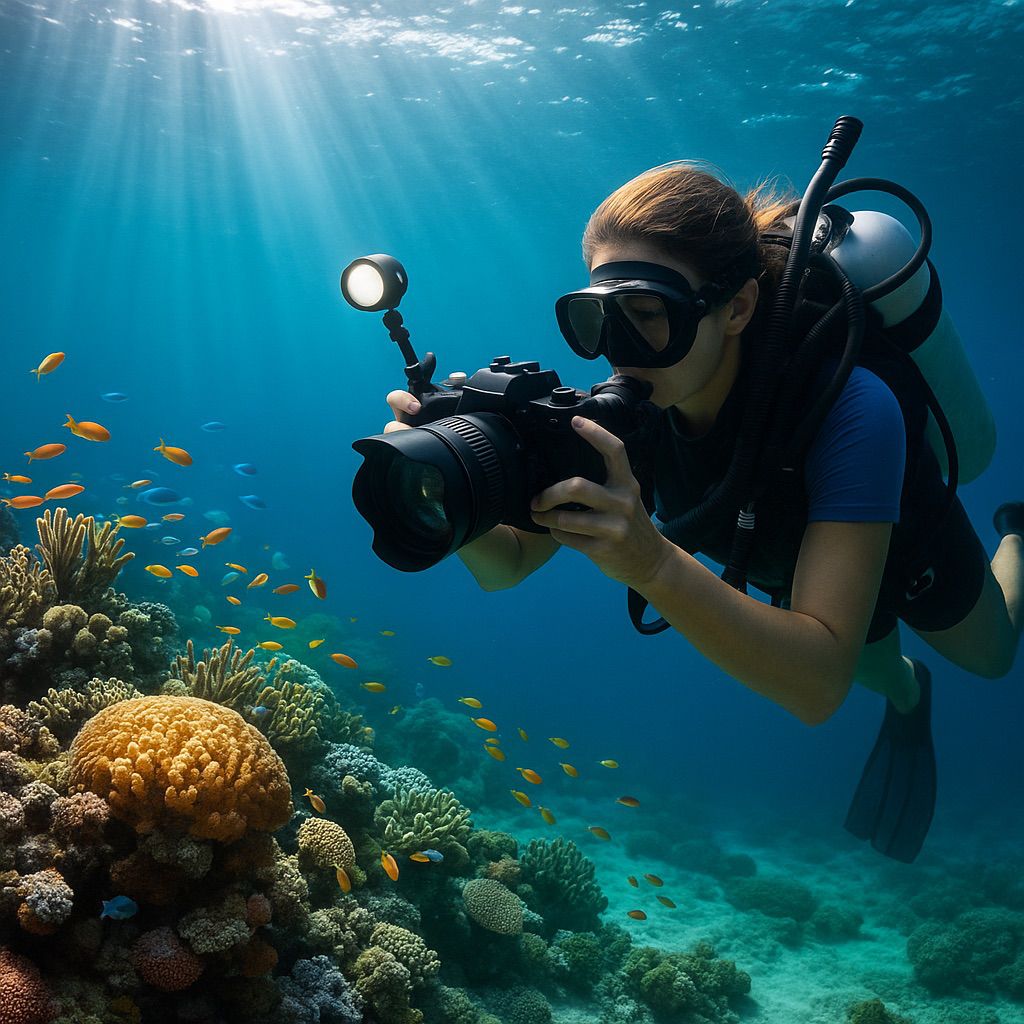
Beneath the Surface: The Beginner’s Guide to Underwater Photography

Dave

There’s something undeniably magical about slipping beneath the surface of the water. The world changes instantly: light bends differently, sound muffles into a low hum, and colors shift as if you’ve entered a living dream. Fish dart in flashes of silver, coral sways with the rhythm of the tide, and for a moment, you realize how vast and otherworldly the ocean truly is. Capturing that feeling through underwater photography is one of the most rewarding challenges a creative adventurer can take on. It’s not just about snapping pictures—it’s about learning to see the world in a new dimension, translating the surreal into something you can hold, share, and revisit long after you’ve dried off. But the ocean doesn’t make it easy. Cameras fog up, light disappears, currents tug, and subjects rarely stay still. Underwater photography is an art form where patience meets technology, and where the ultimate reward is bringing back images that make people gasp with wonder.

Like all adventures, it starts with preparation. You don’t need to buy the most expensive camera rig to begin. For many beginners, waterproof smartphones with proper underwater housings are a perfect start. They’re lightweight, easy to handle, and forgiving when you’re still figuring out how to manage breathing, buoyancy, and framing at the same time. Action cameras like GoPros have also earned a reputation as reliable, compact tools for beginners—simple, sturdy, and versatile. As you advance, mirrorless and DSLR cameras with dedicated housings and dome ports open up a world of professional possibilities, but they also demand more skill, investment, and maintenance. The key is to start with what you’re comfortable managing underwater; after all, even the best camera can’t save a shaky, unfocused shot.

Once you’ve chosen your gear, the housing becomes your best friend. It’s what stands between your camera and the water, and even the smallest leak can spell disaster. Checking O-rings for dust, hair, or grains of sand before every dive is essential. Always test your housing in shallow water first to ensure no leaks occur, because nothing ruins the dream faster than discovering a soaked camera. Anti-fog inserts help keep your lens clear, and regular rinsing with fresh water after a dive keeps salt from building up. Learning to care for your equipment is just as important as learning to use it.

Light is the next great frontier in underwater photography. The deeper you go, the more light fades away, and with it, color. Reds disappear first, then oranges, yellows, and greens. By the time you reach just 30 feet, everything takes on a bluish-green cast. This is why so many beginner photos come back looking flat or dull. The secret to reviving those colors lies in shooting shallow when possible, staying within 10 to 20 feet where sunlight still penetrates, and using artificial lights or strobes when diving deeper. Even a small video light can transform your photos, revealing vibrant coral and fish that otherwise blend into the shadows. Mastering the interplay between natural light and artificial illumination is one of the defining skills of a great underwater photographer.

Composition plays differently underwater too. The ocean is a dynamic place; nothing is static. Fish swim away, plants sway, bubbles rise, and light dances in ripples. To create striking images, you have to embrace that movement rather than fight it. Get close to your subject—closer than you think. Water reduces clarity, and the more distance between you and your subject, the hazier the image becomes. Filling the frame with a turtle, a diver, or a school of fish creates intimacy and impact. Shooting upward rather than downward often produces more dramatic results, capturing your subject against the light-filled surface. Wide-angle lenses are popular for this reason, letting you capture both subject and environment without losing clarity.

Buoyancy control is the unsung hero of underwater photography. If you’re constantly bobbing up and down, stirring up sand, or floating away from your subject, no camera will save your shots. Practicing neutral buoyancy until it feels second nature not only protects fragile marine environments but also allows you to hover calmly as you frame your shot. Think of yourself as part of the water column—you’re not fighting it, you’re flowing with it. This zen-like state not only improves your photos but also deepens your connection to the underwater world.

Timing is everything. Marine life doesn’t pose, and the ocean doesn’t pause for you. Patience, observation, and respect for your subjects are key. Watch how fish move, how they dart and return, how turtles rise for air, how rays glide. Anticipating behavior allows you to capture moments rather than chasing them. And always remember: the ocean is not a studio. Respect its rhythms, don’t harass wildlife, and prioritize safety over the perfect shot. The goal is to capture the beauty of the ocean without disturbing it.

Editing also plays a huge role in underwater photography. Even with the best lighting, colors often need correction to restore their true vibrancy. Software like Lightroom or Photoshop can bring back warmth, contrast, and detail lost in the depths. But editing isn’t about creating fantasy—it’s about honoring what you saw, bringing the image closer to the magic your eyes experienced that the camera couldn’t fully capture. A little adjustment to white balance, exposure, and sharpness can elevate a decent shot into something extraordinary.

What makes underwater photography so viral, so irresistible, is the sense of discovery it brings. People love to see what lies beneath the waves, especially those who’ve never strapped on a mask and snorkel. Your photos become more than just personal souvenirs; they become windows for others, invitations into a world that still feels mysterious. A single photo of a clownfish peeking out of anemone or a sunbeam breaking through kelp forests can ignite wonder across the internet. Underwater photography isn’t just a skill—it’s storytelling for a world most people never get to see.

And yet, what makes it unforgettable is how human it feels. You, floating in the vastness, heart beating a little faster with each dive, trying to hold steady as a curious fish tilts its head toward you. You, fumbling with settings, only to glance up and see a manta ray gliding gracefully above. You, realizing that half the fun isn’t the picture you bring home but the moment you lived to take it. The camera is just the excuse. The real magic is how the ocean makes you feel alive, small, and connected all at once.

In the end, the basics of underwater photography boil down to this: gear you trust, light you understand, composition that embraces intimacy, buoyancy that feels effortless, patience that honors the ocean, and editing that reveals what your eyes saw. It’s about building skill while keeping curiosity alive, about striving for technical mastery without losing the childlike awe of being underwater. Every photo is temporary—after all, the subjects move, the sand shifts, the tide returns—but the memories and images last long beyond the dive.

So pack your housing, charge your camera, and dive in. The ocean is waiting, filled with stories to tell, colors to capture, and creatures to meet. You may not get the perfect shot your first time, but that’s the beauty of it. Each dive, each attempt, is a lesson, and one day you’ll surface with an image that makes even you gasp. That’s the reward. That’s why we chase the light beneath the waves. That’s why underwater photography is more than a hobby—it’s a way of carrying the ocean home.

Related Posts

From Smiley to Culture Shift: The Day the Emoticon Was Born

Elias Rowen

On September 19, 1982, in the computer labs of Carnegie Mellon University, history was made in the most unlikely way. Not with rockets or revolutions, not with treaties or discoveries, but with three humble keystrokes: colon, hyphen, and parentheses. Together, they formed “:-)” — the world’s first widely recognized digital smiley face. It was posted on a university bulletin board system by Professor Scott Fahlman as a way to indicate humor in the confusing, tone-deprived world of online text. He suggested that when something was meant as a joke, users could type “:-)”, and when it was meant to be serious, they could use “:-(”. At the time, it seemed like a trivial proposal, a practical tool for clarifying sarcasm and jokes in a text-only space. But in hindsight, it was revolutionary. Those three keystrokes would evolve into a cultural phenomenon, shaping how billions of people express themselves online, bridging gaps of tone and emotion, and giving rise to the emojis, stickers, GIFs, and memes that define digital communication today. That September day in 1982 was the birth of the emoticon — and with it, the beginning of a new visual language.

The origins of the emoticon are inseparable from the early days of the internet, or rather, its precursors. Long before Facebook, Twitter, or WhatsApp, online communities were forming on primitive systems like ARPANET and university bulletin boards. These were spaces dominated by text — lines of code and plain sentences scrolling across monochrome screens. But humans, being irrepressibly social, wanted more than just information. They wanted to joke, to tease, to banter. And with no facial expressions or tone of voice to guide interpretation, confusion abounded. A sarcastic remark could be mistaken for an insult. A joke could land flat and cause offense. In this atmosphere of miscommunication, the need for a solution was clear. Scott Fahlman’s suggestion was born out of this frustration: a simple marker to indicate “I’m kidding.” It was modest, practical, and ingenious all at once.

What Fahlman could not have predicted was how quickly and how far the idea would spread. Soon, “:-)” and “:-(” were being used across different systems, copied into emails, adopted by programmers and hobbyists alike. Within months, they became a shorthand understood far beyond Carnegie Mellon. The beauty of the emoticon lay in its simplicity. It required no new technology, no software update, no special font. Anyone with a keyboard could type it. And in those early years, it carried a kind of geeky charm, a secret handshake among the growing online community. To use “:-)” was to signal not only humor, but membership in the strange, exciting world of digital communication.

As the internet grew, so too did the emoticon. It evolved into countless variations: winks ;-) for mischief, big grins :-D for joy, tears :’( for sadness. Entire libraries of keystroke faces emerged, each one capturing a nuance of human emotion that text alone could not convey. By the 1990s, emoticons were everywhere — in chat rooms, on AOL Instant Messenger, in early emails. They became so embedded in online culture that they were no longer novel, but necessary. Without them, communication felt flat. With them, it came alive.

The next great leap came with the emoji. In the late 1990s, in Japan, Shigetaka Kurita created a set of 176 simple pictographs — hearts, faces, symbols — to enhance mobile communication. Unlike emoticons, which relied on imagination and keystrokes, emojis were visual images. They were colorful, direct, and instantly expressive. When smartphones popularized them worldwide in the 2000s, the emoji took the foundation laid by the emoticon and expanded it into a global visual vocabulary. Today, emojis are so ubiquitous that entire conversations can unfold without a single word. And yet, every emoji — every smiley face, every sad tear, every wink and laugh — carries within it the DNA of that first humble emoticon posted on September 19, 1982.

Why does the emoticon matter? Because it solved a problem deeper than text. It solved the problem of being human in a digital space. Communication is not just about words; it is about tone, expression, context. In person, we rely on facial cues, gestures, and intonation to understand each other. Stripped of these, digital communication is vulnerable to misunderstanding. The emoticon was humanity’s first attempt to bring those cues into the online world. It was a reminder that behind every line of text was a person, with emotions and intentions that could not always be captured by words alone. It was, in essence, a bridge — between human feeling and machine language, between flesh and code.

The cultural impact of that bridge cannot be overstated. Today, emojis influence politics, advertising, art, and even law. A single emoji can change the tone of a message, soften a critique, or spark controversy. Brands deploy them to connect with audiences. Courts have debated their legal implications. Artists use them as creative tools. And memes — the internet’s cultural currency — often rely on the visual shorthand that began with “:-)”. The emoticon opened the door to an entirely new layer of human expression, one that has transformed not just how we communicate, but how we connect.

Looking back at September 19, 1982, it is tempting to laugh at the modesty of the moment. A professor typed three characters on a bulletin board, and the world changed. But that is the beauty of history: sometimes revolutions come not with thunderclaps, but with whispers. Sometimes they come not with inventions of steel and fire, but with tiny symbols that capture the essence of human connection. The emoticon was not just a joke marker. It was a turning point in the story of language, a reminder that communication evolves with technology, and that even in the cold world of machines, humanity always finds a way to smile.

Related Posts