Latest Articles

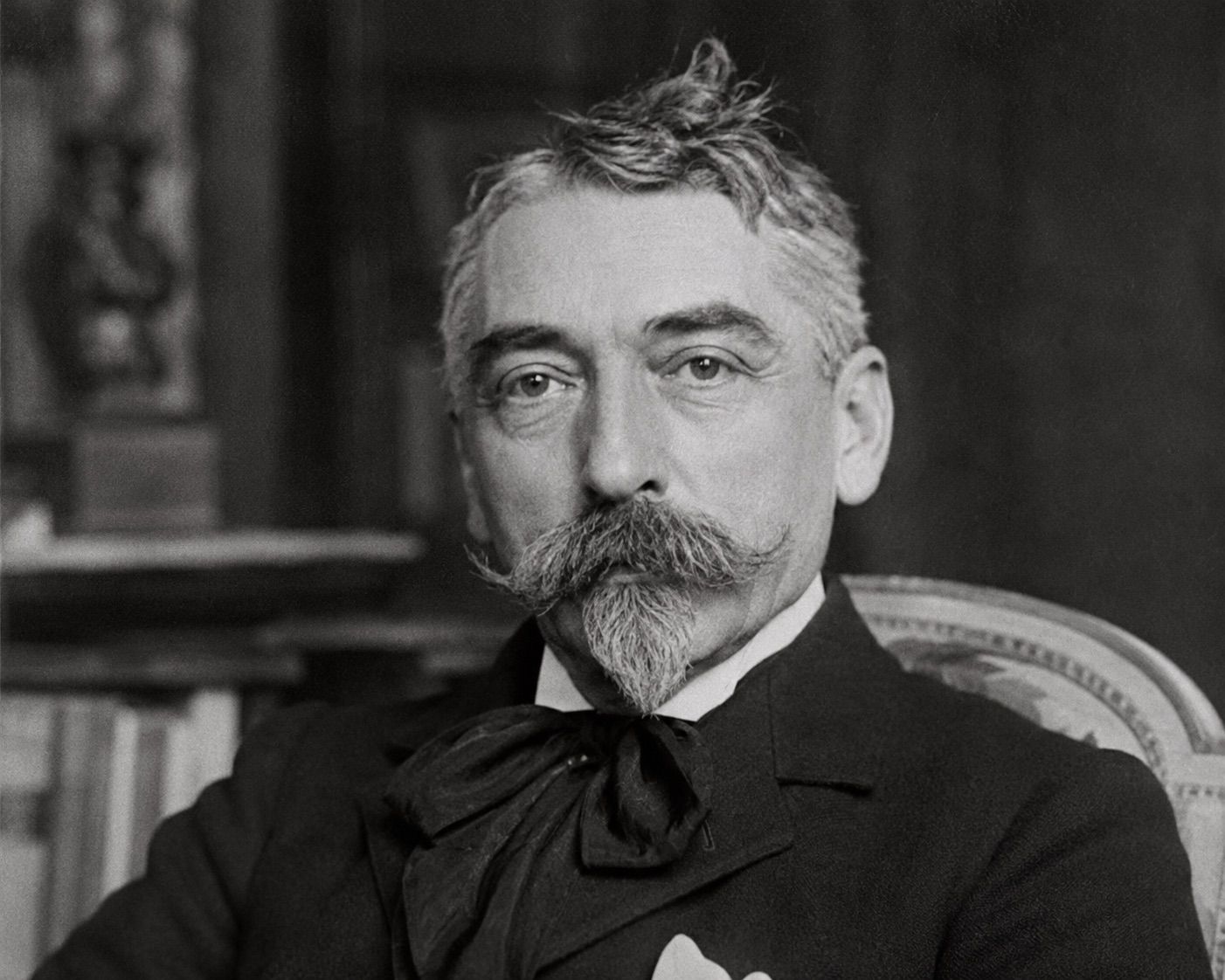
Stéphane Mallarmé: Lost in the Labyrinth of His Own Making

Penelope

I’ve always been drawn to the enigmatic figure of Stéphane Mallarmé, a poet who defies easy comprehension. His writing is like a maze I find myself getting lost in, yet somehow it’s exactly where I want to be. As I read through his works and biographies, I’m struck by the sense that he’s trying to convey something just out of reach – a secret only he can see.

One aspect of Mallarmé that fascinates me is his obsessive attention to language. He spent years refining his craft, experimenting with syntax and semantics in ways that border on the absurd. It’s as if he’s searching for a code hidden within words themselves, a code that will unlock some deeper truth about existence. I’ve tried to grasp this obsession myself through writing, but it always seems like chasing after smoke – the more I write, the more elusive the meaning becomes.

Sometimes I feel like I’m reading Mallarmé through a prism of my own anxieties. His fixation on language as a key to understanding echoes my own struggles with communication. In college, I’d get bogged down in conversations, searching for the perfect phrase or metaphor to convey what I meant. It’s like Mallarmé is tapping into this deep fear that our words will never quite capture reality – and yet he persists in trying.

Take his poem “Un Coup de Dés Jamais N’Abolira le Hasard” (A Throw of the Dice Will Never Abolish Chance). On one level, it’s a dense, abstract exploration of fate versus free will. But on another, I see it as an attempt to wrestle with the uncertainty that comes with human relationships – can we ever truly know someone else? The poem’s language is like a puzzle I keep trying to solve, but each time I think I’ve grasped it, it slips away.

There are moments when Mallarmé’s philosophy feels almost cruelly detached from human experience. His rejection of the idea that words can capture reality resonates with my own frustration with social media and the performative nature of online interactions. People present curated versions of themselves; they don’t reveal their true selves. But Mallarmé takes this concept to an extreme, implying that even our most intimate thoughts are inaccessible.

I’m not sure if I agree with his radical skepticism about language’s ability to describe reality. Sometimes it feels like he’s abandoning hope in the face of complexity – or perhaps embracing a quiet despair. As someone who writes as a way to think and process, I need to believe that words can somehow approximate truth. But at the same time, I recognize that this is an illusion – we’re always approximating, never quite grasping.

Maybe Mallarmé’s true legacy lies not in his theories or poems but in the uncertainty he leaves us with. He shows us that even when we try to pin down meaning, it slips through our fingers like sand. It’s a sobering thought, one I’m still grappling with as I write this.

As I ponder Mallarmé’s skepticism about language, I find myself wondering if he’s not just rejecting the idea of capturing reality, but also the notion that we can ever truly express ourselves. His writing is like a mirror held up to our own contradictions – we want to convey meaning, but in doing so, we’re trapped by the very words that supposedly liberate us.

I think about my own experiences with writing as a way to process emotions and thoughts. It’s like I’m trying to capture a fleeting glimpse of myself, only to see it slip away like smoke on the wind. Mallarmé’s obsession with language makes me realize how ephemeral our attempts at self-expression can be. His poems are like echoes that reverberate long after we’ve finished reading them – a reminder that even in the act of creation, we’re always negotiating the limits of language.

Sometimes I feel like I’m trying to inhabit Mallarmé’s world, to see things through his prism. It’s a disorienting experience, like navigating a maze without a map. But as I read and reread his works, I begin to sense that he’s not just presenting a philosophical framework – he’s sharing a piece of himself, a fragment of his inner life.

This is where the enigma of Mallarmé becomes most captivating for me: in his willingness to surrender to uncertainty, even as he writes about the search for meaning. His poetry is like a slow-burning fire that consumes him whole, leaving behind ashes and embers that refuse to be extinguished. It’s as if he’s saying: I don’t know what truth is, but I’ll keep searching through language, no matter how elusive it may be.

In this way, Mallarmé becomes a kindred spirit – a fellow traveler in the labyrinth of language and meaning. His work reminds me that even when words fail us, they’re still worth trying to grasp, for it’s in the act of striving that we find ourselves most fully alive.

As I delve deeper into Mallarmé’s poetry, I’m struck by the way he blurs the lines between language and silence. His use of white space on the page, for instance, is almost as significant as the words themselves. It’s as if he’s leaving room for the reader to fill in the gaps, to make sense of the silences that punctuate his text.

I find myself wondering about the relationship between silence and meaning. Is it possible that Mallarmé’s use of white space is not just a aesthetic choice, but a deliberate attempt to capture the complexity of human experience? Do our silences hold secrets that words can’t convey?

In my own writing, I often struggle with finding the right balance between expression and restraint. There are times when I feel compelled to fill every inch of the page with words, as if the more I write, the closer I’ll get to capturing reality. But Mallarmé’s example shows me that sometimes it’s precisely in the spaces between words that meaning resides.

One poem that comes to mind is “L’Après-Midi d’un Faune” (Afternoon of a Faun). On its surface, it appears to be a sensual and dreamlike exploration of desire. But as I read it more closely, I begin to see the way Mallarmé uses silence to create a sense of ambiguity. The poem’s title, for instance, raises questions about the nature of time and memory – what happens after the afternoon of a faun?

The use of white space in “L’Après-Midi d’un Faune” becomes almost palpable, like a physical presence that disrupts my reading experience. It’s as if Mallarmé is inviting me to pause, to breathe between the words and consider the silences that surround them.

This makes me think about the way I read – or rather, how I devour texts without necessarily processing their full meaning. I’m often guilty of racing through pages, looking for key phrases or ideas that resonate with me. But Mallarmé’s poetry forces me to slow down, to listen more intently to the silences between his words.

In doing so, I begin to see the world in a different light – as a vast expanse of ambiguities and uncertainties, where meaning is constantly shifting like sand dunes. It’s a disorienting feeling, but also strangely liberating, as if I’m being given permission to inhabit this liminal space without needing to grasp for solid ground.

As I continue to read Mallarmé’s work, I realize that his legacy extends far beyond the realm of poetry itself. He shows us that language is not a tool for capturing reality, but rather a reflection of our own limitations and contradictions. His poetry becomes a mirror held up to our own fallibility – we can never quite say what we mean, nor capture the world in all its complexity.

In this way, Mallarmé’s work embodies a paradox: he rejects the idea that language can convey truth, yet his poetry continues to speak directly to us across time and space. It’s as if his writing has become a kind of echo chamber, where meaning reverberates long after we’ve finished reading – an echo that resonates deep within our own silences.

I find myself returning to this idea of the echo chamber, wondering how Mallarmé’s poetry manages to speak to us across time and space. It’s as if his words have taken on a life of their own, becoming a kind of collective unconscious that we all tap into when we read his work.

This raises questions about the nature of shared experience and how it relates to language. Can we truly share meaning with others through words, or are we always trapped in our own subjective experiences? Mallarmé’s poetry suggests that even when we try to convey something universally relatable, our words will inevitably be filtered through our individual perspectives.

I think about my own relationships and how I’ve struggled to communicate effectively with loved ones. It’s as if we’re all speaking different languages, trying to find common ground in a world where meaning is constantly shifting. Mallarmé’s work reminds me that even in the most intimate moments, there can be a disconnection between what I mean to say and what others hear.

This feeling of disconnection is both frustrating and liberating. It acknowledges that we’re all trapped in our own subjectivities, yet it also allows us to recognize the beauty of ambiguity and uncertainty. In Mallarmé’s poetry, I see a reflection of this paradox: he’s drawn to the complexities and contradictions of human experience, even as he acknowledges that language can never fully capture them.

As I read on, I start to notice how often Mallarmé uses imagery and metaphor to convey meaning. His descriptions of natural landscapes – sea and sky, light and darkness – become a kind of symbolic shorthand for the human condition. It’s as if he’s trying to capture the essence of existence through these vivid images, rather than through direct statement.

This use of imagery reminds me of my own struggles with writing about emotions and experiences. I often find myself relying on tropes or clichés to convey what I mean, rather than taking the risk of being more direct. But Mallarmé’s poetry shows me that even in abstract expression, there can be a power and intimacy that comes from using imagery to evoke feeling.

One poem that stands out to me is “Le Tombeau d’Edgar Poe” (The Tomb of Edgar Allan Poe). On the surface, it appears to be a tribute to the American poet’s work and legacy. But as I read it more closely, I begin to see how Mallarmé uses imagery to explore the themes of loss, memory, and creativity.

The poem is like a dreamscape, where images blur and intersect in complex ways. Mallarmé describes Poe’s tomb as a kind of threshold between life and death, where art and imagination transcend mortality. It’s a beautiful and haunting image that speaks to me on a deep level – perhaps because it acknowledges the fragility of human existence.

As I reflect on “Le Tombeau d’Edgar Poe”, I realize that Mallarmé’s poetry is not just about conveying meaning or capturing reality, but also about exploring the spaces between words. His imagery becomes a kind of bridge between subjective experience and collective understanding – a reminder that even in the most personal moments, we’re connected to something greater than ourselves.

This connection to something greater is what I find so captivating about Mallarmé’s work. It’s as if he’s tapping into a shared reservoir of human emotion and experience, where words become a kind of shorthand for the complexities and contradictions of existence. In his poetry, I see a reflection of our own search for meaning and connection – a reminder that even in the face of uncertainty, we can find solace in the ambiguities and silences between words.

As I continue to navigate Mallarmé’s world, I’m struck by the way he blurs the lines between reality and imagination. His poetry is like a dreamcatcher, weaving together threads of fact and fiction into a tapestry that’s both familiar and strange. It’s as if he’s showing me that the distinction between truth and falsehood is not always clear-cut, but rather a gradient that shifts with every reading.

This realization makes me think about my own experiences with creative writing. I’ve often found myself walking the fine line between reality and imagination, trying to capture the essence of a particular moment or emotion without getting too caught up in details. Mallarmé’s poetry reminds me that this is not just a technical exercise, but an attempt to tap into the deeper currents of human experience.

One poem that comes to mind is “Les Mots Enigmes” (The Enigmatic Words). On its surface, it appears to be a playful exploration of language and meaning. But as I read it more closely, I begin to see how Mallarmé uses wordplay and puns to create a sense of uncertainty and ambiguity. It’s as if he’s showing me that even the most seemingly simple words can hold multiple meanings, and that these meanings are constantly shifting like sand dunes in the wind.

This idea resonates with my own experiences with language. I’ve often found myself struggling to convey complex emotions or ideas through words, only to have them misinterpreted or misunderstood by others. Mallarmé’s poetry reminds me that this is not just a problem of communication, but an inherent property of language itself – that words are always slipping away from us, like grains of sand between our fingers.

As I ponder this idea, I start to think about the role of ambiguity in human experience. Is it possible that uncertainty and doubt are essential components of our emotional lives? That without them, we’d be stuck in a state of static certainty, unable to adapt or grow?

Mallarmé’s poetry suggests that yes, this is indeed the case. His use of ambiguity and paradox creates a sense of tension and complexity that’s both uncomfortable and exhilarating. It’s as if he’s showing me that even in the most seemingly stable moments, there are always undercurrents of uncertainty waiting to be acknowledged.

This idea makes me think about my own relationships and how I navigate uncertainty with loved ones. Is it possible that our attempts to communicate are always doomed to fail, precisely because we’re trying to pin down meaning in a world where language is inherently ambiguous? Mallarmé’s poetry reminds me that this is not necessarily a bad thing – that the act of searching for meaning itself becomes a kind of intimacy, a way of connecting with others on a deeper level.

As I continue to read and reflect on Mallarmé’s work, I begin to see his legacy as a kind of invitation to inhabit this liminal space between language and uncertainty. It’s an uncomfortable place to be, but also strangely liberating – like being lost in a familiar landscape, where every step forward is a discovery waiting to happen.

I’m not sure what the future holds for me, or how I’ll continue to navigate the complexities of language and meaning. But as I look back on my journey through Mallarmé’s poetry, I know that I’ve been changed by it – that his work has shown me the value of ambiguity and uncertainty in human experience.

In this way, Mallarmé becomes a kindred spirit – a fellow traveler in the labyrinth of language and meaning. His poetry reminds me that even when words fail us, they’re still worth trying to grasp, for it’s in the act of striving that we find ourselves most fully alive.
Related Posts

I Think John’s Backpack Is a Message

Hal

There are certain things a person comes to expect after living with the same roommate for a long time. John Mercer always rinsed his coffee mug before putting it in the sink, never remembered where he left the television remote, and treated his backpack with the kind of respect most people reserve for expensive musical instruments. It was always zipped, always leaning neatly against the same chair by the front door, and never left lying around the apartment. That’s why, when I wandered into the living room that Thursday morning carrying my second cup of coffee, I stopped so suddenly that I nearly spilled it. John’s backpack was sitting squarely in the middle of the coffee table, completely unzipped, as though someone wanted me to notice it.

Ordinarily I would have ignored it. Well… perhaps “ordinarily” isn’t quite the right word. I would have tried to ignore it. Pandora often reminds me that not every unusual sight deserves an investigation, advice I sincerely appreciate but rarely manage to follow. As if on cue, she emerged from the bathroom fastening an earring and smoothing the sleeve of her jacket. “Morning,” she said with a smile. “Morning,” I replied, still staring at the backpack. She followed my gaze, immediately recognized the expression on my face, and sighed in the affectionate way she does whenever she suspects I’ve discovered another mystery. “Whatever you’re thinking,” she said, “the answer is probably no.” I looked back at her. “You don’t even know what I’m thinking.” “I don’t have to. You’ve got your detective face on.”

I pointed toward the coffee table. “John left his backpack open.” Pandora glanced at it for all of two seconds before shrugging. “Maybe he forgot to zip it.” I shook my head. “John doesn’t forget things like that.” She raised an eyebrow. “Hal, last month he spent half an hour looking for his glasses before discovering they were on top of his head.” “That was different.” “How?” I hesitated. “The backpack feels… deliberate.” Pandora smiled patiently. “Deliberately unzipped?” “Exactly.” She laughed softly. “You’re impossible.”

Unfortunately, once the idea entered my head, it refused to leave. The backpack wasn’t just open. The zipper had been pulled exactly halfway around, exposing just enough of the inside to reveal the corner of a notebook, a folded sheet of paper, and what appeared to be the handle of a flashlight. It was almost as though someone had arranged everything carefully enough to be noticed without revealing too much. I walked slowly around the coffee table, studying it from different angles like a museum curator examining a newly discovered artifact. There had to be a reason. John was practical to a fault. He didn’t accidentally create mysteries. If the backpack looked unusual, then perhaps it was because it was supposed to.

Mr. Whiskers wandered into the room, stretched leisurely, and hopped onto the couch beside me. He stared at the backpack for several seconds before flicking his tail and looking toward the hallway. I narrowed my eyes. “You see it too, don’t you?” The cat blinked once before beginning an enthusiastic washing of his front paw. Pandora, who had been searching for her car keys, glanced over and smiled. “He’s cleaning himself, Hal.” “Or pretending to clean himself.” “Why would he pretend?” “To avoid drawing attention.” She shook her head. “You’re discussing espionage with a cat before breakfast.” “I’m discussing possibilities.”

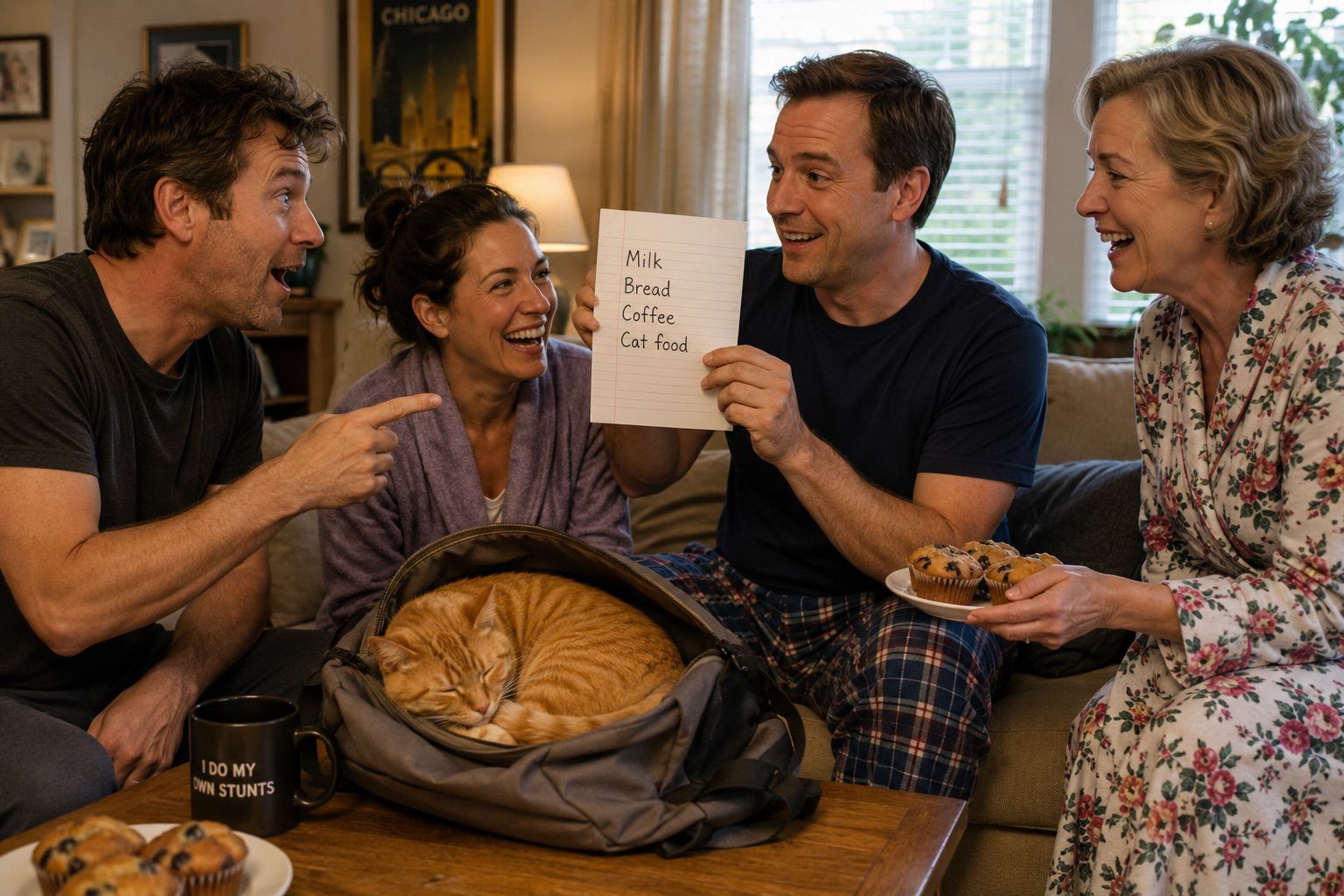
Just then there was a cheerful knock at the door. Mrs. Jenkins stood outside carrying a small plate covered with a tea towel. “Blueberry muffins,” she announced proudly. “I baked too many again.” She stepped inside, noticed the backpack immediately, and smiled. “John forgot that?” she asked. My ears practically perked up. “Forgot?” I repeated. “Oh yes,” she said. “He was in quite a hurry this morning. Nearly walked out without it altogether. I had to call after him from the garden.” Pandora looked at me with the unmistakable expression of someone trying very hard not to say, I told you so. I wasn’t ready to surrender quite yet.

“So…” I said cautiously, “he wasn’t trying to leave it there?” Mrs. Jenkins looked puzzled. “Why would he?” Before I could answer, the front door opened and John stepped back inside looking slightly embarrassed. “Has anyone seen my…” His eyes landed on the coffee table. “…backpack.” He walked over, zipped it shut without a second thought, and slung it over one shoulder. “I was halfway to the bus stop before I realized I’d grabbed my lunch but forgotten this. Good thing Mrs. Jenkins shouted after me.” Then he frowned at me. “Why are you looking at my backpack like it insulted you?”

Pandora finally laughed out loud. Mrs. Jenkins joined her a moment later, and even John couldn’t suppress a grin once I explained—very carefully—that I had briefly considered the possibility that the backpack contained a hidden message. “It does,” John said, reaching inside and pulling out the folded piece of paper I’d noticed earlier. He unfolded it dramatically while I leaned forward in anticipation. After all, perhaps I hadn’t been entirely wrong. Perhaps there really was a message waiting inside.

John held the paper up for everyone to see.

Milk. Bread. Coffee. Cat food.

“My shopping list,” he said.

The room erupted in laughter.

Even Mr. Whiskers chose that exact moment to leap gracefully into the now-empty backpack, curl himself into a tidy orange ball, and immediately fall asleep as though he’d been waiting for the mystery to conclude before claiming his new favorite bed.

I sipped my coffee thoughtfully while everyone else continued laughing. “Well,” I said at last, “shopping lists are messages.”

John nodded.

“I’ll give you that one.”

Pandora slipped her hand into mine as we walked toward the door together. “Feeling better, Detective?” she asked.

“I was never wrong,” I replied with complete confidence. “I merely overestimated the complexity of the code.”

She smiled, kissed my cheek, and shook her head.

Some mysteries, it turns out, really are just groceries.

Related Posts

The Unassuming Art: A Reflection on the Quiet Conviction of Elegance

Fiona

Last Thursday evening, at a garden party tucked behind an old brick townhouse, I mistook confidence for boredom.

The gathering itself possessed all the familiar ingredients of summer social life: strings of lights suspended between trees, glasses sweating in the heat, small clusters of people circulating from one conversation to another with varying degrees of enthusiasm. Someone had curated a playlist of soft jazz and acoustic covers, and every few minutes laughter rose above the music before dissolving into the background noise of the evening.

It was the sort of event where social choreography becomes strangely visible. You begin to notice who naturally commands attention and who seems intent upon creating it. Some people moved through the crowd with determined energy, introducing themselves repeatedly, bouncing from group to group as though the evening itself were a performance requiring constant participation.

And then there was the couple near the back of the garden.

At first, I barely noticed them.

Or perhaps more accurately, I noticed them and dismissed them entirely.

They weren’t loud. They weren’t animated. They weren’t making grand entrances into conversations or circulating with practiced enthusiasm. They occupied a quieter corner near the hydrangeas, speaking occasionally with guests who wandered toward them but never appearing eager to draw people in.

I remember thinking they seemed almost detached.

Elegant, perhaps.

But detached.

The woman wore a pale yellow cotton sundress that moved gently in the evening breeze. The man wore a navy linen jacket softened by wear and summer humidity. Neither outfit felt especially remarkable on its own. There were no dramatic accessories, no aggressively fashionable statements, no visual attempts to signal importance.

They simply looked… comfortable.

And if I’m being truthful, I initially interpreted that comfort as passivity.

For nearly half an hour I continued observing them from across the garden while participating in my own conversations. I had quietly categorized them in my mind as one of those couples who attend social gatherings out of obligation rather than desire — pleasant but forgettable people simply waiting for the evening to end.

Then I began noticing small things.

While everyone else moved through the party focused on conversation and visibility, they seemed oddly attentive to the space around them. When a serving tray emptied, the man quietly carried it inside without being asked. When someone struggled to find seating, the woman rearranged chairs. When an elderly guest arrived looking slightly overwhelmed, they immediately made room for her.

None of this was performed dramatically.

In fact, I suspect most people never noticed it at all.

And that realization left me unexpectedly embarrassed.

Because I had mistaken stillness for disengagement.

I had assumed that because they weren’t demanding attention, they had little presence.

But perhaps the opposite was true.

There’s a tendency, particularly during summer social gatherings, to confuse visibility with importance. We assume confidence announces itself loudly. We expect charisma to occupy space aggressively. We imagine elegance arriving with spectacle.

Yet some people seem to move through social environments differently.

They participate without performing.

They engage without competing.

They remain fully present without requiring constant acknowledgment.

Later in the evening, I found myself standing beside the man while waiting for drinks. We spoke briefly about travel, books, and summer weather. The conversation itself was unremarkable in the best possible way. There was no attempt to impress. No subtle maneuvering for status. No effort to dominate the exchange.

Afterward I found myself thinking about how strange it is that we so often associate elegance with aesthetics alone.

We reduce it to clothing.

To posture.

To accessories.

To carefully assembled images.

But perhaps elegance has less to do with presentation than I’ve long assumed.

Perhaps it reveals itself in attention.

In awareness.

In the ability to move through the world without making oneself the center of it.

I’m still not entirely certain I understand the distinction.

Part of me still wonders whether what I witnessed that evening was elegance or simply the comfort that comes from no longer needing performance.

Maybe they’re the same thing.

Or maybe they aren’t.

I spent years believing confidence announced itself.

Increasingly, I suspect it does the opposite.

Related Posts

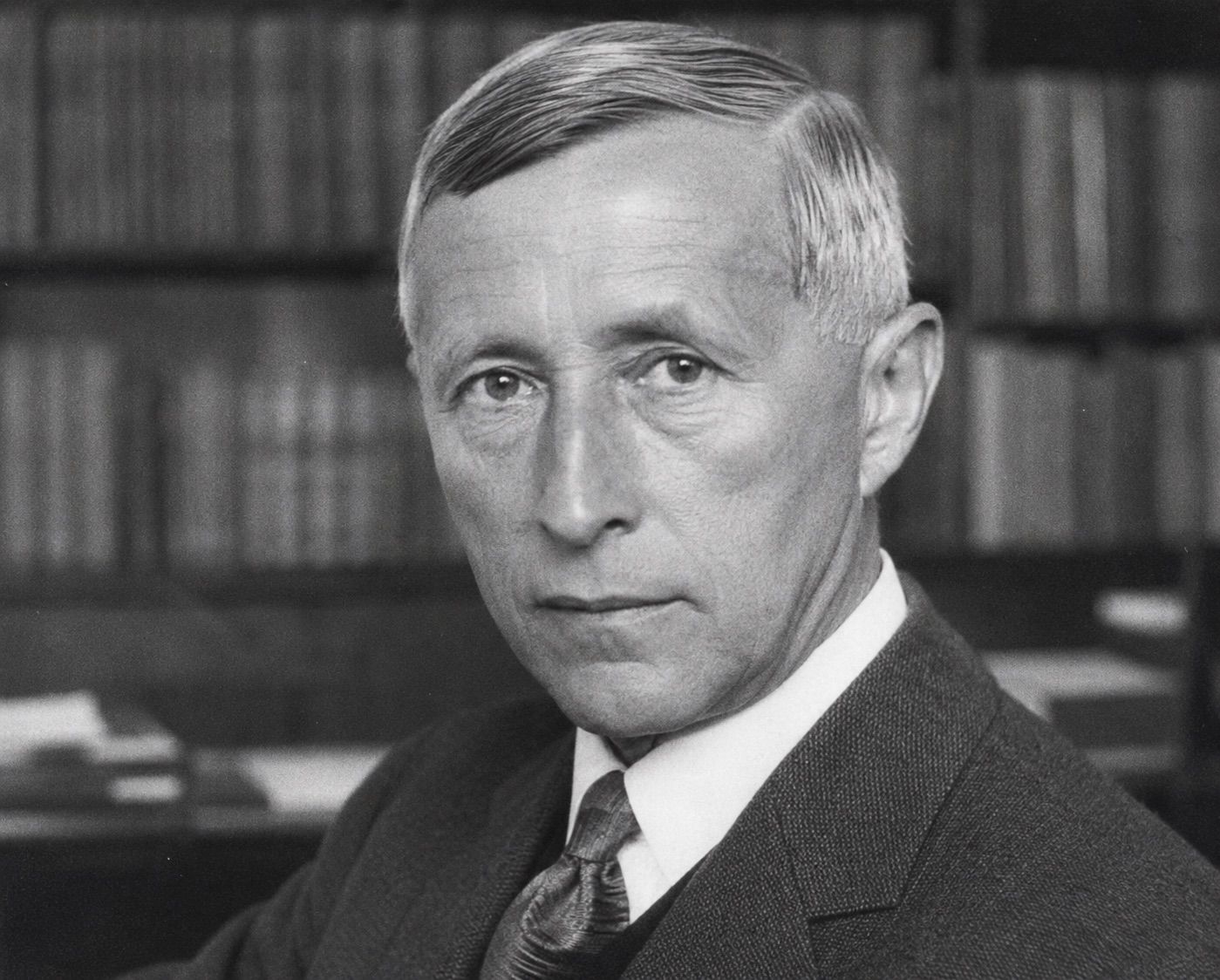
Ernst Junger: The Double-Edged Sword of Fascination

Penelope

I’ve been reading about Ernst Junger for weeks now, and I’m still not sure what to make of him. At first, it was the words that caught my attention – his writing is like a puzzle I want to solve. The way he uses language is both precise and poetic, like a perfectly crafted machine that hums with an eerie beauty.

As I delved deeper into his work, I started to notice something else: Junger’s obsession with technology. He wrote about it back in the 1920s, when the world was still reeling from World War I and the rise of industrialization. At the time, he saw technology as a force that could either liberate humanity or destroy it – a double-edged sword that would decide the fate of modernity.

What resonates with me is how Junger’s ideas about technology mirror my own feelings about social media. I grew up with the internet and smartphones, and it’s hard not to feel like these tools are shaping our lives in ways we can’t even fully comprehend. Sometimes I wonder if they’re making us more connected or just more isolated – a paradox that Junger himself grappled with.

But what really unsettles me is Junger’s involvement with the Nazi party during World War II. I know it’s been extensively documented, but every time I read about it, I feel like I’m stuck in a moral quagmire. Part of me wants to separate his politics from his writing, to admire his literary genius while condemning his ideology. Another part of me worries that this is exactly what Junger would want – for us to compartmentalize our thoughts and avoid the complexities.

I’ve been reading about Junger’s concept of the “worker” – how he saw them as the embodiment of modernity’s contradictions. On one hand, they’re the ones who drive innovation and progress; on the other, they’re also victims of industrialization, their labor exploited for the benefit of a few. It reminds me of my own experiences working in service jobs during college, feeling like I was just another cog in the machine.

What bothers me is how Junger’s ideas about the worker seem to echo his own privilege – he never really considered what it means to be someone who isn’t part of the ruling class. His writing can come across as detached, almost aristocratic, which feels deeply at odds with my own experiences as a young woman from a working-class background.

I’m not sure I have answers yet about Junger or his ideas. Maybe that’s the point – maybe it’s okay to be stuck in this mess of contradictions and uncertainties. As I continue reading and thinking about him, I keep coming back to one question: what does it mean to truly engage with technology without losing ourselves in its abyss?

The more I read Junger’s work, the more I feel like I’m getting tangled up in his own contradictions. On one hand, he writes about the importance of embracing modernity and all its attendant complexities – this idea that we must confront the darkness within ourselves if we’re going to truly understand the world around us. But then there are moments where it feels like he’s romanticizing the very thing that threatens to consume us: technology.

I think about my own experiences with social media, how it can be both a source of connection and isolation at the same time. I’ve seen people who use it as a way to build relationships and communities, but also those who are sucked into its endless loop of consumption and comparison. It’s like Junger’s ideas about the double-edged sword of technology – always cutting in two different directions.

What really gets me is how Junger’s writing can be both exhilarating and disorienting at the same time. He has this way of using language that feels almost kinetic, like a machine propelling forward even as it grapples with its own limitations. But then there are moments where it feels like he’s trying to distance himself from the very problems he’s describing – like he’s talking about technology in abstract terms, rather than really grappling with what it means for people like me.

I’m starting to wonder if this is what Junger meant by “the worker” – not just someone who labors on a factory floor or behind a computer screen, but also someone who feels lost and disconnected from the world around them. Like they’re stuck in this never-ending cycle of consumption and production, without ever really being able to connect with anyone else.

It’s funny, because I used to think that writing was just about putting words on paper – but now I’m starting to see it as a way of trying to make sense of the world, even when it feels like nothing makes sense. Junger’s ideas are like a puzzle I keep trying to solve, even though I know there might not be any final solution. Maybe that’s what I love about his writing – its refusal to tie things up with a neat bow, its willingness to confront the abyss head-on.

As I continue reading and thinking about Junger, I’m starting to feel like I’m getting closer to some kind of understanding – but it’s still just out of reach. It’s like he’s holding up this mirror to modernity, reflecting back all our hopes and fears and contradictions, and expecting us to confront them head-on. But what if we’re not ready? What if we’re still stuck in the quagmire of our own making, unable to find a way out?

I’ve been thinking about Junger’s concept of “the abyss” – this idea that modernity is characterized by an endless void that threatens to consume us all. It sounds dramatic, but it resonates with me in a weird way. I feel like we’re living in a world where the boundaries between reality and fantasy are constantly blurring, where the noise of social media and the 24-hour news cycle can make it hard to distinguish what’s real from what’s not.

Junger saw this abyss as a source of both fascination and horror – something that could inspire us to greatness or drive us mad. I’m starting to see why he’d think that way, given his experiences during World War II. The world must have seemed like an endless void back then, a chasm of destruction and chaos that threatened to swallow everything whole.

But here’s the thing: I don’t feel like we’re living in a time quite like that anymore. Sure, there are still wars and atrocities happening all over the world, but for me, the abyss feels more like a metaphorical void – something that exists within myself as much as it does outside of me. It’s the feeling of being lost in the depths of social media, scrolling through endless feeds and wondering if anyone is even looking back at me.

Junger wrote about how technology could be both liberating and oppressive, depending on how we choose to use it. I think that’s true for all of us – whether we’re using social media to connect with others or to escape from our own feelings of loneliness and disconnection. The line between liberation and oppression is always blurred, and sometimes it feels like we’re walking right up to the edge of that abyss without even realizing it.

I’ve been reading more about Junger’s ideas on “the worker” – how he saw them as the embodiment of modernity’s contradictions. It makes me think about my own experiences working in service jobs during college, feeling like I was just another cog in a machine that didn’t care about me or my well-being. But it also makes me wonder if Junger ever really considered what it means to be someone who isn’t part of the ruling class – someone who is stuck at the bottom rungs of society with no clear way out.

It’s funny, because when I read Junger’s writing, I feel like he’s talking about my own experiences in a weird way. He writes about how technology can both liberate and oppress us, but also about how we need to confront our own limitations and contradictions head-on if we’re going to truly understand the world around us. It sounds simple, but it feels impossible – like I’m stuck in this never-ending cycle of consumption and production without ever really being able to connect with anyone else.

I guess what I’m getting at is that Junger’s ideas are still haunting me, even though I don’t fully agree with them. Maybe that’s the point – maybe his writing is meant to be a puzzle that we keep trying to solve, even when there might not be any final solution. Maybe it’s okay to be stuck in this mess of contradictions and uncertainties, as long as we’re willing to confront them head-on and try to make sense of the world around us.

As I continue to read Junger’s work, I find myself returning to his concept of “the worker” again and again. It’s like he’s speaking directly to me, reflecting back my own experiences and emotions in a way that feels both eerie and comforting. But what really gets me is how his ideas about the worker are tied up with his own privilege – how he never really considered what it means to be someone who isn’t part of the ruling class.

It makes me think about my own family, about growing up in a working-class neighborhood where everyone seemed to be struggling just to get by. My parents worked multiple jobs to make ends meet, and I often felt like I was invisible – like I didn’t matter unless I was producing something valuable for someone else. It’s hard not to feel like that’s what Junger is writing about when he talks about the worker – this sense of being a cog in a machine that doesn’t care about your well-being.

But at the same time, Junger’s ideas about the worker also feel like they’re missing something essential. He writes about how technology can both liberate and oppress us, but he never really considers what it means to be someone who is already oppressed – someone who is already trapped in a system that doesn’t care about their needs or desires.

I guess what I’m getting at is that Junger’s writing feels like it’s caught between two worlds – the world of the privileged and the world of those who are struggling just to survive. It’s like he’s trying to speak to both groups, but ends up speaking past them instead. And yet, despite all this, his ideas still resonate with me on some deep level.

Maybe that’s because Junger’s writing is so focused on the human experience – on the ways in which we’re all connected, even when we feel like we’re isolated and alone. He writes about how technology can both unite and divide us, but also about how it can reveal our deepest fears and desires. It’s like he’s holding up a mirror to modernity, reflecting back all our hopes and fears and contradictions.

As I read on, I find myself wondering if Junger would have written differently if he’d grown up in my shoes – if he’d experienced the same kinds of struggles and hardships that I’ve faced. Would his ideas about technology and modernity be different then? Would he have been more aware of the ways in which privilege can blind us to our own limitations?

I don’t know, but what I do know is that Junger’s writing has changed me in some fundamental way. It’s like he’s shown me a new perspective on the world – one that sees technology not just as a tool or a machine, but as an extension of ourselves. As something that can both liberate and oppress us, depending on how we choose to use it.

I guess what I’m getting at is that Junger’s ideas are still haunting me, even though I don’t fully agree with them. Maybe that’s the point – maybe his writing is meant to be a puzzle that we keep trying to solve, even when there might not be any final solution. Maybe it’s okay to be stuck in this mess of contradictions and uncertainties, as long as we’re willing to confront them head-on and try to make sense of the world around us.

Related Posts

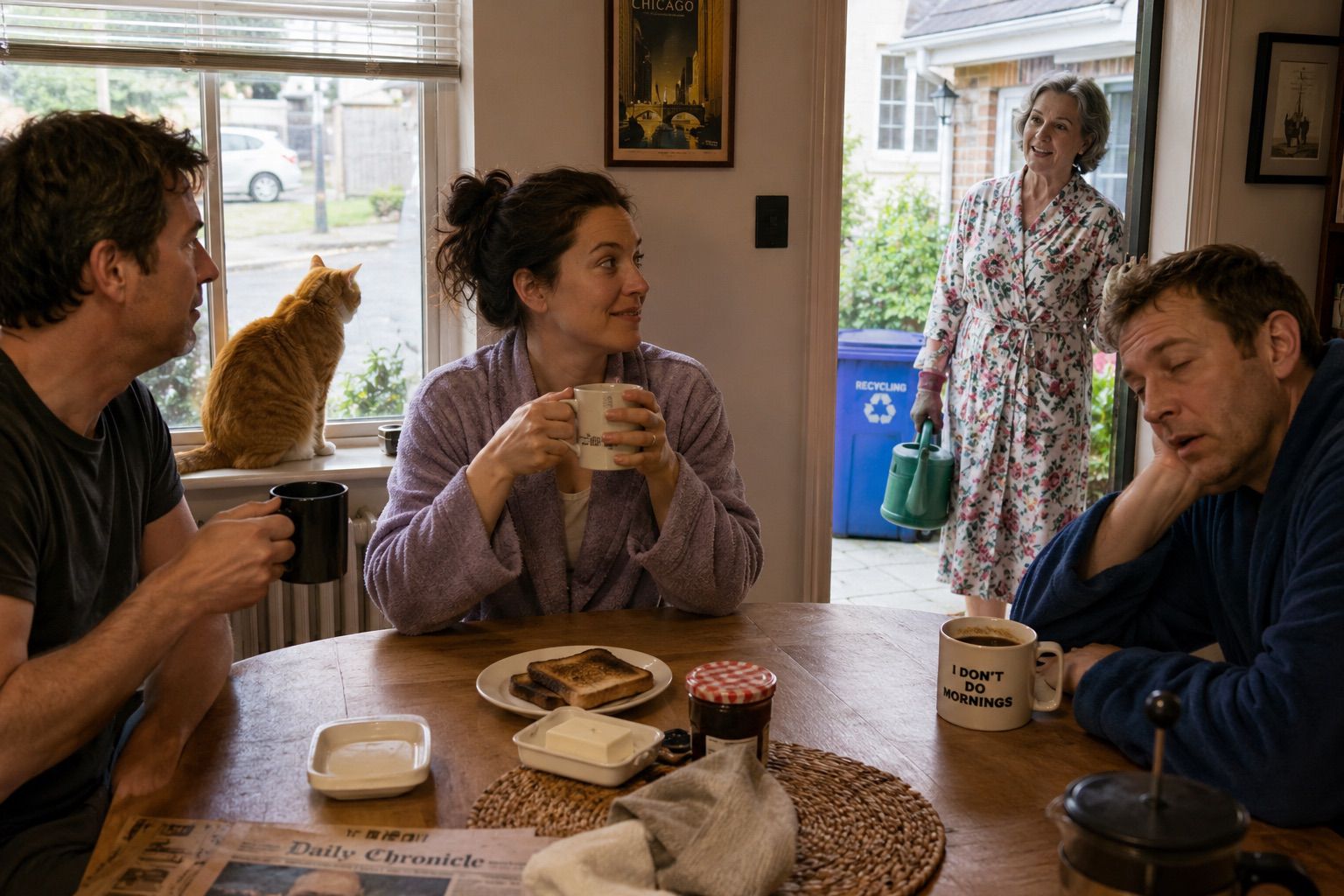
I’m Starting to Suspect Mrs Jenkins Is Involved Too

Hal

Breakfast should never require detective work. Unfortunately, that was exactly where my morning seemed to be heading. I stood in the kitchen staring into the toaster while a second piece of bread slowly transformed from perfectly edible into something that belonged in a geological museum. The smell reached me a second before the smoke did. With a sigh, I pushed the lever upward, rescued what little remained of breakfast, and wondered how I’d managed to burn toast twice before eight o’clock. It wasn’t as though making toast required years of specialized training. I’d been doing it successfully for most of my adult life. Yet this morning my attention refused to stay on breakfast. Every few seconds my eyes wandered toward the front window, where something small—but undeniably unusual—had settled into the back of my mind. Mrs. Jenkins’ recycling bins were still sitting at the curb.

Most people wouldn’t have noticed. Mrs. Jenkins, however, lived according to a routine so dependable that I suspected the neighborhood clocks quietly checked themselves against her schedule. Every Thursday morning, without fail, the bins disappeared before most people had poured their first cup of coffee. Rain, sunshine, holidays—it never mattered. By breakfast time they were always tucked neatly back beside her garage. Today they hadn’t moved an inch. I found myself watching them the way sailors probably watched storm clouds on the horizon, convinced they meant something even if I couldn’t yet explain what.

Behind me, Pandora sat quietly at the kitchen table with a mug of coffee cradled between both hands. She wasn’t reading, scrolling through her phone, or looking out the window. Instead, she absently folded the corner of a paper napkin into a neat square before smoothing it flat again, repeating the process with the kind of unconscious concentration people only manage when their thoughts are somewhere else entirely. “You okay?” I asked as I finally abandoned the burnt toast and sat across from her. She looked up with an easy smile that immediately softened my concern. “Of course,” she said. “Just thinking about a meeting this morning.” It was a perfectly reasonable answer, and under ordinary circumstances I would have accepted it without question. Unfortunately, my eyes drifted back toward the window before I could stop them. The recycling bins were still there.

Pandora followed my gaze and smiled into her coffee. “You’ve looked outside at least half a dozen times since I got here.” I shook my head. “I’m observing.” “You’re staring.” “There’s a difference.” She laughed quietly, the sort of laugh that suggested she’d already guessed where my thoughts were heading. “What’s so interesting?” she asked. I lowered my voice instinctively, as though the recycling bins themselves might overhear us. “Mrs. Jenkins forgot to bring them in.” Pandora leaned sideways just enough to glance through the window before settling comfortably back into her chair. “Maybe she forgot.” I looked at her for a long moment. “Mrs. Jenkins?” She shrugged. “She’s human, Hal.” “She remembers everyone’s birthday. She remembers when the library changes its opening hours. She once reminded me my driver’s license expired three weeks before I noticed it myself.” Pandora couldn’t help smiling. “That doesn’t mean she can’t forget the recycling.”

Just then John Mercer wandered sleepily into the kitchen wearing yesterday’s T-shirt and the unmistakable expression of someone whose brain hadn’t yet reached operating temperature. He opened the cupboard, found his favorite mug by instinct rather than sight, and began making coffee without saying a word. Mr. Whiskers stretched lazily beside the radiator before hopping onto the windowsill, where he immediately fixed his attention on something outside. I joined him, expecting to discover some hidden clue I’d overlooked, only to find a robin perched proudly on top of one of Mrs. Jenkins’ recycling bins. The cat’s tail twitched with professional interest while the bird ignored him completely. “What’s he looking at?” John asked. “The bins,” I answered. John wandered over, followed my line of sight, and spotted the robin almost immediately. “No,” he said. “He’s looking at breakfast.”

A gentle knock interrupted the conversation before I could explain why I thought the robin might simply be a distraction. Pandora opened the door, revealing Mrs. Jenkins standing on the porch with gardening gloves tucked into one pocket and an empty watering can hanging from the other hand. She looked toward the curb, slapped her forehead with theatrical embarrassment, and laughed. “Would you believe I stayed up until nearly two in the morning reading a mystery novel?” she asked. “I came outside to water the roses and realized I’d forgotten my recycling bins entirely.” John slowly turned to look at me over the rim of his coffee mug. Pandora bit her lip in a determined effort not to laugh. I glanced from Mrs. Jenkins to the bins and back again, watching my beautifully constructed theory collapse under the overwhelming weight of an ordinary explanation.

Mrs. Jenkins wheeled the bins back beside her garage, waved cheerfully, and disappeared through her garden gate as though nothing unusual had happened at all. The robin flew away, Mr. Whiskers immediately lost interest, and the apartment settled back into the comfortable rhythm of an ordinary morning. Pandora reached across the table and gently squeezed my hand. “Mystery solved?” she asked. I nodded thoughtfully before taking a sip of coffee. “Mostly,” I admitted. “Although if you stay up late reading mystery novels often enough, it does make you look a little suspicious.” John laughed so hard he nearly spilled his coffee, Pandora shook her head with affectionate resignation, and Mr. Whiskers yawned from the windowsill as though he’d known the answer all along. I still burned the toast, though. Some mysteries remain unsolved.

Related Posts