Latest Articles

Salt in the Air, Sun on Your Skin: The Best U.S. Beach Towns for Summer Getaways

Dave

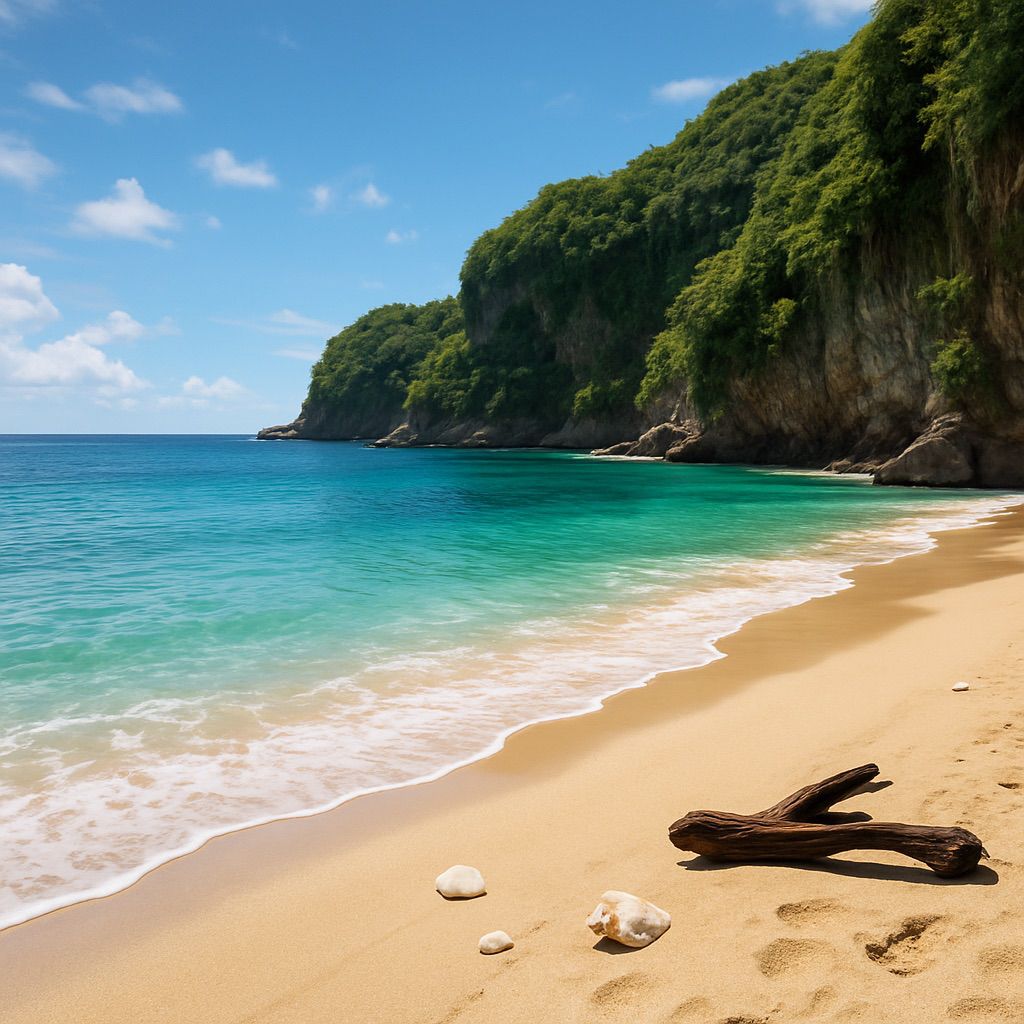
There’s something wildly healing about the first breath of ocean air after a long winter or a brutal spring. You step out of your car, feel the heat rising from the pavement, hear seagulls laughing in the distance, and taste salt on your lips before you’ve even reached the sand. Summer at the beach isn’t just a vacation—it’s a soul reset. And across the United States, a glorious variety of beach towns are waiting to give you exactly that. From quiet coastal escapes to lively boardwalk scenes, the best U.S. beach towns don’t just offer sun and surf—they offer a full-blown experience of relaxation, culture, food, and memory-making. Whether you’re a sun-seeker, a surf junkie, a seafood lover, or someone who simply wants to sink your toes into warm sand with a cold drink in hand, this essay is your love letter to the best coastal communities across America. And we’re not talking generic “best of” listicles. We’re talking real places. Real moments. Real beach town magic that seeps into your soul and never lets go.

Picture a slow morning on the coast of Maine, the fog still hugging the boats in the harbor as gulls dance overhead. Or imagine a wild California sunset painting the sky while surfers catch their final wave, their shadows stretching long on the beach. Or a bustling summer night in South Carolina, where the air smells of shrimp boil and sweetgrass baskets, and kids chase fireflies while live music pulses from a tiki bar by the dunes. These aren’t just vacations—they’re living postcards of American coastal life. And this essay is going to walk you through them one by one, weaving together history, charm, culture, and that intangible pull that only a true beach town can deliver.

Let’s start in New England, where beach towns carry the history of centuries and charm that feels straight out of a storybook. Kennebunkport, Maine, is a stunner. Cobblestone streets, white-steepled churches, old sea captain’s homes, and a harbor dotted with lobster boats. It’s the kind of place where you wander into a seafood shack and order a lobster roll so fresh it still tastes of the Atlantic. The air is brisk even in July, perfect for those who like a cool breeze with their sunshine. The beaches are raw and beautiful, framed by rocky outcrops and salty air that smells like nostalgia. You’ll find long morning walks and quiet evenings here, the kind where you watch sailboats drift while sipping wine on a porch swing.

Shift your compass slightly south, and you’ll land in Cape May, New Jersey—a Victorian fantasy dressed in candy-colored paint. This beach town is elegance by the sea, with gas-lit streets, horse-drawn carriages, and gingerbread-trimmed B&Bs lining the lanes. The beach is wide and clean, dotted with striped umbrellas and the smell of saltwater taffy floating on the breeze. Cape May feels like summer was never meant to end here. It’s where families return year after year to the same rental, the same boardwalk, the same ice cream shop that remembers your name. It’s charming, walkable, and endlessly photogenic. And yes, the sunsets over Sunset Beach will steal your breath every time.

On the other side of the Mid-Atlantic lies a place of pure East Coast summer glory: Rehoboth Beach, Delaware. Friendly, vibrant, and impossibly alive in the summer months, Rehoboth is a blend of traditional boardwalk fun and quirky modern cool. Picture saltwater taffy next to craft beer tastings, arcades alongside art galleries, and street performers sharing space with yoga on the sand. It’s inclusive and energetic—a town that doesn’t just welcome summer, it throws a block party in its honor. The waves are gentle enough for families, yet the food scene is sophisticated enough for serious foodies. And at night, the lights along the boardwalk glow like something out of a film.

For those who like their beach towns with a little more southern flavor, Tybee Island, Georgia, is a true gem. Just a stone’s throw from Savannah, Tybee blends southern charm with island ease. It’s the kind of place where you sip sweet tea on a porch, walk to the beach barefoot, and watch dolphins play in the surf. It has just enough kitsch to feel local—think quirky cafes and tie-dye shops—but the marshes and low-country beauty surrounding it make it something truly special. Rent a bike, explore the lighthouse, and settle into the slow rhythm of this island where time seems to stretch out with the tide.

Keep driving south and you’ll hit Folly Beach, South Carolina—Charleston’s rebellious little sister. Folly has soul. It’s gritty in the best way, a mix of surf culture, Southern hospitality, and bohemian spirit. The beach is wild and wonderful, often full of surfers carving lines into foamy waves, dogs chasing Frisbees, and kids digging castles with sunburned noses. The town itself is packed with music, dive bars, vintage shops, and seafood shacks where the shrimp is always local and the beer is always cold. It’s a place that knows how to live in the moment.

Now let’s fly across the country to Cannon Beach, Oregon, where the Pacific Ocean meets towering cliffs and iconic sea stacks. This isn’t your typical sunbathing beach town—it’s moody, majestic, and magnetic. The kind of place where you throw on a sweater in July and walk barefoot in the mist. Haystack Rock rises from the ocean like something out of a Tolkien novel. And when the fog rolls in, it feels like the entire world gets quiet. Cannon Beach is for the thinkers, the wanderers, the ones who crave beauty and depth in their coastal retreat. And the town’s boutiques, art galleries, and locally roasted coffee only add to the charm.

Further down the West Coast, Laguna Beach, California, is an artist’s dream in motion. Everything here feels painted—the cliffs, the coves, the sunsets that set the ocean on fire. It’s upscale without being pretentious, hip without trying too hard. You can spend your mornings hiking canyons, your afternoons snorkeling in emerald waters, and your evenings browsing art walks or sipping rosé at cliffside restaurants. The community here revolves around creativity and coastal living, and it’s hard not to feel inspired by the sheer beauty of your surroundings.

And then, of course, there’s Kailua, Hawaii—a beach town on Oahu’s windward side that redefines paradise. Unlike its bustling cousin Waikiki, Kailua is all about laid-back luxury. The beaches are powder-soft and postcard-perfect, the water so blue it feels unreal. But what makes Kailua sing is its community vibe. People here surf before work, paddleboard with their dogs, and shop at farmer’s markets that overflow with mangoes, pineapples, and handmade goods. The town blends Hawaiian tradition with modern soul, and once you’re there, the thought of leaving feels like sacrilege.

As you begin to wrap your mind around all these places, you realize that “best” isn’t about the most popular or most photographed. It’s about the feeling a place gives you when you arrive, the stories you take with you, and the longing it plants in your chest when you leave. It’s about the bookstore in a hidden alley, the crab shack on the dock, the old couple walking hand-in-hand down the boardwalk, the kid leaping through the tide with sand-covered legs and wide eyes. It’s about how your skin feels after a day in the sun, how your hair curls from the salt, how your heart softens from the stillness.

There is no one-size-fits-all beach town. Some will call you back every year. Others will become once-in-a-lifetime postcards that live in the back of your mind. But every beach town worth its salt shares one thing—they remind you to slow down, breathe deep, and let go. In these places, the calendar melts, and the only clock you follow is the rhythm of the tide. It’s where first kisses happen. Where families bond. Where old souls rest and wild ones roam.

So where should you go this summer? Should you chase the golden light of California, or the storm-kissed shores of Oregon? Should you eat hushpuppies in the Carolinas or crack lobster claws in Maine? Should you dance on the pier in Delaware or sip shave ice in Hawaii? The answer is yes. Yes to all of it. Yes to salt in your hair and sand in your shoes. Yes to getting a little lost and finding yourself again. Yes to beach towns, big and small, that welcome you like a long-lost friend.

Because the best U.S. beach towns aren’t just destinations. They’re states of mind. And this summer, you deserve to find yours.


Related Posts

Light, Lenses, and Lives: How August 19 Captures the World

Elias Rowen

On August 19, the world tilts its head toward two vastly different but equally profound achievements of the human spirit. One belongs to art and science—the creation of the daguerreotype, the first publicly announced photographic process, in 1839, which allowed humans to capture light itself and hold it in their hands. The other belongs to medicine and compassion—World Mosquito Day, marking the discovery in 1897 that these tiny, whining insects carry the parasite responsible for malaria, and inspiring global efforts to fight one of humanity’s deadliest diseases. Over time, August 19 has also come to embrace humanitarian causes, from raising awareness of health crises to celebrating the role of visual storytelling in connecting us across borders and cultures. If this date had a theme, it would be the power of seeing—the power of fixing something in our gaze and refusing to look away.

The daguerreotype did not emerge in a vacuum. Humans have been fascinated by the idea of capturing an image for millennia. From cave paintings to sketches on parchment, from camera obscuras to shadow tracings, each method was an imperfect attempt to freeze a fleeting moment. Then came Louis-Jacques-Mandé Daguerre, a French artist and inventor with a restless mind and an eye for the dramatic. Working with Nicéphore Niépce, who had managed to create the first permanent photograph years earlier using a process called heliography, Daguerre refined and transformed the concept. The method he unveiled to the world on August 19, 1839, used a silver-plated copper sheet, polished to a mirror finish, treated with light-sensitive iodine vapors, and developed over heated mercury. The results were astonishingly detailed, unlike anything the public had seen before.

Imagine being there that day in Paris, as word spread of a device that could snatch a likeness from the air and hold it still forever. Newspapers called it a miracle of modern science; artists feared it would replace their craft. Portrait studios soon sprouted in major cities, bringing this marvel within reach of the middle class. For the first time in human history, you could see your own face rendered with precision—lines, expressions, and imperfections included. You could send that image to distant relatives, preserve it for generations, or gaze at it yourself in quiet wonder.

Photography changed the relationship between time and memory. Before, if you wanted to remember someone’s face, you relied on paintings or mental images, both of which could blur or fade. Now, you could keep a perfect reflection of them even after they were gone. The daguerreotype also democratized legacy—no longer was a lasting image the privilege of the wealthy alone. Farmers, shopkeepers, immigrants, soldiers—people whose lives might otherwise vanish into history without a trace—could now be seen.

This ability to witness and preserve reality would eventually become a cornerstone of humanitarian work. Photographs could document injustice, poverty, and disaster, making it impossible for the comfortable and distant to deny what was happening in the world. That connection between the birth of photography and humanitarian causes is why August 19 is also celebrated as World Photography Day—a recognition that the act of taking a photograph can be both personal and political, intimate and global.

But August 19’s lens doesn’t stop at art—it focuses sharply on the fragility of life. World Mosquito Day, though often overshadowed by the romance of photography, marks a breakthrough in understanding one of humanity’s most persistent enemies. On August 20, 1897, British doctor Sir Ronald Ross discovered that the Anopheles mosquito was the carrier of the malaria parasite. While this is technically a day later, awareness campaigns often link August 19 and 20 together in public health contexts, using the overlap to emphasize prevention and education. Malaria, a disease that has haunted humankind for thousands of years, kills hundreds of thousands annually even today, mostly in vulnerable regions. The mosquito’s role in transmitting it was the missing piece in understanding how to combat the disease effectively.

Consider the symmetry here: one event gave us a way to hold light; the other gave us a way to hold back death. Both are about clarity—seeing the world as it is and using that knowledge to shape the future. Both remind us that technology alone is not enough; it is how we use it that matters. Daguerre’s invention could have remained a curiosity for wealthy collectors, but instead it grew into a tool for journalism, science, art, and activism. Ross’s discovery could have gathered dust in a lab, but instead it inspired decades of mosquito control programs, antimalarial drugs, and public health campaigns.

Humanizing these events means stepping into the shoes of the people who lived them. Picture a family in 1840s New York, dressed in their best, crowding into a small studio for their first daguerreotype. The children fidget, the parents try to keep them still, the photographer fusses with the equipment, and then—just like that—the moment is trapped forever in silver. The family might never know that, 180 years later, someone would study their image in a museum, noting the set of their shoulders, the cut of their clothes, the faint smile on the mother’s lips.

Now picture a mother in 1900 India, tucking a mosquito net carefully around her child’s bed. She has heard the new advice from the health workers in her village, warnings about stagnant water and the dangers of the mosquito bite. The knowledge gives her a weapon where before she had only fear. She will not know Sir Ronald Ross’s name, but she will know that the netting and the clean water and the medicine are the difference between life and death.

Today, on August 19, humanitarian organizations use the power of photography to show us the faces of those still at risk from diseases like malaria, and to rally support for campaigns that provide bed nets, vaccines, and treatment. The images are stark and unsparing—a child’s thin arm, a field clinic crowded with patients, a volunteer holding up a vial of medicine—but they are also full of resilience. The same medium that once captured aristocrats in Parisian salons now carries the stories of subsistence farmers in sub-Saharan Africa, of nurses in makeshift hospitals, of survivors rebuilding their communities after crises.

Photography and humanitarianism share a belief in witness. To see something is to be changed by it. The daguerreotype taught us that an image could make someone present even when they were far away or gone entirely. Public health taught us that seeing a problem clearly is the first step to solving it. When we put these together—when we use the lens to focus on human suffering and resilience—we create a bridge between art and action.

August 19, then, is more than a date; it’s a challenge. It asks us to notice, to record, and to act. It reminds us that every photograph we take, every disease we combat, every injustice we expose is part of a larger story of what it means to be human. The daguerreotype froze a moment; World Mosquito Day fights for the moments yet to come. The humanitarian spirit that binds them is the belief that the world is worth looking at—worth saving—and that our tools, whether they are cameras or microscopes, are only as powerful as the compassion behind them.

Related Posts

Through the Lens of the Tide: Mastering the Best Times to Shoot at the Beach

Dave

There’s something wildly magical about the beach—a place where nature puts on a show daily with a constantly shifting canvas of light, color, and motion. For photographers, the beach is both a dream and a challenge, wrapped in sea spray and golden sand. But the secret to capturing truly unforgettable beach images lies not just in the gear you carry or the technique you master—it lies in the timing. Knowing when to shoot can turn a simple seascape into a poetic masterpiece. In this deep dive into coastal photography, we’ll unravel the best times to shoot at the beach and why those fleeting windows of light can make or break a shot. But more than that, we’ll walk together along shoreline stories—real moments, weathered memories, and shutter-clicking truths from a photographer’s point of view.

If you’ve ever stood with your toes in the sand, camera in hand, watching waves roll in while the sun stretches across the horizon, then you already understand part of the magic. The beach is never the same twice. And every moment that passes is a photograph missed or made. This essay is your guide, your muse, and your gentle nudge to step onto the beach at the right moment and click the shutter with intention.

It was 5:12 a.m. when I parked my old, salt-crusted Subaru by the dunes of Cannon Beach, Oregon. The air was crisp, carrying a scent that was part pine, part ocean, and all nostalgia. My camera was already on the passenger seat, batteries full, SD cards cleared. The tide was just beginning its slow retreat, leaving reflective pools like nature’s mirrors across the sand. I walked out, barefoot, knowing that golden hour was just around the bend of time. And then it happened. That first kiss of orange and pink across the edge of the world. Light danced on the wet sand, and the clouds took on the brushstrokes of a master painter. I only took seven photos that morning. Just seven. But one of them still hangs in a gallery—and not because the composition was flawless or the lens pristine. It was because I understood when to be there. And that, above all, is the photographer’s real craft.

Golden hour, roughly an hour after sunrise and an hour before sunset, bathes everything in warm, diffused light that flatters every subject. Shadows grow long and soft. Textures come alive. The ocean reflects pinks, oranges, and golds that seem pulled from a palette of dreams. Golden hour is your best friend when you’re aiming for romantic, ethereal, or emotional beach photos. Whether it’s a couple walking hand-in-hand, a child building a sandcastle, or just the gentle lap of a wave against a seashell, this is the time when everything feels cinematic. But golden hour is also fleeting. You have to be ready. And that means knowing the sunrise and sunset times for your location and planning backward. Arrive early, scout your spot, frame your ideas. Once the light starts to shift, you’ll have maybe 20–30 minutes of perfect glow before the moment slips away. In Hawaii, I once photographed a local hula dancer during golden hour, her silhouette framed against the glowing ocean. She moved with grace, the light wrapping around her like liquid honey. That photo? It lives on the cover of a travel magazine now. And I owe it entirely to the golden hour.

Right before the sun rises and just after it sets, the blue hour cloaks the beach in cool, moody tones. Think of it as twilight’s artistic sibling—subtle, introspective, and dramatically beautiful. This is a time when beach scenes become minimalist and almost surreal. Long exposure shots during blue hour turn waves into soft blankets, clouds into whispers, and city lights into glowing reflections. I once stood alone on a dock in Maine, camera on tripod, waiting for that perfect indigo transition. The sky melted into the sea, and everything felt still. It’s the kind of moment where silence speaks louder than words. The resulting photo—fishermen’s boats floating ghostlike under a navy sky—is one of the most haunting images I’ve ever taken. If you’re willing to shoot at awkward hours and carry a tripod, blue hour will reward you with images that feel like dreams you’ve barely remembered.

Most photographers shy away from midday beach shooting. And rightly so. The sun is high, shadows are short and harsh, and your subjects can look blown out or squinty. But here’s the thing—midday isn’t impossible. It just requires strategy. Use shadows to your advantage. Seek shade under cliffs, palms, or beach umbrellas. Convert your images to black and white to emphasize contrast. Capture action shots—surfers, volleyball players, swimmers—when the sun’s strength brings out motion and energy. And if you’re shooting underwater or drone shots from above, midday sun can actually enhance clarity and color. I once flew my drone over the Maldives at noon, and the turquoise water shimmered like stained glass. It’s not about avoiding the light. It’s about learning to work with it.

Cloudy beach days might disappoint sun-seekers, but for photographers? They’re a goldmine. The clouds act like a natural softbox, scattering the light and eliminating harsh shadows. Skin tones look rich and even. Water reflects a more mysterious, subdued palette. Textures—like wet sand, driftwood, or seaweed—pop without being overexposed. On a gray morning in Cornwall, I once photographed a lone surfer paddling out. The sky was steel, the waves muted blue. That image, stark and honest, conveyed solitude and determination in a way a sunny photo never could. Don’t let clouds scare you off. They often create the most emotionally resonant images.

Too many photographers plan their shoots around sun position alone. But the ocean has its own clock—the tide. Low tide reveals tide pools, rocks, shells, and reflections. High tide can erase your foreground or crash waves against jetties for dramatic impact. Apps like Tides Near Me or Windy can help you predict when the beach will give you the best conditions. I once planned a sunrise shoot based not just on light, but on the tide being low enough to reveal a natural cave that only appears for 30 minutes every two weeks. That shot—sun streaming through the cave, lighting the tide pool beneath—became the most liked photo on my Instagram. Wind matters too. Light breezes lift hair, swirl sand, and ruffle clothing for those romantic, dynamic portraits. But strong gusts? They’re lens nightmares. Know your forecast. Respect the ocean.

Night photography on the beach is a game of patience and preparation. But when it works? It’s mesmerizing. A full moon can light up the waves with silver, while a new moon lets the stars dominate. Use long exposures to capture star trails or bioluminescence. I once spent four hours on a Puerto Rican beach photographing glowing plankton. Every time a wave hit, it sparked blue like fairy dust. It didn’t even feel real. Bring a sturdy tripod, a wide-angle lens, and extra batteries. Dress warm. And always respect local rules and safety when shooting at night. The beach can be as dangerous as it is beautiful.

Summer isn’t the only time the beach is photogenic. Autumn brings quieter shores, golden leaves along coastal trails, and moody skies. Winter gives you fog, stormy seas, and dramatic lighting. Spring offers new life—birds nesting, wildflowers blooming on cliffs, and crisp, clean air. Every season writes a different story in light. Follow them all.

The best beach photographs don’t just show the sea. They show life. They freeze the flutter of hair in sea wind, the joy of a child running from a wave, the quiet of someone staring at the horizon lost in thought. They tell a human story. I once took a photo of a grandfather teaching his grandson to cast a fishing line, both knee-deep in the surf. The moment wasn’t planned. The light wasn’t perfect. But the image captured something time couldn’t touch. That, to me, is the real treasure of beach photography. The best time to shoot at the beach? It’s whenever there’s a story to tell—and you’re willing to wait, feel, and frame it.

Beach photography teaches you humility. You cannot control the ocean, the weather, or the light. All you can do is observe, adapt, and appreciate. Each shoot becomes a meditation in patience, a dance with unpredictability. But that’s also what makes it thrilling. So pack your bag. Check your batteries. Study the light. But most of all, open your heart to the rhythm of the waves. The beach doesn’t just offer scenery—it offers stories. And your camera? That’s just your voice. Now go. The tide is turning. And somewhere out there, a perfect moment is waiting to be captured.

Related Posts

Two Revolutions in Choice: The Day Women Voted and Took Control of Their Futures

Elias Rowen

August 18 is a date that echoes like a struck bell across the corridors of modern history. It is a day bound to the voices of women, to the weight of ballots cast and the quiet authority of choices made in the privacy of one’s own body. On August 18, 1920, the United States ratified the Nineteenth Amendment, granting women the constitutional right to vote after decades of relentless activism, setbacks, and sacrifice. Forty years later to the day, in 1960, the first oral contraceptive pill entered the American market, giving women unprecedented control over their reproductive lives. These two events are not merely points on a timeline; they are twin revolutions—one political, one personal—both aimed at the same target: agency.

It’s difficult, perhaps, for someone born in the era of these rights to feel the raw weight of what life was like without them. In the years before suffrage, the idea that women might shape the laws under which they lived was met with ridicule, scorn, and outright hostility. A woman could own property in some states, could teach, could write books, could run farms and households, but when it came to voting, her voice was mute in the public square. It wasn’t because she was silent—it was because the law made her so. The fight to change that began decades earlier, at places like Seneca Falls in 1848, where the seeds of dissent were sown by women who dared to sign their names to the idea that they were equals. Over seventy years, those seeds were watered by countless voices—some speaking on grand stages, others in parlors and kitchens—until the chorus was too loud to ignore.

By 1920, the suffrage movement had gained both momentum and enemies. Anti-suffragists warned of the unraveling of the social order, painting visions of women abandoning their children, neglecting their homes, or losing their femininity entirely if they stepped into the voting booth. The irony was that many women opposed suffrage themselves, convinced by the very systems that kept them excluded that their place was elsewhere. Still, the suffragists marched on. They lobbied state legislatures, staged parades, organized hunger strikes, and endured arrests. Some were beaten in prison for their defiance. They held banners in front of the White House, declaring, “Mr. President, how long must women wait for liberty?”

When the Nineteenth Amendment finally reached the states for ratification, it came down to Tennessee—the thirty-sixth state needed to make it law. The vote was tied in the Tennessee House of Representatives until a young legislator named Harry Burn, previously expected to vote against it, changed his mind after receiving a letter from his mother urging him to “be a good boy” and vote yes. On August 18, 1920, Tennessee’s approval tipped the scales, and the amendment became part of the Constitution. It was a narrow, almost fragile victory, but it opened a door that has never closed. The following November, millions of women cast ballots in a presidential election for the first time, their inked signatures no longer confined to petitions but etched into the machinery of democracy.

Four decades later, the scene was very different, but the revolution was just as profound. In 1960, a small pill, no bigger than a vitamin, became available to American women for the first time. Its arrival marked a seismic shift in personal freedom—one as significant in the private realm as the ballot was in the public. For most of human history, the timing and number of children a woman bore were largely outside her control, dictated by biology and circumstance, and often defined by a lack of reliable contraception. The introduction of “the Pill” changed that almost overnight.

The story of its creation is as complex as the science behind it. Biologist Gregory Pincus, physician John Rock, and activist Margaret Sanger were at the center of its development, backed by funding from Katharine McCormick, a wealthy suffragist who understood that political equality meant little without bodily autonomy. Clinical trials in the late 1950s—many conducted unethically by today’s standards—led to the FDA’s approval in 1960. The Pill was marketed not as a tool of liberation but as a “cycle regulator,” a careful framing to appease moral and religious critics. Yet women understood immediately what it meant: for the first time, they could decide, with near certainty, if and when they would become mothers.

The cultural impact was explosive. For some women, the Pill was a quiet liberation, tucked away in a purse or medicine cabinet, a small, private rebellion. For others, it became a symbol of the sexual revolution, a statement that women’s pleasure and autonomy mattered as much as men’s. But the backlash was swift. Religious leaders decried it as immoral. Politicians debated whether unmarried women should even be allowed to access it. In some states, laws still made contraception illegal for anyone other than married couples. The fight for reproductive freedom was far from over, but the Pill had shifted the balance.

If you strip these two August 18 milestones down to their essence, you see the same thread: the fight for choice. The right to vote is the right to have a say in the laws and policies that govern your life. The right to control reproduction is the right to decide the course of your own body and future. Without one, the other is incomplete. A woman can cast a ballot, but if she has no control over whether she will bear children, her freedom is compromised. She can plan her family, but if she has no say in the laws that shape her life, her autonomy is still limited. These revolutions—forty years apart—were part of the same continuum.

To humanize this story is to remember the individual lives behind the milestones. Imagine a woman in 1920, putting on her best hat and gloves, walking to the polling place for the first time. Perhaps she had stood on a picket line years earlier, or perhaps she had never spoken publicly about politics. Maybe she kept her vote private, not even telling her husband. But when she dropped that ballot into the box, she knew she was part of something bigger than herself. Now picture a young woman in 1960, standing at a pharmacy counter, her heart pounding as she asked for a prescription. She might have been a college student who wanted to finish her degree without interruption, or a mother of three who decided her family was already complete. In both moments, the choice was hers—and that was the revolution.

Today, both rights are often taken for granted, even as they continue to be debated, challenged, and defended. Voter suppression efforts remind us that the ballot box is never entirely safe from erosion. Battles over reproductive rights make it clear that bodily autonomy is still a contested space. The history of August 18 is not just about what was won; it is about the ongoing vigilance required to keep it.

The women who fought for suffrage did so knowing they might never cast a vote themselves. The pioneers of the Pill risked careers, reputations, and in some cases their safety to develop it. They worked for a future they might not fully inhabit, believing that the generations after them would live freer lives. That belief was not naïve—it was necessary. And in both cases, it worked.

August 18 should be remembered not just as a day when laws changed, but as a reminder that freedom is cumulative. It builds on itself, brick by brick, until the foundation is strong enough to hold the weight of progress. These two revolutions—one in the voting booth, one in the medicine cabinet—are chapters in the same story. They tell us that choice is power, whether it’s exercised with a pen in a polling place or with a glass of water and a pill in the morning. And they challenge us to ask, in our own time: what choices will we defend, and what new freedoms will we dare to claim?

Related Posts

Sands of Splendor: Luxury Beach Resorts to Dream About

Dave

There’s a peculiar way the human heart responds to the meeting point between sea and land. It isn’t simply about beauty, though beauty is the most obvious of its charms—it’s about possibility. That infinite horizon holds a promise that our lives can be different here, freer, simpler, more sensuous. For most of us, that promise is fulfilled through a simple beach holiday: a few days of sunscreen, rented umbrellas, and sandy sandwiches. But there’s another world—one in which the shore is not just a backdrop for our rest but the stage for an entirely different lifestyle, a place where every detail is crafted to stir both wonder and comfort in equal measure. These are the luxury beach resorts of the world, sanctuaries where the salt air mingles with champagne bubbles, where even the smallest moments are designed to feel like they belong in a memory you will revisit for the rest of your life.

Imagine stepping off a small seaplane or a sleek private launch into a place where reality feels suspended. A barefoot attendant greets you by name as though you are an old friend returning home, pressing a cool towel into your hand while the scent of frangipani drifts through the air. You look around and realize that everything here has been designed to let the ocean remain the star—the villas are low and graceful, their lines following the contours of the shoreline, their roofs blending with the palms. Somewhere nearby, you hear the muffled pop of a champagne cork and the clink of crystal against crystal, and in that moment you know that you have arrived in a world where the ordinary rules no longer apply.

The Maldives, of course, is the first place many minds go when imagining luxury by the sea, and for good reason. It is impossible to overstate the dreamlike quality of its lagoons, the water shifting through impossible shades of turquoise and sapphire as the light changes. Resorts here tend to be entire islands, each one a small kingdom of pleasure, accessible only by boat or seaplane. The overwater villas—perched on stilts above the shallows—are as iconic as they are indulgent, offering private decks, plunge pools, and steps that lead directly into the warm Indian Ocean. In the morning, you might wake to the sound of tiny waves lapping at the supports beneath your bedroom, pull open the sliding glass doors, and watch a school of parrotfish drifting lazily by. Breakfast arrives by boat, served by a smiling butler who seems to anticipate your mood before you speak. And the day unfolds in a rhythm that belongs entirely to you—perhaps a guided snorkeling trip to see manta rays gliding like winged spirits through the deep, or an afternoon in the spa where your massage table is set so close to the water that the scent of salt and the sound of the waves becomes part of the therapy.

But while the Maldives has perfected the art of isolation and intimacy, other regions offer their own flavors of coastal indulgence. In the Seychelles, for example, the natural landscape plays an even greater role in the luxury experience. The granite boulders here rise from the beaches like the remnants of some ancient sculpture, and the sand is so pale and fine it seems to glow under the midday sun. Resorts in the Seychelles embrace this raw drama, building villas into the hillsides so that each room feels like part of the jungle canopy. You might have breakfast on a terrace that looks out over a secluded cove where the only footprints are yours, then wander down to the shore for a swim in water as clear as air. The feeling is not just one of luxury, but of discovery—like you have stumbled upon a secret that the rest of the world has yet to find.

In Bora Bora, the ocean is not simply a view—it is an environment in which you live. Here, the bungalows hover above a lagoon so vividly colored that photographs struggle to do it justice. Glass floor panels allow you to watch fish moving beneath your feet, and at sunset the entire lagoon becomes a mirror for the sky’s transformation, painting the water in streaks of gold, rose, and violet. You might dine on a private sandbar set for two, the table lit by torches, the gentle lap of water forming the rhythm of your evening. And as you eat, you might feel as though you’ve been lifted out of the ordinary world entirely, suspended in a moment that belongs only to you.

In the Caribbean, the rhythm changes. Here, luxury often comes with music in the air—steel drums carrying on the breeze, the occasional burst of laughter from a sailing crew just offshore, the scent of jerk spices curling up from a beachside grill. Places like St. Lucia combine dramatic scenery with indulgent amenities, the island’s twin Pitons rising like sentinels over turquoise bays. Resorts here are carved into the landscape so artfully that each room feels like it has been waiting just for you, with open-air designs that invite the trade winds to wander through your living space. You could spend your morning swimming in an infinity pool that seems to pour directly into the Caribbean Sea, then wander down to a crescent of white sand where your cabana is already prepared—fresh towels folded with impossible precision, a small table stocked with chilled coconut water and lime wedges. And when the sun begins to sink, painting the horizon in gold and tangerine, you might find yourself sitting on your balcony with a rum cocktail, wondering how it is that time feels both slower and fuller here.

In the Bahamas, the luxury resorts seem to understand the appeal of contrast—on one hand, there’s the allure of pure, untamed beaches where the sand squeaks beneath your feet and the only other footprints are those of a seabird. On the other, there’s the glittering energy of high-end marinas, where yachts from around the world bob gently in the evening light, their decks glowing like floating mansions. A day might begin with a dive into water so transparent that you can see the ripple of sunlight across the seafloor twenty feet down, and end with dinner at a table set directly on the sand, toes buried in its cool softness as the tide whispers nearby. The resorts here tend to fuse that raw island beauty with impeccable service—private chefs who’ll prepare a seafood feast tailored exactly to your taste, butlers who manage to appear exactly when you need them, and villas that somehow feel like both palaces and hideaways.

Across the world in the Mediterranean, the vibe shifts again. Luxury beach resorts in places like the Amalfi Coast, Santorini, and the Côte d’Azur have their own brand of seduction—one born from history as much as beauty. Here, your suite might be in a centuries-old villa, its stone walls cool even in the heat of summer, balconies spilling over with bougainvillea. The beaches themselves may be small coves of polished pebbles rather than sprawling stretches of sand, but what they lack in size they make up for in intimacy. The sea here glimmers in deep, royal blues, and the air is scented with a blend of salt, citrus, and the faint spice of wild herbs growing along the cliffs. You might spend the afternoon on a private yacht, weaving between coastal villages whose pastel facades seem to defy gravity, and return to the resort just in time for a dinner of freshly caught fish drizzled with olive oil pressed from groves you passed earlier that day. In these places, luxury is inseparable from culture—you don’t just visit the sea, you inherit its centuries of stories.

In Thailand, luxury beach resorts take full advantage of the country’s extraordinary sense of hospitality and its lush natural environment. On islands like Koh Samui and Phuket, you might find a villa so seamlessly integrated into the tropical greenery that it feels almost like part of the forest. Outdoor showers open onto views of the ocean, infinity pools reflect both palm fronds and passing clouds, and interiors are crafted from polished teak and silk so that even the smallest detail feels intentional. Days here often balance the indulgence of spa treatments and five-star dining with adventures—snorkeling through coral gardens alive with color, kayaking into hidden sea caves, or hiking to jungle waterfalls where the only sounds are the rush of water and the calls of distant birds. And always, there is the gentle rhythm of Thai life—gracious smiles, a sense that nothing is rushed unless you want it to be, and a deep connection between the land, the water, and the people who call it home.

Then there is Bali, where the concept of a luxury beach resort often transcends simple comfort and ventures into something more spiritual. Many of the island’s most exclusive coastal retreats are designed to honor Balinese traditions, incorporating temples and ceremonial spaces alongside guest villas. You might wake to the sound of a gamelan orchestra drifting over the waves, join a morning offering ceremony where flowers and incense are set afloat on the water, and then spend the day in a blend of modern indulgence and timeless ritual. The beaches themselves vary from stretches of soft white sand to dramatic black-sand shores where the ocean roars against volcanic rock. In the evenings, you might find yourself dining under a sky crowded with stars, the air perfumed with frangipani and clove, feeling that rare combination of absolute luxury and deep cultural immersion.

In Australia, luxury beach escapes often mean going somewhere far from the rest of the world—places like the Whitsundays, where the sand of Whitehaven Beach is so pure it squeaks underfoot and reflects the sun in dazzling brightness. Here, high-end resorts often occupy entire islands, blending contemporary architecture with the raw splendor of the Great Barrier Reef. You could start your day with a scenic helicopter ride over Heart Reef, watching the turquoise water swirl around the coral, then return to your villa for a leisurely breakfast on a deck that seems to float above the sea. The sense of scale here is staggering—long sweeps of beach where you might walk for an hour without meeting another soul, waters so rich with marine life that you could spend weeks exploring and still find something new each day. And yet, when you return to the resort, you’re met with all the touches of modern indulgence: champagne on ice, a drawn bath scented with eucalyptus, and a sunset view so mesmerizing it makes you forget the rest of the world exists.

Hawaii offers its own interpretation of coastal luxury, one that is deeply tied to the islands’ spirit of aloha. In places like Maui, Kauai, and the Big Island, resorts are designed to highlight the dramatic contrast between volcanic landscapes and the serene sweep of the Pacific. One moment you might be lying in a hammock strung between palms, listening to the rustle of leaves in the breeze, and the next you’re watching molten lava pour into the sea from a helicopter. The service here is warm and genuine, blending high-end attentiveness with a familial friendliness that makes you feel less like a guest and more like an honored friend. And as the sun sets behind the ocean, often in a blaze of fiery reds and golds, you might find yourself at a luau where the rhythms of hula and the pulse of drums seem to sync with the waves themselves.

In Dubai, luxury beach resorts often seem to defy the laws of nature entirely, creating coastal paradises where there were none before. On the shores of man-made islands shaped like palm trees or entire world maps, you’ll find resorts with private beaches imported from the whitest sands imaginable, cooled swimming pools overlooking the sea, and amenities so over-the-top they feel like something from a dream—think underwater suites with windows into aquariums, gold-leaf facials at the spa, or dining rooms where Michelin-star chefs prepare meals served by candlelight on floating platforms in the lagoon. The ocean here is warm and calm, a mirror for the towering architecture that lines the horizon, and the resorts seem locked in a friendly competition to see who can make their guests’ jaws drop the furthest.

Related Posts

Red Horizons and Concrete Divides: When a Moon Was Found and a Wall Rose

Elias Rowen

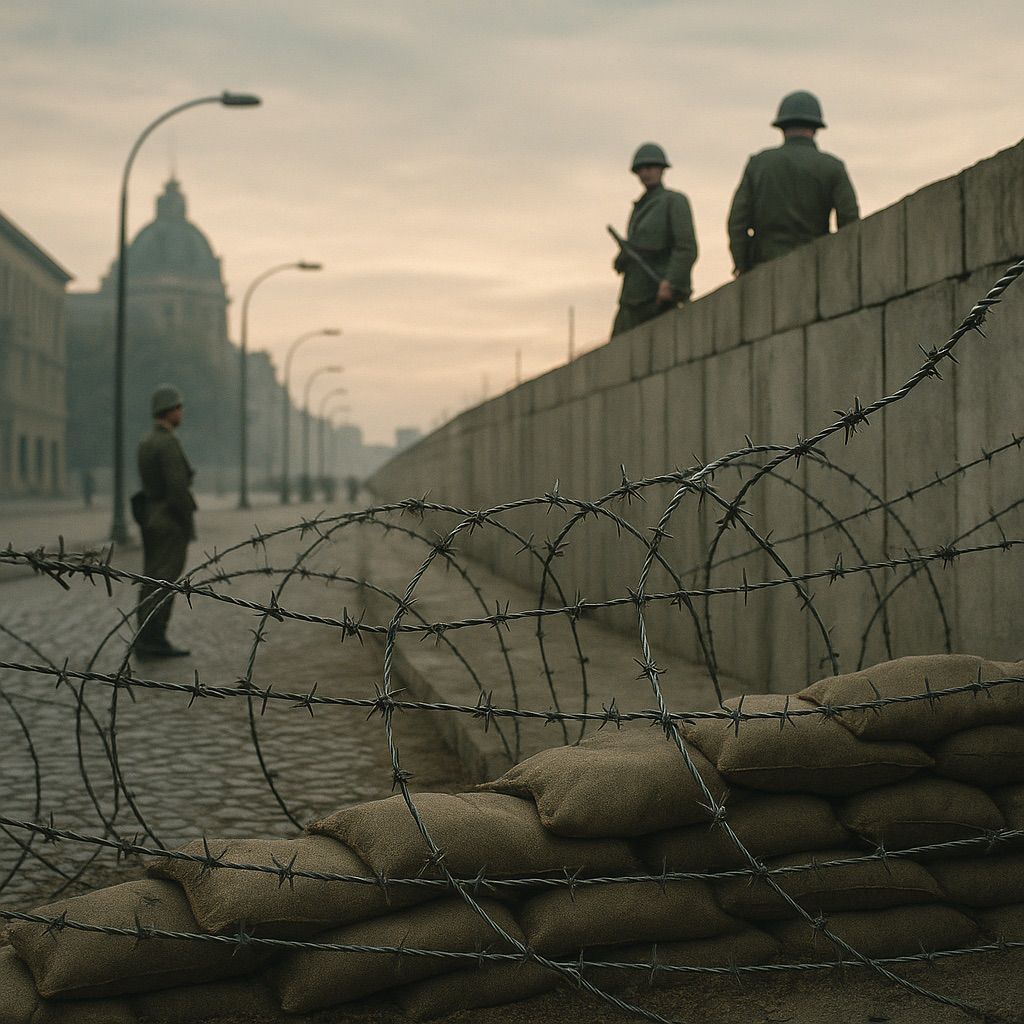
Under a warm August sky, two moments in history—separated by nearly a century—emerged on the same date, each shaping the human story in profoundly different ways. On August 17, 1877, Asaph Hall, an astronomer at the U.S. Naval Observatory in Washington, D.C., peered into the vast darkness through the largest refractor telescope in the world at the time and found what so many before him had only imagined: a small moon orbiting Mars. On August 17, 1961, workers and soldiers in Berlin continued erecting what would become one of the most infamous structures of the twentieth century, the Berlin Wall, dividing families, friends, and an entire city. One event expanded humanity’s view of the universe; the other shrank the world for millions of people.

The U.S. Naval Observatory in the late nineteenth century was a place of meticulous work, its great domed chambers housing brass-bound telescopes that reached into the night sky for answers. In August 1877, Mars shone unusually bright, closer to Earth than it had been in years, providing a rare opportunity for astronomers. For centuries, there had been whispers and speculation that Mars might have moons, but none had been confirmed. Asaph Hall, who had risen from humble beginnings as a carpenter to one of America’s most respected astronomers, dedicated himself to finding out the truth. His nights were long and often fruitless. Mars’s glare made it nearly impossible to detect anything faint near it. But on the night of August 17, after countless hours of patience, a dim point of light revealed itself. It was Phobos, a tiny moon only about 22 kilometers across, circling Mars so quickly that it appeared to rise in the west and set in the east. Hall had already spotted another moon, Deimos, just days earlier, but Phobos—swift, close, and strange—was something else entirely. His discovery added a new chapter to the story of our solar system, a reminder that the universe holds secrets waiting for those persistent enough to search.

Eighty-four years later, August 17 brought not the joy of discovery but the reality of division. Berlin, deep inside East Germany, had been a city of uneasy coexistence since the end of World War II, with its western sectors controlled by the Allies and its eastern half under Soviet authority. For years, East Germans had slipped into West Berlin to escape the strictures of communist rule. But in August 1961, under the orders of East German leader Walter Ulbricht, the border began to close. The first barriers had gone up just days earlier, on August 13, but by August 17, the wall was growing taller and stronger, the temporary fences replaced with concrete slabs and armed guards. Streets that once connected neighborhoods were sealed. People woke to find they could no longer visit relatives, go to their jobs across town, or even cross the street without risking arrest.

For Berliners, it was more than the construction of a wall; it was the imposition of a wound that would scar the city for decades. Families were split overnight. Friends became unreachable. The sound of hammers and drills mingled with the silence of disbelief, and the once-fluid movement between East and West was replaced by tense standoffs at checkpoints. What had been an open city was now a geopolitical pawn, and the wall, stretching 96 miles, became the starkest symbol of the Cold War.

Placing these two August 17ths side by side reveals a striking contrast in human nature. In 1877, a man used science and perseverance to push the boundaries of what we knew, to expand our understanding of the cosmos. In 1961, a government built a physical and ideological boundary to limit the movement of its people. One event opened the universe; the other closed off a city. And yet, both grew out of fundamental aspects of humanity—our desire to explore and our instinct to protect, our capacity for wonder and our capacity for fear.

The human stories within these moments are what bring them to life. Picture Asaph Hall, standing in the quiet of the observatory, the scent of polished brass in the air, carefully adjusting the massive telescope, knowing he might be on the brink of something extraordinary. Imagine his excitement when he confirmed his find, the thrill of knowing he had added something permanent to humanity’s knowledge. Then imagine a Berlin mother in 1961, standing on one side of a freshly built barricade, her child in hand, staring across to where her parents lived, now unreachable. Imagine the whispered conversations across fences, the letters smuggled under threat, the desperate plans to escape.

Phobos still circles Mars today, its cratered surface mapped in detail by spacecraft. Astronomers know it is slowly spiraling toward the planet, destined to crash into it or break apart into a ring millions of years from now. The Berlin Wall, meanwhile, fell in 1989, brought down by the same human will that had once endured its shadow. Fragments remain, scattered across museums and memorials, each piece a testament to the cost of division and the resilience needed to overcome it.

August 17 reminds us that humanity is capable of both reaching outward and turning inward, of discovering moons and building walls. It is up to each generation to decide which impulse will define its legacy. Some will look up, like Asaph Hall, searching for new worlds, while others will look down, stacking bricks out of fear. Somewhere tonight, a telescope will find Phobos gliding silently around Mars. Somewhere else, a traveler will run their fingers along a chipped remnant of the Berlin Wall. Both will feel the weight of history, and both will face the same question: do we open the sky, or do we build the wall?

Related Posts

Writing Where the Waves Whisper: Beachside Journaling Prompts for the Soul

Dave

There’s something about the beach that makes words flow in a way they never seem to at home. Maybe it’s the air—thick with salt and possibility—that makes your pen feel lighter in your hand. Maybe it’s the hypnotic rhythm of the waves, each one crashing with the same force yet never the same shape, that teaches you how thoughts can repeat without losing their meaning. Or maybe it’s the way the horizon refuses to end, inviting you to imagine what lies beyond, urging you to write without limits. Whatever the reason, beachside journaling is more than just writing by the ocean—it’s a form of soul work. And when you marry the practice of journaling with the sensory, emotional, and philosophical gifts of the shore, you create something both therapeutic and transformative.

The beach is the perfect writing companion because it has a personality of its own. It’s a listener that never interrupts, a storyteller that speaks in tides, a mentor that teaches lessons without lectures. If you’ve ever sat with a notebook in your lap, toes buried in warm sand, you know how the setting reshapes your thoughts. Words that once felt stuck now tumble out, unpolished and free, like shells scattered on the tide line. And the more time you spend there, the more you realize that the sea isn’t just background music for your creativity—it’s an active participant, offering prompts in every gull’s cry, every foamy curl, every breeze that rustles the pages.

When you write at the beach, your senses do half the work for you. You hear the crash and pull of the surf, a reminder of cycles and persistence. You smell the salt and seaweed, grounding you in the present moment. You feel the grit of sand on your skin, reminding you that beauty often comes with a little discomfort. You taste the air, fresh and slightly metallic, and it sharpens you. You see the impossible blues and shifting silvers of the ocean, the unbroken canvas of the sky, the horizon that suggests infinity but is, in reality, just the curvature of your own world. Each of these sensations can be a doorway into deeper reflection, if you let them.

And that’s where prompts come in—not as rigid instructions, but as invitations. At the beach, journaling prompts are less about “What should I write today?” and more about “What is the ocean asking me to notice?” They become catalysts for conversation between you and the natural world. Maybe you begin with something as simple as “Describe the way the tide is moving right now,” and before you know it, you’re writing about the ebb and flow of relationships in your life. Or you start with “What does the wind remind you of?” and find yourself unraveling a childhood memory you didn’t even know was still within you.

Reflection comes easily here because the environment is so forgiving. The sea doesn’t care if your handwriting is messy, if your metaphors are awkward, if your thoughts don’t connect neatly. It gives you permission to be raw. And being raw is often the most honest way to write. Journaling by the water can strip away the performance of writing—the need to impress, the pressure to edit—and leave only the conversation between you and yourself.

Sometimes, the best prompts aren’t even questions but observations. You might write about the family building sandcastles down the beach and wonder what castles you’ve been trying to build in your own life, and whether they’re meant to last or be washed away. You might see a lone surfer waiting for the right wave and think about patience, about how long you’ve been willing to wait for the things you want, and whether you’ve learned the rhythm of the tides in your own ambitions. The beach is full of metaphors that don’t feel forced—they’re just there, waiting for you to pick them up and examine them.

And then there are the days when the beach feels moody, the sky overcast, the wind sharp enough to make you pull your sweater tighter. These days can be just as inspiring, if not more so. Journaling here can lead you into darker, deeper territory—the kind of writing that gets at the truth of things. You might write about storms you’ve weathered, real or metaphorical, or about the way the world changes colors when the sun hides away. You might write about what you’ve lost to the tide, and what has washed up unexpectedly in its place.

Writing by the ocean is also an exercise in impermanence. You could jot down a line in the sand with a stick, knowing full well that the next wave will erase it. You could press a page under your palm to keep it from flying away, knowing that the wind might take it anyway. This fragility mirrors life. Journaling here teaches you that some thoughts are meant to be held onto and explored, while others are fleeting, passing through like seabirds on a migration.

Sometimes, the prompts come from the simple act of stillness. Sit long enough with your notebook closed and your pen resting across the pages, and your mind will start to turn over on its own. You’ll think of questions without even trying: Who am I when I’m away from all this noise? What do I really want to keep when the tide takes everything else? When was the last time I let myself drift, trusting I’d find the shore again? These are the kinds of thoughts that arrive when you give them space, and the beach is generous with space.

Even the act of choosing where to sit becomes part of the reflective process. Do you set up close to the water, where your toes get wet and the sound of the surf is louder, or farther back, where the sand is dry and the view is wide? Do you sit near people, catching fragments of their conversations for inspiration, or do you seek out a quiet corner where the only voices are your own and the sea’s? Every choice changes the tone of your writing, and being aware of these shifts is itself a form of journaling insight.

There is a timelessness to journaling at the beach that connects you to every writer who has ever been moved by the sea. You might imagine a poet from a hundred years ago, ink pen scratching away in a leather-bound notebook, glancing up at the same horizon you’re seeing now. You might think of someone years from now doing the same, and how your words, even if never read by another person, are part of that ongoing human conversation with the ocean. This awareness—that your thoughts are one drop in a much larger tide of reflection—can be both humbling and liberating.

Beachside journaling also invites you to write not just for yourself, but to the sea itself. Try addressing your entries to “Dear Ocean” and see what happens. You might find yourself confessing secrets, asking questions, or offering thanks. You might find that the act of writing to something so vast and ancient helps you see your own place in the world differently. The sea doesn’t write back, of course, but it answers in other ways—in a shift of the wind, in the sudden appearance of a seashell at your feet, in the way the light breaks through the clouds.

The beauty of this practice is that it doesn’t require perfection. Your handwriting can be sloppy. Your sentences can wander. Your spelling can be wrong. The beach doesn’t demand neatness or order; it thrives on the organic, the unplanned. And the best prompts often come from letting go of the need to control where your writing will go. Maybe you start by describing the color of the water, and end up uncovering a truth about yourself you didn’t know you needed to write.

Even if you come to the beach without any prepared prompts, you won’t leave without ideas. The ocean has a way of filling your mind with images and thoughts just by existing. And once you learn to listen for them, you’ll realize they were there all along, waiting for the right tide to carry them in.

Beachside journaling is not just about writing—it’s about listening. Listening to your own voice, yes, but also to the world around you. It’s about noticing the details you usually miss, and giving them space on the page. It’s about letting the ocean’s rhythm sync with your own, so that when you leave, you carry a little bit of that peace with you. And when you look back on your entries later, you’ll see not just your words, but the memory of where you were when you wrote them: the sun on your face, the salt in your hair, the endless blue stretching out before you.

Related Posts

The Thunder at Bennington: How Ragtag Rebels Turned the Tide

Elias Rowen

The summer of 1777 was hot, tense, and full of doubt for the young American Revolution. Two years had passed since the Declaration of Independence, and while the words on parchment had been bold, the war on the ground was still a precarious gamble. The British were making a push from Canada down into New York, hoping to cut the rebellious colonies in two and choke off New England from the rest. The plan was strategic, simple in theory, and deadly in execution: General John Burgoyne’s army would sweep south along the Hudson River Valley, linking up with British forces moving north from New York City.

But plans in war rarely go unchallenged, and in August 1777, in the small but fiercely determined hamlets of what is now Vermont and New York, local farmers, tradesmen, and frontiersmen decided that the British advance would stop with them. What followed was the Battle of Bennington—an engagement fought not by polished armies in neat lines, but by men who knew the forests and hills like the backs of their hands. On August 16, they proved that resolve, cunning, and a bit of luck could reshape the course of history.

The seeds of this battle were sown weeks earlier, as Burgoyne’s army—flush with early victories—pushed deeper into American territory. His force was formidable: British regulars, German Brunswickers, loyalist troops, and Native American allies. But it was also stretched thin. Supplies were running low, morale was faltering, and the rugged terrain of upstate New York was wearing on soldiers used to the discipline of European battlefields. Burgoyne’s solution was to send a detachment to raid for horses, cattle, food, and other desperately needed provisions.

That detachment, led by Lieutenant Colonel Friedrich Baum of the Brunswick troops, numbered around 800 men. They were an eclectic mix: German dragoons, loyalist militia, Native American warriors, and a handful of Canadians. Their target was Bennington, a supply depot believed to be lightly defended. But what Burgoyne’s intelligence missed was the fierce spirit of the local militia—especially under the leadership of Brigadier General John Stark, a battle-hardened veteran of Bunker Hill and a man with little patience for British arrogance.

Stark was not a man of flowery speeches, but he knew how to inspire fighters. When his ragtag militia gathered, he is famously said to have pointed at the enemy and declared, “There are the Redcoats, and they are ours, or this night Molly Stark sleeps a widow.” It was more than bravado—it was the voice of a man who understood the stakes. The loss of Bennington would cripple the local resistance; its defense could rally the entire region.

The battle unfolded in a series of fierce, chaotic clashes. Stark’s men, familiar with the wooded hills and swamps, outflanked Baum’s troops and hit them from multiple directions. The British-allied forces were surprised to find themselves facing not a token garrison but hundreds of determined militiamen who fired from behind trees and stone walls, darting in and out of sight. The fighting was brutal and personal, with bayonets flashing and musket balls whistling through the humid August air.

Baum’s men held out for several hours, even as casualties mounted and ammunition dwindled. But just as victory seemed within reach for Stark’s force, a fresh detachment of British reinforcements under Lieutenant Colonel Heinrich von Breymann appeared. Stark’s militia, exhausted from hours of fighting, risked being overwhelmed.

It was then that the tide truly turned. New Hampshire reinforcements under Colonel Seth Warner arrived, throwing themselves into the fray with renewed energy. Warner’s men crashed into Breymann’s force, and the combined American fighters drove the British-allied troops into retreat. By day’s end, Baum was mortally wounded, Breymann was in retreat, and more than 200 enemy soldiers were dead, with hundreds more captured. The Americans had won decisively.

The significance of the Battle of Bennington reached far beyond the numbers. Strategically, it deprived Burgoyne of the supplies and manpower he desperately needed, weakening his campaign toward Albany. Morale among the American forces surged, while the myth of British invincibility cracked. Politically, it boosted support for the revolution at a time when many colonists were unsure if independence was even possible.

Bennington’s victory was also a masterclass in the value of local knowledge and irregular tactics. The American militia was not the Continental Army—they lacked uniforms, formal drill, and heavy artillery—but they compensated with terrain mastery, guerrilla strategy, and an unshakable sense of defending their homes. In many ways, Bennington was a smaller-scale preview of how the Revolution itself would ultimately be won: not by outmatching the British in traditional battle, but by outlasting them in a war of endurance and will.

In the months that followed, the ripple effects of Bennington could be felt all the way to Saratoga, where Burgoyne’s weakened army suffered the decisive defeats that would bring France openly into the war on the American side. Without Bennington, Burgoyne might have had the resources to push further, altering the momentum of the entire campaign.

Today, the Battle of Bennington is remembered not just as a military engagement but as a testament to the grit of ordinary people who rose to extraordinary heights when history demanded it. In Bennington, Vermont, and surrounding towns, August 16 is still celebrated with parades, reenactments, and speeches that honor those who fought. The fields and hills where Stark’s militia once crouched behind rocks are now peaceful, but the echoes of musket fire still linger in the collective memory.

Bennington’s story is, at its heart, the story of a community refusing to yield, of neighbors standing shoulder to shoulder against a professional army, of a belief that freedom was worth fighting for even against impossible odds. It reminds us that revolutions are not only won in grand capitals or by famous generals, but also in muddy fields where farmers put down their plows and took up arms.

Present Day Meme:

Related Posts

Why the Beach is the Best Place to Reflect

Dave

There is something timeless about the way the sea meets the shore. It is a meeting that has happened for millennia, waves collapsing onto sand and drawing back again, over and over, without ever tiring. To stand on a beach and watch that endless rhythm is to be reminded that there are forces in this world that are both ancient and alive, powers that do not bend to human schedules or expectations. This is one reason the beach calls to us—not just for vacations or leisure, but for reflection. It is a space that exists at the edge of everything we know, a liminal place where the solidity of land gives way to the fluid mystery of the ocean. When we stand there, we stand between worlds, and in that threshold, our thoughts have room to breathe.

The beach is a paradox. It is both a place of motion and stillness, of chaos and calm. The wind might whip across your face, and the surf might roar in your ears, yet within that sensory overload is a strange kind of quiet. The sound of waves crashing is not a noise that interrupts; it is one that carries you, that makes the rest of the world fade into the background. You don’t have to strain to hear yourself think because the ocean gives your thoughts a backdrop—a steady, repetitive rhythm that allows them to drift without pressure. And as your mind wanders, so too does your gaze, scanning the line where the water meets the sky, a line that looks solid but is nothing more than an illusion. That horizon is a reminder that some boundaries cannot be touched, only imagined, and this in itself sparks reflection on the limits and possibilities of life.

There is also the physical experience of being at the beach, and how it subtly primes you for deeper thinking. Sand underfoot forces you to slow down; each step sinks, grounding you in the present. The salt in the air fills your lungs with something that feels pure, something that sharpens your senses and wakes you up from the dull hum of daily routine. The sunlight, whether warm or cool depending on the season, wraps around you like a reminder that you are alive in this moment, that the earth is moving beneath your feet and the tides are responding to a moon that you can’t see in daylight but know is there. You feel small and infinite all at once, and that is the perfect emotional soil for reflection to grow.

The sea has a way of making personal problems feel smaller without belittling them. Standing at the water’s edge, you cannot help but think of the centuries of human lives that have come before you, of the countless footprints that have been washed away by the same tide now touching your toes. Empires have risen and fallen while these waves kept rolling. Heartbreaks that once felt unbearable have dissolved into memory, replaced by new loves and new losses. The ocean has seen it all, and in its vastness, it offers perspective: whatever you are facing now is part of a much larger tapestry. It does not make your struggles unimportant—it simply puts them in context, and sometimes, that is exactly what you need to move forward.

Reflection at the beach is not only about looking inward; it is also about absorbing the lessons the natural world has to offer. Watch the tide long enough, and you will notice it changes. Some waves are small, others thunderous; sometimes they creep higher onto the sand, sometimes they retreat far back. The tide itself ebbs and flows in cycles, dictated not by whim but by forces beyond sight. This is life, too—moments of advance and retreat, highs and lows that come whether you want them or not. The beach teaches patience, resilience, and acceptance without ever speaking a word. It shows you that even the most powerful waves eventually break and return to the sea, and that no matter how far the water pulls away, it will always come back.

And yet, for all the metaphors the beach holds, there is also a simple sensory magic in being there that enhances reflection in a way few other places can. The feel of cool water rushing over your ankles, the gritty sensation of wet sand clinging to your skin, the sharp cry of gulls overhead—these details anchor you in the here and now. In a world where our attention is constantly split between screens and obligations, the beach demands your full presence. You cannot hurry the tide. You cannot silence the wind. You cannot command the sun to rise or set faster. You can only be there, existing alongside it, and in that forced surrender, your mind begins to open.

This openness often allows memories to surface, not in the rushed, fragmented way they might in daily life, but in a gentle, unhurried unfolding. Maybe the smell of saltwater reminds you of a childhood summer, when your parents spread out a blanket on the sand and you built castles that the sea inevitably claimed. Maybe the sound of waves calls back a trip you took with someone you loved, a walk at sunset when the light turned the water to gold. Maybe you think of times when you came to the beach to heal—a breakup, a loss, a moment when you didn’t know how to keep going but found strength in the endlessness before you. These recollections come with an honesty that can be both tender and raw, and in the quiet space the beach provides, you have room to feel them fully.

The act of reflection is often portrayed as a solitary pursuit, and indeed, many people seek out the beach alone when they need to think. But it can also be a shared experience. Sitting with a friend or a loved one, side by side in the sand, you might find conversations flow differently here. Perhaps it’s the lack of walls, the openness of the horizon, or the knowledge that your words are carried away by the wind and the sea, but people often speak more freely at the beach. It becomes a place where truths can be told without the sharp edges they might carry elsewhere. In this way, the beach is not just a personal sanctuary, but a communal one, a setting that encourages understanding and connection.

Science even offers some backing for the emotional pull of the beach. Research into “blue space”—natural environments dominated by water—shows that people tend to experience lower stress, improved mood, and enhanced creativity when they spend time near the ocean. The combination of visual beauty, natural sounds, and the physiological effects of sea air seems to quiet the mind in a unique way. It’s not just poetic sentiment; there are measurable changes in heart rate, cortisol levels, and brain activity that align with a more reflective and mindful state. The beach, it seems, is wired into our biology as a place to slow down and look inward.

Of course, not all beaches are postcard-perfect. Some are rocky, windswept, and wild; others are lined with boardwalks and busy with people. But the essence remains the same: the meeting point of land and water offers a perspective shift that is hard to replicate. A secluded cove might invite deep contemplation, while a bustling city beach could spark reflections on community and human connection. In both, the sea is constant, a reminder of nature’s presence even in the heart of civilization.

There is also an element of ritual to beach visits that makes them fertile ground for reflection. The walk from the car or the path down to the sand, the moment you first spot the water, the initial touch of your feet on the shore—all of these are small thresholds, cues to your mind that you are entering a different space. These moments build anticipation and prepare you for the transition from everyday life to something slower, deeper, and more intentional. Whether you swim, stroll, or simply sit, the time you spend at the beach becomes a pocket of life set apart, a frame around your thoughts that makes them clearer.

In the end, the beach is the best place to reflect because it is alive in a way that draws you out of yourself while simultaneously pulling you deeper in. It asks nothing of you except that you be there, but in return, it offers perspective, clarity, and a sense of connection that is both humbling and comforting. It is a place where you can lay your worries down in the sand and let the tide carry them away, even if only for a while. And when you leave, you carry something back with you—perhaps not all the answers, but a steadier heart, a quieter mind, and a reminder that there is beauty in simply standing at the edge of the world and letting it remind you who you are.

Related Posts

Peace, Freedom, and Faith: The Day the World Sang in Many Tongues

Elias Rowen

Some dates seem to carry more history than they can hold, as if time itself decided to stack meaning upon meaning until the weight of memory was almost too much. August 15 is one such date—a day when different corners of the world have celebrated liberation, witnessed the closing chapter of war, gathered in fields to sing for peace, and observed ancient traditions of faith. It is the anniversary of India’s independence from Britain in 1947, the opening day of the legendary Woodstock music festival in 1969, the moment the Japanese emperor announced surrender in World War II, and the centuries-old feast of the Assumption of Mary in Catholic tradition. Each story could stand alone as history worth remembering; together, they form a strange and beautiful harmony, a reminder that the human experience is as vast as it is intertwined.

The first chord in this symphony of August 15 was struck in 1947, when India awoke to independence after nearly two centuries under British colonial rule. The midnight before, Jawaharlal Nehru, the new Prime Minister, stood before the Constituent Assembly in New Delhi and declared, “At the stroke of the midnight hour, when the world sleeps, India will awake to life and freedom.” The words were poetic but the moment was real, electric in its intensity. Across the subcontinent, people celebrated in streets draped with tricolor flags, bands played patriotic songs, and prayers were offered in temples, mosques, churches, and gurdwaras.

But freedom came with a terrible price. The British withdrawal also brought Partition—dividing the land into India and the new nation of Pakistan. The hurried drawing of borders triggered one of the largest mass migrations in human history, as millions of Hindus, Muslims, and Sikhs crossed into what they hoped would be safer territory. Violence erupted along the routes, claiming hundreds of thousands of lives. It was a bittersweet birth—an event that embodied both the fulfillment of a dream and the trauma of separation. For India, August 15 would always be a day of pride, but also a reminder of the human cost of freedom.

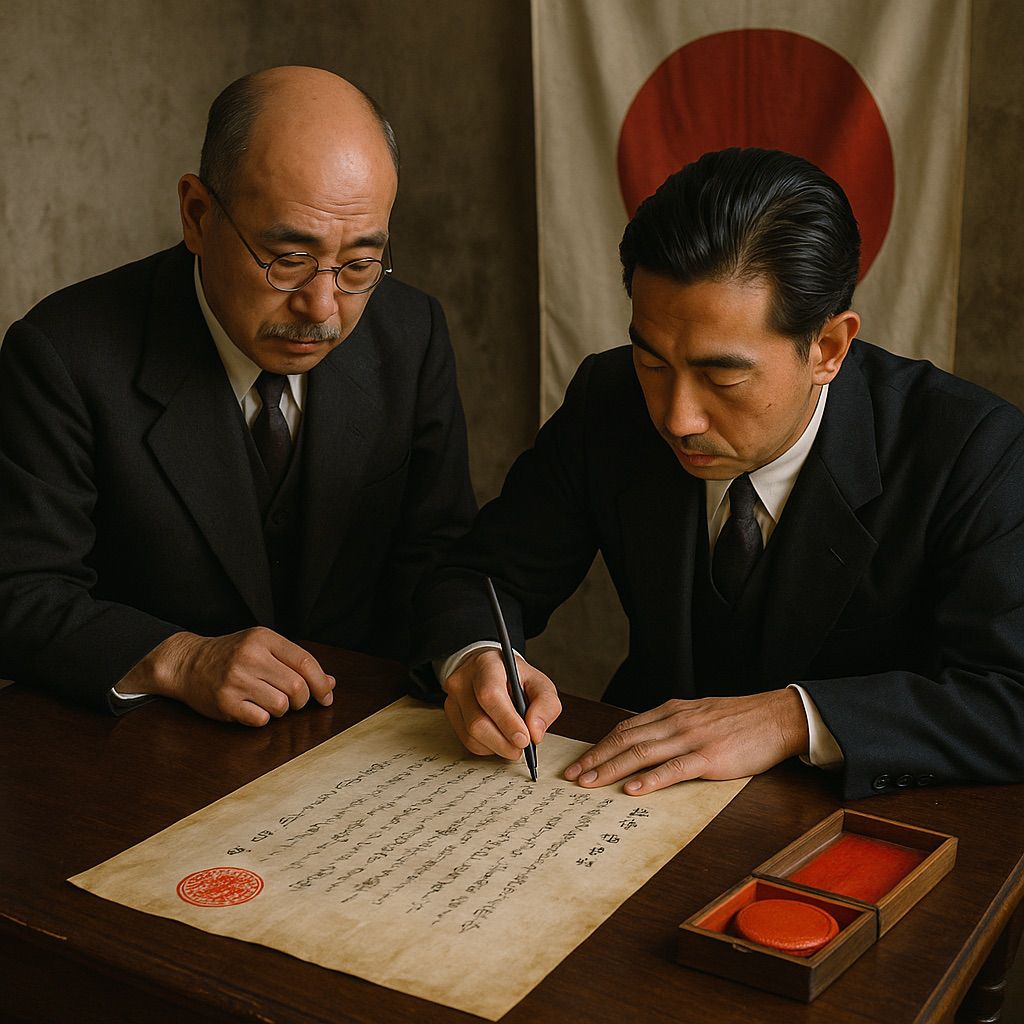
Two years earlier, another monumental moment had unfolded on August 15—this one resonating across the globe. It was the day Emperor Hirohito’s voice was heard on the radio for the first time by the Japanese people, announcing Japan’s surrender in World War II. The recording, known as the Jewel Voice Broadcast, was delivered in formal, archaic Japanese, making it hard for many listeners to immediately understand. But the meaning was unmistakable: the war was over. After the atomic bombings of Hiroshima and Nagasaki and the Soviet Union’s entry into the war against Japan, the empire’s leaders had concluded that continuing the fight would only bring “ultimate collapse and obliteration of the Japanese nation.”

The announcement marked the end of six years of global conflict, but the day was not one of simple relief. In Tokyo, some wept openly; others bowed their heads in silent grief for the fallen. Across Asia and the Pacific, occupied nations celebrated their liberation. In Allied countries, victory was tempered by mourning for the millions lost. It was a day when the world seemed to exhale, unsure what the next breath would bring in a world reshaped by destruction and diplomacy.

Jump ahead to August 15, 1969, and the world saw a very different gathering—a sprawling, mud-soaked field in Bethel, New York, filled with hundreds of thousands of young people who came for three days of music, peace, and a chance to live, if only briefly, in a vision of harmony. Woodstock was born in the height of the counterculture movement, a time of political protest, generational change, and deep skepticism about authority, fueled in part by the Vietnam War.

The first day opened with folk artist Richie Havens, whose improvised song “Freedom” became an instant anthem. The crowd—eventually numbering close to half a million—was larger than anyone had anticipated, overwhelming the local infrastructure. But despite the chaos, food shortages, and rainstorms that turned the pastures into rivers of mud, the festival remained remarkably peaceful. Strangers shared blankets and meals, strangers danced together to Joan Baez, Santana, and The Grateful Dead. By the time Jimi Hendrix closed the festival with his haunting rendition of “The Star-Spangled Banner,” Woodstock had become more than a concert—it was a cultural touchstone, a symbol of what people could create together when they imagined a world built on love rather than division.

And woven into all of this is a thread that stretches far deeper into the past: August 15 is also the Feast of the Assumption of Mary, one of the most important holy days in the Catholic calendar. It commemorates the belief that the Virgin Mary, at the end of her earthly life, was taken up into heaven, body and soul. For centuries, this feast has been marked by processions, masses, and pilgrimages. In villages across Europe, the day is celebrated with flowers, music, and offerings. In some places, it is tied to harvest traditions, giving thanks for the fruits of the earth as well as the hope of eternal life.

In this context, August 15 becomes a date that unites the temporal and the spiritual, the political and the personal. It is about independence on a national scale and on a human scale—freedom from colonial rule, freedom from war, freedom to gather in peace, freedom to believe.

When we look at these events side by side, patterns emerge. India’s independence, Japan’s surrender, Woodstock’s opening, and the Feast of the Assumption all speak to transitions—endings and beginnings, the closing of one chapter and the start of another. They all involve large groups of people coming together, whether in celebration, mourning, or worship. They all are rooted in the human yearning for dignity and meaning.

In 1947, Indians claimed the right to govern themselves. In 1945, Japan acknowledged the need to lay down arms and rebuild. In 1969, a generation sought to redefine community through music and shared experience. And for centuries, believers have looked to the Assumption as a reminder of hope beyond earthly struggles. Each is a different answer to the same question: how do we move forward from where we are now?

August 15, then, is not just a date. It is a chorus sung in many languages and to many tunes, each verse telling a story of struggle and resilience. It is the midnight hour in Delhi, the static-filled voice of an emperor, the electric hum of amplifiers over a muddy field, and the ringing of church bells. It is the waving of flags, the clasping of hands, the lighting of candles. It is, in the truest sense, a day when the world has paused to take stock of what it has endured and what it still hopes to achieve.

Related Posts

The Health Benefits of Swimming in the Sea

Dave

There’s something about the sea that calls to people in a way no swimming pool ever could. It’s not just the expanse of water stretching endlessly toward the horizon or the rhythmic crash of waves against the shore—it’s the feeling you get the moment your toes touch the water, that gentle pull that beckons you deeper until you are surrounded by something so much bigger than yourself. It’s a sensation that is part thrill, part comfort, and part mystery, a reminder that we are not separate from nature but a part of it. Swimming in the sea has been a human ritual for as long as there have been humans near coastlines, and it’s not hard to see why. Beyond the beauty and joy of it, immersing yourself in the ocean offers an astonishing range of benefits for your body, mind, and soul—benefits that are as old as the tides themselves.

The first thing you notice when you wade into the sea is the temperature. Whether it’s the bracing chill of the North Atlantic or the bath-like warmth of a tropical lagoon, the water envelops you in a way that is completely different from stepping into a pool. Natural sea water feels alive, with currents and swells that respond to forces far beyond your control. That initial shock, especially if the water is cold, does more than make you gasp—it wakes up every nerve ending in your body. Cold water immersion has been shown to boost circulation, force your body to adapt to stress, and release a flood of endorphins that can leave you feeling euphoric long after you’ve dried off. This isn’t just anecdotal; studies have found that people who regularly swim in cold water often report better mood regulation, reduced symptoms of depression, and improved resilience to everyday stress. The sea becomes, in a very real sense, a form of therapy.

But not all benefits are about what the water does to your mind. The ocean is loaded with minerals—magnesium, potassium, iodine, and trace elements—that seep into your skin as you swim. These aren’t present in the sterile water of a chlorinated pool; they’re gifts from the Earth, carried in the waves. Magnesium, for example, can help reduce muscle cramps, improve skin hydration, and even promote better sleep. Potassium plays a role in balancing your body’s electrolytes, especially after physical exertion, while iodine is essential for healthy thyroid function. The salt content itself has mild antibacterial properties, which can help cleanse small cuts and abrasions, reducing the risk of infection. Anyone who’s accidentally tasted seawater knows it’s not for drinking, but in measured exposure through the skin, its mineral profile can have surprisingly restorative effects.

Swimming in the sea is also an incredible workout, though it rarely feels like one in the same way a treadmill does. The resistance of moving through saltwater is higher than in fresh water, so every stroke, kick, and movement requires more effort. This means your muscles are constantly engaged, not just the obvious ones like your arms, legs, and core, but also the smaller stabilizing muscles that help you balance and navigate the changing push and pull of the waves. Over time, this builds strength, endurance, and flexibility in a way that is both functional and holistic. Because the water supports your body weight, it’s also a low-impact exercise, making it accessible to people with joint issues, arthritis, or injuries that would make running or high-intensity workouts painful. In fact, swimming in the sea can be a lifeline for those looking to stay active without putting strain on their bodies.

Then there’s the cardiovascular benefit. Swimming elevates your heart rate, improves lung capacity, and boosts oxygen efficiency, but doing so in the sea adds an extra layer of challenge. The waves and currents create unpredictable resistance, forcing your body to adapt and adjust constantly. This engages your cardiovascular system in a way that is both demanding and deeply satisfying, improving heart health over time. The rhythmic breathing patterns required for swimming can also help train your diaphragm, increasing lung strength and efficiency. For those with respiratory conditions like asthma, regular swimming—particularly in the moist, salty air near the ocean—can help open airways and reduce inflammation.

Speaking of salty air, simply being by the sea can have its own health perks, even before you touch the water. The negative ions in ocean air are believed to increase serotonin levels, boost mood, and promote better sleep. Breathing in that fresh, clean scent of saltwater can feel like a full-body reset, a sharp contrast to the stale, recycled air most of us inhale indoors. Combine this with the meditative effect of watching waves roll in and out, and you have a recipe for lowering cortisol levels and reducing stress. The ocean is one of the few places where you can be both physically active and deeply relaxed at the same time, and swimming in it amplifies those effects.

From a mental health perspective, the sea offers something few other environments can: perspective. When you’re in the water, especially beyond the shallow surf, the world looks and feels different. The horizon stretches in all directions, the sounds of the shore fade into a muffled hum, and for a little while, your daily worries shrink in importance. It’s just you and the water, and the awareness that you’re part of something timeless. Psychologists refer to this as “blue space” therapy—the idea that proximity to natural bodies of water can significantly improve mental well-being. Studies have linked time spent in blue spaces with lower anxiety, improved mood, and even increased creativity. The ocean becomes both playground and sanctuary, a place to reconnect with yourself in ways that are increasingly rare in a hyper-connected world.

There’s also an ancient connection at play when we swim in the sea. Human life began in the ocean, and our bodies still carry echoes of that origin. Our skin, our blood, even the balance of minerals in our bodies mirror that of seawater. This might explain why so many people describe a sense of “coming home” when they’re in the ocean, even if they didn’t grow up near it. It’s as if some deep, primal memory is reawakened by the feel of saltwater on skin and the push of the tide against the body. The rhythmic motion of swimming, combined with the constant movement of the water, creates a natural meditation, each stroke pulling you deeper into a state of flow where time seems to disappear.

For those who live near the coast, regular sea swimming can become a way of life, shaping not just physical health but social connections as well. Many coastal communities have tight-knit groups of swimmers who meet daily or weekly, regardless of the weather, to plunge into the waves together. These gatherings are as much about companionship as they are about fitness, creating bonds over shared challenges and victories—like braving a winter swim or making it out to a distant buoy. The social aspect adds another layer to the health benefits, as research consistently shows that strong social ties are linked to longer life expectancy and lower rates of disease.

There are, of course, precautions to consider. The sea is powerful and unpredictable, and respect for its conditions is essential. Strong currents, rip tides, and changing weather can turn a peaceful swim into a dangerous situation. Understanding the tide charts, recognizing rip currents, and knowing your own limits are all part of swimming safely in the sea. And while the sun can be a welcome companion, prolonged exposure without protection can undo many of the health benefits you’ve gained, so sunscreen, rash guards, and hats are as much a part of sea swimming as the swim itself.

Still, the rewards far outweigh the risks when approached with awareness and preparation. Whether you’re diving into turquoise tropical waters, wading through brisk northern seas, or simply floating in the gentle swell of a sheltered bay, the experience offers a holistic blend of physical, mental, and emotional nourishment. It’s exercise and therapy, adventure and tranquility, solitude and community—all rolled into one. The sea doesn’t just strengthen your muscles or clear your mind; it invites you to live more fully, to embrace the ebb and flow of life with the same grace as the tide.

Perhaps the greatest gift of swimming in the sea is the way it reminds you to be present. In the water, you can’t multitask, check your phone, or worry about tomorrow’s deadlines. You’re fully in the moment—feeling the cool rush of water past your skin, the rise and fall of your breath, the distant cry of seabirds, the warmth of the sun on your face between strokes. In that space, stripped of distraction, you find a clarity that’s hard to come by on land. The sea gives you that gift freely, and all it asks in return is that you show up, open to whatever it has to offer.

In the end, swimming in the sea is about far more than health metrics or fitness goals. It’s about a relationship—between you and the ocean, between your body and the world it inhabits. It’s about surrendering to something bigger, letting it hold you up, carry you, challenge you, and restore you. And once you’ve felt that connection, it’s hard to imagine living without it.

Related Posts

Security and Sovereignty: Two Births That Changed the World

Elias Rowen

History often reminds us that the same day can hold multiple meanings depending on where you stand. August 14 is one such date, etched into the memory of two very different nations for two very different reasons. In the United States, it marks the signing of the Social Security Act in 1935—a cornerstone of the New Deal that redefined the relationship between government and citizen, promising a measure of dignity in old age and a safety net in times of hardship. Across the globe, it is the birthday of Pakistan, which emerged on August 14, 1947, from the tumult of the British Empire’s retreat from India. In one story, the focus is on social security for the individual; in the other, it is on political sovereignty for millions. Both, however, are about creating systems meant to protect, to empower, and to ensure survival in a world where survival is never guaranteed.

In the summer of 1935, the United States was still reeling from the Great Depression. Banks had collapsed, unemployment hovered around 20%, and the frail social fabric was stretched to breaking. In this climate, President Franklin Delano Roosevelt pushed forward a vision that many considered revolutionary: a federal program to provide retirement benefits, unemployment insurance, and aid to vulnerable populations. On August 14, with a flourish of his pen, FDR signed the Social Security Act into law.

The Act wasn’t perfect—many groups, including agricultural and domestic workers, were initially excluded. But it was a monumental shift in American governance. Until then, the federal government had played only a limited role in personal economic security; the prevailing idea was that individuals and their families bore sole responsibility for their welfare. The Social Security Act declared that the nation, through its government, would share that responsibility.

The program would be funded by payroll taxes, a concept that was both controversial and ingenious. Workers and employers would each contribute, ensuring the system had a steady flow of funds and tying its success to the nation’s collective effort. Over time, Social Security expanded to include disability benefits and survivors’ insurance, becoming one of the most enduring and popular elements of the New Deal.

For millions of Americans, Social Security has been more than a government program—it has been a lifeline. It has meant a grandmother could pay her rent, a widow could keep her home, a disabled worker could maintain independence. Critics have debated its sustainability, but few have challenged its core principle: that a wealthy, modern nation should protect its people from destitution in their later years.

While the ink was drying on FDR’s law in 1935, halfway across the world, another story was unfolding over the following decade—one of empire, identity, and the fight for self-determination. By the mid-1940s, British India was a nation on the brink of transformation. The independence movement had been gaining momentum for decades, fueled by leaders like Mahatma Gandhi, Jawaharlal Nehru, and Muhammad Ali Jinnah. But alongside the call for independence came deep divisions over what that independence should look like.

For Jinnah and the All-India Muslim League, the vision was clear: Muslims of the Indian subcontinent needed their own homeland, a place where their cultural, political, and religious rights would be safeguarded. Tensions between the Indian National Congress and the Muslim League grew, and as the British prepared to leave, the idea of partition—dividing India into two separate nations—took center stage.

On August 14, 1947, Pakistan was born. The moment was marked by jubilation and chaos. In Karachi, Jinnah delivered a speech as the new Governor-General, declaring Pakistan’s commitment to democracy, law, and order. Streets were filled with celebrations—flags waved, people sang, and prayers were offered for the nation’s future. But the joy was shadowed by the violence of Partition. As borders were drawn, millions of Hindus, Muslims, and Sikhs found themselves on the wrong side and began migrating to their respective new homelands. The migrations were massive, the largest in human history, and they were accompanied by horrifying communal violence that left hundreds of thousands dead.

Pakistan’s birth was thus a story of both triumph and tragedy. It was the realization of a political dream, the creation of a sovereign state, and a fresh start for millions. But it was also a reminder that independence often comes at a cost, and that the work of building a nation is only just beginning once the flag is raised.

It’s fascinating to place these two events—FDR’s Social Security Act and Pakistan’s independence—side by side. One is a domestic policy born from economic crisis; the other is a geopolitical transformation born from colonial history and political negotiation. Yet both are rooted in a common idea: that security, whether personal or national, is worth fighting for.

In the United States, August 14 became a symbol of the government’s willingness to take responsibility for its citizens’ well-being, to create systems that would outlast the crises of the moment. In Pakistan, August 14 became a symbol of the people’s determination to chart their own destiny, to claim the right to govern themselves and define their future.

Both legacies are complex. Social Security, though widely popular, faces ongoing challenges from demographic shifts, economic pressures, and political disagreements. Pakistan, now one of the world’s most populous nations, has faced its own trials—political instability, economic struggles, and tensions with its neighbors. Yet in both cases, the founding moment continues to hold deep symbolic power.

When Americans receive their first Social Security check, they are participating in a system born on that August day in 1935. When Pakistanis gather to watch fireworks on Independence Day, they are celebrating a moment that reshaped the map of the world in 1947. Both are acts of remembrance and renewal, tying the present to a day when the future seemed wide open, if uncertain.

August 14, then, is a reminder of how history can connect distant people and different struggles through the shared language of hope and resilience. Whether it’s a safety net for an aging worker or the birth of a new nation, the impulse is the same: to protect, to preserve, and to create something that will endure.

Related Posts

Natural Sunscreens That Actually Work

Dave

There’s a particular kind of betrayal that happens when you trust a bottle of sunscreen to protect you, only to end the day with skin that feels like it’s been slow-roasted over a campfire. You did everything the directions said—shook the bottle, applied generously, reapplied after swimming—and yet, by evening, your shoulders are radiating heat and your nose looks like a cherry tomato. It’s enough to make anyone suspicious of sunscreen altogether, but giving up on protection is like surrendering in a fight you can’t afford to lose. The truth is, the sun is relentless, and while a little sunlight can lift your mood and help your body produce vitamin D, too much can carve lines into your face, leave your skin mottled with dark spots, and, far worse, lead to skin cancer. That’s why finding a sunscreen that works is non-negotiable—and if you’re leaning toward natural sunscreens, the challenge is not just finding one that works, but one that works well enough to trust with your skin’s future.

Natural sunscreen has an almost mythical appeal. The idea that you can shield yourself from the sun using something derived from nature, without the complex chemical stew found in many conventional sunscreens, taps into a deeper longing for purity, for simplicity, for something that feels wholesome and untainted. It’s a little like wanting bread made from just flour, water, and yeast instead of a paragraph-long list of additives. But just because something is labeled “natural” doesn’t automatically make it good—or effective. In fact, the natural sunscreen world is riddled with products that sound amazing on paper but fail in the brutal reality of hours under summer sun. The key is to cut through the noise and find the ones that actually do their job, not just the ones that look pretty on a wellness blogger’s bathroom shelf.

At the core of natural sunscreens are minerals—usually zinc oxide, titanium dioxide, or both. These are not exotic, rare ingredients, but workhorses that have been used for decades to physically block the sun’s rays rather than chemically absorb them. Unlike chemical sunscreens that work like sponges soaking up UV light and transforming it into heat, mineral sunscreens work like tiny mirrors, reflecting and scattering UV radiation before it can do damage. They start working the instant you apply them, which is a huge plus for those of us who forget to slather up until we’re already on the beach. But not all mineral sunscreens are created equal, and this is where the heartbreak often happens. Some formulas are chalky, ghost-white, and impossible to blend. Others feel like you’re wearing a layer of cake frosting on your skin. And then there are those that wash off in the first wave, leaving you completely exposed before you’ve even dried off your hands.

The magic happens when form meets function—when a natural sunscreen manages to give you the solid, broad-spectrum protection you need against both UVA and UVB rays, while also feeling pleasant enough that you’ll actually use it. This might sound obvious, but sunscreen only works if you apply it in adequate amounts and reapply regularly, and you’re much less likely to do that with a product that makes you feel like you’ve dipped yourself in white paint. The best natural sunscreens today have cracked the code by using micronized or non-nano mineral particles that spread evenly without leaving a stark white mask. They’ve also learned how to balance protective power with moisturizers like jojoba oil, shea butter, or aloe vera, so the formula feels hydrating instead of suffocating.

One of the biggest misconceptions about natural sunscreen is that it’s only for those with sensitive skin. While it’s true that mineral sunscreens tend to be gentler because they don’t penetrate the skin the way chemical filters do, they’re not just for people prone to rashes or irritation. In fact, anyone can benefit from their immediate protection, photostability, and the fact that they’re less likely to degrade in the sun over time. Chemical sunscreens, for all their advantages, can break down faster, meaning their protection wanes unless reapplied with clockwork precision. And if you’re swimming in the ocean or a lake, mineral sunscreens are less harmful to aquatic life, particularly coral reefs, which have been shown to suffer damage from certain chemical sunscreen ingredients. In this way, choosing a good natural sunscreen isn’t just self-care—it’s environmental care.

But here’s where things get complicated: “natural” is not a regulated term in the sunscreen world. A product can market itself as natural while still containing synthetic preservatives, fragrances, or other additives that might not align with your expectations. This is why reading the ingredient list is non-negotiable. A true mineral sunscreen will list zinc oxide, titanium dioxide, or both as its active ingredients, ideally making up at least 20% of the formula for strong coverage. Anything less, and you might be getting more marketing than protection. Look for words like “non-nano,” which means the mineral particles are large enough to avoid potential inhalation risks and won’t penetrate the skin, yet still small enough to avoid that ghostly cast.

The texture of a natural sunscreen is often the make-or-break factor in whether people stick with it. The thick, pasty formulas of the past gave mineral sunscreens a bad reputation, especially among those with deeper skin tones, where a white cast can be particularly unflattering. Thankfully, brands have innovated with tinted versions that blend seamlessly into a wider range of skin shades. These tints aren’t about makeup coverage—they’re subtle, skin-mimicking hues that make the sunscreen look invisible once applied. Some even double as light foundation or BB cream, merging skincare and sun protection into one easy step. This not only improves the experience but increases the likelihood that you’ll wear it every day, which is really the point.

Water resistance is another crucial consideration, especially if you’re sweating through a summer hike or swimming in the ocean. The best natural sunscreens clearly state their water-resistant duration, typically 40 or 80 minutes. But here’s a truth that too many people forget: no sunscreen, natural or otherwise, is truly waterproof. The minute you towel off, you’ve likely removed most of the protective layer, so reapplication isn’t just a suggestion—it’s the whole game. And if you’re outdoors for hours, reapplying every two hours is the gold standard. This is where the portability and ease of application come into play. A bulky jar you have to scoop with your fingers might be fine for a morning at the pool, but for an all-day adventure, a stick or pump bottle makes life much easier.

Then there’s the matter of SPF. Many people misunderstand this number, thinking that an SPF 50 provides double the protection of SPF 25. In reality, SPF 30 blocks about 97% of UVB rays, while SPF 50 blocks about 98%. The difference is minimal, and the real factor is application quantity and frequency. A well-formulated SPF 30 mineral sunscreen, applied generously and reapplied diligently, will outperform a neglected SPF 50 every time. That said, for long days in intense sun—say, skiing at high altitude or lounging on a tropical beach—opting for SPF 50 can give you a slight edge.

It’s impossible to talk about natural sunscreen without addressing the environmental angle. In recent years, regions like Hawaii and parts of Mexico have banned sunscreens containing oxybenzone and octinoxate, two chemical UV filters linked to coral bleaching. This has pushed more travelers toward reef-safe mineral sunscreens, which rely on zinc oxide and titanium dioxide instead. But reef-safe is not a legally protected term either, so you have to verify that the sunscreen is free of those harmful chemicals, and that the minerals are non-nano to reduce potential harm to marine life. For anyone who loves snorkeling, diving, or just floating in the shallows, making this choice is a small but meaningful way to protect the very environments that draw us to the water in the first place.

In a perfect world, the conversation about sunscreen wouldn’t even be necessary—people would wear it daily without debate, just as they brush their teeth or wash their hands. But the reality is that sunscreen still feels optional to many, and natural sunscreen even more so. Part of the resistance comes from lingering myths: that it’s too thick, that it doesn’t work as well, that it’s only for people with allergies, or that it’s just a crunchy-granola indulgence for the wellness set. The truth is, the new generation of natural sunscreens have proven themselves in harsh conditions, from ultramarathons in desert heat to day-long surf sessions in pounding waves. They’re no longer a compromise—they’re a legitimate, sometimes superior option.

There’s also something satisfying about the ritual of applying natural sunscreen. Because it tends to be a little thicker than chemical formulas, you end up massaging it into your skin, taking a moment to connect with your body instead of rushing through it. The scent—often a faint trace of coconut, vanilla, or unscented altogether—feels cleaner, less artificial. On a hot day, that’s a gift in itself. And if you’ve ever tried applying chemical sunscreen after shaving, you know the stinging sensation that can follow. Mineral sunscreens skip that drama entirely.

At the end of the day, the best natural sunscreen is the one you will use consistently, in the right amount, and reapply as often as needed. It should feel like a friend you can count on—a reliable companion whether you’re out for a quick run or spending all day on the sand. It should disappear into your skin, leaving only the peace of mind that you’ve done something good for yourself and, if you’ve chosen well, for the planet too. It’s easy to be swayed by clever packaging and lofty promises, but the real test comes hours later, when you wash off the day and find your skin exactly as it was that morning: healthy, unburned, and grateful.

Natural sunscreen isn’t just a beauty choice—it’s a daily act of care, a way of respecting both your body and the world you inhabit. The sun is a constant; it doesn’t need to be feared, but it does need to be respected. With the right protection, you can step into its light with confidence, knowing you’ve given yourself the best of both worlds: the timeless joy of sunshine and the enduring gift of healthy skin.

Related Posts

Barbed Wire Sunday: The Day Berlin Changed Forever

Elias Rowen

It began in the stillness of the early morning, long before most Berliners awoke. The date was August 13, 1961, and a cool summer night was giving way to dawn. But something unusual was happening in the city—men in military uniforms, workers in overalls, and police officers in helmets were moving with calculated precision along the streets that divided East and West Berlin. Under the cold glare of floodlights and the hum of truck engines, they unspooled heavy coils of barbed wire, setting them across roads, alleys, and tramlines. They erected wooden barricades and placed armed guards at key crossings. By the time the sun rose, the heart of Berlin was being carved in two.

This was the day that came to be known as “Barbed Wire Sunday.” It was the day the Berlin Wall began—not as the concrete monolith of Cold War imagery we remember now, but as a ragged, improvised barrier of wire and fences. And it was the day the lives of millions of people changed in an instant.

For years before that morning, Berlin had been the fault line of the Cold War. At the end of World War II, Germany had been divided into four occupation zones controlled by the United States, the United Kingdom, France, and the Soviet Union. Berlin, deep within the Soviet zone, was also divided into four sectors. What began as a temporary arrangement became a long-term reality as tensions between the Soviet Union and the Western Allies hardened into ideological opposition. In 1949, West Germany (the Federal Republic of Germany) was established in the zones held by the Western powers, while East Germany (the German Democratic Republic) formed in the Soviet-controlled zone.

Berlin became the most visible—and dangerous—front of that division. The city was a loophole in the Iron Curtain: though the border between East and West Germany was heavily fortified, Berlin’s open boundaries allowed East Germans to escape into West Berlin, and from there into West Germany. By 1961, an estimated 2.7 million people had fled East Germany through Berlin, draining the communist state of skilled workers, professionals, and students.

For East German leader Walter Ulbricht and his Soviet backers, this “brain drain” threatened the survival of their regime. Ulbricht had famously declared in June 1961 that “no one has the intention of erecting a wall”—a statement that would soon become one of the most infamous lies in political history. Behind the scenes, plans were being drawn up for a massive operation to seal the border inside the city.

That operation—codenamed “Rose”—was executed in the early hours of August 13. Truckloads of soldiers, police, and construction crews moved into position across the city. Roads were torn up to prevent vehicles from crossing. Public transportation lines were severed. Families woke to find themselves cut off from relatives, lovers, and friends on the other side. Workers who had jobs in the West could no longer reach them; students who attended schools in the opposite sector were suddenly stranded. The overnight transformation was so complete that it felt almost unreal, like waking from one life into another without warning.

At first, the Western Allies were caught off guard. U.S., British, and French forces in West Berlin could only watch as East German troops rolled out the barbed wire. Under the postwar agreements, they had no authority to intervene in East Berlin, and any attempt to dismantle the barricades risked triggering a direct confrontation with the Soviet Union. The West’s inaction, while avoiding immediate war, meant that the division was cemented from day one.

The human impact of Barbed Wire Sunday was devastating. Stories quickly emerged of families torn apart. A mother on the East side who had gone to visit her sister in the West the day before could not return to her children. A young couple separated by the barricade called to each other across the wire, too far to touch, too close to turn away. Some tried to escape immediately—leaping from apartment windows into the West, sprinting across open streets despite the armed guards. A few succeeded; others were shot or arrested.

In the days that followed, the barbed wire was reinforced with more permanent barriers—concrete blocks, watchtowers, and eventually the infamous concrete wall that would stretch over 150 kilometers around West Berlin. Guard towers loomed every few hundred meters, manned by soldiers with orders to shoot anyone attempting to cross. The Wall became not just a physical barrier but a psychological one, a daily reminder of division and repression.

Yet even in those early days, the seeds of defiance were sown. West Berliners gathered near the wire to show support for those trapped in the East. Western leaders made high-profile visits, promising not to abandon the city. And in the years to come, countless East Berliners would risk—and sometimes lose—their lives trying to escape.

The Berlin Wall stood for 28 years, becoming one of the most potent symbols of the Cold War. It was the backdrop for some of history’s most famous speeches, from John F. Kennedy’s “Ich bin ein Berliner” in 1963 to Ronald Reagan’s “Mr. Gorbachev, tear down this wall!” in 1987. And when it finally fell on November 9, 1989, it did so not through a single dramatic act of force but through the cumulative weight of political change, popular protest, and a regime too weakened to hold back the tide.

Looking back at August 13, 1961, we see more than just the start of a wall. We see the moment when a city was turned into a stage for the world’s deepest ideological struggle. We see the costs of political division measured not only in diplomatic standoffs and military maneuvers but in missed weddings, broken friendships, and silent grief. We see how power can reshape geography in a single night, but also how human will—though delayed—can undo what seemed permanent.

Barbed Wire Sunday remains a stark reminder that freedom can be lost quickly and must be defended constantly. It’s also a testament to the resilience of those who endured it, who found ways to live, love, and dream even with a wall in their midst. For Berliners, August 13 is not just a date in the history books—it is a day when the ground under their feet literally changed, and the skyline they knew was suddenly divided by steel and stone.

Related Posts

Hidden Gem Beaches Worth Exploring: Escaping the Crowds, Finding the Magic

Dave

There’s something almost sacred about stumbling upon a beach you didn’t know existed, a place untouched by tourist swarms and left to the rhythm of the waves. These hidden gem beaches—some tucked behind rugged cliffs, others revealed only at low tide—are the antidote to the crowded boardwalk and the postcard-perfect but overrun resort. They offer a kind of intimacy with nature that’s hard to find in the age of social media check-ins and drone-shot travel videos. They are for those who are willing to wander off the beaten path, endure the dirt road, the steep hike, or the uncertain directions, in exchange for serenity and unspoiled beauty.

The first thing you notice about a hidden gem beach is the quiet. Not silence exactly—the ocean is rarely still—but the absence of human clamor. You hear the wind threading through coastal grasses, the soft hiss of waves on sand, the occasional cry of a gull. Without the buzz of jet skis or the thump of portable speakers, the beach feels alive in a different way, its soundtrack composed by wind, water, and wildlife. That quiet allows you to sink deeper into the moment.

The second thing is the feeling of discovery. Unlike well-known beaches, where you arrive knowing exactly what to expect from countless reviews and photographs, a hidden beach holds surprises. Maybe the sand is a shade darker than you’ve ever seen. Maybe the tide pools are rich with sea stars and anemones. Maybe a freshwater stream spills directly into the ocean, creating a mingling of currents you can feel at your ankles. These moments feel personal, as though the beach is showing you a secret it reserves only for those who come looking.

Finding these places often requires persistence. Some are known only to locals, shared in low voices over coffee or whispered directions. Others appear in obscure guidebooks, overshadowed by the “top ten” lists. Many demand a physical effort—trekking through jungle, clambering over boulders, or kayaking along a coastline until the perfect cove comes into view. But the journey is part of the magic. Every step or paddle is a declaration: you’re willing to work for this beauty, to earn it.

Hidden gem beaches are scattered across the globe, and each has its own personality. There’s Playa de Gulpiyuri in Spain, a landlocked beach connected to the sea through underground channels. There’s Whitehaven Beach in Australia’s Whitsundays, reachable only by boat or seaplane, with sand so pure it squeaks beneath your feet. In Hawaii, you might find yourself at Papakōlea, one of the rare green-sand beaches in the world, its olive hue born from volcanic minerals. In the Philippines, the secluded Nacpan Beach stretches for miles with barely a footprint. And along the coasts of lesser-traveled islands in Greece or Croatia, countless unnamed coves await the adventurous.

Beyond their beauty, these beaches carry an unspoken code: tread lightly. Their allure often lies in their relative untouched state, and it’s a responsibility to leave them as you found them. Pack out your trash, avoid trampling delicate dunes, resist the urge to take shells or stones. This respect ensures that future wanderers will feel the same wonder you did.

Many hidden beaches are more than just sand and sea—they’re ecosystems teeming with life. Coral reefs fringe some shorelines, offering snorkeling experiences richer than those at crowded tourist spots. Seabirds nest in rocky outcroppings, and if you’re lucky, you might catch sight of a pod of dolphins passing offshore or sea turtles hauling themselves onto the sand. Being there feels less like a vacation and more like being let into a private world where nature runs the show.

The best time to visit these beaches often defies the high-season calendar. Off-season trips mean fewer people, more dramatic weather, and in some places, migrating wildlife. Stormy skies can make turquoise waters glow even more vividly, and the occasional rain shower leaves the sand pristine, smoothing away any traces of the last visitor. The play of light at sunrise or sunset can transform even the simplest cove into something ethereal.

Traveling to these hidden spots changes the way you see beaches altogether. After a few experiences of sitting alone on a stretch of sand with no one else in sight, it’s hard to go back to fighting for a square of towel space between strangers. You begin to realize that beaches aren’t just backdrops for tanning and swimming—they’re living, shifting landscapes, each with its own story. And the ones you find yourself working to reach often leave the deepest imprint on your memory.

The joy of a hidden gem beach isn’t just in its beauty—it’s in the way it sharpens your senses. Without shops selling snacks or rental huts pushing parasols, you notice the salt in the air, the texture of the sand between your toes, the intricate lace of foam left by a receding wave. You taste your food more vividly when it’s the picnic you carried in your own backpack. You hear the faint rustle of crabs moving in tide pools, the low crash of a bigger wave beyond the reef.

Of course, the paradox is that the more we talk about these beaches, the less hidden they become. Sharing them is an act of generosity but also a risk. One extra set of footprints doesn’t seem like much, but multiply it by hundreds, and the fragile balance can tip. That’s why many travelers keep their favorite spots secret, or share them only with those who understand the importance of preservation. In an era when every discovery is documented and broadcast, protecting the mystery of a place can be an act of love.

Ultimately, hidden gem beaches remind us why we travel in the first place—not just to tick boxes on a list, but to connect with the world in a way that feels personal and rare. They invite you to slow down, to immerse yourself in a place without distraction, to let time stretch the way it does when you’re lying on the sand with no schedule. They strip away the extras and leave you with what matters: the meeting of land and sea, the feel of sun on your skin, the sense of being exactly where you should be, if only for a moment.

If you ever get the chance to wander down a barely marked path and find yourself stepping onto an empty shoreline, take it. Step onto that sand knowing that you are one of the few who have been there. Listen to the waves, breathe in the salt, and let the feeling sink deep. These beaches are worth more than any souvenir—they are memories you carry for a lifetime, treasures no one else can take from you.

Related Posts

Youth, Loss, and Leadership: A Date Where Generations Collide

Elias Rowen

History is full of dates that feel like crossroads, moments where the themes of life, death, and the shifting of generations meet in unexpected ways. August 12 is one such day—a day where the United Nations celebrates International Youth Day, honoring the promise, potential, and resilience of young people around the world. Yet, in a striking counterpoint, it is also a date marked by tragedies from the early 19th century—stories of lost youth, of political turbulence in Britain, of leaders grappling with personal despair and public duty. Together, these threads form a tapestry that reminds us that the human story is one of both hope and heartbreak, often intertwined more closely than we’d like to admit.

To appreciate the emotional range of August 12, we have to start with the modern celebration. International Youth Day was established by the United Nations in 1999, with the first observance held in 2000. Its purpose is as ambitious as it is necessary: to spotlight the challenges facing young people worldwide, to promote their rights, and to encourage their active participation in shaping a better future. Each year brings a different theme—ranging from employment and civic engagement to environmental sustainability and mental health—because the world young people inherit is as complex as it is full of opportunity.

International Youth Day is not meant to be a single feel-good event. It is, in essence, a global conversation. Governments, NGOs, schools, and youth organizations host conferences, art exhibitions, community projects, and policy dialogues. In cities across the world, young activists stand on stages and speak into microphones, not simply as the leaders of tomorrow but as leaders today. Their voices carry stories of innovation—apps designed to tackle climate change, grassroots campaigns to combat inequality, movements to protect indigenous cultures. On this day, the future doesn’t just seem possible—it feels present and tangible.

And yet, to fully grasp the poignancy of celebrating youth on August 12, it’s worth reflecting on the other stories the date holds. The early 19th century in Britain was an era of profound political and social upheaval. The Napoleonic Wars had reshaped Europe, the Industrial Revolution was transforming economies and societies, and the British political system was under immense pressure to adapt to these changes. Within this turbulent context, the nation’s leadership faced crises not only in Parliament but also in their personal lives.

One of the tragedies that casts a shadow over August 12 is the untimely death of Robert Stewart, Viscount Castlereagh, Britain’s Foreign Secretary and a key architect of the post-Napoleonic European order. On August 12, 1822, Castlereagh took his own life at the age of 53. His death sent shockwaves through Britain and Europe, for he had been a towering figure in diplomacy, instrumental in shaping the Congress of Vienna in 1815 and in maintaining the delicate balance of power that followed.

Castlereagh’s suicide was not only a personal tragedy but also a political one. He had been under intense strain, dealing with the burden of maintaining peace in a Europe still recovering from decades of war, while also confronting domestic unrest and political opposition. His mental health, likely deteriorating for months if not years, was further pressured by rumors and political attacks. His death opened questions about the human cost of leadership, about how even the most powerful can be crushed under the weight of expectation and responsibility.

The 19th century had its share of youthful promise cut short, too. In an era where life expectancy was shorter and medical knowledge far more limited, many young people—both in public life and out of it—never had the chance to fulfill their potential. The Romantic poets of the time, such as John Keats, Lord Byron, and Percy Bysshe Shelley, embodied this phenomenon. Keats died at 25, Shelley at 29, Byron at 36—youthful deaths that became part of their mythos and, in a way, part of the Romantic ideal itself. Their works brimmed with passion and urgency, perhaps in part because they were written in the shadow of their own mortality.

When we place International Youth Day alongside these earlier losses, the contrast is sharp but illuminating. On one side, we have a modern world actively trying to create conditions in which young people can thrive—celebrating their energy, giving them platforms, seeking to address the structural inequalities that hold them back. On the other, we have a historical period where youth was often cut short by disease, war, or despair, and where even the most accomplished individuals could succumb to isolation and hopelessness.

This juxtaposition prompts reflection on what it means to truly value youth. It’s not just about celebrating birthdays or milestones—it’s about creating environments where young people can flourish, mentally, emotionally, and physically. It’s about recognizing that leaders, too, need support, that even those who seem unshakable can be in need of care. The tragedies of the 19th century remind us that ambition and achievement do not shield anyone from human vulnerability.

The story of Castlereagh in particular resonates in today’s conversations about mental health. In the 1820s, the stigma around mental illness was so great that few spoke of it openly, and effective treatment was virtually nonexistent. Leaders were expected to embody strength without falter, and any sign of weakness could be politically fatal. Castlereagh’s death was reported with a mix of shock and guarded language, reflecting a society uncomfortable with confronting the emotional realities of its heroes.

Today, by contrast, International Youth Day often includes discussions on mental health as a central theme. Young activists talk openly about anxiety, depression, burnout, and the pressures of social media. Organizations promote mental health literacy, advocate for accessible care, and challenge the stigma that still lingers. The message is clear: valuing youth means valuing their well-being, not just their productivity.

The thread connecting these stories—modern and historical—is the idea of potential, both realized and lost. The youth celebrated on August 12 each year are the embodiment of possibility. They are the artists who will shape our culture, the scientists who will push the boundaries of knowledge, the leaders who will inherit a world facing climate change, political division, and technological transformation. But the stories from the 19th century remind us that potential is fragile, that even the brightest flame can be extinguished if we do not protect it.

One could imagine what someone like Castlereagh, with his diplomatic skill and vision, might have contributed had he lived longer in a world more attuned to mental well-being. One could imagine what a Keats or a Shelley might have written had they been given decades more life. And perhaps that imagining is part of the work of International Youth Day—to ensure that today’s young people do not become tomorrow’s lost voices.

In the end, August 12 is a date that bridges centuries, reminding us of the weight of leadership, the fragility of youth, and the responsibility of the present to the future. It is a day to listen—to the joy and ambition in young voices, and to the echoes of those who are gone. It is a day to act—to create policies and communities that nurture potential rather than squander it. And it is a day to remember—that every celebration of life is also an acknowledgment of its precious brevity.

Related Posts

The Evolution of Lifeguards and Their Uniforms: From Quiet Sentinels to Cultural Icons

Dave

The lifeguard is one of those rare figures who seems to exist both in the periphery of our awareness and in the very heart of our sense of safety at the beach or pool. They’re there before the first towels hit the sand, scanning the horizon, and still there when the last stubborn swimmer reluctantly leaves the water. Over time, the image of the lifeguard—watchful, sun-kissed, and somehow a blend of casual relaxation and acute readiness—has evolved alongside the places they protect. But perhaps nothing tells the story of this transformation better than the changing uniforms they’ve worn through the decades.

The concept of a lifeguard dates back far earlier than many realize. In the 18th and early 19th centuries, there were no standardized uniforms, no organized forces patrolling the water’s edge. Early “lifeguards” were often local fishermen, sailors, or strong swimmers who happened to be nearby when trouble struck. Their “uniform” was whatever they wore that day—often heavy, impractical clothing that would make rescues even harder. Saving lives was a matter of instinct, courage, and proximity, not profession.

By the mid-to-late 1800s, the emergence of public bathing beaches and seaside resorts brought new challenges. Crowds of inexperienced swimmers needed watching, and communities began to formally hire beach patrols. In these early organized days, uniforms were minimal but symbolic—simple sashes, armbands, or caps to identify the lifeguard. The intention wasn’t fashion, but recognition: in an emergency, the rescuer needed to be immediately visible.

The early 20th century marked a significant turning point. Lifeguarding was becoming a profession, with training standards, rescue techniques, and official organizations. Uniforms shifted toward functionality—sleeveless wool swimwear for mobility in the water, with bright colors (often red or white) to stand out against the surf. Caps and tank-style swim shirts were common, both for sun protection and quick identification. The look was modest by modern standards, but it reflected the era’s swimwear trends and the need for practicality.

By the 1920s and 1930s, lifeguard uniforms were heavily influenced by competitive swimwear. One-piece tank suits for men, sometimes belted, and streamlined women’s suits replaced the heavy wool. Shorts became more common for male guards on shore duty, paired with sleeveless tops emblazoned with “LIFEGUARD” in bold lettering. This was also the period when lifeguard towers became more common fixtures, and uniforms needed to be comfortable for long shifts in the sun while remaining ready for sudden rescues.

The post-WWII era brought not only a boom in beach culture but also a shift toward the image of the lifeguard as an emblem of vitality and athleticism. Advances in fabric technology introduced lighter, quick-drying materials. Swim trunks for men grew shorter, and female lifeguards—still fewer in number—wore one-piece suits with brighter designs. The red-and-white color scheme began to dominate, thanks to its high visibility and the influence of rescue organizations worldwide.

In the 1960s and 1970s, surf culture began to shape the lifeguard aesthetic. In California, Australia, and Hawaii especially, lifeguards embodied the laid-back beach lifestyle, blending athleticism with an easy cool. Board shorts, sun-bleached hair, and reflective sunglasses became part of the unofficial “uniform” for many male guards, while female guards often adopted athletic bikinis or practical one-pieces paired with shorts. The rescue can (also known as the torpedo buoy) became a recognizable accessory—both a vital rescue tool and a symbol of authority on the sand.

The 1980s and early 1990s marked the explosion of lifeguard imagery into global pop culture. Television shows like Baywatch cemented the stereotype of the lifeguard as glamorous, perpetually tanned, and outfitted in form-fitting red swimwear. The slow-motion run down the beach became iconic, and the uniform—a high-cut red swimsuit for women, red shorts for men—was as much about branding as safety. While real lifeguards may have rolled their eyes at Hollywood dramatics, the impact was undeniable: the “lifeguard look” became a fashion trend in its own right, even away from the water.

But real lifeguards continued to adapt their uniforms with safety and practicality in mind. The late 1990s and 2000s brought lightweight rash guards for sun protection, moisture-wicking fabrics, and more standardized gear depending on region and climate. High-visibility colors remained key—red, yellow, and orange dominating in different parts of the world. Caps, visors, and polarized sunglasses became standard to reduce glare during long hours of scanning the water.

The modern lifeguard uniform is a careful balance between visibility, comfort, and utility. Many now include official logos, emergency whistle attachments, and quick-access pockets for small rescue gear. In some locations, guards switch between swimwear and more covered uniforms depending on weather and duty—board shorts and shirts for patrolling, streamlined suits for rescue swims. Technology has also crept in, with waterproof radios and even body cameras in some cases.

Importantly, the evolution of the lifeguard uniform mirrors the evolution of the profession itself. Once a loosely organized job for strong swimmers, it’s now a rigorous, highly trained role requiring certification in CPR, first aid, and specialized rescue techniques. The uniform signals authority, professionalism, and readiness. It also serves as a visible reminder to the public: someone is watching, prepared to act when seconds matter.

Yet, despite all the changes, the core image of the lifeguard hasn’t lost its timeless appeal. Whether it’s the stoic figure in a watchtower, the sprinter racing down the shore with a rescue can, or the calm rescuer guiding someone to safety, the lifeguard remains a reassuring presence. And their uniform—whether wool tank suit, red board shorts, or high-tech rash guard—tells a silent story about the era, the culture, and the shared human need to protect each other in the unpredictable meeting place between land and water.

From the beaches of Sydney to the shores of California, from lakeside camps to Olympic swimming venues, the lifeguard’s attire is more than fabric—it’s a flag of safety, an emblem of trust, and, in its own way, a piece of living history.

Related Posts

Alcatraz Receives Its First Federal Prisoners: The Rock, Capone, and the World at War

Elias Rowen

There are certain dates in history when events, separated by oceans and circumstances, become strangely intertwined. August 11 is one of those days. In 1934, the infamous Alcatraz Federal Penitentiary welcomed its first wave of inmates, among them some of the most dangerous and high-profile criminals in America—including the legendary gangster Al Capone. The Rock, as it became known, would soon grow into a symbol of both justice and isolation, a place where the law’s most notorious adversaries vanished into the fog.

But August 11 would also, years later, carry a different weight. In 1945, the date fell in the tense hours between Japan’s conditional surrender offer and the Allies’ official response. It was a day of waiting, of cautious communication, and of the silent turning of history’s gears toward the end of World War II. Two events—one set on a rocky island in San Francisco Bay, the other across a war-torn globe—would be bound forever by their place on the calendar.

Let’s start with Alcatraz, and the vision behind it. The federal government, facing the challenge of housing prisoners who were either too violent, too escape-prone, or too influential to be contained in regular penitentiaries, turned to an isolated military prison on an island less than two miles from San Francisco. The location was perfect for its purpose: cold, shark-infested waters and swift currents made any escape attempt almost suicidal. The Army had already been using Alcatraz for military prisoners since the late 19th century, but by the early 1930s, the Department of Justice saw an opportunity to transform it into the nation’s most secure civilian prison.

On August 11, 1934, the first group of 137 federal inmates arrived from the U.S. Penitentiary in Leavenworth, Kansas, under heavy guard. The transfer was conducted with military precision. Prisoners were transported in specially designed railroad cars, guarded by dozens of armed federal agents. Upon arrival in San Francisco, they were ferried to the island under the watchful eyes of armed Coast Guard vessels.

Among the arrivals was Alphonse “Al” Capone, the most famous gangster of the Prohibition era. Capone had built his empire on bootlegging, bribery, and violence, and though the government could never pin murder on him, they had finally brought him down on charges of tax evasion. By the time he arrived at Alcatraz, Capone’s power had already diminished, but authorities feared he could still influence guards and prisoners alike in a standard penitentiary. The Rock’s strict rules, isolation, and relentless routines were designed to break such influence.

Life at Alcatraz was nothing like the relatively loose conditions in other prisons of the time. Inmates spent most of their days in solitary confinement or at silent work details. Communication was minimal, privileges rare. Even meals were conducted with rigid discipline. The prison’s rules promised “privilege through merit,” meaning good behavior was the only way to earn even the smallest comforts. For men like Capone—used to bending the world to their will—Alcatraz was a cold, unyielding wall.

Capone’s time on the island was marked by a surprising shift in demeanor. Stripped of his networks and under constant supervision, he became increasingly withdrawn. At one point, he was even allowed to play banjo in the prison band—proof that even on The Rock, routine could soften a man’s edges. But there was no escaping the reality that Alcatraz was meant to be a one-way street for America’s most feared criminals.

Meanwhile, the prison gained a reputation not only for its harshness but also for its seeming inescapability. While several inmates would attempt daring escapes over the years—some vanishing into the bay, their fates unknown—none were officially confirmed to have succeeded. Alcatraz became both a literal and symbolic fortress, a reminder that the arm of federal justice could reach even the most untouchable.

Fast forward to August 11, 1945. On the other side of the world, the United States and its Allies were grappling with Japan’s conditional surrender offer, which had arrived the day before. The war in Europe had ended in May, but the Pacific conflict still raged, fueled by years of bloody island battles and culminating in the atomic bombings of Hiroshima on August 6 and Nagasaki on August 9.

Japan’s surrender proposal—acceptance of the Allies’ terms so long as Emperor Hirohito’s sovereignty was preserved—was a pivotal moment. But it was not met with immediate acceptance. For the Allies, the question of the Emperor’s role was politically sensitive. Could they preserve his position without undermining the principle of unconditional surrender? The American public, still furious over Pearl Harbor, had little appetite for leniency, yet military leaders recognized that preserving the Emperor might speed the end of the war and avoid a costly invasion of the Japanese mainland.

August 11, 1945, thus became a day of tense diplomacy. Messages were exchanged through neutral intermediaries in Switzerland and Sweden, as leaders in Washington, London, and other capitals debated the exact wording of their reply. The eventual decision was to accept the surrender on the condition that the Emperor’s authority would be subject to the Supreme Commander for the Allied Powers—effectively making him a figurehead under Allied control. This response, though not yet formally delivered on the 11th, was already taking shape.

It’s fascinating to think of these two August 11s—1934 and 1945—side by side. On one, a fortress prison was receiving its first residents, designed to be a place where lawbreakers would find no escape. On the other, the largest war in human history was nearing its close, with the world’s leaders trying to craft a peace that would hold. Both were about control—whether of individuals who threatened civil order or of nations whose ambitions had set the world ablaze.

There’s also a certain irony in the juxtaposition. Alcatraz was about the impossibility of escape; Japan’s leaders, in those August days of 1945, were trying to negotiate a way out of a war they could no longer win. In both cases, the outcome would reshape the future. For the inmates of The Rock, it meant years of isolation, stripped of power and influence. For Japan, it meant the end of an imperial era and the beginning of a transformation into a peaceful democracy.

Alcatraz would go on to house not just gangsters like Capone, but also bank robbers like George “Machine Gun” Kelly and Robert Stroud, the “Birdman of Alcatraz.” Each inmate’s story became part of the prison’s mythology, but Capone remained its most famous resident. By the time he left the island in 1939, his health had deteriorated sharply due to syphilis, and he spent his remaining years in relative obscurity.

The prison itself closed in 1963, not because it had been breached, but because it was too expensive to maintain. The Rock’s isolation had been its greatest strength as a prison, but it also made supplying and staffing it costly. Today, it stands as a tourist destination and a relic of a different era in criminal justice—a place where the walls still echo with whispers of its most infamous residents.

Meanwhile, the events of August 1945 continue to be studied and debated. The surrender correspondence of those days was a delicate dance of language and power, setting the stage for the formal end of the war on September 2 aboard the USS Missouri. The compromise over the Emperor’s status was controversial at the time but ultimately helped ensure a smooth transition from war to peace.

Looking back, August 11 is a reminder that history is rarely neat. Some days hold more than one story worth telling, more than one thread that shapes the fabric of our world. In 1934, that thread was steel bars and cold water, a fortress in the bay meant to contain the uncontainable. In 1945, it was the fragile bridge between war and peace, built on diplomacy, pragmatism, and the hope that the worst was finally behind us.

And perhaps that’s the deeper connection between Alcatraz and the surrender talks: both were about endings, about the moment when resistance gives way to acceptance, and the world, for better or worse, changes forever.

Related Posts

Beach Volleyball for Fun & Fitness: Where Sand Meets Sweat and Smiles

Dave

There’s something irresistible about a volleyball net strung between two poles on a stretch of golden sand, the sun glittering on the horizon, and the sound of waves keeping time with the rhythm of the game. Beach volleyball is more than just a sport—it’s a joyful blend of competition, camaraderie, and physical challenge that has been capturing hearts for decades. Whether you’re a seasoned athlete diving for impossible saves or a casual weekend player laughing through a friendly match, this sport offers a unique combination of fun and fitness that few activities can match.

It’s easy to see why beach volleyball draws people in. The setting is part of the magic—playing on sand, barefoot, surrounded by ocean air, feels worlds apart from indoor courts or gyms. The surface forces every movement to be deliberate, every jump to be earned, and every sprint to be powered by real grit. It’s a workout in disguise: you’re so caught up in the game that you forget just how much you’re sweating and how many muscles are engaged until you wake up the next day with pleasantly sore legs and shoulders.

For many, the introduction to beach volleyball is as simple as a spontaneous game with friends. Someone brings a ball, someone else sets up a net, and before long, two teams are forming from whoever happens to be nearby. Tourists join locals, strangers become teammates, and the boundaries between serious play and playful competition blur. The laughter is as loud as the cheers, and “winning” often takes a backseat to just keeping the rally alive for as long as possible.

But don’t let the laid-back vibe fool you—beach volleyball can be as intense and strategic as any professional sport. In competitive formats, the game is played two-on-two, meaning there’s no room to hide. Each player has to serve, dig, set, block, and spike with equal skill. The smaller team size demands constant communication and a deep understanding of your partner’s strengths and tendencies. Matches often turn into chess games played at full speed, where anticipating your opponent’s next move can make the difference between scoring a point or eating sand after a desperate dive.

The physical benefits of beach volleyball are undeniable. Sand provides a natural resistance that makes every step more challenging, building strength in your legs, core, and stabilizing muscles. Jumping on sand also requires more explosive power, which translates into improved vertical leaps when playing on harder surfaces. Plus, all that movement under the sun boosts your cardiovascular fitness, coordination, and agility. And let’s not forget the mental side—games on the beach are almost always bathed in sunlight and fresh air, a natural mood enhancer that helps reduce stress and improve focus.

For those looking to get into the sport seriously, the pathway from casual play to competition is wide open. Many coastal towns and cities offer organized leagues, tournaments, and training programs for all skill levels. Beginners can focus on learning the fundamentals—how to pass cleanly, how to set without carrying the ball, and how to serve consistently—while more advanced players can refine their footwork, blocking technique, and tactical plays. The community is generally welcoming, with veterans happy to give pointers and invite newcomers into games.

Beach volleyball also has a glamorous side that can’t be ignored. It’s a mainstay of the Summer Olympics, where athletes from around the world compete under blazing suns and roaring crowds. The sport’s combination of athleticism, spectacle, and scenic backdrops makes it a favorite for both live audiences and television viewers. Watching elite players dive into the sand, recover, and smash a ball over the net in one fluid motion is pure artistry—proof of what’s possible when skill meets passion.

Yet, what truly sets beach volleyball apart is how adaptable it is to different moods and groups. One weekend, you might find yourself in a high-stakes tournament where every serve counts. The next, you could be at a sunset pickup game with music playing in the background and players rotating in and out without keeping score. It’s as much a social gathering as it is a sport, and that’s why so many people return to it season after season.

The game has roots that go back over a century, with its origins in early 20th-century California and Hawaii, where it grew organically alongside surfing culture. It was the perfect complement to a lifestyle that valued outdoor activity, community, and a healthy dose of competition. Over time, the sport spread to beaches around the globe, from Rio’s Copacabana to Australia’s Bondi, each location adding its own flavor to the game.

For beginners, the best advice is simple: start small. Don’t be intimidated by the pros you see on TV. Grab a ball, find a beach, and start passing it around with friends. Learn to move comfortably on the sand before focusing on big spikes or blocks. And most importantly, embrace the fact that you’re going to get sandy—really sandy. Diving for the ball is half the fun, and wearing your post-game sand as a badge of honor is part of the culture.

For those chasing fitness goals, beach volleyball is a goldmine. A single hour of casual play can burn hundreds of calories while toning your muscles and improving your balance. It’s a full-body workout wrapped in a game, which makes it easier to stick with compared to repetitive gym routines. Add in the benefits of vitamin D from sunlight (with proper sunscreen, of course), and you’ve got one of the most enjoyable ways to stay in shape.

The social benefits are just as strong as the physical ones. Beach volleyball tends to attract positive, energetic people, making it a great way to meet new friends or strengthen existing bonds. Whether you’re traveling and looking to join a game abroad or playing weekly with the same group, the sense of community is undeniable. Players cheer each other on, celebrate great saves, and share in the joy of long rallies that seem to defy gravity.

At the heart of it, beach volleyball is about connection—connection to the game, to the people you play with, and to the environment around you. The sound of waves, the feel of sand under your feet, and the sight of a ball arcing against the backdrop of a bright sky all combine to create something timeless. It’s a reminder that sport doesn’t always have to be confined to arenas and schedules. Sometimes, the best matches happen when the tide is just right, the sun is sinking low, and someone shouts, “One more game!”

So whether you’re in it for the competition, the workout, or the simple joy of chasing a ball across the sand, beach volleyball has a place for you. It’s a sport that celebrates athleticism and playfulness in equal measure, and one that proves fitness can be as fun as it is challenging. The next time you see a net on the beach, don’t just watch—jump in, get sandy, and find out why this game has captured the hearts of so many.

Related Posts

The Day Japan Offered Conditional Surrender: A Turning Point in World History

Elias Rowen

The world in August 1945 was exhausted, battered, and holding its breath. For six years, the most destructive war humanity had ever seen had consumed cities, toppled empires, and stolen tens of millions of lives. Europe lay in ruins, its cities scarred with craters and charred buildings, its people worn thin from years of rationing and fear. In the Pacific, the war had been raging relentlessly since the attack on Pearl Harbor in December 1941. By the summer of 1945, the United States and its allies had fought their way across the Pacific island by island, enduring brutal battles in places like Iwo Jima and Okinawa. But as August dawned, something was about to change forever.

On August 10, 1945, the Japanese government made a historic move: it offered to surrender, but with one important condition—that the sovereignty of Emperor Hirohito be preserved. This proposal would become one of the most pivotal moments in modern history, a single day that crystallized the tension between military necessity, diplomatic maneuvering, and the dawning realization that the world had entered the nuclear age.

The Japanese offer did not come in a vacuum. Just two days earlier, on August 8, the Soviet Union had declared war on Japan and launched a massive invasion of Japanese-held Manchuria, sending shockwaves through Tokyo’s military leadership. And only the day before that, on August 6, an American B-29 bomber named the Enola Gay had dropped the world’s first atomic bomb on Hiroshima, obliterating the city and killing tens of thousands instantly. On August 9, Nagasaki suffered a similar fate. These unprecedented attacks, combined with the Soviet entry into the war, brought Japan’s leaders face-to-face with the reality that their nation could no longer continue the fight.

Yet surrender was not a simple matter for Japan. The country’s political and military leadership was sharply divided between moderates who recognized the inevitability of defeat and hardliners who clung to the hope of securing better terms—or even inflicting enough damage to force the Allies into a negotiated peace. Central to this division was the fate of Emperor Hirohito. To many Japanese, the Emperor was not just a political leader but a divine figure, the living embodiment of the nation’s spirit. Losing him—or seeing him tried and punished like other wartime leaders—was unthinkable.

When Japan’s surrender offer reached the Allies through diplomatic channels in Switzerland and Sweden, it was framed as acceptance of the Potsdam Declaration of July 26, 1945, with the single caveat that the “prerogatives” of the Emperor would be maintained. The Potsdam Declaration had demanded Japan’s unconditional surrender, warning of “prompt and utter destruction” if it refused. But it had not explicitly stated what would happen to the Emperor. This ambiguity now became the central question: could the Allies accept Japan’s condition without betraying the principle of unconditional surrender that had guided their war policy?

In Washington, the reaction was cautious but pragmatic. President Harry S. Truman and his advisers recognized that the Emperor’s role could be a critical lever in bringing the war to an immediate end. The American public, though weary of war, was still reeling from the attack on Pearl Harbor and years of brutal combat in the Pacific. Many in the U.S. military were already preparing for Operation Downfall, the planned invasion of Japan’s home islands—a campaign projected to cost hundreds of thousands of American lives and potentially millions of Japanese casualties. If sparing the Emperor could prevent such a catastrophe, it was a price some were willing to pay.

The Allies ultimately responded with a carefully worded statement. They reiterated the terms of the Potsdam Declaration but clarified that the Emperor would be subject to the authority of the Supreme Commander for the Allied Powers. In other words, Hirohito could remain as a figurehead, but his powers would be stripped, and Japan would have to undergo a complete transformation into a peaceful, democratic state. This compromise struck a delicate balance between principle and pragmatism, offering Japan a way to save face while ensuring the war would truly be over.

For the Japanese leadership, this response was enough. On August 14, Emperor Hirohito recorded a speech—the Gyokuon-hōsō—to be broadcast to the nation the next day. In it, he spoke in formal, archaic language, never explicitly using the word “surrender” but making clear that Japan would accept the Allied terms. When the recording was played on August 15, millions of Japanese heard their Emperor’s voice for the first time, delivering the sobering news that the war was ending. For many, it was a moment of grief, relief, and uncertainty all at once.

The events of August 10, 1945, reveal the human complexities that lie behind history’s turning points. This was not simply a matter of political declarations and military strategy—it was about identity, tradition, and the difficult process of letting go. The condition about the Emperor’s sovereignty was more than a bargaining chip; it was a reflection of a society grappling with the collapse of a worldview that had shaped it for centuries.

It’s tempting, in hindsight, to see Japan’s conditional surrender as an inevitable step, especially after the devastation of Hiroshima and Nagasaki. But in that moment, nothing was guaranteed. The war could have dragged on for months. The Soviet invasion of northern Japan might have turned the country into a divided, occupied state like Germany or Korea. A bloody invasion could have unfolded, leaving an even deeper scar on both nations. Instead, the conditional surrender opened a narrow but decisive path toward peace, one that would reshape Japan and the postwar world.

The legacy of that day still echoes. Japan’s postwar constitution, drafted under Allied supervision, renounced war entirely and transformed the Emperor into a symbolic figure. Hirohito himself would reign until 1989, his image shifting from that of a wartime leader to a reserved, almost ceremonial presence. The U.S.-Japan alliance that emerged from the occupation became one of the strongest partnerships of the 20th and 21st centuries.

Yet the moral and historical debates surrounding the end of the Pacific War remain. Was it right to drop the atomic bombs? Could the war have ended without them, perhaps through the Emperor’s mediation? Should the Allies have insisted on a trial for Hirohito, as they did for other Axis leaders? These questions still spark fierce discussion among historians, ethicists, and political thinkers.

In the end, August 10, 1945, was the day when the war’s end began to take its final shape. It was a day when diplomacy, culture, and the raw human desire to preserve life intersected in a fragile, historic agreement. And for millions of people around the world, it was the first real glimpse of a future without war—a future that had seemed almost unimaginable just days before.

Related Posts