Author: Dave

I've always been curious about the world beyond my own backyard. While many people spend their entire lives close to where they were born, I've been fortunate enough to travel across the United States and around the world. Every place I've visited has challenged my assumptions in one way or another and reminded me that, despite our differences, people often have far more in common than they realize. I don't write to tell personal stories for the sake of telling them, and I don't believe every article needs to revolve around me. Instead, I enjoy using my experiences as a starting point for exploring larger ideas. Whether it's something I noticed while walking through a market overseas, a conversation with someone from another culture, or simply observing how different communities solve similar problems, I'm interested in the lessons those moments can teach all of us. Travel has given me perspective, but it has also taught me humility. The more places I visit, the more I realize there is still to learn. Every culture has something worth appreciating, and every journey has a way of expanding how we see the world and our place within it. When I write, my goal is simple: to share thoughtful observations, compare perspectives, and encourage curiosity. I hope readers come away having learned something new—not just about another place, but about the world we all share. If one of my articles inspires someone to look at a familiar idea differently, ask a new question, or venture a little farther than they otherwise might have, then I've accomplished exactly what I set out to do.

Beach Vibes for Your Backyard: Turning Your Outdoor Space into a Coastal Paradise

Dave

There’s something magical about the beach that pulls at the human spirit. Maybe it’s the endless blue horizon that whispers of freedom, the rhythmic hush of waves that seems to calm every racing thought, or the warm sand that molds perfectly beneath your feet like the earth’s embrace. But here’s the thing—you don’t have to live on the coast to feel that magic. You can bring the beach home to your backyard, creating a personal retreat where the salty breeze is imagined, but the relaxation is very real.

Transforming your outdoor space into a seaside sanctuary isn’t just about tossing up a hammock and calling it a day. It’s about capturing the sensory details—the colors, the textures, the smells, the sounds—that make the shore so irresistible. Done right, your backyard can become the kind of place where time slows down, worries fade like footprints in the tide, and every evening feels like a mini vacation.

Step One: The Foundation—Sand, Stone, and Decking
The beach is defined by its terrain, and your backyard can echo that by choosing the right foundation. Start by deciding if you want a “barefoot zone.” If so, consider a small sand pit or section with fine, pale play sand. It’s a bold move, but nothing says “coastal escape” like sinking your toes into sand while sipping your morning coffee.

For a more durable base, pale decking or weathered wood can mimic the look of a pier or boardwalk. Stone pavers in light gray or beige can give off the vibe of a Mediterranean coast, especially if paired with seashell accents between the cracks. The key is to choose materials that feel natural and sun-worn, as if the ocean has been shaping them for years.

Step Two: Color Like the Coast
Color sets the mood faster than almost anything else. Beach palettes are all about soft, sun-bleached hues: sandy beige, driftwood gray, seafoam green, coral pink, and ocean blue. Your backdrop—whether it’s a fence, wall, or the side of your house—can be painted in a crisp white to reflect light, making the space feel bigger and brighter.

Textiles like cushions, throw pillows, and umbrellas should echo these coastal tones, but don’t be afraid to add pops of sunny yellow or tropical turquoise for energy. The idea is to make the space feel airy and bright, like a summer morning before the sun gets too hot.

Step Three: Furnish for Relaxation
Forget stiff patio sets—beach vibes call for furniture that invites lounging. Think Adirondack chairs, rattan loveseats, and swinging egg chairs. A hammock strung between two posts or trees is practically non-negotiable, especially if you’re serious about afternoon naps.

If you have the space, a daybed with weatherproof cushions can become the centerpiece of your backyard retreat. Top it with a light throw blanket for cooler evenings, and you’ve got a reading nook, napping spot, and sunset-watching lounge all in one.

Step Four: Soundscapes and Scents
Sound is a big part of the beach experience, and it’s surprisingly easy to replicate. Small, discreet speakers can play recordings of ocean waves, seagulls, and distant wind chimes. If you prefer something natural, a water feature—a small fountain, a bubbling stone, or even a DIY trickle wall—can mimic the soothing sound of water meeting shore.

Scents are just as important. Citrus candles, coconut-scented lantern oils, or a few pots of fragrant plants like lavender and rosemary can instantly transport you to a coastal setting. For a more subtle effect, you can use essential oil diffusers with blends designed to smell like the ocean.

Step Five: Lighting Like Sunset
The right lighting can make your backyard feel like golden hour, even after the sun’s gone down. String lights are a coastal design staple—hang them overhead to create a canopy of warm glow. Lanterns, hurricane lamps, and candles in glass jars add intimacy and charm.

If you really want to mimic a seaside evening, choose bulbs with a warm golden hue rather than cool white. The softer light will make the space feel welcoming and relaxed, perfect for lingering after dark with friends or a good book.

Step Six: Plants with Coastal Personality
Not all coastal plants will thrive inland, but you can still get the look. Ornamental grasses like fountain grass or feather reed grass sway like dune grass in the breeze. Succulents, agave, and palm-like plants such as yucca can bring in a tropical feel without requiring ocean-side conditions.

For a softer, more romantic look, add potted hydrangeas or flowering hibiscus. Mix in herbs like mint and basil to give the space fragrance and functionality—you can pluck fresh sprigs for drinks and dishes.

Step Seven: Add Play and Activity
A beach-inspired backyard isn’t just for sitting and sipping. Think about what makes the beach fun—games, movement, and a touch of adventure. You could set up a cornhole game with boards painted in pastel beach colors, a bocce ball set on a sandy or gravel section, or even a small above-ground pool to cool off in.

If you have kids, add a sandbox with beach toys or a water table so they can play seaside pretend. Adults aren’t left out—oversized Jenga, paddleball, or even a DIY “beach bar” for mixing tropical drinks can turn your space into the life of the neighborhood.

Step Eight: Personal Touches and Decor
This is where your backyard really becomes your beach. Hang a vintage surfboard on the fence, display collected seashells in clear jars, or lay out a patterned outdoor rug that reminds you of coastal boardwalks. A weathered wooden sign pointing toward “Beach” (even if it’s only ten steps away) adds whimsy.

Textiles like lightweight throws, patterned cushions, and breezy outdoor curtains can soften the look and add layers of comfort. For a boho-beach vibe, mix woven baskets, macramé hangings, and fringed umbrellas.

The Mindset Matters Most
Bringing beach vibes to your backyard isn’t just about the decor—it’s about how you use the space. Make time to actually be there, barefoot and unplugged, whether it’s for your morning coffee or an evening glass of wine. Invite friends over for seafood on the grill, have a “towel and book” afternoon, or just lay back and watch the clouds drift.

Your backyard beach doesn’t have to be perfect—it just has to be yours. Maybe your waves are imaginary, but the relaxation will be real. In a world that moves too fast, creating a pocket of calm, sandy, sunlit joy is more than a design project—it’s an act of self-care.

And who knows? On some evenings, with the right light, the right breeze, and a little imagination, you might even hear the ocean.

Related Posts

Morning Yoga by the Ocean: Finding Peace Between the Waves and the Sky

Dave

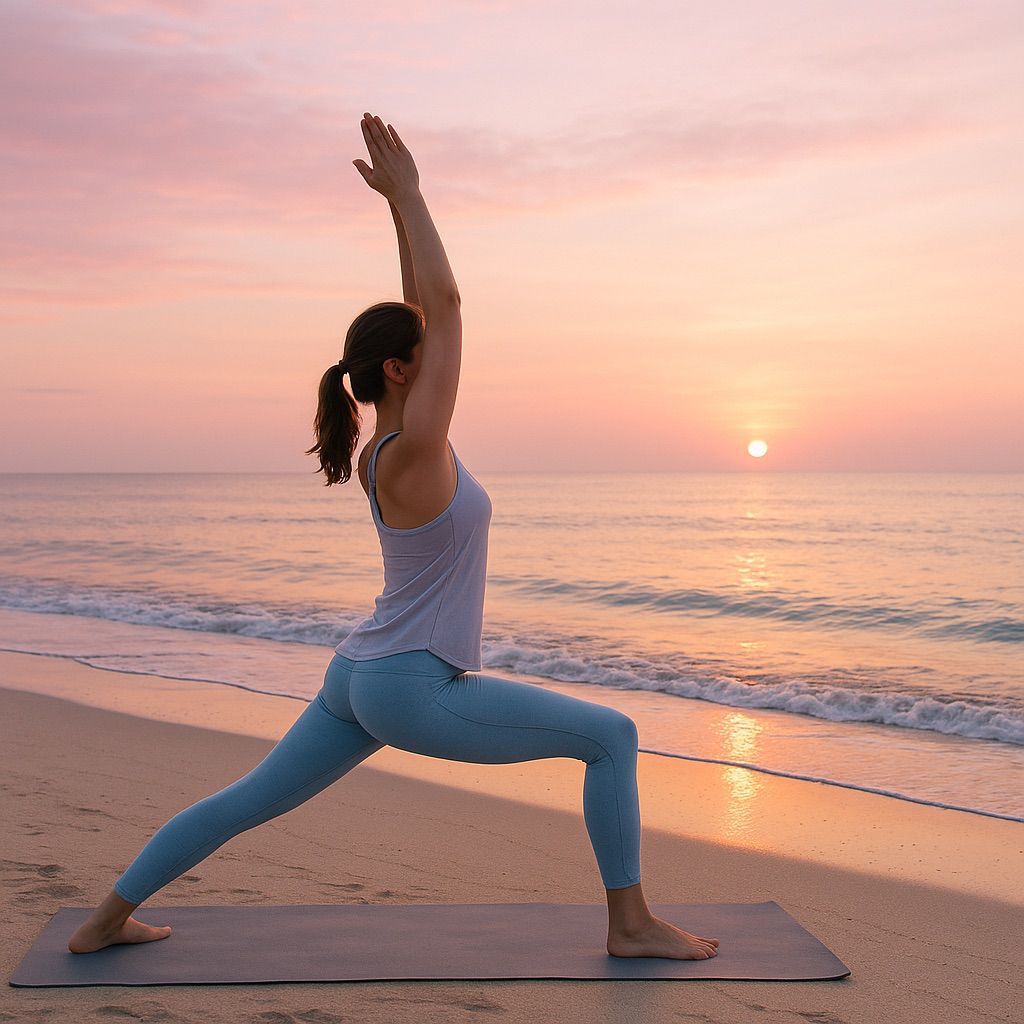
There’s something about the ocean at dawn that feels like a secret kept between the earth and the sky. Before the sun fully climbs above the horizon, the world is hushed—except for the rhythmic hush of the waves and the whisper of wind through salty air. The sand is cool beneath your feet, the colors in the sky shift from pale lavender to molten gold, and the water reflects the morning light in ripples that look like moving glass. In this stillness, unhurried and undisturbed, yoga by the ocean becomes more than a practice. It becomes a conversation between body and nature, a gentle reminder that you’re part of something vast and beautiful.

Morning yoga by the ocean isn’t just about stretching muscles or perfecting postures—it’s a sensory immersion. You feel the earth under your mat, hear the crash and retreat of waves, taste salt on your lips, smell the fresh marine air. Your body wakes slowly, each inhale filling you with energy, each exhale releasing the residue of yesterday. The air feels different at sunrise—lighter, cooler, alive with potential. You aren’t just moving your body; you’re syncing it with the pulse of the tide.

Starting the day this way changes everything. Your mind is calmer, your thoughts less cluttered, your focus sharper. You step away from the mat not only more flexible in body but more fluid in spirit. The stresses waiting for you on land don’t disappear, but they lose their grip on you. You’ve already grounded yourself in something bigger than the noise of daily life.

It’s no wonder so many people feel drawn to the idea of morning yoga by the ocean. The combination of yoga’s intentional movements and the sea’s timeless rhythm is deeply restorative. Both are ancient—yoga, with roots stretching back thousands of years in India; the ocean, an eternal presence that’s shaped human existence since the beginning. Together, they create a balance of discipline and freedom, effort and surrender.

If you’ve never tried it, imagine this: you lay out your mat on the sand just above the waterline, where the tide comes close enough to mist your toes but doesn’t reach your mat. The sun is still low, the sky painted in colors your phone camera will never capture as beautifully as your eyes do. You start in Mountain Pose, feeling your feet sink slightly into the sand, grounding you more deeply than any indoor studio floor ever could. Your breath matches the waves—inhale as the tide draws back, exhale as it comes forward.

From there, your flow might move into gentle stretches—Forward Fold, Cat-Cow, a few rounds of Sun Salutations. The ocean breeze cools your skin as your body warms. Seagulls call overhead, and somewhere down the beach, you hear the faint laughter of an early riser greeting the day. In Warrior Pose, you face the horizon, steady and unshakable. In Tree Pose, you sway ever so slightly, mimicking the movement of the water. In Savasana, you feel the sand beneath you and the sky above you, as if you’ve slipped into the space between worlds.

Morning yoga by the ocean can be deeply personal, but it’s also a communal experience. You might see others scattered along the shore, moving in their own silent flows, all connected by the same sky, the same water, the same intention to start the day in peace. Sometimes, beach yoga sessions are organized by local studios or wellness groups, bringing together strangers who share the same desire for movement and mindfulness. These gatherings can be powerful—sharing the quiet with others who understand it makes the experience feel both intimate and expansive.

Physically, the benefits are amplified by the setting. Sand provides a natural instability that engages smaller stabilizing muscles in your feet, ankles, and core, making poses more challenging in the best way. The salty air helps clear your lungs, and the natural sunlight encourages the production of vitamin D, supporting bone health and mood regulation. The sensory stimulation—from the sight of waves to the scent of the sea—activates your parasympathetic nervous system, lowering stress and enhancing your sense of well-being.

There’s also a subtle, almost spiritual element that emerges when practicing yoga by the ocean. The vastness of the sea reminds you of the impermanence of everything, including your worries. The tide’s rise and fall mirror the ebb and flow of your own breath. The way the horizon stretches endlessly can shift your perspective, making whatever’s been weighing on you feel lighter, smaller, more manageable. The ocean doesn’t ask anything of you—it simply offers its presence, as steady as your heartbeat.

Of course, like anything beautiful, it’s not without challenges. The sand can be uneven, the breeze can turn into wind, and sometimes curious seagulls think your mat is an excellent perch. But these small inconveniences are part of the charm. Yoga by the ocean teaches adaptability—you learn to adjust your poses when the sand shifts under you, to soften your practice when a gust of wind presses against you, to find focus even when a passerby wanders too close.

And perhaps that’s the deeper lesson. Morning yoga by the ocean isn’t about controlling your environment; it’s about finding balance within it. It’s about meeting life exactly where you are, whether the waters are calm or choppy. It’s about carrying that sense of peace back into your day, so that even when you’re miles from the shoreline, you can still hear the rhythm of the waves in your breath.

When you leave the beach after a morning practice, the world feels different. Your senses are sharper, colors more vivid, sounds more distinct. The day hasn’t yet had a chance to overwhelm you, and you’ve already given yourself the gift of presence. It’s a feeling that lasts long after the sand has been brushed from your toes and the salt has dried on your skin.

Morning yoga by the ocean is more than an exercise—it’s a ritual, a love letter to the self, and a reminder that the most powerful moments often come in the quiet hours before the rest of the world wakes up.

Related Posts

Vintage Beach Fashion: Then vs. Now — A Journey Through Sand, Style, and Time

Dave

The beach has always been more than just a stretch of sand and water—it’s a stage. For over a century, it’s been where trends are born, where boundaries are tested, and where style is as much a part of the experience as the ocean breeze itself. Whether it’s a prim Edwardian woman dipping her toes into the surf in a wool bathing dress or a modern influencer flaunting a minimalist bikini in the glow of a tropical sunset, beach fashion has mirrored society’s changing attitudes toward beauty, modesty, freedom, and fun.

To trace the evolution of beachwear is to walk along a shoreline where each era leaves its footprints in the sand. Those prints may fade, but they shape the path forward, guiding us from the corseted days of the past to the sun-kissed, filter-ready looks of today. And in this comparison between vintage beach fashion and modern-day style, we discover not just changes in fabric and form, but in the very spirit of how we dress for the shore.

The Early 1900s — When the Beach Meant Layers
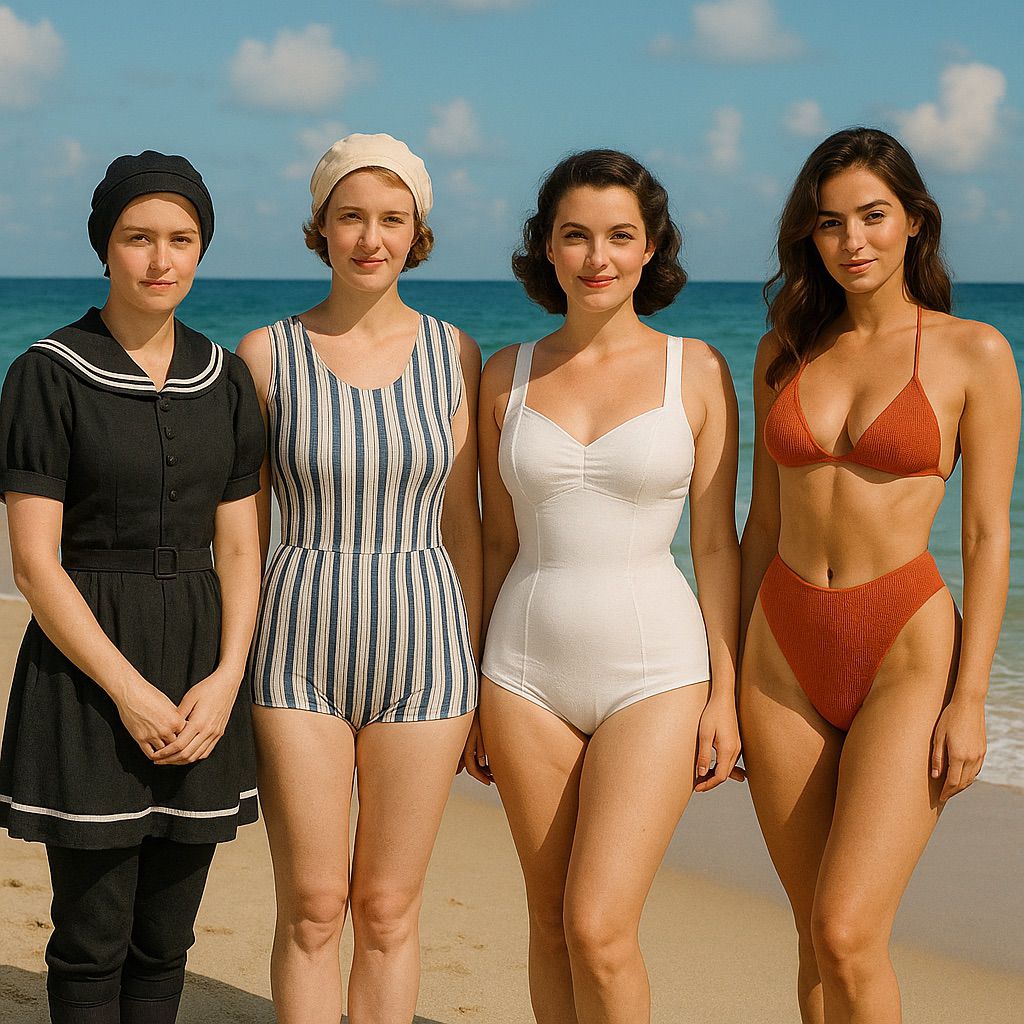
If you strolled along the beach in the early 20th century, you’d find women in bathing costumes that looked more suited for a picnic than a swim. Floor-length skirts, high collars, puffed sleeves, stockings, and even shoes were part of the ensemble. These garments were usually made from heavy materials like wool or flannel—absurd choices for water play by today’s standards, but perfectly aligned with the modesty norms of the era. For men, one-piece tank suits that covered the torso and extended to mid-thigh were the norm, and in many places, regulations dictated exactly how much skin could be shown.

These early beachgoers didn’t so much swim as they “bathed” or waded, often in the presence of chaperones. Bathing machines—small wooden huts on wheels—allowed women to change in privacy and enter the water without being seen in their bathing costumes. It was a time when the beach was more a place for decorous socializing than uninhibited play.

The 1920s–1930s — The First Real Shift
By the Roaring Twenties, the beach began to loosen up. Women’s bathing suits shed some layers, shortening skirts and sleeves, though they still covered most of the body. Materials like jersey wool allowed for more form-fitting designs, signaling a subtle embrace of the body’s natural shape. Beach pajamas—a wide-legged trouser set often made of lightweight fabric—became a stylish alternative for seaside lounging, especially among the fashionable elite.

Men’s swimwear began to shrink, too. The tank suit still reigned, but by the ’30s, some designs allowed the top to be removed, baring the chest—something considered scandalous just a decade earlier. Hollywood films of the time helped glamorize the beach, with stars like Jean Harlow and Esther Williams making swimwear aspirational.

The 1940s — War, Utility, and the Birth of the Bikini
The 1940s were defined by wartime fabric rationing, which ironically helped streamline beachwear. Swimsuits became more economical in cut, with higher hemlines and lower backs. For women, the two-piece emerged—not yet the bikini as we know it, but a midriff-baring design with high-waisted bottoms and structured tops.

Then, in 1946, French designer Louis Réard introduced the bikini, named after Bikini Atoll, site of atomic bomb tests. The bikini was explosive in its own way: so revealing that no model would initially wear it. Réard ultimately hired a Parisian nude dancer to debut the look. While the bikini was slow to catch on in conservative circles, it was a sign of the liberation to come.

The 1950s — Glamour Meets the Shore
The postwar era brought a return to indulgence and femininity in fashion, and beachwear followed suit. Women’s swimsuits in the ’50s often featured sweetheart necklines, cinched waists, and built-in bras, evoking the pin-up aesthetic popularized by icons like Marilyn Monroe and Brigitte Bardot. Fabrics were more varied, with cotton blends and early synthetics adding durability and stretch.

Men’s swimwear got shorter, with trunks replacing the older tank styles. Bold prints—stripes, checks, and tropical motifs—were everywhere, and surf culture began to influence mainstream styles, especially in California.

The 1960s–1970s — Liberation and Playfulness
By the 1960s, the bikini was no longer shocking—it was trendy. Designers experimented with bold prints, psychedelic colors, and daring cuts. Mod fashion made its way to the beach, with high-cut legs and bandeau tops. Crochet bikinis and handmade swimwear reflected the era’s DIY spirit.

The 1970s pushed boundaries even further. Thongs and string bikinis appeared, challenging ideas about modesty worldwide. Men’s swimwear followed suit with shorter, tighter trunks, though board shorts also gained popularity in surf communities. Polyester became the fabric of the decade—stretchy, quick-drying, and perfect for vibrant patterns. The beach became a playground for self-expression, and swimwear was a clear statement of personality.

The 1980s — The Aerobics Era Hits the Sand
The ’80s brought athleticism and boldness to beach fashion. Women’s swimsuits often featured high-cut legs that seemed to reach the waist, creating the illusion of longer legs—a look popularized by shows like Baywatch. Neon colors, metallic fabrics, and bold graphics ruled the shoreline. One-piece swimsuits made a strong comeback in sporty cuts, often with plunging backs or mesh panels.

For men, the decade was a split personality: brightly patterned short trunks for the casual crowd, and minimal swim briefs for the bold. Fitness culture permeated everything, and beachwear was no exception—showing off a toned body was as much the point as swimming.

The 1990s — Casual Cool Takes Over
The ’90s marked a more relaxed approach to beach style. Minimalism was in: solid colors, sleek cuts, and simple designs. Bikinis often featured triangle tops and string sides, while one-pieces leaned toward streamlined athletic styles. Sport brands like Speedo and Nike made functional swimwear fashionable.

Men’s swimwear lengthened again, with knee-length board shorts dominating the scene, thanks in part to surf and skate culture. The decade also saw the rise of the “tankini,” offering women more coverage while maintaining a two-piece look.

The 2000s — Mix, Match, and Brand Power
By the early 2000s, beachwear became more personalized. Mixing and matching bikini tops and bottoms was a trend, allowing for more individuality. Logos and brand names—Billabong, Roxy, Quiksilver—were proudly displayed. Metallic fabrics, bold patterns, and embellishments like rings or beads added flair.

Men’s board shorts were longer and baggier than ever, often paired with rash guards for surfers or casual wearers who valued sun protection. Swimwear was now as much about lifestyle branding as it was about function.

The 2010s–Today — Inclusivity, Sustainability, and Style Freedom
In the last decade, beach fashion has entered its most diverse era yet. There’s no single dominant style—retro high-waisted bikinis, minimal string designs, sporty one-pieces, and modest swimwear all coexist. Social media has brought global influences to everyone’s feeds, blending styles from different cultures and decades.

Inclusivity is now a driving force: brands are designing for all body types, offering extended sizes and adaptive swimwear. Modest swimwear options, like the burkini, have gone mainstream, allowing women from various cultural backgrounds to enjoy the beach without compromising their values.

Sustainability is also reshaping the industry, with eco-friendly fabrics made from recycled ocean plastics gaining popularity. Today, a swimsuit isn’t just about style—it’s about ethics, identity, and the freedom to choose what makes you feel confident.

Then vs. Now — The Heart of the Comparison
When we place vintage beach fashion beside today’s styles, the differences are obvious: fabric technology, comfort, and cultural openness have transformed what we wear to the shore. But the similarities are just as striking—beachwear has always been about more than swimming. It’s a form of self-expression, a reflection of society’s values, and a little bit of theater performed under the sun.

In the past, swimwear was often a compromise between modesty and practicality. Today, it’s about choice. You can channel the glamour of the ’50s, the boldness of the ’70s, the athleticism of the ’80s, or the minimalism of the ’90s—and no one blinks an eye. The shoreline has become a democratic runway where every style has a place.

In the end, whether you’re wearing a structured one-piece from a bygone era or a barely-there bikini hot off an influencer’s Instagram, the spirit is the same: to enjoy the beach, the sun, and the feeling of being alive. Fashion changes, but the joy of the shore is timeless.

Related Posts

Best Sand Toys for Kids: Turning the Shoreline into a Playground of Imagination

Dave

The beach is already a playground, but put a bucket and shovel in a child’s hands, and suddenly it becomes a kingdom, a construction site, a pirate’s island, and a laboratory for the laws of water and gravity. Sand toys are more than just plastic accessories—they’re tools of creativity, collaboration, and wonder. The right set of toys can transform a beach day from “fun” to “legendary,” sparking hours of imaginative play and building memories that last far beyond the final rinse of saltwater from hair and swimsuits.

But not all sand toys are created equal. Some fall apart after a single enthusiastic dig, others take up too much space in a beach bag, and a few are more about looking cute than actually being fun. The best ones strike a balance between durability, versatility, and the ability to fuel creativity. They’re the kind of toys that make kids forget about screens, invite other children to join in, and—let’s be honest—tempt even the most “grown-up” parents to drop down in the sand and get involved.

Let’s take a deep dive into the world of sand toys—not just listing what’s out there, but understanding why certain designs captivate kids, how they enhance play, and how they can make your next beach trip an epic adventure.

1. The Classic Bucket and Shovel Set
It’s the MVP of sand play for a reason. A sturdy bucket and shovel open endless possibilities—sandcastles, moats, collecting shells, hauling water. Look for sets made of thick, BPA-free plastic with reinforced handles so they won’t crack under the weight of wet sand. Buckets with measurement marks on the inside can add an educational twist, letting kids learn volume and capacity while they play. Bonus points if the bucket has a spout for controlled pouring—perfect for moat-building.

2. Sand Molds and Castle Kits
Sandcastle molds turn the beach into a medieval fantasy world. Some come in basic shapes—cubes, turrets, domes—while others replicate intricate architectural details. The best sets stack easily in a beach bag and are designed so sand slips out without breaking. Pro tip: Encourage kids to combine different molds to create their own unique castles. Some kits even come with flags, walls, and little figurines, adding storytelling elements to the building process.

3. Water and Sand Wheels
These toys combine motion and cause-and-effect learning. Kids pour sand or water into a funnel, and it spins wheels or gears as it falls. It’s mesmerizing for little ones and gives them a way to experiment with how different materials flow. Look for sturdy construction and wide bases so the toy doesn’t tip over easily in the wind or under eager hands.

4. Sifters and Sieves
Sifters turn shell-collecting into a treasure hunt. By separating fine sand from pebbles and shells, kids can uncover hidden “treasures” to decorate castles or stash in their buckets. Some sifters fit on top of buckets, making them easier for small hands to manage. Metal mesh sifters are rare but ultra-durable, while plastic ones are lightweight and float—good for younger kids.

5. Animal and Shape Molds
Beyond castles, kids love shaping sand into animals, cars, dinosaurs, or sea creatures. These molds spark storytelling—suddenly the beach is home to a herd of elephants, a pack of sharks, or a parade of turtles. Sets that include a variety of shapes keep kids engaged longer. Clear molds also make it easier for them to see if the sand is packed in tightly enough.

6. Sand Scoops and Rakes
A scoop lets kids move large amounts of sand quickly, while rakes create texture and patterns. Together, they’re perfect for creating roads for toy trucks, decorative castle walls, or “farms” in pretend play. Rakes with wide, sturdy tines can also help smooth sand for big projects. If you’re heading to a crowded beach, rakes are also great for drawing giant pictures in the sand—just be ready for strangers to stop and admire the art.

7. Dump Trucks and Construction Vehicles
For kids who love machines, a dump truck or excavator is beach gold. They can transport sand, dig deep holes, and become part of elaborate construction sites. Look for toys with chunky, durable wheels that can handle both wet and dry sand without getting stuck. Bonus if they work in water as well, so they can “deliver” loads from the ocean to a construction site on shore.

8. Inflatable Toys with Sand Functions
Inflatable tables, pools, or play mats filled with sand and water can create a contained play area for toddlers, keeping them safe and engaged. They’re also great for days when the waves are too rough for little swimmers. Just be sure to choose ones made from thick, puncture-resistant material, and always keep an eye on inflatables in windy conditions.

9. Interactive Digging Tools
Tools like handheld backhoes or claw diggers make kids feel like professional excavators. These toys let them scoop and lift larger loads of sand with more control than a shovel alone. They’re especially good for building big mounds or digging deep pits for games like “bury the treasure.”

10. Creative Add-Ons
Sometimes, the best sand toys aren’t traditional at all—things like spray bottles for moistening dry sand, funnels for making drip castles, or even simple measuring cups from the kitchen. These tools encourage experimentation and problem-solving. A simple funnel and some wet sand can entertain a child for an hour, creating intricate drip patterns on castle walls.

Choosing the Right Toys for Your Kids
When picking sand toys, consider your child’s age, interests, and the type of play they enjoy. Toddlers need lightweight, easy-to-grip tools with no small parts. Older kids might appreciate more specialized tools or themed sets that tie into their favorite games—pirates, dinosaurs, princesses, or racecars.

Durability is also key—cheap plastic toys can snap easily, leaving sharp edges and sad faces. Investing in well-made toys not only ensures safety but also means they can last through multiple summers. Storage is another consideration; mesh bags are ideal because they let sand shake out before you toss everything in the car.

Encouraging Creativity at the Beach
The best sand toys aren’t about following instructions—they’re about open-ended play. Instead of dictating what your child should build, ask questions: “What lives in this castle?” “Where does the road lead?” “What will the moat protect?” This turns play into a collaborative storytelling experience, building both creativity and communication skills.

You might be surprised how quickly these moments draw in other kids. Before you know it, your child’s simple sandcastle becomes a neighborhood project with new friends joining in. That’s one of the hidden gifts of sand toys—they build social skills as much as they build structures.

The Parent Factor
Let’s be honest—most parents can’t resist picking up a shovel when they see a half-finished sandcastle. Playing alongside your child is not just bonding—it’s modeling creativity, patience, and problem-solving. It’s also a reminder that you don’t have to “outgrow” the joy of shaping sand and water into something beautiful.

And when the tide comes in and washes it all away, that’s part of the lesson too: that the fun was in the making, not in the keeping.

The Environmental Side
One final note: the best sand toys are safe for the environment. Avoid toys that can break into small pieces and get left behind. Always do a sweep before leaving the beach to make sure nothing’s been forgotten. Eco-friendly toys made from recycled or biodegradable materials are becoming more available, and they’re a great way to teach kids about caring for the places they love to play.

A bucket, a shovel, a little imagination, and the whole beach becomes a canvas. With the right sand toys, you’re not just giving kids something to do—you’re giving them the tools to create worlds, make friends, and discover the magic in something as simple as grains of sand. The tide may take away the castles, but the joy of building them stays forever.

Related Posts

Cultural Differences in Beachwear Norms: How the World Dresses for the Shore

Dave

The beach is one of humanity’s great equalizers. Whether you’re in a bustling coastal city or a sleepy island village, people gather at the water’s edge to relax, play, and escape the daily grind. But while the waves may be the same everywhere, what people wear when they meet them can be wildly different. Beachwear is more than just clothing—it’s a reflection of history, climate, religion, body politics, and local attitudes toward modesty, gender, and style. Walk down a stretch of sand in one country and you might see bikinis in every imaginable cut; in another, the shoreline could be dotted with long-sleeved swimsuits or layered coverings. Some cultures embrace bold prints and body-baring designs, others prioritize functional coverage or cultural modesty, and still others have hybrid styles that tell stories of history and adaptation. The beach is a global runway, and every shoreline has its own dress code—spoken or unspoken.

Where the Bikini Reigns Supreme
In much of Western Europe, South America, and parts of Oceania, beachwear norms lean toward minimalism and body confidence. In France, Spain, Italy, and Greece, bikinis are the standard for women and speedo-style briefs or fitted trunks for men—regardless of age or body type. There’s a cultural acceptance, even expectation, that you dress for comfort and the sun, not to hide perceived imperfections. Southern Europe’s history of sunbathing culture, intertwined with post–World War II leisure trends, has made topless sunbathing common in certain regions, especially on designated beaches. In Brazil, the beach is practically a national stage. The fio dental bikini (literally “dental floss”) leaves little to the imagination, and men often wear snug swim briefs. Here, showing skin isn’t inherently sexualized—it’s a celebration of the body and the climate.

Modesty by the Sea
Travel to the Middle East or certain parts of Southeast Asia, and the norms shift significantly. In many Muslim-majority countries, modesty guidelines extend to swimwear, particularly for women. In places like Dubai or Oman, public beaches often see women wearing burkinis—a full-coverage swimsuit that includes a head covering, long sleeves, and leggings, made from lightweight, swim-appropriate fabrics. These garments are designed to allow for swimming while maintaining religious modesty standards. Men’s swimwear is generally more relaxed, often knee-length board shorts, but extremely brief cuts are less common. On private or resort beaches that cater to international tourists, you might see more variety, but local cultural expectations still influence what’s considered respectful.

Functional Coverage in the Sunbelt
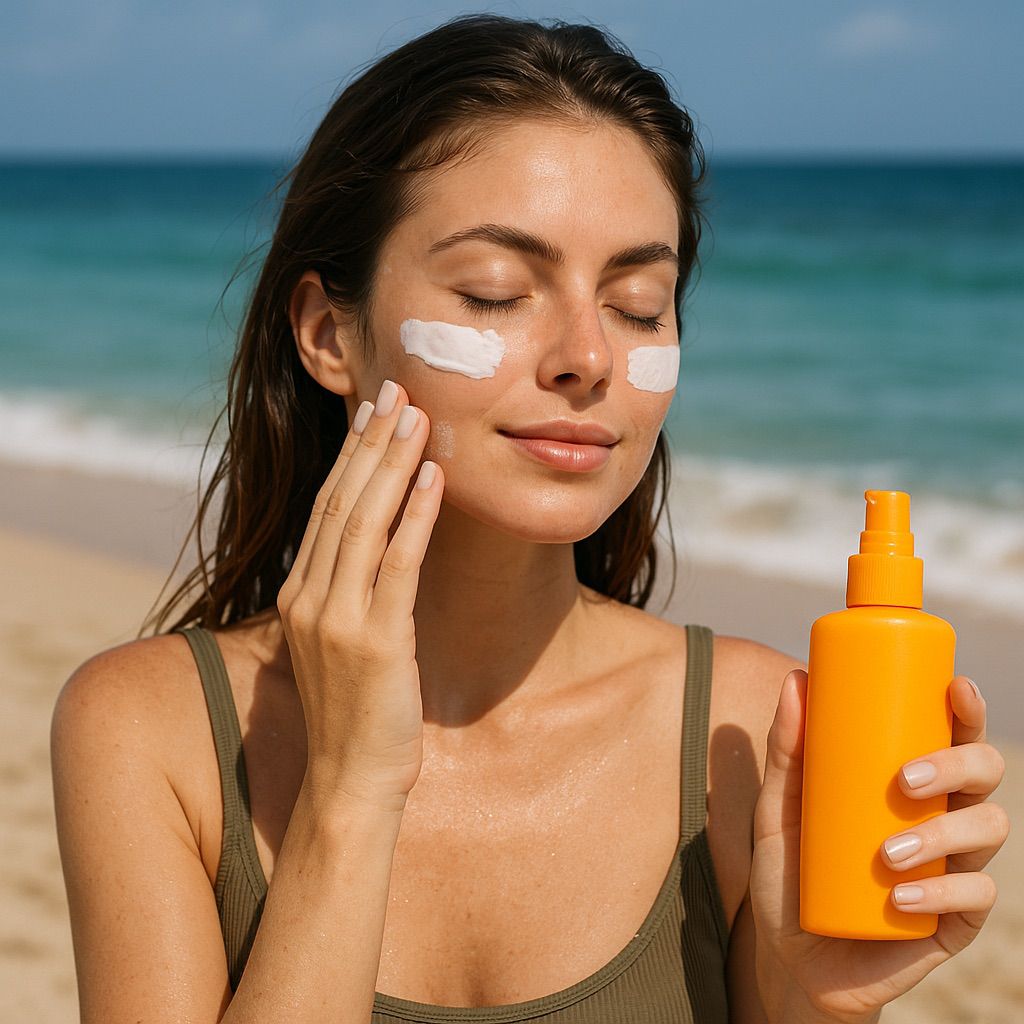
In Australia, beach culture is deeply ingrained, but so is sun safety. Thanks to one of the highest rates of skin cancer in the world, the “Slip-Slop-Slap” campaign (slip on a shirt, slop on sunscreen, slap on a hat) has shaped generations of beachgoers. Here, rash guards and swim shirts are common for both children and adults, often paired with board shorts. This functional approach prioritizes UV protection while still allowing for athleticism and water sports. The same is true in Hawaii and parts of the Pacific Islands, where surfing and snorkeling drive swimwear choices—tight-fitting rash vests, reef shoes, and UV-protective leggings are as much a part of the look as the swimsuit underneath.

The Hybrid Approach
In places with a blend of local traditions and international tourism, beachwear norms often merge. In Thailand, for example, tourists in bikinis share the sand with locals wearing shorts and T-shirts in the water. In the Maldives, resort islands see a wide range of swimwear styles, but local inhabited islands expect visitors to cover shoulders and thighs even at the shore. In Bali, stylish one-pieces and bikinis dominate the tourist beaches, but more conservative dress appears in rural coastal areas. These hybrid zones require a level of cultural awareness—visitors who adapt their attire based on location often earn greater respect from locals.

Influence of Climate and Culture on Coverage
Climate shapes clothing choices everywhere, but at the beach, it’s especially pronounced. In Nordic countries, summer is short and precious. On those rare warm days, people embrace minimal beachwear—bikinis, trunks, and even nude beaches, which are widely accepted in places like Denmark, Sweden, and Germany. In contrast, tropical regions might lean toward looser cover-ups not just for modesty, but for protection from intense sun. The history of colonization, religion, and Western influence also plays a role in defining norms—beachwear in the Philippines, for example, mixes American-influenced swim fashion with traditional modesty values in more rural areas.

Gender Dynamics and Body Politics
Beachwear norms also reflect broader attitudes toward gender and the body. In cultures where public discussion of sexuality is more open, swimwear often follows suit with more revealing cuts. In societies where body modesty is valued for reasons of religion or tradition, swimwear is designed to cover more. However, the global conversation around body positivity has started to shift expectations. Social media has amplified images of diverse body types in all kinds of swimwear, encouraging people to wear what makes them feel good rather than conform strictly to traditional norms. In some places, this has softened rigid rules; in others, it has sparked debate over the boundaries of cultural respect versus individual expression.

Tourism’s Role in Shaping Norms
Tourism can dramatically influence local beachwear culture. Popular destinations often adapt to visitors’ expectations, especially in resort zones. What might be considered inappropriate in a small fishing village could be perfectly acceptable at a hotel’s private beach. This creates a dual set of norms—one for locals, one for visitors. The tension between preserving cultural values and catering to the global tourist market is ongoing, and it’s visible in the signage, rules, and enforcement on different beaches.

The Politics of the Beach
Even within the same country, beachwear can be political. France, for example, has seen heated debates and legal battles over the burkini, with some municipalities attempting to ban it on public beaches. These controversies reveal how swimwear is more than just fabric—it’s a flashpoint for conversations about identity, integration, and freedom of expression. In other places, battles over topless sunbathing or nude beaches carry similar undertones.

Respect and Adaptation
For travelers, navigating these differences comes down to a mix of awareness and adaptability. Researching a destination’s beachwear customs before packing is a small step that can prevent discomfort or offense. Carrying a versatile cover-up, sarong, or T-shirt can make it easy to transition between areas with different expectations. And perhaps most importantly, recognizing that your “normal” may not be someone else’s is the foundation of respectful global travel.

The Beach as a Mirror
The variety of beachwear norms around the world reflects the diversity of human culture itself. Each shoreline is a mirror of the people who gather there—shaped by their values, history, climate, and evolving social attitudes. Standing at the edge of the ocean in another country, you’re not just seeing a different view; you’re stepping into a different way of understanding the body, modesty, and community. And that’s one of the most beautiful parts of travel: learning how something as simple as a day at the beach can be a doorway into deeper cultural connection.

Related Posts

Hair Care After Saltwater and Sun: Restoring Your Strands from Beach to Brilliance

Dave

There’s a kind of magic to the beach that lures us in—sun warming your skin, saltwater cooling you down, and that unmistakable tousled hair that somehow looks like you’ve stepped out of a summer romance novel. But here’s the thing about that breezy “beach hair”: it’s a liar. What feels effortless and beautiful in the moment often conceals the harsh truth—sun, salt, and wind are merciless on your hair. Underneath that windswept glamour, your strands might be screaming for help, stripped of moisture, tangled into defiance, and faded in color. The reality is, those perfect Instagram-ready beach days can turn into hair nightmares if you don’t give your locks the aftercare they deserve.

The combination of saltwater and sun exposure is a double hit to your hair’s health. Saltwater is incredibly drying—it pulls moisture out of each strand, leaving your hair rough and brittle. The salt crystals that form as your hair dries under the sun act like tiny magnifying glasses, intensifying UV damage. Sunlight itself degrades keratin, the protein that gives hair strength, and fades color—whether it’s natural pigment or salon-made. Add in the constant wind, which whips hair into tangles and causes breakage, and you’ve got a recipe for split ends, dullness, and that straw-like texture nobody wants to admit they have after a long beach trip. The good news? You can enjoy every wave, every dive, and every lazy afternoon on the sand without sacrificing your hair’s health—if you know what to do when you get home.

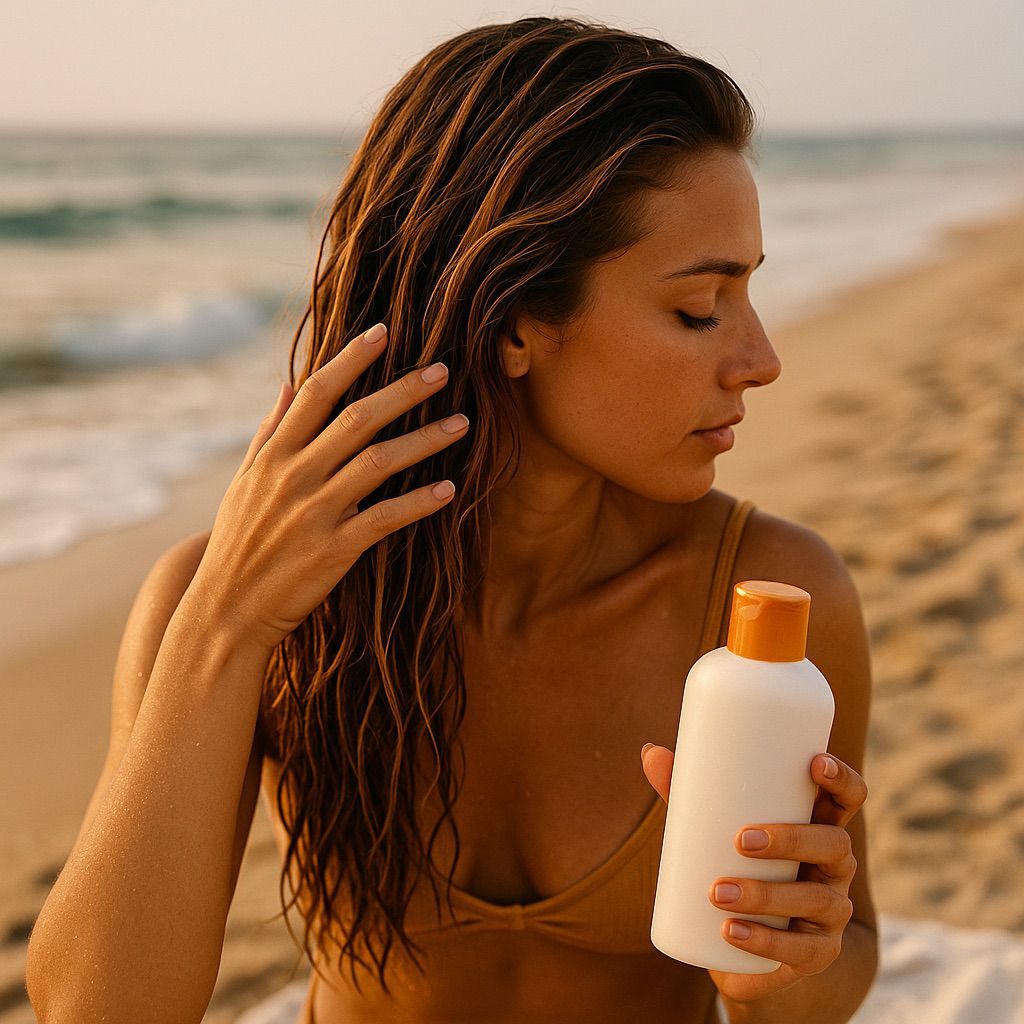
The first step in post-beach hair care is rinsing—and the sooner, the better. Salt left on your hair continues to pull moisture, and the gritty residue encourages tangles and frizz. If there’s a shower at the beach, use it before you even head home. Rinse with cool to lukewarm water to avoid further drying out your hair. If you’re stuck without a shower, carry a bottle of fresh water in your beach bag just for your hair. Think of it as damage control: the faster you get the salt out, the easier it will be to restore softness later.

Once you’re home, swap your regular shampoo for something gentle and sulfate-free. You need to cleanse away salt, sand, and sunscreen residue without stripping your hair even more. Clarifying shampoos can help remove buildup, but use them sparingly—once a week at most—since they can also strip natural oils. Massage your scalp to stimulate circulation and help oxygen and nutrients reach your hair follicles. Your scalp took just as much sun as your skin, so treat it with kindness.

Conditioner is your next non-negotiable step, but not just any quick rinse. This is the time for a deep conditioning mask packed with hydrating ingredients like shea butter, coconut oil, argan oil, or aloe vera. Apply generously from mid-length to ends, wrap your hair in a warm towel or shower cap, and let it sit for at least 20 minutes. This allows the moisture to penetrate the hair shaft, restoring elasticity and shine. If your hair feels especially brittle, try a protein treatment once every few weeks to rebuild the keratin structure. Just remember to balance protein with moisture—too much protein without enough hydration can make hair stiff and prone to breakage.

Detangling after a beach day can be a test of patience, and the wrong approach can cause more harm than good. Never yank a brush through wet, salt-soaked hair—that’s a fast track to breakage. Instead, use a wide-tooth comb or a detangling brush, starting from the ends and working upward. A leave-in conditioner or detangling spray will make the process smoother and protect your hair from friction damage.

For those with color-treated hair, after-sun care needs an extra layer of attention. UV exposure and saltwater can fade dye faster than you can say “touch-up appointment.” Invest in a color-safe shampoo and conditioner, and consider adding a UV-protectant spray to your beach bag for next time. Post-beach, a glossing treatment can help revive vibrancy, seal the cuticle, and restore that just-dyed sheen. If you swim often, a pre-beach ritual of saturating your hair with fresh water and applying a leave-in conditioner can act as a barrier, preventing salt from penetrating as deeply.

Hydration doesn’t stop with conditioners and masks—your hair needs moisture from the inside out. Beach days often mean long hours in the sun, which can dehydrate your entire body. Drink plenty of water after your day at the shore, and load up on hair-healthy foods rich in omega-3 fatty acids (think salmon, chia seeds, walnuts) and antioxidants (berries, spinach, avocado). What you feed your body directly impacts the resilience and shine of your hair.

One often-overlooked aspect of post-beach hair care is scalp recovery. The scalp is skin, and just like your shoulders or nose, it can burn. If you notice redness, tenderness, or flaking, treat it with a soothing aloe vera gel or a scalp serum designed for post-sun care. Avoid heavy styling products until your scalp feels normal again—overloading with gels or hairsprays can trap heat and prolong irritation.

Heat styling after a beach day should be minimal to nonexistent. Your hair has already endured heat and dryness from the sun, and blasting it with a blow dryer or flat iron will only worsen the damage. If you need to style, opt for heat-free methods: braids, buns, or twists that let your hair dry naturally while still looking chic. This is also a great time to embrace your natural texture—saltwater often brings out curls and waves, so enhance them with a curl cream or lightweight mousse instead of fighting them.

Trimming regularly is essential if you spend a lot of time at the beach. Split ends travel up the hair shaft if left unchecked, leading to more breakage. A small trim every 6–8 weeks can keep your hair looking healthy and full, even if you’re a frequent sun-and-sea enthusiast.

And finally, consider protective hairstyles for your next beach trip to make post-care easier. Braids, buns, or a simple twist can minimize tangling and reduce exposure. A wide-brimmed hat or a scarf not only protects your hair but also your scalp and face. Think of it as your style-savvy shield against UV rays.

Hair care after saltwater and sun isn’t about undoing damage—it’s about maintaining the balance between enjoying the beach to the fullest and giving your hair the attention it needs afterward. The ocean gives us so much—its beauty, its calm, its sense of freedom. Giving your hair a little TLC after a day in its embrace is a small way to return the favor. And when you run your fingers through soft, shiny strands a day later, you’ll know that every rinse, mask, and gentle comb stroke was worth it.

The beach will always call you back. Now, you can answer without hesitation—because you know your hair will come home just as radiant as your memories.

Related Posts

Romantic Beach Date Ideas: Love in the Tide’s Embrace

Dave

There’s something about the beach that makes love feel amplified. Maybe it’s the way the horizon stretches endlessly, promising possibility. Maybe it’s the salt in the air, tangling with your hair and taste buds. Or maybe it’s simply that the ocean, in all its moods, reflects romance itself—sometimes calm and steady, sometimes wild and unrestrained. Whatever the reason, the beach has long been the stage for love stories, from first kisses to wedding proposals to quiet anniversaries. If you’re looking for ways to turn a day by the shore into something unforgettable, you don’t just need good weather—you need intention. The best romantic beach dates blend the beauty of nature with the intimacy of shared experiences, creating moments that linger in memory long after the sand has been washed from your toes.

Imagine starting your date before the sun even rises. Dawn is the ocean’s quiet secret—when the sand is cool and unmarked, and the air still holds the chill of the night. Bring a thick blanket, a thermos of coffee or hot chocolate, and slip off your shoes to feel the sand against your bare feet as the sky slowly brightens. Sitting side by side, watching the first light touch the water, is like having the world to yourselves. No crowds, no noise but the rhythmic hush of waves—it’s a perfect canvas for conversation or comfortable silence. And the sunrise has a way of softening even the most guarded hearts, as if the day’s first light carries its own kind of truth.

If sunrise isn’t your style, perhaps a midday picnic will suit you better. But not just any picnic—think beyond the paper plates and hastily packed sandwiches. Spread a soft, oversized beach blanket under the shade of a big umbrella or near a cluster of dunes. Pack a basket with fresh fruit, a bottle of wine or sparkling juice, cheeses, crackers, and maybe some chocolate-covered strawberries for dessert. The beach adds its own soundtrack: gulls calling overhead, waves lapping gently at the shore. Feeding each other bites of juicy melon or sweet berries becomes playful and sensual in the salty breeze. And when you lean back together, the sunlight warming your skin, you realize it’s not just a meal—it’s a shared indulgence.

For couples who like a little adventure, renting a tandem kayak or paddleboard can turn a date into a story you’ll tell for years. Working together to keep your balance, paddling in sync, and gliding across turquoise water builds trust and closeness in ways that sitting on a towel never could. You might discover a hidden cove, a sandbar with shallow, crystal-clear water, or even spot dolphins in the distance. There’s something exhilarating about being on the water together, feeling small against the vastness of the sea yet completely safe in each other’s presence. And when you return to shore, muscles pleasantly tired, the shared effort leaves you feeling even more connected.

Some of the most romantic beach dates don’t require much movement at all—just the willingness to slow down and be present. Find a quiet spot, lie down on a blanket, and cloud-watch together. Trace shapes in the sky, let your fingers intertwine, and let the warmth of the day lull you into an easy intimacy. Or read to each other from a favorite book, the kind where the words feel like they were meant to be spoken aloud. The beach has a way of stripping away distractions; without the pull of screens and schedules, you notice each other more deeply—the curve of a smile, the sound of a laugh, the way sunlight catches in your partner’s hair.

When the sun begins its descent, that’s when the magic really begins. A sunset beach date might sound cliché, but clichés exist for a reason—they work. Plan ahead so you’re settled in your spot before the sky starts its transformation. Bring a light blanket for when the breeze turns cool, and maybe even a small speaker for soft background music—just low enough that the sound of the waves still takes the lead. As the sky bleeds from gold to pink to deep violet, the light softens, casting everything in a kind of cinematic glow. This is the moment for those quiet admissions, for leaning your head on a shoulder, for feeling like the rest of the world has gently stepped aside to let you have this.

If you want to carry the romance into the night, a moonlit beach walk is as timeless as it gets. There’s something otherworldly about walking barefoot on cool sand, the moon casting silver light across the water. The sound of the ocean in the dark feels deeper, almost like it’s speaking directly to you. Conversations seem to shift naturally into more personal territory—hopes, dreams, memories you’ve never shared before. And every so often, you stop, toes in the water, and look up at the endless sky, realizing that love, like the tide, has its own rhythms you can trust.

For an unexpected twist, consider a beach bonfire date (if local laws allow). There’s a primal romance to sitting close to a crackling fire, its heat warding off the evening chill while the smell of woodsmoke lingers in your hair. Roast marshmallows, make s’mores, or toast slices of bread with melted cheese. The firelight dances across your faces, making every smile feel warmer, every glance more intense. And when the flames die down to glowing embers, the darkness around you makes the world feel smaller, more intimate.

If you’re celebrating something special—a birthday, an anniversary, or even just the fact that you found each other—surprise your partner with a private beach dinner. Some resorts and coastal restaurants offer setups right on the sand: a small table draped in white linen, lanterns or fairy lights strung above, and the ocean just a few steps away. Dining like this feels like stepping into a movie scene, every detail curated for romance. But you don’t need a resort to create the magic; you can bring your own table, candles, and a favorite meal to recreate the feeling yourself.

And finally, there’s the spontaneous beach date—the one where you don’t plan much at all. You simply grab a towel, a couple of drinks, and each other’s hands. Maybe you end up building a sandcastle, chasing waves like kids, or lying back in the sand until you can see the first stars prick through the evening sky. Sometimes the best moments are the ones that happen without expectation, when you let the beach guide you instead of the other way around.

The truth is, a romantic beach date isn’t about the perfect setup or the most original idea. It’s about being present together, letting the ocean’s timeless rhythm weave your shared moments into something lasting. It’s about holding hands with the smell of salt in the air, about finding joy in the simplicity of sun and sand, and about realizing that the most beautiful thing on the beach isn’t the view—it’s the person you’re sharing it with.

Related Posts

A Brief History of the Bikini: From Scandal to Symbol of Liberation

Dave

The bikini, that deceptively small arrangement of fabric and string, has lived many lives in its eight decades of modern history. It’s been condemned as indecent, celebrated as empowering, fetishized by advertising, immortalized in music, and reinterpreted by every generation that’s slipped it on. Today, it’s as much a cultural icon as it is an article of clothing, woven into our collective memory of summer. But the road from scandal to global staple was anything but smooth—it’s a story of design, defiance, and the shifting tides of body politics. The bikini didn’t just emerge; it detonated into public consciousness, challenging conventions of modesty and redefining beach culture forever.

Long before the modern bikini made its controversial debut, ancient history had already flirted with the idea. Archaeologists have unearthed mosaics from around 4th-century Sicily showing athletic women in bandeau-like tops and briefs while tossing balls and lifting weights. These “bikini girls,” as they’re now called, were practical rather than provocative—garments for sport and movement, not for sunbathing. Roman bathhouses and Greek athletic competitions also embraced minimal coverage for certain activities, suggesting that the bikini’s “scandal” was really a modern invention born of centuries of prudish dress codes. Then came the Middle Ages, and with them a long stretch of covered bodies, where the idea of revealing a midriff in public was unthinkable for most of the Western world.

Fast forward to the early 20th century, and swimwear was still far from what we’d recognize today. In the 1910s and 1920s, women’s swimsuits were one-piece, wool-knit garments that clung heavily when wet and left behind modest tan lines. The interwar years brought sleeker silhouettes, higher hemlines, and halter necklines, especially along the Riviera where film stars and wealthy tourists set trends. But even then, the exposed midriff was rare. Two-piece swimsuits began to appear in the late 1930s and early 1940s, often with high-waisted bottoms that covered the navel—a deliberate design to stay within decency laws and social norms.

World War II set the stage for change in an unexpected way. Fabric rationing in the early 1940s, imposed to support the war effort, meant clothing manufacturers were encouraged to use less material. Swimwear designers responded by trimming fabric from sleeves, skirts, and yes, even swimsuits. American designer Claire McCardell and others began making two-pieces with narrower sides and lower backs, hinting at a new era of exposure. By the war’s end, the world was ready for something bolder—though no one quite expected what would happen in Paris in 1946.

It was July 5, 1946, when French engineer-turned-designer Louis Réard unveiled a swimsuit so small he claimed it could fit “in a matchbox.” He named it after the Bikini Atoll, a cluster of islands in the Pacific where the U.S. had just conducted atomic bomb tests—suggesting his creation would be equally explosive. And it was. Réard’s bikini was made of just 30 inches of fabric, cut to expose the navel for the first time in modern swimwear. The top was a simple triangle halter; the bottoms were minimalist, tied at the sides. So scandalous was the design that Réard couldn’t find a professional model willing to wear it. Instead, he hired Micheline Bernardini, a 19-year-old nude dancer from the Casino de Paris, to pose in his creation. The photos made headlines worldwide, and Bernardini reportedly received thousands of fan letters.

But the reaction wasn’t all applause. Many countries, including Italy, Spain, and even parts of the U.S., banned bikinis from public beaches. Church leaders decried them, and women in bikinis were often turned away from resorts. Even in France, the bikini took years to become widely accepted—its association with sex work, scandal, and impropriety proved stubborn. Still, young women, especially in cosmopolitan cities, began adopting the style, often in defiance of the rules.

The 1950s saw the bikini inch toward mainstream fashion, thanks in part to Hollywood and European cinema. Brigitte Bardot’s famous appearances at the Cannes Film Festival—lounging in printed bikinis and tousled hair—cemented the bikini as a symbol of effortless sensuality. American films were slower to embrace the look, but stars like Ava Gardner and Rita Hayworth wore bikinis in private shoots, hinting at the glamour without courting too much controversy. In 1957, Playboy featured its first bikini spread, solidifying its status in the male imagination, even if much of society still viewed it as risqué.

Then came the 1960s, and with them, the sexual revolution. The bikini found its cultural moment, aided by shifting attitudes toward the body and sexuality. Ursula Andress’ emergence from the sea in the 1962 James Bond film Dr. No—wearing a belted white bikini with a hunting knife—became one of cinema’s most iconic scenes. Raquel Welch’s fur-trimmed prehistoric bikini in One Million Years B.C. (1966) turned heads for its audacity and novelty. The bikini was no longer just beachwear; it was a pop culture phenomenon, a statement piece in film, music, and advertising. The song “Itsy Bitsy Teenie Weenie Yellow Polka Dot Bikini” became a playful anthem, reinforcing the garment’s place in the popular imagination.

The 1970s expanded the bikini’s boundaries further. String bikinis became a defining look of the decade, offering even less coverage and more customization. Swimwear fabrics improved, with Lycra and spandex allowing for stretch, durability, and vibrant prints. The rise of sports culture also influenced bikini design—athletic cuts appeared alongside skimpy designs, showing the bikini’s versatility. In Brazil, the bikini evolved into the fio dental or thong style, embracing a body-positive, skin-celebrating aesthetic that would later influence global fashion.

By the 1980s, the bikini was a global norm. Supermodels like Christie Brinkley, Elle Macpherson, and Kathy Ireland became synonymous with sun-soaked glamour, gracing magazine covers and advertisements in bikinis of every style and color. The fitness craze of the decade pushed the “bikini body” ideal, for better or worse, as a benchmark of health and beauty. Sports Illustrated’s annual Swimsuit Issue exploded in popularity, turning bikini shots into aspirational fantasies for millions.

The 1990s brought minimalism back to the forefront—sleek, sporty cuts often in solid colors dominated runways and beaches alike. Pop culture moments, like Pamela Anderson running in slow motion in a red Baywatch bikini, became visual shorthand for beach life. Meanwhile, the rise of fast fashion made bikinis accessible at every price point, ensuring they were no longer limited to the wealthy or fashion elite.

The 2000s and 2010s saw the bikini diversify beyond a single narrative. Social media, especially Instagram, fueled trends like high-cut bottoms (reviving an ’80s silhouette), mix-and-match separates, and retro high-waisted styles. Influencers embraced sustainable swimwear brands, and conversations about body diversity began reshaping marketing campaigns. Brands started showcasing models of varied shapes, sizes, and backgrounds in bikinis, challenging decades of narrow ideals.

Today, the bikini exists in countless forms—microkinis, tankinis, cut-out designs, sustainable fabrics, modest options, and gender-inclusive designs. It’s worn by athletes, celebrities, influencers, and everyday people alike. The symbolism has shifted: for some, it’s still about allure; for others, it’s about personal empowerment, comfort, or reclaiming space in public without shame. The bikini has weathered moral panics, cultural shifts, and fashion revolutions to become one of the most enduring icons in modern apparel.

What’s remarkable about the bikini’s story is how it mirrors broader social change. Every time the bikini pushed the boundaries of exposure, it was a reflection of women challenging the boundaries of their freedom. Every backlash against it revealed deeper anxieties about sexuality, gender, and control. And every reinvention proved its adaptability—not just to trends, but to the needs and values of the people wearing it.

The bikini’s history isn’t just about a garment. It’s about who gets to decide what’s “appropriate,” about the power of self-expression, and about the joy of feeling sun on your skin without apology. It’s proof that sometimes, the smallest pieces of fabric can carry the biggest stories.

Related Posts

Top 10 Most Instagrammable Beaches in the World: Where Sand Meets the Perfect Shot

Dave

There’s something magical about beaches that makes us all a little camera-happy. Maybe it’s the way sunlight bounces off turquoise water, or the hypnotic pattern of footprints fading into the tide, or the rush of catching that perfect wave-lit selfie. On Instagram, beaches aren’t just destinations—they’re stages, and the world’s most photogenic stretches of sand have become icons in their own right. Some dazzle with surreal colors, others seduce with dramatic backdrops, and a few feel like they were designed solely for a sunset filter. But beauty alone isn’t enough—an Instagrammable beach has personality, a soul that seeps into every shot, transforming a casual snap into a story.

I’ve wandered through feeds and hashtags, pored over traveler tales, and let my imagination surf the globe to bring you the ultimate countdown of the ten most Instagrammable beaches in the world. Consider this your passport to places where every glance could be a postcard, and every photo might just be the one that blows up your likes.

1. Whitehaven Beach – Whitsunday Island, Australia
There’s a reason Whitehaven Beach regularly tops “most beautiful” lists—it’s like the ocean decided to outdo itself. Seven kilometers of pure, silica sand so fine it squeaks underfoot, wrapping around a bay where the water shifts from emerald to sapphire to aquamarine in seamless gradients. The aerial shots are almost unfair: Hill Inlet’s swirling patterns of sand and sea look like abstract art painted by Poseidon himself. Whether you capture it from a drone, a sailboat, or with your toes dug into the shore, Whitehaven’s purity is camera gold. And yes, barefoot strolls here feel as soft as they look.

2. Anse Source d’Argent – La Digue, Seychelles
This beach isn’t just photogenic—it’s a supermodel. Pink-tinged sand, massive granite boulders sculpted into otherworldly shapes, and water so clear it feels like a visual effect. The way the light shifts here is addictive; morning brings soft golds, midday turns the place into a color-saturated dream, and sunset bathes the rocks in a warm blush that no filter can match. It’s the kind of beach where you stop halfway through taking a picture just to stare in disbelief. The secret? The surrounding shallow reef keeps the waves gentle, so the mirrored surface doubles the drama in your shots.

3. Navagio Beach – Zakynthos, Greece
Also known as Shipwreck Beach, Navagio is a dramatic postcard come to life. Accessible only by boat, it’s hemmed in by towering limestone cliffs that plunge into electric blue water, with the rusted skeleton of the MV Panagiotis resting like a forgotten movie prop on the sand. A shot from above—captured from the cliffside viewpoint—might just be one of the most recognizable beach images in the world. Down below, every angle is cinematic, with shadows from the cliffs shifting like stage lighting throughout the day. Bring your drone if you have one, but even a smartphone here feels like cheating.

4. Grace Bay – Turks and Caicos
Sometimes less is more, and Grace Bay is the proof. No wild rock formations or surreal colors—just flawless, powder-white sand meeting calm, crystalline water under a vast, uninterrupted sky. The horizon here is clean and endless, making it a minimalist dream for photographers. Sunsets are slow and syrupy, the colors bleeding across the water like spilled sherbet. A walk along the shore here feels like you’re inside one of those perfectly composed stock photos, except it’s all real, and the only “editing” is what the sun and clouds decide to do that day.

5. Pink Sands Beach – Harbour Island, Bahamas
Some beaches wear white, others gold, but Pink Sands Beach is dressed for the ball. The color comes from microscopic coral organisms mixed into the sand, creating a soft blush that feels like a permanent Instagram filter. The best time to capture it is in the early morning or late afternoon, when the angle of the sun turns the pink into a glowing rose-gold. Stretching for three miles, it’s easy to find a secluded spot for those dreamy “just you and the horizon” shots. The pastel palette here makes every outfit pop—yes, even if you show up in a simple linen cover-up.

6. Tulum Beach – Quintana Roo, Mexico
Where else can you get turquoise waves, soft sand, and ancient Mayan ruins in the same frame? Tulum’s beaches have a laid-back bohemian vibe that blends perfectly with its history. Palm trees lean lazily over yoga mats, boutique hotels spill hammocks onto the sand, and the water glitters like polished glass. Photographers love the contrast of old and new—the weathered stone of the El Castillo temple perched on the cliffside, with sunbathers below and surfers paddling out. Whether you’re snapping a luxury cabana shot or a raw, salty-hair selfie, Tulum delivers authenticity with just enough polish.

7. Matira Beach – Bora Bora, French Polynesia
Bora Bora’s only public beach feels like a VIP pass to paradise. Shallow, warm lagoons stretch for what feels like forever, framed by lush green hills in the background. The sand here is almost impossibly soft, and the water glows with a turquoise so pure it could make a gemstone jealous. Sunset turns the lagoon into a liquid mirror, reflecting colors from fiery orange to deep lavender. Photographers often wade waist-deep to get the perfect low-angle water shot with Mount Otemanu rising in the distance—it’s worth every wrinkle your fingers get.

8. Reynisfjara – Vik, Iceland
Not all Instagrammable beaches are tropical. Reynisfjara is proof that drama can be just as captivating as tranquility. This black-sand beach, born from volcanic rock, is flanked by towering basalt columns and sea stacks that loom like ancient guardians. The Atlantic crashes here with wild, untamed power, sending up plumes of spray that catch the light in ghostly arcs. On foggy days, it feels like walking into a fantasy novel; on clear ones, the contrast between dark sand, white surf, and green cliffs is electric. Just don’t turn your back on the waves—they’re as unpredictable as they are photogenic.

9. White Beach – Boracay, Philippines
A tropical cliché in the best way possible—palm trees swaying, sailboats gliding past, and sand so fine it clings like powder to your feet. White Beach is a masterclass in golden-hour magic; the shallow water amplifies the sun’s glow, turning the whole shoreline into a molten gold runway. Beach bars spill music into the air, and there’s always someone mid-jump or twirl for that perfect action shot. The vibe here is pure joy, and it radiates through every photo—proof that sometimes, beauty isn’t just about the view, but the energy in it.

10. Baía do Sancho – Fernando de Noronha, Brazil
Remote, protected, and almost too perfect to believe, Baía do Sancho regularly tops “world’s best beach” rankings. You reach it by descending steep ladders down a cliff face, and when you finally step onto the sand, the view feels like a reward you’ve earned. Cliffs wrap around in a protective embrace, and the water is an impossible shade of jade. Snorkeling here reveals a kaleidoscope of marine life, and from above, the crescent shape of the bay is a photographer’s dream. With limited daily visitors, your photos have an unspoiled quality—rare in a world of crowded hotspots.

What makes these beaches Instagrammable isn’t just their beauty—it’s their ability to tell a story through a single image. The way light dances on the water in the Seychelles. The contrast of ancient ruins and modern leisure in Tulum. The raw, moody power of Iceland’s Reynisfjara. Each one offers more than a pretty picture; they offer an atmosphere, an emotion, an instant memory frozen in pixels. And when you scroll through your feed months or years later, these images won’t just remind you where you were—they’ll remind you how it felt to be there.

So next time you’re chasing likes and wanderlust, remember that the best beach photos don’t just show a place—they make your followers feel like they’ve dipped their toes into the same tide. And maybe, just maybe, they’ll book their own ticket to see if the sand really does squeak, blush, or glow exactly as your photo promised.

Related Posts

Beach Music Through the Decades: From Boardwalk Ballads to Surfside Beats

Dave

There’s something about the sound of music at the beach that feels like it’s been part of human DNA for centuries. Waves crash in perfect rhythm, gulls call out in random percussion, and somewhere—whether from a tinny transistor radio, a boombox propped on a towel, or Bluetooth speakers hidden under a sunhat—comes a melody that defines the moment. Beach music is more than just background noise; it’s the soundscape of summer, the heartbeat of sun-drenched afternoons, the invisible thread that ties strangers together under the same sky. Each decade has brought its own soundtrack to the shore, shaping not only what we danced to but how we remember our beach days. And like seashells collected along the waterline, each era’s sound carries its own distinct texture and shine.

The 1950s gave us the first taste of what would become “beach music” in the popular sense, though back then it wasn’t quite labeled that way. Post-war optimism was high, cars were shiny and big, and teenagers were suddenly a cultural force. Down in the Carolinas, a regional movement began to brew—smooth, soulful rhythm and blues, often from Black artists, that found its way into white beach towns via jukeboxes and AM radio. It was music you could shag to—a laid-back, swinging dance that matched the gentle sway of the tide. Songs like The Drifters’ “Under the Boardwalk” and The Clovers’ “Love Potion No. 9” became summer staples, echoing from open-air pavilions and seaside clubs. These weren’t songs about surfing or bikinis yet; they were about romance and mystery, the kind of stories that happened after the sun went down and the boardwalk lights flickered on.

Then came the 1960s, and with them, the West Coast claimed the beach as its stage. Surf music roared into being—electric guitars drenched in reverb, drumbeats like rolling breakers, and harmonies as bright as a lifeguard’s whistle. The Beach Boys became the undisputed kings of this era, spinning tales of surfing, cars, and endless summers that turned California into a dreamscape for kids thousands of miles from the nearest ocean. Songs like “Surfin’ Safari,” “California Girls,” and “Good Vibrations” weren’t just hits; they were passports to a sunlit world. Dick Dale’s rapid-fire guitar runs in “Misirlou” brought an instrumental ferocity to the scene, while Jan and Dean’s “Surf City” doubled down on the fun-loving imagery. The music was fast, carefree, and a little naive—perfect for a generation riding high on optimism and youth culture’s first big wave.

The 1970s slowed the tempo, shifting from surf rock’s pure adrenaline to something more mellow, reflective, and sun-soaked. Soft rock and yacht rock took over, carrying a breezy sophistication that paired perfectly with sunset beach bonfires and the gentle hiss of a cassette deck. Fleetwood Mac’s “Rhiannon” might not have been about the beach, but its ethereal quality fit the way the ocean feels at night. The Eagles’ “Hotel California” and America’s “Ventura Highway” carried the scent of salt and warm asphalt. Jimmy Buffett emerged as the poet laureate of tropical escapism with “Margaritaville,” turning beaches into a state of mind you could visit even in the dead of winter. Reggae, too, crossed oceans during this decade, bringing Bob Marley’s laid-back rhythms and political soul to beach playlists worldwide. His “Three Little Birds” became an unofficial seaside mantra—don’t worry, every little thing is gonna be all right.

By the 1980s, the beach had gone electric again. Synth-pop, glam, and dance tracks lit up coastal nightlife, while MTV ensured beach imagery was everywhere. Think Duran Duran’s “Rio,” with its yacht deck escapades, or the carefree vibes of Katrina and the Waves’ “Walking on Sunshine.” Pop icons like Madonna and Michael Jackson provided the kind of high-energy tracks that made beach volleyball games and neon swimwear feel like part of the same cultural wave. Meanwhile, the beach party movie saw a revival—films like “Back to the Beach” and “Weekend at Bernie’s” paired sandy hijinks with music that leaned heavily on punchy choruses and big, bold production. And then there was the rise of boombox culture, where you could literally carry your beach soundtrack on your shoulder, making your patch of sand feel like the center of the world.

The 1990s brought in a strange but delightful variety. On one hand, you had the grunge and alt-rock scene—Pearl Jam’s “Oceans” and Red Hot Chili Peppers’ “Scar Tissue” adding grit to the seaside air. On the other, hip-hop and R&B were shaping beach parties with beats as smooth as the boardwalk on a humid night. Will Smith’s “Summertime” was an instant classic, blending nostalgia with the fresh confidence of the era. Ska and punk-pop bands like Sublime and No Doubt fused surf culture with edgy street energy, giving us sunburned anthems that could just as easily play at a skate park as they could on the sand. The rise of portable CD players meant you could curate your own perfect beach mixtape—burned, labeled, and stored in a sandy backpack.

The early 2000s leaned hard into pop dominance, with artists like Shakira, Britney Spears, and Beyoncé providing the beats for endless summer afternoons. Shakira’s “Whenever, Wherever” had that irresistible Latin-infused rhythm that seemed to sync perfectly with waves lapping at your feet. Jack Johnson emerged as the era’s beachside troubadour—his acoustic guitar and mellow voice on tracks like “Banana Pancakes” and “Better Together” made you feel like the world could pause just for you. Reggaeton exploded onto global beach playlists, with Daddy Yankee’s “Gasolina” and Don Omar’s “Dile” shaking hips from Miami to Ibiza. By this point, Bluetooth speakers were replacing boomboxes, allowing smaller but more powerful sound to follow you wherever you laid your towel.

The 2010s brought streaming culture to the sand, and the concept of the “beach playlist” became a science. Spotify curated “Endless Summer” mixes; YouTube offered hours-long tropical house compilations; Apple Music let you pull up a mood-based beach set in seconds. The sound of the decade leaned heavily on EDM, tropical house, and festival-ready pop. Kygo’s remixes and original tracks like “Firestone” were practically engineered for sunsets on the water. Pop stars like Rihanna (“Cheers”), Calvin Harris (“Summer”), and Justin Timberlake (“Can’t Stop the Feeling”) ensured every beach gathering had its soundtrack dialed in before anyone arrived. And as social media grew, music became not just the soundtrack to the beach but part of the way we remembered and shared it—songs tied to drone footage of turquoise waves and perfectly timed slow-motion jumps into the surf.

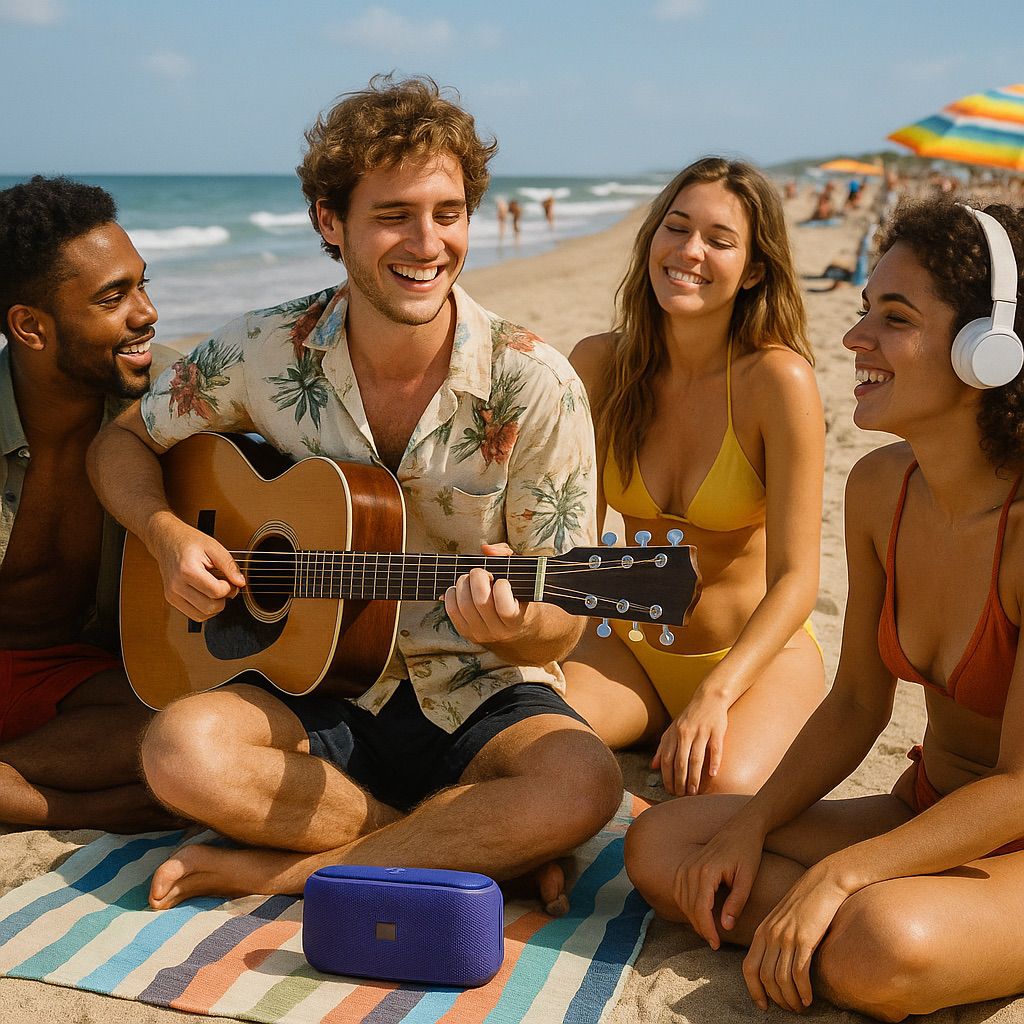
Now, in the 2020s, beach music is as diverse as the people on the sand. Lo-fi beats hum from a group doing yoga under a palm tree, Latin trap thumps from a volleyball court, indie surf rock floats from a cooler-top speaker, and an older couple slow-dances barefoot to a playlist heavy on the 1960s classics. Technology has made the beach soundscape even more personal—you can have noise-canceling earbuds for a solo sunset soundtrack or waterproof speakers that turn your stretch of shore into a festival. Music discovery is instantaneous; a song playing from the next blanket over can be identified, saved, and added to your personal summer soundtrack in seconds. Yet, for all the tech, the essence hasn’t changed: beach music is still about setting a mood, about amplifying the joy of being exactly where you are, salty skin and all.

The beauty of beach music through the decades is that it’s never been just one genre or one scene—it’s a fluid, evolving conversation between place, people, and sound. Each era has added something to the shoreline’s permanent playlist: the soul of the 1950s, the energy of the 1960s surf craze, the reflective romance of the 1970s, the glam and groove of the 1980s, the eclectic boldness of the 1990s, the global fusion of the 2000s, the curated vibe of the 2010s, and the seamless personalization of today. Walk along any beach and you’ll hear echoes of them all—blended into a soundtrack that tells not just the history of music, but the history of summer itself.

In the end, beach music is less about what’s playing and more about what it makes you remember. A certain riff can transport you to the summer you fell in love. A chorus can bring back the smell of sunscreen and coconut oil, the heat of the sand on your feet, the sound of your friends laughing over the surf. That’s the real magic—songs come and go, trends fade, but the moments they score remain, polished smooth by the years like sea glass in the tide.

Related Posts

Beach-Ready Skincare Routine: Protecting Your Glow from Sunrise to Sunset

Dave

Somewhere between the excitement of planning a beach day and the reality of stepping onto the sand, there’s a silent battle your skin prepares to fight. The sun is dazzling, the breeze is warm, the ocean glitters with invitation—and every one of those things comes with its own invisible cost to your skin. Saltwater dries it, UV rays wage war on its youth, wind whips at its moisture barrier, and sand… well, sand exfoliates with all the grace of an overzealous loofah. It’s easy to forget that “fun in the sun” is, for your skin, “an endurance marathon under extreme conditions.” The good news? You can have your beach and keep your glow, too—if you treat skincare like part of the adventure instead of a chore. The perfect beach-ready skincare routine isn’t about a bag of overpriced products; it’s about smart preparation, thoughtful protection, and post-sun repair that feels like a love letter to yourself.

The first chapter of any beach skincare story is the pre-game—the hours before your toes touch sand. Think of this as the “armor phase.” You’re not just slathering on sunscreen; you’re prepping your skin to handle heat, salt, and sweat with grace. Hydration starts here, and no, not just from your water bottle. A lightweight, water-based moisturizer with hyaluronic acid will pull hydration into your skin like a sponge, giving it a plump, dewy resilience that lasts longer under the sun’s glare. If you’re prone to oiliness, don’t skip this step—dehydrated skin produces more oil to compensate, and nothing ruins beach selfies faster than makeup melting off in greasy streaks.

Then comes the star of the show: sunscreen. This is not a casual decision. For the beach, you want broad-spectrum SPF 50 or higher, water-resistant for at least 80 minutes, and ideally reef-safe to protect marine life. A good mineral sunscreen with zinc oxide or titanium dioxide sits on top of your skin, reflecting UV rays rather than absorbing them. Chemical sunscreens can be effective, too, but they need a solid 15–20 minutes to activate before exposure. The key is generous application—most people use about half as much as they should. A teaspoon for your face, a shot-glass worth for your body, and don’t forget the often-missed spots: ears, the back of your neck, tops of your feet, and the part in your hair if you’re not wearing a hat.

If you wear makeup, keep it minimal and functional. A tinted SPF can replace foundation, a dab of cream blush can add warmth without caking, and a waterproof brow gel will keep your face expressive after a swim. Skip heavy powders, which will mix with sweat and sunscreen to create an unwelcome paste. Your pre-beach look should say “sun-kissed” before you even step outside, so that when the real sun-kiss arrives, it only enhances what’s already there.

Arriving at the beach is when the maintenance phase kicks in. You wouldn’t expect your phone battery to last all day without recharging; the same goes for your sunscreen. Reapply every two hours, or immediately after swimming, sweating, or toweling off. This is the step that separates the bronze goddesses from the crispy lobsters. A spray sunscreen can be handy for quick touch-ups, but make sure to rub it in for even coverage—sprays are notorious for missing spots in the wind. Keep a stick sunscreen in your bag for quick reapplication to high-burn zones like your nose, shoulders, and cheekbones.

The beach environment tests more than just your SPF discipline. Saltwater can be both your friend and foe—its natural minerals can calm inflammation and help heal minor skin issues, but it’s also incredibly dehydrating. When you come out of the water, rinse with fresh water if possible, then reapply a light layer of moisturizer before topping up your sunscreen. This mini-refresh takes less than five minutes and can make the difference between glowing all evening and looking like you spent the day in a dehydrator.

Lips are the unsung casualty of beach days. They have almost no natural sun protection, and once burned, they take days to recover. A lip balm with SPF 30 or higher is non-negotiable, and it’s worth finding one that’s both water-resistant and non-waxy, so it won’t melt into a mess in your beach bag. Reapply often—you talk, drink, and eat, which means it wears off faster than you realize. Bonus tip: choose a tinted one for a subtle pop of color that makes you look instantly put together without any extra effort.

Hair isn’t skin, but it plays in the same arena. Salt and sun can fade color, weaken strands, and dry out your scalp. A leave-in conditioner with UV protection creates an invisible shield against damage, while a wide-brimmed hat not only protects your face but your hairline and scalp too. If you’re swimming, consider braiding your hair to prevent tangles and minimize breakage. Your future self—brushing out post-beach knots—will thank you.

As the day winds down and the sun dips low, the skincare story shifts to recovery mode. This is where you turn from defense to repair, helping your skin bounce back from everything it’s endured. The first step is cleansing. Salt, sand, sweat, and SPF form a stubborn film on your skin, and a gentle, oil-based cleanser can break it down without stripping your moisture barrier. Follow with a water-based cleanser for a double-cleanse that leaves your face truly fresh. Your body deserves the same care—a hydrating shower gel or cream cleanser will soothe and soften while washing away the day.

After cleansing comes the crucial replenishment phase. Your skin has lost moisture, so it’s time to feed it deeply. An aloe vera gel or cooling after-sun lotion can calm any heat and redness, while a ceramide-rich moisturizer will help repair the skin’s barrier. If you’ve overdone it and have the telltale tightness of an impending sunburn, stash your after-sun products in the fridge before applying. The chill will feel incredible, and the cool temperature helps reduce inflammation faster.

Nighttime is also the perfect window for targeted treatments. Antioxidants like vitamin C can help fight free radical damage from sun exposure, while niacinamide calms redness and improves skin elasticity. Avoid heavy exfoliation right after a beach day—your skin is already sensitized—but a few days later, a gentle scrub or chemical exfoliant can help remove dead skin cells and keep your tan looking even.

Don’t forget hydration from the inside out. After hours under the sun, your whole body is thirsty. Water should be your main drink, but coconut water or electrolyte-rich beverages can speed up recovery. Your skin reflects your internal hydration levels more than any product can compensate for.

Perhaps the most humanizing truth about beach skincare is that it isn’t about perfection—it’s about respect. Respect for your skin’s limits, for the environment you’re in, and for the fact that a day at the beach is supposed to be joyful, not stressful. Some days you’ll miss a reapplication. Sometimes your nose will peel despite your best efforts. That’s okay. Skincare is cumulative, not a pass/fail test, and the goal is to leave the beach feeling good in your skin—not obsessing over every freckle.

The real secret to a beach-ready skincare routine is making it feel like part of the day’s pleasure, not a set of interruptions. Apply sunscreen with the same anticipation as zipping up your beach bag. Reapply with the same satisfaction as taking your first sip of cold lemonade. Slather on after-sun lotion while reliving the day’s highlights in your mind. The more these rituals feel woven into your experience, the more they become a natural part of how you do the beach—effortless, enjoyable, and effective.

So when you pack your bag next time, think beyond towels and snacks. Think of your skin as a travel companion—one that’s been with you your whole life, one that will be with you for decades to come. Treat it well on the shore, and it will thank you long after the waves have faded from your ears and the sand has been shaken from your shoes.

Related Posts

DIY Swimwear: Can You Make Your Own Bikini?

Dave

The idea probably begins with a late-night scroll—one too many cute swimsuits in your feed, each tagged with a price that makes your debit card wince. Or maybe it starts in a thrift store, your fingers trailing over a bolt of fabric that feels like summer under your palm. Whatever the spark, the thought lands with the same mix of thrill and trepidation: Could I make my own bikini? A question equal parts craft project and personal dare. And beneath it, something deeper—a tug toward control, toward creativity, toward wearing something that carries the fingerprint of your patience and personality instead of a brand logo. In a world where bikinis are churned out by the millions in glossy factories, the idea of making your own is like deciding to bake bread in an era of drive-throughs. It’s slower, messier, and infinitely more satisfying.

For the uninitiated, the prospect can feel absurd. Isn’t swimwear some arcane alchemy of elastic and magic stitches, perfected only by those with industrial machines and years of apprenticeship? The truth is more democratic. Yes, bikinis are a little technical—stretch fabrics have their quirks, and there are tricks to making something that will survive both the surf and the sun. But the barrier to entry is not nearly as high as most people think. A basic home sewing machine, a handful of notions, some patience, and a willingness to practice on scraps before you cut into your dream fabric are your main tickets in. The rest? Well, that’s style and spirit, and you’ve already got those.

Step one in your DIY bikini odyssey is a choice that feels deceptively simple but will set the tone for the whole project: fabric. Swimwear calls for materials with both stretch and recovery, meaning they need to stretch to fit your body snugly and then snap back to shape after you take them off. The classics are nylon-spandex or polyester-spandex blends, sometimes with a lining for modesty or structure. In your hands, they feel slick and slightly cool, like the surface of a pond just before you dive in. Prints open up an entire gallery of personality—tropical florals for the escapist, nautical stripes for the retro romantic, solid black for the minimalist with secrets. There’s something intoxicating about standing in a fabric store, bolts fanned out before you, knowing this will be more than just cloth; it will be a second skin you made yourself.

Once you’ve got your fabric, you’ll meet the next big fork in the road: pattern. You can draft your own (ambitious, but not impossible if you’ve dabbled in garment making) or buy one online from the many indie designers who cater to home sewists. Patterns range from modest high-waisted bottoms and supportive tops to daring string bikinis that would barely pass muster in a game of beach volleyball. Here’s where you confront a small but liberating truth—your bikini doesn’t have to please anyone’s idea of “on-trend” but yours. Want a top with wide straps for comfort? Do it. Want a reversible design so you pack light for vacation? Totally doable. Want to engineer a suit that actually fits your bust and hips without compromise? Welcome to the revolution.

If fabric and pattern are the canvas and sketch, then notions are the paints—elastic for leg openings and waistbands, closures for halter straps or back bands, optional padding for tops. Swimwear elastic is different from the garden-variety elastic you might use in pajamas; it’s resistant to chlorine and saltwater, ensuring your masterpiece doesn’t sag after its first encounter with the deep end. Choosing notions is like choosing jewelry—you’re thinking not just about function but about how the little details finish the whole look. A gold clasp at the back can elevate a simple design into something that looks plucked from a boutique rack. And don’t underestimate the psychological lift of good tools—sharp shears, a fresh stretch needle in your machine, and a walking foot that coaxes slippery fabric into submission.

Then comes the cutting, which is as much about courage as it is about precision. There’s a quiet drama in laying your pattern pieces on the fabric, making sure the stretch runs in the right direction, pinning them in place. Once you make the first cut, you’re committed, and the sound of scissors through spandex is oddly thrilling—like the first bite into something you baked yourself. This is where mistakes are born and, thankfully, where they can often be rescued. Stretch fabric is forgiving; seams can be unpicked, straps reattached, lines altered. Perfection is overrated; progress is the real prize.

Sewing swimwear is where the magic—and the learning curve—really kicks in. The stitches that hold bikinis together have to stretch without breaking, which means you’ll lean on zigzag stitches or specialized stretch stitches your machine might offer. Seams need to be smooth and strong, and hemming the elastic into the edges without puckering the fabric is a skill you’ll get better at with practice. The first time you manage to sew a clean, even edge on a stretchy bikini bottom feels like a small miracle. And yes, there will be moments of frustration—a seam that twists, a strap that comes out uneven, elastic that refuses to sit flat—but those are the moments that teach you more than any YouTube tutorial ever could.

The fitting stage is both exciting and, let’s be honest, humbling. Trying on something you’ve made yourself can be a bit like hearing your own voice on a recording: it’s familiar but also strangely revealing. A waistband might sit differently than you pictured, a top might gape a little. But here’s the beauty of DIY: you can change it. Add darts, adjust elastic tension, swap straps. Every tweak makes the bikini more yours, and every fitting session teaches you more about what makes swimwear comfortable and flattering for you. And there’s a quiet satisfaction in realizing you’re tailoring something not for a generic size chart but for your own living, breathing form.

And then, one day—or rather, one late night, if you’re the sort who sews with coffee and playlists—you finish it. The last stitch is tied off, the last loose thread snipped. You hold it up, this small, bright thing that once was just a sketch in your head. There’s pride in the symmetry, in the neat seams, but more than that, there’s the electric knowledge that you could do it again. You could make ten more, each one different, each one an evolution of your style. In that moment, the question “Can you make your own bikini?” has shifted into something quieter but more potent: “What else can I make?”

Wearing it for the first time is the real test, of course. The beach or pool becomes your runway, though not in the stiff, self-conscious way of a fashion show. It’s subtler than that—you feel it in the way you stand, in the ease with which you move. People might compliment the color or the cut, and you’ll smile, knowing they’re seeing only the final chapter of a story that began with a roll of fabric and a hunch that you could figure it out. The best part isn’t even the compliments; it’s the intimacy of knowing your bikini has no twin in the world, that it’s as one-of-a-kind as your tan lines.

Over time, you might start seeing possibilities everywhere. That old maxi dress you don’t wear anymore? Enough fabric for a color-blocked bikini. The remnant bin at the fabric store? A treasure chest for bold prints you’d never commit to in a $120 retail suit. Friends might drop hints about wanting their own custom swimwear, and if you’re generous—or entrepreneurial—you might start sewing for others. It’s a slippery slope from personal project to small business, and many indie swimwear brands have started exactly this way: at a kitchen table, with a borrowed machine and the nerve to think “Why not?”

Making your own bikini isn’t just about thrift or even style; it’s a quiet rebellion against disposability. Fast fashion has trained us to think of clothes as temporary, interchangeable, even forgettable. But when you sew something yourself, you invest not just money but hours and focus, and that investment changes how you treat it. You mend instead of discard. You store it carefully instead of letting it fade in the backseat of your car. And, maybe most importantly, you notice—how fabric behaves, how seams age, how salt and sun alter colors over time. The relationship becomes reciprocal: you take care of it, and it takes care of you.

There’s also a kind of empowerment in swimwear-making that goes beyond craft. Bikinis are loaded garments in our culture, carrying more than just the weight of fabric and elastic. They are tied to body image, to confidence, to all the stories we tell ourselves about what is “beach ready.” Making your own is a way of editing those stories. You choose cuts and colors that make you feel ready, without waiting for some arbitrary green light from fashion magazines or fitness influencers. You realize that “ready” isn’t about the body changing for the bikini but about the bikini being made for the body you have right now.

This is not to say every attempt will be a masterpiece. There will be duds. The top that looks great on the hanger but sags in the surf. The bottoms that ride up in ways that are unprintable. But even the flops have value; they teach you about fit, about tension, about patience. They also give you a better appreciation for the skill in well-made commercial swimwear—not to intimidate you out of trying again, but to inspire you. And with each attempt, your hands grow more confident, your stitches straighter, your eye sharper.

In the end, the question of whether you can make your own bikini transforms into whether you want to keep making them. For some, one suit is enough—a fun experiment, a badge of accomplishment. For others, it’s the beginning of a new way of dressing, of engaging with clothing as something you participate in creating rather than simply consuming. And once you’ve crossed that threshold, you may find yourself looking at all your clothes differently, wondering how they came to be and whether you could recreate them, too.

DIY bikinis may not change the world, but they can change your summer. They can shift the way you see your body, your creativity, and your relationship to the clothes you wear in your most unguarded moments. They can turn a beach day into a celebration of something you made with your own two hands. And maybe, just maybe, they can spark the realization that self-reliance and self-expression are a pretty unbeatable combination—on the shore and everywhere else.

Related Posts

Famous Beaches Through Time

Dave

If you ask a coastline what it remembers, it won’t give you a list so much as a feeling: salt in the lungs, sun in the teeth, a thrum beneath the ribs that starts where the waves meet the sand and keeps going, century after century. Beaches have always been our porous borders—edges where we try on new identities, trade old anxieties for wet footprints, and leave the rest to the tide. Walk with me, then, along a long ribbon of shore that slips between time zones and centuries, where the same wind flips a Roman sail, a Victorian parasol, and a neon surf flag as if they were just different verses of the same song. There are famous beaches that everyone can name—Bondi, Waikiki, Copacabana, Ipanema, Venice Beach, the Côte d’Azur, Santa Monica, Brighton, the Amalfi coves—and there are beaches that belong to old myths and family photos and lost ticket stubs. Together they sketch the biography of leisure, survival, and style, a narrative written in shells and sunscreen and the scratch of a lifeguard’s whistle across heat-shimmered air.

Somewhere near the beginning, the Mediterranean cradled the idea of “shore” not as an ending but as a plaza—a place of exchange and arrival. Think of the beaches near Alexandria and Syracuse where fishermen knew the moods of the sea like a spouse’s face, and traders dragged their hulls up onto shingle bright as wet coins. The sand there overheard the first rumors of oranges from the east, glass that looked like frozen water, and philosophical arguments conducted with toes digging for coolness beneath the surface. On quiet mornings when the swell is lazy, the past still shows itself in glints: a fragment of amphora suddenly rolled into light, a smooth marble chip that feels like a secret. Farther west along the same inland sea, Capri’s coves and the Amalfi halos evolved from working inlets into postcards, proof that the beach could be theater, with cliffs as balcony seating and the turquoise stage set to eternal matinee. The Roman elite learned to pose against such backdrops; millennia later, movie stars would take notes. Fame on the beach, it turns out, is a tide too.

By the nineteenth century, Europeans had discovered that sea air might do for the spirit what tonics claimed for the blood. Brighton shifted from fishing town to wellness destination; the idea of the “bathing machine,” prim and strange as a wheeled wardrobe, toddled into the surf to protect modesty while promising vigor. On the promenade, top hats and crinolines traded side-eyes across sun-flicked water, and the notion of the beach as a democratic stage—where class mingles if only to watch each other—began to take hold. The Côte d’Azur polished this notion to glamour: Cannes and Nice built promenades like catwalks, and silhouette became currency. It mattered how you moved against the horizon line. Parasols flickered like rare birds. In sepia photographs, the sea looks almost shy, as if flattered by so much attention. But beneath the manners, the same ancient ritual unfolded: people walked toward the water to feel small in a way that felt big, then walked back up the sand feeling bigger in a way that felt true.

Across the world, the Pacific was discovering its own vocabulary for coastal fame. Waikiki, with its long, forgiving waves and the diamond headland like a guardian at the gate, incubated surf culture’s first legends. Duke Kahanamoku took a plank and taught it grace; soon the idea of riding the ocean rather than merely surviving it reoriented what the beach meant. Not just a place to sit and look, but a place to do— to carve, to dance, to flirt with momentum. The beach here became a school, and the lesson was balance: you and the water, you and the board, you and the sky—three notes making a kind of chord. Tourists came, inevitably, and left with salt-dried hair and a conviction that their lives needed more of this loosened time, this unplanned laughter. Waikiki kindness—beachboys launching strangers into waves like proud uncles—sparked a new archetype of coastal hospitality. Fame, at this latitude, tasted like pineapple and brine.

South again, to Australia, where Bondi Beach learned to be both casual and mighty. Early morning light lays a sheet of silver over the water, joggers fizz past, and the shark alarm is both a relic and a reminder that the stage has teeth. Bondi gave the world the modern lifeguard spectacle: zinc-smeared, red-and-yellow-capped figures whose vigilance is a constant bassline beneath the shrieks and naps and ice-cream trucks. Here the fame isn’t only glamour; it’s competence. The sand remembers resuscitations and rescues, the clear-eyed democracy of a rip current that doesn’t care how famous you are. The Bondi Icebergs Club—white concrete against blue infinity—hangs over the waves like a vow: we’ll be here in winter, too, when it hurts a little, because cold can also be a kind of clarity. Ask any dawn swimmer. The most famous beaches, Bondi insists, are the ones that keep a pact with the sea rather than just a brand strategy.

In Brazil, Copacabana and Ipanema perfected the idea of the beach as boulevard. The mosaic promenade swirls underfoot—a black-and-white river that mirrors the real one beside it—and bodies glide from sun to shadow like punctuation marks. Here the sand is not a buffer between city and ocean but a living room where a metropolis comes to sprawl. Music shakes out of coolers. Volleyballs arc against a sun so bright it might be in on the fun. “Garota de Ipanema” may have given the myth a soundtrack, but what made the beaches famous was their alchemy: people brought their best selves to the water and the water, amused and indulgent, made those selves better. The hills look on like parental chaperones pretending not to be charmed. And yet, even in this carnival of ease, history keeps an eye open: political rallies, national griefs, New Year’s rituals that put hundreds of thousands of bare feet into the surf at once to meet the future with foam at the ankles. Copacabana’s fame has a pulse you can count with your fingers.

On the American west coast, Venice Beach and Santa Monica reimagined the shoreline as an outdoor studio where everything from body-building to roller-disco could find its light. Muscle Beach flexed toward the camera; skateboards ticked a metronome across the day. The pier, part amusement park and part compass needle, pointed toward a horizon that Americans traditionally read as promise. Inland heat rolled downhill, collided with marine layer, and produced a mood—the kind that makes you believe you might try acting, or stand-up, or at least a new haircut. Fame here is performative, yes, but also participatory; on any given afternoon, someone will offer you a hoop to try, a board to wobble on, a beat to step into. The beach whispers the oldest advice in the world: play. Even if you fall, the sand forgives.

There are beaches that are famous without being easy. The Normandy coast, serene under a pastel sky, holds a silence that is heavy with names. The tide doesn’t judge; it simply does its ancient work, folding and unfolding the map of the day. Yet every grain here is a witness. People walk from the car park to the waterline with the peculiar hush of a museum, their shoes making a sound like turned pages. A child might find a smooth steel fragment that once mattered terribly and now is nothing more than strange. Fame here is a duty: to remember that the beach is not just leisure but a line where history slams into the present with the force of weather. Later, back in town, someone orders mussels, someone else laughs too loudly—it is life’s right, after all—but the wind that comes off the Channel carries a sternness like an old teacher: learn this, keep it.

Then there are strange beauties that became famous because they are themselves, stubbornly and out loud. The black sands of Reynisfjara in Iceland, for example, where basalt stacks stand like chess pieces built by a god who got distracted mid-game. The Atlantic here is not sociable; sneaker waves take what they want, and the warning signs are serious for a reason. Photographers come for the mood—the sky like graphite, the spray white as chalk dust—and leave talking about humility. Fame, in such places, acts like a flare: Come look, but come carefully. The beach is not your prop; you are its guest. In the Seychelles, meanwhile, granite boulders smooth as sleeping whales scatter themselves across water so clear it makes your eyes thirsty. La Digue’s Anse Source d’Argent has been on more calendars than your dentist, but the real seduction is tactile: the way tide and rock hold hands, the way shade and sun tile the shallows into a thousand small vacations.

In the Caribbean, Seven Mile Beach in Negril learned to be both hush and party, a sheet of powder-white that teaches you the meaning of “lilt.” The water is so calm it feels domesticated, as if taught manners by generations of easy afternoons. Chop recites itself on the reef, and snorkeling faces come up with delighted gasps that turn into rum orders by evening. Fame here wears a smile, sunlight at its teeth. Meanwhile, Varadero, Turks and Caicos, Grace Bay—names that sound like postcards—chase perfection as if it were a sport: water at exactly the right temperature to delete complaint, breezes pre-salted with joy, sand as fine as an apology. The fame of these places is partly algorithmic, boosted by drone shots and influencers’ toes; but the reason it sticks is older: this particular blue, this unambiguous ease. Even your cynicism loosens its tie and orders another coconut.

Asia’s great beaches meanwhile stretch fame along different lines of history. On Boracay in the Philippines, the powder is so immaculate it squeaks underfoot, like fresh snow in summer drag. After over-tourism bruised the island, closures and careful stewardship reminded the world that fame can be renegotiated; the beach, if loved properly, can reset. Thailand’s Maya Bay, cast in movie-light by “The Beach,” became a victim of its own charisma and then a case study in marine rehabilitation: coral nurseries, limited access, a choreographed second chance. Fame can be a teacher, too, if it admits mistakes. On Bali’s Kuta and Uluwatu, surfers slide along the edge of rituals; incense from a cliffside temple drifts across waxed decks, and the collision of the sacred and the salt feels less like a clash than a chord. Here, to be famous is to be woven into a fabric—ceremony, commerce, and the tide loom it together every day.

Africa’s shores carry stories as profound as any scripture. Along Cape Town’s Camps Bay, the Twelve Apostles mountain range leans in close as if to listen, and the Atlantic, cold and strict, keeps bathers brief. Penguins waddle around Boulders Beach in tuxedoed disbelief that such water could be for play. To the east, Zanzibar’s stone-town shore organizes itself around the falling and rising of dhows, sails sharp as jawlines. Much of this fame remains underwhispered in global itineraries, but the beaches keep their own metrics: the smell of cloves drifting down to the tide, the hush that sweeps a crowd when bioluminescent waves spark at night like neon spilled on velvet. Fame is sometimes a word we use when we mean “finally noticed,” and the beaches of a thousand coasts have been practicing their excellence in anonymity for longer than our passports have had staples.

Even beaches born in tragedy make their way into the world’s registry of essential places. In Indonesia and Japan, where tsunamis rewrote shorelines in minutes, the sand is not the same as before; neither are the people. Memorials rise in places where laughter did, and then—slowly, tentatively—laughter returns, a fragile flag reclaiming wind. The fame that follows is reverent: not a recommendation but a bow. Visitors come to stand, to look, to say nothing, to drop a flower into the push and pull. If there is wisdom here, it is the kind that doesn’t announce itself: coasts teach resilience by being both utterly mutable and utterly constant. The waves erase, but they also insist. The next day comes, and with it the daily unspooling of foamy lace.

What, then, makes a beach famous? Partly it’s the photographs, of course: the curl of a wave captured at the golden fraction of its roar, a silhouette at the shore’s brink edited into myth. Partly it’s the infrastructure—piers and promenades and bars with cold things in them—and the way cities decide to turn toward (or away from) their water. Partly it’s the stories we carry: a first kiss wearing a crown of salt, a long talk with a parent while seagulls heckled, a solo walk in a lonely season when the beach was the only place big enough to hear you. Fame can be earned by spectacle, but it can also be bestowed by intimacy; enough small personal legends braided together and suddenly the beach belongs to the world. The hashtag era just gives us a faster loom.

There is also the matter of change. Beaches are made to move—sand migrates, shorelines sigh, underwater canyons reorganize how waves arrive. The places we love most have seasons even when the weather doesn’t: a morning beach and a midnight beach are as different as siblings. The famous ones adapt under the camera’s gaze. Venice Beach gets a new trick, Waikiki stays generous even as boards go carbon, Copacabana keeps dancing between sorrow and samba, Bondi refines the choreography of safety. Locals grumble, as locals must, about crowds and prices and the fact that someone is always leaving trash behind. But when the sun’s angle leans toward the water and the whole world seems to be made of moving light, even the grumblers go quiet.

If you stand far enough back on the sand—any famous sand—you see a democracy of small gestures: a mother reapplying sunscreen with the tenderness of a painter; a teenager trying and failing and trying again to pop up on a wave; an older couple sitting with their knees touching lightly, bright towels folded like flags beneath them; a vendor balancing impossible architecture on his head—hats on hats on hats—calling out in a cadence that belongs to this latitude; a lifeguard scanning, scanning, scanning, like a lighthouse made of bone. The larger drama of the beach—weather, crowd, tide—flows through these small moments like current through a net. We are our best selves here not because we have escaped responsibility but because the horizon complicates it; under that long line, we remember how to belong to something without owning it.

Children don’t care about fame, of course. They care about sand’s engineering properties and the way seaweed feels like alien hair and the discovery that if you run out of things to do you can just run. That is where beach legend starts: in thin legs churning, in squeals that make gulls jealous, in the first time a child tastes the ocean and makes a face they’ll make again forty years later when a lover surprises them. Adults chase a more complicated magic—nostalgia plus novelty, relaxation with just enough hazard to make it taste real. Famous beaches understand this and set their stages accordingly: a stretch of calm for floating, a pocket of rocks for exploring, a reef for the brave, shade for the sensible. The choreography is old; the cast keeps changing.

One could argue that a truly famous beach does more than host; it shapes. Santa Monica made fitness a kind of civic virtue. Bondi built a religion out of vigilance and community. Waikiki taught the world to stand on water with a grin. The French Riviera wrote a fashion grammar from which we still borrow every summer: stripes and straw, linen that pretends not to care about wrinkles. Copacabana demonstrated how a promenade could be a national mood ring. Brighton invented the seaside weekend and, in so doing, gave Monday a rival. These legacies ripple outward. A lake beach in a small town halfway across the world borrows a lifeguard protocol from Australia, a snack-bar menu from California, a sunscreen habit from wherever social media staged its last argument, and the children there never know they are participating in global coastal culture. They are simply happy, comme il faut.

Fame, of course, attracts problems. Overcrowding, coral stress, erosion accelerated by infrastructure, trash that tells on us. The very act of going to see a place because everyone goes to see it can injure what we loved in the first place. Yet the story isn’t doomed. Famous beaches are learning words like “carrying capacity” and “reef-safe” and “dune restoration.” Maya Bay closed and reopened with new rules; Boracay reset; dozens of coasts now recruit their visitors into stewardship with the shameless charm of a lifeguard whistling at you and then handing you a bag for your litter. The ocean, patient but honest, grades our efforts in real time. When turtles nest again, when water clarity returns, when seagrass oscillates in healthy bands, the beach smiles without lips. And we, for once, earn our tickets.

At twilight, fame quiets. The day’s freckles—the umbrellas, the tans, the confetti of swimsuits—fade into silhouettes. Lamps blink awake along the boardwalk. Music recedes or deepens, depending on the beach’s personality. Fishermen claim their hours; couples walk with a slowness that suggests the day will not end until they agree it has. Tourists fall for that old trick where the sky acts like it’s about to end the show and then builds an encore so extravagant that strangers applaud, actually applaud, at color. Night beaches reinvent themselves: bonfires make constellations at ground level, phosphorescence scribbles a secret alphabet in the foam, and the horizon becomes an idea more than a line. Even the famous ones become simply themselves. You could be anywhere; you are exactly here.

To walk along famous beaches through time is to flip through a family album that belongs to everyone. The pictures are not always of you, but you recognize the gestures, the jokes, the songs. The same exhale occurs whether the view is Amalfi or Anse Lazio, Brighton or Bells, Bondi or Búzios. The beach teaches us to arrive and to leave—skills we never quite master in the rest of life. It gives us a little theater to practice courage, kindness, attention. It tells us, with the tact that only waves possess, that our footprints matter and also vanish. And it invites us, every time, to return—not to the same spot, necessarily, but to the same conversation with a moving edge: Who are you today? What will you let go of? What will you hold like a shell against your ear and listen to until it becomes music?

So when we say “famous beaches,” let’s mean more than rankings and reels; let’s mean shores that have entered the common language of joy, grief, adventure, flirtation, rest. Let’s mean places that do what all great public spaces do: they host us, change us a little, and send us back better. Stand at any of them—Bondi at dawn, Copacabana at New Year’s, Waikiki under a lazy trade wind, the Côte d’Azur at a leisurely blue hour, Brighton in a stiff breeze with chips balancing on your knee—and you will sense how many lives the sand is holding up at once, like a hand under water cupping a school of darting silver. That’s the trick of beaches: they are one place that is also many. They belong to emperors and children, to influencers and ghosts, to big history and tiny afternoons. And when you leave, salt in the creases of your life, you carry a little piece of that fame back into your not-so-famous day, where it does quiet, durable work: it reminds you how to breathe.

Related Posts

The Irresistible Journey of the Swimsuit

Dave

Oh, darling, let’s slip into something more comfortable—preferably made of quick-dry fabric—and take a long, lingering stroll through the steamy, sun-dappled history of the swimsuit. It’s a story that’s part fashion evolution, part cultural rebellion, and part unabashed flirtation with the limits of what’s “decent.” And like any great romance, it began with a little bit of shyness, grew bold with time, and eventually decided that modesty was optional when the beach beckoned.

Our tale begins in the prim and proper 1800s, when the mere thought of a woman’s ankle flashing in public could spark a scandal worthy of gossip columns. Back then, “swimwear” was less about sun-soaked seduction and more about… well, not drowning under the weight of your own clothes. Women wore bathing dresses made of heavy wool—yes, wool, the least sexy and most suffocating fabric known to humankind—paired with stockings, bloomers, and even full-on corsets. Imagine wading into the water swaddled in something that could double as an overcoat, while the men sported striped one-piece suits that looked suspiciously like prison uniforms. The only thing these ensembles revealed was that the Victorians had a serious aversion to tan lines.

But the early 20th century was feeling cheeky. The flirty spirit of the Roaring Twenties shook off the dust of propriety and introduced the world to swimsuits that showed—gasp!—knees. It was scandalous enough to cause fainting spells among the more fragile sensibilities, but it also sparked an intoxicating taste for freedom. Swimmers like Annette Kellerman, a daring Australian who famously wore a fitted one-piece in public, challenged the rules and even got herself arrested for indecency. But my, oh my, she also set a precedent that the swimsuit could be not only functional but alluring. Think of her as the pin-up girl of the swimming pool before pin-ups were even a thing.

By the 1930s, swimsuits had shed a few more inches of fabric, and the beaches were looking more like a flirtation zone than a moral battleground. Materials like Lastex (a rubber-yarn blend) made suits cling in all the right places, and sweetheart necklines, ruching, and halter straps turned seaside attire into something tantalizing. Men, meanwhile, ditched their modesty panels and started showing more thigh, perhaps realizing that a little skin in the sun could work wonders for their appeal.

And then came 1946. Ah, the year the world fell head over heels for the bikini. Invented by French designer Louis Réard, the bikini was a two-piece that dared to bare the midriff, and its debut caused a sensation akin to fireworks on Bastille Day. Réard named it after Bikini Atoll, the site of atomic bomb testing, claiming it would have the same explosive impact on the public. He wasn’t wrong. The first bikini model was a Parisian nude dancer, because, as Réard cheekily put it, no “respectable” model would wear such a revealing garment. But society has always had a soft spot for the bold, and soon enough, Hollywood bombshells like Brigitte Bardot and Ursula Andress turned the bikini into an object of mass desire.

The 1960s and ’70s rode that wave hard. The bikini got smaller, sexier, and more diverse in design—triangle tops, string ties, bandeaus—while the cultural revolution gave everyone permission to flaunt it. The sexual liberation movement turned the swimsuit into a political statement: “My body, my choice, my swimsuit.” Suddenly, the beach became a catwalk of liberation, where minimal coverage equaled maximum confidence.

Of course, the 1980s had to go and turn up the drama. Think neon colors, high-cut legs, and one-pieces that could make your hips look like they went on for miles. The Baywatch era brought the iconic red lifeguard suit, which was less about saving lives and more about making hearts stop. Lycra and spandex clung to every curve, creating silhouettes so sharp they could cut glass. It was bold, it was sexy, and it was unapologetically over the top.

By the 1990s and 2000s, swimsuits had gone global in style influence. Brazilian cuts sashayed into the mainstream, cheeky bottoms made waves, and tankinis offered a middle ground for those flirting with the idea of baring it all but not quite ready to commit. The Y2K era brought metallic fabrics, embellishments, and designs that looked just as good lounging poolside with a cocktail as they did in the surf.

And here we are in the 2020s, where the swimsuit is more than a garment—it’s a declaration. Designers are blending sensuality with sustainability, proving you can make hearts race without making the planet sweat. Recycled nylon, eco-friendly dyes, and ethically made swimwear are the new sexy. And inclusivity is finally stealing the spotlight: brands are embracing every body type, skin tone, and gender expression, because desire is as diverse as humanity itself. Swimsuits today aren’t just about seduction—they’re about celebrating the whole spectrum of beauty, unapologetically and with a wink.

What’s delicious about this journey is how the swimsuit has always reflected our collective flirtation with the idea of freedom. From wool-covered ankles to barely-there microkinis, each stage has been a little tease, a little dare, a little whisper that maybe, just maybe, we’re ready to show the world exactly who we are—sun-kissed, salt-water tousled, and utterly irresistible. The beach has never been just about swimming; it’s a stage for performance, a playground for the bold, and a canvas where desire and style paint together under the sun.

So the next time you slip into your swimwear—whether it’s a retro-inspired one-piece or a barely-there bikini—remember, you’re not just putting on fabric. You’re stepping into over a century of evolution, rebellion, and romance. You’re part of a love affair between body and water, style and skin, modesty and mischief. And sweetheart, that’s one relationship that will never go out of style.

Related Posts

Swimwear You’ll Fall in Love With (and Your Ocean Will Thank You For)

Dave

There’s something deliciously intimate about slipping into a swimsuit that feels like it was made just for you — the way the fabric drapes, the subtle lift, the tiny secret of confidence tucked into a seam. Now imagine that same thrill braided with a softer promise: that the suit hugging your skin also kept a fishing net from choking a coral reef, or that the dye on its surface wasn’t paid for in polluted rivers. That’s the heart-skip of sustainable swimwear — equal parts flirtation and conscience — and it deserves to be worn, admired, and whispered about in changing rooms and on boardwalks. Sustainability in swimwear feeds the same impulse that makes someone whisper into your ear: “I thought of you when I chose this.” It’s personal, considered, and, yes, a little seductive.

Let’s start with the names that make your heart skip like the first warm day of spring. Outerknown, the surf-born brand co-founded by Kelly Slater, offers pieces made with regenerated ECONYL® — a yarn spun from reclaimed nylon, including abandoned fishing nets and industrial waste. When you slide into something from their collection, you’re not only choosing a flattering cut; you’re choosing material that’s been rescued from a future landfill and remade into something playful and resilient. That reclamation story — a dirty old net becoming a bikini that hugs your hips — is oddly romantic: a phoenix story for polyester.

Patagonia, the brand that’s practically the Greenpeace of outdoor gear, brings that same stubborn durability and care to swim and surf pieces. Their swimwear lines lean hard into recycled materials and fair-trade practices — garments that were engineered to last seasons rather than a single Instagram moment. There is something quietly alluring about a suit that refuses to play fast and disposable: it tells the world you prefer depth to flash. Wearing Patagonia to the water signals you’re someone who plans to come back — to this beach, to this shoreline — again and again.

If splashy prints are your love language, Mara Hoffman gives you guiltless glamour. Hoffman has pushed the envelope — not only in saturated palettes and painterly designs, but in moving toward bio-based and recycled fabrics, even experimenting with wood-pulp derived textiles that mimic the stretch and resilience we expect from modern swimwear. There’s a flirt in the way her pieces parade color and pattern, but beneath that fun is a serious devotion to rethinking what luxury can, and should, mean. That tension — between showstopper beauty and thoughtful craft — makes her suits dangerously desirable.

But let’s pause for a human moment: I once tried on a one-piece whose print made me look like a sun-dappled siren, and the label whispered that it was made partly from recycled fishing nets. For a second I felt like Poseidon’s eco-conscious cousin: both powerful and responsible. That tiny fact — recycled fibers, fairer factories — does something to the chemistry. It turns ordinary vanity into a small, sweet act of care. It’s flirtation with a conscience, and I’ll admit: it’s intoxicating.

Across the field of designers and indie studios, common threads tie the best names together: regenerated nylons (ECONYL® is frequently called out), recycled polyester, and a newer, breathless promise to explore bio-based alternatives that reduce petroleum dependence. These materials keep the stretch and quick-drying properties we demand while cutting a lot of the waste story out of the supply chain. It’s technical, sure, but it’s also romantic in a practical way: beautiful things need to last, and lasting things are kinder to the people and places they pass through.

There’s also a delightful spectrum of scale in this movement. Some labels are tiny ateliers sewing in carefully monitored batches; others are established houses retooling their supply chains. Small brands sell swimwear in limited runs, so there’s a sense of you and only you — exclusive, intimate, like a secret shared over cocktails. Larger players, like Patagonia and Outerknown, bring a different seduction: the comfort of knowing the practices are system-level, that the tiny acts of many people add up to meaningful impact. Either path offers romance: one is the thrill of discovery, the other the satisfaction of proven care.

Now, let me flirt with the practicalities, because sustainable choices are not just ethereal—they’re clever. Eco-swim fabrics like regenerated nylon are often made from post-consumer waste, including fishing nets and carpets. That means the raw material already exists; it’s not carved fresh from fossil fuels. Brands often emphasize care instructions and craftsmanship, inviting you to be part of their durability covenant: wash gently, dry in shade, avoid rough surfaces — little rituals that extend the life of your swimsuit and deepen the relationship. When a suit asks you to pay attention, that attention becomes mutual. You care for the suit; the suit returns the favor by not falling apart mid-summer.

Sustainability also rewrites the palette of desirability. The sexy, sunlit tone now includes labels like “made-to-last,” “recycled content,” and “ethical manufacturing.” It’s thrilling to watch fashion editors and cultural tastemakers uplift brands that marry craft with responsibility. Publications are curating lists of small and medium brands that do this well, highlighting designers who commit to transparency and purpose beyond marketing copy. That public appetite is flirtatious in its own right — the market is giving these brands a wink and a nod, rewarding them for doing complicated, sometimes expensive, right things.

Let’s talk about coverage and inclusion, because desire comes in many forms. Sustainable swimwear isn’t just about materials; it’s about honoring different bodies and bathing styles — surf suits, full-coverage pieces, high-waisted vintage shapes, and daring micro cuts. A brand’s ethics are amplified when their sizing is inclusive and their manufacturing considerate. It’s doubly seductive when a swimsuit both flatters your shape and respects the hands that stitched it. Beauty that includes is inherently more attractive — warmth and welcome are powerful aphrodisiacs. And many forward brands are increasingly aware of that, expanding sizes and offering diverse silhouettes.

Of course, sustainability is not a single-note love song — there are controversies and nuances. Recycled synthetics are a huge step forward, but synthetic fibers still shed microplastics in the wash. Some trailblazers are experimenting with natural fibers and new bio-based textiles that promise less shedding and better end-of-life profiles. That’s where the future gets exciting — brand innovation that gamely aims for both performance and a gentler planetary footprint. And honestly, watching designers tackle this is like watching a good rom-com: you root for the awkward, earnest attempts and celebrate the breakthroughs.

Buying sustainable swimwear also rewires the thrill of shopping. The instant gratification of a cheap, trendy suit is replaced with the slow burn of considered choice. There’s ceremony in selecting a piece knowing it was made with care, measured against environmental impact, and possibly produced in fair conditions. This method of consumption asks you to become an accomplice in a kinder loop: keep, repair, rewear. The payoff? A closet that tells a cleaner story and a confidence that doesn’t feel stolen from the planet. It’s the difference between a one-night fling and an honest relationship. And really, who doesn’t prefer something authentic that lingers in memory?

Now to the sensual, stubborn recommendations — the brands and approaches worth a flirt. Start with materials you can trust: ECONYL® and REPREVE are established recycled options that many reputable labels use to great effect; actress-worthy silhouettes and surfer-approved boardshorts alike have been recut from these materials. Look for brands that publish details about their fabrics and their factories; transparency is the lingerie of integrity. Smaller brands often offer limited runs and hand-finished details that feel bespoke; larger, sustainability-minded houses bring scale and verifiable practices. Read the label, check the return policy, and listen to your gut — if the piece feels right and the story checks out, that’s when the sparks fly.

And for the romantics among us, there’s an additional layer: stories behind the swimwear. A label that trains local artisans, a brand that partners with ocean cleanup efforts, a collection that transforms reclaimed nets into glossy prints — these narratives make a swimsuit more than an object. It becomes a keepsake of intention. True seduction sometimes arrives as a story whispered in your ear: “This was saved, remade, and chosen for you.” If you find a piece that comes with a story that thrills you, let it cloak you like a secret admirer.

Before we glide away, I’ll leave you with a little ritual you can try: when you first wear a sustainable suit, take a moment on the beach or by the pool to feel the fabric between your fingers, read the label, and give a silent thank you to the hands and processes that conspired to make it. Then move — swim, laugh, run along the shore. That first wear is a small ceremony that honors the choices behind the garment. It’s flirtation, ritual, and gratitude in a single breath.

Sustainability in swimwear is, at its best, deliciously seductive. It trades in thoughtful restraint rather than scarcity; it’s a long, slow romance with the sea rather than a quick hookup. The brands leading the charge — whether they’re surf-heritage outfits repurposing ocean waste, luxury designers experimenting with bio-based fabrics, or tiny studios sewing with deliberate, limited runs — all bring one unifying message: beauty need not cost the planet. So wear your suit like you mean it. Let your choices be quiet seductions: an Econyl strap that brushed a reef clean, a recycled fiber that remembers a fisherman’s net and now remembers you. Flirt with the world, but be gentle. The ocean, like any lover, deserves care.

Related Posts

Easy and Delicious Beach Picnic Ideas That’ll Flirt with Your Taste Buds

Dave

Darling, let’s not pretend we haven’t all fantasized about that beach picnic—the kind that belongs in a sun-soaked magazine spread or maybe a dreamy rom-com starring you and a well-behaved breeze. You know the one: golden hour lighting, laughter echoing across the waves, a soft blanket fluttering flirtatiously in the wind, and a delicious spread so good it makes the seagulls jealous. Well, today’s the day we turn that fantasy into your sun-drenched, flavor-packed reality. Because beach picnics shouldn’t be basic, boring, or burdened with bulky coolers and soggy sandwiches. They should be delicious, sexy, and—most importantly—easy.

Now before you throw together a sad bag of pretzels and call it a day, let’s talk about what makes a beach picnic swoon-worthy. We’re aiming for minimal prep, maximum flavor, and an aesthetic that makes your picnic blanket look like it walked off the pages of a coastal lifestyle blog. But we’re also keeping it real, because sand is sneaky, sun is relentless, and no one wants to carry an entire kitchen down a sand dune. So grab that straw hat, shimmy into something breezy, and let’s get your beach bite game on point.

First, let’s talk the base—and I don’t mean your makeup (although SPF is non-negotiable, sweetheart). Your blanket is your foundation, your stage, your literal comfort zone. Go for something oversized, soft, and preferably cute enough to get compliments from strangers walking by. Bonus points for layering: a Turkish towel for texture, a lightweight throw for extra flair, and a couple of fluffy pillows because yes, you deserve to recline like the picnic goddess you are. Add a portable speaker for some chilled-out beats and voilà—you’ve set the scene for seduction… by snack.

Now, let’s talk food. Beach eats should be finger-friendly, heat-resistant, and utterly craveable. This is not the time for wilted salads or mystery dips that curdle faster than your ex’s last apology. We’re aiming for flavor, ease, and a little bit of wow.

Let’s start strong with wraps. No, not the dry, sad ones from the office catering tray. I’m talking about luscious, full-bodied wraps that know how to satisfy. Grab a large tortilla and layer in hummus, roasted veggies, fresh spinach, and feta, or go for smoked salmon, herbed cream cheese, capers, and cucumber. Wrap them tight, cut them into bite-sized pinwheels, and watch them disappear. They’re sexy little swirls of goodness that hold up in the heat and fit perfectly in your beach basket.

Next up: skewers. Because food on a stick just hits different. Try caprese skewers with cherry tomatoes, mini mozzarella balls, and fresh basil, drizzled with balsamic glaze. Or go Mediterranean with grilled chicken, olives, and cucumber chunks. These are your beach flirtation weapons—fun to eat, easy to hold, and less mess to worry about when you’re trying to look effortlessly chic.

Now, darling, don’t you dare overlook fruit. But let’s not get basic with a sad pile of sticky watermelon cubes. Elevate it. Think chilled fruit kabobs with pineapple, mango, strawberries, and grapes, threaded onto bamboo skewers and dusted with chili-lime seasoning for a little kick. Or toss berries into a mason jar with a sprig of mint and a splash of Prosecco—picnic or not, hydration should always come with a sparkle.

And speaking of sparkle, let’s discuss beach-friendly drinks. You didn’t think we were sipping warm water out of a plastic bottle, did you? A pre-mixed sangria in a thermos, complete with fresh fruit, is always a crowd-pleaser. Or go for infused sparkling water with slices of cucumber, lemon, and mint—light, refreshing, and won’t weigh you down when it’s time to play mermaid in the waves. Just remember—glass is a no-go, so keep it chic and safe with insulated tumblers or silicone-wrapped bottles.

Want to feel like an absolute beach snack? Bring snack boards in bento boxes. You don’t need a fancy wooden platter. A simple divided container works wonders. Fill it with rolled-up charcuterie, artisan crackers, cubes of sharp cheese, pickles, nuts, and a bit of dark chocolate for after. It’s like a grown-up Lunchable, but sexier and designed to be nibbled on between flirty conversations and flops into the sand.

And because I believe in a sweet ending to every story, we must include dessert. But let’s keep it light and heat-resistant, shall we? Skip the melty mess and go for lemon bars, mini shortbread cookies, or dark chocolate-dipped dried fruit. Even better? A few homemade coconut macaroons that practically transport your taste buds to a tropical cabana, no passport required.

Let’s not forget the details, darling—the little touches that say, “Yes, I’m that bitch.” Tuck in reusable napkins in bold prints. Pack utensils and plates that aren’t flimsy. Think bamboo cutlery, enamel plates, or even biodegradable options that look good and love the planet. And please, for the love of soft thighs, bring baby wipes. You’ll thank me after your first brush with a rogue seagull or a wayward pineapple chunk.

And if you’re going with a partner or someone you’re hoping to feed more than just snacks… slip in a little handwritten menu. It’s romantic, playful, and just a tiny bit bougie—in the best way. Tie it with twine or tuck it under their drink. It’s not just a picnic; it’s a picnic with intention, sugar.

Now, about timing. The best beach picnics happen in that golden hour sweet spot—after the midday sun has stopped trying to cook you alive but before the evening breeze turns your blanket into a parachute. Think 5 p.m. arrival, 5:30 nibbling, 6:00 lounging, and sunset kisses around 6:45. Magic, right?

And let’s talk ambiance, because food might be the star, but the vibe is the soundtrack. A Bluetooth speaker with a playlist that blends soft summer beats, retro soul, and the occasional slow jam? Absolute yes. Battery-powered fairy lights draped along your cooler or umbrella for post-sunset glow? Extra, but irresistible. And if you’re that kind of extra (I see you, boo), bring a Polaroid to capture the cuteness in vintage flair. Filters are fun, but nothing beats a printed memory you can tuck into your journal with a smudge of strawberry still on the edge.

The best part of all this? It’s low effort, high reward. You don’t have to be a domestic goddess or a Michelin-starred chef to pull this off. Everything can be prepped the night before, packed like a delicious jigsaw puzzle in your tote, and ready to lay out like you’ve been doing this forever. Because confidence is the sexiest seasoning, and nothing says “I’ve got it together” like opening your cooler to reveal artfully arranged mini skewers and chilled sangria.

So the next time someone suggests a beach day, don’t just bring the vibes—bring the feast. You’ll be the sun-kissed center of attention, the siren of the shoreline, the one everyone wants to sit next to. Because you, my dear, don’t just pack a picnic. You curate an experience. A moment. A memory. And you do it all while looking like you just stepped out of a swimwear ad and into a culinary fantasy.

Now go. Soak up the sun, savor every bite, and let that beach picnic be as bold, beautiful, and deliciously unforgettable as you are.

Related Posts

Behind the Seams: Women Designing the Bikinis They Always Wanted

Dave

Darling, let’s slip into something a little more comfortable, shall we? No, not that lacy number tucked away in the back of the drawer—we’re talking bikinis. Not just any bikinis, mind you, but the kind women dream of. The kind that whisper sweet nothings of confidence to every curve, caress every roll and ripple with respect, and make you feel like the goddess you always suspected you were. Gone are the days when bikini shopping meant wrestling with strings and sighing in fluorescent-lit changing rooms. Today, a revolution is happening, darling, and it’s led by the fiercest, most fabulous force on the planet—women designing bikinis for women. Who better, right?

For decades, the bikini has danced between scandal and liberation. It was born in rebellion, a cheeky little number debuted by Micheline Bernardini in 1946 that made headlines and dropped jaws. But as deliciously daring as it was, the evolution of the bikini was long dominated by men who, let’s face it, weren’t exactly wearing the things themselves. They were designing for fantasies—not for function, and certainly not for the full spectrum of female bodies or desires. Women were told how to look, how to feel, and what to squeeze into. The message? Beauty was one-size-fits-all. Spoiler alert: it isn’t. Never was.

But now? Oh honey, the tides are changing—and it’s women who are steering the ship. Across beaches, runways, and boardrooms, female designers are stitching together more than swimsuits. They’re threading together movements, mantras, and missions. These designers aren’t just reimagining bikini bottoms and bandeaus—they’re reworking the very fabric of the industry. And they’re doing it with sass, soul, and a heavy dose of style. Let’s unfasten the clasp of convention and dive into the stories of the women behind the seams.

Let’s start with Karina Irby, the sun-kissed Australian beauty and founder of Moana Bikini, who doesn’t just embrace body positivity—she practically throws a luau for it. With her unapologetic social media presence (think unfiltered selfies, cellulite and all), Karina isn’t here to please anyone but herself. Her bikinis are loud, bright, and dripping with confidence—just like the women who wear them. They’re made for movement, adventure, and—most importantly—comfort. Karina saw an industry filled with airbrushed expectations and said, “Screw that.” Her brand didn’t just sell swimwear; it sold self-love, stitched into every seam. She made bikinis feel like a celebration, not a critique.

Then there’s Marysia Reeves, whose brand Marysia has a softer, more romantic aesthetic—think scalloped edges and luxury fabrics that practically purr against your skin. Formerly a ballerina, Marysia understands the importance of movement, of grace, of being held just right. Her designs are elegant, yes, but they’re also practical. Designed with women’s real lives in mind—nursing moms, beach-lounging bookworms, active toddlers-in-tow types—Marysia swimwear doesn’t force you into a mold. It adapts to you. Because true beauty, as any flirt worth her salt will tell you, is never rigid.

Brittany Kozerski Freeney, the woman behind JADE Swim, has mastered minimalism with a sultry wink. Her pieces are the epitome of sleek sophistication—clean lines, rich tones, and silhouettes that seem to melt into your body like warm honey. But don’t let the simplicity fool you. These are powerhouse pieces. JADE Swim is committed to sustainability, and Brittany’s designs often use eco-friendly materials that are as good for the planet as they are for your peach. It’s swimwear for the modern muse—bold, intentional, and always just a little bit mysterious.

Let’s not forget Becca McCharen-Tran, the visionary behind Chromat—a label that’s practically a rebellion in lycra. If inclusivity had a swimsuit, this would be it. Chromat designs for all genders, all sizes, all abilities, and all identities. Their runway shows are a carnival of joy, featuring models in wheelchairs, trans bodies, plus-size beauties, and non-binary babes. Becca doesn’t just break the mold—she melts it down and recasts it as something fabulous. Her swimwear is architectural, daring, and celebratory. She believes fashion should uplift every body, and every bikini she creates is a love letter to the wearer’s power.

Speaking of celebration, let’s shimmy over to Gabrielle “Gabi” Gregg, co-founder of Premme and the queen of making plus-size swimwear a hot ticket item. Long before “inclusive sizing” became a buzzword, Gabi was blogging her way into the hearts of women who had never seen their bodies reflected in swimwear ads. When she launched her own collections, the world took notice—and with good reason. Her bikinis don’t hide a damn thing. They flaunt. They shimmer. They dare. They whisper, “Yes, baby, you can.” And then they scream it from the poolside cabana.

You want a dose of fierce and feminine? Let’s talk about Lindsay Albanese and The Fileist, a newer name in the swimwear game but one that’s already making waves. With a background in fashion styling, Lindsay knows that a bikini isn’t just something you wear—it’s something you become. Her designs flirt with classic silhouettes but with a modern twist, offering high-waist cuts, adjustable straps, and fabrics that hug without suffocating. They’re made for real-life women—sun-chasers, jet-setters, or just a mama trying to sneak in five minutes of sun while her kid digs a moat. Practical? Yes. Sexy? Absolutely.

Each of these women is stitching together a revolution. Their brands are less about conforming and more about celebrating—every shape, every shade, every stretch mark, every scar. They’re reclaiming the narrative, flipping the script that once said you had to look a certain way to earn your place on the sand. These designers are turning beaches into catwalks of confidence, where women wear bikinis not to be ogled, but to own every inch of themselves.

And oh, how delightful it is to see. Because when women design bikinis for themselves and for each other, magic happens. Suddenly, bikinis have room for hips that don’t lie, thighs that kiss, and bellies that jiggle. Suddenly, swimwear is less about hiding and more about living. And isn’t that the whole point? To live, to laugh, to leap into the surf without worrying about a wardrobe malfunction?

What’s so seductive about this shift isn’t just the aesthetics—it’s the empowerment. These brands aren’t just about stitching fabric. They’re stitching identity, expression, autonomy. They’re letting women write their own style stories, chapter by radiant chapter. It’s about time the industry realized that there’s nothing sexier than a woman who feels like herself. Comfort is confidence’s best-kept secret, and style without it? That’s just another pretty prison.

So, the next time you’re bikini shopping, pause. Think about who made it, who it was made for. Was it designed to constrain you, or to celebrate you? Was it built for the male gaze, or for the inner goddess stretching inside you, just dying to bask in the sun? If you choose a piece from one of these women-led brands, chances are you’ll feel the difference before you even look in the mirror. Because it’s not just the cut or color that makes it special. It’s the intention. The respect. The joy. That sexy little secret sewn right into the lining that says, “You’re enough. You’ve always been enough.”

This movement—this sizzling, sparkling, sun-drenched revolution—isn’t slowing down anytime soon. And why should it? Women have always known what they needed from their clothes. We were just waiting for the industry to hand over the shears. Now that the scissors are in our hands, we’re cutting away the shame, the rigidity, the unrealistic expectations. We’re trimming the fat of fashion myths and draping ourselves in truth. The truth that comfort is chic. That every body is a bikini body. That confidence is contagious.

So, go ahead. Tie that top with pride. Hike those bottoms like you mean it. And the next time someone dares to suggest what you “should” wear, just smile, slide on your shades, and strut away—your bikini was made by a woman who knows better.

Related Posts

How Ocean-Friendly Beauty is Changing the World One Product at a Time

Dave

The quest for beauty has always been inseparable from the natural world. Ancient civilizations used clays from riverbanks, oils pressed from seeds, and pigments derived from crushed shells or flowers. But the modern beauty industry—shiny, colorful, and bursting with promises—has drifted far from its natural roots. Today, it stands at a crossroads, caught between innovation and ecological responsibility. Nowhere is this tension more apparent than in its relationship with the oceans. Beneath the glossy packaging and alluring marketing, the cosmetics industry leaves behind a trail of destruction that reaches all the way to coral reefs and marine food chains. But a new wave is rising—one that champions ocean-friendly beauty products. It’s a movement that seeks not just to protect the sea, but to redefine what beauty really means.

For decades, the ocean has been treated like an endless dumping ground. Beauty products—often made with synthetic chemicals, microplastics, and non-biodegradable packaging—enter our waterways through everyday use and improper disposal. Shampoo that swirls down the drain, sunscreen that rinses off in the waves, exfoliants that carry microbeads into sewage systems—each tiny action accumulates into a massive problem. What most people don’t realize is that these beauty routines contribute to environmental crises in ways both visible and invisible. Microplastics, for instance, are now found in the stomachs of fish, in sea salt, and even in human bloodstreams. Coral reefs, already threatened by climate change, face additional stress from common sunscreen ingredients like oxybenzone and octinoxate, which disrupt coral reproduction and lead to bleaching. These are not distant or abstract issues—they affect every one of us, from the seafood we eat to the health of the planet we share.

Ocean-friendly beauty products emerged as a response to this crisis, built on a philosophy of harm reduction, transparency, and sustainability. The movement champions ingredients that are biodegradable, ethically sourced, and non-toxic to marine ecosystems. It also advocates for packaging solutions that reduce plastic waste—recycled materials, refillable containers, and compostable alternatives. The shift toward ocean-friendly practices isn’t just about what’s left out (like parabens or sulfates), but what’s thoughtfully put in. Natural oils, algae-derived compounds, mineral sunscreens, and botanical extracts have become stars of this movement. But beyond ingredients, the movement is about mindfulness. It’s about recognizing that every choice we make—from the lipstick we wear to the lotion we apply—ripples outward into the wider world.

What makes ocean-friendly beauty compelling isn’t just its environmental impact—it’s the human stories behind it. Consumers are increasingly educated and empowered, demanding accountability from brands and making more conscious purchases. Social media has played a major role in this transformation, allowing activists, influencers, and scientists to raise awareness about marine degradation and sustainable alternatives. People are sharing their zero-waste beauty routines, posting before-and-after shots of their plastic-free bathrooms, and turning product reviews into mini-lectures on reef-safe sunscreens. This grassroots pressure has forced even the biggest beauty corporations to adapt. Brands like Lush, Ethique, and Aveda have long been pioneers in sustainable beauty, but now mainstream companies like Garnier, Neutrogena, and Unilever are rolling out more eco-friendly lines. While some of this may be greenwashing, the broader trend signals a cultural shift. Ocean-friendly beauty is no longer a niche; it’s becoming a norm.

But let’s not romanticize the path forward. True sustainability in the beauty industry requires more than token gestures or clever marketing. It demands systemic change—rethinking supply chains, reengineering product formulas, and reshaping consumer habits. One of the biggest challenges lies in regulation. In many countries, cosmetic ingredients are poorly regulated, and there’s no standard definition for what constitutes an “ocean-friendly” product. Terms like “natural,” “organic,” and “reef-safe” are often used interchangeably or inaccurately, creating confusion for consumers. Certifications can help, but they vary widely in credibility and scope. This lack of uniformity makes it difficult for even the most well-intentioned buyer to make informed decisions. Advocacy groups are working to address this, pushing for clearer labeling laws, stricter ingredient bans, and better testing protocols. Progress is slow, but every legislative win inches the industry closer to real accountability.

Another challenge is affordability. Ocean-friendly beauty products often come with a higher price tag, making them inaccessible for many. This creates a frustrating paradox: the people most affected by environmental degradation—often low-income communities—are the least likely to afford the products that help prevent it. For the movement to truly succeed, it must bridge this gap. That means scaling up production to bring down costs, creating accessible educational campaigns, and supporting local, sustainable beauty initiatives in underserved regions. Brands that prioritize inclusion—both in terms of pricing and representation—stand the best chance of driving lasting change. After all, the beauty of the ocean belongs to everyone. The responsibility to protect it must be shared too.

Still, the progress made so far is nothing short of remarkable. In recent years, Hawaii and Palau have banned certain sunscreen chemicals harmful to coral reefs. Brands have launched refill stations in retail stores. Entrepreneurs have invented solid shampoo bars, dissolvable packaging, and algae-based bioplastics. Scientists are developing biodegradable glitter and marine-safe preservatives. Consumers are asking harder questions: Where was this made? How will it break down? What impact does it have beyond my bathroom? These are not small shifts—they’re fundamental changes in the way we relate to beauty, the planet, and ourselves.

There’s also something profoundly emotional about the ocean. It’s a place of awe and imagination, of solace and play. Many people feel a deep, almost spiritual connection to the sea—whether through childhood memories, vacations, or the simple rhythm of waves on a shore. This connection can be a powerful motivator. When we realize that our daily choices can either harm or protect this sacred space, it becomes harder to ignore the consequences of convenience. Ocean-friendly beauty isn’t just about clean formulas; it’s about cultivating a sense of responsibility rooted in love, not guilt. It’s about saying, “I care,” in the small ways that add up to something immense.

As with all movements, there are moments of friction. Some critics argue that personal care choices are a distraction from larger environmental issues—that true change requires government action, not just consumer activism. And they’re not entirely wrong. Policy shifts, corporate regulation, and industrial reforms are essential. But to dismiss individual efforts as meaningless is to underestimate the power of collective action. Every time someone switches to a reef-safe sunscreen, skips a single-use bottle, or spreads the word about ocean-safe brands, they contribute to a cultural tide. These micro-actions, multiplied across millions of people, become a force strong enough to reshape industries. Change often begins at the margins, then moves to the mainstream. That’s exactly what’s happening with ocean-friendly beauty.

The role of technology cannot be overstated in this evolution. Innovations in green chemistry, biotechnology, and sustainable packaging are unlocking possibilities that didn’t exist even a decade ago. Plant-based alternatives are replacing petrochemicals. AI is helping brands create more efficient, waste-reducing supply chains. Blockchain is being explored to verify ethical sourcing. These tools not only make ocean-safe beauty more effective—they make it more transparent. Consumers no longer have to rely solely on marketing claims; they can research, review, and report in real time. Transparency is becoming a competitive advantage. The brands that thrive are the ones that don’t just tell a good story—they prove it.

Culturally, the movement is also dismantling outdated ideals of beauty. Traditional advertising often relied on exclusivity, perfection, and unattainable standards. Ocean-friendly beauty, by contrast, celebrates authenticity, diversity, and holistic well-being. It recognizes that looking good shouldn’t come at the expense of the planet—or of someone else’s labor or dignity. Campaigns are increasingly inclusive, featuring models of all backgrounds, ages, and abilities. Products are formulated for diverse skin tones and hair types. The narrative is shifting from “beauty as aspiration” to “beauty as empowerment.” It’s not just about what you put on your face, but how you live your values.

Looking ahead, the future of ocean-friendly beauty depends on education. Schools, media, and community organizations must play a role in fostering ecological literacy. Imagine a generation that grows up understanding the link between their body wash and the health of marine ecosystems. Imagine children learning about the impact of their choices and being excited to be part of the solution. This isn’t a fantasy—it’s a necessity. Climate change, pollution, and biodiversity loss are urgent realities. The beauty industry, like every sector, must evolve or become obsolete. Ocean-friendly practices offer a roadmap for this transformation—one rooted in science, ethics, and care.

We are already seeing signs of a broader awakening. Fashion is grappling with sustainability. Food industries are confronting supply chain ethics. Technology companies are pledging carbon neutrality. In this larger movement toward conscious living, ocean-friendly beauty is a vital chapter. It shows that even the most personal, intimate rituals can be acts of global citizenship. It reminds us that beauty is not a separate realm from the environment—it is a reflection of it. When we protect the ocean, we protect a part of ourselves.

Of course, the path isn’t perfect. There will be missteps, contradictions, and setbacks. Some products will fail. Some companies will betray the trust of their consumers. Progress will be uneven. But the direction is clear. Ocean-friendly beauty is more than a trend—it’s a transformation. And it’s one we can all be part of, regardless of where we live, how much we earn, or what products we use. Every purchase, every conversation, every intention counts.

To those just beginning this journey, start small. Switch one product. Do some research. Share what you learn. If you can, support brands that align with your values. If not, reduce waste in other ways—reuse containers, make your own skincare, or simply use less. Ocean-friendly beauty isn’t about perfection. It’s about progress. It’s about turning daily routines into rituals of respect for the world around us.

Because in the end, the ocean doesn’t need us to be perfect. It needs us to care. To listen. To change. And to remember that real beauty—like the sea itself—is wild, powerful, and deeply, achingly worth protecting.

Related Posts

Endless Summer: A Life Built on Sunshine, Freedom, and Flow

Dave

The notion of an “endless summer” carries with it a kind of magic. It’s more than warm days and coastal breezes—it’s a dream of perpetual freedom, sun-kissed skin, and life lived in flow. It conjures visions of surfing at dawn, bonfires at twilight, road trips with no destination, and laughter echoing against crashing waves. But what if it could be more than just a season or a vacation mindset? What if the endless summer wasn’t a break from life—but a way of life?

To live an endless summer doesn’t mean chasing sun around the globe in an endless loop of travel and sunscreen—though for some, it might. It means making conscious choices to align your life with the energy of summer: spontaneity, vitality, warmth, and a deep connection to the present moment. It means building a lifestyle around joy, movement, and the kind of stillness that only the sound of waves can teach. It’s a state of mind as much as it is a style of living.

For most of us, summer as children was synonymous with freedom. School was out. Rules were lighter. Days stretched wide open and time felt elastic. There was swimming and biking and late nights filled with the flicker of fireflies or the salt of the ocean still clinging to your skin. We were explorers, creatives, daydreamers. Somewhere along the way, adult life brought structure and responsibility—but what if we didn’t have to trade joy for adulthood? What if we could design lives where those feelings weren’t a fleeting escape, but the foundation?

The first pillar of an endless summer is location. It doesn’t have to be Malibu or Bali—it just has to make your heart feel lighter. Maybe it’s a small town by the sea, a surf-friendly stretch of coast, or a cabin by a warm lake. It could even be a rooftop in the middle of a city that catches enough sun and wind to make you forget where you are. The idea is to build your physical environment around the elements that nurture you. Access to nature is key—because endless summers thrive on salty air, barefoot afternoons, and the soothing cadence of water.

People who chase summer aren’t just after beaches—they’re after moments that feel alive. That might mean working remotely from a hammock in Costa Rica, starting a surf school in Portugal, or opening a smoothie stand on a Caribbean island. For many, digital nomadism has made this lifestyle more accessible than ever. A laptop, a Wi-Fi connection, and the courage to detach from traditional career norms are often all it takes. Remote work, freelance writing, creative entrepreneurship—these avenues offer flexibility, but they also demand discipline. To live an endless summer, you have to be willing to do the inner work that allows you to live simply and intentionally.

Simplicity is the second pillar. You can’t live a summer state of mind if you’re drowning in clutter—physical or emotional. That’s why minimalism often goes hand-in-hand with the endless summer lifestyle. The people who seem to float effortlessly from beach to beach don’t have oversized closets or five-year plans packed to the brim. They carry what they need, wear what makes them feel good, and know that less often leads to more. When your mind isn’t preoccupied with managing stuff, it becomes freer to notice the light, the breeze, the color of the sky at 6:30 p.m. That’s where the magic happens.

But living an endless summer isn’t just external—it’s deeply internal. It requires flow, the psychological state where time melts and creativity thrives. Surfers call it “being in the pocket,” dancers call it rhythm, and writers call it the zone. Whatever your medium, endless summer living is about tuning into those rhythms and chasing the moments where you’re not just passing time—you’re expanding it. Find what brings you flow and do more of it, unapologetically. That could be making art, building something with your hands, cooking barefoot to loud music, or simply being still with a book in a hammock.

This lifestyle also demands a relationship with nature that goes beyond appreciation—it requires integration. Living an endless summer means scheduling your life around the sunrise, understanding the moon’s pull on tides, and planning your days based on the weather not because you have to—but because you want to. It means greeting the day with a swim, practicing gratitude during golden hour, and letting the stars remind you of your place in the universe. You don’t need to be a mystic or a minimalist to do this. You just have to start paying attention. The world will show you how to live more fully if you let it.

Food is another cornerstone. Endless summer eaters aren’t about rigid diets—they’re about freshness, color, and vibrancy. Think grilled fish, ripe mangoes, sun-warmed tomatoes, acai bowls, and coconut water sipped straight from the shell. Meals are often shared, leisurely, and taken outdoors. There’s joy in the preparation and presence in the eating. It’s about nourishment, not numbers. And when your body is nourished with clean, simple, joyful food, your mind follows.

Community, too, plays a vital role. The endless summer isn’t a solo journey—it’s something to be shared. This doesn’t necessarily mean large social circles or wild parties. It means deep connections. It means sunset yoga with a few friends. It means strangers becoming neighbors over shared surf spots or beach cleanups. It’s the kind of togetherness that feels easy and light, but rooted. Where you feel like you belong, not because of your status, but because of your presence.

Living this way also means embracing flexibility over rigidity. Summer doesn’t hold you to a planner—it invites you to dance with the unexpected. The people who live endless summers tend to keep loose schedules, room for spontaneity, and permission to change plans when inspiration strikes. They choose paths that let them follow the swell, catch the wind, or stay an extra week if the vibe is just too good to leave. It’s not irresponsibility—it’s responsiveness.

Of course, it’s easy to romanticize this lifestyle. It’s not always sunny. There are visas to manage, finances to track, rainy days, and language barriers. The Wi-Fi cuts out. Sand gets in your laptop. You miss weddings and birthdays back home. And not every tropical town is a utopia—there’s bureaucracy, inequality, and environmental issues. Endless summer living demands awareness and respect, not just escapism. You must show up for the places you land in. Support local businesses. Learn the customs. Be a traveler, not a tourist.

Financial freedom is often misunderstood in this equation. You don’t need to be wealthy to live an endless summer—you just need to be intentional. Budgeting becomes more about experience than accumulation. Instead of saving for a car, you save for a month in Indonesia. Instead of upgrading your wardrobe, you invest in a surfboard. Living frugally with purpose allows you to design a life that’s rich in moments rather than material.

Over time, living this way rewires your nervous system. Your stress baseline lowers. Your cortisol takes a backseat. You start making decisions based on desire instead of fear. You feel more alive, more in tune, more like yourself. You don’t dread Mondays or crave Fridays—you just live. The days stop blending together because they’re not all the same—they’re each vivid, unique, and full of sensory detail. A bird call. A salty breeze. A mango that tastes like sunshine.

And perhaps most importantly, the endless summer teaches you to slow down. To trade urgency for intention. To replace constant striving with gentle becoming. In a world addicted to hustle, this might feel radical. But it’s not laziness—it’s alignment. The people who live this way still work, dream, and build. But they do it from a place of calm, curiosity, and clarity. The summer isn’t a distraction—it’s a compass.

This kind of life doesn’t have to be forever. For some, it’s a season of healing. For others, it’s a permanent shift. But for anyone, it can be a reset. A reminder that life isn’t meant to be endured—it’s meant to be lived. That joy isn’t frivolous—it’s essential. That play isn’t childish—it’s sacred.

So how do you begin?

Start by creating micro-summers in your current life. Wake with the sun and take your coffee outside. Keep your phone off until you’ve moved your body or felt the air on your skin. Eat food that feels alive. Swim often. Let your weekends be unstructured. Say yes to the picnic, the road trip, the sunset. Wear what makes you feel free. Declutter your space until it breathes again. Trade screen time for stargazing. Build in margins. Create moments. Follow warmth.

Eventually, your life will begin to rearrange itself around the things that truly light you up. You’ll feel the gravity shift. Your priorities will re-order. And one day you’ll wake up—whether in your backyard or halfway across the world—and realize: this is the endless summer. Not a vacation. Not a fantasy. A choice. A rhythm. A way of living that turns every ordinary moment into something golden.

Related Posts

Recreating the Most Iconic Bikini Moments in Movie History

Dave

There’s something unforgettable about a perfectly timed entrance. The moment when sunlight hits the water just right, when music swells and the camera pans to reveal not just a character—but a statement. In cinema, the bikini has long transcended its humble roots as a piece of swimwear. It’s become a symbol, a plot device, a cultural lightning rod. From the sultry slow motion of Phoebe Cates rising from the pool in Fast Times at Ridgemont High to Halle Berry stepping from the sea in Die Another Day, certain bikini moments have branded themselves into film history. These scenes didn’t just showcase bodies—they captured the essence of a moment, a mood, a generation. Now, decades later, fans and cosplayers are bringing these memories back to life with stunning photo recreations that pay homage to the originals while breathing new energy into them. Welcome to a joyful, nostalgic, and empowering celebration of Iconic Movie Bikini Moments Recreated.

To understand why these moments stick with us, it helps to revisit how bikinis made their mark in cinema. In the early years of Hollywood, modesty ruled supreme. Swimsuits were one-piece, conservative, and often regulated by moral codes that kept things strictly family-friendly. But as social norms shifted through the 1960s and ’70s, so did fashion—and film followed suit. Suddenly, a bikini on-screen wasn’t just acceptable; it was a shorthand for cool, sexy, daring, or even comedic. It became the costume that could stop time—making the audience forget the plot and just look.

Take Dr. No (1962), the film that started the James Bond franchise. When Ursula Andress emerged from the Caribbean surf wearing a white bikini, a knife on her hip, and seashells in her hand, the world changed. That moment was raw yet polished, fierce yet feminine. It redefined what it meant to be a “Bond girl” and became the prototype for countless beach scenes that followed. Andress herself didn’t think the outfit was particularly special at the time, but the image became legendary. Today, her beachwalk is reimagined in fan art, Halloween costumes, and modern homages in everything from music videos to swimsuit collections.

Fast forward 40 years and Halle Berry steps onto the same cinematic beach in Die Another Day (2002), wearing an orange bikini that mirrored Andress’s look—but with a distinctly modern twist. The homage was intentional, but Berry made the moment her own. With her sculpted silhouette, confident gait, and effortless charisma, she wasn’t just playing a role—she was entering the cinematic lineage. It was sexy, yes, but also powerful. For Black women especially, seeing a woman of color in a scene that was once monopolized by Eurocentric beauty ideals meant something deeper than a simple fashion moment.

Then there’s Phoebe Cates in Fast Times at Ridgemont High (1982), a movie about teenage awkwardness, rebellion, and hormonal chaos. Her character’s poolside scene—wearing a red bikini, walking in slow motion to The Cars’ “Moving in Stereo”—became one of the most quoted, parodied, and referenced moments in teen movie history. For better or worse, it showcased the intersection of fantasy, adolescence, and the male gaze. Yet Cates herself carried the role with a sense of self-possession that kept the scene iconic rather than exploitative. It was cheeky, surreal, and unforgettable.

These legendary film moments inspired a wave of imitators and innovators. Denise Richards in Wild Things, Angelina Jolie in Tomb Raider: Cradle of Life, Bo Derek in 10, and even animated entries like Jessica Rabbit in her sultry red number—all became part of the cinematic swimsuit canon. And now, years later, a new generation is doing something beautiful: they’re stepping into these moments themselves. Through cosplay, themed photoshoots, Instagram editorials, and even fan-made short films, women (and men) are reimagining these iconic bikini scenes—not just mimicking them, but adding their own twist.

It’s cosplay with a twist of nostalgia and a splash of empowerment. The recreations don’t aim for exact duplication—they celebrate reinterpretation. A plus-size model recreates Halle Berry’s sea scene and looks stunning. A group of friends redoes the Baywatch run across the sand, giggling all the way. A drag queen channels Ursula Andress with pearls and sass. These are more than costumes. They’re declarations: “I belong in this narrative, too.”

What makes this movement especially exciting is the sheer diversity of who participates. In contrast to the often homogeneous casting of original Hollywood scenes, today’s recreations are inclusive, global, and wonderfully unpredictable. Skin tones, body types, ages, and genders are fluid in this world. That orange bikini? Worn by a curvy Latina mom on vacation. The red poolside number? Reimagined by a Korean influencer with a love for retro fashion. Even Bo Derek’s braided beach look has been recreated (and updated thoughtfully) by African models who reclaim the styling with cultural pride rather than appropriation.

These modern recreations also benefit from contemporary technology. High-resolution photography, cinematic filters, and smart styling give everyday creators the tools to rival major studio productions. A well-planned iPhone shoot with golden hour lighting and some post-editing magic can look like a magazine spread. Fashion brands and swimwear lines are catching on, too—releasing capsule collections inspired by these scenes. The nostalgia market is booming, and the bikini is riding that wave.

But it’s not just about likes, followers, or fashion. There’s an emotional core to these recreations that’s hard to ignore. For many, it’s a kind of healing—a playful way to reclaim the confidence that might’ve been lost in adolescence. Women who grew up feeling like they never had the “bikini body” advertised in movies now post recreations proudly, often accompanied by heartfelt captions about self-love and growth. The very scenes that once made them feel excluded have become opportunities for empowerment. What once was unreachable is now theirs to recreate, own, and share.

And it’s not just women. Men have joined the fun with gender-bent recreations and drag interpretations that both honor and parody the originals. Think of a burly guy in a flowing orange bikini striking Halle Berry’s pose, complete with sea spray and smirk. Or a drag artist in a red bikini channeling Phoebe Cates with exaggerated flair. The result is often humorous, but always celebratory. It’s about joy, creativity, and the sheer absurdity of how seriously we sometimes take beauty standards. These recreations are often more honest than the originals—because they’re rooted in fun, not pressure.

Another fascinating aspect of this trend is the locations. Some recreators go all-in, visiting the original film sets or beaches to take their shots. Diehard Bond fans trek to the Bahamas or Thailand to walk the same sand. Others get creative with pools, bathtubs, or Photoshop. What matters isn’t precision—it’s passion. Whether you’re striking a pose in your backyard kiddie pool or on the shores of Positano, what you’re really doing is connecting with cinema history in a deeply personal way.

The online community surrounding these recreations has also become a kind of support group. Comments sections are filled with encouragement: “You nailed it!” “Even better than the original!” “This gave me chills!” There’s something magical about strangers hyping each other up for simply stepping into a bikini and saying, “This is mine now.” It’s a far cry from the judgmental, Photoshopped world of early-2000s fashion magazines.

Of course, not every recreation is perfect. Some walk a thin line between homage and parody, and critics will always have their opinions. But the very existence of this trend challenges the old gatekeepers of style and sex appeal. It suggests that we don’t need permission from movie studios or beauty editors to see ourselves as glamorous, powerful, or cinematic. We just need a little inspiration, some stretchy lycra, and a camera.

This movement also intersects with broader cultural shifts. As we reexamine the impact of the male gaze in media, these recreations offer a subtle subversion. The original scenes were often filmed through a lens that objectified or reduced female characters to set pieces. But when someone willingly recreates the scene with agency, intention, and personality, the power dynamic flips. It’s not about being looked at—it’s about being seen.

And let’s be honest—part of the appeal is just plain fun. Who doesn’t want to channel their inner Bond girl or teenage dream once in a while? The act of posing in the surf, flipping your hair back, or walking in slo-mo to a killer soundtrack is playful and performative in the best way. It reminds us that fashion isn’t always about trend forecasting or elite runways. Sometimes, it’s about standing in your kitchen in a red bikini with sunglasses and pretending you’re in a blockbuster.

As we look to the future of fashion and film, it’s clear that the bikini isn’t going anywhere. It will continue to evolve, reappear, and surprise us in new ways. But what’s even more thrilling is that the control over its legacy has shifted. It’s no longer just about what movie studios choose to immortalize—it’s about what fans choose to reclaim. With every re-creation, we add new voices to the narrative, new stories to the scene.

So whether you’re donning a white belt-bikini with seashells, a hot orange halter, or a red number that screams “’80s dream girl,” know this: you’re stepping into a tradition. Not just of swimwear, but of cinema, memory, and self-expression. You’re making waves in your own way.

Related Posts