Author: Dave

I've always been curious about the world beyond my own backyard. While many people spend their entire lives close to where they were born, I've been fortunate enough to travel across the United States and around the world. Every place I've visited has challenged my assumptions in one way or another and reminded me that, despite our differences, people often have far more in common than they realize. I don't write to tell personal stories for the sake of telling them, and I don't believe every article needs to revolve around me. Instead, I enjoy using my experiences as a starting point for exploring larger ideas. Whether it's something I noticed while walking through a market overseas, a conversation with someone from another culture, or simply observing how different communities solve similar problems, I'm interested in the lessons those moments can teach all of us. Travel has given me perspective, but it has also taught me humility. The more places I visit, the more I realize there is still to learn. Every culture has something worth appreciating, and every journey has a way of expanding how we see the world and our place within it. When I write, my goal is simple: to share thoughtful observations, compare perspectives, and encourage curiosity. I hope readers come away having learned something new—not just about another place, but about the world we all share. If one of my articles inspires someone to look at a familiar idea differently, ask a new question, or venture a little farther than they otherwise might have, then I've accomplished exactly what I set out to do.

Sun-Kissed Confidence: Summer Beauty Essentials in Your Beach Bag

Dave

A beach day isn’t just about towels, flip-flops, and a bottle of water—it’s about curating a little sanctuary in a bag, a kit of essentials that keeps you glowing, confident, and carefree no matter how long the sun lingers. Summer is nature’s invitation to slow down, recharge, and enjoy life’s simplest pleasures, but it also tests us with heat, salt, sand, and humidity. That’s why the right beauty essentials aren’t about overpacking or vanity; they’re about balance. They help you stay comfortable, protected, and radiant while letting you fully embrace the moment. A thoughtfully packed beach bag is like a safety net woven with sunshine and self-care, ensuring that nothing stands between you and a perfect summer day.

The cornerstone of any beach beauty kit is sunscreen, the one product that transforms a fun afternoon into a safe and healthy one. Broad-spectrum SPF is non-negotiable, protecting you from UVA rays that age the skin and UVB rays that burn it. Go for lightweight, water-resistant formulas that last through swims and sweat, and don’t forget to reapply every two hours. Many beachgoers swear by mineral sunscreens with zinc oxide or titanium dioxide because they sit on top of the skin and deflect rays, offering reliable protection with fewer irritants. A tinted sunscreen can even double as your base makeup, evening out your complexion while saving space in your bag.

Lips often get overlooked, but they burn just as easily as skin. A lip balm with SPF is a beach essential, keeping your pout hydrated while shielding it from the harsh sun. Choose tinted balms for a touch of color that feels effortless but polished. Coral, berry, or soft nude shades complement the natural glow of a beach day, and they’re low-maintenance enough to swipe on between swims. Bonus: a balm infused with antioxidants like vitamin E will fight free radical damage caused by sun exposure.

Next comes hydration for your skin. Saltwater and sun have a drying effect, so a refreshing facial mist or hydrating spray is a lifesaver. Packed with ingredients like aloe vera, rosewater, or hyaluronic acid, these sprays instantly cool your skin, lock in moisture, and revive your makeup if you’re wearing any. A spritz every hour feels like a mini reset, keeping you looking fresh and awake. Pair it with a small bottle of lightweight, non-greasy body lotion or after-sun gel, and you’ll thank yourself later when your skin feels supple rather than tight.

Your eyes deserve protection too. Sunglasses with UV-blocking lenses aren’t just stylish—they shield the delicate skin around your eyes from premature aging and reduce strain from squinting. Oversized frames or wraparound styles also prevent wrinkles caused by constant frowning into the sun. Complement them with a wide-brimmed hat, which doubles as a chic accessory and a practical shield against direct rays. Together, they keep your face cooler, fresher, and more comfortable.

For makeup lovers, waterproof products are your secret weapon. A swipe of waterproof mascara opens up the eyes without fear of smudges, while a waterproof brow gel keeps your arches defined through wind, sweat, and surf. A cream blush in a waterproof formula adds a sun-kissed flush that stays put, even after a swim. And let’s not forget multi-use sticks—those clever little products that can act as blush, lipstick, and eyeshadow in one. They’re compact, versatile, and ideal for travel light beauty.

Hair also craves attention at the beach. Salt and sun can be both beautiful and brutal—giving you waves with volume but leaving strands parched and tangled. A leave-in conditioner or detangling spray with UV protection will keep your hair soft, manageable, and shielded from damage. A wide-tooth comb makes detangling painless, while a scrunchie or silk hair tie prevents breakage compared to tight elastics. Some even keep a stylish scarf in their bag, doubling as a head wrap for protection or a quick outfit upgrade.

Then there’s the matter of shine control. The beach is hot, humid, and unforgiving when it comes to excess oil. Blotting papers are a must—they absorb shine without disturbing your makeup or sunscreen. Compact translucent powders can also help, but blotting sheets are lighter and easier to use on the go. Combined with a refreshing mist, they keep you looking effortlessly matte and radiant rather than greasy.

Let’s not forget the small but mighty essentials. Hand sanitizer, especially one with aloe or moisturizing ingredients, is practical before grabbing snacks. A nail file or mini kit can be a lifesaver for unexpected chips or snags. And of course, deodorant wipes or travel-sized natural deodorants keep you feeling fresh after hours under the sun. These tiny additions elevate your comfort, turning a day at the beach from good to great.

Hydration from the inside out is equally crucial, so slip a reusable water bottle into your bag. Bonus points if it’s insulated to keep your drink cold for hours. Staying hydrated isn’t just about comfort—it’s about maintaining healthy, glowing skin and preventing fatigue under the sun. Pair it with light, hydrating snacks like fruit or veggies, and your body will thank you.

In truth, a beach beauty bag isn’t about chasing perfection. It’s about being prepared so you can relax. The essentials inside are less about looking flawless and more about feeling radiant, comfortable, and confident. They let you dive into the ocean without worry, lounge on your towel without discomfort, and stroll along the shore with effortless glow. Each item—from the sunscreen to the lip balm, from the leave-in conditioner to the facial mist—is a small gesture of self-care that transforms your experience.

The real beauty of a well-packed beach bag isn’t just in how you look; it’s in how it allows you to live the day fully. To chase waves, share laughter, read novels under an umbrella, or watch the horizon shift as the sun sets, knowing you’re cared for. It’s about taking control of your comfort so you can surrender completely to joy. In the end, summer beauty isn’t about heavy routines or elaborate steps—it’s about smart, lightweight essentials that let your natural radiance shine.

Related Posts

Stay Radiant by the Shore: Waterproof Makeup Tips for the Beach

Dave

There’s a certain magic about the beach. The salty air, the rhythmic crash of waves, and the warmth of the sun create a natural high that makes you feel alive. Yet for many, a day at the shore also comes with a familiar dilemma: how to enjoy the sand, sea, and sun while keeping your look fresh. Traditional makeup wilts under the intensity of beach conditions—foundation melts in the heat, eyeliner smudges in humidity, and mascara has a way of betraying you the moment you dip beneath the waves. But beauty doesn’t need to surrender to the elements. With waterproof makeup tips tailored for the beach, you can keep that radiant, confident glow no matter how many waves crash over you.

Waterproof makeup isn’t just about vanity; it’s about freedom. When you know your look won’t slip, smear, or smudge, you’re free to focus on the fun. You can swim, jog along the shoreline, or nap under an umbrella without worrying about raccoon eyes or streaked cheeks. The beach should be about relaxation, connection, and play—not constant touch-ups in front of a pocket mirror. That’s why the right products and techniques are less about “painting on perfection” and more about creating a resilient, breathable look that enhances your features while respecting the demands of sun and sea.

It all begins with preparation. The base you set determines how long your makeup will last. Sunscreen is non-negotiable. Choose a lightweight, broad-spectrum SPF with a matte finish to double as both protection and primer. Tinted sunscreens or mineral-based formulas offer coverage while keeping your skin shielded from UV damage. Skip heavy moisturizers before heading out; beach conditions already elevate oil and sweat, and lighter products will keep your base breathable. After sunscreen, a good waterproof primer is your best friend, creating a barrier between your skin and makeup, helping it grip even in the face of heat and humidity.

When it comes to foundation, less is more. A full-coverage product might feel cakey in the sun and can break apart with sweat. Instead, opt for a lightweight, waterproof BB cream or tinted moisturizer. These products even out your skin tone while letting your natural glow shine through. For extra durability, set your base with a finely milled translucent powder that mattifies without looking heavy. Some women even choose to skip foundation altogether at the beach, focusing instead on spot concealing with a waterproof formula around areas like under the eyes or over blemishes. The result is fresh, radiant skin that still feels like skin.

Eyes are where waterproof makeup really shines. Nothing gives away a beach day faster than smeared eyeliner or smudged mascara. Start by choosing a waterproof brow gel to keep your arches defined even after a swim. For eyeliner, gel pencils and liquid liners labeled waterproof are essential; they withstand not just water but also humidity. A subtle flick at the outer corners can lift and define your eyes without feeling overdone for a casual beach vibe. And when it comes to mascara, go for waterproof formulas that lengthen and define without clumping. Tubing mascaras are particularly effective—they form little “tubes” around each lash and slide off with warm water at the end of the day, no smudging, no fuss.

For those who crave a pop of color, cream eyeshadows in waterproof formulas are a dream. They come in shimmering bronze, champagne, or coral shades that echo the natural tones of the beach. Unlike powder shadows, which can crease and fade, cream textures stay put and give you that effortless sun-kissed glow. Blend with your fingertip and you’re good to go—low maintenance, high payoff.

Cheeks and lips deserve a lightweight but long-lasting touch. Waterproof cream blushes, preferably in peachy or rosy tones, melt seamlessly into the skin and withstand sweat and surf. Powder blush can look patchy when wet, so creams are the way to go. For lips, tinted balms with SPF protection keep your pout hydrated while adding just the right hint of color. Glosses may look glamorous, but in windy beach conditions, they often collect sand and feel sticky. Instead, lean into stains or matte tints that last for hours without needing reapplication.

One often-overlooked element is setting spray. A waterproof, sweat-proof setting spray locks in your entire look, creating an invisible shield against heat, humidity, and splashes. It’s the final step that turns good waterproof makeup into great. Just a few spritzes can mean the difference between a midday meltdown and a seamless glow from sunrise to sunset.

Beyond products, technique matters. Apply makeup in thin layers—this helps everything adhere better and prevents streaking. Press powders into the skin with a puff rather than sweeping them on with a brush; the pressing motion ensures staying power. With cream products, blend well with fingers or a damp sponge for a natural finish that feels like a second skin. And always, always keep a packet of blotting papers in your beach bag. They whisk away oil and shine without disturbing your makeup, far more effective than piling on more powder.

Of course, waterproof doesn’t mean indestructible. Long hours under the sun, saltwater dips, and sweat will challenge any product. The goal is resilience, not perfection. A little lived-in glow at the beach looks natural and chic—it says you’re enjoying yourself instead of obsessing over every detail. Think effortless rather than flawless. Beauty at the beach is less about precision and more about radiance.

And here’s the human truth: you don’t wear makeup for the beach to impress strangers walking by or to create a magazine-perfect look. You do it for the confidence it brings. For the way you feel when your brows frame your eyes just right, when your cheeks carry that subtle hint of warmth, when your lips look alive with color. You do it because you want your outside to reflect the joy you feel inside while listening to the ocean. Waterproof makeup tips for the beach aren’t about hiding who you are; they’re about celebrating yourself in conditions that demand adaptability.

In the end, the best beach look combines resilience with freedom. You prep your skin, choose your waterproof allies, apply with intention, and then let go. You jump into waves without hesitation, laugh in the salty air without worrying about smudges, and watch the sunset knowing you still look radiant. That’s what makeup should do: give you the confidence to live fully in the moment. On the beach, where beauty and impermanence collide, waterproof makeup becomes less about vanity and more about liberation.

Related Posts

Sun, Sand, and Play: Beach Games Around the World

Dave

There’s something universal about a beach. You don’t have to speak the local language or even know the name of the town to recognize what happens when people gather at the edge of the sea. Children run barefoot, couples stroll with waves nipping at their ankles, friends spread towels across the sand, and before long, someone pulls out a ball, a stick, or even just a simple idea—and suddenly a game begins. Beach games are not bound by nationality, age, or social class. They spring to life wherever sand meets water, proof that humans instinctively turn shared spaces into playgrounds. From sun-soaked coasts in Brazil to rocky Mediterranean shores, from the golden beaches of California to the windswept sands of northern Europe, games on the beach connect cultures while offering joy, exercise, and memory-making.

The magic of beach games is that they blur the line between structured sport and spontaneous fun. A patch of sand becomes a field, a stick becomes a bat, an inflatable ball becomes a prize worth diving for. The ocean is the world’s most democratic backdrop; it requires no ticket, no membership, no equipment beyond what’s at hand. You can stumble into a beach volleyball match in Rio de Janeiro, join a game of frescobol in Copacabana, watch kids play pétanque in southern France, or see fishermen in Sri Lanka organize impromptu tug-of-war contests at dusk. Everywhere, the script is slightly different, but the theme is the same: community, laughter, and the simple thrill of playing where land dissolves into sea.

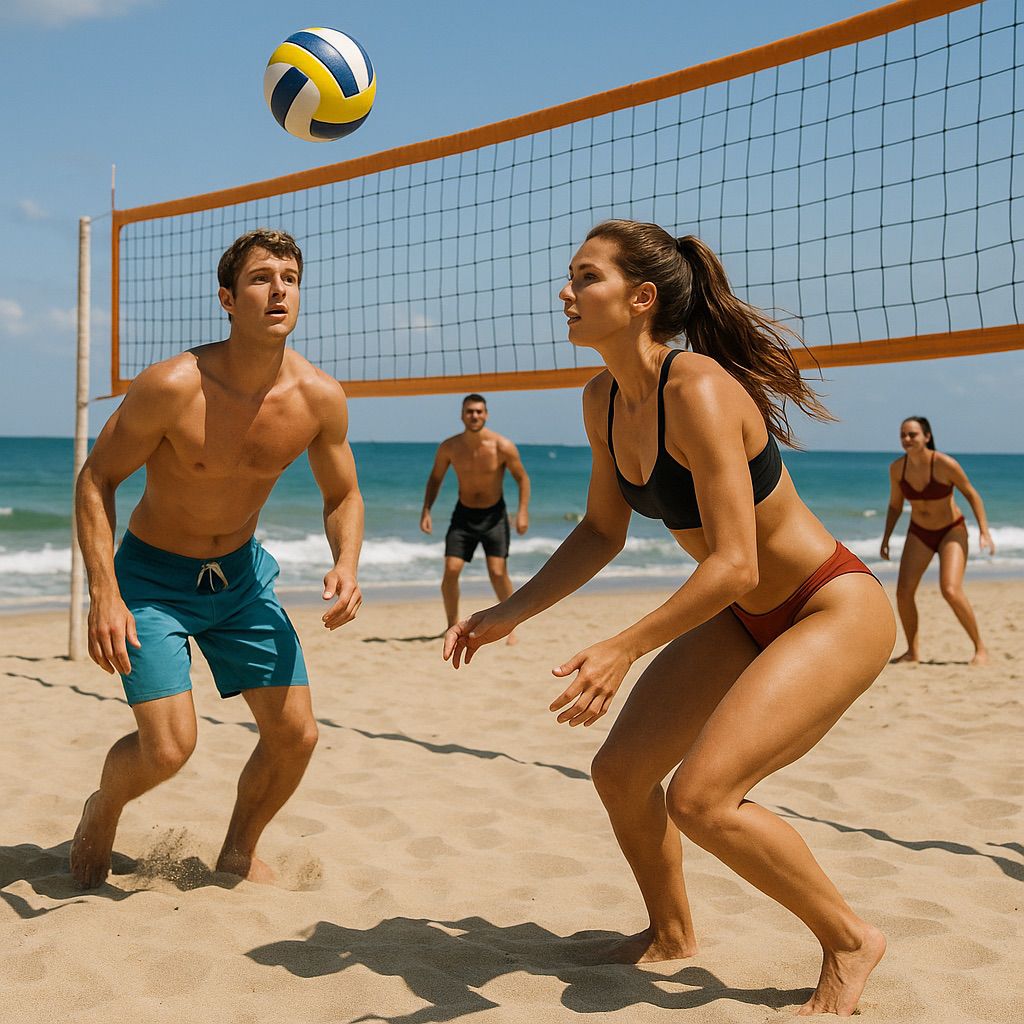
Perhaps the most iconic beach game of them all is beach volleyball. Born in Santa Monica in the 1920s, it has grown into an Olympic sport and a global passion. The game is deceptively simple—two teams, a net, and a ball. But the sand transforms the dynamics entirely. Leaping for a spike requires not just height but timing, because sand absorbs energy, demanding explosive effort. Diving to save a low ball doesn’t carry the same sting as it would on asphalt—it feels almost liberating, like the sand itself is in on the fun. In Brazil, where volleyball is as common on the beach as umbrellas, the sport has evolved into versions like footvolley, where players use their feet, chest, and head instead of hands, blending soccer skills with volleyball structure. Watching a beach in Rio is like seeing a festival of movement, with games spilling into one another, each claiming its own patch of sand.

Travel east to the Mediterranean, and you might encounter frescobol, a uniquely Brazilian export that thrives anywhere the sand is warm. Frescobol uses wooden paddles and a small rubber ball, but unlike tennis, the objective isn’t to beat your opponent—it’s to keep the ball in play for as long as possible. It’s a cooperative dance disguised as a game, a rhythm between two people where the true joy lies in continuity rather than competition. Tourists often underestimate it until they see how intense and graceful it becomes at higher speeds, players darting and lunging, paddles striking with a satisfying crack against the ball. Frescobol has spread beyond Brazil, popping up in places like Spain, Italy, and even beaches in the United States, where it appeals to those who like their games equal parts challenge and camaraderie.

Then there are the quieter, family-centered games like pétanque in France or bocce in Italy. These games require little more than a few metal or wooden balls and a sandy strip of ground. Friends gather, wine glasses nearby, and matches unfold slowly, punctuated with laughter and playful disputes over whose ball sits closer to the small target. On Mediterranean beaches, these games are as much about the social ritual as they are about scoring points. They create pockets of calm amid the more kinetic beach activities, offering a reminder that play can be both leisurely and competitive. For many, these are childhood memories tied to grandparents and summer holidays, carried across generations like heirlooms.

Move farther around the globe and you’ll find unique local traditions. In Southeast Asia, sepak takraw, usually played on hard courts, often spills onto beaches where nimble players keep a rattan ball aloft using only feet, knees, chest, and head. The sight of it is mesmerizing—a mix of acrobatics and control that seems almost impossible until you realize these players have trained since childhood. In India and Sri Lanka, beach cricket dominates the shoreline, with kids fashioning wickets out of driftwood and using taped tennis balls when real cricket gear isn’t available. The rules are often improvised, but the spirit is pure: every wave carries the laughter of batters sprinting across uneven sand, bowlers testing their speed, and fielders diving with reckless abandon into the surf.

In Hawaii, beach culture fuses with ocean sport seamlessly. Games like kanikapila—casual jam sessions with ukuleles—often coexist with active pastimes like frisbee, surf tag, or water-based relays. Children make obstacle courses out of sandcastles, racing to jump over moats or scale towers before the tide washes them away. Adults might organize canoe races that begin on the beach, with teams charging into the surf in perfect synchrony. Every event carries an element of respect for the ocean, reminding participants that the beach is both playground and sacred space.

The beauty of beach games is how adaptable they are to environment and mood. In Australia, beaches host large-scale events like surf lifesaving competitions, which combine swimming, running, and paddling in a test of athleticism rooted in safety traditions. But on any given afternoon, you’re just as likely to stumble upon a simple game of chase, frisbee, or beach rugby. Australians have perfected the art of mixing casual fun with fierce competition, and the beaches serve as arenas where both coexist.

Northern Europe, with its cooler waters and shorter summers, still finds joy in beach play. In Denmark and Sweden, kite flying is practically a beach sport, with families filling the sky with vibrant shapes while children dig elaborate sand mazes. In the United Kingdom, beach football (soccer) is a common sight, especially when the tide retreats to leave wide expanses of wet, compact sand. Even in chilly weather, the sight of people kicking a ball barefoot across the shoreline is a reminder of how irresistible the combination of sand, sport, and community truly is.

What’s striking is how often beach games cross boundaries. A family visiting from Italy might introduce bocce to children in Florida, who then bring the game back to their neighborhood park. Tourists who try frescobol in Rio may fall in love with it enough to buy paddles and continue the tradition back home. Beach volleyball has become a universal language—you can step into a pickup game in Bali or California without saying a word. The rules, like the waves, are understood.

Part of what makes beach games so enduring is their flexibility. They accommodate every mood: if you want high intensity, dive into beach volleyball or soccer; if you want relaxation, play pétanque or build elaborate sandcastles with kids; if you want to feel connected, try cooperative games like frisbee or frescobol. They also accommodate every body—whether you’re young or old, fit or casual, extroverted or introverted, there’s a beach game that matches your energy. In that sense, they are more than games; they are invitations to belong.

Beyond fun, beach games carry hidden benefits. Running in sand strengthens stabilizing muscles and improves balance. Tossing a frisbee or ball encourages coordination and cardiovascular activity. Cooperative games enhance communication and teamwork, while slower games like bocce foster patience and social bonding. Even building sandcastles, often dismissed as child’s play, develops creativity, spatial awareness, and problem-solving skills. The laughter, the sunshine, and the salty air only enhance these physical and mental rewards.

There’s also a poetic element to beach play. Games played at the edge of land and sea are temporary by design. A perfectly raked pétanque court is erased overnight by the tide. Footprints from a soccer match vanish with the next wave. Sandcastles crumble before dawn. Unlike stadium sports where victories are immortalized in scoreboards, beach games embrace impermanence. They remind us that joy doesn’t need to be preserved to be meaningful. The memory is enough.

Think of the cultural storytelling hidden in these games. In Brazil, volleyball and footvolley reflect a national love for both soccer and community gatherings. In France and Italy, pétanque and bocce embody leisurely afternoons infused with conversation. In South Asia, cricket on the beach reflects both colonial history and contemporary passion. In Australia, surf lifesaving competitions highlight the blending of safety, sport, and spectacle. Together, these games tell us not just how people play, but how they live, celebrate, and connect.

At the heart of it all is accessibility. Unlike elite sports that require expensive equipment, beach games thrive on simplicity. A stick, a ball, a paddle, or sometimes just imagination is enough. Sand is the great equalizer; whether you’re a millionaire tourist or a local child, the ground under your feet is the same. That’s why beach games have endured for generations, unchanged in their essence. They democratize play in a way that few other settings allow.

And so, the next time you step onto a beach, look around. Notice the volleyball players soaring into the sky. Notice the family crouched over bocce balls, debating distances with theatrical seriousness. Notice the children chasing a frisbee that the wind has carried almost to the water. Notice the young couple with paddles, moving in perfect harmony as they rally a frescobol ball. Notice how strangers become teammates, how laughter becomes the common tongue, how the beach itself seems to cheer each point, each dive, each improvised rule.

Beach games, in the end, are not about winning or losing. They are about being present—present in your body, in your community, and in the fleeting moment where the sun dips low and the horizon glows. They remind us that joy is not complicated. It can be as simple as a ball tossed across the sand, caught by a hand that belongs to a friend—or even better, a stranger who just became one.

Related Posts

Secrets in the Sand: How Barefoot Steps Reset Your Body and Brain

Dave

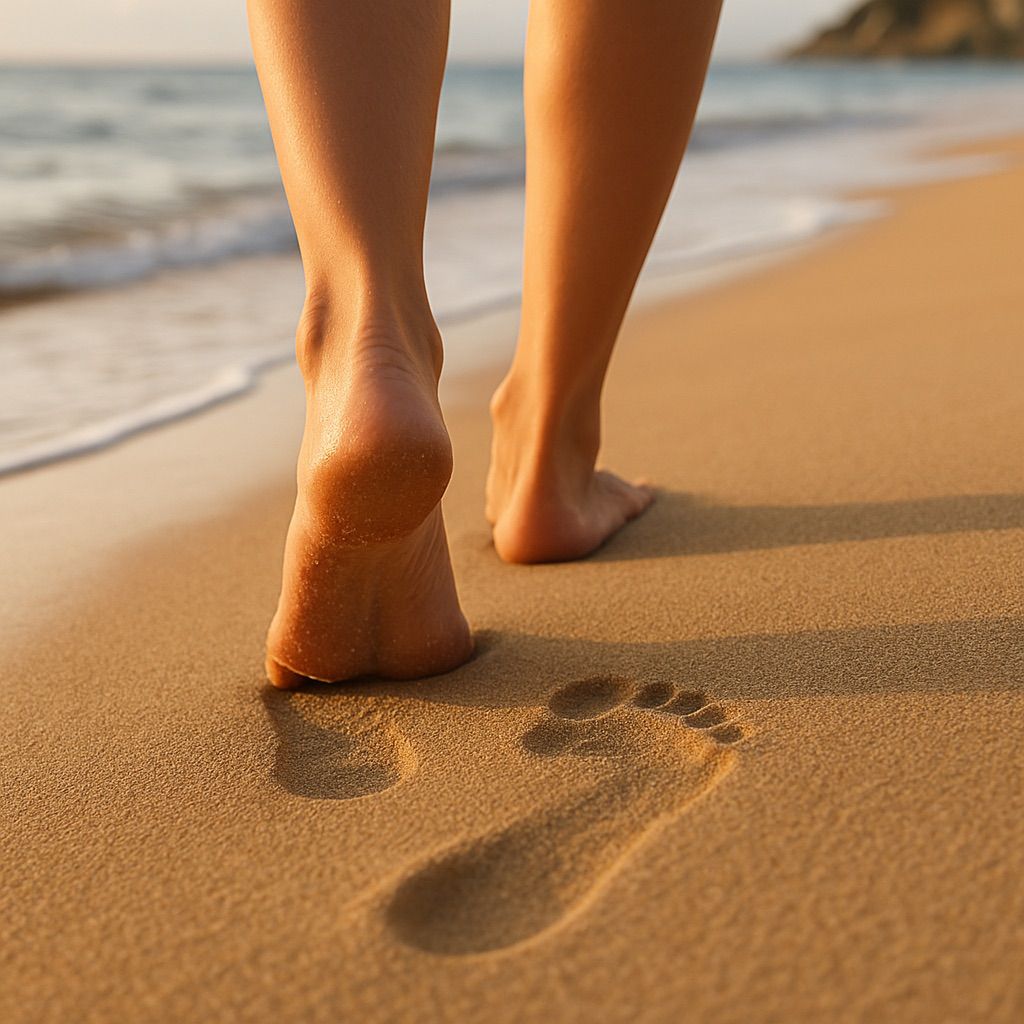
There’s a small, almost rebellious kind of joy in stepping out of your shoes and letting your feet meet the sand. The first touch is a flicker of temperature—the sun-warmed grains greeting your soles—then a slow, yielding sink as your weight presses down and the earth rearranges itself to fit you. It’s not just a pleasant sensation; it’s a full-body memo that says, “You’re here. You’re alive. Pay attention.” Barefoot walking on sand is one of those simple acts that hides a surprising amount of science and soul. It strengthens things you didn’t know were weak. It calms parts of you that forgot how to be quiet. It reminds you that your body, for all its complexity, was designed to move with the world, not against it. And that’s the secret many of us miss: the most powerful reset often looks like a gentle walk along the shore.

If you’ve ever taken that first step and felt your ankle wobble, you’ve met one of sand’s great teachers: instability. Unlike sidewalks, sand doesn’t demand a single, repetitive pattern. It shifts, so you adapt. Every micro-adjustment your foot makes—curling your toes, flaring your heel, tightening your arch—is a tiny strength exercise. The muscles of your feet wake up like a crowd at sunrise. The smaller stabilizers in your ankles, calves, and hips join the chorus, coordinating to keep you upright. Think of sand as a quiet, forgiving gym—no mirrors, no clanging metal—just an ever-changing surface that asks you to be present. Over time, this unpredictability builds foot strength, improves balance, and teaches your nervous system to communicate more efficiently with your muscles. It’s functional fitness in the oldest sense of the term: training your body to respond gracefully to the world it actually lives in.

There’s also the matter of pace. Most of us move too fast, even when we’re technically standing still. Sand slows you down—not because you’re lazy, but because the medium makes you honest. You can’t sprint mindlessly across a soft beach without paying attention; the surface won’t let you. Your stride shortens. Your knees bend. Your hips start to move more fluidly. Your spine becomes a mast that steadies the ship. In that slowness is an opportunity to breathe deeply, to open your chest to the sea, to let your arms fall with your steps. A few minutes in, you’re not just walking; you’re unspooling a thread of tension that’s been wrapped tight around your day. And as your breath finds rhythm with your steps, your mind often follows—the to-do list quiets, the sense of urgency thins, and you begin to feel that spaciousness in your head that you forgot existed.

Then there’s the sensory orchestra. Bare feet mean full access to the world: cool patches of damp sand hiding under warm top layers, the contour of a shell under your arch, the faint fizz of foam as it reaches for your toes and retreats. Your skin is your largest organ, a master receiver of information, and on the beach you’re tuning it to high fidelity. The texture of sand provides rich, varied input to thousands of nerve endings in your soles, sending a stream of data to your brain about pressure, temperature, and terrain. That feedback can improve proprioception—the body’s sense of where it is in space—like turning up the brightness on your internal GPS. Better proprioception often means better movement: more confident steps, quicker reactions, and a reduced risk of missteps that become injuries. The beauty is that your brain loves novelty, and a beach is novelty in endless supply—no two steps are the same, and because of that, your nervous system keeps learning.

But let’s be honest about something: our feet have a story, and for many people that story includes aches, stiffness, and a lifetime of shoes that turned them into passengers rather than drivers. Barefoot walking on sand is a gentle invitation back to agency. The arch—so frequently misunderstood as either too high or too flat—relearns its job as an elastic bridge. The toes get a chance to spread and stabilize instead of cramming into a narrow toe box. The calf muscles, perpetually shortened by heeled shoes and hard surfaces, lengthen a little with each sink and push. Over time, that can translate into better alignment up the chain: when your feet work, your ankles stabilize; when your ankles stabilize, your knees track more cleanly; when your knees track, your hips and lower back carry less strain. It’s not magic; it’s mechanics favored by a forgiving surface.

Of course, the ocean gives you more than physics. There’s something about a shoreline that resets perspective, even if you’re not sure why. Maybe it’s the horizon: a literal line of possibility that stretches beyond whatever you’ve been carrying. Maybe it’s the soundscape—the slow thunder of waves—masking the mental noise that chews through your attention inland. For many people, the beach flips on what marine biologist Wallace J. Nichols calls the “blue mind,” a calmer mental mode associated with water settings. You don’t have to be a poet to feel it; just a person willing to stand there long enough to let your senses catch up. When you walk barefoot in that setting, your brain gets two signals at once: the grounding from your feet, and the spaciousness from your eyes and ears. The result is an unusually effective formula for dropping stress in real time.

Let’s talk about “grounding,” a concept that quickly gets tangled in big claims. You don’t need to buy into anything mystical to appreciate the clear, lived experience: connecting skin to earth can feel steadier than being insulated by rubber soles. At minimum, it’s a habit that encourages time outdoors, slower walking, and full-body attention—three things modern life notoriously under-delivers. If you find the practice soothing, that feeling itself is the benefit worth chasing. If you’re skeptical, you can still enjoy the measurable perks: stronger feet, better balance, fresh air, and a calmer nervous system that comes from moving in a rhythmic, sensory-rich environment.

The hidden cardio is another quiet win. Sand demands more from your muscles with every step. Even a leisurely, 10- to 20-minute beach walk can elevate your heart rate in a low-impact way. Because the surface absorbs some of the force you generate, your joints deal with less sharp impact than on concrete. Many people find they can go a little longer on sand without the same post-walk soreness in knees or lower back. It’s like nature’s elliptical—more work, less strain—wrapped in sunlight and salt air. If you crave a challenge, walk closer to the dry, softer sand; if you want more stability, stay near the water’s edge where the surface is firmer. You get to tune the difficulty without changing the location.

And then there’s temperature, a quiet physiotherapist. Warm sand coaxes blood flow to the soles, which often spend their days chilled and under-stimulated in air-conditioned rooms. In the cooler hours—sunrise and sunset—the sand’s warmth feels like a natural heat pad. That comfort alone can relax the muscles in your feet and calves, making each step more fluid. When a wave rolls over your ankles, the brief cool contrast wakes tired tissues like a splash of water on a sleepy face. It’s hot-and-cold hydrotherapy, delivered by the planet for free.

But what about the practicalities—the small obstacles that keep a beautiful idea from becoming a real habit? Start with duration. Ten minutes counts. You don’t need to schedule an epic trek or “close all your rings.” A dozen mindful, barefoot minutes can do more for your nervous system than an hour you don’t enjoy. To make it stick, anchor the walk to something you already do: after your morning coffee, after school drop-off, while dinner’s simmering. If you’re carrying stress (and who isn’t), try treating the first five minutes as a decompression lane. Feel the sand. Count your exhale to four. Let your arms dangle and your jaw unclench. Imagine dropping questions into the tide: What can wait? What do I want the next hour to feel like? How little force can I use and still move forward?

If foot strength is new for you, think micro-progress. The first week, aim for softer, damp sand near the water and short intervals—five to ten minutes—even if you’re eager. In week two, add a minute or two and venture to a slightly softer patch. A simple pattern that works: three steps slow, three steps normal, repeat. Slow steps keep you honest about form—quiet landings, even weight, toes spreading—while normal steps let you settle into a natural rhythm. If your arches feel tired, that’s okay; tired is a signal to stop for the day, not a reason to quit the practice. Over a few weeks, many people notice their arches feel springier, their toes more articulate, and their balance better on everyday surfaces.

Use your eyes like a second set of feet. Scan the ground ahead for shells, stones, or debris. The goal isn’t to tiptoe nervously—it’s to walk with awareness, like a surfer reading a wave. If you do step on something sharp, pause. Shake out the sting, check the skin, and carry on if it’s superficial. If you have diabetes, neuropathy, or foot wounds, talk to a clinician first—barefoot walking may still be possible, but you’ll want personalized guidance. Sand can also be hot enough to burn later in the day; prefer morning and late afternoon, and test the temperature with your hand before committing.

What you do with your arms matters more than most people realize. Let them swing. That movement counter-rotates your torso and hips, easing your lower back and helping your feet place more naturally. Keep your gaze about ten meters ahead rather than down at your toes; your neck will thank you. And breathe like you’re walking through a long exhale—because you are. A simple pattern: inhale for three steps, exhale for four. The longer exhale nudges your nervous system toward calm, leveraging the vagus nerve’s role in relaxation. When your thoughts drift (and they will), bring your attention to the sensation of your heel sinking, your arch loading, your toes pressing, your body rising. That’s one barefoot step, start to finish. Repeat it a few hundred times and you’ve built a moving meditation without ever trying to meditate.

There’s also a quiet emotional repair that happens when your feet meet the shore. The beach is a shapeshifter: a place for sprinting, for ambling, for grieving, for joy. If you’re carrying anger, the sand absorbs the excess like an old friend who doesn’t need you to explain. If you’re tired, the rhythm of the waves will keep time while you borrow a little calm. If you’re excited, you’ll find room to celebrate without worrying how loud you are—nature has already turned the volume up. Walking barefoot in that environment becomes a way to metabolize feelings that never quite get processed in the daily grind. It’s not therapy, but it is therapeutic.

Parents discover another perk quickly: kids are natural barefoot philosophers. Give a child a strip of beach and they will invent a world—races with the waves, treasure hunts for shells, obstacle courses over tide lines. Walking alongside them barefoot creates an easy, shared sensory language. You notice where the sand is warmest; they show you the smoothest skipping stones. You point out a pelican’s shadow; they teach you how to sprint away from the foamy edge like it’s a playful monster. These are the tiny, healthy memories families are built on: ordinary wonder, repeated often.

If you like a plan, here’s a simple one you can start the next time you meet a shoreline, written like a friendly whisper rather than a command. Day one: walk for ten minutes at low tide near the waterline, barefoot, slow enough to feel your heels sink. Day two: repeat, adding a minute and a few slow-motion steps where you pause on the mid-stance and notice your arch. Day three: shift five minutes to slightly softer sand, then finish on firmer ground; pay attention to the difference in muscle effort. Day four: after your walk, stand facing the water and roll slowly from heels to toes for one minute as if the ground is a gentle rocking chair. Day five: keep the walk casual, but finish with five “quiet steps”—place your feet so softly you can hardly hear them. Day six: let it be social; bring a friend, walk, talk, and laugh—because joy sticks better in groups. Day seven: take a photo of your footprints and then watch the tide erase them; let it remind you that stress, too, is temporary.

As your relationship with sand deepens, you may notice subtle payoffs landing elsewhere. Your balance on stairs feels easier. Your posture in line at the café is looser, your shoulders lower. Your calves don’t bark after a day on your feet. That’s what happens when small muscles resume their jobs: the big ones stop overworking. Walking barefoot on sand also nudges your gait toward a softer landing. Without the buffer of thick soles, most people naturally shorten their stride and place the foot more underneath the body rather than far in front. That alignment spreads the load through the whole kinetic chain, reducing the braking forces that accumulate during long, heel-striking strides on hard ground. It’s not that shoes are bad; it’s that variety is good, and your feet thrive on it.

You’ll also learn a surprising amount about timing. Beaches change character throughout the day—the sand is cooler at sunrise, busier after lunch, smoother after a receding tide, sculpted into ridges by wind overnight. When you begin to read those patterns, your walk becomes a conversation with the landscape. On a breezy morning, head into the wind for the first half and let it push you back on the return. On a cloudless evening, walk west and gather gold from the setting sun, then turn around and walk into a violet-blue that softens your eyes. On a drizzly day, watch how the wet sand tightens beneath your steps and doubles as a mirror.

There will be days you don’t want to go—too hot, too humid, too busy. Try this trick: tell yourself you only have to step onto the sand. That’s all. Nine times out of ten, momentum will carry you forward. On the tenth, you still touched the earth and reminded your nervous system how to settle. Another trick: end each walk with one small gratitude you wouldn’t have had without showing up. The cool patch under the dry sand. The far laughter of strangers. The way your feet look dusted with gold. Gratitude turns a single walk into the first line of a habit.

Let’s keep it real with a few cautions, folded gently into the invitation. Hot sand can burn—choose morning or late afternoon, aim for shade breaks, and test the surface with your hand. Be mindful of glass, hooks, or sharp shells; a quick visual scan saves a lot of drama. If you have circulatory issues, neuropathy, or a history of foot ulcers, consult a medical professional before you go barefoot on natural terrain; safety is part of strength. If you tend toward plantar fascia irritation, ease in slowly, favor firmer sand at first, and stop if pain—not just fatigue—shows up. And sunscreen isn’t optional on the tops of your feet; they’re closer to the sun than your calendar is to empty.

When all is said and walked, the hidden benefits of barefoot time on sand are not rare or exotic. They’re ordinary, which is why they’re so powerful. Your feet get stronger because you use them for what they were made to do. Your balance improves because your brain is fed a richer signal. Your joints learn generosity from a surface that yields. Your breath slows to match the sea’s patient metronome. Your mind steps out of the hot circle of worry and remembers the long horizon. None of this requires the “perfect” beach or the “perfect” body or the “perfect” schedule. It asks only that you show up, set your soles free, and let the shore reshape not just the ground beneath you but the way you carry yourself through the rest of your life.

And that might be the real, shining secret in the sand: you don’t have to push to become better. You can soften. You can let the world help. You can trust that something as small as a barefoot step can ripple outward into your posture, your mood, your sleep, your relationships. A beach walk doesn’t fix everything, but it doesn’t have to. It just needs to be the part of your day where you remember how to be a human animal in a living world—equal parts muscle and breath, purpose and play. Tomorrow, the tide will tidy away the marks you left. But you’ll take the changes with you: stronger feet, a clearer head, a little more room inside your chest. That’s a good trade for ten quiet minutes and a handful of sand.

Related Posts

The Empowered Lens: How to Plan Bikini Photo Shoots That Celebrate People, Not Objects

Dave

There’s a moment on every summer shoreline when the wind drops, the water inhales, and the sun hovers just above the horizon like a held note. Photographers call it golden hour, but the name undersells what it does to a person’s confidence: light softens, edges warm, and even the shyest among us feels a little braver. It’s an ideal time to make images in swimwear, and also a dangerous time—because the same glow that flatters can tempt us to forget that the person in the frame is a person first. “Bikini photo shoots done right” is not a mood board; it’s a philosophy. It’s the decision to treat the body not as material but as meaning, to invite collaboration rather than extract compliance, to design a shoot where dignity is built into the logistics and creativity grows out of trust. This essay is a road map for photographers, influencers, brand creatives, and hobbyists who love summer aesthetics and want to do them humanely. It’s a long walk—from first message to final edit—because respect is not a filter you add in post. It’s a workflow.

Before you even think about locations or lenses, begin with values. Say them out loud, write them down, put them into your call sheet: consent-centered, adult-only, inclusive, culturally respectful, environmentally gentle, safety-forward, no sexualization, no diet talk, no retouching that rewrites bodies. If that sounds like an HR policy rather than a creative brief, good—because the most liberating shoots are the ones where boundaries are explicit. When every collaborator knows the rules, they can play inside them with confidence. Share those values in your initial outreach: “I’m planning an empowerment-focused swimwear portrait session for adults (18+). Poses will remain natural and non-sexualized. You’ll help craft the concepts, approve wardrobe, and choose the images that get shared.” That one paragraph reframes the entire enterprise from “I take” to “we make.” It also pre-screens for the right fit. People who only want spectacle drift away; people who want to be seen—not displayed—lean in.

Next comes consent, which isn’t a single yes—it’s a rolling conversation. Start with a short questionnaire that asks comfort levels on a spectrum: “Which poses feel good? Which don’t? How do you feel about close-ups of midsection, back, thighs? Do you want to jump, swim, lounge, dance? Any colors or cuts you love or avoid?” Include a section for accessibility needs (mobility, sensory, medical), religious or cultural considerations (e.g., modest swimwear, hijab-friendly styling), and privacy preferences (anonymous posting, face partially obscured, first-name-only credits, or keep images private). Send a plain-language contract that distinguishes three things people often conflate: 1) consent to be photographed on the day, 2) permission to use images in a portfolio/social (limited and revocable if you agree), and 3) any commercial licensing (separate, paid, and negotiated). Build in a kill switch: the right to stop a shot, change an outfit, or call the session without penalty. Consent without exit isn’t consent; it’s pressure.

Casting, like light, reveals your ethics. If you want empowerment, your roster should look like real beaches do: different ages (adults only), sizes, skin tones, genders, and abilities. Avoid tokenism—don’t slot diversity into a single frame and call it done. Instead, design micro-stories that honor each person’s individuality: a runner cooling down at the tideline, a book lover in a striped cabana chair, a surfer waxing a board while chatting with friends, a wheelchair user navigating a boardwalk with sunlight flaring the spokes, a trans woman being fanned with a straw hat by her best friend while both laugh, a duo of older models—silver hair catching the last rays—clinking iced tea. The goal is not to showcase bodies for appraisal but to show people in their element. When models feel like whole humans on camera, audiences stop scanning for flaws and start looking for feelings.

Wardrobe is where many shoots tip toward objectification without meaning to. Your styling note should whisper ease, not performance. Encourage models to bring options that make them feel powerful: classic bikinis, high-waisted sets, sport tops, rash guards, one-pieces, swim leggings, sarongs, linen shirts, roomy button-downs, crochet cover-ups, sun hats, scarves, and jewelry that won’t snag. If you’re supplying pieces, size-inclusive means truly inclusive; carry stock from petite to plus, with cuts that support busts without forcing cleavage. Offer adhesive nipple covers, seamless underwear, and body tape for those who want them—and don’t treat any of it as mandatory. Bring towels, robes, and a pop-up changing tent; privacy isn’t a luxury on a beach—it’s a right. Ban performative impracticalities: no stiletto heels sinking into sand, no swimsuits two sizes too small “for look,” no glass props that can shatter on public shorelines. Empowerment is comfortable by design.

Your mood board should balance aesthetics with evidence of care. Include lighting and palette references (golden hour ambers, midday glints, blue hour cobalt), but also add pages for body language: expansive arms, weight on a strong leg, shoulders back but relaxed, genuine laughter that crinkles eyes, quiet moments—eyes closed, chin lifted into the breeze. Sprinkle in “negative space” frames where the body occupies a corner and the horizon carries most of the emotion; it teaches you not to rely on curves for interest. Include “hands” studies: that gentle grip on a hat brim, fingers trailing in water, palms pressed to sternum in a breath-check. When you brief your team, talk verbs, not shapes: “walk, sway, stretch, breathe, spin, lean, listen to the waves.” Verbs evoke presence; fixed shapes invite performance.

Scouting a location is part aesthetics, part ethics, part logistics. Public beaches offer texture and variety—piers, rock jetties, dunes, showers, lifeguard towers—but they also carry bystanders, regulations, and fragile habitats. Read the posted signs. No stepping on dunes (those grasses hold coastlines together). Keep the crew footprint small and portable: collapsible reflector, lightweight stands, sandbags, microfiber towels for gear, trash bags to leave the place cleaner than you found it. If the tide chart were a person, it would be your assistant director—consult it like gospel. Know sunrise and sunset angles, know where the sun drops behind buildings, and how wind will cut the temperature. If privacy is a priority, look for a secluded cove or rent a beachfront property with permission. For pool shoots, get written authorization from owners or hotels; for piers or state parks, call the permitting office and expect to carry insurance if you’re commercial. Pay location fees promptly. Public beauty is not a free-for-all; it’s a shared inheritance that expects manners.

Safety is not a buzzkill; it’s a creative multiplier. Assign a safety lead who watches currents, guards bags, and politely intercepts onlookers. Pack a kit: SPF 30+ reef-safe sunscreen, aloe, bug spray, electrolytes, bandaids, tweezers, wet wipes, hair ties, hand warmers (yes, in summer—people get chilled after swimming), menstrual products, a compact first-aid book, and a whistle for emergencies. Walk the terrain barefoot before asking anyone else to—check for broken shells, fishing hooks, glass. Establish a buddy system if you’re shooting in water: one person swims, one spots, one photographs. Set dress codes for crew that signal professionalism (lightweight shirts, IDs on lanyards) so strangers know who’s with you. Do not shoot minors in swimwear—ever. If you’re on a public beach, keep a respectful radius from families and avoid angles that accidentally include strangers in swim attire; their consent matters too.

Gear choices can either flatten a person into “figure” or render them as presence. The difference isn’t just focal length; it’s intention. A 35mm or 50mm prime invites closeness without distortion if you shoot at eye level; a 24–70mm zoom gives you pace without shouting across sand. Telephotos (85–135mm) compress background clutter into pleasing blur while preserving breathing room. Use a circular polarizer to tame glare on water and deepen skies; bring a 5-in-1 reflector (silver/white/gold) and an assistant who knows that “gold” can go brassy if overused. If you light, keep it gentle—battery strobes feathered off the face, big umbrella or octa as high-key fill, or a single backlight to rim hair at sunset. Respect the ambient story; don’t bulldoze it. Shoot RAW for latitude, but expose for skin first. Sand fools meters—chimp the histogram, not the LCD. Remember that your gear choices should support body-friendly angles: a slight top-down for seated shots (not to “slim,” but to honor posture), level horizon for power stances, low vantage for dancing silhouettes against sky. If your lens turns a person into geometry, stop and reframe.

Directing is where empowerment either lands or evaporates. Words matter. Replace “sexy” with “strong,” “soft,” “playful,” “serene,” “athletic,” “regal.” Replace “suck it in” with “grow tall.” Replace “arch your back” with “breathe into your chest and find length.” Replace “give me more” with “tell me how that felt—want to try a variation?” The best direction is a collaboration of sensations: “Feet in the foam, hold your hat—okay, listen for the seventh wave and turn toward it, eyes closed for two beats, then open.” Mirror the pose with your own body. Celebrate micro-feedback: “That hand on your hip looked smart; keep it; yes to that laugh.” Build rest into the pace so people don’t tire into compliance. Keep a private vocabulary for wardrobe adjustments (quietly offer to check straps or ties; never touch without explicit permission). And allow truly candid moments to rule the gallery. Empowerment lives in the frame where a person forgets there is a frame.

Representation is not complete without texture of story. Invite each subject to bring a “meaning prop” that tells on their life: a dog’s leash, a surf wax comb, a dog-eared book with sea-notes in the margins, a picnic blanket hand-quilted by an aunt, a stethoscope for the ER nurse who came straight from nights, a parasol a grandmother carried in another country. These details turn a swimwear frame into a portrait; they anchor beauty in biography. If you’re shooting for a brand, fight for captions that honor this: “Amira, community organizer and weekend longboarder, wearing the Tulum one-piece—pockets because she asked for them.” No euphemisms like “real women”; all women are real. No “flattering” as code for “shrinking.” Talk fit and feel. Talk use.

Music turns a beach into a room. Build a collaborative playlist beforehand—subjects add their confidence tracks, you add instrumentals that soothe nerves between takes. Keep volume neighborly. When the song that makes someone feel invincible comes on, give them the frame to be invincible. Movement sequences—twirls, sprints through ankle-deep water, slow walks hip-to-hip—work best when sound choreographs breath. Silence also has its place; the hush a person enters while listening to waves is a portrait all by itself.

Editing carries its own ethics. Color grade to the day’s truth; don’t turn 5 p.m. into a tropical noon if it wasn’t. Honor skin as skin—texture, pores, freckles, tan lines, scars, stretch marks, body hair. Remove temporary distractions (a stray hair across an eye, a sand blotch on a calf), but never “perfect” a person into a doll. If a subject has a long-standing scar or birthmark they want softened for personal reasons, follow their lead, but default to reverence. Keep body proportions real—no liquify, no limb-lengthening. Sequence the gallery like a story: open with a wide establishing frame, move through quieter chapters, and end on something triumphant or mischievous that feels like a curtain call. Deliver both hero edits and a contact sheet; empowerment includes choice. If someone asks to pull an image after delivery, honor it; their body, their archive.

Captions and posting are the public face of your values. Ask your subject how they want to be named and credited; link to their work or fundraiser if they have one. Add content notes where appropriate (e.g., “swimwear” for viewers who filter feeds at work). Avoid engagement bait that treats a person like a poll (“Which body type do you prefer?” is not a question; it’s harm). Pre-moderate comments or warn followers that disrespect vanishes. Your comment section is part of the set; keep it safe. If you’re a brand, pay everyone on time and at fair rates; if you’re a hobbyist, offer trade that benefits both sides and doesn’t devalue working models’ labor. If your account earns money, tithe some of that to beach cleanups, inclusive swimwear initiatives, or swim-safety programs that teach adults who weren’t given the chance as kids.

Cultural respect is not mood—it’s method. Don’t borrow motifs (e.g., leis, saris, beadwork) as “aesthetic” without community involvement and understanding. If your subject’s culture has norms around modesty or hair covering, design the shoot to honor them and showcase ingenuity: long-sleeve swim tops with vivid prints, half-gloves for sun protection, elegant cover-ups in motion. Translate empowerment into contexts where agency and belonging are the center. A shoot that makes one person feel powerful at the expense of another’s culture isn’t empowerment; it’s costume.

Weather will change your plan; let it change your story, not your respect. Overcast? Lean into soft, painterly frames and whispered color palettes. Windy? Turn sarongs into choreography and hair into narrative—pin flyaways when someone asks; otherwise, let the breeze be a character. Too bright? Look for backlit shade, use hats and umbrellas, or reschedule. Heat wave? Cut the set length, prioritize hydration and breaks, cool towels on necks, shade tent as sanctuary. Putting care first is not unprofessional; it’s how professionalism looks to the person being photographed.

A few concrete do’s and don’ts crystallize all of this. Do: contract consent and usage clearly, bring a changing tent, hire a diverse crew, keep a safety lead, scout with tide charts, make a shared playlist, bring size-inclusive wardrobe, and build breaks. Don’t: touch the model or their wardrobe without permission, ask for “sexier,” shoot minors, aim lenses toward bystanders in swimwear, post bloopers that undermine dignity, retouch away identity, or joke at someone’s expense. It’s remarkable how creative teams bloom when they know the work won’t ever cross the line.

Empowerment also lives behind the camera. If you are the photographer, remember you are not only technician but host. Introduce everyone by name; ask pronouns; check in before each setup: “How’s your energy? Want a warmer towel? Any pose you’ve been thinking about?” Share the LCD often; put the camera into your subject’s hands and ask which frames feel like them. If they shrug at your favorite shot, let it go. The goal is not to collect trophies for your portfolio; it’s to co-author images that someone wants to keep for years because they recognize themselves in them. The biggest compliment you can get isn’t “You made me look good,” it’s “You made me feel safe enough to be myself.”

Consider the ripple effects when bikini shoots are done this way. A teenager scrolling (who you will never photograph) sees adults of every stripe being joyful and unashamed and internalizes a new script about bodies. A brand quietly raises its sample-size order to include real range and sells more because people recognize themselves. A couple in their fifties books a session and rediscovers play. Someone who left swim culture because of shame starts swimming again. An influencer with reach posts a resources list—swim lessons for adult beginners, surf camps for women, adaptive boards for para-athletes, inclusive swimwear labels—and uses their platform as a bridge rather than a mirror. Photography can’t fix culture, but it can irrigate places where better culture wants to grow.

There will always be critics who insist that any swimwear imagery is inherently objectifying. Engage them with humility. Acknowledge the industry’s history of turning bodies into inventory. Then point to your methods. Show the intake forms that center consent, the contracts that separate portfolio from commercial use, the casting that looks like actual humanity, the lighting that caresses rather than carves, the editing that keeps skin human, the captions that name people’s work and wisdom, the comment policies that treat respect like architecture. You’re not arguing that a bikini is liberation; you’re arguing that agency is—and that clothing can be canvas when agency holds the brush.

One last scene, because the small details are what memory keeps. The sun has dropped; the sky is violet with a seam of neon at the horizon. Your last frame is not a posed triumph but a weary smile as someone pulls on an oversized shirt and takes a long drink of water. The crew is packing—reflector claps shut, tripod legs scrape sand, someone’s laughter stutters and spreads. You walk the last twenty yards together, eyes scanning for forgotten hair ties and stray safety pins; you leave the beach cleaner than you found it. Later, as files back up and the first contact sheet appears on screen, you’re tempted to triage quickly, to scroll for fireworks. Don’t. Start with the quiet frames where shoulders are down and breath is visible. Start with the images where a person took up exactly as much space as they wanted, no more, no less. That’s the electricity you came for, and it’s the one that lasts: not the spectacle of a body, but the evidence of a person.

Related Posts

Surfing for Beginners: What to Expect

Dave

Your first day learning to surf doesn’t begin with the ocean; it starts with a feeling—the kind that pulls at you while you’re scrolling past sunrise photos and glassy waves, the kind that shows up in a stray beach breeze miles from the coast or in a song that sounds like summer. Surfing has a way of whispering to people before it shouts. If you’ve felt that tug, you’re already halfway there. The rest is learning to show up—board in hand, salt in the air, heart beating fast—and discovering what the ocean has to teach you. This is everything to expect, honestly and without sugarcoating, so your first sessions become a string of small, exhilarating wins instead of a confusing blur.

The beach is both more ordinary and more magical than you imagine on your first lesson day. There’s sunscreen in the air and coffee in the parking lot; there are sandy families and dogs that look like retired lifeguards; there are surfers who seem to know exactly where to go without ever looking up. You’ll feel new. That’s good. Being new means you can pay attention. You’ll notice the sound first—a low rolling hush underneath the gulls and chatter—waves folding, unfolding, folding again. You’ll learn that almost everything in surfing begins with listening to that sound and then matching your breath to it, the way you’d match steps with a friend on a long walk.

There’s a board under your arm. At some point you chose it, or someone chose it for you. If you want the simplest path, choose a big one—an 8- or 9-foot soft-top is a floating permission slip to learn slower and smarter. Big boards forgive wobbly stances and hesitant pop-ups; they help you find glide. You’ll feel slightly silly carrying it, like you stole a door and ran off toward the sea, but you’ll also feel the promise of all that foam: buoyancy, stability, and time to figure things out. You can chase performance later; on your first months, chase momentum.

Before you touch the water, the beach teaches your first lesson: patience disguised as preparation. You’ll wax your board (a light crosshatch on the deck where your feet and hands will go) and maybe do a few awkward pop-ups on the sand—hands under shoulders, hips forward, chest lifted, then a quick but smooth step to your feet, landing with your weight centered and your eyes forward. It will feel weird. That’s the point. Better to debug your stance in the sand than to learn the hard way while a wave is rearranging your life. You’ll also stretch—hamstrings, hips, shoulders, lower back—and feel your body ask, “So… we’re really doing this?” Yes. You are.

When you wade in, the water is never one temperature; it’s a map of microclimates. Ankles say “hello” in a sharp syllable, knees say “ahh,” waist says “oh, that’s a choice,” and then a wave smacks your ribcage and baptizes you without asking. Welcome. You’ll feel the board pull and bob. The leash will touch your ankle and you’ll wonder how people forget it’s there. They don’t, not at first. You’ll learn to keep the board between yourself and the horizon; you’ll learn to point its nose toward incoming waves so it doesn’t escape like a giant cork. Your instructor or a friend will tell you the two words you’ll hear forever: “Paddle out.”

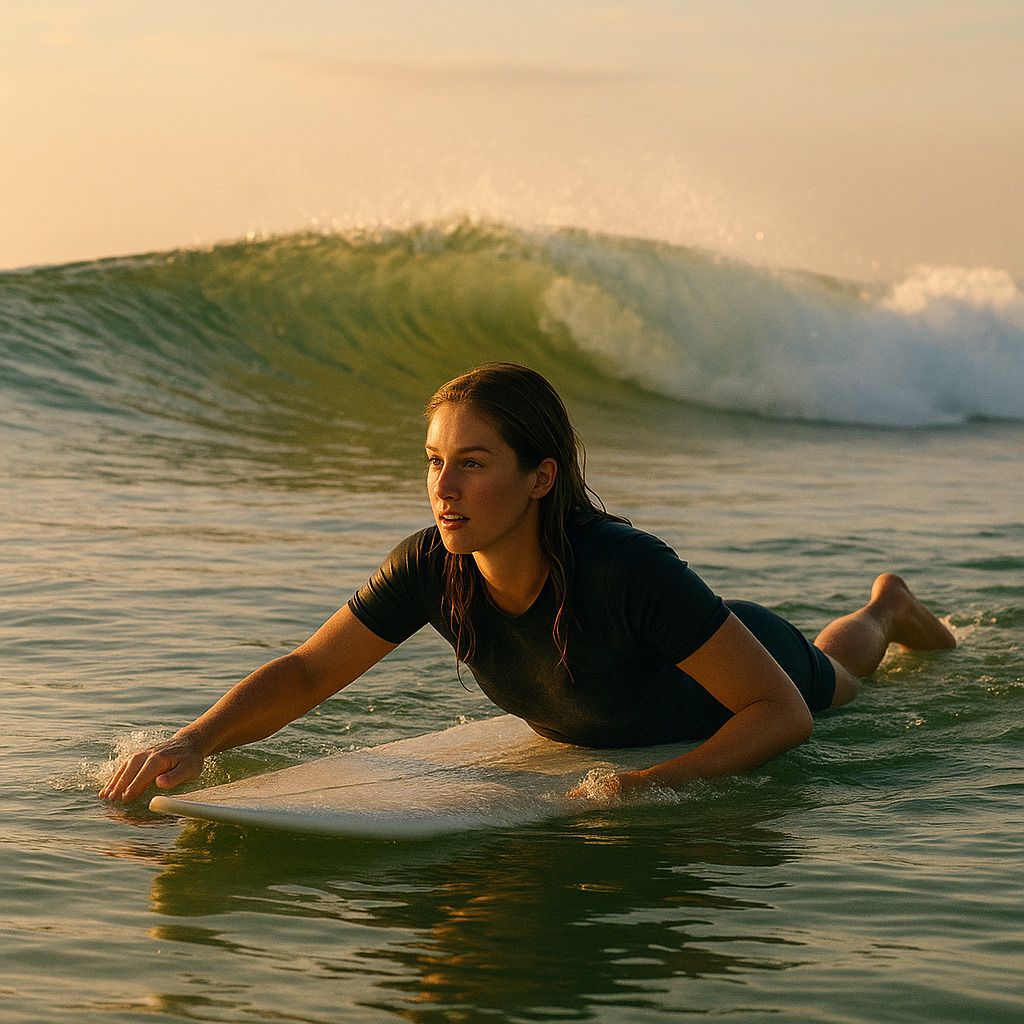
Paddling is surfing’s true engine and first surprise: it’s less about fighting the ocean and more about learning to move with it. Keep your chest lifted just enough that your nose isn’t plowing and your lower back isn’t screaming. Look where you’re going, long strokes, fingers slightly cupped. You’ll tend to paddle too short and too frantic; imagine instead you’re slowly climbing a ladder that stretches into the horizon. Each stroke should matter. This is where you learn rhythm—like a song that measures itself in breath and distance instead of beats. If a whitewater wave approaches, you’ll “press-and-knee” or push up slightly and let the foam roll between you and the deck. You’ll get shoved back. That’s fine. You don’t win by brute force; you win by reading the ocean better.

Somewhere past the shore break, there’s a quiet lane where the waves calm down before they rise. This is the lineup, and it’s a classroom with no walls. You’ll sit or belly down and watch the water breathe—lulls, sets, shifts. That surfer over there looks relaxed? They’re not lazy; they’re scanning. What is the wind doing? Are sets arriving every few minutes with two or three larger waves? Are people catching rides on the inside or farther out by a deeper channel? You’ll see patterns. Human beings are built for pattern-spotting. It’s just that the ocean likes to shuffle the deck now and then, and part of the humility of surfing is accepting that your patterns are always provisional.

Then comes your first wave—the conversation you’ve been eavesdropping on since you waxed that board. You’re positioned a little inside so you don’t have to sprint yourself into a heart attack. You turn the board toward shore, glance over your shoulder as the bump becomes a wall, and paddle with intent. The wave lifts you like a question. Two more strokes. One more. You’ll want to stand early. Don’t. Feel the board start to slide on its own—like a shopping cart that suddenly got a motor—then pop up decisively. Hands under you, hips driving forward, eyes up, feet landing wider than you think, front foot aiming slightly forward, back foot perpendicular, knees soft. If your eyes are down at your feet, you go down. If your chest is over the stringer and you’re looking where you want to go, you stand a chance.

You’ll stand for a second or ten. It will feel like standing on a rolling coin. Your instincts will argue. One will say “freeze” and the other will scream “lean!” Try neither. Bend, breathe, and let your ankles do the listening. Surfing is a thousand tiny adjustments you don’t consciously calculate. Your eyes read the slope; your hips translate; your feet write the sentence. When the ride ends (and it will, sooner than you want), step off rather than dive headfirst, keep the board away from your body, and come up protecting your head. If you wipe out harder than expected—and you will—know that wipeouts are the price of admission, not a sign you don’t belong. Everyone pays the cover.

Etiquette enters early. It isn’t gatekeeping; it’s traffic rules so the game stays fun and nobody collects fin marks on their shins. The surfer closest to the peak has priority; don’t drop in on someone’s right-of-way. Look both ways before you paddle for a wave; if someone’s already riding, pull back. Don’t paddle straight through the face of a wave someone is surfing—go around the shoulder or through the whitewater behind them. Smile. Apologize if you mess up. People forgive beginners who are respectful. They side-eye beginners who act like the ocean is a private amusement park. Learn who’s learning around you; celebrate their rides. Surfing can be solitary, but it’s a solitary sport done in company.

You’ll discover tides. They aren’t just “high or low”—they’re energy and geometry. On some beaches, mid-tide is your friend, smoothing the takeoff zone. On others, low tide turns the shore into a conveyor belt of closeouts, while high tide gives fat, slow rollers perfect for practice. You’ll learn to notice winds: morning glass before the sea breeze kicks up; afternoons that turn the surface into corduroy. Dawn patrol isn’t a personality trait; it’s a strategy. If you’re worried about crowds, early sessions are merciful. If you’re worried about cold, a light spring suit or fullsuit is a magic cape. Wetsuits aren’t just warmth; they’re flotation and courage.

Some days, progress feels like an escalator; other days it’s like trying to exit a crowded subway going the wrong way. You’ll plateau. Accept it. Plateaus are where technique consolidates and confidence catches up. On those days, choose goals that aren’t scoreboard-based: catch three clean whitewater rides to full pop-up; paddle out without turning turtle; finish with more energy than you started. Surfing asks you to be proud of ordinary wins. That’s how extraordinary ones sneak up on you.

Gear questions will appear like pop-up ads in your brain: Should I switch to a smaller board? When does a fish make sense? What about fins? Wax? Leash length? Here’s the quiet answer: keep gear simple while fundamentals grow. Your “next board” is not a trophy; it’s a teacher. If your soft-top still challenges you when the waves are a little bigger or cleaner, it’s still the right board. When you can catch unbroken waves consistently and angle down the line—not just go straight—then a mid-length (say 7’0”–7’6”) or a funboard transition opens new doors. Fins matter, but not as much as your paddle strength and pop-up timing. Wax smells like coconut so you buy more than you need; that’s okay.

The ocean will scare you sometimes, honestly, and that’s healthy. Fear is part warning system, part performance enhancer. The trick is to aim your fear at skills instead of avoidance. If you’re scared of getting held down, practice duck-dives or turtle-rolls in small surf and learn to count calmly underwater—one breath, one number. If rips worry you, learn to spot them—darker, ruffled water moving seaward—and treat them as conveyor belts you can exit by angling sideways to the sandbar rather than sprinting directly against them. If crowds stress you, move down the beach or pick a less “perfect” peak; an imperfect wave ridden is better than a perfect wave watched.

Training creeps in without feeling like homework when you anchor it to your goals. Two or three short swims a week condition your shoulders without the mileage; a resistance band routine keeps your rotator cuffs happy; light yoga grooves pop-up mobility and lower back resilience. Balance trainers are fun but optional; better to practice controlled land pop-ups and light jogs than to collect gadgets. The best “training plan” for beginners is a session plan: pick conditions with waves you can read, sessions short enough that your technique doesn’t collapse, and a simple focus like “late pop-ups” or “angled takeoffs.” Keep a notes app log—date, tide, wind, what you learned, what to try next. It’s shockingly motivating to see your ocean diary fill up.

There’s a social map to surfing that you’ll begin to decode. Some beaches throw “localism” like a wall; others welcome like a picnic. You can’t control that, but you can control how you show up—curious, respectful, stoked for everyone’s ride, and honest about your limits. Ask a lifeguard where beginners usually go. Watch a few sets before you paddle out. If a peak has six impatient shortboarders each with hero fantasies, don’t prove anything. Walk fifty yards. An easy wave with room to breathe is a better coach than a perfect wave with sharp elbows.

And then, the best part: surfing does strange, generous things to your life outside the water. You hydrate more. You sleep better. You start checking wind forecasts before checking your email. Mornings feel like presents you open on the sand. You become the person who understands that a single amazing ride is enough to turn a hard week into a good story. When friends ask how it’s going, you don’t brag about how many waves you caught; you talk about the one you almost had, how you learned to wait, the gull that looked like it was laughing at you, and that moment when you were paddling back out and the light turned the lip of a wave into a green window and you could see right through it. You start collecting moments like that—pocket-sized miracles, salt-cured and bright.

What should you realistically expect in your first ten sessions? Expect to be tired, but from the good kind of work. Expect to be humbled, and then to laugh at yourself more sweetly than you used to. Expect one or two rides that make you yell out loud without meaning to. Expect a handful of small scrapes: wax on your rashguard, a leash burn, a tiny bruise where the board kissed your thigh. Expect to learn that sunscreen is not a suggestion and water is fuel. Expect to meet strangers who pat their boards like pets and tell you the tide is “doing something weird.” Expect to get hooked, not on the image of surfing, but on the practice: the ritual of paddling out, the way time dilates, the fact that success is partly skill and partly generosity from something bigger than you.

Over weeks and months, your expectations will change. You’ll go from “I hope I stand up” to “I hope I angle right and make that section” to “I hope I find an empty bank and work on trimming.” You’ll learn to see waves that haven’t yet revealed themselves, to feel the slight lift in the water before it’s visible, to sense how a wave wants to be ridden and to oblige it instead of demanding it be something else. That’s perhaps the secret—surfing works best when you collaborate, not conquer. You’re not putting the ocean in your pocket; you’re borrowing a moment from it.

You’ll also learn that rest days are part of the practice. Surfers love to pretend they live on a permanent sabbatical, but bodies have bandwidth. Let your shoulders recover. Take a bike ride. Watch a point break cam with coffee and notice which surfers never look rushed. Read a book about ocean currents and realize that what pushes a wave across a whole planet is the same energy that nudges your board forward in that final, perfect instant before you stand.

If there’s a single mindset that keeps beginners progressing, it’s this: surf small goals, celebrate them loudly, and stack them early. A “small goals session” might look like: paddle out and back in three times without resting on the beach; practice ten smooth sand pop-ups before paddling out; sit on the board for a full minute without putting your feet down; angle your takeoff a little instead of going straight; end session while you still feel crisp. Small wins compound. They become muscle memory. Muscle memory becomes style. Style becomes the quiet signature you’ll leave on a wave someday when you’re not thinking about anything other than how good it feels to be alive.

Someday soon you’ll have a session that replays itself when you’re trying to fall asleep. The light is maybe a little gold. You’re in the spot you picked on purpose. The set builds. You’re calm. You turn with time to spare, paddle strong, feel the lift, commit to the pop-up later than your nervous system prefers, land clean, knees soft, eyes forward. You angle slightly, the board hums, and for a breath or five you’re weightless—hanging off the edge of your old life like a person peeking into a party they’re suddenly invited to. You kick out. You lie there grinning. The next wave marches in as if nothing happened, but something did. You’ll carry it all day, all week. This is what to expect.

If you want a practical checklist in plain words, here’s the quiet version, smuggled into the paragraphs above. Start on a big soft-top—your ego can handle it and your skills will thank you. Practice pop-ups on sand until the movement feels inevitable. Paddle with long, smooth strokes and a lifted chest. Choose mellow, uncrowded peaks and learn the traffic rules early so you make friends, not enemies. Read conditions: get curious about tides, winds, and bottom contour. Exit wipeouts with calm, protect your head, and find your leash before you stand up. Train off the water just enough to keep shoulders happy and hips mobile. Log your sessions. Sleep. Repeat. Smile at strangers with boards under their arms because you already know something about their day.

And then, welcome to the long game. You’ll tinker forever—stances, timing, lines, boards, fins, beaches, friend groups, playlists for early drives, snacks for the parking lot, the perfect change of clothes, the lucky towel. You’ll become the kind of person who notices cloud texture and thinks about wind. You’ll turn into the friend who can tell, by the smell in the air thirty minutes from the coast, if the sea is warming up. You’ll collect a dozen slightly ridiculous rituals that only make sense to surfers. That’s the real expectation: surfing will fold into your life until it’s not a hobby at all, but a place where you go to become a clearer version of yourself for a little while. The surprise is that this is available to anyone who’s willing to be a beginner for long enough.

If you need one more reason to begin now, consider this: the ocean is the most patient teacher in the world. It doesn’t care how you look in a wetsuit. It doesn’t ask how much you bench. It doesn’t even mind when you shout after a tiny ride like you just won a medal. It just keeps rolling up, class after class, in simple blue lines, asking you to pay attention. Most of surfing is just that: attention paid in salty coins over and over until you’ve accidentally bought yourself a life you recognize as your own. That’s what you can expect. Everything else is a bonus.

Finally, a few practical images to carry with you into those first sessions—pictures you can pull up with your eyes closed: the long slow paddle where each stroke is a note in a song you wrote that morning; the way you look over your shoulder and feel the lift like a hand at your lower back guiding you forward; the sudden quiet right before you pop; the glitter-sparkle of water at fin level when you’re trimming; the ridiculous laugh you can’t suppress when you fall and pop up grinning anyway. Make a pocket for those moments. That’s your souvenir bag. You’ll refill it for years.

When you pack up after a session—board rinsed, leash wrapped, wetsuit hanging like a tired superhero costume—you’ll feel subjectively taller. You earned a nap. Food tastes better. The traffic home is less insulting. You might hum along to a song you would normally skip. Surfing isn’t spiritual in a grand, serious way unless you want it to be; it’s spiritual in an everyday way that helps you name the day: I went out, I tried, I fell, I learned, I stood, I felt alive. Tomorrow might be flatter, windier, busier; doesn’t matter. You learn to greet the ocean as it is, and maybe yourself that way, too. That’s the surprise at the center of this sport: you came for the waves, and you leave with a better way to live your life between them.

When you finally call yourself a surfer, nobody gives you a certificate. You’ll just notice that your car knows the route on its own, that your shoulders are stronger than your patience used to be, that your phone’s weather widget looks like a secret code, and that you don’t mind waiting anymore. Waiting becomes part of the pleasure. You wait for tide, for wind, for sets, for that one friend who’s always late, for your turn, for your wave. In a world that begs you to sprint, surfing teaches you to arrive. That might be the best thing to expect of all.

Related Posts

Salt in the Air, Sun on Your Skin: The Best U.S. Beach Towns for Summer Getaways

Dave

There’s something wildly healing about the first breath of ocean air after a long winter or a brutal spring. You step out of your car, feel the heat rising from the pavement, hear seagulls laughing in the distance, and taste salt on your lips before you’ve even reached the sand. Summer at the beach isn’t just a vacation—it’s a soul reset. And across the United States, a glorious variety of beach towns are waiting to give you exactly that. From quiet coastal escapes to lively boardwalk scenes, the best U.S. beach towns don’t just offer sun and surf—they offer a full-blown experience of relaxation, culture, food, and memory-making. Whether you’re a sun-seeker, a surf junkie, a seafood lover, or someone who simply wants to sink your toes into warm sand with a cold drink in hand, this essay is your love letter to the best coastal communities across America. And we’re not talking generic “best of” listicles. We’re talking real places. Real moments. Real beach town magic that seeps into your soul and never lets go.

Picture a slow morning on the coast of Maine, the fog still hugging the boats in the harbor as gulls dance overhead. Or imagine a wild California sunset painting the sky while surfers catch their final wave, their shadows stretching long on the beach. Or a bustling summer night in South Carolina, where the air smells of shrimp boil and sweetgrass baskets, and kids chase fireflies while live music pulses from a tiki bar by the dunes. These aren’t just vacations—they’re living postcards of American coastal life. And this essay is going to walk you through them one by one, weaving together history, charm, culture, and that intangible pull that only a true beach town can deliver.

Let’s start in New England, where beach towns carry the history of centuries and charm that feels straight out of a storybook. Kennebunkport, Maine, is a stunner. Cobblestone streets, white-steepled churches, old sea captain’s homes, and a harbor dotted with lobster boats. It’s the kind of place where you wander into a seafood shack and order a lobster roll so fresh it still tastes of the Atlantic. The air is brisk even in July, perfect for those who like a cool breeze with their sunshine. The beaches are raw and beautiful, framed by rocky outcrops and salty air that smells like nostalgia. You’ll find long morning walks and quiet evenings here, the kind where you watch sailboats drift while sipping wine on a porch swing.

Shift your compass slightly south, and you’ll land in Cape May, New Jersey—a Victorian fantasy dressed in candy-colored paint. This beach town is elegance by the sea, with gas-lit streets, horse-drawn carriages, and gingerbread-trimmed B&Bs lining the lanes. The beach is wide and clean, dotted with striped umbrellas and the smell of saltwater taffy floating on the breeze. Cape May feels like summer was never meant to end here. It’s where families return year after year to the same rental, the same boardwalk, the same ice cream shop that remembers your name. It’s charming, walkable, and endlessly photogenic. And yes, the sunsets over Sunset Beach will steal your breath every time.

On the other side of the Mid-Atlantic lies a place of pure East Coast summer glory: Rehoboth Beach, Delaware. Friendly, vibrant, and impossibly alive in the summer months, Rehoboth is a blend of traditional boardwalk fun and quirky modern cool. Picture saltwater taffy next to craft beer tastings, arcades alongside art galleries, and street performers sharing space with yoga on the sand. It’s inclusive and energetic—a town that doesn’t just welcome summer, it throws a block party in its honor. The waves are gentle enough for families, yet the food scene is sophisticated enough for serious foodies. And at night, the lights along the boardwalk glow like something out of a film.

For those who like their beach towns with a little more southern flavor, Tybee Island, Georgia, is a true gem. Just a stone’s throw from Savannah, Tybee blends southern charm with island ease. It’s the kind of place where you sip sweet tea on a porch, walk to the beach barefoot, and watch dolphins play in the surf. It has just enough kitsch to feel local—think quirky cafes and tie-dye shops—but the marshes and low-country beauty surrounding it make it something truly special. Rent a bike, explore the lighthouse, and settle into the slow rhythm of this island where time seems to stretch out with the tide.

Keep driving south and you’ll hit Folly Beach, South Carolina—Charleston’s rebellious little sister. Folly has soul. It’s gritty in the best way, a mix of surf culture, Southern hospitality, and bohemian spirit. The beach is wild and wonderful, often full of surfers carving lines into foamy waves, dogs chasing Frisbees, and kids digging castles with sunburned noses. The town itself is packed with music, dive bars, vintage shops, and seafood shacks where the shrimp is always local and the beer is always cold. It’s a place that knows how to live in the moment.

Now let’s fly across the country to Cannon Beach, Oregon, where the Pacific Ocean meets towering cliffs and iconic sea stacks. This isn’t your typical sunbathing beach town—it’s moody, majestic, and magnetic. The kind of place where you throw on a sweater in July and walk barefoot in the mist. Haystack Rock rises from the ocean like something out of a Tolkien novel. And when the fog rolls in, it feels like the entire world gets quiet. Cannon Beach is for the thinkers, the wanderers, the ones who crave beauty and depth in their coastal retreat. And the town’s boutiques, art galleries, and locally roasted coffee only add to the charm.

Further down the West Coast, Laguna Beach, California, is an artist’s dream in motion. Everything here feels painted—the cliffs, the coves, the sunsets that set the ocean on fire. It’s upscale without being pretentious, hip without trying too hard. You can spend your mornings hiking canyons, your afternoons snorkeling in emerald waters, and your evenings browsing art walks or sipping rosé at cliffside restaurants. The community here revolves around creativity and coastal living, and it’s hard not to feel inspired by the sheer beauty of your surroundings.

And then, of course, there’s Kailua, Hawaii—a beach town on Oahu’s windward side that redefines paradise. Unlike its bustling cousin Waikiki, Kailua is all about laid-back luxury. The beaches are powder-soft and postcard-perfect, the water so blue it feels unreal. But what makes Kailua sing is its community vibe. People here surf before work, paddleboard with their dogs, and shop at farmer’s markets that overflow with mangoes, pineapples, and handmade goods. The town blends Hawaiian tradition with modern soul, and once you’re there, the thought of leaving feels like sacrilege.

As you begin to wrap your mind around all these places, you realize that “best” isn’t about the most popular or most photographed. It’s about the feeling a place gives you when you arrive, the stories you take with you, and the longing it plants in your chest when you leave. It’s about the bookstore in a hidden alley, the crab shack on the dock, the old couple walking hand-in-hand down the boardwalk, the kid leaping through the tide with sand-covered legs and wide eyes. It’s about how your skin feels after a day in the sun, how your hair curls from the salt, how your heart softens from the stillness.

There is no one-size-fits-all beach town. Some will call you back every year. Others will become once-in-a-lifetime postcards that live in the back of your mind. But every beach town worth its salt shares one thing—they remind you to slow down, breathe deep, and let go. In these places, the calendar melts, and the only clock you follow is the rhythm of the tide. It’s where first kisses happen. Where families bond. Where old souls rest and wild ones roam.

So where should you go this summer? Should you chase the golden light of California, or the storm-kissed shores of Oregon? Should you eat hushpuppies in the Carolinas or crack lobster claws in Maine? Should you dance on the pier in Delaware or sip shave ice in Hawaii? The answer is yes. Yes to all of it. Yes to salt in your hair and sand in your shoes. Yes to getting a little lost and finding yourself again. Yes to beach towns, big and small, that welcome you like a long-lost friend.

Because the best U.S. beach towns aren’t just destinations. They’re states of mind. And this summer, you deserve to find yours.

Related Posts

Through the Lens of the Tide: Mastering the Best Times to Shoot at the Beach

Dave

There’s something wildly magical about the beach—a place where nature puts on a show daily with a constantly shifting canvas of light, color, and motion. For photographers, the beach is both a dream and a challenge, wrapped in sea spray and golden sand. But the secret to capturing truly unforgettable beach images lies not just in the gear you carry or the technique you master—it lies in the timing. Knowing when to shoot can turn a simple seascape into a poetic masterpiece. In this deep dive into coastal photography, we’ll unravel the best times to shoot at the beach and why those fleeting windows of light can make or break a shot. But more than that, we’ll walk together along shoreline stories—real moments, weathered memories, and shutter-clicking truths from a photographer’s point of view.

If you’ve ever stood with your toes in the sand, camera in hand, watching waves roll in while the sun stretches across the horizon, then you already understand part of the magic. The beach is never the same twice. And every moment that passes is a photograph missed or made. This essay is your guide, your muse, and your gentle nudge to step onto the beach at the right moment and click the shutter with intention.

It was 5:12 a.m. when I parked my old, salt-crusted Subaru by the dunes of Cannon Beach, Oregon. The air was crisp, carrying a scent that was part pine, part ocean, and all nostalgia. My camera was already on the passenger seat, batteries full, SD cards cleared. The tide was just beginning its slow retreat, leaving reflective pools like nature’s mirrors across the sand. I walked out, barefoot, knowing that golden hour was just around the bend of time. And then it happened. That first kiss of orange and pink across the edge of the world. Light danced on the wet sand, and the clouds took on the brushstrokes of a master painter. I only took seven photos that morning. Just seven. But one of them still hangs in a gallery—and not because the composition was flawless or the lens pristine. It was because I understood when to be there. And that, above all, is the photographer’s real craft.

Golden hour, roughly an hour after sunrise and an hour before sunset, bathes everything in warm, diffused light that flatters every subject. Shadows grow long and soft. Textures come alive. The ocean reflects pinks, oranges, and golds that seem pulled from a palette of dreams. Golden hour is your best friend when you’re aiming for romantic, ethereal, or emotional beach photos. Whether it’s a couple walking hand-in-hand, a child building a sandcastle, or just the gentle lap of a wave against a seashell, this is the time when everything feels cinematic. But golden hour is also fleeting. You have to be ready. And that means knowing the sunrise and sunset times for your location and planning backward. Arrive early, scout your spot, frame your ideas. Once the light starts to shift, you’ll have maybe 20–30 minutes of perfect glow before the moment slips away. In Hawaii, I once photographed a local hula dancer during golden hour, her silhouette framed against the glowing ocean. She moved with grace, the light wrapping around her like liquid honey. That photo? It lives on the cover of a travel magazine now. And I owe it entirely to the golden hour.

Right before the sun rises and just after it sets, the blue hour cloaks the beach in cool, moody tones. Think of it as twilight’s artistic sibling—subtle, introspective, and dramatically beautiful. This is a time when beach scenes become minimalist and almost surreal. Long exposure shots during blue hour turn waves into soft blankets, clouds into whispers, and city lights into glowing reflections. I once stood alone on a dock in Maine, camera on tripod, waiting for that perfect indigo transition. The sky melted into the sea, and everything felt still. It’s the kind of moment where silence speaks louder than words. The resulting photo—fishermen’s boats floating ghostlike under a navy sky—is one of the most haunting images I’ve ever taken. If you’re willing to shoot at awkward hours and carry a tripod, blue hour will reward you with images that feel like dreams you’ve barely remembered.

Most photographers shy away from midday beach shooting. And rightly so. The sun is high, shadows are short and harsh, and your subjects can look blown out or squinty. But here’s the thing—midday isn’t impossible. It just requires strategy. Use shadows to your advantage. Seek shade under cliffs, palms, or beach umbrellas. Convert your images to black and white to emphasize contrast. Capture action shots—surfers, volleyball players, swimmers—when the sun’s strength brings out motion and energy. And if you’re shooting underwater or drone shots from above, midday sun can actually enhance clarity and color. I once flew my drone over the Maldives at noon, and the turquoise water shimmered like stained glass. It’s not about avoiding the light. It’s about learning to work with it.

Cloudy beach days might disappoint sun-seekers, but for photographers? They’re a goldmine. The clouds act like a natural softbox, scattering the light and eliminating harsh shadows. Skin tones look rich and even. Water reflects a more mysterious, subdued palette. Textures—like wet sand, driftwood, or seaweed—pop without being overexposed. On a gray morning in Cornwall, I once photographed a lone surfer paddling out. The sky was steel, the waves muted blue. That image, stark and honest, conveyed solitude and determination in a way a sunny photo never could. Don’t let clouds scare you off. They often create the most emotionally resonant images.

Too many photographers plan their shoots around sun position alone. But the ocean has its own clock—the tide. Low tide reveals tide pools, rocks, shells, and reflections. High tide can erase your foreground or crash waves against jetties for dramatic impact. Apps like Tides Near Me or Windy can help you predict when the beach will give you the best conditions. I once planned a sunrise shoot based not just on light, but on the tide being low enough to reveal a natural cave that only appears for 30 minutes every two weeks. That shot—sun streaming through the cave, lighting the tide pool beneath—became the most liked photo on my Instagram. Wind matters too. Light breezes lift hair, swirl sand, and ruffle clothing for those romantic, dynamic portraits. But strong gusts? They’re lens nightmares. Know your forecast. Respect the ocean.

Night photography on the beach is a game of patience and preparation. But when it works? It’s mesmerizing. A full moon can light up the waves with silver, while a new moon lets the stars dominate. Use long exposures to capture star trails or bioluminescence. I once spent four hours on a Puerto Rican beach photographing glowing plankton. Every time a wave hit, it sparked blue like fairy dust. It didn’t even feel real. Bring a sturdy tripod, a wide-angle lens, and extra batteries. Dress warm. And always respect local rules and safety when shooting at night. The beach can be as dangerous as it is beautiful.

Summer isn’t the only time the beach is photogenic. Autumn brings quieter shores, golden leaves along coastal trails, and moody skies. Winter gives you fog, stormy seas, and dramatic lighting. Spring offers new life—birds nesting, wildflowers blooming on cliffs, and crisp, clean air. Every season writes a different story in light. Follow them all.

The best beach photographs don’t just show the sea. They show life. They freeze the flutter of hair in sea wind, the joy of a child running from a wave, the quiet of someone staring at the horizon lost in thought. They tell a human story. I once took a photo of a grandfather teaching his grandson to cast a fishing line, both knee-deep in the surf. The moment wasn’t planned. The light wasn’t perfect. But the image captured something time couldn’t touch. That, to me, is the real treasure of beach photography. The best time to shoot at the beach? It’s whenever there’s a story to tell—and you’re willing to wait, feel, and frame it.

Beach photography teaches you humility. You cannot control the ocean, the weather, or the light. All you can do is observe, adapt, and appreciate. Each shoot becomes a meditation in patience, a dance with unpredictability. But that’s also what makes it thrilling. So pack your bag. Check your batteries. Study the light. But most of all, open your heart to the rhythm of the waves. The beach doesn’t just offer scenery—it offers stories. And your camera? That’s just your voice. Now go. The tide is turning. And somewhere out there, a perfect moment is waiting to be captured.

Related Posts

Sands of Splendor: Luxury Beach Resorts to Dream About

Dave

There’s a peculiar way the human heart responds to the meeting point between sea and land. It isn’t simply about beauty, though beauty is the most obvious of its charms—it’s about possibility. That infinite horizon holds a promise that our lives can be different here, freer, simpler, more sensuous. For most of us, that promise is fulfilled through a simple beach holiday: a few days of sunscreen, rented umbrellas, and sandy sandwiches. But there’s another world—one in which the shore is not just a backdrop for our rest but the stage for an entirely different lifestyle, a place where every detail is crafted to stir both wonder and comfort in equal measure. These are the luxury beach resorts of the world, sanctuaries where the salt air mingles with champagne bubbles, where even the smallest moments are designed to feel like they belong in a memory you will revisit for the rest of your life.

Imagine stepping off a small seaplane or a sleek private launch into a place where reality feels suspended. A barefoot attendant greets you by name as though you are an old friend returning home, pressing a cool towel into your hand while the scent of frangipani drifts through the air. You look around and realize that everything here has been designed to let the ocean remain the star—the villas are low and graceful, their lines following the contours of the shoreline, their roofs blending with the palms. Somewhere nearby, you hear the muffled pop of a champagne cork and the clink of crystal against crystal, and in that moment you know that you have arrived in a world where the ordinary rules no longer apply.

The Maldives, of course, is the first place many minds go when imagining luxury by the sea, and for good reason. It is impossible to overstate the dreamlike quality of its lagoons, the water shifting through impossible shades of turquoise and sapphire as the light changes. Resorts here tend to be entire islands, each one a small kingdom of pleasure, accessible only by boat or seaplane. The overwater villas—perched on stilts above the shallows—are as iconic as they are indulgent, offering private decks, plunge pools, and steps that lead directly into the warm Indian Ocean. In the morning, you might wake to the sound of tiny waves lapping at the supports beneath your bedroom, pull open the sliding glass doors, and watch a school of parrotfish drifting lazily by. Breakfast arrives by boat, served by a smiling butler who seems to anticipate your mood before you speak. And the day unfolds in a rhythm that belongs entirely to you—perhaps a guided snorkeling trip to see manta rays gliding like winged spirits through the deep, or an afternoon in the spa where your massage table is set so close to the water that the scent of salt and the sound of the waves becomes part of the therapy.

But while the Maldives has perfected the art of isolation and intimacy, other regions offer their own flavors of coastal indulgence. In the Seychelles, for example, the natural landscape plays an even greater role in the luxury experience. The granite boulders here rise from the beaches like the remnants of some ancient sculpture, and the sand is so pale and fine it seems to glow under the midday sun. Resorts in the Seychelles embrace this raw drama, building villas into the hillsides so that each room feels like part of the jungle canopy. You might have breakfast on a terrace that looks out over a secluded cove where the only footprints are yours, then wander down to the shore for a swim in water as clear as air. The feeling is not just one of luxury, but of discovery—like you have stumbled upon a secret that the rest of the world has yet to find.

In Bora Bora, the ocean is not simply a view—it is an environment in which you live. Here, the bungalows hover above a lagoon so vividly colored that photographs struggle to do it justice. Glass floor panels allow you to watch fish moving beneath your feet, and at sunset the entire lagoon becomes a mirror for the sky’s transformation, painting the water in streaks of gold, rose, and violet. You might dine on a private sandbar set for two, the table lit by torches, the gentle lap of water forming the rhythm of your evening. And as you eat, you might feel as though you’ve been lifted out of the ordinary world entirely, suspended in a moment that belongs only to you.

In the Caribbean, the rhythm changes. Here, luxury often comes with music in the air—steel drums carrying on the breeze, the occasional burst of laughter from a sailing crew just offshore, the scent of jerk spices curling up from a beachside grill. Places like St. Lucia combine dramatic scenery with indulgent amenities, the island’s twin Pitons rising like sentinels over turquoise bays. Resorts here are carved into the landscape so artfully that each room feels like it has been waiting just for you, with open-air designs that invite the trade winds to wander through your living space. You could spend your morning swimming in an infinity pool that seems to pour directly into the Caribbean Sea, then wander down to a crescent of white sand where your cabana is already prepared—fresh towels folded with impossible precision, a small table stocked with chilled coconut water and lime wedges. And when the sun begins to sink, painting the horizon in gold and tangerine, you might find yourself sitting on your balcony with a rum cocktail, wondering how it is that time feels both slower and fuller here.

In the Bahamas, the luxury resorts seem to understand the appeal of contrast—on one hand, there’s the allure of pure, untamed beaches where the sand squeaks beneath your feet and the only other footprints are those of a seabird. On the other, there’s the glittering energy of high-end marinas, where yachts from around the world bob gently in the evening light, their decks glowing like floating mansions. A day might begin with a dive into water so transparent that you can see the ripple of sunlight across the seafloor twenty feet down, and end with dinner at a table set directly on the sand, toes buried in its cool softness as the tide whispers nearby. The resorts here tend to fuse that raw island beauty with impeccable service—private chefs who’ll prepare a seafood feast tailored exactly to your taste, butlers who manage to appear exactly when you need them, and villas that somehow feel like both palaces and hideaways.

Across the world in the Mediterranean, the vibe shifts again. Luxury beach resorts in places like the Amalfi Coast, Santorini, and the Côte d’Azur have their own brand of seduction—one born from history as much as beauty. Here, your suite might be in a centuries-old villa, its stone walls cool even in the heat of summer, balconies spilling over with bougainvillea. The beaches themselves may be small coves of polished pebbles rather than sprawling stretches of sand, but what they lack in size they make up for in intimacy. The sea here glimmers in deep, royal blues, and the air is scented with a blend of salt, citrus, and the faint spice of wild herbs growing along the cliffs. You might spend the afternoon on a private yacht, weaving between coastal villages whose pastel facades seem to defy gravity, and return to the resort just in time for a dinner of freshly caught fish drizzled with olive oil pressed from groves you passed earlier that day. In these places, luxury is inseparable from culture—you don’t just visit the sea, you inherit its centuries of stories.

In Thailand, luxury beach resorts take full advantage of the country’s extraordinary sense of hospitality and its lush natural environment. On islands like Koh Samui and Phuket, you might find a villa so seamlessly integrated into the tropical greenery that it feels almost like part of the forest. Outdoor showers open onto views of the ocean, infinity pools reflect both palm fronds and passing clouds, and interiors are crafted from polished teak and silk so that even the smallest detail feels intentional. Days here often balance the indulgence of spa treatments and five-star dining with adventures—snorkeling through coral gardens alive with color, kayaking into hidden sea caves, or hiking to jungle waterfalls where the only sounds are the rush of water and the calls of distant birds. And always, there is the gentle rhythm of Thai life—gracious smiles, a sense that nothing is rushed unless you want it to be, and a deep connection between the land, the water, and the people who call it home.

Then there is Bali, where the concept of a luxury beach resort often transcends simple comfort and ventures into something more spiritual. Many of the island’s most exclusive coastal retreats are designed to honor Balinese traditions, incorporating temples and ceremonial spaces alongside guest villas. You might wake to the sound of a gamelan orchestra drifting over the waves, join a morning offering ceremony where flowers and incense are set afloat on the water, and then spend the day in a blend of modern indulgence and timeless ritual. The beaches themselves vary from stretches of soft white sand to dramatic black-sand shores where the ocean roars against volcanic rock. In the evenings, you might find yourself dining under a sky crowded with stars, the air perfumed with frangipani and clove, feeling that rare combination of absolute luxury and deep cultural immersion.

In Australia, luxury beach escapes often mean going somewhere far from the rest of the world—places like the Whitsundays, where the sand of Whitehaven Beach is so pure it squeaks underfoot and reflects the sun in dazzling brightness. Here, high-end resorts often occupy entire islands, blending contemporary architecture with the raw splendor of the Great Barrier Reef. You could start your day with a scenic helicopter ride over Heart Reef, watching the turquoise water swirl around the coral, then return to your villa for a leisurely breakfast on a deck that seems to float above the sea. The sense of scale here is staggering—long sweeps of beach where you might walk for an hour without meeting another soul, waters so rich with marine life that you could spend weeks exploring and still find something new each day. And yet, when you return to the resort, you’re met with all the touches of modern indulgence: champagne on ice, a drawn bath scented with eucalyptus, and a sunset view so mesmerizing it makes you forget the rest of the world exists.

Hawaii offers its own interpretation of coastal luxury, one that is deeply tied to the islands’ spirit of aloha. In places like Maui, Kauai, and the Big Island, resorts are designed to highlight the dramatic contrast between volcanic landscapes and the serene sweep of the Pacific. One moment you might be lying in a hammock strung between palms, listening to the rustle of leaves in the breeze, and the next you’re watching molten lava pour into the sea from a helicopter. The service here is warm and genuine, blending high-end attentiveness with a familial friendliness that makes you feel less like a guest and more like an honored friend. And as the sun sets behind the ocean, often in a blaze of fiery reds and golds, you might find yourself at a luau where the rhythms of hula and the pulse of drums seem to sync with the waves themselves.

In Dubai, luxury beach resorts often seem to defy the laws of nature entirely, creating coastal paradises where there were none before. On the shores of man-made islands shaped like palm trees or entire world maps, you’ll find resorts with private beaches imported from the whitest sands imaginable, cooled swimming pools overlooking the sea, and amenities so over-the-top they feel like something from a dream—think underwater suites with windows into aquariums, gold-leaf facials at the spa, or dining rooms where Michelin-star chefs prepare meals served by candlelight on floating platforms in the lagoon. The ocean here is warm and calm, a mirror for the towering architecture that lines the horizon, and the resorts seem locked in a friendly competition to see who can make their guests’ jaws drop the furthest.

Related Posts

Writing Where the Waves Whisper: Beachside Journaling Prompts for the Soul

Dave

There’s something about the beach that makes words flow in a way they never seem to at home. Maybe it’s the air—thick with salt and possibility—that makes your pen feel lighter in your hand. Maybe it’s the hypnotic rhythm of the waves, each one crashing with the same force yet never the same shape, that teaches you how thoughts can repeat without losing their meaning. Or maybe it’s the way the horizon refuses to end, inviting you to imagine what lies beyond, urging you to write without limits. Whatever the reason, beachside journaling is more than just writing by the ocean—it’s a form of soul work. And when you marry the practice of journaling with the sensory, emotional, and philosophical gifts of the shore, you create something both therapeutic and transformative.

The beach is the perfect writing companion because it has a personality of its own. It’s a listener that never interrupts, a storyteller that speaks in tides, a mentor that teaches lessons without lectures. If you’ve ever sat with a notebook in your lap, toes buried in warm sand, you know how the setting reshapes your thoughts. Words that once felt stuck now tumble out, unpolished and free, like shells scattered on the tide line. And the more time you spend there, the more you realize that the sea isn’t just background music for your creativity—it’s an active participant, offering prompts in every gull’s cry, every foamy curl, every breeze that rustles the pages.

When you write at the beach, your senses do half the work for you. You hear the crash and pull of the surf, a reminder of cycles and persistence. You smell the salt and seaweed, grounding you in the present moment. You feel the grit of sand on your skin, reminding you that beauty often comes with a little discomfort. You taste the air, fresh and slightly metallic, and it sharpens you. You see the impossible blues and shifting silvers of the ocean, the unbroken canvas of the sky, the horizon that suggests infinity but is, in reality, just the curvature of your own world. Each of these sensations can be a doorway into deeper reflection, if you let them.

And that’s where prompts come in—not as rigid instructions, but as invitations. At the beach, journaling prompts are less about “What should I write today?” and more about “What is the ocean asking me to notice?” They become catalysts for conversation between you and the natural world. Maybe you begin with something as simple as “Describe the way the tide is moving right now,” and before you know it, you’re writing about the ebb and flow of relationships in your life. Or you start with “What does the wind remind you of?” and find yourself unraveling a childhood memory you didn’t even know was still within you.

Reflection comes easily here because the environment is so forgiving. The sea doesn’t care if your handwriting is messy, if your metaphors are awkward, if your thoughts don’t connect neatly. It gives you permission to be raw. And being raw is often the most honest way to write. Journaling by the water can strip away the performance of writing—the need to impress, the pressure to edit—and leave only the conversation between you and yourself.

Sometimes, the best prompts aren’t even questions but observations. You might write about the family building sandcastles down the beach and wonder what castles you’ve been trying to build in your own life, and whether they’re meant to last or be washed away. You might see a lone surfer waiting for the right wave and think about patience, about how long you’ve been willing to wait for the things you want, and whether you’ve learned the rhythm of the tides in your own ambitions. The beach is full of metaphors that don’t feel forced—they’re just there, waiting for you to pick them up and examine them.

And then there are the days when the beach feels moody, the sky overcast, the wind sharp enough to make you pull your sweater tighter. These days can be just as inspiring, if not more so. Journaling here can lead you into darker, deeper territory—the kind of writing that gets at the truth of things. You might write about storms you’ve weathered, real or metaphorical, or about the way the world changes colors when the sun hides away. You might write about what you’ve lost to the tide, and what has washed up unexpectedly in its place.

Writing by the ocean is also an exercise in impermanence. You could jot down a line in the sand with a stick, knowing full well that the next wave will erase it. You could press a page under your palm to keep it from flying away, knowing that the wind might take it anyway. This fragility mirrors life. Journaling here teaches you that some thoughts are meant to be held onto and explored, while others are fleeting, passing through like seabirds on a migration.

Sometimes, the prompts come from the simple act of stillness. Sit long enough with your notebook closed and your pen resting across the pages, and your mind will start to turn over on its own. You’ll think of questions without even trying: Who am I when I’m away from all this noise? What do I really want to keep when the tide takes everything else? When was the last time I let myself drift, trusting I’d find the shore again? These are the kinds of thoughts that arrive when you give them space, and the beach is generous with space.

Even the act of choosing where to sit becomes part of the reflective process. Do you set up close to the water, where your toes get wet and the sound of the surf is louder, or farther back, where the sand is dry and the view is wide? Do you sit near people, catching fragments of their conversations for inspiration, or do you seek out a quiet corner where the only voices are your own and the sea’s? Every choice changes the tone of your writing, and being aware of these shifts is itself a form of journaling insight.

There is a timelessness to journaling at the beach that connects you to every writer who has ever been moved by the sea. You might imagine a poet from a hundred years ago, ink pen scratching away in a leather-bound notebook, glancing up at the same horizon you’re seeing now. You might think of someone years from now doing the same, and how your words, even if never read by another person, are part of that ongoing human conversation with the ocean. This awareness—that your thoughts are one drop in a much larger tide of reflection—can be both humbling and liberating.

Beachside journaling also invites you to write not just for yourself, but to the sea itself. Try addressing your entries to “Dear Ocean” and see what happens. You might find yourself confessing secrets, asking questions, or offering thanks. You might find that the act of writing to something so vast and ancient helps you see your own place in the world differently. The sea doesn’t write back, of course, but it answers in other ways—in a shift of the wind, in the sudden appearance of a seashell at your feet, in the way the light breaks through the clouds.

The beauty of this practice is that it doesn’t require perfection. Your handwriting can be sloppy. Your sentences can wander. Your spelling can be wrong. The beach doesn’t demand neatness or order; it thrives on the organic, the unplanned. And the best prompts often come from letting go of the need to control where your writing will go. Maybe you start by describing the color of the water, and end up uncovering a truth about yourself you didn’t know you needed to write.

Even if you come to the beach without any prepared prompts, you won’t leave without ideas. The ocean has a way of filling your mind with images and thoughts just by existing. And once you learn to listen for them, you’ll realize they were there all along, waiting for the right tide to carry them in.

Beachside journaling is not just about writing—it’s about listening. Listening to your own voice, yes, but also to the world around you. It’s about noticing the details you usually miss, and giving them space on the page. It’s about letting the ocean’s rhythm sync with your own, so that when you leave, you carry a little bit of that peace with you. And when you look back on your entries later, you’ll see not just your words, but the memory of where you were when you wrote them: the sun on your face, the salt in your hair, the endless blue stretching out before you.

Related Posts

Why the Beach is the Best Place to Reflect

Dave

There is something timeless about the way the sea meets the shore. It is a meeting that has happened for millennia, waves collapsing onto sand and drawing back again, over and over, without ever tiring. To stand on a beach and watch that endless rhythm is to be reminded that there are forces in this world that are both ancient and alive, powers that do not bend to human schedules or expectations. This is one reason the beach calls to us—not just for vacations or leisure, but for reflection. It is a space that exists at the edge of everything we know, a liminal place where the solidity of land gives way to the fluid mystery of the ocean. When we stand there, we stand between worlds, and in that threshold, our thoughts have room to breathe.

The beach is a paradox. It is both a place of motion and stillness, of chaos and calm. The wind might whip across your face, and the surf might roar in your ears, yet within that sensory overload is a strange kind of quiet. The sound of waves crashing is not a noise that interrupts; it is one that carries you, that makes the rest of the world fade into the background. You don’t have to strain to hear yourself think because the ocean gives your thoughts a backdrop—a steady, repetitive rhythm that allows them to drift without pressure. And as your mind wanders, so too does your gaze, scanning the line where the water meets the sky, a line that looks solid but is nothing more than an illusion. That horizon is a reminder that some boundaries cannot be touched, only imagined, and this in itself sparks reflection on the limits and possibilities of life.

There is also the physical experience of being at the beach, and how it subtly primes you for deeper thinking. Sand underfoot forces you to slow down; each step sinks, grounding you in the present. The salt in the air fills your lungs with something that feels pure, something that sharpens your senses and wakes you up from the dull hum of daily routine. The sunlight, whether warm or cool depending on the season, wraps around you like a reminder that you are alive in this moment, that the earth is moving beneath your feet and the tides are responding to a moon that you can’t see in daylight but know is there. You feel small and infinite all at once, and that is the perfect emotional soil for reflection to grow.

The sea has a way of making personal problems feel smaller without belittling them. Standing at the water’s edge, you cannot help but think of the centuries of human lives that have come before you, of the countless footprints that have been washed away by the same tide now touching your toes. Empires have risen and fallen while these waves kept rolling. Heartbreaks that once felt unbearable have dissolved into memory, replaced by new loves and new losses. The ocean has seen it all, and in its vastness, it offers perspective: whatever you are facing now is part of a much larger tapestry. It does not make your struggles unimportant—it simply puts them in context, and sometimes, that is exactly what you need to move forward.

Reflection at the beach is not only about looking inward; it is also about absorbing the lessons the natural world has to offer. Watch the tide long enough, and you will notice it changes. Some waves are small, others thunderous; sometimes they creep higher onto the sand, sometimes they retreat far back. The tide itself ebbs and flows in cycles, dictated not by whim but by forces beyond sight. This is life, too—moments of advance and retreat, highs and lows that come whether you want them or not. The beach teaches patience, resilience, and acceptance without ever speaking a word. It shows you that even the most powerful waves eventually break and return to the sea, and that no matter how far the water pulls away, it will always come back.

And yet, for all the metaphors the beach holds, there is also a simple sensory magic in being there that enhances reflection in a way few other places can. The feel of cool water rushing over your ankles, the gritty sensation of wet sand clinging to your skin, the sharp cry of gulls overhead—these details anchor you in the here and now. In a world where our attention is constantly split between screens and obligations, the beach demands your full presence. You cannot hurry the tide. You cannot silence the wind. You cannot command the sun to rise or set faster. You can only be there, existing alongside it, and in that forced surrender, your mind begins to open.

This openness often allows memories to surface, not in the rushed, fragmented way they might in daily life, but in a gentle, unhurried unfolding. Maybe the smell of saltwater reminds you of a childhood summer, when your parents spread out a blanket on the sand and you built castles that the sea inevitably claimed. Maybe the sound of waves calls back a trip you took with someone you loved, a walk at sunset when the light turned the water to gold. Maybe you think of times when you came to the beach to heal—a breakup, a loss, a moment when you didn’t know how to keep going but found strength in the endlessness before you. These recollections come with an honesty that can be both tender and raw, and in the quiet space the beach provides, you have room to feel them fully.

The act of reflection is often portrayed as a solitary pursuit, and indeed, many people seek out the beach alone when they need to think. But it can also be a shared experience. Sitting with a friend or a loved one, side by side in the sand, you might find conversations flow differently here. Perhaps it’s the lack of walls, the openness of the horizon, or the knowledge that your words are carried away by the wind and the sea, but people often speak more freely at the beach. It becomes a place where truths can be told without the sharp edges they might carry elsewhere. In this way, the beach is not just a personal sanctuary, but a communal one, a setting that encourages understanding and connection.

Science even offers some backing for the emotional pull of the beach. Research into “blue space”—natural environments dominated by water—shows that people tend to experience lower stress, improved mood, and enhanced creativity when they spend time near the ocean. The combination of visual beauty, natural sounds, and the physiological effects of sea air seems to quiet the mind in a unique way. It’s not just poetic sentiment; there are measurable changes in heart rate, cortisol levels, and brain activity that align with a more reflective and mindful state. The beach, it seems, is wired into our biology as a place to slow down and look inward.

Of course, not all beaches are postcard-perfect. Some are rocky, windswept, and wild; others are lined with boardwalks and busy with people. But the essence remains the same: the meeting point of land and water offers a perspective shift that is hard to replicate. A secluded cove might invite deep contemplation, while a bustling city beach could spark reflections on community and human connection. In both, the sea is constant, a reminder of nature’s presence even in the heart of civilization.

There is also an element of ritual to beach visits that makes them fertile ground for reflection. The walk from the car or the path down to the sand, the moment you first spot the water, the initial touch of your feet on the shore—all of these are small thresholds, cues to your mind that you are entering a different space. These moments build anticipation and prepare you for the transition from everyday life to something slower, deeper, and more intentional. Whether you swim, stroll, or simply sit, the time you spend at the beach becomes a pocket of life set apart, a frame around your thoughts that makes them clearer.

In the end, the beach is the best place to reflect because it is alive in a way that draws you out of yourself while simultaneously pulling you deeper in. It asks nothing of you except that you be there, but in return, it offers perspective, clarity, and a sense of connection that is both humbling and comforting. It is a place where you can lay your worries down in the sand and let the tide carry them away, even if only for a while. And when you leave, you carry something back with you—perhaps not all the answers, but a steadier heart, a quieter mind, and a reminder that there is beauty in simply standing at the edge of the world and letting it remind you who you are.

Related Posts

The Health Benefits of Swimming in the Sea

Dave

There’s something about the sea that calls to people in a way no swimming pool ever could. It’s not just the expanse of water stretching endlessly toward the horizon or the rhythmic crash of waves against the shore—it’s the feeling you get the moment your toes touch the water, that gentle pull that beckons you deeper until you are surrounded by something so much bigger than yourself. It’s a sensation that is part thrill, part comfort, and part mystery, a reminder that we are not separate from nature but a part of it. Swimming in the sea has been a human ritual for as long as there have been humans near coastlines, and it’s not hard to see why. Beyond the beauty and joy of it, immersing yourself in the ocean offers an astonishing range of benefits for your body, mind, and soul—benefits that are as old as the tides themselves.

The first thing you notice when you wade into the sea is the temperature. Whether it’s the bracing chill of the North Atlantic or the bath-like warmth of a tropical lagoon, the water envelops you in a way that is completely different from stepping into a pool. Natural sea water feels alive, with currents and swells that respond to forces far beyond your control. That initial shock, especially if the water is cold, does more than make you gasp—it wakes up every nerve ending in your body. Cold water immersion has been shown to boost circulation, force your body to adapt to stress, and release a flood of endorphins that can leave you feeling euphoric long after you’ve dried off. This isn’t just anecdotal; studies have found that people who regularly swim in cold water often report better mood regulation, reduced symptoms of depression, and improved resilience to everyday stress. The sea becomes, in a very real sense, a form of therapy.

But not all benefits are about what the water does to your mind. The ocean is loaded with minerals—magnesium, potassium, iodine, and trace elements—that seep into your skin as you swim. These aren’t present in the sterile water of a chlorinated pool; they’re gifts from the Earth, carried in the waves. Magnesium, for example, can help reduce muscle cramps, improve skin hydration, and even promote better sleep. Potassium plays a role in balancing your body’s electrolytes, especially after physical exertion, while iodine is essential for healthy thyroid function. The salt content itself has mild antibacterial properties, which can help cleanse small cuts and abrasions, reducing the risk of infection. Anyone who’s accidentally tasted seawater knows it’s not for drinking, but in measured exposure through the skin, its mineral profile can have surprisingly restorative effects.

Swimming in the sea is also an incredible workout, though it rarely feels like one in the same way a treadmill does. The resistance of moving through saltwater is higher than in fresh water, so every stroke, kick, and movement requires more effort. This means your muscles are constantly engaged, not just the obvious ones like your arms, legs, and core, but also the smaller stabilizing muscles that help you balance and navigate the changing push and pull of the waves. Over time, this builds strength, endurance, and flexibility in a way that is both functional and holistic. Because the water supports your body weight, it’s also a low-impact exercise, making it accessible to people with joint issues, arthritis, or injuries that would make running or high-intensity workouts painful. In fact, swimming in the sea can be a lifeline for those looking to stay active without putting strain on their bodies.

Then there’s the cardiovascular benefit. Swimming elevates your heart rate, improves lung capacity, and boosts oxygen efficiency, but doing so in the sea adds an extra layer of challenge. The waves and currents create unpredictable resistance, forcing your body to adapt and adjust constantly. This engages your cardiovascular system in a way that is both demanding and deeply satisfying, improving heart health over time. The rhythmic breathing patterns required for swimming can also help train your diaphragm, increasing lung strength and efficiency. For those with respiratory conditions like asthma, regular swimming—particularly in the moist, salty air near the ocean—can help open airways and reduce inflammation.

Speaking of salty air, simply being by the sea can have its own health perks, even before you touch the water. The negative ions in ocean air are believed to increase serotonin levels, boost mood, and promote better sleep. Breathing in that fresh, clean scent of saltwater can feel like a full-body reset, a sharp contrast to the stale, recycled air most of us inhale indoors. Combine this with the meditative effect of watching waves roll in and out, and you have a recipe for lowering cortisol levels and reducing stress. The ocean is one of the few places where you can be both physically active and deeply relaxed at the same time, and swimming in it amplifies those effects.

From a mental health perspective, the sea offers something few other environments can: perspective. When you’re in the water, especially beyond the shallow surf, the world looks and feels different. The horizon stretches in all directions, the sounds of the shore fade into a muffled hum, and for a little while, your daily worries shrink in importance. It’s just you and the water, and the awareness that you’re part of something timeless. Psychologists refer to this as “blue space” therapy—the idea that proximity to natural bodies of water can significantly improve mental well-being. Studies have linked time spent in blue spaces with lower anxiety, improved mood, and even increased creativity. The ocean becomes both playground and sanctuary, a place to reconnect with yourself in ways that are increasingly rare in a hyper-connected world.

There’s also an ancient connection at play when we swim in the sea. Human life began in the ocean, and our bodies still carry echoes of that origin. Our skin, our blood, even the balance of minerals in our bodies mirror that of seawater. This might explain why so many people describe a sense of “coming home” when they’re in the ocean, even if they didn’t grow up near it. It’s as if some deep, primal memory is reawakened by the feel of saltwater on skin and the push of the tide against the body. The rhythmic motion of swimming, combined with the constant movement of the water, creates a natural meditation, each stroke pulling you deeper into a state of flow where time seems to disappear.

For those who live near the coast, regular sea swimming can become a way of life, shaping not just physical health but social connections as well. Many coastal communities have tight-knit groups of swimmers who meet daily or weekly, regardless of the weather, to plunge into the waves together. These gatherings are as much about companionship as they are about fitness, creating bonds over shared challenges and victories—like braving a winter swim or making it out to a distant buoy. The social aspect adds another layer to the health benefits, as research consistently shows that strong social ties are linked to longer life expectancy and lower rates of disease.

There are, of course, precautions to consider. The sea is powerful and unpredictable, and respect for its conditions is essential. Strong currents, rip tides, and changing weather can turn a peaceful swim into a dangerous situation. Understanding the tide charts, recognizing rip currents, and knowing your own limits are all part of swimming safely in the sea. And while the sun can be a welcome companion, prolonged exposure without protection can undo many of the health benefits you’ve gained, so sunscreen, rash guards, and hats are as much a part of sea swimming as the swim itself.

Still, the rewards far outweigh the risks when approached with awareness and preparation. Whether you’re diving into turquoise tropical waters, wading through brisk northern seas, or simply floating in the gentle swell of a sheltered bay, the experience offers a holistic blend of physical, mental, and emotional nourishment. It’s exercise and therapy, adventure and tranquility, solitude and community—all rolled into one. The sea doesn’t just strengthen your muscles or clear your mind; it invites you to live more fully, to embrace the ebb and flow of life with the same grace as the tide.

Perhaps the greatest gift of swimming in the sea is the way it reminds you to be present. In the water, you can’t multitask, check your phone, or worry about tomorrow’s deadlines. You’re fully in the moment—feeling the cool rush of water past your skin, the rise and fall of your breath, the distant cry of seabirds, the warmth of the sun on your face between strokes. In that space, stripped of distraction, you find a clarity that’s hard to come by on land. The sea gives you that gift freely, and all it asks in return is that you show up, open to whatever it has to offer.

In the end, swimming in the sea is about far more than health metrics or fitness goals. It’s about a relationship—between you and the ocean, between your body and the world it inhabits. It’s about surrendering to something bigger, letting it hold you up, carry you, challenge you, and restore you. And once you’ve felt that connection, it’s hard to imagine living without it.

Related Posts

Natural Sunscreens That Actually Work

Dave

There’s a particular kind of betrayal that happens when you trust a bottle of sunscreen to protect you, only to end the day with skin that feels like it’s been slow-roasted over a campfire. You did everything the directions said—shook the bottle, applied generously, reapplied after swimming—and yet, by evening, your shoulders are radiating heat and your nose looks like a cherry tomato. It’s enough to make anyone suspicious of sunscreen altogether, but giving up on protection is like surrendering in a fight you can’t afford to lose. The truth is, the sun is relentless, and while a little sunlight can lift your mood and help your body produce vitamin D, too much can carve lines into your face, leave your skin mottled with dark spots, and, far worse, lead to skin cancer. That’s why finding a sunscreen that works is non-negotiable—and if you’re leaning toward natural sunscreens, the challenge is not just finding one that works, but one that works well enough to trust with your skin’s future.

Natural sunscreen has an almost mythical appeal. The idea that you can shield yourself from the sun using something derived from nature, without the complex chemical stew found in many conventional sunscreens, taps into a deeper longing for purity, for simplicity, for something that feels wholesome and untainted. It’s a little like wanting bread made from just flour, water, and yeast instead of a paragraph-long list of additives. But just because something is labeled “natural” doesn’t automatically make it good—or effective. In fact, the natural sunscreen world is riddled with products that sound amazing on paper but fail in the brutal reality of hours under summer sun. The key is to cut through the noise and find the ones that actually do their job, not just the ones that look pretty on a wellness blogger’s bathroom shelf.

At the core of natural sunscreens are minerals—usually zinc oxide, titanium dioxide, or both. These are not exotic, rare ingredients, but workhorses that have been used for decades to physically block the sun’s rays rather than chemically absorb them. Unlike chemical sunscreens that work like sponges soaking up UV light and transforming it into heat, mineral sunscreens work like tiny mirrors, reflecting and scattering UV radiation before it can do damage. They start working the instant you apply them, which is a huge plus for those of us who forget to slather up until we’re already on the beach. But not all mineral sunscreens are created equal, and this is where the heartbreak often happens. Some formulas are chalky, ghost-white, and impossible to blend. Others feel like you’re wearing a layer of cake frosting on your skin. And then there are those that wash off in the first wave, leaving you completely exposed before you’ve even dried off your hands.

The magic happens when form meets function—when a natural sunscreen manages to give you the solid, broad-spectrum protection you need against both UVA and UVB rays, while also feeling pleasant enough that you’ll actually use it. This might sound obvious, but sunscreen only works if you apply it in adequate amounts and reapply regularly, and you’re much less likely to do that with a product that makes you feel like you’ve dipped yourself in white paint. The best natural sunscreens today have cracked the code by using micronized or non-nano mineral particles that spread evenly without leaving a stark white mask. They’ve also learned how to balance protective power with moisturizers like jojoba oil, shea butter, or aloe vera, so the formula feels hydrating instead of suffocating.

One of the biggest misconceptions about natural sunscreen is that it’s only for those with sensitive skin. While it’s true that mineral sunscreens tend to be gentler because they don’t penetrate the skin the way chemical filters do, they’re not just for people prone to rashes or irritation. In fact, anyone can benefit from their immediate protection, photostability, and the fact that they’re less likely to degrade in the sun over time. Chemical sunscreens, for all their advantages, can break down faster, meaning their protection wanes unless reapplied with clockwork precision. And if you’re swimming in the ocean or a lake, mineral sunscreens are less harmful to aquatic life, particularly coral reefs, which have been shown to suffer damage from certain chemical sunscreen ingredients. In this way, choosing a good natural sunscreen isn’t just self-care—it’s environmental care.

But here’s where things get complicated: “natural” is not a regulated term in the sunscreen world. A product can market itself as natural while still containing synthetic preservatives, fragrances, or other additives that might not align with your expectations. This is why reading the ingredient list is non-negotiable. A true mineral sunscreen will list zinc oxide, titanium dioxide, or both as its active ingredients, ideally making up at least 20% of the formula for strong coverage. Anything less, and you might be getting more marketing than protection. Look for words like “non-nano,” which means the mineral particles are large enough to avoid potential inhalation risks and won’t penetrate the skin, yet still small enough to avoid that ghostly cast.

The texture of a natural sunscreen is often the make-or-break factor in whether people stick with it. The thick, pasty formulas of the past gave mineral sunscreens a bad reputation, especially among those with deeper skin tones, where a white cast can be particularly unflattering. Thankfully, brands have innovated with tinted versions that blend seamlessly into a wider range of skin shades. These tints aren’t about makeup coverage—they’re subtle, skin-mimicking hues that make the sunscreen look invisible once applied. Some even double as light foundation or BB cream, merging skincare and sun protection into one easy step. This not only improves the experience but increases the likelihood that you’ll wear it every day, which is really the point.

Water resistance is another crucial consideration, especially if you’re sweating through a summer hike or swimming in the ocean. The best natural sunscreens clearly state their water-resistant duration, typically 40 or 80 minutes. But here’s a truth that too many people forget: no sunscreen, natural or otherwise, is truly waterproof. The minute you towel off, you’ve likely removed most of the protective layer, so reapplication isn’t just a suggestion—it’s the whole game. And if you’re outdoors for hours, reapplying every two hours is the gold standard. This is where the portability and ease of application come into play. A bulky jar you have to scoop with your fingers might be fine for a morning at the pool, but for an all-day adventure, a stick or pump bottle makes life much easier.

Then there’s the matter of SPF. Many people misunderstand this number, thinking that an SPF 50 provides double the protection of SPF 25. In reality, SPF 30 blocks about 97% of UVB rays, while SPF 50 blocks about 98%. The difference is minimal, and the real factor is application quantity and frequency. A well-formulated SPF 30 mineral sunscreen, applied generously and reapplied diligently, will outperform a neglected SPF 50 every time. That said, for long days in intense sun—say, skiing at high altitude or lounging on a tropical beach—opting for SPF 50 can give you a slight edge.

It’s impossible to talk about natural sunscreen without addressing the environmental angle. In recent years, regions like Hawaii and parts of Mexico have banned sunscreens containing oxybenzone and octinoxate, two chemical UV filters linked to coral bleaching. This has pushed more travelers toward reef-safe mineral sunscreens, which rely on zinc oxide and titanium dioxide instead. But reef-safe is not a legally protected term either, so you have to verify that the sunscreen is free of those harmful chemicals, and that the minerals are non-nano to reduce potential harm to marine life. For anyone who loves snorkeling, diving, or just floating in the shallows, making this choice is a small but meaningful way to protect the very environments that draw us to the water in the first place.

In a perfect world, the conversation about sunscreen wouldn’t even be necessary—people would wear it daily without debate, just as they brush their teeth or wash their hands. But the reality is that sunscreen still feels optional to many, and natural sunscreen even more so. Part of the resistance comes from lingering myths: that it’s too thick, that it doesn’t work as well, that it’s only for people with allergies, or that it’s just a crunchy-granola indulgence for the wellness set. The truth is, the new generation of natural sunscreens have proven themselves in harsh conditions, from ultramarathons in desert heat to day-long surf sessions in pounding waves. They’re no longer a compromise—they’re a legitimate, sometimes superior option.

There’s also something satisfying about the ritual of applying natural sunscreen. Because it tends to be a little thicker than chemical formulas, you end up massaging it into your skin, taking a moment to connect with your body instead of rushing through it. The scent—often a faint trace of coconut, vanilla, or unscented altogether—feels cleaner, less artificial. On a hot day, that’s a gift in itself. And if you’ve ever tried applying chemical sunscreen after shaving, you know the stinging sensation that can follow. Mineral sunscreens skip that drama entirely.

At the end of the day, the best natural sunscreen is the one you will use consistently, in the right amount, and reapply as often as needed. It should feel like a friend you can count on—a reliable companion whether you’re out for a quick run or spending all day on the sand. It should disappear into your skin, leaving only the peace of mind that you’ve done something good for yourself and, if you’ve chosen well, for the planet too. It’s easy to be swayed by clever packaging and lofty promises, but the real test comes hours later, when you wash off the day and find your skin exactly as it was that morning: healthy, unburned, and grateful.

Natural sunscreen isn’t just a beauty choice—it’s a daily act of care, a way of respecting both your body and the world you inhabit. The sun is a constant; it doesn’t need to be feared, but it does need to be respected. With the right protection, you can step into its light with confidence, knowing you’ve given yourself the best of both worlds: the timeless joy of sunshine and the enduring gift of healthy skin.

Related Posts

Hidden Gem Beaches Worth Exploring: Escaping the Crowds, Finding the Magic

Dave

There’s something almost sacred about stumbling upon a beach you didn’t know existed, a place untouched by tourist swarms and left to the rhythm of the waves. These hidden gem beaches—some tucked behind rugged cliffs, others revealed only at low tide—are the antidote to the crowded boardwalk and the postcard-perfect but overrun resort. They offer a kind of intimacy with nature that’s hard to find in the age of social media check-ins and drone-shot travel videos. They are for those who are willing to wander off the beaten path, endure the dirt road, the steep hike, or the uncertain directions, in exchange for serenity and unspoiled beauty.

The first thing you notice about a hidden gem beach is the quiet. Not silence exactly—the ocean is rarely still—but the absence of human clamor. You hear the wind threading through coastal grasses, the soft hiss of waves on sand, the occasional cry of a gull. Without the buzz of jet skis or the thump of portable speakers, the beach feels alive in a different way, its soundtrack composed by wind, water, and wildlife. That quiet allows you to sink deeper into the moment.

The second thing is the feeling of discovery. Unlike well-known beaches, where you arrive knowing exactly what to expect from countless reviews and photographs, a hidden beach holds surprises. Maybe the sand is a shade darker than you’ve ever seen. Maybe the tide pools are rich with sea stars and anemones. Maybe a freshwater stream spills directly into the ocean, creating a mingling of currents you can feel at your ankles. These moments feel personal, as though the beach is showing you a secret it reserves only for those who come looking.

Finding these places often requires persistence. Some are known only to locals, shared in low voices over coffee or whispered directions. Others appear in obscure guidebooks, overshadowed by the “top ten” lists. Many demand a physical effort—trekking through jungle, clambering over boulders, or kayaking along a coastline until the perfect cove comes into view. But the journey is part of the magic. Every step or paddle is a declaration: you’re willing to work for this beauty, to earn it.

Hidden gem beaches are scattered across the globe, and each has its own personality. There’s Playa de Gulpiyuri in Spain, a landlocked beach connected to the sea through underground channels. There’s Whitehaven Beach in Australia’s Whitsundays, reachable only by boat or seaplane, with sand so pure it squeaks beneath your feet. In Hawaii, you might find yourself at Papakōlea, one of the rare green-sand beaches in the world, its olive hue born from volcanic minerals. In the Philippines, the secluded Nacpan Beach stretches for miles with barely a footprint. And along the coasts of lesser-traveled islands in Greece or Croatia, countless unnamed coves await the adventurous.

Beyond their beauty, these beaches carry an unspoken code: tread lightly. Their allure often lies in their relative untouched state, and it’s a responsibility to leave them as you found them. Pack out your trash, avoid trampling delicate dunes, resist the urge to take shells or stones. This respect ensures that future wanderers will feel the same wonder you did.

Many hidden beaches are more than just sand and sea—they’re ecosystems teeming with life. Coral reefs fringe some shorelines, offering snorkeling experiences richer than those at crowded tourist spots. Seabirds nest in rocky outcroppings, and if you’re lucky, you might catch sight of a pod of dolphins passing offshore or sea turtles hauling themselves onto the sand. Being there feels less like a vacation and more like being let into a private world where nature runs the show.

The best time to visit these beaches often defies the high-season calendar. Off-season trips mean fewer people, more dramatic weather, and in some places, migrating wildlife. Stormy skies can make turquoise waters glow even more vividly, and the occasional rain shower leaves the sand pristine, smoothing away any traces of the last visitor. The play of light at sunrise or sunset can transform even the simplest cove into something ethereal.

Traveling to these hidden spots changes the way you see beaches altogether. After a few experiences of sitting alone on a stretch of sand with no one else in sight, it’s hard to go back to fighting for a square of towel space between strangers. You begin to realize that beaches aren’t just backdrops for tanning and swimming—they’re living, shifting landscapes, each with its own story. And the ones you find yourself working to reach often leave the deepest imprint on your memory.

The joy of a hidden gem beach isn’t just in its beauty—it’s in the way it sharpens your senses. Without shops selling snacks or rental huts pushing parasols, you notice the salt in the air, the texture of the sand between your toes, the intricate lace of foam left by a receding wave. You taste your food more vividly when it’s the picnic you carried in your own backpack. You hear the faint rustle of crabs moving in tide pools, the low crash of a bigger wave beyond the reef.

Of course, the paradox is that the more we talk about these beaches, the less hidden they become. Sharing them is an act of generosity but also a risk. One extra set of footprints doesn’t seem like much, but multiply it by hundreds, and the fragile balance can tip. That’s why many travelers keep their favorite spots secret, or share them only with those who understand the importance of preservation. In an era when every discovery is documented and broadcast, protecting the mystery of a place can be an act of love.

Ultimately, hidden gem beaches remind us why we travel in the first place—not just to tick boxes on a list, but to connect with the world in a way that feels personal and rare. They invite you to slow down, to immerse yourself in a place without distraction, to let time stretch the way it does when you’re lying on the sand with no schedule. They strip away the extras and leave you with what matters: the meeting of land and sea, the feel of sun on your skin, the sense of being exactly where you should be, if only for a moment.

If you ever get the chance to wander down a barely marked path and find yourself stepping onto an empty shoreline, take it. Step onto that sand knowing that you are one of the few who have been there. Listen to the waves, breathe in the salt, and let the feeling sink deep. These beaches are worth more than any souvenir—they are memories you carry for a lifetime, treasures no one else can take from you.

Related Posts

The Evolution of Lifeguards and Their Uniforms: From Quiet Sentinels to Cultural Icons

Dave

The lifeguard is one of those rare figures who seems to exist both in the periphery of our awareness and in the very heart of our sense of safety at the beach or pool. They’re there before the first towels hit the sand, scanning the horizon, and still there when the last stubborn swimmer reluctantly leaves the water. Over time, the image of the lifeguard—watchful, sun-kissed, and somehow a blend of casual relaxation and acute readiness—has evolved alongside the places they protect. But perhaps nothing tells the story of this transformation better than the changing uniforms they’ve worn through the decades.

The concept of a lifeguard dates back far earlier than many realize. In the 18th and early 19th centuries, there were no standardized uniforms, no organized forces patrolling the water’s edge. Early “lifeguards” were often local fishermen, sailors, or strong swimmers who happened to be nearby when trouble struck. Their “uniform” was whatever they wore that day—often heavy, impractical clothing that would make rescues even harder. Saving lives was a matter of instinct, courage, and proximity, not profession.

By the mid-to-late 1800s, the emergence of public bathing beaches and seaside resorts brought new challenges. Crowds of inexperienced swimmers needed watching, and communities began to formally hire beach patrols. In these early organized days, uniforms were minimal but symbolic—simple sashes, armbands, or caps to identify the lifeguard. The intention wasn’t fashion, but recognition: in an emergency, the rescuer needed to be immediately visible.

The early 20th century marked a significant turning point. Lifeguarding was becoming a profession, with training standards, rescue techniques, and official organizations. Uniforms shifted toward functionality—sleeveless wool swimwear for mobility in the water, with bright colors (often red or white) to stand out against the surf. Caps and tank-style swim shirts were common, both for sun protection and quick identification. The look was modest by modern standards, but it reflected the era’s swimwear trends and the need for practicality.

By the 1920s and 1930s, lifeguard uniforms were heavily influenced by competitive swimwear. One-piece tank suits for men, sometimes belted, and streamlined women’s suits replaced the heavy wool. Shorts became more common for male guards on shore duty, paired with sleeveless tops emblazoned with “LIFEGUARD” in bold lettering. This was also the period when lifeguard towers became more common fixtures, and uniforms needed to be comfortable for long shifts in the sun while remaining ready for sudden rescues.

The post-WWII era brought not only a boom in beach culture but also a shift toward the image of the lifeguard as an emblem of vitality and athleticism. Advances in fabric technology introduced lighter, quick-drying materials. Swim trunks for men grew shorter, and female lifeguards—still fewer in number—wore one-piece suits with brighter designs. The red-and-white color scheme began to dominate, thanks to its high visibility and the influence of rescue organizations worldwide.

In the 1960s and 1970s, surf culture began to shape the lifeguard aesthetic. In California, Australia, and Hawaii especially, lifeguards embodied the laid-back beach lifestyle, blending athleticism with an easy cool. Board shorts, sun-bleached hair, and reflective sunglasses became part of the unofficial “uniform” for many male guards, while female guards often adopted athletic bikinis or practical one-pieces paired with shorts. The rescue can (also known as the torpedo buoy) became a recognizable accessory—both a vital rescue tool and a symbol of authority on the sand.

The 1980s and early 1990s marked the explosion of lifeguard imagery into global pop culture. Television shows like Baywatch cemented the stereotype of the lifeguard as glamorous, perpetually tanned, and outfitted in form-fitting red swimwear. The slow-motion run down the beach became iconic, and the uniform—a high-cut red swimsuit for women, red shorts for men—was as much about branding as safety. While real lifeguards may have rolled their eyes at Hollywood dramatics, the impact was undeniable: the “lifeguard look” became a fashion trend in its own right, even away from the water.

But real lifeguards continued to adapt their uniforms with safety and practicality in mind. The late 1990s and 2000s brought lightweight rash guards for sun protection, moisture-wicking fabrics, and more standardized gear depending on region and climate. High-visibility colors remained key—red, yellow, and orange dominating in different parts of the world. Caps, visors, and polarized sunglasses became standard to reduce glare during long hours of scanning the water.

The modern lifeguard uniform is a careful balance between visibility, comfort, and utility. Many now include official logos, emergency whistle attachments, and quick-access pockets for small rescue gear. In some locations, guards switch between swimwear and more covered uniforms depending on weather and duty—board shorts and shirts for patrolling, streamlined suits for rescue swims. Technology has also crept in, with waterproof radios and even body cameras in some cases.

Importantly, the evolution of the lifeguard uniform mirrors the evolution of the profession itself. Once a loosely organized job for strong swimmers, it’s now a rigorous, highly trained role requiring certification in CPR, first aid, and specialized rescue techniques. The uniform signals authority, professionalism, and readiness. It also serves as a visible reminder to the public: someone is watching, prepared to act when seconds matter.

Yet, despite all the changes, the core image of the lifeguard hasn’t lost its timeless appeal. Whether it’s the stoic figure in a watchtower, the sprinter racing down the shore with a rescue can, or the calm rescuer guiding someone to safety, the lifeguard remains a reassuring presence. And their uniform—whether wool tank suit, red board shorts, or high-tech rash guard—tells a silent story about the era, the culture, and the shared human need to protect each other in the unpredictable meeting place between land and water.

From the beaches of Sydney to the shores of California, from lakeside camps to Olympic swimming venues, the lifeguard’s attire is more than fabric—it’s a flag of safety, an emblem of trust, and, in its own way, a piece of living history.

Related Posts

Beach Volleyball for Fun & Fitness: Where Sand Meets Sweat and Smiles

Dave

There’s something irresistible about a volleyball net strung between two poles on a stretch of golden sand, the sun glittering on the horizon, and the sound of waves keeping time with the rhythm of the game. Beach volleyball is more than just a sport—it’s a joyful blend of competition, camaraderie, and physical challenge that has been capturing hearts for decades. Whether you’re a seasoned athlete diving for impossible saves or a casual weekend player laughing through a friendly match, this sport offers a unique combination of fun and fitness that few activities can match.

It’s easy to see why beach volleyball draws people in. The setting is part of the magic—playing on sand, barefoot, surrounded by ocean air, feels worlds apart from indoor courts or gyms. The surface forces every movement to be deliberate, every jump to be earned, and every sprint to be powered by real grit. It’s a workout in disguise: you’re so caught up in the game that you forget just how much you’re sweating and how many muscles are engaged until you wake up the next day with pleasantly sore legs and shoulders.

For many, the introduction to beach volleyball is as simple as a spontaneous game with friends. Someone brings a ball, someone else sets up a net, and before long, two teams are forming from whoever happens to be nearby. Tourists join locals, strangers become teammates, and the boundaries between serious play and playful competition blur. The laughter is as loud as the cheers, and “winning” often takes a backseat to just keeping the rally alive for as long as possible.

But don’t let the laid-back vibe fool you—beach volleyball can be as intense and strategic as any professional sport. In competitive formats, the game is played two-on-two, meaning there’s no room to hide. Each player has to serve, dig, set, block, and spike with equal skill. The smaller team size demands constant communication and a deep understanding of your partner’s strengths and tendencies. Matches often turn into chess games played at full speed, where anticipating your opponent’s next move can make the difference between scoring a point or eating sand after a desperate dive.

The physical benefits of beach volleyball are undeniable. Sand provides a natural resistance that makes every step more challenging, building strength in your legs, core, and stabilizing muscles. Jumping on sand also requires more explosive power, which translates into improved vertical leaps when playing on harder surfaces. Plus, all that movement under the sun boosts your cardiovascular fitness, coordination, and agility. And let’s not forget the mental side—games on the beach are almost always bathed in sunlight and fresh air, a natural mood enhancer that helps reduce stress and improve focus.

For those looking to get into the sport seriously, the pathway from casual play to competition is wide open. Many coastal towns and cities offer organized leagues, tournaments, and training programs for all skill levels. Beginners can focus on learning the fundamentals—how to pass cleanly, how to set without carrying the ball, and how to serve consistently—while more advanced players can refine their footwork, blocking technique, and tactical plays. The community is generally welcoming, with veterans happy to give pointers and invite newcomers into games.

Beach volleyball also has a glamorous side that can’t be ignored. It’s a mainstay of the Summer Olympics, where athletes from around the world compete under blazing suns and roaring crowds. The sport’s combination of athleticism, spectacle, and scenic backdrops makes it a favorite for both live audiences and television viewers. Watching elite players dive into the sand, recover, and smash a ball over the net in one fluid motion is pure artistry—proof of what’s possible when skill meets passion.

Yet, what truly sets beach volleyball apart is how adaptable it is to different moods and groups. One weekend, you might find yourself in a high-stakes tournament where every serve counts. The next, you could be at a sunset pickup game with music playing in the background and players rotating in and out without keeping score. It’s as much a social gathering as it is a sport, and that’s why so many people return to it season after season.

The game has roots that go back over a century, with its origins in early 20th-century California and Hawaii, where it grew organically alongside surfing culture. It was the perfect complement to a lifestyle that valued outdoor activity, community, and a healthy dose of competition. Over time, the sport spread to beaches around the globe, from Rio’s Copacabana to Australia’s Bondi, each location adding its own flavor to the game.

For beginners, the best advice is simple: start small. Don’t be intimidated by the pros you see on TV. Grab a ball, find a beach, and start passing it around with friends. Learn to move comfortably on the sand before focusing on big spikes or blocks. And most importantly, embrace the fact that you’re going to get sandy—really sandy. Diving for the ball is half the fun, and wearing your post-game sand as a badge of honor is part of the culture.

For those chasing fitness goals, beach volleyball is a goldmine. A single hour of casual play can burn hundreds of calories while toning your muscles and improving your balance. It’s a full-body workout wrapped in a game, which makes it easier to stick with compared to repetitive gym routines. Add in the benefits of vitamin D from sunlight (with proper sunscreen, of course), and you’ve got one of the most enjoyable ways to stay in shape.

The social benefits are just as strong as the physical ones. Beach volleyball tends to attract positive, energetic people, making it a great way to meet new friends or strengthen existing bonds. Whether you’re traveling and looking to join a game abroad or playing weekly with the same group, the sense of community is undeniable. Players cheer each other on, celebrate great saves, and share in the joy of long rallies that seem to defy gravity.

At the heart of it, beach volleyball is about connection—connection to the game, to the people you play with, and to the environment around you. The sound of waves, the feel of sand under your feet, and the sight of a ball arcing against the backdrop of a bright sky all combine to create something timeless. It’s a reminder that sport doesn’t always have to be confined to arenas and schedules. Sometimes, the best matches happen when the tide is just right, the sun is sinking low, and someone shouts, “One more game!”

So whether you’re in it for the competition, the workout, or the simple joy of chasing a ball across the sand, beach volleyball has a place for you. It’s a sport that celebrates athleticism and playfulness in equal measure, and one that proves fitness can be as fun as it is challenging. The next time you see a net on the beach, don’t just watch—jump in, get sandy, and find out why this game has captured the hearts of so many.

Related Posts

The Rise of Surf Culture: Riding Waves, Shaping Worlds

Dave

There’s a moment in surfing that can’t be explained, only felt—a sudden stillness as the ocean lifts you, a pulse of energy carrying you forward, and the exhilarating rush as your board catches the wave. It’s a blend of adrenaline and serenity, of control and surrender. That fleeting moment is what started it all, the spark that grew into an entire global culture. Surf culture isn’t just about riding waves—it’s about community, creativity, rebellion, and connection to the natural world. It’s music and art, language and lifestyle, fashion and philosophy. And while the origins of surfing reach deep into Polynesian history, its transformation into the worldwide phenomenon we know today is a story of travel, media, and the irresistible pull of the ocean.

The roots of surfing stretch back more than a thousand years to the islands of Polynesia, where it wasn’t just sport—it was ceremony, status, and joy. Ancient Hawaiians called it he’e nalu, wave sliding, and for them, it was a sacred practice as much as a pastime. Surfing was embedded into their culture: chiefs had their own designated surf spots, boards were crafted from specific trees in rituals that honored the gods, and the act of riding waves was often accompanied by chants. In those early days, the sport existed not as an industry or a fashion statement, but as a direct connection between humans and the power of the ocean.

When Europeans arrived in Hawaii in the late 18th century, they were captivated—and sometimes bewildered—by what they saw. The early Western accounts described men and women alike, their skin glistening with seawater, riding long wooden boards with grace and daring. But as colonial influence spread, much of Hawaiian culture, including surfing, was suppressed. The sport nearly vanished in the 19th century, kept alive only in pockets by those who refused to let the tradition die.

Surfing’s revival came in the early 20th century, thanks in part to Hawaiian legends like Duke Kahanamoku. Known as the “Father of Modern Surfing,” Duke was an Olympic swimmer who traveled the world, introducing people to surfing and inspiring awe with his effortless style. He brought boards to the shores of California, Australia, and beyond, planting seeds of surf culture wherever he went. Soon, pockets of devoted surfers began forming in coastal towns, chasing waves and building small communities bound by a shared passion.

The 1950s and 1960s marked surfing’s explosion into mainstream consciousness. In Southern California, postwar optimism, car culture, and a new youth identity collided with sunny beaches and perfect waves. Surfboards became lighter, made from fiberglass instead of heavy wood, making the sport more accessible. Magazines like Surfer and films like Gidget and The Endless Summer brought the image of sun-kissed surfers to landlocked audiences, who dreamed of joining that idyllic, carefree world. Surf music, led by bands like The Beach Boys, created a soundtrack for this emerging lifestyle—a mix of harmony and energy that mirrored the rhythm of the waves.

But surfing was never just a commercial fad. Beneath the glossy Hollywood image was a counterculture movement. By the late ’60s and ’70s, surfing became intertwined with the era’s anti-establishment spirit. Surfers sought escape from the grind of mainstream society, choosing instead a life centered on tides, travel, and freedom. The beach was a refuge, and the waves were a reminder that life didn’t have to be lived according to someone else’s clock.

Travel became an essential pillar of surf culture. Surfers chased waves across the globe—from Bali’s warm waters to South Africa’s wild coasts, from Tahiti’s crystal barrels to the rugged shores of Ireland. Surf trips were equal parts adventure and pilgrimage, often taken on shoestring budgets. The surf community became a web of shared stories, tips, and maps scribbled on napkins.

By the 1980s and 1990s, competitive surfing began to shape the culture in new ways. The formation of the ASP (Association of Surfing Professionals) and later the World Surf League brought elite surfers into the spotlight. Names like Kelly Slater, Lisa Andersen, and Layne Beachley became household legends, their skill inspiring countless newcomers. Sponsorships and media coverage gave rise to surf brands like Quiksilver, Billabong, and Roxy, which not only outfitted surfers but also spread surf-inspired fashion far beyond the beach.

Yet for all its commercialization, the soul of surfing remained intact—especially in the quiet moments between sets, the dawn patrol sessions before work, the road trips to uncrowded breaks. Surfing was still about reading the ocean, respecting its moods, and finding your place in the rhythm of nature.

Surf culture also evolved alongside environmental consciousness. Surfers, more than most, witnessed firsthand the impacts of pollution, overdevelopment, and climate change on the oceans they loved. Organizations like Surfrider Foundation and Sustainable Surf emerged, advocating for cleaner beaches, reef protection, and sustainable surfboard manufacturing. Today, eco-friendly wetsuits, recycled board materials, and plastic-free surf events are becoming the norm.

Art, photography, and storytelling have always been intertwined with surf culture. From the iconic black-and-white images of early Hawaiian surfers to the jaw-dropping drone footage of today, surfing has a visual poetry that’s irresistible to capture. Surf films, from Morning of the Earth to Momentum Generation and View From a Blue Moon, show not only the athleticism but also the artistry of wave riding.

In the digital age, social media has expanded the culture even further. Surfers now share real-time swells, travel diaries, and surf hacks with global audiences. Instagram is full of both professionals charging massive waves and everyday surfers documenting their morning sessions. This has created a culture that’s more connected than ever—but also one that wrestles with the balance between sharing stoke and protecting the sanctity of lesser-known surf spots.

What’s striking about surf culture is its ability to evolve while holding onto its essence. The boards have changed, the music has shifted, the slang has morphed—but the heart of it remains the same: a deep love for the ocean and the joy of riding its energy. It’s a culture that’s at once intensely personal and profoundly communal, where one perfect ride can feel like both a solitary triumph and a shared celebration.

Surfing today is as diverse as it’s ever been. From the bustling beaches of California to the remote breaks of West Africa, from adaptive surfers proving that waves are for everyone to kids in landlocked countries practicing on artificial wave pools, the culture has grown into a global tapestry. It’s shaped by local traditions, but united by the universal language of the wave.

And still, every time a surfer paddles out, there’s that same electric anticipation that ancient Hawaiians must have felt. The ocean rises, the board tilts, and for a few seconds, you’re part of something bigger—something timeless. That’s the beauty of surf culture: no matter how much it changes, it always leads back to that moment.

Related Posts

Bonding with Friends on Beach Trips: Sun, Sand, and the Stories We’ll Tell Forever

Dave

Some friendships are built over coffee, others over late-night texts—but the ones forged at the beach? Those are different. They’re etched into the sound of waves, the taste of salt in the air, and the golden light that lingers long after sunset. Beach trips have a way of stripping away the noise of everyday life, leaving nothing but you, your friends, and the shared joy of living fully in the moment. There’s something about the ocean’s expanse, the carefree hum of beach towns, and the simple pleasures of sand between your toes that makes connections stronger and memories richer.

Whether it’s a meticulously planned getaway or a spontaneous “let’s go now” adventure, beach trips have their own rhythm. The day begins slow, the sun rising over the water while some friends sleep in and others wander down for an early stroll. Someone’s brewing coffee in the rental kitchen, the scent mingling with the salty morning air drifting in through open windows. A speaker hums softly in the background, playing songs that will forever transport you back to this moment.

As the day unfolds, the beach becomes your living room, your dining room, and your playground all in one. Towels and blankets overlap in a patchwork on the sand, coolers stand ready with ice-cold drinks, and sunscreen bottles get passed around like a shared secret. It’s not just about the sunbathing and swimming—it’s about the little things. The way one friend always packs the good snacks. The way another insists on bringing a frisbee “just in case” and ends up starting an epic, sand-kicking match.

There’s a small thrill in arriving at the beach with friends. Everyone’s a little giddy, rushing to claim a spot close enough to hear the waves but far enough to avoid the incoming tide. You set down your things, kick off your shoes, and instantly feel the stress of the week dissolve. That first collective breath of ocean air is like a silent agreement: here, in this place, nothing else matters.

The walk to the water’s edge is often a group pilgrimage. You step into the surf together, shrieking when the first wave hits colder than expected. There’s laughter, splashing, and inevitably someone who gets braver than the rest and dives right in, inspiring a round of playful peer pressure until everyone follows.

Beach trips aren’t just about lying still under the sun. They’re about shared adventures that turn into stories you’ll tell for years. Renting kayaks or paddleboards and racing each other in the shallows. Attempting (and failing) to build a sandcastle that survives more than an hour against the tide. Taking a long walk to the far end of the beach just to see “what’s over there” and discovering tide pools, hidden coves, or a quiet spot that feels like your group’s secret.

If you’ve got a volleyball net, you’ll suddenly find yourself in a makeshift tournament. If someone brings snorkel gear, there’s a line of friends eager to peek into the underwater world. And if the waves are good? Well, even if none of you have surfed before, you’ll rent boards just to try—and end up with hilarious wipeout videos to prove it.

One of the most underrated joys of beach trips with friends is the food. Maybe it’s a casual spread of sandwiches and fruit eaten right there on the sand, or maybe it’s grilling fresh seafood at the beach house while everyone gathers in the kitchen, talking over each other as the smells fill the air.

There’s something deeply bonding about sharing food by the ocean—passing around a bag of chips with sandy hands, toasting with plastic cups of cold drinks, or splitting a still-warm donut from the little shop by the pier. Evening meals are especially magical: a picnic dinner as the sun sets, followed by roasted marshmallows if there’s a bonfire, everyone huddled close against the cool night breeze.

Sunsets at the beach have a way of silencing even the chattiest groups. As the light shifts from gold to orange to pink, friends gather together—some sitting quietly, others snapping photos, a few leaning on each other without saying a word. It’s the kind of beauty that doesn’t need commentary, just shared appreciation.

In those moments, you’re aware of how lucky you are—not just to see this view, but to share it with people who matter. You may not remember every detail of the trip years from now, but you’ll remember the way it felt to stand there together, looking out at the endless horizon.

There’s a special kind of honesty that comes out during beach trips. Maybe it’s the lack of distractions, or maybe it’s that the sound of the waves gives you a sense of safety. Conversations flow easily—sometimes lighthearted, sometimes deeply personal. Stories are told, secrets are shared, and laughter bubbles up unexpectedly.

Late at night, with the stars overhead and the distant hiss of the tide, friends might find themselves lying on blankets in the sand, talking about dreams, fears, and everything in between. These are the moments that deepen friendships in ways no text thread or casual hangout ever could.

Every beach trip leaves behind a trail of inside jokes. The time someone fell asleep under an umbrella and woke up to find they’d been buried in sand. The game of “guess the sunscreen scent” that somehow got way too competitive. The moment you all misjudged a wave and ended up tumbling together in a chaotic, laughing heap.

These little moments weave into the fabric of your friendship, becoming reference points that can make you all crack up years later, even in the middle of a serious conversation.

The best thing about a beach trip with friends is that you come back with more than just a tan or a camera roll full of photos. You come back with a renewed sense of connection. The shared experiences—the highs, the lows, the salty hair, and sunburned noses—become part of the story of your friendship.

And the next time someone says, “We should go to the beach,” you won’t even hesitate. You’ll already be picturing the group on the sand, knowing that no matter what happens, you’ll come back with new stories to tell.

Because the beach isn’t just a place—it’s a feeling. And when you share that feeling with friends, it becomes something you carry with you long after you’ve brushed the sand from your shoes.

Related Posts

Creative Beach Photo Ideas: Capturing the Shoreline in Style

Dave

There’s something about the beach that turns even the most camera-shy person into an aspiring photographer. Maybe it’s the way the sun spills gold over the water at sunset, or the soft pastel gradients that melt into the horizon at dawn. Maybe it’s the playful way waves wrap around ankles like liquid lace, or how a single footprint in the sand tells a story that will be erased in minutes. The beach is a living, breathing backdrop—never the same twice—and that’s what makes it one of the most magical places for photography.

But here’s the secret: getting an unforgettable beach shot isn’t just about pointing your phone at the ocean and clicking. The best beach photos combine timing, creativity, and a little bit of storytelling. They’re not just pretty—they make you feel something. Whether you’re a pro with a DSLR or someone snapping memories with your smartphone, the beach offers endless opportunities for creativity if you know where to look.

Golden Hour Magic
Every photographer knows the light at golden hour is special, but at the beach, it’s something else entirely. The warm glow of the setting or rising sun turns the water into molten glass, while shadows stretch long and soft. Golden hour is perfect for portraits—the light flatters every skin tone and adds a dreamy quality that’s hard to replicate.

Try placing your subject with the sun behind them to create a halo effect around their hair, or experiment with silhouettes by exposing for the bright sky instead of the subject. This works especially well if they’re holding something iconic to the beach—like a surfboard, wide-brim hat, or flowing scarf—creating instantly recognizable outlines.

Playing with Reflections
One of the most underrated tricks for beach photography is using reflections. At low tide, wet sand can act like a mirror, doubling the drama of the scene. If the water is still enough, you can capture perfect reflections of people, palm trees, or colorful beach umbrellas.

This works beautifully during sunrise or sunset when the sky itself is putting on a show—your subject will appear to be standing in an endless expanse of color. To make the effect even stronger, crouch low and shoot from the level of the reflection.

Action Shots in Motion
The beach is full of movement—waves crashing, gulls swooping, kids running, surfers paddling out. Capturing motion adds energy and authenticity to your shots. Use a fast shutter speed to freeze a splash in mid-air or someone leaping into the water. Conversely, use a slower shutter speed with a tripod to create a silky, blurred wave effect while the rest of the scene remains sharp.

One fun idea is to capture people mid-jump as they play in the surf—it’s harder than it looks, but when you nail the timing, the result is pure joy in photo form.

Unexpected Angles
Most people shoot beach photos straight on, but changing your perspective can make an ordinary scene extraordinary. Lie flat on your stomach so the shoreline stretches dramatically toward the horizon. Or climb a nearby dune, pier, or lifeguard tower to get a bird’s-eye view of umbrellas, towels, and sunbathers arranged like colorful patterns.

You can also shoot through objects to frame your subject—think driftwood, seashells, or even the loop of someone’s beach hat.

Nighttime by the Water
Beaches aren’t just for daylight photography. Once the sun goes down, a whole new mood takes over. On a clear night far from city lights, the beach can become a stage for astrophotography. Capture the Milky Way rising over the horizon, or use long exposures to create streaks of light from passing boats.

Even if you’re not into starscapes, nighttime beach photos can be stunning with artificial light. Bring a lantern, fairy lights, or even a flashlight to illuminate your subject against the dark water. The contrast between the lit figure and the inky waves can feel cinematic.

Props with Personality
The right prop can turn a nice beach shot into something unforgettable. A vintage surfboard adds retro charm. A picnic blanket with bright fruit and drinks creates a cozy lifestyle vibe. A colorful parasol can serve as both shade and a focal point.

For a whimsical touch, bring oversized floats, kites, or even musical instruments. Just remember: props should add to the story, not distract from it.

Candid Moments
Some of the best beach photos happen when people aren’t aware they’re being photographed. Genuine laughter, thoughtful stares at the horizon, or the quiet concentration of building a sandcastle all convey emotion more powerfully than staged poses.

The trick is to blend in—hang back with your camera ready and shoot from a distance. Use a zoom lens if you want to capture intimate moments without intruding.

The Details That Tell the Story
Don’t forget to zoom in. The beach is full of little details that make for beautiful, mood-setting shots: a tangle of seaweed washed ashore, the texture of sand under a sunhat’s shadow, the tiny bubbles left by receding waves. These detail shots can help tell a fuller story when paired with wider landscape or portrait photos.

Playing with Water Drops
If you’re feeling adventurous, try shooting through water droplets. Set your camera near the splash zone, focus manually, and let the waves do the rest. You might capture shimmering bokeh effects as light hits the droplets, or even a moment frozen in time as the water arcs through the air.

Self-Portraits Without the Selfie Stick
Want to be in your own beach photos without resorting to the awkward arm-outstretched look? Use a tripod and timer, or set your camera on a stable surface like a rock or cooler. Run into the frame and interact naturally with the environment—walk along the waterline, twirl a towel, or sit in the sand watching the sunset.

Editing to Enhance, Not Overwhelm
The beauty of beach photography often lies in its natural colors—soft blues, warm golds, pale pinks. When editing, resist the urge to oversaturate. Instead, focus on enhancing contrast, sharpening details, and adjusting white balance so whites look clean and not too yellow or blue.

Subtle edits can make a good shot spectacular without losing the authenticity of the moment.

In the end, the most creative beach photos aren’t about having the best camera or the most exotic location—they’re about seeing the shoreline with fresh eyes. They’re about noticing the way a child’s hair glows in backlight, or how a single seashell catches the evening light just so. The beach is already a masterpiece; your camera just needs to frame it in a way that feels like your own.

So next time you’re by the water, take your time. Walk slowly, look closely, and don’t be afraid to get your feet wet—or your camera sandy. The perfect shot might be waiting where the land meets the sea, in that magical place where moments turn into memories.

Related Posts

Refreshing Summer Cocktails & Mocktails: Sipping Sunshine in a Glass

Dave

There are certain sounds and scents that signal summer has truly arrived: the hiss of a grill, the soft hum of cicadas, the warm scent of sunscreen mingling with salt air, and—if you’re lucky—the clink of ice against glass as someone hands you a drink so perfectly chilled that condensation runs down your fingers before you take the first sip. In that moment, the world slows. The heat fades into the background, replaced by the zesty pop of citrus, the sweetness of ripe fruit, the herbal whisper of mint, or the playful fizz of bubbles dancing across your tongue. Whether spiked with a splash of rum or completely alcohol-free, summer cocktails and mocktails are less about the drink itself and more about the experience: cooling down, unwinding, and savoring the flavors of the season.

A great summer drink isn’t just a recipe—it’s a feeling in liquid form. It’s laughter around a picnic table, the sun dipping low over the water, and that little spark of joy when you realize the day’s not over yet. And the magic lies in the fact that everyone can have a seat at the table, glass in hand, thanks to the beautiful inclusivity of cocktails and mocktails. You don’t need alcohol to taste summer—you just need the right ingredients, a little creativity, and the perfect setting.

The Heart of Summer Drinking: Freshness Above All
Summer drinks live and die by their ingredients. This isn’t the time for dusty bottled mixers pulled from the back of a cupboard. No, this is the season for fresh-squeezed citrus, ripe watermelon, fragrant herbs, and jewel-like berries that taste like sunshine. When the heat is relentless, the body craves hydration and brightness, which is why so many summer beverages lean toward light, crisp flavors instead of heavy, creamy ones.

The rule is simple: if it can be grown in a summer garden or picked up at a farmer’s market, it can probably make an appearance in your glass. Basil, rosemary, lavender, mint—herbs can transform even the simplest lemonade into something worthy of a beachside café. And don’t underestimate cucumbers: their cool, almost melon-like taste makes them the unsung hero of refreshing drinks.

Cocktails that Taste Like Vacation
When it comes to boozy summer sips, a few drinks have earned their status as icons. Take the Mojito, for example—its blend of rum, lime, sugar, and mint tastes like a breeze from Havana. Or the Piña Colada, a creamy tropical dream of pineapple and coconut that transports you straight to a hammock under the palms.

But summer cocktails are also an open invitation to experiment. A simple gin and tonic becomes something extraordinary with the addition of muddled strawberries and basil. A margarita can shift from classic to cutting-edge with grilled pineapple puree or a spicy chili-salt rim. Even the spritz—Italy’s favorite fizzy aperitivo—has endless variations: Aperol, elderflower, blood orange, or whatever bright liqueur happens to catch your eye.

For those who love a little flair, frozen cocktails deserve their moment in the sun—literally. Blending fresh fruit with ice and your spirit of choice not only cools you down but also feels like indulging in a grown-up slushie. Frozen watermelon daiquiri, anyone?

Mocktails that Steal the Spotlight
Gone are the days when ordering a non-alcoholic drink meant being handed a sad, flat soda. Today’s mocktails are as sophisticated, flavorful, and Instagram-worthy as their alcoholic counterparts. In fact, many mixologists relish the challenge of creating drinks that dazzle without the booze.

One trick is to build complexity through layers of flavor. Start with fresh juice or a herbal tea base, then add a splash of something bubbly—sparkling water, tonic, or even non-alcoholic sparkling wine. Finish with an aromatic garnish, like a sprig of rosemary singed with a lighter for a smoky aroma, or a curl of lemon peel twisted over the glass to release its oils.

Watermelon-mint coolers, ginger-lime fizz, and coconut-lavender lemonades are just a few examples of mocktails that can keep a crowd happy on a sweltering day. You can also make “zero-proof” versions of classic cocktails—virgin mojitos, no-alcohol sangria, or a faux gin and tonic infused with herbs. The secret is presentation: beautiful glassware, fresh garnishes, and colorful layers make everyone feel like they’re sipping something special.

The Role of Ice: More Important Than You Think
It might sound silly, but in summer drinks, ice isn’t just a tool to keep things cold—it’s a vital ingredient. Small cubes chill quickly but melt faster, diluting the drink. Large-format cubes or spheres melt more slowly, ideal for spirit-forward cocktails like a summer Old Fashioned. Crushed ice is perfect for tiki-style drinks and juleps, where dilution is part of the charm.

For an extra pop of beauty and flavor, try freezing edible flowers, citrus slices, or berries inside your ice cubes. As they melt, they not only look gorgeous but also subtly enhance the drink’s taste.

Glassware & Garnishes: The Visual Feast
We eat—and drink—with our eyes first. A summer drink in a dull glass is like wearing a winter coat to the beach: it just doesn’t fit. Highball glasses are great for fizzy, refreshing drinks, while wide-bowled glasses let aromatic cocktails breathe. For frozen blends, thick glass goblets help keep things cold while you linger over them.

Garnishes are more than decoration—they’re an extension of the drink. A salted rim can elevate a margarita, while a sprig of mint releases aroma every time your nose brushes it. Citrus wheels, skewered fruit, even a sprinkle of edible glitter can make a drink feel like a celebration.

Hosting a Summer Drinks Gathering
There’s an art to serving summer cocktails and mocktails at a gathering. The trick is to prepare as much as possible ahead of time—fresh juices, infused syrups, and chopped garnishes—so you’re not stuck behind the counter when the fun happens.

Consider creating a DIY drink station with spirits on one side, fresh mixers on the other, and a row of garnishes for guests to get creative. A large punch bowl or drink dispenser is perfect for batching mocktails, and you can offer a bottle of spirits nearby for those who want to make theirs a cocktail. This way, everyone’s included.

And don’t forget a big cooler or tub filled with ice. No matter how well you plan, running out of ice on a hot day is the fastest way to lose that breezy summer vibe.

Drinks That Travel Well
Summer isn’t all backyard lounging—sometimes you want to take your beach-day vibes on the road. Mason jars with tight lids are perfect for pre-mixed drinks, and insulated tumblers keep things cool for hours. For mocktails, sparkling water should be added just before serving to preserve the fizz.

Frozen drinks can even be made in advance, stored in freezer bags, and brought along in a cooler—they’ll slowly slushify as they thaw, ready for sipping by the water’s edge.

The Joy is in the Moment
At the end of the day, summer cocktails and mocktails are about more than ingredients or presentation—they’re about the people and the setting. They’re about those little moments: leaning back in your chair as the sun warms your shoulders, trading sips of each other’s drinks to find a new favorite, and laughing when someone’s garnish ends up more elaborate than the drink itself.

When you lift a glass of something cold, colorful, and perfectly balanced, you’re not just quenching your thirst—you’re celebrating the season itself. And whether it’s a mojito kissed with rum or a cucumber-lime cooler with no alcohol at all, the magic is the same. It’s summer in a glass, and it’s yours to savor.

Related Posts