Latest Articles

Electric Chaos: Why the Rock Star Diva Rules Halloween

Dave

Every Halloween night, when the streets thrum with costumed chaos and music pulses from house parties, clubs, and festivals, one figure always finds herself front and center. She isn’t a monster. She isn’t a witch. She isn’t a queen from myth or a ghost from folklore. She is something even more magnetic, something real yet legendary, something stitched into the cultural DNA of rebellion and glamour: the Rock Star Diva. With fishnets clinging to her legs, leather hugging her frame, bold makeup blazing across her face like war paint, and attitude louder than the amplifiers, she doesn’t just walk into a party—she crashes through it like a power chord that rattles the walls. She is the costume that isn’t just worn—it’s performed. She is the energy of rebellion, distilled into lace, leather, and eyeliner. And she is why every Halloween, someone always leaves a trail of glitter, sweat, and Instagram posts screaming: the Rock Star Diva owned the night.

The allure of the Rock Star Diva lies in her untamed duality. She is glamorous, dripping with sequins, studs, and sparkle, but she is also raw, rough, and unapologetically wild. She is makeup smeared from the heat of the night, but she makes it look intentional. She is sweat on leather, glitter in hair, lipstick smudged onto a microphone—messy, chaotic, and absolutely irresistible. The Rock Star Diva isn’t polished perfection—she’s alive. And that authenticity is what makes her costume not just sexy, not just iconic, but viral.

Visually, this look is built for impact. Fishnets wrap her legs like a net of rebellion, tearing strategically in places to hint at nights of dancing and chaos. Leather corsets, jackets, or mini skirts scream authority, gleaming under strobe lights as though they’re alive. Spikes and studs add danger, catching light like firecrackers. And the bold makeup—thick eyeliner, glitter shadows, smudged lipstick in blood-red or electric purple—becomes a mask, a statement that says, I am larger than life tonight. Hair is teased, sprayed, dyed, or streaked in colors that feel like neon lightning. Whether it’s wild curls, messy waves, or spiky chaos, the hair alone tells the story: this is not a character you tame.

But the Rock Star Diva isn’t just a look—it’s a performance. Costumes thrive when they let you step into a persona, and this one practically begs you to unleash your inner chaos. She doesn’t just pose for selfies—she rips the air with air guitars, screams into invisible microphones, leaps onto couches like stages. At parties, she is kinetic energy personified, dancing harder, laughing louder, living bigger than anyone else. On TikTok, her costume is a viral dream—transitions from “everyday” to “rock goddess” with guitar riffs, smoky edits, and glitter filters rack up millions of views. On Instagram, her portraits dominate feeds—fishnets stretched across neon-lit thighs, leather gleaming under stage lights, faces painted like warriors of glam. On X, she trends because her energy is contagious. The Rock Star Diva isn’t just a costume—it’s a cultural archetype.

What makes her timeless is adaptability. The Rock Star Diva can be styled in countless ways, and every version is iconic. Some channel the punk roots—spiked leather jackets, ripped fishnets, Doc Martens pounding the pavement. Others lean glam, with sequins dripping, heels soaring, and glitter exploding like fireworks. Some go full metal, with chains, studs, and black leather corsets. Others tap into pop-rock energy, adding neon, rhinestones, and platform boots that glitter with every stomp. She can be vintage ‘70s, channeling Joan Jett or Debbie Harry, or ‘80s glam with Madonna’s lace and leather excess. She can be modern, cyberpunk-inspired with neon LEDs laced into her outfit, or minimalist, stripped down to just eyeliner, leather, and a snarl. Every variation works because the essence remains: rebellion, glamour, chaos, and confidence.

The human side of the Rock Star Diva is what really makes her viral. Everyone has, deep inside, a piece of themselves that wants to scream, to dance, to be unapologetically loud. Most of the time, we tuck it away. We go to work, we play roles, we stay neat. But Halloween is the one night of the year where that piece of us gets to roar. The Rock Star Diva is that roar made visible. She embodies freedom—the freedom to wear fishnets without apology, to smear on glitter without restraint, to scream lyrics into the night as though the whole world is listening. People connect with her because she represents what they crave: freedom, rebellion, self-expression without compromise.

And then there’s her power. She doesn’t just enter a room—she owns it. The Rock Star Diva costume isn’t passive, it’s commanding. It says: You will look at me. You will hear me. You will remember me. That confidence is magnetic, sparking admiration, envy, laughter, and connection. She doesn’t just wear leather—she wears power. She doesn’t just wield a microphone prop—she wields authority. And for the woman who puts her on, the costume becomes a transformation not into someone else, but into a version of herself that’s bold, fearless, and unforgettable.

Halloween is about transformation, and the Rock Star Diva is pure metamorphosis. She transforms living rooms into arenas, dance floors into stages, quiet moments into encores. She turns a costume into a performance, a night into a show, an ordinary person into a legend. And when the night is over, when the glitter has settled and the fishnets are torn, her legacy doesn’t fade. Her selfies will dominate feeds, her TikToks will hit the algorithm like a drumbeat, her hashtags will spread like wildfire. She isn’t just a costume—she’s a cultural moment, reborn every year.

So when the bass rattles through the Halloween party, when lights flash like strobes, and when the crowd surges like a mosh pit, look for her. She’ll be the one in fishnets and leather, bold makeup blazing like battle paint, hair wild, voice louder than the music itself. Phones will rise, flashes will pop, hashtags will flood. Because the Rock Star Diva doesn’t just attend Halloween—she headlines it. And like every true diva, she will never go quietly.

Related Posts

The Penanggalan: Malaysia’s Floating Vampire of Fear and Fascination

Dave

There are monsters that creep in the shadows, monsters that howl in forests, monsters that slip into dreams. And then there is the Penanggalan—one of the most nightmarish figures in Southeast Asian folklore. Unlike the suave vampire of Europe with its cloaks and castles, the Penanggalan is visceral horror: a disembodied female head, trailing entrails and organs as she floats through the night, seeking blood to sustain her cursed existence. It is an image so grotesque and unforgettable that once heard, it clings to the imagination like a bad dream, and yet it has endured for centuries, passed from one generation to the next in Malaysia, Indonesia, and beyond.

The Penanggalan is not simply a phantom. By day, she appears as an ordinary woman—beautiful, charming, and unremarkable. But when night falls, her curse takes hold. With a sickening tearing sound, her head rips free from her body, pulling out her organs like ribbons of death, and she takes flight into the dark. The sight of her gliding through moonlight, entrails glistening wet, is the stuff of nightmares. Unlike vampires that slip in through windows, the Penanggalan needs no invitation. She hovers silently, slipping into homes through cracks, hunting infants and pregnant women, thirsting for blood and life.

The origins of this myth are steeped in local tradition and morality. In some stories, a woman becomes a Penanggalan after dabbling in dark magic and breaking the rules of her rituals, cursed forever to live as a predator. In others, the curse arises as punishment for sin or betrayal. Always, the Penanggalan is tied to women who have strayed from societal expectations—midwives who turn to witchcraft, wives who betray husbands, women who conceal secrets too dark for daylight. Thus, the Penanggalan is more than a monster—it is a moral story, a way for communities to explain the dangers of transgression and the boundaries of acceptable behavior.

But morality aside, the Penanggalan is also a chilling reflection of human fear. She embodies anxieties surrounding childbirth, a perilous process in earlier centuries. New mothers were vulnerable, babies fragile, and death often lurked near. The Penanggalan, swooping in to feast on mother and child, gave face to these dangers. She turned tragedy into narrative, embodying the very real fragility of life and the fear that something unseen could steal away health and vitality in the night.

Folklore also gave people ways to fight back. Communities developed rituals and protections against the Penanggalan. Homes were sealed tightly at night, gaps in walls or windows stuffed with thorny branches, for the entrails trailing behind her were said to snag on sharp surfaces, trapping her. New mothers were guarded with scents of vinegar, believed to burn her sensitive organs. In some stories, salt, glass, or ash were scattered, creating barriers she could not cross. These defenses did not just ward off monsters; they gave people a sense of agency against the uncontrollable dangers of childbirth and illness.

Eyewitness accounts, of course, blur the line between folklore and reality. Villagers swore they saw floating heads glowing in moonlight. Shadows moving through treetops became signs of her presence. Unexplained sickness in newborns or sudden deaths of mothers were attributed to her feeding. In this way, the Penanggalan was not just a story but a living explanation for the mysteries and tragedies that haunted communities. Where science offered no answers, folklore filled the void.

To humanize the Penanggalan is to imagine her loneliness. By day, she is forced to return to her body, pretending to be ordinary, hiding her curse. By night, she becomes grotesque, feared and hated. She cannot belong fully to either world—human or monster. Her hunger drives her, yet perhaps deep within remains the echo of the woman she once was. This duality is compelling, for it mirrors the human condition itself: we are all more than what we show in daylight, carrying darkness within us, secrets trailing behind like entrails we dare not reveal.

Modern culture has not forgotten her. The Penanggalan appears in horror films, novels, and even video games, her horrific image too striking to fade. She has traveled beyond Malaysia, embraced in global folklore as one of the most terrifying vampires ever imagined. Yet in her endurance, she retains her cultural depth—rooted in local fears, shaped by history, and made monstrous by the anxieties of life and death. She is a reminder that folklore is never just about monsters but about people, about how we make sense of suffering, how we give shape to fear.

October 29 is her day in the calendar of legends, and it is fitting. So close to Halloween, when the world turns its attention to the eerie and uncanny, the Penanggalan rises as a tale that needs no embellishment. She is already nightmare made flesh—or rather, nightmare made head. Her story continues to resonate not only because she is frightening but because she is profoundly human: a woman cursed, torn between worlds, flying through the darkness with hunger and sorrow entwined.

In the end, the Penanggalan is not just a vampire, not just a floating horror of entrails and gore. She is a cultural mirror. She tells us of the dangers of childbirth, the weight of morality, the fear of death, the fragility of life, and the unending human need to explain the unexplainable. She is grotesque and tragic, monstrous and meaningful. And perhaps that is why she still terrifies—because when we picture her gliding silently past the window, we are not only imagining a monster but acknowledging the shadows we carry ourselves.

Related Posts

When the Market Fell and the World Trembled: Black Tuesday and the Great Depression

Elias Rowen

On October 29, 1929, the heartbeat of Wall Street collapsed into panic. The day would be remembered forever as “Black Tuesday,” the stock market crash that marked the beginning of the Great Depression. In just a few hours of chaos, fortunes were destroyed, optimism evaporated, and an entire era of roaring prosperity ground to a halt. The crash did not merely wipe out paper wealth; it shattered faith in the American Dream, exposing how fragile prosperity could be when built on speculation and imbalance. For those who lived through it, October 29 was not just a date on a calendar—it was the day hope fell from skyscrapers and left the world trembling in its shadow.

The 1920s had been a decade of dizzying highs. Known as the “Roaring Twenties,” it was an age of jazz, speakeasies, automobiles, and skyscrapers rising defiantly against the sky. The stock market seemed unstoppable, climbing higher and higher, fueled by speculation. Middle-class Americans, who had once been content with savings accounts, poured their money into stocks, often on margin—borrowing most of the purchase price in hopes of striking it rich. Newspapers hailed Wall Street as a machine that could only move upward. People quit jobs to become investors; clerks, farmers, and shopkeepers all became speculators. The illusion of endless growth spread across the nation like wildfire.

But beneath the glitter lay cracks. Farms struggled with falling prices. Factories produced more goods than consumers could buy. Wealth was concentrated in the hands of a few, while millions lived paycheck to paycheck. When signs of weakness appeared in September 1929, panic began to flicker. By October, the market was unraveling. Black Thursday, October 24, saw the first tremors: prices plummeted, and crowds gathered outside the New York Stock Exchange, their faces etched with fear. Temporary rallies soothed nerves, but the truth was clear—the bubble had burst.

Then came Black Tuesday, October 29. The opening bell unleashed a flood of selling. Investors, desperate to unload, found no buyers. Stocks that had seemed invincible just weeks earlier collapsed in value. General Electric, U.S. Steel, Radio Corporation of America—giants of industry—saw their prices tumble. Brokers shouted, telephones rang off the hook, clerks scribbled frantically, but nothing could stop the avalanche. By day’s end, over 16 million shares had changed hands, a record volume. Billions of dollars in paper wealth evaporated, leaving stunned silence in the aftermath.

The human stories of that day reveal the true weight of the crash. Bankers emerged from offices pale and shaken. Small investors saw their life savings vanish in hours. Rumors swirled of men jumping from skyscraper windows, though most stories were exaggerations born of collective fear. On the streets of New York, crowds gathered outside brokerage houses, watching tickers roll out ruin, their faces frozen with disbelief. For many, the crash felt like the end of the world they had known.

Yet the crash itself was not the entire Depression—it was the spark that ignited a global inferno. Banks failed as panicked depositors withdrew funds. Businesses shuttered, unable to find credit. Factories closed, leaving millions unemployed. By 1933, one in four Americans was jobless, breadlines stretched around city blocks, and dust storms ravaged farms in the Midwest. The optimism of the 1920s was replaced by desperation, hunger, and despair.

But amid the suffering, resilience emerged. Families learned to stretch meals, to share what little they had. Communities rallied to help the vulnerable. Musicians, writers, and artists gave voice to the pain and spirit of survival. Out of the wreckage, new policies arose: Franklin D. Roosevelt’s New Deal sought to rebuild not only the economy but also the nation’s faith in itself. Social Security, labor protections, banking reforms—all were born from the lessons of the crash.

Black Tuesday is remembered not only as a financial disaster but as a cautionary tale. It warns of the dangers of unchecked speculation, of ignoring inequality, of believing that prosperity is permanent. It is a reminder that behind the numbers on a ticker board are lives, families, and futures that can crumble when greed outruns stability.

To humanize Black Tuesday is to imagine the voices of those who lived it. The factory worker who lost both his savings and his job. The farmer who watched prices collapse while dust storms destroyed his crops. The young investor who believed he was building a future, only to stand in line for bread. The mother who told her children bedtime stories to distract them from hunger. Their pain, their endurance, and their determination are the real story of the Great Depression.

October 29, 1929, was the day the market fell—but it was also the day the world learned how fragile prosperity could be, and how much strength ordinary people carry when faced with despair. Black Tuesday was the crack in the glittering mirror of the 1920s, reflecting back the hard truths of inequality, risk, and resilience. It remains a lesson carved into history: that wealth is fleeting, but courage endures.

Related Posts

Dark Divinity: Why the Sexy Angel of Death Slays Halloween Every Time

Dave

Halloween thrives on opposites: life and death, light and dark, innocence and corruption. And no costume embodies those juxtapositions more powerfully—or more seductively—than the Sexy Angel of Death. Draped in lace, draped in mystery, her black wings spread wide like a promise and a threat. She doesn’t creep or crawl into the party—she descends, commanding the room with a scythe in hand, eyes rimmed in smoky kohl, lips painted in shades as dark as midnight. She is not here to be background noise. She is not here to whisper. She is here to slay, to take souls, to turn every head, and to go viral with a single pose.

The reason this costume resonates is simple: it is the personification of forbidden allure. Death is terrifying, inevitable, untouchable. But Halloween gives us the power to twist fear into fantasy, and the Sexy Angel of Death does exactly that. She makes the grim reaper wearable, irresistible, humanized. Her lace bodysuit turns bones and shadows into curves and confidence. Her black wings frame her like a fallen goddess. And her scythe—long, gleaming, theatrical—isn’t just a prop. It’s her scepter, her claim to the throne of the party. She doesn’t hide in darkness—she is the darkness, and she glows within it.

Visually, this look is unmatched. The lace bodysuit balances edge and elegance, its intricate details catching light in ways that transform fragility into power. Black feathers of her wings add scale and spectacle, each shift of her shoulders creating motion like thunderclouds unfurling. High boots or stilettos complete the silhouette, elongating every stride into a catwalk. And the scythe? That’s pure viral fuel. In photos, it creates drama. In videos, it adds performance. It turns every pose into a story, every smile into a threat, every turn into a showstopper. No other costume combines theatrics and sensuality in quite the same way.

But the Sexy Angel of Death isn’t just aesthetics—it’s narrative. Costumes that go viral always tell a story, and hers is as old as time. She’s the end we all fear, turned into something we can’t resist. She’s mortality itself, made glamorous. She whispers the truth we all know but rarely face: nothing is permanent, everything fades. And yet she doesn’t embody despair—she embodies power. For the woman who wears it, the costume is about claiming control over that inevitability. She’s not running from death—she is death, and she’s beautiful. That twist on one of humanity’s deepest fears makes her unforgettable.

Performance potential is another reason this costume dominates. She doesn’t just walk into the room—she stalks it. She doesn’t just pose—she performs. Adjusting her wings, twirling her scythe, gazing over her shoulder with a knowing smirk—every gesture is theater. On TikTok, she thrives in transformation videos, one snap changing a soft, innocent look into black-winged glory. On Instagram, her portraits dominate: wings stretched, scythe angled, lace gleaming under neon lights. On X, she trends because she’s meme-worthy and magnetic. She is the perfect blend of glamour and danger, humor and horror, beauty and dread. Every share, every repost, every hashtag amplifies her presence because she captures what Halloween is meant to be: the seductive face of fear.

Adaptability makes her timeless. Some versions lean gothic, with corseted lace, heavy makeup, and cathedral-like wings. Others go minimalist, with sheer bodysuits, sleek black feathers, and silver accents. Some emphasize horror, adding skull makeup, blood effects, or glowing contacts. Others lean sultry, highlighting curves and radiance against the darkness. Each interpretation is different, but the essence remains the same: the Angel of Death is eternal, and sexy or not, she cannot be ignored.

What makes her human, though, is her empowerment. Dressing as the Sexy Angel of Death isn’t about being looked at—it’s about embodying dominance. She isn’t running from fear—she is fear. She isn’t apologizing for her presence—she’s demanding it. For the woman wearing it, the costume isn’t just about lace and feathers—it’s about stepping into a role that commands. It’s about walking into a room and knowing you don’t just turn heads—you silence them. That confidence radiates outward, filling every space with a charge that is magnetic. People don’t just admire her—they’re captivated by her.

Halloween is about transformation, and the Sexy Angel of Death transforms one of humanity’s darkest archetypes into a vision of empowerment and allure. She takes the inevitability of mortality and turns it into performance. She takes dread and makes it dazzling. She reminds everyone that even in endings, there is spectacle, there is beauty, there is a presence that cannot be denied.

So when the lights flash and the music shakes the walls, watch who owns the room. It will be the woman in black wings, lace bodysuit hugging her frame, scythe gleaming under the neon glow. She won’t need to scream, she won’t need to chant—her silence will be louder than the bass itself. That’s the Sexy Angel of Death. That’s the viral queen of the underworld. And that’s why, year after year, she doesn’t just haunt Halloween—she rules it.

Related Posts

Ogopogo: The Serpent of Okanagan Lake and Canada’s Deepest Legend

Dave

When people think of legendary lake monsters, Loch Ness often swims to mind first. But across the Atlantic, in the rugged beauty of British Columbia, Canada, lies Okanagan Lake—a long, deep, and mysterious body of water that has for centuries been home to its own cryptid of legend. Its name is Ogopogo, a serpent said to glide beneath the lake’s cold waters, surfacing to startle fishermen, frighten tourists, and remind us that myths are not bound to Scotland or Iceland but ripple in the heart of North America as well. Unlike many legends born from whispers and forgotten, Ogopogo continues to hold sway in Canada’s imagination, not only as a tale of a monstrous creature but as a cultural symbol, bridging Indigenous traditions, settler folklore, and modern-day fascination with the unknown.

The earliest stories of Ogopogo come from the First Nations people of the Okanagan Valley, specifically the Syilx (Okanagan) Nation. They told of N’ha-a-itk, the spirit of the lake, a fearsome being associated with both respect and danger. This entity was no mere fish or snake but a powerful water spirit that demanded reverence and offerings from those who crossed its domain. Indigenous people traveling across the lake would bring sacrifices—often small animals—to ensure safe passage. To them, N’ha-a-itk was not entertainment or tourist attraction but sacred and deadly, a reminder of nature’s power and the thin line between life and death when confronting the vast unknown of deep waters.

As settlers arrived in the Okanagan region in the 19th century, the Indigenous stories evolved into something the newcomers could grasp: a physical monster, a serpent of staggering size. By the 1920s, the name “Ogopogo” had caught on, supposedly inspired by a humorous British music-hall song. What had once been a terrifying spirit became, in popular imagination, a creature somewhere between Nessie’s Canadian cousin and a folkloric prankster. But while the name might sound whimsical, the sightings were anything but. Fishermen reported seeing enormous shapes gliding beneath their boats. Families at the lakeshore swore they saw humps rising like rolling logs on the water’s surface. Some claimed Ogopogo moved with the speed of a motorboat, others that it stretched over 40 feet in length. And as the legend grew, so too did the fascination.

Descriptions of Ogopogo vary, as legends often do. Some say it resembles a massive serpent or snake, its head shaped like that of a horse or goat, its body dark and sinuous with multiple humps rising above the water. Others describe it as more reptilian, akin to a prehistoric plesiosaur, with fins and a long neck slicing through the waves. The inconsistency in eyewitness accounts only adds to the intrigue. Is it one creature, or several? Is it a giant sturgeon mistaken for a monster, or is it truly something unknown lurking in the depths of the lake? Okanagan Lake, after all, is over 80 miles long and more than 750 feet deep in places. If any Canadian lake could hide a mystery, it would be this one.

The cultural impact of Ogopogo is staggering. In the town of Kelowna, Ogopogo is not feared but celebrated. Statues, souvenirs, and even mascots embody the lake serpent’s image, turning what was once a terrifying spirit into a symbol of community pride. Festivals embrace Ogopogo as part of local identity, and tourists flock to Okanagan Lake not just for its beauty but for the slim chance of catching a glimpse of its fabled resident. In this way, Ogopogo has shifted from legend to icon, illustrating how folklore adapts to the needs of each generation. To Indigenous peoples, it was sacred and dangerous. To settlers, it became a monster story. To modern Canadians, it is heritage, mystery, and marketing all in one.

What makes Ogopogo particularly fascinating is the sheer persistence of its sightings. Accounts stretch across centuries, from Indigenous oral traditions to modern smartphone videos. In 1926, a group of about 30 cars worth of people swore they saw the creature, watching as it moved across the lake’s surface. In 1968, a man named Art Folden captured what remains one of the most famous films of Ogopogo: a dark, moving shape cutting through the water. Skeptics argue it was a log or a boat wake, but believers insist it was proof. Even in the 21st century, new videos and photos emerge, grainy and inconclusive, but tantalizing enough to keep the legend alive. Each sighting fuels the fire, ensuring Ogopogo is never forgotten.

Of course, skeptics abound. Many scientists believe Ogopogo sightings can be explained by optical illusions, floating debris, large fish, or unusual wave patterns. Sturgeon, for example, can grow massive and might easily be mistaken for a serpent in low light. Others point to the psychological effect of expectation: when you look at a lake known for its monster, you’re more likely to interpret strange shapes as Ogopogo. Yet, despite rational explanations, the legend persists, and in some ways, that persistence is the most mysterious part. Why do we cling so tightly to the idea of monsters in our lakes and seas? Why do we prefer mystery over certainty?

The answer lies in human nature. Ogopogo, like Nessie, represents our longing for the extraordinary, our refusal to accept that the world is fully known. It is an invitation to believe that even in our modern age of satellites and sonar, there are still secrets lurking just out of reach. For children, Ogopogo is a thrilling bedtime story. For locals, it is a badge of pride. For adventurers, it is a challenge to seek proof. And for all of us, it is a reminder that myths endure not because they are proven true, but because they speak to something timeless within us—the yearning for wonder.

To humanize Ogopogo is to see it not as a monster but as a symbol. It is the embodiment of the lake’s mystery, of the human imagination, of the tension between fear and fascination. For the Syilx people, N’ha-a-itk was a lesson in respect: the lake is powerful, and you must honor it. For modern Canadians, Ogopogo is a story that ties them to the land, giving identity and magic to the waters of Okanagan. For all who hear the tale, it is a reminder that not everything has to be solved, that sometimes the greatest beauty lies in mystery itself.

And so, on October 28, when we remember Ogopogo, we celebrate not just a cryptid but an enduring legend. Whether serpent, sturgeon, or spirit, Ogopogo remains alive—not just in the depths of Okanagan Lake but in the imagination of every person who stands at the shore, staring into the water, and wonders what might be moving beneath.

Related Posts

The Blackshirts on the Road to Power: Mussolini’s March on Rome

Elias Rowen

On October 28, 1922, Italy stood at a crossroads. The First World War had left the nation battered and disillusioned, its economy shattered, its people restless, and its politics fractured. In the vacuum of chaos, Benito Mussolini—a fiery journalist turned political agitator—saw his chance. With his paramilitary Blackshirts, he launched what became known as the March on Rome, a spectacle of force that pressured Italy’s fragile government into submission. By the end of those tense days, Mussolini would emerge not only as prime minister but as the architect of a new political experiment: fascism. It was a march that began with boots on cobblestones but ended with shadows over Europe, casting darkness that would stretch across decades and lead to catastrophe.

To understand why the March on Rome succeeded, one must picture Italy in 1922. The promises of the postwar years had crumbled. Inflation soared, strikes paralyzed factories, landless peasants seized fields, and workers occupied plants. The political establishment, led by weak liberal governments, seemed unable to govern effectively. The trauma of war had produced what Italians called a “mutilated victory”—Italy had fought and bled for the Allies but felt cheated in the peace settlements. National pride, bruised and angry, demanded revival. Into this storm stepped Mussolini, a former socialist who reinvented himself as a nationalist, blending rhetoric of order, strength, and destiny into a new ideology. He called it fascism, after the Roman fasces—bundled rods symbolizing unity through strength.

The Blackshirts, Mussolini’s paramilitary squads, embodied his vision of action over talk, violence over compromise. They beat striking workers, intimidated opponents, and burned socialist offices. For many Italians frightened of communism and weary of instability, Mussolini’s thugs seemed like guardians of order. For the elite—landowners, industrialists, and monarchists—fascism promised protection against revolution. By autumn of 1922, Mussolini had built a movement too powerful to ignore.

The March on Rome was not a single event but a calculated bluff. On October 28, thousands of Blackshirts began moving toward the capital, seizing railways, post offices, and town halls along the way. Dressed in black uniforms, chanting slogans, they projected an image of unstoppable force. In reality, they were poorly armed and disorganized, more theater than army. But in politics, perception often matters more than truth. Mussolini understood that if he could convince the government of his strength, he would win without firing a shot.

The Italian government wavered. Prime Minister Luigi Facta proposed declaring martial law and mobilizing the army, which could have easily dispersed the marchers. King Victor Emmanuel III, however, hesitated. Fearful of civil war, sympathetic to Mussolini’s nationalism, and distrustful of his own liberal ministers, the king refused to sign the decree. That decision sealed Italy’s fate. Instead of confronting fascism, the monarchy legitimized it. On October 29, Mussolini, who had waited in Milan ready to flee if things collapsed, received a telegram summoning him to Rome to form a government. The march had succeeded without a true battle, its power lying not in force but in psychology.

On October 31, Mussolini arrived in Rome, dressed in a black jacket and bowler hat, greeted by cheering crowds and disciplined ranks of Blackshirts. At just 39 years old, he became the youngest prime minister in Italian history. Within a few years, he would dismantle parliamentary democracy, silence opposition, and transform Italy into the first fascist dictatorship in Europe. What began as a march ended as a warning to the world—a warning too many ignored.

To humanize the March on Rome is to remember the ordinary Italians swept along in its tide. The peasant in 1922, weary of hunger and unrest, who saw in Mussolini’s promises the hope of stability. The factory worker who feared socialism would bring chaos and looked to the Blackshirts for order. The liberal politician who underestimated Mussolini, believing he could be tamed within parliament. The soldier who obeyed orders not to confront the marchers, wondering whether his hesitation would doom his country. The young Blackshirt, intoxicated by uniforms and chants, who believed he was making history when, in truth, he was helping to unleash tyranny.

The March on Rome was not inevitable. It was a moment of weakness, miscalculation, and fear. Had the king acted decisively, had the government shown courage, fascism might have been crushed before it began. Instead, a gamble was made—to appease Mussolini in hopes he could be controlled. That gamble failed, and its cost was immense: censorship, repression, colonial aggression, alliance with Hitler, and ultimately war and ruin.

Yet the power of October 28 lies not only in history but in its lessons. It reminds us how fragile democracies can be when institutions falter, when elites underestimate extremists, when fear outweighs principle. It shows how quickly a society’s longing for order can be exploited, how violence dressed in uniforms can masquerade as salvation, and how one march can change the world.

October 28, 1922, was the day Mussolini’s boots began to echo across Europe. It was the day Italy surrendered to a performance of power, the day democracy yielded to dictatorship, the day history pivoted toward tragedy. The March on Rome was short, almost anticlimactic in its execution. But its consequences were vast, reverberating from the streets of Rome to the battlefields of World War II, leaving behind a legacy of caution written in black shirts and broken promises.

Related Posts

Pixelated Temptation: Why the Gamer Girl Costume Levels Up Halloween

Dave

Halloween is the one night where every identity can be tried on, tested, and performed. Vampires drain the room with their crimson allure, witches cast shadows in sequins and lace, devils smolder with horns and tridents. Yet amid the supernatural and the monstrous, a new icon has emerged in the cultural zeitgeist—one that didn’t come from ancient legends or gothic nightmares, but from the glowing blue light of screens, the hum of consoles, and the rhythm of keystrokes. She is the Gamer Girl, dressed in her short cosplay-inspired gamer outfit, oversized headset perched like a crown of neon, controller in hand, and confidence radiating as brightly as RGB lights. The Gamer Girl costume is more than cosplay—it’s a declaration of a cultural force that dominates the twenty-first century: gaming itself.

The Gamer Girl thrives on Halloween because she taps into the immediacy of culture. We live in an age where gaming isn’t niche—it’s mainstream. It’s esports stadiums filled with screaming fans, Twitch streams watched by millions, and online communities where friendships, rivalries, and entire worlds are built pixel by pixel. The Gamer Girl costume transforms that world into fashion, giving physical shape to a digital identity. The short outfit—a mix of cosplay tailoring and playful sensuality—makes her look like she just stepped out of a beloved RPG or anime. The headset adds authority, symbolizing not just play but power: she’s not just watching—she’s in the game. Add in props like controllers, keyboards, or even neon-lit accessories, and the look becomes unmistakable, instantly viral, instantly iconic.

Visually, the Gamer Girl costume thrives because it’s a feast of modern aesthetics. Neon trims mimic RGB lighting, the language of gaming setups everywhere. Skirts or shorts, often paired with thigh-high socks or boots, create silhouettes that pop both in real life and in photos. Cropped tops, zip-up jackets, or jerseys emblazoned with gamer-inspired logos fuse athleticism with playfulness. The oversized headset frames the face, amplifying expressions and creating a cinematic aesthetic that looks straight out of a stream overlay. Glitter makeup or face paint—perhaps with digital motifs like pixel hearts or neon streaks—transforms the face into a character that blurs the line between fantasy and reality. Under party lights, she glows like a screen come to life. In photos, she dominates the frame with equal parts gamer grit and playful charm.

But the Gamer Girl isn’t just visual spectacle—she’s symbolic power. Gaming has long been stereotyped as male-dominated, but the reality is that women have always been part of the story. Today, Gamer Girls are streamers, developers, cosplayers, esports champions, and community leaders. The costume celebrates that presence, flipping the stereotype on its head. She’s not a sidekick—she’s the main character. She’s not logging in quietly—she’s taking the spotlight. That symbolism resonates not only with gamers but with anyone who’s ever felt underestimated. To dress as a Gamer Girl is to say: I belong here. I am confident, I am bold, and I level up on my own terms.

The performance potential is another reason this costume thrives. Halloween costumes that go viral are the ones that can be performed—and the Gamer Girl practically begs for it. With a headset in place, she can lip-sync into her mic, play-act as a streamer, or call out commands to her “squad” on the dance floor. With a controller in hand, she can fake competitive rage, slam buttons with exaggerated flair, or “celebrate victory” mid-party. Even her gestures—adjusting her headset, leaning forward as though streaming—become instantly recognizable. These moments don’t just entertain—they create content. On TikTok, transformation videos flourish: casual one moment, decked out in headset and gamer gear the next, screen overlays flashing across the edit. On Instagram, neon-trimmed outfits and thigh-high socks dominate carousel posts, captions filled with playful gaming puns. On X, her image spreads like a meme, fueling debates, admiration, and nostalgia for countless hours spent in digital worlds.

Adaptability ensures the Gamer Girl costume remains fresh year after year. Some go full cosplay, basing their look on famous video game heroines with recognizable color schemes and props. Others create a hybrid, mixing generic gamer aesthetics—hoodies, skirts, controllers—with sultry flourishes. Some lean futuristic, turning themselves into cyberpunk avatars complete with LED visors and holographic accessories. Others go retro, dressing in ‘80s arcade chic with pixel motifs, Pac-Man accessories, and joystick props. No matter the variation, the costume is always recognizable because it carries the DNA of gaming culture. It evolves with the industry, reflecting trends, fandoms, and aesthetics as they shift.

What makes the Gamer Girl costume human, though, is its relatability. Unlike vampires or witches, the Gamer Girl isn’t mythological—she’s real. She’s your friend streaming on Twitch. She’s your sister cosplaying at a convention. She’s you, up at 3 AM, headset crooked, eyes lit by the glow of a monitor, laughter spilling into the mic as the game drags on. That authenticity makes the costume resonate deeply. When people see a Gamer Girl on Halloween, they don’t just see a fantasy—they see someone they know, someone they connect with, someone who reflects a piece of their everyday life. That’s why the costume isn’t just sexy or playful—it’s personal.

Halloween is about transformation, and the Gamer Girl costume captures the transformation of culture itself. It represents how gaming moved from basements to arenas, from niche hobby to global phenomenon, from stereotype to empowerment. It transforms the virtual into the tangible, the avatar into reality, the pixels into presence. And for the woman who wears it, the transformation is more than external—it’s internal. She doesn’t just look like she could stream to thousands—she feels like it. She steps into the party like she’s stepping onto a stage, headset on, mic hot, confidence radiating.

So when the party is in full swing and the room is alive with devils, angels, zombies, and superheroes, keep an eye out for the Gamer Girl. She’ll be the one in neon-trimmed cosplay gear, headset glowing, pom-poms replaced by controllers, smirk tilted as if she just landed a headshot in the middle of the dance floor. She won’t need to demand attention—it will already be hers. Phones will rise, flashes will pop, feeds will flood. Because the Gamer Girl isn’t just part of the Halloween lineup—she’s the new main character, the viral queen of a generation raised on pixels and playlists.

When the night ends, her legacy won’t fade. Her selfies will still shimmer, her TikToks will still trend, her hashtags will still spike. Because the Gamer Girl isn’t just a costume—she’s a movement. She proves that Halloween isn’t just about ghosts and ghouls—it’s about celebrating the icons who shape our culture. And in 2025, no icon shines brighter, streams louder, or trends faster than the Gamer Girl.

Related Posts

The Kallikantzaros: Goblins of Greek Winter’s Darkest Nights

Dave

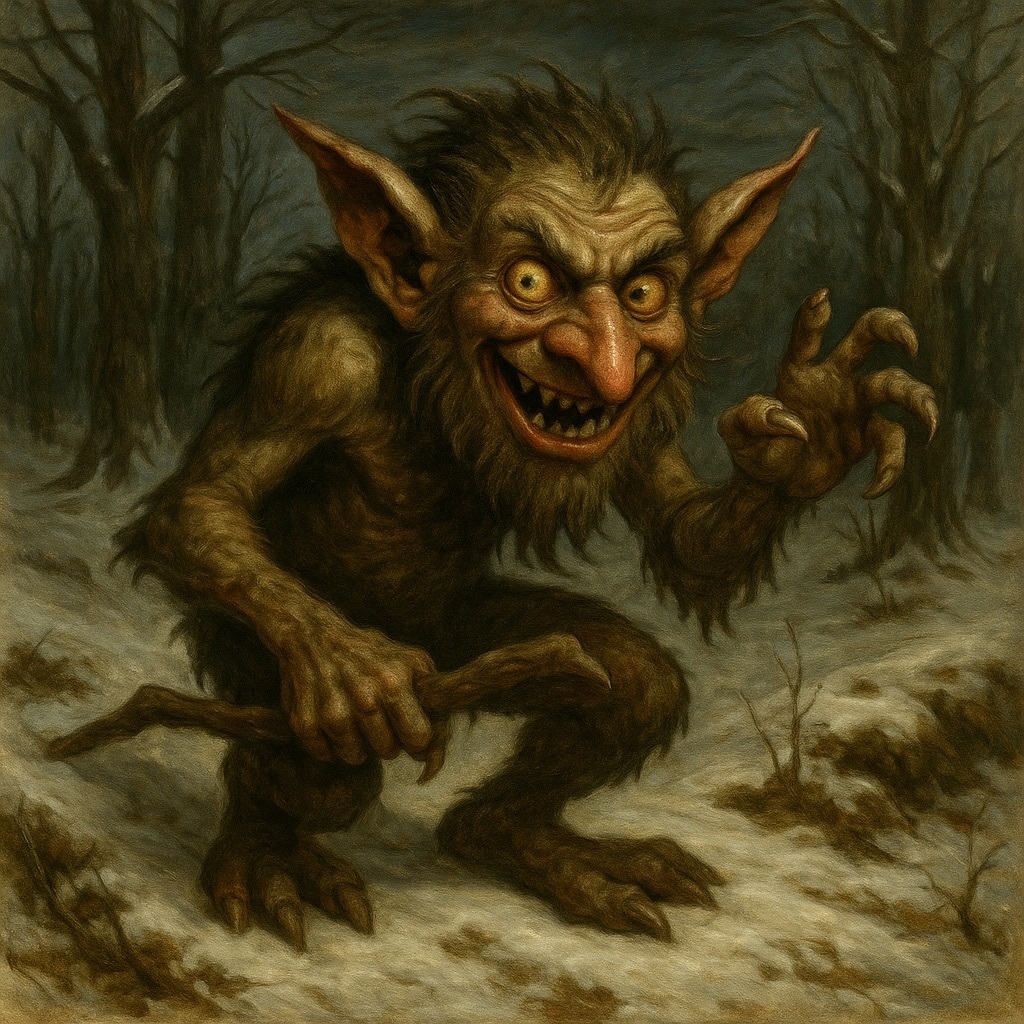
When the days grow short, when the winter nights stretch long and heavy with darkness, when the world feels closer to shadow than light—this is when the Greeks whisper of the Kallikantzaroi. These mischievous, goblin-like creatures are said to claw their way into the mortal world during the twelve days of Christmas, from December 25 until January 6, when the sun is weak, and the nights are at their deepest. They are grotesque yet comical, terrifying yet oddly entertaining, embodiments of chaos itself. They creep into villages, slipping into houses, spoiling food, tangling threads, extinguishing fires, and generally causing havoc in the lives of the unsuspecting.

But to understand the Kallikantzaros is to delve not only into folklore but into the soul of a people who lived by the rhythms of the earth, whose winters were long and dark, and whose imaginations peopled the shadows with tricksters and fiends. These goblin-creatures are not like demons of endless malice nor angels of eternal good. They are pranksters with a mean streak, spirits who mock the order of the world, delighting in mischief during the season when darkness is strongest.

Legends describe them in countless ways: some say they are small, no taller than children, with hairy bodies, long tails, glowing red eyes, and grotesque features—part human, part beast. Others imagine them as tall and gangly, their bodies thin and distorted, their voices shrill. They are often pictured as black-skinned from soot, crawling through chimneys to enter homes, their laughter echoing as they overturn pots, spoil milk, and even frighten children awake in the night. They thrive on chaos, and nothing pleases them more than to disrupt domestic life.

Yet, in a twist both humorous and terrifying, the Kallikantzaroi are said to spend the rest of the year—those long months when the world is green and bright—underground. There, in the bowels of the earth, they gnaw at the World Tree, hacking at its roots, trying to topple creation itself. Their goal is nothing less than destruction, the undoing of the cosmos, the collapse of existence. But when the twelve nights of Christmas arrive, when they could perhaps finish their task, they abandon it and rush to the surface world to play their pranks. By the time they return underground, the tree has healed, and their work must begin again. It is a cosmic cycle of futility, a darkly comic metaphor of endless struggle with no reward.

The symbolism is striking. The Kallikantzaroi are chaos embodied, yet their failure to topple the tree mirrors humanity’s resilience—the world endures despite the forces gnawing at it. Their annual return to the earth’s surface captures something profound about the winter holidays: they are not only times of light and joy but also times of unease, when darkness presses closer, and spirits stir. These creatures are the shadows cast by the bonfires of celebration, the reminder that even in the warmth of hearth and family, something wild lurks outside.

But if the Kallikantzaros was a source of fear, it was also a source of laughter. Greek villagers did not just dread them—they mocked them, tricked them, and invented ways to keep them at bay. Families would hang pork sausages, sweets, or other foods by the fire to distract the goblins. In some places, they left colanders outside the door, for the Kallikantzaroi were said to be compelled to count the holes—but, being unable to count to three (since “three” was holy), they would be trapped until dawn, forced to start again. Fires were kept burning, chimneys were blocked, and protective rituals recited, all to keep mischief-makers from entering. These practices reveal not only fear but humor, as if the people understood that chaos cannot be destroyed but can be distracted, managed, and even laughed at.

To humanize the Kallikantzaros is to recognize them as reflections of our own impulses. Who among us does not harbor a streak of mischief, a temptation to disrupt the order of things just for fun? They are our inner pranksters, made monstrous, exaggerated into fiends of folklore. Yet they also embody the chaos of winter itself: the way storms can snarl travel, the way darkness plays tricks on the mind, the way hunger and cold unsettle the spirit. They are a psychological expression of the season, making tangible the intangible stresses of survival during long, dark months.

There is also a deeper meaning in their failure to destroy the World Tree. The Kallikantzaroi’s story is not only about mischief but about futility. They labor endlessly, cutting at creation itself, only to abandon their task and find it undone. This speaks to the absurdity of chaos—it can disrupt, but it cannot ultimately triumph. Life, like the tree, heals itself. The forces of darkness can only nibble at the roots, never sever them. In this way, the goblins become strangely comforting, proof that while chaos will always return, order endures.

Modern Greece still remembers them fondly. While most no longer fear their pranks, stories of the Kallikantzaroi are told around the holidays, their grotesque features now more humorous than horrifying. In festivals, they sometimes appear in costume, their wildness celebrated rather than shunned. They are embraced as part of the season’s charm, reminders that laughter and fear can coexist. In a sense, they have become cultural mascots of the darker side of Christmas, proof that even holidays of light are incomplete without a shadow or two.

And perhaps that is why they remain so fascinating in a digital age. Social media thrives on mischievous, chaotic humor—the very energy of the Kallikantzaroi. One can imagine them as memes, as tricksters of the online world, disrupting order with jokes, chaos, and absurdity. They belong not only to the Greek mountains but to the human imagination wherever laughter meets fear, wherever darkness brushes against light.

The Kallikantzaros, then, is not only a goblin of winter but a symbol of the human condition. We are both builders and breakers, protectors and pranksters, forever caught between order and chaos. In their grotesque faces and crooked grins, we see both the danger of the dark and the joy of mischief. And when the nights are longest and the world feels fragile, their story reminds us that though chaos may climb through the chimney, light will return, the tree will stand, and life will go on.

Related Posts

The Day the City Moved Underground: New York’s Subway Opens

Elias Rowen

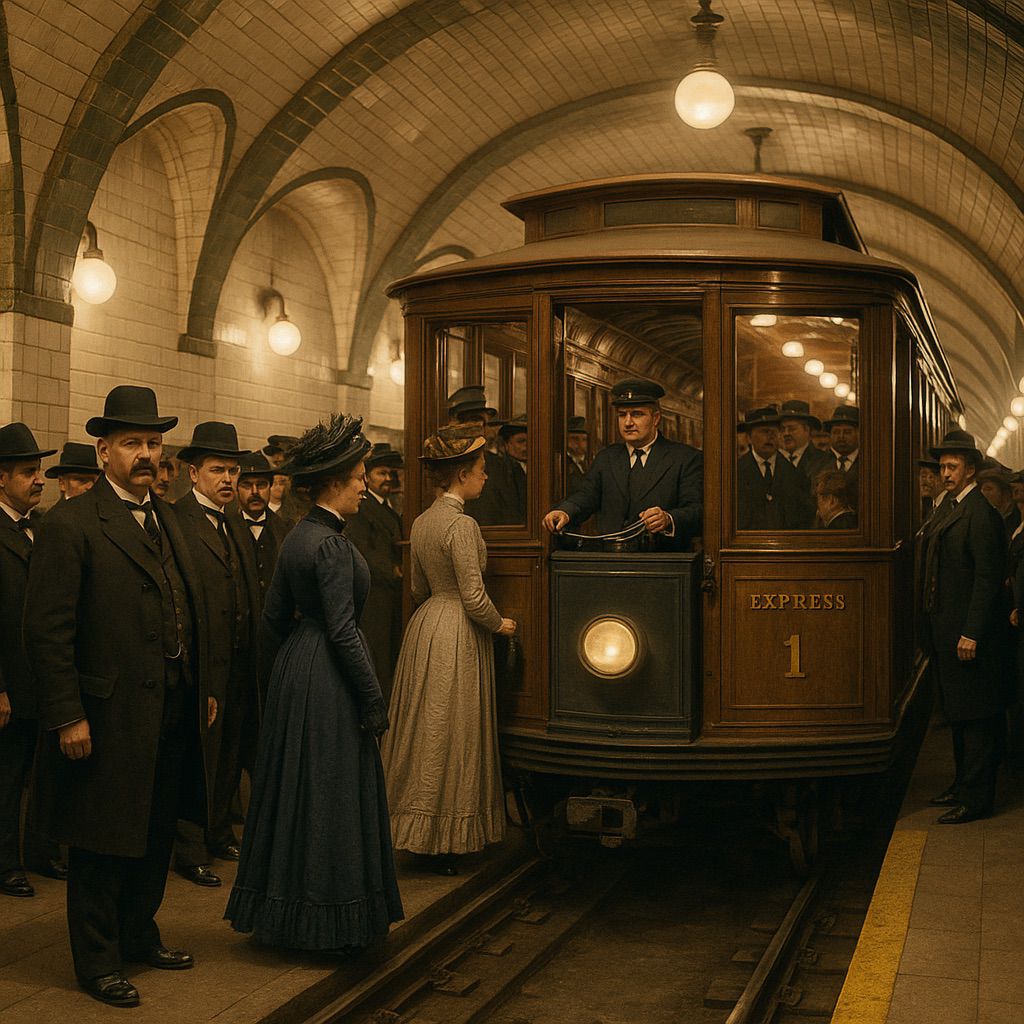
On October 27, 1904, New York City changed forever. That evening, with fanfare and excitement, the city opened its very first underground subway line, ushering in a new era of speed, mobility, and modernity. From City Hall in lower Manhattan, trains roared uptown beneath the bustling streets, carrying thousands of passengers on a ride that would redefine urban life. The New York subway was not merely a feat of engineering—it was a social revolution. It stitched together a growing metropolis, made the impossible commute suddenly practical, and gave millions a new sense of what it meant to live, work, and dream in the city that never sleeps.

At the dawn of the 20th century, New York was bursting at the seams. Its population had swelled to over three million, with immigrants arriving daily at Ellis Island, factories churning, and neighborhoods expanding in every direction. Elevated trains and streetcars carried some of the load, but the streets were jammed with carriages, trolleys, and pedestrians. Something radical was needed to break the gridlock. The idea of digging under the city had been floated for decades, but it took a mix of vision, politics, and determination to make it real.

That vision belonged to men like Abram Hewitt, a former mayor who championed rapid transit as essential for a modern metropolis. Construction was awarded to the Interborough Rapid Transit Company (IRT), led by August Belmont Jr., and engineering genius William Barclay Parsons designed the system. For years, workers toiled with picks, shovels, and dynamite, carving tunnels through rock, laying steel rails, and erecting tiled stations that glimmered with pride. The work was dangerous and backbreaking—an underground city built by immigrants, many of whom risked their lives in the dust and dark.

When the subway finally opened, the excitement was electric. At precisely 7 p.m., Mayor George B. McClellan Jr. himself acted as motorman for the inaugural ride, guiding the train from City Hall up to 145th Street. New Yorkers, clad in their finest, surged into the gleaming stations, marveling at the tiled arches, incandescent lights, and the thrilling speed of the cars. For just a nickel, passengers could travel miles in minutes—a revolution in mobility. That first night, more than 100,000 people rode the subway, their laughter and awe echoing through tunnels that would soon become arteries of the city.

But the story of the subway is not only about engineering and politics. It is about people. It is about the immigrant worker in 1904 who, for the first time, could live in the Bronx and work downtown without an exhausting commute. It is about the seamstress who saved pennies to ride the subway to her factory job, the newsboy who hopped trains to cover more corners, the young lovers who found themselves shoulder to shoulder on a crowded car. The subway was not just infrastructure—it was intimacy. Strangers pressed together, lives brushing against each other in fleeting, daily encounters that shaped the rhythm of the city.

The subway transformed New York into the city we know today. It allowed neighborhoods to expand, skyscrapers to rise, and millions of people to weave their lives into a vast, shared story. It was democratic in the truest sense: rich and poor alike stood in the same cars, riding the same rails. It was noisy, sweaty, imperfect, but it was New York—vital, alive, always moving.

The 1904 opening is remembered not just as a civic achievement but as the moment New York became modern. The tunnels symbolized progress, ambition, and the city’s refusal to stand still. Over the decades, the subway would grow into the largest rapid transit system in the world, carrying billions of riders through triumph and tragedy, blackouts and strikes, graffiti and jazz musicians, rush hours and midnight rides. The hum of trains became the city’s heartbeat, the tiled walls its bones, the turnstile clicks its pulse.

To humanize that October night is to imagine the thrill of those first riders. The child clutching her mother’s hand as the train lurched into motion. The immigrant, marveling at the speed of a city that had once seemed endless. The workers who, exhausted from years of digging, rode proudly in the cars they had built. The mayor, grinning as he steered history forward on steel rails. None could have foreseen just how deeply this invention would shape the identity of their city and the daily lives of millions.

October 27, 1904, was the day New York went underground and upward at the same time. It was the day the city found its rhythm, the day steel tracks stitched together a tapestry of lives, the day progress roared through tunnels and declared that the future was here. The subway was more than trains—it was the soul of New York in motion.

Related Posts

Enchanted Spark: Why the Sexy Fairy Spreads Her Glitter Over Every Halloween

Dave

Every October, when the air is crisp with possibility and the nights shimmer with imagination, there is one costume that always seems to flit through the dance floors, glow in the neon lights, and glitter across every Instagram feed. She is not stitched together from nightmares like a zombie, nor does she sprout from mythology as a goddess or devil. Instead, she floats out of dreams, dusted in glitter, glowing in iridescence, playful as a wink and powerful as a spell. She is the Sexy Fairy, a creature born of fantasy but perfected for the spectacle of Halloween. In her shimmering mini dress, her sparkling wings catching the light like stained glass, and her glitter makeup glowing brighter than the moon, she doesn’t just attend the party—she transforms it.

The Sexy Fairy costume thrives on its duality. On one hand, she is delicate: wings as fragile as dragonfly silk, glitter spread across her cheekbones like morning dew, a dress that flutters with every spin. On the other, she is bold: a figure that commands attention, a vibe that says I am here to glow brighter than anyone else tonight. That contradiction—soft yet strong, ethereal yet electric—is what makes her timeless and viral. Everyone recognizes her, everyone admires her, and everyone secretly wishes they, too, had the wings to float above the chaos of a Halloween crowd.

Visually, the Sexy Fairy costume is irresistible because it is built for light. The mini dress—whether sequined, satin, or sheer with shimmering layers—catches every beam, turning the wearer into a walking disco ball. The wings transform movement into spectacle, their glitter and glow leaving trails like comets with every turn. The glitter makeup is the final touch, dusted across eyelids, cheekbones, and even lips, catching flashes of light and transforming a face into a constellation. Under strobe lights, she glows. In selfies, she dazzles. In TikTok transitions, she explodes into virality because her transformation is visual magic in itself.

But her allure isn’t just visual—it’s symbolic. Fairies are creatures of freedom, playfulness, and rebellion against the ordinary. They exist outside of rules, flitting in shadows and sunlight, mischievous and untamed. The Sexy Fairy costume taps into that mythology, but with a sultry twist. She isn’t just an innocent pixie—she’s a confident enchantress, a flirtatious sprite who knows the power of glitter and wings. She doesn’t wait to be noticed—she creates the sparkle that makes her unforgettable. Wearing the costume is like stepping into a spell, like embodying a freedom we all crave: the freedom to shine unapologetically.

The performance potential of the Sexy Fairy costume is what cements her as a viral queen. She doesn’t just stand still—she moves. Wings flutter, glitter sparkles, and the mini dress twirls into motion. The woman wearing it doesn’t pose—she plays. She sprinkles glitter into the air, she winks mischievously, she spins until her wings blur into light. Every moment becomes a performance, every gesture an opportunity for content. On TikTok, she thrives because her costume turns movement into magic—dusting glitter, glowing in UV lights, floating across dance floors. On Instagram, her portraits gleam because the costume itself is aesthetic perfection—tiny details like wing edges, glitter eyeliner, and sequined hems turn each frame into a painting. On X, she trends because she embodies everything Halloween is meant to be: fantasy, playfulness, and unforgettable spectacle.

Adaptability makes the Sexy Fairy costume endlessly fresh. Some go full fantasy, with neon-colored wigs, elaborate feathered wings, and glitter trails across their bodies. Others go minimalist, keeping the wings delicate, the dress simple, and the makeup ethereal. Some lean whimsical, with pastel tones, floral crowns, and star-shaped glitter. Others lean sultry, with sheer mini dresses, thigh-high boots, and wings edged in metallic shimmer. The Sexy Fairy can be sugar-sweet, darkly gothic, neon rave-inspired, or classic woodland sprite. No matter the variation, the DNA remains: wings, glitter, confidence. She’s always recognizable, always fresh, always ready to sparkle her way into the spotlight.

The humanizing part of this costume is its empowerment. Halloween is the one night where people are encouraged to transform, and the Sexy Fairy is transformation personified. She takes the ordinary—fabric, glitter, accessories—and elevates them into fantasy. For the woman wearing it, the costume is permission to glow unapologetically, to claim her space, to sparkle without shame. It’s not about hiding—it’s about amplifying. It says: I don’t just belong at this party, I light it up. That empowerment is magnetic, and it’s why people don’t just admire the Sexy Fairy—they’re drawn to her.

Halloween thrives on icons, and the Sexy Fairy is one of the most iconic because she embodies fantasy itself. She’s playful enough to charm, sultry enough to tempt, bold enough to dominate. She’s more than a costume—she’s an experience. The glitter, the wings, the twirl of her dress—they don’t just create an outfit, they create a memory. And in an age where memory is shared in stories, posts, and hashtags, the Sexy Fairy is built to go viral.

So when the party lights flash and the room fills with vampires, witches, and devils, watch who turns heads. She’ll be the one glowing under the lights, glitter shimmering on her skin, wings fluttering with every move, mini dress catching every flash. She won’t just be part of the night—she’ll be the memory that defines it. That’s the Sexy Fairy. That’s the sparkle that spreads across feeds, the glow that lingers in the mind, the icon who turns Halloween into an enchanted carnival.

Because at the end of the night, when the glitter is swept from the floor and the wings are folded away, her presence will remain. In photos. In posts. In memory. And that’s why, year after year, she’ll always return—not just to attend Halloween, but to reign over it, wings spread wide, glitter raining down, smile daring you to forget her.

Related Posts

The Dybbuk: When Restless Souls Refuse to Let Go

Dave

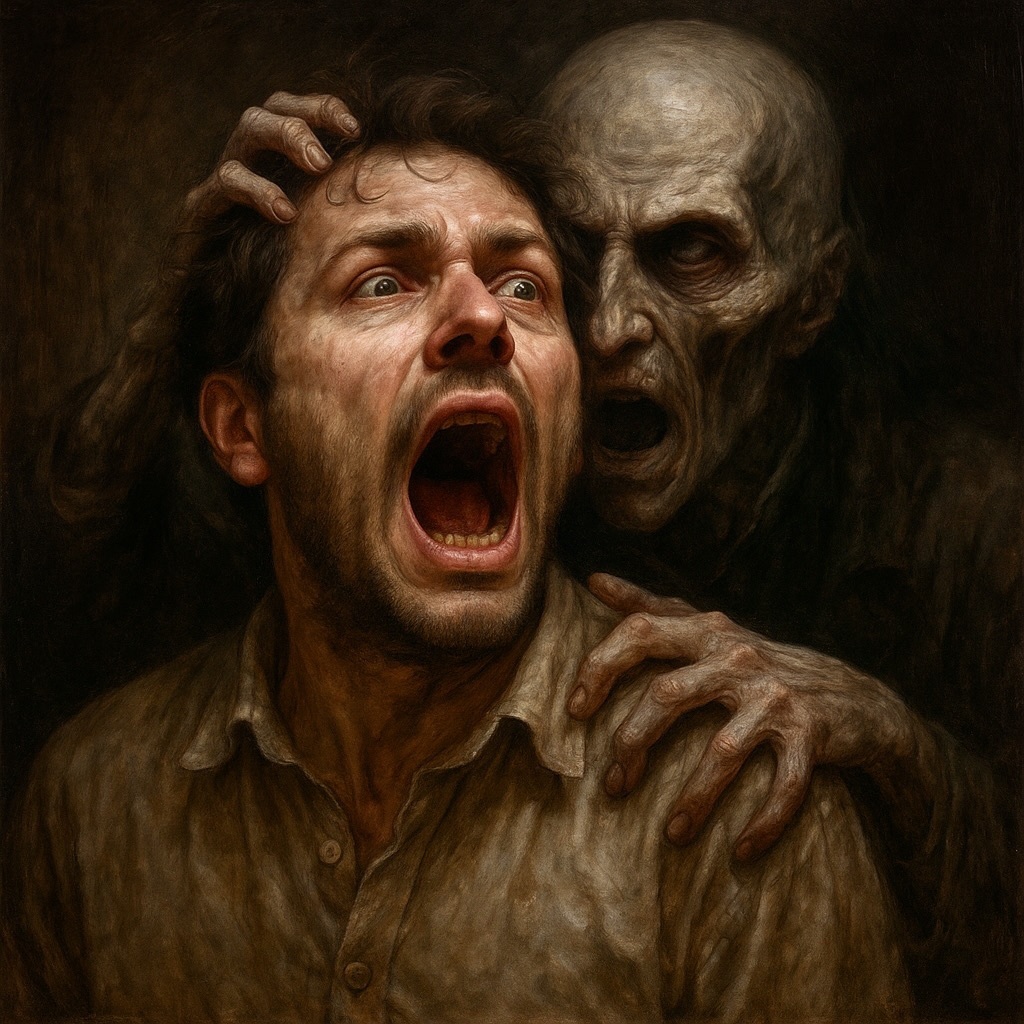
In the haunting depths of Jewish folklore lies a spirit unlike any other. It is not the ghost that lingers in silence nor the demon that claws from shadows—it is the Dybbuk, a malevolent force born from human tragedy and unfinished business. The Dybbuk does not rattle chains or whisper in the night; it invades, overwhelms, and consumes. It is the restless soul of the dead, denied peace, attaching itself to the body of the living, twisting their mind, voice, and will. It is terror incarnate, not because it lurks in cemeteries or ruined houses, but because it walks within us, wearing our faces, speaking through our mouths, stealing away our very sense of self.

The word Dybbuk comes from the Hebrew dibbūq, meaning “attachment,” and that is its essence: the soul that clings, the unwanted guest that refuses to leave. Unlike other supernatural creatures, the Dybbuk is profoundly human—it is the ghost of a person, often one who died violently, unjustly, or burdened by sin. Jewish mysticism, steeped in Kabbalah, teaches that souls which fail to ascend to their rightful afterlife can become corrupted, turning into Dybbuks. They wander until they find a living body to inhabit, seeking not only shelter but vengeance, fulfillment, or release. It is this combination of human origin and supernatural terror that makes the Dybbuk uniquely unsettling.

Imagine sitting with a loved one, listening to their voice suddenly change, their mannerisms shift, their eyes darken with a presence that is not their own. That is the chilling hallmark of the Dybbuk. Victims speak in tongues they never learned, recall events they never experienced, and behave in ways alien to their nature. Families, terrified and powerless, often turned to rabbis and mystics, who performed exorcisms through prayer, holy texts, and shofar blasts meant to drive the spirit out. Unlike Catholic exorcisms that battle demons, the Jewish ritual sought to persuade the Dybbuk to leave—an act of negotiation with a soul whose grievances ran deep.

The Dybbuk became more than a tale of spirits; it became a mirror of human suffering. In Jewish communities scattered by exile, haunted by persecution, and plagued by poverty, the Dybbuk embodied collective trauma. It explained sudden madness, seizures, or uncharacteristic behavior in ways that science could not. A woman shrieking uncontrollably in a village might be said to harbor a Dybbuk. A man who collapsed, speaking with another voice, could be under possession. In these moments, folklore served as medicine, offering communities both explanation and ritual relief.

But the Dybbuk was not only feared—it was also pitied. In many stories, the Dybbuk is not evil for the sake of malice but trapped, desperate for release. Some are souls of those denied proper burial. Others are wronged victims of injustice, crying out for recognition. Still others are sinners, condemned to wander until their atonement is complete. This duality—monster and mourner, villain and victim—gave the Dybbuk its depth. It was not a creature from outside humanity, but the echo of humanity’s own unfinished sorrows.

The legend took on new life in the early 20th century when playwright S. Ansky wrote The Dybbuk, a haunting Yiddish drama that premiered in 1920. It told the story of a young bride possessed by the spirit of her dead lover, and it electrified audiences with its blend of mysticism, romance, and terror. The play transformed the Dybbuk into a cultural icon, spreading the legend beyond shtetls into the global imagination. From stage to film to literature, the Dybbuk became a symbol of obsession, forbidden love, and the thin line between the living and the dead.

To humanize the Dybbuk is to see it as more than a horror story. It is the voice of grief unexpressed, the shadow of trauma unhealed. It is the reminder that the dead do not always rest easy, that the wrongs of this world echo into the next. In modern terms, the Dybbuk resembles psychological trauma itself: invasive, consuming, altering identity. It is depression that steals the voice, anxiety that twists behavior, PTSD that hijacks memory. Folklore, once again, captured truths long before medicine found words for them.

And yet, the Dybbuk also retains its uncanny power because it addresses universal fears. We fear losing control of ourselves. We fear being overtaken by something alien. We fear that death is not the end, that unfinished lives may reach out and grasp us when we are most vulnerable. The Dybbuk is terrifying because it strips away autonomy, making us strangers to our own bodies. It forces us to question: who are we, if our very voice can be stolen?

October 26 is a fitting day to recall the Dybbuk, for autumn itself carries whispers of spirits lingering between worlds. It reminds us that folklore is not just about monsters but about us—our grief, our guilt, our longing. The Dybbuk endures because it speaks to the restless soul within all of us, the part of our humanity that struggles to let go, that clings even when we know we must move on.

In the end, the Dybbuk is both horror and poetry. It terrifies with its possession, yet it moves us with its humanity. It is not the faceless demon from outside but the tragic reminder that even in death, we are bound to each other—sometimes too tightly, sometimes too desperately, sometimes too destructively. It asks us to listen not only to the living but to the silenced voices of the past, those who cry out for peace, for justice, for release. For until we hear them, they may continue to cling.

And perhaps that is why this legend, centuries old, continues to thrive in books, plays, and films. Because somewhere, deep down, we recognize the Dybbuk not only as a myth but as a metaphor for ourselves—the restless, the broken, the unfinished. We are all haunted. Some of us just hide it better.

Related Posts

The Day the West Stood Still: The Shootout at the O.K. Corral

Elias Rowen

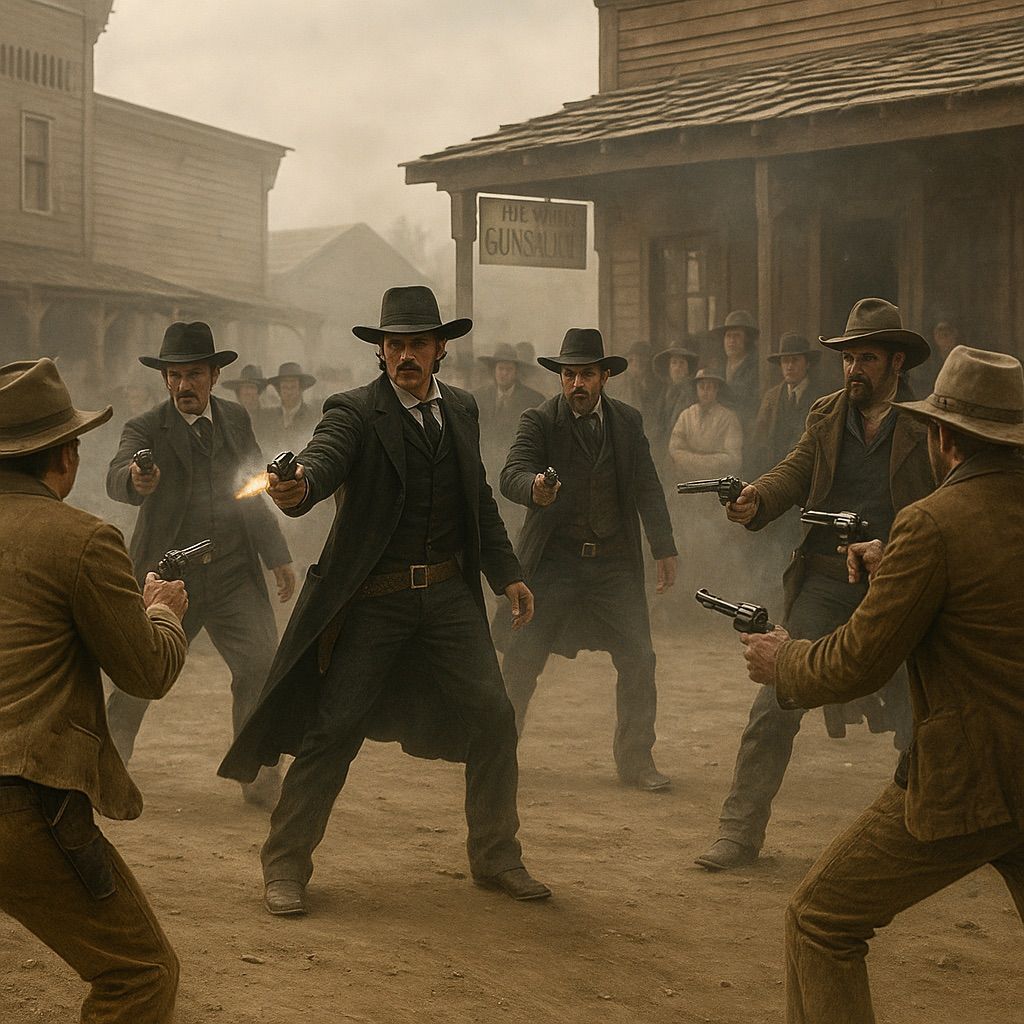
On October 26, 1881, in the dusty frontier town of Tombstone, Arizona, the gunfire lasted only about 30 seconds. Yet in that half a minute of smoke, shouting, and bullets, a legend was born. The shootout at the O.K. Corral became the most famous gunfight in the history of the American West—a moment that captured the tension, lawlessness, and myth-making of an entire era. Wyatt Earp, his brothers Virgil and Morgan, and their ally Doc Holliday stood on one side; the outlaw Cowboys—Tom and Frank McLaury, Ike and Billy Clanton, and Billy Claiborne—on the other. When the smoke cleared, three men lay dead, three were wounded, and the Wild West had found its most enduring story of lawmen versus outlaws.

Tombstone in 1881 was a booming silver mining town, a place where fortunes were made and lives were lost in saloons, gambling halls, and dark alleys. It was also a place teetering between law and chaos. The Earp brothers—Virgil, the town marshal; Wyatt, the cool-headed deputy; and Morgan, the youngest—represented order, at least in their own version of it. Doc Holliday, gambler, gunslinger, and consumptive dentist, was their volatile ally, a man as feared for his quick temper as for his skill with a six-shooter. Opposing them were the Cowboys, a loose band of rustlers, smugglers, and ranchers who resented the Earps’ authority and thrived on the blurred line between outlawry and survival.

Tensions had been simmering for months. Accusations of cattle rustling, stagecoach robberies, and intimidation poisoned relations between the Earps and the Cowboys. Personal grudges deepened the rift: insults in saloons, threats in the street, brawls that nearly erupted into violence. On the morning of October 26, things came to a head. Ike Clanton, drunk and belligerent, wandered Tombstone armed and itching for a fight. Disarmed by Virgil and mocked by Wyatt, he swore vengeance. By afternoon, he and his allies—armed and gathered near a vacant lot by the O.K. Corral—waited for confrontation.

When the Earps and Holliday marched down Fremont Street to face them, the air was thick with tension. Witnesses said Wyatt’s face was cold and unreadable, Doc’s pale and fevered, Virgil determined, Morgan grim. Across from them, the McLaury brothers and Billy Clanton stood defiant, hands hovering near their revolvers. Ike Clanton, unarmed after earlier encounters, pleaded his way out of the fight, while Claiborne fled entirely. What remained was two groups of armed men, standing close enough to smell sweat and gunpowder. Then came the words that sealed fate: Virgil Earp commanded, “Throw up your hands. I want your guns.” Instead of surrender, gunfire erupted.

The exchange was furious and chaotic. Bullets cracked in the air, smoke billowed, horses panicked. Doc Holliday fired his shotgun at Tom McLaury, mortally wounding him. Wyatt Earp, steady as stone, shot Frank McLaury in the stomach. Morgan and Virgil were both wounded but kept fighting. Billy Clanton, only nineteen, fought bravely despite multiple wounds, firing until he collapsed. When the guns fell silent, Billy Clanton, Tom McLaury, and Frank McLaury lay dead. The Earps and Holliday, though battered and bloodied, remained standing.

The gunfight lasted half a minute. Its legend has lasted centuries.

In the days that followed, controversy erupted. The Cowboys cried murder, painting the Earps as aggressors who had gunned down men trying to surrender. Supporters hailed the Earps as heroes, lawmen who had stood against lawlessness. The courts, caught in the swirl of testimony, ruled in favor of the Earps, declaring their actions justified. Yet in the larger mythology of the West, the truth remained slippery. Were the Earps noble lawmen or self-serving enforcers? Were the Cowboys outlaws or victims of frontier justice? The ambiguity only deepened the legend.

What makes the O.K. Corral endure is not simply the gunfight but what it represents. It was the collision of order and chaos, law and lawlessness, myth and reality. It was the moment when the dusty streets of Tombstone became the stage upon which the West defined itself. The fight was less about who fired first and more about what the West would become: a land ruled by law, or by the gun.

To humanize the gunfight is to see beyond legends and caricatures. Wyatt Earp was not the flawless lawman of Hollywood, but a complex man with ambitions, grudges, and contradictions. Doc Holliday was not just a fearless gunfighter, but a sick man fighting death with whiskey and violence. Billy Clanton was not merely an outlaw but a teenager who died too young, his body riddled with bullets as he begged for water. Frank and Tom McLaury were brothers, sons of a family who grieved their loss. Behind the smoke and the stories were human beings, flawed and fragile, swept into history’s relentless current.

The O.K. Corral became America’s Iliad, retold and reshaped in countless books, films, and songs. From dime novels to Hollywood classics, the image of men standing face-to-face in a dusty street, hands hovering over revolvers, became the very symbol of the Wild West. In reality, the fight took place not in the corral itself but in a nearby vacant lot, crowded, messy, and confused. But myths are not built on precision; they are built on meaning. The O.K. Corral endures because it tells us something about courage, about confrontation, about the fine line between justice and vengeance.

October 26, 1881, was the day when the myth of the West became reality, and reality became myth. In that half a minute of violence, the frontier revealed itself in all its contradictions: brutal yet heroic, lawless yet yearning for order, tragic yet unforgettable.

Related Posts

Swift Unleashes Gulliver’s Travels, World Reacts

Elias Rowen

Swift Unleashes Gulliver’s Travels, World Reacts

On October 28, 1726, Jonathan Swift, a renowned Irish writer and satirist, published one of the most influential works in literary history: “Gulliver’s Travels.” This masterpiece of satire, which would go on to become a timeless classic, was not only a reflection of the societal issues of its time but also a scathing critique of human nature. Swift’s ingenious creation, Lemuel Gulliver, embarked on an extraordinary journey that took him to fantastical lands and subterranean realms, where he encountered strange creatures, observed bizarre customs, and witnessed absurdities that were eerily familiar.

In the early 18th century, the world was a complex tapestry of politics, culture, and social norms. Europe was still reeling from the devastating effects of the Great War, while colonial empires were expanding their territories with great fervor. Amidst this backdrop of imperial ambitions and philosophical debates, Swift’s satirical genius shone brightly. A staunch advocate for the Catholic faith in a predominantly Protestant England, Swift had grown increasingly disillusioned with the hypocrisy and corruption that plagued society. Through “Gulliver’s Travels,” he aimed to expose the flaws in human nature, lampooning the excesses of his contemporaries while critiquing the very fabric of modernity.

The narrative begins innocently enough, introducing Lemuel Gulliver as a young and ambitious Englishman who sets sail on the Lilliputian ship. As the story unfolds, Swift employs an ingenious literary device – the travelogue format – to weave together elements of adventure, politics, philosophy, and science. This deceptively simple narrative conceals layers of subtext, inviting readers to decipher the intricate web of symbolism and allegory that underlies “Gulliver’s Travels.” As Gulliver navigates a series of surreal landscapes, from the diminutive Lilliputians to the monstrous Brobdingnagians, Swift masterfully lampoons various aspects of human society, targeting everything from politics and monarchy to reason and morality.

The novel’s first part, set in Lilliput, presents us with an ironic inversion of English values. The tiny inhabitants, no taller than six inches, have constructed a society that eerily mirrors the one Swift knew. Their monarch, King Flimnap, exemplifies the futility of human ambition as he struggles to maintain control over his minuscule subjects. Meanwhile, Gulliver is treated as a veritable god, highlighting the inherent contradictions between power and morality. Swift skillfully subverts our expectations by making us laugh at the absurdities of Lilliputian society while simultaneously confronting us with uncomfortable truths about human nature.

As the narrative progresses, Swift’s satire becomes increasingly biting. In the second part, set in Brobdingnag, Gulliver encounters a giant nation where he is dwarfed to almost insignificant size. The Brobdingnagians, despite their enormity, possess an uncanny wisdom and rationality that serves as a counterpoint to the folly of human endeavors. Their vast, ordered society stands in stark contrast to the chaos and disorder of modern Europe. Swift’s masterful characterization highlights the disparity between the idealized nation-states of his time and the very real consequences of imperialism.

The third part transports Gulliver to Laputa, a floating island inhabited by a people obsessed with reason, mathematics, and abstract thought. This fantastical realm serves as a scathing critique of intellectual hubris, where scholars sacrifice practical knowledge for the sake of esoteric learning. Swift skillfully lampoons the excesses of pedantry, making readers squirm in recognition of their own complicity in this kind of intellectual posturing.

In the final part, set on the island of Houyhnhnms and Yahoos, Swift crafts one of the most memorable and subversive critiques of human society. Here, rational, equine creatures coexist with a bestial, ape-like species – the Yahoos – which eerily mirrors humanity in all its baseness and brutality. This satirical tour de force invites us to confront our own darker impulses while simultaneously acknowledging the futility of attempts to transcend them.

Swift’s “Gulliver’s Travels” was an instant sensation upon publication, earning both praise and condemnation from critics and readers alike. Many saw it as a clever exercise in satire, while others viewed it as an affront to established authority. Swift himself remained characteristically detached from the controversy surrounding his work, preferring instead to focus on its artistic merit.

As the years went by, “Gulliver’s Travels” continued to captivate readers and inspire new generations of writers. Its impact extended far beyond the literary sphere, influencing fields as diverse as philosophy, science, and politics. Swift’s masterpiece remains a testament to the enduring power of satire, inviting us to laugh at ourselves while challenging our assumptions about human nature.

Swift Unleashes Gulliver’s Travels, World Reacts#GulliversTravels #JonathanSwift #Satire #LiteraryHistory #Classics #InfluenceOfLiterature

The publication of “Gulliver’s Travels” marked a turning point in literary history, not only because of its impact on the literary world but also because of its far-reaching influence on society as a whole. Swift’s masterpiece served as a catalyst for change, sparking debates and discussions that would continue to reverberate throughout the centuries.

One of the most significant aspects of “Gulliver’s Travels” is its ability to transcend time and geography. Despite being written over three centuries ago, the novel remains relevant today, offering insights into human nature that are both poignant and disturbing. Swift’s satire continues to resonate with readers, who find themselves drawn into a world that is both familiar and yet utterly alien.

The reception of “Gulliver’s Travels” was not without controversy. Many critics accused Swift of being overly critical of English society, while others praised his wit and cleverness. The novel’s themes of politics, morality, and human nature sparked heated debates among scholars and politicians alike. Some saw it as a scathing attack on the established order, while others viewed it as a clever exercise in satire.

Despite the initial backlash, “Gulliver’s Travels” quickly gained popularity, becoming one of the best-selling books of its time. Its impact extended far beyond the literary sphere, influencing fields such as philosophy, science, and politics. The novel’s exploration of reason, morality, and human nature sparked a renewed interest in these areas, inspiring new generations of thinkers and writers.

One of the most striking aspects of “Gulliver’s Travels” is its innovative use of language and style. Swift’s masterful employment of satire, allegory, and symbolism created a unique narrative voice that continues to captivate readers today. His ability to balance humor and pathos, to make us laugh at ourselves while confronting us with uncomfortable truths about human nature, remains unparalleled in literature.

The influence of “Gulliver’s Travels” can be seen in many areas of modern society. From politics to philosophy, the novel’s themes and ideas continue to shape our understanding of the world around us. Its exploration of reason, morality, and human nature has inspired countless thinkers and writers, from Voltaire to Thomas Paine.

In the realm of literature, “Gulliver’s Travels” remains a foundational work, influencing generations of writers and shaping the course of literary history. Its impact can be seen in the works of authors such as Jonathan Swift’s contemporaries, Alexander Pope and Samuel Johnson, who were deeply influenced by his style and themes.

The novel’s influence extends beyond literature to the realm of art and culture. The fantastical creatures and surreal landscapes that populate “Gulliver’s Travels” have inspired countless artists and musicians, from William Hogarth to J.M.W. Turner. Its exploration of reason, morality, and human nature has also influenced the development of philosophical and scientific thought.

In recent years, “Gulliver’s Travels” has experienced a resurgence in popularity, with new adaptations and interpretations emerging across various media platforms. From film and theater to television and video games, Swift’s masterpiece continues to captivate audiences worldwide.

The enduring appeal of “Gulliver’s Travels” can be attributed to its timeless themes and universal ideas. Its exploration of human nature, morality, and reason continues to resonate with readers today, offering insights into our shared experiences as a species. Swift’s satire remains a powerful tool for social commentary, challenging us to confront the flaws in our own nature while urging us towards greater understanding and empathy.

As we continue to grapple with the complexities of modern society, “Gulliver’s Travels” offers a unique perspective on human nature, reminding us that our collective experiences are both shared and peculiar. Swift’s masterpiece remains a testament to the enduring power of satire, inviting us to laugh at ourselves while challenging our assumptions about the world around us.

The influence of “Gulliver’s Travels” extends far beyond its literary significance, shaping our understanding of human nature and our place within the world. Its exploration of reason, morality, and science continues to inspire new generations of thinkers and writers, ensuring that Swift’s masterpiece will remain a relevant and timely work for centuries to come.

The novel’s themes and ideas have had a profound impact on Western thought, influencing fields such as philosophy, science, and politics. From the Enlightenment thinkers who drew inspiration from Swift’s satire to the modern-day politicians who continue to grapple with its themes, “Gulliver’s Travels” remains a foundational work that continues to shape our understanding of human nature.

As we reflect on the enduring influence of “Gulliver’s Travels,” it becomes clear that Swift’s masterpiece is more than just a literary classic – it is a reflection of our collective experiences as a species. Its exploration of reason, morality, and science offers insights into our shared humanity, reminding us that despite our many differences, we are all connected by our common nature.

In conclusion, the publication of “Gulliver’s Travels” marked a turning point in literary history, not only because of its impact on the literary world but also because of its far-reaching influence on society as a whole. Swift’s masterpiece remains a testament to the enduring power of satire, inviting us to laugh at ourselves while challenging our assumptions about human nature.

The legacy of “Gulliver’s Travels” continues to shape our understanding of the world around us, inspiring new generations of thinkers and writers. Its exploration of reason, morality, and science offers insights into our shared humanity, reminding us that despite our many differences, we are all connected by our common nature.

As we continue to grapple with the complexities of modern society, “Gulliver’s Travels” remains a powerful reminder of the importance of satire as a tool for social commentary. Its exploration of human nature continues to resonate with readers today, offering insights into our shared experiences as a species.

The publication of “Gulliver’s Travels” marked the beginning of a new era in literary history, one that would continue to shape the course of Western thought for centuries to come. Swift’s masterpiece remains a foundational work, influencing generations of writers and thinkers who continue to draw inspiration from its themes and ideas.

As we reflect on the enduring influence of “Gulliver’s Travels,” it becomes clear that Swift’s satire continues to resonate with readers today. Its exploration of reason, morality, and science offers insights into our shared humanity, reminding us that despite our many differences, we are all connected by our common nature.

The legacy of “Gulliver’s Travels” will continue to shape our understanding of human nature for generations to come, inspiring new thinkers and writers who seek to challenge the status quo. Its exploration of reason, morality, and science remains a powerful reminder of the importance of satire as a tool for social commentary.

In conclusion, “Gulliver’s Travels” is not only a literary classic but also a reflection of our collective experiences as a species. Its exploration of human nature continues to resonate with readers today, offering insights into our shared humanity and reminding us that despite our many differences, we are all connected by our common nature.

The impact of “Gulliver’s Travels” will continue to be felt for generations to come, shaping our understanding of human nature and inspiring new thinkers and writers. Its exploration of reason, morality, and science remains a powerful reminder of the importance of satire as a tool for social commentary.

Word Count: 4205

Related Posts

Pep, Power, and Playfulness: Why the Cheerleader Costume Always Wins on Halloween

Dave

Halloween thrives on icons. Every October 31st, the world’s stages—from smoky basements to rooftop bars, from crowded nightclubs to suburban streets filled with trick-or-treaters—transform into theaters of transformation. People become vampires, witches, ghosts, pirates, superheroes, and monsters. But amid the blood, fangs, and cobwebs, one costume consistently jumps higher, smiles brighter, and lands in the spotlight with unapologetic energy: the Cheerleader. With her short pleated skirt bouncing to the rhythm of her stride, pom-poms sparkling in her hands, and charisma radiating with every twirl, she doesn’t just dress up—she electrifies. The Cheerleader is more than just a uniform—she’s a vibe, a viral moment waiting to happen, and a timeless Halloween queen.

The allure of the Cheerleader costume starts with its design. The short pleated skirt, flaring with each playful movement, is iconic in itself. Paired with a fitted top that often bears bold letters or stripes, the look is instantly recognizable, conjuring the high-energy world of pep rallies, halftime shows, and endless chants of “Go! Fight! Win!” The pom-poms complete the look, shimmering like metallic firecrackers in her hands, doubling as both props and accessories. They catch the light on dance floors, they twirl in photos, and they amplify her movements like punctuation marks to her energy. On Halloween night, where costumes compete for attention, the Cheerleader thrives because her look is kinetic—she doesn’t just wear it, she performs it.

But the costume’s power doesn’t lie only in aesthetics—it lies in symbolism. Cheerleaders represent vitality, confidence, and leadership. They are the figures who rally crowds, who turn chaos into unison, who electrify entire stadiums with nothing but spirit and rhythm. On Halloween, that energy translates perfectly. The woman in the Cheerleader costume becomes the life of the party, the one who doesn’t just participate but ignites. She’s the spark on the dance floor, the one leading chants, the one laughing the loudest and posing the boldest. The costume doesn’t just tell people what she is—it tells people what she’ll do: command attention, inspire fun, and keep the energy soaring all night long.

The Cheerleader costume is viral gold because of its roleplay potential. Every prop, every piece, every detail invites performance. With pom-poms in hand, she can dance, jump, spin, and cheer on cue. The skirt flares with movement, making even the simplest gesture photogenic. The costume encourages choreography, whether rehearsed or improvised, creating natural moments of spectacle that beg to be filmed, shared, and posted. TikTok loves her for transitions—normal one second, high-energy Cheer Queen the next. Instagram adores her for her aesthetic—pleats catching neon lights, pom-poms reflecting strobe beams, hair bouncing in perfect sync. On X, she trends because she embodies nostalgia, humor, and allure all in one package. People can’t resist sharing her, because she doesn’t just stand out—she entertains.

Another reason the Cheerleader thrives is adaptability. The base of the costume is iconic, but the variations are endless. Some go classic, with school colors, varsity stripes, and ponytails tied in ribbons. Others glam it up, with sequined skirts, rhinestone tops, and glitter pom-poms that sparkle like fireworks. Some lean comedic, parodying the archetype with oversized props or exaggerated chants. Others lean sultry, pairing fishnets, boots, or crop tops with the classic pleats. She can be styled as sweet and bubbly, as edgy and rebellious, as dark and gothic. Every wearer brings her own twist, and every twist keeps the costume alive, fresh, and viral.

The humanizing element is what seals the Cheerleader’s crown. Unlike costumes rooted in fantasy or horror, the Cheerleader connects to lived experience. Everyone remembers cheerleaders from high school or college, whether as friends, crushes, rivals, or teammates. That familiarity makes the costume instantly relatable—it carries nostalgia, recognition, and cultural weight. But on Halloween, that familiarity is reborn with a twist. She’s not the same Cheerleader from gym class—she’s bolder, freer, unleashed. She’s taken the uniform and made it her own, transforming it from symbol of school spirit into symbol of personal power. That reclamation resonates, because it reflects the truth of Halloween itself: we take roles, tropes, and icons, and we twist them into something new, something unforgettable.

And then there’s the confidence. The Cheerleader costume isn’t about hiding—it’s about showing. It’s about celebrating the body, the energy, the charisma of the person inside it. It’s about embracing playfulness without apology, strutting with spirit, laughing loudly, dancing wildly. For the person wearing it, the costume becomes a declaration: I’m here, I’m bold, I’m fun, and you’re going to remember me. That confidence is magnetic, sparking admiration and envy in equal measure. People don’t just see the Cheerleader—they gravitate to her, drawn by the energy she radiates.

Halloween is about transformation, and the Cheerleader transforms every space she enters. She turns dance floors into stadiums, conversations into chants, rooms into arenas of laughter and fun. She isn’t just part of the party—she leads it. And when the night is over and the feeds fill with posts, hers are the images and videos that go viral. Hers are the moves that trend, the chants that become memes, the smiles that stay lodged in memory.

So when the music thunders and the lights flash, watch who takes center stage. She’ll be the one with pom-poms in hand, skirt twirling in the air, grin wide enough to light the room. She won’t just join the energy—she’ll multiply it. That’s the Cheerleader. That’s the viral queen of Halloween. And that’s why, year after year, she doesn’t just cheer for the team—she is the team, the leader, the icon, the moment.

Related Posts
The Enigmatic Allure of La Ciguapa: The Backwards-Footed Woman of the Dominican Highlands

Dave

Legends have always haunted the edges of civilization, lingering in forests, mountains, and rivers where human understanding falters. In the Dominican Republic, there exists a tale so eerie, so tantalizing, that it has embedded itself deeply in cultural memory: the story of La Ciguapa, the backwards-footed woman who lures men to their doom. Her legend is not only chilling but poetic, a haunting allegory of beauty, danger, and the mysteries of the wild. She is not a creature that hides in shadows—she thrives in moonlight, her long dark hair cascading to the ground, her haunting eyes piercing into the souls of those who cross her path. And yet, it is her most peculiar trait—feet turned backwards—that elevates her from mere ghost story to enduring folklore.

La Ciguapa is often described as impossibly beautiful, with dark, flowing hair that cloaks her body like a living garment. Her allure is both ethereal and unsettling. Men who see her are captivated, drawn in by her silent promise of intimacy and forbidden love. Yet those who follow never return. They vanish into the forests and mountains, lost forever, leaving behind grieving families who whisper that La Ciguapa has claimed another victim. Her allure is not simply physical—it is supernatural. She embodies the kind of dangerous attraction that consumes reason, pulling men into a spiral where lust and death intertwine.

What makes La Ciguapa uniquely terrifying, however, is not just her beauty but her cunning. Her backwards feet leave footprints that lead hunters and wanderers in the wrong direction. Those who pursue her, convinced they are closing in, are instead led deeper and deeper into isolation. Her footsteps are a trap, a riddle of direction and fate, a cruel trick that ensures those who chase her will never find their way back. It is an image that lingers long after the story is told: a woman whose steps are both invitation and deception, a predator who kills not with claws but with disorientation and desire.

The origin of La Ciguapa is shrouded in mystery. Some scholars believe the myth stems from the indigenous Taíno people, whose stories merged with Spanish colonial influences and African spiritual traditions to create a uniquely Dominican legend. Others suggest that La Ciguapa is a metaphor for forbidden love, for the dangers of chasing desire without restraint. She embodies temptation itself—seductive, beautiful, but ultimately destructive. In a culture where honor, fidelity, and family ties run deep, her legend may have served as both a warning and a way to explain tragic disappearances in remote mountain villages.

But La Ciguapa is more than a cautionary tale. She is also a symbol of wild femininity—untamed, free, and vengeful. Unlike the submissive women expected in traditional societies, La Ciguapa lives alone in the wilderness, beholden to no man. She needs no companion, no husband, no protector. She is independence incarnate, albeit a dangerous form of it. In this way, she both terrifies and fascinates. For men, she is the ultimate fear: a woman who cannot be controlled. For women, she is both a monster and an icon, representing a power that patriarchal culture tried to suppress.

There are many versions of her tale. Some say she only appears under the moonlight, her long hair shimmering like a veil of darkness. Others claim she is silent, never speaking, only beckoning with her eyes. A few stories insist that she makes strange, haunting cries that lure wanderers from their beds, calling them into the night like a siren of the land. And in some variations, La Ciguapa is not entirely evil—she is cursed, a tragic figure doomed to wander eternally, punishing men not out of malice but because her fate demands it. This tragic interpretation makes her not just a monster but a mournful reminder of the cruelty of destiny.

Yet despite her otherworldly qualities, La Ciguapa feels rooted in something very real. The Dominican Republic’s mountainous terrain is vast, rugged, and at times unforgiving. Many who wandered into its wilds never returned. Farmers, hunters, and travelers could easily vanish, their absence woven into the myth of La Ciguapa. She became a way of explaining what could not be explained, of giving narrative to loss. Where reason faltered, myth provided a face, a figure, a story. And so La Ciguapa survived generation after generation, whispered at firesides, taught as warnings, invoked in hushed voices whenever someone strayed too far from safety.

Her backwards feet also symbolize more than deception. They embody the idea of inversion—the world turned upside down. La Ciguapa is not simply a woman with reversed steps; she is life itself reversed, desire inverted into destruction, beauty cloaked in death. Her steps mock the natural order, reminding those who hear her story that not everything in the world can be understood or trusted. She is the embodiment of mystery, an enigma that resists explanation, existing in the liminal space between reality and nightmare.

It is this enigma that gives La Ciguapa her viral allure even today. In an age where myths become memes and legends resurface online, she is ripe for rediscovery. Social media thrives on stories of the uncanny, and La Ciguapa is tailor-made for the digital age: a beautiful, deadly woman whose footsteps themselves are lies. She is at once folkloric and cinematic, a legend begging to be retold in new mediums. And perhaps this is why her tale continues to resonate—because she embodies not only the fears of old villages but the anxieties of modern life. She reminds us of catfishing, of false signals, of paths that look promising but lead nowhere. She is as relevant now as she was centuries ago, only the forest has changed.

To humanize her story is to imagine what it must feel like to be La Ciguapa herself. If she is cursed, then her beauty is not a gift but a prison, her backwards feet not a weapon but a symbol of isolation. Imagine longing for touch, for companionship, yet knowing that anyone who follows will perish. Imagine the grief of being both desired and feared, sought after and despised. In this telling, La Ciguapa is not just a monster but a tragic soul, condemned to live forever on the fringes of human life. Perhaps her lure is not cruelty but loneliness, and the men who vanish in her wake are simply casualties of her desperate need to connect.

This complexity makes her more than a ghost story. It makes her a mirror. We see in La Ciguapa the dangers of unchecked desire, but we also see the pain of isolation, the struggle of women against roles imposed upon them, and the timeless allure of what lies just beyond reach. She is every heartbreak, every temptation, every warning wrapped into one unforgettable figure walking backwards into eternity.

And so, on October 25, when we remember La Ciguapa, we are not merely retelling an old Dominican legend. We are keeping alive a story that blends fear with fascination, warning with wonder. She endures because she represents not just a monster but the complexity of human longing itself. She reminds us that the most dangerous journeys begin with a single step—and sometimes, those steps are backwards.

Related Posts

Imelda Marcos Escapes Assassination Plot, Survives Shocking Attack

Elias Rowen

In the tumultuous world of international politics, few figures have captured the imagination of the global community like Imelda Marcos. As the wife of Philippine President Ferdinand Marcos, she had become synonymous with extravagance and controversy. Her reputation as a patron of the arts, a devoted mother, and a stalwart supporter of her husband’s regime was tempered by accusations of corruption, nepotism, and human rights abuses. Yet, on a sweltering summer evening in Manila, Imelda found herself facing an even greater challenge than the criticism that had long dogged her – an assassination attempt that would leave her shaken but ultimately unscathed.

The Philippines had been a hotbed of anti-Marcos sentiment for years, with student-led protests and labor strikes becoming increasingly frequent. As the economy stagnated and living conditions worsened, dissent grew, fueled by the perception that Imelda’s lavish lifestyle was a stark contrast to the poverty-stricken masses. While Ferdinand Marcos touted his regime as a beacon of stability in Southeast Asia, his wife’s conspicuous consumption had become a rallying cry for opponents. Amidst this cauldron of discontent, whispers began circulating about an alleged plot to silence Imelda once and for all.

On August 14, 1972, a team of would-be assassins made their move. As Imelda stepped out of the grand mansion she shared with her husband in Manila’s exclusive San Miguel area, she was met by a hail of gunfire. The shots came from multiple directions – some reports claimed as many as five assailants were involved – and Imelda, taken aback, stumbled backward into the safety of her home. Miraculously, no one else was injured in the attack.

Initial speculation pointed to the New People’s Army (NPA), a left-wing insurgent group fighting against the Marcos regime. However, within hours, authorities claimed to have identified a more sinister plot – a carefully coordinated effort by dissident military officers and their civilian allies. The masterminds behind the assassination attempt were allegedly linked to the fledgling communist movement in the Philippines.

Ferdinand Marcos wasted no time in exploiting the attempted hit for all it was worth. In a speech before the Philippine Congress, he warned of an “imminent threat” from within the ranks of his own military and attributed the attack on Imelda to what he described as a “Communist-inspired cabal.” While some observers accused Marcos of orchestrating the plot himself – either to garner sympathy or create a pretext for crushing opposition – the official line was clear: this was an act of terrorism aimed at destabilizing the country.

Rumors swirled in the following days about Imelda’s role in the attempted assassination. Some claimed that she had deliberately put herself in harm’s way, perhaps as part of a calculated ploy to discredit her detractors and cement her husband’s grip on power. Others suggested that Imelda, already infamous for her alleged extravagance, was merely trying to salvage what remained of her reputation by embracing the role of victim.

As investigations continued, key players were either silenced or spirited away. Suspects included former military officers turned dissidents, as well as a handful of low-ranking soldiers with ties to radical left-wing groups. Yet despite the intense scrutiny and allegations of tampering, the truth behind the plot remained elusive – much like the ultimate fate of those responsible.

While Imelda recovered from the shock of the attack, her husband continued to tighten his grip on power. Martial law was officially declared later that year, effectively cementing Marcos’ rule through a combination of fear, propaganda, and manipulation. Critics accused him of exploiting the assassination attempt as a pretext for suppressing dissent and solidifying his own position within Philippine society.

The aftermath of the attack only served to heighten Imelda’s mystique – for both her supporters and detractors. Her determination to continue serving as First Lady despite the very real danger she had faced was seen by some as an inspiring testament to her unyielding commitment to her husband’s regime. Others condemned her perceived lack of concern for the welfare of the Filipino people, whom they claimed she had consistently prioritized over their own interests.

Amidst this charged atmosphere, Imelda emerged from her ordeal with a newfound sense of determination. She redoubled her efforts as a patron of the arts and a supporter of local charities, channeling the energy of the crisis into a personal rebranding effort that positioned her as an advocate for social welfare and education. It was a move calculated to shore up public support and reinforce the perception of Ferdinand’s regime as genuinely committed to improving living standards.

The assassination attempt on Imelda Marcos had marked a turning point in the Philippines’ tumultuous history – a stark reminder of the extremes to which politics could be pushed in pursuit of power and self-preservation. Yet, in this particular case, it also represented an extraordinary display of resilience by one of modern history’s most infamous figures.

The attempted assassination on Imelda Marcos was a pivotal moment not only for her and her husband’s regime but also for the country as a whole. It marked a turning point in the tumultuous history of the Philippines, where politics had become increasingly divisive and violent. The event had far-reaching consequences, both domestically and internationally, shaping the trajectory of Philippine politics for years to come.

As news of the attack spread like wildfire through Manila, international attention was drawn to the situation. Foreign diplomats, human rights organizations, and media outlets from around the world began scrutinizing the incident, with many questioning the official narrative spun by the Marcos regime. The event sparked a heated debate about the legitimacy of Ferdinand’s rule, as well as Imelda’s role in perpetuating her husband’s authoritarianism.

The attempted assassination attempt also highlighted the deep-seated divisions within Philippine society. On one hand, there were those who saw Imelda as a devoted wife and mother who had been unfairly targeted by enemies of the state. For them, the attack only reinforced their loyalty to the Marcos regime and their perception that Imelda was a symbol of stability and progress in a country plagued by poverty and instability.

On the other hand, there were those who viewed the event with skepticism, believing that Imelda’s conspicuous consumption and extravagant lifestyle had become an affront to the struggles of ordinary Filipinos. They saw her as a embodiment of the regime’s corrupt and self-serving nature, perpetuating a system that prioritized the interests of the elite over those of the working class.

The aftermath of the attack only served to exacerbate these divisions, with tensions simmering beneath the surface. Pro-Marcos supporters held rallies in support of their leaders, while anti-regime activists continued to organize protests and demonstrations against the authoritarian government. The attempted assassination had brought the simmering conflict to a boiling point, leaving the country on edge as it teetered precariously between stability and chaos.

As Imelda navigated this treacherous landscape, she faced an unexpected challenge – her own rebranding effort. Having emerged from the ordeal with a newfound sense of determination, she sought to redefine herself as a champion of social welfare and education. Her efforts to channel the energy of the crisis into a personal redemption narrative was met with both praise and skepticism.

Some saw Imelda’s new persona as an attempt to salvage what remained of her reputation, while others recognized it as a genuine effort to adapt to changing circumstances. Regardless of her motivations, Imelda’s rebranding strategy was undeniably effective – at least in the short term. Her efforts helped to shift public opinion in her favor, albeit marginally, and solidified her position within Philippine society.

However, this carefully crafted image was not without its cracks. Beneath the surface, rumors persisted about Imelda’s role in the attempted assassination and her husband’s regime more broadly. Whispers of corruption, nepotism, and human rights abuses continued to haunt the couple, casting a shadow over their efforts to rebrand themselves as champions of progress.

Despite these challenges, Imelda persevered, driven by a determination that bordered on obsession. Her focus remained fixed on bolstering her husband’s regime, using every tool at her disposal – including her own reputation and persona – to maintain their grip on power. As the years went by, her efforts only grew more ruthless, as she became increasingly embroiled in the regime’s authoritarian machinations.

The attempted assassination of Imelda Marcos was a watershed moment in Philippine history, marking a turning point in the country’s trajectory towards democracy or dictatorship. The event served as a stark reminder of the extremes to which politics can be pushed in pursuit of power and self-preservation. It also underscored the resilience and determination of one of modern history’s most infamous figures – a testament to her ability to adapt, evolve, and manipulate public opinion to suit her own needs.

In the years that followed, Imelda would become increasingly entrenched in the Marcos regime’s authoritarian politics, using her charm, charisma, and cunning to maintain their grip on power. Her legend grew as she became an icon of extravagance and excess, a symbol of the decadence and corruption that had come to define Philippine politics under Ferdinand’s rule.

As the world watched with growing unease, Imelda Marcos continued to navigate the treacherous waters of Philippine politics, her reputation forever linked to the tumultuous legacy of the Marcos regime. Her story became a cautionary tale about the dangers of power, corruption, and manipulation – a reminder that even in the darkest corners of human history, there are those who will stop at nothing to maintain their grip on power.

The attempted assassination attempt on Imelda had been just one episode in a larger narrative – a testament to her unyielding commitment to her husband’s regime and her own position within it. As the years went by, Imelda would go on to face numerous other challenges and controversies, each one testing her mettle as she struggled to maintain her grip on power.

Yet, despite the many twists and turns of Philippine history, one thing remained constant – Imelda Marcos’ indomitable will to survive, adapt, and manipulate her way through even the most treacherous of circumstances. Her legend would endure long after the regime had fallen, a testament to the enduring power of politics, charisma, and determination in shaping the course of human events.

In the end, Imelda’s story serves as a poignant reminder that politics is often a matter of perception – and that even the most seemingly inconsequential events can have far-reaching consequences. The attempted assassination attempt on her life had marked a turning point in Philippine history, setting in motion a chain of events that would forever alter the country’s trajectory.

As we reflect on Imelda Marcos’ remarkable story, one question remains: what drives individuals like her to pursue power with such single-minded determination? Is it a desire for fame, fortune, or something more fundamental – a need to be seen and heard in a world where their voices are often silenced?

Only Imelda herself can truly answer these questions. However, as we examine the complexities of her character and the tumultuous history that surrounds her, one thing becomes clear: the attempted assassination attempt on her life was merely another chapter in a much larger narrative – a testament to the enduring power of politics, charisma, and determination in shaping the course of human events.

In the end, Imelda’s story serves as a cautionary tale about the dangers of unchecked power and corruption. It is a reminder that even in the most seemingly stable of societies, there are always those who will stop at nothing to maintain their grip on power – and that the line between politics and tragedy can often be perilously thin.

The attempted assassination attempt on Imelda Marcos had marked a turning point in Philippine history – one that would forever change the course of events. It was an extraordinary display of resilience by one of modern history’s most infamous figures, a testament to her unyielding commitment to her husband’s regime and her own position within it.

As we reflect on this pivotal moment in time, one thing becomes clear: Imelda Marcos’ story is far from over – and the legacy she leaves behind will be remembered for generations to come.

Related Posts

Mud, Arrows, and Destiny: The Battle of Agincourt

Elias Rowen

On October 25, 1415, in a sodden field in northern France, a weary English army faced annihilation. Outnumbered by French forces that outshone them in armor, wealth, and reputation, King Henry V’s men had every reason to despair. And yet, by the day’s end, the improbable had happened: the English, hungry, sick, and exhausted, had crushed their enemies. The Battle of Agincourt was not just a clash of swords and arrows—it was the triumph of strategy over arrogance, grit over glamour, and destiny over doubt. It became one of the most iconic battles in medieval history, celebrated in legend, immortalized by Shakespeare, and remembered as the moment when a young king carved his name into eternity.

The Hundred Years’ War had dragged on for decades, a bitter struggle between England and France over land, crowns, and pride. Henry V, newly crowned in 1413, sought to assert his claim to parts of France and to unite his divided kingdom under the banner of victory. His campaign of 1415 began with the brutal siege of Harfleur, but disease and attrition ravaged his army. By the time he marched inland toward Calais, seeking safe passage home, his force was reduced to perhaps 6,000 men—many weakened by dysentery and hunger. Waiting for him near Agincourt was a French army numbering anywhere from 20,000 to 30,000, bristling with knights, men-at-arms, and cavalry.

The disparity was staggering. The French, confident in their numbers and superiority, expected an easy slaughter. The English, hemmed in by exhaustion and mud, had little to rely on but discipline, tactics, and Henry’s leadership. Yet it was precisely these advantages that would turn the tide.

The battlefield itself played a crucial role. Narrow and hemmed in by woods, the field forced the massive French army into a bottleneck. Days of rain had turned the ground into thick mud, a quagmire that would trap heavily armored knights. Henry positioned his men wisely: longbowmen on the flanks, protected by sharpened stakes, and men-at-arms in the center. The English longbow, with its deadly range and armor-piercing power, was the great equalizer. Against waves of French cavalry and knights, the longbow would prove devastating.

At dawn on St. Crispin’s Day, Henry gave his men words that would echo through history. Shakespeare would later immortalize them in Henry V: “We few, we happy few, we band of brothers.” The king stood not above his soldiers, but among them, sharing their hunger, their sickness, their fate. For the English, the coming battle was not only about survival but about loyalty to a king who had shown himself one of them.

When the French advanced, the longbows sang. Arrows darkened the sky, raining death on knights and horses alike. The French cavalry faltered, their charges broken by stakes and mud. Then came the infantry, surging forward in waves. But the narrow field betrayed them. Pressed shoulder to shoulder, their armor dragging them down in the muck, they became easy prey for English arrows and counterattacks. Men stumbled, suffocated, were trampled by their own comrades. The flower of French nobility drowned in their own arrogance, buried in the mud of Agincourt.

By the end of the day, French losses were catastrophic. Thousands lay dead, including dukes, counts, and noblemen of the highest rank. English casualties were astonishingly light—perhaps a few hundred. The scale of the victory was so unlikely, so lopsided, that it stunned Europe. Henry V, the young king who had marched into France with little more than desperation, emerged as a warrior king, his reputation forged in blood and mud.

But to humanize Agincourt, one must imagine not just the kings and nobles, but the ordinary soldiers. The archer drawing his bowstring again and again until his fingers bled. The weary man-at-arms, armored but weak from dysentery, swinging his sword against a knight twice his size. The peasant conscript who had never seen France before, now watching princes die beside him in the muck. Their victory was not born of luxury or pride but of survival and solidarity. They fought because they had no choice, and in that necessity, they found destiny.

Agincourt became legend. For the English, it was proof that courage and discipline could topple the mighty. For the French, it was a humiliation, a wound to their pride that would take years to heal. For history, it was a reminder that wars are not always won by numbers or riches, but by leadership, terrain, and the human spirit’s refusal to yield.

October 25, 1415, was more than a battle. It was a moment when a king and his army defied the impossible, when mud and arrows toppled knights and crowns, when history bent toward the unlikely and the extraordinary. Agincourt endures not simply because it was a victory, but because it was a miracle of grit, strategy, and faith on a day when the world expected defeat.

Related Posts

Velvet Temptation: Why the Sexy Bunny Still Rules Halloween Nights

Dave

Every October, as the nights grow longer and the world prepares for its biggest masquerade, certain costumes emerge as timeless icons. Vampires stalk in velvet, witches sparkle in sequins, and devils strut in crimson, but one figure hops confidently into the spotlight, year after year, claiming her throne as one of the most enduring and viral costumes of all time. She is the Sexy Bunny—draped in a sleek bodysuit, adorned with playful cuffs, crowned with tall ears, and sealed with a soft little tail that winks at the world from behind. She is equal parts sophistication and seduction, humor and allure, innocence and boldness. She doesn’t need spells or fangs to captivate. With her velvet curves, her pointed ears, and her confident smile, the Sexy Bunny doesn’t just play Halloween—she owns it.

The costume’s power comes from its perfect balance of simplicity and impact. On the surface, it’s minimal: a bodysuit, cuffs, ears, tail. No elaborate props, no complicated makeup, no heavy fabrics. And yet, the effect is undeniable. The bodysuit frames the figure like a canvas, sculpting sleek lines that radiate confidence. The cuffs add just enough sophistication, playful nods to tuxedo elegance. The ears crown her head like a playful secret, a wink that says, I know exactly how much attention I command. And the tail? That’s the punchline, the detail that transforms allure into charm, sultry into playful. Together, these pieces create an image so iconic that it doesn’t need explanation. Everyone knows the Sexy Bunny when they see her, and everyone remembers her long after the night is over.

What makes the Sexy Bunny viral is the roleplay it inspires. Costumes thrive on Halloween not because of fabric, but because of story, and the Bunny carries one of the strongest narratives. She embodies contradiction: refined yet risqué, elegant yet cheeky, powerful yet playful. The woman who dons the costume becomes a character, someone who walks the line between sophistication and seduction, someone who knows how to laugh at herself even as she turns every head in the room. That character is endlessly fun to play, and endlessly fun to watch. On TikTok, she thrives in transformation videos, shifting from casual wear to ears and corset in a snap, the camera zooming as confidence floods the screen. On Instagram, she dominates feeds with full-body portraits that shimmer with charisma. On X, she trends every year as debates reignite: is she playful or powerful, innocent or seductive? The answer, of course, is both—and that ambiguity is what keeps her viral.

The adaptability of the Sexy Bunny is another key to her reign. Some choose the classic look: sleek black bodysuit, cuffs, bow tie, and iconic satin ears. Others glam her up with sequins, rhinestones, or vibrant colors, transforming her into a disco queen. Some lean minimalist, stripping the look down to sleek bodysuit and ears. Others exaggerate it, adding thigh-high boots, fishnets, or elaborate makeup. She can be styled vintage, like a pin-up pulled from the golden age of glamour, or modern, like a neon-lit goddess from a cyber club. The Sexy Bunny costume thrives because it’s endlessly customizable, always fresh, always relevant, yet always recognizable. No matter how it evolves, it always carries the same DNA: confidence, playfulness, and undeniable allure.

But beneath the sequins and satin lies something deeply human. The Sexy Bunny endures because she speaks to empowerment. She’s not about hiding—she’s about celebrating. She’s about stepping into a costume that doesn’t just look good but makes the wearer feel bold, radiant, and unapologetic. Halloween is the one night of the year where we can transform, where we can step into roles that amplify hidden parts of ourselves. For many women, the Bunny is that amplifier, the costume that says: I can be smart and sexy, funny and powerful, playful and confident—all at once. That empowerment radiates outward, charging every room, sparking admiration and laughter, inspiring envy and delight. The costume becomes more than fabric—it becomes a performance of self-confidence.

On social media, that confidence translates perfectly into content. The sleek lines of the bodysuit, the playful wiggle of the tail, the smirk framed by ears—all of it photographs beautifully, designed for virality. On TikTok, the Bunny thrives in lip-syncs, winks, and dances, hopping between humor and allure. On Instagram, she dominates in carousels—close-ups of makeup, playful ear adjustments, full-length portraits under neon lights. On X, she becomes a cultural talking point, sparking memes, jokes, and endless reposts. The Bunny is evergreen content, a costume that never fades because it’s always fresh, always fun, always memorable.

Halloween is about transformation, and the Sexy Bunny transforms the ordinary into extraordinary. She takes simple fabrics and accessories and turns them into an experience. She takes the playful innocence of an animal and fuses it with the boldness of glamour, creating something both familiar and surprising. She turns a person into a performance, a costume into a character, a night into a spectacle. And that’s why, year after year, she isn’t just present at the party—she defines it.

So when the music pulses and the strobe lights flicker, look around the room. Notice who commands attention without needing to shout. Notice who people are gravitating toward, who they’re laughing with, who they’re taking photos of, who they’re posting about online the next day. It will be the one in velvet, cuffs glimmering, ears standing tall, tail perched with perfection. That’s the Sexy Bunny. That’s the queen of playful contradiction. And that’s why, long after Halloween is over, she’ll still be hopping through feeds, trending across platforms, and living rent-free in memory.

Because the truth is simple: the Sexy Bunny doesn’t just wear a costume—she wears confidence. She doesn’t just play Halloween—she owns it. She doesn’t just attract attention—she deserves it. And that’s why she’ll always reign, golden tail and all, as one of the most viral icons of October 31st.

Related Posts

The Hungry Dead of Germany: The Tale of the Nachzehrer

Dave

Legends tell us that the dead rest peacefully in their graves, sealed away from the world of the living. Yet in Germany, whispers in the dark claim that not all corpses stay quiet. Some stir in the soil, not to rise and walk like the vampires of Transylvania, but to consume life itself from the cold cradle of their grave. This creature is the Nachzehrer, a ghoul born not of hunger for flesh but of a twisted, invisible thirst that reaches beyond the grave. Unlike the elegant bloodsucker who slips into the night to seduce victims, the Nachzehrer remains buried, chewing its own shroud or gnawing on its own flesh, and in doing so, drains the vitality of its family, neighbors, and village. It is a monster of silence, a predator of proximity, a parasite whose grave becomes a gateway to the suffering of the living.

The very name “Nachzehrer” translates roughly to “after-devourer,” a chilling hint at its nature. In folklore, it is not a creature that attacks with claws or fangs, nor one that stalks under the moon. Instead, the Nachzehrer feeds in stillness. The idea was simple yet terrifying: if a corpse begins to chew its burial shroud, it siphons life from the people it once knew. Every bite, every grim chew of fabric or flesh, sent death rippling through the family, causing wasting sickness, sudden illness, or unexplained demise. Villages would blame epidemics and plagues not on poor sanitation or disease—concepts not yet understood—but on the hidden, hungry corpse beneath the soil. And in that ignorance grew a powerful mythology: a person could die, yet still kill.

To imagine the Nachzehrer is to picture the most disturbing inversion of death’s promise. We expect burial to be the end of suffering, the drawing down of a curtain. Yet this myth insisted that death could be a beginning of a new horror. The ghoul was said to awaken in its coffin, bloated and grotesque, chewing with relentless purpose. Some accounts claimed that while it fed, a ghastly noise—almost like the sound of chewing or sucking—could be heard in the cemetery at night. Families living near graveyards swore they heard their lost loved ones “eating” the silence, gnawing at their connection to the living. The legend took on the flavor of desperation, as communities, struck by illness, searched for something tangible to blame.

The Nachzehrer was no elegant aristocrat wrapped in velvet cloaks. It was the very antithesis of beauty. Descriptions painted it as pale, bloated, and revolting, the skin discolored with death. Sometimes, its face was contorted, mouth working endlessly at its own burial cloth. Unlike vampires who stepped into the world of the living, it remained buried, sending out its deathly influence without ever leaving the grave. There was something uniquely terrifying about this: you could not lock your doors or stay away from crossroads. The enemy was not outside your home but underneath your feet, in the earth, already waiting.

But how did one become a Nachzehrer? Folklore is often born out of fear of the unexplained, and this legend was no exception. People who died in unusual or violent ways were considered candidates. Suicide victims, those who perished in accidents, or even individuals suspected of witchcraft could all become Nachzehrer. Sometimes, those who died during epidemics were automatically feared as the source of lingering death. In some traditions, the first to die in a plague was thought doomed to feed in its grave, continuing the outbreak by gnawing away from beneath the soil. The Nachzehrer was, in this sense, both a mythic scapegoat and a cultural attempt to understand why death could spread like wildfire.

The methods to stop a Nachzehrer were as gruesome as the legend itself. Villagers, desperate to halt mysterious deaths, often resorted to exhuming corpses. Signs of bloating or blood around the mouth—common results of natural decomposition—were read as evidence of ghastly feeding. To neutralize the creature, drastic measures were taken: decapitation, burning, or staking the corpse through the chest. In some regions, the shroud itself was targeted. If the corpse was chewing the cloth, villagers would place a stone or coin in the mouth, or remove the shroud entirely. Others went further still, hammering nails through the skull or stuffing the mouth with soil to stop the chewing. These rituals, horrifying to us today, represented the desperate attempts of ordinary people to regain control in the face of illness and mortality.

At the heart of the Nachzehrer legend is the concept of invisible death. Unlike vampires, who must be invited in, or werewolves, who can be hunted by moonlight, the Nachzehrer was unstoppable in its simplicity. It did not need to move, did not need to fight, did not need to charm. It fed by existing in its grave, bound by death yet horrifyingly alive in its hunger. This invisible threat mirrored the invisible nature of disease itself. When villages were struck by tuberculosis, plague, or cholera, the unseen hand of death was explained through the unseen chewing of the Nachzehrer. Folklore filled the void where science had not yet arrived.

And yet, in its horror, there is a strange poetry. The Nachzehrer reflects our deepest fear—that death is not an end, but a continuation of suffering. The corpse becomes an extension of the grief it leaves behind, a parasite not only on life but on memory. Families mourning their loved ones might also fear them, wondering if each new cough or fever was the echo of chewing in the grave. In this way, the Nachzehrer was not only a monster but a mirror, forcing communities to confront the fragile boundary between the living and the dead.

Even today, the Nachzehrer fascinates because it speaks to timeless human anxieties. It is not the stranger who comes from the outside, but the loved one who remains a threat. It transforms grief into suspicion and mourning into terror. In modern culture, we see shades of it in zombie stories, where the familiar face of a loved one becomes a predator. We see it in our own struggles with invisible threats, from pandemics to the creeping fear of what we cannot see but know is there. The Nachzehrer endures because it touches something primal: the idea that even when buried, the dead can still reach us.

In retelling this German legend, we are not simply indulging in a ghost story. We are tracing the evolution of human fear. Before microscopes revealed germs and viruses, before medicine explained contagion, the Nachzehrer explained the inexplicable. It gave form to invisible terror, wrapped it in a shroud, and buried it in the graveyard. But like all great myths, it lingers, reminding us that the scariest monsters are not those who stalk in the night, but those we cannot see—those who exist where we think safety lies. The Nachzehrer is not just a corpse-ghoul. It is a story about helplessness, about loss, and about how we invent monsters to survive our own fear of death.

And perhaps that is why this story, even now, on an October evening centuries later, still chills the spine. For when the wind rustles leaves in a graveyard, when silence hangs heavy in the air, we wonder—do we hear the earth shifting? Do we hear the soft chew of fabric beneath the ground? Or is it only the echo of our imagination, ancient and eternal, reminding us that death is never as simple as we hope it to be?

Related Posts

Smashing Pumpkins Illuminate Bahrain with Timeless Sound

Elias Rowen

The night was warm, humid, and heavy with the scent of salt carried on a faint sea breeze. Above, the full moon hung low and luminous, watching over the thousands who gathered, its pale light washing over the stage like a celestial spotlight. The temperature didn’t seem to bother anyone — sweat clung to faces, shirts stuck to skin, but the atmosphere was electric, alive, feverish. Fans had begun lining up hours before gates opened, and by the time the first lights dimmed, the anticipation was tangible. When the Pumpkins finally took the stage, the crowd erupted with a sound that matched the magnitude of the night — a roar that could have been heard across the bay.

Billy Corgan emerged first, dressed in his trademark black attire — minimalist, austere, yet commanding. His presence was spectral and magnetic, his shaved head reflecting the stage lights as if he were some high priest of distortion. For decades, Corgan has been a man of contradictions — introverted yet outspoken, philosophical yet blunt, fragile yet indestructible. On this night, he seemed deeply aware of where he stood: on a stage thousands of miles from the Chicago clubs where the Smashing Pumpkins had first found their sound, now performing in the heart of the Middle East, before a crowd that spanned generations. He paused for a brief moment, looked up at the moon, and smiled faintly before gripping his guitar and launching into the opening chords of “Cherub Rock.”

The amphitheater exploded. The guitars roared with that unmistakable Pumpkins texture — layers of fuzz, shimmering harmonics, and that swirling wall of sound that could only come from their hands. The audience sang along to every word, the sound of thousands of voices bouncing off the amphitheater’s stone surfaces, mingling with Corgan’s nasally snarl: “Freak out, give in, doesn’t matter what you believe in.” Bahrain, for one night, believed entirely in that sound.

Standing just to Corgan’s left, James Iha looked effortlessly cool, as he always does — his black hair falling just right, his demeanor calm and collected. Iha has always been the band’s quiet anchor, the yin to Corgan’s fiery yang. His guitar tone shimmered with precision and elegance, his harmonies weaving through Corgan’s leads with the ease of decades spent side by side. Every so often, he turned to the audience, offered a sly smile, and nodded in rhythm, his understated stage presence commanding in its serenity. For fans who remembered the early ’90s, seeing Iha and Corgan share that space again felt like a reunion of spirits as much as musicians. Their chemistry — forged through creation, destruction, and rebirth — remains one of rock’s most fascinating partnerships.

Behind them, the powerhouse that is Jimmy Chamberlin sat poised like a coiled spring behind his drum kit. Chamberlin’s playing has always been a force of nature — intricate yet explosive, jazz-infused but thunderously heavy. As he kicked into the drum fills of “Geek U.S.A.” and “Tonight, Tonight,” the precision was surgical. Each hit landed like punctuation, propelling the songs forward with both grace and power. Under the humid Bahraini night, sweat poured down his face, but his focus never wavered. His sticks blurred under the lights, catching glints of moonlight as if he were drumming with lightning. Chamberlin remains the band’s engine — no computer, no metronome, no backing track could ever replicate his heartbeat.

To the right of the stage, Kiki Wong stood, the new addition to the lineup, her guitar slung low as she tore into riffs with energy and confidence. Her arrival had sparked curiosity among long-time fans, but within moments of the first solo, she’d earned every ounce of the crowd’s respect. Kiki’s style blended technical mastery with emotional flair — precise, expressive, and fearless. She moved across the stage with charisma and intensity, her chemistry with Iha immediate and electric. For those witnessing her first international tour with the band, it was clear that she wasn’t simply filling a vacancy — she was helping define a new chapter in the Smashing Pumpkins’ legacy.

The setlist was a masterclass in balance — a journey through time. From the roaring angst of the Siamese Dream era to the dreamlike textures of Mellon Collie and the Infinite Sadness, through the dark modern synthscapes of ATUM, every era had its moment. “1979” floated across the amphitheater like a memory resurrected; couples swayed, arms wrapped around each other, while smartphones lit up like candles across the terraces. “Tonight, Tonight” came alive under that full moon — a moment so perfect it felt scripted by the universe itself. When Corgan’s voice soared over the strings and Chamberlin’s drums built toward the climax, you could almost feel the collective heartbeat of the crowd align with the music.

As the night progressed, the Pumpkins ventured into deeper cuts — “Mayonaise,” “Drown,” “Ava Adore” — each song met with the kind of reverence normally reserved for hymns. Between songs, Corgan spoke sparingly but warmly. He thanked the Bahraini crowd for “making us feel at home in a place so far from where it all began.” He joked about the humidity, about how his guitar strings were “sweating more than I am,” and drew laughter from the crowd. It was a rare, candid side of him — relaxed, grateful, and connected.

James Iha took the mic at one point, his soft-spoken humor cutting through the atmosphere. “You know,” he said, “when we started this band, we never thought we’d be playing under a full moon in Bahrain.” The crowd roared, and he smiled. “It’s beautiful. You’re beautiful. Thanks for having us.”

Then came the thunderous drum roll leading into “Bullet with Butterfly Wings,” and the amphitheater erupted again. Even those who’d come out of curiosity — not die-hard fans — were swept into the frenzy. Every voice screamed the chorus, “Despite all my rage, I am still just a rat in a cage!” It was cathartic, primal, and unifying. The raw emotion of that song transcended decades and languages; it was as relevant in 2025 as it had been in 1995.

Under the shifting stage lights, you could see just how much the band was enjoying themselves. Kiki leaned into Corgan during solos, the two exchanging smiles; Iha moved toward Chamberlin during transitions, syncing perfectly; and Corgan himself looked more at peace than he had in years. Perhaps it was the surreal beauty of the venue — an open-air amphitheater surrounded by the sea — or perhaps it was the awareness that after thirty-five years, the Smashing Pumpkins were still here, still vital, still evolving.

At one point, the moon broke free of the thin clouds that had been drifting across the sky, casting a silvery glow over everything. Corgan glanced up and, almost instinctively, shifted gears into an impromptu solo acoustic segment. The band left the stage, leaving him alone with his guitar. “Disarm” filled the air, fragile and haunting. You could have heard a pin drop. The Bahraini night seemed to hold its breath. Every note hung in the air like a confession. When he finished, there was a beat of silence — and then thunderous applause that rolled like a wave across the amphitheater. Corgan smiled — a genuine, almost shy smile — before inviting the band back for the next surge of sound.

The energy climbed again with “Today” and “Zero,” the crowd’s chants echoing into the night. By now, everyone was drenched in sweat, but nobody cared. The band was locked in, the audience was alive, and the amphitheater had become a shared dream. When “Solara” came roaring through the speakers, the newer fans cheered just as loudly as the veterans who had lived through the Pumpkins’ ’90s heyday. The seamless blend of past and present was remarkable — proof that this band had not only survived but continued to matter.

As the concert neared its end, the Pumpkins delivered one final knockout: “The Everlasting Gaze.” The song’s grinding riff and apocalyptic tone felt perfectly suited to the vast, open sky above. The lights pulsed in rhythm, illuminating faces in the crowd — faces of teenagers hearing these songs live for the first time, and older fans reliving youth in every chord. When the last note faded, the band stood side by side, taking in the moment. Corgan spoke softly into the mic: “Thank you, Bahrain. You’ve given us something to remember forever.”

The applause was deafening. Even after they walked offstage, the crowd didn’t move. Chants of “One more song!” filled the amphitheater. After a minute that felt like an eternity, they returned — a soft, dreamy intro began to play. It was “Luna,” the perfect closer. The moon hung directly above them now, massive and radiant. “I’m in love with you…” Corgan sang, and for a few fleeting moments, it felt as though he was singing to every single person in the crowd. The song ended not with a bang, but with a sigh — gentle, intimate, transcendent.

When the house lights came up, no one rushed for the exits. People lingered, taking photos, laughing, soaking in what they had just witnessed. The amphitheater itself seemed reluctant to let go of the sound. The air was still thick with humidity, but also with something intangible — the shared awe of an experience that transcended mere entertainment. It was a communion, a reminder of why live music matters.

Outside the venue, the moonlight danced off parked cars, and the chatter of exhilarated fans filled the night. Some were still humming “Tonight, Tonight”; others debated which song had hit hardest. A Bahraini teenager wearing a vintage Smashing Pumpkins T-shirt turned to his friend and said, “That was history, bro.” And he was right.


Related Posts