Author: Dave

I've always been curious about the world beyond my own backyard. While many people spend their entire lives close to where they were born, I've been fortunate enough to travel across the United States and around the world. Every place I've visited has challenged my assumptions in one way or another and reminded me that, despite our differences, people often have far more in common than they realize. I don't write to tell personal stories for the sake of telling them, and I don't believe every article needs to revolve around me. Instead, I enjoy using my experiences as a starting point for exploring larger ideas. Whether it's something I noticed while walking through a market overseas, a conversation with someone from another culture, or simply observing how different communities solve similar problems, I'm interested in the lessons those moments can teach all of us. Travel has given me perspective, but it has also taught me humility. The more places I visit, the more I realize there is still to learn. Every culture has something worth appreciating, and every journey has a way of expanding how we see the world and our place within it. When I write, my goal is simple: to share thoughtful observations, compare perspectives, and encourage curiosity. I hope readers come away having learned something new—not just about another place, but about the world we all share. If one of my articles inspires someone to look at a familiar idea differently, ask a new question, or venture a little farther than they otherwise might have, then I've accomplished exactly what I set out to do.

Runways and Rapture: How New York Fashion Week SS26 Turned the City Into a Stage

Dave

New York Fashion Week SS26 arrived not with a whisper but with a thunderclap, and if you were anywhere in Manhattan this week you could feel the ground vibrating under the weight of stilettos, camera shutters, and the collective heartbeat of an industry that thrives on reinvention. Fashion Week has always been a spectacle, but this season, it feels more like a cultural uprising. The clothes are only the start of the story. The real magic is in the mood — and New York is the ultimate co-conspirator, playing host to a festival that turned the city into one giant, glittering runway. From Chelsea’s converted shipping terminals to intimate designer studios, from dog-walked runways to Studio 54-inspired soirées, SS26 is proving that fashion isn’t just about what we wear — it’s about who we are, what we hope for, and what we dare to celebrate.

There’s something about New York Fashion Week that feels like a pilgrimage. People pour into the city as if the skyline itself were stitched in couture. Designers, models, editors, influencers, celebrities, the merely stylish, the wildly eccentric — they all converge in a blur of movement and intention. But SS26 brought a sharper edge, a feeling that after years of uncertainty, delays, and global turbulence, fashion was ready to not only play again but to strut with audacity. It’s not just a comeback; it’s a coronation. And New York, with its relentless energy, embraced its role as the epicenter of reinvention.

Michael Kors set the tone early, staging his collection in a historic Chelsea shipping terminal that felt more like a cathedral of industry than a fashion venue. Against the backdrop of worn brick and river views, Kors sent models gliding down the runway in earthy tones that whispered of natural landscapes while still roaring urban sophistication. Creams, browns, soft blacks, and the occasional shock of sunflower yellow or island pink hinted at destinations both exotic and familiar. The collection balanced utility with sensuality, as if to say: you can be practical without being predictable. You could imagine slipping one of his linen suits on for a boardroom in the morning and then catching a flight to Tahiti by nightfall without ever changing. Kors’ show was a reminder that American glamour isn’t always loud — sometimes it’s the kind that grows on you, like a sun-soaked memory you don’t realize you love until it’s gone.

Ralph Lauren, the old master, responded not with noise but with quiet authority. His show, hosted in his private Madison Avenue studio, unfolded like an intimate conversation with fashion history. Guests sipped champagne under the glow of chandeliers as Lauren sent out models in fluid silhouettes and perfectly tailored classics. Oprah and Gayle King, front-row royalty, nodded approvingly as if to say: here is a man who knows the art of timelessness. Lauren didn’t chase trends — he never does. Instead, he refined them, reminding us that heritage isn’t about nostalgia, it’s about resilience. In a week full of bold statements, Lauren’s was the most understated of all, and somehow, that made it louder than the rest.

But of course, New York thrives on the unexpected, and SS26 delivered. Collina Strada, forever the enfant terrible of American fashion, rolled out a collection that defied categorization. Models stormed the runway like characters out of a dream, wearing garments that seemed stitched together from the discarded imagination of a cosmic carnival. There were sequins clashing with florals, exaggerated silhouettes collapsing into soft drapery, and accessories that looked like they were plucked straight from a surrealist painting. Collina Strada doesn’t design for the faint of heart — and that’s precisely why the crowd couldn’t stop cheering. If Kors was the elegant whisper and Lauren the dignified nod, Collina Strada was the raucous laugh that makes you spill your martini. And at Fashion Week, all three belong in the same conversation.

LaQuan Smith, the enfant terrible’s opposite but equally adored, reminded us that New York nightlife and New York fashion are two sides of the same sequined coin. His SS26 show was all about unapologetic glamour, the kind of body-con silhouettes and cutouts that dare you to look away but know you won’t. Smith’s runway felt like a party you weren’t quite invited to, yet couldn’t help sneaking into. And that’s the essence of his magic: exclusivity mixed with aspiration. Everyone leaves wanting more, and more is exactly what he gives.

Off-White™, too, made waves with its return. The label, long synonymous with urban cool, leaned heavily into its sportswear-meets-luxury ethos, sending out looks that were as at home on the runway as they’d be in a late-night Brooklyn warehouse rave. Bold typography, reimagined street codes, and structural tailoring reminded us why Off-White™ is a cultural language unto itself. The show wasn’t just about clothes — it was about community, about being part of an in-group that extends beyond fashion into lifestyle, attitude, and identity.

Yet the real surprises of Fashion Week weren’t the big names but the rising voices. Rachel Scott of Diotima, recently tapped as creative director at Proenza Schouler, proved she’s more than ready for the spotlight. Her SS26 collection shimmered with Caribbean influence, weaving crochet textures into urban silhouettes in ways that felt both grounded and transcendent. L’Enchanteur, the sibling-run label, took mythology and turned it into wearable poetry, while Gabe Gordon’s debut blurred the lines between tailoring and performance art. These shows weren’t just collections; they were declarations. They told us the future of fashion isn’t locked in Paris or Milan — it’s alive and pulsing in New York’s veins.

But perhaps the most charming moment came not from gowns or glamour but from a dog show. Yes, you read that right. Susan Alexandra teamed up with Rachel Antonoff for a runway where rescue pups trotted alongside models, their tails wagging as loudly as the crowd’s applause. The clothes were whimsical and fun — jewel-tone accessories, playful dresses — but the dogs stole the show, proving that sometimes fashion works best when it doesn’t take itself too seriously. The fact that several of the dogs were available for adoption only underscored the point: fashion can save lives, too, and sometimes the best accessory is a furry friend.

As for the parties — oh, the parties. Valentino turned back the clock with a Studio 54-inspired bash that felt like a fever dream of glitter and disco. Cher, because of course Cher, appeared as if summoned by sheer fabulousness, sending the crowd into hysterics. DJs spun into the early morning, champagne flowed like water, and if you looked closely enough you could see editors and influencers, rivals by day, dancing shoulder to shoulder by night. Over in Brooklyn, Veuve Clicquot staged a Jacquemus-themed picnic that turned an industrial rooftop into a surreal meadow, while Ralph Lauren invited a select few to “Ralph’s Club,” his take on sophisticated nightlife complete with jazz, oysters, and enough velvet to upholster all of Manhattan. Fashion Week is always about the runway, but in SS26 the after-hours proved equally essential. It wasn’t just about seeing and being seen; it was about living the experience fully, as if every night was the closing chapter of a novel too good to put down.

And yet, beneath the glitter, SS26 carried a quiet undercurrent of purpose. Designers leaned into natural palettes — sands, browns, muted greens — and sustainable fabrics. The runway was peppered with recycled materials, organic cottons, and futuristic synthetics designed to last longer and waste less. This wasn’t sustainability as a marketing gimmick but as a design principle, woven into the DNA of the season. You could feel it in Kors’ linen, in Diotima’s crochet, even in the experimental textiles of Off-White™. Fashion Week, so often criticized for excess, seemed to whisper a new promise: beauty without recklessness, spectacle without guilt.

New York itself, of course, was the star. The city doesn’t just host Fashion Week; it becomes Fashion Week. Streets transformed into catwalks, subways filled with showgoers dressed like characters from another dimension, and even the gray September skies seemed to take on a cinematic filter. The city’s energy fed into the collections, and the collections fed back into the city, creating a feedback loop of creativity that’s impossible to replicate anywhere else. You could argue Paris has history, Milan has craftsmanship, and London has edge — but New York? New York has life. Raw, unfiltered, unapologetic life.

What does all this mean for fashion as a whole? SS26 seems to suggest that we’re in an age of synthesis. The old and new, the sustainable and the extravagant, the quiet and the loud — they’re no longer at odds. They coexist, sometimes uneasily, but always in dialogue. Kors’ earthy elegance converses with Collina Strada’s anarchic play. Ralph Lauren’s heritage nods to Diotima’s fresh voice. Even the dogs trot happily alongside the models. The industry, once fractured by trend wars and generational divides, feels like it’s learning to tell one story again — a story of multiplicity, where no single definition of beauty reigns supreme.

As the week rolled on, each show, each party, each whispered conversation in the front row added to the narrative. Trends emerged not just from the runway but from the way people moved through the city. Oversized sunglasses were everywhere, not as a style choice but as shields against paparazzi flash. Metallic accents glimmered on everything from handbags to nails. Sneakers, yes sneakers, continued their reign, often paired with couture gowns in a mash-up that once would have horrified traditionalists but now seems utterly modern. If there was a single theme to SS26, it was freedom — the freedom to mix, to play, to wear what you want, how you want, where you want.

By the time the last show closed and the final after-party bled into morning, SS26 had done what every great Fashion Week does: it created memories, set trends, and gave us a glimpse of the future. But it also reminded us of the simple joy of dressing up, of expressing ourselves, of being part of a community that, at its best, celebrates individuality while welcoming everyone into the fold. Fashion isn’t just about the runway; it’s about the sidewalks, the taxis, the loft parties, the whispered “I love your look” exchanged between strangers. In New York, those moments are everywhere, and during Fashion Week, they shine brighter than sequins under a disco ball.

So what will we remember from New York Fashion Week SS26? We’ll remember Kors’ earthy glamour, Lauren’s dignified timelessness, Collina Strada’s joyful chaos, LaQuan Smith’s unapologetic seduction, Off-White™’s urban cool, and the new voices who dared to join the chorus. We’ll remember the dogs, the parties, the rooftops, the velvet, and the champagne. We’ll remember that in a world often weighed down by seriousness, fashion still knows how to make us smile. Most of all, we’ll remember that for one week in September, New York wasn’t just a city. It was the center of the universe, and everyone, from models to dogs to celebrities to wide-eyed kids clutching their first show invites, had a role to play in the spectacle.

Fashion may move fast, but moments like these linger. SS26 wasn’t just a collection of shows; it was a story told across streets, stages, and skylines. A story of resilience, joy, and possibility. And like all the best stories, it leaves us eagerly waiting for the next chapter.

Related Posts

The Best Tinted Moisturizers with SPF

Dave

There are makeup days when you want full coverage—lashes, layers, contour, the works. And then there are those other days, the sunshine hours when you crave simplicity: a sheer veil of glow, something that whispers “I woke up like this” while saying loud and clear, “I am protected.” This is where the magic of a tinted moisturizer with SPF lives, the unsung hero of minimalist beauty. These hybrid formulas offer not just a subtle tint, but moisture and sun protection, all in one lightweight texture that melts effortlessly into your skin. Think of them as the Swiss Army knife of your beauty bag—hydration, color correction, and broad-spectrum defense wrapped up in one silky touch. No wonder beauty editors can’t stop raving about the convenience, dermatologists nod in approval, and shoppers can’t stop reaching for them in the morning. On those bright, breezy days when SPF feels like a chore, a tinted moisturizer with SPF makes it a ritual—a moment of self-care rather than an obligation.

The charm of these products lies in their versatility. Take Merit’s The Uniform Tinted Sunscreen, a newcomer already winning hearts with its SPF 45 coverage, nearly invisible tint, and a formula that calms redness while blurring pores and imparting a soft glow. It doesn’t feel like sunscreen—it feels like skincare in a bottle that understands the golden rule: protection should feel good. Over at Byrdie, testing across dozens of tints crowned Tarte’s Maracuja Tinted Hydrator as best overall for its blend of hydrating maracuja oil, hyaluronic acid, and that candlelit glow we all crave without the sheen. And if oily skin is giving you pause, Fenty’s Hydra Vizor Huez, also praised for its single-step SPF 30 buildable tint, provides a matte-finish miracle. There are options for every skin type: Tower 28’s SunnyDays with mineral SPF 30 is gentle on sensitive skin, while Danessa Myricks’ Yummy Skin Serum shows mature skin some real love.

Navigating all the choices can seem like wandering a beauty labyrinth, but it gets easier with a few trusted guides. Marie Claire’s round-up names EltaMD’s Tinted Daily Face Moisturizer SPF 40 best overall — a dermatologist-approved pick that balances zinc protection, niacinamide, hyaluronic acid, and vitamin E in a featherlight formula that feels like hydration, not hesitation. Prevention magazine highlights Supergoop’s Protec (tint) Daily Skin Tint SPF 50 for folks seeking serious sun defense in a barely-there skin tint, while Ilia’s cult-loved Super Serum Skin Tint SPF 40 scores for its shade inclusivity and clean, glowing finish. Glamour’s editors praise Tower 28’s SunnyDays SPF 30 as a smart everyday choice and Milk’s Hydro Grip Skin Tint for those needing extra wear time and steady hydration through heat, makeup, and hustle. These products do more than cover—they improve your skin’s story while safeguarding it.

What consumers say is equally telling. On Reddit’s beauty threads, users gush over the Well People Bio Tint SPF 30, appreciating its natural, “skin-like” finish that works seamlessly with concealer for higher-impact days. Tower 28 earns repeated nods for walk-in comfort and reliability—it’s one of those products that doesn’t force itself on your routine; it earns its place. On r/Makeup, users recommend Kosas BB Burst, and note Laura Mercier’s Tinted Moisturizer with SPF 25 as a glow-giving workhorse that handles rosacea with grace. These lived experiences are where theory meets reality—tints that pass the daily wear test in oil, sun, and social media scrutiny.

Meanwhile, beauty news outlets continue echoing the praise. SELF magazine reminds us of practical favorites: Neutrogena’s Hydro Boost SPF 50 for hydration, Saie’s Slip Tint SPF 35 for a radiant dewy finish, and Vanicream’s SPF 30 for super-sensitive skin. Prevention notes La Roche-Posay’s Anthelios Mineral Tinted Sunscreen as a go-to for sensitive complexions, while editorial picks from Dermatologists recommend formulas like Supergoop’s Protec (tint) and Ilia’s Serum Skin Tint for sound SPF coverage with skin benefits.

The best tinted moisturizers with SPF aren’t just makeup—they’re every-day armor that look like skin but protect like armor. They give you a moment each morning when beauty and mindfulness converge, when your bare face gets a little love, a little shield, and a light dusting of confidence. Whether you need oil-control, dewy hydration, mature-skin radiance, or shade range that doesn’t ignore you, there’s a perfect match out there. And the best part? They turn the simple, routine act of applying SPF into something joyful—like brushing your skin with sunlit touch rather than slathering on caution. Because summer lines may come and go, but skin protected with love endures.

Related Posts

Stories in the Sand: The Ultimate Guide to Beach Reads for Summer Escapes

Dave

There’s a particular kind of magic that happens when you sit down on the beach with a book in hand. The world slows, the tide rolls in and out, and you find yourself caught between two worlds — the real one filled with waves, sunscreen, and laughter, and the fictional one filled with characters, journeys, and emotions that pull you in deeper than the sea itself. A good beach read is not defined by genre or literary acclaim but by the way it carries you. It’s the novel you can slip into easily, the one you can pick up and put down between dips in the water, the one that makes you forget the sunburn you’ll discover later because you just needed to read one more chapter. Beach reads are the passport to summer adventures without leaving your towel, the companions that turn lazy afternoons into voyages across continents, romances, mysteries, and worlds beyond imagination.

The concept of a beach read has long fascinated both readers and publishers. Every summer, lists are compiled, stacks appear at bookstores, and the phrase itself becomes shorthand for something fun, accessible, and engrossing. But beach reads are more than marketing. They are cultural markers of our seasons, the books that define summers past and present, the stories that linger like the scent of salt air long after the covers have closed. When you think back to a vacation you once took, chances are you remember not only the sand and the sea but also the book that accompanied you. Maybe it was a romance that left you smiling, a thriller that kept you turning pages until midnight, or a memoir that made you see your own life differently as you gazed at the horizon. Books have a way of binding themselves to moments, and summer is their favorite stage.

When people imagine beach reads, many picture lighthearted romances, and indeed, few things pair better with a sun-drenched day than a love story that unfolds like a summer breeze. Romance novels thrive on the beach because they echo the season itself — fleeting, passionate, tinged with possibility. Whether it’s a chance encounter in a small coastal town, a forbidden love set against family drama, or a witty, banter-filled tale of two opposites finding common ground, romance novels deliver hope and warmth, mirroring the very atmosphere of summer. They remind us that joy is worth pursuing, that vulnerability is strength, and that sometimes the best kind of escape is into the arms of a fictional someone who makes us believe in love again.

But romance isn’t the only contender for beach reads. Thrillers and mysteries dominate the category too, offering a different kind of escape. There’s something deliciously fitting about sitting under an umbrella while reading a story that makes your pulse race faster than the crashing surf. Summer thrillers often feature fast plots, shocking twists, and high-stakes drama — crimes in small beach towns, secrets among vacationing families, or missing persons that turn holidays into nightmares. The juxtaposition of a sunny day with a dark story heightens the thrill, a reminder that shadows exist even under the brightest skies. A well-crafted thriller is like the ocean itself: calm on the surface but hiding depths, currents, and dangers that can pull you under when you least expect it.

Historical fiction has carved its space in summer reading too, especially for those who crave immersion in another time. To sit by the sea while reading about wartime Europe, Renaissance Italy, or ancient civilizations is to feel transported twice over — once by the location, once by the story. Historical novels often balance research with storytelling, giving you characters to root for while teaching you something new about the past. They remind us that human emotions, struggles, and triumphs are timeless, echoing across centuries, even as we recline in modern swimsuits with sand between our toes.

For others, memoirs and nonfiction books provide the perfect beach companion. There is something powerful about sitting in nature while reading someone else’s truth, their lived experiences laid bare like footprints in the sand. Whether it’s a celebrity memoir filled with behind-the-scenes stories, a travelogue that mirrors your own wanderlust, or a self-help book that nudges you toward growth, nonfiction belongs on the beach as much as fiction does. The rhythmic sound of the waves becomes the backdrop for reflection, making lessons and insights land even deeper. Summer often feels like a season of reinvention, and nonfiction can be the spark that lights the way.

Then there are the classics — the books that have lived across generations and continue to find their way into beach bags year after year. To read a classic on the beach is to join an unbroken chain of readers who have been moved by the same words for decades, even centuries. Whether it’s the dreamy prose of F. Scott Fitzgerald’s Tender Is the Night read against an actual sunset, or the windswept romance of Emily Brontë revisited with waves crashing nearby, classics gain new texture in the summer air. They remind us that great stories never age, and that the joy of reading is eternal.

The best part about beach reads, though, is that they belong to the reader, not to a list. Your perfect beach book might be an epic fantasy with dragons soaring across kingdoms, a contemporary drama about friendships tested by time, or even a cookbook filled with tropical recipes you plan to try when you head back to the kitchen. What matters is not what the world declares as the “top summer novel” but what captures your heart, what makes the hours slip by unnoticed while the tide creeps closer to your toes.

There is something sacred about the act of reading on a beach. The sea reminds you of vastness, of eternity, while the book pulls you deep into intimacy with its story. Together, they create a paradoxical harmony — infinite and personal, external and internal. You lose yourself twice over, once in the horizon and once in the pages. And when you close the book, when you look up and see the water glittering, you realize that both kinds of beauty — natural and narrative — are working together to remind you how good it is to simply be alive.

The novels that define a summer are not always the ones critics hail or publishers push, but the ones that find you at the right moment. Maybe it’s a paperback passed down by a friend, pages worn and creased by many hands. Maybe it’s a brand-new release you picked up at the airport, devoured before the return flight. Maybe it’s a guilty pleasure, maybe it’s high literature. What matters is that it made you feel, it made you escape, it made the beach even more beautiful because the story became a part of it.

When you think about it, beach reads are more than books. They are memories. They are tied to scents, to sounds, to feelings. Years from now, you may not remember every detail of a novel, but you will remember the way you laughed out loud while reading it under an umbrella, or the way your heart pounded as the plot twisted just as the sun dipped below the horizon. You’ll remember the salty breeze carrying your imagination farther than you thought possible. A good beach read lingers like a tan — fading slowly but leaving traces that prove it was there.

So as summer stretches ahead, pack your sunscreen, your towel, your snacks — and don’t forget your book. Pick the story that excites you, that comforts you, that makes you curious. Pick the one that makes you forget the time, that makes you sigh with satisfaction, that makes you fall in love with words all over again. Because summer isn’t just about beaches. It’s about stories. And sometimes the best journeys you’ll take this season won’t involve boarding a plane or driving for hours, but flipping a page while waves crash in the distance.

Related Posts

Treasures in a Bottle: How to Capture Sand Memories from Your Trips

Dave

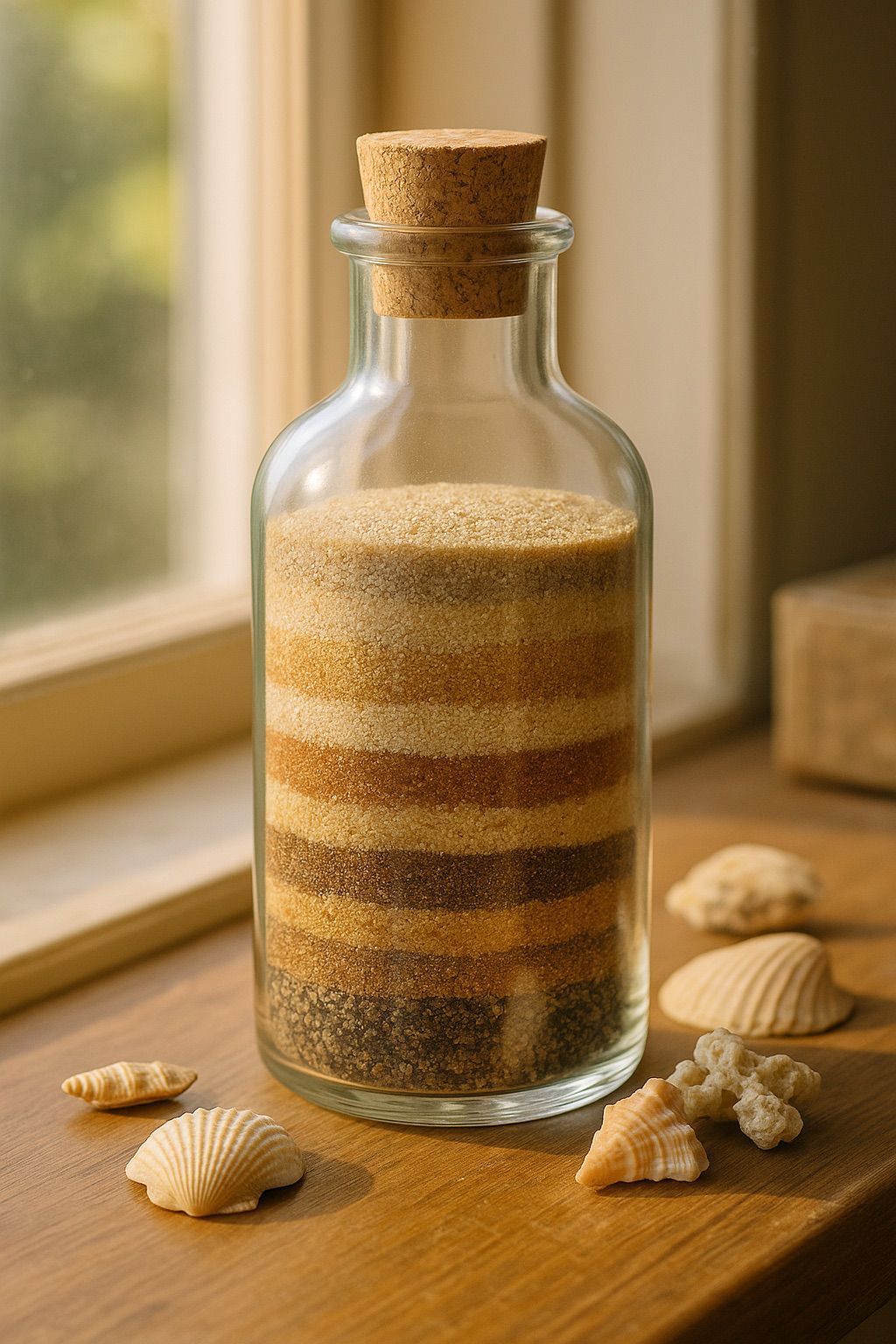
There are souvenirs you buy and souvenirs you create, and the ones you create always carry the deepest weight. Anyone can walk into an airport gift shop and pick up a magnet, a T-shirt, or a snow globe with the name of a city printed on it. But when you crouch down on the shore of a place you’ve loved, dig your hand into the sand, and save a little of it to take home, you aren’t just collecting grains of earth — you’re bottling a memory, a moment, a feeling. Sand holds more than shells and fragments of coral. It holds laughter, saltwater, sunsets, stories, and the echoes of footprints long gone. Learning how to bottle sand memories from your trips is less about the mechanics of filling a jar and more about the poetry of preserving something fleeting in a way that will always bring you back to the shore where you first felt it.

The magic of sand is its uniqueness. No two beaches are ever the same. Some sands are as white and soft as powdered sugar, while others glitter with black volcanic minerals or glow with pink coral fragments. There are golden beaches that shine like sunlight, red sands carved by ancient iron, and even green sands born of olivine crystals. When you scoop a handful of sand from one place, you are holding a geological fingerprint of that stretch of coastline, a piece of history shaped over thousands of years. When you line bottles of sand from different journeys side by side, you create a gallery of landscapes, each one distinct and personal, telling a story no store-bought souvenir could ever tell.

Bottling sand memories is also an act of intimacy. The moment of bending down, of feeling the grains slip through your fingers, is like a handshake with the earth. You’re not just looking at a place; you’re touching it, engaging with it, taking a piece of its essence home. Later, when you’re back in your daily routine, opening that little bottle, shaking it gently, and watching the grains shift is like flipping through a diary written not in words, but in minerals and textures. The sand doesn’t just remind you where you were. It reminds you who you were in that moment — carefree, laughing, perhaps sunburned and salty, or maybe calm, contemplative, and in awe of the horizon.

The process of bottling sand memories doesn’t have to be complicated. A small glass jar or bottle, something simple and clear, is all it takes. The transparency is key — you want to see the sand, to let the light hit it and reveal its details. Some travelers add labels with the name of the beach and the date of the trip, while others prefer to leave it anonymous, letting memory fill in the gaps. A simple handwritten note or even a tiny tag tied around the neck of the bottle can turn sand into a time capsule. Each time you glance at it on your shelf, you’ll be transported to that beach, hearing the waves crash and feeling the sun on your skin again.

But beyond mechanics, there’s an art to making sand collections meaningful. Some people layer sands from multiple beaches in one jar, creating stripes of color and texture like a geological rainbow. Others add small seashells, pebbles, or dried flowers from the beach itself. A bottle can become a microcosm of an entire day, each element a piece of a larger memory. If you’re artistic, you can use sand in craft projects — layering it in shadow boxes with photographs, sprinkling it into resin jewelry, or using it in candles and ornaments. Each creative choice is another way of making the memory live outside of your head, tangible and touchable.

The power of sand memory bottles is not just in their beauty but in their accessibility. Unlike expensive souvenirs, sand is free, humble, and universal. Almost anyone can bend down and take a handful of sand, and yet what they create with it is entirely personal. A bottle of sand from your honeymoon beach will carry a different weight than one from a family vacation, a solo backpacking trip, or a spontaneous weekend getaway. Together, they weave the story of your life’s adventures in a way no mass-produced trinket could.

Of course, as with all acts of collecting, respect matters. Some beaches and parks have strict rules against removing natural elements, and those rules are there for a reason. Before you bottle, check. Sometimes, the right choice is not to take, but to find creative ways of capturing the memory in other forms — a photograph of your footprints, a sketch, a journal entry. When collecting is allowed, take only a small amount, just enough to fill your bottle, leaving the beach as beautiful as you found it. After all, the essence of bottling sand memories is to honor the place, not diminish it.

The beauty of this tradition is that it grows over time. The first bottle may seem small, almost insignificant, sitting alone on a shelf. But as years pass and travels accumulate, your bottles become a library. Each one is a chapter, each one a story, each one waiting to be opened and remembered. Lined up, they become not just souvenirs but a map of your wanderings, a timeline of your life’s adventures. The grains of sand you hold will outlast photographs that fade or phones that lose storage. They are elemental, timeless, and enduring.

When guests visit your home and notice the collection, they don’t just see sand. They see curiosity, they see love for the world, they see a storyteller who captures moments in bottles instead of relying on postcards. The conversations that follow are their own kind of memory-making — you, recounting the day you first scooped that sand, reliving the laughter, the swims, the sunsets. In this way, the bottles continue to create joy long after the trip has ended.

Ultimately, bottling sand memories is about grounding yourself in something physical. In a world where so much of our memory lives in digital clouds and endless scrolls of photos, a bottle of sand feels refreshingly real. You can hold it in your hand, shake it, feel its weight, see the way the grains catch light. It is a reminder that travel is not just about destinations but about connections — with places, with people, with moments that shape who we are. Each bottle is a reminder that time is fleeting, but memory, when honored and preserved, can last forever.

So the next time you find yourself at the edge of the sea, toes sinking into the shore, waves brushing against you, and sun sinking low on the horizon, take a moment to scoop up a handful of that place. Let it run through your fingers, feel its texture, and then save just enough to bring home. Later, when life is hectic and routine feels endless, you can pick up that bottle, shake it gently, and be transported. The sound of laughter, the warmth of sun, the crash of waves — all bottled, all yours, forever.

Related Posts

Beneath the Surface: Discovering the Best Beaches for Snorkeling Around the World

Dave

The beauty of a beach is often measured by the way it looks above the waterline, but the true magic lies just beneath the surface. For those willing to strap on a mask, bite down on a snorkel, and glide into the blue, an entire hidden universe awaits — colorful, vibrant, teeming with life. Snorkeling is one of the simplest and most rewarding adventures you can have on a beach day, requiring little more than curiosity and a willingness to float. It opens up a secret door into the world of coral gardens, swaying sea fans, darting tropical fish, and encounters with creatures that seem pulled straight from myths. Finding the best beaches for snorkeling is not about geography alone; it’s about entering places where nature has written her most dazzling stories in shades of turquoise and gold, pink and violet, emerald and silver. The water becomes a canvas, the fish the brushstrokes, and every snorkeler is both an explorer and a guest in a world older and grander than their own.

One of the most iconic snorkeling destinations on earth is Hanauma Bay in Oahu, Hawaii. From above, the bay looks like a perfect crescent carved out of volcanic rock, but beneath the waves lies a sanctuary bursting with coral reefs and vibrant marine life. The water here is calm and shallow, making it perfect even for beginners, but it’s the density of life that makes it unforgettable. Glide through the bay and you’ll find yourself surrounded by schools of butterflyfish and parrotfish, flashes of yellow tangs, and perhaps even a graceful sea turtle cruising by like a serene elder of the reef. The experience is so overwhelming that it feels less like snorkeling and more like stepping into a living aquarium, only this one has been sculpted by nature and preserved by protection efforts that have made Hanauma Bay a global model for marine conservation.

Half a world away, the Caribbean offers its own treasures. Trunk Bay in St. John, part of the U.S. Virgin Islands, is often described as one of the most beautiful beaches in the world, but its real jewel is underwater. An underwater snorkeling trail has been created here, complete with plaques that guide you through the coral formations and introduce you to the fish you’ll encounter. It’s as if the ocean itself is giving you a guided tour, whispering secrets about the reef as you glide through warm, crystalline waters. This blending of education and adventure ensures that even first-timers leave not only dazzled but also more aware of how fragile and precious these underwater ecosystems are.

Australia’s Great Barrier Reef may be the crown jewel of global snorkeling, but it is the smaller, more intimate spots that truly capture the heart. At Whitehaven Beach in the Whitsundays, powdery white sand gives way to waters where stingrays glide like shadows over a turquoise canvas, and tiny, curious fish dart between your legs as you walk in from the shore. The reef here is shallow and easy to access, but the diversity is staggering — corals like sculpted castles, clownfish peeking from anemones, and flashes of electric blue and neon pink that seem too vivid to be real. Snorkeling here reminds you that sometimes the greatest beauty is not in size but in intimacy, in the way each encounter feels personal, like the reef is performing just for you.

For those drawn to the raw, untamed beauty of the Red Sea, Egypt’s Ras Mohammed National Park offers snorkeling like nowhere else. Located at the tip of the Sinai Peninsula, this region is where vibrant coral reefs meet desert cliffs, creating a surreal collision of landscapes. Slip beneath the surface and you are greeted by walls of coral that drop into the depths, teeming with fish that shimmer like jewels against the backdrop of the blue. Barracuda patrol the outer edges, while colorful wrasses, angelfish, and butterflyfish populate the reef. Snorkeling here feels primal, ancient, as if you are tapping into the same waters that have flowed unbroken since the dawn of life itself.

Mexico’s Riviera Maya holds another treasure in Akumal, which means “Place of the Turtles” in Mayan. True to its name, Akumal’s shallow, calm waters are home to green sea turtles that graze peacefully on seagrass meadows just offshore. To snorkel here is to experience one of the most humbling encounters possible — drifting alongside these gentle giants as they move with slow, deliberate grace, completely unbothered by your presence. The sight of a turtle lifting its head to the surface for a breath before sinking back down into the meadow is unforgettable, a reminder of the delicate balance between sea and land, air and water.

In the Maldives, nearly every island offers snorkeling that could make the list of “world’s best.” The waters here are impossibly clear, the corals alive with every imaginable hue, the marine life dazzling in both diversity and abundance. Perhaps nowhere else in the world can you step directly from your overwater villa into a reef where you might see manta rays, reef sharks, and clouds of tropical fish in a single swim. The Maldives redefine what it means to be surrounded by the sea, making every snorkel an immersion in paradise.

The Galápagos Islands, meanwhile, add another dimension to snorkeling — not just color and beauty, but history and uniqueness. Here, you are as likely to encounter a marine iguana gliding past you as you are to see a school of surgeonfish. Sea lions often swim playfully alongside snorkelers, their agility and joy infectious. The Galápagos remind us that snorkeling is not just about seeing beautiful fish, but about sharing space with creatures found nowhere else on earth. It is a humbling, exhilarating reminder of how diverse life can be when allowed to flourish in isolation.

And then there are the hidden gems, the places that don’t make every glossy magazine list but stay forever etched in the memories of those who discover them. Devil’s Crown in the Galápagos, a submerged volcanic crater teeming with life. Molokini Crater in Hawaii, a crescent-shaped sanctuary where visibility is so clear it feels like floating through glass. Ningaloo Reef in Western Australia, less famous than the Great Barrier but just as dazzling, where whale sharks migrate and coral flourishes with fewer crowds.

What makes a beach great for snorkeling is not just what you see, but how it makes you feel. The best beaches for snorkeling remind you that the world is larger and more complex than you imagined, that beauty exists in layers, that every fish, coral, and current is part of a grand design you are only beginning to glimpse. They teach patience, humility, and wonder. They slow you down, force you to breathe, to observe, to marvel.

The real gift of snorkeling is not just the photographs or the list of species you can check off. It is the moment of connection — when a turtle meets your eye, when a school of fish envelops you like a living cloud, when sunlight refracts through water and turns everything into a kaleidoscope. These are moments of intimacy with a world that exists whether or not we visit it, a reminder that paradise is not a resort but an ecosystem, fragile and alive.

The best beaches for snorkeling are scattered across the globe, but they share one thing in common: they leave you changed. You emerge from the water with salt on your skin and wonder in your eyes, carrying with you a piece of the reef, not physically but emotionally. You carry the colors, the rhythms, the quiet power of a world that thrives just beyond our everyday sight. And once you have seen it, you will spend your life seeking it again, diving into new waters, chasing new horizons, searching for that same thrill of discovery.

Snorkeling is not about expertise, expensive gear, or even travel to the farthest corners of the planet. It is about curiosity, about surrendering to the idea that the world beneath the waves is as much ours to explore as the mountains and cities we call home. The best beaches for snorkeling are not just destinations; they are invitations — invitations to witness, to respect, to protect. Because once you have seen paradise underwater, you cannot help but want to keep it safe for generations to come.

Related Posts

Sun, Sand, and Safety: Keeping Every Beach Day Worry-Free

Dave

There is nothing quite like a beach day. The anticipation begins before you even get there — the smell of sunscreen in the air, the cooler packed with drinks and snacks, the towels rolled tightly in a bag, the excitement of kids who can’t wait to run into the waves. The beach is freedom, a place where time slows down, worries fade, and everything is reduced to sun, sand, and sea. But for all its joy, the beach is also a place where safety matters more than we often think. Beneath the carefree laughter and golden skies, there are risks that can turn a perfect day into a nightmare if we don’t pay attention. That’s why keeping everyone safe on a beach day is not about being paranoid — it’s about being prepared, about creating the conditions where relaxation can actually flourish because the essentials are covered. Safety is not a burden; it’s the foundation of a day everyone will remember for the right reasons.

The first and most important factor of beach safety is the ocean itself. The water is magnetic — it calls to children and adults alike, shimmering under the sun, whispering promises of cool relief. But the ocean is also powerful, unpredictable, and deserving of respect. Rip currents are among the greatest hidden dangers. They are fast-moving channels of water that can sweep even strong swimmers away from shore in seconds. Many people panic when caught, exhausting themselves by fighting directly against the current. The safer strategy is to stay calm, conserve energy, and swim parallel to the shore until you are free from the current’s grip, then make your way back in at an angle. Teaching children — and even reminding adults — about rip currents before anyone enters the water can make the difference between life and tragedy. The rule is simple: the ocean is beautiful, but never underestimate it.

Supervision is another non-negotiable. A beach is not like a backyard pool where the water is contained and controlled. At the beach, waves crash unpredictably, sandbars shift under your feet, and the sheer expanse makes it easy to lose sight of people, especially kids. Having a designated “water watcher” in your group ensures that someone is always paying attention when children or weaker swimmers are in the surf. Rotating this responsibility keeps it fair, but the key is that the job is focused — no phones, no distractions, just eyes on the water. This simple system has saved countless lives. It doesn’t matter how good a swimmer someone is; all it takes is one strong wave, one sudden cramp, one slip beneath the surface. The ocean demands vigilance.

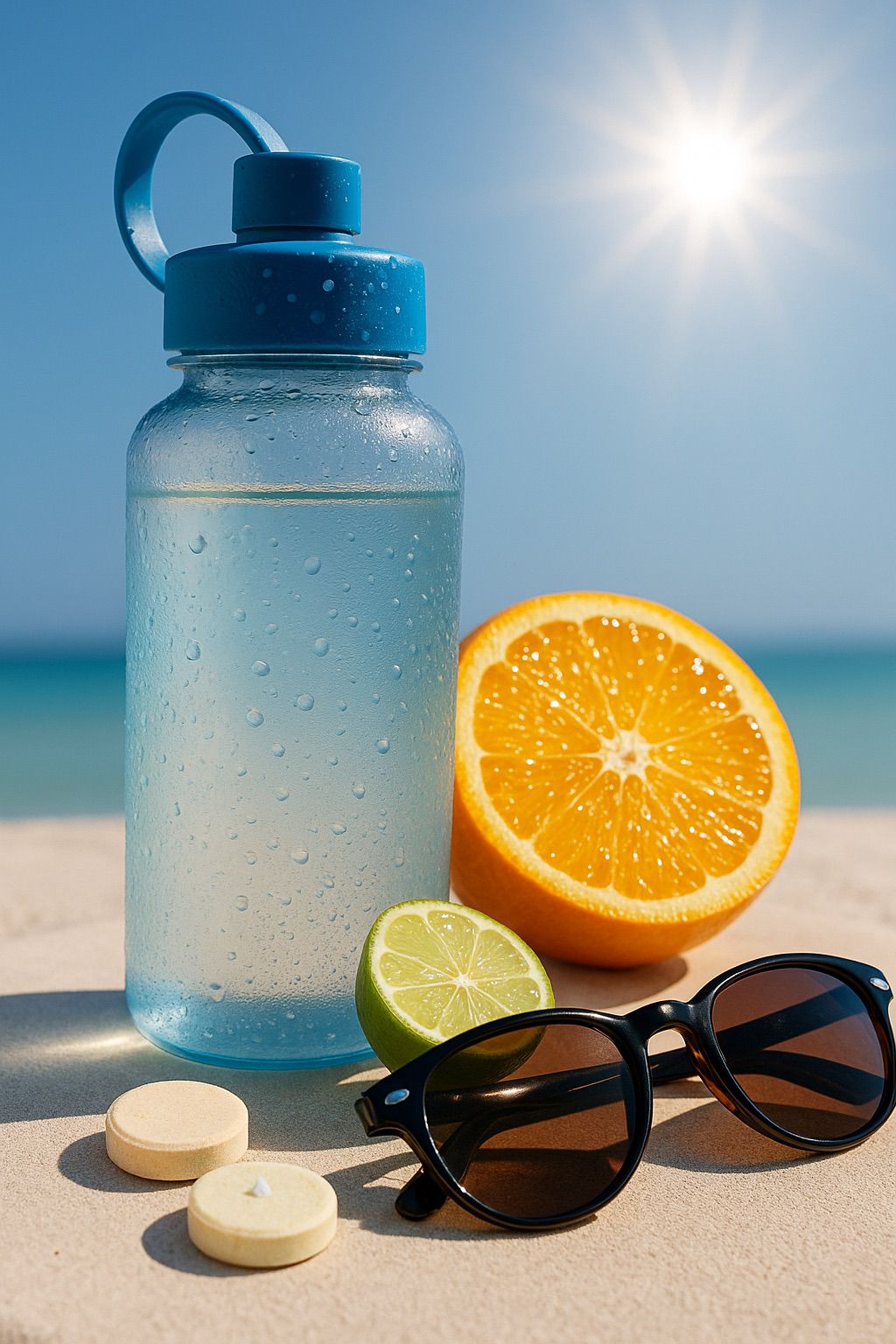
Of course, not all dangers come from the sea. The sun itself can be merciless, and while a sunburn may not seem like a life-threatening issue, the truth is that overexposure to UV rays can cause heatstroke, dehydration, and long-term damage to skin. Sunscreen is the obvious defense, but too many people treat it like an afterthought, applying a quick layer once and forgetting about it. The truth is sunscreen should be applied generously, thirty minutes before sun exposure, and reapplied every two hours, or immediately after swimming or sweating. Wide-brimmed hats, sunglasses, and UV-protective clothing add extra layers of defense. Shade is not optional — whether from an umbrella, a tent, or a natural spot, having a retreat from direct sun can mean the difference between a joyful afternoon and a miserable evening spent with chills and blisters.

Hydration ties directly into sun safety. The combination of heat, activity, and salt air can dehydrate the body faster than we realize. Sodas and cocktails may be fun, but nothing replaces water. Bringing a cooler stocked with cold water bottles and encouraging everyone — especially kids — to drink regularly keeps energy up and prevents dizziness, fatigue, or worse. Pairing hydration with snacks like fresh fruit provides not only relief but also fuel for all the running, swimming, and building of sandcastles that a beach day demands.

Then there are the hazards we don’t think about until they happen — stepping on a sharp shell or piece of glass hidden in the sand, jellyfish stings, or scraped knees from playing near rocks. A small first aid kit can be a quiet hero on a beach trip. Bandages, antiseptic wipes, tweezers, and even vinegar or baking soda (depending on the type of jellyfish common in the area) can turn a crisis into a minor inconvenience. It’s not about anticipating disaster; it’s about giving yourself the power to respond quickly and confidently if something arises.

Swimming zones and lifeguards exist for a reason, and choosing a beach with lifeguards on duty is always the safer option. Lifeguards are trained to spot trouble before it becomes obvious — they can see a struggling swimmer long before a casual observer would notice. Respecting their warnings, flags, and instructions is non-negotiable. If a flag indicates dangerous conditions, trust it. No photo, no thrill, no swim is worth risking your life or the lives of those you love.

One of the most overlooked safety aspects of a beach day is the buddy system. It seems simple, almost childish, but it works. Nobody, no matter how confident, should swim alone. Having someone with you means that if something goes wrong — a cramp, sudden fatigue, or getting caught in a current — there is someone right there to help or call for help. Even experienced swimmers, even athletes, can be humbled by the power of the sea. Pairing up is one of the easiest, most effective ways to add a layer of security.

Parents, especially, face the challenge of balancing freedom with safety. Children see the beach as an endless playground, and in many ways it is, but they also need boundaries. Setting clear rules before arriving — where they can and cannot go, how far into the water they are allowed, and who they must stay near — provides structure without dampening fun. Bright swimsuits for kids make them easier to spot in crowds, and teaching them simple hand signals or whistles for attention can bridge the gap when voices get lost in the roar of the surf.

And then there is the social aspect of safety. Beaches are public spaces, and as such, awareness of your surroundings matters. Keeping an eye on belongings, choosing a well-populated but not overcrowded area, and respecting the space of others contributes to an atmosphere where everyone feels secure. A little courtesy goes a long way — picking up trash, avoiding reckless games near other beachgoers, and being mindful of noise or smoke helps maintain a safe and welcoming environment for all.

But the most powerful aspect of keeping everyone safe on a beach day is mindset. It is about recognizing that safety is not the opposite of fun, but the foundation of it. The child who knows someone is watching can play more freely. The swimmer who understands rip currents can enjoy the waves with confidence rather than fear. The adult who reapplies sunscreen and drinks water will have the energy to make memories well into the evening rather than retreating with sunstroke. Safety is the unseen lifeguard in every joyful photograph, the quiet force that makes the laughter possible.

What people remember about a beach day is not the sunscreen routine, the rotation of water-watchers, or the bag of bandages tucked discreetly in a tote. What they remember is the way the water felt as they dove under a wave, the taste of watermelon on a towel, the warmth of the sun as they dozed under an umbrella, the sandcastle that somehow survived until sunset, the bonfire laughter that stretched into the night. Safety doesn’t erase spontaneity. It protects it. It ensures that when the day is done, and everyone is packing up salty towels and sandy feet, the memories are golden, not scarred by regret.

The truth is that beaches have always been places of both beauty and danger. Sailors feared them, poets worshiped them, families flock to them. To love the beach is to love both its serenity and its wildness. And to honor that love is to approach it with respect. When we take the steps to keep everyone safe — to watch, to prepare, to hydrate, to shade, to listen to the sea and to each other — we are not limiting the magic of the beach. We are amplifying it. Because nothing is more magical than freedom without fear, laughter without worry, joy without interruption.

So the next time you pack the car, load up the cooler, shake out the towels, and head to the shore, remember that safety is the most essential thing you bring. It is what allows you to run barefoot across the sand without hesitation, to float in the surf without fear, to let children play with abandon, to close your eyes under the sun and truly relax. Safety is not a list of rules — it is the invisible gift you give to everyone you love, the one that says, “Go ahead. Dive in. The day is yours.”

Related Posts

Waves of Confidence: Finding Yourself in Swimwear

Dave

For as long as fashion has existed, few items of clothing have carried as much weight — emotional, cultural, even historical — as swimwear. The bikini, the one-piece, the tankini, the high-waisted retro set, even the humble cover-up, all come with layers of meaning far beyond fabric and thread. Swimwear is not just about the beach or the pool; it is about exposure, about vulnerability, about standing in front of the world without the usual armor of jeans and jackets and sweaters. And because of that, it is also one of the most powerful pieces of clothing when it comes to confidence. To wear swimwear is to stand in the light of sun and self-acceptance, to say, “This is me, exactly as I am.” But for many, that road to confidence is a winding one, filled with doubts, comparisons, and quiet battles. Yet the beauty of it is this: confidence in swimwear is not about the body at all. It’s about how you choose to see yourself.

Most of us have a memory of that awkward moment, maybe in adolescence, maybe later, when stepping out in a swimsuit felt like stepping onto a stage under a spotlight. The water glimmered invitingly, friends laughed easily, but inside, there was hesitation. Too pale, too curvy, too skinny, too tall, too short — the list of “too much” and “not enough” seemed endless. These thoughts weren’t born within us but pressed upon us by decades of glossy magazine covers, advertising campaigns, and social scripts that dictated what a “beach body” was supposed to look like. The myth of the perfect body in the perfect bikini became a cage that kept countless people from ever feeling the sand between their toes without self-consciousness.

But here’s the truth: every body is a beach body. The phrase “beach body” is nothing more than a marketing invention designed to sell diets, gym memberships, and swimsuits themselves. The beach itself does not care. The waves don’t crash differently depending on the size of your hips, the tide doesn’t pause to measure the flatness of your stomach. Confidence in swimwear begins when you realize that nature does not judge you, and neither should you. The ocean accepts every single body that dares to dive in.

What’s more, swimwear has always been about rebellion and liberation. In 1946, when the bikini first appeared, it was considered scandalous, a challenge to modesty and tradition. But women wore it anyway, claiming their right to dress as they pleased. That spirit of defiance still lingers in every bikini strap and one-piece silhouette. To put on swimwear is to participate in a long tradition of saying, “I will not hide.” Confidence, then, is not about how you look but about embracing your freedom.

Finding confidence in swimwear is also about fit, not size. There is magic in the right swimsuit — one that hugs you in all the right places, that flatters without constraining, that makes you want to move rather than hide. For some, that’s a bold bikini in neon or animal print. For others, it’s a sleek one-piece with clean lines. High-waisted retro styles give some a sense of vintage glamor, while sporty two-pieces empower others with strength and ease. The point is not the category of swimsuit but the way it makes you feel. When you slip into swimwear that feels like an extension of yourself, confidence follows naturally.

Accessories play a role too. A breezy sarong tied around the waist, a wide-brimmed straw hat, oversized sunglasses, or a sheer kaftan can add flair and comfort. They create not just an outfit but an experience, a vibe. These layers are not about hiding; they’re about style, about creating a look that feels intentional rather than fearful. Confidence often comes when we feel we are presenting ourselves in a way that matches who we are. Swimwear is no different.

Of course, confidence in swimwear is not just about the fabric but about mindset. The critical voice that whispers in your head is not truth — it’s noise. It’s the echo of years of cultural conditioning that told you to shrink, to compare, to cover up. One of the most radical acts of self-love you can perform is to drown out that voice with your own: “I belong here. I deserve this sunlight. My body is mine, and it is enough.” The people who shine the brightest on the beach are never the ones with so-called “perfect” proportions. They are the ones laughing freely, splashing in the waves, eating ice cream with sticky hands, living fully in the moment. That is what confidence looks like.

The journey to swimwear confidence also means redefining beauty. Media images have long celebrated narrow standards, but the reality is that beauty lives in diversity. Stretch marks are stories written on skin. Cellulite is as natural as freckles. Scars are reminders of survival. Freckles, curves, angular frames, softness, strength — all are forms of beauty when seen without comparison. Swimwear lays the body bare, yes, but in doing so, it reveals truths that are far richer than airbrushed perfection. Confidence means allowing those truths to exist unapologetically.

There’s also a practical element: practice makes powerful. Confidence is a muscle, and like any muscle, it strengthens with use. The first time you wear a swimsuit after months or years of avoidance, it may feel uncomfortable. But each time you step onto the sand, each time you slip into the pool, each time you let yourself be photographed without covering up, you build resilience. Confidence doesn’t arrive all at once. It grows in moments — when you choose to say yes to joy rather than no out of fear. When you choose to join the beach volleyball game instead of sitting out. When you let yourself float in the water without worrying what you look like from the shore. These choices accumulate, and slowly, they form a new reality where swimwear becomes second nature rather than a battlefield.

Confidence in swimwear also comes from community. There is something transformative about surrounding yourself with people who uplift rather than judge. Go to the beach with friends who celebrate you, who cheer you on, who remind you that life is too short to sit in the shade wrapped in insecurity. Social media, too, has become a surprising ally in this journey. The rise of body-positive influencers showing unedited, joyful photos in all kinds of swimwear has given millions the courage to reimagine what is possible. Representation matters. To see someone who looks like you thriving in swimwear is to realize that you can thrive too.

And then there is the deeper truth: swimwear confidence is about joy. It’s about reclaiming the simple pleasures of life without self-consciousness. It’s about running into the ocean without tugging at your straps, lying on a towel without worrying about rolls or angles, dancing at a beach party without checking yourself every five seconds. Joy is the fuel of confidence. When you allow yourself to feel joy, confidence follows naturally. Swimwear becomes not a test, but a ticket to freedom.

The ultimate irony is that nobody is looking at you as closely as you think. Most people at the beach are too wrapped up in their own moments — their children building sandcastles, their partners napping in the sun, their own insecurities whispering in their ears — to scrutinize you. The only gaze that truly matters is your own, and when you soften it, when you treat yourself with the same compassion you would give to a friend, you unlock the freedom to live fully.

So finding confidence in swimwear is not about transforming your body. It is about transforming your perspective. It is about shifting from “how do I look?” to “how do I feel?” It is about remembering that the ocean doesn’t care about size tags or cellulite, that the sun shines on every body equally, that joy is infinitely more attractive than perfection. Confidence is not about the bikini. It’s about you, standing tall, smiling freely, and allowing yourself to be seen.

The next time you put on swimwear, think of it not as exposure but as liberation. You are not displaying yourself for judgment. You are claiming your right to experience the world fully — the warmth of the sun, the coolness of the waves, the laughter of friends, the taste of salt on your lips. Swimwear is simply the costume of that freedom, and confidence is the performance you give not to others, but to yourself. You don’t need to wait until you’ve changed anything about your body. The time to step into confidence is now, exactly as you are, because the beach is waiting, the waves are calling, and life is too short to sit out of the water.

Related Posts

Sailing Through Paradise: The Ultimate Journey of Island-Hopping in the Caribbean

Dave

There are trips you plan, trips you dream about, and trips that end up etching themselves into the fabric of your memory so deeply that no amount of time can erase them. Island-hopping in the Caribbean belongs firmly in the third category. It is not just a vacation; it is a pilgrimage to turquoise waters and golden sands, to cultures layered with history and alive with rhythm, to food that dances on the tongue and sunsets that set the sky aflame. The Caribbean is not a single destination. It is a mosaic of islands, each with its own soul, its own stories, its own flavor of paradise. To hop from one to the next is to move through a kaleidoscope of experiences, each island offering a new revelation, a new note in a song that never seems to end.

The journey begins long before your feet ever touch the sand. It begins in the imagination, in the way the word “Caribbean” conjures visions of palm-fringed beaches and hammocks swinging lazily in the shade. But the reality is richer, more vivid, more complex than the postcard clichés. Step onto a ferry, a catamaran, or a small plane, and you are transported not only across waters but across histories. Colonization, piracy, slavery, resilience, and independence have all left their imprints here, shaping the islands into a tapestry where no two are alike. Island-hopping is not simply about beaches — though the beaches will take your breath away. It is about discovery, about peeling back layers, about surrendering to the rhythm of the islands and letting each one tell you its story.

In the Bahamas, the gateway to many Caribbean dreams, the water is so clear it seems unreal, like floating glass beneath your boat. Hop over to Nassau, with its pastel-colored colonial buildings and bustling straw markets, and then sail to the Exumas, where pigs actually swim in the sea and sandbars stretch endlessly beneath a sun so bright it feels like a spotlight. Already, you are intoxicated. Already, the spell is taking hold. But the Bahamas are just the beginning, the first note in a symphony of islands.

Head south to Jamaica, and the energy shifts. The island throbs with rhythm, reggae pouring from every doorway, jerk spices filling the air with smoke and fire. The beaches here are wide and golden, but what truly captivates is the spirit of the people — warm, vibrant, alive with a resilience born of struggle and pride. Climb Dunn’s River Falls, raft down the Martha Brae, dance in Kingston, sip overproof rum while listening to Bob Marley’s voice drifting from a local bar. Jamaica is not just an island; it is a pulse, a beat that lodges itself in your chest and stays with you long after you’ve left.

Then comes Cuba, an island frozen and yet timeless, where vintage cars roll past crumbling colonial facades and music spills into the streets at all hours. Havana feels like stepping into another world, one where history lingers in every cobblestone and every cigar. Walk the Malecón at sunset, the waves crashing against the seawall as couples stroll arm in arm, and you understand why poets and revolutionaries alike have been drawn to this island for centuries. To hop from Cuba to Puerto Rico is to feel the shift again, from the revolutionary to the celebratory. San Juan dazzles with its colorful Old Town, its forts standing guard against centuries of storms and sieges, its plazas alive with dancing, laughter, and the irresistible pull of salsa. Puerto Rico feels like a celebration that never ends, a place where history and joy dance together under the Caribbean sun.

Further along the chain, the Virgin Islands beckon. St. Thomas with its bustling harbor, St. John with its pristine national park beaches, St. Croix with its Danish history and rum distilleries. Then the British Virgin Islands, where sailors find nirvana among scattered isles like Tortola, Virgin Gorda, and Jost Van Dyke. Here, island-hopping is literal — hopping from one stretch of paradise to the next in the span of an afternoon sail. White Bay on Jost Van Dyke is famous for its beach bars, where rum punch flows like water and strangers become friends as easily as the tide rolls in. There is no hurry here, no schedule, only the sun overhead and the sand between your toes.

As you move further south, the Lesser Antilles unfurl like jewels scattered across the sea. Antigua boasts 365 beaches — one for every day of the year, they like to say. St. Lucia rises in dramatic splendor, its twin Pitons piercing the sky, waterfalls tumbling down emerald slopes, volcanic sand black beneath your feet. Barbados, with its British charm and calypso heart, offers cricket matches under swaying palms and waves that lure surfers from across the globe. Each island brings contrast, each island adds a verse to the story.

Then there is Dominica, the Nature Island, where rainforests cloak the land and boiling lakes steam from volcanic depths. This is a place less touched by mass tourism, where waterfalls crash into hidden pools and parrots flash their colors through the canopy. Grenada, the Spice Island, greets you with the scent of nutmeg and cinnamon the moment you step ashore. Its markets burst with color, its hillsides glow with flowers, its beaches invite without pretense. To wander here is to let your senses guide you — taste, smell, sight, all heightened by the island’s lush generosity.

And if you continue, you reach the ABC islands — Aruba, Bonaire, and Curaçao — each unique, each kissed by constant trade winds and boasting waters so clear they seem lit from within. Aruba dazzles with its luxury resorts and white sands, Curaçao charms with its Dutch architecture and vibrant culture, while Bonaire remains a diver’s paradise, its reefs protected, its waters alive with fish and coral. Here, the Caribbean feels both familiar and exotic, European and Caribbean, wild and refined.

What makes island-hopping so addictive is the contrast. You wake up one morning eating callaloo for breakfast, and by evening you’re sipping piña coladas on another shore. One day you’re hiking to a volcanic crater, the next you’re snorkeling above a coral reef or dancing in a street parade. Every island is a new world, and yet they are all tied together by the sea — that constant expanse of turquoise and indigo that carries you forward.

But island-hopping in the Caribbean is not just about the destinations. It’s about the people. The fisherman who offers you a fresh catch from his boat. The bartender who insists you try the local rum punch — “stronger here than anywhere else,” he swears. The musician whose steel drum melody makes you stop mid-step because for a moment, you feel you are hearing the heartbeat of the islands themselves. The Caribbean is not just seen. It is felt, lived, embraced through the warmth of the people who call it home.

Of course, no journey is without its challenges. Ferries can be unpredictable, flights delayed, weather capricious. A sudden storm can wash out plans, and the laid-back pace that makes the Caribbean so charming can frustrate those who crave punctuality. But island-hopping here teaches you something vital: to let go. To surrender control. To realize that paradise is not about sticking to a schedule but about embracing the unexpected. It is in those unscripted moments — the rain shower that forces you into a beachside shack where you discover the best conch fritters of your life, or the missed ferry that leaves you watching a sunset you would otherwise have rushed past — that the Caribbean reveals its true gifts.

By the time you have skipped from island to island, danced to different rhythms, tasted countless flavors, and dipped your feet in waters that change shade with every horizon, you come to understand why people call the Caribbean a paradise. It isn’t perfect — no paradise ever is. It is layered with histories of struggle, colonization, and resilience. But it is alive. It is joyful. It is generous. It is a place where the sea ties together a thousand differences into one shared identity.

Island-hopping in the Caribbean is not about checking boxes or collecting stamps. It is about immersion. It is about the way the light hits the water differently on each shore, the way the music changes beat from island to island, the way food tells a story that history books cannot. It is about the feeling of constant discovery, of waking up each day knowing you will step into something new, something unforgettable. And when you leave, when the plane takes off and the turquoise waters fall away beneath you, you carry more than memories. You carry the rhythm of the islands inside you.

The Caribbean is not a place you simply visit. It is a place you return to, again and again, in your dreams, in your heart, in the way a certain smell or song can transport you back instantly. To hop across its islands is to collect pieces of paradise, and those pieces never fade. They stay with you, salt-kissed and sun-warmed, forever.

Related Posts

Waves at Home: How to Bring Coastal Style to Your Bedroom

Dave

There is something about the coast that feels eternal, something that seeps into your bones the moment you breathe in the salty air, something that quiets the chaos of everyday life and replaces it with rhythm. The pull of the ocean is more than just visual; it’s emotional, spiritual, and deeply human. That’s why so many people who cannot live by the beach choose to bring the beach to them, infusing their homes with the kind of tranquility that only waves and wide skies can inspire. And nowhere does that influence matter more than the bedroom, the most personal space you inhabit. A coastal bedroom isn’t just about decorating with shells or painting the walls blue. It’s about creating a retreat that makes you feel as though you are waking up every morning with the sea just outside your window, even if you live a thousand miles from the shoreline.

The secret to coastal style is light. Natural light pouring through large, sheer curtains. Light-colored walls that reflect the glow of day and soften into warmth by night. White becomes the anchor here, not stark but alive, layered with sandy beiges, gentle taupes, seafoam greens, or sky blues. This palette is not meant to overwhelm but to soothe, like the horizon at dawn or the muted tones of shells scattered along a tide pool. The colors in a coastal bedroom don’t shout; they whisper. They bring calmness without sterility, balance without boredom.

Furniture in a coastal bedroom should never feel heavy or brooding. It should be easygoing, almost as though it drifted in on the tide. Light woods, whitewashed finishes, wicker, and rattan all echo the natural textures of a beachside cottage. A bed draped in crisp white sheets layered with linen throws or soft quilts in pale hues feels inviting without being cluttered. The key is effortlessness, that sense that the room is dressed just enough but not weighed down. A cane dresser, a wicker trunk at the foot of the bed, or simple wooden nightstands all keep the space grounded yet airy. The furniture isn’t there to dominate the room but to blend seamlessly into the environment you’re creating, just like the shoreline blends into the water.

Texture is where the room comes alive. Coastal style is tactile. It’s the weave of linen curtains that flutter when the window is open, the rough touch of a jute rug beneath your feet, the soft embrace of cotton sheets at the end of the day. Woven baskets, rattan lampshades, and raw-edge driftwood frames echo nature, while airy textiles remind you of wind and water. A space like this doesn’t just invite your eyes to wander but your hands to feel. It wants to be touched, lived in, and embraced, just like the beach itself.

Décor in coastal bedrooms is subtle, never themed. It isn’t about plastering starfish and anchors on every wall. Instead, it’s about restraint, about evoking the feeling of the coast without overwhelming it. A framed seascape, a ceramic vase in an ocean hue, a single jar of sand collected from a beloved shoreline — these touches matter more than dozens of trinkets. A large, airy woven light fixture that casts warm shadows at night can evoke the lantern glow of a seaside cottage. A piece of reclaimed driftwood set as a headboard or a woven rug in muted blues can carry more power than cluttered accessories. Every piece should feel intentional, not forced, like treasures you brought home rather than souvenirs bought at a shop.

Light itself becomes the most important accessory. In the daytime, your room should flood with sunlight filtered through gauzy curtains, creating a sense of openness and endless air. At night, lighting should be layered and gentle. Think table lamps with linen shades, rattan pendants that mimic the texture of nets, or candles flickering softly as if echoing the glow of a beach bonfire. Lighting in a coastal bedroom doesn’t just illuminate; it creates atmosphere, shifting with the hours like the sea itself.

No coastal-inspired space is complete without a touch of nature. Plants bring vitality to the room, but the choices matter. Palms in woven baskets, snake plants in clay pots, or eucalyptus branches in a glass vase all tie in seamlessly with the theme. They provide freshness without clutter, color without chaos. Even one well-chosen plant in the corner can evoke the wildness of dune grasses swaying in the wind. They connect your bedroom not only to the idea of the beach but to life itself, rooting you in something organic and alive.

The magic of coastal design is not in following rules but in creating feeling. Every detail should invite you to breathe deeper, to let stress roll away like the tide, to feel as though your bedroom is a sanctuary away from the noise of the world. Personal touches are what transform it from simply styled into authentically yours. A jar of shells you picked up on a trip, a framed photograph of your favorite shoreline, books about the ocean stacked by your bed — these are what give the room its soul. Your coastal bedroom should remind you not just of the coast in general, but of the coast as you know it, tied to your memories, your dreams, your longing.

What makes coastal style so enduring is that it speaks to something we all crave: peace. It doesn’t matter if your window looks out at crashing waves or a busy street — the coastal bedroom gives you the illusion of waking up at the water’s edge. It gives you space to breathe, to rest, to recharge. It proves that you don’t need to live near the shore to live with the sea in your heart.

So strip away the heavy, the dark, the unnecessary. Embrace lightness, simplicity, and nature. Let the textures tell their story. Let the colors calm you. Let the design transport you. Because at the end of the day, a coastal bedroom is not just about design. It’s about creating a sanctuary that feels as eternal and as free as the ocean itself. It’s your retreat, your safe harbor, your little corner of coastline, no matter how far from the shore you may be.

Related Posts

Forever in the Sand: A Complete Guide to Beach Wedding Style & Inspiration

Dave

There is something timeless about the sound of waves meeting the shore, the salty air catching in your hair, the horizon stretching endlessly, blurring the line between sea and sky. For centuries, people have looked to the ocean as a place of renewal, healing, and connection. So it’s no surprise that couples everywhere are drawn to the shore when it comes time to say their vows. A beach wedding is more than just a ceremony in a beautiful location — it’s a statement, a declaration of love set against nature’s most breathtaking backdrop. It’s barefoot elegance. It’s champagne under the stars. It’s vows carried on the wind. And most of all, it’s unforgettable.

Planning a beach wedding, however, is an art form. It requires balancing the dreamy with the practical, weaving together style and inspiration with logistics and preparation. What makes beach weddings so magnetic is the unique blend of romance and freedom they offer. The ocean doesn’t care for formality, but it rewards authenticity. You don’t need marble arches or chandeliers when you already have sand, surf, and sky. What you need is to understand how to let the environment do the heavy lifting while you add personal touches that make the day yours.

Every beach tells a different story. Some are wild and rugged, with crashing waves and dramatic cliffs. Others are calm and serene, the water lapping gently at powdery white sand. Before planning a single detail, couples need to choose the beach that matches their vision. Do you want the drama of the Pacific coast, where the sunsets burn the horizon orange and crimson? Or the calm turquoise waters of the Caribbean, where every photo looks like a postcard? Perhaps you prefer a rustic East Coast vibe, with sea grass swaying in the dunes, or even a hidden Mediterranean cove with centuries of history whispering through the stones.

Each beach offers its own mood, its own palette. When choosing, think beyond the scenery — consider accessibility, weather patterns, and legal requirements for ceremonies. A secluded, private beach may sound perfect, but how easy is it for guests to reach? A tropical setting may seem idyllic, but what about hurricane season? Choosing the right beach is like choosing the stage for your play — it sets the tone for everything else.

Nothing transforms a wedding quite like what you wear. Beach weddings call for a style that feels natural yet elevated. Brides often lean toward lighter fabrics: chiffon, organza, silk, lace. Dresses that move with the wind, that catch the light, that don’t feel heavy under the sun. Long cathedral trains are beautiful in ballrooms, but on the beach, a flowing gown that grazes the sand whispers a more effortless kind of elegance. Some brides even choose shorter dresses, bohemian silhouettes, or gowns with daring open backs to match the casual but stunning atmosphere.

Grooms, too, get to break free from tradition. A full black tuxedo can feel out of place on the sand. Instead, linen suits, light colors, or even just crisp shirts and tailored trousers capture the relaxed yet refined spirit of the ocean. Barefoot vows? Absolutely. Loafers or espadrilles? Perfectly acceptable. The key is comfort blended with confidence — clothes that let you feel present in the moment, rather than trapped in fabric that doesn’t belong to the setting.

Bridesmaids and groomsmen often mirror the vibe — flowing pastel dresses, neutral tones, coral, turquoise, or even mismatched beach-inspired palettes. The result is a wedding party that looks like they were styled by the ocean itself.

And of course, accessories matter. Think flower crowns, seashell jewelry, woven hairpieces, soft curls tossed by the wind, or minimalist gold accents that shimmer in the sunlight. For grooms, simple boutonnières with tropical flowers or driftwood accents tie in perfectly. The beach itself provides inspiration; you just have to echo it.

The most magical thing about a beach wedding is that you don’t need to over-decorate. The ocean provides the soundtrack, the sky provides the canopy, and the sand provides the aisle. But thoughtful touches can enhance the natural beauty.

Many couples choose simple arches draped with linen or adorned with local flowers — orchids, hibiscus, bougainvillea. Others create aisles lined with shells, lanterns, or bamboo torches. Seating can be rustic wooden benches, white folding chairs, or even blankets and pillows for a casual bohemian vibe. The altar is often minimalist — a small platform or rug where vows are exchanged with waves crashing just beyond.

Lighting is another key element. Sunset weddings are among the most romantic, painting the sky in hues of pink, orange, and violet. As dusk falls, string lights, candles, or tiki torches create a warm glow that feels intimate and magical. Nature provides the stage; décor provides the accents.

After vows are said, the reception becomes the true canvas for personalization. Beach receptions can be barefoot feasts under the stars, elegant dinners under open tents, or even casual bonfires with acoustic guitars and s’mores. Caterers often lean into coastal menus: fresh seafood, tropical fruits, grilled specialties. Signature cocktails with names like “Ocean Breeze” or “Sunset Kiss” flow from the bar, their colors echoing the water and sky.

Tablescapes can include driftwood centerpieces, candles in glass vases filled with sand, starfish accents, or soft linens in seafoam green and sandy beige. The goal is to blur the line between natural and curated, so that guests feel the celebration belongs to the place itself.

Music, too, often reflects the setting. A steel drum band, a violinist, or a DJ mixing tropical beats can all capture the carefree spirit of the beach. And of course, dancing under the open sky — with sand beneath your toes — is an experience no ballroom can ever replicate.

Few backdrops rival the ocean for wedding photography. The interplay of natural light, wide horizons, and reflective water makes for breathtaking images. Photographers often work with the “golden hour,” just before sunset, when the light is soft and warm. Couples are silhouetted against fiery skies, or captured hand in hand as waves brush their feet.

But candid shots matter too: guests laughing with wind in their hair, flower girls chasing seagulls, a veil caught dramatically in the breeze. Beach weddings lend themselves to movement and spontaneity. No one expects rigid perfection. The beauty is in the flow.

Of course, beach weddings are not without challenges. Wind, sand, unpredictable tides, and weather all play roles. Sound systems can struggle against crashing waves. Dresses can gather salt and grit. Guests may squint in the sun or sweat in the humidity.

The key is preparation. Always have a plan B — a covered area nearby in case of rain. Choose microphones for officiants and readers. Advise guests to bring sunglasses, sunscreen, and comfortable shoes. Provide shade and hydration. The unpredictability of the beach can either ruin or enrich your day — depending on how well you plan.

What makes a beach wedding unforgettable is not just the setting but the personal touches. Some couples incorporate rituals like sand ceremonies, where two colors of sand are poured together as a symbol of union. Others release lanterns into the night sky or toss flower petals into the waves. Some embrace local culture — Hawaiian hula dancers, Caribbean drummers, or Mediterranean feasts.

Every detail should echo your story. Do you both love travel? Incorporate a map of beaches you’ve visited into your décor. Did you meet surfing? Add surfboards as props or signage. Do you want intimacy? Keep it to a small circle of family and friends. Do you want grandeur? Invite hundreds, with a stage set against the sea.

The beach is a canvas — your story is the paint.

There is a reason the idea of a beach wedding continues to capture hearts. It’s not just about style. It’s about symbolism. The ocean represents eternity, its tides constant yet ever-changing. The horizon represents hope, the idea that love stretches farther than we can see. The sand represents grounding — two people standing steady even as waves lap at their feet.

A beach wedding feels ancient and modern all at once, primal yet sophisticated. It’s a reminder that love, like the sea, is both vast and intimate, wild and enduring. Couples return to the beach to marry not because it is fashionable, but because it feels elemental — as if love belongs to the sea itself.

So when you picture your vows against the backdrop of the ocean, you’re not just planning a wedding. You’re writing yourself into a story that is as old as the tide and as new as tomorrow’s sunrise. A story of love, promise, and forever in the sand.

Related Posts

Sun, Sand, and Sustenance: Eating Light and Staying Energized at the Beach

Dave

There’s a certain magic about stepping onto the beach that makes everything feel lighter—your steps, your mood, your worries, even your appetite. The ocean stretches out like a glittering invitation, the sun warms your shoulders, and the salty air seems to whisper that life doesn’t need to be complicated. But spend a whole day by the shore, and you’ll quickly realize something: the beach drains you. The sun burns energy faster than you expect, the waves pull at your strength, and the heat can make your body crave refreshment in ways that feel almost primal. That’s where food becomes more than just fuel—it becomes part of the beach ritual itself. And the key to keeping that seaside vibe fun, light, and energized? Eating smart, eating light, and eating with intention.

This isn’t about dieting or restricting; it’s about listening to your body and giving it what it actually needs when you’re out under the sun for hours at a time. The beach is not the place for heavy meals that make you sluggish, nor for greasy snacks that leave your fingers sticky and your energy flat. No, the art of eating at the beach is about balance: hydrating foods that replenish what the sun steals, protein-packed bites that keep you active in the waves, and refreshing flavors that keep your mood as bright as the day itself. This essay dives into the culture, science, and beauty of eating light at the beach—and why the food you bring to the shoreline is just as important as the sunscreen in your bag.

Let’s start with what the sun does to you. Sitting in the heat for hours naturally dehydrates your body, even if you don’t feel like you’re sweating. The salt in the ocean pulls water out of your skin, and the sun burns through electrolytes faster than a high-intensity workout. That’s why beach hunger often feels so strange—it’s not always hunger you’re feeling, but thirst disguised as the need to snack. That’s why fruits are the beach’s secret weapon. Watermelon, pineapple, oranges, grapes—all of them come with high water content, natural sugars for quick energy, and the kind of refreshing juiciness that makes you sigh with relief on a hot day. Think about biting into a cold wedge of watermelon with your feet buried in warm sand—that’s not just food, that’s an experience, a sensory reset, a reminder that nature really does give us what we need.

But fruit alone won’t keep you going if you’re surfing, swimming, or chasing kids up and down the shoreline. That’s where protein comes in, but the trick is to keep it light. Wraps stuffed with lean turkey, hummus with whole-grain crackers, or even a container of Greek yogurt with berries can fuel you without weighing you down. The last thing you want at the beach is that post-meal crash, where all you want to do is nap under your umbrella while everyone else is running toward the water. Protein helps stabilize your energy, keeping your muscles fed and your body active, which is crucial if you’re spending the day in and out of the waves.

Cultural traditions also play a big role in shaping what people eat at the beach. In Italy, you’ll see beachgoers with fresh mozzarella, tomatoes, and basil tucked between slices of crusty bread—simple, fresh, and easy to carry. In Japan, families often pack onigiri, rice balls filled with pickled plum or salmon, wrapped in seaweed to make them perfectly portable. In Mexico, the beach is a paradise of elote—grilled corn on the cob slathered with lime, chili, and cotija cheese. Everywhere in the world, beach food reflects a common theme: freshness, simplicity, and portability. The beach demands food that fits the environment, that feels natural under the sun, and that doesn’t require complicated preparation.

There’s also a psychological side to eating light at the beach. The sun itself reduces your appetite. Studies have shown that exposure to heat decreases the body’s hunger signals, meaning you’re less likely to crave heavy meals when you’re in direct sunlight. That’s why beach snacks often feel better when they’re cool, crunchy, and refreshing rather than hot or dense. It’s not just about preference; your body is literally signaling for hydration and lightness. And this is why people remember beach food as some of the most satisfying meals of their lives—not because it was gourmet, but because it was exactly what the body needed in that moment.

Of course, hydration is half the battle. Drinking water at the beach isn’t optional—it’s survival. But plain water isn’t always enough when you’ve been swimming, sweating, and playing all day. That’s when coconut water, electrolyte drinks, or homemade fruit-infused water can make a world of difference. Drop cucumber, mint, or lemon into a water bottle, and suddenly hydration feels like a treat rather than a chore. Staying energized at the beach is really about staying ahead of dehydration, because once fatigue sets in, no snack can bring you back to life as quickly as water can.

And then there’s the social side of food at the beach. It’s not just about eating to survive; it’s about eating to share. A big cooler filled with colorful fruit skewers, homemade wraps, and refreshing drinks isn’t just fuel—it’s an invitation. It’s a way to create memories around the food as much as around the waves. People rarely remember the exact sandwiches they ate, but they always remember the laughter around the picnic blanket, the sticky fingers from shared watermelon slices, and the way cold grapes tasted better simply because the ocean was nearby. Eating light isn’t only about staying energized; it’s about creating experiences that feel as effortless and joyful as a summer day.

What makes the beach unique is how it transforms the way we think about food. In everyday life, we often rush meals, overeat, or eat out of habit rather than hunger. But at the beach, food slows down. You notice the sweetness of fruit more intensely, the crispness of veggies more sharply, the coolness of a drink more gratefully. Eating light at the beach reconnects you with the sensory side of eating, making food feel like a celebration of life itself rather than just fuel. It’s one of the few places where health and indulgence align—where the foods that feel best are also the foods that are best for you.

Of course, the modern beach day also comes with temptations. Ice cream trucks, fried snacks, greasy burgers at beachside shacks—they all beckon with nostalgic charm. And honestly, sometimes saying yes to those treats is part of the fun. The secret is balance. A cone of ice cream on a hot day feels like bliss, but it won’t ruin your energy if it’s balanced with hydrating snacks and light meals. Eating light doesn’t mean avoiding fun; it means making choices that let you enjoy the whole day without crashing. It’s about giving yourself the freedom to indulge without losing the rhythm of the beach.

At its heart, eating light and staying energized at the beach isn’t about rules; it’s about harmony. It’s about tuning into your body, respecting the environment you’re in, and choosing foods that let you enjoy every hour under the sun. It’s about finding joy in simplicity, strength in freshness, and connection in sharing. The beach is a place of balance—between water and sand, sun and shade, movement and rest. Food at the beach should reflect that same balance: nourishing without burdening, refreshing without overwhelming, light without leaving you empty.

So the next time you pack your beach bag, think about more than just the sunscreen and towel. Think about the foods that will make your day brighter, longer, and more memorable. Pack the watermelon, the wraps, the cucumber-mint water. Say yes to the ice cream when it feels right. Create a ritual around eating light that makes your beach days feel endless. Because the truth is, the beach teaches us something profound about food: that it’s not about filling up, but about feeling alive. And isn’t that what we’re really chasing when we head for the shore?

Related Posts

Paradise Discovered: How Beaches Became Vacation Hotspots

Dave

It’s hard to imagine now, but there was a time when people avoided beaches at all costs. They were dangerous, unpredictable, and mostly reserved for fishermen, sailors, and those who had no choice but to live near the sea. Storms destroyed ships, pirates roamed coasts, and the idea of lying in the sun for fun would have seemed ridiculous. Fast forward a few centuries, and beaches are the first place people think of when they dream of vacation. Honeymoons, spring breaks, family getaways—all roads lead to the sand.

So how did this change happen? The story is a fascinating mix of medicine, culture, and human desire. In 18th-century Europe, doctors began telling wealthy patients that the sea could heal them. Saltwater baths and bracing sea air were suddenly fashionable, turning small fishing villages into spa-like destinations. Brighton in England became the poster child for this movement, attracting nobles who wanted to mix healing with pleasure.

Then the Industrial Revolution hit, and cities filled with smoke and stress. People needed a break, and trains made seaside trips possible for ordinary families. The beach was no longer just for the rich; it became a shared escape. This was also the moment when culture flipped its script on the sun. Pale skin had always been a mark of wealth, but in the early 20th century, tanning suddenly became desirable. Coco Chanel, lounging on a yacht and getting a suntan, accidentally started a trend that redefined beauty standards. Being bronzed meant you were healthy, modern, and adventurous—and the beach became the perfect place to get that glow.

By the mid-20th century, the beach was everywhere. Hollywood films, pop music, and magazines made the seaside look glamorous and exciting. Surf culture exploded in California, and tropical escapes became global symbols of luxury. Air travel meant you could fly to the Caribbean, Hawaii, or the Mediterranean, and suddenly the beach wasn’t just local—it was international. Whole economies began to thrive on tourism, reshaping coastal communities forever.

But there’s something deeper going on too. Science tells us that humans are drawn to water—it calms us, lowers stress, and makes us feel more connected. That explains why, no matter how many times we go, we keep returning to the sand and surf. Beaches are more than just vacation spots; they’re a reminder of what it feels like to be free, light, and alive.

So when you pack your bag for the next seaside escape, remember: you’re not just going on vacation. You’re stepping into a centuries-long story of how humans learned to turn the edge of the world into paradise.

Related Posts

Sun, Salt, and Skin: The Ultimate Guide to Post-Beach Skincare Recovery

Dave

You know that feeling after a long, blissful day at the beach—the warmth of the sun still clinging to your skin, the salty film of the ocean lingering, and that happy exhaustion that makes everything feel softer around the edges. It’s pure magic, but it’s also a trap. Beneath that golden glow, your skin is screaming for help. UV rays have been breaking down collagen like little demolition crews, salt has been sucking moisture out of every pore, and sand has been exfoliating you whether you wanted it to or not. And yet, most of us just rinse off quickly and call it a day, totally forgetting that beach time is as much a skincare battle as it is a summer ritual.

Here’s the truth: recovery starts the moment you leave the sand. Your first move should always be hydration, inside and out. That means water—lots of it—and a moisturizer that doesn’t just sit pretty but actually repairs the barrier your skin just sacrificed to the sun. Aloe vera? Yes, but only the good stuff, pure and without alcohol. Hyaluronic acid? Absolutely, because your thirsty skin will drink it up like a desert flower after rain. And let’s not forget your scalp, which often gets ignored but takes just as much of a beating from UV exposure.

Then there’s the detox. Saltwater is amazing, but it leaves behind minerals and buildup that clog pores if you don’t wash them away. A gentle cleanser, followed by something soothing like chamomile or green tea toner, can bring down inflammation before it turns into redness or breakouts. Think of it like pressing pause before the damage sets in.

But here’s where recovery becomes more than just routine—it’s ritual. Lighting a candle, slowing down your shower, applying each layer with intention. It transforms the act from “ugh, skincare” into “I’m treating myself because I deserve it.” And that’s the secret to making it stick. Post-beach skincare isn’t just about avoiding peeling or breakouts; it’s about preserving that feeling you had on the sand. That free, glowing, effortless version of yourself who deserves to carry that energy long after the waves have quieted.

So the next time you come home with sea salt in your hair and sand in your bag, don’t collapse on the couch. Start your recovery routine like a ritual. Hydrate, cleanse, repair, and soothe. Your skin will thank you with a glow that lasts longer than any tan, and your future self will thank you for protecting it against the kind of damage you can’t see right away. Because beach days come and go, but healthy, radiant skin? That’s forever.

Related Posts

Borrowing the Tide: Ocean Sound Machines and Why They Work

Dave

If you’ve ever slept near the sea, you know the feeling: the waves don’t just fill the room, they empty it—of buzz, of traffic, of the day’s loose ends. Ocean sound machines promise to bottle that hush and pour it right onto your nightstand. The skeptic’s question is simple: can a small speaker really compete with a coastline? The answer, surprisingly often, is yes—not because it “tricks” you, but because it cooperates with the way your brain already prefers to rest. Ocean audio works by smoothing the jagged edges of your soundscape, anchoring your breath to a steady rhythm, and signaling safety to a nervous system that’s been on duty all day. It’s a gentle technology with an old soul.

First, the masking magic. Sleep is easily sabotaged by unpredictable noise: a door slam, a distant motorcycle, a late-night notification. Your auditory system is a superb novelty detector—it keeps listening even when you’re asleep, ready to alert you to anomalies. That’s great for ancient caves and modern fire alarms; it’s less great for apartment pipes and midnight garbage trucks. Ocean sound machines lay down a continuous, broadband bed of sound—think of it like audio wallpaper. This smooth layer makes sudden intruders less contrasty, so they don’t yank your attention. The brain treats the steady whoosh as “always there, always safe,” and saves the wake-up call for true outliers. You’re not deaf to the world; you’re simply less interruptible.

Second, rhythm is regulation. Classic ocean tracks aren’t pure static; they breathe—a gentle swell and recede every few seconds. Many people unconsciously begin to entrain their breathing to that rise and fall, lengthening the exhale. Longer out-breaths nudge the parasympathetic (rest-and-digest) system forward and dial down the body’s go-signals. The heart rate eases, muscle tone softens, and the “I should be doing something” part of your brain loses the argument. It’s not hypnosis; it’s good pacing. The sea provides a metronome; your body says thank you.

Third, nature’s frequency recipe. Not all noise is created equal. White noise spreads equal energy across all frequencies and can sound hissy. Pink noise—more energy in lower frequencies, less in higher—matches many natural sound profiles (rain, leaves, waves) and feels warmer. Brown noise leans even heavier on bass, like a distant waterfall. Ocean machines that skew pink/brown often feel more soothing because they align with patterns your auditory cortex evolved around. In other words, your ears like the coast because your biology grew up outside.

There’s also the matter of memory and meaning. Water sounds often come bundled with positive associations: vacations, lazy afternoons, childhood naps after swimming. Your brain is a champion of context cues—it will reuse the calm it filed away under “beach.” Pressing the ocean button becomes a tiny ritual that says, “Same safe story as last time.” Over days, that consistent pairing becomes conditioning: ocean on → body off-duty. That’s the opposite of doomscrolling, which conditions the brain to expect drama on the pillow.

Focus and stress relief benefit too, even far from bedtime. During work, a steady ocean track can raise your signal-to-noise ratio by masking chatter without demanding attention. Musicians call this “filling the room”; psychologists might call it attentional shielding. The sound occupies just enough bandwidth to keep distractions from getting a grip, while its predictability means you stop spending brain cycles on it. Think of it as soft acoustic privacy.

If you’re picky (good), here’s what distinguishes a great ocean machine from a disappointing one:

True looplessness (or very long loops): Short loops (10–30 seconds) become obvious; your brain spots patterns fast. Look for devices or apps with 45–120+ second samples, randomized layering, or synthesized ocean that doesn’t repeat in an audible way.

Timbre control (white/pink/brown): Being able to shift toward warmer (pink/brown) can make a huge difference for comfort.

No high-frequency hiss: Cheap tweeters can add a fatiguing shimmer. Test at low volume; if the top end feels crisp but not prickly, you’re good.

Volume evenness: One wave shouldn’t crash 10 dB louder than the next. Dynamic swings defeat the purpose at night.

Physical controls you can find in the dark: A tactile volume wheel beats a fiddly multi-press button at 2 a.m.

Timer + continuous mode: Some people like the sea to fade after they’re asleep; others prefer all-night masking. Options matter.

Power & portability: A quiet AC adapter (no coil whine) or a solid battery mode keeps the setup hum-free.

Setup matters as much as gear:

Placement: Put the machine across the room aimed toward you, not right by your ear. This spreads sound more evenly and lets you keep volume lower. If the noise source is specific (hallway door), place the machine between you and it for better masking.

Volume: Think “soft shower heard from another room.” Aim roughly 35–45 dB at the pillow. If you need more to drown a noisy street, keep it as low as effectiveness allows.

Tone shaping: If the track has a harsh “spit” on the break, nudge toward pink/brown or angle the speaker slightly away so you’re mostly hearing reflections.

Ritual: Start the ocean 10–15 minutes before lights-out. Pair it with low light and one repeated wind-down (book, stretch, journal). Your nervous system loves predictability.

Common use-cases—and how ocean sound helps:

Light sleepers / shift workers: Continuous waves mask neighbor noise and daytime clatter. Add blackout curtains to let the sound do less heavy lifting.

Tinnitus: For some, gentle ocean audio provides sound enrichment, giving the brain a neutral signal to mix with internal ringing. (Always keep volumes safe and ask a clinician if you’re under care.)

Kids & babies: Consistent, moderate sound helps naps survive door clicks and sibling chaos. Use at a distance; keep volumes conservative.

Travel: Hotel HVAC and street noise are chaos. A portable machine recreates “home room tone” so your brain doesn’t have to evaluate a brand-new acoustic space.

A few myths, gently rinsed:

“White noise will ruin your hearing.” Not at sensible volumes. Keep it low, diffuse, and comfortable. Your ears need rest, not silence at all costs.

“Any ocean track is relaxing.” Not if it’s bright and splashy or looped too short. Softer timbres and long loops win at bedtime; livelier surf is fine for daytime focus.

“If it works, I’ll fall asleep instantly.” Sometimes; often it’s a subtle nudge—less tossing, fewer awakenings, quicker returns to sleep.

If you don’t want to buy hardware, you can still borrow the tide:

Apps & playlists: Look for “pink ocean” or “long-form surf” with no talking. Test for loop seams by listening 2–3 minutes with eyes closed; if you catch the repeat, try another.

DIY room tone: A small desk fan plus a light ocean track at low volume creates a layered mask that feels natural and forgiving.

Smart speakers: Disable voice chimes and set a routine that lowers lights and starts surf at a set time; automation = consistency.

And if you’re lucky enough to live near real water, use it. Crack the window and let the authentic dynamic range do its thing. Pair it with a light, familiar machine on very low as a failsafe for nights when the wind swings and the sea goes quiet.

In the end, ocean sound machines work because they collaborate with three truths: your brain calms around predictable patterns, your body settles to gentle rhythms, and your memory softens at kind associations. A tiny speaker can’t replace the shoreline’s moonlit theater—but it can bring home the best part: the feeling that something bigger than your to-do list is breathing steadily beside you. When the room fills with that quiet tide, sleep stops being an achievement and becomes what it always was by the water—a return.

Related Posts

Catch the Light, Not the Glare: How to Take the Perfect Beach Selfie

Dave

You’re standing in the best studio on earth: ocean as backdrop, sky as softbox, sand as reflector. A perfect beach selfie isn’t luck—it’s small, repeatable choices that make the light love you, keep details crisp, and tell a story in one frame. Here’s the playbook I use so your photo looks “how it felt.”

1) Time it right (the two golden windows)

Golden hour (about 45–60 minutes after sunrise / before sunset) gives warm, forgiving light, natural skin glow, and gentler shadows.

Blue hour (10–20 minutes before sunrise / after sunset) gives dreamy gradients and even skin, perfect if you prefer cooler tones.

Midday? Find open shade (umbrella, pier, dune), or turn your back to the sun and use the sand as a giant reflector. Step closer to the waterline where the light bounces softly.

2) Clean your lens (SPF is the secret smudger)

Sunscreen and sea spray haze your front camera fast. Wipe with a clean cotton cloth (inside of a T-shirt works in a pinch). A clear lens = instant sharpness and contrast.

3) Frame like a pro (fast composition wins)

Horizon straight; don’t let it slice your neck/head. Tilt slightly if you’re going for energy, but keep it intentional.

Rule of thirds: place your eyes on the top third; let the shoreline lead in from a corner.

Depth: stand a few steps from the water; include foreground (sand texture/footprints) for dimension.

Story prop: hat, towel fringe, surfboard edge—one item that says “where” without clutter.

4) Angle & lens (avoid the funhouse face)

Hold the phone slightly above eye level, angled down a touch. This sharpens jawline and opens the eyes.

Prefer 1x (wide) or 2x (tele) for faces. 0.5x ultrawide warps features—if you use it, keep your face centered and your arm out of the corners.

Extend your arm 45° off-center—not straight overhead—to get cheekbone light and a slimmer shoulder line.

5) Train the light (exposure you control)

Tap your face on screen, press/hold to lock AE/AF. Slide the exposure down a hair to save highlights (the ocean/sky).

Backlit sunset? Put the sun just out of frame or behind your hat to rim-light your hair without flare.

Use your hat brim or a friend’s white towel as a fill reflector to lift under-eye shadows.

6) Pose cues that don’t look posed

“Turtle”: forehead subtly forward, chin down a touch—instant jawline.

Angle your shoulders 30° from camera; shift weight to back hip.

Micro-expression: breathe out, think of something kind, then smile with your eyes first; the mouth will follow naturally.

Hands: light touch on hat brim, a strand of hair, or sunglasses—give them a job.

7) Color that loves the sea

Complementary pops: coral, rust, mustard, or warm pinks against aqua/teal water.

Avoid tiny high-contrast patterns (they moiré on phone sensors).

If you wear sunglasses, check reflections—great for creative shots, but they’ll also mirror your phone/people behind you.

8) Hair + wind = friend, not foe

Wind toward camera adds movement. Turn slightly into the breeze so hair lifts back, not across your lips.

A soft clip or scrunchie on the downwind side keeps shape without looking stiff.

9) Settings & features that help (fast and universal)

Live/Moving photo on iOS/Android: pick the best frame later.

Burst for waves and hair flips; stop on the laugh, not the jump.

Portrait mode at 2x for tighter headshots; check edges for weird blur (fix by stepping back and re-tapping your face).

Timer 3s to relax your grip—press, then reset posture.

10) Hands-free tricks (for solos & groups)

Prop the phone in your sandal or cup, or use a tiny tripod.

Trigger with watch remote, Bluetooth button, voice/gesture, or wired earbuds (volume click = shutter).

For groups: stagger heights (sit/kneel/stand), create triangles, and count “1… 2… breathe” instead of “3.”

11) Keep it crisp near water (safety + heat)

Use a wrist strap or waterproof pouch when wading.

Shade the phone between takes; overheated phones throttle image quality.

Rinse salt from your hands before touching the lens again.

12) Edit like you were there (not like a filter pack)

Lift shadows slightly, drop highlights a touch, nudge warmth at golden hour or tint toward teal at midday.

A tiny texture/clarity boost on hair; ease off on skin (let the glow be real).

Add vignette so the eye goes to your face, not the corners.

Keep horizon straight in crop; 4:5 fills feeds nicely, 9:16 for stories.

13) Prompts that give natural expressions

“Look at the wave you’re waiting for.”

“On three, blink… then open and smile.”

“Tell the camera one secret about why today is good.”

Quick recipes (copy–paste workflows)

Sunset glow: 2x lens → sun just off-frame → tap/hold face → -0.3 EV → hat brim fill → half-smile.

Midday shade: under umbrella edge → 1x lens → step toward sand bounce → timer 3s → slight chin tuck.

Action selfie: 0.5x lens center face → burst while stepping into tiny wave → pick the frame where spray arcs.

Checklist before you tap

Lens wiped?

Horizon straight?

Exposure locked on your face?

Shoulder angled, chin slightly down, forehead forward?

One clean background story element (shoreline/umbrella/board)? Good—shoot three takes and move on.

Related Posts

Caption Ideas for Your Beach Posts

Dave

Steal-and-post lines grouped by vibe + ready-to-tweak templates. Keep it short up top for scannability, then mix in a few longer, storyteller captions for carousel posts.

Short + punchy (10 words or less)

Seas the day.

Vitamin Sea activated.

Salty, sandy, happy.

Sunscreen > stress screen.

Mood: low tide, high vibes.

Barefoot and unbothered.

Saltwater soul.

Currently: wave watching.

SPF, STL (still loving).

Ocean air, don’t care.

Tanned pages, turned tides.

Be right tide back.

Shore thing.

Tide & seek.

Shell we dance?

Sandy toes, sun-kissed nose.

Wave after wave.

Coastal calm loading…

Sea-esta time.

Making sand plans.

Playful puns

Long time no sea.

This is my resting beach face.

Feeling fin-tastic.

I’m shore it’s love.

Current status: in de-nile about leaving.

Pier pressure made me do it.

Sea-duction at golden hour.

Buoy, do I love this place.

Tropic like it’s hot.

Surf and de-serve.

Aesthetic & poetic

The horizon taught me how to breathe in full sentences.

Collecting quiet in shells and shorelines.

A soft place to land between sun and salt.

Light folded into waves; the day exhaled.

Blue thoughts only.

Where the ocean edits every footprint.

Today’s forecast: tender, with a chance of wonder.

I came for the view, stayed for the hush.

The tide and I are on speaking terms.

Notes from a soft, salt-scented afternoon.

Vibe captions (single-photo)

Golden hour set to “glow.”

Proof that slowing down is a superpower.

Suns out, serotonin up.

Borrowing calm from the sea.

My out-of-office has sand on it.

If found, return to beach.

Wave therapy, no appointment needed.

Kissed by the sun, coached by the tide.

This is my yes.

For carousels/reels (hooks + closers)

Hook: “3 seconds of ocean calm—breathe with me.”

Hook: “POV: the sea teaches you to take your time.”

Hook: “What I packed for peace today ⤵︎”

Closer: “Saving this for a future self who needs blue.”

Closer: “Send to someone who needs a tide break.”

Couples & friends

Better together—like sun + sea.

My favorite shoreline is your shoulder.

We came, we saw, we sea-esta’d.

Sand in our conversations, stars in our plans.

Matching freckles, mismatched towels.

Tides, rides, and inside jokes.

Family & kids

Tiny toes, big tides.

Building empires out of sand and giggles.

Beach naps > all naps.

Sun hats and snack attacks.

Raise them salty and kind.

Sunrise & sunset

Sunrise is my soft alarm.

Sun kissed the sea goodnight; I took notes.

Chasing light to learn patience.

Skies doing the most, me doing the least.

Day signed off in gold ink.

Water play (surf, swim, paddle)

Paddles up, worries down.

Caught feelings and a few waves.

Saltwater PR: personal reset.

Training plan: laps between thoughts.

Stoke level: offshore.

Wellness & mindfulness

Inhale, swell. Exhale, release.

Ocean minutes > screen minutes.

Grounding, but make it sandy.

Hydrate, sunscreen, breathe, repeat.

Meditation powered by waves.

Eco-kind

Take memories, leave only gratitude.

Reef-safe and beach-brained.

Packed out more than I packed in.

Love the shore? Show it.

Sassy/fun

SPF 50 and zero chill.

BRB, out-romancing my to-do list.

I’m with the mermaids today.

Dress code: barefoot.

Hot girl low tide.

Longer storyteller captions (for saves/shares)

“Tried a new routine today: slow arrival, long swim, even longer exhale. The ocean is a generous teacher—every wave is feedback, every pause is a permission slip.”

“We measured time in chapters and dips. Sunscreen breaks were our commas. The horizon kept editing our worries down to one clear line.”

“Today I hydrated, re-applied, and remembered: joy doesn’t need a plan to be valid. It just needs a shoreline.”

“Packed out what wasn’t mine, left behind a quieter mind. May this place stay as soft as it felt.”

Emoji-forward (swap to taste)

🌊 + ☀️ = 🙂

👣🏖️💬 (footprints say more than captions)

📖☀️🍑 (tanned pages, fruit breaks)

🧴🧢😎 (SPF, hat, shades—rituals > regrets)

🐚🤍 (collecting small, kind things)

Fill-in-the-blank templates (easy customization)

“Found my calm at ______ Beach.”

“If you need me, I’m somewhere between ______ and ______.”

“Today’s color palette: _______, _______, and a lot of blue.”

“Three things I’m taking home: _______, _______, _______.”

“Playlist for this tide: _______, _______, _______.”

CTA & engagement prompts

“Save this for your next low-tide day.”

“Tag your beach buddy.”

“Comment your go-to beach snack 🥭🍉🥥.”

“Drop a 🌊 if you’re pro-sunrise swims.”

“Which photo is your tide (1–5)?”

Hashtag bundles (mix 3–5 big + 5–8 niche)

Discovery: #BeachVibes #OceanLovers #CoastalLife #SunsetMagic #SeaScape
Niche/brandable: #SaltyButSweet #TideTherapy #LowTideLife #BlueMindSet #Sandletters
Localizable: #YourCityBeach #GulfCoastDays #MedSeaMoments #IslandAfternoons #HiddenCove

Related Posts

Thirst Isn’t a Plan: How to Stay Hydrated in the Sun

Dave

The sun is generous. It gives you light, warmth, color, mood—then it quietly asks for payment in water. Out on hot sand or a blazing trail, you can lose more fluid than you think long before you feel thirsty. That’s why “I’ll drink when I need to” is the Monday of hydration strategies: technically possible, practically expensive. Staying hydrated in the sun is less about chugging heroic amounts of water and more about rhythm—consistent sips, smart electrolytes, shade breaks, and foods that carry water in their cells like tiny canteens. Do it right and you get the whole day: clear head, steady energy, skin that forgives, and a body that doesn’t punish you when the heat finally eases.

Begin before the beach even begins. Pre-hydration is your opening move. In the hour before you step into the sun, aim for 300–500 ml of fluid (roughly 1–2 cups). Slow sips, not gulps. Add a pinch of salt or a squeeze of citrus if you’re a salty sweater or heading into high heat; your body retains fluid more efficiently when sodium isn’t at zero. If you’re a coffee person, enjoy it—but pair it with water. Caffeine doesn’t cancel hydration, but neither does it count for all of it.

Once you’re out there, think cadence over volume. The simplest rule that actually works: a few mouthfuls every 15–20 minutes while you’re in the sun, more during activity. Tie your sips to something you’re already doing—flipping a page, reapplying sunscreen, changing a song. A giant chug every two hours doesn’t hydrate as well as a steady trickle; your gut absorbs better in smaller, regular doses, and your mood appreciates the ritual.

Electrolytes aren’t a trend; they’re plumbing. Sweat carries out sodium, chloride, and smaller amounts of potassium and magnesium. Replace only water in heavy heat and you risk hyponatremia—too little sodium relative to water—especially if you’re out for hours. Replace only salt and you’ll still feel flat. Balance is the play. Use a light electrolyte tablet or powder (ideally ~300–500 mg sodium per liter) in one of your bottles; keep the other bottle plain water for thirst. If you dislike mixes, go “food-first”: a handful of salted nuts plus water, or sliced cucumber and tomatoes with a little salt. For a DIY sip: 1 liter water + juice of half a lemon or orange + 1–2 teaspoons sugar or honey + a small pinch of salt. It tastes like summer and behaves like science.

Temperature matters to compliance. Cold water cools the core faster and simply tastes better under a high sun. Keep one bottle in a soft cooler or wrap it in a damp towel under your umbrella; evaporation is natural air-conditioning. That said, any water you’ll actually drink is superior to the perfect temperature water you leave in the car. Make it easy: put the bottle where your hand lands.

Hydration also grows on trees. High-water snacks do double duty by bringing fluid, minerals, and fiber in one bite. Think watermelon, oranges, peaches, grapes, cucumber, bell pepper, cherry tomatoes. Yogurt cups (especially with a pinch of granola and a few berries) bring water plus electrolytes and protein. Salty crackers with hummus or avocado nudge sodium and potassium back into range. It’s not “snacking,” it’s strategy masquerading as pleasure.

Clothing and shade are hydrating, too. The less your body has to dump heat through sweat, the slower you dehydrate. Light, loose, UPF-rated fabrics and a wide-brim hat reduce the load. Take micro-shade breaks: two minutes under the umbrella can reset your core temp enough that your next 20 minutes feel like a different day. Feet in the water count as cooling, even if you’re not swimming.

Alcohol under a noon sun is the master illusionist. It makes you feel relaxed while sneaking water out the back door. If you choose to drink, bracket it with water and keep the proof low. A beer at sunset can be a poem; a string of cocktails at noon is a lecture your body will deliver later. Same with super-sugary drinks in heat: they can slow gastric emptying and make your stomach protest. Lightly sweet is the path.

Check your internal gauges without a lab. Urine color is crude but useful: pale straw is the target, dark apple juice means you’re behind. Headache, fatigue, irritability, and “my skin feels tight” are often hydration notes before they become alarms. If your heart rate stays higher than usual when you’re just walking the shoreline, or you’re suddenly clumsy, you’re likely low on fluid, salt, or both.

Different bodies, different math. Kids dehydrate faster; they’re enthusiastic movers who forget to drink. Make it a game: a sip every time a wave reaches your ankles, a sip when a cloud covers the sun. Older adults may feel less thirst even when they need water; set gentle timers or pair sips with sunscreen breaks. If you’re pregnant or nursing, bump fluids and shade time. If you take medications that affect fluid balance, follow your clinician’s guidance and keep electrolytes moderate, not maximal.

Swimmers get tricked twice—by cool water and saltwater. Being in the sea keeps skin cool, which masks thirst, and the salt on your lips can make you crave only fresh water while your body also needs sodium. After a long swim, take a few salted bites with water, even if you feel fine. Surfers and paddlers: stash a bottle at your entry/exit point and make two mindful stops, not just “one more set.”

What about the “too much water” problem? Yes, overhydration happens, but it’s rare on the beach unless you’re chugging liters of plain water for hours. The fix is balance, not fear: include some sodium, eat real food, and listen to thirst signals as the day cools. Your body is a good communicator when you learn its language.

Build a simple beach-day hydration plan and forget the spreadsheets:

Pre-game: 300–500 ml water with a pinch of salt or citrus 30–60 minutes before sun.

Pack two bottles: one plain, one with light electrolytes (or pair water with salty snacks).

Sip cadence: 3–5 mouthfuls every 15–20 minutes in direct sun; more if active.

Food-as-fluid: fruit + veg + yogurt or hummus sometime midmorning and midafternoon.

Shade cadence: two minutes under cover every 30–45 minutes in peak heat.

Reapply ritual: every sunscreen break = water + small salty bite.

Evening repair: water with dinner; a brothy soup or salad brings fluids back without effort.

If heat sneaks up anyway, respond early, not heroically. Heat cramps feel like tight calves or stomach twinges: move to shade, sip electrolyte fluid, gently stretch. Heat exhaustion brings heavy sweating, weakness, nausea, headache: cool the body—shade, fans, damp cloths on neck/armpits/groin, slow sipping. If confusion, a stop in sweating, or fainting appears, that’s heat stroke—a medical emergency. Cool aggressively and seek help immediately. Courage is cooling down, not toughing it out.

Back home, treat recovery as the last chapter. A cool shower rinses salt and lowers skin temperature; skin drinks moisturizer better afterward. Dinner can be a hydration encore: tomatoes with olive oil and salt, cucumbers with yogurt and mint, grilled fish with lemon, rice with a squeeze of lime. Sleep will come easier when your cells aren’t begging.

In the end, smart hydration isn’t a chore—it’s a pact with summer. You promise steady sips, a little salt, kind shade, and food that crunches and drips. Summer promises long golden hours where your mind stays clear and your body keeps saying yes. Thirst will always knock; you just won’t wait for it to become a shout.

Related Posts

The Gentle Agenda: A Relaxing Beach Day Routine You’ll Actually Keep

Dave

The perfect beach day doesn’t happen by accident; it happens by intention—soft, unhurried intention. It’s less a checklist and more a rhythm you can slip into like warm water. Picture this: you arrive just as the shore exhales its cool morning breath, you set up a little sanctuary in the sand, and then the day unfolds like a long, contented sigh. No chasing the clock, no bargaining with your to-do list, just a sequence of tiny choices that stack into ease. This is a routine designed to make your time by the sea feel restorative instead of rushed, memorable instead of messy. Think of it as the beach day that takes care of you back.

Start before the sand. The evening prior, pack with a philosophy of “fewer, better.” Choose a roomy tote and anchor it with the essentials: broad-spectrum sunscreen (reef-friendly if possible), a wide-brim hat, polarized sunglasses, a light linen or cotton shirt, a large towel or quick-dry blanket, a full water bottle, hydrating snacks (fruit, nuts, cucumber slices), and a tiny pouch with lip balm, a mini first-aid strip, and wet wipes. Add one pleasure item—a paperback, a journal, a disposable film camera, or a deck of cards. Tell yourself the truth: most of the day’s joy will come from air, light, and water, not from gear. Charge your phone, then set it to Do Not Disturb for the hours you plan to be seaside. You’ll sleep better knowing morning-you won’t be sprinting.

Arrival is everything. Aim for early light when the sand is still cool and the gulls own the sky. Park your worries with the car and walk your pace down to the waterline. Stand there for three breaths and let the horizon reset your scale. Scan for an open patch with a little wind protection—near a dune or a low berm—then stake your claim with your towel. Angle it so the sun rises over your shoulder; your book and your face will both thank you. Leave shoes, take toes.

Begin with a slow ritual that tells your nervous system, “We’re safe here.” Sip water. Apply sunscreen in sections—face, neck, ears, shoulders, arms, hands, legs, feet—using deliberate strokes like you’re painting calm onto your skin. Reapply a touch of lip balm. Slip on your hat. This is a tiny ceremony of care, and it sets the tone for everything that follows. If you’re with someone you love, swap sunscreen like a kindness.

Movement comes next, but make it the kind that feels like play. Walk the waterline for ten minutes, letting the waves erase your footprints and your morning inertia. If you like a little structure, count your breath with your steps—inhale for four, exhale for six—and let your stride shorten on the soft sand, lengthen on the packed wet edge. If the water invites you, wade to your shins and let the cool shock lift any remaining sleep from your muscles. Stretch your calves, roll your shoulders, and say hello to the day the way the sea does: in gentle repetitions.

Now you’ve earned a pocket of stillness. Settle onto your towel and try a five-minute “shoreline scan.” Close your eyes and identify, one by one, the sounds that make up the beach’s orchestra: distant voices, a dog’s collar, the low engine of a fishing boat, the layered rush of waves. You’re not meditating to achieve anything; you’re simply allowing your attention to widen until your inner pace matches the outer one. When you open your eyes, the colors will look brighter, because you’ve remembered to see them.

Breakfast on the sand tastes better than breakfast anywhere else. Take small, cold, juicy bites—a peach that drips onto your wrist, a handful of berries, a wedge of melon—and drink more water than feels necessary. Salt air and sun are sneaky with hydration. If you brought coffee, sip it slowly; if you didn’t, the sea will wake you just fine. The point is not to fuel a marathon; it’s to feed contentment.

Midmorning is for alternating pleasures. Read a chapter and then swim. Journal a few lines and then nap. Put on music in your headphones for one song and then take them off so the ocean can have the floor again. Choose activities that don’t fight the setting: this is not the time to doomscroll; this is the time to notice how sunlight threads through the translucent rim of a wave. If you’re with kids, keep the plan flexible and the snacks abundant; if they build a sand fortress, be the royal court photographer, not the project manager. If you’re solo, curate a brief no-agenda window—twenty minutes where you refuse to decide what to do and simply let the day choose you.

Sunscreen intermissions are your clock. Every ninety to one-hundred-twenty minutes, reapply, drink water, and shift your towel a little to keep the sun off the same patch of skin. Think of these breaks as punctuation—the commas that let the sentence of your day breathe. While you’re at it, flip your hat, fluff your towel, shake out the sand, and take a photo of something ordinary—a corner of the umbrella, the outline of your book on the blanket, your footprints fading. These details become the memory anchors later.

When the water is friendly, swim like a seal on holiday. Wade past the small chop until the surface evens out, then float on your back and watch the sky do its slow theater. If you like a tiny workout, pick two landmarks—say, a lifeguard post and a buoy—and swim easy laps between them. Keep your stroke conversational; you should be able to name sea colors out loud without gasping. If the sea is moody or flagged unsafe, honor the flags and make the shoreline your swimming pool: walk the edge, let waves lap your ankles, and remember that caution and relaxation are close cousins.

Lunchtime should be light and lazy. Sandwiches wrapped in parchment, a small tub of olives, crisp vegetables, a handful of salty chips—simple, finger-friendly things that won’t wilt in the sun. Eat in the shade if you’ve got it; if you don’t, your hat is your dining room. Share bites. Trade fruit. If you’re with friends, set an unspoken rule that nobody talks about work for twenty minutes. If you’re alone, read the same paragraph twice because you can.

After lunch is the day’s softest chapter: the siesta hour. Tuck your phone deeper into your bag and lower your expectations all the way down to “breathe.” Lie on your side with your hat over your face or prop yourself on your elbows and drowse through the world. This is when the beach becomes a lullaby—the hum of conversations, the metronome waves, the warmth pooled in the towel. Let yourself drift. Rest is not a reward; it’s part of the routine.

When you wake, rinse the sleep with a quick dunk or a wrist-to-elbow splash. This is a good moment for a short gratitude inventory, the kind that doesn’t try too hard: the cool patch under the top layer of sand, the kid laughing three towels down, the way the horizon draws a perfectly straight line with a shaky hand. Gratitude at the beach is easy; keep it uncomplicated so your brain doesn’t turn it into homework.

As afternoon stretches, give yourself one small project that feels like play—nothing with a timer or a goalpost. Build a lopsided sand tower. Collect five stones that look like punctuation marks. Sketch the curve of the cove. Learn to throw a frisbee so the wind helps, not fights. The point is to make something fleeting and be delighted when the tide edits it. Impermanence is the coastline’s favorite teacher.

Late afternoon is your golden hour of social time. If you came with friends or family, this is the window for unhurried conversation—the kind that meanders and lands somewhere tender without forcing it. Share a story that the sea jogs loose. Tell a joke the gulls would groan at. If you’re solo, this is a generous time to text one photo to one person, then tuck the phone away again. Intimacy beats broadcast.

As the sun lowers, begin your gentle exit ritual. Pack slowly and shake sand with the patience of a monk. Refill your water bottle if there’s a fountain. Take one last look at the water—seriously look—and say a quiet thanks, even if you don’t say it out loud. Carry your trash and a little extra that isn’t yours; leave the place better than you found it. Walk back at a human pace; your car does not need you to rush.

The routine doesn’t end at the parking lot. At home, run a cool shower over sun-warm skin and let the salt rinse away like a chapter ending. Moisturize generously; your skin has been working. Make something simple for dinner—tomatoes and bread, cold noodles, grilled corn—and eat like someone who spent all day being alive on purpose. Before bed, jot down three sensory things you loved: the texture of wet sand under your heel, the smell of sunscreen and eucalyptus, the tiny silver fish you thought you imagined but then saw twice. This is how you teach your brain to notice the good and keep it.

Tomorrow’s you will remember that the best beach days are not eventful; they’re elemental. Air that moves. Water that welcomes. Light that forgives. A routine like this doesn’t constrain you; it frees you from decision fatigue so you can say yes to the parts that actually matter. You’ll find your own variations over time—the exact snack that hits the spot, the stretch that fixes your back, the song that makes the shoreline feel like a movie you’re allowed to star in. The scaffolding stays the same: arrive softly, move a little, rest a lot, hydrate often, track the sun by your sunscreen, and end with gratitude.

If all this sounds simple, that’s because it is. A relaxing beach day isn’t a production; it’s permission. Permission to be a slower creature, to let the tide set the tempo, to leave some messages unread while the gulls write nonsense in the sky. Give yourself that permission on purpose, and the shore will give you back something better than a tan: proof that ease is a skill you can practice, and a rhythm you can bring home.

Related Posts

The Tide Inside: Meditating with the Sound of Waves

Dave

There’s a reason the ocean keeps making poets out of ordinary people. You stand at the water’s edge and the body recognizes something older than language: a rhythm that began long before your first worry and will go on long after your last. The shoreline is a living metronome; the waves arrive, the waves recede, and somewhere inside you, a second tide begins to keep time. Meditation with the sound of waves doesn’t require special cushions or perfect posture or a guru on speed dial. It asks only that you sit down where the world is breathing and agree to breathe with it. The rest—calmer thoughts, softer shoulders, steadier heart—tends to happen as a side effect of listening.

Begin with the arrival. The beach is both public and private—a stage and a sanctuary. Even when others are nearby, you can carve out a small circle of solitude with the simple act of sitting. Choose a spot where the foam laps just short of your toes, close enough that the ocean’s voice is unmistakable, far enough that you aren’t negotiating each wave like a landlord. Let the horizon be your gentle anchor. You don’t need to stare at it; it’s enough to know it’s there, a straight line offered to a day that may have felt messy and curved.

Now let the body remember how to be comfortable. Stack your spine like driftwood that has finally found its resting place. Let your shoulders pour downward. Rest your hands in your lap or on your knees. The point is not to become a statue; it’s to become permeable. When a breeze brushes your forearms, you feel it. When gulls argue over a shell, you hear them. When the sun warms the bridge of your nose, you notice the warmth, then let it pass like a cloud of sensation. This is not the hard labor of “clearing the mind.” It is the soft, skillful art of paying attention to what is already happening without adding commentary.

The waves teach a structure older than any meditation app. Inhale with the gather, exhale with the release. As a swell draws itself together, let your breath fill, wide and easy. As it unfurls along the shore, let your breath empty, longer on the way out than the way in. The ocean shows you that exhalation is not a collapse but a gift—the moment the body gives back what it no longer needs. A few minutes of this and your nervous system starts taking notes. Your pulse steps down a gear. The tyranny of urgency thins. You begin to suspect that the present moment is, in fact, big enough to hold you.

Thoughts will still arrive, of course. The mind is not a faucet you can shut. It’s a tide pool full of darting fish. Let them swim. When you notice you’ve followed one into a crevice—planning dinner, replaying a conversation, building a castle of what-ifs—lift your attention like you’d lift your eyes from a phone, gently and without scolding. Return to the wave. Hear its first whisper, its full-throated rush, the hiss of bubbles as it pulls back. Imagine the water smoothing the sand of your thoughts in the same way it erases footprints. The trick is not to stop thinking but to stop arguing with thoughts. They can pass through. You are the beach, not the footprints.

Some days, the sea is calm and your attention slides into place like a boat into a quiet harbor. Other days, the wind is up and whitecaps pucker the surface; your mind does the same. Those are not failed sessions. They are honest ones. Let the weather be the weather. There is nothing to “achieve.” The point is coexistence, not conquest. If the surf is loud and your heart is loud, make room for a duet. If your knee aches, adjust without drama; pain is simply information delivered in a language you cannot ignore. Let comfort and curiosity be your two paddles, taking light, alternating strokes.

If you stay a little while, the world shows you its tiny miracles. Pelicans pass low, wings stiff as kites, and you can hear the small leather sound of air over feathers. The sand cools in the shadow of your knees. Far out, a line on the water darkens—a sign of a deeper band of wind or a wandering current. Your breath, once a thing you hardly noticed, becomes a confidant that keeps its promises: in, out, in, out, trustworthy as the next wave. You realize that most of what troubles you cannot survive sustained contact with a horizon.

There’s a human sweetness to this practice. The ocean accepts you without negotiation. Come anxious, come jubilant, come hollowed out by grief, come curious. Sit as the person you are and the person you hope to be will find you there. Meditation at the shoreline is not self-improvement in the punishing sense. It is self-remembering. You belong to a planet where water makes music on stone and light keeps arriving even after a hard day. The waves say: this is what continuation sounds like. You listen and your own capacity for continuation wakes up.

If you like rhythm, build one. Count quietly with the sea: inhale for three waves, exhale for three. Or link sound to sensation: when the wave crests, soften your jaw; when it breaks, release your shoulders; when it recedes, loosen your belly. If you need an anchor, lay one hand on your chest and one on your navel and let them rise and fall like small boats. If you prefer imagery, imagine breath as a tide ribboning through the body—drawing clarity in, washing static out. Simple rituals work best. The ocean is doing the heavy lifting; your job is to keep saying “yes” to it.

After a while, you might play with attention like a lens. Zoom in: hear the fizz of water threading back through sand, the tiny clatter of shells. Zoom out: hear the ocean’s whole paragraph, the layered conversation of shore and swell and wind. The nervous system loves this alternation; it trains the mind to shift focus without panic, to hold details and the big picture together. That’s a skill you’ll carry inland, where life demands the same dance—email and purpose, task and meaning, the grain and the panorama.

If you bring worries to the water, give them ceremony. On an inhale, name the weight—“tight deadline,” “family friction,” “old fear.” On the exhale, imagine laying it on the surface and watching the water carry it a few meters off, not vanished, just held by something larger than you. This isn’t magical thinking; it’s an embodied metaphor that reminds the brain it has partners. The sea is bigger than your schedule. The sky is bigger than your mood. Let them help.

Some practical kindnesses make the practice sweeter. Go early or late when the light is soft and the sand is cool. Sit where you can feel safe and unhurried. If you prefer sound without spectacle, close your eyes. If you prefer spectacle without strain, half-close them and let the horizon blur. If you’re shy, pull a hat brim low; anonymity is a kind of comfort. If sitting is hard on your hips, lean against a driftwood log or lie on a towel and let the waves become a lullaby. If you live far from the sea, use a recording of your favorite beach and a bowl of warm water for your feet; the body is wonderfully willing to believe.

Your meditation doesn’t need a hard ending. When it feels right, let your breath deepen and your eyes open fully. Take stock like a beachcomber after a storm. Notice if your thoughts are arranged more neatly on the sand. Stand up slowly; many people feel a pleasant heaviness in the limbs, like gravity has given them a reassuring pat. Carry the rhythm with you as you walk the waterline. If you want a small ritual to close, trace a circle in the wet sand with your toe and stand inside it for three breaths. When the next wave reaches in and erases the mark, let that be your bow to the moment.

What grows from this is subtle but sturdy. Meditating with the waves doesn’t make life painless. It makes you agile. You learn to meet surges without bracing and to move with recessions without sulking. You become less allergic to change because you’ve practiced with a teacher who changes on purpose and on schedule. Over time, you may find that you can conjure the shoreline in busy rooms: listen for a quiet undertow beneath the clatter of obligations, breathe by that undertow, answer from it. You will say things more slowly, and people will listen more quickly. You will feel both smaller and more connected, which turns out to be a relief.

There’s also the quiet medicine of beauty. In a culture that treats attention like currency to be harvested, spending it freely on a horizon is an act of reclamation. To look at something for no reason but wonder is to remember you are not only a producer, consumer, or competitor; you are also an animal who needs awe the way skin needs sunlight. The sound of waves is a delivery system for awe. It’s repetitive but never repetitive, the way a friend’s voice is always the same and always new. Ten minutes with that sound and the edges of your day grow rounder.

Bring others when you like. Shared silence is an underrated intimacy. Sit side by side and agree to let the water do the talking. When you rise, you won’t need to say much. Maybe you’ll point at a gull with comic timing or the thin silver of a fish leaping. Maybe you’ll just smile like co-conspirators who found a loophole in time. Children take to this easily; they meditate without the noun. Give them a “listening game” and they’ll show you levels of hearing you forgot you had. Elders, too, often relax by the sea with a speed that startles; the body remembers paths to calm even when words do not.

If the season changes and the shore grows cold, go anyway. Bundle up. The winter sea has its own grammar—quieter crowds, bigger skies, a scrim of steam where the water gives its warmth to the air. Your breath will be visible, a little flag of presence. Sit shorter, breathe slower, and let the starkness sharpen your attention. Calm is not the same as comfort; it is the confidence that you can be with what is.

One day, after many sessions or maybe just one, you’ll notice a small but telling shift. You won’t be thinking, “I am meditating to the sound of waves.” You’ll just be sitting, and there will be waves. The hyphen fades between you and the place. The line between inside and outside gets more porous, and your breath moves like weather instead of like a metered exercise. That’s not enlightenment; it’s friendship—with yourself, with the moment, with the old tide that keeps knocking and never demands that you open the door, only that you listen.

When you finally brush the sand from your palms and stand, carry two promises inland. First: you do not need an ocean to hear a tide. There is a rhythm under everything—tires on asphalt, a ceiling fan’s soft chop, your own steps on a hallway floor. Choose any of it as a companion and the world becomes a kinder room. Second: you are allowed to stop. The shore shows you that pausing is not a failure of momentum; it is the mechanism by which momentum becomes sustainable. Waves rest between their efforts. You can, too.

Walk away and notice how the day feels slightly retuned, like a guitar string brought into harmony with itself. Perhaps a problem looks less like a wall and more like a bend in the path. Perhaps your kindness is closer to the surface. Perhaps nothing noticeable changes, and still you feel steadier, the way a boat feels steadier when it points into the swell. Keep this practice simple and let it be imperfect. Return to the water when you can and to the memory of water when you cannot. Let the sea’s sentence keep writing itself through you: come close, breathe, let go, return.

Related Posts

Whispering Shores: Underrated Beaches in Europe You’ll Wish You’d Found Sooner

Dave

There’s a point in every coastal journey where the map fades and the sea begins to speak for itself. It sounds like pebbles rolling in a gentle tide. It smells like pine warmed by a noon sun. It looks like a tiny crescent of sand that never made a “top 10” list, a place where you can hear your own footsteps and the faint clink of a fisherman’s tackle somewhere around the headland. These are Europe’s underrated beaches—the quiet edges that don’t go viral, that don’t rent out entire summers to influencers, that don’t require an alarm clock battle to claim two meters of sand. They’re the bays you remember years later because you shared the water with five people and a curious cormorant. They’re the places where the coffee is strong, the bread is warm, and the salt dries on your skin before you make it back to the car. This is a love letter to those beaches—and a guide to finding them—written for travelers who prefer a whisper to a shout.

Start in Portugal, but step around the obvious. The Algarve’s cliffs are famous for good reason, yet just a little north of the postcard coves sits Alentejo’s wild littoral, where beaches stretch so long they become a mood. At Praia da Amália, a narrow path threads through eucalyptus and descends to a small amphitheater of sand framed by slate rock. A waterfall sometimes tumbles directly onto the beach, fresh water etching a cold ribbon through the warm Atlantic. Fishermen pick their way across the headland, their silhouettes crisp against the sky. It’s a place that doesn’t care whether you came for a selfie; it cares only that the tide keeps time. Drive a bit farther and you’ll reach Praia de Aberta Nova, a wide, golden sheet where the dunes move like sleeping animals. There’s nothing to do but walk, swim, and become the kind of person who unlearns urgency.

Hop east to Spain, but not to the Costa crowded. On Menorca, the least performative of the Balearics, the south coast hides miniature paradises reachable by pine-scented trails. Cala Trebalúger is one of the loveliest—milk-blue water, chalky sand, and a silent river mouth where you can rinse the salt from your hair with fresh water. The hike in keeps it modestly empty even in high summer; the reward is a cove that feels sketched by a minimalist architect. Menorca’s secret is proportion: cliffs high enough to hush the wind, sand wide enough to spread lunch, water shallow enough to invite even cautious swimmers. If you arrive at noon, the sea looks like it’s plugged into a light socket; if you stay until late afternoon, it downgrades to a perfect, expensive teal.

France’s Mediterranean is famous for a certain kind of glamour—yachts, rosé, and sun loungers priced like limited-edition sneakers. But the country also guards pockets of quiet that feel like revelations. On the Côte Vermeille, where the Pyrenees tumble into the sea near the Spanish border, you’ll find Plage de Paulilles, a pebbled arc with water clear as a bell. The headlands cradle it from the Mistral, and the surrounding Bay of Paulilles is a protected landscape. Swimmers cut slow lines along the buoys while families picnic under tamarisk trees. A small museum nods to the site’s history as a dynamite factory; the sea, eternally unbothered, just keeps being blue. Farther west in Brittany, Plage de l’Île Vierge (Crozon Peninsula) is a northern miracle: spruce and maritime pine, chalk cliffs, and water so translucent it looks like a trick of latitude. It’s proof that “Mediterranean color” can happen hundreds of miles from the Med, if the geology is right and the clouds are feeling kind.

Italy may be the motherland of la dolce vita by the sea, but its coasts still hold secrets. In Puglia, the Gargano Promontory hides Vignanotica, a long ribbon of white pebbles below chalk cliffs stippled with caves. The pebbles sing underfoot when the waves retreat—one of those small, perfect sounds you only notice when you’re not jostling a crowd. On Sardinia, everyone knows about La Pelosa’s electric shallows; far fewer make the dusty drive to Cala Domestica, a double-bay on the island’s southwest edge where an old watchtower guards a bowl of sand the color of toasted bread. A side path leads through a buttonhole in the rock to a secret secondary inlet; swim there alone and you feel like the first person to read a footnote and understand its importance.

Across the Adriatic, Croatia’s Dalmatian Coast has coastline so chopped and intricate that solitude is almost a guarantee if you’re willing to look. On Brač, walk past the tail-end of Zlatni Rat’s famous spit to Lovrečina Bay, where a shallow, sandy floor (rare in Croatia) invites barefoot ambling far from shore. Olive groves press close to the water, and a small church ruin keeps quiet watch. On Dugi Otok, Sakarun’s white-sugar sand is known, but the nearby coves—Pantera Bay, Veli Žal—often feel like their own private rehearsals: same glassy water, fewer witnesses. If you like your beaches with a side of lunar drama, sail to the Kornati archipelago, where beige domes rise from a cobalt sea and the line between land and water seems negotiated anew each morning.

Montenegro is smaller than some European provinces but punches well above its weight in coastline drama. Past Budva’s energy, past Sveti Stefan’s cinematic fame, you’ll reach Queen’s Beach (Kraljičina Plaža), a short, graceful curve tucked beneath red cliffs and Aleppo pines. In the morning, the sun sets the limestone glowing; by late day, the water turns a kind of bruised sapphire. A sense of hush holds here, partly because access is limited, partly because the mountains draw the sound upward rather than outward. Dip under and you can hear your heartbeat, steady as a metronome.

Greece, of course, could supply an entire atlas of “underrated.” On the Ionian island of Kefalonia, Antisamos is a stunner—pebbles so white they bleach the light, slopes of green that cascade into indigo water. But drive thirty minutes and hike another ten and you’ll find Koutsoupia, a long, crescent cove reachable only by a coastal path. The sea shifts through a painter’s swatch book—lapis, cyan, peacock—while goats graze the terraces above. On Crete’s south coast, Agiofarago lies at the mouth of a short gorge: tall walls, a narrow beach, and water that looks poured from a bottle. If you go in the morning, you might share it with climbers and a monk from the nearby cave-chapel; by afternoon the wind combs the surface into silky lines.

Venture north to Albania, where the Riviera south of Vlorë is still inventing its tourism story. Gjipe Beach might be the headline: a sandy throat at the mouth of a dramatic canyon, reached by a thirty-minute walk or a bouncy 4×4 track. The sea is Ionian-clear; the cliffs vault straight up like cathedral walls. There is just enough infrastructure to get a cold drink, not enough to make the landscape feel compromised. Keep driving to Borsh, where an almost endless strand of pebbles unrolls along olive groves and fig trees, the smell of grilling fish drifting on evening air. Albania’s gift is scale without saturation: big views, small crowds.

In Slovenia, two dozen kilometers of coastline punch above their length. Moonstone-colored Piran leans Venetian, but the quieter swimming platforms east of town let you slip into jade water with the church bell as your metronome. A short jog inland delivers you to salt pans where flamingos sometimes draw gossip-pink lines across the horizon. It’s not a “beach” in the sandy sense; it’s better—a daily life politely interrupted by the sea.

Sicily’s little cousin islands hold the key for anyone who hears “underrated” and thinks “ferry schedule.” On Favignana, Cala Rossa is rightly adored, but Cala Azzurra often feels roomier and just as vivid, with pale slabs stepping into glass. On Pantelleria, there’s almost no sand at all—just lava terraces, hot springs, and water so inky blue it seems unreal. Swim at Cala Gadir, then soak in the ancient thermal pools as locals discuss capers, wind, and gossip with equal expertise.

The Black Sea, often left out of glowing travel prose, deserves its own song. Bulgaria’s northern cap hides Bolata, a small horseshoe of sand at the mouth of a river, backed by rust-red cliffs. The water is usually as mild as a secret, and fishermen’s huts lend the cove a hand-built humility. In Romania’s Danube Delta, beach becomes delta becomes wetland; at Sfântu Gheorghe, you can lie on a strand that feels like an unrolled ribbon at the edge of a biosphere, pelicans drafting across an enormous sky.

Even the British Isles, which some imagine as a catalog of weather rather than beaches, keep aces up their sleeve. On the Isle of Harris in Scotland’s Outer Hebrides, Luskentyre wears Caribbean colors on a Gaelic face: dunes, machair wildflowers, pale sand, and a sea that would be fully tropical if someone nudged the thermostat. On a clear day, the island of Taransay floats in the distance like a memory. Cornwall’s north coast has Portheras—once off-limits due to leftover wartime debris, now carefully cleared and watched over by locals who prefer it to stay a little secret. Arrive at low tide and the slate outcrops sketch tidal pools you could stare into for hours.

What binds these beaches is not a single aesthetic but a shared temperament. They are modest. They make you work just enough—an extra bus, a last dirt track, a walk under pines—so that arrival feels earned. They ask for low volume, a small footprint, and a willingness to adjust your plans to the weather’s. In return, they give you silence measured in waves, stars unbothered by nightclub glare, and the luxury of time that doesn’t feel monetized. These are beaches that give you your curiosity back.

How to find your own? Ignore hashtags and stare at topographic maps. Look for where a road stops short of the coast, then for little footpaths that trust you to be polite. Ask a baker where they swim after work. Follow fishermen in the early morning, not too closely; they know the coves that hold clean water after a blow. Pick a national park over a town beach, a shoulder season over a headline month, a north-facing bay in a south wind. Learn the local word for “cove,” “inlet,” and “pebble”; languages often hide the landscape in plain sight.

There’s also etiquette, the unspoken constitution of hidden places. Pack out your lunch and your pride. Leave stones on cairns and shells where they belong. Keep music in your headphones and drones in their cases; some views aren’t improved by a soundtrack or a buzz. If a beach is reached by a path through private olive groves, walk quietly and wave at the farmer. If you find a turtle nest marked with sticks, keep your towel elsewhere and your evening strolls at a respectful distance. The point of an underrated beach is that it remains itself after you leave.

The truth, of course, is that no beach stays “underrated” forever. The world’s curiosity is inexhaustible; discovery is the internet’s favorite hobby. That’s not a reason to hoard names, only a reason to share them carefully and to travel like a guest. The goal isn’t to keep places secret—it’s to keep them whole. If you fall in love with a cove, ask not just “How do I tell people about this?” but “How do I help this endure?” Sometimes the answer is as simple as carrying a small trash bag. Sometimes it’s as human as buying lunch from the family tavern with the faded sign and the best tomatoes you’ve ever tasted.

By the time you fold your towel and walk back up the trail, the day will have rearranged you. Your shoulders will be salted and a little pink around the edges. Your phone will be politely forgotten at the bottom of your bag. You’ll taste anise from the biscuit the café owner insisted you try, and you’ll be thinking about the way the water changed color every time a cloud drifted past. You won’t remember a single queue or reservation system, because there weren’t any. You will, however, remember the feeling—the one that arrives when the world is quiet enough to hear the tide choose its stones. That’s the currency of underrated beaches, and it spends well in memory.

So go. Choose the map’s margins, the places that need no marketing department. Bring strong legs, soft shoes, and a promise to leave nothing behind but a flattened patch of grass where you picnicked. Wade out until the sea lifts you, then float and watch the clouds trade secrets with the hills. If you’re lucky, a local dog will adopt you for the afternoon, a seal will surface like a polite question mark, and you’ll understand what the old travelers meant when they said a good shoreline teaches patience. Europe is full of these quiet teachers. Find one before everyone else remembers how to listen.

Related Posts