Author: Elias Rowen

I enjoy writing about events that happened on specific days of the year. There’s something fascinating to me about the idea that every date carries its own story—moments when history quietly turned a corner or suddenly exploded into something unforgettable. I don’t focus on famous people as much as I focus on the moments themselves. I like digging into what was happening on that particular day, what led up to it, and what followed after. When I write, I try to bring readers into the moment, to capture what it might have felt like as events were unfolding in real time, before anyone knew how things would turn out. For me, history isn’t just a list of dates and facts. It’s a collection of lived moments that still ripple into the present. My goal is to turn calendar dates into stories that feel real, relatable, and worth remembering.

The Night Doctor Who Stepped Onto Television History

Elias Rowen

On a fog-filled November evening in 1963, British television quietly changed forever. The moment itself didn’t arrive with fireworks or prestige or any of the pomp that would later surround the cultural phenomenon it became. Instead, it slipped into the BBC’s broadcast lineup nestled between educational programming and the tail end of children’s shows, a modest science-fiction series meant to fill a late Saturday afternoon slot. But what premiered that night—an unassuming episode titled “An Unearthly Child”—was something far more enduring. It was the birth cry of Doctor Who, a series that would go on to become one of the longest-running and most beloved institutions in television history. To understand why this first episode mattered, and why it continues to ripple across generations, it’s worth traveling back to that exact night, when Britain itself was a country navigating uncertainty, and when a strange blue box and an even stranger traveler offered a glimmer of possibility.

November 23, 1963 had already seared itself into public consciousness for far more tragic reasons. Just the day before, President John F. Kennedy had been assassinated in Dallas, an event that sent shockwaves around the world and overshadowed nearly everything else in the news cycle. The BBC knew full well that launching a brand-new program less than 24 hours later meant attention would be scattered and public mood somber. Yet despite the circumstances—and perhaps in a quiet way because of them—Doctor Who aired as planned, its premiere broadcast slipping into living rooms with a kind of understated resilience. And for those who tuned in, the experience was unlike anything they had seen before.

The episode began not with aliens or explosions, but with an eerie simplicity: a junkyard, a fog, a police telephone box humming with a mystery of its own. Within minutes, the show introduced audiences to two schoolteachers investigating a peculiar student, Susan Foreman, whose uncanny knowledge and odd behavior sparked their curiosity. Their search led them to 76 Totter’s Lane, where they encountered Susan’s grandfather—or guardian—or something more complicated entirely: The Doctor. Played by William Hartnell, the Doctor was immediately puzzling, enigmatic, irritable, brilliant, and absolutely magnetic. His refusal to explain himself combined with the series’ stripped-down visuals created an atmosphere that was more unsettling than flashy, more psychological than sensational. When the teachers finally forced their way inside the police box, the moment of revelation was both iconic and deeply disorienting. The tiny box was impossibly vast inside, filled with futuristic technology, glowing panels, and a humming console that suggested immense capability. It was the first time the audience stepped into the TARDIS, and even through the limitations of 1960s production, that reveal landed with breathtaking imagination.

If you watch that episode today, you can still feel that moment—the sudden shift from the ordinary to the extraordinary, the spark of discovery that would come to define the series. The TARDIS interior did not rely on the polished special effects of modern science fiction; instead, it leaned into creativity, abstraction, and suggestion. Its very roughness created a sense of mystery, a feeling that this world stretched far beyond what the camera captured. And at the center of it all stood Hartnell’s Doctor, not yet the whimsical hero audiences would come to adore, but a far more abrasive and alien figure. He wasn’t cuddly, he wasn’t particularly warm, and he certainly wasn’t safe. But he was fascinating—because he was different.

What makes the first episode of Doctor Who so compelling is that it didn’t try to be the epic, galaxy-spanning adventure the franchise would later become. Instead, it built itself on curiosity. The show was conceived as an educational program as much as an entertainment one, meant to teach children about science, history, and logic through the framing of time travel. It was grounded, almost quiet in its ambition. No one involved—not the producers, not the writers, not the actors—could have predicted that Doctor Who would endure for decades, reinventing itself again and again, becoming a fixture of British identity and a global fandom that crosses languages, cultures, and generations. In that first episode, Doctor Who was just… interesting. Strange. Charming. And, for reasons no one could fully articulate, it drew people in.

Part of what made the episode so mesmerizing was its atmosphere. The production was filmed in stark black and white, giving it a dreamlike, almost noir quality. Shadows stretched against junkyard walls. Fog curled in alleys. The TARDIS interior glowed with softness and mystery. The pacing was slower than modern television but hypnotic in its own way, allowing viewers to linger on details, to absorb the eerie tension that pulsed through each scene. Even the smallest moments—a tilt of Hartnell’s head, a flicker of the console lights—felt intentional, crafted to pull you deeper into the story.

The Doctor himself, as portrayed in this first incarnation, was absolutely unlike the versions most modern fans know. Hartnell’s Doctor was prickly, defensive, and at times almost sinister. But beneath that tough exterior was a complexity and vulnerability that emerged in subtle ways. His interactions with Susan hinted at a tenderness and protectiveness that he struggled to show directly. His bewilderment at the teachers’ intrusion masked a deeper fear of being discovered or misunderstood. Hartnell’s performance created a character who was larger than life yet deeply human—flawed, frightened, brilliant, and unpredictable. It’s the core of what the Doctor would always remain, even as different actors put their own spins on the role.

One detail worth remembering about this first episode is how innovative it was for its time. In 1963, science fiction in television was still viewed with skepticism. Many executives worried that aliens, time travel, and advanced machines would be too outlandish or silly for serious audiences. Budgets were small, sets were flimsy, and the very idea of constructing a long-term narrative around time travel was considered a risk. Yet Doctor Who leaned directly into those risks. It imagined a universe where history, science, mystery, and morality crashed against each other in ways no one had attempted on British television. The series dared to take young viewers seriously, trusting them to follow complex concepts, to think beyond the familiar, and to embrace imagination as a tool rather than an escape.

That spirit of innovation was evident from the earliest frame of the premiere, and it only grew stronger as the episode built toward its conclusion. When the Doctor, panicked by the teachers’ insistence, abruptly launched the TARDIS into the vortex and hurtled them all back in time, Doctor Who took its first bold leap. The characters landed in prehistoric Earth, setting the stage for a story about survival, tribal politics, and the origins of human society. It wasn’t glamorous. It wasn’t shiny. It wasn’t even particularly fast-paced. But it was daring. It was weird. And it was unforgettable.

The journey of that first episode didn’t become legendary overnight. Ratings on premiere night were modest, in part because of competing news coverage about the assassination. The BBC even re-aired the episode the following week to ensure viewers had another chance to catch it. Slowly, steadily, audiences began to grow. Children were enthralled by the eerie atmosphere and strange new worlds. Adults were drawn to the intelligence of the storytelling. The show’s popularity would skyrocket months later with the introduction of the Daleks, but the foundation had been laid in that single, daring hour: a story about curiosity, about stepping into the unknown, and about the remarkable things that happen when ordinary people encounter the extraordinary.

Over the following decades, Doctor Who evolved dramatically. New Doctors emerged with new personalities, new companions came and went, and new monsters filled viewers with both terror and delight. The show survived budget cuts, production hurdles, cancellations, reboots, and the changing tastes of several generations. But through all its transformations, the DNA of the show—the spirit first introduced in “An Unearthly Child”—remained intact. It was a show about exploration. About asking questions. About pushing against the boundaries of knowledge and imagination. About finding bravery in unexpected places.

Perhaps most importantly, that first episode introduced the idea that change itself is not a flaw but a feature. The Doctor’s ability to regenerate into new forms—one of the most iconic aspects of the series—was not yet part of the canon in 1963. But the seeds were there. The Doctor was strange, unpredictable, and constantly evolving. The show felt alive, as though it could shift shape whenever needed. And over time, that flexibility would become its secret weapon. Doctor Who could adapt to cultural shifts, emerging technologies, and new audiences because the show itself was built on reinvention.

Watching “An Unearthly Child” now, with modern television as saturated and polished as it is, you can still feel the spark of something special. You can sense that the creators weren’t just producing another program—they were experimenting, pushing boundaries, and imagining things far beyond their budget or time period. The episode is a testament to what creativity can achieve even with limited resources. And in an era where massive franchises dominate screens with multimillion-dollar effects, the handcrafted charm and raw ingenuity of that early Doctor Who story stand out all the more.

It is impossible to count how many people were inspired by this single episode. Writers, directors, actors, scientists, engineers, teachers, dreamers—countless individuals cite Doctor Who as the spark that ignited their imagination. The show taught audiences that curiosity mattered. That knowledge mattered. That compassion mattered. That time and space were not barriers but invitations. And all of that began on one chilly Saturday afternoon when a mysterious man, his curious granddaughter, and two ordinary teachers stepped into an impossible blue box and disappeared into the swirling unknown.

Sixty years later, the legacy of that moment continues to grow. Fans gather at conventions across the world, cosplaying their favorite Doctors and companions. New audio dramas, comics, novels, spin-offs, and television seasons continue to extend the timeline. Children still hide behind couches at frightening scenes, just as their parents and grandparents once did. The TARDIS sound—the rising and falling groan of the engines—remains instantly recognizable. And the themes introduced in that very first episode resonate more than ever. Exploration. Curiosity. Equality. Bravery. Change.

It’s remarkable to think that none of it would have existed without the creative risks taken on November 23, 1963. That first episode wasn’t just a pilot for a new show—it was an opening door. A promise. A spark of wonder that lit a fire lasting generations. Some shows entertain. Some shows inform. But very few shows become cultural landmarks, shaping the imaginations of entire populations and expanding the boundaries of storytelling. Doctor Who managed that from its very first breath.

And perhaps that is the greatest magic of all: the premiere wasn’t trying to create a legacy. It wasn’t trying to become a phenomenon. It was simply trying to tell a good story. A story about a girl who didn’t fit in, about teachers who cared enough to investigate, about a strange old man guarding secrets bigger than the world itself. A story about stepping beyond fear into discovery. A story that whispered to viewers: What if there’s more out there? What if the universe is waiting for you?

That whisper turned into a roar. And all these decades later, the echo of that very first episode still rings out—timeless, hopeful, endlessly imaginative.

Because on that night in 1963, time didn’t just move forward. It unfolded. It opened. It invited. And millions of people have been traveling with the Doctor ever since.

Related Posts

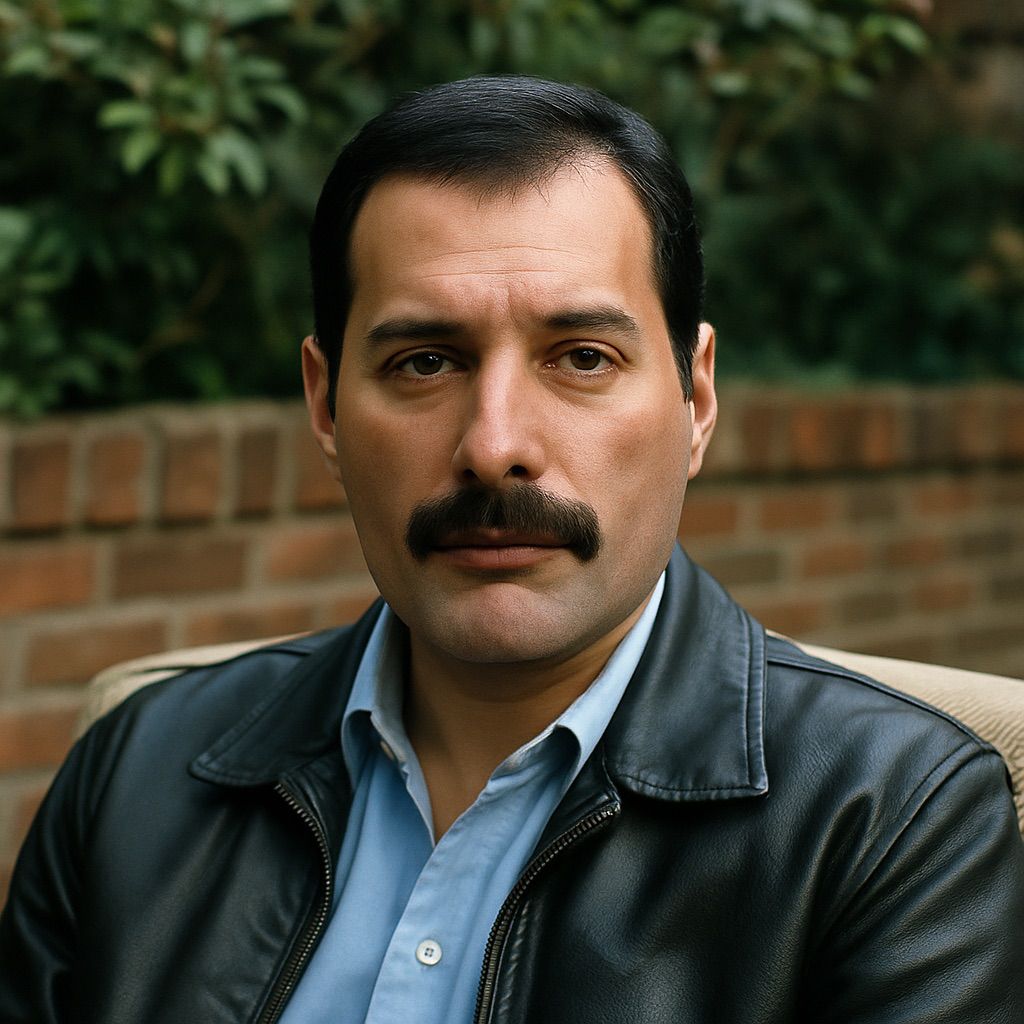
The Day the Music Stood Still: Remembering Freddie Mercury’s Final Curtain Call

Elias Rowen

On November 24, 1991, the world lost one of its most electrifying, genre-defying, impossible-to-duplicate performers. Freddie Mercury didn’t just sing songs—he detonated them across stadiums, across cultures, across generations. By the time of his death, he had already become larger than life, but strangely enough, he never seemed to realize how staggering his influence was. There was something unfiltered and beautifully contradictory about him: a man who could command an audience of 70,000 with a single flick of his wrist, yet who still carried himself like an intensely private, almost shy soul when the lights dimmed. His death wasn’t merely the loss of a musician—it felt like the closing of a chapter in human history where theatricality, vulnerability, and unapologetic artistry blended into something the world could barely even categorize. And when news of his passing swept across radios and televisions, millions felt a kind of grief they couldn’t quite articulate, because Freddie Mercury had never been “just” a singer. He was an emotional experience.

To understand the weight of that moment, you have to understand the journey that brought him to it. Freddie had spent the final years of his life in a quiet and intentional retreat from the public eye. By the late 1980s, speculation about his health had already begun circulating in tabloids, fueled by the noticeable changes in his appearance and his increasingly limited presence in public. Still, he refused to confirm anything. It wasn’t because he wanted attention. In fact, it was quite the opposite. He didn’t want people to pity him. He didn’t want a media circus. He didn’t want headlines defining him as a man living with AIDS. He wanted the music—the work—to speak louder than his illness ever could. And in many ways, it did.

In the studio, even as his health declined, Freddie remained relentless. His bandmates described him pushing himself far beyond what they thought was possible. There were moments during the recording of Innuendo and Made in Heaven when he could barely stand, barely breathe, barely walk. Yet when that red studio light flicked on, something miraculous happened. The performer took over. The voice—somehow still powerful, still unmistakably Freddie—rose from a body that was rapidly betraying him. Brian May once recounted how Freddie, weak and frail, would say, “Write me anything, anything you want, and I’ll sing it. I’ll do as much as I can.” And he did. He gave every last bit of himself to his music, as if he knew that once he stepped out of that studio, the world would never hear him sing again.

The last years of Freddie’s life were spent mostly at his home, Garden Lodge, surrounded by a small circle of people he trusted—Mary Austin, his partner in all but name; Jim Hutton, his longtime companion; and a handful of close friends who understood that their presence was both a comfort and a shield against the relentless outside world. Within those walls, Freddie lived quietly. He painted, he collected art, he spent long afternoons in the garden with his beloved cats. For a man whose public persona was defined by flamboyance, his personal life was shockingly gentle. He cherished simple routines, comforting conversations, evenings of laughter, and moments of ordinary peace. It was here, in this sanctuary, that he confronted the reality of his illness not as a celebrity, not as a rock god, but as a human being who loved deeply, feared deeply, and lived with enormous courage.

On November 23, 1991—just one day before his death—Freddie made the decision to publicly acknowledge what he had kept private for years. In a brief statement released through his publicist, he confirmed that he had AIDS and expressed his hope that the world would join the fight against the disease and support those living with it. He didn’t dramatize it. He didn’t elaborate. It wasn’t a plea for sympathy. It was Freddie using the final moments of his voice, not to talk about himself, but to advocate for others. Less than 24 hours later, he was gone.

His death triggered a wave of mourning unlike anything the music world had seen in years. Outside Garden Lodge, fans formed long lines, leaving flowers, candles, handwritten notes, and photographs. People who had never met each other stood side by side, united in grief, telling strangers how his music had carried them through breakups, through grief, through moments of celebration, through the darkest nights of their lives. His influence was so vast, so deeply embedded in people’s personal histories, that losing him felt like losing a part of themselves. Even people who had never cared for rock music understood that something magnificent had left the world.

But grief wasn’t the only thing Freddie left behind. His death became a turning point in the global understanding of HIV/AIDS. In the early 1990s, stigma surrounding the disease was still suffocating, and public figures rarely acknowledged their diagnoses. Freddie Mercury was one of the first internationally recognized celebrities to confront it openly—and his honesty changed things. It put a face, a voice, and a story to an illness that had been marginalized, dismissed, and feared. After his death, awareness campaigns surged. Conversations that had long been avoided were suddenly impossible to ignore. His bandmates, determined to honor his memory in a way that aligned with his values, launched the Mercury Phoenix Trust, dedicating their efforts to AIDS research and support. Their work, fueled by the enduring love of Queen fans, has raised millions and changed countless lives.

When you look back at Freddie’s life, it’s impossible not to marvel at the sheer audacity of his existence. Here was a man born as Farrokh Bulsara on the island of Zanzibar, the son of a Parsi family with conservative roots, who somehow reinvented himself into one of the most iconic performers the world had ever seen. He lived at the intersection of so many identities—an immigrant, a queer man, a person of color in a predominantly white industry, a painfully shy individual who transformed into a roaring, electrifying force when given a stage. Through all of it, Freddie never apologized for who he was. He simply existed in the boldest, brightest way he knew how.

His death didn’t diminish that brilliance. If anything, it magnified it. In the decades since, Freddie Mercury has become even more revered, his legacy expanding with each passing year. Younger generations continue to discover him—not through nostalgia, but because his performances are still jaw-dropping even in an age of ultra-produced, meticulously calculated pop stars. His voice remains a marvel of raw power and emotional precision, a four-octave instrument that could sound like velvet one moment and thunder the next. His stage presence remains unmatched. No hologram, no tribute act, no modern star has ever been able to recreate that strange alchemy of charisma, vulnerability, humor, and command that Freddie possessed.

And maybe that is why his death felt—and continues to feel—so personal. Freddie Mercury wasn’t just a musician. He was a reminder of what humans can be when they allow themselves to exist without limitation. No one else could wear a crown and cape without looking ridiculous. On Freddie, it looked like destiny. No one else could transform a stadium into a choir with a simple “ay-oh.” No one else could take opera, rock, pop, and theatrical camp, mix them all together, and produce something that felt like poetry and fire. He didn’t ask permission. He didn’t seek validation. He simply created—and in creating, he invited the world to feel alive.

The truth is, Freddie never fully left. Every time “Bohemian Rhapsody” is sung by a bar crowd at 1 a.m. with glasses raised and strangers harmonizing like lifelong friends… he’s there. Every time someone screams “We Will Rock You” at a football game, stomping along with thousands of others… he’s there. Every time a young artist looks at the world and decides to stop caring about expectations and simply be themselves… he’s there. His death took his physical presence, yes. But his spirit—wild, tender, rebellious, brilliant—remains woven into the fabric of global culture.

Maybe that’s the real reason millions mourned him as if they knew him personally. Because in some strange and beautiful way, they did. Freddie Mercury didn’t just perform for people. He connected with them—through every note, every lyric, every grin, every defiant chest-puffed pose under the arena lights. And when he died, the world didn’t just lose a star. It lost a source of joy. A spark of courage. A reminder that life is meant to be lived loudly, boldly, unapologetically.

On that November day in 1991, the music didn’t stop. It paused—held its breath—waited for the echo of a voice that would never return. And then, slowly, softly, it began again. Because Freddie Mercury didn’t leave silence behind. He left a universe of sound, color, and possibility—one that will continue resonating as long as humans crave beauty, drama, and freedom.

Related Posts

When Earth First Revealed Its Colors: A New Perspective from Space

Elias Rowen

The first color photograph of Earth taken from space is one of those rare moments in human history when technology, curiosity, and sheer wonder converge into a single image that changes how we see ourselves. Before that moment, our understanding of Earth was rooted almost entirely in maps, globes, paintings, and imaginations shaped by the blurry black-and-white photographs from earlier missions. The idea of our planet floating freely in the vastness of space was understood intellectually, perhaps even emotionally, but it had not yet been felt in the visceral, undeniable way that only a photograph can deliver. When that first true color image emerged, it did more than document a scientific achievement — it reshaped human identity, perspective, and the spiritual understanding of our place in the universe.

The story begins at a time when the space age was still young. Rockets had only recently begun piercing the upper atmosphere, satellites had just started orbiting the planet, and astronauts were still learning how their bodies responded to the strange ballet of weightlessness. Much of what we now consider foundational knowledge about spaceflight didn’t even exist yet. These were the years when every mission was an experiment, every image was a revelation, and every successful orbit felt like a small miracle. The idea that one day a spacecraft would be able to capture Earth in full color — blue oceans, swirling white clouds, and the rich brown and green textures of land — was something scientists hoped for but did not yet fully expect. Color photography in space required not just engineering expertise but a deep understanding of how film responded to radiation, vacuum conditions, unpredictable lighting, and developing methods back on Earth.

Before this breakthrough, the earliest images of Earth taken from space looked ghostly and distant, mostly grainy monochrome snapshots that hinted at detail rather than displaying it. They were scientifically important, of course, but they lacked the emotional punch that comes from seeing our home the way the universe sees it. Those images helped meteorologists, researchers, and cartographers, but they didn’t inspire the average person. They didn’t evoke awe or humility or that strange tightening in the chest that happens when we see something truly beautiful. The first color photograph changed all of that in a single moment — suddenly Earth wasn’t an abstract concept but a living world suspended in darkness, radiant with color. It was home, captured in a way that no one had ever seen before.

The spacecraft that captured that first landmark image was more than a tool of exploration; it was a lens through which humanity learned to look at itself differently. The astronauts and engineers who helped bring that image into existence understood the magnitude of their mission, even if they didn’t fully grasp the cultural shockwave that would follow. Some later described the experience of seeing Earth from space as profoundly emotional — a feeling of fragile interconnectedness, as though every border, every conflict, every disagreement on Earth seemed insignificant when viewed from a viewpoint hundreds of miles above. The color photograph transmitted that very feeling to millions back on the ground. For the first time, people who would never travel to space could share, in a small way, the astronauts’ awe.

What made the image so emotionally powerful wasn’t just its beauty. It was its vulnerability. Hanging against the endless black canvas of the cosmos, Earth appeared both majestic and delicate. The atmosphere — that thin blue halo that protects every living thing — looked fragile enough to break with a fingertip. The continents, typically divided on political maps, blended into one another organically. The oceans looked impossibly vast, their blues deep and calming. Clouds swirled in hypnotic patterns, revealing a planet in constant motion. And perhaps most striking of all was the absence of human divisions — no fences, no highways, no city borders, no nations. It was our world reduced to its purest, most essential form.

Scientists marveled at the photographic clarity, the accuracy of the colors, and the wealth of data the image provided. Meteorologists studied cloud formations. Oceanographers examined the spread of marine hues. Geologists compared landmasses to existing maps. But beyond the scientific realm, the photograph became something else entirely: an icon. Newspapers printed it on their front pages. Magazines ran special editions. Classrooms hung posters so students could gaze at the planet that held everything they knew. People began to understand Earth as a living ecosystem rather than a collection of isolated regions. Environmental consciousness — which already existed but had not yet reached the mainstream — suddenly had a powerful, irrefutable symbol.

NASA, at the time, recognized the significance but perhaps underestimated just how culturally influential that single photograph would become. They viewed it first and foremost as a technical success, a triumph of engineering and mission planning. But the public saw something transcendent: a reminder that Earth is unique, fragile, and interconnected. This photograph paved the way for later images like “Earthrise” and “The Blue Marble,” which carried the torch of environmental awareness into new generations. Yet the first color image remains special because it broke the barrier first — the moment when the cold technical frontier of space exploration transformed into a source of human reflection.

For many people who saw that photograph in the years following its release, it created an almost spiritual reaction. Religious leaders referenced it in sermons. Poets wrote verses inspired by it. Philosophers debated its implications. Psychologists noted that people often described feeling a sudden global empathy, a shared sense of belonging to a world far larger than their daily routines. Even those who usually felt disconnected from science or space exploration found themselves staring at the image longer than expected, wondering about their place on a planet that looked so small and so precious.

The photograph also transformed how nations viewed each other. During a period marked by Cold War tensions, global competition, and ideological battles, the image of Earth as a unified sphere helped soften perspectives. It didn’t erase political conflicts, of course, but it introduced something new — the idea that preserving the planet might be a shared goal greater than any ideological struggle. Environmental movements gained traction. Scientific diplomacy expanded. Governments began discussing global cooperation on issues like pollution, conservation, and atmospheric research. It’s not an exaggeration to say that the first color photograph of Earth planted the seeds of the modern environmental movement.

Artists were equally captivated. Painters attempted to recreate the colors and curvature of Earth. Photographers studied the play of light and shadow across the planet’s surface. Designers incorporated the globe into posters, album covers, educational material, and advertising. The photograph became part of the visual language of the late 20th century — a symbol of unity, fragility, and hope. It continues to inspire artists today, appearing in galleries, digital designs, and multimedia installations that explore humanity’s relationship with nature and the cosmos.

But beyond the art, science, and philosophy, the image had a deeply personal meaning for many ordinary people. It reminded them that Earth, despite its conflicts and complexities, is a shared home. Many described feeling a renewed appreciation for nature, for life, for the simple act of breathing air under a protective sky. Some said the photograph made them want to travel, to see the world’s beauty firsthand. Others said it made them realize how much needed to be protected — forests, oceans, wildlife, and the fragile ecosystems that sustain life. That first color image didn’t come with a speech or a manifesto, but its message was clear nonetheless.

Looking back now, decades after that image was taken, it remains a powerful symbol of what humanity can achieve when driven by curiosity and cooperation. It reminds us that exploration is not only about discovering the unknown — it’s about understanding ourselves. Every subsequent mission that photographed Earth built upon the legacy of that first color image, but none of them can truly replicate the impact of seeing our world in color for the very first time.

Today, as high-resolution satellite imagery has become commonplace, we sometimes forget how revolutionary that original photograph was. We scroll past modern satellite pictures on our phones without thinking twice. But the first color photograph still stands apart because it marked the moment when humanity earned its first true portrait — not as individuals, nations, or cultures, but as a species. A single world. A single home. A tiny blue orb floating in the infinite dark, radiant with life.

And that is why the first color image of Earth remains so profoundly important. It didn’t just show us what our planet looks like; it showed us who we are. It reminded us that despite all our differences, we share something extraordinary — a breathtakingly beautiful world unlike any other we know. It is fragile, vibrant, alive, and deserving of protection. All of that meaning began in a single moment when a spacecraft captured a photograph that forever changed how we see ourselves.

Related Posts

The Day America Lost Its Innocence

Elias Rowen

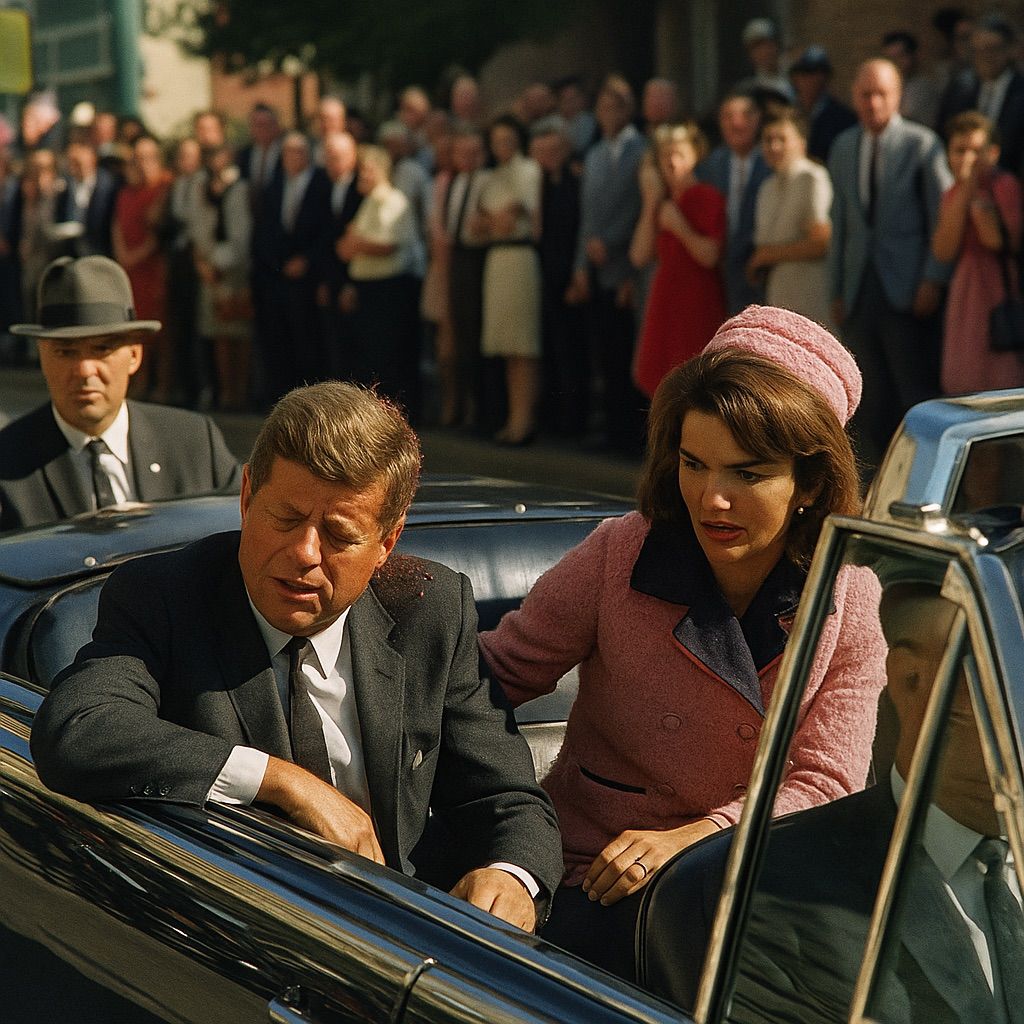
On November 22, 1963, the world seemed to slow its breath, as if instinctively sensing that something irreversible was about to occur. President John Fitzgerald Kennedy—young, charismatic, endlessly symbolic of a new American era—arrived in Dallas that morning with the kind of optimism that had become synonymous with his administration. The sun shone brightly on the motorcade route, the crowds leaned in with genuine enthusiasm, and there was a kind of electricity in the air that politicians dream of but rarely capture. Kennedy’s presence had that effect: he was at once familiar and larger than life, carrying with him not just policy goals or diplomatic ambitions, but the high-voltage energy of a nation that believed it could reinvent itself at any moment. No one lining the streets that day believed that before lunchtime, the country’s course would be jolted into one of the darkest chapters of its history—one that would be revisited, reanalyzed, and re-felt for generations.

The President’s trip to Texas had been, in many ways, just another political necessity in a country built on perpetual campaign cycles. Kennedy knew he needed stronger unity in the Democratic Party ahead of the coming election season, and Texas—with its complex blend of political factions and performance-driven expectations—was both an opportunity and a challenge. But if Kennedy felt any pressure, it never showed on his face. Photographs from the morning at Love Field capture him smiling with a sincerity that still stings the modern viewer, because we know what he didn’t. Jackie Kennedy, elegant in her now-iconic pink suit and pillbox hat, stands beside him with that quiet grace she carried so naturally, unaware that her life was just hours away from being violently rewritten.

Those first moments of the motorcade were almost idyllic. As the limousine rolled through Dallas, people waved American flags, children perched on the shoulders of their parents, and strangers cheered with a warmth that contradicted the city’s reputation for simmering political tensions. Kennedy waved back, sometimes leaning in as if to draw from the crowd’s energy. The President loved these moments—he often said he felt closest to the American people when he was out among them rather than behind a podium or inside a government office. His staff knew this well; they watched him with a careful mix of pride and protective worry, though nothing in that early afternoon hinted at the disaster that lay ahead.

As the motorcade approached Dealey Plaza—the now-infamous convergence of Elm Street, Main Street, and Houston Street—the crowds thinned slightly, and the cheering softened. It was a momentary lull, the kind that naturally occurs as a caravan transitions from one gathering point to another. No one noticed the open windows above street level, or if they did, they thought nothing of them. People in office buildings often paused to watch the President go by. A passing curiosity. A harmless tradition. And maybe that’s one of the cruelest truths of that day: so many details now seen as ominous were, in real time, utterly ordinary.

The first shot was confusing. Witnesses later described it in terms that contradict one another—some said it sounded like a firecracker, others like a motorcycle backfiring, still others like a whip cracking in the air. Sound behaves oddly in an open space surrounded by buildings, and Dealey Plaza was a kind of acoustic trap. But whatever that initial noise was, it caught people’s attention without yet causing panic. Even Secret Service Agent Roy Kellerman, seated in the front of the limousine, initially struggled to identify the source.

The second shot shattered the illusion that this was anything other than deliberate violence. A visible reaction rippled through the crowd; some people ducked immediately, others froze in terror. Jackie Kennedy turned toward her husband in confusion at the exact moment the third and fatal shot struck him. The brutality of that moment—the suddenness, the violence, the irreversible nature of it—has been replayed so many times in footage and retellings that we risk forgetting the raw humanity of it. The President of the United States, a man who had just moments earlier been waving to families and smiling at children, had been struck down in front of his wife, his staff, and his citizens.

And yet Jackie Kennedy, in that horrific moment, showed a level of composure and instinct that became its own heartbreaking legend. She reached out, not fully understanding what she was doing, driven only by an instinct to protect or to hold onto something that was slipping away. Secret Service Agent Clint Hill sprinted onto the limousine, throwing himself across the President and First Lady as the car accelerated toward Parkland Memorial Hospital. It was too late, but Hill’s actions were the embodiment of duty—an instinctive sacrifice, a desperate attempt to shield what remained.

At Parkland, chaos met urgency. Doctors and nurses rushed to the trauma bay with the full force of medical training and human hope, but the wound was beyond saving. When Kennedy was pronounced dead at 1:00 p.m., it was more than a medical statement; it was a rupture in American identity. A nation that had built so much of its self-image around Kennedy’s youth, optimism, and promise suddenly found itself drifting in uncertainty.

The ripple effect of the announcement was immediate and overwhelming. Across the country, radios interrupted broadcasts, televisions cut to emergency bulletins, and everyday life ground to a halt. People cried openly in the streets. Businesses paused operations. Schools lowered flags. There was a shared sense of disbelief that crossed demographics, regions, and ideologies. Even those who had been critical of Kennedy found themselves shaken by the news, because political disagreements were one thing—but the assassination of a sitting president was an attack on the country’s stability itself.

Then came the second shock of the day: Lee Harvey Oswald, the man identified as the alleged assassin, was arrested not long after the shooting. Oswald was a complex figure—ideologically tangled, personally volatile, and deeply unpredictable. His rapid arrest didn’t bring clarity; if anything, it opened the floodgates for questions, conspiracies, and permanent fractures in the public’s trust. What did he believe? Was he acting alone? Was there a larger plan? These questions still echo through American culture, and each theory reflects not just a curiosity about the facts, but a collective attempt to make sense of a tragedy that has never fully settled into certainty.

But there was no time to unpack those questions that afternoon. Vice President Lyndon B. Johnson, suddenly thrust into the highest office, was sworn in aboard Air Force One just hours after the assassination. Jackie Kennedy stood beside him, still wearing the blood-stained suit she refused to change out of. “I want them to see what they’ve done,” she reportedly said—one of the most haunting statements in American political history. The photograph of the swearing-in, taken inside the cramped cabin of the aircraft, is one of the most instantly recognizable images of the 20th century. It captures not only a constitutional transition, but the emotional shock of a country that had just experienced trauma on a national scale.

Kennedy’s body was flown back to Washington, where preparations began for what would become a funeral reminiscent of those of fallen leaders from centuries past. The procession through the capital was solemn, meticulous, and deeply symbolic. Black horses, muffled drums, rows of military honor guards, and the image of John F. Kennedy Jr.—still a young child—saluting his father’s casket created an emotional tableau that would define the national memory of that era. Jackie Kennedy, in widow’s black, walked with a dignity that both inspired and devastated those who witnessed it.

The funeral drew world leaders from across the globe, reflecting the international impact Kennedy had in his short presidency. Representatives from allies and adversaries alike stood side by side, a reminder that even in Cold War tension, Kennedy had managed to carve out a unique position on the world stage. He was a statesman who believed profoundly in diplomacy, in dialogue, and in the possibility of a more peaceful future. His death, therefore, was not just an American tragedy—it sent shockwaves through foreign capitals, disrupting delicate geopolitics and altering relationships in ways that historians still dissect today.

In the years that followed, the assassination became a defining moment in American cultural and political psychology. It symbolized the end of the post-war era of innocence, the beginning of a more skeptical, fractured time. The idealism of the early 1960s gave way to the turbulence of Vietnam, civil unrest, political assassinations, and distrust in government institutions. Kennedy’s death wasn’t just a single event—it was the spark that ignited a cascade of national introspection.

Yet JFK’s legacy also endured in surprisingly resilient ways. His speeches, famously eloquent and forward-looking, continued to inspire new generations. His encouragement to “ask what you can do for your country” became a touchstone for those who believed in civic duty. His commitment to the space program propelled the United States toward the moon landing in 1969, fulfilling a dream he articulated before it seemed remotely possible. And perhaps most poignantly, his belief in public service sparked millions to pursue work they felt could improve the world around them.

Today, more than six decades after the tragedy in Dallas, the memory of November 22 still lingers as an emotional fault line in the American story. It is a day that historians analyze, filmmakers revisit, archivists continually reinterpret, and citizens of all ages learn about as a turning point that reshaped the nation. It is a day marked by grief, confusion, and a collective sense of vulnerability. But it is also a day that reminds us of the fragility of leadership, the unpredictability of history, and the profound impact one individual can have on the soul of a country.

The legacy of John F. Kennedy is complex—an intersection of idealism, political challenges, personal flaws, and soaring vision. But despite the tragedy of his death, his influence never fully faded. Instead, his contributions, his charisma, and the hope he inspired remain woven into the fabric of American identity. His life, though cut short, continues to resonate. And his death, though devastating, remains a potent reminder of how quickly history can turn, how deeply a nation can feel loss, and how long a memory can endure.

Related Posts

Beatlemania Ignites: How “With the Beatles” Redefined Modern Music

Elias Rowen

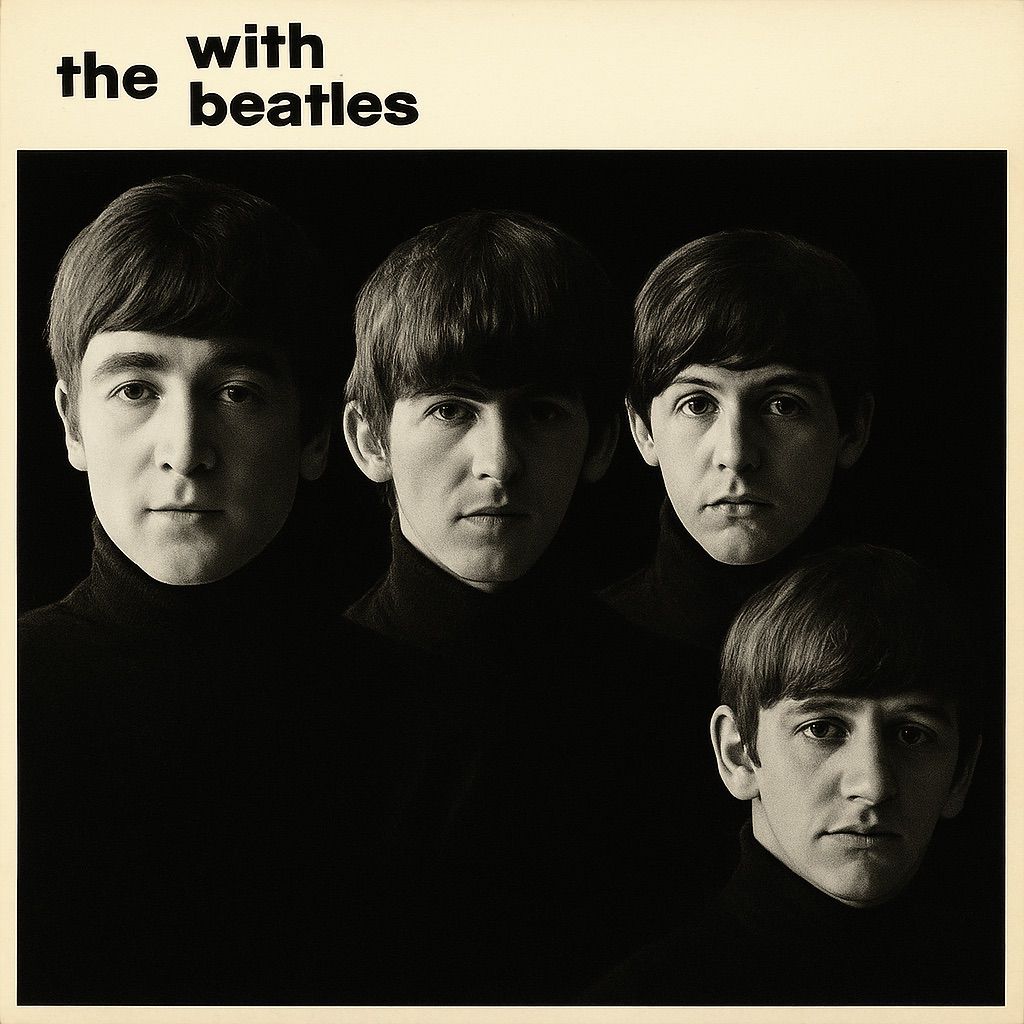
When With the Beatles arrived on November 22, 1963, it didn’t simply land on shelves as another pop album — it arrived like a seismic wave, reshaping the musical landscape with a force that even the band themselves couldn’t fully comprehend at the time. The Beatles were already gaining momentum in Britain, but this second studio album launched them from promising stars into a phenomenon that would soon sweep across continents. Listening today, it’s easy to take for granted how natural their brilliance feels, how fluidly they moved between styles, and how effortlessly they blended youthful energy with emotional depth. But to those hearing the record for the first time in 1963, it was as if something entirely new had burst into existence — a sound that was both familiar and revolutionary, crafted with precision yet steeped in spontaneity. This album captured the moment The Beatles transitioned from rising talents into cultural trailblazers, and it remains a testament to how quickly musical evolution can accelerate when passion, talent, and timing align.

When people talk about the early Beatles, they often focus on the mania — the screaming audiences, the televised performances, the tidal wave of popularity that no band had ever experienced on such a global scale. Yet to really understand With the Beatles, you have to look past the frenzy and into the quieter truths of who these four young men were at the time. They were barely adults, hustling through grueling performance schedules, navigating sudden fame, and working harder than most fans ever realized. The Beatles didn’t stumble into success; they earned it through relentless energy and an obsession with sound. And throughout the recording of With the Beatles, they pushed themselves with a level of focus and ambition that feels astonishing today.

The sessions for the album built upon what they learned creating Please Please Me, but this time they weren’t rushing to capture their live set in a single, breathless marathon session. They had more time, more confidence, and a clearer sense of what they wanted to say musically. They also had George Martin — the “fifth Beatle” whose guidance elevated their raw creativity into something polished without ever sanding down the edges. Martin recognized the band’s potential and challenged them continually, not by forcing them into traditional molds but by encouraging them to explore everything they were capable of. His respect for their instincts, combined with his classical training, created a perfect balance. The Beatles trusted him, and he trusted them — an artistic partnership that shaped not only this album but the entire future of popular music.

What makes With the Beatles so fascinating is how it blends innocence with sophistication. On one hand, it feels youthful and exuberant, bursting with catchy melodies and energetic performances. On the other hand, it shows a remarkable level of maturity for a group so early in their career. They weren’t just singing about love; they were crafting harmonies and rhythms with surprising complexity. Songs like “All My Loving” showcased their knack for melodic craftsmanship, while “It Won’t Be Long” introduced new layers of emotional urgency. Their voices blended with uncanny chemistry — John’s raw power, Paul’s smooth clarity, George’s shimmering tonal quality, and Ringo’s steady reliability behind the kit. Each track feels like it captures lightning in a bottle, yet none of it feels forced. The Beatles were playing at the height of their early powers, experimenting without fear and performing with the kind of excitement that only comes from discovery.

A key part of the album’s DNA comes from their covers, too. The Beatles didn’t treat cover songs like filler — they treated them as opportunities. Their interpretations of Motown and rock ’n’ roll classics weren’t mimicry; they were reinventions. Listen to “Please Mister Postman” or “You Really Got a Hold on Me,” and you can feel how deeply the band admired the artists who inspired them. But you can also hear how boldly they reshaped these songs into something uniquely Beatles. They infused each cover with their own attitude, their own spark, their own sense of rhythmic identity. Those tracks served as a bridge between the music they loved and the music they were destined to create — a snapshot of influences merging with originality, forming the foundation of the sound that would soon take over the world.

The release of With the Beatles was perfectly timed, though no one realized it then. As soon as the album hit the shelves in the UK, it began breaking records. It became one of the fastest-selling albums in British history, receiving rapturous praise while simultaneously fueling the momentum of a cultural movement that would soon be called Beatlemania. Teenagers lined up at record stores. Radios played Beatles songs endlessly. Magazines clamored to interview them. It felt as if the entire country — and soon the world — had turned its attention toward these four young men from Liverpool.

Yet behind all the excitement, the album also represented something deeper: a shift in what pop music could be. Before The Beatles, pop albums were often inconsistent — a few singles padded with filler tracks. But With the Beatles was cohesive, intentional, and balanced from start to finish. It signaled that albums could be art, not just containers for radio hits. This would become one of The Beatles’ greatest long-term contributions to music: the elevation of the album format itself. The seeds of Rubber Soul, Revolver, and even Sgt. Pepper are faintly visible here, not in complexity but in ambition. The Beatles were showing the world that they were more than entertainers; they were creators, and they were only getting started.

Of course, With the Beatles carries with it a historical footnote that adds an eerie shadow. It was released on the exact same day President John F. Kennedy was assassinated. While the two events were unrelated, history forever linked them. Many fans later recalled learning of Kennedy’s death while listening to the album or seeing it in store windows. In this way, the music became a strange emotional backdrop for one of the 20th century’s most traumatic moments. For some, it became a source of comfort; for others, the memory of that day forever colored how they heard the record. Music has a way of embedding itself into time, becoming part of the emotional landscape of moments both joyful and heartbreaking.

Even with that somber association in the background, With the Beatles continued to rise. Its success spilled into international markets, eventually catching the attention of the American music industry. The album’s momentum would help set the stage for The Beatles’ arrival in the United States and their legendary February 1964 appearance on The Ed Sullivan Show — a television moment that would change everything. Without the tidal force built by With the Beatles, the British Invasion might have unfolded differently. This album was the spark that traveled across the ocean before the band themselves ever did.

Looking back today, With the Beatles is more than just a collection of songs; it’s an early chapter in one of the most influential artistic journeys of all time. You can hear the beginnings of experimentation, the first hints of the creative daring that would define their later work, and the unmistakable chemistry that made them unlike any other band. The record still feels fresh because The Beatles approached their craft with a combination of sincerity and boldness that never grows old. They didn’t know they were making history — they were simply making music they loved — but in doing so, they changed what music could be.

To listen to With the Beatles now is to experience the exhilarating moment before the world changed. It’s the sound of twenty-somethings discovering their power, of artistic instincts sharpening in real time, of a band that had no idea how big they would become but played as if they somehow sensed that something extraordinary was just over the horizon. It captures a moment of pure musical ignition — a moment that still lights up the history of popular music with the same intensity it did the day it debuted.

That is the magic of With the Beatles. It isn’t just an album; it is the beginning of a revolution.

Related Posts

Spain Joins the Alliance: How NATO Membership Redefined a Nation’s Future

Elias Rowen

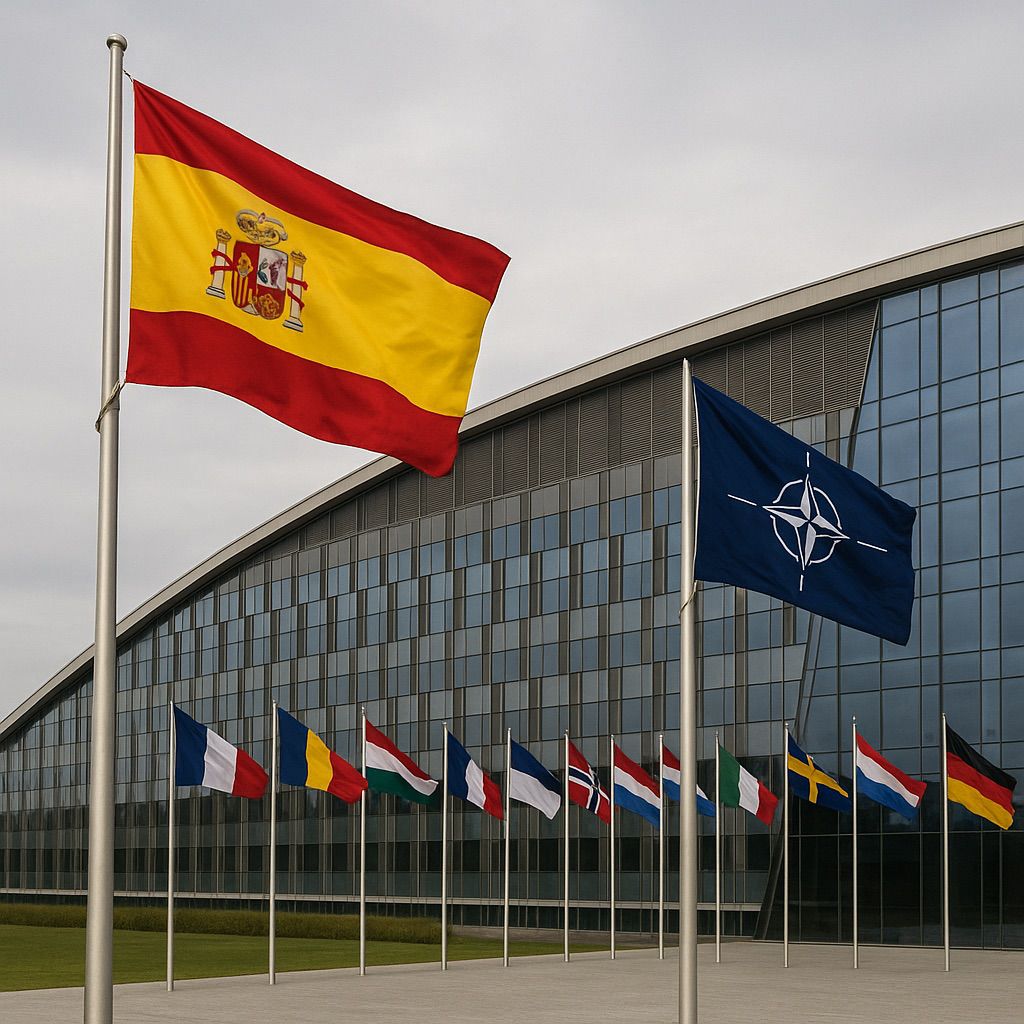
When Spain formally joined NATO on May 30, 1982, it marked far more than a diplomatic shift or a treaty signature. It was a moment when a country emerging from decades of dictatorship finally stepped onto the world stage ready to claim its place among modern democracies. For Spain, NATO membership symbolized legitimacy, stability, and a new identity—one rooted not in isolation but in cooperation, not in authoritarianism but in partnership, and not in fear but in collective security. It was the culmination of years of transformation, political courage, and public debate, and it reshaped the nation’s relationship with Europe, the United States, and its own future.

To understand the weight of Spain’s NATO entry, one must remember the Spain that existed before. For nearly forty years, the country had been under the rule of Francisco Franco, whose regime kept Spain politically isolated and ideologically distant from Western alliances. While much of Western Europe rebuilt through cooperation, trade blocs, and defense treaties after World War II, Spain stood apart—connected economically in some places, culturally in others, but strategically estranged. Franco’s Spain maintained a complex relationship with the United States, hosting American bases but remaining outside the defense structures of Europe. The North Atlantic Treaty Organization, founded in 1949 to defend the democratic West from Soviet expansion, represented a world that Spain could observe but not enter.

Everything changed after Franco’s death in 1975. The country embarked on what would become one of the most peaceful, ambitious democratic transitions in modern history. The political landscape was transformed by free elections, a new constitution, the restoration of civil liberties, and the birth of a multiparty parliamentary system. But democracy, fragile as it was in those early years, required international reinforcement. It needed external signals of legitimacy. And NATO membership offered exactly that.

Still, the idea of joining NATO sparked fierce debate across Spain. Many Spaniards were wary of entangling the country in Cold War alliances after so many years of authoritarian rule. Others feared that NATO membership would drag Spain into foreign conflicts or compromise its sovereignty. Left-wing parties, newly empowered after decades underground, campaigned against the idea. The center-right government, however, argued that joining NATO would anchor Spain within the Western democratic community and stabilize civil-military relations, which were still delicate after a failed coup attempt in 1981.

As political leaders argued, diplomats negotiated. The United States and Western European countries strongly supported Spanish membership. They saw Spain as strategically vital—a nation positioned at the gateway between the Atlantic and the Mediterranean, controlling maritime passages essential to NATO’s defensive posture. For the alliance, admitting Spain meant strengthening southern European security. For Spain, joining NATO meant stepping confidently into an international role that had been denied for generations.

When the announcement finally came in 1982, it reflected years of planning, persuasion, and perseverance. Spain would become the sixteenth member of NATO. The news sent ripples across Europe. Leaders in Brussels and Washington applauded. European newspapers debated the implications. Spanish citizens reacted with a mix of pride, concern, relief, and resistance. It was a decision that reshaped political alliances within the country and set the stage for a national referendum to reaffirm membership four years later.

But on May 30, 1982, what mattered most was what the moment represented. After decades of isolation, Spain was no longer an outsider. It stood shoulder to shoulder with nations that valued democracy, defense cooperation, and shared responsibility for peace. Inside government buildings, diplomats celebrated quietly as Spain’s flag was raised alongside those of other NATO members. In military academies, officers studied new protocols and prepared for integration with allied forces. In households across the country, citizens debated what this would mean for their sons, their taxes, and their country’s future.

The path forward wasn’t smooth. NATO membership continued to spark passionate political arguments in Spain, culminating in the 1986 referendum in which the public narrowly voted to remain in the alliance under specific conditions. The decision, though close, confirmed that Spain viewed its future as part of Europe, not apart from it. Over the next decades, Spain would modernize its armed forces, participate in NATO missions, and eventually join the European Union in 1986. Each step reinforced the geopolitical shift that had begun the day Spain entered NATO.

The country found itself increasingly involved in missions that reflected evolving global challenges: peacekeeping in the Balkans, humanitarian operations, counterterrorism efforts, and cooperative defense planning. These engagements helped redefine Spain’s military identity, shifting from a defensive posture rooted in dictatorship to a professional, modern, internationally integrated force.

Spain’s NATO membership also helped reforge its diplomatic relationships. Ties with Portugal strengthened. Relations with France deepened. Cooperation with the United Kingdom and Germany expanded. The partnership with the United States, already strong due to existing military bases, took on new dimensions of joint training, intelligence sharing, and strategic planning. Spain became not a passive participant but an active contributor to collective defense.

Looking back, it’s remarkable how much of Spain’s modern identity can be traced to that pivotal moment in 1982. NATO membership accelerated Spain’s political stabilization after the transition to democracy. It provided external reassurance against instability. It showcased Spain’s commitment to international cooperation. And it offered a framework through which the country could reshape its role in Europe and the Atlantic world.

For a nation emerging from decades of authoritarian rule, joining NATO was not merely a defensive decision. It was a declaration: Spain chose democracy. Spain chose partnership. Spain chose the future.

Today, Spain remains a committed NATO member, contributing to alliance missions, hosting critical infrastructure, and participating in joint operations worldwide. The concerns of 1982 have not vanished, but they have evolved. Spaniards now debate global security, cyber defense, European strategic autonomy, and NATO’s future role—conversations unimaginable during Franco’s era.

When Spain joined NATO, it stepped out of the shadow of isolation and into the bright, complicated arena of international responsibility. It marked the beginning of a new chapter—one defined not by fear or inwardness, but by connection, cooperation, and a willingness to stand with democratic allies in defending shared values.

On that day in 1982, when Spain’s flag rose among the banners of democracies committed to collective defense, a nation that had endured suppression, transition, and uncertainty finally took its place in the world—not as an observer, but as a partner.

It was more than a signature.
It was a transformation.

Related Posts

How the BBC’s First Regular TV Service Transformed Home Life Forever

Elias Rowen

When the British Broadcasting Corporation officially launched the world’s first regular public television service on November 2, 1936, most people had no idea they were standing at the edge of a technological revolution. At the time, television wasn’t yet a household word. It sounded futuristic, almost whimsical—like something written into a science-fiction novel or imagined in the electric dreams of inventors tinkering in cluttered workshops. Radios filled homes with sound, newspapers delivered the news, and cinema provided the moving pictures. The idea that people would someday gather around a glowing box in their living room to watch live broadcasts felt, to many, closer to fantasy than reality.

But in a small studio in Alexandra Palace, perched on a hill overlooking London, a new age quietly switched on.

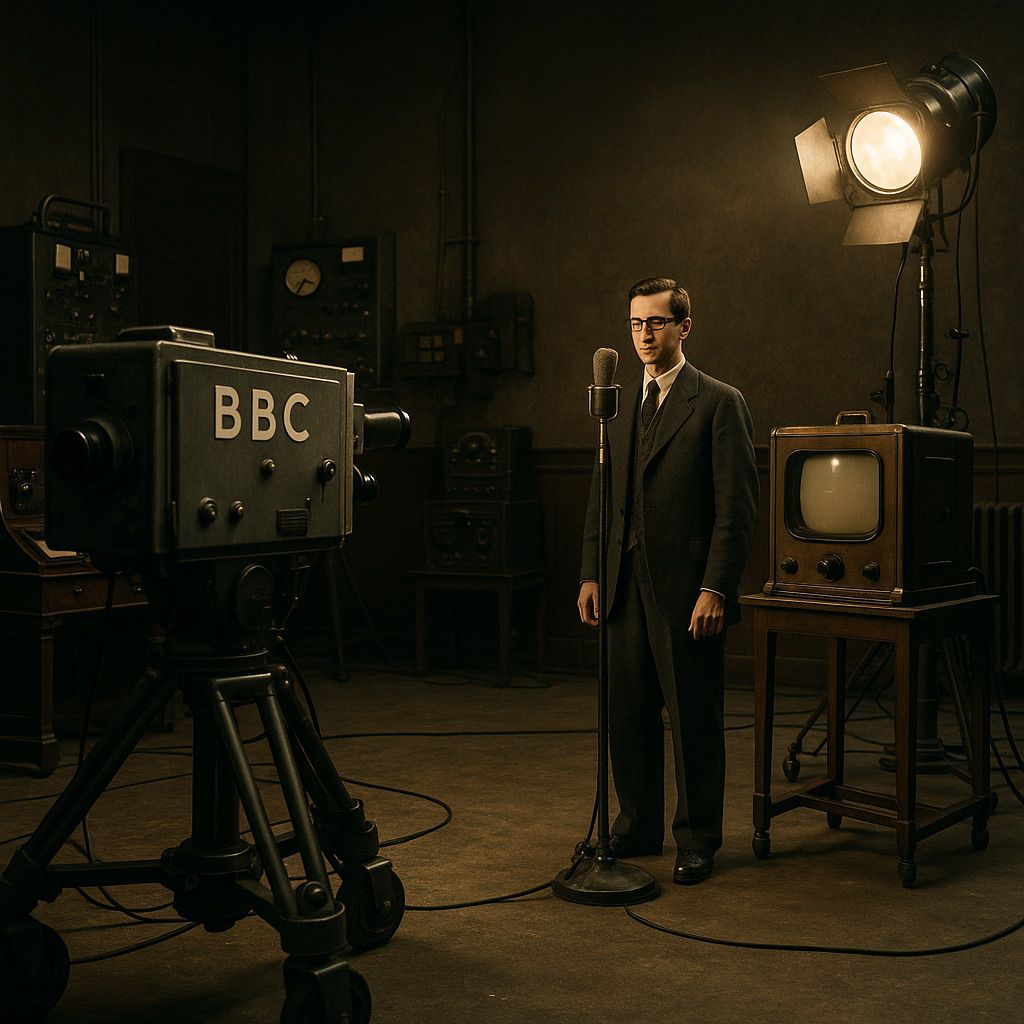
The BBC’s regular television service began humbly: no fanfare, no fireworks, no global countdown. Just engineers adjusting knobs, presenters trying not to blink too much under blinding lamps, and cameras the size of refrigerators wheezing as they warmed up. It wasn’t glamorous. It wasn’t polished. But like the first faint spark before a roaring fire, it held the unmistakable promise of something unstoppable.

For months leading up to the launch, the BBC had been experimenting with two competing technologies: the mechanically based Baird system and the fully electronic Marconi-EMI system. Engineers debated fiercely. Which one would define the future? Which one could deliver clearer, smoother images? Which one could withstand the scrutiny of a public that had never seen televised faces before? When the decision finally fell in favor of the Marconi-EMI system, the future of broadcasting changed forever. And on that November morning, as the familiar BBC chimes sounded, viewers with the extremely rare and expensive television sets tuned in to witness history: the start of scheduled, ongoing television programming available to the general public.

For most Britons, the event went unnoticed. In fact, fewer than 400 television sets existed at the time, nearly all concentrated around London. Those who owned one had either deep pockets or a deep fascination with cutting-edge technology. But those who tuned in found something mesmerizing: moving images entering their home not from a theater, not from a newsreel, but from a live broadcast produced just miles away. It must have felt like witnessing a kind of magic—fragile, flickering magic, but magic nonetheless.

Inside the Alexandra Palace studio, the atmosphere was a mix of nerves and quiet triumph. The cameras were monstrous, hot, and unforgiving. Presenters had to stand absolutely still, because any movement beyond a slow turn would produce blurs. The lights burned so brightly that performers sometimes fainted. Everything was experimental, uncertain, improvised on the fly. Yet there was a palpable electricity in the air—a sense that something important was happening, even if no one yet understood how important.

The very first broadcasts were modest. Announcers introduced the programs with crisp BBC diction. Variety acts performed brief songs or comedy routines. Newsreaders did their best to look natural while staring intensely into the camera lens. There were costume dramas, cooking demonstrations, small orchestras, and even short educational segments. Some productions barely lasted ten minutes. Others went off the rails in ways both charming and disastrous. Early television felt like theater squeezed into a box, unsure of its boundaries but eager to try everything.

And people watched. Not many at first, but enough to spark the curiosity of their neighbors, friends, and even passersby who glimpsed the strange blue glow through a window. Soon, television sets were placed in shop displays so crowds could gather outside and watch together—men in hats leaning over each other, women clutching shopping bags, children squeezing between grown-ups to catch a glimpse of the moving pictures. The sight of strangers standing in the cold to watch a small, flickering screen became a symbol of public fascination, the beginning of a social and cultural shift that the world could not yet comprehend.

But the BBC television service faced enormous challenges. The technology was expensive. The cameras were so bulky they could barely be moved. The studios were constantly overheating. Broadcast hours were short. And no one could predict whether the public would ever widely adopt this new invention. Yet the BBC pressed on, driven by the belief that television held tremendous potential—not just as a novelty, but as a platform for storytelling, education, journalism, and entertainment that could reach millions.

Then came World War II.

In 1939, just as television was beginning to find its footing, the BBC made the difficult decision to suspend television broadcasting. Engineers feared that the signals could be used by German bombers as navigational beacons. The screens went dark. Alexandra Palace fell silent. It was as if television had vanished before it could take root. And for years, Britons wondered if the experiment would return—or if television had been a brief technological curiosity swept away by global conflict.

But in 1946, when peace returned, the BBC switched the television service back on. It was symbolic—a signal that the world was ready to rebuild, reconnect, and reimagine daily life. And this time, Britain was ready. Television sets began appearing in more homes. Programming expanded. Sports events, royal ceremonies, dramatic productions, and news broadcasts filled the schedule. Families formed nightly rituals around the glowing screen. Television was no longer a luxury—it was becoming part of the fabric of life.

Yet even then, few fully understood how deeply television would shape the decades to come. It would become a witness to coronations, wars, scientific breakthroughs, cultural shifts, generational debates, and global tragedies. It would amplify voices, bridge distances, and create shared experiences unlike anything humanity had known. It would influence politics, fashion, entertainment, advertising, education, and the way people understood the world. It would become a mirror and a storyteller, a window and a stage, a source of comfort and information.

And all of it began with that first flicker of the BBC television service in 1936.

Looking back now, it’s easy to romanticize the moment. But the beauty of that beginning lies in its simplicity: a handful of engineers, a few brave performers, and a glowing dot on a tiny screen that captured the imagination of those lucky enough to see it. No one knew television would change the world. But that’s the way revolutions often begin—not with noise, but with quiet persistence, curiosity, and the courage to try something new.

When the BBC launched the world’s first regular TV service, it didn’t just introduce a new technology. It introduced a new way of living, of seeing, of connecting. It turned the home into a stage and the world into an audience. It laid the groundwork for a media landscape that would eventually span continents, satellites, cable networks, streaming platforms, and digital universes.

Television did not merely enter homes—it became a part of them.

And the world would never be the same again.

Related Posts

How the Mayflower Compact Became America’s First Self-Government Agreement

Elias Rowen

When forty-one men aboard the Mayflower dipped their quills into ink on November 11, 1620, they were not thinking about textbooks, future democracies, or the birth of a nation. They were thinking about survival. Cold winds whipped across the deck. The smell of damp wood, sickness, and exhaustion clung to the ship. Many passengers were weak, half-starved, or recovering from weeks of brutal storms that had tossed the Mayflower across the Atlantic like a toy in a bathtub. They had intended to land near the Hudson River, within the northern boundary of the Virginia Colony—a place that at least had English laws, structure, and a governing body. Instead, they found themselves anchored off the coast of Cape Cod, far outside any formal charter. No laws. No magistrates. No authority telling anyone what to do. And that is precisely why they wrote the Mayflower Compact.

The agreement they drafted—simple, brief, and direct—would become one of the most influential documents in American history. Not because of its length or its legal sophistication, but because of its spirit: a promise to govern themselves by their own consent. The men who signed it likely did not realize that their makeshift pact would one day be viewed as the seed from which American constitutional democracy would grow. They were simply trying to prevent chaos.

The Mayflower had not been a pleasant voyage. Passengers were crammed into tight, dark spaces below deck. Seasickness was constant. Food supplies spoiled. Freshwater turned brackish. The ship creaked and groaned as ferocious autumn storms battered the vessel. Waves crashed so hard that at one point the main beam cracked, and only the presence of a massive metal screw—brought by one of the colonists for house-building—kept the ship from breaking apart.

By the time they finally spotted land on November 9, spirits were ragged. Arguments had broken out. Some of the non-Separatists—often called “Strangers” by the Puritan Pilgrims—declared that since they were outside the Virginia Company’s jurisdiction, “none had power to command them.” In other words: we’re not bound by your rules anymore. That terrified the leaders of the expedition, especially William Bradford and William Brewster. Without some structured agreement, their new colony could easily collapse into disorder.

So, on that cold November morning, while the ship bobbed in the waters off Cape Cod, the men gathered. They unfurled a sheet of parchment and began writing words that would resonate far beyond their cramped cabin. The document was not long. It didn’t aim for poetry or grandeur. Instead, it emphasized loyalty to the English crown, the intention to form a “civil Body Politick,” and most importantly, the promise to create and obey laws chosen for the general good of the colony. This idea—government based on consent—would become foundational in American political philosophy.

There was something profoundly human about this moment. These colonists were not philosophers. They were farmers, tradesmen, carpenters, merchants, soldiers—ordinary people facing extraordinary circumstances. They were worried about their families, fearful of a harsh winter, uncertain if they would find enough food or suitable shelter once they disembarked. Yet even amid that fear, they recognized the necessity of order, cooperation, and fairness. It’s one thing to talk about democracy in a comfortable room centuries later; it’s another to craft its earliest form while huddled on a freezing ship surrounded by danger.

The Compact was signed by forty-one men—every adult male aboard the ship who was legally eligible to do so. Women and children were present, watching as each name was added, knowing their lives would be shaped by this agreement. These families had crossed the ocean together, prayed together, fought sickness together, and now they bound themselves to govern together. It was not perfect equality—only men signed, and English hierarchy still influenced attitudes—but it was a radical step toward the concept of shared power.

Once signed, the Compact immediately took effect. John Carver was chosen as the first governor. Decisions were made collectively. Rules were enforced. Disputes were resolved through deliberation rather than threats or intimidation. The document did not guarantee harmony, but it established a process—something incredibly valuable in a place where chaos would have meant death.

Over the next several weeks, small groups explored the surrounding land. They found abandoned Native villages, evidence of earlier epidemics that had devastated local populations. They searched for fresh water, safe harbors, and fertile ground. As winter set in, the colonists began building their settlement at Plymouth. It was grueling work. Exposure, malnutrition, and disease took a devastating toll—over half the settlers would die before spring. Yet the Compact held them together, providing a fragile but vital sense of shared responsibility.

When the Wampanoag people made contact in March of 1621, the colony still teetered on the edge. But the willingness of both groups to forge alliances—however complicated their motivations—created a year of relative stability. The Mayflower Compact continued to serve as the governing framework for more than two decades until Plymouth Colony was absorbed into the larger Massachusetts Bay Colony.

Looking back, what makes the Mayflower Compact enduring is not its legal strength but its symbolic power. It was one of the earliest written expressions of government by consent in the Western Hemisphere. It recognized that laws and leaders derive authority from the people who agree to live by them. That was groundbreaking in a world still dominated by monarchies and inherited privilege.

Modern historians often debate the Compact’s true significance. Some argue that Americans have romanticized it, assigning too much weight to a document created for practical purposes. Others highlight that it excluded large parts of the population and was never meant to spark a revolution. But even acknowledging its limitations, the Compact remains a remarkable moment in the story of American self-government. It was the first time a group of settlers in the New World collectively decided how they would rule themselves. And that idea—that power comes from the governed, not just from the top—would echo through the centuries.

The story of the Compact is also deeply personal. Imagine those men standing in the cramped quarters of the Mayflower, holding quills in trembling hands as the ship rocked beneath them. Imagine their wives and children standing nearby, wrapped in rough wool blankets, trying to stay warm. Imagine the fear of stepping into an unknown wilderness after months at sea. And then imagine the courage it took to declare that they would face that wilderness together, bound not by force or royal decree, but by a promise to one another.

In that moment, they were more than travelers. They were pioneers of an idea—the idea that community, cooperation, and consent can guide a people through uncertainty. They were planting the seeds of something that would grow, evolve, be challenged, and be expanded over centuries: representative self-government.

Over four hundred years later, the Mayflower Compact feels less like a relic and more like a reminder. A reminder that democracy is fragile, that unity must be chosen deliberately, and that even in the harshest conditions, people can decide to build something better together. It reminds us that great political transformations don’t always start with grand speeches or battlefield victories—they often start with ordinary people agreeing on how they want to live.

The Compact was only 199 words long, but its impact stretches across history. From school classrooms to constitutional debates, from political speeches to museum exhibits, its legacy endures because it captures the spirit of collective determination. It was written in a world very different from our own, yet it speaks to something timeless: the belief that communities thrive when they govern themselves with fairness, cooperation, and purpose.

Centuries later, we still look back at that moment aboard the Mayflower—a moment shaped not by kings or generals, but by families bracing against the cold, ready to begin a new life. Their compact was imperfect, limited, and born of desperation. But it was also visionary. It carved a path forward when none existed. And for a small band of colonists staring into the unknown, it turned uncertainty into resolve.

That is why the Mayflower Compact remains one of the most important documents in early American history—not because it created a nation, but because it created a way for people to imagine governing themselves at all.

Related Posts

The Historic Opening of the Nuremberg Trials

Elias Rowen

On November 20, 1945, as a cold Bavarian morning settled over the battered city of Nuremberg, something unprecedented in the history of human civilization began. In a courtroom carved out of the ruins of a recently defeated empire, the world gathered to hold individuals—not nations, not vague entities, not faceless regimes, but actual men—accountable for crimes so vast, so brutal, and so systematic that even seasoned soldiers struggled to describe them. The Nuremberg Trials were not just another legal proceeding; they were a turning point in moral and political history, a moment when humanity attempted to put words, laws, and consequences to atrocities that transcended existing legal frameworks. It was a reckoning born from ashes and anguish, designed to ensure that the horrors of the Second World War would be confronted with a measure of justice, however imperfect or incomplete it might be.

The Palace of Justice, chosen partly because it remained largely intact after Allied bombings, had an eerie, paradoxical calm about it that morning. Outside, Nuremberg was a landscape of ruins—broken stones, charred beams, collapsed roofs, and quiet streets that bore witness to the devastation Germany had brought upon the world and upon itself. Inside, rows of reporters, dignitaries, military officers, translators, and legal teams filled the courtroom, aware they were about to witness something without precedent. The great chandelier flickered overhead. Interpreters donned headphones at newly installed translation booths. Judges straightened their robes. And across from them, behind thick glass and guarded heavily by military police, sat twenty-one of the highest-ranking surviving members of the Nazi regime.

Their faces varied—some defiant, some exhausted, some eerily blank. Hermann Göring, once Hitler’s designated successor, carried himself with prideful arrogance; Joachim von Ribbentrop appeared nervous and erratic; Rudolf Hess stared into the distance as if floating somewhere between reality and delusion. These were the architects of terror, the men whose decisions had sent millions to their deaths, whose signatures appeared on orders, whose speeches mobilized hatred, whose policies transformed neighbors into enemies and nations into graves. For the first time in history, leaders of a defeated state were being held criminally responsible for actions committed under the cloak of sovereignty. It was, by every measure, a radical idea.

Before the trials, war crimes were often considered simply part of war—unfortunate but inevitable. The world had no universally recognized legal framework for prosecuting genocide, crimes against humanity, or aggressive war. There were no precedents for charging individuals with atrocities carried out by armies or under the authority of a government. The Allies had debated fiercely about what should happen to the Nazi leadership after Germany’s surrender. Some advocated for immediate execution without trial. Others insisted on public trials to expose the full scope of Nazi crimes. In the end, the latter prevailed, driven by a commitment—born from the horrors discovered in camps like Auschwitz, Treblinka, and Dachau—to reveal the truth in a courtroom so that the world could never claim ignorance.

The opening statements set the tone. Chief American prosecutor Robert H. Jackson, a U.S. Supreme Court Justice temporarily stepping away from the bench, delivered an address that would echo through history. His words were sharp, clear, and uncompromising. He declared that the trials represented “one of the most important tributes that Power has ever paid to Reason,” and warned that the tribunal’s legacy would serve as an eternal deterrent against tyranny if it succeeded—or a damning failure if it did not. Jackson’s statement laid bare the moral weight resting on everyone involved: the world was not only judging these twenty-one men; it was judging whether justice itself could be achieved after unprecedented evil.

The process was painstaking. Evidence was overwhelming but vast, varied, and often sickening. Prosecutors presented documents detailing mass executions, forced labor, medical experiments, starvation policies, deportations, and the creation of ghettos and extermination camps. They used film reels—shot by Allied forces upon liberating the camps—to show the horrors with undeniable clarity. Mountains of papers, orders, speeches, and photographs filled the courtroom, each piece revealing another layer of the machinery of death orchestrated by the Nazi regime. No one who sat in that courtroom during those early months emerged unchanged.

For the defendants, the chief strategy was denial—followed by deflection, followed by blaming Hitler, followed by claims of ignorance or helpless obedience to orders. Göring tried to dominate the courtroom with bluster and rhetorical skill. Others, like Hans Frank and Albert Speer, expressed varying degrees of remorse. Hess behaved erratically, feigning memory loss. Some defendants cried. Some sat stone-faced as their crimes were read aloud. But none could hide from the weight of the evidence. The courtroom became a crucible in which excuses dissolved and the truth, no matter how unbearable, remained.

The trials also represented a massive logistical challenge. Never before had simultaneous interpretation been used on this scale. Teams of linguists worked tirelessly to translate German, English, Russian, and French in real time, ensuring that the proceedings remained intelligible to everyone in the room. Judges from the United States, the Soviet Union, Britain, and France presided—a multinational effort that itself reflected the fragile postwar alliance already beginning to strain. Legal systems differed, ideologies clashed, and compromises were necessary. But the shared goal—accountability—kept the tribunal from splintering.

But perhaps the most enduring impact of Nuremberg was its articulation of crimes that had previously existed without names. The tribunal codified “crimes against humanity,” recognizing that mass murder, extermination, enslavement, and persecution were offenses so severe that they violated not only the rights of individuals but the conscience of humankind. It introduced the concept of “aggressive war” as a punishable act. It established that following orders did not absolve responsibility. And it confirmed that leaders could be held accountable for policies that resulted in mass atrocities—even if they never personally pulled a trigger or opened a gas valve.

Among the audience in the courtroom were Holocaust survivors, journalists, scholars, and soldiers who had been among the first to liberate the camps. Their presence was a quiet testimony to why the trials mattered—not for revenge, not for spectacle, but for truth. The world needed to hear, in meticulous detail, how genocide had been planned and executed. Survivors needed validation for the horrors they witnessed. Future generations needed a record that could withstand denial, distortion, and forgetfulness.

The trials dragged on for months. Testimonies alternated between chilling precision and emotional devastation. Witnesses described the starvation conditions in camps; the systematic extermination of Jews, Roma, disabled individuals, and political dissidents; the destruction of entire villages; and the cold calculus behind the Final Solution. Every word entered into the record would serve as a bulwark against the inevitable attempts to downplay or rewrite history.

When the verdicts were finally delivered on October 1, 1946, the world held its breath. Twelve defendants were sentenced to death, three to life imprisonment, four to terms ranging from ten to twenty years, and three were acquitted—not because they were innocent, but because the tribunal refused to allow the process to devolve into vengeance without evidence. The executions, carried out shortly thereafter, closed a chapter but did not erase the horrors. Justice—if that was even the right word—had been served as best as the circumstances allowed.

The legacy of the Nuremberg Trials would prove far more durable than anyone present could have imagined. They paved the way for the Geneva Conventions, the creation of the International Criminal Court, the prosecution of war crimes in Rwanda and the former Yugoslavia, and the ongoing global effort to hold leaders accountable for atrocities. They demonstrated that even in the aftermath of unimaginable cruelty, the world could attempt—however imperfectly—to anchor itself in principles of law and morality.

For the people of Nuremberg, the trials were a daily reminder of complicity and consequence. The city, once a symbol of Nazi rallies and propaganda, became instead a symbol of justice. The Palace of Justice, still in use today, stands as a quiet monument to that moment when humanity confronted its own capacity for evil and decided to respond not with another round of vengeance, but with a measured, public, legal reckoning.

The Nuremberg Trials did not heal the world. They did not bring back the millions who were murdered. They did not erase trauma or restore lost futures. But they established something essential: the idea that even in the darkest aftermath, accountability matters. Truth matters. Law matters. And humanity must not turn away from the responsibility to confront evil openly—even when doing so means staring directly into the worst chapters of our own history.

In that courtroom, justice did not roar. It did not cleanse all wounds. But it spoke. Calmly, firmly, and for the first time on such a scale, it declared that crimes committed under the banner of power would not be immune from judgment. And that declaration continues to echo today, reminding us that the rule of law—fragile as it is—remains one of humanity’s greatest achievements.

Related Posts

When the World Finally Breathed Again: The Day the Cuban Missile Crisis Ended

Elias Rowen

On October 28, 1962, after thirteen days of fear that wrapped around the world like a tightening wire, the Cuban Missile Crisis formally came to an end. It was a quiet ending—no parades, no applause, no triumphant speeches echoing from balconies or podiums. Just a few careful statements, diplomatic signals, and tense, weary exhalations from leaders who had spent nearly two weeks peering into the abyss of nuclear war. For most people alive at the time, the end came not as a shout but as a sigh. The crisis, which had pushed the United States and the Soviet Union to the edge of annihilation, had finally eased. The world had stepped back from the brink.

To understand the relief that swept across nations that day, one must imagine the haunting uncertainty of those thirteen preceding days. The crisis began when American reconnaissance flights revealed Soviet nuclear missiles being installed in Cuba—missiles capable of striking nearly every major American city with only minutes of warning. It was not just the existence of missiles that terrified the world, but their proximity and the suddenness with which they appeared. The U.S. had always feared an attack from afar, an ICBM streaking overhead in a dramatic arc. But missiles just ninety miles off the Florida coast felt like a noose tightening around the neck of an entire nation.

The days that followed were marked by a kind of surreal dread. In Washington, President John F. Kennedy weighed options that ranged from diplomatic pressure to a full-scale invasion of Cuba, each one carrying terrible risks. In Moscow, Premier Nikita Khrushchev wrestled with the realization that his bold gambit to protect Cuba and shift the nuclear balance had instead triggered a confrontation neither side could afford. And in Havana, Fidel Castro braced for an American attack he believed was imminent, preparing his people for a fight he was fully willing to die in.

Across the globe, ordinary people lived with the heavy awareness that their lives depended on men making decisions behind sealed doors. Schools in the United States quietly prepared evacuation procedures that everyone knew wouldn’t matter. Families argued about whether they should flee cities, build shelters, or simply pray. Newspaper headlines screamed of threats and ultimatums. Radio hosts speculated grimly about whether this was how civilization would end—not in decades, but in days.

But then, on that tense October morning, everything changed. The crisis dissolved not with bombs or battles but through a rare act of diplomatic clarity. Messages passed between Washington and Moscow—some formal, others desperate and emotionally raw—had begun carving a path out of conflict. Kennedy agreed to publicly vow not to invade Cuba and to secretly remove U.S. Jupiter missiles from Turkey. Khrushchev agreed to remove the Soviet missiles from Cuba. Castro, though angered by the Soviet negotiations that occurred without him, was forced to accept the terms.

When Khrushchev’s acceptance of the deal was broadcast over Radio Moscow, the world seemed to pause. People stopped in their kitchens, on sidewalks, in offices, listening to the crackling words that meant the threat had receded. Kennedy, informed of the message in the White House, felt the crushing weight of the past thirteen days lift. He did not celebrate; there was no victory to celebrate. But he did allow himself a rare sense of quiet relief. For the first time in nearly two weeks, both superpowers had chosen restraint over destruction.

But even as the crisis formally ended, its emotional and political effects lingered. In the United States, many officials felt uneasy about the secret missile trade, worrying it made the country look weak. In the Soviet Union, Khrushchev endured sharp criticism from hardliners who believed he had retreated too quickly. And in Cuba, Castro raged at being excluded from negotiations that determined the fate of his country’s defense. Peace had been restored, but not without bruises—some internal, some diplomatic, some carved deep within the psyches of the men who had narrowly avoided the worst war in human history.

Still, the world had survived. And in surviving, it learned lessons that would shape decades of policy. The fear sparked by those thirteen days led to the creation of the Moscow-Washington “hotline,” an effort to prevent future misunderstandings from spiraling out of control. It helped accelerate nuclear arms control agreements. It shifted the global balance of power and ushered in a new, complicated phase of Cold War diplomacy. The crisis became a painful reminder that nuclear weapons were not abstract symbols but very real threats capable of wiping out humanity in minutes.

But perhaps the most human part of the crisis’s end lies not in the geopolitical consequences but in the personal reflections of those who lived through it. Kennedy confided privately to advisors that he believed there had been a one-in-three chance of nuclear war. Khrushchev, years later, would say that the crisis convinced him that nuclear weapons must never be used under any circumstances. American families, who had spent nights gathered around their televisions in fear, allowed themselves to breathe again, to turn their thoughts back to everyday life. Soldiers stationed in Florida or Guantánamo Bay, who had spent days in combat readiness, wrote letters home explaining that they were safe after all. Across the Atlantic, Europeans—who lived closer to the nuclear frontlines than anyone—looked out over their cities and felt, for the first time in days, that the sky above them no longer carried an unspoken threat.

As the decades passed, the Cuban Missile Crisis came to represent a moment when the world truly understood the fragility of civilization. Politicians spoke about it, students studied it, military strategists pored over it, and survivors recounted the way it had reshaped their understanding of life, leadership, and peril. The crisis became an anchor point for discussions about risk, diplomacy, and global peace. Its resolution was hailed not as a triumph of power but as a triumph of restraint.

What makes the formal end of the crisis so remarkable—so hauntingly unique in the tapestry of twentieth-century events—is that it marked a moment when humanity collectively glimpsed its own extinction and consciously stepped back. This wasn’t a victory won through force. It wasn’t an inevitable result of historical momentum. It was a choice made by fallible leaders who, in their own ways, realized they could not allow pride or ideology to condemn millions to death.

When the last Soviet missile was removed from Cuba, and when the United States quietly dismantled its missiles in Turkey months later, the crisis fully resolved. But the emotional resolution—the deep breath humanity took—happened on October 28. That was the day parents hugged their children more tightly. The day soldiers loosened their grips on their rifles. The day the White House and the Kremlin allowed themselves to imagine a tomorrow. It was the day the world stepped off the edge of a cliff it had been staring at for thirteen days.

Even now, more than sixty years later, the end of the Cuban Missile Crisis stands as one of the most important moments in modern history. It is a reminder that even in times of great tension, dialogue can prevail over devastation. That caution can triumph over belligerence. That humans—flawed as we are—are sometimes capable of pulling back from disaster at the very last second.

The world breathed again on October 28, 1962. The breath was shaky, uncertain, and exhausted—but it was life. And life, especially after nearly being lost, is always worth remembering.

Related Posts

Windows Changes Everything: How Microsoft’s Windows 1.0 Launch Transformed Personal Computing Forever

Elias Rowen

When Microsoft officially launched Windows 1.0 on November 20, 1985, the world didn’t immediately realize it was witnessing the beginning of a technological revolution. In fact, many critics shrugged. Some mocked it. Others doubted it would last even a few years. But history would prove something different—something astonishing. This seemingly modest release, bundled into a colorful, boxy interface running atop MS-DOS, became the spark that would eventually redefine how billions of people interacted with their computers. It wasn’t sleek. It wasn’t fast. It wasn’t intuitive by today’s standards. But it was visionary. It was bold. And it marked a fundamental shift from a command-line past to a graphical future.

The launch of Windows 1.0 didn’t come from a vacuum. By the mid-1980s, personal computers were still intimidating to the average consumer. They were powerful machines, yes, but they demanded a level of technical comfort that most people simply didn’t possess. Operating systems like MS-DOS required users to memorize commands, navigate files through text prompts, and think more like programmers than everyday workers or hobbyists. Computers at the time felt like tools reserved for specialists—accountants, engineers, programmers, or businesses with IT departments. But Bill Gates and Paul Allen had always imagined something different: a world where computers became as essential to daily life as telephones or televisions. And that transformation required a new way of thinking.

Graphical user interfaces were not entirely new—Apple had already introduced the Macintosh in 1984, and Xerox PARC had pioneered many of the underlying concepts. But Microsoft had something those companies didn’t: the world’s dominant PC ecosystem. Millions of IBM-compatible systems were already in homes, schools, and offices, all running MS-DOS. These machines were hungry for evolution. They needed an interface that made computing approachable, accessible, and enjoyable. Windows 1.0 was Microsoft’s answer.

The software took years to develop. Internally, Microsoft struggled with how to implement multitasking, how to integrate a graphical shell, and how to compete with the Macintosh without violating Apple’s intellectual property. There were countless prototypes—some elegant, some disastrous. Engineers worked around the clock on everything from window management to iconography to color palettes. The result was a system that, while limited by today’s standards, offered a brand-new way to interact with a PC. Instead of typing everything, users could click, drag, open, minimize, and switch between programs. It was a leap forward in the relationship between humans and machines.

When Windows 1.0 finally hit store shelves, it arrived with a sense of excitement mixed with skepticism. The software required two floppy disks, a minimum of 256 KB of memory, a graphics card, and MS-DOS. What it delivered was a colorful mosaic of tiled windows—not overlapping as they would in later versions—along with a suite of simple applications: Calculator, Calendar, Notepad, Paint, Reversi, and the all-important MS-DOS Executive. There were drop-down menus, mouse support, and resizable windows (within the constraints of tiling). For users accustomed to blinking command prompts, it felt like stepping into the future.

Consumers had mixed reactions. Some early adopters were thrilled by the new visual environment, marveling at the freedom of clicking objects instead of memorizing syntax. Others complained that Windows was slow, clunky, or unnecessary. Critics pointed out that the system lacked the polish of the Macintosh. But for those paying attention, something bigger was happening. The future wasn’t simply about what Windows 1.0 could do—it was about what it promised.

That promise was rooted partly in Microsoft’s ambition and partly in Bill Gates’ insistence on a long game. Gates was already convinced that graphical interfaces were the inevitable future of computing. He famously bet the company’s direction on it. And he wasn’t alone. Inside Microsoft, teams were already hard at work on improvements that would eventually become Windows 2.0, 3.0, and 3.1—versions that would dominate the early 1990s and cement Windows as a global standard. But none of that would have been possible without the foundational step taken by Windows 1.0.

The launch also marked a turning point in the personal computing industry. Software developers began imagining applications that could work within a graphical environment rather than a text-only universe. Hardware manufacturers saw new potential for mice, high-resolution displays, and expanded memory. Businesses began considering computers not just as tools for number-crunching but as workstations for interactive software. Schools saw the possibility of user-friendly learning environments. Even video game creators started exploring graphical interfaces that could use the new paradigm.

Windows 1.0 didn’t just change technology; it began changing culture. People who had never touched a computer could suddenly see a path for learning one. It lowered the barrier of entry. It made the digital world feel less like a gated fortress and more like a frontier waiting to be explored. And although it would take several more years for Windows to break through to mainstream dominance, the seed was planted here—in this first, humble release.

Inside Microsoft’s offices in 1985, employees felt a strange combination of pride and anxiety. They knew they had done something important, but they also knew they hadn’t yet perfected it. Bill Gates, only 30 years old at the time, stood smiling in promotional photographs, holding a box of Windows 1.0, already thinking a dozen versions ahead. He didn’t see Windows 1.0 as an endpoint; he saw it as the beginning of an ecosystem. Over time, that ecosystem would absorb and surpass nearly every competitor, reshaping the world of software, business, entertainment, and communication.

But perhaps the most important part of Windows 1.0’s story is not the software itself, but the shift it represented: a shift from machines designed for experts to machines designed for everyone. It was a declaration that personal computing should be truly personal—not limited to those with specialized training, but available to anyone willing to sit down, move a mouse, and explore.

Today, looking back through decades of technological evolution, Windows 1.0 feels almost quaint. Its simple icons and rigid window layout seem worlds away from the immersive, high-resolution, multitouch interfaces modern users enjoy. But its significance cannot be overstated. It was the moment the graphical era began for the PC. And from that moment onward, the path was set for Windows to become one of the most influential pieces of software in human history.

Windows 1.0 didn’t dominate sales charts. It didn’t win over critics immediately. But it set the stage for an empire. It experimented boldly, stumbled occasionally, and grew steadily. And in doing so, it changed how the world worked, communicated, created, learned, entertained, and imagined.

What started in 1985 as a colorful grid of simple windows would eventually lead to the operating system powering the world’s businesses, households, and networks. Millions of people would build careers on it. Entire industries would rise because of it. And billions would use it every single day.

Windows 1.0 wasn’t the end of anything—it was the beginning of everything.

Related Posts

The Discovery That Redefined the Edge of Our Solar System

Elias Rowen

On June 22, 1978, in a quiet, windowless office at the U.S. Naval Observatory in Washington, D.C., an astronomer named James Christy noticed something peculiar on a photographic plate that would eventually reshape the way we understood our solar system. At first, it didn’t look like anything groundbreaking—just a slightly elongated blob where Pluto should have been. A smudge, perhaps. A flaw in the emulsion. Maybe even eye strain. But Christy was patient, methodical, and stubborn in the best way possible. He kept studying it, checking earlier images, tracing patterns that most people would have dismissed without a second thought. What he found, after weeks of rechecking and recalculating, was astonishing: Pluto had a moon. Not just any moon, either—one so massive relative to its parent planet that it practically challenged the definition of what a planet even was. That remarkable discovery would become known to the world as Charon, and its announcement in 1978 marked the beginning of a new era in planetary science.

To appreciate the full impact of Christy’s discovery, you have to imagine the scientific landscape of the time. Pluto was an enigma—a tiny, dim, distant world barely visible through even the most advanced telescopes. Astronomers struggled just to track its orbit, let alone study its surface or understand its nature. Since Clyde Tombaugh first identified Pluto in 1930, the planet had existed as a kind of cosmic question mark, a cold and lonely object at the edge of the solar system, shrouded in mystery and almost unreachable with twentieth-century technology. Many scientists believed Pluto was too small to be of much significance. Some even thought it might not be a planet at all but one of many icy bodies yet to be discovered. In many ways, they were right—though no one at the time could have predicted the vast icy region we now call the Kuiper Belt. But in 1978, Pluto was still a solitary figure in the planetary family, a misunderstood outlier orbiting almost four billion miles from the Sun.

That’s what made Christy’s discovery so electrifying. The idea that Pluto had a moon—something orbiting it, something interacting with it gravitationally—suddenly opened new possibilities. It meant Pluto wasn’t just some frozen cosmic pebble drifting through space. It was part of a system, a dynamic duo locked in a celestial dance. That dance revealed far more than anyone expected. By studying the orbit of Charon around Pluto, astronomers were finally able to calculate Pluto’s mass accurately for the first time. Before then, estimates varied wildly, some even suggesting Pluto might be as large as Earth. The discovery of Charon settled the matter quickly: Pluto was much smaller than previously assumed—roughly two-thirds the size of Earth’s Moon. In one stroke, decades of assumptions about Pluto collapsed, replaced by a clearer, though more humbling, understanding of this distant world.

Christy’s moment of realization wasn’t a Hollywood-style epiphany—it was a slow burn. He was examining a series of plates taken with the 61-inch telescope at the observatory in Flagstaff, Arizona, the same city where Pluto had been discovered nearly half a century earlier. On several photographs, Pluto appeared elongated, stretched out like a teardrop. At first, Christy thought it was a problem with the equipment. But when he compared the images, he found something curious: the shape seemed to wobble, changing direction in a regular pattern. That regularity suggested a physical cause—a companion object shifting position around Pluto. Once he noticed it, he couldn’t ignore it. Something was there. Something real.

Still, extraordinary claims require extraordinary evidence. Christy needed to be absolutely certain before presenting his finding to the astronomical community. He spent days cross-checking dozens of earlier images, confirming that the strange bulges lined up perfectly with the predicted orbital motion of a moon. It was laborious work—but it was the kind of work Christy excelled at. When he brought the idea to his colleague, Robert Harrington, the two worked together to verify the calculations. Finally convinced they had uncovered something monumental, they prepared an announcement for the world.

On June 22, 1978, the discovery was officially reported: Pluto had a moon. Christy suggested the name Charon, pronounced “Sharon,” after his wife Charlene, though it also happened to match the mythological ferryman of the underworld who carried souls across the River Styx. It was almost too perfect—an icy world at the edge of the solar system, accompanied by a moon named for the guide who shepherds lost spirits into the unknown. Whether by coincidence or poetic destiny, the name stuck.

Almost immediately, Charon became one of the most fascinating objects in planetary science. Not only was it surprisingly large—about half the diameter of Pluto—but its gravitational interaction with Pluto was so significant that the two bodies orbited a point in space outside of Pluto itself. This meant that Pluto and Charon were effectively locked in a gravitational embrace unlike anything else in our planetary system—a double-world system more akin to a binary planet than a traditional planet-moon relationship. In fact, many modern astronomers argue that Pluto and Charon should be classified as a pair of dwarf planets orbiting each other, not as a planet and its satellite.

The discovery also helped scientists predict that Pluto might not be alone in the distant reaches of the solar system. If one icy world had a massive companion, perhaps others existed too. This speculation eventually contributed to the search that uncovered Eris, Haumea, Makemake, and a vast population of Kuiper Belt objects—discoveries that collectively reshaped the definition of “planet” and eventually led to Pluto’s controversial reclassification in 2006. In a way, Charon was the first domino in a chain that reorganized our understanding of the solar system’s outskirts.

But the story of Charon’s discovery isn’t only about scientific milestones. It’s also about human persistence—the kind of quiet, determined curiosity that drives people to look deeper, question assumptions, and refuse to accept easy answers. Christy wasn’t seeking fame. He wasn’t part of a massive research project with teams of scientists and state-of-the-art equipment. He was simply an astronomer doing his job, paying attention to details that others might overlook. His breakthrough came from diligence, patience, and the courage to trust his own observations. It’s a reminder that some of the greatest discoveries in science come not from dramatic machinery or billion-dollar programs but from individuals who follow their curiosity wherever it leads.

Charon’s discovery also rekindled public fascination with Pluto. For decades, Pluto had been little more than a remote dot in the sky, an astronomical footnote mentioned mostly for its distance and its mysterious nature. But now, with the introduction of Charon, Pluto suddenly had character. The world imagined a lonely planet accompanied by a faithful companion orbiting side-by-side through the frozen depths of space. This emotional connection, though romanticized, brought Pluto back into the cultural spotlight. It became a symbol of exploration, of the unknown, of the idea that even at the farthest reaches of our solar system, there were still secrets waiting to be uncovered.

That fascination only grew as scientists continued studying the system. Over the years, astronomers discovered that Pluto and Charon are tidally locked, meaning they always show the same face to each other—an eternal cosmic stare shared across millions of miles. They also discovered that Charon likely formed from a massive collision, similar to how Earth’s Moon was created. This meant that despite its small size and distant orbit, Pluto had experienced dramatic cosmic events in its past, including an impact powerful enough to rip off a chunk of itself and send it into orbit. The more scientists learned, the more obvious it became that Pluto’s story was far richer and more dynamic than anyone had imagined.

Those revelations reached a climax in 2015, when NASA’s New Horizons spacecraft flew past Pluto and Charon, sending back images that astonished the world. For the first time, humanity saw Pluto not as a blurry smudge but as a complex world with mountains of ice, vast plains of frozen nitrogen, and mysterious geological formations that defied expectations. Charon, too, was full of surprises—a world with a deep canyon system, strange polar coloration, and signs of an active geological past. The discoveries confirmed what Christy’s 1978 announcement had hinted at: Pluto and Charon were not relics of the solar system but vibrant, fascinating worlds deserving of study and wonder.

Christy lived to see that flyby, to witness the transformation of a distant dot into a fully realized world. For a man who once spent long nights poring over faint photographic plates, the sight of Pluto and Charon in razor-sharp detail must have been profoundly emotional. His discovery had helped shape the mission’s trajectory, its scientific goals, and its global anticipation. The world now understood what he had glimpsed decades earlier: that the universe still holds wonders in the most unexpected places.

Today, the discovery of Charon remains a testament to the power of curiosity. It reminds us that even in an age of massive telescopes and robotic spacecraft, breakthroughs can emerge from a single person’s willingness to look closer, think harder, and follow the faintest clues. Charon is more than just a moon—it’s a symbol of the mysteries that exist at the edges of our knowledge, and of the extraordinary things we can uncover when we refuse to stop asking questions.

As Pluto and Charon continue their slow, silent orbit around the Sun, locked together in a gravitational waltz, they carry with them the legacy of a discovery that changed astronomy forever. They remind us that the frontier of exploration is always moving forward, that wonder lies just beyond the next observation, the next photograph, the next idea. And they echo the quiet thrill James Christy must have felt in 1978 when he realized that the universe had whispered a secret in his ear—and he had listened.

Related Posts

A Nation’s Quiet Thunder: Lincoln’s Words That Rewove America

Elias Rowen

On November 19, 1863, Abraham Lincoln stepped onto a simple wooden platform in Gettysburg, Pennsylvania, carrying no grand entourage, no lengthy scroll, and no expectation that his words would echo across centuries. He had arrived not as the fiery orator many imagined a wartime president to be, but as a somber leader burdened by the weight of a nation tearing itself apart. The Civil War had already consumed tens of thousands of lives at Gettysburg alone, turning peaceful fields into vast burial grounds. That day, thousands gathered to consecrate part of that battlefield as a national cemetery. They expected the main address to come from Edward Everett, one of the most celebrated speakers in the country. Lincoln was there merely to “say a few appropriate remarks.” Few knew that those remarks would become one of the most powerful and enduring pieces of rhetoric in human history, stitched permanently into the fabric of American memory.

People who witnessed Lincoln’s arrival that cold November morning often recalled the contrast between the grandeur of the moment and the humility of the man. He was tall, almost awkwardly so, and his black suit hung on him like a borrowed garment. His face was worn from sleepless nights and relentless decisions, and his voice—contrary to the booming tones people expected from a leader—was higher and softer than many imagined. Yet when he began to speak, something remarkable happened. The crowd grew still, as if sensing they were in the presence of something much larger than a speech. Lincoln wasn’t there to celebrate victory or rally the troops. He wasn’t even there to explain the war. He came to define, in 272 words, what the nation was fighting for, and what it needed to become to deserve the sacrifices made on that battlefield.

The Gettysburg Address is often remembered as a perfect alignment of brevity and brilliance, a moment where clarity pierced through the fog of war. But understanding its power requires stepping into the emotional and historical landscape surrounding it. The nation had never been more fractured. Brother fought against brother. Neighbors turned into enemies. The very notion of the United States—plural or singular—hung in the balance. For Lincoln, the war was no longer just a conflict over territory or policy. It had become a test of whether democracy itself could survive internal destruction. The founding ideals of the nation—equality, liberty, self-government—were threatened. And so, rather than offering consolation, Lincoln offered a challenge—a call to the living to take up the unfinished work of those who died at Gettysburg and ensure that “government of the people, by the people, for the people, shall not perish from the earth.”

What made Lincoln’s address even more extraordinary was how deeply human it was. At a time when political speeches often ran for hours and overflowed with flamboyant metaphors, Lincoln chose simplicity. He spoke like a man standing beside the mourners, sharing in their grief rather than speaking above it. His choice of words was deliberate, unadorned, and accessible to every American—soldier or civilian, rich or poor, Northern or even Southern. He reached for the universal, anchoring his message in the promise of the Declaration of Independence rather than the complexities of wartime politics. It was as though he wanted to remind the nation of the moral compass it had set for itself eighty-seven years earlier. He knew that the country needed more than strategy; it needed purpose.

Yet even with that purpose, the moment was saturated with sorrow. Many in the crowd had lost brothers, fathers, sons. Others had simply grown weary of the relentless news of bloodshed. When Lincoln spoke of “the brave men, living and dead, who struggled here,” his words landed not as distant praise but as a personal acknowledgment of the cost being borne by ordinary families. The Civil War was not fought by faceless armies. It was fought by farmers, clerks, teachers, and laborers—by communities suddenly emptied of their young men. The cemetery around him was not symbolic; it was heartbreak made physical. Lincoln’s speech recognized that grief without exploiting it. He honored sacrifice without glorifying war. And in doing so, he connected the dead to the living in a way that felt almost spiritual.

There is a subtle brilliance in how Lincoln reframed the meaning of the battlefield that day. He insisted that the ground was already hallowed—not by speeches, but by the men who fought and fell there. This shift removed any sense of political or ceremonial self-importance. It placed honor squarely where it belonged: with those who gave what he called “the last full measure of devotion.” Lincoln was not elevating the Union cause at the expense of the Confederacy, nor was he diminishing the human tragedy behind the conflict. Instead, he transformed Gettysburg into a symbol of shared sacrifice and renewed hope. His words suggested that from the ashes of division, the nation could be reborn into something nobler and more just.

In many ways, the Gettysburg Address was a quiet revolution. Lincoln didn’t just reassure the nation; he redefined it. He expanded the idea of equality to include everyone—not just those the Founders originally had in mind. He subtly shifted the foundation of the country from the Constitution to the Declaration of Independence, elevating the principle that “all men are created equal” to a moral cornerstone. This was not accidental. Lincoln believed that the nation could endure only if it embraced the universality of human rights. Gettysburg gave him the platform to proclaim that belief in a way that would resonate across generations.

The speech also revealed Lincoln’s enduring faith in democracy, even as the war threatened to undermine it. He acknowledged that the experiment of self-government was fragile and uncertain. But instead of dwelling on the fear of failure, he called upon the people to prove democracy’s worth through action. The “unfinished work” he spoke of was more than the war itself; it was the ongoing effort to create a nation where freedom was real, and equality was more than a phrase. Lincoln believed that the sacrifices made at Gettysburg demanded not only remembrance but responsibility. They imposed an obligation on the living to build a country deserving of such courage.

What makes the Gettysburg Address timeless is its ability to feel intimate, no matter how many years pass. Students memorize it. Scholars analyze it. Presidents quote it. But beyond its historic and patriotic significance, it speaks to something deeply human—the longing for unity, the desire for purpose, the need to believe that suffering can lead to renewal. It reminds us that even in moments of despair, words can be a source of strength. They can guide, inspire, and heal. Lincoln’s voice, soft and humble, still carries across the decades because it speaks to the heart as much as to the mind.

The Legacy of the Gettysburg Address is not measured merely in textbooks or speeches but in the way it has shaped the American conscience. It has become a lens through which the nation examines itself—its ideals, its shortcomings, its ongoing struggles for justice. Every time the words are spoken, they ask us the same question Lincoln posed implicitly: Are we worthy of the sacrifices made by those who came before us? Are we committed to creating a more perfect union, one that truly embodies the principles of liberty and equality? These are not questions for government alone. They are questions for every citizen, every generation.

Standing on that battlefield, Lincoln could not have known that his 272 words would become immortal. He didn’t expect applause. He didn’t expect admiration. Many newspapers initially dismissed the speech as “silly,” “short,” or “inadequate.” But history has a way of rewarding clarity and purpose. As years passed, the true magnitude of his message became undeniable. Today, the Gettysburg Address stands not only as an emblem of American values but as one of the greatest articulations of democracy ever given.

And perhaps that is the most remarkable part of it all: that such immense meaning could come from such a modest moment. Lincoln’s speech reminds us that greatness does not always roar—it often whispers. It arrives in quiet resolve, in moments when the world seems too heavy, and in the belief that words can bind wounds and rebuild nations. The Gettysburg Address was more than a speech; it was a promise, a challenge, a prayer for a country in crisis. And its echo continues, urging each generation to rise, to strive, and to ensure that freedom’s flame never dims.

In the end, Lincoln gave the nation something far more enduring than consolation. He gave it a path forward. He offered a way to understand the war not just as a conflict of armies but as a test of character and principle. He acknowledged the pain of the past while lighting the way for the future. And he did it with a simplicity that made the message impossible to forget. “The world will little note, nor long remember what we say here,” he declared in a moment of profound humility. But as history has shown, the world remembered. It remembered because Lincoln captured the essence of what America was struggling to become—a nation reborn in the belief that liberty and equality are worth any sacrifice.

Even now, standing at the edge of that battlefield—whether in person or in imagination—you can almost hear Lincoln’s voice carried on the wind. You can feel the weight of his words, the gravity of the moment, the depth of the nation’s grief, and the hope embedded in its struggle. The Gettysburg Address endures because it speaks to the soul of a nation forever striving to live up to its highest ideals. It is a reminder that even in the darkest hours, vision and virtue can guide us home. It is the quiet thunder that reshaped America, a testament to the power of words to heal, to inspire, and to change the course of history.

Related Posts

The Women Who Marched Into Annapolis and Changed the U.S. Navy Forever

Elias Rowen

When the gates of the United States Naval Academy swung open on July 6, 1976, and the first class of women stepped onto the Yard in Annapolis, something fundamental in American military history shifted. It wasn’t a loud shift. There were no triumphant parades, no grand declarations, no booming speeches to commemorate the occasion. Instead, a quiet but powerful revolution unfolded as eighty-one young women walked into Bancroft Hall—some nervous, some determined, all painfully aware that every eye in the institution, and many across the nation, were watching them. These women were not only entering the Naval Academy; they were entering spaces and traditions that, for more than a century, had been reserved for men alone. And whether they intended to or not, they would become symbols of possibility, grit, and the relentless push toward equality in America’s armed forces.

It is easy from today’s vantage point to forget just how radical the idea was in 1976. The Naval Academy, founded in 1845, had existed for 131 years without a single female midshipman. Generations of officers had marched across its parade fields, studied navigation in its classrooms, braced through Plebe Summer, and served at sea, all without imagining a woman standing beside them wearing the same uniform. Military service for women existed, but it had always been limited—restricted roles, separate corps, invisible ceilings. The idea that women could train as future naval officers at Annapolis seemed, to many, like a disruption of the natural order. To others, like a long-overdue step toward justice. To the women who showed up that summer, it was both a challenge and a calling.

Most of the women who entered that first year had spent months preparing for what they knew would be an ordeal unlike anything they had experienced before. Plebe Summer was legendary for its intensity—yelling, drills, endless physical training, the buzzing pressure of upper-class midshipmen testing every mental seam and emotional joint. The academy didn’t water it down for the women. Why would they? The Navy wasn’t going to water down the fleet. And so those first days were a blur of shouted instructions, quick salutes, early wake-ups, and aching muscles. Some women arrived from military families, already familiar with discipline and hierarchy. Others came from small towns or city high schools where they were top of their class but had never stood face-to-face with a drill instructor. Some were athletes; some had never done a push-up under such scrutiny. But all arrived carrying a weight most male plebes didn’t: the pressure of proving that their entire gender belonged there.

Despite the official welcome, the atmosphere wasn’t always warm. Some male midshipmen resented the change. They said it ruined tradition, diluted the academy’s culture, or threatened the seriousness of naval training. A few expressed their disdain openly. Others showed it silently—in the way they looked past female midshipmen during formation, in the whispered remarks across the mess hall, in the skepticism that shadowed every one of the women’s movements. But there were allies too—upper-classmen who treated the women with professionalism, company officers determined to set the tone, and fellow plebes who realized quickly that the women were facing a tougher road than they were.

Still, the women endured the same rigors: the obstacle courses, the seamanship tests, the relentless memorization of Navy history, the forced marches, the midnight watches. And in meeting those demands, something remarkable happened. The academy, long famous for shaping men into officers, began shaping women into officers too—just as effectively, just as rigorously, and ultimately, just as proudly.

Behind every woman who made it through those first months was a private story. Some were driven by patriotism. Some were pushing against expectations from their own families. Some wanted to fly jets, command ships, or serve in submarines—dreams that were still decades away from being fully realized but already burning inside them. Others simply wanted to prove that they were capable of thriving in a place everyone said wasn’t built for them.

The public watched closely. Newspapers argued over whether women belonged in military academies. Editorial pages speculated about the academy’s future. Politicians made their speeches. But none of that captured the emotional reality of those women who were struggling every day simply to survive Plebe Year. They were exhausted, blistered, sleep-deprived, and constantly judged—not just on their performance, but on what their performance meant for every woman who might follow.

Some didn’t make it. Attrition hit the women’s ranks hard, just as it did the men. But those who remained grew tougher—physically, mentally, emotionally. They learned to bark commands with authority, to handle weapons with confidence, to navigate ships with precision, to stand firm when challenged. They learned to push through doubt, to drown out dismissive voices, to trust themselves even when others didn’t.

By the time they reached their second year, the academy began to change around them. The shock had faded. The skepticism dulled. And the women—through their competence and resilience—proved that they belonged. Their presence became less of an anomaly and more of a reality. They joined company leadership roles, excelled academically, earned respect from classmates who had once doubted them, and began laying the foundation for a future in which young women would walk through the academy gates without wondering whether they were intruding on forbidden ground.

Their graduation in 1980 marked a milestone not only for Annapolis but for the entire U.S. Navy. For the first time in American history, women were crossing the stage at the Naval Academy as fully trained officers—leaders ready to take on roles once thought impossible for them. They would eventually serve on combat ships, command naval units, become admirals, and even lead the academy itself. Every one of these achievements traces its roots back to the courage and persistence of those eighty-one trailblazers in 1976.

But the story of the first women at Annapolis is not a story of instant acceptance. It is a story of friction, of constant proving, of quiet strength under immense pressure. It is a story of individuals learning to exist in a system that wasn’t built for them, and then slowly reshaping that system through their presence, their discipline, and their performance. It is the story of a moment when the Navy, and the nation, began to recognize that leadership, intelligence, courage, and dedication are not bound by gender.

Today, more than forty years later, women make up a significant percentage of each incoming class. They lead companies, run drills, serve as brigade commanders. They stand in the same uniforms, march across the same parade fields, and sleep in the same dorms as the men—all without the shock, scrutiny, or suspicion their predecessors endured. But the legacy of the first women remains, woven into the academy’s culture and strengthened with every new class that arrives.

Those first eighty-one midshipmen didn’t just enter the Naval Academy—they cracked it open. They redefined who could serve, who could lead, and who could wear the uniform. They showed the nation what was possible when barriers fall, when courage overrides tradition, and when those who have been excluded are finally allowed to participate fully.

Their story is one of discipline and sweat, yes—but also of hope. Hope that institutions can change. Hope that opportunity can expand. Hope that equality can become real, even in places where it once seemed impossible. Their march through the gates in 1976 was more than the beginning of a class; it was the beginning of a transformation that continues to shape the U.S. Navy today.

And it all started because, on a hot July morning, a small group of determined young women straightened their shoulders, tightened their laces, and took the first steps into a future they would forever change.

Related Posts

Jonestown and the Final Descent of the Peoples Temple

Elias Rowen

The Jonestown Massacre stands as one of the most haunting and emotionally devastating tragedies of the 20th century. More than 900 people—men, women, children, the elderly, entire families, entire futures—lost their lives in a remote commune deep within the jungles of Guyana on November 18, 1978. It is a story so heartbreaking, so staggering in scale, that it defies easy explanation. At its center was a man, Jim Jones, whose rise from charismatic preacher to authoritarian cult leader unfolded over years with eerie subtlety, culminating in the deadliest single loss of American civilian life in a non-natural disaster prior to September 11, 2001. The massacre was not a sudden eruption of violence but the culmination of fear, hope, manipulation, idealism, and despair woven together into a catastrophic human tragedy. To revisit Jonestown is to confront the fragile line between faith and coercion, community and control, trust and terror—and to remember the humanity of the victims who became lost beneath the dark shadow of their leader’s final command.

The origins of Jonestown lie not in a distant jungle, but in the United States, where Jim Jones began his career as a preacher and activist devoted, at least on the surface, to racial equality and social justice. In the 1950s and 60s, Jones built the Peoples Temple as a racially integrated congregation at a time when such inclusivity was radical and often unwelcome. Many early members genuinely believed they had found a spiritual home unlike any other—a place where barriers of class, race, and background dissolved in the conviction that humanity could transcend its divisions. For African Americans facing discrimination, for young idealists yearning for social change, for the elderly seeking community, Jones offered belonging and purpose.

He was intelligent, magnetic, and relentlessly progressive in his public persona. The Peoples Temple engaged in charitable work, supported the poor, and promoted civil rights. Jones’s sermons were fiery and emotional, weaving scripture with political rhetoric and calls for justice. But beneath the veneer of benevolence, darker patterns were already emerging. Jones demanded loyalty. He tested boundaries. He framed criticism as persecution. And he increasingly positioned himself not only as a pastor, but as an indispensable savior.

Those who joined the Peoples Temple rarely saw themselves as entering a cult. They saw a movement, a family, a chance to build a better world. And Jones cultivated this belief with skill, mingling genuine good works with manipulation. He encouraged confessions, blurred personal boundaries, enforced communal living, and gradually detached members from outside influences. Critics saw signs of danger; followers saw signs of devotion.

By the early 1970s, Jones had relocated the Peoples Temple to California, gaining political influence and expanding his organization. Yet scandals multiplied—allegations of abuse, financial exploitation, staged healings, and erratic behavior by Jones himself. Facing mounting scrutiny, Jones sought a place where he could exert total control, free from the media, authorities, and defectors he believed threatened his vision.

He found that place in the jungle of Guyana.

What began as the Jonestown Agricultural Project was marketed as a utopia—a socialist paradise where members could live in equality, free from racism and capitalism. But what emerged was far more complex and ultimately catastrophic. When the first settlers arrived, they found jungle soil difficult to farm, supplies insufficient, and infrastructure rudimentary. Yet there was still hope, still idealism. People built homes, planted crops, and forged friendships. Many truly wanted Jonestown to succeed.

But as Jones arrived, the settlement changed. The tropical heat made his health decline. His paranoia intensified. His reliance on drugs deepened. Loudspeakers carried his voice throughout the settlement day and night, delivering sermons, warnings, and monologues. Armed guards patrolled the perimeter. Passports and medications were confiscated. Letters were censored. Members were subjected to humiliation, forced labor, and “punishment drills” designed to break their will.

For many, leaving Jonestown became impossible—not only logistically, but psychologically. Families feared being separated. Defectors were branded traitors. Jones portrayed the outside world as a hellscape of racism, fascism, and conspiracies waiting to destroy them. Life in Jonestown became a mixture of genuine community and absolute control, of hopeful dreams and crushing despair.

By 1978, concerned relatives and former members pushed U.S. authorities to investigate. Congressman Leo Ryan, known for his willingness to take bold action, decided to travel to Guyana and see the commune for himself. His arrival on November 17 shook Jonestown to its core. For the first time, an external force—a symbol of American authority—had entered the isolated world Jones had created. The visit began amicably but quickly turned chaotic. Defectors approached Ryan’s team pleading for escape. Jones, increasingly unstable, felt his control slipping away.

On November 18, as Ryan and the defectors prepared to return to the airstrip at Port Kaituma, gunmen from Jonestown ambushed them. Ryan and four others were killed. The attack marked the point of no return. Jones, convinced that external forces would now destroy him and his movement, gathered the residents of Jonestown in the main pavilion. What happened next was not sudden, but deeply orchestrated—a ritual Jones had rehearsed in “White Nights,” drills where followers practiced mass suicide to prove their devotion.

That day, it became real.

Jones delivered a speech urging “revolutionary suicide,” insisting that death was preferable to life under oppression. Disoriented by fear, exhaustion, manipulation, and the chaos of the attack, hundreds complied. Mothers gave poison-laced drink to their children. Entire families collapsed together. Some resisted, some were forced, and others felt trapped by the crushing psychological pressure of the moment. By the end, more than 900 people were dead—including over 300 children.

The image of bodies scattered across the pavilion, lying peacefully or clutched together, became one of the most chilling photographs in American history. It symbolized the devastating power of coercion, the fragility of human vulnerability, and the catastrophic consequences of unchecked authoritarianism. Yet behind every figure in that image was a life—rich, complex, hopeful, human. Many victims were idealists who joined the Peoples Temple believing they were building a better world. Their humanity deserves remembrance beyond the horror of their final hours.

The aftermath of Jonestown reverberated across the world. Families mourned loved ones whose deaths were incomprehensible. Governments reexamined how they monitor closed religious groups. Sociologists, psychologists, and theologians debated how otherwise ordinary people could be drawn into such a situation. And media coverage often sensationalized the tragedy, overshadowing the deeper systemic failures and the emotional realities of the victims.

Jonestown became a cautionary symbol—an example invoked in any discussion of cults, coercion, or blind obedience. Yet such simplifications risk losing the nuance of how the tragedy unfolded. The people of Jonestown were not foolish or weak. They were human beings who sought belonging, justice, equality, and purpose. They were vulnerable to manipulation because they believed in something better. Jones preyed on that belief.

Understanding Jonestown requires empathy—not for its leader, but for its victims. Their story illustrates how hope can be weaponized, how fear can bind people, and how charismatic authority can warp even the noblest intentions. It is a reminder that the line between empowerment and exploitation is thin, and that communities built on love can be twisted into instruments of control when trust is abused.

More than four decades later, Jonestown remains an emotional wound—a tragedy that defies easy categorization. It is a story of idealism corrupted, of leadership gone grotesquely wrong, of families destroyed, of systems that failed to intervene in time. But it is also a story about the resilience of survivors, the courage of defectors who tried to warn the world, and the importance of vigilance in the face of manipulation.

The victims of Jonestown deserve to be remembered not solely for how they died, but for how they lived—their hopes, their dreams, their belief that a more just world was possible. Their tragedy teaches us not to mock, but to understand. Not to simplify, but to reflect. Not to forget, but to honor.

Jonestown is a warning, a lesson, and a memorial all at once. And though the final hours were filled with fear, the lives lost deserve to be remembered with dignity, humanity, and compassion. Their story is part of our shared history—a reminder of both the power of community and the dangers that arise when trust becomes ensnared in authoritarian control.

It is a tragedy that shook a nation and reshaped how society understands the vulnerability of the human heart. The Jonestown Massacre was not just an event—it was a reckoning with the darkest possibilities of misguided devotion, and a call to guard against the forces that exploit hope for destructive ends. It remains, to this day, one of the most painful chapters in modern history—but one that must be confronted, remembered, and learned from so that its lessons endure long beyond its sorrow.

Related Posts

How the First Congress in Washington D.C. Forged a Nation’s Future

Elias Rowen

When the First Session of the United States Congress convened in Washington, D.C., on November 17, 1800, something far greater than a routine legislative gathering took place. It was a moment when an idea became a reality, when a theoretical capital—sketched on maps, debated in halls, argued over in newspapers, and surveyed in muddy fields—suddenly acquired a heartbeat. The meeting of Congress in the unfinished Capitol building marked the moment when Washington D.C. ceased to be a distant vision and became a center of national identity, authority, and ambition. It was the moment when the United States government anchored itself physically and symbolically to a place built not from history but from intention. And in that moment, amid scaffolding, raw lumber, wet paint, and a persistent smell of plaster dust, the young republic stepped into its next chapter.

To appreciate the significance of that first congressional session in Washington, one must remember how fragile and experimental the United States still was. Barely a dozen years had passed since the Constitution was ratified. The Revolutionary War was a fresh memory. The wounds of political division, which had deepened during the presidencies of George Washington and John Adams, were already visible, some of them raw and bitter. The nation was still trying to define what it meant to function under a federal system that attempted to balance liberty with order, local autonomy with national unity. And underlying it all was the persistent question that had haunted the government since its inception: Where should the capital of this new nation be?

The road to Washington as the capital was long, tense, and full of political maneuvering. In the early years of independence, the Continental Congress had wandered like a nomadic tribe, meeting in Philadelphia, New York, Princeton, Annapolis, and even Trenton. Each location reflected political pressure, geographic convenience, or crisis management. But by the late 1780s, it was clear that such instability was unsustainable. A permanent capital was needed—one that would serve not only as a seat of government but as a symbol of the nation’s future.

Washington D.C. emerged from this need and from the compromises that defined the early republic. The Residence Act of 1790, engineered by the political negotiation between Alexander Hamilton, Thomas Jefferson, and James Madison, established that the capital would sit on the Potomac River. The choice was strategic: it placated southern states wary of northern economic dominance while keeping the capital at a safe distance from any one state’s influence. The land itself—farmland, forests, rolling hills—offered no grandeur at the time. It was muddy, humid, mosquito-filled, and sparsely populated. But for President George Washington, who oversaw the development personally, it offered something more powerful than immediate elegance: it offered neutrality, potential, and symbolism.

By 1800, however, Washington D.C. was still very much a work in progress. The President’s House—later called the White House—stood largely finished but surrounded by wilderness. Streets existed mostly on paper. Roads were rough, unpredictable, and often impassable after rain. Boarding houses served as the main lodging for members of Congress, many of whom complained about damp walls, poor food, and insects that seemed determined to share their rooms. The Capitol building was only partially completed, with the north wing usable but the rest still under construction. Workers, tools, and piles of building material were constant companions to the lawmakers who would soon gather there.

It was into this half-formed capital that Congress arrived in November 1800. Their journey was long, uncomfortable, and, for many, reluctant. Members traveled by carriage, horseback, ferry, and even on foot. Some found themselves slogging through muddy roads or navigating flooded riverbanks. When they finally reached the city, what they encountered was hardly the majestic center of power they might have imagined. The Capitol itself sat atop Jenkins Hill—later called Capitol Hill—like a grand but unfinished promise. One congressman described the landscape as “a city of magnificent distances,” while another remarked that the government had moved from “a palace in Philadelphia to a pigsty in Washington.” And yet, beneath the complaints, there was an undeniable sense of historic weight.

When Congress gathered in the Senate Chamber of the Capitol’s north wing, the atmosphere was charged with both anticipation and uncertainty. The chamber itself was elegant but surrounded by reminders of the city’s incompleteness. The sound of hammers and saws drifted through hallways. Cold drafts seeped through gaps in walls. Furnishings were sparse. But the symbolism of the moment overshadowed the imperfections. For the first time, Congress met in the capital designed specifically for the federal government—purpose-built, neutral, forward-facing.

The convening of Congress in Washington would have profound implications. First, it signaled the endurance of the constitutional system. The government had survived its infancy, weathered crises, and now completed a symbolic relocation that solidified its permanence. Second, it established the precedent that Washington D.C.—with all its flaws and future potential—would be the nation’s political heartbeat. Third, it set the stage for one of the most consequential elections in American history, the election of 1800, which unfolded at the same time Congress was settling into the new capital.

That election, pitting John Adams against Thomas Jefferson, was a bitter, divisive, and transformative contest. While Congress opened in Washington, the nation was in the throes of political warfare. Newspapers hurled insults, candidates exchanged accusations, and voters grappled with competing visions of America’s soul. Federalists feared Jefferson would dismantle the nation’s fragile institutions; Democratic-Republicans accused Adams of aspiring to monarchy. The tension seeped into the halls of the Capitol, creating an undercurrent of political electricity as the legislative session unfolded.

For the men who sat in that first congressional session, the capital’s stark surroundings seemed almost a metaphor for the state of the nation. The city was unrefined, unpolished, and challenging to inhabit—much like the country itself, which was still defining its identity, norms, and political culture. Yet the potential was unmistakable. The Capitol, though unfinished, possessed a certain gravity. Its broad steps, stately columns, and elevated position overlooking the Potomac River suggested not just where the nation was, but where it intended to go.

The first session in Washington required the members of Congress to adapt quickly. They lodged in boarding houses grouped by political affiliation, which only heightened partisanship. Daily life was simpler, harsher, and more communal than in Philadelphia or New York. Newspapers arrived irregularly. Supplies were limited. Social gatherings took place in modest taverns or small parlors rather than grand ballrooms. Many members missed the culture and comforts of Philadelphia, with its libraries, theaters, and refined amenities. But in this rough environment, something new developed: a shared sense of purpose grounded not in luxury but in the work of governance itself.

As Congress settled into its new home, it tackled the pressing issues facing the nation. Debate raged over foreign policy, military preparedness, taxes, the judiciary, and the disturbing implications of the recent Alien and Sedition Acts. Members wrestled with questions about federal authority, the balance of power among branches, and the proper role of political parties. The challenges were immense, yet the setting amplified the stakes. Conducting these debates in Washington, rather than Philadelphia, gave them a more permanent flavor. Decisions made in the Capitol felt less like temporary measures and more like foundational precedents.

Outside the Capitol, Washington D.C. grew slowly but steadily. Workers continued building streets, homes, and government structures. President Adams moved into the Executive Mansion—the future White House—shortly before Congress arrived. He famously wrote to Abigail Adams that the house was “habitable” but still very uncomfortable, with unfinished rooms and cold drafts. Yet even Adams, often critical of Washington’s conditions, recognized the symbolic significance of moving into the presidential residence. He understood that history was unfolding, brick by brick, and that future generations would look back on these early hardships as the necessary cost of establishing a capital worthy of a republic.

One of the most compelling aspects of the first congressional session in Washington was the atmosphere of humility that accompanied the grandeur of the moment. There were no lavish ceremonies, no triumphal processions, no decorative pageantry. The city was too raw, too new, too simple to accommodate such displays. Instead, the lawmakers’ presence itself became the event. Their physical gathering in Washington validated the experiment of a purpose-built capital. Their debates echoed through unfinished halls like the early heartbeat of a democratic institution still learning how to walk.

Behind the political drama and logistical challenges was a deeper truth: the move to Washington marked the completion of a dream that had begun decades earlier. George Washington, who had lent his name to the city, never lived to see Congress convene there. But his vision of a strong, stable, centralized seat of government was realized in that first session. The city, still little more than a scattered village, represented unity in a nation struggling to hold itself together. It was a commitment to the idea that governance required not only ideals but also place—a physical space where lawmakers could gather, deliberate, and embody the collective will of the people.

As weeks passed, Congress adjusted to its new environment. Members began to see promise where they had once seen only inconvenience. They watched the city’s landscape slowly transform as new buildings appeared, muddy roads improved, and social life adapted to the rhythms of the capital. The air of transience faded. The Capitol became familiar. Washington became home.

The first session of Congress in Washington did not end political division—if anything, the coming years would prove that partisanship would become a defining feature of American democracy. Yet the session achieved something equally vital: it anchored the United States government in a permanent capital where institutions could grow, mature, and assert authority with continuity. In the decades that followed, Washington D.C. would expand into a city of monuments, museums, stately buildings, and grand avenues. But its beginnings—those rough, uncertain, quietly monumental days of 1800—remained etched in the spirit of the place.

Looking back, the significance of that first gathering becomes clearer. It was not simply the opening of a legislative session. It was the nation’s declaration that it intended to endure. It was a step away from improvisation and toward permanence. It was a moment when the American experiment became a little less experimental and a little more institutional. The lawmakers who trudged through mud to reach the Capitol could not know how vast the city around them would one day become, or how intensely its decisions would shape the world. But they understood that they were building something enduring, something larger than themselves.

The First Session of Congress in Washington D.C. was a beginning—the beginning of a capital, a symbol, a center of civic life, and a place that would witness triumphs, crises, debates, celebrations, and transformations for more than two centuries. It was the moment when Washington took its first breath as the heart of American governance.

And like all first breaths, it was imperfect, fragile, and full of possibility.

Related Posts

The Mouse, the Steamboat, and the Spark That Ignited a Century

Elias Rowen

When “Steamboat Willie” premiered at the Colony Theatre in New York City on November 18, 1928, audiences had no idea that they were witnessing the birth of a global icon, the reinvention of animated storytelling, and a pivotal moment in the cultural history of the 20th century. It was just an eight-minute black-and-white cartoon, shown after a live vaudeville act and before a feature film. It was jaunty, lively, and mischievous. It had synchronized sound—something novel at the time, especially in animation—and it starred a small, grinning figure with circular ears, button shorts, and an irresistible swagger. His name, revealed only later in promotional materials, was Mickey Mouse. But that night, he was simply the star of a cartoon that made the audience laugh, clap, and lean forward with a sense of delight that was strangely new.

“Steamboat Willie” was not the first cartoon ever made, nor the first one with sound, nor even the first Mickey Mouse short produced. But it was the first animated film to bring all the elements of sound, rhythm, character personality, humor, and story into a single cohesive artistic experience. Its premiere marked the moment when animated films stopped being novelties for children and became a legitimate form of entertainment for all ages. It transformed Walt Disney from a struggling animator facing bankruptcy into a pioneering filmmaker. It launched a character who would become one of the most recognizable symbols on earth. And, perhaps most profoundly, it rewired the expectations of what animation could be, setting the stage for a global industry that continues to evolve nearly a century later.

To understand the impact of “Steamboat Willie,” one must understand the context in which it appeared. The late 1920s were a period of rapid technological and cultural transformation. The film industry had just experienced the seismic arrival of “The Jazz Singer” in 1927, the first feature film to incorporate synchronized dialogue. Sound cinema—“talkies”—was exploding across the country, transforming the way stories were told and experienced. Silent film stars scrambled to adapt to the new medium. Musicians and sound technicians flocked to Hollywood. Studios invested enormous sums in retrofitting theaters with sound equipment.

But in the world of animation, things were different. Silent cartoons had developed their own rhythm, relying on exaggerated expressions, physical humor, and printed title cards. They were clever, funny, and inventive, but they floated above reality, unanchored by the weight of voice or soundtrack. Synchronizing action with sound was technically daunting. Audiences loved animation, but it was considered a minor art—fun, but limited.

Walt Disney was determined to change that. His studio, founded only a few years earlier, had produced the Oswald the Lucky Rabbit shorts for Universal. Oswald had become popular, and Disney believed the character was the foundation of his company’s future. But in 1928, Disney suffered a crushing betrayal when Universal and animator Charles Mintz cut him out of the deal, seized the rights to Oswald, and hired away most of his animation staff. Disney, stunned and humiliated, returned to Los Angeles with no character, no team, and almost no options.

Yet failure did something remarkable: it sharpened his determination. On the train ride home, Disney scribbled ideas, searching for a new character who would surpass Oswald. After experimenting with sketches, he refined a design he had created earlier—originally inspired, according to legend, by a tame mouse he once kept as a pet in his Kansas City studio. It was simple enough for quick animation, expressive enough for visual storytelling, and cute enough to appeal to wide audiences. This was the birth of Mickey Mouse. Disney, with the help of his loyal animator Ub Iwerks—whose technical skill bordered on the superhuman—began producing test animations.

Two Mickey Mouse cartoons, “Plane Crazy” and “The Gallopin’ Gaucho,” were completed first, but they were silent shorts and failed to find a distributor. Sound was clearly the future. Disney, always visionary, made the bold decision to reimagine his third Mickey Mouse short as a fully synchronized sound cartoon. He invested nearly everything the studio had. He and his small team worked relentlessly to match sound to action, a process that involved meticulous timing, dozens of retakes, and the invention of new animation techniques.

The result was “Steamboat Willie,” a parody of Buster Keaton’s popular 1928 film “Steamboat Bill, Jr.” The cartoon opens with Mickey at the wheel of a steam-powered riverboat, whistling a jaunty tune as he bounces in place—a moment so iconic that it remains the logo animation for Walt Disney Animation Studios to this day. Minnie Mouse makes an appearance as a passenger, and Mickey, attempting to impress her, uses the boat’s livestock as improvised musical instruments. The short is a delightful mix of slapstick, music, and personality-driven humor. Mickey is mischievous, energetic, and expressive. He laughs, struggles, improvises, and performs. He interacts with the world around him not as a flat symbol, but as a character with spirit.

When the cartoon premiered, the audience reaction was electric. People had never seen anything like it. The synchronization—every whistle, tap, bounce, and bleat—felt alive. It was as if the animated world had suddenly gained a heartbeat. For the first time, an animated character seemed to occupy the same sensory space as the viewer. Mickey Mouse did not simply move; he performed. He was not just a drawing; he was an entertainer. And the crowd fell in love immediately.

New York critics hailed the cartoon as a breakthrough. Trade publications praised its innovation. Word of mouth spread. Within months, “Steamboat Willie” was being screened across the country, drawing enormous attention. Walt Disney, once on the brink of failure, now found himself at the forefront of a new era in animation.

The success of “Steamboat Willie” transformed the Disney studio. It brought revenue, recognition, and a wave of new opportunities. Disney and Iwerks quickly added synchronized sound to the earlier Mickey films, re-releasing them to eager audiences. They produced new shorts featuring Mickey and other characters, each one more sophisticated than the last. The Disney brand grew rapidly, and Mickey became a cultural phenomenon—appearing on merchandise, in newspapers, and in conversations at dinner tables across America.

But perhaps the most important legacy of “Steamboat Willie” is the way it redefined animation itself. Before this film, animation was seen primarily as gag-driven entertainment. After it, studios recognized animation as a legitimate form of cinematic expression. The use of music became central to animated storytelling. The concept of timing—of choreography between movement and sound—became foundational. The emotional range of animated characters expanded, paving the way for richer stories, deeper themes, and more ambitious artistic experimentation.

Walt Disney, always pushing the boundaries, used the momentum from “Steamboat Willie” to pursue bigger dreams. Within a decade, he released “Snow White and the Seven Dwarfs,” the world’s first full-length animated feature—a film many thought would be a financial catastrophe but instead became one of the greatest triumphs in cinematic history. The DNA of that success can be traced back to the mouse who whistled on a steamboat.

Yet the significance of “Steamboat Willie” extends beyond the animation industry. It coincided with a broader cultural shift in America. The late 1920s were the twilight of the Roaring Twenties, a period of booming economy, jazz music, social change, and technological innovation. The nation was on the cusp of the Great Depression, though few realized it. “Steamboat Willie,” with its energy and optimism, captured the spirit of a society both confident and restless. It was lighthearted, dynamic, and full of laughter—qualities people desperately needed as the world grew uncertain.

The character of Mickey Mouse, shaped by the cartoon’s success, became a symbol not just of entertainment but of resilience. Born from Walt Disney’s greatest professional setback, Mickey was proof that creativity could overcome failure. He represented joy, perseverance, and possibility. Over the decades, Mickey would evolve, gaining a cleaner personality and a more polished design, but the mischievous spark that made him compelling in “Steamboat Willie” never disappeared.

For audiences today, “Steamboat Willie” might seem simple, modest, even quaint. But its charm endures precisely because it is a snapshot of a revolutionary moment—a moment when sound met line, when imagination met innovation, and a new vocabulary for storytelling was born. Watching it now is like opening a time capsule that contains not only humor and music, but the seeds of nearly every animated film that followed.

The cartoon’s public domain status as of 2024 has renewed interest in its historical importance, prompting new discussions about copyright, creativity, and the legacy of early animation. Yet regardless of legal status, its cultural value stands unchanged: “Steamboat Willie” is a cornerstone of cinematic history, a foundational work that changed the trajectory of an entire artistic medium.

For Walt Disney personally, the success of “Steamboat Willie” validated his belief in storytelling through animation. It gave him the confidence—and the resources—to dream bigger. Every project he pursued afterward, from theme parks to television to full-length animated films, carried echoes of that first triumph. The steamboat’s whistle was not just a sound effect; it was the starting note of a symphony that would play across the 20th century and beyond.

And for audiences around the world, “Steamboat Willie” remains a reminder of the magic that happens when creativity and technology meet. It embodies the beauty of simplicity, the power of innovation, and the universal human love of laughter. More than that, it captures a defining moment when the world discovered that drawings could sing, dance, and feel alive—and that imagination could become a living presence on the screen.

Nearly a century later, the little black-and-white cartoon still hums with energy. It still sparkles with humor. And the mouse who began as a scrappy underdog still stands tall as a symbol of joy, resilience, and artistic wonder. “Steamboat Willie” did more than launch a character; it launched a revolution. And it did so with nothing more than eight minutes of ink, sound, rhythm, and heart.

It is a testament to the idea that small beginnings can change the world—not with thunder, but with a whistle.

Related Posts

How Lunokhod 1 Turned the Lunar Surface into Humanity’s First Roadway

Elias Rowen

When the Soviet Luna 17 spacecraft touched down on the Moon on November 17, 1970, the world witnessed a moment so quietly revolutionary that its full significance took years to appreciate. Nestled inside that lander was Lunokhod 1, a peculiar-looking, bathtub-shaped, eight-wheeled machine whose arrival would mark one of the most remarkable engineering triumphs of the Cold War era. It was not a flag-planting moment, nor the roar of human voices bouncing off alien rock, but something subtler, steadier, and in many ways even more audacious: the first successful robotic rover ever to explore another world. For the Soviet Union, battered by recent failures and desperate for a symbolic victory in the space race, Luna 17 and Lunokhod 1 were more than science missions. They were acts of technological defiance, political theater, and scientific daring all rolled into one. And for humanity, they became the first true extension of our mechanical limbs onto extraterrestrial soil.

To fully appreciate the magnitude of this achievement, one must return to the charged atmosphere of the late 1960s. The Soviet Union, once the dominant force in spaceflight—launching the first satellite, the first human, the first woman, the first spacewalk—had watched, with mounting anxiety, as the United States surged ahead. The Apollo program had gained unstoppable momentum. By 1969, Neil Armstrong and Buzz Aldrin had planted the Stars and Stripes on the Moon. It was a cultural earthquake that reverberated across the globe and hit the Soviets like a thunderclap. The dream of Soviet cosmonauts stepping onto lunar soil evaporated, replaced by the sobering recognition that the crewed landing race was lost.

But the Soviet Union was not finished. Instead of sending humans, they turned their attention to robotics—machines that could endure what humans could not, venture where men would hesitate, and demonstrate technological prowess without risking cosmonaut lives. The Soviet philosophy became one of persistence rather than rivalry: if they could not place a person on the Moon, they would place a robot there and make it roam.

It was in this environment that Lunokhod 1 was conceived. Designed by the Lavochkin Association, the rover looked like nothing that had ever existed on Earth: a pressurized aluminum “tub,” topped by a round lid that resembled a giant clamshell. This lid was actually a solar panel which, when opened, gave Lunokhod 1 the power to live. Its wheels—eight of them, each independently powered—were slender wire-mesh circles designed to grip fine lunar dust without sinking into it. The rover carried cameras, sensors, soil analyzers, X-ray spectrometers, and a radio link capable of relaying data from a quarter-million miles away. It was, in essence, a self-contained mobile laboratory built to withstand the Moon’s lethal temperature swings and unforgiving terrain.

The journey to deliver Lunokhod 1 to the lunar surface began on November 10, 1970, when the Proton-K rocket—a massive, volatile, and temperamental launch vehicle—thundered into the sky. Carrying Luna 17 within its nosecone, the Proton rose from the Baikonur Cosmodrome with a payload unlike any the Soviet Union had ever attempted. The flight was tense; the Proton had a reputation for catastrophic failures. But this time, luck was on the Soviets’ side. The spacecraft entered its trajectory cleanly, performed its mid-course maneuvers with precision, and approached the Moon with a textbook glide.

On November 17, after firing its braking engines, Luna 17 descended toward a region known as Mare Imbrium—the Sea of Rains—one of the Moon’s great basalt plains. The landing site had been carefully selected for its relative smoothness, but even “smooth” on the Moon meant a field of dust punctuated by boulders, impact craters, and an unforgiving stillness. As Luna 17 touched down on its four landing legs, the mission control team in Crimea exhaled as one. A soft landing had been achieved. But this was only the prelude.

In the hours that followed, engineers prepared the most daring step: deploying Lunokhod 1. A pair of ramps extended slowly from the lander. The rover, awakened from its cosmic slumber, warmed its instruments, tested its motors, and received a command to move forward. At barely 1 kilometer per hour, Lunokhod 1 crawled down the ramps, leaving behind the faintest of marks on the pale-gray dust. And then, for the first time in human history, a robotic vehicle drove on another celestial body.

The rover’s first movements were a mixture of celebration and nervous tension back on Earth. Soviet engineers operated Lunokhod 1 remotely, guiding it not with real-time controls—there was a two-second delay between command and execution—but with a methodical sequence of instructions based on photographic feedback. The rover carried two television cameras that transmitted grainy but invaluable images of the lunar landscape. Operators had to think carefully before issuing commands: a wrong turn could leave the rover stranded in a crater, flipped on its side, or stuck in dust from which there was no escape. Every movement was a gamble. Every meter gained was a victory.

What made Lunokhod 1 so astonishing, however, was not merely the fact that it moved, but that it kept moving—day after day, week after week, month after month. The rover was built to survive a single lunar night, when temperatures could plunge to –150°C and darkness enveloped the surface for nearly 14 Earth days. To endure this cold, Lunokhod 1 used a polonium-210 radioisotope heater, an ingenious solution that allowed its instruments and batteries to remain warm enough to restart when the Sun rose again.

Yet survival was not guaranteed. The lunar night was merciless. Even with its lid closed to trap heat, the rover entered a kind of mechanical hibernation, its life signs slowing to a near standstill as engineers on Earth waited anxiously for dawn.

Miraculously, the rover survived not one lunar night, but several.

During its active “days,” Lunokhod 1 traveled more than 10 kilometers—an astonishing distance at the time—while performing experiments that shaped our understanding of the Moon. It analyzed soil composition, measured cosmic rays, photographed the surface in unprecedented detail, and tested the mechanical properties of lunar dust, which would later prove crucial for future lander and rover designs. Its wheels churned through terrain no human had yet crossed. It climbed gentle slopes, skirted crater rims, and stopped at scientific waypoints that Soviet planners had mapped out months earlier.

Across the Soviet Union, Lunokhod 1 became a symbol of quiet technological pride. It appeared on stamps, posters, and newspaper headlines. While Apollo astronauts commanded global attention, the Soviet rover cultivated a different kind of admiration—one rooted in steady perseverance rather than dramatic spectacle. It was a machine with personality, portrayed affectionately in cartoons as a mechanical beetle crawling across the Moon’s face. Schoolchildren tracked its movements as though it were a distant traveler sending postcards home.

Internationally, the mission’s success did not erase the shadow of Apollo, but it broadened humanity’s conception of what space exploration could look like. Before Lunokhod 1, the Moon was a place that humans visited briefly. After Lunokhod 1, it became a landscape that machines could explore continuously. The rover proved that remote planetary exploration was not science fiction but scientific fact. It laid the groundwork for future missions that would eventually traverse Mars, Venus, and beyond.

The story of Lunokhod 1 is also a story of endurance in the face of uncertainty. While the Soviet Union broadcast images and updates, many details of the mission remained classified. The rover’s daily operations were shrouded in a blend of scientific secrecy and political caution. Engineers faced immense pressure to deliver results without errors. Each successful maneuver was both a technical triumph and a political relief.

But technology ages, and even the most extraordinary machines eventually fall silent. After nearly eleven months of operation, in September 1971, Lunokhod 1 ceased responding to commands. Whether it succumbed to overheating, mechanical fatigue, or electronic failure is still debated. Its operators sent final instructions, waited, and then accepted the inevitable. The rover had exceeded its expected lifespan by a wide margin, surviving eight lunar nights and transmitting more than 20,000 images. It became the adopted mechanical ancestor of every rover that came after, a pioneer whose soft, wire-mesh wheels left the first tire tracks on another world.

For decades, Lunokhod 1’s exact location remained unknown. As the Soviet Union dissolved, mission data scattered across archives and personal collections. The rover became a ghost on the Moon, its resting place unverified. Yet in 2010, nearly forty years after its mission ended, NASA’s Lunar Reconnaissance Orbiter spotted the rover and its lander with unprecedented clarity. In a poetic twist of fate, American scientists used lasers to bounce signals off the still-intact Soviet retroreflectors, allowing precise measurements of the Earth-Moon distance. For the first time in decades, Lunokhod 1 “spoke” again—its silent body serving one final scientific purpose. Even in death, the rover contributed to understanding the Moon.

Perhaps the most remarkable aspect of the Luna 17–Lunokhod 1 mission was its deeply human essence. Though the rover was a machine, its mission carried the emotions, anxieties, and hopes of the people who created it. Soviet engineers working long hours described the rover as “our child,” worrying about its health during the lunar night, celebrating its successes, mourning its silence. Operators spoke of moments when they imagined themselves riding on the rover’s chassis, looking out across the desolate beauty of the lunar plain. The rover may have been built from metal, wiring, and radioactive heat, but it was guided by human imagination.

Lunokhod 1 transformed the Moon from a distant object into a place where humanity could operate, explore, and learn at a distance. It showed that machines could extend human curiosity beyond the limits of our bodies. It laid the technological groundwork for the planetary rovers that now roam Mars. It forged a new path for space exploration—one where humans and robotics work together, complementing each other’s strengths.

More profoundly, it offered a glimpse of what humanity can achieve when the spirit of exploration endures even in the shadow of political defeat. The Soviet Union may have lost the race to land a human on the Moon, but Lunokhod 1 stands among the era’s greatest achievements, a reminder that glory can take many forms—and that sometimes the quietest victories echo the longest across time.

The landing of Luna 17 and the deployment of Lunokhod 1 was not just a moment in the space race. It was the moment the Moon received its first explorer on wheels, a moment when a distant world became a little more familiar, and a moment when humanity discovered that even in the cold vastness of space, our machines can carry our dreams forward.

Related Posts

How Elizabeth I Seized a Shattered Kingdom and Forged an Age of Majesty

Elias Rowen

When Elizabeth Tudor ascended to the English throne on November 17, 1558, she inherited not a kingdom but a crucible—a nation fractured by religious turmoil, economic instability, foreign entanglements, and the lingering specter of betrayal. Her accession was neither preordained nor smooth; it was the culmination of a lifetime marked by peril, uncertainty, and the constant threat of death. Elizabeth came to power with no guarantee that she would endure, let alone triumph. Yet within moments of her coronation, chroniclers and commoners alike sensed that something extraordinary had entered the political arena. A young woman of twenty-five, brilliant and cautious, decisive yet measured, Elizabeth would transform herself from the daughter of a disgraced queen into one of the most iconic rulers in world history. Her rise is more than a story of political victory; it is the story of resilience forged through suffering, wisdom shaped through observation, and leadership defined by an unshakeable sense of destiny.

To understand the emotional and historical significance of Elizabeth’s accession, it is essential to look back at the forces that shaped her life and character. Elizabeth was born in 1533 to Henry VIII and Anne Boleyn, a union that had upended England, torn the country away from Rome, and forced the creation of a new religious order. Her birth was a political earthquake. It disappointed a king who craved a male heir, delighted reformers who saw her as a sign of divine approval, and enraged those who believed Henry’s break with the Catholic Church was nothing short of heresy. Elizabeth arrived in a world already polarized by her parents’ choices, and from her earliest days she was a symbol—either of legitimacy or of defiance, depending on who was holding the quill.

Her childhood was marked by abrupt turns in fortune. When she was not yet three years old, her mother was arrested on charges of adultery, incest, and treason—charges widely believed to have been fabricated to clear the way for Henry’s next marriage. Anne Boleyn’s execution in May 1536 cast a dark shadow over Elizabeth’s life. She was declared illegitimate, stripped of her status as princess, and removed from the line of succession. She grew up in the uneasy space between privilege and vulnerability, learning early that proximity to power was as dangerous as it was beneficial.

Elizabeth’s formative years taught her caution, self-reliance, and emotional restraint. She received an education unmatched by most men, let alone women, of her age. Under the guidance of tutors like Roger Ascham, she mastered Latin, Greek, French, Italian, philosophy, mathematics, theology, and rhetoric. She became a scholar, a keen observer of human behavior, and a master strategist long before she ever sat on the throne. She learned how to read people as carefully as she read books. She learned how to speak with precision, how to maintain composure under pressure, and how to reveal just enough of herself to maintain loyalty without giving away the full map of her inner thoughts.

These skills would save her life more than once. After Henry VIII’s death in 1547, Elizabeth lived through the volatile reigns of her younger brother Edward VI and her elder sister Mary I. Edward’s Regency Council viewed her with suspicion. Mary, a devout Catholic, feared that Elizabeth—seen by many as the Protestant alternative—was the focal point of conspiracies. In 1554, Elizabeth was arrested and imprisoned in the Tower of London following Wyatt’s Rebellion, accused of plotting to overthrow Mary. For weeks she lived under threat of execution, surrounded by the ghosts of those who had met their end on Tower Green. The experience carved itself deeply into her character. When she emerged, she carried with her an unspoken vow: never again would she place herself or her kingdom at the mercy of reckless political factions.

By the time Mary died in 1558, Elizabeth was one of the most experienced political minds in Europe—not through formal office, but through survival. England, however, was in dire shape. Mary’s attempt to restore Catholicism had been marked by persecution, public burnings, and widespread fear. Her unpopular marriage to Philip II of Spain had entangled England in foreign wars that drained the treasury. Harvests had failed, the population was anxious, and the kingdom’s international reputation was in decline. It was into this burdened landscape that Elizabeth stepped on the morning she became queen.

The moment Mary breathed her last, messengers rode through the damp November fog to Hatfield House, where Elizabeth awaited her fate with a mixture of dread and hope. According to legend, Elizabeth was walking in the park when she received the news. She fell to her knees beneath an old oak tree and recited in Latin, “A domino factum est istud, et est mirabile in oculis nostris”—“This is the Lord’s doing, and it is marvelous in our eyes.” Whether the words were spoken exactly as recorded scarcely matters; they capture the spirit of the moment, the sense of profound relief and solemn responsibility that washed over her.

Elizabeth’s accession ignited a wave of public optimism. Long accustomed to fear, the people of England sensed in their new queen a different energy—calm, intelligent, reassuring. Her first steps as monarch were deliberate, strategic, and symbolic. She appointed trusted advisors, including William Cecil, the man who would become her most important counselor for the next four decades. She restored Protestantism, but with moderation designed to prevent further bloodshed. Her tone was measured. Her policies were cautious but firm. She signaled not revolution, but reconciliation.

Yet beneath the ceremonies and proclamations, Elizabeth understood the scale of the challenge before her. She was a young, unmarried woman in a world ruled by men. She inherited a kingdom divided between Catholics and Protestants, both of whom believed the other to be heretical and dangerous. Her cousin Mary, Queen of Scots, had a powerful claim to the English throne and was supported by Catholic Europe. Spain and France—two of the greatest powers of the age—watched her with suspicion, ready to pounce on any sign of weakness. Every decision she made in those early days reverberated through a tense and unpredictable Europe.

Elizabeth handled these pressures with remarkable skill. She used ambiguity as a weapon. She spoke in ways that reassured without committing. She built trust while maintaining distance. And above all, she mastered the art of projecting stability. Her regal poise, striking red-gold hair, elaborate gowns, and carefully crafted speeches were not mere vanity; they were political tools. Her image became a canvas upon which her subjects painted their hopes, their fears, and their aspirations. Elizabeth understood deeply that a monarch’s body was part of the machinery of governance, an instrument of unity for a country prone to fracture.

Her coronation on January 15, 1559, was a triumph of symbolism and political theater. She traveled through London in a procession that felt more like a renewal than an inauguration. Crowds flooded the streets, cheering, reaching out to touch her carriage, shouting blessings for the young queen who seemed to embody the end of turmoil. Elizabeth responded not with royal aloofness but with warmth—smiling, waving, engaging directly with her subjects. Observers noted that she seemed “not only to rule, but to win.” The coronation ceremony itself, held in Westminster Abbey, blended tradition with new religious practices that reflected her moderate Protestant settlement. It was a day heavy with meaning, a ritual that signaled rebirth.

Once crowned, Elizabeth set about rebuilding the English state with a blend of pragmatism and idealism rarely matched in history. She navigated religious conflict with remarkable tact, crafting the Elizabethan Religious Settlement—a compromise that restored Protestant doctrine while preserving aspects of traditional worship to appease more conservative believers. This settlement, though never fully satisfying to extremists on either side, created a foundation of relative stability that endured for generations.

She restored the economy by curbing inflation, managing royal finances wisely, and encouraging trade. She supported explorers, merchants, and innovators who expanded England’s reach across the globe. Under her patronage, figures like Francis Drake, Walter Raleigh, and the navigators of the Muscovy Company ventured into uncharted waters. These journeys laid the groundwork for England’s future as a maritime power.

Culturally, Elizabeth presided over what would become known as the Elizabethan Renaissance, a flourishing of literature, theater, poetry, and music unmatched in English history. Shakespeare, Marlowe, Spenser, and countless others found in her reign an environment conducive to creativity. Her court became a center of elegance, intellect, and pageantry, where brilliance was rewarded and artistic expression could thrive.

Yet for all her successes, Elizabeth’s path was never smooth. She faced threats at home and abroad, assassination plots, rebellions, and constant pressure to marry. Kings and princes across Europe courted her, hoping to bind England to their interests. Her refusal to marry, once seen as a vulnerability, became a defining component of her authority. She positioned herself as the Virgin Queen, wedded not to any man but to her kingdom. Her unmarried status became a symbol of sovereignty, an assertion that her loyalty lay wholly with England.

Throughout her reign, she demonstrated extraordinary political instincts, balancing force with diplomacy, caution with courage. Her handling of the Spanish Armada in 1588 remains one of the most celebrated episodes of English history. When Philip II sent his massive fleet to conquer England, Elizabeth rallied her troops at Tilbury with a speech that resonated across centuries: “I know I have the body of a weak and feeble woman, but I have the heart and stomach of a king—and of a king of England too.” Her defiance embodied the spirit of a nation under threat. When the Armada fell, battered by English firepower and unforgiving storms, Elizabeth’s legend grew even greater.

But the splendor of her accomplishments cannot fully mask the personal sacrifices she endured. Elizabeth’s life was one of profound loneliness. She lost her mother at a young age, survived imprisonment, and spent decades navigating treacherous political currents that made deep emotional bonds dangerous. She buried her closest friends, struggled with the betrayals of men she trusted, and lived under the constant awareness that her death would unleash a storm of political chaos. She crafted an image of strength not because she felt invulnerable, but because she knew her people needed a queen who appeared unshakable.

By the time Elizabeth reached the end of her life in 1603, she had reigned for forty-four years. England had been transformed from a minor, divided kingdom into a powerful, culturally vibrant nation poised to enter the modern era. When she died, reportedly whispering that she was “a shadow and a remnant,” the country mourned not just a monarch but an era—a golden age that bore her name.

Elizabeth’s ascent to the throne was the beginning of one of the most remarkable transformations in history. She rose from the ashes of scandal, imprisonment, and political danger to become a monarch whose legacy shaped the world. Her story is one of endurance, intelligence, and the quiet strength of a woman who learned early that survival depended on wisdom, restraint, and the ability to see farther than those around her. Her rise reminds us that greatness often emerges from adversity, that leadership can be both fierce and compassionate, and that the course of history is sometimes redirected not by armies, but by individuals who dare to hope.

Elizabeth I did not merely ascend to the English throne. She lifted a nation with her. She restored a sense of identity to a fractured people, balanced on the edge of religious and political chaos. She forged an age defined by brilliance, resilience, and ambition. And she did it all in a world that underestimated her from the moment she was born.

Her accession was not just the beginning of a reign. It was the dawn of a legend.

Related Posts

The Day the Frontier Became a State: Oklahoma’s Bold Step Into the American Union

Elias Rowen

On November 16, 1907, the map of the United States changed forever. A bold, irregular shape in the center of the continent, long known as a crossroads of cultures, frontiers, treaties, and conflicts, finally took its place among the stars of the American flag. Oklahoma, after decades of transformation, turmoil, displacement, hope, exploitation, ingenuity, and endurance, became the 46th state of the Union. Its path to statehood was one of the most complex, dramatic, and deeply human stories in American history. It was a story written by tribal nations, homesteaders, ranchers, freedmen, immigrants, oil prospectors, railroad builders, activists, and politicians—people whose dreams often collided but ultimately converged into a shared identity. And on that crisp November day, after generations of upheaval, Oklahoma stepped onto the national stage with a mix of pride, relief, and an unshakable frontier spirit.

To understand the significance of Oklahoma’s statehood, one must first understand the land itself. For centuries, what would become Oklahoma was home to dozens of Native nations—Caddo, Wichita, Osage, Kiowa, Comanche, Apache, and many others—each with its own languages, cultures, and ways of life. They hunted the bison-rich plains, carved trade routes across the prairies, and built interconnected societies that adapted to the rhythm of the seasons. This landscape was not empty. It was alive with history.

But beginning in the early nineteenth century, the region became the epicenter of one of the most painful chapters in U.S. history: the forced removal of Native peoples from their homelands in the Southeast. The Indian Removal Act of 1830—the culmination of greed, racism, and political ambition—set in motion the notorious Trail of Tears. Tens of thousands of Cherokee, Choctaw, Chickasaw, Creek (Muscogee), and Seminole people were uprooted from their ancestral homes and marched westward into what was designated “Indian Territory.” Many perished along the journey. Those who survived found themselves rebuilding their nations in an unfamiliar landscape under the promise—repeated but ultimately broken—that this territory would be theirs “as long as grass grows and water flows.”

The Five Tribes, drawing on their resilience and cultural strength, established sophisticated governments, schools, courts, and economies. They rebuilt their societies with astonishing determination, turning Indian Territory into one of the most politically and educationally advanced regions west of the Mississippi. This chapter of Indigenous achievement is often overlooked, yet it formed the foundation of what Oklahoma would become.

But even as these nations rebuilt, the pressures of American expansion grew. White settlers, land speculators, and railroad companies eyed the region hungrily. By the late nineteenth century, political forces in Washington pushed relentlessly to open the area to settlement. Treaties were broken or renegotiated under tremendous coercion. Communally held tribal lands were carved up under the Dawes Act, often leaving Native families vulnerable to fraud and dispossession. Indian Territory—once a promised refuge—became increasingly entangled in national ambitions.

Then, in 1889, with the Land Run, the world changed again.

On April 22 of that year, at precisely 12:00 noon, a cannon fired—and tens of thousands of settlers surged across the prairie in a frenzy unprecedented in American history. They raced on horseback, in wagons, or on foot, desperate to stake a claim to what the government called “unassigned lands.” They fought dust, heat, exhaustion, and each other. They marked claims with whatever they could: flags, blankets, sticks, even lost shoes tied to posts. Entire towns appeared in a single afternoon. Oklahoma City, still nothing but prairie at dawn, boasted thousands of residents by sunset.

The world watched this chaotic spectacle unfold with shock and fascination. It was a moment that would come to symbolize the daring, danger, optimism, and recklessness of the American frontier.

But beneath the excitement lay a darker truth: the land run was built on the continued violation of Native sovereignty.

Still, the momentum toward statehood was unstoppable. More land runs followed. Railroads cut across the territory. Immigrants from Europe, Africa, Asia, and other parts of the United States poured in. Freedmen—many formerly enslaved by the Five Tribes—built thriving Black towns like Boley and Langston, forging communities of independence and pride in a time when segregation gripped much of the nation. Farmers planted crops. Ranchers drove cattle. Entrepreneurs built businesses. Churches and schools appeared. The mixture of peoples, cultures, and ambitions created a social mosaic that had few parallels in American history.

By the early twentieth century, two distinct jurisdictions existed side by side: Oklahoma Territory, largely settled by white homesteaders, and Indian Territory, governed by the tribal nations. The question of how to combine these two regions into one state—or whether they should be combined at all—became a political battlefield.

In 1905, leaders of Indian Territory convened a constitutional convention in Muskogee and proposed the creation of an independent Native-led state called Sequoyah. It was an extraordinary moment: tribes that had been displaced and divided by decades of federal policy united to present a vision of self-governance, democracy, and sovereignty. Their constitution was thoughtful, progressive, and fully functional.

Yet Congress, driven by racial prejudice and political calculations, rejected the Sequoyah proposal. Federal leaders insisted instead that Oklahoma and Indian territories must combine to become one state. The tribal nations, recognizing the political reality, agreed to participate in the creation of a unified constitution for a future state.

The Oklahoma Constitutional Convention convened in 1906 in Guthrie. Delegates gathered in a city buzzing with muddy streets, telegraph wires, windblown dust, saloons, and the hopeful energy of a territory on the edge of transformation. Many expected the convention to produce a conservative document aligned with business interests and eastern political traditions. But what emerged was one of the most progressive constitutions in American history. It protected workers’ rights, promoted public education, regulated monopolies, and expanded democratic participation. It blended the frontier ethos of independence with the communal values that had shaped the tribal nations for generations.

When the final document was submitted to President Theodore Roosevelt in 1907, he approved it—though not without reservations. And so, with his signature, the path became clear.

On the morning of November 16, 1907, crowds gathered across the territory to witness history. In Guthrie, the provisional capital, people packed the streets, dressed in their finest clothes despite the chill in the air. Flags waved from store windows. Parades marched down unpaved roads. Brass bands played patriotic tunes. Children climbed fences and rooftops to catch a glimpse of the ceremony.

At the McKennon Opera House, a telegraph operator waited to receive the official presidential proclamation. Inside the building, anticipation churned. When the message finally arrived—declaring that Oklahoma had been admitted as the 46th state—cheers erupted, echoing through the streets. Church bells rang. Gunshots fired into the air in celebration. People danced, embraced, and cried. For a moment, the struggles of the past faded beneath the jubilation of a new beginning.

But not everyone greeted statehood with simple joy.

For many Native families, the day carried a heavy weight. Statehood signaled the end of tribal governments as they once were, the final dismantling of systems built with extraordinary resilience after the Trail of Tears. Although the tribes persisted—and continue to thrive culturally and politically today—statehood was a reminder of promises broken and futures rewritten by external forces.

For African American residents, including the residents of the historic Black towns across Oklahoma, statehood brought both opportunity and uncertainty. Oklahoma offered land, business prospects, and community-building like few other regions at the time. But it also brought segregation laws, political marginalization, and racial violence that would later culminate in tragedies like the 1921 Tulsa Race Massacre.

Still, for countless others—homesteaders, immigrants, entrepreneurs—statehood represented the triumph of perseverance. It meant access to federal representation, investment, and national belonging. It meant that the sweat poured into farms, railroads, schools, and towns had a new place under the American sun.

What makes Oklahoma’s statehood story extraordinary is not simply that it became a state, but that it became a state shaped by so many intersecting histories. Its identity was forged by people who had survived removal, escaped bondage, crossed oceans, chased opportunity, or carved new lives out of harsh landscapes. These threads—Native, Black, white, immigrant—together formed a fabric stronger than any individual struggle.

In the years that followed, Oklahoma would experience booms and busts, heartbreaks and achievements. The oil boom of the early twentieth century would transform it into one of the wealthiest regions in America for a time. Dust Bowl winds would later strip the land bare, pushing thousands into poverty and migration, leaving scars on families and landscapes that linger even today. The state would contribute to aviation, energy, literature, music, and civil rights activism. It would become a place where contradictions lived side by side: resilience and vulnerability, tradition and innovation, sorrow and pride.

But the moment of statehood remains one of its most iconic chapters. For all its complexity—its pain, its promise, its unfinished stories—it represents a turning point when Oklahoma ceased to be a territory defined by the interests of external powers and instead became a full participant in the American democratic experiment.

Today, Oklahoma’s story continues to evolve. Tribal nations have reasserted their sovereignty in powerful ways, achieving legal victories, cultural revival, and economic independence. The state’s diverse communities continue to shape its future, honoring their ancestors while seeking new horizons. Oklahoma remains a place where identity is not singular but layered, where the landscape holds memory in every hill, river, and wind-swept plain.

And on that November day in 1907, beneath a sky stretching endlessly above the prairie, the people of Oklahoma—diverse, determined, and intertwined by fate—took their place among the United States of America, becoming the 46th state in a story that continues to unfold.

Related Posts