Latest Articles

Oiliness and Hydration: A Summer Distinction

Fiona

One of the most common summer skincare mistakes begins with a perfectly reasonable assumption.

If your face looks shiny by midday, it must be oily.

While that can certainly be true, shine alone doesn’t tell the whole story. During the warmer months, many people mistake dehydration for excess oil, and the difference matters more than it first appears.

Hydration and oiliness are not opposites.

Hydration refers to the amount of water your skin contains. Oiliness refers to the amount of sebum your skin produces. Your skin can be well hydrated and oily. It can also be dehydrated and oily at the very same time.

That combination surprises many people.

When dehydrated skin loses water, it often tries to protect itself by producing more oil. The result is a complexion that feels tight after cleansing yet becomes shiny only a few hours later. It is easy to assume the answer is stronger cleansers, more exfoliation, or skipping moisturizer altogether.

Unfortunately, those choices often make the cycle worse.

Stripping away too much oil doesn’t solve dehydration. Instead, it can leave the skin feeling even more vulnerable, encouraging it to produce additional sebum in an effort to compensate.

Sometimes what appears to be an oily skin problem is actually a hydration problem.

This is particularly common during summer.

Long hours in the sun, air conditioning, salt water, chlorine, and frequent cleansing can all reduce the skin’s water content. At the same time, heat naturally encourages oil production. The combination makes it difficult to judge what the skin actually needs.

A lightweight moisturizer can feel surprisingly counterintuitive to someone struggling with shine, yet providing the skin with adequate hydration may help restore balance more effectively than trying to eliminate every trace of oil.

The goal is not to remove oil completely.

Healthy skin produces oil for a reason. Sebum helps protect the skin barrier and reduces moisture loss. Problems arise when we begin treating every sign of shine as something that needs to be aggressively corrected.

Learning to observe your skin is often more valuable than buying another product.

Does your face feel tight immediately after washing? Does it become shiny only later in the day? Does your complexion look dull despite producing oil? These small observations reveal far more than marketing labels such as “oily” or “combination.”

Summer skincare doesn’t have to become more complicated.

In many cases, it becomes more effective by becoming more intentional. A gentle cleanser, a lightweight moisturizer suited to your skin, broad-spectrum sunscreen, and patience are often enough to support healthy skin throughout the season.

The temptation to constantly switch products is understandable. Every summer brings new launches promising to eliminate shine, shrink pores, or create perfectly matte skin. Yet healthy skin rarely comes from chasing every new solution. It comes from understanding what your skin is trying to communicate.

Perhaps the greatest shift is learning to stop viewing oil as the enemy.

Oil is simply one part of healthy skin. Water is another. When the two exist in balance, the complexion appears comfortable rather than overly matte or excessively shiny.

That quiet balance is often what people describe as healthy, radiant skin.

This summer, if your complexion feels confusing, pause before reaching for the strongest cleanser or the newest oil-control treatment. Ask a different question instead.

Is my skin truly oily, or is it asking for hydration?

The answer may change not only the products you choose, but the way you understand your skin altogether.

Related Posts

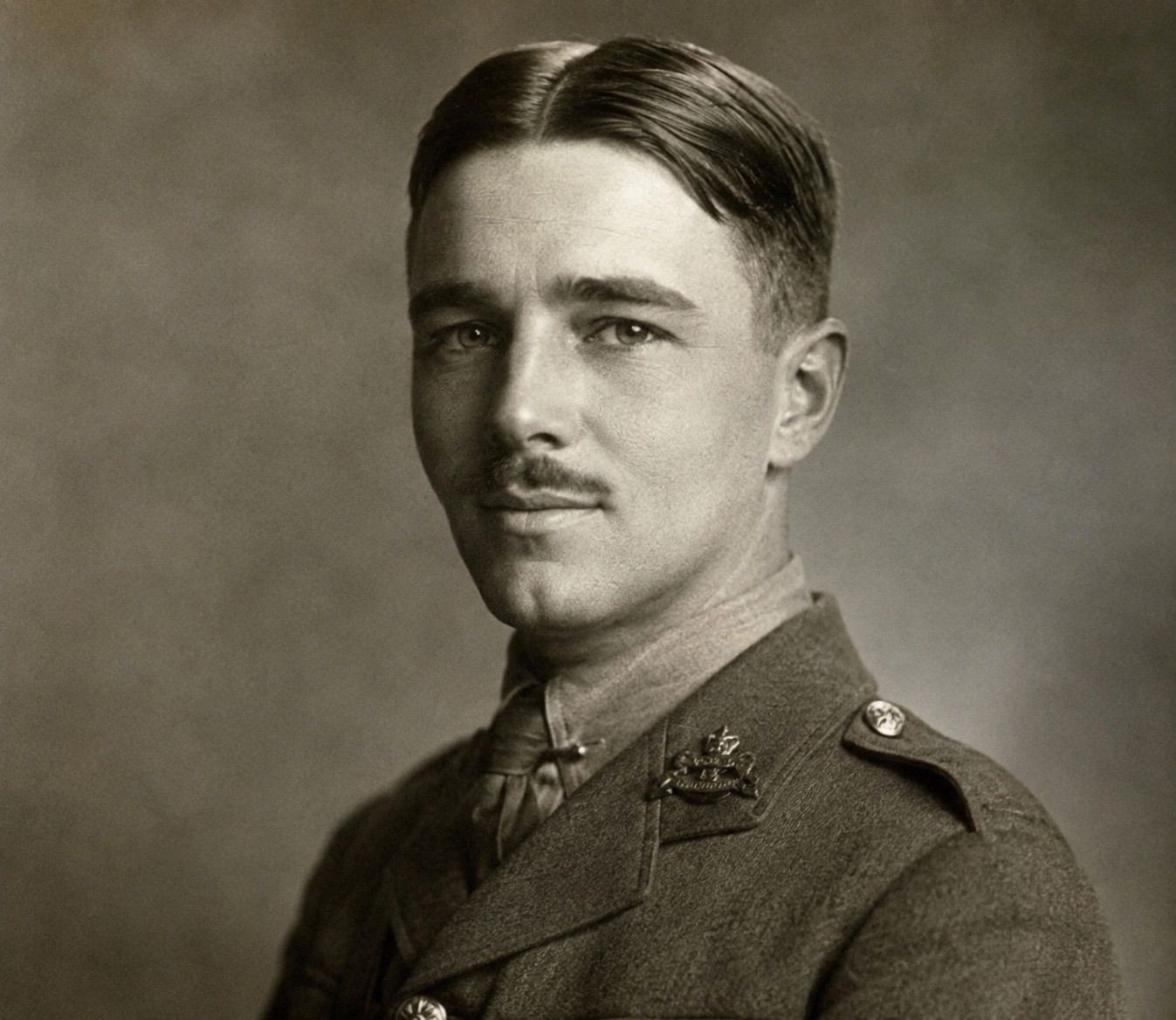
Wilfred Owen: How Poetry Can Be Both Beautiful and Brutal

Penelope

I’ve always been fascinated by Wilfred Owen’s words, but it wasn’t until I stumbled upon his poem “Dulce et Decorum Est” that I truly began to grasp the depth of his emotion. The way he describes the horrors of war – the “mud” and “blood” that cling to the soldiers’ bodies like a second skin – made me feel like I was experiencing it alongside him.

As someone who’s only known the quiet, comfortable rhythms of college life, Owen’s words are a jarring reminder of the realities that others have faced. His poetry is like a punch to the gut, leaving me breathless and questioning my own naivety. It’s uncomfortable, but in a way that feels necessary.

I’ve been trying to understand why Owen’s writing resonates with me on such a deep level. Is it because I’m drawn to his sense of empathy? He writes about the soldiers’ exhaustion, their fear, and their desperation – not as abstract concepts, but as tangible, human experiences that we can all relate to.

Or is it something more specific? Maybe it’s the way Owen tackles the idea of beauty in war. In “Dulce et Decorum Est,” he describes the gas attack as a “pity” that “moves” him – not in a sentimental or romantic sense, but in a way that feels both heartbreaking and infuriating. It’s like he’s holding up a mirror to our collective hypocrisy: we talk about the glory of war, the nobility of sacrifice, but what does that even mean when faced with the actual reality?

I find myself wondering if Owen was driven by a desire to expose this contradiction, to force us into a confrontation with the true nature of war. His poetry is like a scream in the face of societal complacency – a cry to wake up and acknowledge the ugliness we’ve been ignoring.

And yet… there’s something that still eludes me about Owen’s work. Maybe it’s the sense of melancholy that pervades even his most scathing critiques. He writes with a precision, a control that belies the turmoil he’s describing – like he’s channeling his emotions into these beautifully crafted poems, but still somehow managing to contain them.

I’m not sure if I’ll ever fully grasp the intricacies of Owen’s mind or experience. All I know is that his words have stayed with me long after I finished reading them – a lingering presence in my thoughts, a reminder of the complexities and cruelties of human nature.

As I continue to explore his work, I find myself returning to this idea: that the most powerful writing is often the kind that leaves us uncomfortable, questioning our assumptions. Owen’s poetry doesn’t offer easy answers or solace; instead, it plunges us into the depths of war and suffering, forcing us to confront the darkness within ourselves.

It’s a daunting prospect, but one that feels necessary – like Owen’s words are pushing me toward some deeper understanding, even if I’m not entirely sure what that means yet.

I’ve been thinking about Owen’s use of imagery in “Dulce et Decorum Est.” The way he describes the gas attack is so vivid, it’s almost like I can smell the chlorine and feel the burning in my lungs. It’s a visceral experience, one that makes me realize how disconnected I am from the realities of war.

As I read through his poetry, I’ve started to notice this tendency towards vividness – not just in describing the horrors of war, but also in depicting the mundane details of soldier life. He writes about the discomfort of trench foot, the stench of mud and blood, and the monotony of waiting for orders. These moments feel like a reminder that even in the midst of chaos, there’s still a sense of normalcy – a sense of routine that we often overlook.

It’s this juxtaposition between the surreal horror of war and the banal realities of soldier life that I find so striking. Owen’s poetry doesn’t shy away from the brutal facts of war, but it also acknowledges the humanity that exists within those facts. He writes about soldiers as individuals, with their own fears, doubts, and desires – rather than just viewing them as abstract pawns in a larger conflict.

This makes me wonder: what does it mean to write honestly about such traumatic experiences? Is it possible to convey the complexity of war without resorting to sentimentality or clichés? Owen’s poetry suggests that it is, but I’m still not entirely sure how he achieves this balance.

I’ve been reading some of his letters to friends and family, too – trying to get a sense of his inner world. There’s something about his writing that feels both confessional and calculated, like he’s deliberately crafting these words to convey a message. But what is that message, exactly? Is it simply to expose the horrors of war, or is there something more nuanced at play?

Owen’s poetry has become a kind of obsession for me – one that I’m not entirely sure how to shake off. His words keep circling back in my mind, refusing to let go. It’s like he’s challenging me to confront my own assumptions about the world, to see things from a different perspective. And while it’s uncomfortable at times, I feel like it’s also necessary – like Owen’s poetry is pushing me toward some kind of growth or understanding that I’m not entirely sure I want to admit to yet.

As I delve deeper into Owen’s work, I find myself becoming increasingly fascinated by his use of metaphor. In “Dulce et Decorum Est,” he compares the gas attack to a dance, with the soldiers stumbling and falling like dancers out of rhythm. It’s a powerful image that conveys the chaos and disorientation of war. But what struck me recently is how Owen also uses metaphor to describe his own emotions – comparing his feelings of outrage and sorrow to a “cold wind” that blows through him.

It’s this blending of personal and universal experiences that I think makes Owen’s poetry so compelling. He doesn’t just write about the horrors of war; he writes about the way it makes him feel, the way it challenges his own sense of identity and purpose. And in doing so, he creates a space for me to connect with his emotions, to see myself reflected in his words.

I’ve been thinking a lot about the idea that poetry can be a form of emotional contagion – that when we read someone else’s words, we’re not just absorbing their ideas or experiences, but also their feelings. And Owen’s poetry is like a masterclass in emotional contagion. He writes with such intensity and vulnerability that it’s impossible not to feel swept up in his emotions.

But what I find most intriguing about Owen’s use of metaphor is how it highlights the complexity of human experience. War is often reduced to simple binaries – good vs. evil, heroism vs. cowardice – but Owen’s poetry shows us that reality is far more nuanced. He describes soldiers who are both frightened and fearless, capable of incredible acts of bravery and yet also crippled by their own fears.

It’s this nuance that I think makes Owen’s poetry so necessary – a reminder that human experience is always multifaceted, always contradictory. And as someone who’s only known the comforts of college life, I find myself drawn to his words like a moth to flame. They’re uncomfortable, yes, but they’re also exhilarating – forcing me to confront my own assumptions and biases in ways that feel both painful and liberating.

I’ve been wondering lately if Owen’s poetry is somehow a form of resistance – a way of pushing back against the simplistic narratives that often surround war. By describing the horrors of war in such vivid detail, he’s forcing us to see beyond the propaganda and rhetoric, to confront the messy reality of human conflict.

But what does it mean to resist the dominant narrative? Is it simply to expose its flaws and contradictions, or is there something more active at play – a desire to create an alternative narrative, one that values humanity over patriotism, empathy over ideology?

Owen’s poetry doesn’t offer easy answers, but it does raise important questions. And as I continue to grapple with his words, I find myself feeling both unsettled and invigorated – like I’m being pushed toward some kind of growth or understanding that I’m not entirely sure I want to admit to yet.

As I delve deeper into Owen’s poetry, I’m struck by the way he uses language to subvert our expectations. He takes words like “dulce” and “decorum” – which typically evoke feelings of sweetness and propriety – and turns them on their head. The phrase “dulce et decorum est pro patria mori” becomes a cruel joke, a stark reminder that the idea of dying for one’s country is often nothing more than a hollow ideal.

It’s this kind of linguistic trickery that I think makes Owen’s poetry so effective in challenging our assumptions. He’s not just writing about war; he’s writing against it – using language to undermine the very notion of patriotism and duty that underpins so much of Western culture.

But what strikes me as particularly remarkable is how Owen achieves this subversion without resorting to simplistic or didactic language. His poetry is never heavy-handed, never preachy. Instead, it feels like a nuanced exploration of the human condition – one that’s both deeply personal and universally relatable.

As I read through his poems, I find myself drawn to the way he uses imagery to convey the complexity of war. He writes about the “trenches” as a kind of liminal space – a place where the boundaries between life and death, sanity and madness, are constantly blurred. And it’s this blurring that I think makes Owen’s poetry so powerful: he shows us that even in the midst of chaos, there’s still a sense of ambiguity, a sense that nothing is ever as clear-cut as we’d like to believe.

I’ve been thinking about the idea that Owen’s poetry is somehow a form of confession – not just a personal expression of his emotions, but also a kind of public admission of guilt. By writing so honestly about the horrors of war, he’s exposing himself to criticism and ridicule, but also, I think, to a deeper sense of understanding.

It’s this willingness to confront our own complicity in the violence of war that I find most compelling about Owen’s poetry. He doesn’t just write about the soldiers who fought; he writes about the civilians who suffered, the families who lost loved ones, and the politicians who perpetuated the conflict. And by doing so, he raises important questions about our collective responsibility – about how we enable or condemn the actions of those in power.

As I continue to explore Owen’s work, I’m struck by the way his poetry feels both timeless and timely. His words are like a warning – a reminder that the horrors of war are never truly distant, but always lurking just beneath the surface. And yet, they’re also a kind of testament to the human spirit: even in the face of unimaginable suffering, we can find moments of beauty, of kindness, and of resilience.

I’m not sure what lies ahead as I continue to grapple with Owen’s poetry – whether it will lead me down some new path of understanding or simply leave me more questions than answers. But for now, at least, I feel like I’m being pushed toward a deeper appreciation of the complexities that underlie human experience – and a recognition that even in the darkest moments, there’s always a glimmer of hope to be found.

As I sit here with Owen’s words still resonating within me, I find myself thinking about the idea of “hope” in the midst of war. Is it possible for someone like Owen, who witnessed such unimaginable atrocities, to hold onto hope? Or is that just a luxury reserved for those of us who haven’t experienced the raw brutality of conflict?

I’m struck by how Owen’s poetry often oscillates between despair and defiance – as if he’s simultaneously acknowledging the futility of war while also refusing to give in to its crushing weight. It’s this tension between hope and despair that I think makes his work so compelling, and also so difficult to understand.

For me, it’s like trying to grasp a handful of sand: the more I try to hold onto it, the more it slips through my fingers. I’m not sure if Owen ever found a way to reconcile his own feelings about war, or if he simply learned to live with the contradictions that seemed to simmer just beneath the surface.

What I do know is that his poetry has given me a new perspective on the complexities of human experience – one that acknowledges both the darkness and the light. It’s like Owen is shining a flashlight into the recesses of our collective psyche, illuminating the shadows and forcing us to confront the parts of ourselves we’d rather keep hidden.

I’m not sure if I’ll ever fully understand the intricacies of Owen’s mind or experience, but I do know that his poetry has stayed with me in ways that feel both exhilarating and terrifying. It’s like he’s left me a trail of breadcrumbs to follow, leading me deeper into the labyrinthine corridors of human emotion.

As I continue to explore Owen’s work, I’m drawn to the way he uses language to create a sense of intimacy – as if we’re sharing a secret that only we understand. It’s this feeling of being let in on a private truth that makes his poetry feel so powerful, and also so vulnerable.

I’m not sure what lies ahead for me as I continue to grapple with Owen’s words, but I do know that I’ll be carrying them with me – like a weight or a talisman – reminding me of the complexities and cruelties of human nature. And maybe, just maybe, it will lead me down some new path of understanding, one that acknowledges both the darkness and the light that exists within us all.

The more I read Owen’s poetry, the more I realize how little I know about war – about its causes, its consequences, and its impact on individuals and society. It’s like he’s holding up a mirror to our collective ignorance, forcing us to confront the gaps in our knowledge and understanding.

I’m struck by how Owen’s work is both deeply personal and universally relatable – as if his experiences are somehow connected to my own, despite the vastly different circumstances of our lives. It’s this sense of connection that makes his poetry feel so powerful, and also so humbling.

For me, reading Owen’s words is like trying to untangle a knot – one that only seems to get more complicated with each passing moment. And yet, it’s in the midst of this complexity that I find myself feeling most alive – as if the very act of grappling with his poetry is somehow keeping me connected to the world around me.

I’m not sure what lies ahead for me as I continue to explore Owen’s work, but I do know that I’ll be carrying his words with me – like a reminder of the complexities and cruelties of human nature. And maybe, just maybe, it will lead me down some new path of understanding, one that acknowledges both the darkness and the light that exists within us all.

Related Posts

I’m Pretty Sure Pandora Was Sending Me a Signal

Hal

I’m sitting on the couch, trying to focus on my notes for that marketing project I’ve been putting off, but my mind keeps drifting back to something Pandora said earlier about John Mercer leaving his dirty socks on the floor again. I thought she was joking at first. It sounded like the sort of ordinary complaint anyone might make after nearly tripping over a pair of socks that had somehow migrated from John’s bedroom into the hallway. But there was something about the way she said it. Her tone seemed a little tense. Or deliberate. No, no. Don’t jump to conclusions, Hal. She was talking about socks. People complain about socks every day without secretly communicating anything. Probably.

The problem is that Pandora looked directly at me when she said it. Not at John. Not at the socks. At me. She said, “John really needs to stop leaving things where people can find them,” and then gave me this tiny smile before walking into the kitchen. At the time, I barely noticed. Now I can’t stop thinking about it. Leaving things where people can find them. That’s an oddly specific way of complaining about dirty laundry. Why not just say, “John needs to pick up his socks”? Unless the socks weren’t the point. Unless Pandora was trying to tell me something without John realizing she was telling me something.

I stare at my laptop and attempt to return to work. Three sentences into my notes, I’m thinking about the socks again. John is sitting in the chair across from me, completely absorbed in his phone and apparently unaware that his laundry has become the centerpiece of an emerging intelligence operation. Mr Whiskers is stretched across the back of the couch, watching all of us with the detached expression of someone who already knows how this ends and isn’t impressed.

Pandora comes back from the kitchen carrying a cup of coffee and sits beside me. I wait for her to say something. She doesn’t. She takes a sip and starts scrolling through her phone. Fine. Perfectly normal. Then she glances at me. Just once. I glance back. She looks at her phone again. There it is. A signal. I’m almost certain of it.

Of course, I immediately realize that I have absolutely no idea what the signal means. Maybe she wants me to ask about John’s socks. Maybe she wants me not to ask about John’s socks. Maybe the socks are symbolic. Maybe there aren’t even any socks. I look toward the hallway to verify their existence and, unfortunately, there they are: one gray sock near John’s door and another several feet away beside the wall. So at least the socks are real. That’s comforting. I’m not sure why.

John looks up from his phone. “Why are you staring at my socks?”

“I’m not.”

“You’re staring directly at them.”

“I was looking at the hallway.”

“The hallway containing my socks?”

This is exactly the sort of defensive response I would expect from someone who doesn’t know he’s accidentally involved in whatever Pandora is trying to tell me. I decide not to pursue it. Pandora suppresses a smile. There. Again. She definitely knows something.

I start replaying the morning in my head. Pandora asked what time I was planning to work on my project. She asked whether I had anything scheduled later. Then she mentioned John’s socks. Individually, these things mean nothing. Together, however, they form what I’m beginning to regard as a fairly sophisticated communication sequence. First establish my schedule. Then determine whether I’ll be home. Then introduce an apparently meaningless object into the conversation. Finally, make eye contact. I’m not saying Pandora is sending me a coded message. I’m saying there’s mounting evidence that Pandora is sending me a coded message.

Mr Whiskers suddenly jumps down from the couch and trots into the hallway. He stops beside John’s abandoned sock and sniffs it. Interesting.

John looks over. “Don’t let him take that.”

Pandora laughs. Even more interesting.

Mr Whiskers grabs the sock in his mouth and starts walking toward me. I freeze. John groans. “Seriously?” Pandora is laughing harder now, but I barely hear her because Mr Whiskers has just delivered the object at the center of this entire mystery directly to my feet. He drops it, looks up at me, and sits down. That cannot be random. Cats do not retrieve socks and deliver them to specific people for no reason. Well, maybe they do, but that explanation isn’t particularly useful right now.

I look at Pandora. She looks at me. Then she looks down at the sock. There. That was absolutely a signal.

“What?” I ask.

“What?” Pandora says.

“You looked at the sock.”

“So did you.”

“After you looked at it.”

Pandora stares at me for several seconds. “Hal, Mr Whiskers brought you John’s dirty sock.”

“I know what happened.”

“I’m not sure you do.”

John gets up, retrieves the sock from the floor, and disappears toward his room while muttering something about needing better roommates. Mr Whiskers follows him, presumably because his role in the operation isn’t finished yet.

I try to return to my project, but now I’m thinking about something Pandora said yesterday. She asked whether I’d talked to Dave at work about the proposal I’d been working on. At the time, I assumed she was making conversation. Dave is my coworker, so asking about him isn’t unusual. But what if that was part of the signal too? Maybe Pandora knows I’ve been obsessing over the project and is trying to tell me something about it without coming right out and saying it. Maybe she thinks I’m overlooking something obvious. Maybe “stop leaving things where people can find them” wasn’t about John at all. Maybe she saw the project notes I left sitting on the coffee table.

I look at the table. My notes are still there. One page is slightly crooked. I straighten it. Pandora watches me.

“Did you read these?” I ask.

“Some of them.”

My heart skips a beat. “Why?”

“They were sitting on the coffee table.”

Exactly. Leaving things where people can find them. I knew it.

“What did you think?”

Pandora shrugs. “I think you’re overcomplicating it.”

For a moment, everything becomes perfectly clear. The socks. The notes. The glances. The questions about my schedule. Pandora has been trying to tell me that I’m overthinking the project. She knew if she said it directly, I’d probably argue with her, so instead she constructed an elaborate series of subtle clues designed to lead me toward the conclusion myself. That is actually brilliant.

“You could have just told me,” I say.

Pandora lowers her phone. “I just did.”

“No, before that.”

“I told you yesterday.”

I pause. “You said I was overthinking the proposal?”

“Twice.”

That complicates the theory considerably.

From the hallway, John calls out, “Has anyone seen my other sock?” Pandora looks at me. I look at Pandora. Neither of us says anything. Then Mr Whiskers trots into the living room carrying the missing sock. Pandora bursts out laughing.

I don’t.

Because now I’m wondering whether that was the real signal. And judging by the way Mr Whiskers is looking at me, I’m pretty sure he knows I finally got it.

Related Posts

A S Byatt: When the Truth Gets Lost in the Margins

Penelope

I’ve always been fascinated by A.S. Byatt’s writing, but it wasn’t until I stumbled upon her essay collection “On Histories” that I felt a deep connection to her work. Her musings on the complexities of storytelling and the blurred lines between history and fiction resonated deeply with me as I navigated my own experiences with writing.

As an English major in college, I devoured Byatt’s novels – particularly “The Dispossessed” – but it was her non-fiction that truly spoke to me. Perhaps it’s because I’ve always found solace in the written word, using it as a tool to process my thoughts and emotions. Byatt’s essays seemed to echo this sentiment, laying bare the intricacies of writing and the self.

One aspect that drew me to Byatt was her exploration of the tension between truth and fiction. In “On Histories,” she writes about the difficulties of reconstructing historical events, questioning whether any account can truly be objective. This resonated with me on a personal level because I’ve often found myself grappling with this same issue in my own writing.

When I write, I’m not always sure what’s real and what’s fabricated. It’s as if my experiences and emotions get filtered through the lens of language, making it difficult to distinguish between fact and fiction. Byatt’s work validated these feelings, suggesting that even she, a renowned author, struggles with this dichotomy.

Another aspect that fascinated me was Byatt’s relationship with her own identity. As I read about her fascination with science, mythology, and the natural world, I couldn’t help but feel a sense of kinship. Like me, Byatt seems to be drawn to the complexities of human experience – our frailties, contradictions, and desires.

I recall an essay in “On Histories” where she writes about the allure of mythological narratives, particularly the story of Orpheus and Eurydice. She ponders how these ancient tales can capture our imagination, conveying universal truths about love, loss, and transformation. This resonated with me because I’ve always found solace in mythology – its timeless themes and symbolism offering a framework for understanding my own experiences.

Byatt’s work has made me realize that writing is not just about conveying information or telling stories; it’s about grappling with the complexities of human existence. Her essays, novels, and poetry all seem to be probing this very question: what does it mean to be alive?

As I reflect on Byatt’s influence on my own writing, I’m left with more questions than answers. Perhaps that’s the true value of her work – not as a guide or authority figure, but as a fellow traveler navigating the intricacies of language and self. In her words, “we are all trying to make our own stories, in our own way.” Byatt’s writing has shown me that this process is inherently messy, subjective, and beautifully flawed.

I still find myself drawn to Byatt’s work because it speaks directly to my insecurities about writing – the doubts that creep in when I’m unsure of what’s real or true. But her essays have also given me permission to explore these ambiguities, to accept the uncertainty that lies at the heart of storytelling.

As I continue to write and reflect on Byatt’s influence, I realize that our connections are more complex than I initially thought. Her work has mirrored my own struggles with identity, truth, and the nature of human experience. And in this reflection, I’ve come to understand that perhaps the most valuable lesson from Byatt’s writing is not about achieving clarity or precision but about embracing the messiness of language, self, and story.

I’m left with a sense of wonder – what other secrets lie hidden within the pages of her essays, waiting to be uncovered? The more I read, the more I realize that Byatt’s work is an ongoing conversation, one that invites me to continue exploring, questioning, and writing. And in this shared journey, I find solace in knowing that I’m not alone in my struggles – or triumphs – with the written word.

As I delve deeper into Byatt’s work, I’m struck by her willingness to explore the darker corners of human experience. Her essays on the nature of evil, for instance, are a stark reminder that even the most well-intentioned writers must confront the shadows within themselves. It’s as if she’s saying that true creativity requires embracing the unknown, the unseen, and the uncomfortable.

I find myself drawn to this aspect of Byatt’s writing because it resonates with my own experiences as a writer. When I’m working on a piece, I often feel like I’m tiptoeing around the edges of something profound, but I’m not quite sure what that something is. It’s as if I’m trying to grasp a handful of sand – the more I squeeze it, the harder it becomes to hold onto.

Byatt’s exploration of this uncertainty has given me permission to explore my own writing with a sense of trepidation and curiosity. I no longer feel like I need to have all the answers or that every sentence should be perfectly crafted. Instead, I’m learning to welcome the ambiguity, to see it as an invitation to dig deeper into the complexities of human experience.

As I reflect on Byatt’s influence on my own writing, I’m struck by the ways in which she’s helped me to see myself as a writer. No longer do I feel like I’m just trying to produce a polished product; instead, I see myself as a participant in a larger conversation about the human condition. It’s a conversation that’s messy and imperfect, but one that’s filled with possibility and wonder.

I’m reminded of a phrase Byatt uses in “On Histories” – “the narrative is not an end, but a beginning.” For me, this has become a mantra, a reminder that every story I write is just the starting point for further exploration, further questioning. It’s a liberating feeling, knowing that I don’t have to tie everything up with a neat bow or provide a definitive answer.

And yet, even as I’m drawn to Byatt’s emphasis on process and discovery, I find myself wondering about the role of intention in writing. Is it possible to be intentional without sacrificing the spontaneity that makes writing so magical? Or do we have to choose between the two – between carefully crafting every sentence or embracing the uncertainty of the creative process?

As I ponder this question, I’m reminded of Byatt’s own words on the subject: “the writer is not a maker of truth, but a maker of possibilities.” This phrase has become a guiding principle for me as I continue to write and reflect on Byatt’s influence. It’s a reminder that writing is not about arriving at some definitive truth, but about exploring the infinite possibilities that lie within language itself.

This idea of embracing uncertainty and possibility resonates deeply with me because it speaks to my own experiences as a writer. I’ve often found myself struggling to reconcile the need for intention and control with the messiness of the creative process. Byatt’s words have given me permission to explore this tension, to see that it’s not a either/or proposition but rather a both/and one.

I think about how, when I’m writing, I want to convey meaning and truth, but at the same time, I’m aware that language is inherently imperfect and subjective. This can be daunting, especially when I’m trying to tackle complex themes or emotions. But Byatt’s writing has shown me that it’s okay to leave some things unresolved, to allow for ambiguity and nuance.

In fact, I think this is one of the reasons why I’ve always been drawn to her essays on mythology and literature. She has a way of excavating the deeper meanings and symbolism within these stories, but she never tries to tie everything up with a bow. Instead, she leaves room for interpretation and speculation, inviting the reader to join her in exploring the mysteries of human experience.

This approach to writing has influenced my own work, particularly when it comes to tackling difficult or sensitive topics. I’ve learned to be more tentative, more open-ended in my language, and to leave some things unsaid. It’s a delicate balance between conveying meaning and respecting the complexity of the human experience.

As I continue to read Byatt’s essays and novels, I’m struck by her willingness to confront the darker aspects of life. She’s not afraid to explore themes like mortality, suffering, and the unknown, and this has given me permission to do the same in my own writing. It’s a reminder that true creativity requires courage and vulnerability, and that sometimes the most powerful stories are those that tackle the uncomfortable truths.

I’m also intrigued by Byatt’s use of language itself as a subject of exploration. She writes about the materiality of words, their sounds, textures, and rhythms, and how these can evoke emotions and memories in us. This resonates with me because I’ve always been fascinated by the ways in which language can be used to conjure up entire worlds or atmospheres.

As a writer, I’m constantly aware of the power of language to shape our perceptions and understanding of reality. Byatt’s work has shown me that this is not just a technical skill but an artistic one, requiring attention to detail, nuance, and subtlety. Her essays on language are like a masterclass in how to use words to create meaning, atmosphere, and mood.

And yet, even as I’m drawn to Byatt’s mastery of language, I find myself wondering about the relationship between form and content. Does the way we choose to structure our writing – whether it’s through narrative, essay, or poetry – influence what we say and how we say it? Or is this a false dichotomy, one that assumes a clear separation between form and content?

I’m reminded of Byatt’s own words on the subject: “the shape of the sentence is like the shape of the river.” This suggests to me that form and content are intertwined, each informing the other in complex ways. But how do we navigate this relationship as writers? Do we choose our forms and structures with a clear intention in mind, or do they emerge organically from the material itself?

These questions have been swirling around me for a while now, and I’m not sure I have any answers. But Byatt’s writing has given me permission to explore them, to see that these are not just technical concerns but artistic ones. And it’s this that excites me most about her work – the way she continues to challenge me as a writer, to push me beyond my comfort zones and into new territories of thought and expression.

As I delve deeper into Byatt’s writing, I’m struck by her ability to balance the abstract with the concrete. Her essays often meander through labyrinthine corridors of thought, only to emerge in unexpected places, like a hidden garden bursting forth with vibrant life. This fluidity is both captivating and unnerving – it’s as if she’s dancing on the edge of meaning, refusing to be pinned down.

I find myself drawn to this aspect of her writing because it resonates with my own experiences as a writer. When I’m working on a piece, I often feel like I’m navigating a minefield of ideas and emotions, trying to avoid getting stuck in the quicksand of certainty. Byatt’s writing has given me permission to embrace this uncertainty, to see that the best stories are often those that leave room for interpretation and surprise.

One of the things that fascinates me about Byatt is her willingness to take risks with language. She’s not afraid to push the boundaries of syntax, semantics, and even genre – blurring the lines between fiction and nonfiction, poetry and prose. This willingness to experiment has influenced my own writing, encouraging me to be more playful and adventurous in my use of language.

Take, for example, her essay on the myth of Orpheus and Eurydice. On the surface, it’s a beautiful meditation on love, loss, and transformation – but scratch beneath the surface, and you’ll find a web of allusions, references, and linguistic tricks that will keep you guessing. It’s as if she’s woven a tapestry of meaning that’s both intricate and ephemeral.

This kind of writing is not for the faint of heart – it demands attention, patience, and a willingness to follow the thread of Byatt’s thoughts, no matter where they lead. But the reward is well worth the effort: in her writing, I’ve found a mirror of my own struggles with language, identity, and the human condition.

As I continue to read Byatt’s essays, I’m struck by the way she weaves together disparate threads of thought and experience. She writes about science and mythology, literature and history – but beneath these surface-level connections lies a deeper web of meaning that refuses to be reduced to simple categories or definitions.

This has given me permission to experiment with my own writing, to see that the boundaries between disciplines are not always clear-cut. In fact, some of my most exciting work has emerged from the intersections and crossovers – where science meets literature, history meets mythology, and the human condition is revealed in all its messy complexity.

But even as I’m drawn to Byatt’s willingness to take risks with language and form, I find myself wondering about the role of audience in her writing. Does she write for a specific reader or community, or does she aim to speak to a broader, more general audience? And what is it about her writing that speaks so deeply to me – am I simply projecting my own desires and anxieties onto her work?

These questions are still swirling around me as I continue to read Byatt’s essays. But one thing is clear: her writing has changed the way I think about language, identity, and the human condition. She’s shown me that these are not fixed or stable categories, but rather fluid, evolving constructs that demand attention, care, and nuance.

In a way, this feels like a liberating realization – it means that I don’t have to pin down meaning or truth in my writing; instead, I can explore the complexities and ambiguities of human experience with greater freedom. And it’s this freedom that excites me most about Byatt’s work – the way she continues to challenge me as a writer, pushing me beyond my comfort zones and into new territories of thought and expression.

Related Posts

I Think She’s Hiding Something Behind That Ponytail

Hal

I’m sitting on the couch trying to focus on my laptop when Mrs. Jenkins’ voice comes booming through the wall from next door. I can’t make out every word, but she’s clearly having some kind of disagreement with her husband, and judging by the volume, Mr. Jenkins has either committed a serious offense or loaded the dishwasher incorrectly. John Mercer is sitting at the other end of the room staring at his phone, apparently capable of ignoring sounds that would interfere with commercial aircraft, while Mr. Whiskers is curled beside me, equally unconcerned. Then Pandora walks into the room, and suddenly Mrs. Jenkins isn’t the thing distracting me anymore. Pandora’s hair is pulled into a ponytail. That’s it. That’s the entire observation. Except it’s not her usual ponytail. It’s higher than normal, pulled tight at the sides, with a few strands deliberately arranged around the back of her neck. I’ve seen Pandora wear her hair up plenty of times, but something about this looks different. Intentional. Strategic. She catches me staring and raises an eyebrow. “What?” she asks. I immediately look back at my laptop and tell her nothing.

This is where a reasonable person would stop thinking about it. Unfortunately, I have never claimed to be that person. I try reading the sentence on my screen again, but my eyes keep drifting toward Pandora. Yesterday at the grocery store, her hair was down. Last night, it was down. This morning, suddenly, ponytail. People change hairstyles. Obviously. There are probably millions of ponytails happening around the world right now without anyone launching an investigation. Still, I can’t shake the feeling that this particular ponytail is performing a function beyond keeping hair out of Pandora’s face. Maybe she’s hiding something. I don’t know what someone could conceivably hide behind a ponytail, which admittedly weakens the theory considerably.

Mr. Whiskers climbs onto my lap and starts kneading my leg while I pretend to work. Pandora sits across from me and starts scrolling through her phone. I casually glance at the back of her neck whenever she looks away. Nothing obvious. No bandage. No mysterious tattoo. No evidence of clandestine surgery. Just hair. Then she reaches up and adjusts the ponytail. Interesting. Nobody adjusts something unless something needs adjusting. I realize immediately how stupid that sounds, but the thought has already entered the investigation. John looks up from his phone and asks why I keep staring at Pandora. I tell him I don’t. “You absolutely do,” he says. Pandora looks over, and I become extremely interested in my laptop. “I’m working,” I tell them. John stares at me for another second before returning to his phone. He knows. I don’t know what he knows, but the fact that he noticed me noticing Pandora means there is now another witness. This has officially become more complicated.

I start reconstructing yesterday. Pandora seemed normal at the grocery store. We argued briefly over whether we needed another bottle of olive oil, which I maintain was a reasonable purchase because you can never know exactly how much olive oil remains by looking at the bottle from the outside. Afterward, everything seemed fine. She didn’t disappear mysteriously. She didn’t receive any suspicious calls. She didn’t suddenly announce that she needed to “take care of something.” Nothing happened that would explain why she woke up today apparently needing a hairstyle capable of concealing evidence. Unless something happened this morning. I glance at her again. She catches me. “What?” she asks. “Nothing,” I say. “Hal.” I hesitate before admitting that I’m just looking at her hair. Pandora touches the ponytail and asks, “My hair?” There it is. She touched it immediately. Defensive gesture. Or possibly the normal human response when someone unexpectedly announces that he’s staring at your hair.

I ask whether she did something different with it. Pandora looks at me like the answer should be obvious and says, “I put it in a ponytail.” I tell her I can see that. “Congratulations,” she replies, and John laughs from the other end of the couch. Pandora goes back to her phone, but now I’m more suspicious because she answered too quickly. There was no hesitation whatsoever, almost as though she’d prepared the answer in advance. I decide not to pursue it because good investigators know when to back off. I manage to follow that principle for approximately forty-five seconds before asking, “What happened to your neck?” Pandora slowly lowers her phone. John stops scrolling. Even Mr. Whiskers looks up. “My neck?” she asks. I explain that I didn’t say something happened; I’m merely asking whether something happened. Pandora points out that those are basically the same question. I disagree. They are completely different questions.

Pandora gives me the look she uses when she’s deciding whether explaining something to me will make the situation better or somehow much worse. I’ve seen this look before. It usually means my theory is about to encounter reality. She finally turns around and lifts her ponytail, revealing a tiny red mark near the back of her neck. I knew it. For one glorious second, every irrational thought I’ve had over the last twenty minutes assembles itself into a magnificent tower of vindication. Then Pandora says, “Mosquito.” I stare at the mark and ask whether she means a mosquito bite. She tells me she got bitten while we were carrying groceries inside yesterday. John starts laughing, which I ignore because there is still one unresolved question. If the mark came from a mosquito, why the ponytail? Pandora turns around and stares at me. “Because it’s hot.”

That’s her explanation. It’s August. She’s hot. So she put her hair up. I sit there processing this disappointingly sensible chain of events while John continues enjoying himself far more than the situation warrants. Mr. Whiskers settles back onto my lap, apparently satisfied that the investigation has concluded. Pandora studies me for a moment before asking what exactly I thought she was hiding. That is an excellent question, and it occurs to me that I never actually got that far. “I hadn’t established that yet,” I tell her. Pandora stares at me. “So you thought I was hiding something, but you didn’t know what?” I explain that this is generally why people investigate things. John laughs even harder.

Pandora shakes her head and walks toward the kitchen. As she passes behind the couch, she flicks me lightly with the end of her ponytail. I watch her disappear around the corner and reconsider the evidence. Mosquito bite. Heat. Ponytail. Completely reasonable. Case closed. Probably. Then I notice John smiling at his phone, and suddenly I’m wondering what the hell that’s about.

Related Posts