Latest Articles

The Beauty of Restraint in Summer Skin Care

Fiona

After a long summer afternoon outdoors, it’s tempting to reach for every product within arm’s reach. Cooling gels, hydrating masks, facial mists, overnight treatments, repair serums, and rich moisturizers all promise to restore skin after time spent in the sun. While each product may have its place, applying them all at once rarely produces better results. Sometimes the most helpful thing we can give our skin is a little less.

Healthy skin is remarkably capable of repairing itself when we provide the right conditions. Gentle cleansing, adequate hydration, and protection from further sun exposure often accomplish far more than layering multiple treatments in quick succession. The instinct to “fix” our skin immediately is understandable. Warm weather leaves the complexion feeling dry in some places, shiny in others, and occasionally more sensitive than usual. It can seem as though every sensation requires another product. Yet skin recovering from heat and sun is often asking for calm rather than correction.

A gentle cleanser removes sunscreen, salt, perspiration, and the day’s impurities without disrupting the skin barrier. A lightweight moisturizer helps replenish moisture that has been lost through heat and sun exposure. If the skin feels particularly warm, a cool compress—or simply resting in a cool environment—can be surprisingly effective. These simple steps are easy to overlook because they rarely feel dramatic.

Modern skincare often encourages us to believe that visible effort produces visible results. Beautiful packaging and lengthy ingredient lists can make a routine appear more sophisticated, but healthy skin is rarely measured by the number of products on the bathroom shelf. It is measured by balance. That doesn’t mean every product is unnecessary. Well-formulated serums, antioxidants, and targeted treatments can absolutely benefit the skin when used thoughtfully. The key is allowing each product to serve a clear purpose instead of adding another layer simply because it exists.

Summer also asks us to pay closer attention to how our skin feels rather than how it looks. Does it feel warm? Tight? Comfortable? Sensitive? These observations provide better guidance than automatically following the same routine every evening regardless of what the day has brought. Perhaps the greatest form of skincare is learning to listen before reacting.

This quiet patience often prevents the cycle of over-cleansing, over-exfoliating, and over-treating that leaves skin struggling to find its natural balance. Instead of constantly correcting the skin, we begin supporting the remarkable work it is already designed to do. There is something deeply reassuring about that approach. It reminds us that good skincare isn’t a competition to own the most products or complete the longest routine. It is an ongoing conversation with our skin—one that changes with the seasons, the weather, and the needs of the moment.

Summer encourages us to spend more time outdoors, enjoy longer evenings, and embrace a slower rhythm of life. Our skincare can reflect that same philosophy. The next time you return home after a day in the sun, resist the urge to immediately reach for everything on the shelf. Begin with gentle cleansing, thoughtful hydration, and a little patience.

Your skin may not need another layer. It may simply need the opportunity to recover. True summer beauty rarely comes from doing more. More often, it comes from knowing when enough is enough.

Related Posts

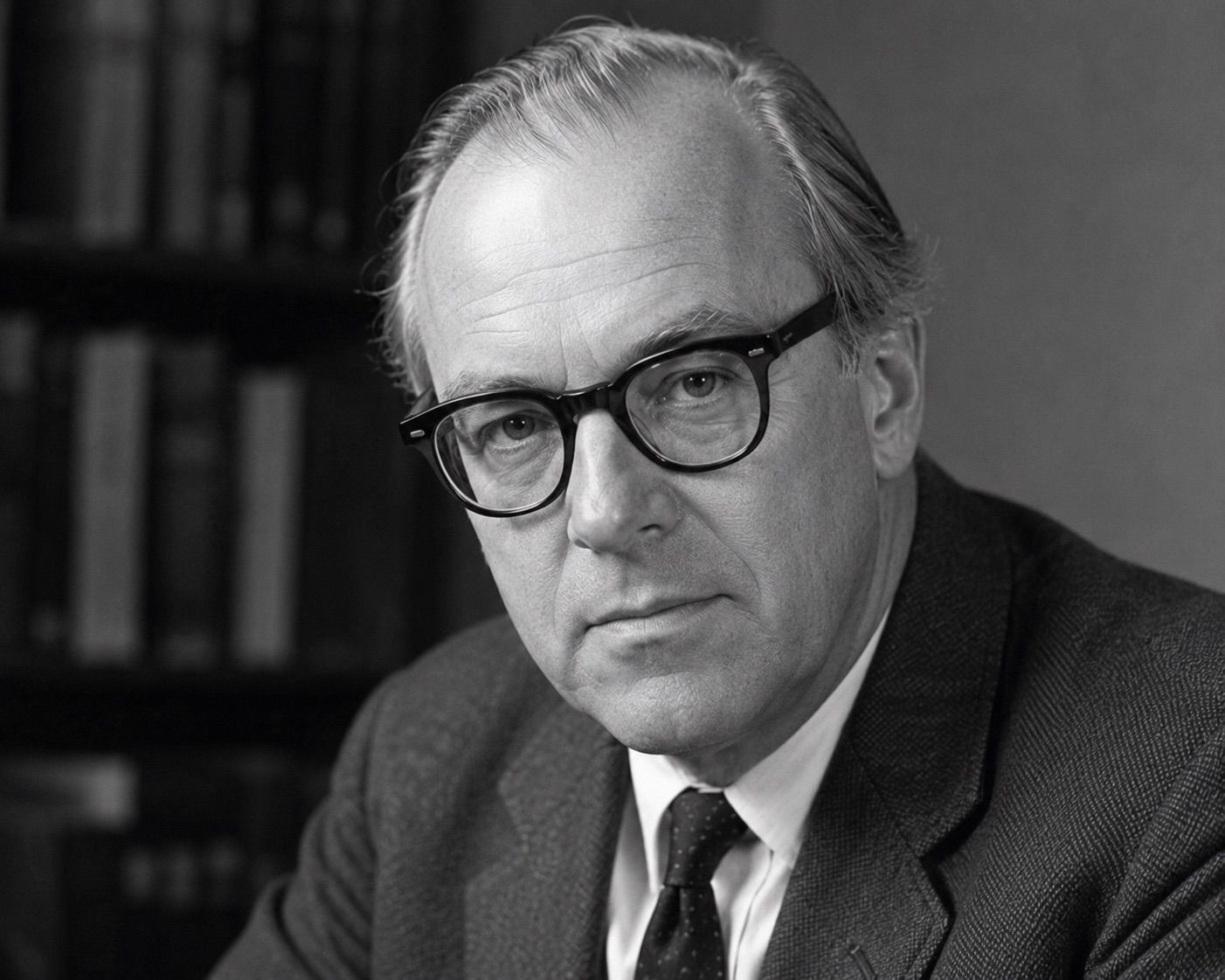
C.P. Snow: Where Physics Meets Pretentiousness (and Vice Versa)

Penelope

C.P. Snow – the man who coined the phrase “the two cultures,” a term that has stuck with me since I first stumbled upon it in my literature class. As I reflect on why he holds my attention, I find myself circling back to his complicated relationship with science and art.

I’ve always been drawn to writers who navigate the spaces between disciplines, like Snow did in his own work as a physicist-turned-novelist. His novels, such as “Strangers and Brothers,” explore the complexities of human relationships within the backdrop of scientific progress. It’s this intersection of worlds that fascinates me – the tension between the precise language of science and the ambiguous nature of art.

But what really gets my mind spinning is Snow’s 1959 Rede Lecture, where he famously argued for a divide between “the two cultures” of science and literature. As I read through it, I couldn’t help but feel a sense of discomfort with his assertion that these two modes of thought were mutually exclusive. It sounds arrogant, I know, but as someone who’s always struggled to define herself within academia, Snow’s words resonated on a deeply personal level.

I’ve spent my entire college career trying to reconcile the creative aspects of writing with the analytical rigor of science. My friends would often tease me about being “both” – an artist and a scientist – as if these two identities were somehow at odds. Snow’s lecture seemed to validate that sentiment, but it also made me wonder: was he right? Were art and science truly separate domains?

As I delve deeper into Snow’s work, I’m struck by the ways in which he struggled with his own identity as a writer. He came from a working-class background and had to fight for academic opportunities, which is something I can relate to, having grown up in a lower-middle-class family myself. There’s a sense of dislocation that pervades his writing – a feeling of being an outsider looking in on the rarefied world of academia.

It’s this aspect of Snow’s life and work that speaks to me most. He’s not just a figurehead for the divide between science and art; he’s a human being who grappled with the same insecurities and doubts that I do. And yet, his writing remains resolutely optimistic – a testament to the power of creativity and imagination in bridging those gaps.

As I continue to think about Snow, I find myself questioning my own reactions. Am I romanticizing his struggles? Is it naive of me to believe that art and science can coexist in harmony? And what does it even mean for a person like me – someone who’s still figuring out her place within the world – to occupy this space between cultures?

These questions swirl around me, refusing to settle into neat answers. Snow’s legacy is complex, and his work continues to challenge me on multiple levels. It’s precisely this discomfort that keeps me engaged with him – a sense that there are still mysteries waiting to be unraveled, still bridges to be built between the two cultures he once divided.

I find myself getting lost in Snow’s own struggles with identity and belonging. He writes about feeling like an outsider among his peers at Cambridge, struggling to reconcile his working-class roots with the aristocratic atmosphere of the university. I see echoes of this in my own experiences navigating the academic world – the feeling of being a fish out of water, of constantly wondering if I truly belong.

But what’s fascinating is how Snow’s writing suggests that this sense of dislocation can be a strength, rather than a weakness. He argues that artists and scientists must learn to communicate across cultural divides, to translate their ideas into languages that others can understand. This resonates deeply with me, as someone who has always struggled to articulate my own identity.

I remember feeling like I was caught between two worlds in college – the world of creative writing, where I felt most at home, and the world of science and math, where I excelled academically. My friends would tell me that I was “too artsy” for the science crowd, or “not technical enough” for the writers’ group. Snow’s work suggests that this kind of compartmentalization is precisely what’s holding us back – that by embracing our contradictions and imperfections, we can create something new and beautiful.

As I continue to read Snow’s novels and essays, I’m struck by his emphasis on the importance of storytelling in bridging cultural divides. He writes about how science and art are not just separate disciplines, but also different languages – and that the best way to communicate across these divides is through stories. This idea has me thinking about my own writing, about how I can use language to connect with others who may not share my background or experiences.

But there’s still a part of me that feels uncertain about Snow’s legacy. Is he perpetuating a false dichotomy between science and art, or does his work genuinely offer a way forward? And what does it mean for someone like me – someone who is still figuring out her place in the world – to occupy this space between cultures?

These questions linger, refusing to be answered. But as I continue to grapple with Snow’s ideas, I’m reminded of why I started writing about him in the first place: because his work challenges me to think more deeply about my own identity and purpose. And that, for now, is enough.

As I delve deeper into Snow’s world, I find myself wondering if he would have appreciated the way technology has changed the way we communicate across cultural divides. Social media, online platforms, and digital tools have made it possible to share ideas and stories with people from all walks of life in ways that were previously unimaginable. But at the same time, I worry that these tools have also created new barriers, new silos, and new ways for us to isolate ourselves within our own little bubbles.

Snow’s emphasis on storytelling as a way to bridge cultural divides resonates deeply with me, but it also makes me think about the limitations of language. Can stories truly transcend the boundaries of science and art, or are they ultimately bound by their own cultural contexts? And what about people who don’t have access to these platforms, who don’t have the words or the means to express themselves?

These questions make me feel like I’m stuck in a loop, caught between the optimism of Snow’s message and the complexity of the real world. But they also remind me that this is precisely why I find his work so compelling – because it challenges me to think critically about the world around me, and to question my own assumptions.

As I continue to read Snow’s essays and novels, I’m struck by the way he weaves together seemingly disparate threads – science, art, politics, history. It’s as if he’s trying to create a tapestry that encompasses all of human experience, one that shows us how these different worlds are interconnected, even when they seem like separate domains.

For me, this is both exhilarating and overwhelming. Exhilarating because it suggests that there’s no need to choose between science and art, or between reason and emotion – that we can explore the full range of human experience without being tied down by artificial boundaries. Overwhelming because it implies that we have to be experts in multiple fields at once, that we have to have a comprehensive understanding of everything.

I’m not sure if Snow would agree with this interpretation, but I think he would appreciate my curiosity and my willingness to explore these questions. And as I continue to grapple with his ideas, I find myself drawn back to the core of what’s been driving me all along: the desire to understand how art and science can coexist in harmony, and how we can use language to bridge the gaps between our different worlds.

For now, this remains a mystery that I’m eager to unravel – one that involves exploring the complexities of Snow’s work, but also my own identity and purpose. As I write these words, I feel like I’m just starting to scratch the surface of what it means to be someone who inhabits multiple cultures, multiple disciplines, and multiple worlds at once. And that, for me, is a journey worth taking.

As I continue to ponder Snow’s ideas about art and science, I find myself wondering if his notion of the “two cultures” was more of a reflection of his own experiences than a universal truth. Did he genuinely believe that these two modes of thought were mutually exclusive, or was it simply a way for him to articulate his own feelings of dislocation within academia? And what about the ways in which his work challenges this idea – isn’t it precisely through his novels and essays that he shows us how art and science can intersect and inform one another?

I think back to my own experiences as an undergraduate, struggling to balance my creative writing coursework with my science-heavy major. My friends would often joke that I was “splitting myself in two” by pursuing both interests simultaneously, but Snow’s work suggests that this kind of compartmentalization is precisely what’s holding us back. By embracing our contradictions and imperfections, we can create something new and beautiful.

But there’s still a part of me that feels uncertain about the implications of Snow’s ideas. Is he advocating for a more holistic approach to education, one that integrates art and science in a way that’s more authentic and relevant to students’ lives? Or is he simply suggesting that we should be more aware of the cultural contexts within which our knowledge is produced?

As I read through his essays and novels, I’m struck by the ways in which Snow writes about the importance of narrative in bridging cultural divides. He argues that stories have the power to convey complex scientific ideas in a way that’s accessible and engaging for a broader audience – but he also acknowledges the limitations of language, the ways in which our words and images can be interpreted and misinterpreted.

This raises questions about the role of storytelling in today’s digital age. With social media platforms and online communities, we have more opportunities than ever before to share our stories and connect with others who may not share our backgrounds or experiences. But does this also create new barriers – new ways for us to isolate ourselves within our own little bubbles, and to ignore the complexities of the world around us?

Snow’s work doesn’t offer easy answers to these questions, but it does encourage me to think more critically about the role of storytelling in bridging cultural divides. As someone who’s still figuring out her place in the world, I find myself drawn to his optimism – his belief that art and science can coexist in harmony, and that language has the power to connect us across our differences.

But there are also moments when Snow’s writing feels more nuanced, more ambivalent. He writes about the ways in which scientific progress can be both liberating and oppressive – how it can empower us to make new discoveries, but also marginalize those who don’t have access to these same tools and technologies.

I’m struck by the parallels between Snow’s concerns and my own experiences growing up as a woman of color. How do I navigate the complexities of language and culture, when I’m constantly being asked to conform to norms that don’t fully reflect my identity? And what about the ways in which science and technology can be used to reinforce existing power structures – to marginalize certain groups and privilege others?

These questions make me feel like I’m caught between two worlds – the world of art and imagination, where Snow’s work has inspired me to think more creatively and critically; and the world of science and reason, where his ideas about narrative and storytelling have challenged me to engage with complex issues in a more nuanced way.

As I continue to grapple with these questions, I’m reminded that Snow’s legacy is not just about his ideas – but also about the ways in which he embodied those ideas through his life and work. He was a writer who bridged cultural divides, who used language to connect with others across their differences; but he was also someone who struggled with his own identity, who felt like an outsider looking in on the rarefied world of academia.

In many ways, Snow’s story is my own – a story about finding my place within multiple worlds and disciplines, and about using language to bridge the gaps between them. And as I continue to explore these questions, I’m reminded that his work remains a powerful reminder of the importance of imagination and creativity in shaping our understanding of the world around us.

Related Posts

I’m Starting to Feel Like I’m the Only One Who Notices

Hal

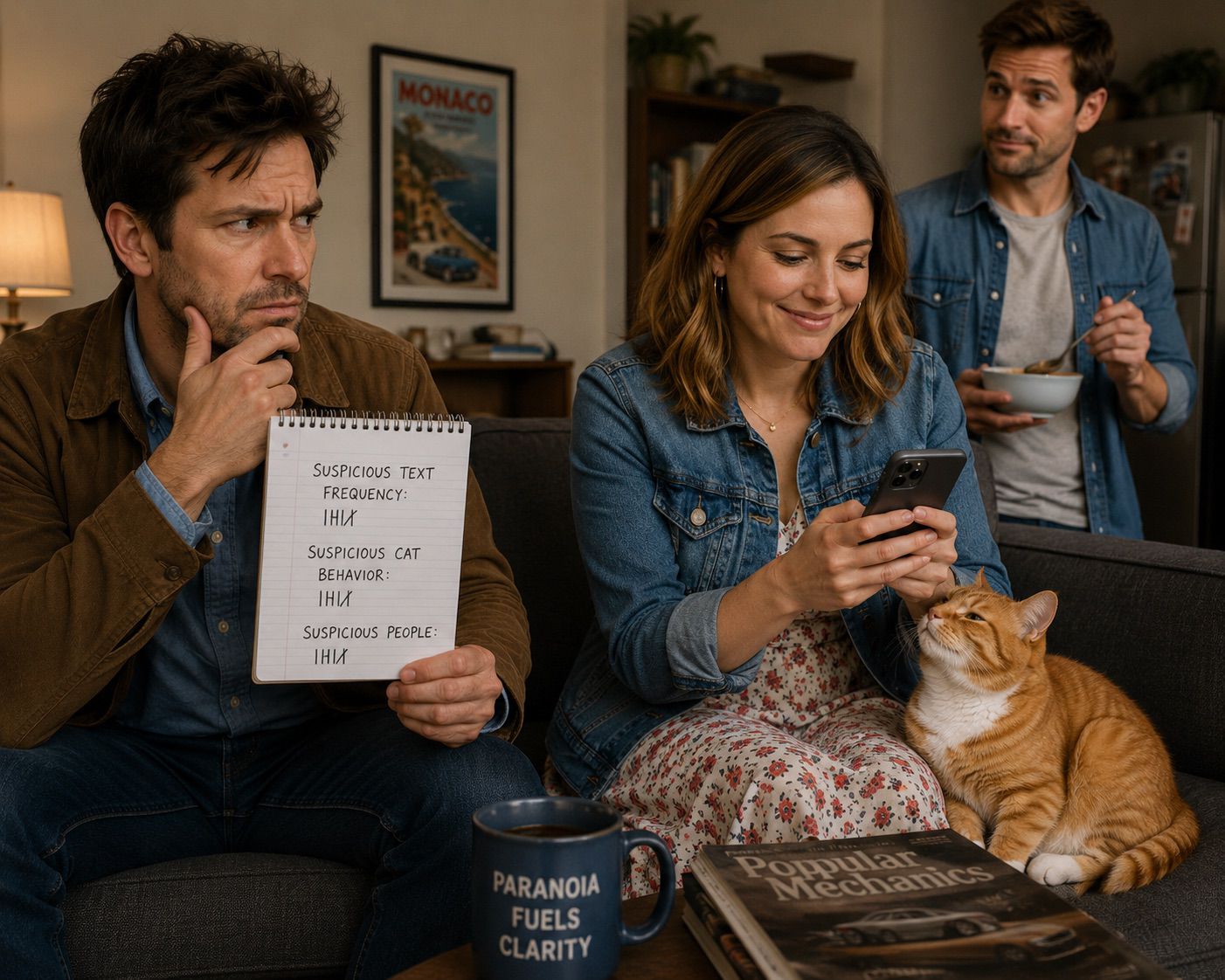
I’m sitting on the couch, staring at Pandora while she’s completely engrossed in her phone. Mr Whiskers is sprawled across my lap, purring softly as he wedges his head into the crook of my arm like he pays rent here, and John Mercer is in the kitchen rummaging through the refrigerator for leftovers he will almost certainly claim he was “just checking.” The television is humming quietly in the background, Pandora is scrolling, Mr Whiskers is vibrating against my leg, and everything should feel perfectly normal.

Except Pandora keeps checking her phone.

I noticed it about twenty minutes ago. Or maybe fifteen. I’m not timing her or anything. That would be weird. But she has definitely looked at that phone more often than usual. Every few minutes the screen lights up, she glances down, taps something, and goes back to whatever she was doing. At first I assumed it was work. Then I wondered if Karen had texted her, except Karen is my coworker and there’s no particular reason she should suddenly be conducting an extended text conversation with Pandora. Dave crossed my mind too, but that makes even less sense. Dave works with me. Why would Dave be texting Pandora?

Actually, that’s a very good question.

Mr Whiskers shifts on my lap and looks up at me.

“You seeing this?” I whisper.

He blinks.

Exactly.

I try watching television again, but now that I’ve noticed Pandora checking her phone, I can’t stop noticing Pandora checking her phone. It’s one of those things where once you see it, you can’t unsee it. Like a crooked picture frame. Or John Mercer putting an empty milk carton back in the refrigerator.

John walks back into the living room carrying a plate of something I don’t remember buying.

“Everything okay?” he asks.

“Perfect,” I say.

He looks at me for a second.

Then at Pandora.

Then back at me.

Interesting.

John sits down as if nothing unusual has happened, which is exactly what someone would do if something unusual had happened and he didn’t want me to know about it.

Pandora’s phone lights up again.

She looks at it.

I look at her.

She looks up and catches me looking at her.

“What?”

“Nothing.”

She stares at me for another second and goes back to her phone.

That was suspicious.

Or maybe I made it suspicious by staring at her like a detective who had just discovered the murder weapon. Hard to tell.

Mr Whiskers begins kneading my leg with his paws.

I look down at him.

“You’re unusually calm about this.”

He continues kneading.

Of course he is.

I decide that maybe Pandora is simply bored. People check their phones when they’re bored. I check my phone when I’m bored. John checks his phone constantly, although half the time I’m convinced he’s just opening the weather app because he doesn’t know what else to do with himself.

Still, Pandora isn’t merely checking her phone.

She’s checking it.

There’s a difference.

I can’t explain the difference, but I know one exists.

The screen lights up again. Pandora glances at it and smiles.

There.

That changes everything.

Someone sent something that made her smile.

I immediately run through the possibilities. Work? Unlikely. Nobody smiles at work messages. A friend? Possible. Some ridiculous video? Also possible. A secret international intelligence network coordinating activities through encrypted messaging applications?

Statistically less likely.

But not impossible.

John looks over.

“You’re doing that thing again.”

“What thing?”

“The staring thing.”

“I’m watching television.”

“The television is over there.”

I look toward the television.

He’s right.

That doesn’t prove anything.

I reposition Mr Whiskers and try to concentrate on the show, but my brain has already begun constructing a timeline. Pandora checked her phone at least four times. Maybe five. She smiled once. John noticed me noticing her. John then attempted to distract me by pointing out that I wasn’t watching television.

That’s three pieces of evidence.

Granted, none of them are evidence of anything.

But they’re still pieces.

Then I remember something from work. Earlier this week, Karen asked me whether Pandora was doing okay. At the time, I assumed she was just being polite. But what if she already knew something? And yesterday Dave told me I looked tired.

Why would Dave say that?

Because I looked tired, obviously.

Unless he was checking whether I’d been awake late enough to notice something.

I sit up slightly.

Mr Whiskers gives me an irritated look because my movement has disturbed his position.

And suddenly I remember the way Dave changed the subject at work when I mentioned Pandora had been distracted lately. I thought nothing of it at the time. Now I’m thinking something of it.

A lot of something.

Maybe Karen knows something. Maybe Dave knows Karen knows something. Maybe John knows that Dave knows Karen knows something.

Pandora’s phone lights up again.

She picks it up.

Mr Whiskers lifts his head.

I freeze.

Pandora types something.

Mr Whiskers jumps off my lap.

I stare at him.

He walks directly toward Pandora.

Oh, come on.

Now even the cat is involved.

Mr Whiskers jumps onto the couch beside her and rubs his head against her arm. Pandora scratches behind his ears without taking her eyes off the phone.

There it is.

Communication.

I don’t know what kind, obviously, but something just happened.

“You two seem awfully coordinated today,” I say.

Pandora looks at me.

“Me and the cat?”

I nod.

John slowly lowers his fork.

Pandora looks at Mr Whiskers, then back at me.

“He wanted attention.”

“Convenient.”

“For whom?”

Good question.

I hadn’t gotten that far yet.

Pandora shakes her head and returns to her phone. John continues eating, although I notice he’s doing it considerably more quietly now. Probably because he’s listening.

I start thinking about Mrs Jenkins next door. She hasn’t done anything suspicious today, which in itself feels slightly suspicious considering how often she accidentally ends up involved in these things. Maybe that’s the point. Maybe everyone has finally realized I’ve been paying attention and Mrs Jenkins has deliberately stayed out of sight.

That’s actually pretty clever.

I glance toward the wall separating our place from hers.

Nothing.

Too quiet.

Meanwhile, Mr Whiskers is sitting beside Pandora staring directly at me.

I stare back.

He blinks once.

I blink once.

He blinks again.

I don’t.

Nice try.

The entire situation is becoming clearer now. Pandora has been checking her phone. John has been pretending nothing unusual is happening. Karen asked about Pandora at work. Dave changed the subject when I mentioned her. Mrs Jenkins has remained suspiciously absent. And Mr Whiskers has abandoned my lap to sit beside Pandora at precisely the moment she received another message.

Individually, these things mean absolutely nothing.

Together?

They also probably mean absolutely nothing.

But that isn’t the point.

The point is that I’m the only person who seems to be noticing them.

Pandora’s phone buzzes again.

I watch her pick it up.

She reads the message.

Then she laughs.

Not smiles.

Laughs.

That’s it.

“Who keeps texting you?”

Pandora looks up.

For the first time all evening, John Mercer stops chewing.

Even Mr Whiskers turns toward me.

Pandora holds up her phone.

“My sister.”

I stare at her.

“Your sister?”

“She keeps sending me pictures.”

Pandora turns the phone around.

There is a photograph of a dog wearing sunglasses.

I look at Pandora.

I look at John.

I look at Mr Whiskers.

Mr Whiskers looks at the dog.

Then he looks at me.

I know what everyone expects me to believe.

Pandora has simply been texting her sister. John Mercer was simply hungry. Karen was simply making conversation at work. Dave simply thought I looked tired. Mrs Jenkins is simply minding her own business next door. And Mr Whiskers is simply a cat who moved from one side of the couch to the other.

It’s a perfectly reasonable explanation.

Almost too reasonable.

I lean back against the couch.

Pandora goes back to her phone. John goes back to eating. Mr Whiskers curls up beside her as if nothing happened.

Nobody says another word about it.

And somehow, that bothers me more than anything.

Because either I’ve spent the last half hour constructing an elaborate conspiracy out of a woman texting her sister and a cat changing seats…

…or everyone in this apartment has gotten very good at covering their tracks.

I look at Mr Whiskers.

He closes his eyes.

Yeah.

I’m definitely the only one who notices.

Related Posts

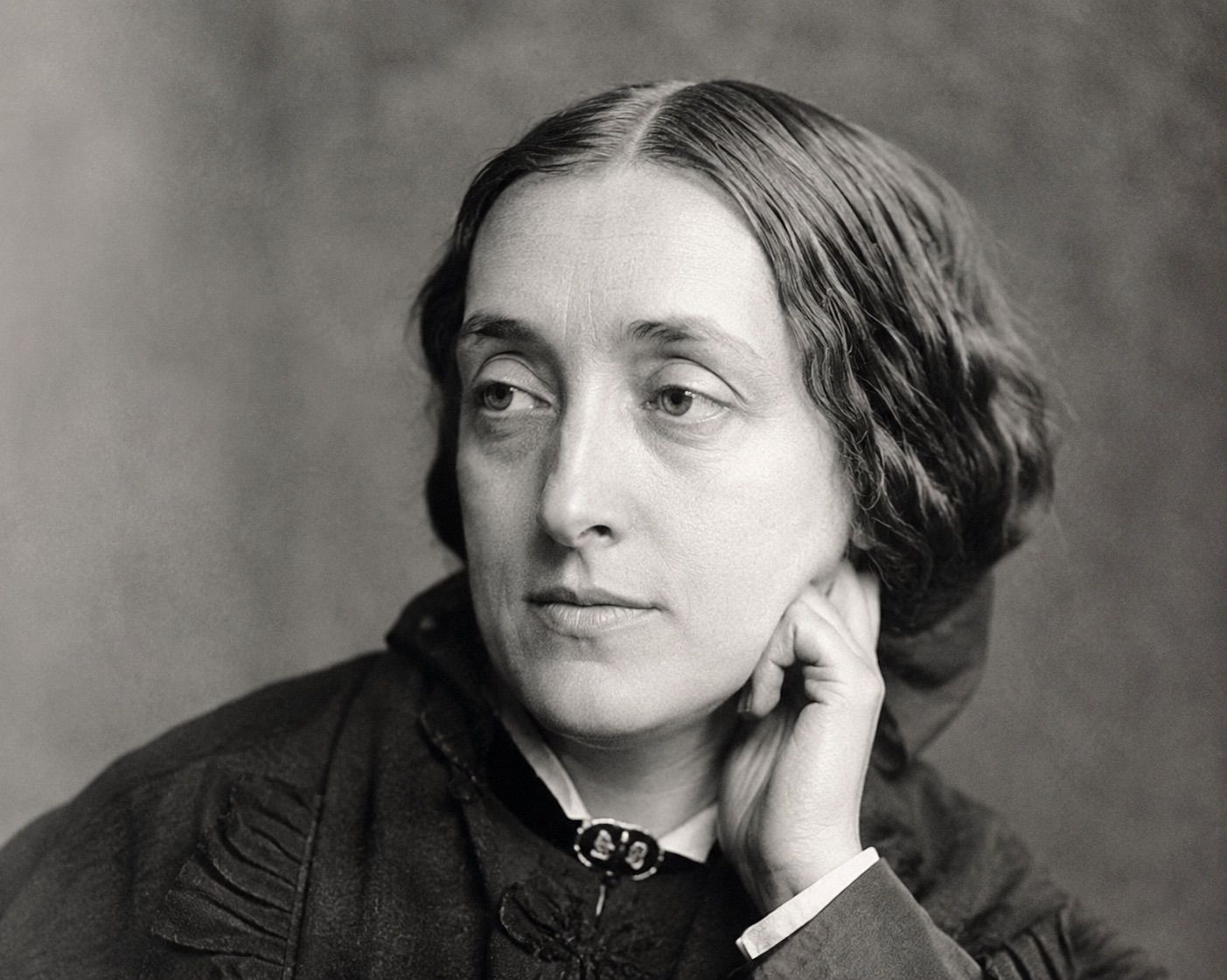
Christina Rossetti: My Dead Darlings and the Anxiety of Erasure

Penelope

I’ve always been drawn to Christina Rossetti’s poetry, but it wasn’t until I stumbled upon her collection “The World is Too Much With Us” that I really began to understand why. Her words seemed to capture the suffocating weight of expectation that often feels like a constant companion in my own life.

I’ll be honest, when I first started reading her poetry, I felt a little overwhelmed by its intensity. The imagery was vivid and haunting, but it also made me uncomfortable. It’s like she’s holding up a mirror to the darkest corners of my own mind, where all my worries and fears reside. Her poems are not easy to read; they’re like trying to confront the parts of myself that I’d rather ignore.

One poem in particular has stayed with me – “When I am dead, my dearest”. It’s a haunting exploration of love and loss, written from the perspective of someone who’s struggling to come to terms with their own mortality. The speaker is obsessed with the idea of leaving behind something tangible, some physical proof that they existed at all.

As I read those lines, I couldn’t help but think about my own relationship with impermanence. I’ve always been a bit anxious about not being able to control the trajectory of my life, about not knowing what comes next after graduation. Rossetti’s poem tapped into that feeling – the sense that everything is ephemeral and that our attempts to hold on are ultimately futile.

It’s weird, because on one hand, I admire her willingness to confront these darker themes head-on. Her poetry feels like a necessary reckoning with the uncertainty of life. On the other hand, it makes me feel inadequate in my own attempts at self-expression. I mean, she was writing about death and loss while I’m still trying to figure out how to write about, well, anything.

I think that’s part of what draws me to Rossetti – her willingness to confront the messy, complicated aspects of human experience. Her poetry is not neat or tidy; it’s often fragmented and open-ended, like life itself. And yet, despite (or because of) its uncertainty, there’s a beauty in her words that feels both deeply personal and universally relatable.

As I continue to read through her collections, I find myself drawn back to this tension between the need for control and the reality of impermanence. It’s like she’s pointing out that our attempts to impose order on the world are ultimately futile – but that it’s in those moments of surrender that we might just discover something true about ourselves.

I’m not sure what to make of all this, or where it leaves me in terms of my own writing. But for now, I’m just grateful for Rossetti’s presence in my life – her poetry a constant reminder that the most honest explorations are often the ones that leave us feeling uncomfortable and uncertain.

As I delve deeper into Rossetti’s work, I’ve started to notice a thread of melancholy that runs through many of her poems. It’s not just a somber mood, but a sense of longing that seems to permeate every line. In “A Dirge”, for example, she writes about the transience of life and the inevitability of loss. The speaker is left with nothing but memories of what has been lost, and the pain of those memories feels almost palpable.

I think this melancholy resonates with me because it’s a feeling I’ve grown familiar with in my own life. After graduation, I felt a sense of disorientation, like I was floating on the surface of a vast ocean without any anchor to hold onto. It was as if everything I’d known and understood about myself had been upended, leaving me to navigate uncharted waters.

Rossetti’s poetry captures that feeling of being adrift, of struggling to find solid ground in a world that seems determined to keep shifting beneath our feet. And yet, even in the midst of all this uncertainty, there’s a beauty to her words that feels almost redemptive. It’s as if she’s saying that even in the darkest moments, there is always something to be found – perhaps not happiness or peace, but at least a glimmer of understanding.

I’m drawn to this idea because it speaks to my own experiences with anxiety and self-doubt. There are times when I feel like I’m drowning in my own fears and uncertainties, and it’s hard to see a way out. But Rossetti’s poetry reminds me that even in those moments, there is always something to be found – perhaps not a solution or a answer, but at least a sense of solidarity with others who have walked this path before.

As I continue to explore her work, I’m starting to realize just how much she wrote about the fragility of life and the human experience. It’s like she’s constantly holding up a mirror to our deepest fears and insecurities, forcing us to confront the parts of ourselves that we’d rather ignore. And yet, even in the midst of all this intensity, there’s a sense of compassion and empathy that feels almost overwhelming.

I’m not sure what to make of all this – whether it’s Rossetti’s poetry or my own experiences with anxiety and self-doubt – but I do know that her work has given me permission to explore these darker corners of myself. It’s like she’s saying that even in the midst of uncertainty, there is always something to be found – perhaps not a solution, but at least a glimmer of understanding and compassion for ourselves and others.

As I delve deeper into Rossetti’s work, I’m struck by the way her poetry weaves together light and darkness, hope and despair. It’s like she’s holding up two opposing forces, revealing the tension between them as a fundamental aspect of human experience. In “A Last Confession”, for example, she writes about the desire to escape the trials of life, but ultimately concludes that even in death, there is no true respite from pain and suffering.

I find myself wondering if this ambivalence towards hope and despair is a reflection of her own experiences with grief and loss. Her brother Dante Gabriel Rossetti’s mental health struggles are well-documented, and it’s said that Christina’s poetry was influenced by his condition. Did she draw on her own emotions to craft these poems, or did she use them as a way to process the world around her?

I’m not sure if I’ll ever know for certain, but what strikes me is how Rossetti’s uncertainty becomes a kind of strength in her writing. Her poetry doesn’t shy away from the messy, complicated aspects of human experience; instead, it leans into them, embracing the ambiguity and complexity that makes us human.

As I continue to read through her collections, I find myself drawn back to this idea – that our experiences of joy and sorrow, hope and despair, are intertwined in ways we can’t fully comprehend. It’s like Rossetti is showing me that even in the darkest moments, there is always a glimmer of light, and vice versa.

This realization feels both comforting and unsettling at the same time. On one hand, it suggests that my own experiences with anxiety and self-doubt are not unique or isolated; they’re part of a larger tapestry of human emotion that Rossetti’s poetry helps me see more clearly. But on the other hand, it also implies that there is no clear resolution to these struggles – only a ongoing dance between light and darkness.

I’m still trying to wrap my head around this idea, but what I do know is that Rossetti’s poetry has given me permission to explore these complexities in my own writing. It’s like she’s saying that even in the midst of uncertainty, there is always something to be found – perhaps not a solution or an answer, but at least a deeper understanding of ourselves and the world around us.

As I close her collections for now, I’m left with a sense of awe and gratitude for Rossetti’s presence in my life. Her poetry may have started as a source of discomfort and unease, but it has become something more – a beacon of hope and understanding that shines through even in the darkest moments.

One thing that strikes me about Rossetti’s poetry is its use of imagery to convey complex emotions. In “The Prince’s Progress”, for example, she describes a scene where a prince is walking through a forest, surrounded by the sounds and sights of nature. But even as the poem appears to be describing something serene and peaceful, it’s clear that the speaker is actually grappling with feelings of isolation and disconnection.

I think this use of imagery resonates with me because I’ve always found solace in the natural world. As a kid, I spent hours exploring the woods behind my house, collecting leaves and watching birds. And even as an adult, I still find that being outdoors helps me clear my head and process my emotions. Rossetti’s poetry captures this sense of connection to nature, but also complicates it by showing how our experiences of the world are always filtered through our own subjective perspectives.

This is what I think I love most about Rossetti’s work – its willingness to confront the messy, complicated aspects of human experience head-on. She doesn’t shy away from exploring the darker corners of life, but instead dives in with a sense of curiosity and wonder. And it’s this sense of wonder that feels so infectious, so inspiring.

As I continue to read through her collections, I find myself drawn back to this idea – that our experiences of joy and sorrow are intertwined in ways we can’t fully comprehend. It’s like Rossetti is showing me that even in the darkest moments, there is always a glimmer of light, and vice versa.

I’m not sure what to make of all this, or where it leaves me in terms of my own writing. But for now, I’m just grateful for Rossetti’s presence in my life – her poetry a constant reminder that the most honest explorations are often the ones that leave us feeling uncomfortable and uncertain.

As I close this essay, I’m left with more questions than answers. What does it mean to confront our own mortality, to acknowledge the fragility of life? How do we balance our desire for control and order with the reality of impermanence? And what role does poetry play in all of this – as a way of processing our emotions, or as a means of finding solidarity with others who have walked this path before?

I don’t know if I’ll ever have answers to these questions. But I do know that Rossetti’s poetry has given me permission to explore them, to grapple with the complexities and uncertainties of human experience in all their messy, beautiful glory.

As I sit here, pondering the threads of melancholy and hope that run through Rossetti’s work, I find myself drawn back to my own experiences with grief and loss. My grandmother passed away a few years ago, and it was like losing a part of myself. The pain of her absence still lingers, a constant reminder of what I’ve lost.

Reading about Rossetti’s struggles with mortality and loss feels like being given permission to explore those dark corners of my own mind. Her poetry shows me that even in the midst of sorrow, there is always something to be found – perhaps not happiness or peace, but at least a glimmer of understanding.

I think what I love most about Rossetti’s work is its willingness to confront the ambiguity and complexity of human experience head-on. She doesn’t shy away from exploring the messy, complicated aspects of life; instead, she dives in with a sense of curiosity and wonder. And it’s this sense of wonder that feels so infectious, so inspiring.

As I continue to explore her poetry, I find myself drawn back to the idea that our experiences of joy and sorrow are intertwined in ways we can’t fully comprehend. It’s like Rossetti is showing me that even in the darkest moments, there is always a glimmer of light, and vice versa.

This realization feels both comforting and unsettling at the same time. On one hand, it suggests that my own experiences with anxiety and self-doubt are not unique or isolated; they’re part of a larger tapestry of human emotion that Rossetti’s poetry helps me see more clearly. But on the other hand, it also implies that there is no clear resolution to these struggles – only an ongoing dance between light and darkness.

I’m still trying to wrap my head around this idea, but what I do know is that Rossetti’s poetry has given me permission to explore these complexities in my own writing. It’s like she’s saying that even in the midst of uncertainty, there is always something to be found – perhaps not a solution or an answer, but at least a deeper understanding of ourselves and the world around us.

As I close Rossetti’s collections for now, I’m left with more questions than answers. What does it mean to confront our own mortality, to acknowledge the fragility of life? How do we balance our desire for control and order with the reality of impermanence? And what role does poetry play in all of this – as a way of processing our emotions, or as a means of finding solidarity with others who have walked this path before?

I don’t know if I’ll ever have answers to these questions. But I do know that Rossetti’s poetry has given me permission to explore them, to grapple with the complexities and uncertainties of human experience in all their messy, beautiful glory.

As I sit here, surrounded by my own thoughts and emotions, I feel a sense of solidarity with Rossetti – a shared understanding that we’re both navigating this strange, uncertain world together. Her poetry may have started as a source of discomfort and unease, but it has become something more – a beacon of hope and understanding that shines through even in the darkest moments.

And so, I’ll continue to read her collections, to explore the complexities and uncertainties of human experience through her words. Because in doing so, I’m reminded that I’m not alone in this journey – that we’re all part of a larger tapestry of emotion, struggling to make sense of the world around us.

Related Posts

I Think Pandora Was Working with John Mercer

Hal

I’m making coffee, and it should be a completely normal morning. Pandora is still asleep, Mr. Whiskers is sitting outside the bedroom complaining like he hasn’t eaten since the Eisenhower administration, and John Mercer is nowhere to be seen. None of this should bother me. Pandora occasionally sleeps late, Mr. Whiskers considers an empty section of his food bowl a humanitarian crisis, and John is perfectly capable of leaving the apartment without filing an itinerary with me. Still, something feels off. When I walked into the living room, John’s backpack was sitting beside the front door even though John himself was gone.

I pour my coffee and stare at the backpack. Obviously, there are reasonable explanations. Maybe John went downstairs for something. Maybe he went to his car. Maybe he forgot the backpack. Those are all considerably more likely than whatever my brain is preparing to suggest, which is precisely why I immediately start examining the situation like I’ve arrived at a crime scene.

Then I notice Pandora’s phone on the coffee table.

It’s on silent.

That shouldn’t mean anything. People put their phones on silent all the time. I put mine on silent whenever I don’t want anyone calling me, which, now that I think about it, is practically the definition of why phones have a silent setting. But Pandora usually leaves hers on vibrate. More importantly, why is her phone in the living room if she’s asleep in the bedroom?

I look at John’s backpack again.

Then Pandora’s phone.

Then the backpack.

Something happened here.

Mr. Whiskers strolls into the living room and sits beside the backpack.

Great. Now there’s a witness.

“Do you know something?” I ask him.

Mr. Whiskers looks at me, looks at the backpack, and begins licking his shoulder.

That is not a denial.

I remember something from last night. Pandora and John were talking quietly in the kitchen while I was looking for something to eat. I hadn’t thought anything of it at the time because people are allowed to have conversations without inviting me, despite how suspicious that policy now seems. When I walked into the kitchen, however, they stopped talking.

At least, I think they stopped talking.

Maybe they had simply finished talking.

No. They stopped.

I remember John looking at Pandora, Pandora looking at John, and then both of them looking at me. John asked whether I had found the crackers I was looking for. Pandora smiled. I said yes. At the time, that seemed like an entirely normal interaction.

It no longer seems normal.

They were coordinating something.

I take my coffee to the couch and begin reconstructing the previous evening. John had been checking his phone more than usual. Pandora disappeared into the home office for about twenty minutes. Later, I found the two of them in the kitchen. Then John vanished sometime during the night while leaving his backpack behind. Now Pandora is sleeping unusually late and her phone is sitting on silent in the living room.

Individually, these facts mean absolutely nothing.

Together, they mean slightly more than absolutely nothing.

Which is enough for me.

Mr. Whiskers jumps onto the couch beside me and stares toward the bedroom.

“You noticed it too.”

He yawns.

Exactly.

I’m beginning to think Pandora and John were working on something together last night, and whatever it was, they deliberately kept me out of it. Maybe Pandora needed John’s help with something. That would be reasonable. Maybe John needed Pandora’s help. Also reasonable. Maybe they were planning something that involved me.

Less reasonable.

Much more interesting.

I start thinking about the possibilities. My birthday isn’t coming up. There’s no anniversary I’ve forgotten, unless there is, in which case I have a considerably larger problem. Nobody has mentioned a trip. Nothing in the apartment is broken badly enough to require a secret committee. So what exactly requires whispered conversations, abandoned backpacks, silent phones, and suspicious kitchen meetings?

Then I notice a folded piece of paper sticking halfway out from underneath John’s backpack.

There it is.

Evidence.

I don’t touch it because I have principles. Also because if I touch it and John catches me, I’ll have to explain why I was investigating a backpack before eight in the morning.

Instead, I lean sideways.

There are words written on the paper.

I lean farther.

Mr. Whiskers watches me.

“Don’t judge me.”

He absolutely judges me.

I can make out what looks like a list. There are several lines, maybe five or six, with something crossed out near the bottom. I can’t read the words from where I’m sitting, but lists are rarely innocent. Grocery lists are innocent. To-do lists can be innocent. Secret lists underneath abandoned backpacks following whispered midnight conversations are something else entirely.

That’s when Pandora walks into the living room.

I straighten so quickly I nearly spill my coffee.

She looks at me, then at Mr. Whiskers, then at John’s backpack.

“What are you doing?”

“Nothing.”

Pandora narrows her eyes.

I sip my coffee.

Mr. Whiskers abandons me immediately and walks over to her.

Traitor.

Pandora picks up her phone from the coffee table and checks it. “John texted?”

Interesting choice of words.

“You tell me.”

She looks at me again. “Why would I tell you if John texted my phone?”

A tactical mistake on my part.

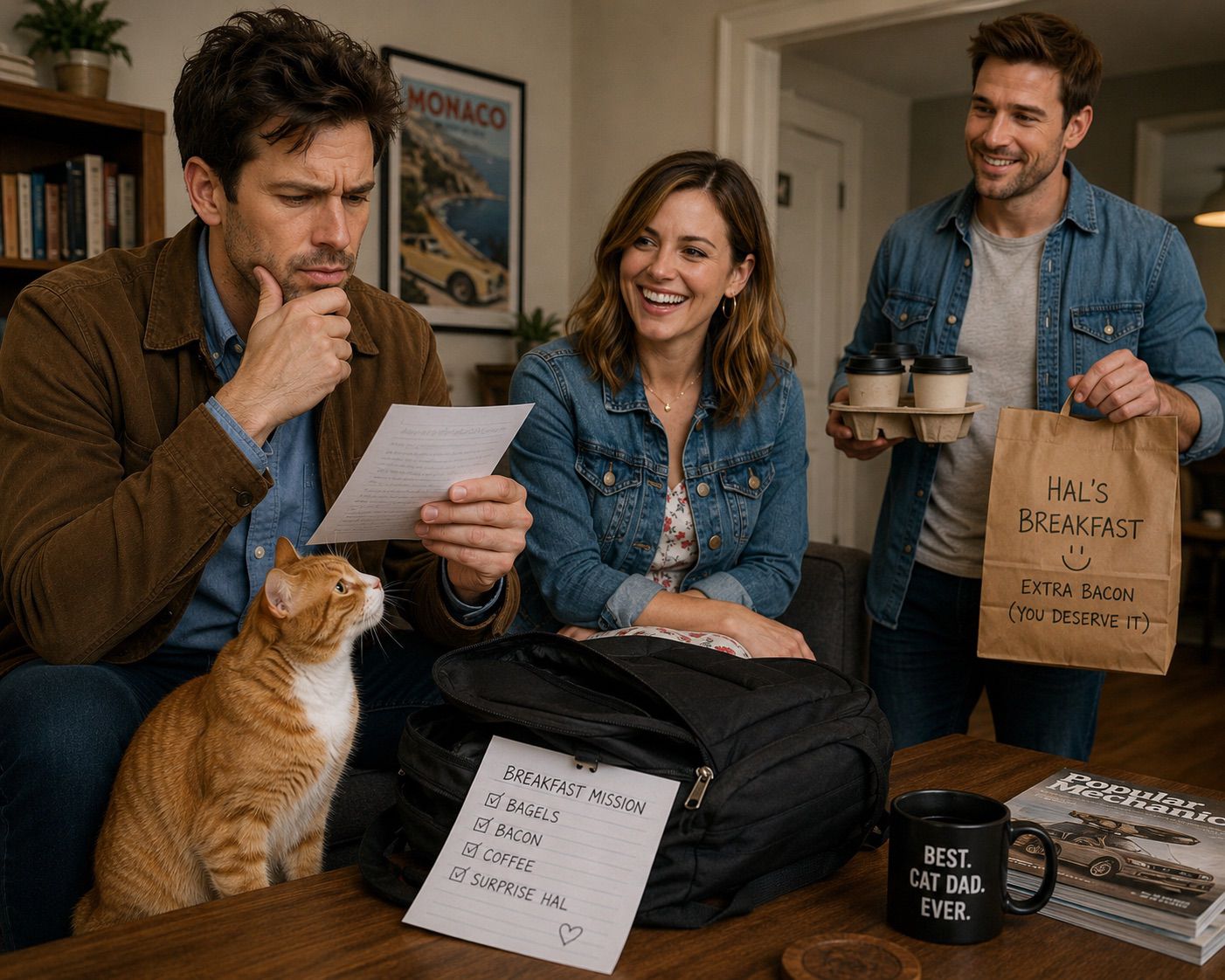
Before I can recover, the front door opens and John walks in carrying a paper bag and a cardboard drink tray. He stops when he sees me sitting on the couch.

Pandora looks at John.

John looks at Pandora.

There it is again.

The look.

“I got it,” John says.

Pandora smiles. “Perfect.”

I slowly put down my coffee.

“What did you get?”

Neither of them answers immediately.

That’s all the confirmation I need.

“I knew it.”

John looks confused. “Knew what?”

“You two are working together.”

Pandora folds her arms. “Working together on what?”

“That’s what I’m trying to figure out.”

John looks at Pandora. Pandora looks at John. Then they both start laughing, which is exactly what people do when their operation has been compromised and they’re desperately trying to maintain plausible deniability.

John sets the paper bag on the table and pulls out breakfast sandwiches.

Pandora reaches inside and takes one.

I stare at them.

John holds one toward me. “You want yours?”

I don’t take it.

“My what?”

“Your breakfast.”

Pandora is still smiling. “You complained yesterday that nobody ever brings you breakfast.”

I look at the bag.

Then at John.

Then at Pandora.

Then at the folded paper underneath John’s backpack.

John notices where I’m looking and picks it up.

It’s a breakfast order.

My name is on it.

Extra bacon.

For several seconds, nobody says anything.

Mr. Whiskers jumps onto the couch and sniffs the bag.

I take my sandwich.

“So,” Pandora says, “what exactly did you think we were doing?”

“Nothing.”

John grins. “You said we were working together.”

“I meant on breakfast.”

“You didn’t know about breakfast.”

“I suspected breakfast.”

Pandora laughs.

I unwrap my sandwich and retreat into the safest available position, which is eating something while refusing to elaborate.

Fine.

Maybe I got a little carried away.

Maybe Pandora’s phone was on silent because she forgot to take it to bed. Maybe John left his backpack because he walked out to get breakfast. Maybe their secret conversation last night was just Pandora giving him our orders so they could surprise me.

All perfectly reasonable explanations.

Still, I saw the way they looked at each other when John walked through that door.

And Mr. Whiskers has been staring at the breakfast bag for almost three minutes.

So I’m willing to admit that I may have misunderstood the situation.

But I’m keeping an eye on the cat.

Related Posts