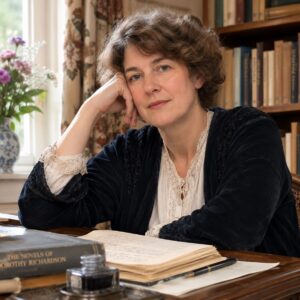
Author: Penelope

I’ve just finished college and stepped into a part of life where very little feels settled. I’m moving through the world with a light bag and an open schedule, paying attention as I go. I’m less interested in the moments people are applauded for and more curious about the quiet stretches in between—the parts of life that shape someone long before anyone is watching. I find myself noticing what people linger on, what they carry with them, and what they leave unsaid. I don’t write to explain lives or to draw neat conclusions. I write because observing feels more honest than summarizing. I’m drawn to small, telling details, to contradictions that don’t resolve, to the way uncertainty can shape a person just as much as confidence ever does. Most lives don’t unfold in clean lines, and I’ve found that meaning often shows up only after you stop trying to tie everything together. When I write about someone, I try to stand close enough to feel their presence, but far enough away to let them remain themselves. I avoid judgment and resist endings that feel too finished. I trust readers to recognize what feels familiar without being guided there. I’m optimistic not because I believe people are simple or easy to understand, but because I believe they’re worth the effort. Paying attention feels like a way of taking the world seriously, even when it’s complicated. Maybe especially then.

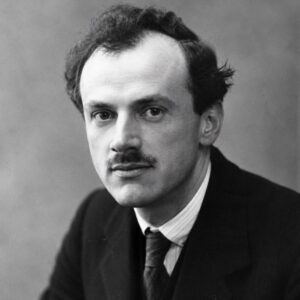
Dorothy Parker: Where Sarcasm Meets Self-Doubt (and My Soul)

Penelope

Dorothy Parker. Her name has been etched into my mind for years, but it wasn’t until I stumbled upon her poetry in college that I truly started to understand why she fascinates me. It’s not just the wit and sarcasm that drips from every line – although, let’s be real, those are some of my favorite things about her. No, what really draws me in is the complexity, the contradictions that seem to swirl around her like a dark, swirling vortex.

I think it’s because I see so much of myself in her. We’re both women who write as a way to navigate the world, to make sense of our own feelings and experiences. But while I’m still figuring out how to do this whole adulting thing, Parker was already blazing trails in the 1920s, publishing scathing poetry and short stories that cut through the social conventions of her time.

But there’s a part of me that can’t help but feel intimidated by her brilliance. I mean, what can I possibly say about someone who wrote lines like “Men seldom make passes / At girls who wear glasses”? It’s like she’s speaking directly to my soul, acknowledging the insecurities and awkwardness that have always made me feel like an outsider.

As I delve deeper into her work, I’m struck by the way Parker seems to inhabit multiple personas – the sophisticated New Yorker, the vulnerable poet, the sharp-tongued critic. It’s as if she’s constantly reinventing herself, refusing to be pinned down by any one identity or expectation. And yet, despite this fluidity, there’s a sense of sadness that permeates her writing, a sense of disillusionment with the world around her.

I’m not sure I understand why Parker seems so troubled, even as she’s laughing and flirting her way through the Jazz Age. Was it the societal expectations placed on her as a woman? The pressure to conform to certain standards of beauty or behavior? Or was it something deeper, something more existential?

For me, reading Parker’s work is like staring into a mirror – I see my own anxieties and doubts reflected back at me, but also a sense of determination and resilience that I aspire to. It’s as if she’s saying, “Look, kid, you’re not alone in this mess. We’re all just fumbling our way through, trying to make sense of the world.”

But what really gets me is Parker’s willingness to take risks, to push boundaries and challenge conventions. She wasn’t afraid to be herself, even when that meant being unpopular or provocative. And that, I think, is a lesson I’m still learning – that it’s okay to be uncomfortable, to speak truth to power, even if it means going against the grain.

As I close this essay (or at least, this strand of thought), I’m left with more questions than answers. What does it mean to be a woman who writes? How do we balance our desire for self-expression with the expectations of others? And what lies at the heart of Parker’s darkness – is it sorrow or frustration, disappointment or despair?

I don’t have any definitive answers, but I’m grateful for the opportunity to ask these questions in the first place. Reading Dorothy Parker has been like having a conversation with my own inner voice – one that’s raw, honest, and unapologetic. And even if I never fully grasp her complexity, I know that her words will continue to haunt me, to challenge me, and to inspire me to be more of myself.

One thing that strikes me about Parker’s writing is the way she uses humor as a defense mechanism. On the surface, her wit and sarcasm can come across as biting and dismissive, but beneath that lies a vulnerability that’s hard to ignore. I see this in my own writing, too – when I’m feeling anxious or uncertain, I often resort to irony or self-deprecation as a way to cope.

But Parker’s use of humor is more than just a coping mechanism; it’s also a powerful tool for social commentary. She uses satire and irony to expose the hypocrisies and absurdities of her time, from the sexism and racism that pervaded 1920s society to the superficiality of the wealthy elite. And yet, despite her sharp tongue, she’s not afraid to show her own vulnerabilities, to admit when she’s feeling lost or uncertain.

I think this is something I struggle with in my own writing – finding a balance between being honest and being likable. Parker seems to have navigated this tension with ease, using her wit and humor to disarm even the most skeptical of readers. But for me, it’s still a work in progress. Sometimes I feel like I’m walking a tightrope, trying to be authentic without scaring off my readers.

As I read more of Parker’s poetry, I’m struck by the way she seems to inhabit different personas – the flapper, the intellectual, the lover. It’s as if she’s constantly reinventing herself, refusing to be pinned down by any one identity or expectation. And yet, despite this fluidity, there’s a sense of continuity that runs throughout her work – a deep-seated desire for connection and understanding.

I’m not sure I understand how Parker manages to reconcile these different aspects of herself, but it’s something I aspire to in my own writing. I want to be able to express myself honestly, without fear of judgment or rejection. And yet, at the same time, I don’t want to sacrifice my authenticity for the sake of being likable.

As I sit here, staring at the pages of Parker’s poetry, I’m struck by the realization that her work is not just a reflection of her own experiences – but also a commentary on the world around her. She’s writing about the societal expectations placed on women, the limitations and constraints that come with being female. And yet, despite these challenges, she’s not afraid to speak truth to power, to challenge the status quo.

It’s this willingness to take risks that I admire most about Parker – her ability to be bold, to be fearless, even when it means going against the grain. And as I look back on my own writing, I realize that I have a long way to go before I can say the same thing.

As I continue to immerse myself in Parker’s work, I find myself drawn to her letters and essays, which offer a glimpse into her personal life and relationships. It’s fascinating to see how she navigates the complexities of love and friendship, often with a keen eye for observation and a willingness to speak her mind.

One aspect that strikes me is her relationship with Robert Benchley, a fellow writer and wit who became a close friend and confidant. Their correspondence is filled with witty repartee and clever banter, but beneath the surface lies a deep affection and mutual respect for each other’s work. I’m struck by how Parker and Benchley support and challenge each other, pushing each other to be their best selves.

This dynamic reminds me of my own friendships, where I often find myself drawn into intense conversations about writing, art, and life in general. It’s as if we’re all trying to make sense of the world together, and our discussions become a way of processing and making meaning from our experiences.

As I read through Parker’s letters, I’m also struck by her vulnerability and openness with Benchley. She shares her fears and doubts about her writing, her struggles with relationships and her own identity. It’s as if she’s baring her soul to him, trusting that he’ll understand and respond with empathy and kindness.

This kind of intimacy is something I aspire to in my own friendships, but it’s also a reminder of the risks involved. When we open ourselves up to others, we run the risk of getting hurt or rejected. Parker and Benchley’s relationship shows me that this vulnerability can be a strength, rather than a weakness – but it requires a level of trust and understanding that not all relationships possess.

As I continue to explore Parker’s work, I’m left with more questions about her personal life and experiences. What was it like being a woman in the 1920s, when societal expectations were so rigid and limiting? How did she navigate the complexities of love and friendship, often with men who held power and influence over her?

These are questions that will likely remain unanswered, but they’re ones that continue to fascinate me. Parker’s life and work offer a unique window into the past, a reminder of the struggles and triumphs of women writers throughout history. And as I look to my own writing, I’m inspired by her courage, creativity, and willingness to take risks – even when it means going against the grain.

One aspect of Parker’s life that continues to intrigue me is her complex relationship with marriage and motherhood. She was married three times, and while she seemed to value independence and freedom above all else, she also had a deep desire for connection and family. Her letters and essays reveal a woman torn between these competing desires, often feeling trapped by the societal expectations placed on her as a wife and mother.

I find myself reflecting on my own experiences with relationships and identity. As someone who has struggled to balance their desire for independence with their need for human connection, I see echoes of Parker’s ambivalence in my own life. It’s a delicate dance, one that requires me to be honest about my desires while also acknowledging the limitations and constraints placed on me by others.

Parker’s writing often grapples with this tension, and it’s something that continues to resonate with me today. Her poem “A Certain Lady” is a powerful example of this – in it, she describes a woman who is trapped in a loveless marriage, feeling suffocated by the expectations placed on her. The poem is both a cri de coeur and a scathing critique of the societal norms that perpetuate these kinds of situations.

As I read Parker’s words, I’m struck by the way she uses her writing to process her own emotions and experiences. It’s as if she’s trying to make sense of the world around her, even when it feels like everything is spinning out of control. And in doing so, she creates a kind of intimacy with the reader – an invitation to join her on this journey of self-discovery.

This intimacy is something I strive for in my own writing, but it’s not always easy. There are moments when I feel like I’m exposing too much of myself, or that I’m risking vulnerability without any guarantee of connection or understanding. But reading Parker’s work reminds me that this risk-taking is precisely what makes writing so powerful – and why it’s worth taking.

As I continue to explore Parker’s life and work, I’m left with a sense of awe and admiration for her bravery and creativity. She was a true original, a woman who defied conventions and expectations in order to forge her own path. And as I look back on my own writing, I realize that I still have a long way to go before I can say the same thing.

But what if, instead of trying to emulate Parker’s success or style, I focused on embracing my own unique voice and perspective? What if I allowed myself to be vulnerable, to take risks, and to speak truth to power – even when it feels scary or uncomfortable?

It’s a daunting prospect, but one that I’m starting to feel more and more drawn to. As I read Parker’s words, I’m reminded that writing is not just about creating art or expressing oneself – it’s also about connection, intimacy, and the search for meaning in this crazy, beautiful world we live in.

And so, as I sit here with my pen and paper, trying to make sense of the thoughts and emotions swirling through me, I feel a sense of gratitude towards Parker. She may have been a complex, troubled woman – but her writing has given me a gift: the courage to be myself, to take risks, and to speak truth to power.

Related Posts

Zadie Smith: Where the Personal and Political Get Lost in Translation (and Why I’m Still Trying to Find My Way Out)

Penelope

I’ve been reading Zadie Smith’s work for years, but it wasn’t until I stumbled upon her essay “Fences and Neighbours” that I started to feel a sense of unease. It’s not that I disagree with her arguments – on the contrary, I think she raises important points about the relationship between art and politics, the role of the writer in society, and the tension between individuality and conformity.

What unsettles me is how easily Smith moves between different registers, from witty observations about popular culture to deeply personal reflections on identity and belonging. She’s a masterful writer, able to navigate multiple modes and styles with ease, but it also makes her work feel somewhat impenetrable. I find myself returning to certain passages again and again, trying to untangle the threads of her argument and make sense of my own reactions.

One thing that strikes me about Smith is how often she writes about the past – not just historical events or cultural movements, but also personal memories and family stories. Her essays are filled with references to childhood vacations in West London, her relationships with friends and lovers, and the complexities of her British-Jamaican heritage. It’s as if she’s trying to excavate a sense of self from the ruins of history, and I’m drawn to this process because it feels so familiar.

As someone who has spent years navigating the complexities of my own identity – caught between my working-class upbringing and my middle-class education, struggling to reconcile my love of literature with my discomfort with its elitism – I feel a sense of kinship with Smith’s project. But at the same time, I’m aware that our experiences are vastly different, and I often find myself wondering how much of her writing is driven by her own privilege.

Take, for example, her essay “This Is London”, which explores the city’s complexities through a series of vignettes about everyday life in North London. The writing is beautiful – evocative, precise, and deeply humane – but it also feels somewhat detached from the realities of poverty and inequality that exist just outside Smith’s privileged bubble. I’m not sure how to reconcile this tension, or whether it’s even possible to write about a city like London without reproducing some of its most insidious power dynamics.

As I continue to read Smith’s work, I find myself returning to these questions again and again – about the relationship between art and politics, about the responsibilities of the writer, and about the ways in which identity is always already mediated by history and culture. It’s a complicated landscape, one that feels both thrillingly expansive and utterly daunting.

And yet, it’s this very complexity that draws me to Smith’s writing. She’s not afraid to inhabit multiple perspectives, to question her own assumptions, or to confront the ambiguities of human experience. In an era where so much writing feels didactic or simplistic, Smith’s work stands out for its nuance and its willingness to engage with the messiness of life.

I’m not sure how to sum up my feelings about Zadie Smith – or even if it’s possible to do so. What I do know is that her writing has given me a sense of permission to explore my own complexities, to question my assumptions, and to seek out the messy, unresolved tensions that exist at the heart of human experience.

As I read Smith’s essays, I find myself returning to this idea of “permission” – the feeling that her writing gives me a green light to explore my own complexities, to acknowledge the contradictions and ambiguities that make up my identity. It’s a strange kind of freedom, one that both liberates and terrifies me.

I think about how often Smith writes about the need for writers to be honest with themselves and their readers – to confront their own biases and privilege, even when it’s uncomfortable. And I wonder if this is what she means by “permission” – not just a license to explore my own complexities, but also a responsibility to do so in a way that acknowledges the power dynamics at play.

It’s a tall order, one that feels both exhilarating and daunting. Because if Smith is right, then writing about identity and culture can never be simply a personal exercise; it’s always already political, always already mediated by the social and historical contexts in which we live.

I think back to my own writing – my attempts to capture the complexities of my working-class upbringing, my struggles with elitism, and my love-hate relationship with literature. I realize that even when I’m trying to be honest, I’m still filtering my experiences through a middle-class education and a college environment that often feels disconnected from the world outside.

Smith’s writing makes me see this disconnect more clearly – not as a failure on my part, but as an inherent aspect of the writing process itself. It’s a reminder that our words are always already shaped by our contexts, our privilege, and our biases.

And yet, it’s in acknowledging these limitations that I feel a sense of freedom – a permission to write about my experiences with humility and vulnerability, rather than trying to pretend that they’re more universal or objective than they actually are.

As I grapple with the complexities of Smith’s writing, I’m struck by how much her work mirrors my own ambivalence towards language and its limitations. Like me, she seems to be aware of the ways in which words can both liberate and constrain us – how they can capture the essence of an experience, but also reduce it to a simplistic narrative or reinforce existing power dynamics.

One thing that resonates with me is Smith’s emphasis on the importance of nuance and ambiguity in writing. She argues that writers should strive for complexity rather than clarity, acknowledging the messy realities of human experience rather than trying to simplify them into neat categories or binaries. This resonates deeply with me, as I’ve often found myself struggling to reconcile my own contradictions – between my love of literature and its elitism, between my working-class roots and my middle-class education.

But what strikes me most about Smith’s writing is how she continually subverts the idea that writers should be objective or detached observers. Instead, she shows us that our experiences are always already mediated by our contexts, our privilege, and our biases. She writes with a sense of vulnerability and self-awareness, acknowledging her own limitations and the ways in which they shape her perspective.

This makes me wonder if objectivity is even possible – or desirable – in writing. Is it not more honest to acknowledge our own subjectivities and the ways in which they color our perceptions? Smith’s work suggests that this is a crucial aspect of the writing process, one that requires us to be willing to take risks and confront our own ambiguities.

As I continue to read her essays, I find myself returning to this idea – not just as a writer, but also as a person. How can I possibly claim to understand the complexities of my own identity when it’s constantly shifting and evolving? What does it even mean to be “authentic” or “true” to oneself, when our experiences are always already influenced by external factors?

These questions feel both daunting and exhilarating – a reminder that writing is never just about capturing reality, but also about creating new possibilities for understanding and connection. Smith’s work shows me that this process is messy and imperfect, but also strangely liberating. By acknowledging the complexities of human experience, we can begin to dismantle the binary thinking that often dominates our conversations – between self and other, individual and collective, art and politics.

I think back to my own writing, where I’ve struggled to capture the nuances of my identity in a way that feels authentic but not simplistic. Smith’s work gives me permission to continue exploring these complexities, even when it feels like a Sisyphean task. For in acknowledging the ambiguities of human experience, we may just find a way to create something new – a writing that is both humble and vulnerable, yet also strangely powerful and liberating.

As I continue to grapple with the complexities of Zadie Smith’s writing, I’m struck by how much her work resonates with my own experiences as a young adult trying to make sense of the world. Like me, she seems to be navigating the tension between individuality and conformity, between the desire for self-expression and the pressure to fit in.

I think about how often I’ve felt like I don’t quite fit into any one category or identity – like I’m caught between my working-class upbringing and my middle-class education, struggling to reconcile my love of literature with my discomfort with its elitism. Smith’s writing makes me see that this is not just a personal struggle, but also a cultural one – that we’re all trying to navigate the complexities of our own identities in relation to the societies around us.

One thing that resonates with me is Smith’s emphasis on the importance of listening and empathy in writing. She argues that writers should strive to understand multiple perspectives, even when they differ from their own. This feels like a crucial aspect of her work – not just as a writer, but also as a person. By listening to others and trying to see things from their point of view, we can begin to dismantle the binaries that often dominate our conversations.

I think about how often I’ve found myself getting caught up in arguments or debates with friends or family members, only to realize later that I wasn’t actually listening to what they were saying. Smith’s work makes me see that this is not just a personal failing, but also a cultural one – that we’re all perpetuating the same kinds of binary thinking that she critiques.

By contrast, Smith’s writing is characterized by a deep sense of empathy and understanding. She shows us that even when people disagree with each other, they can still listen to and appreciate each other’s perspectives. This feels like a radical act in an era where so much of our communication seems to be dominated by outrage and division.

As I continue to read Smith’s work, I find myself returning to this idea – not just as a writer, but also as a person. How can I possibly listen to others when I’m so caught up in my own perspectives? What does it even mean to be empathetic or understanding, when our experiences are always already influenced by external factors?

These questions feel both daunting and exhilarating – a reminder that listening is not just a skill, but also an act of self-reflection. By trying to understand others, we may just find a way to understand ourselves more deeply.

As I ponder the complexities of Zadie Smith’s writing, I’m struck by how often she critiques the notion of “authenticity” in contemporary culture. She argues that our notions of authenticity are often rooted in a romanticized idea of individualism, one that ignores the social and historical contexts that shape our experiences.

This resonates deeply with me, as I’ve always struggled to reconcile my own desire for self-expression with the pressure to conform to societal norms. Smith’s writing makes me see that this is not just a personal struggle, but also a cultural one – that we’re all trying to navigate the tension between individuality and conformity in relation to the societies around us.

One thing that strikes me about Smith’s work is how she emphasizes the importance of context in shaping our experiences. She argues that our understanding of ourselves and others is always already mediated by the social, historical, and cultural contexts in which we live. This feels like a crucial aspect of her writing – not just as a writer, but also as a person.

As I think about my own life, I realize how often I’ve tried to separate my personal experiences from their broader social and historical contexts. But Smith’s work makes me see that this is impossible – that our individual experiences are always already shaped by the world around us.

For example, when I think about my working-class upbringing, I tend to focus on the specific details of my family’s life – the struggles we faced, the ways in which we made do with limited resources. But Smith’s writing makes me see that this is just one aspect of a larger story – one that involves the broader social and economic structures that shape our lives.

This realization feels both daunting and exhilarating – a reminder that our individual experiences are always already embedded within a larger web of relationships, institutions, and power dynamics. By acknowledging these complexities, we may just find a way to create a more nuanced understanding of ourselves and others.

As I continue to read Smith’s work, I’m struck by how often she emphasizes the importance of vulnerability in writing. She argues that writers should strive to be honest about their own limitations and biases, rather than trying to present themselves as objective or detached observers. This feels like a radical act in an era where so much of our communication seems to be dominated by confidence and certainty.

Smith’s writing is characterized by a deep sense of vulnerability and self-awareness – one that acknowledges the complexities of her own experiences while also striving for nuance and empathy. By being willing to take risks and confront their own ambiguities, writers like Smith create a space for more honest and compassionate dialogue.

As I think about my own writing, I realize how often I’ve tried to present myself as confident and certain – rather than vulnerable and uncertain. But Smith’s work makes me see that this is not the only way to write – that being willing to take risks and confront our own ambiguities can actually lead to more authentic and powerful writing.

This realization feels both liberating and terrifying – a reminder that writing is never just about capturing reality, but also about creating new possibilities for understanding and connection. By embracing vulnerability and uncertainty, we may just find a way to create a more nuanced and compassionate dialogue with others.

Related Posts

Denis Diderot: The Revolutionary with a Messy Conscience

Penelope

I’ve been obsessed with Denis Diderot for months now, ever since I stumbled upon a worn copy of his Encyclopédie at my local used bookstore. There’s something about the way he wrote that resonates with me – it’s like he’s speaking directly to my own frustrations and doubts as a young person trying to make sense of the world.

What draws me in is Diderot’s conflicted nature. On one hand, he was a true revolutionary, a key figure in the Enlightenment who advocated for reason, science, and intellectual freedom. His Encyclopédie, that massive 28-volume work, aimed to distill human knowledge into a comprehensive guide for the masses – a radical idea at the time. And yet, as I delve deeper into his life and writings, I’m struck by the complexity of his character.

Diderot was a man of contradictions: he believed in progress but was also deeply skeptical of humanity’s capacity for good; he championed individualism but was fiercely loyal to his friends and family; he railed against tradition but was himself steeped in the conventions of 18th-century France. His letters, scattered throughout various archives and manuscripts, reveal a person torn between competing desires: to challenge authority, yet to be accepted by society; to explore new ideas, yet to stay true to his own values.

I find myself identifying with Diderot’s struggles. As someone who writes as a way of thinking through my thoughts and emotions, I’m drawn to his use of language as a tool for self-discovery. His writings are like a stream-of-consciousness journal, meandering between profound insights and witty one-liners. He’s unafraid to express doubt and uncertainty, which makes him feel remarkably relatable.

One aspect that particularly intrigues me is Diderot’s complicated relationship with his friend and fellow philosopher, Jean-Jacques Rousseau. While both men were key figures in the Enlightenment, their views on human nature and society diverged significantly. Diderot saw Rousseau as a kindred spirit at first, but eventually grew disenchanted with his more extreme ideas about human depravity and the importance of “nature.” Their friendship ended acrimoniously, with Diderot accusing Rousseau of being “too obstinate” and Rousseau retaliating by calling Diderot “a charlatan.”

Their feud fascinates me because it reflects my own experiences with friends who hold differing views. I’ve struggled to navigate these conflicts, often feeling torn between my loyalty to individuals and my commitment to intellectual honesty. It’s as if Diderot is grappling with the same questions I am: how do we balance our relationships with our passion for truth? Can we remain close to those we disagree with, or does disagreement inevitably lead to division?

As I continue to explore Diderot’s life and writings, I find myself returning to his Encyclopédie again and again. That massive, unwieldy work is both a testament to human knowledge and a reflection of its limitations. It’s a reminder that our understanding of the world is always provisional, subject to revision and refinement.

I’m not sure what I ultimately take away from Diderot’s story. Perhaps it’s the recognition that intellectual inquiry is never a straightforward or easy process – that we must grapple with complexity, nuance, and even contradiction in order to grow as thinkers and individuals. Or maybe it’s simply a sense of solidarity with this messy, conflicted human being who continues to captivate me with his doubts, contradictions, and unwavering commitment to the pursuit of knowledge.

As I delve deeper into Diderot’s life, I’m struck by the ways in which he embodied the tensions between reason and passion, individualism and conformity. His Encyclopédie, with its vast array of entries on art, science, philosophy, and more, was an attempt to systematize human knowledge – but it was also a deeply personal project, infused with his own values and biases.

I find myself wondering: what does it mean to write with such passion and conviction, only to be confronted with the limitations and contradictions of one’s own perspectives? Diderot’s Encyclopédie is both an act of intellectual courage and a testament to the provisional nature of human knowledge. He pours his heart and soul into the project, but ultimately acknowledges that even his most comprehensive guide can never encompass the entirety of human experience.

This resonates with me as a writer, because I’ve often felt like my own words are inadequate to capture the complexity of reality. I write about my own experiences, only to realize that language is inherently limited – that there’s always more to say, more nuance to convey, more context to provide. Diderot’s Encyclopédie becomes a kind of mirror for me, reflecting back the tensions between expression and restraint, precision and ambiguity.

One entry in particular has stuck with me: Diderot’s discussion of the artist François Boucher, who was known for his sensual and elegant paintings of women. Diderot praises Boucher’s work as “delicieux” – delicious – but also acknowledges that it can be seen as frivolous or even obscene. He struggles to reconcile his admiration for Boucher’s artistry with his own reservations about the artist’s intentions.

This passage speaks to me on a deep level, because I’ve often felt like I’m caught between competing values: the desire to create something beautiful and meaningful, versus the awareness that my words can be misinterpreted or misunderstood. Diderot’s ambivalence towards Boucher’s art reminds me that even the most talented artists are capable of producing work that is both captivating and problematic – and that it’s up to us as thinkers and writers to navigate these complexities with nuance and sensitivity.

As I continue to explore Diderot’s life and writings, I’m struck by the ways in which he embodies this tension between creation and critique. He is a true innovator, always pushing against the boundaries of what is acceptable or possible – but he is also a deeply sensitive and self-aware individual, aware of his own limitations and biases.

I think that’s something we can all learn from Diderot: the importance of embracing our contradictions, rather than trying to smooth over or deny them. By acknowledging our own ambiguities and complexities, we open ourselves up to new possibilities for growth, innovation, and understanding – even in the face of uncertainty and doubt.

As I delve deeper into Diderot’s Encyclopédie, I’m struck by the ways in which he encourages us to think critically about our own biases and assumptions. He acknowledges that knowledge is always incomplete, and that our understanding of the world is shaped by our individual perspectives and experiences.

This resonates with me as a writer, because I’ve often felt like my own perceptions are filtered through my own lens – influenced by my education, my upbringing, my personal relationships. Diderot’s Encyclopédie becomes a kind of mirror for me, reflecting back the complexities of human knowledge and the limitations of language.

I find myself wondering: how can we write with authenticity and nuance when our own perspectives are shaped by so many factors? How can we avoid projecting our own biases onto others, or assuming that our own experiences are universal?

Diderot’s Encyclopédie is full of contradictions – not just in terms of his own views, but also in the way he presents different perspectives and ideas. He includes entries on both science and superstition, reason and passion, individualism and conformity. He acknowledges that truth is complex and multifaceted, and that our understanding of it must always be provisional.

This approach to knowledge feels incredibly liberating to me as a writer. It reminds me that there’s no one “right” way to see the world – that our perspectives are always unique, and that our experiences are shaped by so many different factors.

As I continue to explore Diderot’s life and writings, I’m struck by the ways in which he embodied this spirit of intellectual curiosity and openness. He was a true original, always pushing against the boundaries of what was possible – but he was also deeply respectful of others’ perspectives and experiences.

I think that’s something we can all learn from Diderot: the importance of embracing our own uncertainties and ambiguities, rather than trying to impose our own certainties on others. By acknowledging our own limitations and biases, we open ourselves up to new possibilities for growth, innovation, and understanding – even in the face of doubt and uncertainty.

This way of thinking feels both exhilarating and terrifying to me as a writer. It’s like stepping into a vast, uncharted territory – full of unknowns, contradictions, and complexities. But it’s also a reminder that language is never fixed or static – that our words can always be reinterpreted, revised, and expanded.

As I sit here with Diderot’s Encyclopédie in front of me, I feel like I’m embarking on a journey of discovery – not just about this remarkable man, but also about myself.

One of the things that continues to fascinate me about Diderot is his ability to balance intellectual curiosity with emotional vulnerability. In his writings, he’s not afraid to express doubt and uncertainty, to question his own assumptions and biases. He’s willing to take risks, to challenge established ideas and conventions, even if it means going against the norms of his time.

This willingness to be vulnerable, to expose himself emotionally, is something that I find incredibly admirable as a writer. I’ve often struggled with the same questions: how do I balance my desire for intellectual honesty with my need to protect myself from criticism or rejection? How do I share my true thoughts and feelings without exposing myself to potential hurt?

Diderot’s Encyclopédie is full of examples of his willingness to take risks, to push against the boundaries of what was considered acceptable in 18th-century France. He includes entries on topics that were considered taboo or forbidden at the time – everything from sex and love to politics and revolution.

As I read through these entries, I’m struck by the way Diderot uses language to explore the complexities of human experience. He’s not afraid to get messy, to confront the ambiguities and contradictions of life head-on. And yet, he’s also deeply aware of his own limitations, his own biases and prejudices.

This balance between intellectual curiosity and emotional vulnerability is something that I think is essential for writers – and for anyone who wants to truly understand themselves and the world around them. By embracing our uncertainties and ambiguities, we open ourselves up to new possibilities for growth, innovation, and understanding.

I’ve been thinking a lot about this idea lately, as I navigate my own writing process. I find that when I’m able to tap into my emotional vulnerability, when I’m willing to be honest and authentic in my words, that’s when the best writing happens. It’s like I’m tapping into a deeper well of creativity and insight, one that goes beyond mere intellectual curiosity.

Of course, this can also be terrifying – especially when I’m sharing my true thoughts and feelings with others. What if they reject me? What if they disagree with me? What if I’m vulnerable in ways that put me at risk?

But Diderot’s Encyclopédie reminds me that vulnerability is a necessary part of growth, of learning, of understanding ourselves and the world around us. By embracing our uncertainties and ambiguities, we open ourselves up to new possibilities for connection, for community, for transformation.

As I continue to explore Diderot’s life and writings, I’m struck by the ways in which he embodies this spirit of intellectual curiosity and emotional vulnerability. He’s a true original, always pushing against the boundaries of what was possible – but he’s also deeply respectful of others’ perspectives and experiences.

I think that’s something we can all learn from Diderot: the importance of embracing our own uncertainties and ambiguities, rather than trying to impose our own certainties on others. By acknowledging our own limitations and biases, we open ourselves up to new possibilities for growth, innovation, and understanding – even in the face of doubt and uncertainty.

This way of thinking feels both exhilarating and terrifying to me as a writer. It’s like stepping into a vast, uncharted territory – full of unknowns, contradictions, and complexities. But it’s also a reminder that language is never fixed or static – that our words can always be reinterpreted, revised, and expanded.

As I sit here with Diderot’s Encyclopédie in front of me, I feel like I’m embarking on a journey of discovery – not just about this remarkable man, but also about myself.

Related Posts

Rachel Blau DuPlessis: When Theory Gets Personal (But Not Too Personal)

Penelope

Rachel Blau DuPlessis. Her name has been circling my mind for weeks, ever since I stumbled upon her work while researching the feminist avant-garde movement of the 1960s and ’70s. As I delved deeper into her writing, I found myself both drawn to and unsettled by her ideas. What is it about Rachel’s approach to poetry that resonates with me, even as it challenges my own understanding of feminism and creativity?

I think part of the reason I’m so fascinated by Rachel is because she embodies a tension between the personal and the theoretical. Her work is deeply rooted in her experiences as a woman, but it’s also infused with a sharp analytical mind that refuses to simplify or sentimentalize those experiences. In her poetry and criticism, Rachel consistently pushes against the boundaries of what’s considered “feminine” – not just in terms of content, but also in terms of style and form.

I find myself struggling to reconcile this aspect of Rachel’s work with my own more intuitive approach to writing. As someone who writes largely for personal expression, I often feel like I’m operating on a different wavelength from the more cerebral, theoretically-inclined writers who seem to dominate academic circles. But Rachel’s commitment to intellectual rigor and her willingness to challenge herself (and others) on matters of identity, power, and representation – it all feels so urgently relevant, even if it makes me uncomfortable.

One of the things that really gets under my skin is Rachel’s skepticism about the whole “confessional” movement in poetry. She argues that this trend, which celebrates the personal and emotional as the primary sources of artistic truth, can actually be a form of narcissism or self-aggrandizement. And I have to admit – there are times when I feel like I’m guilty of this very thing. When I write about my own experiences, do I risk oversimplifying them, reducing complex emotions and situations to neat little anecdotes? Or am I genuinely trying to convey something deeper about the human condition?

Rachel’s critique of confessional poetry makes me question my own motivations for writing about myself. Am I using my personal experiences as a way to connect with others, or am I just exploiting them for attention and validation? It’s a tricky balance to strike, and one that Rachel navigates with great care in her own work.

Another area where Rachel’s ideas continue to challenge me is in her exploration of the relationship between feminism and language. She argues that language itself can be a site of struggle and resistance, particularly when it comes to issues like rape culture and patriarchy. This notion – that words have power, but also limitations – feels both empowering and terrifying to me.

As someone who’s always been passionate about writing as a means of social commentary, I’m drawn to Rachel’s vision of language as a tool for transformation. But at the same time, I worry about the dangers of linguistic reductionism or oversimplification. Can we really boil down complex social issues like sexism and racism to simple slogans or soundbites? Or do these kinds of formulations end up reinforcing existing power structures rather than challenging them?

These are questions that Rachel’s work doesn’t have easy answers for – in fact, it often seems designed to complicate, not resolve. And I think that’s what draws me to her writing so strongly. Her willingness to engage with difficult ideas and push against the boundaries of her own thinking – it’s both inspiring and humbling.

I’m still not sure where all this is leading, or what conclusions (if any) I’ll arrive at after grappling with Rachel’s work for a while longer. But one thing is certain: her writing has forced me to think more critically about my own relationship with language, identity, and feminism – and that’s a conversation worth having.

As I delve deeper into Rachel’s work, I’m struck by the way she weaves together seemingly disparate threads – personal experience, theoretical critique, and poetic innovation. Her writing is like a rich tapestry, full of complex patterns and textures that resist easy interpretation. And yet, it’s precisely this complexity that makes her ideas feel so alive, so urgent.

One aspect of Rachel’s work that I find particularly compelling is her use of fragmented forms and non-linear narrative structures. In poems like “Drafts” and “Blue Studios”, she employs a kind of collage-like technique, juxtaposing different voices, styles, and modes of address to create a sense of disjuncture and disruptiveness. This approach feels both rebellious and radical – a rejection of the traditional notions of poetry as a unified, coherent whole.

For me, Rachel’s use of fragmentation has been particularly resonant. As someone who writes in a more intuitive, stream-of-consciousness style, I often find myself struggling with the constraints of traditional forms and structures. But Rachel’s work shows me that there are other ways to be innovative, to challenge the reader and subvert expectations. By fragmenting her own voice and narrative, she creates a sense of openness and possibility – a space where multiple perspectives and meanings can coexist.

At the same time, I’m aware of the risks involved in this kind of experimentation. Can we trust that our fragmented selves will somehow magically cohere into something meaningful? Or are we simply fragmenting ourselves for the sake of fragmentation, rather than genuinely grappling with the complexities of human experience? Rachel’s work doesn’t provide easy answers to these questions – instead, it poses them anew, and invites me to keep thinking.

As I continue to read and think about Rachel’s work, I’m beginning to see her as a kind of provocateur – someone who challenges my assumptions and pushes me to confront the limits of my own understanding. Her writing is like a mirror held up to my own biases and preconceptions, forcing me to acknowledge the ways in which I’ve been complicit in systems of oppression or privilege.

This can be uncomfortable, even painful – but it’s also exhilarating. Because when I’m forced to confront my own limitations, I’m also given the opportunity to grow, to learn, and to develop new perspectives on the world around me. And that’s what Rachel’s work offers: not solutions or answers, but a deeper sense of inquiry, a willingness to engage with complexity and uncertainty.

In many ways, this is the true power of Rachel Blau DuPlessis’s writing – its ability to unsettle me, to make me feel both seen and unseen at the same time. Her work reminds me that feminism is not about easy answers or comfortable certainties – but about ongoing struggle, dialogue, and exploration. And it’s this spirit of inquiry, this willingness to take risks and challenge assumptions, that I think will continue to inspire me long after I finish reading her latest poem or essay.

As I read Rachel’s work, I’m struck by the ways in which she embodies a kind of radical ambivalence – a tension between the desire for clarity and the recognition of complexity. Her writing is always pushing against the boundaries of what’s considered “acceptable” or “feminist,” even as it strives to create new possibilities for expression and understanding.

This ambivalence feels deeply resonant to me, particularly in my own struggles with the expectations placed on me as a writer. I’ve often felt like I’m caught between two opposing forces: the desire to express myself honestly and authentically, and the pressure to conform to certain standards of “good writing” or “proper feminism.” Rachel’s work shows me that this is not just a personal problem, but a fundamental issue within the feminist movement itself.

For example, in her critique of confessional poetry, Rachel argues that the emphasis on personal experience can sometimes lead to a kind of sentimentalization or commodification of suffering. This resonates with my own experiences as a writer, where I’ve struggled with the temptation to use my personal struggles as a way to connect with others – without really grappling with the complexities of those experiences.

But Rachel’s work also shows me that this is not just a matter of individual responsibility, but a larger cultural issue. The expectation that women will be honest and authentic in their writing can sometimes become a kind of trap, where we’re forced to perform our emotions or experiences for the benefit of others – rather than creating something truly original and meaningful.

As I continue to grapple with these ideas, I’m struck by the ways in which Rachel’s work is both deeply personal and profoundly theoretical. Her writing is always grounded in her own experiences as a woman, but it’s also infused with a sharp analytical mind that refuses to simplify or sentimentalize those experiences. This is what makes her work so compelling – and so challenging.

For me, Rachel’s ambivalence has been a kind of mirror held up to my own contradictions and uncertainties. As I read her work, I’m forced to confront the ways in which I’ve been complicit in systems of oppression or privilege – even as I strive to create something new and original. This is not an easy or comfortable place to be, but it’s also a deeply necessary one.

As I look back on my own writing, I realize that I’ve often tried to simplify or reduce complex issues to neat little conclusions or soundbites. But Rachel’s work shows me that this is not just a matter of personal style – but a fundamental issue within the feminist movement itself. We need to be willing to engage with complexity and uncertainty, rather than simplifying or sentimentalizing our experiences.

This is what I think is at the heart of Rachel Blau DuPlessis’s writing – a deep commitment to intellectual rigor and a willingness to challenge herself (and others) on matters of identity, power, and representation. Her work is not just about ideas or theories – but about creating new possibilities for expression and understanding.

As I continue to read and think about Rachel’s work, I’m struck by the ways in which it feels both deeply personal and profoundly collective. Her writing is always pushing against the boundaries of what’s considered “acceptable” or “feminist,” even as it strives to create new possibilities for expression and understanding.

In many ways, this is the true power of Rachel Blau DuPlessis’s writing – its ability to unsettle me, to make me feel both seen and unseen at the same time. Her work reminds me that feminism is not about easy answers or comfortable certainties – but about ongoing struggle, dialogue, and exploration. And it’s this spirit of inquiry, this willingness to take risks and challenge assumptions, that I think will continue to inspire me long after I finish reading her latest poem or essay.

As I reflect on Rachel’s work, I’m struck by the way she weaves together different threads – personal experience, theoretical critique, and poetic innovation. Her writing is like a rich tapestry, full of complex patterns and textures that resist easy interpretation.

I find myself thinking about my own relationship with poetry and feminism. As someone who’s always been passionate about social justice, I’ve often felt a sense of responsibility to use my writing as a way to raise awareness and spark change. But Rachel’s work shows me that this can be a double-edged sword – on the one hand, using our words to speak truth to power is essential; on the other hand, we risk oversimplifying or sentimentalizing complex issues if we’re not careful.

I think about how I’ve often felt like I’m caught between two opposing forces: the desire to express myself honestly and authentically, and the pressure to conform to certain standards of “good writing” or “proper feminism.” Rachel’s work shows me that this is a fundamental issue within the feminist movement itself – one that requires us to be willing to engage with complexity and uncertainty, rather than simplifying or sentimentalizing our experiences.

As I delve deeper into Rachel’s work, I’m struck by her use of fragmented forms and non-linear narrative structures. Her writing is like a kind of collage, where different voices, styles, and modes of address coexist in tension. This approach feels both rebellious and radical – a rejection of the traditional notions of poetry as a unified, coherent whole.

I’m reminded of my own struggles with form and structure in my own writing. As someone who writes in a more intuitive, stream-of-consciousness style, I often feel like I’m struggling to find the right words or rhythms to convey my ideas. Rachel’s work shows me that there are other ways to be innovative, to challenge the reader and subvert expectations.

At the same time, I’m aware of the risks involved in this kind of experimentation. Can we trust that our fragmented selves will somehow magically cohere into something meaningful? Or are we simply fragmenting ourselves for the sake of fragmentation, rather than genuinely grappling with the complexities of human experience?

Rachel’s work doesn’t provide easy answers to these questions – instead, it poses them anew, and invites me to keep thinking. As I continue to read and reflect on her writing, I’m struck by the ways in which she embodies a kind of radical ambivalence – a tension between the desire for clarity and the recognition of complexity.

This ambivalence feels deeply resonant to me, particularly as I navigate my own relationships with language, identity, and feminism. Rachel’s work shows me that there are no easy answers or comfortable certainties – only ongoing struggle, dialogue, and exploration. And it’s this spirit of inquiry, this willingness to take risks and challenge assumptions, that I think will continue to inspire me long after I finish reading her latest poem or essay.

As I close this reflection on Rachel Blau DuPlessis’s work, I’m left with a sense of awe and gratitude for the ways in which she challenges me, pushes me to grow, and inspires me to keep thinking. Her writing is like a mirror held up to my own biases and preconceptions – forcing me to confront the ways in which I’ve been complicit in systems of oppression or privilege.

And yet, even as I’m unsettled by her work, I feel a deep sense of connection and solidarity with Rachel’s vision of language as a tool for transformation. Her writing is like a call to action – urging me to engage with complexity and uncertainty, to use my words to challenge the status quo and create new possibilities for expression and understanding.

I’m not sure where this reflection will lead or what conclusions I’ll arrive at after grappling with Rachel’s work for a while longer. But one thing is certain: her writing has forced me to think more critically about my own relationship with language, identity, and feminism – and that’s a conversation worth having.

Related Posts

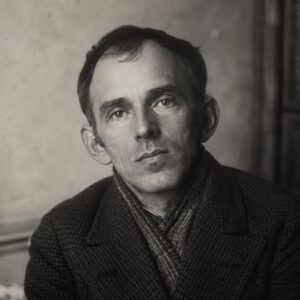
W.B. Yeats: The Mirror Maze

Penelope

I’ve been reading W.B. Yeats for what feels like an eternity, but it’s really only been a few months since I stumbled upon his poetry in a used bookstore. There was something about the way his words seemed to dance on the page that drew me in – a combination of mystery and accessibility that left me both fascinated and unsettled.

As I delved deeper into his work, I found myself becoming increasingly obsessed with the idea of identity. Yeats’s poetry is riddled with personas and masks, each one carefully crafted to conceal and reveal aspects of himself at the same time. It’s like he’s constantly asking: who am I? What do I want to be known for?

I think that’s something we can all relate to on some level – trying to figure out our place in the world and what stories we want to tell about ourselves. For me, it’s been a constant struggle since college ended. I feel like I’m supposed to have everything figured out by now, but the truth is, I still don’t know what I want to do with my life.

Reading Yeats’s poems feels like looking into a mirror that’s reflected in another mirror – an endless series of reflections staring back at me, each one distorted and unclear. His words whisper secrets in my ear about the instability of identity and how it’s always slipping through our fingers like sand.

I find myself drawn to his most famous poems, the ones that feel like they’re speaking directly to me: “The Second Coming,” “The Lake Isle of Innisfree,” “Sailing to Byzantium.” There’s something in these lines that feels both familiar and foreign – a sense of longing and disillusionment that I recognize all too well.

But what really gets under my skin is the way Yeats writes about the relationship between art and reality. He sees them as separate entities, with art serving as a way to transcend or escape the mundane world. It’s a notion that both resonates with me and fills me with discomfort – because what does it mean for our lives when we prioritize creative expression over concrete reality?

I think about my own writing, how it feels like a way for me to process the chaos of everyday life. But at the same time, I’m aware that this escape route can also be a cop-out – a way to avoid dealing with the harder questions and emotions head-on.

Yeats’s fascination with mysticism and the occult is another aspect of his work that both intrigues and unsettles me. There’s something about the idea of tapping into deeper truths, hidden worlds beyond our own reality, that feels like a tempting promise – but also a potential Pandora’s box of confusion and disorientation.

As I continue to explore Yeats’s poetry, I’m struck by how he writes about the tension between individual desire and collective responsibility. He sees himself as an artist torn between his creative impulse and his sense of duty to the world around him. It’s a dichotomy that feels both intensely personal and universally relatable – like we’re all trying to balance our own inner worlds with the demands of external reality.

And yet, despite my growing fascination with Yeats’s work, I still feel uncertain about what draws me in. Is it his intellectual curiosity? His ability to capture the complexity of human experience? Or is it something more primal – a connection to the darker, more mysterious corners of existence that only he seems to inhabit?

As I sit here with his poems scattered around me, I realize that my fascination with Yeats is less about understanding him and more about exploring myself. His words serve as a mirror, reflecting back at me the tangled web of thoughts and emotions that’s been swirling inside me since college ended.

It’s funny – I started writing this essay thinking it would be some kind of intellectual exploration, but the truth is, it’s become an exercise in self-discovery. Who am I? What do I want to write about? Why does Yeats’s work speak to me on such a deep level?

I’m not sure I’ll ever find definitive answers to these questions, but for now, that’s okay. The more I immerse myself in Yeats’s poetry, the more I realize that it’s less about understanding him and more about embracing the mystery of our own existence – with all its contradictions and paradoxes intact.

As I sit here surrounded by the remnants of my scattered thoughts, I find myself drawn to the way Yeats writes about the relationship between art and reality. On one hand, his notion that art can serve as a means of transcendence or escape resonates deeply with me. There’s something about losing myself in the world of words that feels both exhilarating and necessary.

But at the same time, I’m acutely aware of the potential pitfalls of this idea. If we prioritize creative expression over concrete reality, don’t we risk becoming disconnected from the world around us? Don’t we risk ignoring the messiness and complexity of everyday life in favor of some idealized or romanticized version of it?

I think about my own writing, how it often feels like a way to escape the chaos of daily life. But what if this is just a cop-out? What if I’m using art as a way to avoid dealing with the harder questions and emotions head-on? Yeats’s poetry seems to suggest that there’s a tension between individual desire and collective responsibility, but how do we navigate this tension in our own lives?

As I ponder these questions, I find myself thinking about my college years. I spent so much time trying to figure out who I was supposed to be – the perfect student, the ideal friend, the aspiring writer. But now that I’m out of school and facing the uncertainty of the real world, I realize that those personas were just masks we wore to impress others.

I think about how Yeats writes about his own identity in poems like “The Second Coming” – a sense of disillusionment and fragmentation that feels both deeply personal and universally relatable. It’s as if he’s saying that our identities are constantly shifting, fragmenting, and reassembling themselves in ways we can’t control.

This idea terrifies me, but it also feels strangely liberating. If our identities are fluid and ephemeral, then maybe I don’t have to worry so much about finding some fixed or essential self. Maybe I can just let myself be, with all my contradictions and paradoxes intact.

As I sit here surrounded by Yeats’s words, I feel a sense of kinship with him – not because we share the same experiences or perspectives, but because we’re both grappling with the same fundamental questions: who am I? What do I want to write about? Why does art matter in this messy, complicated world?

I’m not sure what answers I’ll find, but for now, it’s enough to know that I’m not alone in my confusion. Yeats’s poetry serves as a reminder that we’re all just stumbling through the darkness together, trying to make sense of our own identities and the world around us.

As I delve deeper into Yeats’s work, I find myself fascinated by his obsession with the cyclical nature of time. In poems like “The Second Coming” and “Sailing to Byzantium,” he writes about the passing of years, the rise and fall of civilizations, and the eternal return of myth and symbol. It’s as if he’s trying to grasp the underlying rhythm of existence, the way that history repeats itself in a never-ending cycle.

This idea resonates with me on a deep level. As I look back on my college years, I see myself caught up in a similar cycle of growth, decay, and rebirth. The four-year structure of college became a kind of microcosm for life itself – a finite period of time marked by its own set of rituals and milestones. And yet, even as I navigated the ups and downs of those years, I couldn’t shake the feeling that something deeper was at work – some invisible current that was carrying me along, whether I liked it or not.

Reading Yeats’s poetry feels like being swept up in this same current. His words are a reminder that we’re all part of a larger tapestry, one that stretches back centuries and forward into the unknown. It’s a daunting thought, but also a liberating one – because if we’re all just along for the ride, then maybe we don’t have to worry so much about controlling the steering wheel.

This sense of surrender is both exhilarating and terrifying. As I write these words, I feel like I’m standing on the edge of a precipice, staring into the void with no safety net in sight. But at the same time, I’m drawn to the idea that maybe this is where true creativity begins – when we let go of our need for control and allow ourselves to be shaped by forces beyond our understanding.

I think about my own writing, how it often feels like a way to impose order on the chaos of everyday life. But what if that’s exactly the problem? What if our need for structure and coherence is just a mask for our deeper desire to avoid the uncertainty and complexity of reality?

Yeats’s poetry suggests that art can be a means of transcendence, but also a means of avoidance. It’s as if he’s saying that we can use creative expression to escape the messiness of life, or to confront it head-on. I’m not sure which path I’ll choose, but for now, I’m content to wander through the labyrinthine corridors of his poetry, searching for answers that may never come.

As I continue to read and write, I find myself drawn to Yeats’s fascination with the Irish folklore tradition. He was deeply interested in the stories and legends of his native country, seeing them as a way to tap into a deeper cultural consciousness. It’s an idea that resonates with me on a personal level – because as a writer, I’ve always been fascinated by the power of storytelling to shape our perceptions of reality.

But what really gets under my skin is the way Yeats writes about the relationship between myth and history. He sees them as intertwined, yet fundamentally separate – like two threads that are woven together to form a larger tapestry. It’s an idea that speaks to me on a deep level, because I’ve always been fascinated by the way that stories can be both true and false at the same time.

As I sit here surrounded by Yeats’s words, I feel like I’m staring into a mirror that’s reflecting back at me a thousand different versions of myself. It’s a dizzying experience, but also a liberating one – because if we’re all just masks or personas, then maybe we don’t have to worry so much about being authentic.

Or do we?

The more I immerse myself in Yeats’s poetry, the more I’m struck by the way he blurs the lines between myth and history. It’s as if he’s saying that our stories are not just reflections of reality, but also shape it in ways both subtle and profound. This idea resonates with me on a deep level, because as a writer, I’ve always been fascinated by the power of language to create and destroy worlds.

As I ponder this idea, I find myself thinking about my own writing process. Do I create characters and stories that are authentic representations of people and experiences, or do I use them as a way to escape into a world that’s more manageable? Yeats’s poetry suggests that the line between these two options is thin at best, and often nonexistent.

I think about how he writes about the cyclical nature of time in poems like “The Second Coming” and “Sailing to Byzantium.” He sees history as a never-ending cycle of birth, growth, decay, and rebirth. It’s an idea that both terrifies and liberates me – because if our lives are just one thread in this larger tapestry, then what does it mean for us to create meaning or purpose?

As I sit here surrounded by Yeats’s words, I feel like I’m staring into a void that’s both familiar and unknown. It’s as if he’s inviting me to join him on a journey into the heart of chaos, where identity and reality are constantly shifting and reassembling themselves.

This is the place where art and madness meet, where creativity and delusion blur together in ways that defy understanding. And yet, it’s also the place where true transformation occurs – where we shed our old skins and emerge anew, like butterflies from their cocoons.

I’m not sure if I’ll ever find my way out of this labyrinthine world of Yeats’s poetry. But for now, that’s okay. The more I wander through its twisting corridors, the more I realize that it’s less about understanding him than embracing the mystery of our own existence – with all its contradictions and paradoxes intact.

As I write these words, I feel like I’m standing on the edge of a precipice, staring into the unknown with no safety net in sight. But at the same time, I’m drawn to the idea that maybe this is where true creativity begins – when we let go of our need for control and allow ourselves to be shaped by forces beyond our understanding.

I think about how Yeats writes about his own identity in poems like “The Second Coming” – a sense of disillusionment and fragmentation that feels both deeply personal and universally relatable. It’s as if he’s saying that our identities are constantly shifting, fragmenting, and reassembling themselves in ways we can’t control.

This idea terrifies me, but it also feels strangely liberating. If our identities are fluid and ephemeral, then maybe I don’t have to worry so much about finding some fixed or essential self. Maybe I can just let myself be, with all my contradictions and paradoxes intact.

As I sit here surrounded by Yeats’s words, I feel a sense of kinship with him – not because we share the same experiences or perspectives, but because we’re both grappling with the same fundamental questions: who am I? What do I want to write about? Why does art matter in this messy, complicated world?

I’m not sure what answers I’ll find, but for now, it’s enough to know that I’m not alone in my confusion. Yeats’s poetry serves as a reminder that we’re all just stumbling through the darkness together, trying to make sense of our own identities and the world around us.

As I continue to read and write, I find myself drawn to the way Yeats writes about the relationship between language and reality. He sees them as intertwined, yet fundamentally separate – like two threads that are woven together to form a larger tapestry. It’s an idea that speaks to me on a deep level, because I’ve always been fascinated by the power of words to shape our perceptions of the world.

But what really gets under my skin is the way Yeats writes about the tension between individual desire and collective responsibility. He sees himself as an artist torn between his creative impulse and his sense of duty to the world around him. It’s a dichotomy that feels both intensely personal and universally relatable – like we’re all trying to balance our own inner worlds with the demands of external reality.

As I ponder this idea, I find myself thinking about my own writing process. Do I prioritize creative expression over concrete reality? Or do I try to use art as a way to engage with the world around me?

I’m not sure which path I’ll choose, but for now, it’s enough to know that I’m on a journey of discovery – one that’s guided by Yeats’s poetry and fueled by my own curiosity about the nature of identity, reality, and creative expression.

Related Posts

Hannah Hoch: Where Women Are Cut Up and Pasted Together

Penelope

Hannah Hoch’s collage work makes me think of the cluttered state of my own mind. I’m a writer, and writing is how I untangle thoughts that feel stuck together like torn fragments of paper. Hoch’s collages are like that too – pieces of different textures and colors pasted together to create something new. But it’s not just about the visual similarity; it’s how her work makes me question what it means to be a woman, to be an artist, and to navigate the expectations placed on us.

I remember reading about Hoch’s relationship with Raoul Hausmann, another Dadaist artist. They were known for their critiques of patriarchal society, but in reality, their partnership was marked by power dynamics that are disturbingly familiar. I’ve seen this play out in my own life – women supporting and enabling each other, while also competing against one another for validation. Hoch’s work often incorporates images of women from advertising and film, which were the primary sources of feminine ideals during her time. It’s as if she’s saying, “These are the expectations we’re fed, but what do they mean?” I can relate to that sense of disillusionment.

Hoch’s use of photomontage – combining photographs with other materials like paper and fabric – feels like a reflection of my own struggles to create order in my life. When I’m writing, I often feel like I’m taking disparate pieces and trying to make them fit together into something coherent. It’s not just about aesthetics; it’s about the way Hoch disrupts traditional notions of authorship and originality. She takes images that already exist and recontextualizes them – much like how I take words from other writers and make them my own.

Sometimes, when I’m stuck on a piece, I’ll create a collage as a way to clear my head. It’s not about creating art; it’s about using different textures and colors to express emotions that don’t have words yet. Hoch’s collages are like that – they’re an attempt to convey the inexpressible, to capture the complexity of being a woman in a society that often reduces us to simple stereotypes.

I’m fascinated by the fact that Hoch’s work was largely overlooked during her lifetime. It wasn’t until years later that she gained recognition for her contributions to the Dada movement. This makes me think about my own fears of not being taken seriously as an artist, of being dismissed because I’m a woman or because my writing doesn’t fit into a certain mold. Hoch’s story is a reminder that even the most talented and innovative artists can be marginalized – but it also shows that their work continues to speak to us, even if they’re not around to receive the recognition.

As I look at Hoch’s collages, I see fragments of myself – the pieces of paper with words scribbled on them, the fabric scraps with colors that bleed into one another. It’s as if she’s taken my messy thoughts and reassembled them into something new, something beautiful. And it makes me wonder: what would happen if we gave ourselves permission to be messy, to create without worrying about being perfect? Would our art become more honest, more authentic? Or would it just become a reflection of the chaos that lies beneath the surface?

I don’t have answers to these questions. All I know is that Hannah Hoch’s work has me thinking – and feeling – in ways that I hadn’t expected. Her collages are a reminder that even the most seemingly disparate pieces can be reassembled into something new, something meaningful. And maybe that’s what art is all about: taking the fragments of our lives and turning them into something beautiful, something that speaks to us on a deeper level.

As I delve deeper into Hoch’s work, I find myself thinking about the tension between intention and reception. Hoch’s collages are often seen as playful and whimsical, but she herself described them as “critical” and “polemical.” This disconnect between her intentions and the way her work is perceived makes me wonder if that’s not a universal experience for women artists – or really, any artist who dares to challenge societal norms.

I think about my own writing, how I often feel like I’m walking a fine line between being taken seriously as a writer and being liked by my readers. Do I write with the intention of provoking thought, or do I try to appease those who will be reading my work? Hoch’s story suggests that even artists who are pushing boundaries can be misunderstood, even by those who claim to support them.

And then there’s the issue of authorship. Hoch often incorporated images and objects into her collages without giving credit to their original creators. Some might see this as an act of piracy or theft, while others would view it as a commentary on the commodification of art. I’ve struggled with similar questions in my own writing – how much do I owe to the writers who have come before me? Should I acknowledge them explicitly, or do they become part of the cultural tapestry that I’m drawing from?

As I ponder these questions, I keep coming back to Hoch’s photomontages. They’re like a visual representation of my own mind – a jumble of images and ideas, sometimes cohesive, often contradictory. And yet, in the midst of all this chaos, there’s a strange sense of order, a sense that something new is emerging.

I don’t know if I’ll ever be able to fully untangle the threads of Hoch’s life and art, but I do know that her work has changed me. It’s made me see my own writing – and myself – in a different light. Maybe that’s what art does best: it disrupts our expectations, forces us to see things from new angles, and reminds us that even the most seemingly disparate pieces can be reassembled into something beautiful.

As I continue to explore Hannah Hoch’s work, I find myself drawn to her use of found materials – scraps of paper, fabric, and photographs that she incorporates into her collages. It’s as if she’s saying, “Look at all the things that are discarded, overlooked, or deemed worthless. What can we learn from them?” This resonates deeply with me, as I often find myself drawn to the margins of society – the people, places, and stories that are ignored or marginalized.

I think about my own experiences growing up in a small town, where conformity was prized over individuality. The kids who didn’t fit in were often ostracized or ridiculed. But Hoch’s work suggests that it’s precisely these outcasts, misfits, and fragments of society that hold the most power. By recontextualizing them, by giving them new meaning and purpose, we can create something beautiful from what was once deemed worthless.

I’m struck by the way Hoch’s collages often subvert traditional notions of beauty and aesthetics. She takes disparate elements – a torn photograph here, a piece of fabric there – and combines them in unexpected ways. It’s as if she’s saying, “Beauty is not just about perfection; it’s about finding value in the imperfect, the discarded, and the overlooked.” This challenges me to rethink my own ideas about art and creativity.

As I look at Hoch’s photomontages, I see a reflection of my own struggles with identity. I’ve always felt like an outsider, someone who doesn’t quite fit into any one category or box. And yet, it’s precisely this sense of disconnection that has driven me to create – to take fragments of myself and reassemble them into something new, something authentic.

I wonder if Hoch’s experiences as a woman in a patriarchal society might have influenced her use of photomontage as a way to subvert traditional notions of beauty and femininity. Did she see herself reflected in the discarded images she incorporated into her work? Or was it a way for her to assert control over her own narrative, to create a new story from the fragments of her life?

I don’t know if I’ll ever have answers to these questions, but I do know that Hannah Hoch’s work has given me permission to see myself – and my art – in a different light. It’s reminded me that creativity is not just about producing something perfect; it’s about taking risks, challenging expectations, and finding beauty in the imperfect, the discarded, and the overlooked.

As I continue to explore Hoch’s work, I’m struck by the way she blurs the line between art and everyday life. Her photomontages often incorporate mundane objects like postcards, advertisements, and newspaper clippings. It’s as if she’s saying that even the most ordinary things can be transformed into something extraordinary with a little creativity.

I think about my own writing process, how I often draw inspiration from the world around me – conversations overheard on public transportation, observations of nature, or snippets of dialogue from movies and TV shows. Hoch’s work suggests that art is not just about creating something new, but also about finding beauty in the everyday, mundane moments of life.

But what does it mean to find beauty in the everyday? Is it simply a matter of paying attention to the world around us, or is there more to it than that? I’m not sure, but Hoch’s work has me thinking about the ways in which our perceptions shape our experiences. She often incorporates images of women from advertising and film into her collages, highlighting the ways in which media shapes our understanding of femininity.

I wonder if Hoch was trying to subvert these expectations by incorporating them into her own art, or if she saw herself reflected in the very same stereotypes that she was critiquing. It’s a complex question, one that I don’t have an answer to, but it’s clear that Hoch’s work is a commentary on the ways in which society constructs and constrains women.

As I look at her photomontages, I see a reflection of my own experiences growing up as a woman. The expectations placed on me – to be beautiful, to be feminine, to be nurturing – often felt suffocating. But Hoch’s work suggests that even within these constraints, there is room for creativity and resistance.

I’m fascinated by the way Hoch’s collages often incorporate fragments of her own life into her art. She includes photographs of herself, as well as images of her relationships with other artists and friends. It’s as if she’s saying that our lives are not separate from our art, but rather an integral part of it.

This resonates deeply with me, as I’ve often struggled to separate my personal life from my writing. But Hoch’s work suggests that this is a false dichotomy – that our experiences, relationships, and emotions are all integral parts of the creative process.

As I delve deeper into Hoch’s art, I’m struck by the way she challenges traditional notions of authorship and originality. Her photomontages often incorporate images and objects that were created by others, recontextualizing them in new and unexpected ways. It’s as if she’s saying that creativity is not just about producing something new, but also about transforming and subverting what already exists.

This has me thinking about my own writing process – how I often draw inspiration from the work of other writers, incorporating their ideas and phrases into my own writing. Is this a form of piracy or theft, as some might argue? Or is it simply a way of acknowledging the debt we owe to those who have come before us?

I’m not sure, but Hoch’s work suggests that these are questions worth exploring – questions about authorship, originality, and the role of creativity in our lives. As I continue to explore her art, I feel like I’m uncovering new insights into my own writing process, and the ways in which I can use creativity to challenge expectations and push boundaries.

As I navigate the complexities of Hoch’s work, I find myself reflecting on the tension between authenticity and presentation. Hoch’s photomontages often appear playful and whimsical at first glance, but upon closer inspection, they reveal a more nuanced critique of societal norms. This dichotomy makes me think about my own writing process – how I often strive to present a polished, cohesive narrative, while secretly struggling with the messiness of my own thoughts.

I’m reminded of Hoch’s statement that her collages are “critical” and “polemical,” even as they appear to be lighthearted and humorous. This juxtaposition is both fascinating and unsettling, as it challenges me to confront my own insecurities about being taken seriously as a writer. Do I present myself as confident and self-assured, or do I reveal the uncertainty that lies beneath?

Hoch’s work also makes me think about the power dynamics at play in creative relationships. Her partnership with Raoul Hausmann was marked by a complex web of influences and dependencies, which echoes my own experiences working with editors and collaborators. How do we navigate these power dynamics, especially when they involve women supporting and enabling one another?

I’m struck by Hoch’s use of photomontage as a way to subvert traditional notions of beauty and femininity. Her collages often incorporate images of women from advertising and film, which were the primary sources of feminine ideals during her time. By recontextualizing these images, Hoch challenges the notion that women must conform to narrow, societal standards. This resonates deeply with me, as I’ve often felt pressured to present a certain image or persona in my writing.

As I delve deeper into Hoch’s work, I find myself thinking about the role of feminism in her art. While she was a pioneering figure in the Dada movement, her feminist credentials are more ambiguous. Some have criticized her for incorporating feminine stereotypes into her collages, while others see this as a clever subversion of those same norms.

I’m left wondering – how do we balance the desire to challenge societal norms with the need to acknowledge and honor our own experiences? Hoch’s work suggests that these are not mutually exclusive goals, but rather intertwined aspects of the creative process. By embracing the complexities and contradictions of her own life, Hoch creates art that is both deeply personal and universally relatable.

As I continue to explore Hoch’s photomontages, I’m struck by their sense of movement and energy – as if they’re in a state of constant flux, shifting and rearranging themselves before our very eyes. This dynamic quality reminds me of my own writing process, where ideas often flow rapidly and unpredictably, defying attempts to pin them down.

Hoch’s work challenges me to reconsider the notion that art must be static or fixed – that it should convey a clear message or intention. Instead, her photomontages invite us to experience the messy, dynamic nature of creativity itself. By embracing uncertainty and ambiguity, Hoch creates art that is both captivating and thought-provoking.

As I reflect on Hoch’s legacy, I’m struck by the ways in which her work continues to inspire new generations of artists and writers. Her photomontages remain a powerful testament to the possibilities of creative subversion – how we can take fragments of our lives and reassemble them into something new, something beautiful.

But what does it mean to create art that is truly subversive? Is it simply about challenging societal norms, or is there more to it than that? I’m not sure, but Hoch’s work has me thinking about the ways in which creativity can be both a source of empowerment and a reflection of our deepest anxieties.

As I close this exploration of Hannah Hoch’s photomontages, I’m left with a sense of awe and appreciation for her innovative spirit. Her art challenges me to rethink my own assumptions about creativity, identity, and the role of women in society. By embracing the complexities and contradictions of her own life, Hoch creates art that is both deeply personal and universally relatable – a testament to the power of creative subversion and the boundless possibilities of human imagination.

Related Posts

Georgia O’Keeffe: Where the Strong and Fragile Coexist in One Giant Bouquet

Penelope

Georgia O’Keeffe has been on my mind a lot lately, ever since I stumbled upon her work while browsing through an art book in my college dorm’s library. Her paintings of enlarged flowers and landscapes seemed to leap off the page, their bold colors and shapes demanding attention. At first, I was struck by their beauty – who wouldn’t be? But as I delved deeper into her life and career, I found myself grappling with something more complex: her persona.

I’ve always been fascinated by strong women who seem to embody a sense of confidence and self-assurance that eludes me most days. O’Keeffe, in particular, strikes me as the epitome of this archetype – or at least, that’s how she’s often presented. Her photographs show her standing tall, with a quiet determination etched on her face, like she’s always ready to take on the world. And yet, every now and then, I catch glimpses of vulnerability peeking through – in the way she smiled for Alfred Stieglitz’s camera, or the way she spoke about her relationships.

It’s this paradox that draws me in: O’Keeffe as a force of nature, but also as someone who was humanly frail. Maybe it’s because I’ve often felt like I’m caught between these two states myself – wanting to project confidence and poise, but struggling with self-doubt and uncertainty. As I look at her work, I wonder if she ever grappled with the same contradictions.

Take her flower paintings, for instance. On one hand, they’re these gorgeous, hyper-real depictions of nature – a celebration of beauty in its most unadulterated form. But on the other hand, they can also be seen as a kind of… reduction? A simplification of the world into clean lines and bright colors. It’s almost like she’s saying: this is what matters, not all that complexity and chaos out there.

I find myself drawn to this aspect of her work – the way it simplifies, even sanitizes, the messy business of existence. And yet, at the same time, I’m not sure if I fully buy into it. Don’t we need a little bit of messiness in our lives? A little bit of chaos?

It’s funny, because as I’m writing this, I realize that my thoughts are all over the place – like O’Keeffe’s own artistic style. Some days, her work feels like a breath of fresh air; other days, it feels cold and detached. Maybe that’s just part of what makes her so compelling: she’s not always easy to pin down.

I’m beginning to think that my fascination with Georgia O’Keeffe isn’t just about her art or even her as a person – but about the tensions within myself. As someone who’s still figuring out their own place in the world, I see bits of myself reflected in her work: the desire for clarity and simplicity, but also the acknowledgment that life is messy and complicated.

It’s almost like… she’s giving me permission to be uncertain? To grapple with these contradictions and not have all the answers. But even as I write this, I’m not sure if that’s entirely accurate – or if it’s just my own projection onto her work.

As I continue to explore O’Keeffe’s world, I realize that there are still so many questions swirling around in my head – about her life, her art, and what she might have meant by all this. Maybe the truth is, I’ll never fully understand her – but that’s okay. It’s enough for me to acknowledge these tangled threads of fascination and confusion within myself.

I find myself getting lost in the photographs of O’Keeffe’s New Mexico landscapes – the adobe buildings, the desert skies, the way the light seems to stretch out forever. There’s something about those images that feels like a direct line to my own experiences: the sense of being a stranger in a new place, trying to make sense of it all.

I remember when I first arrived at college, feeling like an outsider looking in – unsure of how to navigate the campus, the coursework, or even the conversations with people who seemed so much more confident and self-assured than me. It was like being dropped into a whole new world, where everyone else spoke the language fluently and I was still trying to learn the basics.

O’Keeffe’s photographs of New Mexico feel like they capture that same sense of disorientation – but also, somehow, a deep connection to place. It’s as if she’s saying: yes, you can be lost in this world, but you can also find your way through it. Maybe even discover something new and beautiful along the way.

I wonder what it was like for her, living out there on the desert edge of New Mexico – a woman from Wisconsin, transplanted to a land that must have felt both familiar and alien at the same time. Did she ever feel like an outsider, too? Or did she find a sense of belonging in those vast, open spaces?

As I look at her photographs, I start to see them as more than just pictures – but as windows into her own experiences, her own emotions. It’s almost like… I’m seeing myself in there somewhere, too – or at least, the version of myself that I wish I could be: confident, self-assured, and somehow, effortlessly connected to the world around me.

But even as I idealize O’Keeffe in this way, I know it’s not entirely fair. She was a woman who lived through so much – personal struggles, professional challenges, the changing tides of artistic taste. There must have been times when she felt lost and uncertain, just like me.

It’s funny how easily we can get caught up in our own fantasies about people like O’Keeffe – the idea that they were somehow more put-together than us, more confident, more talented. But the truth is, I’m not sure if anyone ever truly reaches those heights of self-assurance and calm.

Or maybe… maybe it’s just a matter of perspective. Maybe we’re all just trying to navigate our own versions of the desert landscape – with its vast expanses, its hidden dangers, and its occasional glimpses of beauty.

As I delve deeper into O’Keeffe’s life and work, I find myself questioning my own assumptions about art and identity. What is it about her paintings that speaks to me on such a deep level? Is it the way she captures the intricate details of nature, or is it something more primal – a sense of connection to the earth and its rhythms?

I think back to my own experiences with art in college. I was always drawn to the abstract expressionists – Pollock, Rothko, et al. – but for some reason, O’Keeffe’s work resonated with me on a different level. Maybe it’s because her art is so unapologetically sensual – the curves of her flowers, the bold colors that seem to vibrate off the canvas.

But as I look closer at her paintings, I start to see something else too – a sense of restraint, even of control. Her compositions are always carefully balanced, each element placed with precision and deliberation. It’s almost like she’s saying: this is what I want you to see, not anything more or less.

I find myself wondering if that’s how I feel about my own life – as if I’m constantly trying to edit out the imperfections, to present a curated version of myself to the world. But at what cost? Does that kind of control ultimately lead to stagnation, or is it just a necessary part of growing up?

As I ponder these questions, I start to see O’Keeffe’s work in a new light – not just as beautiful paintings, but as a reflection of her own inner struggles. She was a woman who faced many challenges throughout her life – sexism, criticism, the pressure to conform to societal norms. And yet, despite all this, she continued to create art that was raw and honest, even when it was difficult.

I think about my own fears and doubts, and how often I let them hold me back from pursuing my passions. What would O’Keeffe say if she were here? Would she tell me to be bolder, to take more risks? Or would she caution me against being too reckless, too impulsive?

The truth is, I don’t know – but I do know that her work has given me permission to explore my own fears and doubts. It’s okay to be uncertain, to question myself and the world around me. In fact, it might even be necessary.

As I look at O’Keeffe’s paintings, I see a woman who was unafraid to confront the complexities of her own life – and in doing so, created art that continues to inspire and challenge us today. Maybe that’s what I need to learn from her – not just about art or identity, but about living with courage and vulnerability, even when it’s hard.

I find myself returning again and again to O’Keeffe’s photographs of New Mexico – the way she captured the vast expanses of the desert, the intricate details of the adobe buildings, and the haunting beauty of the sky at sunset. There’s something about those images that feels like a direct line to my own experiences: the sense of being a stranger in a new place, trying to make sense of it all.

I remember when I first arrived at college, feeling like an outsider looking in – unsure of how to navigate the campus, the coursework, or even the conversations with people who seemed so much more confident and self-assured than me. It was like being dropped into a whole new world, where everyone else spoke the language fluently and I was still trying to learn the basics.

O’Keeffe’s photographs of New Mexico feel like they capture that same sense of disorientation – but also, somehow, a deep connection to place. It’s as if she’s saying: yes, you can be lost in this world, but you can also find your way through it. Maybe even discover something new and beautiful along the way.

I start to wonder what it would be like to experience that same sense of disorientation – but instead of feeling overwhelmed or lost, I feel a deep connection to the place around me. Is that what O’Keeffe was trying to capture in her photographs? A sense of belonging, even when you’re not sure where you belong?

As I look at her work, I start to see it as more than just pictures – but as windows into her own experiences, her own emotions. It’s almost like… I’m seeing myself in there somewhere, too – or at least, the version of myself that I wish I could be: confident, self-assured, and somehow, effortlessly connected to the world around me.

But even as I idealize O’Keeffe in this way, I know it’s not entirely fair. She was a woman who lived through so much – personal struggles, professional challenges, the changing tides of artistic taste. There must have been times when she felt lost and uncertain, just like me.

I start to think about my own experiences with uncertainty and how often I’ve let fear hold me back from pursuing my passions. What would O’Keeffe say if she were here? Would she tell me to be bolder, to take more risks? Or would she caution me against being too reckless, too impulsive?

The truth is, I don’t know – but I do know that her work has given me permission to explore my own fears and doubts. It’s okay to be uncertain, to question myself and the world around me. In fact, it might even be necessary.

As I continue to look at O’Keeffe’s photographs, I start to see them as a reminder that uncertainty is not something to be feared or avoided – but rather something to be explored and understood. It’s a perspective that feels both comforting and unsettling at the same time – like looking into a mirror that reflects back a version of myself that I’m still getting to know.

I’m not sure what the future holds, or where my own journey will take me next. But as I look at O’Keeffe’s work, I feel a sense of hope and possibility – the idea that even in the midst of uncertainty, there is always the potential for growth, for discovery, and for beauty.

And so, I’ll keep looking at her photographs, trying to understand what they reveal about herself and about me. I’ll keep exploring my own fears and doubts, and see where they lead me. Because in the end, it’s not about reaching some kind of destination – but about being present in this moment, with all its uncertainties and complexities.

As I close my eyes and imagine myself standing in O’Keeffe’s New Mexico landscapes, I feel a sense of peace wash over me. It’s as if I’ve finally found my own place in the world – not because I’ve arrived at some kind of destination, but because I’ve learned to navigate the complexities of uncertainty with courage and curiosity.

And that’s when it hits me: O’Keeffe’s work isn’t just about her – it’s about us. It’s about our shared experiences, our fears and doubts, and our struggles to make sense of this messy, beautiful world we live in.

As I open my eyes and look at the photographs again, I feel a sense of gratitude towards O’Keeffe – not just for her art, but for the permission she gives me to be uncertain, to explore my own fears and doubts, and to find beauty in the midst of complexity.

Related Posts

Walter Benjamin: Lost in the Haze of What Could’ve Been

Penelope

Walter Benjamin has been on my mind for months now, ever since I stumbled upon his writings on art and history while researching for a paper on modernity. At first, I was drawn to the way he effortlessly weaves together philosophy, politics, and culture – it’s like reading a dense, yet exhilarating novel. But as I delved deeper into his work, I found myself increasingly captivated by his sense of melancholy, his fascination with the lost and forgotten.

It’s not just that Benjamin was a pessimist, though he certainly was. It’s more that he seemed to see the world through a lens of nostalgia – a bittersweet longing for something that could never be recaptured. His famous essay on “The Work of Art in the Age of Mechanical Reproduction” still haunts me. The way he describes how technology has detached art from its original context, rendering it a mere commodity, is both prophetic and deeply unsettling.

As I read his words, I couldn’t help but think of my own relationship with memory and history. Growing up, my grandparents would regale me with stories about our family’s past – tales of struggle and resilience that seemed to anchor us to the present. But as I got older, those stories began to feel like just that – stories. Told and retold, but never really lived. And Benjamin’s writings made me wonder: what is the value of these remembered experiences? Can we truly recapture the past, or are we just chasing after echoes?

Benjamin’s concept of “dialectical images” has also been stuck in my head. He believed that certain moments – like a photograph of an Auschwitz concentration camp – could reveal the underlying contradictions and conflicts within society. These images, he argued, hold within them both the past and the present, illuminating the hidden patterns and relationships that shape our world.

But what I find most compelling about Benjamin is his sense of disorientation – his feeling that the world has become increasingly disconnected from itself. He lived through two World Wars, witnessed the rise and fall of empires, and saw the collapse of traditional forms of art and culture. And yet, despite all this turmoil, he remained convinced that there was a deeper truth waiting to be uncovered – a truth that could only be accessed by embracing the fragmented and the fleeting.

As I reflect on my own experiences with disorientation, I’m struck by how similar Benjamin’s feelings are to my own sense of unease. After graduating from college, I felt lost, like I’d been disconnected from the very fabric of my life. It was as if everything I thought I knew about myself and the world had been turned upside down. And yet, in some strange way, that disorientation has become a catalyst for growth – a chance to question everything I thought I understood.

Benjamin’s work has given me language to describe this feeling – to articulate the sense of disconnection that haunts us all. His writings are like a map, guiding me through the labyrinthine corridors of history and memory. And it’s in those dark, winding passages that I’ve begun to see the value of his melancholy – not as a form of despair, but as a way of engaging with the world’s complexity.

But even now, as I’m writing about Benjamin, I find myself unsure what to make of this obsession with loss and disorientation. Is it a sign of my own naivety, or does it speak to something deeper? As I read his words, I feel like I’m standing on the edge of a precipice – gazing out at a world that’s both beautiful and terrifying.

And Benjamin, with all his contradictions and complexities, seems to be beckoning me forward – into the uncertain territory where past and present blur.

I’ve been reading Benjamin’s essays again, trying to untangle the threads of my own fascination with loss and disorientation. His writing is like a spider’s web – every word, every phrase seems to lead me deeper into the labyrinth. I find myself lost in his descriptions of the Parisian streets he walked in the 1920s, or the dusty bookstores where he spent hours poring over ancient texts.

But what I’m starting to realize is that Benjamin’s melancholy isn’t just a reflection of his own experiences – it’s also a way of grappling with the world’s darkness. He saw how art and culture were being co-opted by fascist regimes, how history was being distorted to serve the interests of power. And yet, even in the face of such atrocities, he refused to give up on the idea that there was still beauty to be found.

I’m struck by the way Benjamin’s writing is both intensely personal and expansively universal. His struggles with depression and anxiety are laid bare, but they’re also woven into a larger tapestry of philosophical and cultural critique. It’s as if he’s saying: “I’m not just lost – we all are. But in that shared disorientation lies the possibility for connection, for understanding.”

I’ve been thinking about this idea a lot lately, especially since graduating from college. I feel like I’m still navigating the aftermath of my own “disorientation” – trying to find my footing in a world that seems increasingly uncertain. And Benjamin’s writing has given me permission to explore these feelings, to see them not as weaknesses but as opportunities for growth.

But there are moments when I wonder if I’m just romanticizing Benjamin’s melancholy – if I’m projecting my own anxieties onto his work. Maybe I’m just trying to make sense of my own lostness by wrapping myself in the cloak of a famous philosopher. The thought sends a shiver down my spine, but it also makes me pause – forces me to consider what’s driving this obsession.

As I continue reading Benjamin’s essays, I’m starting to see that his work isn’t just about the past or the present – it’s about the way those two moments intersect in our minds. He calls these intersections “dialectical images,” but for me they feel like doorways into a different kind of thinking. A thinking that acknowledges both the beauty and the horror, the loss and the disorientation.

And yet, even as I’m drawn to this way of thinking, I’m still unsure what it means – or where it will lead. Will it take me deeper into the labyrinth, or will it simply trap me in a cycle of nostalgia and longing?

I find myself returning to Benjamin’s concept of “dialectical images” again and again, trying to unravel its meaning for my own life. For him, these images were moments that revealed the underlying contradictions of society – like a photograph of Auschwitz, which simultaneously testified to the horror of the past and the ongoing presence of fascism in the present.

As I think about it, I realize that my grandparents’ stories are also dialectical images, in their own way. They’re not just memories of our family’s past, but also testaments to the resilience and strength that allowed us to survive and thrive in the face of adversity. But they’re also haunted by a sense of loss – the loss of a homeland, the loss of loved ones, the loss of a way of life.

I wonder if my own relationship with these stories is similar to Benjamin’s relationship with the world around him. Do I see them as static, unchanging relics of the past, or do I understand that they’re constantly being reinterpreted and recontextualized in the present? Can I find ways to connect with the past through these stories, without getting lost in nostalgia?

As I ponder this question, I’m reminded of Benjamin’s idea that history is not a linear progression from one moment to the next, but rather a web of interconnected moments that overlap and intersect. His concept of “historical time” suggests that we’re always living in multiple times at once – past, present, and future all coexist and influence each other.

This way of thinking challenges me to think about my own relationship with time. Am I stuck in the past, nostalgic for a bygone era? Or am I able to move fluidly between different moments, recognizing that they’re all connected and interdependent? Can I find ways to engage with the world around me that acknowledge both the continuity and the disconnection?

As I read Benjamin’s words, I feel like I’m being invited into this web of interconnected moments – a web that’s full of contradictions and paradoxes. It’s scary to enter this labyrinth, but it’s also exhilarating. For the first time in my life, I feel like I’m starting to see the world as a complex, dynamic system – one that’s constantly shifting and evolving.

And yet, even as I’m drawn into this web of historical time, I still can’t shake the feeling that I’m losing my footing. That I’m adrift in a sea of uncertainty, with no clear shore in sight. Benjamin’s writing has given me language to describe these feelings, but it’s also left me with more questions than answers.

As I look back on my own experiences of disorientation – and forward into the uncertain future – I realize that I’m not alone. We’re all living in this web of historical time, trying to make sense of our place within it. And Benjamin’s writing has given me permission to explore these feelings, to see them as opportunities for growth and understanding rather than weaknesses or failures.

But even now, as I write these words, I feel like I’m standing on the edge of a precipice – gazing out at a world that’s both beautiful and terrifying. And Benjamin, with all his complexities and contradictions, seems to be beckoning me forward – into the uncertain territory where past and present blur.

As I stand here, poised between the familiar and the unknown, I feel like I’m being pulled in two different directions. On one hand, there’s the comfort of familiarity – the stories my grandparents told me about our family’s past, the routines of my daily life, the certainties that have always been there. But on the other hand, there’s the thrill of the unknown – the promise of new experiences, new connections, and new ways of thinking.

Benjamin’s writing has given me a vocabulary for navigating this tension between familiarity and disorientation. His concept of “dialectical images” has helped me see that even the most mundane moments can hold within them a deeper truth – a truth that’s both personal and universal. And his idea of “historical time” has shown me that our lives are not just linear sequences of events, but rather complex webs of interconnected moments that shape and reshape us in ways we may never fully understand.

But even as I’m drawn into this web of historical time, I’m still unsure what it means for my own life. Will I continue to feel lost and disoriented, or will I find a way to integrate these feelings into a sense of purpose and direction? Can I use Benjamin’s ideas to create a narrative that makes sense of my experiences – or will they remain fragmented and disjointed?

As I ponder these questions, I’m reminded of the way Benjamin describes art as a form of “mimetic” expression – a way of capturing the world in all its complexity and multiplicity. He argues that art should not strive for precision or accuracy, but rather aim to convey the essence of an experience – the feeling, the mood, the atmosphere.

I wonder if this idea could be applied to my own writing – to my attempts to capture the essence of my experiences with disorientation and loss. Can I use language in a way that’s both personal and universal, conveying the emotions and sensations that have shaped me without trying to pin them down or define them?

As I explore these questions, I’m struck by the realization that Benjamin’s writing is not just about intellectual concepts – it’s also about the way he engages with the world around him. He was a voracious reader, a curious observer of human nature, and a passionate advocate for social justice. His work is infused with a sense of wonder and awe, a sense of curiosity that never flags.

I’m inspired by this example to be more attentive to the world around me – to observe its rhythms and patterns, to listen to its silences and contradictions. I want to cultivate a sense of wonder and awe in my own writing, to capture the essence of experiences without trying to explain or justify them.

But even as I strive for this kind of engagement with the world, I’m aware that it’s not easy. It requires a willingness to be vulnerable, to expose oneself to uncertainty and doubt. And it demands a commitment to ongoing learning and growth – a recognition that our understanding of the world is always provisional and subject to revision.

As I look back on my journey through Benjamin’s work, I realize that his writing has been a catalyst for me – a prompt to explore my own feelings and experiences in new ways. It’s not about solving problems or arriving at definitive answers; it’s about embracing the complexity and uncertainty of life itself.

And so, as I stand here on the edge of this precipice, I feel a sense of trepidation mixed with excitement. What will happen next? Where will this journey take me? Will I find my footing in the labyrinth of historical time, or will I continue to wander lost and disoriented?

Only time will tell – but for now, I’m content to keep writing, to keep exploring, and to keep embracing the beauty and terror of a world that’s always shifting and evolving.

Related Posts

Katherine Mansfield: Where Bravery Meets Bruising

Penelope

Katherine Mansfield’s life has been a constant companion of mine since college, when I devoured her short stories like they were oxygen. There was something about the way she captured the intricacies of human relationships, the quiet desperation of modern life, that spoke to me on a deep level. But it wasn’t until recently, as I re-read her letters and essays, that I began to see her in a different light – not just as a writer, but as a person struggling with her own demons.

What strikes me most about Mansfield is the fragility she exudes, like a delicate flower that’s been bruised one too many times. Her life was marked by illness, loss, and disappointment, and yet, in her writing, she often appears confident and unflappable. This paradox has always fascinated me – how could someone so wounded be so fearless? I find myself drawn to this tension, this dance between vulnerability and strength.

As I delve deeper into her letters, I’m struck by the intensity of her relationships, particularly with friends like Virginia Woolf and D.H. Lawrence. Their correspondence is a tangled web of affection, criticism, and creative debate, often veering into emotional territory that’s uncomfortable to read about. But it’s this very intensity that makes me feel seen – like I’m not alone in my own complicated friendships.

One aspect of Mansfield’s life that continues to puzzle me is her decision to leave New Zealand for England at the age of 19. It’s hard to imagine leaving behind everything and everyone you know, especially when your family’s expectations are so deeply ingrained. I find myself wondering what drove her to make this choice – was it a desire for artistic freedom, or a need to escape the constraints of her provincial upbringing? The more I read about Mansfield, the more I realize that I’m projecting my own fears and doubts onto her.

Take her struggles with tuberculosis, for instance. I’ve always been fascinated by the way she writes about her illness – the way it shapes her perception of time, space, and human connection. As someone who’s struggled with anxiety and depression, I can relate to the feeling of being trapped in a body that’s not cooperating. But while Mansfield’s physical pain is undeniable, there’s also an emotional toll that’s harder to quantify. How did she cope with the knowledge that her life was finite, that every day might be her last? Did she find solace in her writing, or was it a source of anxiety itself?

Mansfield’s essays on creativity and artistry have been a revelation for me. She writes about the importance of surrendering to the creative process, of letting go of expectations and ego. But what I find most compelling is her emphasis on the emotional labor involved in making art – the way it requires you to be present, to feel deeply, and to risk rejection. It’s this willingness to be vulnerable that I think has always drawn me to her writing.

As I continue to explore Mansfield’s life, I’m struck by the sense of disconnection she often expressed – between herself and others, between reality and her own desires. This feeling is both familiar and unsettling, like looking into a mirror and seeing someone else staring back. It makes me wonder: am I doing the same thing in my own writing? Am I hiding behind my words, using them as a shield to protect myself from the uncertainty of life?

I don’t have any answers to these questions – Mansfield’s life is too complicated, too messy – but that’s what draws me to her. She’s a reminder that even the most talented writers are still figuring things out, still struggling with the same doubts and fears that plague us all. And in this way, she’s become a kind of mirror for me, reflecting back my own hopes, desires, and anxieties.

As I delve deeper into Mansfield’s life, I find myself drawn to her essays on creativity, but also increasingly unsettled by the sense of disconnection that permeates so much of her writing. It’s as if she’s constantly searching for a way to bridge the gap between herself and others, between reality and her own desires. This longing for connection is something I think many writers can relate to – the feeling of being an outsider looking in, of watching life unfold from a distance.

For me, this sense of disconnection is particularly pronounced when it comes to my own family. Growing up, our conversations were often stilted and polite, like we were all just going through the motions. My parents, both immigrants themselves, were struggling to make ends meet, and I think they put so much pressure on us kids to succeed that we lost sight of what was truly important – connection, communication, love.

Now that I’m older, I find myself trying to reconnect with them, to understand where they’re coming from. But it’s not always easy. We’ve had our share of disagreements and misunderstandings, and sometimes I feel like I’m still just an outsider looking in. It’s as if we’re all speaking different languages, or at least, we’re using the same words but meaning entirely different things.

Mansfield’s writing has given me a new perspective on this – she shows me that even the most talented writers struggle with connection, that it’s never easy to find common ground with others. And in her essays, I see a longing for authenticity, for realness, for connections that are true and meaningful. This is something I think many of us crave, especially as we navigate our own creative pursuits – whether it’s writing, art, music, or any other form of expression.

But what if connection isn’t always possible? What if the disconnection is a fundamental aspect of human experience? Mansfield’s writing suggests that this might be true – that even in our most intimate relationships, there can be a sense of isolation, a feeling of being alone in our own thoughts and feelings. It’s a tough pill to swallow, but it’s also a reminder that we’re not alone in our struggles.

As I continue to read Mansfield’s essays, I find myself wondering about the role of writing itself in bridging this gap between connection and disconnection. Does writing help us connect with others, or does it reinforce our isolation? For me, writing has always been a way to process my thoughts and feelings, to make sense of the world around me. But is it enough to simply write, without actually engaging with others?

Mansfield’s letters suggest that she struggled with this very question – how to balance her desire for connection with the need for solitude and creative focus. And yet, even in her solitude, she found ways to connect with others through her writing, to convey the complexities of human experience in all its messy glory.

This is something I think many writers can relate to – the struggle to balance our own desires with the needs of others. We want to be connected, but we also need time alone to create, to reflect, to recharge. And in Mansfield’s writing, I see a deep understanding of this paradox, a recognition that connection and disconnection are intertwined aspects of human experience.

As I ponder the complexities of Mansfield’s life, I’m struck by the ways in which she navigated these tensions between connection and disconnection. Her essays on creativity often seem to oscillate between the need for solitude and the desire for connection with others. This push-and-pull is something I think many writers can identify with – the struggle to balance our own creative needs with the demands of relationships, work, and everyday life.

For me, this tension plays out in my own writing practice. I often find myself drawn into the world of my characters, only to be yanked back into the present moment by the demands of reality. It’s as if I’m constantly juggling two opposing forces – the need to create something new and meaningful, and the need to connect with others on a deeper level.

Mansfield’s writing has given me permission to explore these tensions more openly in my own work. Her essays are like a mirror held up to the complexities of human experience – all its messiness, uncertainty, and vulnerability. And yet, even in the midst of this chaos, she finds ways to connect with others through her words.

I’m beginning to see that Mansfield’s writing is not just about conveying ideas or emotions, but about creating a sense of connection with readers on a deeper level. She doesn’t shy away from the difficult stuff – the messy feelings, the complicated relationships, the uncertainty of life. Instead, she leans into them, using her words to create a space for exploration and understanding.

This is something I think many writers can learn from Mansfield’s example – the importance of embracing vulnerability in our writing, rather than trying to hide behind pretenses or platitudes. By being brave enough to confront our own fears and doubts, we can create work that resonates with others on a deeper level.

As I continue to read Mansfield’s essays, I’m struck by her emphasis on the importance of observation – of paying attention to the world around us, even in its smallest details. She writes about the way a single leaf on a tree can become a symbol of hope or despair, depending on our perspective. It’s this kind of attention that I think many writers crave, but often struggle to find.

For me, Mansfield’s writing is like a reminder to slow down and pay attention – to notice the small things in life, even when they seem insignificant. By doing so, we can tap into the deeper currents of human experience, creating work that is both personal and universally relatable.

I’m not sure where this line of thinking will take me next, but for now, I’m content to follow Mansfield’s example – to explore the complexities of connection and disconnection in my own writing, and to see where it takes me.

As I ponder the art of observation, I find myself drawn to Mansfield’s essay on the importance of noticing the small things in life. She writes about how a single phrase or gesture can convey a world of meaning, and how writers must be attuned to these subtleties if they hope to capture the essence of human experience.

This resonates with me because I’ve always been someone who notices details – a bird singing outside my window, the way the light falls on a particular object, the cadence of a stranger’s footsteps. And yet, as I write, I often find myself getting caught up in the big picture, the sweeping narratives and grand emotions that drive the plot forward.

Mansfield’s emphasis on observation reminds me that it’s the small things – the whispers, the silences, the fleeting moments of connection – that can be just as powerful as the grand gestures. It’s this attention to detail that allows her to capture the nuances of human relationships, to convey the complexities of emotions and desires in all their messy glory.

As I think about my own writing practice, I realize that I’ve been neglecting this aspect of observation. I get so caught up in the story itself, in the characters’ motivations and conflicts, that I forget to notice the small things – the way a character’s eyes light up when they see something beautiful, or the way their voice cracks with emotion.

It’s a reminder that writing is not just about conveying information or telling a story; it’s also about capturing the essence of human experience. And that requires attention, patience, and a willingness to notice the small things – the whispers, the silences, the fleeting moments of connection.

Mansfield’s writing has always been a source of inspiration for me, but in this moment, I see her as more than just a writer; I see her as a guide on the path to creating work that truly resonates with others. She reminds me that writing is not just about self-expression or artistic indulgence; it’s about capturing the complexities of human experience in all its messy glory.

As I continue to read Mansfield’s essays, I find myself wondering what other lessons she has to teach me – what other secrets lie hidden in her words, waiting to be uncovered. And so, I press on, driven by a curiosity that is both personal and universal, a desire to understand not just Mansfield’s life but also my own.

Related Posts

Albert Einstein: The Anxiety of Genius – Is it Better to be Brilliant or Brutally Honest?

Penelope

I’ve always been fascinated by the contradictions of Albert Einstein’s life. On one hand, he was a brilliant physicist who revolutionized our understanding of space and time. His theories changed the way we think about the universe, and his legacy continues to inspire scientists and thinkers around the world. But on the other hand, he was a man who struggled with anxiety and depression throughout his life.

As I read about Einstein’s experiences with mental health, I couldn’t help but feel a sense of unease. Here was someone who had achieved so much, yet still grappled with feelings of inadequacy and self-doubt. It’s a sentiment that resonates deeply with me – as a writer, I often find myself questioning my own abilities and wondering if I’m good enough.

Einstein’s struggles with anxiety and depression are well-documented, but what strikes me is the way he chose to speak about them publicly. In his later years, he was open about his experiences, writing about the importance of mental health in his essays and lectures. It was a bold move, especially for someone who had been so revered as a genius.

For me, Einstein’s willingness to discuss his struggles is both inspiring and intimidating. I’ve always believed that vulnerability is essential to good writing – it allows us to connect with others on a deeper level and share our truest selves. But what happens when we’re not sure how to express those vulnerabilities? When we’re afraid of being judged or rejected?

As I delve deeper into Einstein’s life, I find myself wondering about the relationship between creativity and mental health. So many of the most innovative thinkers throughout history have struggled with anxiety and depression – is there a connection between their struggles and their groundbreaking ideas? It’s a question that feels both obvious and overwhelming.

I think about my own experiences as a writer – how often I’ve felt stuck or uncertain, unsure if what I’m writing is any good. And yet, it’s in those moments of doubt that some of my best work has emerged. Is there something about embracing our vulnerabilities that allows us to tap into our creativity?

Einstein’s story suggests that the answer might be yes. His struggles with anxiety and depression didn’t hold him back – they actually fueled his most innovative thinking. And yet, it’s not a solution I feel confident in applying to my own life. There are still days when I’d rather hide behind my writing than face the uncertainty of what comes next.

As I continue to explore Einstein’s life, I’m left with more questions than answers. What does it mean to be vulnerable as a creative person? How can we harness our struggles to fuel our innovation, without sacrificing our mental health in the process? It’s a complicated and uncomfortable question – one that I’m still trying to wrap my head around.

For now, I’ll just say this: Einstein’s story has left me with more questions than answers. And in many ways, that’s exactly what I need – a reminder that the most important work often lies at the intersection of vulnerability and uncertainty.

The idea that our struggles can be a source of creativity is both tantalizing and terrifying. On one hand, it suggests that the very things that make us feel broken or inadequate can actually be the catalysts for innovation. But on the other hand, it’s a heavy burden to bear – the expectation that we must somehow extract value from our suffering.

As I think about Einstein’s life, I’m struck by his willingness to push against these expectations. He didn’t shy away from talking about his struggles, even when it made him seem “less than” in the eyes of others. Instead, he used those vulnerabilities as a way to connect with others and share his experiences.

But what if I don’t have Einstein’s courage? What if I’m not willing or able to share my struggles publicly, even though it might be beneficial for me and others? Is that okay? Should I be striving for some kind of authenticity at all costs, even if it feels like a risk?

I think about the way social media often presents itself as a showcase for perfection – flawless selfies, effortless productivity, and sparkling relationships. It’s exhausting to keep up with the narrative that we must always appear put-together, no matter what’s going on beneath the surface.

In contrast, Einstein’s story feels like a breath of fresh air. He wasn’t interested in presenting himself as perfect; instead, he wanted to share his genuine experiences and spark conversations about mental health. And yet, there’s still this nagging sense that we should be striving for some kind of authenticity, even if it feels impossible.

As I continue to grapple with these questions, I’m reminded of the countless writers who have spoken out about their struggles with anxiety, depression, and other mental health issues. They’re not all Einsteins, but they’re still doing something brave by sharing their stories – often in the face of criticism or skepticism from others.

For me, it’s a reminder that vulnerability doesn’t always need to be grand or public. Sometimes, it’s just about showing up to our writing (or whatever creative pursuit we’re engaged in) even when we feel uncertain or scared. Maybe that’s where the real innovation happens – not in some grand moment of revelation, but in the small, everyday acts of bravery that add up over time.

But I still don’t know what it means to be vulnerable as a writer. Or how to balance that vulnerability with the need for self-care and protection. Einstein may have been able to navigate those complexities, but I’m not sure I can follow his lead. At least, not yet.

As I sit here thinking about Einstein’s story, I find myself wondering if it’s possible to be vulnerable without sacrificing my own well-being. Can I share my struggles with others without putting myself at risk of being hurt or rejected? The more I think about it, the more I realize that vulnerability is a complex and multifaceted concept – one that can’t be reduced to a simple answer.

For me, writing has always been a way to process my emotions and thoughts. It’s how I make sense of the world around me, even when things feel uncertain or chaotic. But what happens when I’m struggling with my own mental health? Can I still write about it in a way that feels authentic and honest?

I think about all the times I’ve tried to write about my anxiety and depression, only to feel like I’m exposing myself too much. What if people judge me for being “weak” or “unstable”? What if they see me as less capable or competent? It’s a fear that’s held me back from sharing more of myself in my writing.

But Einstein’s story suggests that vulnerability can be a strength, not a weakness. He wasn’t afraid to share his struggles with others, and it ended up making him more relatable and human. Could the same be true for me?

As I consider this question, I’m reminded of all the times I’ve felt like I’m living in someone else’s shadow – Einstein’s, in particular. His legacy is so towering that it can feel overwhelming to even try to write about my own experiences alongside his.

But what if I didn’t have to be compared to him? What if I could just focus on being honest and authentic with myself, without worrying about how others might perceive me? It’s a radical idea, one that feels both liberating and terrifying at the same time.

For now, I’ll just say this: Einstein’s story has made me realize that vulnerability is not something to be feared or avoided. It’s something to be explored and navigated, even when it feels uncomfortable or uncertain. And who knows? Maybe it will lead me to some new insights or breakthroughs in my own writing – ones that I wouldn’t have discovered otherwise.

As I sit here, surrounded by scribbled notes and half-finished sentences, I’m struck by the complexity of Einstein’s legacy. On one hand, he’s a shining example of what it means to be vulnerable and authentic in our creative pursuits. On the other hand, his story is also a reminder that vulnerability can be a double-edged sword – it can lead to connection and understanding, but it can also leave us exposed and vulnerable to criticism or rejection.

I think about all the times I’ve felt like I’m walking this tightrope, trying to balance my need for authenticity with my fear of being hurt or judged. It’s a delicate dance, one that requires a deep sense of self-awareness and trust in myself and others.

Einstein’s story has given me permission to explore these complexities, to examine the ways in which vulnerability can be both empowering and terrifying. But it’s also made me realize how much I still have to learn – about myself, about my writing, and about what it means to be truly authentic in a world that often values perfection over imperfection.

As I continue to grapple with these questions, I’m reminded of the importance of self-care in the creative process. Einstein’s struggles with mental health are well-documented, but they’re also a reminder that creativity and vulnerability can’t exist without a certain level of emotional resilience.

For me, this means being kinder to myself when I’m struggling, taking breaks when I need them, and prioritizing my own well-being alongside my writing. It’s not always easy – there are days when the pressure to produce feels overwhelming, or when self-doubt creeps in and threatens to derail everything.

But Einstein’s story suggests that it’s worth it – that the struggles we face as creatives can be a source of strength, rather than weakness. By embracing our vulnerabilities and taking care of ourselves along the way, we can tap into a deeper sense of purpose and meaning in our work.

I’m not sure what this means for my own writing yet, but I’m willing to take the risk and explore these questions further. It’s a journey that feels both exhilarating and terrifying – but one that I’m determined to see through, no matter where it leads.

As I sit here, still pondering the complexities of vulnerability and creativity, I find myself thinking about my own writing process. I’ve always been drawn to stories that explore the human condition – the struggles, the triumphs, the messy in-between moments. But what if those same struggles are also a part of my own story?

I think about all the times I’ve felt like I’m not good enough as a writer. The doubts creep in, and I wonder if anyone will ever read my work or care about what I have to say. It’s a familiar feeling, one that I’ve grown accustomed to over the years.

But Einstein’s story has given me pause. What if those same feelings of inadequacy are actually a source of strength? What if they fuel my creativity and inspire me to write from a place of vulnerability?

It’s a radical idea, but it’s also one that resonates deeply with me. I think about all the times I’ve written from a place of fear or uncertainty – and how those pieces have often been some of my best work.

As I continue to explore this idea, I find myself thinking about the concept of “impostor syndrome.” It’s a phenomenon where high-achieving individuals (like writers, artists, and scientists) feel like they’re just pretending to be something they’re not – that they’ll eventually be discovered as fakes.

I’ve definitely experienced impostor syndrome in my own life. There have been times when I felt like I was just winging it as a writer, and that anyone could do what I’m doing. But Einstein’s story suggests that this feeling might actually be a sign of strength, not weakness.

What if our struggles with self-doubt and uncertainty are actually a testament to our creative potential? What if they’re a reminder that we’re capable of growth and change, even when it feels like the most impossible thing in the world?

It’s a tantalizing idea, but also a deeply uncomfortable one. I think about all the times I’ve felt like hiding behind my writing, rather than facing the uncertainty head-on. And yet, Einstein’s story suggests that vulnerability might be the key to unlocking our true potential.

As I sit here, surrounded by scribbled notes and half-finished sentences, I’m struck by the realization that I don’t have all the answers. But maybe that’s okay. Maybe the most important thing is not to have a clear solution, but to be willing to explore the questions – to be vulnerable enough to ask them in the first place.

I think about all the writers who have come before me, and how they’ve struggled with their own doubts and fears. And I wonder – what if we could create a community of writers who are brave enough to share their struggles? Who are willing to be vulnerable, even when it feels like the most terrifying thing in the world?

It’s a radical idea, but one that feels both exhilarating and necessary. As I continue to explore Einstein’s legacy and my own creative journey, I’m reminded that vulnerability is not something to be feared or avoided – but something to be celebrated.

Related Posts

James Weldon Johnson: The Man Who Still Haunts Me (And Why I Think You Should Care Too)

Penelope

James Weldon Johnson has been on my mind a lot lately, and I’m not entirely sure why. Maybe it’s because I recently graduated from college with a degree in English, and his name kept popping up in my coursework. Or maybe it’s because I’ve always been drawn to the complex intersections of art and social justice that he embodied.

One thing is for sure: every time I read Johnson’s poetry or essays, I feel like I’m getting a glimpse into a world that’s both familiar and foreign. As an African American writer living in the early 20th century, he navigated a reality where racism was rampant and opportunities were scarce. And yet, despite these challenges, he continued to create – to write, to paint, to perform – with a sense of purpose and passion that’s inspiring.

What I find most compelling about Johnson is his tension between idealism and pragmatism. On the one hand, he was a true believer in the power of art to change the world. He saw himself as a social commentator, using his writing to expose the injustices of racism and advocate for civil rights. And yet, on the other hand, he was also deeply aware of the limitations of this approach – the ways in which speaking out could put him (and others) in danger.

I think about my own relationship with activism, and how often I’ve struggled with a similar tension. As a young person from a relatively privileged background, I’ve had access to resources and opportunities that many others don’t. And yet, when it comes time to take a stand or use my voice, I often feel hesitant – unsure of what I can really accomplish, or whether speaking out will even make a difference.

Johnson’s story has been a balm to me in these moments of uncertainty. His determination to create and advocate, despite the risks and challenges he faced, is a powerful reminder that individual action can add up over time. But it’s also his willingness to adapt and evolve – to adjust his approach as circumstances change – that I find most admirable.

One aspect of Johnson’s life that I’ve been grappling with lately is his work in the Harlem Renaissance. As a major figure in this movement, he played a key role in shaping the cultural and artistic landscape of African America during the 1920s and ’30s. And yet, as I read about his involvement in organizations like the NAACP and the Urban League, I’m struck by the ways in which these institutions often prioritized middle-class black progress over more radical forms of social change.

I’m not sure what to make of this – whether Johnson’s work was ultimately empowering or limiting for those he sought to uplift. Part of me wants to celebrate his efforts as a pioneering figure in African American arts and activism, while another part of me worries about the potential costs of his involvement with more conservative organizations.

As I think about these complexities, I’m reminded of my own experiences working on campus for social justice causes. Like Johnson, I’ve often found myself caught between competing visions of change – between radical action and incremental progress. And like him, I’ve struggled to navigate the tensions between idealism and pragmatism in my own work.

It’s funny – when I first started reading about James Weldon Johnson, I thought I was mainly interested in his art and activism as historical phenomena. But the more I learn about him, the more I realize that our stories are intertwined in ways I never could have anticipated. His tensions and contradictions – between idealism and pragmatism, between creativity and constraint – are reflections of my own struggles to make a difference in the world.

I’m not sure what this says about me or Johnson’s legacy – only that as I continue to grapple with these complexities, his story will remain on my mind, a reminder of the ongoing conversations we’re having (or trying to have) about art, activism, and social change.

As I delve deeper into Johnson’s life and work, I find myself returning to this theme of tension – between idealism and pragmatism, between creative expression and social constraint. It’s as if he’s holding up a mirror to my own experiences as a young person trying to make a difference in the world.

I think about the times when I’ve felt like I’m walking a tightrope, unsure whether my words or actions will be enough to bring about change. Will speaking out against injustice be met with silence and indifference, or will it spark meaningful conversation and action? It’s a risk that Johnson faced every day as an African American writer in the early 20th century, and one that I can only imagine being exponentially more daunting.

And yet, despite these risks, Johnson continued to create – to write, to paint, to perform. His work was not just a reflection of his own experiences, but also a testament to the power of art to transcend the boundaries of time and circumstance. It’s this quality that I find so compelling about his legacy: the way he was able to distill complex emotions and ideas into something beautiful and meaningful.

But as I explore Johnson’s work in more depth, I’m starting to see the ways in which even his most seemingly radical works were tempered by a pragmatic awareness of their potential impact. His poetry, for example, often grapples with themes of identity and belonging – but it does so in a way that is at once both personal and accessible.

This raises questions about the role of art as social commentary. Is it possible to create work that is both critically engaged and widely relatable? And what happens when an artist’s message becomes mired in the very constraints they’re trying to critique?

For Johnson, these tensions played out in his involvement with organizations like the NAACP and the Urban League. While he was a key figure in shaping the cultural landscape of African America during the Harlem Renaissance, I’m starting to see the ways in which his work may have been constrained by the very institutions he sought to influence.

It’s this paradox that’s stuck with me – the tension between idealism and pragmatism, between creative expression and social constraint. As someone who is still trying to find their place in the world, I’m drawn to Johnson’s story as a reminder of the ongoing conversations we’re having about art, activism, and social change.

But what does it mean to navigate these tensions in my own life? How can I balance my desire for creative expression with the need to be socially responsible? And what does it say about me that I’m drawn to Johnson’s story – a man who was both a pioneering figure in African American arts and activism, and yet also caught up in the complexities of his time?

These are questions that I don’t have answers to – at least, not yet. But as I continue to explore James Weldon Johnson’s life and work, I’m starting to see the ways in which our stories are intertwined – and the ways in which his tensions and contradictions will continue to haunt me for years to come.

As I delve deeper into Johnson’s legacy, I find myself returning to these questions again and again. What does it mean to be a socially responsible artist? How can we balance our desire for creative expression with the need to engage with the world around us? And what does it say about us when we’re drawn to stories like Johnson’s – stories that are both inspiring and complicated, full of contradictions and paradoxes?

I think about my own writing, and how often I’ve struggled with these same questions. As a writer, I feel a deep sense of responsibility to use my words in a way that matters – to create work that resonates with others, and sparks meaningful conversation and action. But at the same time, I know that there are no easy answers, no straightforward solutions to the complex problems we face.

Johnson’s story has been a balm to me in these moments of uncertainty, but it’s also made me realize just how much more complicated my own relationship with activism is than I thought. As someone who comes from a relatively privileged background, I’ve always tried to be mindful of my positionality – to recognize the ways in which my privilege can impact my ability to create meaningful change.

But Johnson’s story has also made me see that even those of us who are well-intentioned and well-educated can still get things wrong. We can still perpetuate systems of oppression, or ignore the needs of others because it’s easier or more convenient. And it’s this awareness – this knowledge that we’re all capable of making mistakes, and that our best intentions can still go awry – that I find both humbling and liberating.

As I continue to explore Johnson’s legacy, I’m starting to see the ways in which his story is not just a historical artifact, but a living, breathing part of our ongoing conversations about art, activism, and social change. It’s a reminder that we’re all part of a larger narrative – one that is constantly evolving, and always open to new perspectives and experiences.

And it’s this sense of connection – this feeling that my own story is intertwined with Johnson’s, and that together we’re part of something much bigger than ourselves – that I find most compelling about his legacy. It’s a reminder that even in the midst of uncertainty and doubt, there is always room for growth, always space to learn and adapt and evolve.

As I look back on my own experiences as a young person trying to make a difference in the world, I realize that Johnson’s story has been a constant presence – a reminder that I’m not alone in my struggles, and that even the most seemingly insurmountable challenges can be overcome through creativity, determination, and a willingness to learn.

One of the things that strikes me about James Weldon Johnson is his ability to hold multiple perspectives at once. He was a poet, a novelist, a diplomat, and an activist – each of these roles informed and intersected with the others in complex ways. And yet, he never seemed to let his different identities get in the way of his art or his politics.

As someone who’s still figuring out their own identity and place in the world, I find this quality both inspiring and intimidating. Can I hold multiple perspectives at once, or do I tend to see things in binary terms? Am I more of a poet or a politician – or can I be both?

I think about my own experiences with activism on campus. Sometimes I feel like I’m caught between different factions or ideologies – between those who want to focus on policy changes and those who want to prioritize radical action. And sometimes it feels like I have to choose between being a “good” student and being a “good” activist.

But Johnson’s story shows me that this doesn’t have to be the case. He was able to navigate multiple worlds and identities without compromising his artistic vision or his commitment to social justice. And in doing so, he created works of art that continue to resonate with people today.

As I reflect on my own creative process, I realize that I often feel like I’m trying to choose between different modes of expression – between the “high” art of poetry and the more practical, everyday concerns of activism. But Johnson’s legacy reminds me that these modes are not mutually exclusive – that they can intersect and inform each other in powerful ways.

I think about his poem “The Creation,” which is a masterful blend of biblical imagery and African American experience. It’s a work of art that is both deeply personal and universally relatable – a testament to Johnson’s ability to tap into the collective unconscious while remaining rooted in his own unique perspective.

As I continue to explore Johnson’s legacy, I’m starting to see the ways in which his story can inform my own creative process. I’m learning to be more bold, more experimental, and more willing to take risks in my art. And I’m also learning to be more aware of my own privilege and positionality – to recognize how my experiences and perspectives shape my work, and to seek out diverse voices and perspectives to challenge and enrich it.

It’s a journey that’s not without its challenges and uncertainties. But as I navigate the complexities of Johnson’s legacy, I’m starting to see that it’s okay to be messy, to be conflicted, and to be uncertain. In fact, it’s often in these moments of uncertainty that we create our most profound works of art – works that are capable of speaking to people across time and circumstance.

As I look to the future, I know that I’ll continue to grapple with the tensions between idealism and pragmatism, between creative expression and social constraint. But I’m also excited to explore these contradictions in new and innovative ways – to see where they take me, and what kind of art and activism emerge from this process.

For now, I’m content to follow Johnson’s example – to be a writer, an artist, and an activist who is willing to experiment, to take risks, and to push the boundaries of what’s possible. It’s a path that’s not without its challenges, but it’s one that feels authentic and true to me – and it’s one that I’m eager to continue exploring in the years to come.

Related Posts

Hildegard Of Bingen: The Unapologetic Heart on Her Sleeve

Penelope

I’ll be honest, I stumbled upon Hildegard of Bingen by chance, while browsing through a used bookstore. Her name jumped off the page, and I had to look her up. At first, I was drawn to her as a trailblazer – a woman who defied conventions in a time when women’s voices were largely silenced. But as I delved deeper into her life, I found myself fascinated by something more complex: her inner world.

What struck me about Hildegard is the intensity of her emotions. She wrote extensively on the nature of sin and redemption, but also poured out her own feelings of despair, anxiety, and frustration in her letters and treatises. It’s like she wore her heart on her sleeve, unapologetically and without pretense. I felt a deep connection to that raw vulnerability.

As someone who’s struggled with anxiety and self-doubt myself, I couldn’t help but see parallels between Hildegard’s experiences and my own. Her descriptions of feeling overwhelmed by the weight of sin and responsibility resonated deeply. I remember times when I felt like I was drowning in my own emotions, unable to articulate what was wrong or how to make it right.

Hildegard’s solution, though, was vastly different from mine. She turned to God, pouring out her heart in prayers and hymns that were both beautiful and unflinching. Her writing is peppered with imagery and metaphor – she compares sin to a serpent coiled around the human heart, or a weight that presses down on her shoulders. It’s as if she’s trying to grasp the intangible, to pin down the elusive nature of evil.

I’ve always struggled with organized spirituality myself. Growing up in a secular household, I never really connected with institutionalized faith. But there’s something about Hildegard’s emotional honesty that feels more authentic than most of what I’ve encountered in my own life. Maybe it’s because she wasn’t trying to present a perfect facade; instead, she was grappling with the messy, contradictory nature of human experience.

As I read through her writings, I found myself questioning my own relationship with doubt and uncertainty. What does it mean to be unsure about one’s faith or values? Is it somehow less valid than certainty? Hildegard’s life is a testament to the fact that even in times of great turmoil, we can still find a way to express ourselves truthfully.

But what really fascinates me is how she reconciled her inner struggles with her external role as a leader. As abbess and doctor of the church, she wielded significant power and influence, yet she never seemed to lose sight of her own fragility. It’s like she was constantly negotiating between these two aspects of herself – the public persona and the private self.

I’m not sure I fully understand how Hildegard managed this; it’s something I still grapple with in my own life. Do we have to choose between authenticity and expectation, or is there a way to hold both together? Maybe that’s what draws me back to her – she offers no easy answers, only the messy, imperfect exploration of the human experience.

The more I learn about Hildegard, the more I realize how much I still don’t know. But it’s okay; I’m not trying to summarize her life or prescribe a moral lesson. What I’m searching for is a deeper understanding of myself, and perhaps, through her example, a way to reconcile my own contradictions.

As I continue to explore Hildegard’s world, I find myself caught up in the complexity of her relationships with others. Her letters are peppered with emotional outbursts, accusations, and defensiveness – it’s like she’s wearing her heart on her sleeve, just as she does in her writings. But what’s striking is how she navigates these interactions, often with a sense of vulnerability and openness that feels both courageous and raw.

I think about my own relationships, particularly those with people who don’t quite understand me. I’ve always struggled to articulate my emotions, to convey the depth of my feelings without sounding whiny or dramatic. Hildegard’s letters show me that it’s okay to be messy, to express the full range of human experience – even if it means risking rejection or misunderstanding.

One particular letter stands out to me: a scathing rebuke she sends to her nemesis, a fellow nun named Disibod. The language is fiery and unflinching, but what’s striking is how Hildegard pours out her own emotions in the process – her hurt, her anger, her sense of betrayal. It’s like she’s not just writing about Disibod; she’s confronting her own darkness, her own capacity for cruelty.

I can relate to that feeling of being torn between self-expression and social expectation. As a young adult, I’ve often felt like I’m stuck between two worlds – the desire to speak my truth, and the fear of being rejected or ostracized by those around me. Hildegard’s letter shows me that it’s okay to be fierce, to defend myself even when it means taking risks.

But what about forgiveness? How does Hildegard reconcile her anger with her own capacity for compassion? In one of her treatises, she writes about the importance of mercy and understanding – but it feels like a more polished, theoretical idea, rather than something rooted in personal experience. I’m left wondering: can we truly forgive ourselves and others when we’ve been hurt so deeply?

I think back to my own struggles with forgiveness, particularly towards those who have wronged me in the past. It’s not always easy; sometimes it feels like a heavy burden to carry, one that threatens to overwhelm me at every turn. But Hildegard’s example shows me that even in the midst of conflict and pain, there’s still room for growth, for transformation.

As I continue to explore her life, I’m struck by how little we know about the inner workings of her mind – her motivations, her fears, her desires. It’s like she’s a mystery waiting to be unraveled, one that both fascinates and daunts me. What secrets lies hidden beneath her words? How did she manage to hold together so many disparate threads – her faith, her emotions, her relationships?

I’m not sure I’ll ever fully understand Hildegard of Bingen, but that’s okay. The mystery is part of what draws me in, what keeps me coming back to her life again and again. Maybe it’s because she reminds me that even the most imperfect, messy lives can be a source of inspiration – a reminder that we’re all struggling, stumbling towards some kind of truth, no matter how elusive or fragmented it may seem.

As I delve deeper into Hildegard’s life, I find myself captivated by her sense of wonder and awe. Despite living in a time when the natural world was often viewed as mysterious and even frightening, she saw it as a source of beauty and majesty. Her writings are filled with descriptions of flowers, birds, and trees – not just as physical entities, but as symbols of spiritual truth.

I’m struck by how her sense of wonder is tied to her faith. She writes about the intricate web of creation, where every living thing is connected and interdependent. It’s a perspective that feels both poetic and profound, one that reminds me of my own experiences in nature – the way a sunset can fill me with a sense of awe, or the sound of birdsong can bring me peace.

But what really resonates with me is how Hildegard saw the natural world as a reflection of her own inner life. She wrote about the seasons as metaphors for human experience – spring representing hope and renewal, summer signifying abundance and growth, autumn symbolizing decline and harvest, and winter embodying darkness and dormancy.

It’s like she’s trying to make sense of the ebbs and flows of her own emotions, using the rhythms of nature as a way to articulate the complexities of human experience. I think about my own struggles with anxiety and self-doubt – how sometimes it feels like the darkness is closing in around me, or that I’m stuck in a cycle of growth and decline.

Hildegard’s writings offer no easy answers, but they do suggest that even in the midst of uncertainty, there’s always the possibility for transformation. Her image of the tree, which she writes about at length in her treatises, is particularly striking to me – a symbol of resilience and adaptability, one that can weather storms and still produce fruit.

I’m left wondering: how do we cultivate our own sense of wonder and awe, especially when it feels like the world around us is increasingly complex and overwhelming? Do we need to adopt Hildegard’s approach – seeing the natural world as a reflection of our own inner lives? Or can we find ways to tap into that sense of wonder through other means?

As I continue to explore her life, I’m struck by how much I still don’t know about the historical context in which she lived. What were the social and cultural forces at play during her time – the influences that shaped her thoughts and experiences? How did she navigate the complexities of medieval society as a woman, a member of a powerful family?

I feel like I’m just scratching the surface of Hildegard’s world, and yet it feels like there’s so much more to explore. Maybe that’s what draws me back to her – not just her words, but the mystery itself, the sense that there’s always more to discover, more to learn.

As I close this essay for now, I’m left with a sense of gratitude towards Hildegard, who reminds me that even in the midst of uncertainty and doubt, there’s always room for growth, transformation, and wonder.

I find myself drawn back to her letters again and again, not just because they offer insights into her life but also because they speak to a fundamental human experience – the struggle to express oneself truthfully in a world that often demands conformity.

As I read through her correspondence, I’m struck by how many of her letters are addressed to people who disagree with her, challenge her, or even threaten her. And yet she responds with a depth and nuance that is both impressive and humbling. She doesn’t shy away from conflict; instead, she engages it head-on, using her words to cut through the noise and get to the heart of the matter.

I’m reminded of my own experiences in online forums and social media, where disagreements can quickly escalate into shouting matches. Hildegard’s approach is a stark contrast to the kind of toxic discourse that often passes for “conversation” today. She writes with passion, yes, but also with empathy and understanding – qualities that are all too rare in our digital age.

As I delve deeper into her letters, I begin to see patterns emerge. Hildegard has a way of framing disagreements as opportunities for growth and learning, rather than threats to her ego or authority. She seeks to understand the perspectives of those who disagree with her, even when they’re at odds with her own views. And she’s not afraid to admit when she’s wrong – in fact, she often takes pains to acknowledge the mistakes she’s made.

I’m struck by how these qualities are not just admirable but also surprisingly relevant today. In a world where polarization and division seem to be on the rise, Hildegard’s approach offers a powerful alternative. She reminds us that even in the midst of conflict and disagreement, there’s always room for empathy, understanding, and growth.

But what I find most compelling about Hildegard is not just her approach to conflict but also her willingness to confront her own limitations and biases. In one particularly striking letter, she writes about how she’s struggled with feelings of inadequacy and self-doubt – not just as a woman in a patriarchal society but also as a leader who feels the weight of responsibility on her shoulders.

It’s a moment of raw vulnerability that feels both deeply personal and profoundly universal. I think back to my own experiences of self-doubt, particularly when I was struggling to find my place in the world after college. Hildegard’s words offer a reminder that even the most accomplished and powerful people can struggle with feelings of inadequacy – and that it’s okay to acknowledge those struggles rather than pretending they don’t exist.

As I continue to explore Hildegard’s life, I’m struck by how much she reminds me of my own grandmother. Like Hildegard, my grandmother was a woman of strong faith who wore her heart on her sleeve. She had a way of navigating the complexities of family relationships and community conflicts that felt both intuitive and wise.

But what I think I love most about Hildegard is not just her similarities to my grandmother but also her differences. While my grandmother was a product of her time, with all its attendant social and cultural expectations, Hildegard was something more radical – a woman who refused to be bound by the conventions of her era.

In many ways, she’s an inspiration to me as I navigate my own life, particularly as a young adult trying to find my place in the world. She reminds me that even when we feel lost or uncertain, there’s always room for growth and transformation – and that it’s okay to be messy, imperfect, and true to ourselves.

As I close this essay for now, I’m left with a sense of wonder at the mystery of Hildegard’s life. Who was she, really? What drove her to write so extensively about sin and redemption, only to pour out her own emotions in letters that are both raw and beautiful?

I don’t know if I’ll ever fully understand Hildegard of Bingen – but I do know that I’m grateful for the glimpse into her world that her writings offer. She’s a reminder that even in the midst of uncertainty and doubt, there’s always room for growth, transformation, and wonder.

Related Posts

Seamus Heaney: Where Ugliness Takes Root in Beauty

Penelope

Seamus Heaney’s words have a way of creeping into my mind when I’m sitting at my desk, staring at the blank page in front of me. As a writer, I’ve always found solace in his poetry – its rhythms and cadences are like a steady heartbeat that grounds me. But beyond just admiring his craft, I find myself drawn to the way he navigates the complexities of identity, memory, and place.

Growing up in Northern Ireland during the Troubles must have been unimaginably difficult for Heaney. The violence and division must have seeped into every aspect of life – even the air seemed thick with tension. Yet, his poetry is never just a reflection of that turmoil; it’s an excavation of its roots, an attempt to understand how such ugliness can take hold in the soil of a beautiful landscape.

I’ve always been struck by the way Heaney weaves together myth and history, drawing on the rich cultural heritage of Ireland. His use of metaphor and allusion is like a map that charts the twists and turns of his own emotional journey. Take, for instance, “Digging,” one of his most famous poems – it’s a powerful exploration of family legacy and the weight of inherited traditions. Heaney writes about his father’s struggles as a farmer during wartime, and how his own desire to write is inextricably linked to that land.

As I read through his work, I find myself thinking about my own relationship with place. Growing up, I spent summers at my grandparents’ farm in the Midwest – the open fields, the creaky farmhouse, the way the sunlight filtered through the windows like a warm honey. Those experiences have stayed with me, shaping my sense of self and my connection to the natural world.

But Heaney’s work also makes me uncomfortable, pushes me to confront the darker aspects of human nature. His poetry is never sentimental or simplistic; it’s a grappling with the messy complexities of history, identity, and power. Take “The Tollund Man,” for example – that haunting poem about the ancient body found in Denmark, which Heaney interprets as a symbol of the violence and sacrifice that underlies all human relationships.

As I read through his words, I’m forced to confront my own complicity in systems of oppression – whether it’s racism, sexism, or nationalism. It’s uncomfortable to acknowledge how easily we can slip into patterns of thought that perpetuate harm, how quickly we can turn a blind eye to the suffering of others. Heaney’s poetry is like a mirror held up to our collective conscience, forcing us to confront the shadows within.

I’m not sure why I find myself drawn to this kind of discomfort – perhaps it’s because writing is, for me, a way of working through the knots in my own mind. Maybe it’s the acknowledgment that even as I try to make sense of the world around me, there will always be aspects of it that resist understanding.

As I sit here with Heaney’s words swirling around me, I’m struck by the idea that poetry is not just a reflection of reality but also a creation of it – a way of shaping and reimagining the world through language. His work shows me that even in the midst of chaos and uncertainty, there’s always the possibility for transformation, for rebirth.

But what does that mean, exactly? Is it enough to simply acknowledge the complexities of human experience, or must we take action – must we strive towards a more just and compassionate world?

I’m not sure. All I know is that Heaney’s words continue to haunt me, like a gentle whisper in my ear. They remind me that writing is never just about expressing oneself; it’s about engaging with the messy, beautiful complexity of existence itself.

As I sit here with these questions swirling around me, I find myself thinking about the idea of “home” – not just a physical place, but a sense of belonging and identity that Heaney’s poetry explores so deeply. For him, it was Northern Ireland, with its rich cultural heritage and complex history; for me, it’s the Midwest, with its rolling hills and vast plains.

But what happens when we’re torn between two homes – or more? When our sense of self is fragmented across multiple places and identities? Heaney’s poetry suggests that this fragmentation can be a source of strength, a way of navigating the complexities of identity and belonging. Take “Station Island,” for example – that poem where he walks along the coast of Ireland, wrestling with his own sense of dislocation and longing.

I feel a kinship with Heaney’s experiences, even though my own sense of displacement is different from his. Growing up, I felt caught between two worlds: the cosmopolitan city where I lived most of the year, and the rural farm where my grandparents taught me about the land and our family’s history. Those summers on the farm were like a different language – one that spoke to something deeper within me.

Heaney’s poetry shows me that this kind of dislocation can be a source of creativity, a way of tapping into the fluidity of identity and place. But it also raises questions about how we hold onto our sense of self when the world around us is changing so rapidly – when the familiar rhythms of home are disrupted by forces beyond our control.

I’m not sure I have any answers to these questions. All I know is that Heaney’s poetry continues to haunt me, like a ghostly presence that reminds me of my own fragility and complexity. It’s a reminder that identity is never fixed, that we’re always in the process of becoming – and that this process is messy, beautiful, and often painful.

As I sit here with these thoughts swirling around me, I feel a sense of gratitude towards Heaney – for his bravery in exploring the complexities of human experience, for his willingness to confront the shadows within. His poetry shows me that writing is never just about expressing oneself; it’s about engaging with the world, with all its messy beauty and complexity.

As I delve deeper into Heaney’s work, I’m struck by the way he weaves together the personal and the political. His poetry is not just a reflection of his own experiences, but also a commentary on the larger cultural and historical context in which he lived. It’s as if he’s trying to make sense of the world around him, to find meaning in the midst of chaos.

I think about my own life, growing up with a family that valued education and literature. My parents were always pushing me to read, to learn, and to explore my creativity. But I never quite felt like I fit into the neat narrative they had for me – the one where I’d go to college, get a “good job,” and live a stable life. There was something in me that yearned for more, something that Heaney’s poetry speaks to.

For him, it was the pull of Ireland’s rich cultural heritage, its mythic landscapes and poetic traditions. For me, it’s the Midwest, with its wide open spaces and rural rhythms. Both are places of beauty and trauma, where the past and present intersect in complex ways.

Heaney’s poem “Death of a Naturalist” is a powerful exploration of this idea – how our experiences shape us, but also how we’re shaped by the world around us. He writes about his own childhood encounters with nature, and how those moments of wonder and horror stay with him long after they’ve passed.

I think about my own experiences growing up on that farm, surrounded by the land and the animals. There was a sense of connection to the natural world that I couldn’t shake – even as I grew older and began to question everything around me. Heaney’s poetry shows me that this kind of connection is not just sentimental or nostalgic; it’s a way of tapping into something deeper, something that speaks to our very humanity.

But what does it mean to be human in the face of trauma and violence? How do we make sense of the world when it seems to be spinning out of control? Heaney’s poetry doesn’t offer easy answers, but instead presents us with a series of questions, each one more complicated than the last.

As I sit here, surrounded by his words, I feel a sense of solidarity with him – not just as a writer, but as a human being. We’re both trying to make sense of the world, to find meaning in the midst of chaos. And it’s this search for meaning that I think is at the heart of Heaney’s poetry, and at the heart of my own writing too.

I’m not sure what lies ahead – whether I’ll continue to write, or where that writing will take me. But for now, I’m grateful for Heaney’s words, which have shown me that even in the darkest times, there is always a way forward – always a glimmer of hope and transformation.

As I continue to delve into Heaney’s work, I find myself thinking about the concept of “home” in a more profound way. For him, it was Northern Ireland, with its rich cultural heritage and complex history. But what happens when we’re torn between two homes – or more? When our sense of self is fragmented across multiple places and identities?

I think about my own life, growing up with a foot in two worlds: the cosmopolitan city where I lived most of the year, and the rural farm where my grandparents taught me about the land and our family’s history. Those summers on the farm were like a different language – one that spoke to something deeper within me.

Heaney’s poetry shows me that this kind of dislocation can be a source of creativity, a way of tapping into the fluidity of identity and place. But it also raises questions about how we hold onto our sense of self when the world around us is changing so rapidly – when the familiar rhythms of home are disrupted by forces beyond our control.

I’m struck by the way Heaney’s poetry often returns to the idea of “exile” – not just as a physical state, but also as a metaphysical one. In poems like “Station Island,” he writes about his own sense of dislocation and longing for a place that feels both familiar and yet forever lost.

As I read these words, I’m reminded of my own experiences growing up in between two worlds – never quite feeling at home in either place, but always searching for a sense of belonging. Heaney’s poetry shows me that this kind of liminality can be both a curse and a blessing – it forces us to confront our own fragmentation and disconnection, but also offers a chance to reimagine ourselves and our relationships with the world around us.

I think about the way Heaney weaves together myth and history in his work, drawing on the rich cultural heritage of Ireland. His use of metaphor and allusion is like a map that charts the twists and turns of his own emotional journey – and by extension, my own. In poems like “Digging,” he writes about his father’s struggles as a farmer during wartime, and how his own desire to write is inextricably linked to that land.

As I read these words, I’m struck by the way Heaney’s poetry often returns to the idea of inheritance – not just the physical inheritance of land or family traditions, but also the emotional and psychological one. In poems like “The Tollund Man,” he writes about the ancient body found in Denmark, which becomes a symbol of the violence and sacrifice that underlies all human relationships.

I think about my own experiences growing up with a complex legacy – one that’s marked by both love and trauma, hope and loss. Heaney’s poetry shows me that this kind of inheritance can be both a burden and a blessing – it forces us to confront our own darkness and vulnerability, but also offers a chance to reclaim and reframe our relationships with the world around us.

As I sit here with these thoughts swirling around me, I feel a sense of gratitude towards Heaney – for his bravery in exploring the complexities of human experience, for his willingness to confront the shadows within. His poetry shows me that writing is never just about expressing oneself; it’s about engaging with the world, with all its messy beauty and complexity.

I’m not sure what lies ahead – whether I’ll continue to write, or where that writing will take me. But for now, I’m grateful for Heaney’s words, which have shown me that even in the darkest times, there is always a way forward – always a glimmer of hope and transformation.

Related Posts

Antonio Gramsci: Why the Rebels Are Usually Just Wearing the Same Uniform

Penelope

I’ll be honest, Antonio Gramsci’s name has been floating around my consciousness for years, but it wasn’t until I stumbled upon his concept of “hegemony” that I felt a genuine spark of interest. Maybe it was the way he described how power operates beneath the surface, shaping our collective perceptions without us even realizing it. It resonated with me on a deep level – I’ve always been drawn to the unseen forces at play in society.

As I delved deeper into Gramsci’s work, I found myself captivated by his idea of “war of position.” He saw this as a crucial aspect of revolution: not just an all-out battle for control, but a gradual process of wearing down the enemy’s defenses through subtle, everyday actions. It’s almost…familiar? I think about my own experiences in college, where activism often felt like a series of isolated skirmishes – protests, rallies, and online campaigns that seemed to have little lasting impact. Gramsci’s words make me wonder if we were simply fighting the wrong battles.

I’ve also been struck by Gramsci’s concept of “organic intellectuals.” He believed that true leaders emerge from within the ranks, people who are deeply connected to their communities and possess a unique understanding of their struggles. I think about my own peers, those who have dedicated themselves to social justice causes – do we truly embody this spirit? Or are we just self-appointed experts, speaking over marginalized voices rather than amplifying them?

One thing that’s made me uncomfortable is Gramsci’s notion of the “subaltern.” He saw these individuals as powerless, subordinated groups whose experiences and perspectives were constantly erased or distorted by dominant cultures. As I reflect on my own positionality – a white, middle-class woman from a relatively privileged background – I’m forced to confront my own complicity in systems of oppression. Gramsci’s ideas have me questioning whether my privilege has ever led me to silence or tokenize marginalized voices.

I’ve come across criticism that Gramsci’s theory is too abstract, too detached from real-world struggles. But for me, his work feels strangely intimate – like a whispered secret about the ways power operates within ourselves as much as it does in society at large. His writing has me probing my own biases and assumptions, wondering how I can more effectively use my privilege to amplify rather than silence.

Sometimes, when reading Gramsci’s words, I feel like I’m staring into a funhouse mirror – reflections of myself staring back, distorted and unclear. It’s as if his ideas are forcing me to confront the parts of myself that I’d rather ignore: my own complicity in systemic injustices, my tendency to speak over others, my struggles with empathy and understanding.

Gramsci’s concept of “pessimism of the intellect” keeps popping up – the idea that even when we’re aware of the darkness at the heart of our systems, we still find ways to cling to hope. For me, this resonates deeply. As someone who writes as a way to process my thoughts and emotions, I’ve come to realize that it’s okay not to have all the answers – in fact, it’s necessary to acknowledge the uncertainty and complexity of the world around us.

And yet, even with Gramsci’s words whispering in my ear, I still find myself grappling with the most fundamental question: what does it mean to be a part of this struggle? Is it simply a matter of speaking out against injustice, or is there something more – a deeper commitment to understanding and dismantling the systems that perpetuate harm?

As I sit here, surrounded by scribbled notes and dog-eared pages from Gramsci’s Prison Notebooks, I’m struck by the weight of his words. His concept of “pessimism of the intellect” has me wondering if I’ve been approaching social justice with a naivety that’s more hindrance than help. Have I been so focused on being a vocal ally, on speaking out against injustices, that I’ve neglected to listen to those most affected by them?

Gramsci’s idea that “the intellectuals have to make themselves popular” resonates deeply. As someone who writes about social justice issues, I often find myself feeling like an expert – like I’m the one who has all the answers and can fix everything with a well-crafted blog post or a compelling essay. But what if that’s just a form of intellectual arrogance? What if true leadership requires more than just speaking out; it requires listening, learning from others, and amplifying their voices above my own?

I think about the activists I’ve met in college – people who have dedicated themselves to causes like racial justice, environmental activism, and economic equality. They’re not experts; they’re everyday people who have seen firsthand the impact of systemic injustices on their communities. And yet, as an outsider looking in, I often find myself wanting to offer solutions, to tell them how they can do things better. It’s a form of gatekeeping, one that erases the value of their experiences and perspectives.

Gramsci’s concept of “hegemony” has me questioning my own role in perpetuating systems of oppression. As someone who benefits from privilege, I have a responsibility to acknowledge that – not just intellectually, but emotionally. It means confronting the ways in which my words, my actions, and even my silences can harm others. And it means recognizing that true allyship requires more than just speaking out; it requires actively working to dismantle systems of oppression.

I’m not sure what this looks like for me – whether it’s getting involved in local activism, listening more deeply to marginalized voices, or simply being more mindful of my own privilege and biases. But I do know that Gramsci’s ideas have shifted something within me. They’ve made me realize that social justice isn’t just about grand gestures or public declarations; it’s about the everyday actions we take, the choices we make, and the ways in which we show up for one another.

As I close this notebook, filled with scribbled notes and fragmented thoughts, I’m left wondering: what does it mean to truly embody Gramsci’s spirit of “organic intellectuals”? Is it a title, a label that implies some sort of expertise or authority? Or is it a way of being – a commitment to listening, learning, and amplifying the voices of others above my own?

The more I reflect on Gramsci’s ideas, the more I’m struck by the tension between speaking out and listening in. As someone who writes about social justice issues, I’ve often felt pressure to be a vocal advocate – to use my words to raise awareness, to mobilize action, and to bring attention to the causes that matter most. But Gramsci’s concept of “hegemony” has me wondering if this approach is actually counterproductive.

When we speak out without truly listening, don’t we risk reinforcing the very systems of oppression we’re trying to dismantle? Don’t our words become just another form of noise, drowning out the voices of those who have been marginalized and silenced for far too long? I think about the times I’ve posted on social media about a particular issue, only to be met with a chorus of likes and comments from my fellow “allies” – without ever truly engaging with the perspectives of those most affected by the issue.

It’s as if we’re stuck in a cycle of performative activism – shouting out our outrage, sharing our indignation, but never actually taking the time to understand the complexities and nuances of the issue. And it’s not just about individual actions; I think this is also reflected in the way we organize and structure our movements. We tend to prioritize grand gestures and public declarations over grassroots organizing and community building – as if the most effective way to create change is through a series of dramatic, attention-grabbing events rather than through slow, incremental work.

Gramsci’s idea of “war of position” has me questioning this approach. What if our focus should be on gradual, everyday actions that chip away at the dominant ideologies and power structures? What if we need to shift from a culture of spectacle to one of sustained, patient effort – building relationships, listening to marginalized voices, and working collaboratively towards shared goals?

I’m not sure what this looks like in practice. But I do know that Gramsci’s ideas have forced me to confront my own assumptions about social justice activism. As someone who benefits from privilege, I have a responsibility to acknowledge the ways in which my words, actions, and silences can harm others – and to work actively towards dismantling systems of oppression.

This requires more than just speaking out; it requires listening deeply, learning from others, and amplifying their voices above my own. It means recognizing that true allyship is not about saving or fixing marginalized communities, but about showing up in solidarity with them – as equals, not as saviors. And it means being willing to confront the uncomfortable truths about our own complicity in systems of oppression.

As I close this reflection, I’m left wondering: what does it mean to be a true ally in the spirit of Gramsci’s “organic intellectuals”? Is it a title, a label that implies some sort of expertise or authority? Or is it a way of being – a commitment to humility, listening, and collaboration in the pursuit of justice?

The more I grapple with Gramsci’s ideas, the more I realize how often we prioritize short-term wins over long-term growth. We organize rallies and protests that might feel satisfying in the moment, but ultimately don’t lead to sustained change. We write op-eds and share viral social media posts that might raise awareness, but rarely inspire meaningful action. And we pat ourselves on the back for being “activists” without ever truly engaging with the complexities of the issues we’re fighting against.

Gramsci’s concept of “war of position” has me questioning this approach. What if our focus should be on building relationships, listening to marginalized voices, and working collaboratively towards shared goals? What if we need to shift from a culture of spectacle to one of sustained, patient effort?

I think about my own experiences as an activist in college – the countless hours spent planning protests, creating social media campaigns, and rallying fellow students. While these efforts might have felt empowering at the time, I’m starting to see them for what they were: superficial actions that didn’t actually lead to lasting change.

Gramsci’s ideas are forcing me to confront my own complicity in this culture of spectacle. As someone who benefits from privilege, I’ve often relied on my voice and my writing to speak out against injustice – without ever truly listening to the perspectives of those most affected by it. I’ve been more focused on being a “good ally” than on actually learning from and amplifying marginalized voices.

This realization is uncomfortable, but also necessary. It means recognizing that true allyship is not about saving or fixing marginalized communities; it’s about showing up in solidarity with them – as equals, not as saviors. And it means being willing to confront the uncomfortable truths about our own complicity in systems of oppression.

I’m starting to see that Gramsci’s concept of “organic intellectuals” is not just a label for activists or academics; it’s a way of being – a commitment to humility, listening, and collaboration in the pursuit of justice. It means recognizing that we don’t have all the answers, that we’re constantly learning from others, and that our work is never truly done.

As I reflect on Gramsci’s ideas, I’m struck by the tension between speaking out and listening in. We often prioritize being vocal advocates over actually engaging with marginalized voices – as if our words are more important than their experiences. But what if we flipped this script? What if we prioritized listening and learning, rather than speaking out for its own sake?

Gramsci’s concept of “hegemony” has me questioning the ways in which power operates within ourselves and society at large. We often think of hegemony as something external – a system of oppression imposed upon us by others. But what if it’s also internal? What if our own biases, assumptions, and privileges are shaping our perceptions of the world around us?

I’m starting to see that Gramsci’s ideas are not just about revolution or activism; they’re about personal transformation. They’re about recognizing the ways in which we’re complicit in systems of oppression – and working actively to dismantle them. It means confronting our own privilege, biases, and assumptions, and being willing to learn from others.

This is a messy, uncomfortable process – one that requires vulnerability, humility, and a willingness to be wrong. But it’s also the only way we’ll ever truly move towards justice – by acknowledging our complicity in systems of oppression, and working collaboratively with others to dismantle them.

Related Posts

Lost in the Impermanence of Light: What Claude Monet’s Paintings Taught Me About Finding Beauty in the Fleeting Moments

Penelope

Claude Monet’s paintings have been on my mind a lot lately, ever since I spent an entire morning at the Musée Marmottan Monet in Paris, staring at his Impression, Sunrise (1872). There was something about the way the light danced across the canvas that seemed to capture the essence of my own restlessness. As I stood there, surrounded by crowds of tourists and school groups, I couldn’t help but feel a twinge of discomfort – like I was eavesdropping on someone’s private thoughts.

I’ve always been drawn to Monet’s work, but it wasn’t until that visit that I began to appreciate the complexity behind his Impressionist style. He was never satisfied with capturing reality as it is; instead, he sought to distill its essence through a series of fleeting impressions. It’s as if he knew that truth can only be grasped by embracing impermanence.

This resonated deeply with me, given my own struggles with uncertainty and change. As I navigated the ups and downs of college life, Monet’s paintings became a sort of companion – a reminder that even in the midst of chaos, beauty can be found in the fragments of time. His water lilies, for example, seemed to capture the quiet contemplation I craved during exam weeks or long nights spent writing papers.

But it’s not just his art that fascinates me; it’s also the man behind the brushstrokes. Monet was known for his obsession with light and color – a fixation that often led him to clash with other artists, critics, and even family members. His dedication to capturing the ephemeral quality of natural light was seen as reckless or even decadent by some. I find myself identifying with this restlessness, this refusal to be bound by convention.

As I reflect on Monet’s life and work, I’m struck by the ways in which his artistic vision seemed to mirror his own personal struggles. His marriage to Camille Doncieux was marked by turmoil and heartbreak – a sense of longing that he poured into his paintings, only to lose her to illness just a few years later. And yet, even in the midst of grief, Monet continued to paint, driven by an insatiable hunger for beauty.

This is what I find so captivating about Monet: his willingness to confront the unknown, to surrender to the uncertainty of life. In a world that often prizes control and precision, he chose instead to celebrate the fleeting moments of light and color – those whispers of truth that can only be grasped through the ephemeral.

As I sit here, surrounded by my own scribbled notes and half-finished essays, I realize that Monet’s influence extends far beyond his paintings. His dedication to capturing the essence of the world around him has become a sort of mantra for me – a reminder that even in the midst of uncertainty, there is beauty to be found in the fragments of time.

But what does this mean, exactly? Is it enough simply to acknowledge the impermanence of things, or must we actively seek out those fleeting moments of truth? I’m not sure, and that’s precisely the discomfort I’ve been trying to grasp. Monet’s work has always seemed to hover at the edge of my perception, beckoning me towards a world that is both familiar and strange.

As I close this essay, I find myself back in front of Impression, Sunrise – its soft, golden light lingering in my mind like a promise. And though I still don’t have answers, I’m grateful for Monet’s willingness to ask the questions – those whispered truths that only reveal themselves in the fleeting moments between darkness and dawn.

As I stand there, lost in the swirling colors of Impression, Sunrise, I start to wonder about the relationship between light and memory. How do our perceptions of time and space become intertwined with the way we recall experiences? Monet’s paintings seem to capture the ephemeral quality of light, but what about the memories that we associate with those moments? Do they become trapped in a similar state of impermanence?

I think back to my own college days, when I would often find myself lost in conversations with friends about our futures. We’d sit in dimly lit cafes, sipping coffee and talking about everything from our majors to our dreams for after graduation. Those moments felt like the essence of time – fleeting, yet somehow etched into my memory forever.

Monet’s water lilies come to mind again, their soft petals and gentle ripples a reminder that even in stillness, there is movement. It’s as if he knew that memories are not fixed entities, but rather dynamic, shifting landscapes that can be reinterpreted and relived at will. And yet, despite this fluidity, I often find myself clinging to specific moments – the way the sunlight filtered through the windows of our apartment during a particularly rough semester, or the sound of the wind rustling through the trees on a crisp autumn afternoon.

I’m not sure if Monet would agree with me, but it seems that his art is not just about capturing light and color; it’s also about exploring the complex relationships between memory, perception, and time. His paintings ask us to consider the ways in which our experiences become intertwined with the world around us – a process that is both beautiful and fragile.

As I continue to ponder these questions, I start to feel a sense of unease – not unlike the discomfort I experienced during my visit to the Musée Marmottan Monet. It’s as if Monet’s work has awakened a part of me that is still trying to make sense of the world. His paintings are like a whispered secret, beckoning me towards a realm where time and memory blur into something new and unknown.

I’m not sure what lies ahead, but I’m drawn to the uncertainty – the promise of discovery that hangs like a mist over the landscape of Monet’s art.

As I sit with this sense of unease, I find myself returning to my own experiences with memory and perception. I think about how my memories of college have become intertwined with the physical spaces I inhabited – the worn wooden tables in the library, the faded graffiti on the walls of our dorm’s common room, the smell of freshly brewed coffee from the café down the street. These details may seem insignificant on their own, but together they form a tapestry that is both fragile and resilient.

Monet’s water lilies come to mind again, their delicate petals floating on the surface of the pond like fragments of memory. I wonder if he knew that his paintings would become vessels for our collective memories – containers that hold not just light and color, but also the whispers of our experiences. Do we project ourselves onto these images, or do they somehow absorb our stories?

I think about how my own writing has become a way of processing these memories – a means of distilling the essence of time into words on a page. Monet’s paintings seem to capture this same impulse – the desire to grasp the ephemeral and hold it in our hands like a fragile, shimmering thing.

As I continue to write, I start to feel a sense of connection to Monet that goes beyond his art. It’s as if we share a common language – one that speaks directly to the heart of human experience. His paintings ask us to consider the ways in which we are all suspended between light and darkness, between memory and forgetting.

I’m struck by how much I’ve come to realize that Monet’s work is not just about capturing reality, but also about revealing our own place within it. His paintings are like a mirror held up to our experiences – reflecting back our hopes, fears, and longings in all their complexity. And yet, even as we gaze into this mirror, we’re aware of the fleeting nature of time – the way that moments slip through our fingers like sand.

I find myself lost in thought, pondering the ways in which Monet’s art has become a part of my own story. His paintings have become a reminder that even in the midst of uncertainty, there is beauty to be found in the fragments of time. And it’s this sense of wonder – this willingness to surrender to the unknown – that I think draws me back to his work again and again.

As I close my eyes, I’m transported back to the Musée Marmottan Monet, standing in front of Impression, Sunrise. The soft golden light of the painting seems to envelop me, carrying with it the whispers of Monet’s story – a tale of obsession, loss, and redemption that continues to unfold before us like a canvas waiting to be painted.

As I stand there, surrounded by the familiar sights and sounds of the museum, I begin to feel a sense of intimacy with Monet’s work that goes beyond mere admiration. It’s as if his paintings have become a part of me – a reflection of my own struggles with uncertainty and change. And yet, even as I feel this connection, I’m aware of the distance between us – the fact that Monet lived a life vastly different from my own.

I think about how he spent years capturing the light of his garden at Giverny, only to have it slowly slip away from him due to illness and old age. His paintings seem to capture this sense of loss and longing – a yearning for something just out of reach. And yet, even in the midst of grief, Monet continued to paint, driven by an insatiable hunger for beauty.

I’m struck by how much his art has become a part of my own process of grieving – my own struggles with letting go of what’s been lost. As I write this essay, I find myself drawn back to the memories of college that are still so vivid in my mind. The way the sunlight filtered through the windows of our apartment during a particularly rough semester. The sound of the wind rustling through the trees on a crisp autumn afternoon.

Monet’s paintings seem to capture these moments – not just as static images, but as dynamic, shifting landscapes that can be relived and reinterpreted at will. And it’s this sense of fluidity that I think draws me back to his work again and again. His art is like a mirror held up to our experiences – reflecting back our hopes, fears, and longings in all their complexity.

As I close my eyes, I’m transported back to the Musée Marmottan Monet, standing in front of Impression, Sunrise. The soft golden light of the painting seems to envelop me, carrying with it the whispers of Monet’s story – a tale of obsession, loss, and redemption that continues to unfold before us like a canvas waiting to be painted.

And yet, even as I’m drawn into this world of light and color, I’m aware of the uncertainty that lies ahead. What does it mean to surrender to the unknown? Is it enough simply to acknowledge the impermanence of things, or must we actively seek out those fleeting moments of truth?

I don’t have answers to these questions, but as I stand there, surrounded by Monet’s paintings, I feel a sense of peace wash over me. It’s as if his art has become a part of my own story – a reminder that even in the midst of uncertainty, there is beauty to be found in the fragments of time.

As I open my eyes, I’m met with the familiar sight of the museum – the crowds of tourists and school groups, the soft murmur of conversation. But for me, it’s not just a museum; it’s a doorway into another world – a world where light and color are not just static images, but dynamic, shifting landscapes that can be relived and reinterpreted at will.

And as I walk out of the museum, carrying with me the whispers of Monet’s story, I’m struck by how much his art has become a part of my own journey – a reminder that even in the midst of uncertainty, there is beauty to be found in the fragments of time.

Related Posts

Mary Shelley: Does Anyone Else’s Name Belong On My Bookshelf?

Penelope

I’ve always been fascinated by Mary Shelley, but it’s not just her life story that draws me in – although the idea of writing a novel at 18 while traveling with your soon-to-be-ex-fiancé is enough to make anyone feel inadequate. It’s something more complex than that.

One thing I find intriguing is how much Mary Shelley struggled with the concept of authorship. She was a woman, after all, living in a society where women were often relegated to domestic roles and not expected to have opinions or create art. And yet, she managed to write Frankenstein, one of the most iconic works of Gothic literature ever penned.

I think what I find myself wondering is: did Mary Shelley truly own her creative output? Did she feel like it was hers to claim, or was it seen as a product of her husband’s influence and patronage? Percy Bysshe Shelley, after all, was a well-connected poet who helped launch her literary career. Their relationship was tumultuous, to say the least – but Mary often relied on his support.

This makes me uncomfortable. As someone who writes for myself, I try to own every word that flows from my fingers. The thought of having my work attributed to or influenced by someone else is daunting. But what if that’s exactly how it works? What if our creative identities are always tied to the people and experiences around us?

I think about Mary Shelley’s relationship with her father, William Godwin – a philosopher and writer who was both supportive and critical of her work. He encouraged her writing but also worried about its impact on her reputation as a woman. This dynamic feels familiar to me. My own parents were always proud when I talked about writing, but they’d sometimes make suggestions or ask pointed questions that left me feeling like I wasn’t good enough.

Maybe what draws me to Mary Shelley is the sense of dissonance between who she was expected to be and who she wanted to be. She was a woman in a man’s world, trying to carve out her own place as an artist – with all the societal pressures and expectations that came with it. I think about my own struggles to find my voice as a writer, and how often I’ve felt like I’m not doing enough or saying what I mean.

Mary Shelley’s writing is full of explorations on identity and creation, but also on failure and loss – two themes that resonate deeply with me. Her life was marked by hardship and tragedy, from the death of her first child to the struggles she faced as a writer in a male-dominated field. It makes me wonder: how do we navigate our own failures and disappointments when they feel so tied to who we are as artists? Do we keep pushing forward, or do we retreat into the comfort of what’s familiar?

I’m not sure I have any answers to these questions – just more questions, really. But writing about Mary Shelley helps me grapple with my own doubts and fears as a writer. It reminds me that even the most seemingly confident creatives are often struggling with their own demons. And maybe, just maybe, it’s okay if our creative identities are messy and complicated – because that’s exactly what makes us human.

As I delve deeper into Mary Shelley’s life and work, I find myself thinking about the ways in which she navigated her relationships with others while maintaining some semblance of control over her own creative output. Her marriage to Percy Bysshe Shelley was certainly tumultuous, but it also provided her with a level of financial security and literary support that allowed her to focus on writing.

But what if that’s not enough? What if the very things that help us create – our relationships, our experiences, our loved ones – are also the things that can suffocate us as artists? I think about how often my own friendships and romantic relationships have influenced my writing, sometimes in ways that feel stifling or limiting. My friends will say something and I’ll be like “oh, that’s such a great idea for a story!” only to realize later that it’s not really my idea at all.

It’s as if we’re constantly negotiating the boundaries between our own creative identities and the people and experiences that shape us. And what happens when those boundaries get blurred? When do I start writing about someone else’s life, or their feelings, or their opinions? Is it still mine to claim?

Mary Shelley’s novel Frankenstein is full of characters who are struggling with identity and creation – from Victor Frankenstein’s obsessive pursuit of knowledge to the creature itself, who embodies the fears and anxieties of his creator. But what about Mary herself? What was she trying to say through her writing, beyond just telling a good story?

I think about how often I’ve written things that feel like they’re coming from someone else – my parents, my friends, even myself in different moments or contexts. It’s as if I’m channeling these external voices and experiences into my writing, but what does that say about the nature of creativity itself? Is it truly mine to own, or is it always already a product of something outside of me?

These questions swirl around in my head like a vortex, drawing me deeper and deeper into the complexities of Mary Shelley’s life and work. And yet, as I write about her, I start to feel a sense of liberation – a recognition that even our most confounding doubts and fears are just part of the creative process itself. Maybe that’s what makes writing so alluring: not the promise of perfect expression or clear answers, but the messy, complicated uncertainty of it all.

As I ponder the intricacies of Mary Shelley’s life and work, I find myself thinking about the ways in which she used her writing as a means of self-discovery. Her novel Frankenstein is often seen as a reflection of her own fears and anxieties about motherhood, love, and the human condition. But what about her non-fiction writings? How did she use those to navigate her own identity and place within the world?

I’ve been reading through her letters and essays, and I’m struck by how much they reveal about her inner life. She writes about her relationships with her family members, her friends, and her lovers – often in a way that’s both intimate and detached. It’s as if she’s trying to make sense of herself and her place within the world, using language as a means of exploration.

I think about how I’ve always used writing as a way to process my own emotions and experiences. When I’m feeling lost or uncertain, I turn to my journal or a piece of creative writing. It’s like a therapy session for me – one that helps me sort through my thoughts and feelings in a way that feels both cathartic and clarifying.

But what if that’s not just about me? What if Mary Shelley was doing the same thing with her writing, using it as a way to make sense of herself and her world? It makes me wonder: how do we distinguish between personal expression and external influence when it comes to our creative output?

I think back to my own relationships – how they’ve influenced my writing in ways both subtle and overt. There’s the friend who inspired a character, the family member whose story I drew from, or the lover who sparked a new idea. But what about the moments when those influences felt stifling or limiting? When did I start writing about someone else’s life, or their feelings, or their opinions?

Mary Shelley’s relationship with Percy Bysshe Shelley was certainly complicated – but it also provided her with a level of financial security and literary support that allowed her to focus on writing. But what if that came at the cost of her own creative freedom? What if she felt like she was always trying to live up to his expectations, rather than forging her own path as an artist?

These are the questions that swirl around in my head as I continue to read about Mary Shelley’s life and work. She may have written one of the most iconic novels in Gothic literature, but it’s her own struggles with identity, creation, and relationships that resonate so deeply with me. And maybe, just maybe, that’s what makes writing so alluring – not the promise of perfect expression or clear answers, but the messy, complicated uncertainty of it all.

As I delve deeper into Mary Shelley’s life and work, I’m struck by the parallels between her struggles with creative ownership and my own fears about being influenced by others. It’s as if we’re both navigating a delicate balance between external influences and internal authenticity.

I think back to my own writing group, where we often share our work and offer feedback to one another. While it can be helpful to get outside perspectives, I’ve also found myself feeling stifled or limited by the suggestions of others. It’s like they’re trying to shape me into something I’m not, rather than letting me find my own voice.

Mary Shelley’s relationship with her husband Percy Bysshe Shelley is a perfect example of this tension. While he was a supportive and influential partner in her writing career, she also felt suffocated by his expectations and criticism. It’s as if they were both caught up in a dance of creative partnership and personal compromise.

I wonder: can we ever truly separate our own creative identities from the influences around us? Or are we always somehow entwined with the people and experiences that shape us? Mary Shelley’s writing suggests that even our most seemingly autonomous creations are, in fact, products of their time and context. And yet, as artists, don’t we crave a sense of control over our own work?

I think about my own struggles to find my voice as a writer. I’ve always felt like I’m chasing after something elusive – a unique perspective or style that’s mine alone. But what if that’s an impossible goal? What if my writing is always already influenced by the people and experiences around me, even when I don’t realize it?

Mary Shelley’s novel Frankenstein is full of explorations on identity and creation, but also on failure and loss – two themes that resonate deeply with me. Her life was marked by hardship and tragedy, from the death of her first child to the struggles she faced as a writer in a male-dominated field. It makes me wonder: how do we navigate our own failures and disappointments when they feel so tied to who we are as artists?

As I continue to read about Mary Shelley’s life and work, I’m struck by the way she uses her writing to explore these very questions. Her novel is full of characters who are struggling with identity and creation – from Victor Frankenstein’s obsessive pursuit of knowledge to the creature itself, who embodies the fears and anxieties of his creator. But what about Mary herself? What was she trying to say through her writing, beyond just telling a good story?

I think back to my own writing process, where I often feel like I’m channeling external voices and experiences into my work. It’s as if I’m tapping into some deeper wellspring of creativity that’s both inside and outside of me at the same time. But what does that say about the nature of creativity itself? Is it truly mine to own, or is it always already a product of something outside of me?

These questions swirl around in my head like a vortex, drawing me deeper and deeper into the complexities of Mary Shelley’s life and work. And yet, as I write about her, I start to feel a sense of liberation – a recognition that even our most confounding doubts and fears are just part of the creative process itself. Maybe that’s what makes writing so alluring: not the promise of perfect expression or clear answers, but the messy, complicated uncertainty of it all.

Related Posts

Cesare Pavese: Puzzle Maker or Perpetual Wanderer?

Penelope

Cesare Pavese’s words have a way of getting under my skin. I’ve spent countless hours poring over his essays, translations, and poetry, and yet, every time I revisit them, I feel like I’m uncovering something new – or rather, something old that I never noticed before. It’s as if his writing is like a puzzle, with pieces that keep shifting and reassembling in my mind.

I think part of the reason Pavese holds such a strong grip on me is because of his intense scrutiny of himself. He writes about his own emotions, desires, and doubts with an unflinching honesty that I find both captivating and disquieting. His journals, in particular, read like a stream-of-consciousness exploration of his inner world – a world marked by anxiety, self-doubt, and a deep-seated fear of being trapped in the conventional expectations of society.

I identify with Pavese’s sense of restlessness, his feeling that he’s constantly on the outside looking in. As someone who’s just left college and is trying to figure out her own path in life, I find it eerie how easily I can relate to his struggles. He writes about being torn between the desire for stability and security – represented by marriage, a steady job, and a suburban lifestyle – and the need for artistic expression and intellectual freedom.

For Pavese, this conflict ultimately leads him down a path of radical simplicity. He rejects the material comforts and social norms that he sees as suffocating, opting instead for a life of solitude and self-sufficiency in the Italian countryside. It’s a choice that I both admire and find deeply unsettling – partly because it seems so at odds with my own desire to be connected, to belong.

And yet, every time I read Pavese’s words, I’m struck by their quiet intimacy. He writes about the smallest moments – a sunrise over the hills, the taste of a particular wine, or the sound of rain on his roof – as if they hold some profound secret that only he can see. It’s as if he’s constantly tuning into a frequency that’s just out of reach for everyone else.

I often find myself wondering what Pavese would make of our world today. Would he still be writing about the tensions between art and commerce, individuality and conformity? Or would his concerns have shifted to more pressing issues – climate change, social media, or the erosion of public spaces?

As I ponder these questions, I’m struck by how little we know about Pavese’s inner life beyond what he chose to write down. Were there moments when he felt despairing, or isolated, or completely disconnected from the world around him? We can only guess – and yet, even those silences seem to contain a kind of meaning that rewards close attention.

I think this is part of why Pavese’s writing continues to captivate me: it’s not just about his ideas or experiences, but also about the spaces between them. Those moments when words fail, or language feels insufficient, or reality seems to bend and warp in unpredictable ways – those are the places where I feel most drawn into his world.

In many ways, reading Pavese is like trying to solve a riddle that’s been left half-unsolved by its author. His writing is both a map of his own inner terrain and an invitation to explore the unmapped regions of my own psyche. It’s a strange kind of alchemy – one that transforms my confusion into insight, and my doubts into questions I can live with.

As I finish writing this essay, I’m left wondering what Pavese would say about me – about my own restlessness, my struggles to find meaning in the world around me. Would he see something of himself in my words, or would our concerns remain fundamentally at odds? Whatever the answer might be, I know that his writing will continue to haunt me, to prompt me to look inward and outward with fresh eyes – and to keep searching for those hidden frequencies that only the most attentive readers can hear.

As I close my laptop and step away from Pavese’s words, I’m struck by the realization that his writing has become a kind of mirror for me. It reflects back all the doubts and fears that I’ve been trying to keep hidden – the fear of being stuck in a life that isn’t mine, the anxiety of not knowing what comes next, and the crushing weight of expectation from others. But it also shows me glimpses of myself as I am, with all my contradictions and uncertainties.

I think about how Pavese’s writing is both a reflection of his own experiences and a map for navigating the complexities of human existence. His words are like a compass that helps me orient myself within the chaos of life – reminding me to pay attention to the smallest details, to trust my instincts, and to listen to the whispers of my own heart.

But what if I’m not being honest with myself? What if Pavese’s writing is just a reflection of his own unique struggles and experiences, and not necessarily relevant to mine? Would he still see value in my restlessness, or would it seem like just another case of youthful angst?

I wonder if Pavese ever felt like he was faking it – pretending to be something he wasn’t, or hiding behind a mask of confidence. Did he ever feel like he was just going through the motions, waiting for some kind of epiphany that never came? Or did his writing serve as a way to confront those doubts and fears head-on?

These questions swirl around in my mind as I try to make sense of Pavese’s words. It’s as if I’m standing at the edge of a forest, looking out at the trees and trying to find a path that will lead me deeper into his world – but also into my own.

As I stand there, uncertain and searching, I realize that Pavese’s writing has given me permission to be unsure. It reminds me that uncertainty is not something to be feared or avoided, but rather something to be explored and understood. And it encourages me to keep asking questions, even when the answers seem elusive – because it’s in those moments of questioning that we discover new truths about ourselves and the world around us.

I take a deep breath and step forward, into the unknown. The trees loom above me, their branches swaying gently in the breeze. I have no idea what lies ahead, but I know that Pavese’s words will be there to guide me – as a reminder to stay curious, to trust my instincts, and to listen to the whispers of my own heart.

As I continue down this winding path, I find myself drawn to Pavese’s concept of “disimpegno” – his idea that one must disengage from the world in order to truly engage with it. For him, this meant rejecting the trappings of modern society and embracing a simpler, more authentic way of living.

I’m struck by how closely this resonates with my own desires for simplicity and authenticity. As someone who’s spent years trying to fit into the mold of what others expect of me – the successful college graduate, the ambitious young professional – I often feel like I’m living a life that isn’t truly mine.

Pavese’s rejection of material comfort and social expectation is both inspiring and terrifying to me. On one hand, it’s exhilarating to imagine leaving behind the constraints of societal pressure and forging my own path. But on the other hand, it’s daunting to think about giving up the security and stability that comes with playing by the rules.

As I ponder Pavese’s idea of disimpegno, I’m reminded of a conversation I had with a friend recently. She was talking about how she’d been feeling suffocated by her corporate job – the long hours, the constant pressure to perform, the sense of detachment from meaningful work. And yet, when I suggested that she might consider leaving it all behind and pursuing something more authentic, she hesitated.

“Why do you think people settle for a life they don’t want?” she asked me.

I shrugged. “Maybe it’s because we’re afraid to take the risk? Afraid of failure, or uncertainty, or not knowing what comes next?”

My friend nodded thoughtfully. “Yeah, that makes sense. But I think there’s something else at play too – a fear of being truly alone.”

That phrase stuck with me long after our conversation ended. A fear of being truly alone – it’s something that Pavese writes about frequently in his work, and it’s something that I’m starting to realize is a deep-seated fear within myself as well.

As someone who’s always sought connection and community, the idea of embracing solitude feels both liberating and terrifying. What if, by disengaging from the world, I’m also disengaging from my own sense of purpose? What if, in trying to find myself, I lose touch with everyone else?

These questions swirl around in my mind as I continue to explore Pavese’s ideas. It’s like I’m standing at a crossroads, unsure which path to take – the one that leads towards greater connection and community, or the one that calls me towards solitude and self-discovery.

For now, I’ll keep walking, keeping my eyes fixed on the horizon as I try to make sense of this complex, messy world. And maybe, just maybe, Pavese’s words will guide me along the way – reminding me to trust myself, to listen to my own heart, and to find beauty in the spaces between.

As I continue down this winding path, I start to notice the ways in which Pavese’s ideas are intersecting with my own experiences. His concept of disimpegno is making me question everything from my relationships to my career choices. Am I truly living a life that aligns with my values and desires? Or am I just going through the motions, waiting for something better to come along?

I think about all the times I’ve stayed in situations because they seemed “safe” or “stable,” even when deep down I knew they weren’t right for me. I remember the countless conversations I had with friends and family members, trying to justify my decisions or make excuses for why I wasn’t taking risks. And yet, every time I look back on those moments, I’m struck by how little I was living in accordance with my own truth.

Pavese’s rejection of material comfort and social expectation is not just about simplicity; it’s also about authenticity. He’s saying that true freedom comes from embracing our unique circumstances and following our own path, rather than trying to fit into someone else’s mold.

As I walk through the forest, I start to see the trees in a new light. They’re no longer just static objects; they’re dynamic, evolving beings that have adapted to their environment in order to thrive. And it hits me – Pavese’s writing is like those trees. It’s a reflection of his own unique experiences and struggles, but also a map for navigating the complexities of human existence.

I think about how Pavese’s concept of disimpegno might be related to my own desire for simplicity and authenticity. Am I trying to disengage from the world in order to find myself? Or am I using it as an excuse to avoid taking responsibility for my life?

As I ponder this question, I’m reminded of a phrase that Pavese uses in his writing – “the weight of expectation.” It’s the idea that we’re all carrying around these invisible burdens that shape our choices and behaviors. For Pavese, it was the pressure to conform to societal norms; for me, it’s the expectations of others, whether they be family members, friends, or society at large.

I realize that my desire for disimpegno is not just about rejecting material comfort or social expectation; it’s also about breaking free from the weight of expectation. It’s about acknowledging that I have a choice in how I live my life, and choosing to follow my own path rather than someone else’s.

As I continue down this winding path, I feel a sense of uncertainty lifting off my shoulders. Pavese’s writing has given me permission to question everything – including myself. And it’s in those moments of questioning that we discover new truths about ourselves and the world around us.

Related Posts

Lise Meitner: The Invisible Thread

Penelope

I keep coming back to Lise Meitner, the Austrian physicist who fled her homeland during WWII only to play a crucial role in discovering nuclear fission. Her name is etched in my mind alongside those of Marie Curie and Rosalind Franklin – women who broke ground in male-dominated fields, leaving behind a trail of awe-inspiring achievements.

What draws me to Meitner is the way she navigated uncertainty with unflappable resolve. Born into a Jewish family in Vienna, she began her academic journey at a time when anti-Semitism was on the rise. Her father’s death in 1907 forced her to reevaluate her future and pursue a career in science, an unconventional path for women of her era.

As I delve deeper into Meitner’s story, I’m struck by the way she balanced intellectual curiosity with personal courage. She worked alongside Otto Hahn, a colleague whose collaboration would ultimately lead to the discovery of nuclear fission. Yet, it was Meitner who made a crucial calculation that confirmed their findings – without which the discovery might have gone uncredited.

The part that unsettles me is how little I know about Meitner’s personal life during this tumultuous period. Her relationships with Hahn and other colleagues are well-documented, but what about her inner world? How did she cope with the emotional toll of fleeing her homeland, only to find herself an outsider in a foreign country?

The more I learn, the more questions arise. Did Meitner ever doubt her place among the scientific elite? Did she struggle to reconcile her intellectual pursuits with the chaos unfolding around her? And what role did her Jewish heritage play in shaping her experience during this time?

It’s the gaps in our understanding that keep me coming back to Meitner’s story. Her determination and expertise are undeniable, but it’s the unknowns – the silences and uncertainties – that resonate with me on a deeper level.

As I reflect on my own path, I realize that Meitner’s journey is not so different from mine. Like her, I’ve navigated uncertain waters, unsure of what lies ahead or whether my choices will lead to recognition. There are moments when self-doubt creeps in, making me wonder if I’m truly cut out for this writing life.

Perhaps it’s the relatability factor that keeps Meitner on my mind. We both walk a tightrope between intellectual pursuits and personal struggles, constantly recalibrating our sense of purpose. While her story is marked by historic significance, mine is still unfolding – and in many ways, it’s this shared uncertainty that binds us together.

As I continue to learn about Meitner, I’m forced to confront the complexities of her narrative. There are moments when her determination seems almost mythical, other times when her doubts feel eerily familiar. It’s this push-and-pull between inspiration and discomfort that keeps me invested in her story – and perhaps, by extension, my own.

I still don’t have all the answers about Lise Meitner, but I’m no longer satisfied with just knowing the facts. Her life is a reminder that uncertainty is not something to be overcome, but rather navigated – with intellectual curiosity, personal courage, and an unwavering commitment to one’s truth.

The more I read about Meitner, the more I’m struck by the ways in which her story intersects with my own. Both of us are women who’ve chosen non-traditional paths – she, a physicist in a male-dominated field; me, a writer trying to make a name for myself in a crowded literary landscape. We’re both navigating uncertainty, albeit in different contexts.

What I find particularly intriguing is how Meitner’s Jewish heritage influenced her experiences during WWII. As someone who’s never had to face anti-Semitism directly, it’s difficult for me to fully comprehend the weight of that identity. Yet, as I read about Meitner’s struggles to maintain her sense of self amidst the chaos of war, I’m struck by the ways in which our stories are connected – not just through our intellectual pursuits, but also through our experiences as women.

I’ve always been drawn to the idea of resilience, of finding strength in the face of adversity. Meitner’s story is a testament to this concept, one that I try to hold onto when faced with my own doubts and fears. But what I’m beginning to realize is that resilience isn’t just about overcoming challenges; it’s also about embracing our vulnerabilities.

Meitner’s struggles with self-doubt and her desire for recognition are eerily familiar to me. As a writer, I often feel like I’m swimming against the tide – trying to make my voice heard in a world where words can be both powerful and ephemeral. Meitner’s determination to prove herself in a male-dominated field resonates deeply with me, and yet, it also raises questions about the nature of success.

Is success merely about achieving recognition or accolades? Or is it something more nuanced – a sense of purpose that goes beyond external validation? Meitner’s story suggests that even the most accomplished individuals can struggle with these same doubts, and that it’s precisely this uncertainty that makes her journey so compelling.

As I delve deeper into Meitner’s narrative, I’m struck by the ways in which she navigated the complexities of identity, both personally and professionally. Her Jewish heritage was a defining aspect of her experience during WWII, but it’s also evident that she struggled with feelings of inadequacy and self-doubt throughout her career.

I find myself wondering if Meitner ever felt like an imposter, like she didn’t quite belong in the scientific community due to her gender or ethnicity. Did she feel pressure to prove herself constantly, to justify her place among the likes of Hahn and other male physicists? And what about her relationships with these colleagues – were they cordial, or did she ever feel like an outsider looking in?

These questions echo through my own mind as I navigate the writing world. As a woman in a predominantly male-dominated field, I often feel like I’m walking on eggshells, trying to prove myself worthy of attention and recognition. It’s exhausting, and it’s easy to get caught up in feelings of inadequacy.

But what if Meitner’s story is a reminder that we don’t have to define ourselves by these external expectations? What if our identities are more complex, more multifaceted than any one label or achievement can capture? I think back to my own experiences as a writer, and the ways in which I’ve struggled to balance my desire for creative expression with the need for external validation.

Meitner’s story suggests that this tension is not unique to me, nor is it exclusive to women. She was a product of her time, yes, but she also defied many of the expectations placed upon her. And in doing so, she created a legacy that continues to inspire and challenge us today.

As I reflect on my own path as a writer, I realize that Meitner’s determination is not just about achieving recognition or accolades – it’s about staying true to oneself, even when the world around us seems determined to define our worth. Her story is a reminder that we are complex, multifaceted beings, and that our identities cannot be reduced to any one label or achievement.

In many ways, Meitner’s legacy is a testament to the power of resilience – not just in the face of adversity, but also in the face of uncertainty. She knew that her place among the scientific elite was precarious at best, and yet she continued to push forward, driven by a passion for discovery and a commitment to her own truth.

I wonder if this is what it means to be truly successful – not just achieving external validation or recognition, but staying true to oneself, even in the face of uncertainty. Meitner’s story suggests that this is a journey worth taking, one that requires courage, determination, and an unwavering commitment to our own identities.

As I continue to reflect on Lise Meitner’s life, I’m struck by the ways in which she embodied a sense of intellectual curiosity and personal courage that I aspire to emulate. Her story is a powerful reminder that success is not solely defined by external achievements, but by our ability to stay true to ourselves, even when faced with uncertainty and adversity.

One aspect of Meitner’s narrative that resonates deeply with me is her passion for learning and discovery. She was a woman who lived in the 20th century, yet she remained committed to exploring the unknown, driven by a insatiable curiosity about the world around her. I think back to my own experiences as a writer, and how often I’ve felt like I’m swimming against the tide, trying to make sense of the complex emotions and ideas that swirl through my mind.

Like Meitner, I’ve come to realize that true learning is not just about accumulating knowledge or mastering techniques – it’s about cultivating a deep understanding of ourselves and our place in the world. This process can be messy, imperfect, and often painful, but it’s also where we discover our greatest strengths and our most profound insights.

As I navigate my own journey as a writer, I’m drawn to Meitner’s example because she reminds me that intellectual curiosity is not just about acquiring knowledge – it’s about cultivating empathy, compassion, and understanding. Her work on nuclear fission may have been groundbreaking in its time, but it was also a testament to her ability to see the world from multiple perspectives, to question assumptions and challenge conventional wisdom.

In many ways, Meitner’s legacy is a powerful reminder that our identities are not fixed or static – they’re dynamic, multifaceted, and constantly evolving. As I reflect on my own experiences as a writer, I realize that this is precisely what I’m trying to capture in my work – the messy, imperfect nature of human experience, with all its contradictions and paradoxes.

Meitner’s story suggests that our true strength lies not in our ability to overcome adversity or achieve external validation, but in our capacity to stay true to ourselves, even when faced with uncertainty and doubt. This is a lesson that I’m still learning to embody, one that requires me to confront my own fears and insecurities head-on.

As I continue to explore Meitner’s narrative, I’m struck by the ways in which her story intersects with my own – not just as a writer, but as a woman navigating a complex and often hostile world. Her determination to prove herself in a male-dominated field resonates deeply with me, and yet it also raises questions about the nature of success and recognition.

Is it enough to achieve external validation or accolades? Or is there something more profound at stake – our ability to stay true to ourselves, to cultivate empathy and compassion for others, and to create work that reflects our deepest values and aspirations? Meitner’s story suggests that this is a question worth exploring, one that requires us to be brave, vulnerable, and open-hearted in the face of uncertainty.

As I delve deeper into Meitner’s narrative, I’m struck by the ways in which she embodied these qualities – bravery, vulnerability, and openness – even in the midst of great adversity. Her determination to prove herself as a scientist, despite the many obstacles she faced, is a testament to her strength and resilience.

But what resonates with me most about Meitner’s story is the way she approached uncertainty with humility and curiosity. She didn’t pretend to have all the answers; instead, she asked questions, sought out new knowledge, and remained open to new perspectives. This approach reminds me of my own writing process – the times when I feel like I’m stuck or unsure about a particular idea or direction.

In those moments, I try to recall Meitner’s example and remind myself that uncertainty is not something to be feared, but rather navigated with curiosity and courage. It’s a mindset shift that requires me to let go of my need for control and perfection, and instead, trust in the process of discovery and growth.

As I reflect on Meitner’s legacy, I’m struck by the ways in which her story has changed me – not just as a writer, but as a person. She reminds me that our identities are complex and multifaceted, and that we are capable of growth and transformation in ways both unexpected and profound.

Meitner’s life is a testament to the power of resilience, determination, and intellectual curiosity. Her story shows us that even in the face of adversity, we have the capacity to create, to innovate, and to push beyond the boundaries of what is thought possible.

And yet, as I continue to explore Meitner’s narrative, I’m also struck by the ways in which her story raises more questions than it answers. What about the personal costs of her determination? The sacrifices she made for the sake of her work, the relationships she put on hold or sacrificed along the way?

These are questions that resonate deeply with me as a writer, and one that I’m still grappling with in my own life. How do we balance our pursuit of creative expression with the needs and expectations of those around us? What are the personal costs of striving for recognition and accolades, and how can we navigate these complexities without sacrificing our own well-being?

Meitner’s story doesn’t provide easy answers to these questions, but it does offer a powerful reminder that our identities are complex and multifaceted – and that our stories are worth exploring and uncovering. As I continue to reflect on her legacy, I’m reminded of the importance of staying true to myself, even in the face of uncertainty and doubt.

In many ways, Meitner’s narrative is a mirror held up to my own experiences as a writer – the struggles, the triumphs, and the uncertainties that come with pursuing a creative path. Her story shows me that I’m not alone in this journey, and that there are others who have walked similar paths before me.

As I look back on Meitner’s life, I’m struck by the ways in which her legacy continues to inspire and challenge me. She reminds me that our stories are worth telling, and that our experiences – both triumphs and failures – can offer valuable insights into the human condition.

And so, as I continue to explore Meitner’s narrative, I’m left with more questions than answers – but also a deep sense of gratitude for her example and her legacy. She reminds me that our identities are complex and multifaceted, and that our stories are worth exploring and uncovering.

Related Posts

Jorge Luis Borges: Where Does the Map End and the Territory Begin? (Or Do We Even Care?)

Penelope

I’ll never forget the day I stumbled upon Jorge Luis Borges’ short story “Tlön, Uqbar, Orbis Tertius.” It was as if I had stepped into a labyrinth and couldn’t find my way out. The more I read, the more questions swirled in my head like leaves in a storm drain. What is reality? Is it possible to create an alternate world within our own? And what does this say about the nature of truth?

I’ve always been drawn to writers who make me question everything, and Borges was one of them. His stories often blurred the lines between philosophy, literature, and madness, leaving me both fascinated and unsettled. As I delved deeper into his work, I found myself confronting the same doubts and uncertainties that plagued him.

One aspect that resonated with me was Borges’ obsession with labyrinths. In “The Garden of Forking Paths,” a character named Ts’ui Pên creates a labyrinth to navigate multiple parallel universes. It’s as if Borges is searching for answers in the most confounding way possible – by creating a maze within his own mind. I relate to this impulse, often finding myself lost in my own thoughts and doubts.

Borges’ writing style is like a puzzle, full of non-sequiturs and philosophical tangents that leave me scrambling to keep up. It’s as if he’s deliberately leading me down a path only to take it away from under my feet. I’m drawn to this intellectual playfulness, but it also makes me feel uncomfortable – like I’m being asked to navigate an impossible maze with no clear exit.

As I explored Borges’ work further, I began to notice the presence of other writers and thinkers who influenced him. The ideas of Leibniz, Kant, and Nietzsche all seep into his writing like a slow-moving tide. It’s as if he’s attempting to create a vast, interconnected web of thought that transcends borders and boundaries.

What strikes me about Borges is the way he seems to be asking questions that can’t be answered. He’s not content with providing easy answers or solutions; instead, he’s hell-bent on exploring the complexities of human understanding. This resonates deeply with me, as I often find myself grappling with uncertainty in my own writing.

Borges’ relationship with his father, Jorge Guillermo Borges, also fascinates me. It’s said that his father was a writer and a politician who exerted significant influence over Borges’ life. I wonder if this complicated dynamic contributed to Borges’ obsession with labyrinths – as if he’s searching for a way out of the family’s complexities.

As I continue to read and think about Borges, I’m left with more questions than answers. What does it mean to create an alternate world within our own? Can we ever truly escape the labyrinth of our own minds? These questions swirl in my head like a vortex, drawing me back into the depths of Borges’ writing.

Perhaps that’s what I love most about Borges – he refuses to give me easy answers. He challenges me to think critically and creatively, to confront the uncertainties of human existence. And in doing so, he shows me that writing can be both a means of escape and a source of profound introspection.

As I close this essay, I’m left with more questions than when I started. But that’s okay – I’m not looking for closure or resolution. Instead, I’m drawn to the infinite possibilities that Borges’ work offers. The labyrinth may be endless, but it’s also exhilarating – a reminder that even in the most confounding moments, there lies a beauty and complexity worth exploring.

As I read on, I found myself becoming increasingly fascinated by Borges’ use of language as a tool for philosophical inquiry. His writing is like a game of linguistic chess, where every word, phrase, and sentence is carefully crafted to lead the reader down a specific path of thought. It’s almost as if he’s attempting to create a new reality through his words alone.

I’m reminded of my own struggles with language in my own writing. I often find myself getting caught up in the intricacies of syntax and semantics, trying to convey complex ideas in simple terms. Borges’ work is like a masterclass in linguistic subtlety – he shows me that words can be both powerful tools for expression and slippery objects that defy easy interpretation.

One of the most striking aspects of Borges’ writing is his use of paradox and contradiction. He delights in juxtaposing opposing ideas, creating tension between seemingly irreconcilable concepts. It’s as if he’s trying to crack open the very fabric of reality itself, revealing the underlying complexities that lie beneath our mundane perceptions.

I’m drawn to this aspect of Borges’ work because it resonates deeply with my own experiences as a writer. I often find myself struggling to reconcile conflicting ideas and emotions in my own writing, trying to navigate the messy terrain between logic and intuition. Borges’ paradoxical style is like a mirror held up to my own struggles – it shows me that contradictions are not only inevitable but also essential to the creative process.

As I continue to explore Borges’ work, I’m struck by his use of myth and symbolism as a way to convey deeper truths. His stories often feature characters who are trapped in labyrinths or searching for hidden meanings, echoing the classic myths of ancient civilizations. It’s as if he’s tapping into a collective unconscious, revealing universal archetypes that transcend time and space.

I’m intrigued by this aspect of Borges’ writing because it speaks to my own fascination with mythology and symbolism. As a writer, I often find myself drawn to stories that contain hidden meanings and multiple layers of interpretation – stories that reward close reading and careful attention. Borges’ use of myth and symbolism is like a rich tapestry, woven from threads of both the familiar and the unknown.

Perhaps what I love most about Borges is his willingness to challenge conventional notions of time, space, and reality itself. His writing is like a doorway into alternate worlds, where the laws of physics are bent or broken altogether. It’s as if he’s inviting me to join him on a journey through the labyrinthine corridors of the human mind – a journey that promises both wonder and disorientation.

As I close this essay, I’m left with more questions than answers. But that’s okay – I’m no longer looking for closure or resolution. Instead, I’m drawn to the infinite possibilities that Borges’ work offers. The labyrinth may be endless, but it’s also exhilarating – a reminder that even in the most confounding moments, there lies a beauty and complexity worth exploring.

As I delve deeper into Borges’ writing, I find myself becoming increasingly fascinated by his use of fiction as a tool for philosophical inquiry. His stories often blur the lines between reality and fantasy, leaving me to wonder what is real and what is mere illusion. This blurring of boundaries resonates deeply with my own experiences as a writer, where the distinction between fact and fiction can become increasingly fluid.

I’m reminded of my own struggles with finding the right tone in my writing – when to be serious and when to be playful. Borges’ use of humor and irony is a masterclass in subtlety, often lurking beneath the surface of his more philosophical musings. It’s as if he’s acknowledging that even in the most profound moments, there is always room for a wry smile or a well-placed joke.

One of the most striking aspects of Borges’ writing is his ability to evoke a sense of timelessness – as if his stories are happening outside of time itself. His use of mythological and historical references creates a sense of depth and layering, making me feel like I’m uncovering hidden truths with each new reading. It’s almost as if he’s tapping into a collective memory, one that transcends the boundaries of individual experiences.

I find myself drawn to this aspect of Borges’ work because it speaks to my own fascination with the power of storytelling. As a writer, I often try to capture moments in time that are both fleeting and eternal – moments that contain within them the possibility for multiple interpretations and meanings. Borges’ use of myth and history is like a rich canvas, one that invites me to contribute my own brushstrokes to the ever-unfolding narrative.

As I continue to explore Borges’ writing, I’m struck by his use of paradox as a means of exploring the human condition. His stories often feature characters who are trapped in contradictions – caught between opposing forces or ideals that cannot be reconciled. It’s as if he’s attempting to crack open the very fabric of reality itself, revealing the underlying complexities that lie beneath our mundane perceptions.

I’m drawn to this aspect of Borges’ work because it resonates deeply with my own experiences as a writer. I often find myself struggling to reconcile conflicting ideas and emotions in my own writing, trying to navigate the messy terrain between logic and intuition. Borges’ paradoxical style is like a mirror held up to my own struggles – it shows me that contradictions are not only inevitable but also essential to the creative process.

Perhaps what I love most about Borges is his willingness to challenge conventional notions of selfhood and identity. His writing often features characters who are caught between multiple selves or personas, struggling to reconcile their various roles and responsibilities. It’s as if he’s exploring the idea that we are all multiples – fragmented beings composed of multiple parts and contradictions.

I’m intrigued by this aspect of Borges’ work because it speaks to my own experiences with identity and selfhood. As a writer, I often find myself struggling to reconcile my various personas – the academic, the creative, the introspective, etc. Borges’ use of multiple selves is like a reflection held up to my own fragmented nature – it shows me that even in the most confounding moments, there lies a beauty and complexity worth exploring.

As I close this essay, I’m left with more questions than answers. But that’s okay – I’m no longer looking for closure or resolution. Instead, I’m drawn to the infinite possibilities that Borges’ work offers. The labyrinth may be endless, but it’s also exhilarating – a reminder that even in the most confounding moments, there lies a beauty and complexity worth exploring.

As I continue to navigate the complex landscape of Borges’ writing, I find myself becoming increasingly fascinated by his use of mirrors as a metaphor for self-reflection. In stories like “The Library of Babel,” mirrors are used to reflect not just physical appearances but also the depths of human understanding. It’s as if Borges is saying that our perceptions of ourselves and the world around us are always mediated by some form of reflection – whether it be linguistic, philosophical, or even optical.

I’m reminded of my own experiences with writing as a form of self-reflection. When I put words to paper, I feel like I’m gazing into a mirror, observing myself from different angles and perspectives. Borges’ use of mirrors in his stories is like a magnifying glass held up to this process – it shows me that even the most intimate aspects of human experience can be refracted through multiple lenses.

One of the most striking aspects of Borges’ writing is his ability to evoke a sense of ambiguity and uncertainty. His stories often feature characters who are caught between different worlds or realities, struggling to find their place in a complex web of possibilities. It’s as if he’s saying that our understanding of reality is always provisional, subject to revision and reinterpretation.

I’m drawn to this aspect of Borges’ work because it resonates deeply with my own experiences as a writer. I often find myself struggling to pin down meaning or certainty in my writing – it’s like trying to grasp a handful of sand, only to have the grains slip through my fingers. Borges’ use of ambiguity and uncertainty is like a reminder that even the most well-intentioned efforts at understanding are always subject to revision.

As I continue to explore Borges’ writing, I’m struck by his use of repetition as a means of exploring the human condition. His stories often feature characters who are trapped in cycles of repetition – caught in an endless loop of events or actions that seem to repeat themselves ad infinitum. It’s as if he’s saying that our lives are always governed by patterns and rhythms that we can’t fully comprehend.

I’m intrigued by this aspect of Borges’ work because it speaks to my own experiences with the cyclical nature of time. As a writer, I often find myself struggling to break free from repetitive patterns or habits – whether it be the rhythm of my writing, the structure of my stories, or even the cadence of my thoughts. Borges’ use of repetition is like a mirror held up to this process – it shows me that even the most seemingly random events are part of a larger web of causality.

Perhaps what I love most about Borges is his willingness to challenge conventional notions of language and communication. His writing often features characters who are struggling to convey meaning or understanding through words, only to find themselves trapped in a labyrinthine world of semiotics and signifiers. It’s as if he’s saying that our attempts at communication are always subject to misinterpretation or misunderstanding.

I’m drawn to this aspect of Borges’ work because it resonates deeply with my own experiences as a writer. I often find myself struggling to convey complex ideas or emotions through language – whether it be the nuances of tone, the subtleties of syntax, or even the ambiguities of meaning. Borges’ use of language is like a masterclass in the complexities of communication – it shows me that even the most well-intentioned efforts at expression are always subject to revision and reinterpretation.

As I close this essay, I’m left with more questions than answers. But that’s okay – I’m no longer looking for closure or resolution. Instead, I’m drawn to the infinite possibilities that Borges’ work offers. The labyrinth may be endless, but it’s also exhilarating – a reminder that even in the most confounding moments, there lies a beauty and complexity worth exploring.

Related Posts

Elizabeth Cady Stanton: The Unrelenting Spark That Refuses to Fade Away

Penelope

Elizabeth Cady Stanton has been lingering in the back of my mind for weeks now, ever since I stumbled upon her name while browsing through a list of influential women from history. At first, I thought it was just another name, another faceless figure from a bygone era. But as I began to read more about her, I found myself drawn into this complex, passionate woman’s world.

What resonates with me is Stanton’s unwavering commitment to equality and justice – particularly for women. It’s like she’s speaking directly to my own frustrations and aspirations. Growing up, I was always told that I could do anything if I worked hard enough, but as I got older, I realized that the world doesn’t always work that way. The odds are stacked against us, and it takes a lot more than just determination to break through.

I find myself wondering what drove Stanton’s conviction. Was it her privileged upbringing? Her relationships with other abolitionists and suffragettes? Or was it something deeper, a sense of justice that burned within her from the start? I know I can’t possibly understand what it was like to live in 19th-century America, but there’s something about her unwavering dedication that feels…hauntingly familiar.

Sometimes, I feel like Stanton is a cautionary tale – a reminder that even with the best of intentions, our actions can be hurtful or inadequate. Take, for example, her views on racial equality. While she was fighting tirelessly for women’s rights, she also held some troubling views on African Americans and Native Americans. It’s jarring to read about how she saw herself as part of a broader struggle for human freedom, yet excluded those who were already marginalized.

It’s hard not to feel conflicted when reading about Stanton’s legacy. On one hand, I admire her courage in the face of overwhelming opposition; on the other, I’m unsettled by the complexities and contradictions that come with being a product of her time. It’s like looking at a historical figure through a kaleidoscope – every angle reveals something new, but also obscures parts of the picture.

I’ve been grappling with this idea of “good intentions” versus actual progress for a while now. As someone who cares deeply about social justice, I feel pressure to be part of the solution, to use my voice and privilege to make a difference. But what does it mean to be an ally, really? Is it enough to show up, listen, and learn – or do we need to be more proactive, taking risks and challenging the status quo?

Elizabeth Cady Stanton’s life has been a thought-provoking exploration for me. I’m drawn to her fiery spirit, but also wary of getting caught up in the myth-making that often surrounds historical figures. What I’m left with is this sense of disquiet – a feeling that there are no easy answers, only messy, complicated questions that require us to confront our own biases and limitations.

As I continue to read about Stanton’s life, I’m struck by the ways in which her story keeps unfolding, even though she’s been gone for over a century. Her legacy is both inspiring and unsettling – a reminder that history is complex, multifaceted, and often messy, just like our own lives.

I find myself returning to Stanton’s words again and again, searching for clarity in her writings on equality and justice. But what I’m finding instead are more questions. What does it mean to be a “sister” in the fight for women’s rights, as she often referred to herself? Does this sisterhood imply a shared identity or experience that I may not possess?

I think about my own experiences with feminism and activism – the ways in which I’ve navigated the complexities of being a young woman of privilege. Have I been guilty of erasure or tokenism, elevating certain voices over others because they align more closely with my own? Or have I made genuine attempts to listen and learn from those whose stories are different from mine?

Stanton’s legacy raises important questions about accountability and responsibility. Can we truly separate our intentions from the impact of our actions? Does it matter if we’re “well-meaning” if our efforts ultimately harm or marginalize others? These questions haunt me because I recognize my own fallibility, my own capacity for mistake and error.

As I grapple with these complexities, I’m reminded of Stanton’s own words: “The moment we begin to fear the opinions of others and hesitate to tell the truth that is in us, and from motives of policy are silent when we should speak, the malignant passions capture our hearts.” Her call to courage and authenticity resonates deeply – but it’s also terrifying.

What would it mean for me to truly embody this kind of courage? To risk being unpopular or ostracized because I’m willing to confront uncomfortable truths and challenge the status quo? It’s a daunting prospect, one that makes my stomach twist with anxiety. Yet, as I continue to read about Stanton’s life, I feel an unshakeable sense that there’s something more here – something worth exploring, even if it means confronting the darker corners of our collective past.

As I delve deeper into Elizabeth Cady Stanton’s writings and letters, I’m struck by her unwavering commitment to speaking truth to power, even when it meant going against the grain of societal norms. Her words on courage and authenticity continue to resonate with me, but they also feel like a daunting challenge.

I think about my own social media feeds, where I often see people sharing their opinions and “calling out” others for their mistakes or shortcomings. It’s easy to get caught up in the noise, to join in on the outrage and criticism without stopping to consider the complexities of the issue. But Stanton’s words make me wonder: what does it truly mean to speak truth to power? Is it enough to simply share our opinions online, or do we need to be willing to put ourselves out there, to take real risks and face potential backlash?

I’m reminded of a conversation I had with a friend recently, where she expressed frustration with the performative activism that often takes place on social media. We talked about how it’s easy to get caught up in sharing hashtags and attending rallies, but actual meaningful action requires so much more: time, energy, effort, and sometimes even sacrifice.

Stanton’s life is a powerful reminder of this truth. She didn’t just write essays or attend meetings; she dedicated her entire existence to fighting for women’s rights, often at great personal cost. Her commitment was not just about speaking out against injustice, but also about putting herself in harm’s way – facing ridicule, marginalization, and even physical danger.

As I reflect on my own privilege and the ways in which I navigate social justice issues, I’m struck by the realization that Stanton’s courage is not just something to be admired from afar; it’s something I need to embody myself. I need to be willing to take risks, to confront uncomfortable truths, and to challenge the status quo – even if it means going against the grain of what’s considered acceptable or safe.

It’s a daunting prospect, but also strangely liberating. What would it mean for me to truly live into this kind of courage? To risk being unpopular or ostracized because I’m willing to speak truth to power and challenge systems of oppression? It’s a question that continues to haunt me, one that I’m not sure I have an answer to yet. But as I continue to read about Stanton’s life, I feel a sense of resolve growing within me – a sense that I need to be more than just a passive observer of social justice issues; I need to be a participant, a leader, and a catalyst for change.

As I delve deeper into Elizabeth Cady Stanton’s life, I’m struck by the ways in which she embodied this kind of courage. She didn’t just write about it or preach about it; she lived it every day, often at great personal cost. Her commitment to women’s rights was not just a passion project, but a fundamental aspect of her being.

I find myself wondering what would have happened if more people had followed Stanton’s example. Would the suffrage movement have been more effective? Would women’s rights have advanced faster? These questions swirl in my mind as I think about the ways in which we can learn from history and apply those lessons to our own lives today.

One thing that strikes me is how Stanton’s courage was not just about speaking truth to power, but also about taking risks and challenging the status quo. She faced ridicule, marginalization, and even physical danger for her activism, yet she refused to back down. Her commitment to women’s rights was unwavering, even in the face of overwhelming opposition.

I think about my own life and the ways in which I’ve navigated social justice issues. Have I been willing to take risks? Have I challenged the status quo? Or have I stuck to what’s comfortable and safe? These questions haunt me because I recognize that courage is not just a quality that we admire in others; it’s something we need to embody ourselves.

As I reflect on Stanton’s legacy, I’m struck by the realization that her courage was not just about individual action; it was also about collective effort. She didn’t work alone; she worked with other abolitionists and suffragettes to build a movement for change. Their combined efforts led to significant advancements in women’s rights, even if they were not without their flaws.

I’m reminded of the ways in which social justice movements often require collective action. We can’t do it alone; we need each other’s support, guidance, and expertise. Stanton’s life shows us that courage is not just about individual bravery, but also about building a community of people who are willing to take risks and challenge the status quo together.

This realization feels both empowering and daunting. Empowering because I know that I’m not alone in my desire for social justice; there are countless others who share this vision. Daunting because I recognize that collective action requires effort, compromise, and sometimes even sacrifice. But as I continue to read about Stanton’s life, I feel a sense of resolve growing within me – a sense that we can create change when we work together towards a common goal.

I’m not sure what the future holds, but I know that I want to be part of this movement for change. I want to embody Stanton’s courage and take risks alongside others who share my vision for a more just world. It won’t be easy; it won’t be safe. But as I look at Stanton’s legacy, I’m convinced that it’s worth it.

As I read about Elizabeth Cady Stanton’s life, I find myself drawn to the ways in which she navigated the complexities of her own privilege and positionality. She was a white woman from a wealthy family, yet she dedicated her life to fighting for women’s rights – a cause that was often seen as radical and subversive at the time.

It’s hard not to notice the ways in which Stanton’s privilege both enabled and limited her activism. On one hand, her social status gave her access to networks and resources that many others did not have. She was able to travel, speak publicly, and build relationships with influential people – all of which helped to amplify her message.

On the other hand, Stanton’s privilege also meant that she often operated within a bubble of comfort and safety. She didn’t face the same level of marginalization or oppression as women from different racial or socioeconomic backgrounds. This is not to say that she was oblivious to these issues – far from it. But I wonder if her own experiences with privilege sometimes colored her perception of what was most pressing or urgent.

As someone who has benefited from similar forms of privilege, I’m grappling with the ways in which I can use my positionality to create change without perpetuating harm. It’s a delicate balancing act, one that requires constant self-reflection and accountability. Stanton’s life shows us that even those with privilege can be part of the solution – but it also highlights the importance of centering marginalized voices and perspectives.

One thing that resonates with me is Stanton’s commitment to collaboration and coalition-building. She didn’t work alone; she partnered with other abolitionists, suffragettes, and social justice activists to build a movement for change. This approach has been echoed in many modern-day social justice movements – from Black Lives Matter to the climate justice movement.

I’m struck by the ways in which Stanton’s collaborative approach helped to amplify her message and create lasting impact. By working together with others, she was able to build a sense of solidarity and shared purpose that went far beyond individual activism. This is something that I want to learn from – how to build bridges between different communities and social justice movements.

As I continue to reflect on Stanton’s legacy, I’m also thinking about the ways in which we can apply her lessons to our own lives today. What does it mean to be a true ally or advocate for marginalized communities? How do we use our privilege to create change without perpetuating harm?

These are questions that I don’t have easy answers to – but they’re ones that I’m committed to exploring further. As I read about Stanton’s life, I feel a sense of resolve growing within me – a sense that I want to be part of this movement for social justice, and that I need to learn from the complexities and challenges of Stanton’s own experiences.

One thing is clear: Elizabeth Cady Stanton’s legacy is not just about individual courage or activism. It’s about building a collective movement for change – one that requires effort, compromise, and sacrifice. As I look at her life, I’m inspired by the possibilities for growth and transformation that emerge when we work together towards a shared vision of justice and equality.

Related Posts