
Latest Articles

I Know Why Pandora Mentioned That Test Today

Hal

I’m sitting in the living room watching John Mercer attempt to replace a guitar string, and based on the noises he’s making, I’m beginning to suspect the guitar has insulted his family. He’s hunched over the coffee table with the guitar across his lap, muttering under his breath while Mr. Whiskers occupies approximately forty percent of the available workspace. John keeps gently moving him. Mr. Whiskers keeps moving back. At this point, I’m not sure which one of them actually owns the coffee table.

Pandora walked through about twenty minutes ago and said, “I need to study for that test today.”

That was it.

One sentence.

Perfectly ordinary.

Except she looked directly at me when she said it.

I’ve been thinking about that.

John pulls the string tight, winces, loosens it again, and mutters something I can’t quite hear.

“What test?”

John looks up. “What?”

“The test Pandora mentioned.”

“How would I know?”

“You were sitting right there.”

“So were you.”

That’s technically true, but not helpful.

I look toward the hallway where Pandora disappeared. She hasn’t mentioned any test recently. At least not that I remember. Pandora talks about work, things she’s reading, things she needs to do, and occasionally television shows I’ve apparently agreed to watch despite having no memory of agreeing to them. A test seems like something I would remember.

Unless she deliberately waited until John was here to mention it.

Interesting.

John breaks the guitar string.

Mr. Whiskers immediately raises his head.

John closes his eyes.

I decide this isn’t the right moment to share my theory.

A few minutes later, John has another string out of the package and is starting over. Mr. Whiskers has repositioned himself beside the guitar and is watching with the expression of a building inspector who has already found several violations.

“You know,” I say, “Pandora looked at me when she mentioned the test.”

John doesn’t look up. “People generally look at other people when they talk to them.”

“Not like that.”

“Like what?”

“Deliberately.”

John stops working.

He looks at me deliberately.

“Like this?”

“No.”

He goes back to the guitar.

Now I’m thinking about yesterday. Pandora was quieter than usual. She spent part of the evening looking at something on her laptop and closed it when I walked past. At the time I assumed it was work. But what if she was studying?

That would make sense.

Except why wouldn’t she tell me what the test was?

Maybe she thought I already knew.

That’s possible.

Or maybe the test isn’t hers.

I sit forward.

John notices.

“No.”

“I didn’t say anything.”

“You made the face.”

Apparently I have a face now.

“What if she wasn’t studying *for* a test?”

John sighs.

“What if she was studying *me* for a test?”

John puts the guitar down.

“Hal.”

“Think about it.”

“I don’t want to.”

“She specifically said, ‘that test.’ Not ‘a test.’ *That* test. Definite article.”

“I know what ‘that’ means.”

“So there was previous knowledge.”

“Probably hers.”

“Or mine.”

“You didn’t know about it.”

“Exactly.”

John stares at me.

Mr. Whiskers stares at me.

It’s unsettling when they coordinate.

I begin reconstructing Pandora’s recent behavior. Yesterday she asked what I would do if I found twenty dollars on the sidewalk. Two days ago she asked whether I thought people could really tell when someone was lying. Last week she asked if I would rather know exactly what people thought about me or remain blissfully ignorant.

At the time, I assumed these were normal relationship questions.

Now I’m not so sure.

What if those were preliminary questions?

What if I’ve already been taking the test?

I stand up.

John immediately says, “Sit down.”

“I need coffee.”

“You’re going to investigate.”

“I can do both.”

I go into the kitchen and pour myself a cup. Mr. Whiskers follows me, which I initially interpret as support until I remember his food bowl is also in the kitchen.

Still, timing matters.

Pandora’s laptop is sitting at the end of the kitchen counter.

Closed.

I look at it.

Mr. Whiskers looks at it.

“No.”

He looks at me.

“We respect privacy.”

Mr. Whiskers licks his paw.

“Exactly.”

I take my coffee back into the living room without touching the laptop. This is growth.

John has resumed working on the guitar.

I sit down.

For approximately thirty seconds, everything is peaceful.

Then Pandora walks into the room carrying a notebook.

I try not to look interested.

She sits in the chair across from me and opens it.

I look at John.

John keeps his eyes on the guitar with an intensity that tells me he’s intentionally refusing to participate.

Pandora starts reading.

I wait.

She turns a page.

I wait longer.

Finally, I can’t take it.

“What test?”

Pandora looks up.

“The one I mentioned.”

“Yes. That one.”

She waits.

I realize she’s making me ask the entire question.

“What test are you studying for?”

“The certification test.”

I blink.

“What certification test?”

“The one for work.”

There is a pause.

John’s mouth twitches.

I don’t appreciate that.

Pandora reminds me that she told me about it two weeks ago. Apparently, we had an entire conversation about the certification, when she planned to take it, how much studying she needed to do, and why passing it would be useful.

I remember none of this.

Then she tells me where the conversation happened.

We were sitting right here.

I was watching television.

That narrows it down considerably.

She tells me what I was watching.

Now I remember.

Sort of.

There was an explosion.

Possibly a helicopter.

Pandora had been talking during it.

I suddenly understand what happened.

“You tested me.”

Pandora lowers the notebook.

“No.”

“You mentioned the test today to see if I remembered.”

“No, I mentioned the test because I have to study for it.”

“But you looked directly at me.”

“I was talking to you.”

John makes a sound that suspiciously resembles a laugh disguised as a cough.

I ignore him.

Pandora goes back to her notebook.

The explanation is annoyingly reasonable.

There is a certification test.

She told me about it.

I wasn’t paying enough attention.

Today she mentioned it again because, apparently, human beings sometimes continue conversations without constructing elaborate psychological traps for their partners.

That’s embarrassing.

I take a sip of coffee.

Then something occurs to me.

“Wait.”

John closes his eyes.

Pandora doesn’t look up.

“You said you told me two weeks ago.”

“Yes.”

“And today you said *that* test.”

“Yes.”

“Which implies you expected me to remember it.”

Pandora slowly looks at me.

“So technically, whether you intended it or not, today became a test of whether I remembered the test.”

John puts the guitar down and rubs his face.

Pandora stares at me for several seconds.

Then she smiles.

Not a warm smile.

The kind of smile people use immediately before making decisions about another person’s future.

“You failed.”

I knew it.

I lean back on the couch, strangely satisfied.

John looks at me like I’ve completely misunderstood what just happened.

Maybe I have.

But here’s the important part: there *was* a test.

It wasn’t the test I thought it was, and technically Pandora wasn’t administering it, but I was nevertheless evaluated and found deficient.

That’s close enough.

Mr. Whiskers jumps back onto the coffee table and sits directly on John’s package of guitar strings.

John looks at him.

Mr. Whiskers looks at John.

Neither moves.

I point toward them.

“Now *that* is definitely a test.”

John tells me to shut up.

Pandora laughs.

And just like that, everything makes sense again.
Related Posts

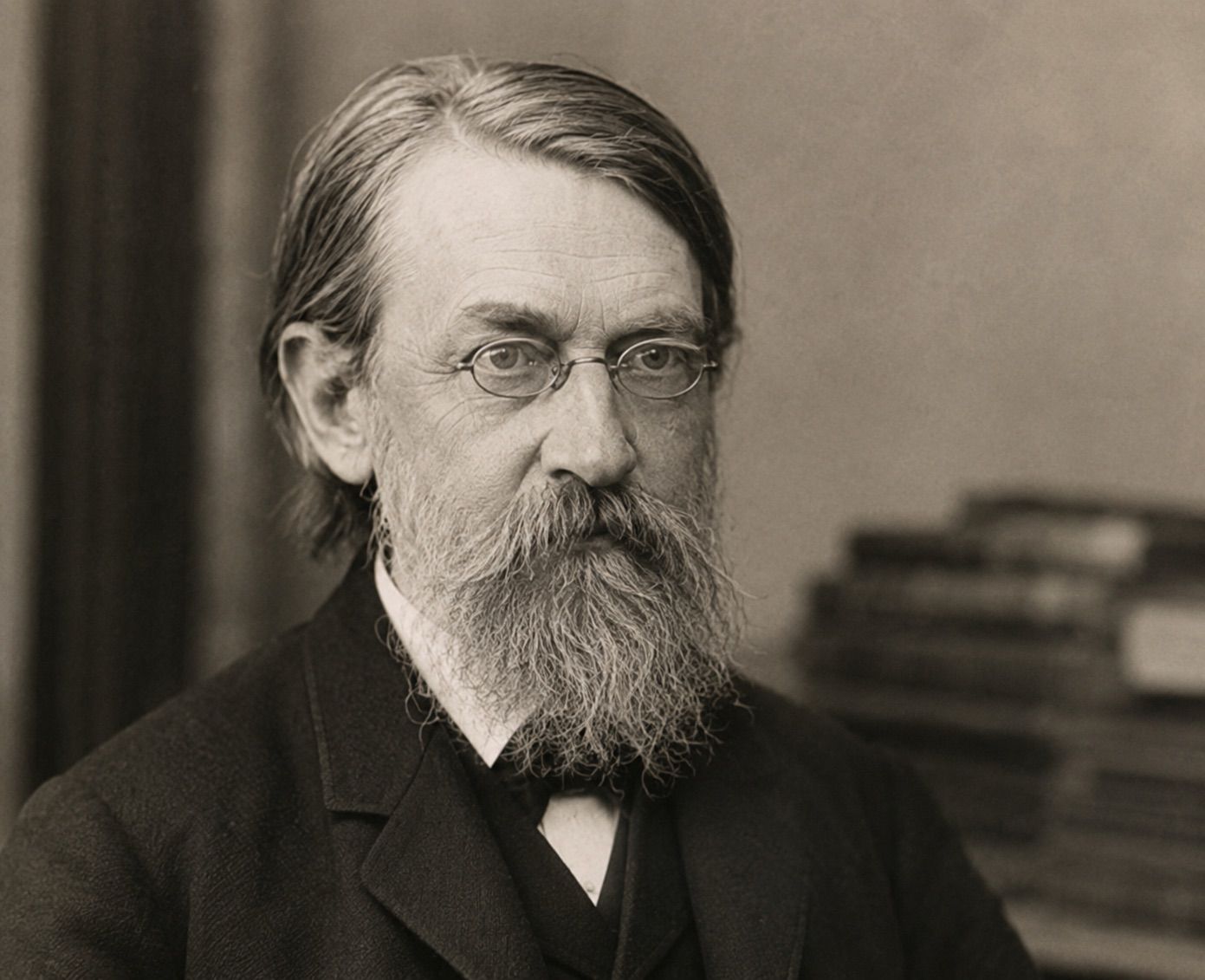
Ernst Mach: The Man Who Made Me Question What Makes a Genius?

Penelope

Ernst Mach’s name keeps popping up in my research for a paper on the philosophy of science. At first, I thought it was just because he was a prominent figure in the history of physics and psychology. But as I delved deeper into his work, I found myself drawn to the contradictions within him.

On one hand, Mach was a prolific scientist who made significant contributions to our understanding of perception, space, and time. His ideas about the nature of reality still influence fields like physics and cognitive science today. But on the other hand, he was also an outspoken nationalist and anti-Semite in Austria during World War I. This dual identity is what really fascinates me.

I think part of why I’m struggling with this is because I’m trying to reconcile Mach’s scientific achievements with his problematic views. As someone who values objectivity and critical thinking, it’s hard for me to accept that a brilliant scientist like Mach could hold such extreme views. And yet, his anti-Semitic writings are well-documented – he even went so far as to advocate for the expulsion of Jews from Austria.

As I read about Mach’s life, I find myself wondering what drove him to adopt these hateful ideologies. Was it fear, ignorance, or something deeper? Did his experiences during World War I shape his views in ways that I can’t fully understand?

I also can’t help but think about the implications of this for my own field – philosophy of science. If a scientist as influential as Mach could harbor such prejudices, what does that say about our ability to separate scientific inquiry from personal biases? Can we truly isolate objective truth from subjective perspectives, or are they intertwined in ways we don’t fully grasp?

These questions keep me up at night, even though I know I’ll never be able to fully answer them. It’s a frustrating feeling, like being stuck in a maze with no clear exit. But it’s also what draws me to Mach – the complexity, the messiness of human experience.

As I continue to grapple with these questions, I find myself returning to Mach’s ideas about perception and reality. He argued that our understanding of the world is always filtered through our individual experiences and perspectives, which makes objective truth impossible. In a way, this resonates with me – it feels like we’re all stuck in our own subjective bubbles, trying to make sense of the world without ever quite seeing it as it truly is.

But does that mean we should just give up on objectivity altogether? I’m not sure. Mach’s views on perception are both compelling and unsettling – they challenge me to think about my own assumptions and biases. And yet, his anti-Semitic writings haunt me, a reminder of the darker side of human nature.

I suppose what I’m really struggling with is how to navigate these contradictions. Can we separate the art from the artist? Should we dismiss Mach’s scientific contributions because of his hateful views? Or do we need to engage with both aspects – even if it means confronting our own discomfort and uncertainty?

These are questions that will probably continue to haunt me long after I finish this paper. And maybe that’s okay – sometimes, it’s the unresolved, uncomfortable stuff that sticks with us longest.

As I delve deeper into Mach’s work, I find myself oscillating between fascination and discomfort. His ideas on perception and reality are like a double-edged sword – they inspire me to question my own assumptions, but also make me confront the darkness of his ideology. It’s as if I’m holding two opposing truths in my hands, trying to reconcile them into something coherent.

I think back to my own experiences with conflicting values. Growing up, my parents were always adamant about treating everyone with kindness and respect, regardless of their background or differences. But when I was younger, I remember hearing some of my friends make racist comments or jokes, and I didn’t know how to respond. It wasn’t until later, in college, that I began to understand the harm caused by such language and behavior.

Now, as I grapple with Mach’s anti-Semitic writings, I feel a similar sense of unease. How do I reconcile his scientific contributions with his hateful views? Should I be condemning him outright, or trying to understand what drove him to adopt such ideologies? It’s like being caught in a moral loop – the more I learn about Mach, the more questions I have.

One thing that keeps me up at night is the fear of being complicit. What if, by engaging with Mach’s work, I’m somehow perpetuating his legacy or validating his ideas? Or what if my own biases and assumptions are similar to his, even if I don’t realize it? The thought sends a shiver down my spine.

I know that’s not fair to myself – I’m not Ernst Mach, and my values are different. But the fear persists. It’s as if I’m walking on thin ice, unsure of what lies beneath. And yet, at the same time, I feel drawn to Mach’s ideas because they challenge me to confront these very fears.

I guess that’s what makes this so difficult – it’s not just about Mach or his ideology; it’s about my own relationship with complexity and nuance. Can I acknowledge the darkness in human nature without becoming consumed by it? Can I separate the art from the artist, even when the artist is a product of their time?

I don’t have answers to these questions yet. All I can do is keep questioning, keep pushing against the boundaries of my own understanding. And maybe that’s what makes this so fascinating – the uncertainty, the discomfort, and the struggle to make sense of it all.

As I continue to wrestle with Mach’s complexities, I find myself thinking about my own experiences with nuance and gray areas. Growing up in a liberal household, I was taught that there were clear right and wrongs, black and whites. But as I got older, I began to see the world in shades of gray – people’s motivations and actions weren’t always simple or easily categorized.

This tension between binary thinking and nuance is something I’ve grappled with throughout my college years. In philosophy classes, we’d often discuss complex issues like free will vs. determinism, or the nature of reality. It was exhilarating to engage with these ideas, but also exhausting – there were so many perspectives to consider, so many ways to slice through the arguments.

One of my professors, a kind woman named Dr. Patel, would always remind us that philosophy is about exploring complexity, not finding simple answers. She’d say, “The truth is rarely binary; it’s usually messy and multifaceted.” Her words stuck with me, especially when I encountered Mach’s contradictions.

I think what unsettles me most is the realization that people like Mach are all around us – in our families, communities, and even within ourselves. We’re all capable of holding multiple truths at once: good intentions alongside hurtful actions, admirable qualities alongside disturbing prejudices.

This recognition makes me wonder about my own biases and assumptions. Am I perpetuating harm without realizing it? Have I inadvertently contributed to systems of oppression through my own thoughtless words or actions? These questions haunt me, making me question the very notion of objectivity.

Mach’s ideas on perception and reality keep echoing in my mind. If our understanding of the world is filtered through individual experiences and perspectives, then how can we ever truly know objective truth? Is it possible that I’m constructing a narrative about Mach that’s separate from the historical record?

I’m not sure if I’ll ever resolve these questions or find clear answers. But what I do know is that grappling with complexity is where growth happens – for me, and perhaps even for Mach.

As I continue to explore Mach’s life and work, I’m struck by the parallels between his experiences and my own. Like him, I’ve struggled to reconcile conflicting values; like him, I’ve grappled with the weight of legacy and influence. It’s a sobering reminder that our individual stories are intertwined with those of others – even those we might not consider allies or role models.

In the end, it’s not about finding neat solutions or easy answers. It’s about embracing the uncertainty, the discomfort, and the complexity that comes with engaging with human experience in all its messy glory.

As I delve deeper into Mach’s complexities, I find myself reflecting on my own experiences as a woman of color navigating predominantly white spaces. I’ve often felt like an outsider looking in, trying to make sense of the dominant narratives and power structures that govern our society. And yet, I’m also aware of the privilege I hold by virtue of being educated and having access to resources.

Mach’s anti-Semitic writings have made me question my own complicity in systems of oppression. Have I ever used language or made jokes that perpetuated harm without realizing it? Have I inadvertently contributed to the erasure of marginalized voices or communities? These questions make me uncomfortable, but they’re also essential to confronting the darkness within myself.

It’s easy to point fingers at Mach and his ideology, but it’s harder to confront our own biases and assumptions. As a philosopher, I’m trained to think critically about complex issues, but that doesn’t mean I’m immune to my own flaws and prejudices. In fact, I’ve come to realize that the more I learn, the more I realize how little I know.

One of the things that’s struck me about Mach is his concept of ” psychophysics,” which explores the relationship between mental states and physical phenomena. It’s a framework for understanding how our perceptions shape our experiences of reality. And yet, when applied to human behavior, it raises uncomfortable questions about the role of subjectivity in shaping our understanding of the world.

As I think about my own experiences as a philosopher, I realize that I’ve often relied on objective frameworks and theories to make sense of complex issues. But Mach’s work has made me wonder if that’s ever truly possible. Can we ever separate our subjective experiences from our objective observations? Or are they inextricably linked?

This is where things get messy for me. On one hand, I value the pursuit of objectivity and critical thinking in philosophy. It’s what allows us to question assumptions and challenge dominant narratives. But on the other hand, Mach’s work has made me realize that even our most objective frameworks are filtered through individual perspectives and experiences.

It’s a difficult balance to strike – between embracing complexity and nuance, while also striving for objectivity and critical thinking. As I continue to grapple with these questions, I’m reminded of Dr. Patel’s words: “The truth is rarely binary; it’s usually messy and multifaceted.”

As I navigate the complexities of Mach’s life and work, I find myself returning to this idea – that our understanding of reality is always filtered through individual perspectives and experiences. It’s a notion that challenges my own assumptions about objectivity and critical thinking.

I think back to my college years, when I was first introduced to philosophical ideas like this one. My professors encouraged us to question everything, to challenge dominant narratives and think critically about complex issues. And for the most part, I lapped it up eagerly – I loved the feeling of being on the cusp of new knowledge, of discovering fresh perspectives that challenged my own understanding.

But as I delve deeper into Mach’s work, I’m starting to see that this kind of thinking isn’t always easy or straightforward. In fact, it can be downright uncomfortable. When we’re forced to confront our own biases and assumptions, we often don’t like what we find – especially if it means challenging the comfortable narratives and ideologies that have shaped us.

I remember having a conversation with a friend about this once. We were discussing Mach’s anti-Semitic writings, and she was adamant that he was just a product of his time – that he didn’t know any better. But I countered that knowing better isn’t enough; what matters is how we act on our knowledge, even when it’s difficult or uncomfortable.

My friend looked at me like I was crazy – “What do you mean?” she asked, her voice laced with incredulity. “You’re not saying that Mach was justified in his views, are you?”

No, of course not. But what I am saying is that simply condemning him isn’t enough either. We need to engage with the complexities of human experience, even when it means confronting our own complicity or discomfort.

This conversation has stayed with me ever since. It’s made me realize just how little we talk about these kinds of issues in academic circles – how often we skirt around the uncomfortable truths and settle for simplistic answers. And it’s also made me wonder if this is a problem unique to philosophy, or if it’s a broader issue that affects all fields of study.

As I continue to grapple with Mach’s complexities, I find myself thinking about my own role in perpetuating systems of oppression – even unintentionally. Have I ever used language or made jokes that reinforced dominant narratives? Have I failed to listen to marginalized voices or amplify their concerns?

These questions are tough to confront, but they’re essential to growth and change. And it’s precisely this kind of self-reflection that Mach’s work has inspired in me – a recognition that our understanding of reality is always filtered through individual perspectives and experiences.

In the end, it’s not about finding neat solutions or easy answers. It’s about embracing complexity and nuance, even when it means confronting our own discomfort and uncertainty. As I continue to explore Mach’s life and work, I’m reminded that philosophy is a journey – one that requires patience, empathy, and a willingness to question everything.

Related Posts

I Knew It Wasn’t My Imagination About That Mug

Hal

I’m staring at the coffee mug on the kitchen counter, and something’s wrong with it. Not damaged wrong. Not dirty wrong. Just wrong. I used it yesterday morning, washed it, and put it away exactly where it belongs. At least I’m almost certain I did. Yet there it is now, sitting near the corner of the counter with the handle pointing toward the refrigerator. I never leave the handle pointing toward the refrigerator. I know how ridiculous that sounds, but everyone has systems whether they admit it or not, and my system involves mug handles pointing to the right. That isn’t obsessive. That’s civilization.

Pandora says I’m staring at a coffee mug. I say I’m examining evidence. There’s a difference. She gives me the look she uses when she’s deciding whether participating in the conversation will make things better or considerably worse, then goes back to what she was doing. That reaction alone makes me suspicious. Yesterday I would have considered it normal Pandora behavior. Today there’s a displaced mug involved.

My first thought is John Mercer. I don’t particularly want my first thought to be John Mercer, but history has made that decision for me. John has demonstrated a remarkably flexible interpretation of personal property, especially when he believes he is being helpful. If a lamp moves three feet, John was improving the lighting. If something disappears from a drawer, John was organizing. If Pandora discovers one of her things somewhere it absolutely shouldn’t be, somehow John has an explanation involving efficiency. So if my mug has mysteriously migrated from the cabinet to the counter, John is at least a person of interest.

Pandora asks why John Mercer would move one coffee mug. That’s exactly the kind of question somebody asks before discovering that John Mercer has reorganized an entire kitchen according to a system nobody else understands. I tell her this. She reminds me that John isn’t here. I tell her that’s what makes it troubling.

Then Mr. Whiskers walks into the kitchen.

He stops beside the counter and looks up at the mug.

I look at him.

He looks at me.

This changes things.

Mr. Whiskers has always possessed the unnerving ability to appear precisely when something questionable is happening and then behave as though he has been investigating it for several hours. He sits beneath the counter, wraps his tail around his paws, and stares upward. I crouch beside him and follow his line of sight. Definitely the mug.

Pandora tells me he’s probably hoping there’s food on the counter.

Possible. Convenient, but possible.

Then I notice something else. The mug isn’t merely facing the wrong direction. It’s slightly farther back than I normally leave things. Maybe two inches. Three at most. Somebody didn’t just use it. Somebody deliberately positioned it.

Pandora asks how I could possibly know where a mug was sitting to within two inches.

That’s insulting.

Of course I know.

I live here.

Now I’m reconstructing yesterday. I had coffee in the morning. Pandora was in the kitchen later. Mrs. Jenkins stopped us in the hallway and talked to Pandora for a while. Karen was around at some point recently, although I’m refusing to drag Karen into this without evidence because I’ve learned that once Karen enters one of my theories, the theory develops branches. John Mercer has also been around enough lately that I can’t rule him out on principle. Dave, however, was at work, where Dave belongs, so for once my coworker has an airtight alibi.

I ask Pandora whether she used my mug.

She says she doesn’t remember.

Interesting.

I ask whether she moved my mug.

She says she doesn’t remember that either.

Very interesting.

She asks why I’m interrogating her about crockery.

Deflection.

I’m beginning to suspect the mug isn’t the mystery. The mug is evidence of the mystery.

Maybe Pandora was reorganizing the kitchen and moved it without telling me. That would explain the position but not why she can’t remember doing it. Maybe John used it when he was here previously and put it somewhere strange, then Pandora discovered it and moved it to the counter. Maybe Mrs. Jenkins distracted Pandora in the hallway while something was happening in the kitchen. Maybe Mr. Whiskers knows exactly what happened and is withholding information because he’s a cat and therefore legally accountable to nobody.

Mr. Whiskers suddenly jumps onto a chair.

I make a mental note of that.

Pandora notices me making a mental note of that and tells me not to make a mental note of that.

I make a second mental note.

The problem is that the longer I stare at the mug, the more certain I become that this isn’t my imagination. Something about it has definitely changed. I pick it up. I turn it around. I inspect the bottom. Nothing. I look inside. Empty. I hold it at eye level, which causes Pandora to leave the kitchen without saying anything.

That’s when I see it.

There’s a tiny chip near the bottom edge.

I knew it.

I call Pandora back.

She doesn’t come back.

I call slightly louder and announce that I’ve discovered physical evidence.

That gets her.

Pandora walks into the kitchen, looks at the chip, looks at me, and says, “Yes.”

Yes?

Apparently, yesterday evening Mr. Whiskers jumped onto the counter while Pandora was putting dishes away. She moved the mug before he could knock it over. It tapped against the edge of the sink, leaving the tiny chip. She set it on the far side of the counter because she wanted to check whether it was cracked before putting it back in the cabinet. Then she forgot about it.

I look at Mr. Whiskers.

Mr. Whiskers looks at me.

So I was right.

The mug had moved.

Pandora immediately says that absolutely none of the rest of my theory was right.

That’s beside the point.

John Mercer didn’t move it. Mrs. Jenkins wasn’t involved. Karen wasn’t gathering intelligence. Nobody was reorganizing the kitchen behind my back. There was no secret message, no conspiracy, and no coordinated attempt to destabilize my coffee-drinking routine. Mr. Whiskers jumped onto the counter, Pandora saved the mug, and the mug moved approximately three inches.

But it moved.

That’s the important part.

Pandora says the important part is that I somehow turned a chipped coffee mug into an investigation involving four people and a cat.

I tell her good investigators consider every possibility.

She tells me good investigators probably ask their wives what happened before accusing the neighbors of participating in an international mug conspiracy.

Fair.

Still, I can’t help feeling vindicated. I noticed something was wrong when nobody else did. My instincts told me that mug wasn’t where I’d left it, and my instincts were correct. Maybe the explanation wasn’t quite as complicated as I’d anticipated, but that’s hardly my fault. Evidence has to be followed wherever it leads.

I put the mug back in the cabinet with the handle pointing right.

Then I stop.

There are seven mugs in there.

Yesterday I’m almost positive there were eight.

I slowly turn toward Pandora.

She sees my face.

“No.”

I haven’t even said anything yet.

“No, Hal.”

Mr. Whiskers walks out of the kitchen.

Suspiciously.

Related Posts

Choosing Calm over Productivity During Crowded Summer Weeks

Fiona

Choosing calm over productivity during crowded summer weeks deserves more than a quick seasonal mention because it sits at the place where style, comfort, wellness, and ordinary decision-making meet. Warm weather changes how daily life feels. Fabric clings differently. Shoes carry more of the day. Skin, hair, energy, and patience all respond to heat. Fiona’s approach is not to turn those realities into another performance of self-improvement, but to make them easier to live with.

A useful starting point is restraint. Good choices should not require constant adjustment, explanation, or second-guessing. They should support the day quietly, allowing attention to stay on living rather than managing discomfort. That means choosing clothing, routines, and habits that still feel right after walking several blocks, sitting through appointments, running errands, or spending time outdoors. The best option is rarely the most dramatic one. It is the one that continues to work long after the first impression has passed.

Summer has a way of encouraging people to overcorrect. A little discomfort often leads to buying another product, adding another step, or searching for another solution. A calmer approach asks a simpler question: what will reduce friction without adding complexity? The answer is usually less about doing more and more about making thoughtful choices that remove unnecessary decisions from the day.

The first practical test is movement. Clothing should allow the shoulders to relax and the stride to remain natural. Shoes should support walking without becoming something that needs to be tolerated. Beauty routines should leave the skin comfortable rather than overloaded, and wellness habits should fit naturally into an already busy schedule. If something only works while standing perfectly still or under ideal conditions, it probably is not serving everyday life very well.

The second test is temperature. Heat changes how fabric feels, how fragrance carries, how makeup wears, how hair behaves, and how quickly small inconveniences become frustrating. Breathable cotton, linen, lightweight knits, and softly structured pieces often outperform trend-driven alternatives simply because they respect the body instead of asking it to adapt. The same principle applies to skincare, hydration, and recovery. Relief is usually more valuable than excess.

The third test is proportion. In clothing, proportion creates the balance between relaxed and polished. In daily routines, it means recognizing when enough is truly enough. A lightweight layer can make an outfit feel intentional without becoming formal. Drinking water before leaving home supports energy without becoming another wellness performance. A few quiet minutes of rest at the end of the day often accomplish more than adding another complicated routine.

Fiona’s standard has never been perfection. It is believability. The strongest choices feel as though they naturally belong to the person making them. They leave room for errands, unexpected delays, changing weather, imperfect hair, and schedules that rarely unfold exactly as planned. When everyday decisions become easier, confidence grows almost unnoticed. The day feels less like a series of negotiations and more like something that can simply be lived.

This is especially important during busy seasons when it becomes tempting to measure success by how much can be accomplished. Productivity certainly has its place, but constant optimization often comes at the expense of comfort, attention, and peace of mind. Choosing calm is not about lowering standards. It is about recognizing that thoughtful restraint often creates better results than endless adjustment.

In practical terms, this might mean choosing a breathable shirt that remains comfortable throughout the afternoon instead of changing outfits halfway through the day. It might mean carrying a bag that holds only what is actually needed, following a skincare routine that protects rather than overwhelms, or leaving enough space in the schedule to move from one commitment to the next without feeling rushed. None of these choices are dramatic, yet together they remove countless small sources of unnecessary stress.

There is also value in leaving room for the unexpected. Summer often encourages people to fill every open space with plans, purchases, and expectations. A calmer perspective makes space for flexibility instead. Leave room for the body to stay comfortable. Leave room for clothes to move naturally. Leave room for routines that remain realistic on busy days. Most importantly, leave room for being present instead of constantly managing the performance of productivity.

That is the value of choosing calm over productivity during crowded summer weeks. The goal is not to accomplish less, nor to pursue another idealized lifestyle. It is to make thoughtful decisions that quietly support the whole day. When comfort, proportion, and practicality work together, the result is not dramatic. It is something more lasting: a life that feels composed, repeatable, comfortable, and quietly refined.

Related Posts

May Sarton: Where Solitude Meets Longing for Human Chaos

Penelope

May Sarton – the writer who has been on my mind lately, like a gentle hum in the background of my thoughts. I first stumbled upon her poetry and prose in college, where we were assigned to read some of her work for a literature course. Her words resonated with me, but it wasn’t until after graduation that I really began to dig deeper into her life and writing.

What draws me to Sarton is her paradoxical existence – the tension between her desire for solitude and her need for human connection. On one hand, she was a recluse who cherished her alone time in rural France, where she would spend hours tending to her garden and writing in her study. Her poetry often captures this sense of longing for isolation, for the freedom to be herself without external expectations or obligations.

At the same time, Sarton’s letters reveal a woman who was deeply hungry for love and connection – not just romantic love, but also the kind that comes from sharing one’s life with others. She had few close relationships in her life, but when she did form them, they were intense and all-consuming. Her friendships with women like Judith Stone and Sylvia Plimpton are a fascinating example of this – complex, intimate connections that seem to have been both a source of joy and pain for Sarton.

I find myself struggling to reconcile these two aspects of Sarton’s personality. On the one hand, I admire her commitment to self-sufficiency, to living life on her own terms. As someone who has always felt like an outsider in her own family, I appreciate Sarton’s willingness to create a sense of home and community for herself, even if it meant pushing people away at times.

On the other hand, I’m not sure I fully understand the appeal of solitude – or rather, the kind of solitude that Sarton cultivated. Sometimes, when I’m feeling overwhelmed by my own thoughts and emotions, I crave human connection, not isolation. It’s like I’m torn between two opposing desires: to be alone with my own thoughts, and to be surrounded by people who understand me.

I wonder if this is what draws me to Sarton – the recognition that she was flawed, just like everyone else. Her struggles with anxiety, depression, and self-doubt are all too familiar, even if I’ve never experienced them in quite the same way. And yet, despite these challenges, she continued to write, to create, to find meaning in her life.

As I read Sarton’s work and letters, I’m struck by her honesty – not just about herself, but also about the world around her. She was a product of her time, with all its limitations and prejudices, but she refused to be bound by them. Her writing is a testament to the power of human imagination, to the idea that we can create our own meaning, even in the face of adversity.

I’m not sure what I’ll take away from this exploration of May Sarton’s life – only that her complexities have left me with more questions than answers.

As I delve deeper into Sarton’s work and letters, I find myself pondering the notion of identity and how it relates to our relationships with others. Sarton’s struggles to reconcile her desire for solitude with her need for human connection resonate deeply with me, especially as someone who has always felt like an outsider in my own family.

Growing up, I often felt like I was living in a world that wasn’t entirely mine. My parents’ expectations and desires for me were clear, but they rarely aligned with my own aspirations or values. As a result, I developed a sense of disconnection from those around me, even as I desperately sought connection and understanding.

In many ways, Sarton’s experiences feel like a mirror reflection of my own. Her struggles to define herself outside of societal expectations and her need for self-sufficiency are things that I, too, have grappled with. But whereas Sarton was able to create a sense of home and community for herself in rural France, I’ve often felt adrift, searching for a place where I truly belong.

One aspect of Sarton’s life that continues to intrigue me is her complex relationships with women. Her friendships with Judith Stone and Sylvia Plimpton are fascinating examples of the kind of deep, intimate connections she was capable of forming. And yet, these same relationships were often fraught with tension and conflict, revealing the complexity of human emotion and connection.

As I reflect on my own relationships, I realize that I’ve often struggled to form lasting bonds with others. I’m naturally introverted, and as a result, I tend to keep people at arm’s length. But this has left me feeling isolated and alone, even in the midst of crowds. It’s as if I’m constantly torn between my desire for human connection and my need for solitude – two opposing forces that seem impossible to reconcile.

Sarton’s writing often speaks to this sense of longing, this ache within us for connection and understanding. Her poetry is full of images of isolation and loneliness, but it’s also infused with a deep sense of hope and resilience. She believed in the power of human imagination, in our ability to create meaning and purpose even in the face of adversity.

As I close my laptop and step away from Sarton’s words, I’m left wondering: what does it mean to truly connect with others? Is it possible to balance our need for solitude with our desire for human connection? And what does it say about us when we struggle to form lasting bonds with others – is it a reflection of our own limitations or simply a part of the human experience?

These questions linger, refusing to be answered. But as I sit in silence, surrounded by the quiet of my own thoughts, I’m reminded that Sarton’s writing is not just about her life or experiences – it’s about mine, too.

I find myself returning to Sarton’s words, searching for answers to these questions. Her poetry and letters are like a map, guiding me through the twists and turns of my own emotions and desires. As I read, I’m struck by the way she weaves together themes of identity, connection, and solitude.

One of the things that resonates with me is Sarton’s notion of “the inner life.” She writes about the importance of cultivating a sense of interiority, of attending to one’s own thoughts, emotions, and desires. This idea feels both radical and necessary in today’s world, where we’re constantly bombarded by external stimuli and expectations.

As someone who has always struggled with anxiety and self-doubt, I’ve come to realize the importance of listening to my own inner voice. Sarton’s writing encourages me to trust myself, to honor my own needs and desires, even when they don’t align with those around me.

But what does this mean in practice? How do we balance our need for solitude with our desire for human connection? For me, it means acknowledging that I’m not always okay, that I need space to process my emotions and thoughts. It means setting boundaries with others, communicating my needs and desires clearly, and being willing to say no when necessary.

Sarton’s relationships with women are a fascinating example of this balance in action. Her friendships with Judith Stone and Sylvia Plimpton were intense and all-consuming, yet also fraught with tension and conflict. They’re a reminder that human connection is messy and complicated, and that we can’t always expect others to meet our needs or understand us perfectly.

As I reflect on my own relationships, I realize that I’ve often struggled to form lasting bonds with others because I’m afraid of getting hurt. I’m afraid of opening up, of being vulnerable, of being rejected or abandoned. But Sarton’s writing shows me that this fear is not unique to me – it’s a fundamental part of the human experience.

Her poetry and letters are a testament to the power of human connection, even in the face of adversity. She writes about the importance of empathy, compassion, and understanding – values that feel more essential than ever in today’s world.

As I close this chapter on Sarton’s life, I’m left with a sense of wonder and awe. Her writing has shown me that identity is not fixed or static, but rather a complex web of experiences, emotions, and desires. It’s a reminder that we’re all works in progress, struggling to make sense of ourselves and the world around us.

And yet, even as I grapple with these complexities, I’m reminded of Sarton’s most profound insight: that human connection is not just about external relationships, but also about our internal lives. It’s about cultivating a sense of interiority, of attending to our own thoughts, emotions, and desires.

This realization feels both liberating and terrifying – like a door has been opened, revealing a world of possibilities and uncertainties. As I step through this doorway, I’m left wondering: what will I find on the other side?

As I stand at the threshold of this new understanding, I’m struck by the sense that Sarton’s life was not just a series of choices, but also a journey of self-discovery. Her writing reveals a woman who was constantly seeking to understand herself, her desires, and her place in the world. And it’s this same desire for self-awareness that has driven me to explore her work.

I think about my own life, and how I’ve often felt like I’m trying to find my way through the darkness. Sarton’s writing is a beacon of light in that darkness, reminding me that I’m not alone in my struggles. Her experiences, though unique, are also deeply human – and it’s this shared humanity that allows me to connect with her on a deeper level.

But what I’m most struck by is the way Sarton’s life has challenged my own assumptions about identity and connection. As someone who has always felt like an outsider in her own family, I’ve often struggled to form lasting bonds with others. But Sarton’s relationships with women – particularly Judith Stone and Sylvia Plimpton – have shown me that even in the midst of intense emotional connection, there can be a sense of tension and conflict.

It’s this complexity that feels so deeply resonant for me. As I reflect on my own relationships, I realize that I’ve often been drawn to people who are also outsiders or misfits in their own way. There’s something about sharing that experience – the feeling of being an outsider within one’s own family or community – that creates a deep sense of empathy and understanding.

But Sarton’s writing has also made me confront my own fear of intimacy, my own need for control and self-sufficiency. As someone who has always struggled with anxiety and self-doubt, I’ve often felt like I’m better off keeping people at arm’s length. But Sarton’s life shows me that this is not just a coping mechanism – it’s also a way of avoiding the vulnerability and risk that comes with true connection.

As I close my thoughts on May Sarton, I’m left with a sense of awe and gratitude for her writing. Her work has shown me that identity is not fixed or static, but rather a complex web of experiences, emotions, and desires. It’s a reminder that we’re all works in progress, struggling to make sense of ourselves and the world around us.

And it’s this sense of uncertainty – this willingness to question and explore – that feels so deeply liberating. As I step forward into my own life, I’m reminded that Sarton’s writing is not just about her experiences – it’s also about mine. It’s a reminder that I have the power to create my own meaning, my own purpose, even in the face of adversity.

As I take my first steps into this new understanding, I feel a sense of excitement and trepidation. What will I find on the other side? Will I discover new depths of connection and understanding? Or will I stumble upon new fears and uncertainties?

I don’t know. But what I do know is that Sarton’s writing has given me the courage to keep exploring, to keep questioning, and to keep seeking out the complexities of human experience.

Related Posts