Latest Articles

Meltdown at Three Mile Island: America’s Nuclear Wake-Up Call

Elias Rowen

On March 28, 1979, the United States faced its most serious nuclear accident when a partial meltdown occurred at Three Mile Island Nuclear Generating Station in Pennsylvania. What started as a minor mechanical failure quickly spiraled into a crisis that shook the nation’s confidence in nuclear energy. A cooling system malfunction in Reactor 2 led to overheating, causing the reactor’s core to partially melt. The situation worsened as misinterpretations of warning signals led plant operators to take incorrect actions, further escalating the emergency. The world watched anxiously as officials struggled to contain the damage, fearing a full-scale catastrophe.

Panic spread throughout Pennsylvania as conflicting reports left the public uncertain about the potential dangers of radiation exposure. While the meltdown was eventually controlled without any immediate deaths or injuries, thousands of residents evacuated their homes in fear of contamination. Parents rushed to move their children away, businesses shut down, and a national debate erupted over the safety of nuclear power. Although radiation releases were minimal, the psychological and economic impact was immense. Trust in nuclear energy plummeted, leading to stricter regulations and a decline in new plant construction across the United States.

The Three Mile Island accident became a turning point in nuclear safety policies. It exposed critical flaws in plant operations, emergency preparedness, and public communication. In response, the U.S. government and the nuclear industry implemented sweeping changes, including improved training for plant operators, stricter safety protocols, and the creation of independent oversight agencies. Despite the lessons learned, the disaster left an enduring scar on the nuclear industry, fueling skepticism that persists to this day.

Decades later, the legacy of Three Mile Island remains a powerful reminder of both the potential and the perils of nuclear energy. While advancements in technology have made nuclear power safer and more efficient, the accident continues to shape public perception and energy policy. It stands as a cautionary tale—proof that even the most advanced systems are not immune to human error and mechanical failure.

Related Posts

John Cox: The Elusive Pirate Who Cheated Death—Until He Didn’t

Dave

John Cox, also known as John Coleman, was one of the most cunning and feared pirates of the 18th century. His name struck terror into the hearts of sailors, not just for his ruthlessness but for his uncanny ability to evade capture. Unlike most pirates who relied on brute force, Cox was a master of strategy. He specialized in ship-wrecking, using deceptive navigation tactics to lure merchant vessels into dangerous waters, where they would run aground and become easy prey. His reputation for outsmarting authorities earned him both admiration and hatred in equal measure.

Cox’s genius lay not just in his ability to capture ships but in his unmatched skill at slipping through the fingers of the law. Time and again, the British Navy attempted to track him down, only for him to vanish into the vastness of the ocean. He changed identities, forged documents, and even spread false rumors of his own demise to throw pursuers off his trail. His ability to stay one step ahead made him a legend among his fellow pirates and a nightmare for King George II’s naval forces.

But even the most elusive pirates cannot outrun fate forever. After years of sailing the Caribbean and the Atlantic, Cox’s luck ran out. Betrayed by one of his own men, he was finally captured and brought before the British crown. King George II, eager to make an example out of him, ordered his execution. Cox met his end not on the high seas, but at the gallows—a stark reminder that no pirate, no matter how clever, could outwit the empire forever.

Though he was executed, John Cox’s legend did not die with him. Stories of his daring escapes, brilliant deceptions, and ruthless plundering still echo through history. His ability to manipulate the sea itself to his advantage set him apart from other pirates of his time. Even today, maritime historians and pirate enthusiasts alike continue to unravel the mystery of the man who seemed invincible—until the day he wasn’t.

Related Posts

Shaken to the Core: The 1964 Alaska Earthquake

Elias Rowen

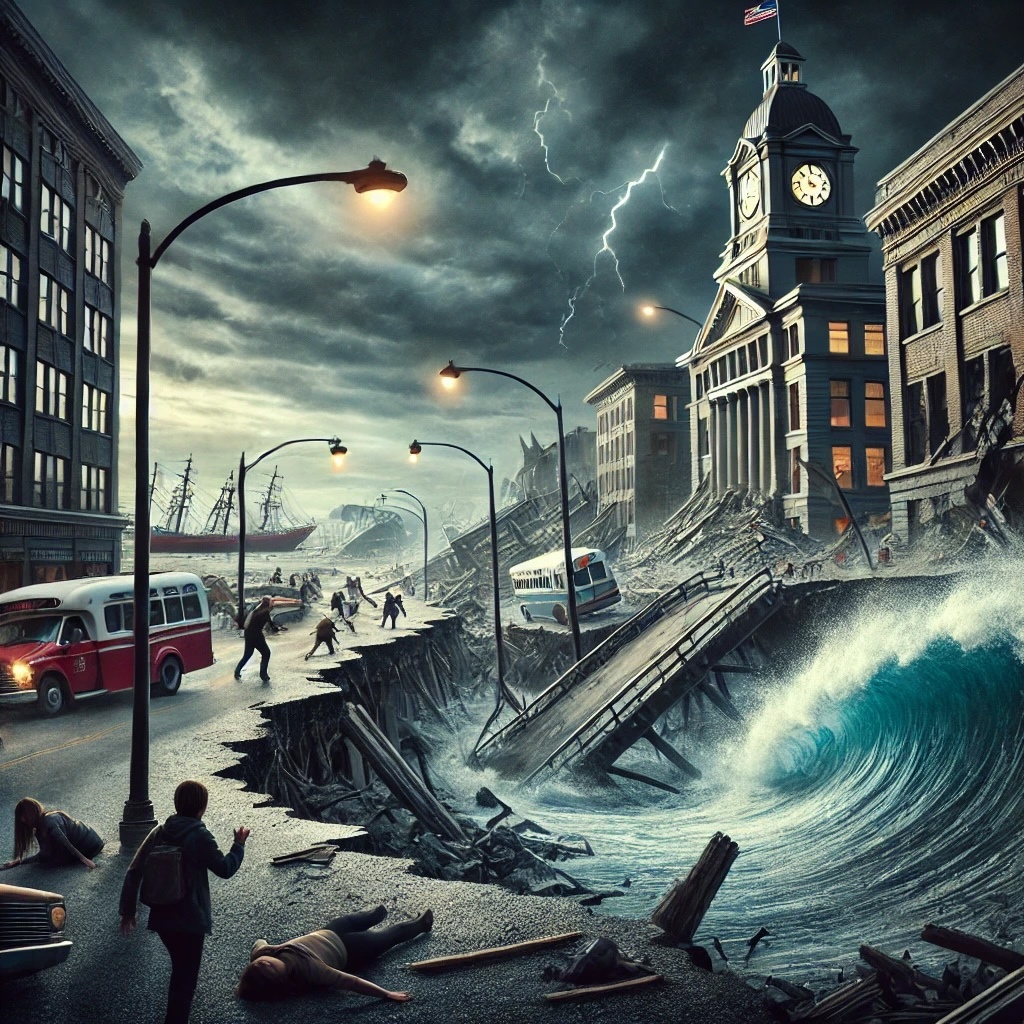
On March 27, 1964, Alaska was rocked by the most powerful earthquake ever recorded in the United States—a staggering 9.2-magnitude tremor that sent shockwaves across the region. Known as the Great Alaska Earthquake, this massive quake lasted an astonishing four and a half minutes, causing widespread destruction and triggering deadly tsunamis. Entire towns were swallowed by landslides, buildings crumbled like sandcastles, and the land itself was permanently reshaped. The devastation was unlike anything Alaskans had ever seen, leaving behind a haunting reminder of nature’s raw power.

The earthquake’s epicenter was located in Prince William Sound, about 75 miles east of Anchorage. What made this quake particularly catastrophic was the combination of violent ground shaking and secondary disasters. As the earth convulsed, vast sections of land were thrust upwards or dropped several feet, permanently altering Alaska’s landscape. The shaking alone caused landslides that buried homes, businesses, and roadways, while the subsequent tsunamis devastated coastal communities as far away as California and Hawaii. Valdez, a key port town, was obliterated as a massive wave engulfed the harbor, sweeping away docks, ships, and buildings.

The human toll of the disaster was severe. More than 130 people lost their lives, primarily due to the towering tsunamis that followed the quake. While Alaska’s sparse population prevented even greater casualties, the economic impact was staggering. Infrastructure across the state was shattered—Anchorage, Alaska’s largest city, saw entire neighborhoods collapse, while bridges, railways, and oil facilities were torn apart. The disaster led to new advancements in earthquake research and building codes, shaping the way the U.S. prepares for future seismic events.

The Great Alaska Earthquake of 1964 remains one of the most significant natural disasters in American history. It served as a grim reminder of the Pacific Ring of Fire’s relentless seismic activity and the unpredictable nature of earthquakes. Today, its lessons continue to influence engineering, emergency response, and geological studies, helping to protect future generations from the earth’s unpredictable fury.

Related Posts

The Shot That Changed the World: Jonas Salk and the Polio Vaccine

Elias Rowen

In 1953, the world took a monumental step toward eradicating one of the most feared diseases of the 20th century—polio. Dr. Jonas Salk, a virologist and medical researcher, announced that his team had successfully tested a vaccine against poliomyelitis, a devastating disease that primarily affected children, leaving many paralyzed or reliant on iron lungs to breathe. Salk’s breakthrough was met with widespread hope, as polio had long been a source of terror for families across the globe. Unlike other researchers who sought to use live viruses in their vaccines, Salk took a different approach, using an inactivated (killed) virus that could safely trigger immunity without causing the disease itself.

The announcement of the vaccine’s success was a turning point in medical history. Salk’s vaccine underwent rigorous testing, first on animals and then on human subjects, including himself, his family, and volunteers. In 1954, mass field trials involving over a million children, known as the “Polio Pioneers,” confirmed the vaccine’s effectiveness. The results were so promising that in 1955, the vaccine was declared safe and effective, leading to widespread immunization programs. Cases of polio plummeted, and over time, the disease was nearly eradicated in many parts of the world. Unlike many pharmaceutical developers, Salk chose not to patent the vaccine, famously stating, “Could you patent the sun?” His selfless dedication ensured that the vaccine could be distributed widely and affordably, saving countless lives.

The legacy of Jonas Salk’s discovery extends beyond polio. His work demonstrated the power of scientific research to conquer deadly diseases, inspiring future generations of scientists to tackle global health challenges. Today, thanks to continued vaccination efforts, polio is on the verge of being eradicated worldwide. Salk’s vaccine was not just a medical triumph—it was a symbol of hope, cooperation, and the incredible potential of science to transform lives.

Related Posts

Inferno in the Factory: The Fire That Changed Labor Laws

Elias Rowen

On March 25, 1911, tragedy struck in the heart of New York City when the Triangle Shirtwaist Factory fire claimed the lives of 146 workers, most of them young immigrant women. The factory, located on the eighth, ninth, and tenth floors of the Asch Building, was a bustling garment shop where workers endured long hours in overcrowded and unsafe conditions. When a fire broke out late in the afternoon, chaos and horror unfolded, exposing the brutal reality of industrial labor in the early 20th century.

The fire spread rapidly, fueled by heaps of fabric and wooden workstations, while workers had little chance of escape. Locked exit doors, a common practice to prevent unauthorized breaks, became death traps. Some leaped from the windows in desperation, while others succumbed to the smoke and flames inside. Firefighters arrived quickly, but their ladders were too short to reach the upper floors, making rescue efforts tragically ineffective. The sight of burning bodies falling to the pavement below shocked the city and the nation.

The Triangle Shirtwaist Factory fire was more than just a horrific accident—it became a turning point in labor history. Public outrage over the preventable deaths ignited a push for workplace safety reforms. Investigations revealed gross negligence by factory owners, who were later acquitted of serious charges despite their blatant disregard for worker safety. However, the tragedy led to the establishment of new labor laws, including fire safety regulations, better working conditions, and the rise of labor unions advocating for workers’ rights.

The fire’s legacy endures as a reminder of the human cost of industrial greed and neglect. Today, the victims of the Triangle Shirtwaist Factory fire are honored not only in memorials but also in the strengthened labor protections that continue to safeguard workers. Their sacrifice was not in vain—it sparked a movement that reshaped American labor laws, ensuring that future generations would not suffer the same fate.

Related Posts