Category: Travel
Te Whakarewarewa Spectacular: A Journey Through Maori Culture
Driving Tomorrow: The Future of Transportation with Autonomous Vehicles and Hyperloop Innovations
The future of transportation promises to revolutionize how we move, transforming daily commutes and long-distance travel alike. At the forefront of this transformation are autonomous vehicles, which are expected to drastically alter personal and public transportation. Self-driving cars, equipped with advanced sensors, machine learning algorithms, and real-time data processing, have the potential to enhance road safety by reducing human error, which is a leading cause of accidents. These vehicles are also anticipated to improve traffic flow and reduce congestion, as they can communicate with each other and with traffic management systems to optimize routes and speeds. Autonomous vehicles could also offer greater mobility to individuals who are unable to drive, including the elderly and disabled, thereby promoting inclusivity.
Hyperloop technology, another groundbreaking innovation, is set to redefine long-distance travel. Conceptualized by visionaries like Elon Musk, the hyperloop system involves passenger pods traveling at high speeds through low-pressure tubes, significantly cutting travel times between cities. This technology leverages magnetic levitation and electric propulsion to achieve speeds exceeding 600 miles per hour, making it faster than current high-speed trains and potentially even commercial flights for certain routes. The hyperloop promises not only speed but also sustainability, as it aims to use renewable energy sources, such as solar panels installed along the tube, to power the system, thereby reducing the carbon footprint of intercity travel.
Beyond autonomous vehicles and hyperloop technology, other transportation innovations are also on the horizon. Electric vehicles (EVs) continue to gain traction as a cleaner alternative to gasoline-powered cars. Advances in battery technology are extending the range of EVs and reducing charging times, making them more practical for everyday use. Furthermore, the development of flying cars and urban air mobility solutions hints at a future where air travel is integrated into urban transportation networks. These aerial vehicles, potentially powered by electricity or hybrid systems, could alleviate ground traffic congestion and offer rapid point-to-point travel within and between cities.
Innovations in public transportation are also expected to play a significant role in the future of mobility. Smart public transit systems, leveraging real-time data and artificial intelligence, can optimize routes, schedules, and passenger loads to enhance efficiency and user experience. The integration of multimodal transportation networks, where different modes of transport such as bikes, buses, trains, and car-sharing services are seamlessly connected, will provide more flexible and convenient travel options for urban dwellers.
The evolution of transportation is not without challenges. Regulatory frameworks must adapt to ensure safety, security, and privacy in the age of autonomous and connected vehicles. Infrastructure investments are necessary to support new technologies, such as charging stations for EVs and dedicated tracks for hyperloop systems. Additionally, societal acceptance and trust in new transportation modes will be crucial for widespread adoption.
In conclusion, the future of transportation holds exciting possibilities, driven by innovations in autonomous vehicles, hyperloop technology, and other cutting-edge developments. These advancements have the potential to make travel faster, safer, more efficient, and environmentally friendly. As we move forward, the synergy between technological progress and supportive policies will be key to realizing the full potential of these transformative transportation solutions.
Related Posts
Ride the Rapids: Huka Falls Jet Boat Adventure in Taupo
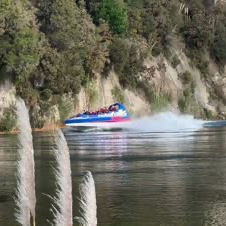
The Huka Falls Jet Boat experience in Taupo, New Zealand, provides an electrifying blend of excitement and scenic beauty, ensuring an unforgettable journey for both thrill-seekers and nature lovers. Situated close to Taupo on the North Island, Huka Falls is celebrated for its dramatic waterfalls formed where the vast Waikato River contracts suddenly from 100 meters into a narrow chasm. The jet boat ride commences by whisking passengers through the pristine waters of the river at exhilarating speeds, performing daring maneuvers such as 360-degree spins that intensify the adrenaline rush. During this exhilarating ride, participants are afforded spectacular views of the native bush landscapes and might even spot local wildlife, including birds or fish.
The zenith of this adventure is the encounter with Huka Falls itself—a mesmerizing sight where turbulent waters plunge with great force within a confined gorge. Various tour packages are available to cater to different preferences, ranging from short rides to extended excursions that showcase additional scenic spots along the river’s course. Ensuring the safety of all participants is of utmost importance to the operators; therefore, every passenger is equipped with life jackets and given comprehensive safety briefings before departure. The experience typically spans between 30 minutes to over an hour, depending on the chosen tour package. This thrilling excursion is generally accessible to most people; however, it is advised that pregnant women and those with back or neck problems consult beforehand.
Ultimately, the Huka Falls Jet Boat adventure seamlessly fuses heart-pounding excitement with stunning natural vistas, rendering it an ideal expedition for those in pursuit of a unique perspective on one of New Zealand’s iconic natural wonders.
Related Posts
Wellington’s Iconic Ride: A Journey Through Time and Scenery


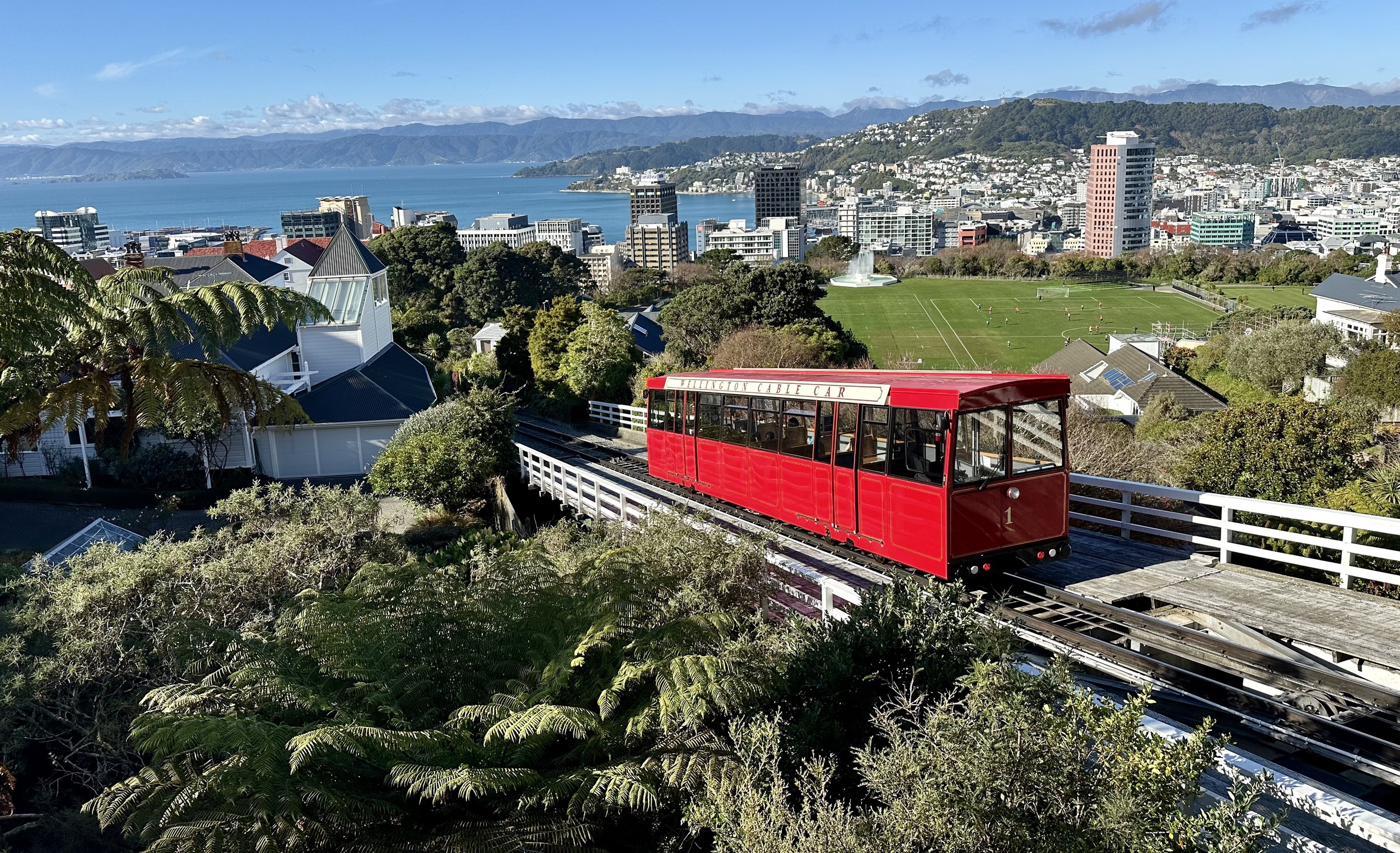
Established in 1902, the Wellington Cable Car stands as an emblematic fixture of New Zealand’s capital, intertwining a deep historical legacy with contemporary functionality and tourism. This noteworthy transportation system navigates through Wellington’s urban fabric, linking the vibrant Lambton Quay with the idyllic suburb of Kelburn. Along this route, passengers are granted mesmerizing vistas of the city’s harbor and undulating hills, punctuated by traversals through tunnels and across viaducts.
What truly distinguishes the Wellington Cable Car on a global scale is its distinctive funicular railway design. This configuration, involving two cars moving in synchrony to ascend and descend steep gradients, highlights an early 20th-century engineering marvel. Such a system not only exemplifies historical ingenuity but also guarantees efficiency and reliability for today’s daily commuters. Consistent updates and enhancements ensure the Cable Car remains a safe and pleasant transport option while maintaining its historic allure.
Beyond mere transportation, the Wellington Cable Car enriches visitor experience with its deep connections to New Zealand’s rich cultural and historical landscape. Reaching the pinnacle at Kelburn summit, passengers gain access to noteworthy sites like the Wellington Botanic Garden, Carter Observatory, and the Cable Car Museum. This cherished landmark extends beyond its utilitarian purpose by enhancing local residents’ lives with dependable transit and standing as a quintessential attraction for tourists eager to delve into the city’s unique heritage.
From its modest origins to its current-day prominence, the Wellington Cable Car epitomizes a fundamental component of Wellington’s vibrant identity. By merging practical service with a profound sense of history, it continues to be a cherished part of the city’s ever-evolving story.
Related Posts
Colonizing Mars: Dreams, Dilemmas, and Dollars
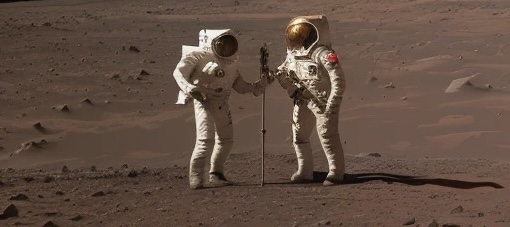
The desire to colonize planets other than our own has a mighty hold on the hearts of scientists, entrepreneurs, and the general public. It has promised us scientific insights for years and has seduced many into believing that it would fulfill a manifest destiny of sorts: “We must explore!” Why? Because of the many virtues that bespeak our finding “another place just like home”—and none more virtuous than the idea of becoming a duplicate Earth. Excitement naturally arises at the idea of coming across new minerals or technology that could completely transform the way we live right here on Earth. But in the same breath, we must also be conscious of the fact that the push outward into space demands of us not just a hard scientific look, but also an ethical accounting and a precise moral compass. If our species is to grow and evolve by spreading to other worlds, then that world and those who already dwell there will have to pay a price, both for our ingress and our staying. And doing this has to make for some pretty good moral and ethical justifications or paybacks. This essay will make the case that human colonization of other planets is full of inspiring prospects for the advancement of our species. However, for this argument to feel valid, I will need to give equal time to some sticky ethical problems that would accompany any exodus to, say, Mars or beyond, and to raise a few of the serious environmental implications that would be involved in establishing any sort of sustainable human settlement off-Earth. I think it has always been the wrong way to approach this subject to grant that one side of the argument is ethically superior without seriously considering what any mission to another world would actually consist of and imply.
Moreover, when we consider the imperative to colonize other planets, especially Mars, the issue of morality looms large. This is an enormous undertaking, after all, involving untold trillions of dollars and an incalculable human toll. It is the descendants of those poor souls who will pay the price, in all likelihood. And for what? To maintain the status quo—profitable, for some; brutal, for many—on one small rock, now almost tapped out of its vital resources? It is difficult to understand what, exactly, makes this kind of imperialism both necessary and right (von Braun, 2018). Moreover, there is a clear ethical reason to think hard about whether we humans should even try to establish large human communities in space. Philosophically, space colonization seems to many to be no different from colonialism. If one society has the right to impose its rules and ways of life on another society, then why not on another planet, which also has its own sets of natural resources, indigenous life-forms, and the like? Nevertheless, if we try to talk about the problems of space colonization from this angle, we quickly run into the huge problem of what constitutes a better society. Additionally, von Braun (2018) underlines the major technical difficulties that stand in the way of establishing safe bases on Mars, where the main challenge is the “fiercely ionized radiation environment” (p. 42). Moreover, the large year-to-year fluctuations in the Martian day and night side temperatures—more so than anything else, these forces make life inhospitable to humans on Mars. The author, a medical doctor with a space background, notes a danger for the human explorers from the kinds of cosmic rays that Earth’s magnetic field deflects (238). Put simply, even though the idea of living on Mars may seem very exciting, people need to think about the effects it will have on the environment and ethics to create a responsible plan for biology in space. That was the message Jane Poynter—the CEO of Paragon Space Development Corporation and a founder of some well-known NASA initiatives—delivered during a Wilson Center panel discussion event held on May 23, 2019.
To compound these ethical and environmental concerns, the economic practicability of colonizing Mars merely adds another stratum of difficulty. As the statute of New York City’s Waldorf Astoria hotel says, “one space-faring vehicle capable of taking more than one person to Mars, with the necessities of life to last for the duration of the astronaut’s stay and the supplies to set up a base on Mars… could cost at least $100 billion.” Given investors’ well-founded concerns about the return on such a fantastically expensive investment, one might wish to see colonization prospects as being limited. But the plans of Elon Musk’s SpaceX and the now-defunct Mars One project are anything but limited. These are very important funding questions: Should we take all this money that we’re spending on our own Earth, and send it to outer space—where a lot of people would like to go, but can’t? On the other hand, the relatively few who will get to make that trip probably will not be paying for it with their own personal funds, nor will the trip be itself a realistic enough near-term prospect to justify diverting funds from current terrestrial concerns. Who is to say that the funding of a mission to Mars will not amount to stealing diversionary funds from the very kinds of efforts that might cure diseases? Hence, though Mars is a scientific and resourceful destination like no other, we must deal with the ethical problems, environmental downsides, and financial impracticalities it might harbor if we are to make it a just and sustainable place for mankind to settle.
Additionally, the attraction of colonizing Mars may seem to promise spectacular scientific advances and the acquisition of vast new stores of resources. Nonetheless, it is important to realize that long-term feasibility can only be assessed properly through critical examination of the myriad difficulties and potential risks presented by the Red Planet and its conditions. Morton (2018) reminds us that the very act of attempting to project ourselves permanently beyond Earth’s protective belt into the uncanny and still-mysterious space environment is a huge step into the unknown and carries incalculable dangers. The way in which we comprehend Martian weather conditions and geological events is still quite basic. Because of this, there is a prevalent probability that when human settlers arrive on Mars, they might experience massive failure in regard to their intended way of living there. The kind of oversight which Earth’s past environmental managers have displayed in the way they ran this planet before humans arrived must necessarily serve as an Earth-to-space cautionary tale. Moreover, for humans to establish a sustainable presence on Mars, a key issue is figuring out what can be done about the unpredictable dynamics of human living and working together over the long term—especially within the closed systems that a self-sustaining community on Mars will necessarily become. Predicting behavior, responses to stress, and other factors of human psychology and sociology over the long term and at a great distance from Earth is a prime focus of current research. Plants and multiple generations of living things will need to function in these closed systems, too. Unprecedented teamwork of humans and machinery will be necessary (Morton). Integrating full-risk assessments and adaptive strategies into the colonization plan is not just a smart move but an essential one if we want to avoid tragedy in our push to fill outer space.
The desire to send people to Mars offers an exciting promise of future human activity in a new place, of scientific investigations possible only there, and of growth into untapped territory. This aspiration captures the collective imagination in many fields, from aerospace engineering and physics to architecture and design. Such a mission is not easy and would take many years to complete, but it builds on an awe-inspiring vision of what humans can do together. At the same time, it raises complex questions of ethics, of the impact on Mars, and of the bottom line—the economic might to pull it off now and into the foreseeable future. The establishment of human-occupied bases on Mars would result in the direct contamination of the Martian environment by Earth life forms. Would this have a serious detrimental effect on Martian life, if it exists? Aside from that scientific concern, let us consider the ethical aspects of giving Earth contingents the right to colonize another planet. Doesn’t the right of a planet to maintain its own ecosystems without human intervention carry any weight? If we are not willing to let another planet occupy its universe unimpeded, what does this bode for the payoff in first-take undertaking for human-occupied bases? As we teeter on the verge of turning into a species that populates more than just one planet, it becomes especially important that our turn toward “next” not be a stumble in the direction of “wrong.” These ventures have to be looked at as a whole, because just as with any big, hopeful, but new, thing that humans do when they’re together, there’s a lot of margin for error. And the author (me!) certainly hopes humans will use what I’ve written here to get into a seriously scrutinizing mode before we try to inhabit the oh-so-businesslike ventures toward becoming an interplanetary species. In the end, the voyage to Mars must not be seen as just a hunt for new places. It is also a deep mitosis into how we like Earth will have to muddle through decisions from which there is no turning back. These are at their core stewardship decisions, and despite our best efforts to leave things as we found them, we will be making major changes to the Martian environment.
References
von Braun, W. (2018). The ultimate challenge: the exploration and colonization of extrasolar planets. The Political Economy of the Space Age: How Science and Technology Shape the Evolution of Human Society, 189.
Billings, L. (2019). Colonizing other planets is a bad idea. Futures, 110, 44-46.
Morton, A. (2018). Should we colonize other planets?. John Wiley & Sons.
Related Posts
Aotearoa’s Journey: Upholding Maori Rights and Reconciliation
New Zealand is globally admired for its breathtaking landscapes and dynamic cultural fabric, a legacy profoundly shaped by its indigenous Maori people. Although constituting a minority, the Maori wield considerable influence within New Zealand’s socio-political framework, underlined by governmental initiatives designed to elevate their needs and rights. This discourse explores the historical foundations, the Treaty of Waitangi, and ongoing endeavours to uphold Maori rights and foster reconciliation.
The signing of the Treaty of Waitangi in 1840 was a watershed moment in New Zealand’s history, symbolizing an alliance between the British Crown and Maori chiefs. Drafted in both Maori and English, the treaty was intended to establish peace and ease British colonization while preserving Maori land and cultural rights. Nonetheless, discrepancies in translation and interpretation sparked misunderstandings and trust breaches, giving rise to long-standing grievances that linger today.
The cornerstone of the Treaty of Waitangi lies in its recognition of Maori as tangata whenua—the people of the land. This designation grants them specific rights and protections, reinforcing the significance of Maori culture, language, and traditions. Over the years, successive New Zealand governments have attempted to honour these promises, though with varying levels of success.
Maori have faced centuries of marginalization, land dispossession, and cultural oppression, leading to significant socio-economic disparities. Acknowledging these historical injustices, successive governments have initiated various strategies to redress Maori grievances and encourage reconciliation. Integral to these efforts are Treaty settlements that aim to correct past wrongs through financial restitution, land returns, and cultural rejuvenation programs.
In recent times, the New Zealand government has increasingly focused on Maori welfare in its policy development and execution. This dedication is embodied in laws such as the Treaty of Waitangi Act 1975, which provides frameworks for resolving treaty disputes and promoting Crown-Maori collaboration. Furthermore, government agencies are obligated to incorporate Treaty of Waitangi principles in their decision-making processes, ensuring that Maori viewpoints are considered.
The principle of partnership lies at the heart of governmental strategy, promoting cooperation between Maori and the Crown in governance and policymaking. This cooperative approach is epitomized by organizations like the Treaty Settlements Office and Maori Wardens, which facilitate dialogue, negotiations, and conflict resolution between Maori communities and government institutions.
However significant progress has been made, hurdles persist in realizing true partnership and equity for Maori in New Zealand. Socio-economic inequalities continue to be pervasive, and matters such as land rights, resource governance, and cultural preservation remain points of contention. Nonetheless, there are burgeoning opportunities for positive transformation as Maori knowledge, values, and perspectives gain broader acknowledgment in shaping national policies and practices.
The quest for reconciliation between the New Zealand government and the Maori is an evolving journey marked by both advancements and obstacles. Adhering to the Treaty of Waitangi’s principles—partnership, participation, and protection—is vital for cultivating a society that honours Maori culture, identity, and aspirations. Through a collective effort imbued with mutual respect and comprehension, New Zealand can continue to progress towards a future that both respects its rich indigenous heritage and champions diversity and inclusivity.
Related Posts
Māori Resilience: Navigating the Complex Legacy of English Settlement in New Zealand
The arrival of English settlers in New Zealand brought about a significant and complex impact on the Māori people. Their arrival drastically transformed the social, political, and economic landscapes of the indigenous population. At first, contact between the two groups was sporadic, but as the 19th century progressed, it became more frequent with the influx of missionaries and traders. This new contact not only introduced Māori to European goods like metal tools and muskets, but also brought about both benefits and disruptions to their traditional way of life.
The introduction of European technology through trade relationships was advantageous for some Māori groups, but it also brought about the devastating impact of diseases for which they had no immunity. This led to a significant decline in the Māori population. The signing of the Treaty of Waitangi in 1840 marked a pivotal moment in the relationship between the British and Māori. While intended to protect Māori rights and establish fair governance, the interpretations of the treaty varied greatly between the two groups. This ultimately resulted in land disputes and misappropriations that further marginalized many iwi (tribes), causing a loss of land that undermined their economic stability and sovereignty.
Aside from the social and political consequences, the arrival of English settlers also had a profound effect on Māori culture. On one hand, there were efforts to assimilate the indigenous population into European ways of life, while on the other, there were strong resistance movements to preserve Māoritanga (Māori culture) in the face of colonization. This era was marked by a constant struggle to maintain cultural identity amidst the pressures of assimilation. While some Māori groups were able to benefit from integration and strategic alliances, the overall experience for the tangata whenua (people of the land) was one of immense upheaval. The Māori people showed great resilience in the face of dislocation, health crises caused by disease outbreaks, and socio-political marginalization due to unequal treaty applications.
Related Posts
Whakarewarewa: Embracing Maori Tradition in a Geothermal Wonderland
Whakarewarewa, a Maori village located near Rotorua in New Zealand, is a unique and culturally significant place that offers visitors a deep insight into Maori traditions, lifestyle, and geothermal practices. This village, also known as Whakarewarewa Thermal Village, is home to the Tūhourangi Ngāti Wāhiao people who have lived here for centuries, harnessing the natural geothermal resources for cooking, bathing, and warmth.
Whakarewarewa has a rich history that dates back over 700 years. The village sits on a geothermal hotspot, which has shaped the daily life and culture of its inhabitants. The Tūhourangi Ngāti Wāhiao people have a strong connection to the land and geothermal springs, viewing them as both a source of sustenance and spiritual significance.
One of the most fascinating aspects of Whakarewarewa is its geothermal landscape. The village is dotted with bubbling mud pools, steaming vents, and natural hot springs. The Maori people have ingeniously used these geothermal features for cooking and bathing. Traditional hangi meals, where food is cooked in earth ovens using natural steam and heat from the earth, are a highlight of the cultural experience in Whakarewarewa.
Visitors to Whakarewarewa have the opportunity to engage in cultural performances and demonstrations that showcase Maori traditions and arts. The residents of the village perform traditional songs, dances (including the world-famous haka), and share stories about their history and way of life. There are also demonstrations of weaving, carving, and other crafts that have been passed down through generations.
Whakarewarewa serves as a living testament to the resilience and adaptability of the Maori people. Despite the challenges posed by living in a geothermally active area, the community has maintained its cultural practices and traditions. The village also plays a crucial role in preserving and transmitting Maori knowledge and customs to younger generations.
For visitors, Whakarewarewa offers a unique educational and immersive experience. Guided tours provide insights into Maori culture, the significance of geothermal features, and the daily life of the village residents. Visitors can participate in cultural workshops, taste traditional Maori cuisine cooked in the earth ovens, and interact with the welcoming community members.
Whakarewarewa is not just a tourist attraction; it is a living, breathing testament to the enduring spirit of the Maori people and their harmonious relationship with nature. The village offers a profound opportunity to learn, appreciate, and connect with Maori culture, heritage, and traditions in a setting shaped by the earth’s natural forces. A visit to Whakarewarewa is a journey into the heart of Maori identity and a celebration of their vibrant living culture.
Related Posts
Iconic Splendor: Exploring ICON Siam in Bangkok
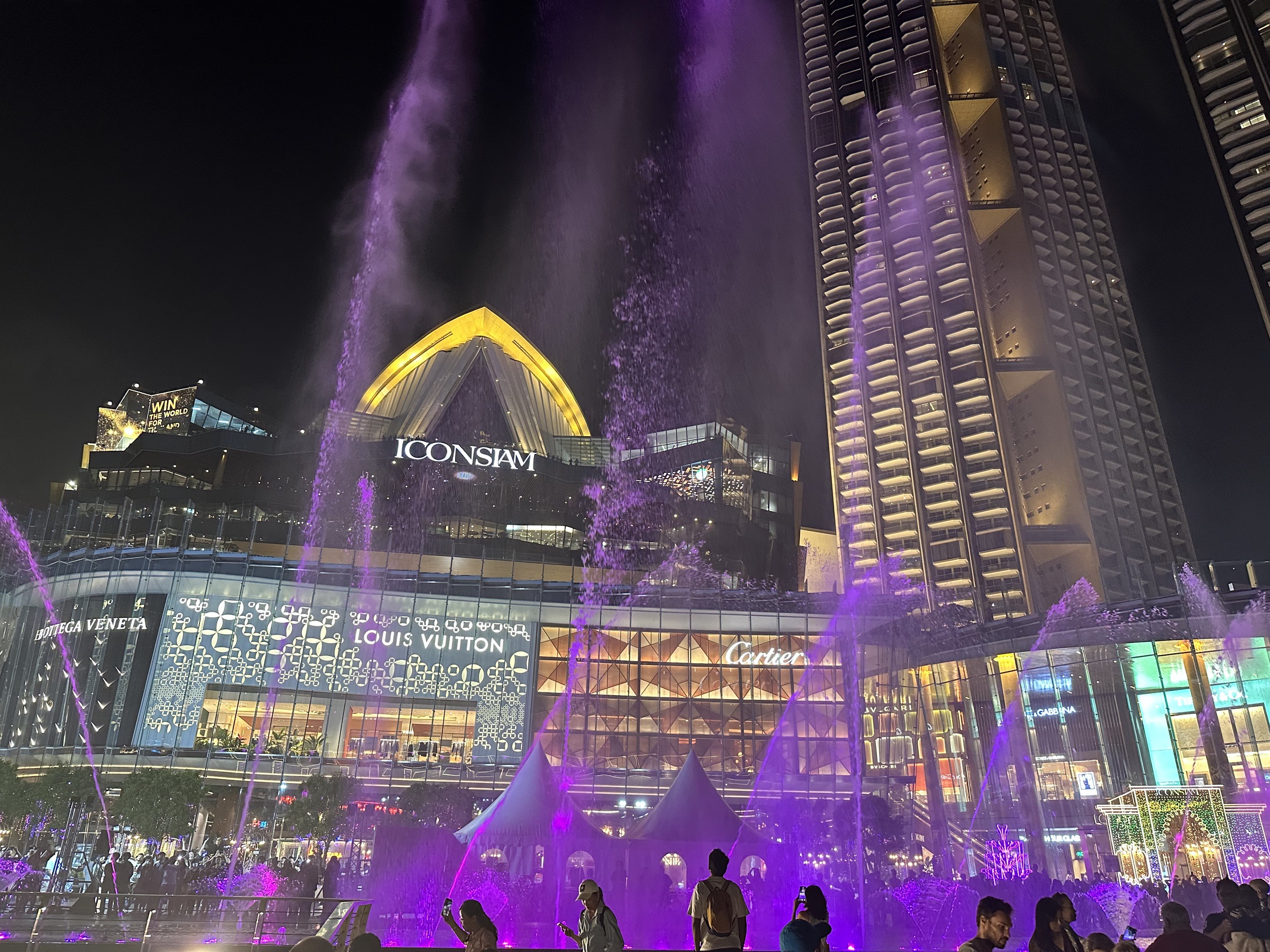
ICONSIAM stands as a towering beacon of luxury along the scenic Chao Phraya River in Bangkok, Thailand. This exquisite shopping haven attracts those in search of high-quality retail indulgences with its assembly of upscale brands, deluxe boutiques, and exclusive designer collections. The establishment caters to a broad spectrum of preferences, encompassing stylish attire, elegant jewelry, premium cosmetics, advanced electronics, and more, all sourced from prestigious international and distinguished local brands. The allure of ICONSIAM extends beyond mere retail therapy. It provides a vast array of culinary delights, ranging from sophisticated dining establishments to chic cafés and diverse international food outlets.
Delving deeper into its offerings, ICONSIAM transcends traditional shopping experiences with its amalgamation of entertainment and lifestyle activities. Guests are treated to a state-of-the-art cinema complex, thought-provoking art displays, enriching cultural exhibits, and rejuvenating wellness centers. A particular gem within this complex is the Siam Takashimaya Department Store, serving as a pivotal anchor tenant and presenting an extensive collection of merchandise such as stylish fashion pieces, beauty products, home décor, and more.
Not to be overlooked is the ICONSIAM’s meticulously designed riverfront promenade. This outdoor space invites visitors to meander by the river, absorb captivating city and waterfront vistas, and unwind in areas perfected with lush landscaping. Furthermore, ICONSIAM integrates elements of Thai heritage and contemporary artistry within its architecture and product range, offering a celebration of Thai craftsmanship, traditional art forms, and modern aesthetics.
This sophisticated blend of retail, gastronomy, culture, and leisure has positioned ICONSIAM as a go-to locale for discerning locals and globe-trotting visitors alike who seek an elevated shopping and lifestyle adventure in Bangkok.
Related Posts
Arriving in Bangkok: A Time-Lapse Journey Through Suvarnabhumi Airport
Welcome to Bangkok, a vibrant city that never fails to captivate visitors with its bustling streets, rich culture, and warm hospitality. Today, we invite you to experience the thrill of arriving at Suvarnabhumi Airport through a mesmerizing time-lapse video that captures the essence of this dynamic gateway to Thailand.
As your flight descends towards Suvarnabhumi Airport, you catch your first glimpse of the sprawling cityscape below. The time-lapse begins as the plane touches down on the runway, capturing the swift descent and the anticipation of stepping onto Thai soil.
The video fast-forwards through the process of disembarking and making your way through the bustling corridors of the airport. Passengers from all corners of the globe move briskly, each immersed in their own journey.
The time-lapse video highlights snippets of the airport’s interior—a harmonious blend of contemporary design and traditional Thai motifs. As you traverse through the terminal, you’re greeted by colorful displays of Thai art and sculptures that reflect the country’s rich cultural heritage.
Suvarnabhumi Airport is a hive of activity, bustling with travelers from around the world. The time-lapse captures the constant movement of people, baggage carts whizzing by, and the efficient operations that keep the airport running smoothly.
Amidst the array of duty-free shops and dining options, the video showcases travelers indulging in a taste of Thailand. You catch glimpses of passengers enjoying aromatic Thai cuisine, from spicy curries to refreshing tropical fruits.
As the time-lapse progresses, you witness the transition from airport to cityscape. The camera captures the journey from baggage claim to the arrivals hall, where loved ones eagerly await the arrival of friends and family.
The time-lapse concludes with a panoramic view of the airport’s exterior—a modern architectural marvel against the backdrop of Bangkok’s skyline. The vibrant colors of the setting sun signal the beginning of your adventure in the Land of Smiles.
Arriving in Bangkok is more than just a destination; it’s a sensory experience that awakens the senses and ignites a sense of wonder. The time-lapse video encapsulates the energy and excitement of stepping foot into a city that seamlessly blends tradition with modernity.
As the time-lapse journey comes to an end, you’re left with a sense of anticipation and eagerness to explore everything that Bangkok has to offer. From its bustling markets and ornate temples to its lively nightlife and delectable street food, the city beckons with endless possibilities.
Whether you’re a first-time visitor or a seasoned traveler, arriving in Bangkok is a moment to cherish. Let the vibrant scenes of the time-lapse video inspire you to embark on your own adventure in this enchanting city—a place where every corner is infused with the spirit of Thailand.
As you step out of Suvarnabhumi Airport and into the heart of Bangkok, prepare to be swept away by the sights, sounds, and flavors that make this city a truly unforgettable destination.
Related Posts
Dawn’s Embrace: Exploring Wat Arun – Bangkok’s Iconic Temple of Beauty and History
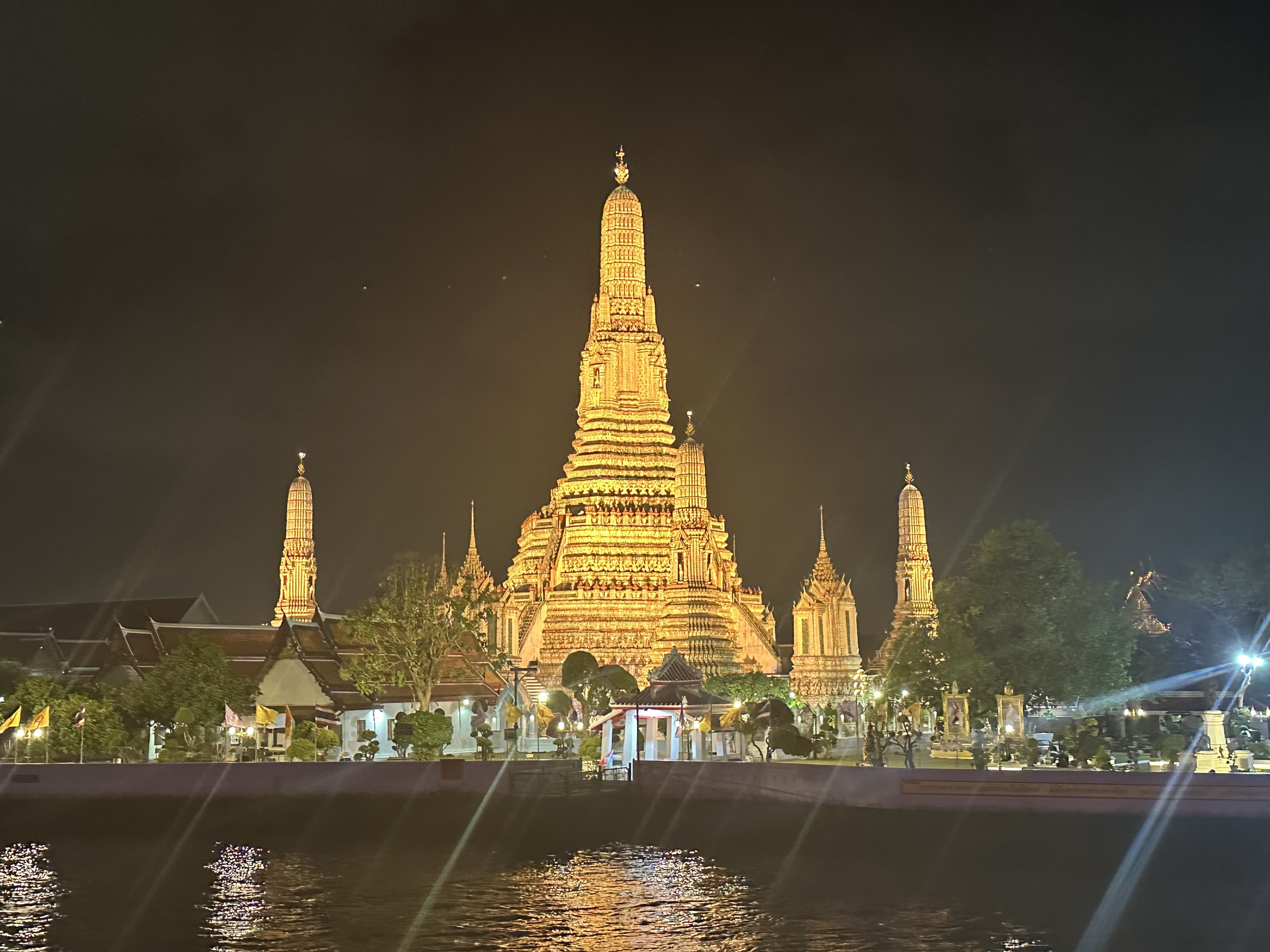
Experience the breathtaking beauty and rich history of Wat Arun Ratchawararam Ratchawaramahawihan, also known as the Temple of Dawn, located in the bustling city of Bangkok, Thailand. This iconic Buddhist temple is a must-visit for tourists and locals alike, with its stunning architecture and spiritual significance. Its name, meaning “Temple of Dawn,” pays homage to the Hindu god of dawn, Aruna. The centerpiece of the temple is its towering prang, adorned with intricate designs and colorful porcelain pieces, surrounded by four smaller prangs representing the cardinal directions. A fusion of Khmer and Thai styles, this architectural wonder reflects the country’s diverse cultural influences. Commissioned in the 17th century by King Taksin as a royal chapel, Wat Arun has undergone numerous renovations and additions over the centuries, solidifying its grand and majestic status. Visitors can climb the steep steps of the central prang for a breathtaking view of the Chao Phraya River and city skyline, particularly stunning during sunrise and sunset, making it a hotspot for photographers and Instagrammers. Beyond its physical beauty, Wat Arun holds deep spiritual significance for Buddhists, housing the revered Emerald Buddha statue and various shrines and halls representing different aspects of Buddhist teachings. More than just a temple, Wat Arun is a symbol of Thai culture, history, and spirituality, inviting all to immerse themselves in the country’s rich heritage.
Related Posts
The Silk Road: A Pathway of Exchange and Cultural Encounter
The Silk Road, an expansive network of trade routes spanning Asia, holds immense historical significance. It acted as a conduit for cultural exchange, commercial activities, and intellectual discussions between the East and the West. This paper delves into the intricate nature of the Silk Road, exploring its origins, routes, and lasting impact on global civilizations. From the bustling markets of Xi’an to the vibrant bazaars of Constantinople, the Silk Road facilitated the exchange of goods, ideas, and beliefs, shaping the interconnected world we live in today.
As a symbol of human ingenuity and determination, the Silk Road connected distant civilizations through a complex web of trade routes. Beginning in ancient China, this intricate network of paths traversed vast landscapes of deserts, mountains, and plains, linking the East to the Mediterranean region. Over time, the Silk Road evolved into a hub of cultural interchange, fostering the spread of knowledge, technology, and religious practices.
The origins of the Silk Road can be traced back to the Han Dynasty of China (206 BCE – 220 CE) when Emperor Wu Di sought to establish diplomatic and trade relations with Central Asian kingdoms. Initially centered around silk, a prized commodity in the West, trade on the Silk Road expanded to include spices, precious metals, gemstones, textiles, and exotic goods from various parts of Asia.
The Silk Road encompassed several main routes, each presenting its own challenges and opportunities. The northern route crossed the harsh terrains of Central Asia, connecting China to Persia, Central Asia, and the Roman Empire. The central route passed through the Taklamakan Desert, linking China to the lush oasis cities of Samarkand and Bukhara. Concurrently, the southern route extended through the Indian subcontinent, facilitating sea trade between China, India, and the Arabian Peninsula. Key cities such as Xi’an, Kashgar, Samarkand, and Constantinople emerged as vibrant hubs of trade and cultural fusion along the Silk Road.
Beyond the exchange of goods, the Silk Road served as a conduit for the transmission of ideas, beliefs, and artistic influences. Buddhism spread from India along the Silk Road to China and beyond, leaving its mark on art, architecture, and philosophy. Islamic civilization thrived in the commercial centers of Central Asia, blending elements from Persian, Indian, and Chinese cultures to create a diverse cultural tapestry. The Silk Road also facilitated the sharing of scientific knowledge, including advancements in astronomy, mathematics, and medicine.
The decline of the Silk Road can be attributed to various factors such as the rise of maritime trade routes, political unrest, and shifts in global economic dynamics. With the decline of the Mongol Empire and the emergence of the Black Death in the 14th century, the Silk Road gradually faded from prominence. Despite this, its legacy endures, laying the groundwork for future trends of globalization and cross-cultural interaction. Today designated as a UNESCO World Heritage Site, the Silk Road embodies the enduring connections and collaborative spirit between the East and the West.
In conclusion, the Silk Road stands as a testament to the lasting power of human connections and the ability of cultural exchange to transcend geographical boundaries. Over centuries, this ancient network of trade routes facilitated the exchange of goods, ideas, and beliefs, shaping the course of human history. Reflecting on the legacy of the Silk Road reminds us of the importance of dialogue, cooperation, and mutual understanding in an increasingly interconnected world.
Related Posts
Exploring the Culinary Tapestry: A Journey Through the Delightful Flavors of Filipino Cuisine
Filipino cuisine is renowned for its delightful flavors and rich culinary heritage, making it a must-try for any food enthusiast. The diverse range of dishes in Filipino cuisine reflects the country’s vibrant culture and history. From the savory and aromatic adobo, a quintessential Filipino dish made with marinated meat in soy sauce and vinegar, to the mouthwatering lechon, a whole roasted pig that boasts a crispy skin and succulent meat, Filipino food is a gastronomic delight. The famous sinigang, a comforting soup made with tamarind, vegetables, and either pork, beef, or shrimp, offers a perfect balance of tanginess and heartiness. For those with a taste for seafood, the Philippines’ archipelagic geography provides an abundance of fresh and delectable options like grilled squid (inihaw na pusit) or shrimp in coconut milk (ginataang hipon). Another popular dish is kare-kare, a rich and creamy stew made with oxtail, tripe, or beef, complemented by a thick peanut sauce and served with bagoong, a fermented shrimp paste. Filipino desserts such as halo-halo, a colorful mix of crushed ice, sweet beans, jellies, and fruits topped with evaporated milk and leche flan, offer a refreshing and indulgent way to end a meal. With its unique blend of flavors, textures, and influences from various cultures, Filipino food has gained recognition and captivated taste buds around the world. Whether you are a fan of hearty meat dishes, aromatic soups, or delightful sweets, exploring the rich tapestry of Filipino cuisine is sure to be a delightful experience for any food lover.
Related Posts
Guardians of Aloha: The Legacy of the Hawaiian Warrior
The Hawaiian warrior, also known as the Koa, holds a significant place in the rich cultural history of Hawaii. These formidable warriors were known for their bravery, strength, and unwavering loyalty to their chiefs. Clad in traditional battle attire, which included feathered capes, helmets, and weapons like the shark-toothed club known as the “lei-o-mano,” the Hawaiian warriors were a force to be reckoned with on the battlefield. They were skilled in various combat techniques, including hand-to-hand combat, archery, and spear throwing. The training of a Hawaiian warrior began at a young age, where they learned the art of warfare, discipline, and honed their physical abilities. They were raised to embody the values of courage, honor, and respect for their ancestors. The role of the Hawaiian warrior extended beyond the battlefield; they were also protectors of their land and people. Their duty encompassed safeguarding the sovereignty and traditions of their island nation. The Hawaiian warrior is not just a symbol of strength and valor but also represents the deep-rooted cultural heritage of the Hawaiian people. Today, their legacy lives on through cultural practices, ceremonies, and the preservation of their traditional arts. The Hawaiian warrior serves as a reminder of the resilience and spirit of the Hawaiian people, embodying the essence of their ancestral roots and the indomitable spirit that continues to flourish in the islands of Hawaii.
Related Posts
Lagertha: The Shieldmaiden’s Saga of Strength and Empowerment
Lagertha, a captivating figure from Norse mythology, possesses an irresistible charm that stems from her unwavering strength, audacious courage, and remarkable leadership qualities. Celebrated as both a formidable shieldmaiden and a valiant warrior, Lagertha embodies female empowerment and resilience. Her remarkable story has been immortalized in various sagas and historical accounts, captivating audiences with her astonishing prowess on the battlefield and unwavering determination. Lagertha’s character embodies the spirit of a determined and self-reliant woman who defies societal norms and breaks down barriers in a male-dominated society. She is often depicted as a skilled combatant, leading her own group of warriors and fearlessly participating in battles alongside her male counterparts. Equally impressive are Lagertha’s intellect and strategic prowess, portrayed as a sagacious and cunning leader. Her resourcefulness and adaptability in the face of daunting circumstances make her an inspirational figure, not only for women but for anyone facing adversity. Lagertha’s journey epitomizes growth and transformation as she rises from humble beginnings to become a legendary warrior and queen. Her extraordinary narrative serves as a powerful reminder that strength transcends gender and that individuals, regardless of societal expectations, can achieve greatness through perseverance, skill, and resilience.
Related Posts
The Kremlin: Where Politics, History, and Culture Converge
Situated in Moscow, the Kremlin stands as a testament to the political and historical significance of Russia. Derived from the Russian word “Kreml,” which means “fortress,” this iconic symbol serves as the official residence of the President of the Russian Federation. Its origins can be traced back to the 12th century when it was constructed as a wooden fortress, acting as a safeguard against external threats. Over the years, the Kremlin has undergone various additions, renovations, and expansions, resulting in the magnificent complex that we behold today.
Far beyond being just a political center, the Kremlin holds immense cultural and historical importance. Within its fortified walls, one encounters the awe-inspiring Cathedral Square, adorned with remarkable cathedrals such as the Assumption Cathedral, the Archangel’s Cathedral, and the Annunciation Cathedral. These architectural masterpieces not only showcase stunning designs but also house invaluable religious artifacts. Additionally, the Kremlin houses the renowned Armoury Chamber, a museum that proudly exhibits a vast collection of imperial treasures, including crowns, thrones, Fabergé eggs, and royal carriages. The sight of the Kremlin’s red-brick walls, towers, the Tsar Bell, and the Tsar Cannon further enriches its already stunning visuals. Surrounding the complex are picturesque gardens and captivating views of the Moskva River, adding to its overall allure.
Through the course of history, the Kremlin has borne witness to significant events like coronations, imperial weddings, and political gatherings. Serving as a symbol of power, authority, and resilience, it embodies the very essence of the Russian state. Today, the Kremlin remains a central hub of political activity, while continuing to embody Russia’s rich cultural heritage. Its historical and architectural significance, coupled with its role as a political stronghold, make the Kremlin not only important for Russia but for the world as a whole.
Located at the heart of Moscow, Russia, the Kremlin holds immense political significance as the country’s nerve center. It is a sprawling complex that encompasses several palaces, cathedrals, and government buildings. Within these walls, a wide range of significant events and activities take place.
First and foremost, the Kremlin serves as the official residence of the President of Russia. It is the place where crucial decisions are made, national policies are formulated, and diplomatic relations are forged. The president’s office and living space are all contained within this historic complex.
Moreover, the Kremlin houses various arms of the Russian government, including the State Duma and the Federation Council. These chambers serve as legislative bodies where debates, passes, and implementations of laws occur. Additionally, the Kremlin also accommodates several ministries and departments responsible for overseeing aspects such as defense, foreign affairs, finance, and culture. High-level meetings, negotiations, and summits shaping the nation’s domestic and international agendas occur in this historic venue.
Beyond its political significance, the Kremlin is a site of historical and cultural heritage. It boasts opulent palaces and cathedrals, like the Grand Kremlin Palace and the Cathedral of the Annunciation, which draw tourists from all corners of the globe. These architectural marvels provide a window into Russia’s rich past and architectural brilliance, captivating visitors with their grandeur.
In conclusion, the Kremlin is a multifaceted institution where political, administrative, and cultural activities intertwine. Its presence plays a pivotal role in shaping Russia’s destiny and leaving an indelible mark on its history.
Related Posts
Red Square Revelations: Where History, Beauty, and Resilience Collide
The Red Square holds a significant and cherished place within Moscow, Russia, resonating deeply with the nation. One cannot help but recognize its historical and iconic status, as it carries immense cultural and historical importance for the Russian people. This square stands as an embodiment of power, revolution, and the collective national identity. What’s intriguing is that its name, “Red Square,” finds its origins in the Russian word “krasnyi,” which can be interpreted to mean both “red” and “beautiful.”
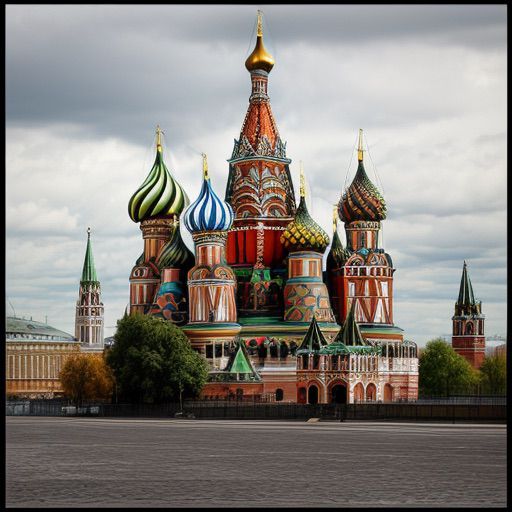
Enveloping this square are numerous remarkable architectural wonders, contributing to its grandeur. These include the illustrious Kremlin, the mesmerizing Saint Basil’s Cathedral, the State Historical Museum, and the renowned GUM department store. The presence of these magnificent structures undoubtedly amplifies the allure of the Red Square.
Throughout history, the Red Square has stood witness to countless momentous events that have significantly influenced the trajectory of Russia. Military parades, political demonstrations, and public gatherings have unfolded on its grounds, reflecting the nation’s triumphs and tragedies. The cobblestone ground beneath the feet of tsars, communist leaders, and protesters alike bears testament to the square’s consequential historical legacy.
A distinguishing feature of the Red Square is the presence of Lenin’s Mausoleum, where the embalmed body of Vladimir Lenin lies in state. This mausoleum serves as a poignant reminder of the communist era, drawing visitors from all corners of the globe. Its existence adds yet another layer of historical depth to the Red Square.
Beyond being a mere physical location, the Red Square embodies the unity and resilience of the Russian people. It stands as a tangible representation of the nation’s rich history, architectural splendor, and the indomitable spirit of its populace. Whether experiencing the annual New Year’s Eve festivities, witnessing the changing of the guards, or leisurely strolling along its cobblestone pathways, the Red Square never fails to captivate the hearts and minds of both locals and tourists. The impact it leaves on anyone fortunate enough to visit is truly indelible.
Related Posts
Exploring the Wonders of Datang Everbright City in Xi’an
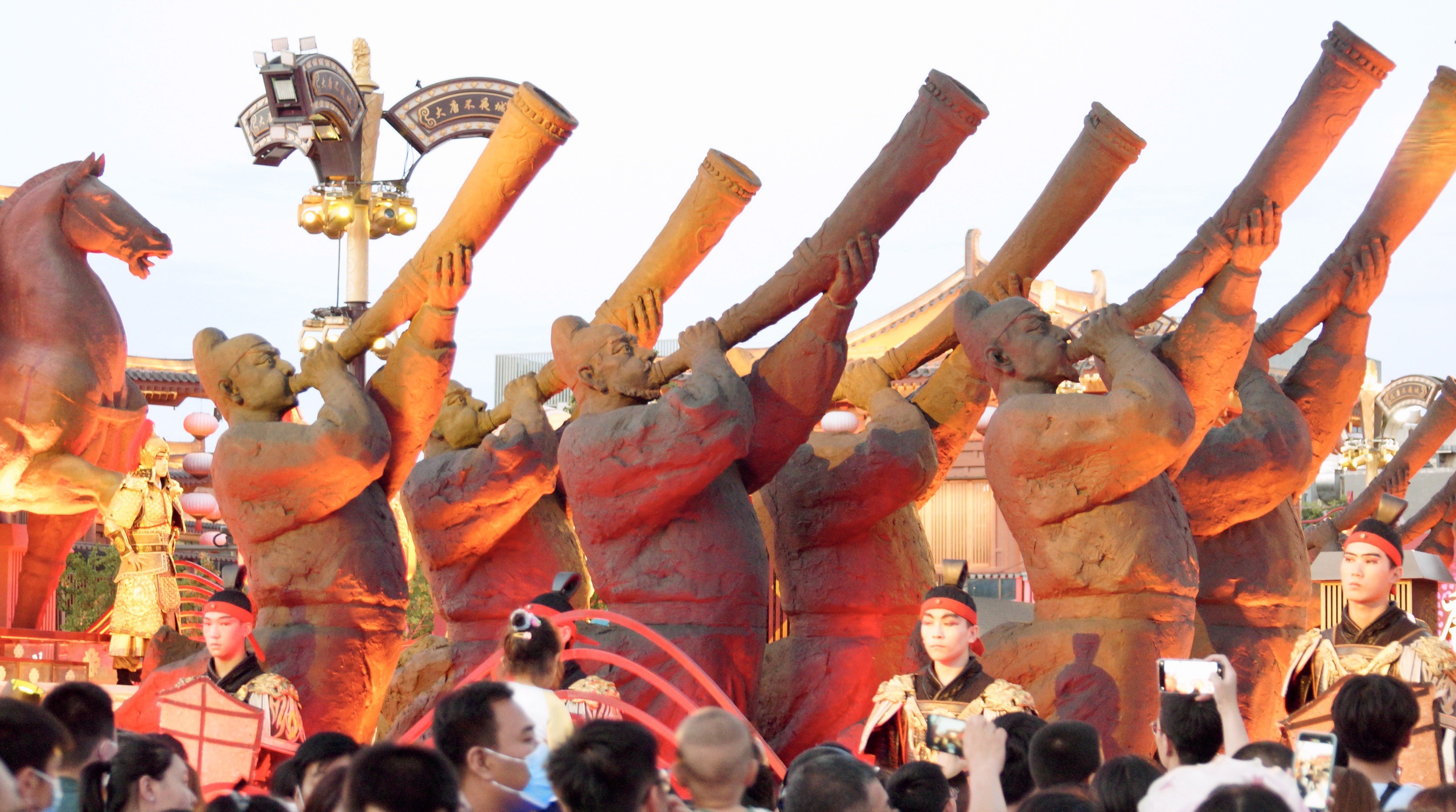
Datang Everbright City in Xi’an presents a captivating destination that effectively showcases the rich history and contemporary developments of China. Tucked away within the ancient city of Xi’an, this vibrant cultural complex offers a delightful fusion of traditional architecture and cutting-edge technology. As soon as you set foot here, you are instantly whisked away to a bygone era, greeted by splendid replicas of Tang Dynasty structures adorned with intricate carvings and vibrant hues. These architectural wonders not only provide visually pleasing sights but also offer a glimpse into the grandeur of the Tang Dynasty, widely regarded as the golden age of Chinese civilization. The meticulous attention to detail in their design and construction is truly commendable, making it an absolute must-visit for history buffs and architectural enthusiasts.
However, Datang Everbright City goes beyond being a mere historical site; it seamlessly integrates modern advancements to create an immersive and interactive experience for visitors. The Tang Paradise, a standout feature of this complex, is an enticing theme park that meticulously recreates the splendor of the Tang Dynasty. Here, one can explore breathtaking gardens, be mesmerized by captivating performances, and even take a serene boat ride across the picturesque lake. The clever use of cutting-edge technologies, such as awe-inspiring holographic projections and immersive virtual reality, adds an unparalleled charm to the overall experience, effectively bringing the history to life in the most captivating manner.
Another remarkable aspect of Datang Everbright City lies in its diverse range of cultural activities. From mesmerizing traditional Chinese dance performances and soul-stirring music concerts to captivating calligraphy demonstrations and elegant tea ceremonies, there is a plethora of engaging experiences catering to individual preferences. Moreover, visitors are provided with opportunities to participate in workshops where they can learn cherished traditional crafts like the delicate art of paper cutting and the exquisite mastery of silk embroidery. These activities allow participants to gain a profound understanding and appreciation for the rich tapestry of Chinese culture and artistic heritage.
Furthermore, Datang Everbright City takes its visitors on an extraordinary gastronomic journey through the flavors of ancient China. Within the complex, one can find a variety of exceptional restaurants and quaint food stalls serving delicious, authentic Tang Dynasty cuisine. Every dish, from the savory dumplings to the delectable sweet rice cakes, is meticulously prepared using traditional recipes and techniques, offering visitors an exquisite and authentic taste of the past.
Beyond its cultural and culinary wonders, Datang Everbright City also provides ample opportunities for relaxation and leisure. The expansive park surrounding the complex offers an idyllic setting for leisurely strolls amidst lush greenery or enjoyable picnics, providing a tranquil escape from the bustling city life. Additionally, numerous souvenir shops and boutiques are scattered throughout the complex, enticing visitors with unique handicrafts and treasured mementos that serve as tangible reminders of their extraordinary visit.
In conclusion, Datang Everbright City in Xi’an stands as an exceptional destination that seamlessly combines history, culture, and technology. Whether one finds themselves engrossed in the annals of the past, captivated by artistic marvels, or simply seeking an extraordinary and immersive experience, this cultural complex offers something truly extraordinary for every individual. Its meticulous attention to detail, interactive attractions enhanced by advanced technologies, and diverse range of engaging activities effortlessly establish it as a must-visit destination epitomizing the very best of ancient and modern China.
Related Posts
Journey into Cinematic Enchantment: Exploring the Wonders of Weta Cave and Workshop
Prepare to be enthralled as I take you on an extraordinary expedition through the renowned marvels of the Weta Cave and Weta Workshop, nestled in the idyllic city of Wellington, New Zealand. These exceptional sites have left an indelible mark on the domain of film and special effects, captivating audiences with their monumental contributions to the artistry of cinema.
Immerse yourself in the enchanting realm of the Weta Cave, which acts as a gateway to the mystical world of the esteemed Weta Workshop. This distinguished company has lent its artistic prowess to blockbuster films such as the legendary “The Lord of the Rings” trilogy, the visually stunning “Avatar,” and the gripping tale of “King Kong.” As you step inside, get ready to be captivated by a plethora of mesmerizing exhibits that meticulously showcase the craftsmanship and painstaking attention to detail behind the creation of intricate props, costumes, and fantastical creatures that grace the silver screen.
Now, brace yourself as the Weta Cave beautifully breathes life into menacing Orcs roaming Middle-earth and the awe-inspiring Na’vi inhabitants of Pandora, enveloping visitors in the sheer enchantment of filmmaking. Traverse through the bustling haven of creativity that is the Workshop itself and feast your eyes on the process that transforms imagination into tangible reality.
Within the Workshop, skilled artisans and technicians pour their heart and soul into translating the visions of filmmakers into vivid realities. This inexhaustible haven of imagination blurs the boundaries between reality and fantasy, granting resolute freedom to the creative spirit. With guided tours, visitors are generously invited into this realm of cinematic marvels, offering an up-close and personal encounter with the intricate processes that underpin the creation of awe-inspiring movie magic.
From the sculpting of exquisite models to the artistry of digital design and the mesmerizing mastery of animatronics, the Workshop provides an unparalleled insight into the captivating world of special effects. While treading the paths of creative ingenuity, visitors find themselves enveloped in a treasure trove of memorabilia, including iconic props, awe-inspiring costumes, and thought-provoking concept art from some of the most cherished films in the annals of cinematic history. It is indeed a sanctuary for film enthusiasts and a profound testament to the limitless power of boundless imagination.
However, the allure of the Weta Cave and Weta Workshop extends beyond their exceptional offerings. These extraordinary establishments have solidified Wellington’s status as a prestigious hub for film production. Their influence not only graces the silver screen but also ignites the imaginations of countless aspiring artists and filmmakers worldwide. Their enduring legacy serves as a testament to what boundless creativity and unwavering passion can accomplish when they harmoniously converge.
I implore you to embark on this awe-inspiring cinematic pilgrimage to the Weta Cave and Weta Workshop, allowing yourself to be swept away by the wondrous feats of craftsmanship and innovation that undeniably reshape the world of film and special effects. Embrace the inspiration that permeates these revered halls, and witness your own imagination flourish in uncharted territories. For within these realms, the magic of storytelling finds its truest expression.