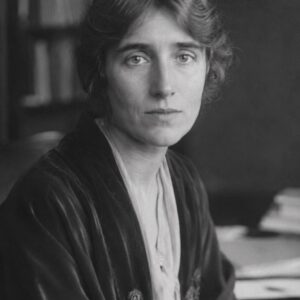
Susan Glaspell’s name keeps popping up in my writing classes, and at first, I couldn’t help but feel a little annoyed. Another dead white woman writer who’s only notable for being married to someone famous – in this case, George Cram “Jig” Cook. But the more I read about her life and work, the more fascinated I became.
I think it started when I stumbled upon an article about Glaspell’s play, “Trifles,” which she wrote with Cook. The play is a masterpiece of subtlety, exploring themes of silence, domesticity, and the societal expectations placed on women. But what really caught my attention was how Glaspell used her own life experiences to inform the characters’ struggles.
As I delved deeper into her biography, I began to see parallels between Glaspell’s life and mine – or at least, the life of a young woman trying to make a name for herself in the early 20th century. We both came from relatively privileged backgrounds, but we were expected to conform to certain societal norms: marry well, have children, and prioritize domestic duties above all else.
It’s disconcerting to see how many women writers from this era struggled with similar tensions between creativity and conventionality. I often find myself wondering what would have happened if Glaspell had been more willing to challenge these expectations head-on. Would she have achieved greater success? Would her work have resonated with a wider audience?
But then again, perhaps it’s precisely because of her willingness to explore the nuances of domestic life that Glaspell’s writing remains so powerful today. Her characters are multifaceted and complex, refusing to be reduced to simplistic tropes or stereotypes.
I’m struck by how much Glaspell’s work speaks to my own fears about becoming trapped in a life that isn’t truly mine. As someone who’s just finished college, I feel pressure to “launch” into adulthood – secure a job, pay off student loans, and start building a career. But the more I read Glaspell’s writing, the more I realize how little of this really matters.
What matters is the work itself – the ideas, the emotions, the struggles that we all share as human beings. And yet, it’s precisely this kind of introspection that’s often dismissed or marginalized in our society. We’re encouraged to focus on external markers of success rather than exploring the messy, inner lives of ourselves and others.
I’m not sure what I’ll do with these thoughts, but they keep circulating in my mind as I read about Glaspell’s life and work. Maybe it’s because I see myself in her – a woman trying to navigate the complexities of adulthood while staying true to her creative vision. Or maybe it’s simply because her writing resonates with me on a deeper level, one that has nothing to do with external validation or recognition.
As I continue to explore Glaspell’s work and life, I’m left with more questions than answers. What does it mean to be a writer in a society that often values conformity over creativity? How can we create space for ourselves to pursue our passions, even when they don’t fit neatly into societal expectations?
These are the kinds of questions that keep me up at night, and ones that I’m not sure I’ll ever fully resolve. But as I continue to grapple with them, I know that Glaspell’s writing will be there, guiding me through the complexities of my own journey – just as it has been for countless other women writers throughout history.
As I read more about Glaspell’s life and work, I’m struck by her determination to create a sense of community among women artists. She was part of a group called the Provincetown Players, which brought together writers, actors, and directors to produce experimental theater in the early 20th century. It’s fascinating to me how she used this collective energy to push against the boundaries of what was considered “acceptable” in mainstream culture.
I think about my own experiences as a college student, where I felt like I was part of a community of writers who were all trying to navigate the same challenges. We’d share our work with each other, offer feedback and encouragement, and create a sense of support that helped us push through the doubts and fears that inevitably came up.
But now, as I’m about to enter this “real world” that everyone keeps talking about, I’m not sure how much of that community spirit will be available to me. Will I have to sacrifice my creative pursuits in order to fit into a more traditional 9-to-5 job? Or can I find ways to nurture those relationships and maintain a sense of connection with other writers who understand what it’s like to be struggling?
Glaspell’s play “Trifles” keeps coming back to me, particularly the way it highlights the importance of listening and paying attention to the small details that often get overlooked. In the play, the characters are able to uncover clues about a murder because they’re willing to listen to the women in their lives – the housekeeper, the wife – who possess a kind of intuitive knowledge that’s been dismissed by the men.
It makes me think about how often I’ve found myself talking over or interrupting others, assuming that I already know what they mean. And it’s not just in conversations; it’s also in my own writing. How often do I rush to conclusions or assumptions without truly listening to the subtleties of the human experience?
Glaspell’s work is a reminder that there’s power in being still, in paying attention, and in allowing ourselves to be vulnerable. And yet, it’s precisely this kind of vulnerability that can feel so scary – especially when we’re trying to establish ourselves as writers or artists.
As I continue to grapple with these questions, I’m left wondering what it means to create a life that honors my creative vision while also acknowledging the complexities and challenges of being a woman in this society.
The more I read about Susan Glaspell’s life and work, the more I’m struck by her willingness to take risks and challenge societal norms. Her writing is like a gentle prodding, encouraging me to think critically about the expectations placed on women and the importance of creativity in our lives.
I find myself drawn to her story because it’s so relatable. As a young woman trying to navigate my own path, I’m constantly torn between what others expect of me and what I truly want for myself. Glaspell’s experiences as a writer and a wife are like a mirror held up to my own fears and doubts.
What would have happened if she had followed her heart more fully? Would she have achieved greater success or been ostracized by society? These questions swirl in my mind, refusing to be silenced.
As I delve deeper into Glaspell’s biography, I’m fascinated by her relationships with other women writers. She was part of a tight-knit circle of artists and intellectuals who supported each other’s work and pushed against the boundaries of what was considered acceptable. This sense of community is something that I crave as I enter this new phase of my life.
I think about the writing groups I’ve been a part of, where we shared our work and offered feedback to one another. Those moments of vulnerability and connection are some of the most precious experiences I’ve had as a writer. But now, as I’m about to embark on this “real world” journey, I wonder if those kinds of relationships will be available to me.
Will I have to sacrifice my creative pursuits in order to fit into a more traditional 9-to-5 job? Or can I find ways to nurture those connections and maintain a sense of community with other writers who understand what it’s like to be struggling?
Glaspell’s play “Trifles” keeps echoing in my mind, particularly the way it highlights the importance of listening and paying attention to the small details that often get overlooked. In the play, the characters are able to uncover clues about a murder because they’re willing to listen to the women in their lives – the housekeeper, the wife – who possess a kind of intuitive knowledge that’s been dismissed by the men.
This resonates deeply with me, as I’ve often found myself rushing to conclusions or assumptions without truly listening to others. And it’s not just in conversations; it’s also in my own writing. How often do I rely on tropes and stereotypes rather than taking the time to really understand the complexities of the human experience?
Glaspell’s work is a reminder that there’s power in being still, in paying attention, and in allowing ourselves to be vulnerable. But what does it mean to create a life that honors my creative vision while also acknowledging the complexities and challenges of being a woman in this society?
As I ponder Glaspell’s willingness to take risks and challenge societal norms, I’m reminded of her play “A Jury of Her Peers,” which tells the story of a woman accused of murdering her husband. The play is a scathing critique of patriarchal justice, highlighting the ways in which women are often silenced and marginalized by the very systems meant to protect them.
I find myself drawn to this theme, as I reflect on my own experiences with systemic injustices. As a young woman, I’ve faced my share of microaggressions and biases, from being talked over in meetings to being stereotyped as “emotional” or “impulsive.” It’s a constant struggle to assert myself and be taken seriously, especially when I’m navigating male-dominated fields like writing and academia.
Glaspell’s play has become a kind of touchstone for me, a reminder that my experiences are not unique and that there are others who have fought against similar injustices. Her writing is a powerful testament to the importance of listening to marginalized voices and amplifying their stories.
As I continue to explore Glaspell’s life and work, I’m struck by her commitment to social justice and activism. She was part of a circle of writers and intellectuals who were passionate about reforming society and challenging the status quo. Her writing is infused with a sense of purpose and conviction, a desire to create change through art.
I find myself wondering what it would be like to live in a world where creativity and activism are not mutually exclusive. Where writers and artists can use their platforms to challenge systemic injustices without being ostracized or marginalized. It’s a utopian dream, perhaps, but one that feels increasingly relevant as I navigate my own path as a writer.
Glaspell’s legacy is complex and multifaceted, reflecting the contradictions and tensions of her own life. She was a woman who defied convention, who challenged societal norms and expectations. But she was also a product of her time, shaped by the same biases and prejudices that she critiqued in her work.
As I grapple with these complexities, I’m reminded of the importance of nuance and context in understanding historical figures like Glaspell. We must acknowledge both their achievements and their limitations, recognizing the ways in which they were complicit in systems of oppression even as they challenged them.
This is a messy and imperfect process, one that requires us to engage with the contradictions and complexities of human experience. But it’s also a necessary one, if we hope to learn from the past and create a more just and equitable future for ourselves and others.
As I close my eyes and let Glaspell’s words wash over me, I’m left with a sense of awe and reverence for this remarkable woman writer. Her legacy is a testament to the power of creativity and activism, a reminder that even in the darkest times, there is always hope for change and transformation.
But as I open my eyes and step back into my own life, I’m also aware of the uncertainty and doubt that still lingers within me. Will I be able to find a way to balance my creative pursuits with the demands of this “real world”? Can I create a life that honors my values and passions, even when they seem at odds with societal expectations?
These are questions that I’ll continue to grapple with, even as I move forward into this uncertain future. But for now, I’m grateful for the guidance and inspiration of Susan Glaspell’s work, which reminds me that creativity and activism are not mutually exclusive, but rather intertwined threads in the rich tapestry of human experience.