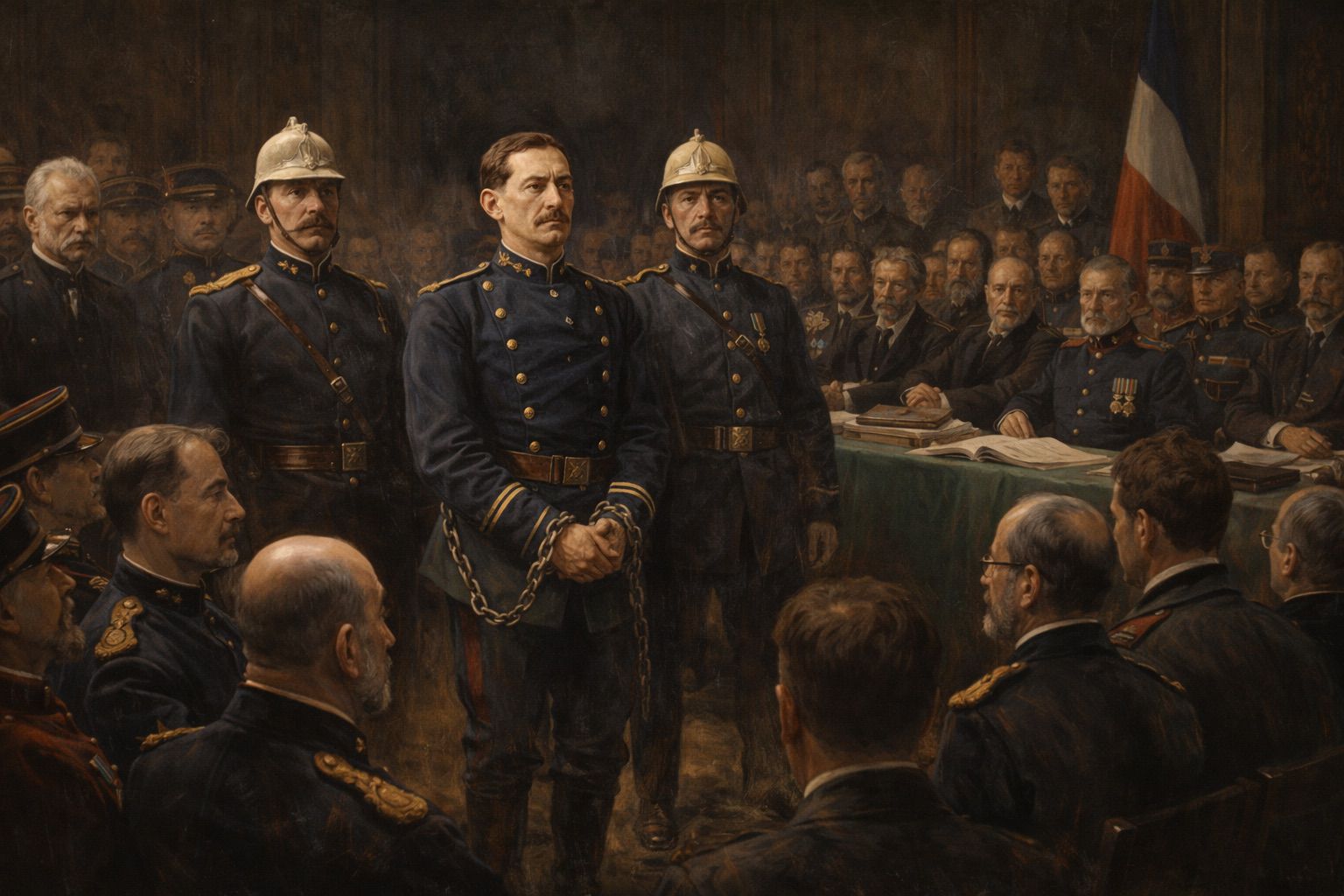
The year was 1894 and France was on the brink of a crisis that would shake its very foundations. The country, still reeling from the losses of the Franco-Prussian War, was facing a period of economic stagnation and growing social unrest. It was in this climate of tension that the Dreyfus Affair began to unfold, an event that would become one of the most infamous episodes in French history.
At its core, the Dreyfus Affair was a military scandal involving the arrest, trial, and imprisonment of Alfred Dreyfus, a Jewish captain in the French army. But it was far more than just a simple case of mistaken identity or anti-Semitic bias. It was a symptom of deeper issues that had been simmering beneath the surface of French society for years.
One of the key factors contributing to the crisis was the rise of nationalism and militarism in France during the late 19th century. The country’s military leaders were obsessed with the idea of France as a great power, and they saw themselves as the guardians of national honor and prestige. This created a culture of paranoia and suspicion, where even minor infractions could be blown out of proportion.
In this context, Captain Dreyfus’s career was seen as a threat to French military prestige. A Jewish officer from Alsace who had been commissioned in 1892, Dreyfus was a rising star in the army. He was highly educated and intelligent, but also impulsive and prone to making mistakes. His meteoric rise through the ranks caught the attention of some senior officers, who began to see him as a rival.
One of these officers was Colonel Hubert Henry, the head of the French military intelligence service. Henry was a career soldier with a reputation for being ruthless and cunning. He had built his own empire within the army, using his connections and influence to gather intelligence and advance his own interests.
Henry’s obsession with Dreyfus began in 1893, when he started to receive reports that the captain was involved in espionage activities on behalf of Germany. These allegations were largely unfounded and based on circumstantial evidence, but Henry saw an opportunity to use them to further his own career. He began to build a case against Dreyfus, gathering testimony from other officers and using it to support his claims.
Meanwhile, the French army was also facing pressure from external forces. The country’s military leaders were keenly aware of the threat posed by Germany, which had been expanding its territories under the leadership of Chancellor Otto von Bismarck. France felt threatened by German ambitions in Europe and was desperate for a way to counterbalance them.
In this context, the possibility of a German spy ring operating within the French army became a tantalizing prospect. Henry’s allegations against Dreyfus seemed to provide evidence that such a ring existed, and he began to push his superiors to take action.
The first major step in the affair came on December 5, 1894, when Captain Dreyfus was summoned to the headquarters of the French military intelligence service. He was met with a demand for his resignation and a letter informing him that he had been stripped of his rank and pension.
Dreyfus refused to resign, insisting that he was innocent and would clear his name in court. But it soon became clear that he faced an uphill battle. The army’s leadership had already made up their minds about his guilt, and they were determined to silence him.
The trial of Captain Dreyfus began on December 19, 1894. It was a sham proceeding, with the outcome predetermined from the start. Henry testified against Dreyfus, using forged documents and questionable evidence to support his claims. The prosecution presented its case in a series of explosive accusations, painting Dreyfus as a traitor who had betrayed France to Germany.
The defense, led by Auguste Scheurer-Kestner, a prominent lawyer, argued that the charges were baseless and motivated by anti-Semitism. But they faced an almost insurmountable challenge, with the court stacked against them. The judges were military officers who saw Dreyfus as a threat to their honor and prestige.
The trial was marked by a series of bizarre incidents, including the introduction of forged documents and suspicious testimony from key witnesses. It was clear that something was amiss, but no one seemed to be able to pinpoint what exactly had gone wrong.
On January 10, 1895, the verdict was announced: Captain Alfred Dreyfus was found guilty of treason and sentenced to life imprisonment on Devil’s Island in French Guiana.
The affair was far from over. Over the next few years, new evidence emerged that cast doubt on the original trial. A series of leaks and rumors began to surface, suggesting that there had been a massive cover-up involving senior army officers.
One of these revelations came in 1896, when it emerged that Colonel Henry had fabricated key evidence against Dreyfus. This led to calls for his resignation, but he managed to cling on to power, using his connections and influence to silence those who dared speak out.
Meanwhile, a group of intellectuals and writers began to organize around the case, arguing that Dreyfus was innocent and demanding justice. Émile Zola, a prominent writer and anti-clerical activist, wrote an open letter denouncing the affair as a miscarriage of justice.
But it would take years for the truth to come out. It wasn’t until 1899, when new evidence emerged pointing to the involvement of Colonel Henry and other senior officers in the cover-up, that public opinion began to shift.
In the end, it was the work of a few determined individuals that led to Dreyfus’s eventual exoneration. Émile Zola’s open letter had sparked a wider debate about justice and morality, while a group of army officers, including Major Ferdinand Walsin Esterhazy and Captain Georges Picquart, began to speak out against the affair.
The climax came in 1906, when Dreyfus was finally exonerated and reinstated as a captain. It was a moment of vindication for those who had fought tirelessly for justice, but also a sobering reminder of the dangers of unchecked power and corruption.
The year was 1894 and France was on the brink of a crisis that would shake its very foundations. The country, still reeling from the losses of the Franco-Prussian War, was facing a period of economic stagnation and growing social unrest. It was in this climate of tension that the Dreyfus Affair began to unfold, an event that would become one of the most infamous episodes in French history.
At its core, the Dreyfus Affair was a military scandal involving the arrest, trial, and imprisonment of Alfred Dreyfus, a Jewish captain in the French army. But it was far more than just a simple case of mistaken identity or anti-Semitic bias. It was a symptom of deeper issues that had been simmering beneath the surface of French society for years.
One of the key factors contributing to the crisis was the rise of nationalism and militarism in France during the late 19th century. The country’s military leaders were obsessed with the idea of France as a great power, and they saw themselves as the guardians of national honor and prestige. This created a culture of paranoia and suspicion, where even minor infractions could be blown out of proportion.
In this context, Captain Dreyfus’s career was seen as a threat to French military prestige. A Jewish officer from Alsace who had been commissioned in 1892, Dreyfus was a rising star in the army. He was highly educated and intelligent, but also impulsive and prone to making mistakes. His meteoric rise through the ranks caught the attention of some senior officers, who began to see him as a rival.
One of these officers was Colonel Hubert Henry, the head of the French military intelligence service. Henry was a career soldier with a reputation for being ruthless and cunning. He had built his own empire within the army, using his connections and influence to gather intelligence and advance his own interests.
Henry’s obsession with Dreyfus began in 1893, when he started to receive reports that the captain was involved in espionage activities on behalf of Germany. These allegations were largely unfounded and based on circumstantial evidence, but Henry saw an opportunity to use them to further his own career. He began to build a case against Dreyfus, gathering testimony from other officers and using it to support his claims.
Meanwhile, the French army was also facing pressure from external forces. The country’s military leaders were keenly aware of the threat posed by Germany, which had been expanding its territories under the leadership of Chancellor Otto von Bismarck. France felt threatened by German ambitions in Europe and was desperate for a way to counterbalance them.
In this context, the possibility of a German spy ring operating within the French army became a tantalizing prospect. Henry’s allegations against Dreyfus seemed to provide evidence that such a ring existed, and he began to push his superiors to take action.
The first major step in the affair came on December 5, 1894, when Captain Dreyfus was summoned to the headquarters of the French military intelligence service. He was met with a demand for his resignation and a letter informing him that he had been stripped of his rank and pension.
Dreyfus refused to resign, insisting that he was innocent and would clear his name in court. But it soon became clear that he faced an uphill battle. The army’s leadership had already made up their minds about his guilt, and they were determined to silence him.
The trial of Captain Dreyfus began on December 19, 1894. It was a sham proceeding, with the outcome predetermined from the start. Henry testified against Dreyfus, using forged documents and questionable evidence to support his claims. The prosecution presented its case in a series of explosive accusations, painting Dreyfus as a traitor who had betrayed France to Germany.
The defense, led by Auguste Scheurer-Kestner, a prominent lawyer, argued that the charges were baseless and motivated by anti-Semitism. But they faced an almost insurmountable challenge, with the court stacked against them. The judges were military officers who saw Dreyfus as a threat to their honor and prestige.
The trial was marked by a series of bizarre incidents, including the introduction of forged documents and suspicious testimony from key witnesses. It was clear that something was amiss, but no one seemed to be able to pinpoint what exactly had gone wrong.
On January 10, 1895, the verdict was announced: Captain Alfred Dreyfus was found guilty of treason and sentenced to life imprisonment on Devil’s Island in French Guiana.
The affair was far from over. Over the next few years, new evidence emerged that cast doubt on the original trial. A series of leaks and rumors began to surface, suggesting that there had been a massive cover-up involving senior army officers.
One of these revelations came in 1896, when it emerged that Colonel Henry had fabricated key evidence against Dreyfus. This led to calls for his resignation, but he managed to cling on to power, using his connections and influence to silence those who dared speak out.
Meanwhile, a group of intellectuals and writers began to organize around the case, arguing that Dreyfus was innocent and demanding justice. Émile Zola, a prominent writer and anti-clerical activist, wrote an open letter denouncing the affair as a miscarriage of justice.
But it would take years for the truth to come out. It wasn’t until 1899, when new evidence emerged pointing to the involvement of Colonel Henry and other senior officers in the cover-up, that public opinion began to shift.
In 1900, Émile Zola’s open letter was published in Le Figaro, a prominent newspaper, sparking widespread outrage and protests across France. The government was forced to take action, with the President of the Republic, Félix Faure, appointing a commission to investigate the affair.
The commission’s findings were devastating. They revealed that Colonel Henry had indeed fabricated evidence against Dreyfus, and that there had been a massive cover-up involving senior army officers. The report was published in 1900, but it took another five years for justice to be served.
It wasn’t until 1906, when the Court of Cassation finally overturned Dreyfus’s conviction, that he was exonerated and reinstated as a captain. It was a moment of vindication for those who had fought tirelessly for justice, but also a sobering reminder of the dangers of unchecked power and corruption.
The aftermath of the Dreyfus Affair saw significant changes in France. The government passed laws aimed at preventing similar abuses of power, and the army was reformed to make it more accountable to civilian authority. The affair also sparked a wider debate about nationalism and militarism, with many intellectuals arguing that these ideologies had contributed to the crisis.
The Dreyfus Affair also had a profound impact on French society as a whole. It exposed deep-seated anti-Semitism and racism within the country, leading to a wave of protests and demonstrations against these attitudes. The affair marked a turning point in French history, marking the beginning of a new era of social and political reform.
Today, the Dreyfus Affair is remembered as one of the darkest chapters in French history. It serves as a reminder of the dangers of unchecked power, corruption, and prejudice. But it also offers a message of hope and resilience, demonstrating that even in the face of overwhelming odds, justice can be served and truth can prevail.
In the words of Émile Zola, “The case of Dreyfus is not only a matter of a soldier’s innocence or guilt; it is a question of national honor and conscience.” The Dreyfus Affair was a crisis that shook France to its core, but it also marked a turning point in the country’s history. It paved the way for significant social and political reforms, and served as a reminder of the importance of upholding justice and truth.
As we reflect on this dark chapter in French history, we are reminded of the enduring power of human spirit and determination. The Dreyfus Affair may have been a tragic episode, but it also offered a testament to the resilience and courage of those who fought for justice, even in the face of overwhelming oppression.