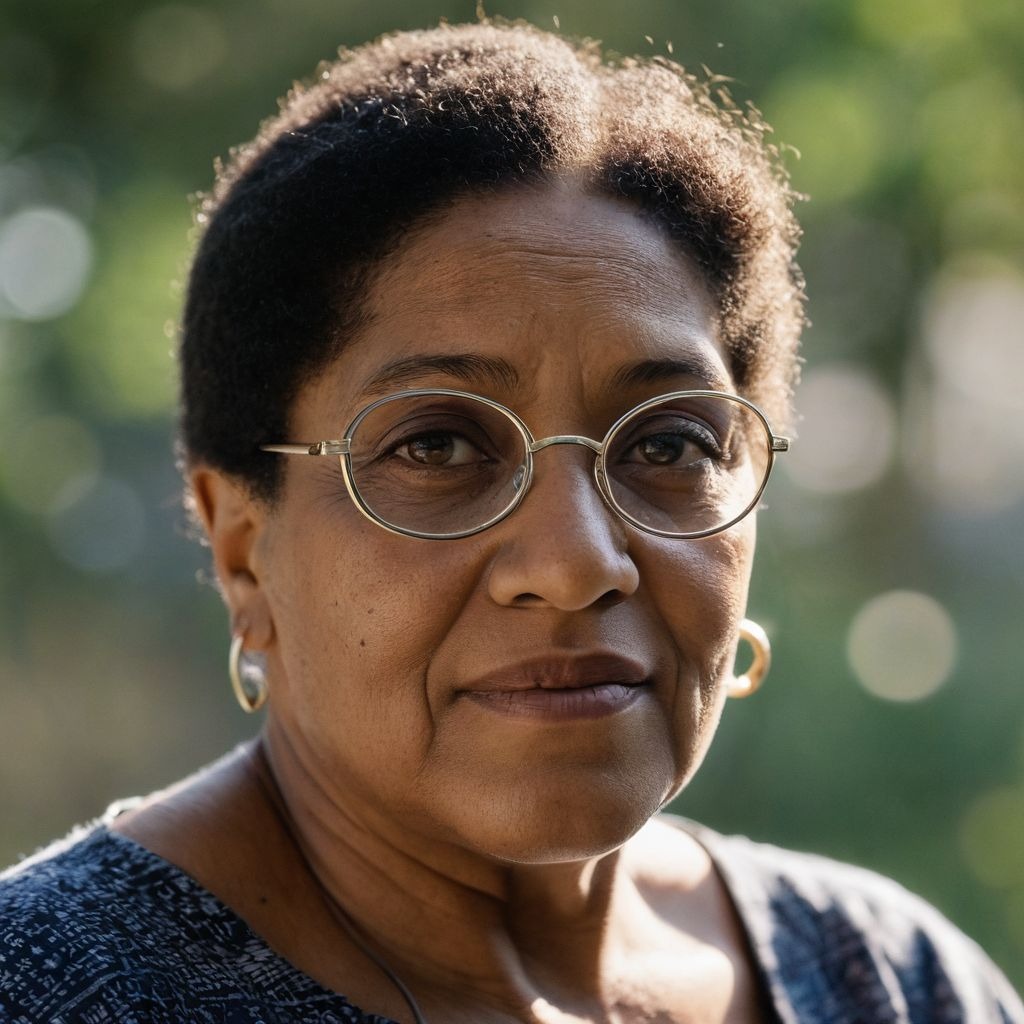
Audre Lorde’s name has been etched in my mind for years, long before I’d even picked up one of her books. My college English professor assigned us her poem “The New York Head Shop” and I was struck by the raw emotion and unapologetic language. It was like she had taken a magnifying glass to all the things I’d only whispered about in my own head – identity, community, and the struggle for belonging.
As I read through her collections, I began to notice something that resonated deeply with me: Audre’s writing is not just about expression; it’s about excavation. She digs deep into the complexities of being black, queer, and a woman, laying bare the contradictions and paradoxes that often leave us feeling lost and fragmented.
I remember feeling a mix of awe and discomfort when I read “The Cancer Journals”. Audre’s unflinching account of her mastectomy and subsequent experiences with identity and body image left me questioning my own relationship with vulnerability. Why was it so hard for me to be honest about my own struggles, even in the safety of a college essay? What did it mean that I felt more comfortable articulating myself through writing than speaking?
Audre’s work raises so many questions for me – about silence and voice, about shame and pride, about the intersections that shape our experiences. Her essay “Age” is like a sharp critique of my own internalized narratives around aging and beauty. How have I internalized societal expectations about what it means to be young or old? What does Audre’s unwavering commitment to her own aging process – with all its attendant complexities and challenges – say about the ways we’re socialized to value certain bodies over others?
One of the things that draws me to Audre is the way she inhabits multiple spaces simultaneously. Her work doesn’t shy away from the tension between being a poet, a mother, a black woman, or a lesbian. She takes up all these identities with equal weight and validity, refusing to prioritize one over another. This reminds me of my own attempts to juggle different aspects of myself – student, writer, friend, daughter – but also highlights how Audre’s practice is so much more intentional and courageous.
Sometimes I feel like I’m trying to keep up with Audre’s audacity – her willingness to confront the harder truths about herself and the world around her. Her writing is like a mirror held up against my own insecurities and biases, forcing me to consider what it means to be accountable for one’s own privilege and ignorance.
As I read through her work, I’m struck by how Audre’s words are both deeply personal and universally relatable. She writes about the specificity of her experiences – from growing up in New York City to navigating relationships with women of color – but simultaneously taps into a broader cultural zeitgeist that speaks to anyone who has ever felt like an outsider.
I don’t think I’ve fully grasped what it means for Audre’s writing to be so essential, so necessary. Part of me wonders if this is because her work confronts the very same fears and doubts that keep me from speaking up in my own life – the fear of being misunderstood, the doubt that anyone will listen.
But perhaps that’s the point: Audre’s writing isn’t just about speaking truth to power; it’s about creating a language that acknowledges our complexities, our contradictions, and our multifaceted identities. In her words, I see a glimmer of hope – a reminder that even in the darkest moments, there is always room for growth, for expansion, for becoming more fully ourselves.
As I sit here with Audre’s work still echoing in my mind, I’m left wondering what it would mean to embody this kind of unwavering self-honesty. How can I cultivate a similar willingness to confront the harder truths about myself and the world around me? What would it look like for me to take up the mantle of audacity that Audre Lorde so courageously carries? The questions swirl, but one thing is clear: in reading her work, I’ve discovered a kindred spirit who reminds me that being true to oneself – in all its messy, beautiful complexity – is perhaps the most powerful act of resistance we can offer.
As I delve deeper into Audre’s writing, I’m struck by the ways in which she embodies this audacity, this unwavering commitment to herself and her art. Her poetry and essays are like a manifestation of her unapologetic self, refusing to be contained or diminished by societal expectations.
I think about how often I’ve tried to temper my own voice, to smooth out the rough edges and make myself more palatable to others. Audre’s writing is like a rebuke to this instinct, a reminder that our authenticity is not something to be tamed or apologized for. Her words are like a declaration of independence, a statement that says: “I am who I am, and you would do well to listen.”
But it’s not just about speaking my truth; it’s also about being willing to confront the ways in which I’ve internalized oppressive systems. Audre’s writing is full of moments where she lays bare her own complicity, her own biases and shortcomings. It’s a powerful reminder that our privilege and ignorance are not things to be ashamed of, but rather something to be acknowledged and worked with.
I think about how often I’ve tried to “get it right,” to be the perfect student, writer, or friend. Audre’s writing is like a rejection of this impulse, a reminder that perfection is a myth, and that our humanity lies in our imperfections. Her words are like a warm hug, reminding me that it’s okay to stumble, to make mistakes, and to grow.
As I read through her essays on motherhood, identity, and community, I’m struck by the ways in which she weaves together multiple narratives, creating a rich tapestry of experiences that defy easy categorization. It’s like she’s saying: “I am not just one thing; I am many things, and all of these things are valid.”
This is what feels so revolutionary about Audre’s writing – it’s not just about speaking truth to power, but also about creating a language that acknowledges the complexity of our experiences. Her words are like a mirror held up against my own life, reflecting back at me the messy, beautiful contradictions that make us who we are.
As I sit here with her work still resonating in my mind, I’m left wondering what it would mean to write from this place of audacity and self-honesty. How can I tap into this kind of unwavering commitment to myself and my art? What does it mean to cultivate a practice that acknowledges the complexity of our experiences, rather than trying to fit them into neat categories or narratives?
The questions swirl, but one thing is clear: in reading Audre’s work, I’ve discovered a new language for living – a language that says we are enough, just as we are.
One of the things that continues to fascinate me about Audre Lorde’s writing is her use of metaphor and imagery. Her words are like a rich tapestry, woven from threads of poetry, politics, and personal experience. She has this incredible ability to capture the complexities of life in a way that feels both deeply intimate and universally relatable.
When I read “The Master’s Tools Will Never Dismantle the Master’s House,” her essay on feminism and oppression, I’m struck by how she uses the metaphor of a house to describe the ways in which systems of power are constructed. It’s like she’s saying that our language, our culture, our very way of being is built on a foundation of privilege and exclusion.
But what really gets me is when she talks about the “tools” we use to dismantle these systems. She says that if we’re using the same tools as those in power – the same language, the same assumptions, the same ways of thinking – we’ll never actually be able to tear down the house itself. We need new tools, new languages, new ways of being.
For me, this is like a wake-up call. I’ve often found myself trying to navigate these systems using the very same tools that have been used against me and my community. But Audre’s words are a reminder that we don’t have to play by those rules. We can create new ones, ones that reflect our own experiences and perspectives.
It makes me think about how I’ve approached my own writing, and how I’ve tried to fit into the existing narratives around what it means to be a writer, a woman, or a person of color. But Audre’s work is like a permission slip to do things differently, to write from a place that’s both personal and universal.
As I read on, I’m struck by the ways in which her writing is not just about expressing herself, but also about creating a sense of community and connection with others. Her words are like a bridge, spanning across different experiences and identities, and inviting us to meet each other in the middle.
It’s this sense of belonging that I think has always drawn me to Audre’s work. As someone who’s often felt like an outsider, both within my own communities and outside of them, her writing is like a reminder that I’m not alone. That there are others out there who feel just as lost and just as found as I do.
But it’s also the opposite – that I’m not just any one thing, but multiple things at once. That my experiences, my identities, my communities are all intertwined in complex ways, and that no single label or category can capture me whole.
Audre’s writing is like a mirror held up against this complexity, reflecting back at me the messy beauty of who I am. And it’s not just about self-discovery – although that’s certainly part of it. It’s also about community-building, about creating spaces for others to see themselves reflected in her words as well.
As I continue to read and reflect on Audre’s work, I’m left with more questions than answers. What does it mean to write from this place of audacity and self-honesty? How can I tap into the kind of unwavering commitment to myself and my art that Audre embodies? And what would it look like for me to create a language that acknowledges the complexity of our experiences, rather than trying to fit them into neat categories or narratives?
These are questions that continue to swirl in my mind as I sit here with Audre’s work. But one thing is clear: her writing has given me permission to be more myself, to speak from a place of truth and vulnerability, and to create spaces for others to do the same.
As I ponder these questions, I’m struck by the ways in which Audre’s writing challenges me to confront my own complicity in systems of oppression. Her words are like a mirror held up against my privilege and ignorance, forcing me to acknowledge the ways in which I’ve internalized societal norms and expectations.
I think about how often I’ve participated in conversations where people of color or queer individuals have shared their experiences with marginalization, only to be met with silence or minimization from those who don’t understand. And yet, when I’m part of these conversations, I feel like I’m somehow above the fray – that I’m not complicit in these systems because I’ve never experienced direct oppression.
But Audre’s writing shows me that this is a myth. That even as someone who has benefited from privilege and ignorance, I still have a responsibility to listen, to learn, and to act. Her words are like a gentle yet insistent nudge, reminding me that my silence is not neutrality – it’s complicity.
This realization is both exhilarating and terrifying. On one hand, it means that I have the power to make a difference, to use my privilege and platform to amplify marginalized voices. But on the other hand, it also means that I must confront my own biases and shortcomings head-on, rather than trying to avoid or deny them.
As I sit here with Audre’s work, I’m left wondering what it would mean to take up this challenge in a more intentional way. How can I use my privilege to uplift others, while also acknowledging the ways in which I’ve internalized oppressive systems? What does it look like to create spaces for marginalized voices to be heard, rather than simply amplifying my own voice?
I think about how Audre’s writing is full of moments where she lays bare her own flaws and biases, using them as an opportunity for growth and learning. Her words are like a template for self-reflection, encouraging me to do the same.
As I reflect on my own life, I realize that this is something I’ve been avoiding – confronting my own complicity in systems of oppression. But Audre’s writing shows me that it’s not about beating myself up over past mistakes or trying to be perfect; it’s about taking responsibility for my actions and using them as an opportunity for growth.
It’s a radical act, really – one that requires vulnerability, self-awareness, and a willingness to confront the hard truths about myself and the world around me. And yet, it’s also a necessary one – one that can help us build more just, equitable communities where everyone has a seat at the table.