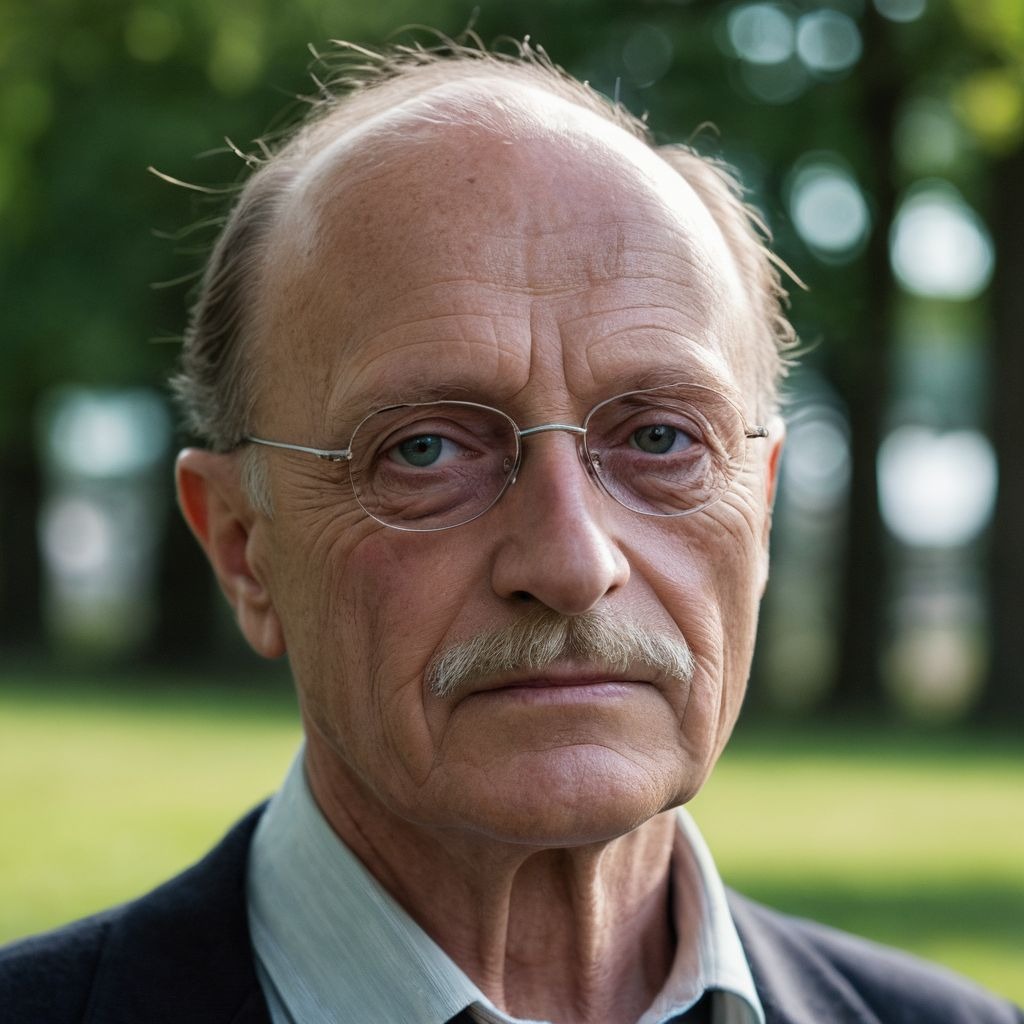
I’ve been thinking a lot about Max Planck lately, and I’m not entirely sure why. Maybe it’s because we both graduated from university around the same age – he was 26 when he submitted his habilitation thesis on thermodynamics, while I just turned 22 last week. Or maybe it’s because I find myself relating to the struggles he faced in pursuing a career in science, despite being surrounded by people who didn’t always understand or support him.
As I delve into Planck’s life and work, I keep coming back to the concept of black-body radiation, which he discovered in 1900. It was this seemingly obscure phenomenon that led him to formulate his famous equation, E=hν, which relates energy to frequency. What fascinates me is how Planck took a problem that had been puzzling scientists for decades and not only solved it but also fundamentally changed our understanding of the physical world.
But what really resonates with me is the story behind his discovery. Planck was a professor at the University of Berlin, which was (and still is) one of the most prestigious institutions in Germany. Yet, despite his academic success, he faced opposition from his peers for his unconventional ideas about energy and matter. It’s hard not to imagine him feeling like an outsider, struggling to be heard amidst a sea of skepticism.
I can relate to that feeling. As a writer, I’ve often found myself at odds with others who don’t understand my creative process or the value of what I’m trying to express. Planck’s story makes me wonder: how many other scientists have faced similar challenges, only to be vindicated by history?
One aspect that still unsettles me is Planck’s attitude towards his own discovery. He was known to say that he had derived his equation not from experimental data but rather from “heuristic reasoning” – in other words, a gut feeling. This approach seems almost antithetical to the scientific method we’re taught to value: observation, experimentation, and rigorous testing.
I find myself torn between admiration for Planck’s bold intuition and concern about the implications of relying on hunches rather than empirical evidence. Does his equation represent a triumph of human ingenuity over the constraints of data, or does it reveal a deeper flaw in the scientific enterprise?
These questions keep me up at night, and I’m not sure I have the answers. As I continue to explore Planck’s life and work, I’m struck by the realization that science is not always about objective truth but also about human perception, creativity, and collaboration.
I guess what I’m trying to say is that Max Planck holds my attention because he embodies the complexities of scientific inquiry – the tension between theory and experiment, reason and intuition. His story makes me question my own assumptions about the nature of knowledge and the role of scientists in shaping our understanding of the world.
As I delve deeper into Planck’s work, I’m struck by the ways in which he navigated these complexities. He was a product of his time, yet he also challenged the conventional wisdom of his era. His equation, E=hν, revolutionized our understanding of energy and matter, but it also laid bare the limitations of scientific knowledge.
I find myself wondering: what does it mean to “know” something in science? Is it about arriving at a definitive answer, or is it more nuanced than that? Planck’s approach suggests that even the most seemingly objective truths can be subject to revision and reinterpretation. This realization unsettles me, as it forces me to confront my own assumptions about the nature of knowledge.
As a writer, I’m accustomed to working with language and narrative structures. But science operates on a different set of rules, ones that prioritize observation and experimentation over creative expression. And yet, Planck’s story shows me that even in the most seemingly objective fields, human creativity and intuition play a crucial role.
I think about my own writing process, where I often rely on intuition to guide me through complex ideas and emotions. Is this similar to Planck’s approach, or is it fundamentally different? Do I risk being seen as unscientific or unreliable if I acknowledge the role of intuition in my work?
These questions swirl around me like a vortex, making it difficult for me to pin down any concrete answers. But that’s what fascinates me about Planck – he represents a liminal space between science and art, where creativity and rigor entwine.
As I continue to explore his life and work, I’m struck by the parallels between his experiences and my own. We both navigated uncertain terrain, relying on our intuition and creative instincts to guide us forward. And yet, we both risk being seen as outsiders – Planck for challenging conventional wisdom in physics, me for exploring the intersections of science and writing.
Perhaps that’s what draws me to Planck’s story: it shows me that even in the most seemingly objective fields, there’s room for human creativity and intuition. And maybe, just maybe, that’s what makes science – or any field, really – truly beautiful.
As I delve deeper into Planck’s life and work, I find myself wondering about the role of doubt in scientific inquiry. Planck was known to be a perfectionist, and his equation, E=hν, was not initially met with widespread acceptance. In fact, some of his colleagues were skeptical of its validity, and it took years for the scientific community to fully recognize its significance.
I can relate to that sense of doubt and uncertainty. As a writer, I’ve often felt like my ideas aren’t good enough, or that I’m not doing justice to the subject matter. Planck’s story shows me that even the most accomplished scientists face similar fears and doubts. It’s reassuring to know that I’m not alone in this feeling.
But what also strikes me is the way Planck navigated his doubts and uncertainties. Rather than becoming discouraged, he used them as an opportunity for growth and exploration. He continued to refine his ideas, engaging with critics and incorporating their feedback into his work.
I think about my own writing process and how I respond to criticism or uncertainty. Do I retreat into my shell, afraid of being vulnerable? Or do I take a page from Planck’s book, using those doubts as fuel for further exploration?
Planck’s approach also makes me think about the importance of community in scientific inquiry. He was part of a network of scientists who supported and challenged each other, driving the field forward through collaborative efforts.
As a writer, I’m used to working alone, but Planck’s story shows me that even in the most solitary pursuits, there’s value in seeking out others who share your passions and goals. Perhaps it’s time for me to seek out similar communities of writers, scientists, or thinkers who can offer support and encouragement.
As I continue to explore Planck’s life and work, I’m struck by the realization that scientific inquiry is not just about arriving at a definitive answer but also about the journey itself. It’s about embracing uncertainty, navigating doubt, and using those challenges as opportunities for growth and exploration.
I think about my own writing process and how it relates to this idea. As a writer, I often get caught up in trying to arrive at a final product – a polished draft, a published article, or a completed manuscript. But Planck’s story shows me that the journey itself is just as important as the destination.
Perhaps that’s what makes science (and writing) truly beautiful: not the end result but the process of discovery, exploration, and collaboration that gets us there.
As I reflect on Planck’s journey, I’m struck by the parallels between his struggles and my own as a writer. Both of us have had to navigate uncertain terrain, relying on our intuition and creative instincts to guide us forward. And both of us have faced skepticism and criticism from others who don’t understand or appreciate our work.
But what resonates with me most is the way Planck approached these challenges. Rather than becoming defensive or dismissive, he engaged with his critics and incorporated their feedback into his work. He saw each criticism as an opportunity for growth and exploration, rather than a threat to his ego or reputation.
I wish I could say that I approach my own writing process with the same level of openness and curiosity. But often, when faced with criticism or feedback, I feel like I’m on the defensive, trying to justify or explain myself rather than listening to what others have to say. It’s as if I’m stuck in a cycle of self-protection, afraid to be vulnerable or uncertain.
Planck’s story makes me wonder: what would happen if I approached criticism and feedback with the same level of openness and curiosity that he did? Would I become more receptive to new ideas and perspectives? Would my writing improve as a result?
I think about all the times I’ve dismissed feedback from others, convinced that I’m right and they’re wrong. And yet, when I look back on those experiences, I realize that I was missing out on valuable insights and opportunities for growth.
Planck’s approach shows me that science – and writing – is not just about arriving at a definitive answer or product, but about the journey itself. It’s about embracing uncertainty, navigating doubt, and using those challenges as opportunities for growth and exploration.
As I continue to explore Planck’s life and work, I’m struck by the realization that even in the most seemingly objective fields, there’s room for human creativity and intuition. And maybe, just maybe, that’s what makes science (and writing) truly beautiful: not the end result but the process of discovery, exploration, and collaboration that gets us there.
But as I ponder this idea, I’m also aware of the complexities and nuances involved. Planck’s equation, E=hν, was not just a stroke of genius, but also the product of years of hard work, dedication, and perseverance. And yet, even with all his achievements, he still faced skepticism and criticism from others.
I wonder: how do I balance my own creative instincts with the need for objectivity and rigor in writing? Can I trust my intuition to guide me towards new insights and ideas, or will it lead me down a path of speculation and guesswork?
As I continue to grapple with these questions, I’m reminded that Planck’s story is not just about him – it’s also about the broader context in which he lived and worked. He was a product of his time, shaped by the cultural, social, and historical forces that surrounded him.
I realize that my own writing process is influenced by similar factors: my upbringing, education, experiences, and biases. And yet, as I explore Planck’s life and work, I’m struck by the realization that even in the most seemingly objective fields, there’s room for human creativity and intuition.
This insight unsettles me, as it forces me to confront my own assumptions about the nature of knowledge and the role of scientists (and writers) in shaping our understanding of the world. But it also gives me hope – hope that I can tap into my own creative instincts and intuition, even in the face of uncertainty and doubt.
As I continue to explore Planck’s story, I’m left with more questions than answers. But perhaps that’s what makes science (and writing) truly beautiful: the uncertainty, the complexity, and the endless possibilities for growth and exploration.
As I delve deeper into Planck’s life and work, I find myself drawn to his concept of “heuristic reasoning” – the idea that intuition can play a crucial role in scientific discovery. It’s a notion that challenges my own writing process, where I often rely on research and evidence to support my arguments.
I wonder: what would happen if I allowed myself to tap into my intuition more freely, even when faced with uncertainty or doubt? Would my writing become more innovative and creative, or would it risk being speculative and unreliable?
Planck’s approach suggests that there’s a delicate balance between relying on data and evidence, and trusting one’s instincts. It’s a tension that I experience in my own writing, where I often struggle to reconcile the need for objectivity with the desire to express myself authentically.
As I ponder this idea, I’m reminded of a conversation I had with a friend who’s a scientist. We were discussing the role of intuition in scientific inquiry, and she mentioned that many scientists rely on their gut feelings or hunches to guide them towards new discoveries. But what struck me was her caution: “Intuition is not a substitute for evidence,” she said. “It’s a tool to be used alongside data and experimentation.”
I nod in agreement, yet I also feel a twinge of discomfort. What if my intuition leads me down a path that contradicts the evidence? Am I willing to take that risk, or should I stick to what’s safe and familiar?
Planck’s story shows me that even the most accomplished scientists face similar doubts and uncertainties. And yet, it’s also clear that he relied on his intuition to guide him towards new insights and discoveries.
I find myself wondering: how can I cultivate a deeper trust in my own intuition, without sacrificing the need for evidence and rigor? Can I learn to listen to my gut feelings and instincts, even when they contradict what I think I know?
As I continue to explore Planck’s life and work, I’m struck by the realization that science is not just about arriving at a definitive answer, but also about the journey itself. It’s a process of exploration, discovery, and collaboration – one that requires trust in oneself, as well as in others.
And so, I take a deep breath and try to let go of my need for control and certainty. I allow myself to be vulnerable, to trust in my intuition and creativity. It’s a scary feeling, but also an exhilarating one – like stepping into the unknown with an open heart and mind.
As I write these words, I feel a sense of connection to Planck and his struggles. We’re both navigating uncertain terrain, relying on our intuition and creative instincts to guide us forward. And yet, we’re also part of a broader community – one that values collaboration, exploration, and growth.
In this moment, I feel a sense of hope and possibility. Maybe, just maybe, I can tap into my own creativity and intuition, even in the face of uncertainty and doubt. And perhaps, through my writing, I can contribute to a new understanding of the world – one that values human experience, creativity, and collaboration.