
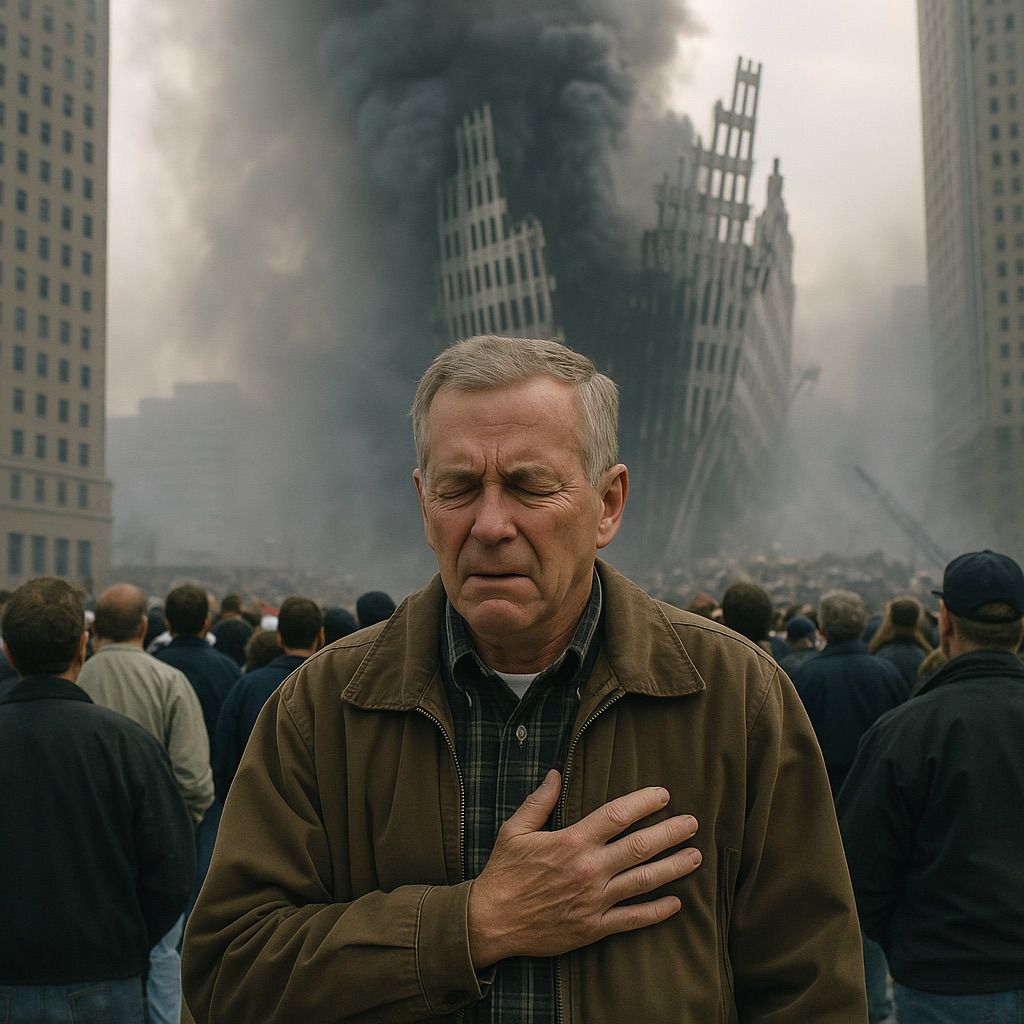
On the morning of September 11, 2001, the world changed forever. The bright blue skies over New York City gave no hint of the terror about to unfold, no warning of the unimaginable tragedy that would carve itself into the memory of an entire generation. That day began like any other Tuesday. People rushed to work, grabbed coffee from street vendors, chatted about school schedules and office meetings. The towers of the World Trade Center stood tall, gleaming symbols of American ambition and resilience, their windows reflecting the morning sun. In Washington, D.C., the Pentagon stirred with routine, while flights crisscrossed the country carrying vacationers, businesspeople, and families. But within the span of a few hours, what seemed ordinary was transformed into history’s most chilling reminder of how fragile life, freedom, and peace truly are.
At 8:46 a.m., American Airlines Flight 11 crashed into the North Tower of the World Trade Center. The impact ripped through floors filled with office workers, secretaries, and executives, scattering glass, steel, and paper into the morning air. At first, many assumed it had been a tragic accident — a plane gone astray, a pilot’s nightmare, a disaster without intent. But as the smoke poured into the blue sky, and as cameras turned toward Manhattan, a second strike came. At 9:03 a.m., United Airlines Flight 175 slammed into the South Tower in a fireball of jet fuel and chaos. In that instant, no one doubted: America was under attack.
The world watched in horror. Televisions across the globe broadcast live images of the Twin Towers burning, their steel skeletons groaning under the strain. People trapped above the impact zones waved desperately for help, some forced to make choices no human should ever face. Firefighters, police officers, and paramedics raced into the buildings, climbing stairwells filled with smoke, carrying equipment on their backs, and knowing the danger they faced. The streets below filled with debris and ash, but also with courage, as New Yorkers reached out to strangers, offering water, shelter, and comfort in the chaos. That was the first sign of the resilience that would define the day — amid the horror, humanity shone through.
At 9:37 a.m., American Airlines Flight 77 struck the Pentagon, piercing the symbol of America’s military might. Flames tore through the building, and chaos erupted in the capital. Just minutes later, another plane, United Airlines Flight 93, was hijacked and redirected toward Washington. But this time, passengers knew. They had heard the news of the towers. They called their families. They prayed. And they fought back. In an act of extraordinary bravery, ordinary citizens stormed the cockpit, sacrificing their lives to prevent the plane from reaching its target. At 10:03 a.m., Flight 93 crashed into a field in Shanksville, Pennsylvania. Its passengers’ courage added another chapter to the story of that day: that even in the face of certain death, the human spirit refuses to surrender.
By 9:59 a.m., the South Tower collapsed. The unthinkable became real. The skyline of New York City, so long defined by the Twin Towers, was swallowed in clouds of dust and debris. At 10:28 a.m., the North Tower followed. The world seemed to stop. Silence hung in living rooms where millions watched on television. Silence stretched across cities, towns, and villages around the globe. Silence, except for the sobs of those who knew loved ones were gone, and the sirens of those still rushing to save lives.
Nearly 3,000 lives were lost that day: mothers and fathers, sons and daughters, firefighters and police officers, office workers and airline crew. They were Americans, but also citizens of more than 90 countries. They were people who had simply gone to work, boarded planes, or responded to a call for help. They were lives cut short, dreams left unfinished, families left broken. And yet, they became part of something larger — symbols of innocence lost, but also of a nation’s enduring resilience.
The days that followed were filled with grief, but also with unity. Americans lined up to give blood. Strangers embraced in candlelight vigils. Flags flew from windows and overpasses. The skyline of Manhattan was filled with smoke, but the streets were filled with compassion. Firefighters and volunteers worked tirelessly at Ground Zero, digging through rubble with bare hands, hoping to find survivors. Walls of photos and messages of the missing covered the city, turning New York into a living memorial. Across the country and the world, people asked the same haunting question: how could this happen? And what comes next?
The attacks of 9/11 reshaped not just America, but the entire world. Airports changed forever. Wars began in Afghanistan and Iraq. Terms like “homeland security,” “war on terror,” and “Patriot Act” entered the global lexicon. Every traveler felt the weight of new security checks, every nation reconsidered its vulnerability, and every person who lived through that day carried its memory. Yet beyond politics and policy, the true legacy of 9/11 lies in the resilience of the human spirit. It lies in the firefighters who ran toward danger when everyone else was running away. It lies in the passengers of Flight 93 who fought for the lives of strangers they would never meet. It lies in the ordinary people who became extraordinary in a moment of crisis.
September 11 is remembered not only as a day of loss, but as a day of remembrance, unity, and resolve. Every year, the names of the victims are read aloud in New York, Washington, and Pennsylvania. Bells toll. Flags lower. And the world remembers. Memorials now stand where the towers once rose, not as symbols of destruction, but as tributes to resilience, courage, and the enduring memory of those lost. The 9/11 Memorial pools in Lower Manhattan, etched with nearly 3,000 names, are silent reminders of a day that shook the earth and changed us all.
But 9/11 is not frozen in the past. It continues to live in the stories told by survivors, in the children who grew up without parents, in the soldiers who served in the wars that followed, and in the daily lives of people who carry the scars of that day. It lives in the quiet moments: in the firefighter who hears a siren and remembers, in the airline passenger who grips the armrest during turbulence, in the family who sets an empty chair at Thanksgiving. It lives in us all, a reminder of both our vulnerability and our strength.
And yet, perhaps the most important lesson of 9/11 is that love endures. In the face of unimaginable hatred, love did not collapse with the towers. Love poured into the streets, across oceans, through phone calls, prayers, and tears. Love held families together. Love gave courage to strangers. Love gave the world hope that even in the darkest hour, the light of humanity cannot be extinguished.
On September 11, 2001, the world witnessed both the worst and the best of humanity. We saw destruction, hatred, and death. But we also saw heroism, compassion, and unity. We saw that even when buildings fall, people rise. And that is why, decades later, we still remember — not only the horror of what was lost, but the strength of what remained.