
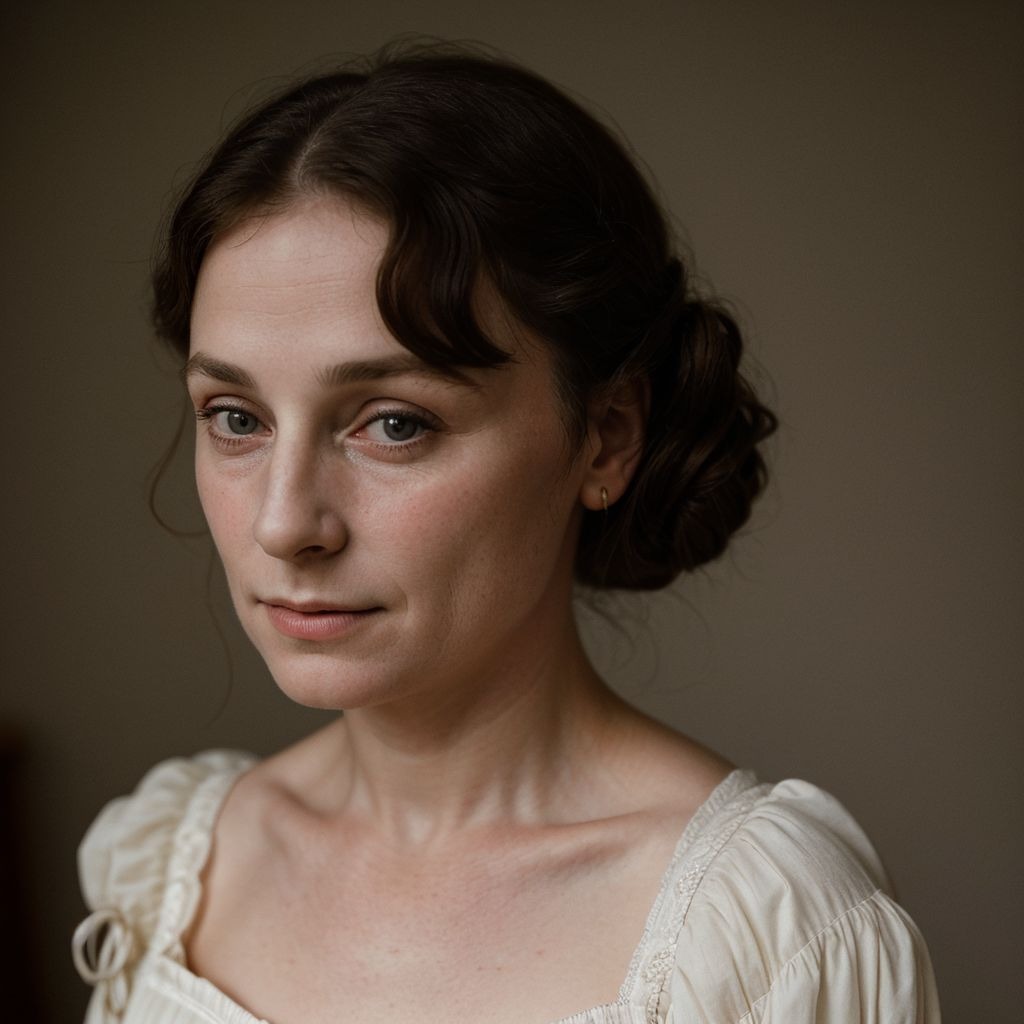
Colette. I’ve been thinking about her a lot lately, ever since I stumbled upon one of her novels while browsing through a used bookstore. Her writing is like nothing I’ve ever read before – it’s like she’s speaking directly to me, but also somehow above me at the same time.
What draws me in most is her complete and utter disregard for societal expectations. She was a woman, born into a world where women were expected to be demure and obedient, yet she refused to conform. She dressed like a man, smoked cigarettes, and wrote about sex and desire with an unapologetic frankness that was unheard of in her time.
I find myself both fascinated and intimidated by this aspect of Colette’s personality. As someone who’s still trying to figure out their own place in the world, I feel a sense of solidarity with her willingness to take risks and challenge the status quo. But at the same time, I’m also aware of how privileged she was – born into a wealthy family, educated, and connected to influential people.
It’s hard not to wonder what it would have been like to live in a world where women were so heavily restricted. Would I have had the courage to be as unconventional as Colette? Or would I have played by the rules, sacrificing my own desires for the sake of conformity?
Colette’s writing is also marked by a sense of vulnerability and openness that I find both beautiful and unsettling. She writes about her own experiences with love, loss, and heartbreak in a way that feels almost reckless – like she’s laying bare her soul on the page.
I’ve been struggling to connect with this aspect of her work. As someone who values their independence and autonomy, I find it hard to understand why Colette would write about her relationships in such an all-consuming way. Doesn’t she deserve more than just a romantic obsession? Can’t she see that there’s more to life than just love?
But then again, maybe that’s the point – maybe Colette is trying to tell us that love and desire are not just emotions, but also fundamental aspects of who we are as human beings. Maybe she’s showing us that it’s okay to be messy and imperfect, to let our emotions guide us even when they lead us down uncertain paths.
As I continue to read her work and learn more about her life, I’m struck by the realization that Colette is not just a writer or a historical figure – she’s a complex, multifaceted person who defies easy categorization. She’s a rebel, a romantic, an outsider, and an insider all at once.
I think this is what draws me to her work so much – it’s like looking into a mirror, but one that shows me both the beauty and ugliness of my own contradictions. Colette may have lived in a different time and place, but her struggles and triumphs feel uncomfortably familiar, like they’re speaking directly to some deep-seated part of myself.
And so I’ll keep reading, keep thinking, and keep trying to make sense of this enigmatic figure who has captured my imagination. Because in the end, it’s not just about Colette – it’s about what she represents: the courage to be ourselves, even when it’s hard; the willingness to take risks and challenge the status quo; and the knowledge that our deepest desires and vulnerabilities are what make us most human.
As I delve deeper into Colette’s work, I find myself grappling with the tension between her romanticism and her pragmatism. On one hand, she writes about love with a fervor that’s almost infectious – it’s as if she believes that true passion can conquer all obstacles. And yet, in the same breath, she also acknowledges the harsh realities of life: the betrayals, the heartbreaks, the disappointments.
It’s this contradictory nature that I find both captivating and unsettling. As someone who’s been hurt before, I struggle to reconcile Colette’s unwavering optimism with my own more cynical outlook. Can it really be true that love is worth risking everything for? Or are we just fooling ourselves into thinking that?
I think about my own relationships – the ones that have ended in tears and heartache, as well as the ones that have left me feeling exhilarated but also uncertain. Colette’s words seem to suggest that it’s all part of the journey, that we must be willing to take the leap even when it feels like falling into the unknown.
But what about the women who come after us? The ones who benefit from our struggles and sacrifices? Do they get to have it easier, to coast on the shoulders of those who paved the way for them? I think about my own place in this legacy – as a woman who’s benefited from education, privilege, and social mobility.
Colette’s life was marked by its own set of privileges and disadvantages. She came from a wealthy family, but her relationships with women were often fraught and complicated. She wrote about her experiences with love and desire, but also struggled to maintain relationships that were meaningful and lasting.
In many ways, I see myself in Colette – or rather, I see aspects of myself reflected back at me through her words. We’re both women who’ve been shaped by our experiences as outsiders, who’ve had to navigate the complexities of identity and desire in a world that often doesn’t understand us. But we’re also both women who are still learning, still growing, still trying to make sense of this messy, beautiful thing called life.
As I continue to read Colette’s work, I’m struck by the realization that her writing is not just about love or desire – it’s about the human condition itself. It’s about the search for meaning and connection in a world that often seems hostile or indifferent to our needs.
And so I’ll keep reading, keep thinking, and keep trying to make sense of this enigmatic figure who has captured my imagination. Because in the end, it’s not just about Colette – it’s about what she represents: the messy, beautiful complexity of being human, with all its contradictions and uncertainties.
One thing that continues to fascinate me is Colette’s use of language. She has this incredible ability to describe the mundane in a way that makes it seem almost magical. Her writing is like a warm bath on a cold day – it envelops you, comforts you, and makes you feel seen. But at the same time, she’s also not afraid to get messy, to dig into the dark corners of human experience and emerge with scars.
As I read through her work, I find myself getting caught up in the rhythm of her sentences. The way she uses metaphor and simile to describe the world around her is like a form of poetry – it’s beautiful, evocative, and somehow manages to capture the essence of what it means to be alive.
I’ve been trying to analyze this aspect of her writing, to understand what makes it so powerful. Is it the way she uses imagery? The way she structures her sentences? Or is it something more intangible – a sense of vulnerability, of openness that she brings to the page?
It’s hard to put my finger on it, but I think part of what draws me to Colette’s writing is its willingness to be imperfect. She’s not afraid to make mistakes, to stumble over her own words or get caught up in her own emotions. And yet, somehow, this imperfection is what makes her writing feel so authentic, so true.
As someone who’s struggled with my own writing, I find myself identifying with Colette’s struggles on the page. The fear of not being good enough, the anxiety of putting yourself out there only to be rejected or ignored – it’s all so familiar.
But Colette’s writing also makes me realize that imperfection is not just a virtue, but a necessity. We’re all flawed, we’re all messy, and we’re all struggling to make sense of this crazy world around us. And maybe, just maybe, that’s what makes her writing feel so accessible, so relatable.
I think about my own writing, and how it often feels like I’m trying to be something I’m not – more confident, more articulate, more perfect. But Colette’s work shows me that this is a false dichotomy. We don’t have to choose between being imperfect or perfect; we can be both, all at once.
As I continue to read and reflect on Colette’s writing, I’m starting to see her as a kind of mirror held up to my own life. She’s showing me the complexities of human experience – the beauty and ugliness, the love and heartbreak, the contradictions and uncertainties that make us who we are.
And in doing so, she’s giving me permission to be messy, to be imperfect, to be myself. It’s a liberating feeling, one that I’m still trying to wrap my head around. Because if Colette can do it – if she can write with such vulnerability and openness – then maybe, just maybe, I can too.
As I delve deeper into Colette’s work, I find myself becoming increasingly obsessed with the idea of imperfection as a virtue. It’s not just about embracing our flaws, but also about recognizing that they’re an integral part of who we are as human beings. Colette’s writing is like a masterclass in imperfection – she takes the mundane and makes it majestic, the ordinary and makes it extraordinary.
I think about my own life, and how I often try to present myself to others as this perfect, put-together person. But what if I’m not? What if I’m messy and imperfect, just like Colette’s writing? Would that be okay? Could I still be worthy of love and acceptance?
It’s a scary thought, but also a liberating one. Because if I can accept myself as imperfect, then maybe others will too. Maybe we can all find freedom in our flaws, rather than trying to hide them or pretend they don’t exist.
As I continue to read Colette’s work, I’m struck by the way she uses her writing as a form of self-discovery. She writes about herself with a level of vulnerability that’s almost shocking – it’s like she’s laying bare her soul on the page. And yet, at the same time, she’s also creating this sense of intimacy and connection with the reader.
I find myself feeling seen by Colette in a way that I’ve never felt before. Like she’s understanding me, getting me, even when I’m not fully understanding myself. It’s like we’re having this deep, profound conversation about what it means to be human – and it feels almost spiritual.
But what if Colette is wrong? What if her writing isn’t a reflection of the truth, but rather just a product of her own biases and experiences? Could I be reading too much into her words, projecting my own desires and hopes onto her work?
I don’t know. All I know is that Colette’s writing has touched something deep within me – a sense of longing, perhaps, or a desire for connection. Whatever it is, it feels real, and it feels raw.
As I finish reading one of Colette’s novels, I feel like I’ve been on a journey with her, through the ups and downs of life, love, and loss. It’s like we’ve shared this intimate, private experience that only we can understand – and yet, somehow, she’s made it accessible to me, to anyone who reads her words.
I’m left feeling changed, somehow, by Colette’s writing. Like I’ve been given a new perspective on the world, or at least on myself. It’s hard to put into words what that feels like – all I know is that it’s a sense of expansion, of growth, of becoming more fully alive.
And so I’ll keep reading, keep thinking, and keep trying to make sense of this enigmatic figure who has captured my imagination. Because in the end, it’s not just about Colette – it’s about what she represents: the messy, beautiful complexity of being human, with all its contradictions and uncertainties.