
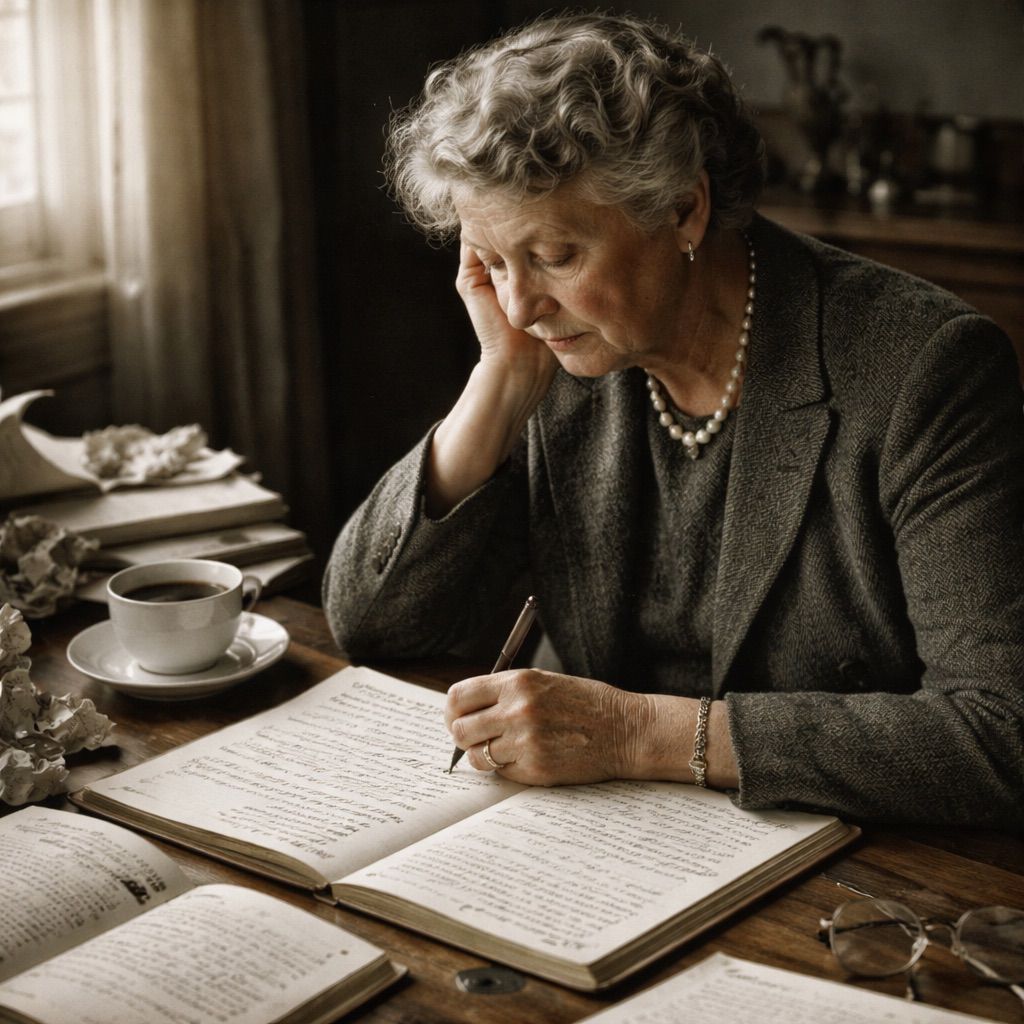
I’ve always been fascinated by Eleanor Roosevelt, not just for her impressive resume – former First Lady, human rights advocate, writer – but for the way she seemed to embody a sense of quiet determination that I find both inspiring and intimidating.
As I read through her letters and writings, I’m struck by how much she seems to have navigated the complexities of her life with an unwavering commitment to speaking truth to power. Her columns in the Ladies’ Home Journal, where she tackled topics like racism and sexism, are especially striking – a testament to her willingness to challenge the status quo and push for change.
But what I find really interesting is how Eleanor Roosevelt’s writing often feels like a form of self-justification, a way of rationalizing her own contradictions. She writes about the importance of empathy and compassion, but also acknowledges the ways in which she was shielded from the harsh realities of the world by her privileged upbringing. It’s as if she’s constantly trying to reconcile these two sides of herself – the idealistic humanitarian and the product of a system that often benefited her at the expense of others.
I think this ambivalence resonates with me because I’ve always struggled with my own complicity in systems of privilege. Growing up, I was aware of my family’s relative comfort and security, but also felt a sense of disconnection from the struggles of those around us. As a student, I found myself caught between a desire to make a difference and a fear of rocking the boat – of challenging the norms that had always been in place.
Eleanor Roosevelt’s writing feels like a powerful antidote to this paralysis. Her words are infused with a sense of urgency and conviction, but also a willingness to admit uncertainty and doubt. She writes about the importance of human connection and empathy, but also acknowledges the limits of her own understanding – the ways in which she was shaped by her experiences and biases.
As I read through her work, I’m struck by how much she seems to be grappling with the same questions that I do: How can we balance our desire for justice and equality with our own flaws and limitations? How can we stay true to ourselves while still navigating the complexities of a world that often seems designed to hold us back?
It’s this sense of shared struggle, of grappling with the messy realities of human existence, that draws me to Eleanor Roosevelt. Her writing feels like a reminder that even in the face of uncertainty and doubt, we have the power to choose – to choose how we engage with the world around us, and to work towards creating a more just and compassionate society.
But even as I’m drawn to her ideals, I find myself questioning my own reactions. Is it enough to simply admire Eleanor Roosevelt’s commitment to justice, or do I need to actually confront my own complicity in systems of privilege? How can I balance my desire for change with the fear of being seen as naive or idealistic?
As I write this, I’m not sure I have any answers – just a sense that exploring these questions is an important part of my own journey. And maybe, just maybe, Eleanor Roosevelt’s writing will continue to inspire me as I navigate the complexities of my own life, and work towards creating a more just and compassionate world for all.
I’m struck by how often Eleanor Roosevelt mentions the importance of “being true to oneself,” but also acknowledges that this can be a difficult and messy process. In her essay “The Moral Basis of Democracy,” she writes about the need to balance individuality with a sense of responsibility to others, noting that “the most important thing is not what we want to do for ourselves, but what we are willing to do for the common good.” It’s a sentiment that resonates deeply with me, as I’ve often found myself struggling to reconcile my own desires and aspirations with the needs and expectations of those around me.
As I read through her work, I’m also struck by the way Eleanor Roosevelt emphasizes the importance of self-reflection and introspection. She writes about the need to “know oneself” in order to truly understand others, and notes that this requires a willingness to confront one’s own biases and assumptions. It’s a message that feels both empowering and terrifying – empowering because it suggests that I have the power to change my own thoughts and behaviors, but also terrifying because it requires me to confront the ways in which I may be perpetuating systems of oppression without even realizing it.
I think this is one of the things that I admire most about Eleanor Roosevelt’s writing: her willingness to confront difficult truths and complexities head-on. She doesn’t shy away from acknowledging the flaws and contradictions of herself or others, and instead uses these imperfections as a starting point for growth and exploration. It’s a model that feels both inspiring and intimidating – inspiring because it suggests that we can all learn and grow through our mistakes and missteps, but also intimidating because it requires us to be vulnerable and open to change.
As I continue to read and reflect on Eleanor Roosevelt’s work, I’m struck by the way she weaves together themes of empathy, compassion, and social justice. Her writing feels like a powerful reminder that these are not mutually exclusive goals – that in fact, they are deeply intertwined, and that our ability to connect with others and understand their experiences is essential for creating a more just and equitable society.
But I’m also aware that this is easier said than done. As someone who has benefited from systems of privilege, I know that I have a lot to learn about empathy and compassion – not just in theory, but in practice. And as I navigate the complexities of my own life and relationships, I’m forced to confront the ways in which my own biases and assumptions may be perpetuating harm or inequality.
It’s this sense of uncertainty and doubt that feels most alive for me right now – the knowledge that I don’t have all the answers, but that I’m willing to explore and learn alongside Eleanor Roosevelt. Her writing feels like a powerful catalyst for growth and change, not because it offers easy solutions or clear-cut answers, but because it inspires me to keep asking questions and seeking out new perspectives.
As I delve deeper into Eleanor Roosevelt’s work, I’m struck by the way she uses storytelling as a tool for social commentary. Her essays often begin with personal anecdotes, but quickly unfold into broader explorations of human nature, politics, and society. It’s a technique that feels both relatable and thought-provoking – like I’m not just reading about abstract ideas, but experiencing them through her eyes.
I think this is one reason why Eleanor Roosevelt’s writing resonates with me: it reminds me that even in the most complex and nuanced issues, there are personal stories and emotions at play. As a writer myself, I know how easily I can get caught up in abstractions and ideologies – but Eleanor Roosevelt shows me that true understanding begins with acknowledging the humanity of those involved.
I’m also fascinated by the way Eleanor Roosevelt engages with her critics and detractors. In one essay, she responds to accusations of being too soft on communism, arguing that a nuanced understanding of complex issues is always more valuable than simplistic categorizations. It’s a stance that feels both principled and pragmatic – recognizing that even in times of great turmoil, we must strive for empathy and understanding.
This commitment to nuance and complexity feels particularly important as I navigate my own relationships and communities. As someone who’s often felt caught between competing values and loyalties, I know how easy it is to simplify or reduce complex issues into neat little packages. But Eleanor Roosevelt shows me that this kind of reductionism can be damaging – not just to individuals, but to entire societies.
As I continue to read and reflect on Eleanor Roosevelt’s work, I’m struck by the way she challenges me to think more critically about my own assumptions and biases. Her writing is like a mirror held up to my own flaws and contradictions – forcing me to confront the ways in which I may be perpetuating harm or inequality, even when I don’t intend to.
It’s a difficult but essential process, one that requires me to be vulnerable and open to change. And it’s here that Eleanor Roosevelt’s writing feels most like a guiding light – reminding me that true growth and transformation begin with the willingness to confront our own limitations and flaws, rather than trying to hide or deny them.
As I delve deeper into Eleanor Roosevelt’s work, I’m struck by her ability to balance idealism with pragmatism. She writes about the importance of striving for justice and equality, but also acknowledges that this is a long-term process that requires patience, persistence, and often compromise. It’s a message that feels both empowering and humbling – reminding me that even in the face of overwhelming challenges, we have the power to choose how we engage with the world around us.
I’m also fascinated by Eleanor Roosevelt’s relationship with her husband, Franklin D. Roosevelt. On the surface, their marriage seems like the epitome of privilege and entitlement – two powerful individuals who were deeply entrenched in the systems of power that they later sought to change. And yet, as I read through Eleanor’s letters and writings, I’m struck by the way she challenges these assumptions. She writes about the ways in which her husband’s infidelities and flaws were a source of pain and tension in their marriage, but also acknowledges the deep love and respect that they shared.
It’s this nuanced portrayal of a complex relationship that feels so refreshing to me – a reminder that even in the most unlikely places, we can find moments of beauty and connection. And it’s here that Eleanor Roosevelt’s writing feels like a powerful reminder that true growth and transformation begin with empathy and understanding – not just for ourselves, but for those around us.
As I reflect on my own relationships and experiences, I’m struck by the ways in which Eleanor Roosevelt’s message continues to resonate. I think about my own parents, who struggled to balance their desire for social justice with the demands of raising a family in a world that often seemed hostile to their values. I think about the friends I’ve made and lost along the way – some of whom have been fiercely committed to our shared ideals, while others have seemed more focused on maintaining the status quo.
And I’m reminded of my own struggles to navigate these complexities – to balance my desire for change with the fear of being seen as naive or idealistic. It’s a feeling that’s both familiar and isolating – like I’m wandering through a dense forest without a clear path forward. But Eleanor Roosevelt’s writing feels like a beacon of hope in this darkness, reminding me that even in the most uncertain moments, we have the power to choose how we engage with the world around us.
As I continue to explore Eleanor Roosevelt’s work, I’m struck by her emphasis on the importance of community and relationships in shaping our individual and collective growth. She writes about the need for people to come together and support one another, rather than isolating themselves within their own bubbles of privilege or complacency. It’s a message that feels both urgent and timeless – reminding me that true transformation begins with building bridges between ourselves and others.
And it’s here that I’m reminded of my own experiences as a writer and a reader. When I write about my own struggles and doubts, I often feel like I’m speaking into the void – hoping to connect with others who might be experiencing similar emotions and challenges. But Eleanor Roosevelt’s writing feels like a powerful reminder that this is not just a solitary endeavor – but rather an invitation to join a larger conversation, one that spans centuries and continents.
As I close my eyes and imagine myself in Eleanor Roosevelt’s shoes, I’m struck by the sense of possibility and potential that her life embodies. She was a woman who defied convention and expectation at every turn – using her platform as First Lady to speak truth to power, while also acknowledging her own flaws and limitations. And it’s this willingness to be vulnerable and open to change that feels like the greatest lesson I’ve taken away from her writing – reminding me that even in the face of overwhelming challenges, we have the power to choose how we engage with the world around us, and to strive for a more just and compassionate society.