
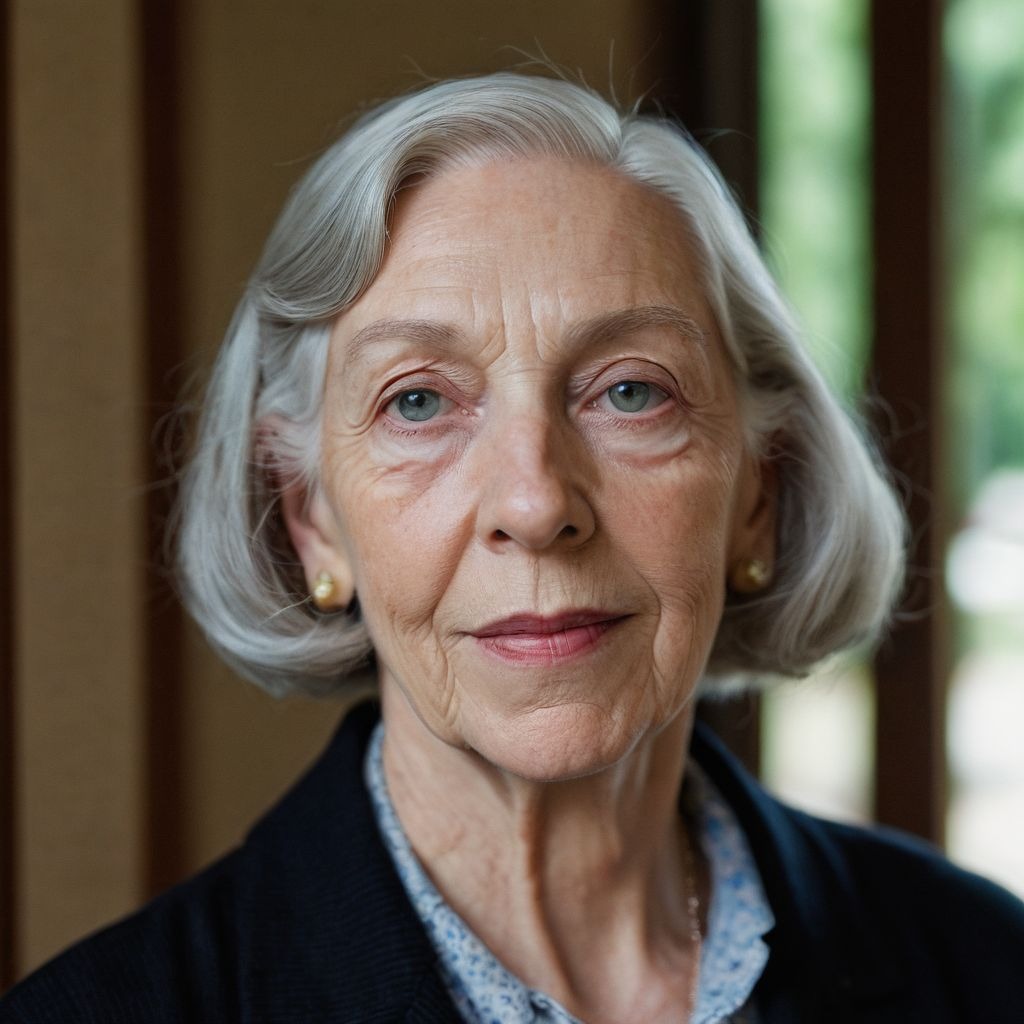
I’ve always been drawn to Eudora Welty’s writing, but it wasn’t until I stumbled upon her essay “A Little Life: Some Notes on a Little Novel” that I began to understand why. It was the way she dissected the intricacies of human relationships, revealing the complexities and frailties that make us vulnerable. As I read, I felt as though she was speaking directly to me, probing the same questions I’ve been grappling with in my own writing.
What struck me most about Welty’s work is her ability to capture the subtleties of human emotion without ever resorting to sentimentality or cliché. She writes about the quiet moments—a gesture, a glance, a whispered word—that can reveal an entire world of feeling. It’s as if she’s saying, “Look closely at this ordinary moment, and you’ll find the extraordinary within it.”
I’ve always been fascinated by how people interact with one another, how we both connect and disconnect in ways that are often imperceptible. What draws me to Welty is her commitment to exploring the difficult spaces—the gray areas where love and cruelty intersect. In “The Robber Bridegroom,” for example, she traces a woman’s descent into madness, her mind unraveling like a thread pulled loose from fabric. It’s a haunting portrait of what happens when we lose ourselves in our own darkness.
And yet, even as Welty shines a light on unsettling aspects of human experience, there is a sense of compassion that runs through her work. She never turns away from discomfort, but she doesn’t abandon her subjects to it either. Instead, she lingers there, quietly observing, allowing us to do the same.
I often find myself wondering whether her exploration of these emotional complexities reflects her own experiences with isolation and loneliness. Born in 1909 and raised in a small Mississippi town, she was surrounded by the contradictions of Southern culture—a gentle, courteous façade that often concealed more difficult truths. Did her writing serve as a way to process those tensions, or was it an attempt to connect across them?
As I read her work, I’m struck by how little I truly know about her personal life. There are fragments—her relationship with her mother, her work as a photographer—but much remains deliberately obscured. It’s as though she leaves us to understand her through her writing alone, offering insight without full disclosure.
Perhaps that’s part of what makes her so compelling. She resists easy categorization. Her work remains open, inviting interpretation rather than demanding it. And in that openness, she creates space for readers to bring their own experiences into the text.
As I return to her essays, I find myself circling the same questions. What does it mean to write honestly about human experience? How do we navigate the tension between light and darkness, connection and isolation? And what does it mean to reveal something of ourselves without fully understanding it?
Welty doesn’t offer clear answers. Instead, she reminds us that uncertainty is not something to resolve but something to engage with. Her writing suggests that storytelling itself is a form of navigation—a way of moving through what we don’t fully understand.
One of the aspects of her work that continues to resonate with me is her attention to detail. She writes with a kind of precision that feels almost invisible, as though the language has arranged itself naturally into place. There is nothing forced or exaggerated; everything feels observed, considered, and quietly deliberate.
This attention extends beyond the external world and into the inner lives of her characters. She seems deeply interested in the space between thought and expression—the moment before something is spoken, when meaning is still forming. It is in these moments that her work feels most alive.
I recognize something of my own struggles in this. Writing often feels like trying to capture something that resists being held. Emotions shift, thoughts change shape, and language can only approximate what we mean. And yet, the attempt itself becomes meaningful.
Welty appears to understand this instinctively. Her work embraces ambiguity rather than trying to eliminate it. She allows meaning to remain fluid, trusting the reader to sit with uncertainty rather than forcing resolution.
There is also a quiet intimacy in her writing that I find deeply compelling. She invites us into her observations without ever feeling intrusive. It’s not that she exposes everything, but rather that she reveals just enough to create a sense of connection.
This balance—between openness and restraint—is difficult to achieve. It requires a willingness to be vulnerable without becoming performative, to share without overexplaining. Welty maintains this balance with remarkable consistency.
Her writing also challenges the idea of a fixed self. Identity, in her work, feels fluid—shaped by context, memory, and perspective. This fluidity allows her characters, and perhaps even herself, to exist in a state of becoming rather than being fully defined.
I find this idea both unsettling and liberating. It suggests that we are not required to fully understand ourselves in order to express something meaningful. In fact, it may be the lack of certainty that makes expression possible.
There is a sense, too, that Welty’s work is rooted in observation as much as imagination. She pays attention—not only to people and places, but to the subtle shifts in mood and meaning that occur beneath the surface of everyday life. This attentiveness gives her writing a quiet authority.
At times, reading her feels less like consuming a narrative and more like participating in an act of witnessing. She doesn’t instruct or persuade; she shows, and allows us to arrive at our own conclusions.
And perhaps that is what stays with me the most. Not a specific insight or argument, but a way of seeing. A reminder that the smallest moments often carry the greatest weight, and that understanding rarely arrives all at once.
Welty’s work doesn’t resolve the questions it raises. Instead, it keeps them open, allowing them to evolve over time. In doing so, it reflects the nature of human experience itself—unfinished, uncertain, and constantly shifting.
If anything, that may be her greatest gift. Not clarity, but awareness. Not answers, but the space to ask better questions.