The invasion of Chechnya by Russian forces stands as one of the most consequential and defining episodes in modern Russian history—a conflict that reshaped Moscow’s relationship with its Muslim-majority regions and fundamentally altered the trajectory of Vladimir Putin’s rise to power. Yet despite its enormous impact, the origins of the Chechen wars are far more complicated than the familiar timelines suggest. To truly understand how Russia plunged into two brutal wars in the North Caucasus, one must trace the fault lines back decades, through Soviet collapse, nationalist awakening, political opportunism, and a tangled web of grievances that never found resolution.
By the late 1980s, as the Soviet Union trembled under the weight of glasnost and perestroika, suppressed national identities began to re-emerge across its vast territories. In Chechnya—a region with a long memory of resistance against Russian domination—these reforms ignited a fierce resurgence of nationalist sentiment. With their own distinct culture, language, and a history marked by deportations under Stalin, the Chechens saw an opportunity to reclaim what had been taken from them. Calls for autonomy quickly grew into calls for independence, setting the stage for confrontation with Moscow.
In 1991, as the Soviet Union dissolved, Dzhokhar Dudayev, a former Soviet Air Force general, seized control of Chechnya and declared independence. Russia, newly formed and led by Boris Yeltsin, found itself overwhelmed by economic collapse, internal dissent, and a fractured federation demanding attention. At first, Moscow’s response to Chechnya oscillated between overt hostility and reluctant tolerance. But as years passed—with the region slipping further out of federal control—Yeltsin faced growing pressure to reassert authority and prevent a domino effect of secessionist movements.
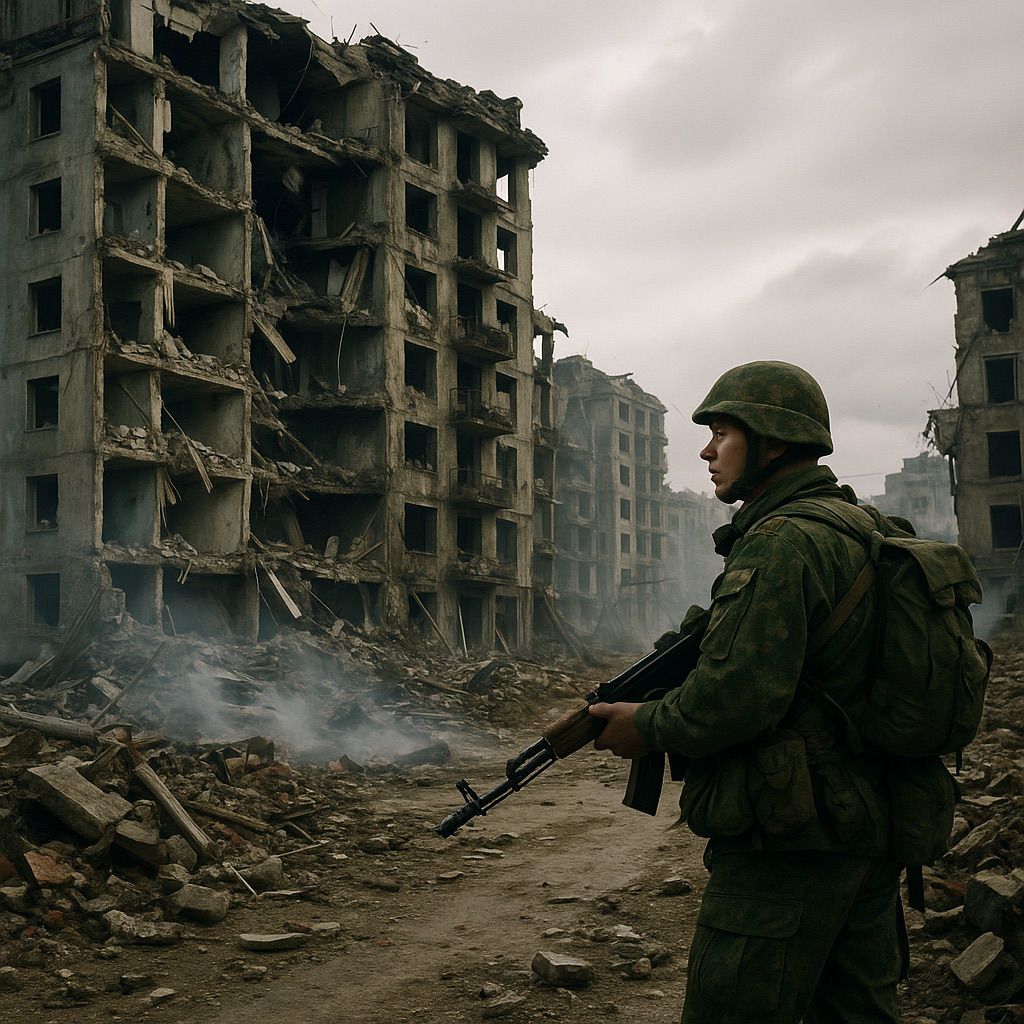
When negotiations failed and tensions mounted, Russia launched its first invasion in December 1994, under the guise of restoring constitutional order. The Kremlin believed the campaign would be swift. Instead, they walked into one of the most disastrous military engagements of the post-Soviet era. Chechen fighters—underequipped but deeply motivated—used urban warfare tactics that Russian forces were unprepared to counter. Grozny, the Chechen capital, became a symbol of devastation, with its ruins reflecting not only military failure but moral collapse.
The conflict dragged on until 1996, when mounting casualties and declining public support forced Moscow into the Khasav-Yurt Accord, negotiated by General Alexander Lebed. The agreement halted the fighting and granted Chechnya de facto independence, though its final status remained unresolved. For a brief moment, peace seemed possible. But the region, ravaged by war and lacking infrastructure, fell into lawlessness. Kidnappings, factional power struggles, and the rise of radical Islamist groups destabilized the fragile republic. The chaos provided fertile ground for the next stage of conflict.
In September 1999, a series of apartment bombings rocked Russia, killing hundreds and terrifying millions. The Kremlin immediately blamed Chechen militants, though the true perpetrators remain the subject of fierce debate among historians, analysts, and human rights groups. Regardless of who carried out the attacks, the impact was seismic. Public outrage surged, and the government seized upon the moment to rally the nation behind a new military campaign. Yeltsin—by then politically weakened—appointed Vladimir Putin, a little-known former KGB officer, as prime minister.
Putin responded with a promise that defined his ascent: to crush terrorism “in the outhouse” if necessary. Days later, Russian forces invaded Chechnya again, igniting the Second Chechen War. This campaign was vastly different from the first. Under Putin’s command, the Russian military employed overwhelming force, flattening entire districts of Grozny, leveling villages, and implementing harsh filtration operations that swept up civilians indiscriminately. Human rights organizations documented torture, disappearances, and mass killings, painting a grim portrait of Moscow’s approach to reasserting control.
Despite the brutality, Putin’s popularity soared. He appeared decisive, tough, and uncompromising at a time when many Russians longed for stability. By early 2000, he was elected president in a landslide victory—an outcome directly bolstered by the war in Chechnya. The conflict, in many ways, became the crucible that forged his political identity.
In Chechnya, meanwhile, the cost was immeasurable. Grozny was left in ruins, declared by the United Nations to be the most devastated city on earth. Tens of thousands of civilians died, and hundreds of thousands more were displaced. Families were shattered, villages depopulated, and an entire generation grew up amid the trauma of war. The region ultimately fell back under Russian control, governed by a Moscow-backed regime that suppressed dissent with near-total impunity.
Yet beneath the skyscrapers and reconstructed avenues that now stand in Grozny lies a silent legacy of grief. Many Chechens continue to live under constant surveillance and repression, with memories of vanished relatives and destroyed homes still raw. Although overt separatist movements have been crushed, the fissures carved by decades of conflict remain embedded in the social fabric of the region.
The wars in Chechnya reshaped Russia’s internal politics, redefined its security state, and cemented a new mode of governance built on centralized authority, military force, and tight control over information. They also revealed the dangers of nationalist fervor, political manipulation, and the ease with which fear can be weaponized to consolidate power.
Looking back, the Chechen wars stand as a stark reminder of the deep human cost of geopolitical ambition. They show us how the lines between national security and aggression blur when governments believe they are fighting existential threats. And they challenge us to recognize the lasting scars that such conflicts leave on both the oppressed and the aggressors.
Today, as Russia continues to assert itself on the global stage—from Ukraine to Syria—many of the strategies first tested in Chechnya echo loudly in contemporary policy. The lessons, however, remain unresolved. The conflict serves as a cautionary tale: that unchecked authority, fueled by fear and framed as patriotism, can lead nations down a path from which recovery may take generations.
And amid the ruins—literal and symbolic—Chechnya endures. A testament to resilience, a witness to tragedy, and a reminder that even in the darkest valleys of modern history, the fight for identity and dignity persists.