
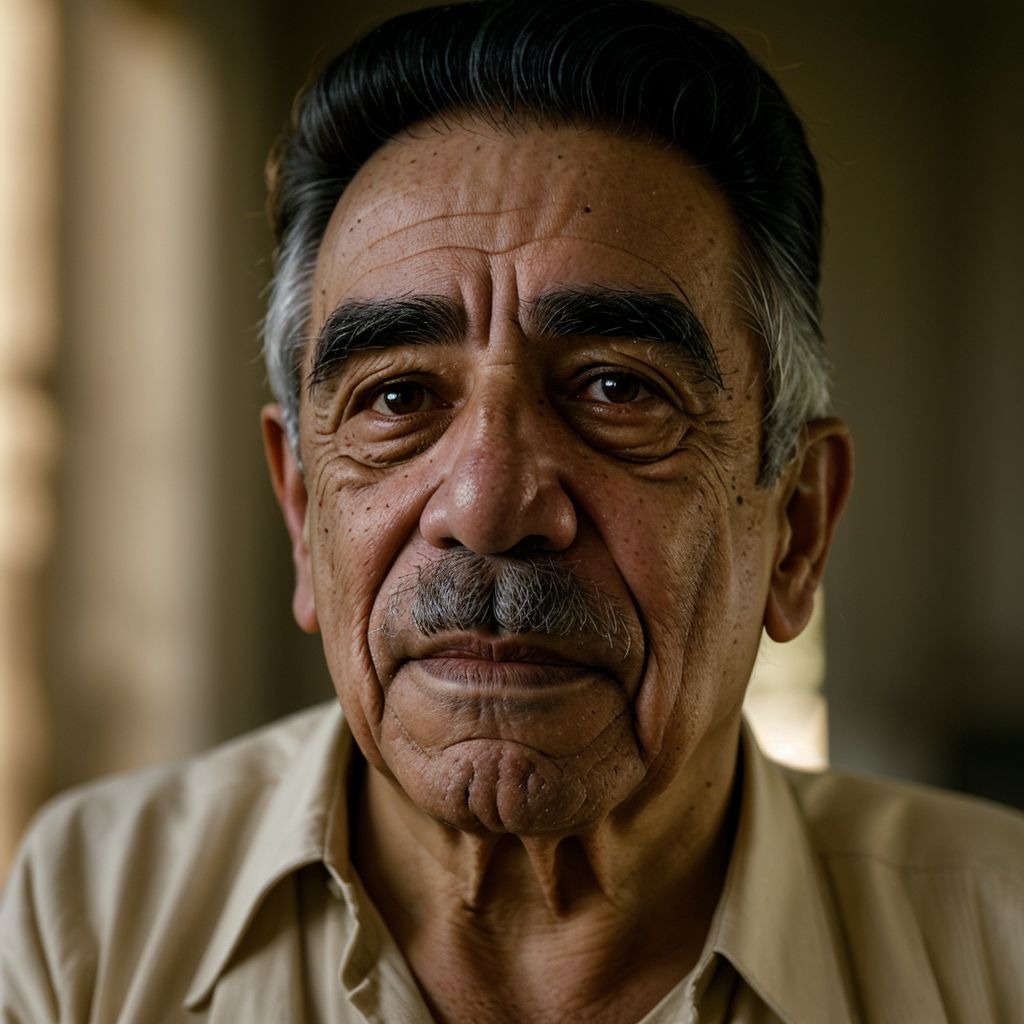
I’ve spent countless hours immersed in the magical world of Gabriel Garcia Marquez, but it’s only recently that I’ve started to unravel why his writing holds such a strange and intimate grip on me.
It began with “One Hundred Years of Solitude,” which my literature professor assigned for our final semester. I remember being swept up by the Buendia family’s cyclical tale of love, loss, and madness – it was like nothing I’d ever read before. But as I delved deeper into Marquez’s work, I started to notice a certain… unease. It wasn’t just the fantastical elements or the vivid descriptions that captivated me; it was the way his writing seemed to hover between reality and myth, between what’s known and what’s unknown.
I’ve always been fascinated by how Marquez weaves together different narrative threads – folklore, history, family secrets – into a tapestry that’s both specific to Colombia and universally relatable. But there’s something more to it, something that resonates with me on a deeper level. Maybe it’s the way he blurs the lines between truth and fiction, making it impossible for me (or anyone, really) to distinguish what’s real from what’s imagined.
I think about my own experiences growing up in a family where stories were currency – my grandmother would spin tales of our ancestors, embellishing and exaggerating as she went along. I’d sit at her feet, entranced by the way words could conjure entire worlds into existence. Marquez’s writing feels like an extension of those childhood moments, only more complex and layered.
But what really draws me to his work is the sense of disorientation it creates within me. As I read through his novels and short stories, I feel like I’m navigating a labyrinth with no clear exit – every twist and turn leads me deeper into the mystery of human experience. It’s uncomfortable, but in a good way; it’s like being forced to confront my own biases and assumptions about reality.
I’ve tried to pinpoint why Marquez’s writing feels so uniquely disorienting, and I think part of it has to do with his use of time and memory. He manipulates the fabric of chronology, jumping forward and backward through decades in a single sentence or paragraph. It’s dizzying at first, but eventually, it becomes this strange sort of comfort – like being dropped into a world where the past, present, and future coexist in a perpetual state of flux.
For me, Marquez’s work is less about escaping reality than it is about confronting its complexities head-on. His writing is an acknowledgment that truth is messy, fragmented, and often unknowable. It’s as if he’s saying, “Look, I’m not going to give you neat answers or straightforward explanations – instead, let’s get lost together in the murkiness of human experience.”
As I continue to explore Marquez’s oeuvre, I find myself returning to this idea: that his writing is less about providing answers than it is about asking questions. Questions about identity, history, love, and the nature of reality itself. And maybe that’s why his work holds such a strange and intimate grip on me – because in the end, it’s not just about understanding Marquez himself; it’s about understanding myself, and the world I inhabit.
But even with this newfound appreciation for Marquez’s writing, I still feel like I’m standing at the edge of something vast and unknown. It’s a feeling that’s both exhilarating and terrifying – like being on the cusp of discovering secrets that have been hidden in plain sight all along. And maybe that’s where Marquez’s work will continue to lead me: into the depths of my own uncertainty, and the labyrinthine complexities of human experience.
As I wander through the pages of Marquez’s novels, I find myself drawn to the way he inhabits multiple perspectives at once. He writes from the vantage point of a narrator who is both omniscient and trapped within the narrative itself. It’s as if he’s saying, “I know more than you do, but my own limitations are part of the story too.” This blurring of boundaries between self and other, observer and participant, resonates deeply with me.
In my own writing, I’ve always struggled to find a comfortable distance from my subject matter. As a writer, I want to be able to observe the world around me without being consumed by it. But Marquez’s work shows me that this dichotomy is false – that we are all simultaneously observers and participants in our own lives. We see the world through our own unique lens, but that lens is always already influenced by our experiences, biases, and assumptions.
I think about my grandmother’s stories again, how she’d weave together fact and fiction with such ease. It was as if she knew that the truth itself was a fluid concept, subject to interpretation and revision at every turn. Marquez’s writing reminds me of those moments, where the lines between reality and myth blur into something more complex – and ultimately, more human.
One of my favorite examples of this is in “Love in the Time of Cholera.” The way Marquez describes Florentino Ariza’s unrequited love for Fermina Daza is both beautiful and heartbreaking. But what really stands out to me is how he subverts our expectations of traditional romance – instead of a tidy, happily-ever-after ending, we get something far more nuanced, something that acknowledges the complexities of human desire.
As I read through Marquez’s work, I start to notice that this blurring of boundaries between self and other, observer and participant, is not just limited to his narrative techniques. It’s also reflected in his portrayal of characters – each one a multifaceted, contradictory entity that defies easy categorization. There’s the aging General Buendia, with his madcap schemes and tragic fate; or the enigmatic Amaranta Úrsula, whose secrets are slowly revealed over the course of her lifetime.
It’s this refusal to simplify, to reduce human experience to neat little packages or tidy moral lessons, that I think truly sets Marquez apart. His writing is an acknowledgment that we are all complex, messy, contradictory beings – and that it’s precisely this messiness that makes us so compellingly human.
As I delve deeper into Marquez’s world, I find myself becoming increasingly fascinated with his use of language itself. The way he employs words to conjure entire worlds into existence is nothing short of magical. His writing is like a tapestry woven from threads of magic realism – it’s as if he’s taking the mundane and elevating it to an almost mythical status.
I think about my own writing process, how I often get stuck in the weeds of language, searching for just the right word or phrase to convey a particular feeling or idea. Marquez’s work shows me that this obsession with language is not only valid but also necessary – that the way we choose to describe the world around us shapes our very perception of reality.
It’s almost as if Marquez is saying, “Language is not just a tool for conveying meaning; it’s an instrument for shaping our understanding of the world.” This realization has me reevaluating my own relationship with language, how I use words to navigate and make sense of the world around me. It’s a humbling experience, acknowledging that the way I speak and write can both reveal and conceal aspects of myself.
As I continue to explore Marquez’s work, I find myself becoming increasingly aware of the ways in which his writing reflects the complexities of human culture. His portrayal of colonialism, power dynamics, and social hierarchies is both poignant and unsettling – it’s as if he’s holding up a mirror to our collective past, forcing us to confront the darker aspects of our own history.
This attention to cultural context reminds me of my own experiences growing up in a diverse community. I remember the way stories about our ancestors would often be intertwined with historical events, mythology, and folklore – it was as if our family’s oral traditions were woven from the very fabric of our collective experience. Marquez’s writing feels like an extension of those storytelling traditions, only more nuanced and multifaceted.
In many ways, his work is a testament to the power of storytelling as a way to make sense of the world around us. It’s a reminder that our individual experiences are always linked to the broader cultural context in which we live – that the stories we tell ourselves about ourselves and the world are often reflections of our own biases, assumptions, and desires.
As I wander through the pages of Marquez’s novels, I’m struck by the way he inhabits multiple perspectives at once. He writes from the vantage point of a narrator who is both omniscient and trapped within the narrative itself – it’s as if he’s saying, “I know more than you do, but my own limitations are part of the story too.” This blurring of boundaries between self and other, observer and participant, resonates deeply with me.
In many ways, Marquez’s writing feels like an invitation to participate in a grand, collective storytelling tradition – one that acknowledges the complexities and messiness of human experience. It’s a reminder that our individual stories are always linked to the broader cultural context in which we live, and that the way we choose to tell those stories shapes our very understanding of reality itself.
As I close this essay, I’m left with more questions than answers – about Marquez’s work, about my own writing process, and about the complexities of human experience. But it’s precisely this uncertainty that feels so thrillingly alive, like being on the cusp of discovering secrets that have been hidden in plain sight all along.
The more I immerse myself in Marquez’s world, the more I’m struck by the way he defies easy categorization as a writer. Is he a magician, conjuring entire worlds into existence with his words? A historian, weaving together fragments of colonialism and power dynamics to create a rich tapestry of human experience? Or is he something more complex, a masterful weaver of narratives that blur the lines between reality and myth?
As I ponder this question, I find myself thinking about my own experiences as a writer. How often do I get caught up in trying to pin down a particular feeling or idea, only to realize that it’s slipping through my fingers like sand? Marquez’s work shows me that sometimes, the best writing is the kind that acknowledges its own limitations – that it’s okay to leave some things unsaid, to let the reader fill in the gaps with their own imagination.
This idea resonates deeply with me, especially when I think about my own struggles as a writer. There have been times when I’ve felt overwhelmed by the sheer complexity of human experience – like trying to capture the essence of love or loss or identity within the confines of a single sentence. Marquez’s work reminds me that it’s okay to be imperfect, to leave some things unspoken and let the reader fill in the blanks.
But what really draws me to Marquez is his willingness to explore the darker corners of human experience. His portrayal of colonialism, power dynamics, and social hierarchies is both poignant and unsettling – it’s as if he’s holding up a mirror to our collective past, forcing us to confront the darker aspects of our own history. This attention to cultural context reminds me of my own experiences growing up in a diverse community, where stories about our ancestors would often be intertwined with historical events, mythology, and folklore.
As I continue to explore Marquez’s work, I’m struck by the way he uses language to create a sense of intimacy with his readers. His writing is like a whisper, drawing us into the innermost recesses of his characters’ minds. It’s as if he’s saying, “I’ll tell you secrets, but only if you’re willing to listen closely – and even then, I won’t promise that it will make sense.”
This willingness to be vulnerable, to share the messy and complicated aspects of human experience, is something that resonates deeply with me. As a writer, I’ve always struggled with the idea of being honest about my own experiences – of sharing the parts of myself that feel raw and unedited. Marquez’s work shows me that this vulnerability is not only okay but also necessary – that it’s through our imperfections and contradictions that we find true connection with others.
As I close this essay, I’m left with more questions than answers – about Marquez’s work, about my own writing process, and about the complexities of human experience. But it’s precisely this uncertainty that feels so thrillingly alive, like being on the cusp of discovering secrets that have been hidden in plain sight all along.