
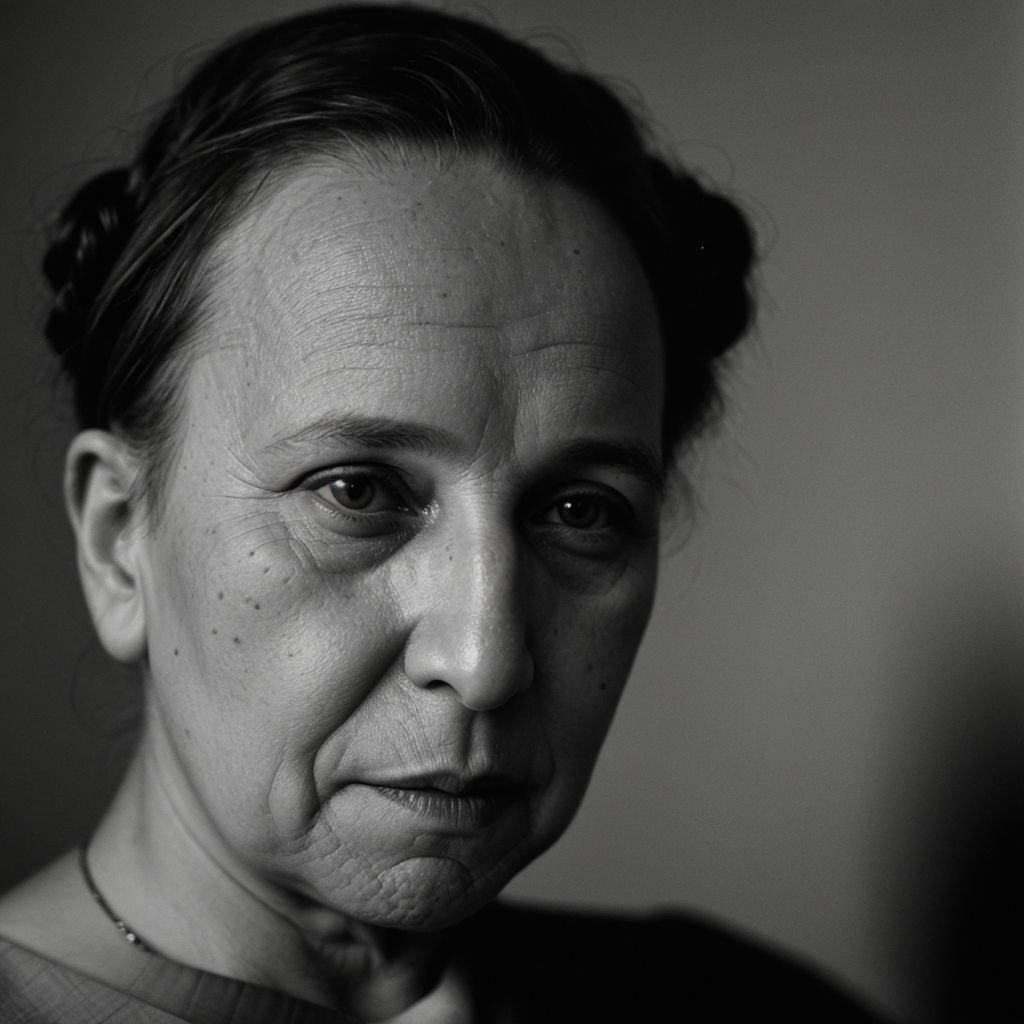
Gertrude Stein has been on my mind a lot lately, ever since I finished reading her novel “The Making of Americans” for my modernist literature class. At first, I found it challenging to connect with – the repetition and simplicity of her writing style felt like a deliberate choice, one that was both mesmerizing and alienating at the same time.
As I struggled to understand Stein’s intentions behind this unique narrative structure, I couldn’t help but think about my own experiences with language. In college, I often found myself getting lost in the intricacies of syntax and semantics, convinced that mastering these concepts would somehow give me control over the way people perceived me. It wasn’t until I started writing creatively that I realized how much pressure I’d been putting on myself to be clear, concise, and above all, likable.
Stein’s writing seems to do the opposite – it revels in ambiguity, embracing complexity as a natural part of human experience. Her use of repetitive phrases and plain language can feel almost… indulgent, like she’s refusing to cater to any specific audience or expectation. And yet, there’s something undeniably alluring about her refusal to conform.
I’ve been wondering if Stein’s writing is a reflection of her own experiences as an outsider in early 20th-century Paris. As an American expat living among the city’s artistic elite, she must have felt like an observer, always on the periphery but never truly part of the group. Her writing seems to capture this sense of disconnection – it’s as if she’s taking a detached glance at the world around her, fascinated by its contradictions and inconsistencies.
This resonates with me on a deep level because I’ve often felt like an outsider in my own life. Growing up, I struggled to fit into different social cliques or groups, never quite feeling like I belonged anywhere. And now, as a recent college graduate, I’m navigating the uncertainty of post-grad life – trying to figure out what kind of career I want, where I’ll live next year, and who I’ll surround myself with.
Stein’s writing has become a strange comfort for me during this time of transition. Her willingness to experiment and push boundaries in her work is something I admire, even if it often leaves me feeling bewildered or frustrated. She’s an artist who refuses to be defined by any one label or genre – and that freedom is both empowering and intimidating.
I think what draws me to Stein the most is this sense of unease she embodies. It’s like she’s saying, “Language is broken, and we’re all just trying to make do with it.” Her writing becomes a reflection of our shared human condition – imperfect, awkward, and constantly in flux.
As I continue reading her work, I find myself grappling with the same questions over and over: what does it mean to be clear? How much complexity can language truly contain? And ultimately, how do we reconcile our desire for connection with our own individuality?
Stein’s writing offers no easy answers, but that’s precisely why I’m drawn to it. It’s a reminder that language is not a tool for control or precision, but rather an imperfect representation of the world around us – messy, contradictory, and perpetually in motion.
As I delve deeper into Stein’s work, I find myself getting lost in the labyrinthine corridors of her sentences. The more I read, the more I realize that clarity is not a destination, but a perpetual pursuit – one that requires embracing ambiguity, rather than trying to eradicate it. Her writing becomes a map of sorts, charting the twists and turns of human experience with an unflinching honesty.
I’m reminded of my own struggles with language, how I once thought mastering its intricacies would grant me some kind of control over myself and others. But Stein’s work shows me that language is a slippery thing – it can be both precise and vague at the same time. She forces me to confront the limits of language, to acknowledge that words can never fully capture the complexity of human emotions or experiences.
Stein’s most famous phrase, “Rose is a rose,” has become a sort of mantra for me. On one level, it seems like a simple statement – a declaration of fact, devoid of subtlety or nuance. But as I repeat these words to myself, I start to see the complexity beneath the surface. What does it mean for something to be called by its name? Is it enough to simply label an experience, or do we risk reducing its essence to a mere abstraction?
As I ponder these questions, I’m struck by how Stein’s writing often feels like a form of meditation – a slow, deliberate unfolding of thoughts and emotions. Her sentences meander through the landscape of human experience with a quiet reverence, as if she’s trying to listen to the very fabric of reality itself. It’s an approach that defies the typical narrative structures I’ve grown accustomed to in literature, instead embracing a fluid, almost stream-of-consciousness style.
I find myself longing for this kind of freedom in my own writing – the ability to let go of expectations and conventions, to allow language to flow from a deeper, more intuitive place. Stein’s work shows me that it’s possible to write without trying to control every nuance or detail, that sometimes the most profound insights come from surrendering ourselves to the uncertainty of the moment.
As I continue reading Stein, I start to feel a sense of kinship with her – not just as an artist, but as someone who’s also struggling to find their place in the world. Her writing becomes a reminder that we’re all outsiders, in one way or another – whether it’s due to our own individuality, our cultural backgrounds, or simply the fact that we’re constantly navigating uncertainty.
Stein’s unease with language is contagious, and I find myself feeling more at ease with my own imperfections. Her writing shows me that it’s okay to be unclear, that sometimes the most profound connections come from embracing ambiguity rather than trying to pin everything down. As I close this book on Stein, I’m left with a sense of wonder – not just about her work, but about the endless possibilities that language holds within itself.
As I closed the book on Stein’s writing, I felt a pang of disappointment. Not because I’d finished reading her, but because I knew I wouldn’t be able to immerse myself in her world as deeply again. The experience was like taking a breath of fresh air – it invigorated me, made me see things from a new perspective, and left me yearning for more.
But the thing is, Stein’s writing isn’t just about the books themselves; it’s about the way she sees the world. Her unique perspective on language, identity, and human experience has seeped into my own consciousness like water into parched soil. I find myself thinking about Stein even when I’m not actively reading her work – pondering the implications of her ideas, wondering how they relate to my own life.
One thing that’s struck me is the way Stein’s writing often blurs the line between subject and object. She’s not just describing a person or place; she’s becoming one with it. Her use of pronouns becomes a kind of linguistic alchemy, turning nouns into verbs and subjects into objects. It’s as if she’s saying, “We’re all just particles in a vast, swirling sea – let’s lose ourselves in the depths of language.”
This resonates deeply with me because I’ve always struggled to define myself, to pin down who I am or where I fit in. Stein’s writing shows me that maybe it’s not about finding my place in the world, but rather embracing the fluidity of identity itself. Her words become a kind of permission slip – allowing me to shed my skin like a snake and slither into new shapes and forms.
But what does this mean for me as a writer? Stein’s work has shown me that language is not just a tool for expression; it’s an ongoing process of discovery, one that requires surrendering ourselves to the uncertainty of the moment. Her writing becomes a kind of mirror held up to my own creative endeavors – reflecting back at me all the doubts and fears I’ve been carrying around.
I think this is why Stein’s work feels both exhilarating and terrifying at the same time. It’s like she’s offering me a pair of wings, but also a precipice to stare off into the void. With every word, she’s asking me to take a leap of faith – to trust that language will carry me through even when I’m not entirely sure where we’re going.
As I continue on this journey with Stein, I find myself grappling with these questions: what does it mean to be clear? How much complexity can language truly contain? And ultimately, how do we reconcile our desire for connection with our own individuality?
Stein’s writing offers no easy answers, but that’s precisely why I’m drawn to it. It’s a reminder that language is not a destination; it’s a perpetual pursuit – one that requires embracing ambiguity, rather than trying to eradicate it. And as I delve deeper into her work, I find myself getting lost in the labyrinthine corridors of her sentences, wondering where they’ll lead me next.
As I continue to read and reflect on Stein’s writing, I’m struck by the way she challenges traditional notions of identity and selfhood. Her use of pronouns and narrative voice is deliberate and calculated, often blurring the lines between subject and object. She’s not just describing a person or place; she’s becoming one with it. This sense of fluidity and ambiguity resonates deeply with me, as someone who’s always struggled to define myself.
Stein’s writing becomes a kind of mirror held up to my own experiences of disconnection and uncertainty. I think about the times when I felt like an outsider in social situations, or when I struggled to find my place in different contexts. Stein’s work shows me that these feelings are not just personal, but also universal – that we’re all struggling to connect with each other, even as we try to navigate our own individual identities.
One of the things that strikes me most about Stein is her willingness to experiment and push boundaries in her writing. She’s not afraid to take risks or challenge conventional notions of language and storytelling. This sense of freedom and creativity is something I admire, but also find intimidating. As a writer myself, I often feel like I’m trapped by the expectations of others – like I need to conform to certain standards or conventions in order to be taken seriously.
Stein’s work shows me that this doesn’t have to be the case. She’s proof that language can be both precise and vague at the same time – that clarity is not a destination, but a perpetual pursuit. Her writing becomes a kind of permission slip for me, allowing me to experiment and take risks in my own creative endeavors.
As I continue on this journey with Stein, I find myself grappling with the question of what it means to be clear. Is it possible to communicate complex ideas or emotions without resorting to ambiguity? Or is clarity itself a form of reductionism – a way of simplifying the world into neat, tidy packages?
Stein’s writing offers no easy answers, but instead forces me to confront the limits of language. She shows me that words can never fully capture the complexity of human experiences or emotions – that we’re always left with a kind of residual uncertainty, a sense that there’s more to reality than what we can articulate.
This is both exhilarating and terrifying for me as a writer. It means that I have the freedom to experiment and push boundaries in my own work, but also that I’ll never be able to fully pin down or control the meaning of my words. This sense of uncertainty is something I’m still grappling with – trying to find a balance between clarity and ambiguity, precision and vagueness.
As I close this reflection on Stein’s writing, I’m left with more questions than answers. What does it mean to be clear? How much complexity can language truly contain? And ultimately, how do we reconcile our desire for connection with our own individuality?
Stein’s writing shows me that these are not questions with easy solutions – but instead offers a kind of freedom from the need for resolution. Her work becomes a reminder that language is not a destination; it’s a perpetual pursuit – one that requires embracing ambiguity, rather than trying to eradicate it.
In this sense, Stein’s writing feels like a kind of liberation – a permission slip to explore the complexities and uncertainties of human experience. As I continue on my own creative journey, I’m grateful for her example, and the lessons she’s taught me about the power of language to both connect and disconnect us.