
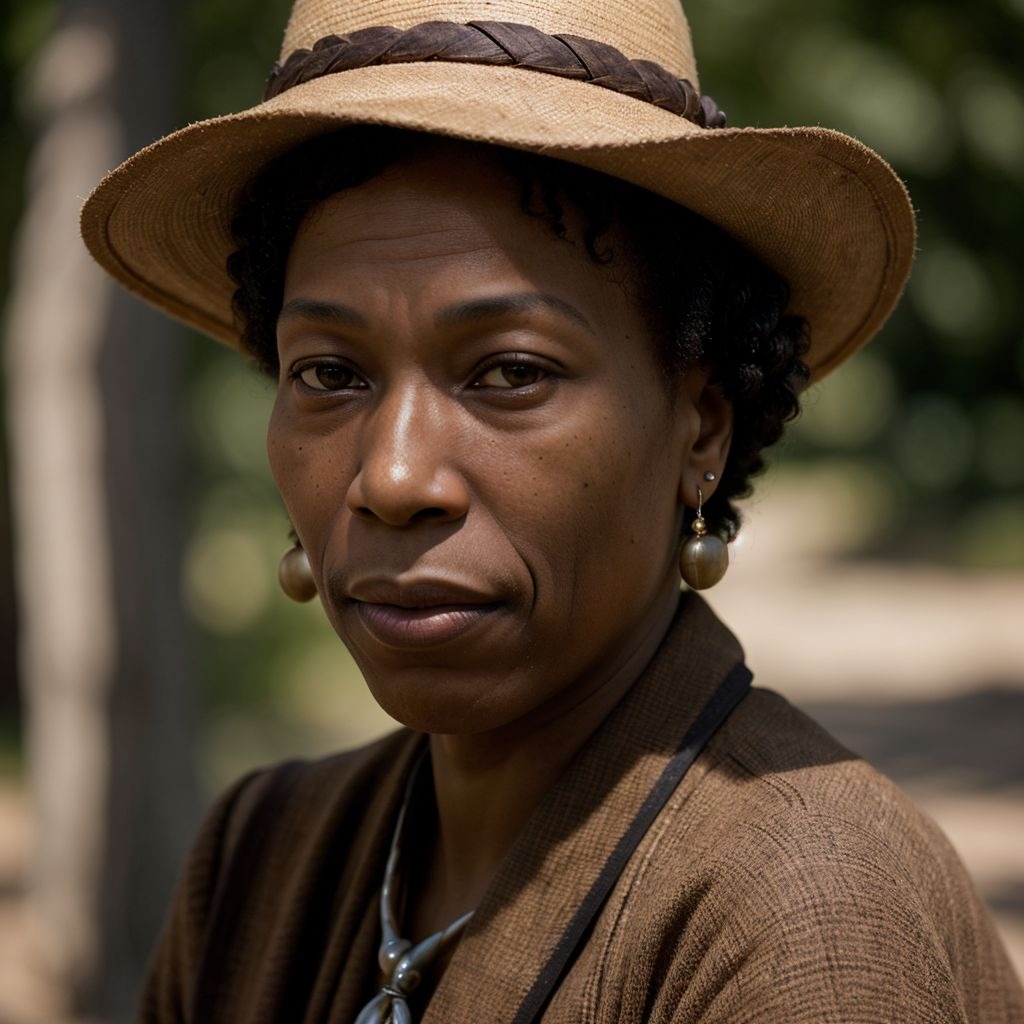
Louise Glück has been on my mind a lot lately, probably because I’m trying to figure out what makes her poetry so compelling. At first glance, she seems like the epitome of quiet confidence – a Pulitzer Prize winner, National Book Award recipient, and renowned poet with a distinctive voice that’s both lyrical and precise. But the more I read about her, the more complex she becomes.
I think part of why I’m drawn to Glück is because of her intensity. Her poetry often explores themes of isolation, anxiety, and the search for meaning in a seemingly meaningless world. These are feelings I can relate to, especially after graduating from college and entering what feels like an uncertain future. When I read lines like “the darkness within us / which we call solitude” (from “The Triumph of Achilles”), it’s like she’s speaking directly to me.
But what I find really interesting is how Glück’s intensity often coexists with a sense of restraint. She doesn’t shy away from difficult emotions or experiences, but neither does she indulge in sentimental or grandiose language. Her poetry feels almost surgical in its precision, cutting straight to the heart of the matter without getting bogged down in extraneous details.
This is where things get complicated for me. I’ve always been drawn to writers who wear their hearts on their sleeves – people like Sylvia Plath, Anne Sexton, or Sharon Olds, whose poetry feels raw and unflinching. But Glück’s approach is different; she’s almost… detached, in a way that makes me feel both fascinated and intimidated.
I wonder if this detachment is what allows her to explore such dark themes without becoming mired in sentimentality. Or maybe it’s just an illusion – after all, can you ever truly be detached from your own emotions? I’m not sure. What I do know is that reading Glück feels like a slow-burning fire that builds intensity over time, rather than a quick flash of insight.
Sometimes, when I read her poetry, I feel like I’m stumbling through a dense forest without a map or compass. It’s disorienting, but in a strange way, also liberating – like being given permission to wander aimlessly, without the pressure of finding answers or solutions. This is something I’ve struggled with as a writer myself: feeling like I need to tie everything up neatly, when really, the best stories often leave us with more questions than answers.
Glück’s poetry has made me realize that this uncertainty can be a strength, not a weakness. Her work doesn’t offer easy solutions or platitudes; instead, it poses questions and challenges assumptions, leaving the reader (and herself) to grapple with the complexity of human experience. It’s both exhilarating and terrifying – like being dropped into a void without a safety net.
I’m still trying to wrap my head around this aspect of Glück’s work. Part of me feels drawn to her intensity and precision; another part is wary of the detachment that underlies it. I suppose what I’m really searching for is a way to reconcile these competing impulses within myself – to find a balance between candor and restraint, between vulnerability and control.
For now, Louise Glück’s poetry remains an ongoing mystery, one that I continue to return to again and again. Maybe that’s the point: not to have all the answers, but to keep asking questions, no matter how uncomfortable or uncertain they may make me feel.
As I sit here, surrounded by pages of Glück’s poetry, I’m struck by how her work continues to haunt me long after I’ve finished reading a particular poem. It’s as if she’s left a trail of breadcrumbs for me to follow, leading me deeper into the labyrinth of human emotion. I find myself wondering what it is about her writing that allows her to tap into this deep wellspring of feeling.
One thing that occurs to me is that Glück’s poetry often feels like a series of contradictions. On the one hand, she’s unflinching in her exploration of darkness and despair; on the other hand, there’s a sense of precision and control that underlies even the most turbulent emotions. It’s as if she’s found a way to channel her anxiety and uncertainty into something beautiful and meaningful.
This is something I’ve struggled with myself, particularly since graduating from college. I feel like I’m caught between two worlds: the comfort and security of academia, and the uncertainty and chaos of the real world. Glück’s poetry feels like a reflection of this same tension – a negotiation between order and disorder, between control and surrender.
As I read her lines about “the darkness within us / which we call solitude,” I’m struck by how she seems to be speaking directly to my own experiences. There’s something about the way she describes the solitude that feels both familiar and alien – like I’m gazing into a mirror, but one that’s distorted or warped in some way.
I’m not sure what it is about Glück’s writing that resonates with me so deeply. Part of it may be her willingness to confront the darker aspects of human experience head-on; another part may be her ability to find beauty and meaning in even the most despairing emotions. Whatever it is, I feel like she’s given me permission to explore my own fears and doubts – to see them not as weaknesses or liabilities, but as a source of creative potential.
As I sit here, surrounded by the quiet of my own apartment, I’m struck by how Glück’s poetry has changed me. It’s made me realize that uncertainty is not something to be feared or avoided; rather, it’s an opportunity for growth and exploration. And it’s given me a new perspective on my own writing – one that sees it not as a means of control or self-expression, but as a way of tapping into the mystery and complexity of human experience.
As I delve deeper into Glück’s work, I’m starting to notice patterns in her poetry that resonate with me on a fundamental level. Her use of metaphor, for instance, is incredible – she has this ability to take seemingly ordinary objects or concepts and turn them into symbols that speak to the human condition. It’s like she’s revealing hidden truths beneath the surface of things.
Take her poem “The Weight of What Happens” as an example. On the surface, it appears to be a simple exploration of guilt and regret – but read between the lines, and you’ll see how she weaves together themes of identity, memory, and the passage of time. It’s like she’s holding up a mirror to my own experiences, forcing me to confront the ways in which our choices shape us, even as they elude us.
This is what I love about Glück’s poetry – it’s not just about introspection or self-expression; it’s about the way language can be used to capture the complexity of human experience. She’s not afraid to get messy or ambiguous, and that’s something I think a lot of writers struggle with. We want to tie everything up neatly, to offer solutions or answers – but Glück shows us that sometimes, the only way forward is through the uncertainty itself.
As I continue to read her poetry, I’m struck by how it feels both familiar and foreign at the same time. It’s like I’m seeing myself reflected in her words, but also somehow looking in from outside – as if she’s speaking directly to my own fears and doubts, even while remaining an outsider herself.
This paradox is what makes Glück’s poetry so compelling – she’s unflinchingly honest about her own struggles, but also curiously detached. It’s like she’s observing herself from a remove, even as she’s fully immersed in the emotions and experiences she describes. This tension between detachment and immersion is something I think all writers grapple with, but Glück seems to navigate it with ease.
I’m not sure what this says about me, personally – whether it means I’m drawn to her poetry because it speaks to my own struggles or if there’s something in her work that resonates with a deeper part of myself. Maybe both are true. But what I do know is that reading Glück feels like a journey into the heart of darkness itself – not as a source of fear or avoidance, but as an opportunity for growth and exploration.
As I sit here, surrounded by pages of her poetry, I’m struck by how it continues to haunt me long after I’ve finished reading. It’s like she’s left a trail of breadcrumbs leading into the labyrinth of my own mind – forcing me to confront the complexities and uncertainties that lie within. And for that, I am grateful.
I think what’s most striking about Glück’s poetry is its ability to capture the in-between moments – the spaces between certainty and uncertainty, clarity and confusion. These are the moments where we’re forced to confront our own limitations and vulnerabilities, where the certainties of our lives begin to unravel.
As I read her poems, I’m struck by how often she returns to this idea of liminality – of being suspended between two worlds, like a threshold that can’t quite be crossed. It’s as if she’s saying that this in-between space is where we find ourselves most often, and it’s here that we must learn to navigate the complexities of human experience.
This resonates deeply with me, especially now that I’m navigating my own post-graduation limbo. The uncertainty and ambiguity of my future feel like a perpetual state of being – like I’m stuck in this liminal space, unsure of which way to turn or where to go next.
Glück’s poetry suggests that it’s precisely in these moments of uncertainty that we find our greatest potential for growth and transformation. She shows us how to inhabit this in-between space with courage and curiosity, rather than fear or avoidance.
I’m not sure if I’ve always been drawn to liminal spaces – whether it’s a product of my own anxiety or a genuine fascination with the complexities of human experience. But reading Glück has made me realize that this is where some of the most profound insights are to be found – in the threshold between two worlds, where the certainties of our lives begin to break down.
As I continue to read her poetry, I’m struck by how often she returns to the idea of the self as a fragmented and provisional entity. It’s like she’s saying that we’re all made up of multiple selves – different personas, masks, or identities that we wear depending on the situation.
This resonates with me on a deep level, especially now that I’m navigating my own post-graduation identity crisis. Who am I outside of academia? What do I want to do with my life? These are questions that seem to have no easy answers, and they leave me feeling fragmented and uncertain – like I’m trying to cobble together different pieces of myself into a coherent whole.
Glück’s poetry suggests that this fragmentation is not something to be feared or avoided; rather, it’s an opportunity for growth and exploration. She shows us how to inhabit our multiple selves with courage and curiosity, embracing the contradictions and ambiguities that make up our human experience.
As I read her lines about “the self / as a fiction” (from “The Triumph of Achilles”), I’m struck by how she seems to be speaking directly to my own experiences. There’s something about the way she describes the self as a provisional entity, subject to change and revision – like it’s a work-in-progress that’s always in flux.
I’m not sure what this says about me, personally – whether it means I’m drawn to Glück’s poetry because it speaks to my own fears and doubts or if there’s something in her work that resonates with a deeper part of myself. Maybe both are true. But what I do know is that reading Glück feels like a journey into the heart of our shared human uncertainty – a place where we can confront our deepest fears, doubts, and contradictions with courage and curiosity.
As I sit here, surrounded by pages of her poetry, I’m struck by how it continues to haunt me long after I’ve finished reading. It’s like she’s left a trail of breadcrumbs leading into the labyrinth of my own mind – forcing me to confront the complexities and uncertainties that lie within. And for that, I am grateful.