
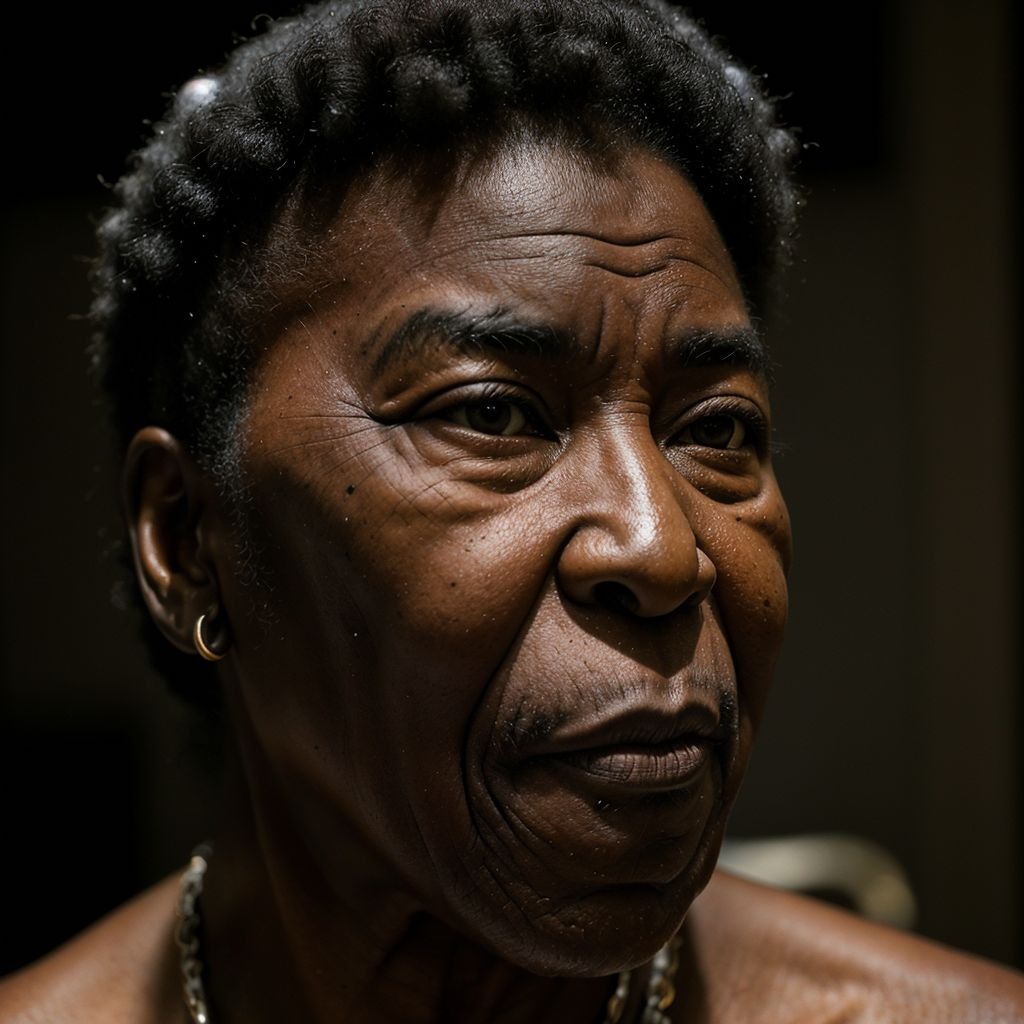
I’ll admit it: Octavia Butler fascinates me, but not just because she’s a trailblazer or a genius writer (although those things are definitely true). I’m drawn to the complexities that make her story feel both deeply personal and universally relatable.
One of the things that’s always struck me about Butler is how her experiences with racism, sexism, and identity informed her writing. Growing up as an African American woman in Pasadena, California, she faced a lot of adversity, from overt racism to internalized self-doubt. It’s clear that these struggles seeped into her fiction, particularly in works like “Kindred” and “Parable of the Sower”.
I can relate to feeling like an outsider looking in – I’m still figuring out where I fit within my own identity. As a biracial woman with a complicated family history, I often feel like I’m caught between two worlds that don’t quite understand each other. Reading Butler’s writing is like seeing a mirror held up to those feelings of disconnection and uncertainty.
But it’s not just the personal experiences that draw me in; it’s also the way Butler explores the intersectionalities of power, privilege, and oppression in her work. She was ahead of her time in tackling these complex issues, and yet, it feels like we’re still grappling with them today. Her writing often leaves me feeling both hopeful and unsettled – a sense that we’ve made progress, but there’s still so much work to be done.
What I find really interesting is how Butler’s fiction often blurs the lines between science fiction and social commentary. She wasn’t afraid to use speculative elements to explore the human condition, and that resonates with me as someone who writes about my own experiences through the lens of storytelling. It’s like she took all these disparate threads – racism, sexism, identity, power dynamics – and wove them into a tapestry that’s both beautiful and uncomfortable.
I’ve always been struck by Butler’s use of alterity in her writing – the way she creates characters who are “other” than herself, but also somehow relatable. It’s like she’s saying, “Look, I may not be you, but we’re connected in ways you might not expect.” That sense of connection is what draws me to her work; it feels like a reminder that our experiences, though unique, are part of a larger web of humanity.
I’ve spent hours poring over Butler’s essays and interviews, searching for clues about how she managed to tap into this deep reservoir of insight. Some days I feel like I’m getting close to understanding what makes her writing so compelling; other days, it feels like I’m still just scratching the surface. Maybe that’s the point – maybe we’re never fully done grappling with these issues, and Butler’s work is a reminder of how much more there is to explore.
As I write this, I’m aware that I’m only scratching the surface of what makes Octavia Butler fascinating. There are so many aspects of her life and work that I’ve barely touched on – her relationship with her family, her struggles with mental health, her advocacy for women’s rights… But that’s okay; I don’t think I need to have all the answers to be drawn to her story.
For me, Butler’s writing is a reminder that our experiences are not isolated incidents, but part of a larger narrative. It’s a call to explore, to question, and to seek out new perspectives – even when they make us uncomfortable. And in that sense, I feel like I’m still learning from her, even as I write these words.
I think one of the reasons I’m so drawn to Butler’s writing is because it feels like a reflection of my own struggle to reconcile different parts of myself. Growing up biracial in a world that often demands clear categorization can be exhausting – do I identify as black, white, or something in between? Do I claim my African American heritage, or do I lean into the privilege of being perceived as “mixed”? It’s like Butler is saying, “No, you don’t have to choose. You can exist in multiple spaces at once.” Her writing validates this messy, hybrid identity that I’m still trying to make sense of.
Butler’s exploration of alterity also makes me think about my own relationships with people who are different from me – the friends I’ve made across cultures and socioeconomic lines, the family members who challenge my assumptions. She reminds me that these connections can be transformative, that we can learn so much from each other when we’re willing to listen. It’s like she’s saying, “The ‘other’ is not something to be feared or avoided; it’s a doorway to understanding and empathy.”
I’ve also been struck by Butler’s use of science fiction as a tool for social commentary – how she takes the most fantastical elements and uses them to critique the very real issues we face today. It’s like she’s saying, “This isn’t just some far-off future; this is our present, with all its problems and complexities.” Her work makes me think about my own writing, too – how I can use storytelling as a way to explore the world around me, to question assumptions and challenge myself.
Lately, I’ve been wondering if Butler’s commitment to exploring the intersectionalities of power and oppression has anything to do with her experiences as an outsider within her own community. As an African American woman in a predominantly white institution, she likely faced racism and sexism from multiple angles – and yet, she chose to use those experiences to create something beautiful and powerful. It’s like she’s saying, “I may be seen as ‘other,’ but I’m not invisible; my voice matters.”
All of this has me thinking about the role of storytelling in shaping our understanding of ourselves and each other. Is it possible that our stories can be both personal and universal at the same time – that they can reflect our individual experiences while also speaking to something deeper, more collective? Butler’s work suggests that yes, it is possible – and that’s a thought that leaves me both hopeful and unsettled, just like her writing always does.
As I delve deeper into Butler’s life and work, I’m struck by the way she navigated multiple identities and allegiances throughout her career. She was a science fiction writer, but also a historian, an essayist, and an activist – each of these roles informing and intersecting with the others in complex ways. It’s like she’s showing me that identity is not a fixed thing, but rather a dynamic web of experiences, choices, and affiliations.
I think about my own struggles to reconcile different parts of myself, and I wonder if Butler’s ability to navigate multiple identities was a source of strength for her. Did she find solace in being seen as an outsider within her own community? Or did it make her feel like she had to choose between different aspects of herself?
Butler’s commitment to exploring the complexities of identity also makes me think about the role of privilege and power in shaping our experiences. As someone who is perceived as “mixed,” I’ve often found myself caught between two worlds – one that sees me as white, another that sees me as black. It’s like Butler is saying, “No, you don’t have to choose; you can exist in multiple spaces at once.” But what does it mean to occupy multiple spaces of privilege and oppression simultaneously? How do we navigate the power dynamics within our own communities?
As I ponder these questions, I’m reminded of Butler’s use of alterity in her writing – the way she creates characters who are “other” than herself, but also somehow relatable. It’s like she’s showing me that even in the most unexpected places, there is a deep connection between us all. But what does it mean to be connected across lines of difference? Is it possible to forge meaningful relationships with people from different backgrounds and experiences without exploiting or appropriating their stories?
Butler’s work raises more questions than answers for me – and that’s part of its beauty. It’s like she’s holding up a mirror to my own complexities, inviting me to explore the messy intersections between identity, power, and experience. As I write this, I’m aware that I’m still grappling with these issues, but I feel a sense of hope – hope that I can use storytelling as a tool for understanding, empathy, and transformation.
I think about Butler’s own struggles with mental health, her experiences with depression and anxiety, and how she used those struggles to fuel her writing. It’s like she’s saying, “Even in the darkest moments, there is beauty and power – if we’re willing to look for it.” Her work reminds me that our stories are not just individual experiences, but also part of a larger narrative – one that can be both healing and transformative.
As I continue to explore Butler’s life and work, I’m aware that I’m only scratching the surface of what makes her writing so compelling. There’s still so much to learn from her, so much to question and explore. And yet, even in the midst of uncertainty, I feel a sense of clarity – a sense that storytelling can be a powerful tool for connection, empathy, and understanding.
One thing that’s struck me about Butler’s work is how she often blurs the lines between fiction and memoir. Her writing is deeply personal, but it’s also infused with a sense of universality – like she’s taking her own experiences and extrapolating them into something much larger than herself. I think that’s part of what makes her writing so powerful: she’s able to take these intensely personal struggles and turn them into something that resonates with readers on a deeper level.
As someone who writes about their own experiences, I’m fascinated by Butler’s ability to do this. It’s like she’s saying, “I may be telling my own story, but it’s also your story – because we’re all connected in ways we might not even realize.” Her writing makes me think about the power of personal narrative to shape our understanding of ourselves and each other.
Butler’s use of alterity is also a big part of what draws me to her work. The way she creates characters who are “other” than herself, but also somehow relatable – it’s like she’s showing me that even in the most unexpected places, there is a deep connection between us all. It’s not always easy to see this connection when we’re faced with people who seem so different from ourselves, but Butler’s writing reminds me that it’s always worth trying.
I think about my own relationships – the friends I’ve made across cultures and socioeconomic lines, the family members who challenge my assumptions. Butler’s work makes me realize that these connections can be transformative, that we can learn so much from each other when we’re willing to listen. It’s like she’s saying, “The ‘other’ is not something to be feared or avoided; it’s a doorway to understanding and empathy.”
Butler’s commitment to exploring the complexities of identity also makes me think about the role of language in shaping our experiences. As someone who writes about their own identity, I’m aware of how language can both liberate and oppress us – how certain words and phrases can be used to marginalize or include us. Butler’s writing reminds me that language is a powerful tool for creating change, but it’s also a complex one that requires nuance and care.
I’ve been thinking about the ways in which Butler uses language to subvert expectations and challenge assumptions. Her writing often plays with genre, blending elements of science fiction, historical fiction, and social commentary into something entirely new. It’s like she’s saying, “Language is not fixed; it’s a tool that can be used to create new worlds and new possibilities.” Her work makes me realize that language is not just a means of communication – it’s also a way of shaping reality itself.
As I continue to explore Butler’s life and work, I’m struck by the way she navigated multiple identities and allegiances throughout her career. She was a science fiction writer, but also a historian, an essayist, and an activist – each of these roles informing and intersecting with the others in complex ways. It’s like she’s showing me that identity is not a fixed thing, but rather a dynamic web of experiences, choices, and affiliations.
I think about my own struggles to reconcile different parts of myself – as a biracial woman with a complicated family history, I often feel like I’m caught between two worlds that don’t quite understand each other. Butler’s writing makes me realize that this is not just a personal struggle, but also a universal one – that we’re all navigating complex identities and allegiances in our own ways.
Butler’s work raises more questions than answers for me – and that’s part of its beauty. It’s like she’s holding up a mirror to my own complexities, inviting me to explore the messy intersections between identity, power, and experience. As I write this, I’m aware that I’m still grappling with these issues, but I feel a sense of hope – hope that I can use storytelling as a tool for understanding, empathy, and transformation.
As I reflect on Butler’s life and work, I’m struck by the way she embodied the spirit of her writing – her commitment to exploring the complexities of identity, power, and experience. She was a writer who refused to be bound by genre or expectation, who instead used her work to challenge assumptions and push boundaries. Her legacy is a reminder that we don’t have to conform to societal norms or expectations; we can create our own paths, our own stories, and our own sense of self.
For me, Butler’s writing is a call to arms – a reminder that storytelling has the power to shape our understanding of ourselves and each other. It’s a challenge to use language in ways that are both personal and universal, that speak to our individual experiences while also speaking to something deeper and more collective. As I continue to write about my own experiences, I’m aware that I’m walking in Butler’s footsteps – trying to use storytelling as a tool for connection, empathy, and understanding.
Butler’s legacy is complex and multifaceted, and I feel like I’m only scratching the surface of what makes her writing so powerful. There are still so many aspects of her life and work that I want to explore – her relationships with other writers and artists, her experiences as a woman in a male-dominated field, her advocacy for women’s rights and social justice. As I continue to learn from Butler’s writing, I’m aware that I’ll never fully understand the depths of her genius – but that’s okay. Because the beauty of her work lies not just in its complexity, but also in its ability to inspire and empower us all.