
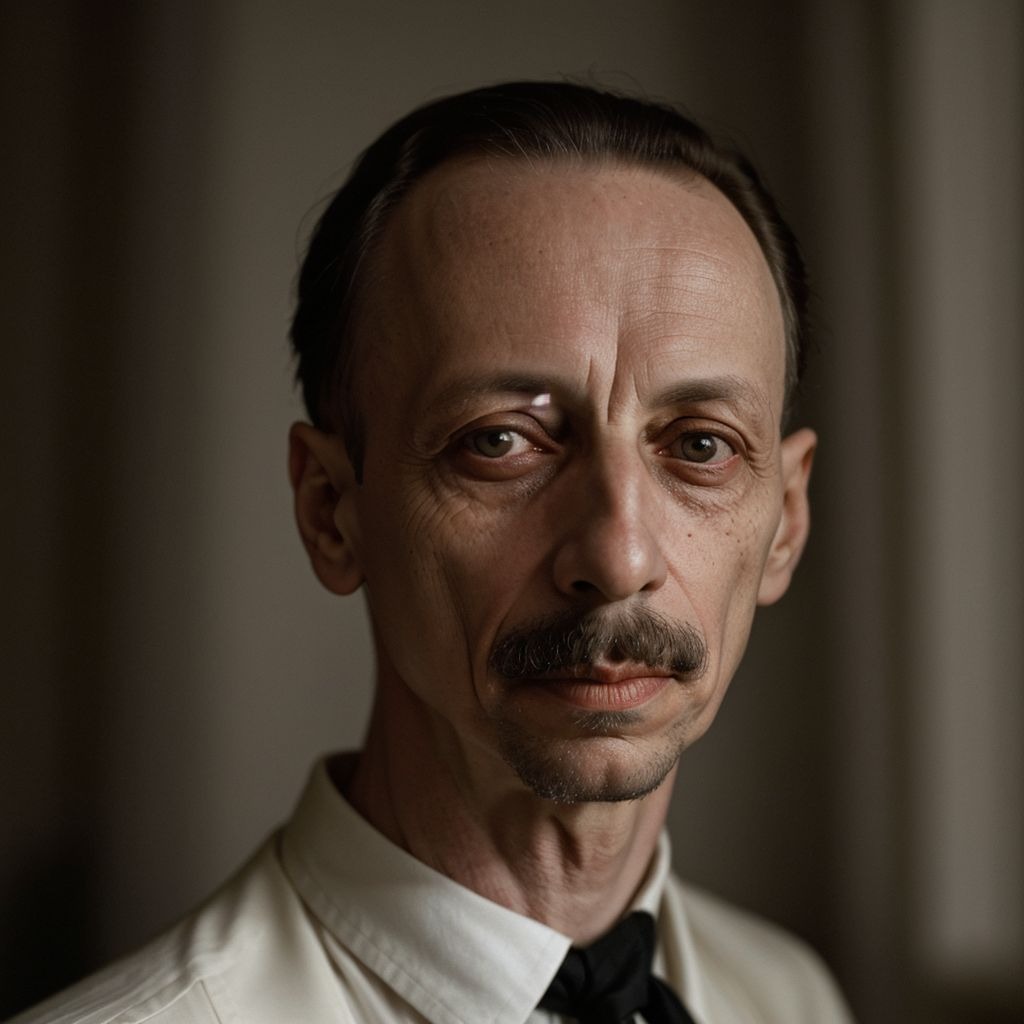
Rilke. His name is like a whisper, a gentle breeze that rustles the pages of my mind. I’ve always been drawn to his words, but it’s only recently, as I sit here with my own thoughts and doubts, that I’m beginning to understand why.
I stumbled upon his letters from the Duino Elegies in a used bookstore last semester. The yellowed pages and rough translation made me feel like I was discovering a secret language. His words danced across the page, speaking directly to some deep part of me that I didn’t know existed. It’s as if he’d taken all my deepest questions – about love, loss, identity – and wrapped them in a fragile, beautiful package.
One line keeps repeating itself in my mind: “The only journey is the one within.” I feel like I’m still trying to grasp what this means for me. Rilke writes about the importance of solitude, of retreating from the world to listen to the depths of our own hearts. But isn’t that just a romanticized version of loneliness? Doesn’t it ignore the ways in which we’re shaped by our relationships, our cultures, and our histories?
I think back to my own experiences with isolation – times when I felt like I was lost, alone, and uncertain about who I was or where I belonged. Rilke’s words were a balm to me then, a reminder that there was something more profound happening within me than the surface-level worries of everyday life.
But now, as I sit here thinking about his ideas, I’m starting to feel uneasy. What if this focus on individualism and introspection is just a privileged luxury? What if it ignores the ways in which our circumstances – class, race, ability – shape who we are and what we experience?
I glance at my bookshelf, where Rilke’s Selected Poems sits alongside the works of other writers I admire. But whereas their words often feel like a warm embrace or a reassuring nod, Rilke’s feel more like a challenge, a puzzle to be unraveled.
What is it about his writing that makes me want to push against its edges? Is it because he pushes back at traditional notions of selfhood and identity? Or is it because, despite my reservations, I’m drawn to the idea that our inner lives are worthy of exploration?
I think of a particular letter where Rilke writes about the importance of patience in understanding ourselves. “Wait,” he says. “Wait patiently for this life.” It’s like he’s telling me to slow down, to trust the process of self-discovery, even when it feels messy and unclear.
As I sit here, pondering these questions, I feel a sense of discomfort settling over me. Maybe it’s because Rilke’s ideas are forcing me to confront my own biases and assumptions about identity, community, and the human experience. Or maybe it’s because, despite his words being a source of comfort for me in the past, I’m now seeing them as more complicated, more open-ended than I initially thought.
Whatever the reason, I know that Rilke is someone who will continue to haunt my thoughts, like a gentle presence lurking just beyond the edge of perception. And maybe it’s okay if his ideas don’t provide clear answers or easy solutions – maybe it’s enough to simply sit with them, to wait patiently for this life to unfold in all its messy, beautiful complexity.
As I continue to grapple with Rilke’s words, I find myself thinking about the tension between individuality and collectivity. He writes about the importance of solitude, but also about the interconnectedness of human experience. It’s like he’s holding two opposing ideas in tension, refusing to resolve them into a neat package.
I think about my own experiences with community and belonging. In college, I was part of a tight-knit group of friends who shared similar interests and values. We supported each other through thick and thin, and it felt like we were creating our own little world together. But as I look back on those years, I realize that there were also moments when I felt stifled by the expectations of others, when I wanted to break free from the constraints of groupthink.
Rilke’s words are making me wonder: can we truly explore our inner lives without acknowledging the ways in which they’re shaped by our relationships and communities? Or is it a false dichotomy to pit individuality against collectivity? Does he want us to retreat into ourselves, or does he want us to engage with the world around us in a more authentic way?
I glance at my journal, where I’ve scribbled down notes and quotes from Rilke’s letters. There’s one passage that stands out to me: “The task of the individual consists of becoming an ancestor.” What does it mean to become an ancestor? Is it about creating something lasting, something that will outlive us? Or is it about cultivating a sense of connection to those who came before us?
As I ponder these questions, I feel a sense of humility wash over me. Rilke’s words are making me realize how little I know, how much I’m still learning and growing. Maybe the only journey is indeed the one within, but maybe that journey also involves acknowledging our connections to others, to history, to culture.
I look around my room, at the books and papers scattered across my desk. There’s a piece of paper with a quote from Rilke: “The smallest act of kindness is worth more than the grandest intention.” It’s a reminder that maybe the most profound journey is not about grand gestures or sweeping changes, but about the small, daily acts of love and compassion that shape our lives.
As I sit here, surrounded by the trappings of my own thinking, I feel Rilke’s presence lingering in the background. His words are like a gentle nudge, encouraging me to explore the depths of my own heart. And maybe, just maybe, it’s okay if I don’t have all the answers – maybe the only journey is indeed one of waiting patiently for this life to unfold in all its messy, beautiful complexity.
I sit here, surrounded by the silence of my room, and feel a sense of stillness wash over me. Rilke’s words are like a gentle rain, soothing my skin and calming my mind. I think about the idea of becoming an ancestor, and how it relates to the small acts of kindness that he spoke of earlier. Can our individual journeys be meaningful if we’re not also contributing to something larger than ourselves?
I glance at a photo on my desk, a picture of my grandparents when they were young. They were immigrants who came to this country with little more than a suitcase and a dream. I think about the struggles they faced, the sacrifices they made, and the legacy they’ve left behind. Their stories are etched into my DNA, and yet, as I sit here thinking about Rilke’s ideas, I realize that I’m still figuring out what it means to be an ancestor in my own right.
What does it mean to leave a mark on the world that will outlive me? Is it through art, or writing, or some other form of creative expression? Or is it through the relationships we cultivate, the love we share, and the kindness we show to others? Rilke’s words are making me see that becoming an ancestor might be more about embracing my own vulnerability than trying to create something lasting.
I think about the people in my life who have taught me what it means to live with intention and purpose. My grandmother, who worked tirelessly as a nurse, sacrificing her own needs for the sake of others. My friend Alex, who has spent years advocating for social justice and fighting for equality. Their examples are etched into my mind, and yet, I’m still figuring out how to apply their lessons to my own life.
Rilke’s words are making me see that individuality is not about isolation or self-absorption; it’s about embracing our unique experiences and perspectives, and using them to contribute to something greater than ourselves. Maybe the only journey is indeed one of waiting patiently for this life to unfold, but maybe that journey also involves being open to the ways in which we’re connected to others.
As I sit here, surrounded by the quiet of my room, I feel a sense of peace settle over me. Rilke’s words are like a balm to my soul, soothing my doubts and calming my fears. I realize that becoming an ancestor might be less about creating something lasting, and more about living with intention, love, and kindness in each moment.
I glance at the clock on my wall, surprised by how much time has passed since I started writing. The words have flowed effortlessly, as if Rilke’s presence is guiding me through this exploration of his ideas. But now, as I sit here with a sense of stillness, I feel a new question emerging: what does it mean to live with intention and purpose in a world that often seems overwhelming?
I think about the times when I’ve felt lost or uncertain, when the demands of everyday life have threatened to consume me. Rilke’s words have been a source of comfort, but they’ve also made me realize how easily we can get caught up in the hustle and bustle of modern life. How do we find the space to listen to our own hearts, to cultivate a sense of inner guidance that can guide us through even the most challenging times?
As I ponder this question, I’m reminded of a passage from Rilke’s letters where he writes about the importance of embracing the unknown. “The future enters into us in order to transform itself in us long before it happens,” he says. It’s as if he’s urging me to trust that I have within me the capacity to navigate even the most uncertain times, to find a sense of inner peace and guidance.
But what does this mean for me? How do I cultivate this sense of inner wisdom, especially when faced with the complexities and challenges of the world around me? Rilke’s words are making me see that it’s not about having all the answers or knowing exactly what lies ahead. It’s about trusting in my own inner guidance, even when it feels like a whisper in the darkness.
I think about the ways in which I’ve tried to cultivate this sense of inner wisdom – through meditation, journaling, and quiet reflection. And yet, despite these efforts, I still find myself getting caught up in the stresses and demands of everyday life. It’s as if I’m constantly trying to balance my desire for inner peace with the external pressures that seem to threaten it at every turn.
Rilke’s words are making me realize that this tension is not unique to me. He writes about the importance of living in the present moment, of embracing the beauty and fragility of life just as it is. But what does this mean when faced with the difficulties and uncertainties of the world around us?
As I sit here, surrounded by the silence of my room, I feel a sense of humility wash over me. Rilke’s words are making me see that I’m not alone in this journey – that countless others have grappled with these same questions, and yet continue to find ways to live with intention and purpose in the face of uncertainty.
I glance at my bookshelf, where Rilke’s Selected Poems sits alongside other writers who’ve explored similar themes. There’s a passage from Toni Morrison’s Beloved that comes to mind – “The lives we touch and leave behind are not just the ones we love. They are the ones we come in contact with every day.” It’s as if she’s reminding me that our individual journeys are not isolated, but interconnected – that the choices we make and the actions we take have a ripple effect on those around us.
Rilke’s words are making me see that living with intention and purpose is not just about my own inner journey. It’s about recognizing the ways in which I’m connected to others, to the world around me, and to the generations that came before me. It’s about embracing this sense of interconnectedness, even when it feels overwhelming or uncertain.
As I sit here, surrounded by the quiet of my room, I feel a sense of peace settle over me. Rilke’s words are like a gentle rain, soothing my doubts and calming my fears. I realize that living with intention and purpose is not about having all the answers – it’s about trusting in the process of self-discovery, and embracing the beauty and fragility of life just as it is.