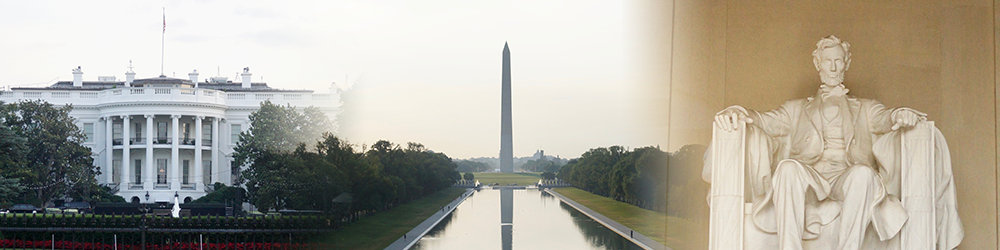

On a cold November morning in 1982, thousands gathered on the National Mall in Washington, D.C., their breath visible in the crisp air. Some carried flags, some carried flowers, and many carried memories that had never truly left them. For the first time since the end of the Vietnam War, a sense of collective pause swept across the nation. The moment was somber, not triumphant; quiet, not ceremonial. As veterans, families, and citizens approached the long, black granite wall that stretched gently into the earth, they saw reflected not only the names of the fallen, but their own faces. On November 13, 1982, the United States dedicated the Vietnam Veterans Memorial — a monument unlike any other — and in doing so, began a long-delayed conversation with itself about war, loss, and healing.
The Vietnam War was, in every sense, a wound — deep, divisive, and slow to heal. From the jungles of Southeast Asia to the streets of American cities, it tore through the moral fabric of a generation. By the time the last U.S. troops left Saigon in 1973, more than 58,000 American soldiers had died, and the country itself had been forever changed. For years afterward, there were no parades, no triumphant homecomings, no public gratitude. Veterans returned to a nation weary of war and unwilling to confront its consequences. Many were met with silence; some with hostility. The war’s bitterness lingered in living rooms and legislatures, in news headlines and whispered recollections.
For nearly a decade after the war’s end, the idea of a memorial seemed almost impossible. How could a country that had not yet come to terms with its own divisions honor those who had fought? To many, Vietnam represented failure — politically, morally, and militarily. Yet for the veterans who had served, that distinction was meaningless. They had done their duty. They had sacrificed. They had seen brothers die beside them. They wanted — and deserved — a place to remember them.
The movement to build the Vietnam Veterans Memorial began with a single man: Jan Scruggs, a former Army corporal who had served in Vietnam in 1969. Haunted by memories of friends lost in battle, Scruggs became convinced that a national memorial could help the country heal. In 1979, he established the Vietnam Veterans Memorial Fund, a nonprofit organization dedicated to raising money for the project. At the time, it was a radical notion. The wounds of the war were still raw, and many politicians were wary of associating themselves with anything related to Vietnam. But Scruggs was undeterred. He believed that remembrance was not about politics but about humanity.
Through tireless fundraising and lobbying, Scruggs and his team gradually built support. Donations poured in from veterans, families, and everyday Americans who wanted to honor the fallen. By 1980, Congress had approved a site near the Lincoln Memorial — a fitting location, symbolic of unity and reflection. An open design competition was announced, inviting architects from across the country to submit their visions for the memorial. The only requirements were that it be apolitical, harmonious with its surroundings, and include the names of every American who died in the war.
More than 1,400 designs were submitted. When the winner was announced, it took nearly everyone by surprise. The chosen design came from Maya Lin, a 21-year-old architecture student at Yale University. Her concept was strikingly simple: two black granite walls, each stretching over 200 feet, forming a gentle V shape that sank into the earth. At their apex, the walls would meet at an angle pointing toward the Washington Monument on one side and the Lincoln Memorial on the other — linking the Vietnam War to both the ideals of the republic and the legacy of freedom. On the polished surface of the walls, the names of all 58,000 fallen soldiers would be engraved in chronological order, creating a silent timeline of sacrifice.
Lin’s design was minimalist, abstract, and profoundly modern — and it sparked immediate controversy. Many veterans and politicians felt that it lacked traditional patriotic symbolism. There were no statues of soldiers, no flags, no inscriptions of heroism or victory. To them, the black granite seemed funereal, even shameful. Critics called it a “black gash of shame” and argued that it dishonored the memory of those who served. Some demanded that the memorial include more conventional elements — an American flag, a sculpture, something that would declare pride instead of sorrow.
Yet Lin defended her vision with quiet conviction. She explained that the wall’s purpose was not to glorify war, but to confront its reality. It was meant to be a wound in the earth, mirroring the wound in the nation’s heart. As visitors approached, the wall’s polished surface would reflect their own images, merging the living and the dead in a single, unbroken continuum. “I wanted to create an experience,” Lin said, “where you could walk down into the earth, touch the names, and emerge again — whole.”
Despite the controversy, construction moved forward. The first panels of polished black granite — quarried from Bangalore, India — were installed in 1982. Each slab was cut with precision and engraved with the names of the dead in the order they were lost, beginning with the first casualties in 1959 and ending with those who fell in 1975. The process was painstaking. Workers used stencils and sandblasting techniques to ensure each letter was perfectly etched. No rank distinctions were included — every name held equal weight. It was a radical egalitarian gesture, erasing the hierarchies of war and focusing solely on the human cost.
As dedication day approached, anticipation mixed with uncertainty. Would Americans embrace this unconventional monument? Would it bring healing, or reopen old wounds? On November 13, 1982, the answer came — not in speeches or fanfare, but in silence.
Tens of thousands attended the dedication ceremony. Veterans arrived from across the country, some wearing their old uniforms, others dressed simply in jackets adorned with medals and patches. Many brought their families; others came alone. They stood shoulder to shoulder, gazing at the gleaming wall that seemed to rise and sink with the landscape. When the sunlight struck it just right, the names shimmered like water. Some veterans reached out to touch them. Others knelt, pressing their foreheads against the stone. A few traced the letters of fallen friends onto paper using pencils and tape — a practice that would soon become a ritual for visitors.
No one who attended that day forgot the sound — or rather, the absence of it. The crowd, numbering in the tens of thousands, fell into hushed reverence. The only noises were the rustle of flags, the murmur of wind, and the occasional sob of someone overcome by memory. For many veterans, it was the first time they had been publicly acknowledged — not as symbols of a controversial war, but as human beings who had endured unimaginable loss.
As the ceremony continued, emotions overflowed. Some veterans wept openly. Others stood rigid, their faces set in stoic expression, tears hidden behind sunglasses. Parents who had lost sons clutched photographs to their chests. One mother whispered her son’s name into the stone as if speaking to him across time. For them, the wall was not abstract architecture. It was a place where memory took form — where ghosts could finally be touched.
Over time, what had once been controversial became sacred. The black granite wall, once derided as unpatriotic, grew to be one of the most beloved memorials in the nation. Its power lay in its simplicity — in its refusal to explain or justify, in its quiet demand for reflection. Unlike grand monuments to generals or victories, the Vietnam Veterans Memorial invited personal connection. It asked nothing of its visitors but honesty.
Soon, the wall became covered in offerings — flowers, flags, medals, dog tags, letters, even cans of beer left by old friends. The National Park Service began collecting these mementos, storing them in a vast archive. Each object told a story: a note from a child who never met their father; a faded photograph from a platoon reunion; a Purple Heart returned to its rightful place beside a name. Together, these tokens formed a secondary memorial — one composed of love, memory, and grief.
The experience of visiting the Vietnam Veterans Memorial defies simple description. Approaching from the grassy expanse of the Mall, one first sees only the tip of the wall emerging from the earth. As you descend along its path, the wall grows taller, the names multiplying until they stretch far above your head. At its deepest point, the wall towers over you — a silent sea of names. And then, as you continue walking, it gradually recedes, allowing you to rise back toward the light. The journey mirrors the emotional passage of remembrance — descent into grief, confrontation with loss, and reemergence into acceptance.
Perhaps the most haunting aspect of the memorial is its reflection. In the polished surface, visitors see themselves standing among the names. The living and the dead merge in a single image, erasing time and difference. The effect is profound — a reminder that history is not something that happens to “others,” but something that binds us all. Every visitor becomes part of the memorial’s story.
For veterans, the wall offered a measure of healing long denied to them. Many spoke of finally feeling seen, finally being able to mourn without shame. It became a place of reunion as much as remembrance — a meeting ground for old comrades, a space where silence spoke louder than words. For the nation, it marked a turning point in how America remembers its wars. It shifted the focus from victory to humanity, from ideology to empathy.
The Vietnam Veterans Memorial also changed the very language of memorial design. Its minimalist aesthetic inspired a new generation of monuments — from the Korean War Veterans Memorial, with its ghostly soldiers walking through juniper bushes, to the Oklahoma City Memorial, where empty chairs symbolize the victims of the bombing. Each owes something to the quiet power of Maya Lin’s vision — that absence can speak, that simplicity can reveal truth.
In the decades since its dedication, the wall has become one of the most visited sites in the United States, drawing millions each year. It has also grown — with the addition of the Three Soldiers statue in 1984 and the Vietnam Women’s Memorial in 1993, both of which complement Lin’s design while honoring specific aspects of the war’s human cost. But the heart of the memorial remains the wall itself — 246 feet of black granite engraved with 58,318 names, each one a life cut short, each one a reminder of the price of conflict.
What makes the Vietnam Veterans Memorial timeless is not what it says, but what it allows others to say. Visitors bring their own meanings to it — sorrow, pride, guilt, forgiveness. For some, it is a place of closure; for others, of connection. The wall listens to all of them equally. It does not judge. It does not explain. It simply is.
In a way, the memorial represents something larger than the Vietnam War. It speaks to the universal need to remember — to acknowledge loss without erasing it. It reminds us that the measure of a nation is not only in its victories but in its willingness to face its mistakes with humility and grace.
On that November day in 1982, when the first wreaths were laid and the first tears fell onto the granite surface, something shifted in the American soul. The Vietnam Veterans Memorial did not erase the pain of the war — but it offered, at last, a space to hold it. It gave a fractured nation a mirror in which to see itself clearly, with all its flaws and all its courage. And in the reflection, it found not shame, but humanity.
As the sun sets each evening, the wall glows softly under the Washington lights. The names shimmer, and the reflections of visitors — young and old, veterans and civilians — move across its surface like passing clouds. The wall endures not as a monument to war, but as a testament to memory. In its silent strength lies an unspoken promise: that the fallen will never be forgotten, and that even in darkness, reflection can lead to light.