
Rosa Parks’ hand was steady on the wheel of her bus route, a familiar rhythm that guided her through Montgomery’s city streets. But it was on one ordinary day, December 1, 1955, when her routine was disrupted by the driver’s demand that she give up her seat to a white person. She refused, sparking a chain reaction that would shatter the status quo of segregation in Alabama.
A faint outline of a woman can be seen in an old photograph, taken years before this pivotal moment. Rosa is seated on a porch, wearing a dress and a hat, looking directly at the camera with a quiet dignity that belies the turmoil to come. The image is faded now, but it retains a sense of quiet strength.
The day she refused to move from her seat was not an impulsive act; it was a deliberate choice, one that had been years in the making. Rosa had been involved in local civil rights activism for decades, attending meetings and participating in protests. Her experiences as a seamstress and a mother had given her a keen understanding of the injustices faced by African Americans.
A single word, scratched into the margin of an old newspaper clipping, catches my eye: ” Courage.” It’s a label applied to Rosa’s actions after the fact, but it seems to me that courage was not something she lacked beforehand. Rather, it was a quality she cultivated over time, through her involvement in the community and her willingness to challenge authority.
The bus driver, James F. Blake, testified later that Rosa had been “causing trouble” by refusing to move, but his account of events omits the context of systemic racism that fueled her actions. It’s as if he expected her to be grateful for the privilege of sitting in a designated “colored” section at the back of the bus.
In the aftermath of the incident, Rosa was arrested and charged with violating the city’s segregation laws. The case drew national attention, and soon, Montgomery’s buses were filled with protesters demanding equal rights. It was a moment of collective defiance that would change the course of American history.
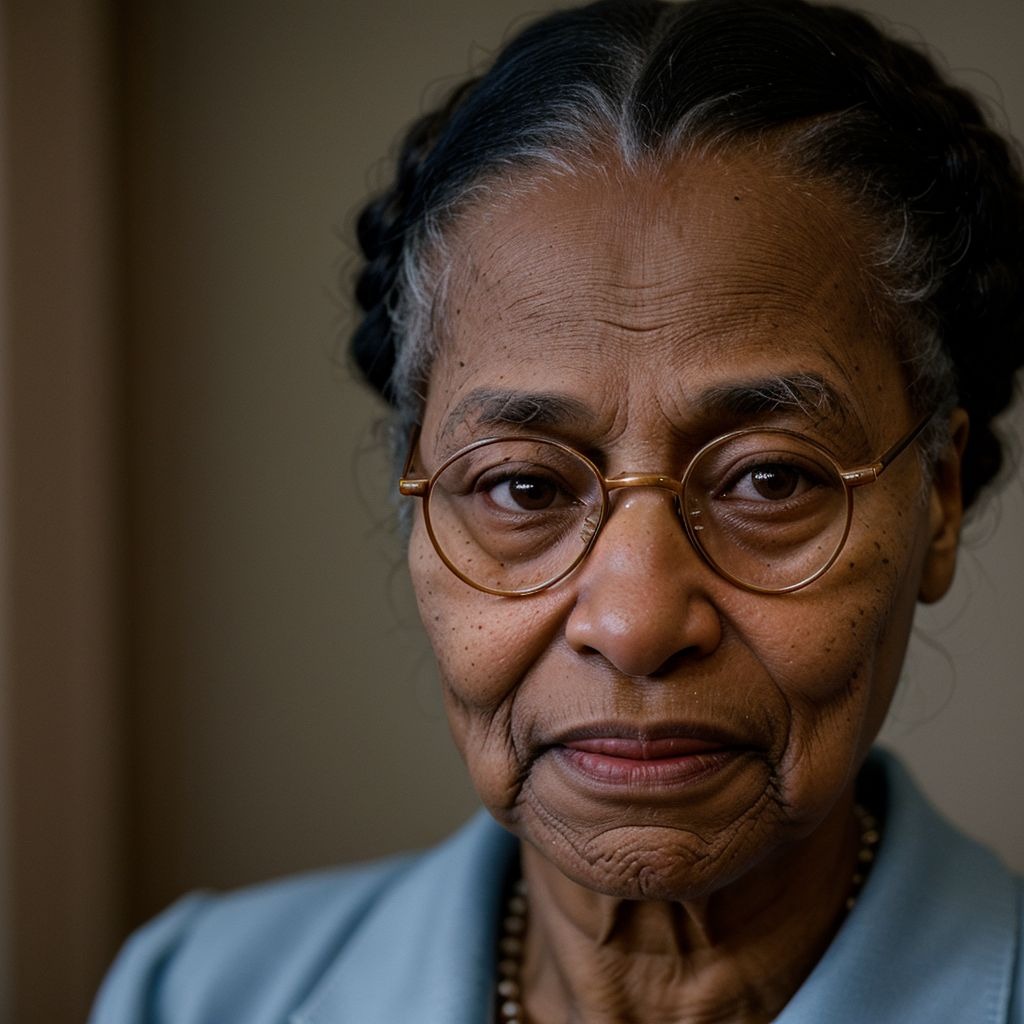
A photograph of Rosa in her later years appears her standing tall, her hair styled neatly, her expression serene. But there’s something about this image that doesn’t quite add up – perhaps it’s the forced smile or the overly formal pose. I wonder if she was trying to present a certain image for public consumption, or if the photograph appears something more complex.
Rosa Parks’ act of defiance may have been spontaneous in one sense, but it was also the culmination of years of accumulated frustrations and resistance. Her courage, then, wasn’t just about standing up to authority; it was about challenging the very fabric of a society that had been built on inequality.
As I sit on this worn couch, surrounded by faded photographs of my grandmother Rosa, I’m reminded of that fateful day in Montgomery when she defied the rules and took a seat on the bus. The memory still feels like a heavy blanket draped over my shoulders, weighing me down with its significance. Her act of resistance was more than just a challenge to Jim Crow laws; it was an assertion of humanity, a declaration that she too deserved dignity and respect.
I recall how my mother used to tell stories about Rosa’s early years in Montgomery, about the way she navigated the complexities of segregation with quiet strength. How she’d take her children to church on Sundays, their eyes fixed on the stained glass windows depicting scenes of Jesus’ life, while their skin was stained by the shadows of racism that followed them everywhere.
That same Rosa Parks, who sparked a movement, was also a mother and grandmother, like me. I think about how our roles as caregivers are often at odds with the demands of activism – the juggling act between nurturing loved ones and fighting for justice. My grandmother’s courage in the face of adversity still inspires me to find that balance within myself.
The old bus where Rosa made her famous stand is long gone, replaced by a museum now, a shrine to her legacy. But I can almost hear its creaking wooden floorboards beneath my feet as I walk through the streets of Montgomery, passing by the same sidewalks and storefronts where she walked with purpose, her heart beating with defiance.
In those moments when I feel like giving up, when the weight of the world seems too much to bear, I close my eyes and remember Rosa’s words: “The only tired I was, was tired of giving in.” Her determination still resonates within me, a steady drumbeat reminding me that even in the darkest of times, there’s always a choice to be made – to give in or to stand up.
As I sit here, lost in thought, I am reminded of Rosa Parks’ steadfast resolve. Her refusal to give up her seat on that Montgomery bus was not just a spontaneous act of defiance, but a culmination of years of quiet resistance. The way she gazed out the window as the driver called out her name, her eyes steady and unyielding, still gives me chills.
I often think about the conversations I had with Rosa after her arrest, when she would speak to me in hushed tones about the struggles she faced as a black woman living in the South. The way her voice cracked with emotion as she spoke of her father’s words, “Rosa, you must never let anyone make you feel like less than what you are,” still echoes in my mind.
Those were difficult times, and Rosa’s courage in the face of adversity was a beacon of hope for many of us. Her actions inspired a generation to stand up against injustice, to challenge the status quo, and to fight for their rights as human beings. And yet, despite all that she accomplished, Rosa remained humble and unassuming, never seeking to draw attention to herself.
As I reflect on her life, I am struck by the contrast between her private and public personas. To the world, Rosa Parks was a hero, a symbol of resistance against oppression. But in quiet moments, when the cameras were off and the crowds had dispersed, she was simply a woman trying to live her life with dignity and integrity.
The myth of Rosa Parks, a woman who defied the rules of segregation on a Montgomery bus in 1955, continues to be told and retold as a testament to the power of individual resistance against oppressive systems. But what lies beneath this narrative? Beneath the surface-level tale of a brave woman refusing to give up her seat, there are threads of complexity that weave together to form a richer tapestry.
As I’ve reflected on Rosa Parks’ story, I find myself drawn back to the idea of exhaustion. Not just physical exhaustion from a long day’s work, but emotional and psychological exhaustion from living under the weight of racism. This is a fatigue that seeps into every pore, a feeling that one cannot shake no matter how hard they try.
Rosa Parks was not just any ordinary woman who happened to be sitting on a bus. She was a secretary at the NAACP, a community organizer and activist in her own right. Her actions were not impulsive or rash, but rather the culmination of years of quiet resistance and collective action. And yet, when she refused to give up her seat, it was as if she had finally reached a breaking point – a point where the cumulative weight of her exhaustion became too much to bear.
This idea of exhaustion is crucial because it reminds us that Rosa Parks’ story is not just about individual courage or defiance, but also about the systemic injustices that created an environment in which such resistance was necessary. The Montgomery bus system was designed to maintain segregation and control over African American bodies, with rules and regulations that reinforced white supremacy. In this context, Rosa Parks’ actions were not a heroic anomaly, but rather a symptom of a larger disease.
As I continue to revisit the story of Rosa Parks, I find myself drawn back to the image of her sitting on that bus, her body rigid with determination. But now I see her not just as a symbol of resistance, but also as a representation of the collective fatigue that afflicts us all when we are forced to live under oppressive systems. It is a reminder that even in the face of seemingly insurmountable obstacles, there are moments when we must refuse to give up – not out of heroism or defiance, but simply because we cannot bear the weight of our own exhaustion any longer.
Rosa Parks, a name etched in the fabric of American history like a worn button on a well-loved coat. I recall the image of her sitting steadfast, a monument of resistance against the injustices that had long plagued Montgomery’s buses. The hum of the engine, the chatter of passengers, the soft swaying of seats – all seemed to fade into the background as she remained rooted, unyielding in her conviction.
The phrase “the lady has refused to move” still resonates within me, a gentle echo of the quiet defiance that characterized her act. I think back on those early days, when Montgomery’s buses were a microcosm of a larger system, a machinery designed to keep African Americans subservient and in their place.
Rosa Parks’ actions, though seemingly small, were part of a broader tapestry – threads of courage and resilience that had been woven into the very fabric of her community. The memory of her grandfather’s stories about life on the plantation lingered within me, an unspoken testament to the struggles he faced, the injustices he endured.
As I reflect further on Rosa Parks’ story, I’m struck by the quiet strength she embodied – a resolve that wasn’t just about personal conviction but also a sense of responsibility to others. In her actions, I see a thread of solidarity, a connection to those who had come before and those yet to come. Her legacy becomes intertwined with their stories, creating an unbreakable bond.
The image of Rosa Parks sitting on that bus continues to haunt me – not just the physical act but also its resonance in the collective psyche of Montgomery’s residents. It serves as a poignant reminder that sometimes it takes a single, defiant step to awaken a community, to stir them from complacency and challenge the status quo.