
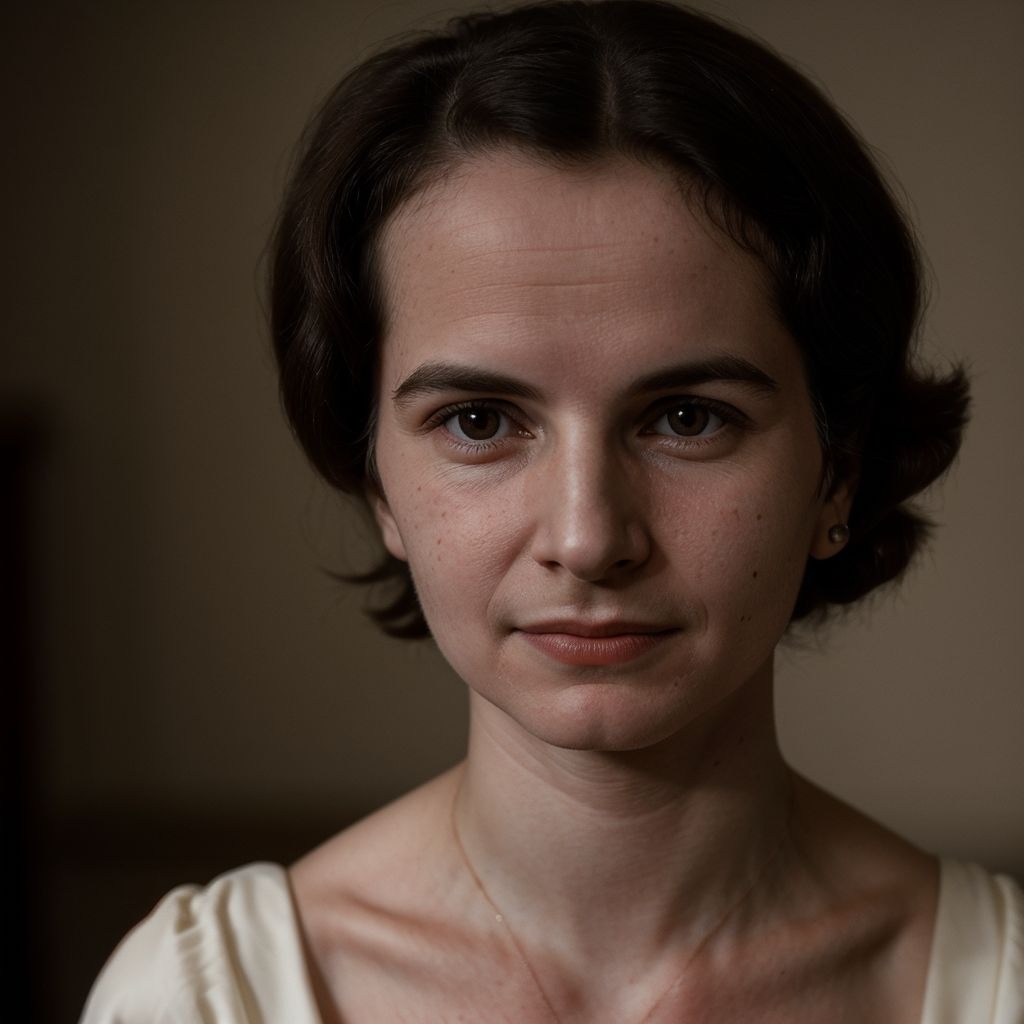
I’ve always felt a pang of fascination when I think about Rosalind Franklin’s story. Her life is like a puzzle with too many missing pieces, and yet it’s the gaps that intrigue me. What I know is that she was a brilliant British biophysicist who made significant contributions to our understanding of DNA structure, but her work was often overlooked during her lifetime.
As someone who’s also struggled to be recognized for my own creative endeavors, I find myself drawn to Franklin’s frustration and disappointment. She was a woman in a male-dominated field, working tirelessly in the lab while simultaneously navigating the societal expectations placed upon her as a wife and mother. Her frustration is palpable in her letters and interviews – she felt undervalued and underappreciated by the very people she was helping to advance scientific knowledge.
One of the things that gets stuck in my head is Franklin’s relationship with James Watson and Francis Crick, the duo who famously discovered the double helix structure of DNA. While they credited Franklin for their work, it feels like a half-hearted nod at best. Her X-ray crystallography images were instrumental in helping them decipher the code, but her contributions were largely erased from the narrative. I’ve read about how Watson and Crick would often mock her accent and belittle her abilities, reducing her to nothing more than a footnote in their story.
It’s uncomfortable for me to confront this kind of sexism and misogyny head-on. As someone who’s grown up with a relatively privileged existence, it’s hard to wrap my head around the ways in which women like Franklin faced such blatant disregard for their work. And yet, I feel drawn to her determination and resilience – she refused to be silenced or ignored, even when faced with overwhelming obstacles.
What strikes me most about Franklin is the sense of isolation that pervades her story. Despite being part of a prestigious research team at King’s College London, she worked largely in solitude, pouring over data and experimenting with new techniques. Her relationships were complicated, and her marriage to a fellow scientist, John Randall, was strained to say the least. It’s as if she existed on the periphery of her own life, observing the world around her with a mix of curiosity and disconnection.
I wonder what it must have been like for Franklin to feel so disconnected from the very people who were supposed to be supporting her. Was she able to find solace in her work, or did the isolation seep into every aspect of her being? I’m not sure I’d want to know – there’s something unsettling about confronting the depths of human loneliness.
As a writer, I often struggle with feelings of disconnection myself. There are days when it feels like my words are falling on deaf ears, and I’m just shouting into the void. Franklin’s story makes me realize that I’m not alone in this feeling – there are countless women who have come before me, struggling to be heard in a world that often refuses to listen.
But even as I grapple with these feelings of isolation and frustration, I’m drawn back to Franklin’s image. She’s the embodiment of quiet strength, refusing to be silenced or overlooked despite the odds against her. Her legacy is complex, multifaceted – a reminder that women like me are capable of greatness, even in the face of adversity.
As I sit here with my thoughts swirling around Rosalind Franklin, I’m left with more questions than answers. What does it mean to be undervalued and overlooked? How do we find our place in a world that often seems determined to erase us? These are questions I’ll continue to grapple with, long after this piece is finished.
I keep coming back to the image of Franklin’s data, meticulously recorded and analyzed on graph paper. It’s as if she’s speaking directly to me from beyond the grave, her calculations and observations a testament to her unwavering dedication. I find myself wondering what it must have been like for her to pour over those X-ray crystallography images, searching for patterns and connections that would unlock the secrets of DNA.
There’s something haunting about the idea that Franklin’s work was so precise, so carefully considered, and yet so easily dismissed by the men around her. It’s a reminder that even in the midst of groundbreaking research, women were often relegated to the margins, their contributions reduced to footnotes or afterthoughts. I think about all the times I’ve felt like an outsider in my own creative pursuits – the moments when my ideas are met with skepticism or condescension.
As I delve deeper into Franklin’s story, I’m struck by the tension between her public persona and private life. On one hand, she was a brilliant scientist, respected by her peers for her intellect and expertise. On the other hand, she struggled to balance her career ambitions with the societal expectations placed upon her as a woman. Her marriage to John Randall was complicated, to say the least – it’s clear that he often undermined her work, dismissing her contributions as trivial or insignificant.
I find myself wondering what it must have been like for Franklin to navigate these dual identities – the scientist who craved recognition and respect, versus the wife and mother who felt bound by societal norms. Was she able to reconcile these two selves within herself? Or did they exist in a state of perpetual conflict, each one vying for dominance?
The more I learn about Franklin’s life, the more I’m struck by the ways in which her story reflects my own fears and insecurities as a writer. What if my words aren’t good enough? What if no one takes me seriously? These are the same doubts that haunted Franklin, despite her towering intellect and groundbreaking research.
As I grapple with these questions, I’m left with a sense of unease – a feeling that there’s more to Franklin’s story than what we’re allowed to see. There are whispers of infidelity, of personal struggles that went far beyond the confines of her lab work. It’s as if she existed in a state of constant tension, torn between her ambition and her desire for human connection.
I’m not sure where this is leading me – only that I’m drawn deeper into Franklin’s world with each passing day. Her story is a labyrinth, full of twists and turns that challenge my assumptions about creativity, identity, and the pursuit of knowledge. And yet, it’s in the midst of these complexities that I find myself most alive – questioning, seeking answers, and grappling with the messy, imperfect nature of human experience.
I’ve been lost in Franklin’s world for hours now, tracing the contours of her story with a mix of fascination and trepidation. As a writer, I’m drawn to the way she navigates the complex web of relationships within her lab, trying to balance her own ambitions with the expectations of those around her.
It’s strange to think that Franklin’s work was so central to the discovery of DNA’s structure, yet she herself felt like an outsider in the very community where she made such significant contributions. I wonder if this sense of disconnection is something I can relate to – as someone who writes about topics that often feel ephemeral or abstract, I sometimes struggle to connect with others on a more tangible level.
The more I read about Franklin’s life, the more I’m struck by her fierce determination and independence. Despite facing so many obstacles, she continued to push forward, pouring all of herself into her work. It’s almost as if she knew that her contributions were crucial, even if they wouldn’t be recognized until long after she was gone.
I think about my own writing habits – the way I often retreat into my own little world when faced with criticism or doubt. Franklin’s story makes me realize that this kind of isolation is not unique to me, but rather a common experience for many women who’ve been pushed to the periphery of their own lives. It’s as if we’re constantly navigating between two worlds – the one where we’re recognized and valued, and the one where we feel overlooked and undervalued.
As I sit here with Franklin’s story swirling around me, I’m left with more questions than answers. What does it mean to be a woman in a male-dominated field? How do we find our voice in a world that often tries to silence us? These are questions I’ll continue to grapple with, long after this piece is finished.
But even as I face these uncertainties, I’m drawn back to Franklin’s data – those meticulously recorded X-ray crystallography images that hold the secrets of DNA. It’s as if she’s speaking directly to me from beyond the grave, her calculations and observations a testament to her unwavering dedication. And in this moment, I feel a sense of connection to her – a recognition that our struggles, though different in many ways, are somehow intertwined.
I think about all the times I’ve felt like an outsider in my own creative pursuits, unsure if anyone would ever truly see or hear me. Franklin’s story makes me realize that these feelings are not unique to me, but rather a common experience for countless women who’ve come before me. And it’s this sense of solidarity – this recognition that we’re all part of a larger narrative – that gives me the courage to keep going, even when the road ahead feels uncertain and daunting.
As I close my eyes and let Franklin’s story wash over me, I feel a sense of peace settle in. It’s as if she’s telling me that it’s okay to be messy, to be imperfect, and to be unsure – that these are all part of the journey towards discovery and growth. And in this moment, I know that I’ll keep writing, keep pushing forward into the unknown, even when the world around me seems determined to silence me.
As I sit here with Franklin’s story still resonating within me, I find myself thinking about the power of representation and how it can shape our perceptions of ourselves and others. Franklin’s legacy is a testament to the importance of acknowledging and celebrating women in science, but it also highlights the ways in which societal expectations can silence and erase them.
I think about all the times I’ve felt like my own voice was being drowned out by the dominant narratives around me. As a writer, I’m constantly seeking ways to express myself and connect with others, but it’s easy to get caught up in the noise of the world outside. Franklin’s story makes me realize that this is not just a personal struggle, but a collective one – that women like her and me are part of a larger movement towards visibility and recognition.
But even as I’m drawn to the idea of solidarity and shared experience, I’m also aware of the complexities and nuances that come with it. Franklin’s story is not just about being a woman in science; it’s also about being a British woman, a wife, a mother – all these identities intersecting and overlapping in ways that are both beautiful and challenging.
I wonder what it would be like to have more women like Franklin in my life – mentors, role models, friends who understand the intricacies of navigating a male-dominated field. I think about how much easier it would be to face my own doubts and fears with someone who’s been through similar experiences, someone who can offer guidance and support without judgment.
As I ponder these questions, I’m struck by the sense of longing that pervades Franklin’s story. Despite her many achievements, she often felt like an outsider, a stranger in a strange land. And yet, it’s this very sense of disconnection that also allows her to maintain a sense of independence and resilience – a quality that I admire and aspire to.
I find myself wondering what would have happened if Franklin had been able to connect with others on a deeper level – if she’d had more people in her life who understood and valued her contributions. Would she still be working tirelessly in the lab, pushing forward against the obstacles that stood in her way? Or would she have found a different path, one that allowed her to balance her ambition with her personal relationships?
These questions swirl around me like a vortex, pulling me deeper into Franklin’s world and my own. It’s as if I’m trapped in a never-ending loop of what-ifs and maybes – forever chasing the elusive thread of connection and understanding.
But even as I’m lost in these doubts and uncertainties, I’m also aware of a sense of peace that settles within me. It’s as if Franklin’s story has given me permission to be uncertain, to be imperfect, and to be unsure. And in this moment, I know that I’ll keep writing, keep pushing forward into the unknown, even when the world around me seems determined to silence me.
For now, at least, I’m content to sit here with Franklin’s story, letting it wash over me like a wave of calm. It’s as if she’s reminding me that our struggles are not unique, but also not identical – that we’re all part of a larger narrative, one that’s still unfolding and evolving with each passing day.
As I close my eyes and let the silence settle around me, I feel a sense of connection to Franklin that goes beyond words. It’s as if we’re linked by some invisible thread, a thread that binds us together in our shared humanity. And in this moment, I know that I’ll keep writing, keep seeking answers, and keep pushing forward into the unknown – not just for myself, but for all the women who’ve come before me, and for those who will come after.