
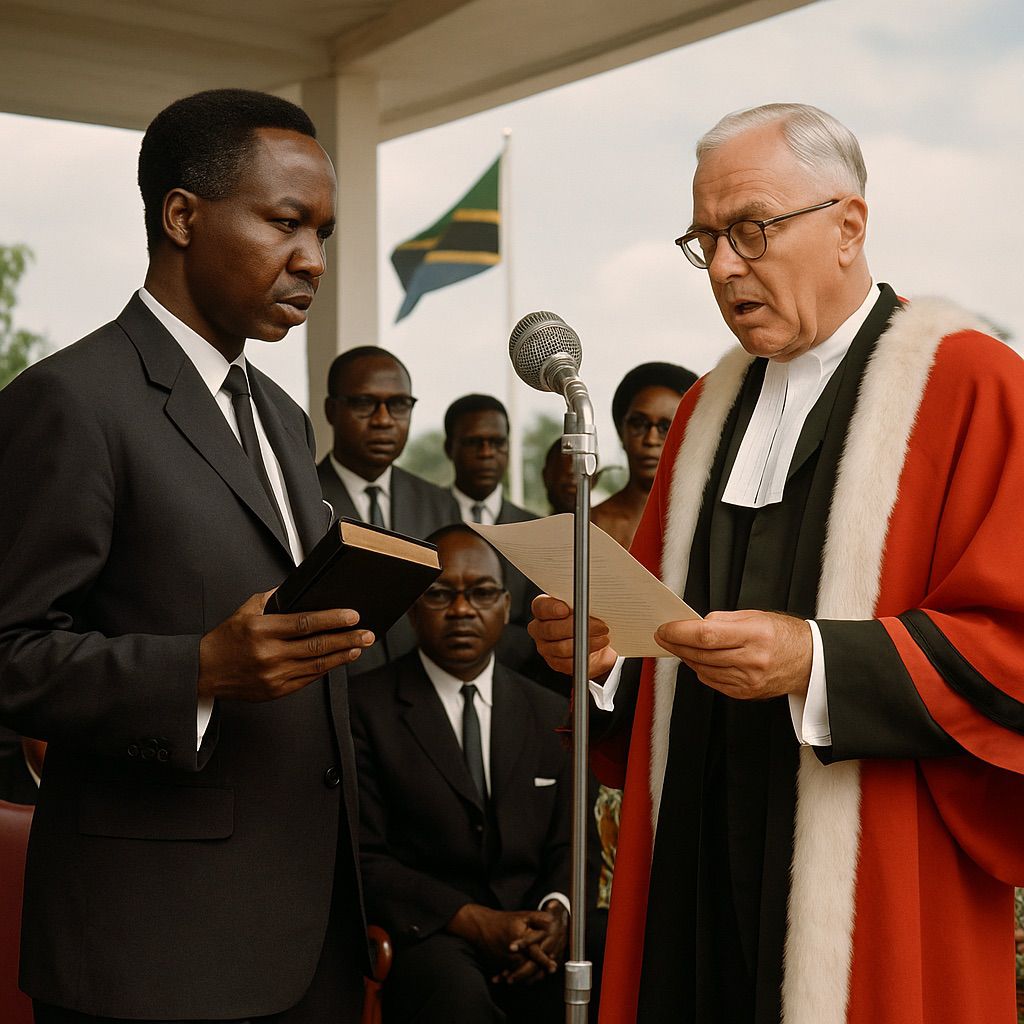
In the aftermath of World War II, the international landscape underwent significant transformations as colonial empires began to crumble and newly emerging nations claimed their right to self-determination. In East Africa, the long-standing British colony of Tanganyika was among those that ultimately gained its independence on December 9, 1961. This milestone marked a pivotal moment in African history, as it became one of the first territories on the continent to break free from colonial shackles.
The story of Tanganyika’s struggle for independence began many years earlier, with the seeds of resistance sown during the early 20th century. In the midst of World War I, British forces had invaded German East Africa, which was subsequently mandated to Britain by the League of Nations after Germany’s defeat. The mandate period saw a surge in African nationalism and anti-colonial sentiment across Tanganyika, fueled by growing discontent over colonial rule and the treatment of local populations.
During this era, various African leaders emerged who would later play pivotal roles in shaping the course of independence movements throughout the continent. Among them was Julius Nyerere, who in 1954 became one of the founding members of the Tanganyika African National Union (TANU). As a stalwart advocate for Tanzanian self-determination, Nyerere’s vision for an independent nation fueled widespread support among the local population.
In the mid-20th century, Tanganyika found itself at the forefront of African nationalism. The winds of change sweeping across the continent were unmistakable, with newly minted nations such as Ghana and Mali setting the stage for a new era of pan-African unity and collective self-liberation. It was against this backdrop that Britain’s colonial administration in Tanganyika faced mounting pressure from various quarters to hasten the pace of reforms.
In 1958, the British government announced its intention to grant internal self-government to Tanganyika by 1960. While seen as a significant concession by some, many critics argued it fell short of genuine independence and merely allowed for increased African representation within the existing colonial framework. Nyerere’s TANU, in particular, pressed on with demands for complete autonomy and accelerated decolonization.
As internal pressure continued to build, Tanganyika’s struggle for self-determination was further galvanized by external factors. The Cold War rivalry between the United States and the Soviet Union also had a profound impact on African politics during this period. Britain, eager to maintain its influence in the region, found itself increasingly entangled in a delicate balancing act between accommodating local demands for reform and safeguarding the interests of Western powers.
Tanganyika’s first major step towards independence was marked by the holding of a national referendum in 1960. Voters overwhelmingly approved a resolution calling for the country to be renamed Tanzania, a moniker chosen to reflect its ethnic diversity and African heritage. This pivotal event set the stage for further negotiations between British authorities and local leaders.
In January 1961, the Tanganyika Parliament passed the Independence Act, paving the way for Nyerere’s government to assume full control over internal affairs. As colonial rule gave way to self-governance, Britain agreed to grant independence by the end of 1961. With less than a year remaining before Tanganyika’s formal declaration of independence, local authorities took steps to consolidate power and prepare for the inevitable handover.
In November 1961, Nyerere returned from a three-month world tour that had taken him to key African nations, Asia, and Europe in an effort to solidify international support for his country’s new status. His diplomatic endeavors yielded tangible results, as newly independent Ghana, Nigeria, and Senegal pledged their backing for Tanganyika’s sovereignty.
On December 9, 1961, Julius Nyerere took the oath of office before a packed assembly of parliamentarians and distinguished guests at the State House in Dar es Salaam. The momentous occasion marked the realization of a decades-long struggle by African nationalists in Tanganyika to free their country from colonial shackles. As Nyerere declared the nation’s independence, he hailed this turning point as a triumph for Tanzanian self-determination and a milestone in Africa’s unrelenting quest for freedom.
With its newfound sovereignty, Tanzania set out on a unique path under Nyerere’s stewardship. His vision of African socialism and pan-African unity guided domestic policies aimed at rapidly developing infrastructure, promoting rural development, and strengthening the economy through state-led initiatives. While internal challenges persisted in the wake of independence, Tanzania emerged as one of Africa’s most vibrant success stories during this period.
The path to full independence marked by Tanganyika on December 9, 1961 had far-reaching implications for African nations still grappling with colonial legacies and regional tensions. As African states began asserting their sovereignty, they drew inspiration from Tanzania’s determination and willingness to challenge Western dominance in the region. In doing so, they further galvanized a nascent pan-African movement that would shape global politics for decades to come.
As Tanganyika celebrated its hard-won independence, the echoes of this triumph resonated across Africa and beyond. The country’s emergence as a sovereign nation was met with jubilation by its people, who had fought tirelessly for decades to break free from colonial shackles. Julius Nyerere, now the nation’s first prime minister, stood at the forefront of this momentous occasion, his voice ringing out in celebration of Tanzania’s newfound freedom.
The journey to independence had been long and arduous, marked by periods of both triumph and tragedy. The seeds of resistance had been sown during World War I, when British forces invaded German East Africa. This event sparked a wave of African nationalism that would sweep across the continent, fueling demands for self-determination and an end to colonial rule.
Tanganyika’s struggle for independence was inextricably linked to the broader pan-African movement, which sought to unite African nations against the common enemy of colonialism. The likes of Kwame Nkrumah, Ghana’s first president, and Sekou Toure, Guinea’s leader, were key figures in this movement, which drew inspiration from the struggles of other colonized peoples around the world.
As the 1950s gave way to the 1960s, Tanganyika found itself at the forefront of African nationalism. The winds of change sweeping across the continent were unmistakable, with newly minted nations such as Ghana and Mali setting the stage for a new era of pan-African unity and collective self-liberation. It was against this backdrop that Britain’s colonial administration in Tanganyika faced mounting pressure from various quarters to hasten the pace of reforms.
Nyerere’s TANU, which had emerged as a major force on the Tanzanian political scene, pressed on with demands for complete autonomy and accelerated decolonization. The organization’s vision for an independent Tanzania was clear: a nation built on the principles of African socialism and pan-African unity, where the rights and dignity of all citizens were respected.
As internal pressure continued to build, Tanganyika’s struggle for self-determination was further galvanized by external factors. The Cold War rivalry between the United States and the Soviet Union also had a profound impact on African politics during this period. Britain, eager to maintain its influence in the region, found itself increasingly entangled in a delicate balancing act between accommodating local demands for reform and safeguarding the interests of Western powers.
The complex web of alliances and rivalries that characterized the Cold War era had significant implications for Africa’s struggle for independence. The Soviet Union, which had long been sympathetic to African nationalist movements, provided critical support to Nyerere and his colleagues as they navigated the treacherous waters of decolonization.
Meanwhile, the United States, keen to maintain its dominance in the region, sought to promote stability and security through its aid programs and diplomatic efforts. This created a delicate dynamic, as both superpowers vied for influence in Africa while Nyerere’s government struggled to assert its sovereignty.
In January 1961, the Tanganyika Parliament passed the Independence Act, paving the way for Nyerere’s government to assume full control over internal affairs. As colonial rule gave way to self-governance, Britain agreed to grant independence by the end of 1961. With less than a year remaining before Tanganyika’s formal declaration of independence, local authorities took steps to consolidate power and prepare for the inevitable handover.
The months leading up to independence were marked by intense diplomatic activity, as Nyerere’s government sought to solidify international support for its new status. In November 1961, Nyerere returned from a three-month world tour that had taken him to key African nations, Asia, and Europe in an effort to galvanize backing for Tanzania’s sovereignty.
His diplomatic endeavors yielded tangible results, as newly independent Ghana, Nigeria, and Senegal pledged their backing for Tanganyika’s sovereignty. This marked a significant turning point in the struggle for independence, as it underscored the growing recognition of Africa’s new nations on the world stage.
On December 9, 1961, Julius Nyerere took the oath of office before a packed assembly of parliamentarians and distinguished guests at the State House in Dar es Salaam. The momentous occasion marked the realization of a decades-long struggle by African nationalists in Tanganyika to free their country from colonial shackles.
As Nyerere declared the nation’s independence, he hailed this turning point as a triumph for Tanzanian self-determination and a milestone in Africa’s unrelenting quest for freedom. His voice echoed across the continent, inspiring millions of Africans who had fought tirelessly for generations to break free from colonial rule.
With its newfound sovereignty, Tanzania set out on a unique path under Nyerere’s stewardship. His vision of African socialism and pan-African unity guided domestic policies aimed at rapidly developing infrastructure, promoting rural development, and strengthening the economy through state-led initiatives.
While internal challenges persisted in the wake of independence, Tanzania emerged as one of Africa’s most vibrant success stories during this period. The country’s economic growth, fueled by Nyerere’s innovative approaches to agricultural development and industrialization, was nothing short of remarkable.
As African states began asserting their sovereignty, they drew inspiration from Tanzania’s determination and willingness to challenge Western dominance in the region. In doing so, they further galvanized a nascent pan-African movement that would shape global politics for decades to come.
Tanzania’s independence had far-reaching implications for Africa’s future. It marked a new era of African self-determination and collective action, as nations across the continent began to assert their sovereignty and challenge the legacy of colonialism.
The echoes of Tanganyika’s triumph still resonate today, inspiring generations of Africans who continue to strive for freedom, justice, and equality in all its forms. As Julius Nyerere himself once said, “Africa is not a country; it is a continent of many nations.” The story of Tanzania’s independence serves as a powerful reminder of the enduring power of African solidarity and determination.
In the years that followed, Africa’s pan-African movement continued to gain momentum, as countries such as Kenya, Uganda, and Malawi joined the growing ranks of independent nations. This marked a significant turning point in African history, as continent-wide unity and collective action began to reshape the regional landscape.
The 1960s saw Africa emerge as a major force on the world stage, with newly independent nations asserting their sovereignty and challenging Western dominance in the region. The United States, eager to maintain its influence in Africa, found itself increasingly entangled in a complex web of alliances and rivalries with other superpowers vying for control.
As the Cold War rivalry between the United States and the Soviet Union reached its peak, African nations were caught in the midst of this global struggle. Tanzania, under Nyerere’s leadership, emerged as a key player on the continent, forging close ties with both superpowers while steadfastly maintaining its independence.
The country’s unique position was further solidified by its commitment to pan-African unity and collective self-liberation. Tanzania’s vision for an African socialism that prioritized social welfare, economic development, and international solidarity resonated across the continent, inspiring a new generation of leaders and nations committed to building a more just and equitable world.
In this context, Tanzania’s independence marked not only the realization of a long-fought struggle but also the beginning of a new era in African history. As Nyerere himself observed, “The age of colonialism is over; the age of African self-determination has begun.”